
The cheapest way to do a patio is a DIY poured concrete slab with a basic broom finish, which runs about $3–$6 per square foot in materials alone for smaller jobs. If you want to hire it out, plain broom-finish concrete is still the most affordable installed option at roughly $6–$13 per square foot. Gravel and compacted decomposed granite are cheaper materials, but concrete wins for durability-per-dollar at almost every size. Pavers, flagstone, and brick all look better but cost more, and the savings from going DIY can disappear fast if you skip base prep or make finishing mistakes.
Cheapest Way to Do a Patio: Costs, DIY vs Pros

Felix Carver
5 May 2026
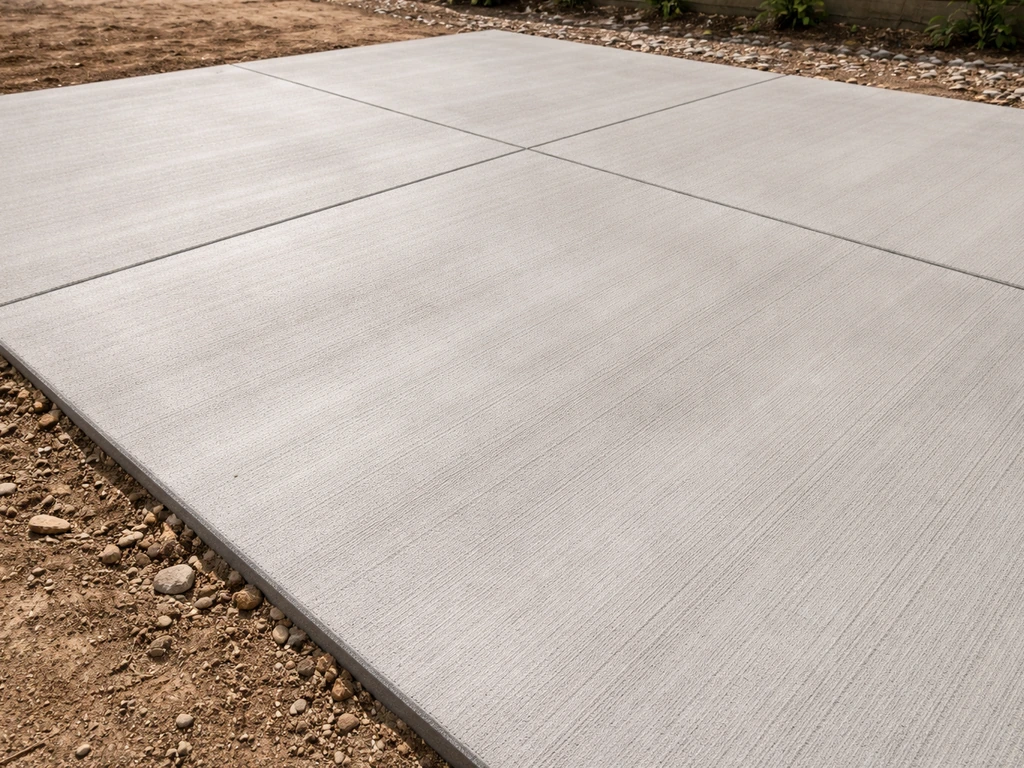
The lowest-cost patio approach, straight up
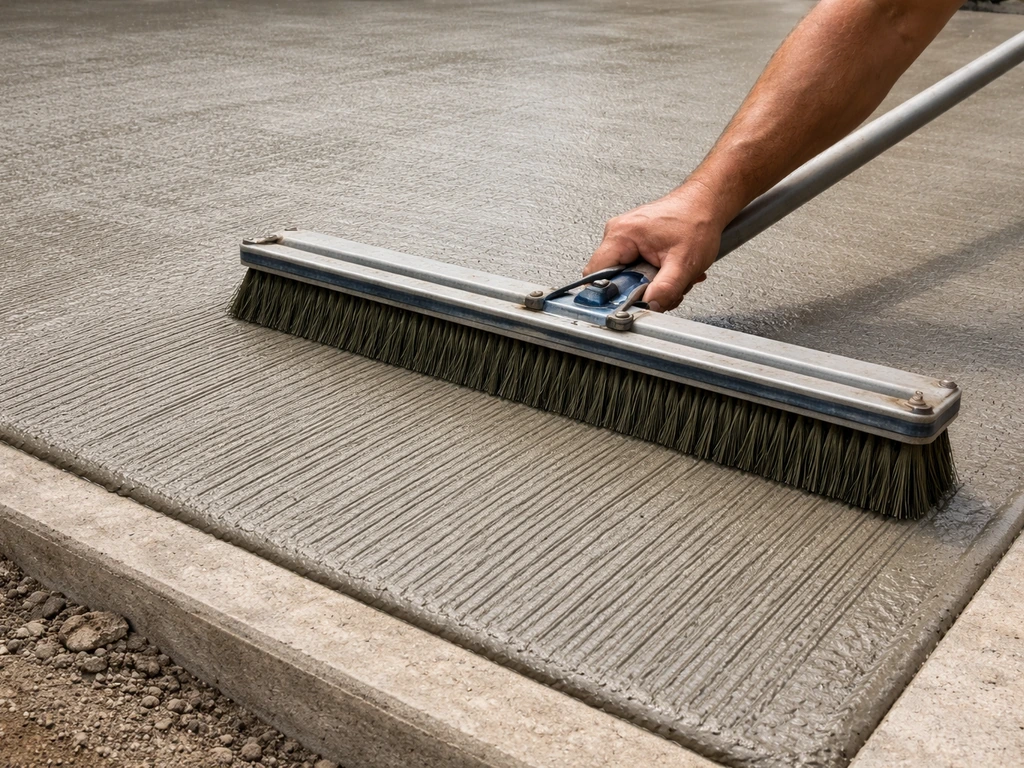
If your only goal is the least expensive usable patio, basic poured concrete is the answer for most homeowners. A 4-inch broom-finish concrete slab installed by a contractor runs about $6–$13 per square foot depending on your region. DIY drops that to roughly $3–$6 per square foot in materials if you rent the tools and do your own forming, finishing, and cleanup. For a 10x10 (100 sq. ft.) patio, that puts a contractor-poured slab at about $600–$1,300 total, and a DIY slab at $300–$600 in materials. Most contractors have minimums, though, often around $4,000 for basic concrete work, so small patios usually make more financial sense to DIY or get creative with.
Pavers and flagstone are often marketed as a weekend DIY project, but materials alone cost more than concrete, and the base prep is equally intensive. They do have a genuine advantage: if one paver cracks or settles, you can pull it and relay it without tearing out the whole slab. For pure cost, though, concrete wins.
What each patio type actually costs
Here's a realistic look at per-square-foot costs for the most common patio materials, both installed and DIY. These are 2026 ranges based on national data, not the low-end teaser prices you'll see on some sites.
| Patio Type | DIY Materials Only | Contractor Installed | Lifespan |
|---|---|---|---|
| Plain broom-finish concrete | $3–$6/sq. ft. | $6–$13/sq. ft. | 20–30 years |
| Stamped/decorative concrete | $5–$9/sq. ft. | $16–$28/sq. ft. | 15–25 years |
| Concrete pavers | $4–$8/sq. ft. | $12–$22/sq. ft. | 25–50 years |
| Brick pavers | $5–$10/sq. ft. | $14–$25/sq. ft. | 25–50 years |
| Flagstone (dry-laid) | $8–$15/sq. ft. | $15–$25/sq. ft. | 20–40 years |
| Flagstone (mortar-set) | $9–$18/sq. ft. | $20–$35/sq. ft. | 25–50 years |
A few things stand out in that table. First, stamped concrete costs nearly as much installed as pavers do, but it has a higher risk of cracking and can't be spot-repaired the way pavers can. If you're budget-focused and want something better-looking than plain concrete, concrete pavers are a more honest comparison. Second, flagstone has a huge range because mortar-set flagstone over a concrete base is a completely different job from dry-laid flagstone set in sand. Forbes Home notes that dry-laid flagstone patios commonly cost about $15 to $17 per square foot, which is different from mortar-set installations. The dry-laid version is DIY-friendly; mortar-set is really a professional job.
When pavers beat concrete on cost
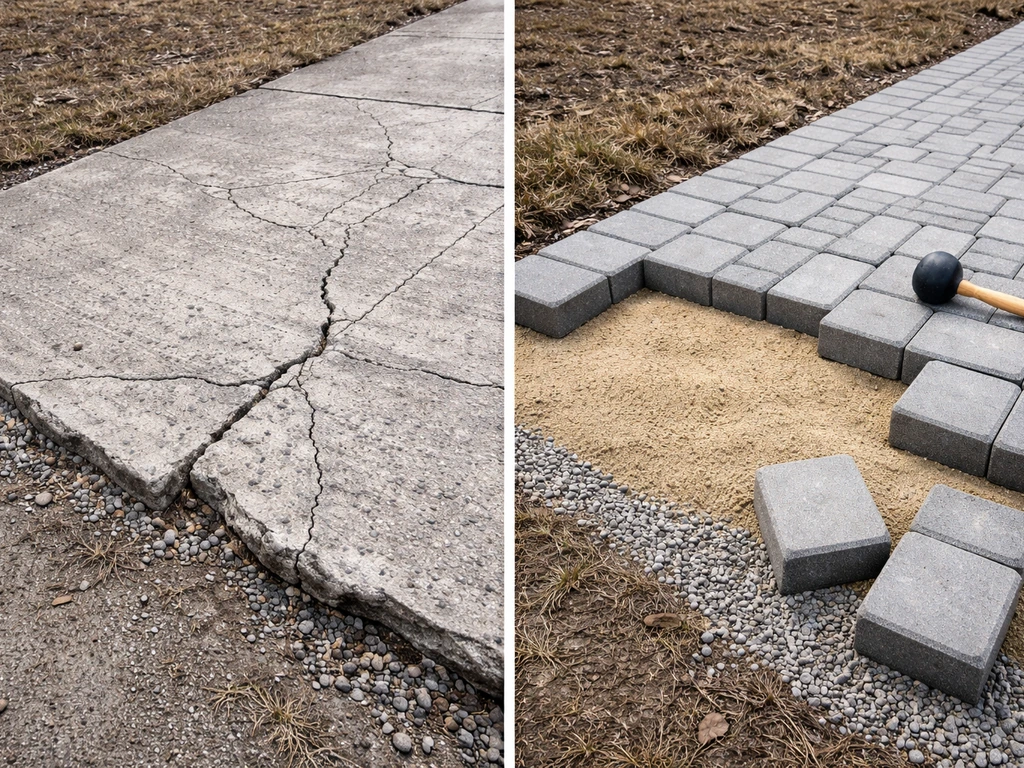
If you're in a frost-prone climate and your concrete slab is likely to heave or crack in 10–15 years, pavers may actually cost less over time because you can relay individual stones rather than repour an entire section. The cheapest patio to build isn't always the cheapest patio to own. If you're trying to find the cheapest patio to install, compare both upfront installation costs and long-term maintenance cheapest patio to build. If you’re trying to answer what is the cheapest patio to build, start with DIY broom-finish concrete and double-check site prep costs. But for a one-time budget install, concrete still wins the upfront number.
DIY vs. hiring a contractor: where the real savings are
Labor typically makes up 40–60% of a patio's installed cost. That's where the DIY savings actually come from, not material discounts. A contractor pouring a basic concrete slab will charge $6–$13 per square foot all-in; your material cost for the same slab is roughly $3–$6 per square foot if you do it yourself. On a 200 sq. ft. patio, that's a potential savings of $600–$1,400, which is real money.
But DIY has some hard limits. For concrete specifically, the pour has to be finished before the mix sets, which gives you a tight window, usually 30–90 minutes depending on temperature and mix. A decorative or stamped finish is nearly impossible to pull off correctly without experience. One study of DIY concrete projects found that stamped finish errors often require full demo and repour, costing thousands on larger slabs. The guidance I'd use: DIY broom-finish concrete is realistic on slabs under 100 sq. ft. For anything over that, or if you want stamped/decorative concrete, hire it out.
Paver patios are more forgiving for DIYers. You can take your time, adjust as you go, and pull and relay individual pavers if something goes wrong. The main DIY risk with pavers isn't the laying itself, it's skimping on or miscalculating the base. For bedding sand, Home Depot’s paver installation resource specifies a layer about 3/4 inch to 1 inch thick and includes slope guidance such as about 1 inch over 6 feet to help with drainage bedding sand layer of about 3/4 inch to 1 inch. About 80% of paver failures trace back to base problems, not the pavers themselves.
| Task | DIY Realistic? | Main Risk If DIY |
|---|---|---|
| Broom-finish concrete (<100 sq. ft.) | Yes | Minor surface cosmetics |
| Broom-finish concrete (>100 sq. ft.) | Maybe, with help | Finishing before mix sets |
| Stamped/decorative concrete | No | Permanent finish errors, costly rework |
| Paver patio (any size) | Yes | Underestimating base depth and compaction |
| Dry-laid flagstone | Yes | Uneven base, drainage slope errors |
| Mortar-set flagstone | No | Bond failure, cracking at joints |
Site prep costs that quietly eat your budget
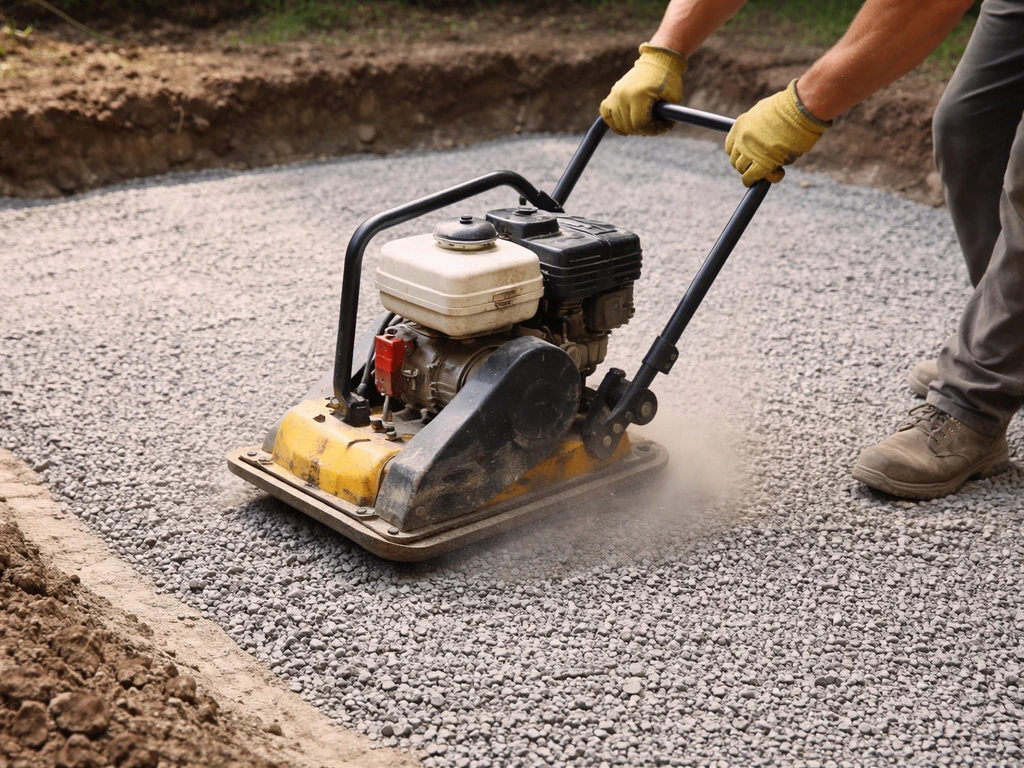
This is the section most budget guides skip, and it's why so many homeowners end up over budget. Site prep can add $1–$5 per square foot before a single paver or drop of concrete goes down. On a 20x20 patio, that's $400–$2,000 in prep work alone.
- Demo and removal: Tearing out an old concrete slab typically costs $2–$6 per square foot including haul-away. An existing paver patio is slightly less.
- Grading and excavation: If your ground isn't level or needs significant cut/fill, expect $1–$3 per square foot for grading. Slopes over 6 inches across a 20-foot span usually require equipment.
- Base material: A proper paver or concrete base needs 4–6 inches of compacted crushed gravel. That's about 0.5–0.75 cubic yards of gravel per 100 square feet, or roughly $30–$75 in materials per 100 sq. ft. before delivery.
- Bedding sand: Pavers also need a 1-inch screed layer of coarse sand over the gravel. It's cheap but adds up — budget about $10–$20 per 100 sq. ft. in materials.
- Drainage correction: If your yard drains toward the house, correcting slope before laying a patio is non-negotiable. Proper patio slope is 1–2% away from the structure (about 1/8 to 1/4 inch per foot). Fixing drainage problems after the fact costs far more than doing it right upfront.
- Utility locating: Always call 811 before you dig. It's free and required by law in most states. Damaging a buried line during excavation can cost thousands in repairs and liability.
One of the most common mistakes DIYers make is underestimating how much base material they need. Once gravel is compacted, it compresses significantly, typically 10–20% more material is needed than a simple volume calculation suggests. Order extra. On pavers specifically, also order about 10% extra pavers for cuts and waste.
Estimating total cost by patio size
Here's how costs stack up at three of the most common patio footprints. These ranges include base prep and materials but assume reasonable site conditions (no demo, no major grading). Contractor pricing reflects typical regional averages, your quotes may vary.
| Patio Size | Sq. Ft. | Plain Concrete (Contractor) | Pavers (Contractor) | Plain Concrete (DIY Materials) | Pavers (DIY Materials) |
|---|---|---|---|---|---|
| 10x10 | 100 | $600–$1,300* | $1,200–$2,200 | $400–$700 | $500–$900 |
| 12x12 | 144 | $860–$1,870* | $1,730–$3,170 | $580–$1,010 | $720–$1,300 |
| 20x20 | 400 | $2,400–$5,200* | $4,800–$8,800 | $1,600–$2,800 | $2,000–$3,600 |
The asterisk on contractor concrete: most concrete contractors have minimum job charges around $4,000. That means a 10x10 or 12x12 concrete slab will often be quoted at $4,000 regardless of the per-square-foot math, making DIY especially attractive for small patios. Pavers don't carry the same minimums because the work is less equipment-intensive. For small patios, you might get a paver crew to quote closer to actual size-based pricing.
To estimate your own project: multiply your square footage by the per-square-foot range for your chosen material, then add 15–20% for base prep, delivery, and waste. If you're on a sloped or uneven lot, add another 10% buffer for grading. For concrete specifically, also add forming and finishing costs if you're DIYing ($1–$2 per sq. ft. in rentals and supplies).
How location and contractor factors shift the numbers
Where you live matters a lot. Labor rates for concrete and paver work vary significantly across the country. In the Northeast and coastal California, installed concrete patios often run toward the top of the range ($12–$18 per square foot). In the Midwest and rural South, you'll more commonly find quotes in the $6–$10 range. Here's what drives those differences:
- Local labor rates: Union or prevailing wage areas push costs higher. A skilled concrete finisher in San Francisco earns nearly double what the same trade pays in rural Tennessee.
- Material delivery costs: Gravel and concrete are heavy. If you're 30 miles from the nearest batch plant or quarry, delivery surcharges add up fast.
- Permits: Many municipalities require a building permit for permanent patios, especially those attached to the home or over a certain size. San Diego, for example, charges $75–$200 for small residential patio permits under 200 sq. ft. Larger patios or complex drainage work can push permit fees much higher. Always check local requirements before starting.
- Slab thickness: A 6-inch slab (required in some areas for heavier use or local code) costs 30–50% more in concrete volume than a 4-inch slab, which directly affects material and pour costs.
- Access difficulty: Backyard patios with no side gate or narrow access paths require wheelbarrow work instead of a concrete pump or direct truck chute, adding labor time and cost.
- Design complexity: Curved edges, custom patterns, steps, or retaining walls all add cost. Keep the footprint rectangular and simple if budget is the priority.
If you're in an area with high contractor minimums or labor costs, a 10x10 DIY paver patio may actually beat a hired concrete slab on total price even though concrete is the cheaper material. Run the numbers both ways before you decide.
What about a deck instead?
It comes up a lot: is a deck or a patio cheaper? The honest answer is that a basic ground-level deck and a basic concrete patio come out roughly comparable in many regions, but the math shifts depending on site conditions. If your yard is flat with no drainage issues, a concrete patio is almost always cheaper than a wood or composite deck.
If you're deciding between a patio and decking, it helps to compare both projects on total installed cost, not just material price, since factors like site prep and labor can swing the outcome is it cheaper to lay a patio or decking. Yes, a deck can be cheaper in some cases, especially if your yard requires expensive grading for a patio.
If your yard slopes significantly, a deck can actually be cheaper because you're building above the problem rather than grading to fix it. The deck-vs-patio cost question is worth exploring separately, it's its own calculation, especially once you factor in material type (pressure-treated wood vs. If you want to compare patio costs to a deck, use the same square-foot approach, then add railing, stairs, and footings to estimate how much to deck a patio.
composite) and whether a permit is required.
The practical checklist before you get quotes or buy materials
- Measure your footprint and mark it out with stakes and string so you know your exact square footage.
- Check your local permit requirements. Call your municipality or check online — permits for patios are common and fines for skipping them are real.
- Call 811 before any digging. It's free and protects you from liability.
- Assess your site: Is it level? Does water drain toward or away from your house? Any standing water after rain?
- Get at least three quotes from local contractors if you're hiring. Ask each one to break out materials, labor, base prep, and any demolition separately so you can compare apples to apples.
- If DIYing pavers, order 10% extra pavers and 15–20% extra base gravel to account for compaction and waste.
- For concrete DIY, stay under 100 sq. ft. and stick to a broom finish. Anything bigger or more decorative — hire it out.
FAQ
What’s the cheapest patio option if I want the lowest total cost, not just the lowest price per square foot?
It usually does not. A “cheap patio” bid that skips or underprices base prep (subgrade stabilization, proper thickness, and drainage) often ends up costing more later due to settling and cracking. Use a line-item estimate that explicitly includes excavation depth, base thickness, and compaction equipment, not just the surface material.
How do I know when DIY concrete is too risky for my project size?
For DIY concrete, a key deciding factor is how many square feet you can finish in one pour and still meet finishing timing. If the slab is large enough that weather, curing pace, or your crew size makes it likely you will be finishing after the mix starts to set, switch plans to smaller sections (with proper joints) or hire the pour.
When might pavers become cheaper than concrete even if concrete has a lower material cost?
Concrete is typically cheapest only when your site prep is straightforward. If you need extensive grading to make the pad level, haul away unsuitable soil, or add drainage improvements, pavers can sometimes win overall because their base can be adjusted more incrementally and localized fixes are easier than breaking and repouring concrete.
What are the most expensive DIY mistakes that make a patio end up costing more than expected?
Common “looks cheap” mistakes include skipping control joints, using too-thin slab thickness, and not maintaining a consistent slope away from the house. Even a broom finish can fail if the slab is not thick enough or if water pools at the edges, so confirm thickness, joint layout, and slope before you pour or sign a contract.
How should I handle contractor minimum job charges when pricing a small patio?
Minimum contractor charges are a major factor. If your patio is small, ask for pricing that includes demolition, form setup, and hauling, then compare it to a DIY or a smaller hired scope (for example, hiring only the pour day and doing base prep yourself).
How can I avoid underbuying gravel or decomposed granite for patio base prep?
Don’t size base materials from “calculator volume” alone. After compaction, gravel and DG can end up requiring notably more depth than the initial loose measurement implies, so add an extra material buffer and verify with your local spec thickness, not generic online estimates.
Why do pavers sometimes fail even when the paver material itself is decent?
Yes, especially on paver projects. If you are laying over anything that isn’t well-compacted (including areas with organic soil), you can get differential settling even if your pavers are fine. Treat any soft spots as a base problem to rebuild and compact, not a surface problem.
Does drainage and slope planning change the cheapest patio choice?
For lowest cost, you generally want your drainage plan to be simple and integrated, for example a consistent slope and a clear path for runoff away from foundations. If you discover grading or drainage issues late, fix costs rise quickly, so confirm grading and downspout discharge before ordering materials.
Is broom-finish concrete always the cheapest concrete finish, and is it worth it over basic smooth?”},{
If you plan to DIY, start by choosing the simplest finish that you can execute correctly. Broom-finish concrete is the most realistic budget option, while stamped or decorative finishes usually require experience to avoid rework, which can eliminate the cost advantage on larger slabs.
How can equipment rental and delivery change the true cheapest way to build a patio?
Yes. Labor savings are only real if you can rent or buy what’s needed (especially for excavation, compaction, and concrete forming). If you discover you need additional tools mid-project, or you can’t source materials on time, the “cheap” plan can flip due to delivery fees and lost time.
Next Articles
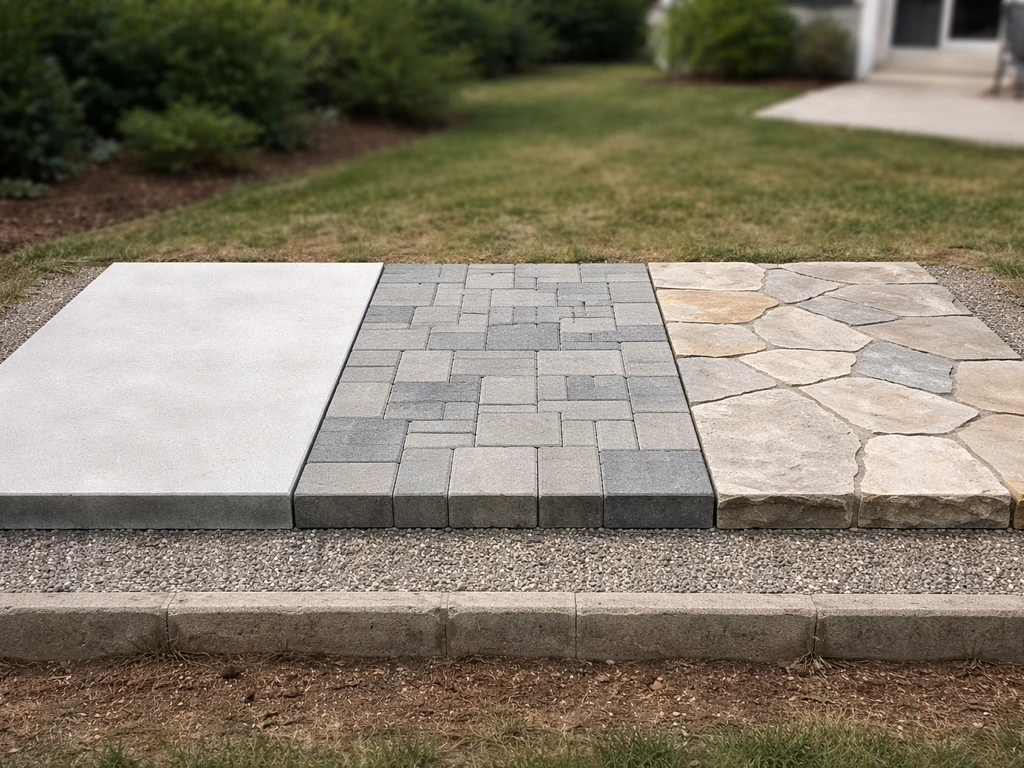
How Much Should I Expect to Pay for a Patio
Patio cost guide with real price ranges by size and material, full line-item budget, DIY vs install, and quote checklist
How Much Patio Around Pool: Cost, Size, and Budget Guide
Learn how much patio around a pool costs and how to size square feet, materials, extras, and get real bid line items.
How Much Are Patios? Cost Ranges by Size and Material
Patio cost estimates by size and material with labor, base, add-ons, DIY vs contractor, and quote planning tips.