
Patios are almost always cheaper than decks. For a typical 12x12 to 20x20 project, a poured concrete patio runs $5–$15 per square foot installed, while a wood deck starts at $15–$35 per square foot and a composite deck can hit $30–$60 per square foot. That gap adds up fast: a 200-square-foot concrete patio might cost $1,000–$3,000, while a similar-sized pressure-treated deck often lands between $3,000 and $7,000. That comparison matters even more when you’re considering a brick patio, since it can land closer to deck pricing than plain concrete brick patio vs wood deck. The main exception is when your yard is flat and accessible, your budget is tight, and you don't need a raised structure, in that case, a patio wins on cost almost every time. Decks become the cheaper (or only) option when your yard slopes significantly, because building a deck over uneven ground is often less expensive than the massive excavation and grading a patio would require on a hillside lot.
Cost of Patio vs Deck: Installed Price Guide by Size

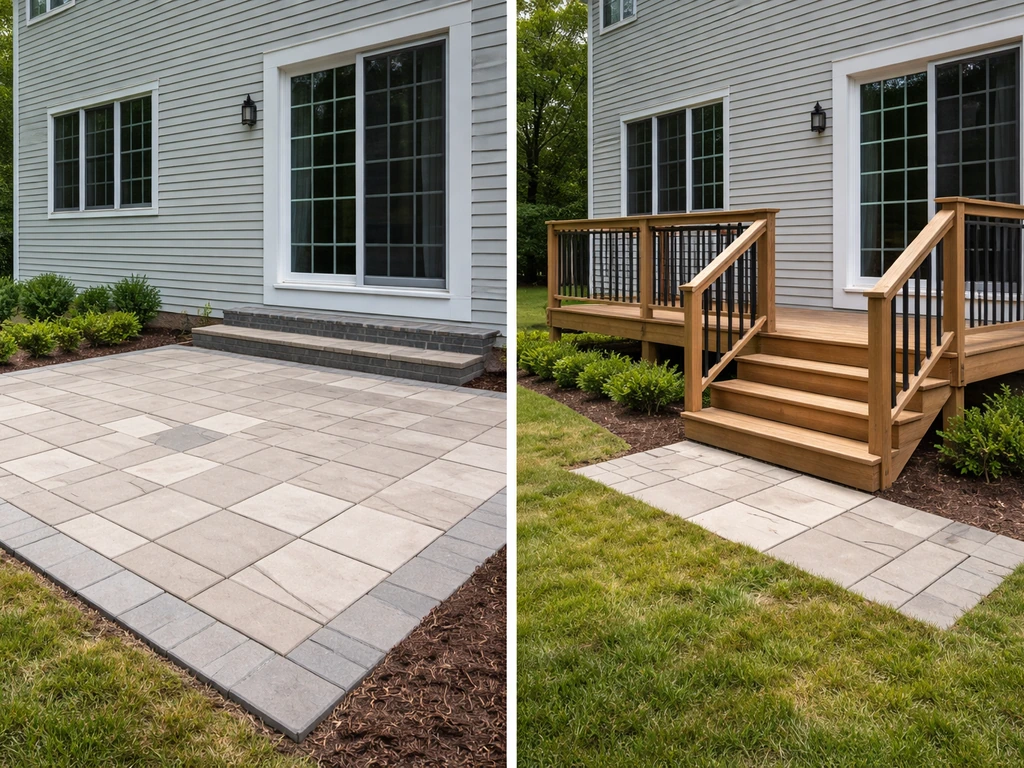
Patio cost breakdowns by material and size
Patio costs vary enormously based on what you're putting down. A basic gray concrete slab is the cheapest starting point, while flagstone and stamped concrete are at the top end. Here's how those numbers shake out at common project sizes.
Poured concrete patios
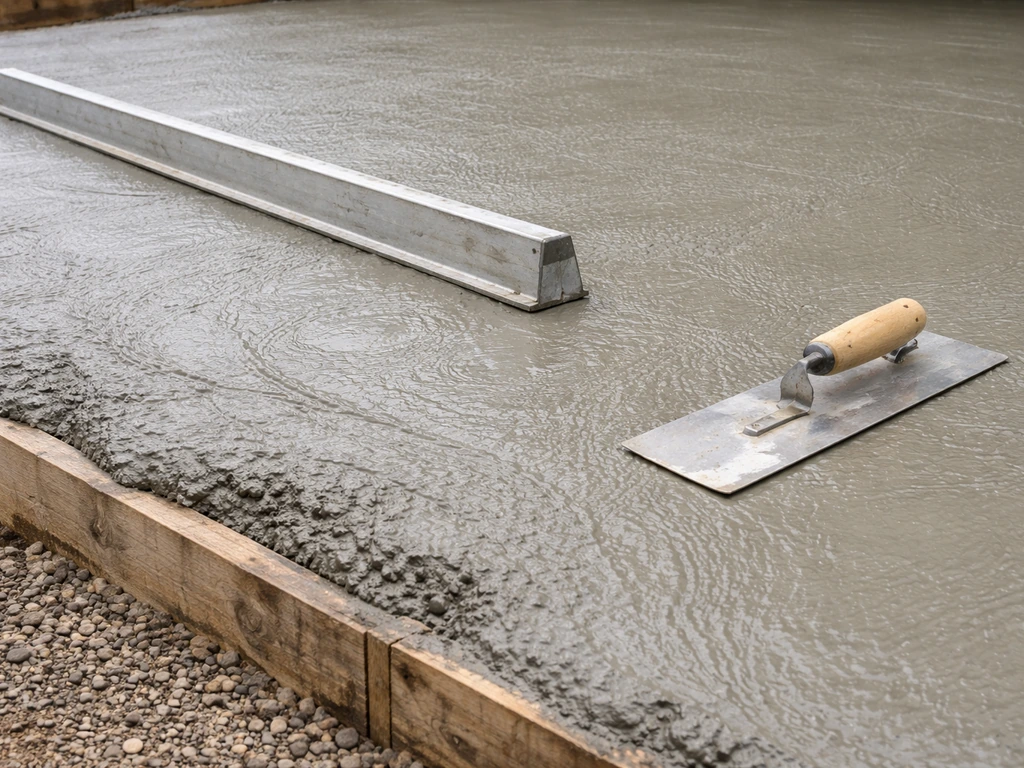
Standard gray concrete slabs run about $5–$12 per square foot installed according to HomeAdvisor, and Angi puts that range at $3–$8 per square foot depending on thickness and site conditions. Thumbtack's 2025 data shows a typical homeowner project totaling $2,225–$5,990, with a national average around $3,652. At those per-square-foot rates, here's what common sizes look like:
| Size | Square Footage | Low Estimate | High Estimate |
|---|---|---|---|
| 10x10 | 100 sq ft | $500 | $1,200 |
| 12x12 | 144 sq ft | $720 | $1,730 |
| 16x16 | 256 sq ft | $1,280 | $3,070 |
| 20x20 | 400 sq ft | $2,000 | $4,800 |
These estimates use the $5–$12 per square foot installed range and assume average site conditions. If your yard needs significant grading, drainage work, or a French drain, add $500–$2,000 or more depending on complexity. Labor alone for concrete typically runs $5–$10 per square foot.
Paver patios (brick and concrete pavers)
Paver patios cost significantly more than plain concrete because you're paying for more materials and more labor. blank" rel="noopener noreferrer">Angi puts installed paver costs at $8–$25 per square foot, and HomeGuide's comparison guide shows a typical range of $10–$17 per square foot. The base prep alone adds cost: Class II road base, geotextile fabric, bedding sand, edging, and joint sand typically run $1.40–$2.20 per square foot before a single paver goes down. Labor for paver installation is usually $5–$10 per square foot. Angi also frames those labor costs as part of the per-square-foot pricing, with blank" rel="noopener noreferrer">professional paver installers quoted around $50 to $80 per hour. For brick specifically, Angi notes brick/paver patios run $8–$25 per square foot installed.
| Size | Square Footage | Low Estimate | High Estimate |
|---|---|---|---|
| 10x10 | 100 sq ft | $800 | $2,500 |
| 12x12 | 144 sq ft | $1,150 | $3,600 |
| 16x16 | 256 sq ft | $2,050 | $6,400 |
| 20x20 | 400 sq ft | $3,200 | $10,000 |
Stamped concrete patios
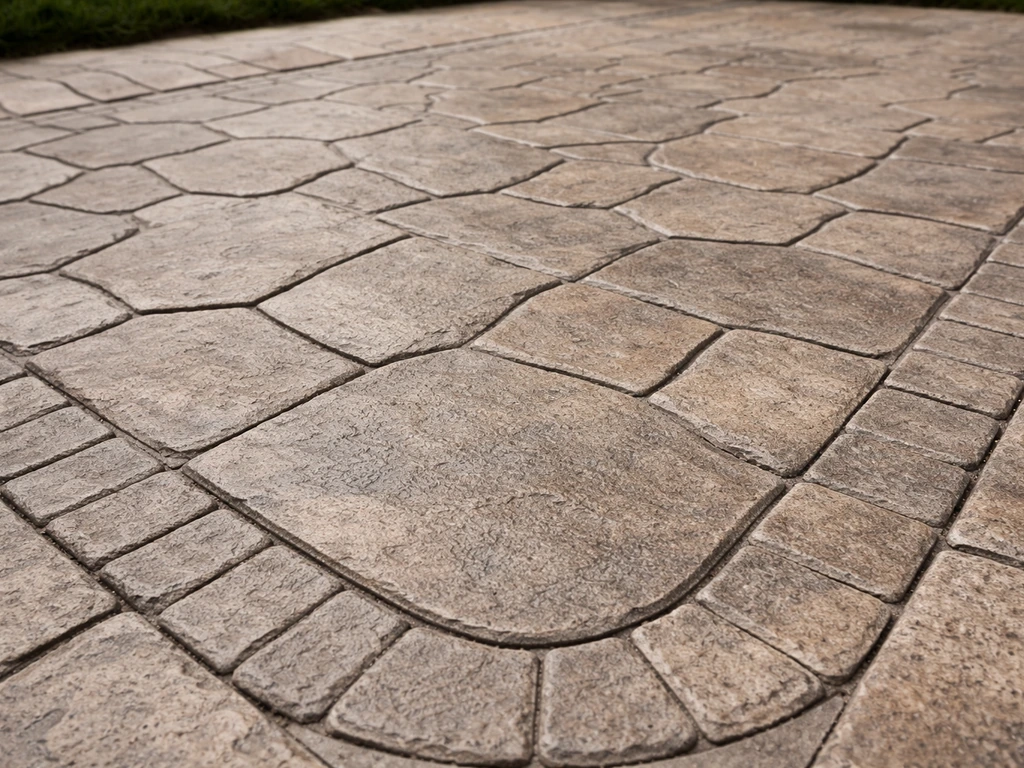
Stamped concrete falls in the middle of the patio spectrum. ConcreteNetwork puts basic stamped concrete at $10–$14 per square foot, with more intricate patterns and borders pushing to $20 per square foot and up. Fixr frames pavers and stamped concrete as similarly priced mid-range options, with pavers starting just under $11 per square foot and averaging around $15 per square foot. One practical advantage of stamped concrete: DIY materials for colorants and sealers run as low as $4–$8 per square foot, though the stamping itself is difficult to execute well without experience. For contractor-installed stamped concrete, budget $10–$20 per square foot for a realistic range. This is one area where comparing stamped concrete patios vs. Stamped concrete patios vs. deck costs can be surprisingly close when you compare contractor pricing and site prep. deck costs gets interesting, since a well-done stamped surface can rival a basic wood deck in total cost.
Natural stone and flagstone
Flagstone and natural stone are the most expensive patio surface options. Material costs alone can run $15–$30 per square foot for premium stone, and installation labor is higher because the pieces are irregular and require more skilled fitting. Budget $20–$40 per square foot installed for flagstone in most markets, and significantly more in high-cost cities. If you're price-sensitive, flagstone is usually easy to rule out quickly in favor of pavers or stamped concrete at the same look for less money.
Deck cost breakdowns by material and features
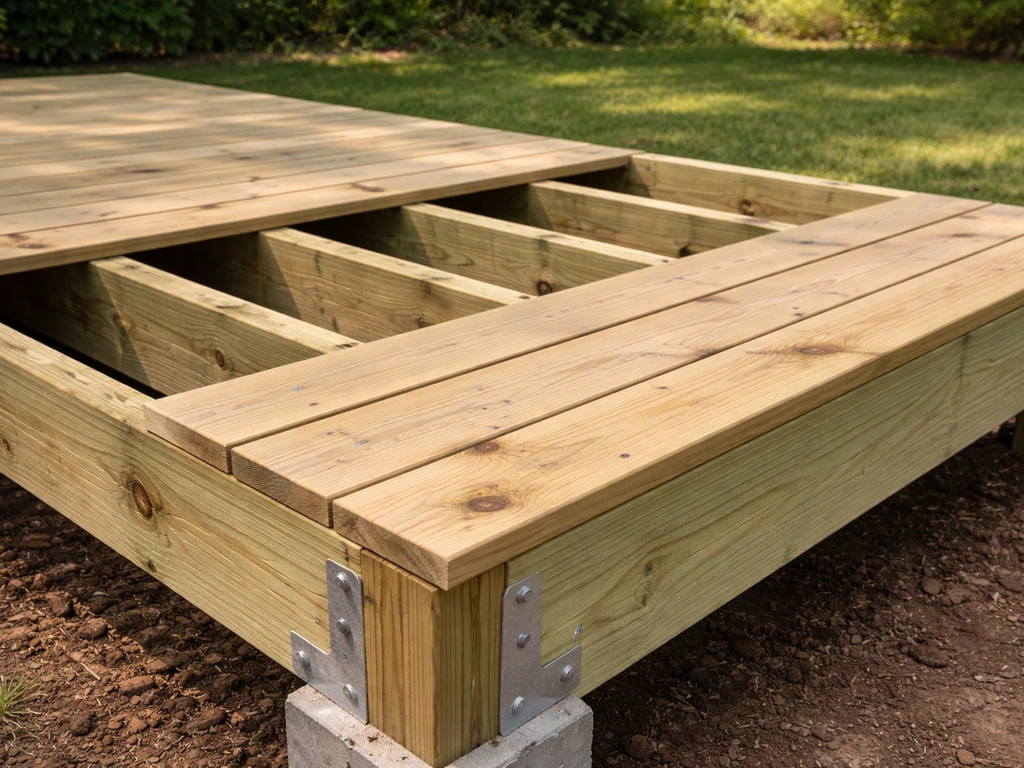
Decks have more moving parts than patios: the decking boards are just one piece of the cost. You're also paying for framing lumber, footings, ledger connections, railings, and often stairs. All of that adds up before the top surface is even installed.
Pressure-treated wood decks
Pressure-treated wood is the budget-friendly deck option. Decking boards cost roughly $2–$5 per square foot for materials, and Fixr puts the full installed range at $15–$25 per square foot for a pressure-treated deck. Angi's 2026 data shows the average pressure-treated deck costs around $40 per square foot with a range of $15–$75 per square foot depending on location, number of footings, and design complexity. HomeGuide's comparison puts wood decks at $25–$50 per square foot installed. Thumbtack's national total range is $3,059–$14,659 with an average around $6,700. Here's what common sizes look like at the $15–$40 per square foot range:
| Size | Square Footage | Low Estimate (PT Wood) | Mid Estimate (PT Wood) |
|---|---|---|---|
| 10x10 | 100 sq ft | $1,500 | $4,000 |
| 12x12 | 144 sq ft | $2,160 | $5,760 |
| 16x16 | 256 sq ft | $3,840 | $10,240 |
| 20x20 | 400 sq ft | $6,000 | $16,000 |
Composite decks
Composite decking typically runs 30–40% more than pressure-treated wood for the decking boards alone. Jobsite Calcs puts composite decks at $30–$60 per square foot installed versus $15–$35 for pressure-treated wood. Michigan.gov's cost data similarly notes wood polymer composite adds roughly 30% over softwood costs. So if a pressure-treated deck costs you $5,000, expect to add $1,500–$2,000 for composite boards. The payoff is significantly lower maintenance: no annual sealing or staining, no splinter risk, and no rotting. Composite is the right call if you hate maintenance and plan to keep the deck for 20-plus years.
Stairs, railings, and add-on costs
Railings and stairs are often required by code and always add to your total. Railings are priced per linear foot and can push total project costs up substantially depending on the deck's perimeter. Permits are also non-negotiable for most decks: Fixr puts permit costs at $100–$500 as a starting range, though high-cost cities can run higher. If footings are ever placed incorrectly and need replacement, Fixr notes that's roughly $300–$400 per footing in repair costs, which is why it pays to hire someone who knows local frost-depth requirements. Factor in $1,000–$3,000 in add-ons (stairs, railings, permit) for a typical attached deck beyond the base square-foot price.
Side-by-side cost comparison
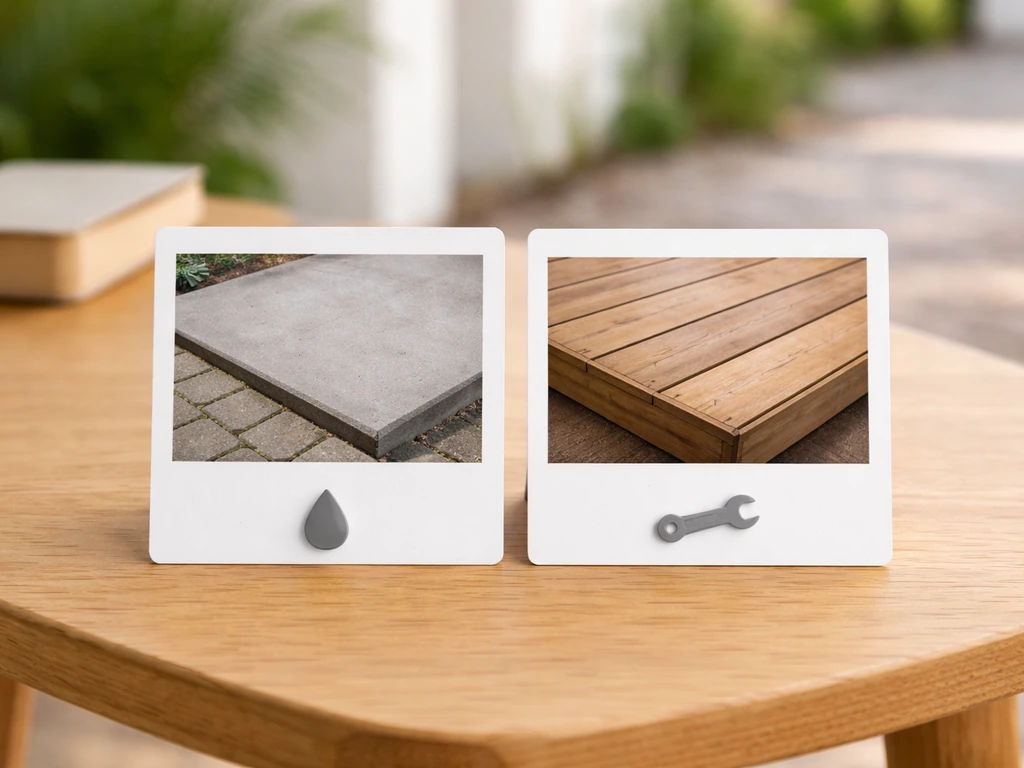
| Option | Installed Cost per Sq Ft | 200 Sq Ft Estimate | 400 Sq Ft Estimate | Maintenance Level |
|---|---|---|---|---|
| Poured concrete patio | $5–$12 | $1,000–$2,400 | $2,000–$4,800 | Low |
| Paver patio (concrete/brick) | $8–$25 | $1,600–$5,000 | $3,200–$10,000 | Low–Medium |
| Stamped concrete patio | $10–$20 | $2,000–$4,000 | $4,000–$8,000 | Low–Medium |
| Natural stone / flagstone | $20–$40+ | $4,000–$8,000+ | $8,000–$16,000+ | Medium |
| Pressure-treated wood deck | $15–$40 | $3,000–$8,000 | $6,000–$16,000 | High |
| Composite deck | $30–$60 | $6,000–$12,000 | $12,000–$24,000 | Low |
Labor vs DIY vs hiring a contractor
Labor is usually the single biggest cost driver for both patios and decks, often running 50–60% of the total project cost. For patios, Fixr puts labor at $5–$10 per square foot for most materials, rising for stamped concrete and intricate surfaces. Site prep adds more: clearing, leveling, and grading all cost extra before materials are ordered. If you need drainage improvements or French drains, that's another $500–$2,000 on top.
For decks, labor involves more trades: footings, framing, decking installation, railings, and stairs each require different skill levels. This is part of why decks cost more per square foot than patios even when using inexpensive pressure-treated lumber.
Where DIY realistically saves money
A gravel patio or basic concrete slab is the most accessible DIY patio job for a confident homeowner. Concrete paver installation is also DIY-friendly if your base is well-prepped. Stamped concrete is technically possible to DIY, with material costs as low as $4–$8 per square foot for colorants and sealers, but the stamping itself requires rented equipment and the right technique, a bad result is expensive to fix. Decks are DIY-able for experienced builders, but permits, structural requirements, and footing depths make mistakes costly. If you're going DIY on a deck, pressure-treated wood is the clear material choice since composite's price premium is harder to justify without professional installation quality.
What to watch out for with contractors
Always get at least three quotes for either project. Contractor pricing varies widely even in the same zip code. Patio contractors often price concrete work differently from pavers, so compare apples to apples on each. For decks, make sure each quote includes footings, framing, ledger connection, railings, and permit fees, not just the decking boards. A quote that looks cheap often excludes two or three of those items. If you're comparing a concrete patio vs a deck, make sure both quotes cover site prep and final cleanup, since those costs are real and often underestimated.
How location affects your pricing
National averages are a useful starting point, but your actual cost depends heavily on where you live. Labor rates in Seattle, San Francisco, New York, or Boston can run 40–80% above national averages. In the rural Midwest or South, you might pay 20–30% below the figures listed here. Contractor availability also matters: in markets with high outdoor remodeling demand, lead times are longer and bids come in higher.
Material costs also vary regionally. Certain paver types are cheaper in regions where they're manufactured or quarried nearby. Pressure-treated lumber is generally inexpensive throughout the Southeast and Midwest. Composite decking prices are more uniform nationally but still fluctuate with supply chain conditions.
A practical way to estimate your local range: take the national mid-range figure (for example, $3,652 for a concrete patio or $6,700 for a deck) and apply a regional multiplier. High-cost coastal metros: multiply by 1.4–1.8. Average Midwest or Southern markets: multiply by 0.8–1.0. Then add 10–15% as a contingency buffer for site surprises. Permit fees are another regional wildcard: deck permits alone range from $100 in small towns to well over $500 in cities with stricter building departments, so call your local building department before budgeting.
Deck or patio: how to decide for your situation
Price is important but it's not the only factor. Use this checklist to figure out which option actually makes sense for your yard, your use case, and your budget before you start getting quotes.
- Check your yard's grade first. If the ground is flat or slopes less than 6–8 inches over the project area, a patio is almost always cheaper. If your yard drops significantly (more than 12 inches) across the project area, a deck may actually be more cost-effective since it avoids major grading and fill work.
- Set your budget ceiling. If your total budget is under $3,000–$4,000 for a 200 sq ft project, a concrete patio is likely your only realistic option. Decks at that size rarely come in under $3,000 even for basic pressure-treated builds.
- Think about maintenance honestly. Pressure-treated wood decks need annual cleaning and periodic sealing or staining. Concrete and paver patios are lower-maintenance over time. If you don't want to deal with annual upkeep, either choose composite decking (higher upfront cost, low maintenance) or go with a concrete or paver patio.
- Consider how you'll use the space. Decks are often better for elevated views, connecting to interior living spaces at the same floor level, or yards where you need clearance underneath. Patios are better for ground-level entertaining, fire pit setups, and spaces that flow naturally into a lawn.
- Factor in longevity. A well-installed concrete or paver patio can last 25–50 years with minimal work. A pressure-treated wood deck typically lasts 15–20 years before boards need replacing. Composite decks can last 25–30 years. If you're thinking long-term cost of ownership, patios generally win on durability per dollar.
- Account for the full cost of each option. Get quotes that include site prep, permits, railings/stairs (for decks), and drainage improvements (for patios). The true installed cost is often 20–30% higher than the base per-square-foot number once all line items are added.
- Get at least three contractor quotes for both options before deciding. Pricing can vary by 30–50% between contractors for identical projects. If one bid comes in dramatically lower, ask exactly what it excludes before assuming it's a deal.
The bottom line: if you have a flat yard and a tight budget, start with a concrete patio quote, it's almost certainly going to be cheaper. Raised decks often cost more than patios, so compare your site constraints before choosing one. If your yard is sloped, you want a raised outdoor living space, or you're comparing options like stamped concrete or natural pavers against composite decking, the gap narrows and the right call depends on your specific site and priorities. Understanding the per-square-foot cost differences across specific materials, whether that's a concrete patio, a stamped surface, a brick paver layout, or a wood deck, is the fastest way to reality-check your budget before you start calling contractors.
FAQ
How do I compare a patio quote to a deck quote without getting stuck on square-foot pricing alone?
Use a like-for-like scope list, compare total installed price plus add-ons (grading, drainage, permits, stairs, railings), and check whether each quote includes excavation depth, sub-base thickness (for pavers), and ledger or flashing details (for attached decks).
If my yard is somewhat sloped, when does a patio become more expensive than a deck?
A patio usually stays cheaper on mild slopes, but once you need significant cut-and-fill, retaining work, or major drainage changes, deck pricing can become competitive because it can be built over uneven ground with engineered footings.
Do I need to budget for drainage and water management differently for patios vs decks?
Yes. Patios often require sub-base drainage and sometimes French drains to prevent washout and heaving, while decks may need proper flashing and water diversion at any house ledger connection to avoid water intrusion behind siding.
What hidden costs should I look for in paver or brick patio bids?
Confirm what’s included for base prep (road base depth, geotextile, bedding sand), edging, joint sand, and compaction. Also ask about settlement risk and warranty terms, since inadequate base prep is a common cause of uneven pavers.
Is stamped concrete actually worth it if I’m trying to match the look of a wood deck?
It can be, but only if the contractor can handle proper thickness, reinforcement, and curing. Ask whether they include crack-control joints and a sealer plan, since omitting these can reduce longevity and increase maintenance costs over time.
How do railings affect the cost gap between a patio and a deck?
Railings are often overlooked. Even if your deck is modest in size, linear footage along perimeter and stairs can add substantial cost, while most patios do not require railings unless there’s a significant drop-off.
What should I do if a deck permit is required but my contractor’s quote seems low?
Ask for a line item that separates permit fees and inspections. Some bids omit permit processing or rely on “allowances,” which can raise the final number once the building department sets required details.
What’s the biggest mistake people make when estimating DIY deck or patio costs?
Underestimating site prep and structural requirements. A DIY patio can fail if the base is not compacted or drained correctly, and a DIY deck can become unsafe or noncompliant if footing depth, spacing, or ledger attachment does not match local code.
Can I reduce cost on a deck by choosing a simpler layout?
Yes. Fewer stairs, shorter railing runs, and avoiding complex corners or multiple levels typically reduce both material and labor. If the deck must meet height requirements, consider a single-level design with fewer transitions to keep the perimeter smaller.
Do composite decks always cost more than wood in the real installed total?
Usually, but the “real” comparison depends on whether you also change other factors. If composite boards reduce future maintenance work and you plan long-term ownership (10 to 20 years), the total cost gap can narrow compared with wood that requires staining or sealing cycles.
How should I factor in labor differences when comparing the two options?
Request labor breakdowns or at least itemized schedules. Concrete and paver work often hinges on prep and crew efficiency, while decks add multiple trades (footings, framing, ledger, railings), so labor allocation is a key reason per-square-foot comparisons can mislead.
What contingency amount should I use for budgeting, and what causes overruns most often?
A 10 to 15 percent contingency is a solid start, overruns often come from drainage surprises, unplanned excavation depth, removal of old slabs or landscaping, and deck footing corrections if site conditions don’t match assumptions.
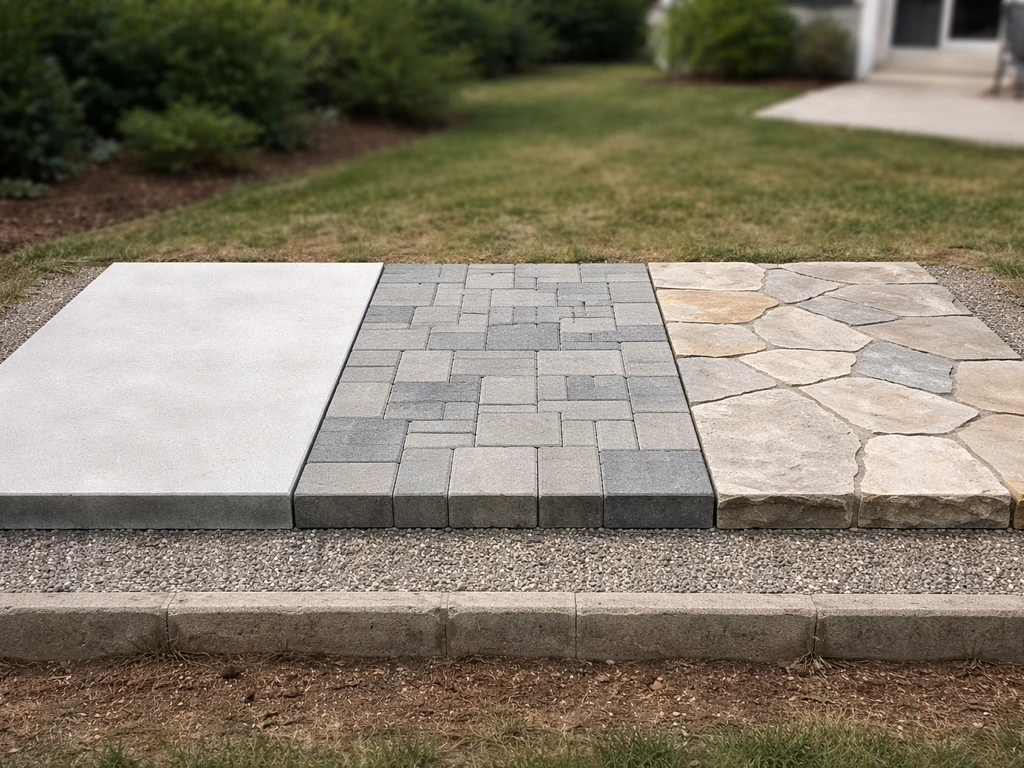
Patio cost guide with real price ranges by size and material, full line-item budget, DIY vs install, and quote checklist
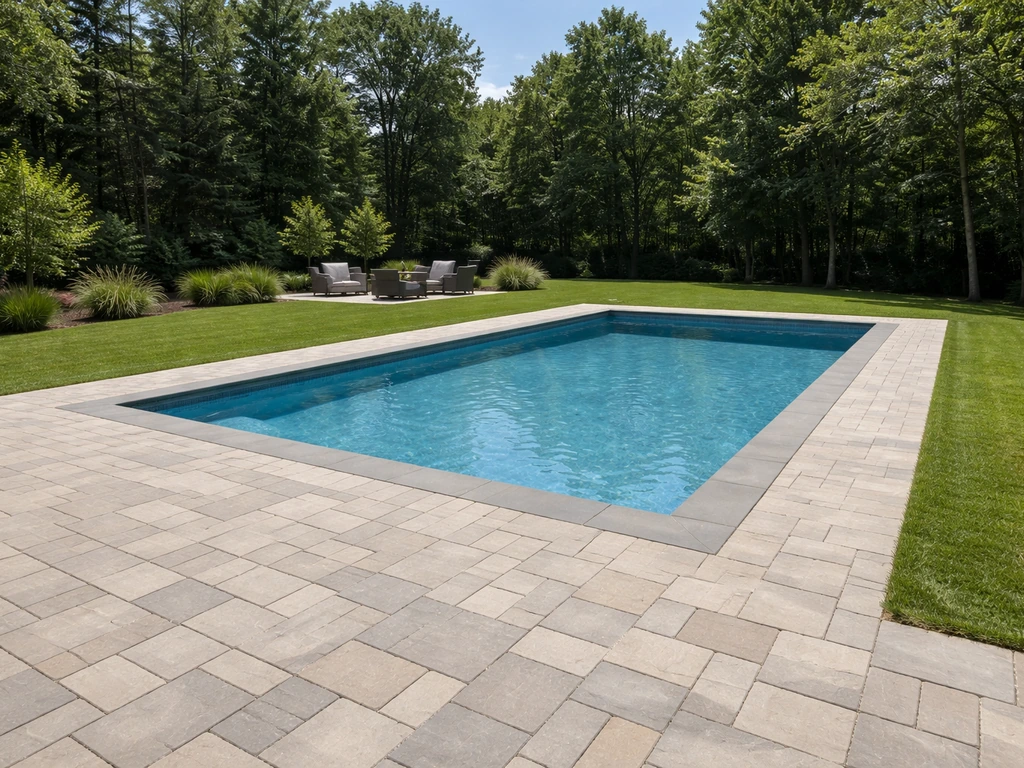
Learn how much patio around a pool costs and how to size square feet, materials, extras, and get real bid line items.
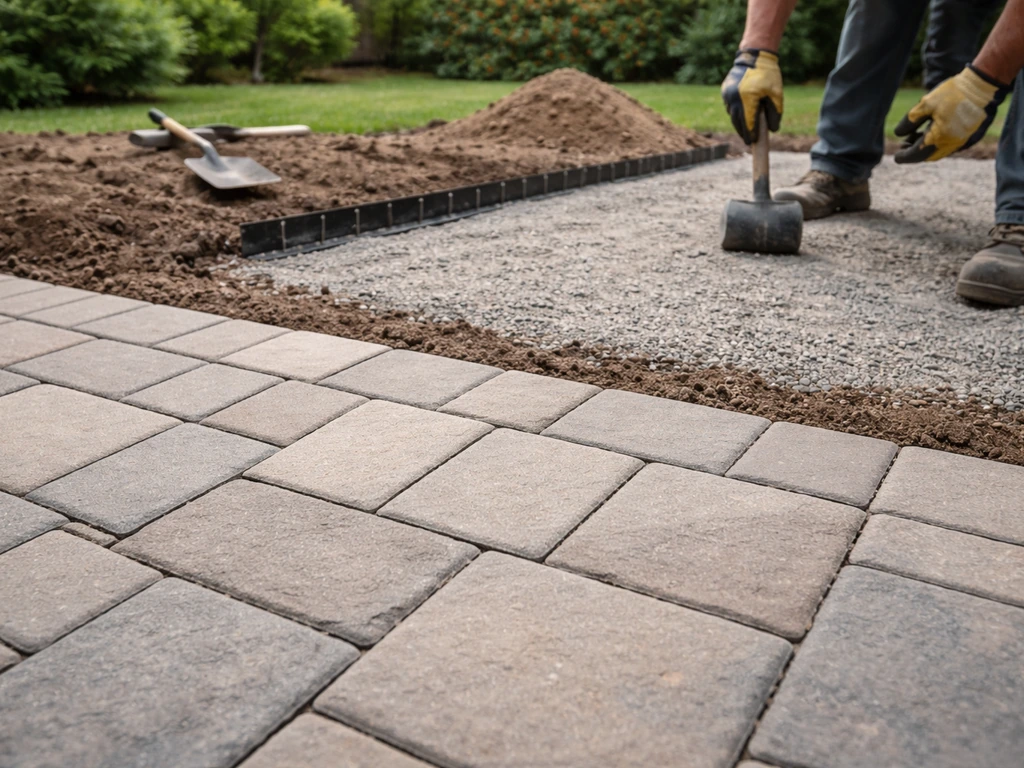
Patio cost estimates by size and material with labor, base, add-ons, DIY vs contractor, and quote planning tips.