
A stone patio typically costs $15 to $30 per square foot installed, which puts a common 12x12 patio (144 sq ft) somewhere between $2,160 and $4,320, and a larger 20x20 patio (400 sq ft) between $6,000 and $12,000. HomeAdvisor’s broader patio cost guidance states that natural stone patios cost roughly $3 to $35 per sq ft, depending on the material.
How Much Do Stone Patios Cost? Installed Price Guide

Felix Carver
21 May 2026
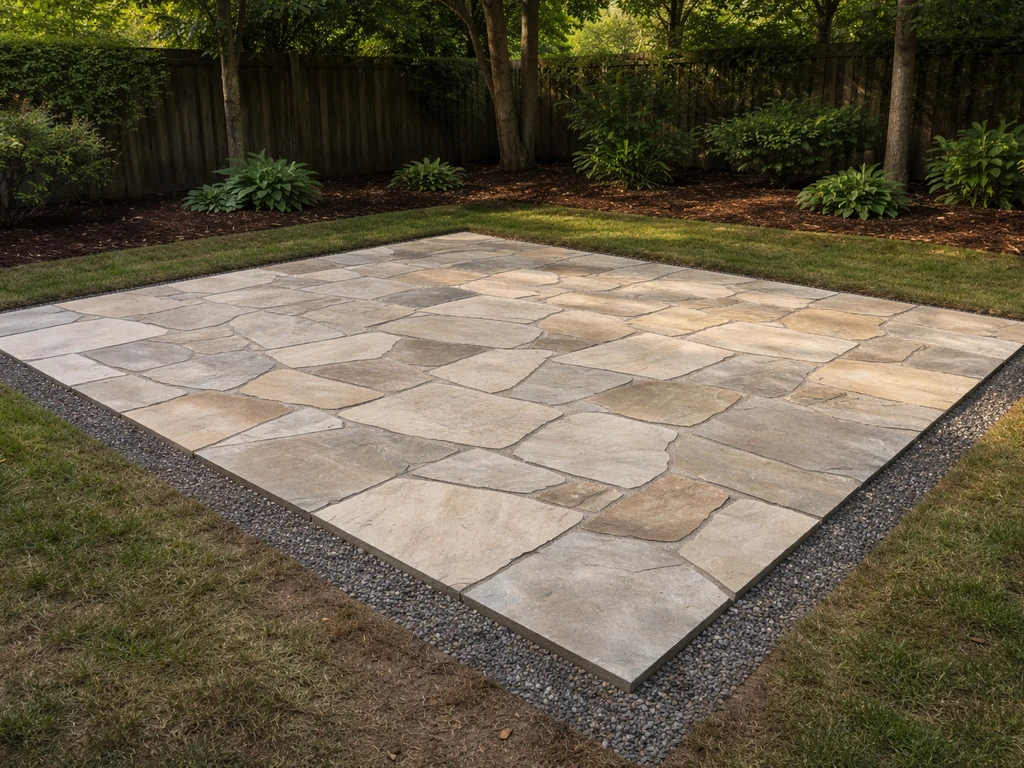
Materials alone run $7 to $16 per square foot depending on the stone type, with labor, base prep, and finishing making up the rest. The wide range is real, not fuzzy math: flagstone irregular cuts cost more to lay than uniform pavers, and a site that needs regrading will add $3 to $7 per square foot before a single stone goes down.
What stone patio materials cost on their own
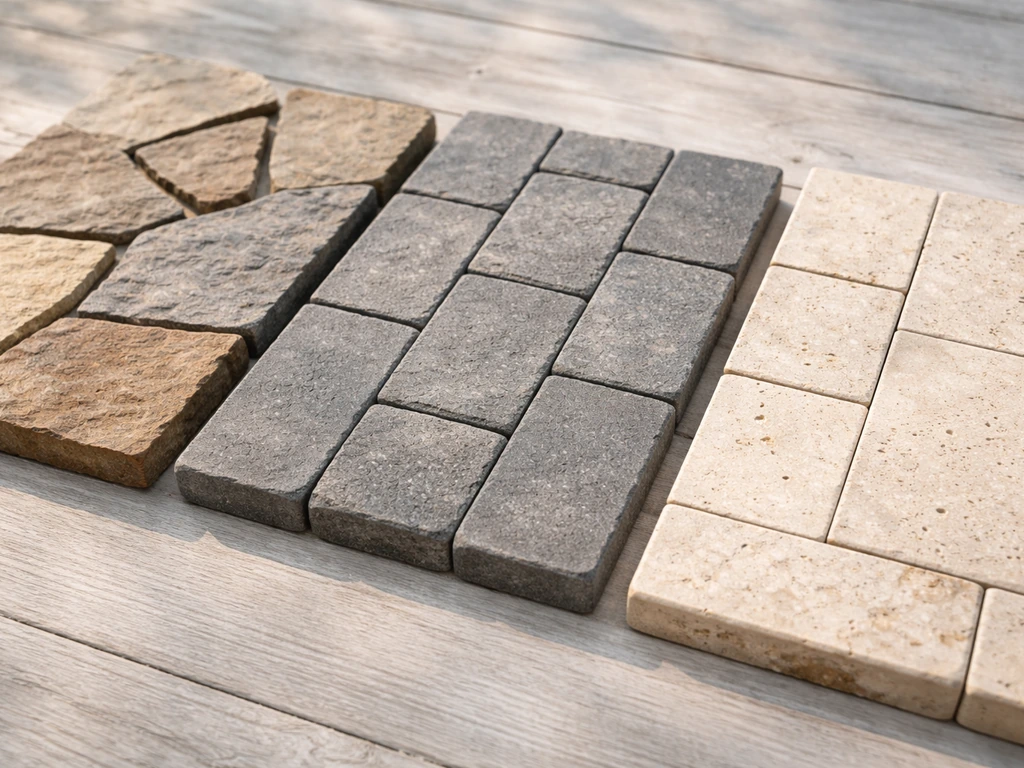
If you're pricing materials before calling a contractor, expect to pay roughly $7 to $16 per square foot for natural stone, depending on the type. Irregular flagstone (think the jagged puzzle-piece look) tends to sit at the lower end of that range in raw material cost, around $8 to $15 per square foot, but it's also one of the more labor-intensive stones to install, which pushes the total installed price up. Dimensional cut stone, like bluestone or sandstone in consistent rectangular slabs, can cost more per square foot of material but goes down faster and sometimes ends up with a lower total bill on smaller patios.
One thing most homeowners don't account for: contractors typically order 10 to 15 percent more stone than the actual square footage of the patio to account for cuts, breakage, and waste. So if your patio is 200 square feet, you're paying for material closer to 220 to 230 square feet. That's not a scam, it's just how natural stone installation works. Ask your supplier or contractor what waste factor they're using so you can budget accordingly.
Installed cost ranges by stone type
The stone type you choose has the single biggest impact on your total project cost. Here's how the most common options stack up on a fully installed basis (materials plus labor).
| Stone Type | Material Cost (per sq ft) | Installed Cost (per sq ft) | Notes |
|---|---|---|---|
| Irregular flagstone | $8–$15 | $15–$30 | High labor; cuts and fitting are time-intensive |
| Dimensional flagstone / bluestone | $10–$16 | $18–$30 | Cleaner look, faster install than irregular |
| Natural stone pavers (cut/uniform) | $7–$14 | $12–$25 | More consistent install; good mid-range option |
| Concrete pavers (paver stone look) | $3–$8 | $6–$17 | Most budget-friendly; durable and widely available |
| Limestone slabs | $8–$14 | $15–$28 | Softer stone; sealing recommended |
| Travertine | $10–$16 | $18–$30 | Premium look; can be slippery when wet |
Concrete pavers that mimic natural stone are worth a mention here because they often show up in searches for 'patio stones.' They cost significantly less, blank" rel="noopener noreferrer">installed prices typically run $6 to $17 per square foot, and they're consistent in thickness which makes the base work faster. If budget is the main constraint, that's a real option. Flagstone and dimensional natural stone cost more but deliver a look and feel that holds resale value well. Unilock and similar manufactured paver systems fall somewhere in between.
What drives the install cost: labor, base prep, and site factors
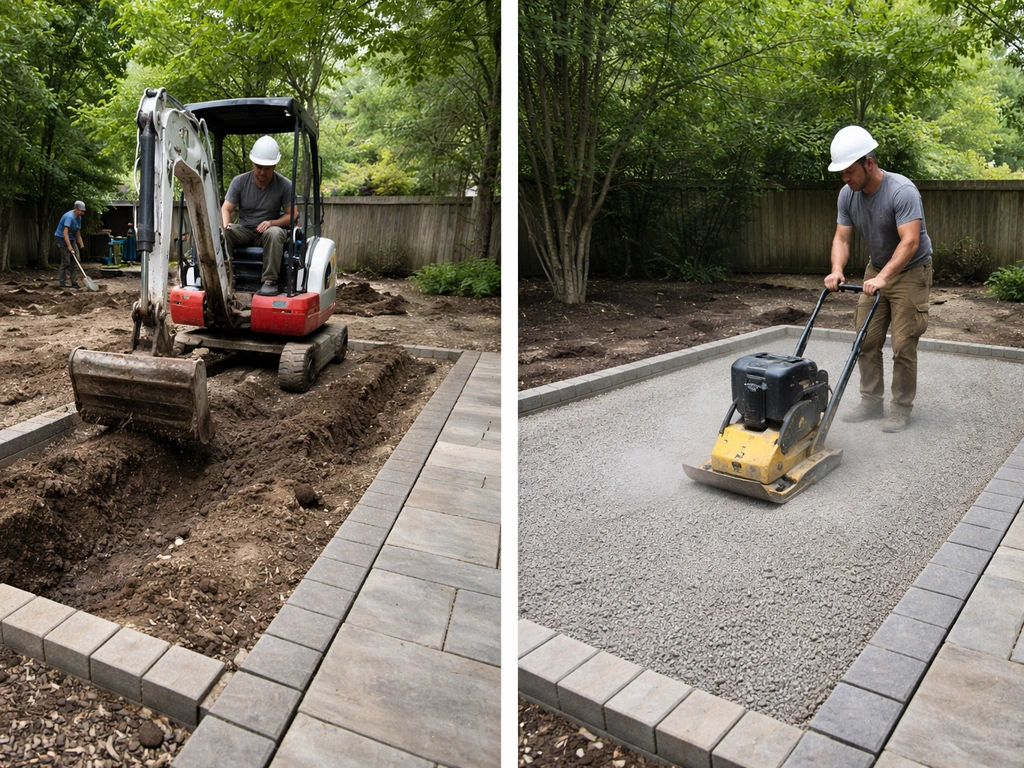
Labor rates for hardscape contractors typically run $50 to $80 per hour. On a 200-square-foot patio, a crew might spend two to four days total, covering excavation, base compaction, leveling, laying stone, cutting edges, and cleanup. That's where the $3 to $7 per square foot for base prep alone comes from, and it's unavoidable if you want the patio to last.
The base is genuinely the most important part of the whole project. A poorly compacted or undersized base leads to stones that rock, sink, and shift within a few years. A proper installation includes excavation to the right depth (usually 6 to 8 inches below finished grade for freeze-thaw climates), compacted gravel aggregate, a layer of bedding sand screeded level, and geotextile fabric underneath to prevent weed intrusion and base erosion. That fabric costs almost nothing, roughly $0.15 to $0.50 per square foot, but it's often skipped on cheap installs.
Edge restraints are another line item that shows up on legitimate bids and disappears from lowball ones. Without them, pavers and stone slabs creep outward over time and the whole pattern loosens. Polymeric sand in the joints (instead of regular sand) is also worth paying for because it resists washout and discourages ants from moving in. If a quote doesn't mention edge restraints and joint sand type, ask.
Drainage design matters more than most homeowners realize. A patio that slopes toward the house, or sits in a low spot in the yard, can pool water under the stone and accelerate base failure. If your site needs regrading or a French drain added, budget another $500 to $2,000 depending on the scope.
What a complete installation package should include
- Excavation and haul-off of existing soil or old patio material
- Compacted gravel base (typically 4 to 6 inches)
- Geotextile fabric layer
- Bedding sand screeded level
- Stone or paver installation with proper cuts
- Edge restraints on all sides
- Polymeric sand swept into joints
- Final compaction and cleanup
Pricing examples by common patio size
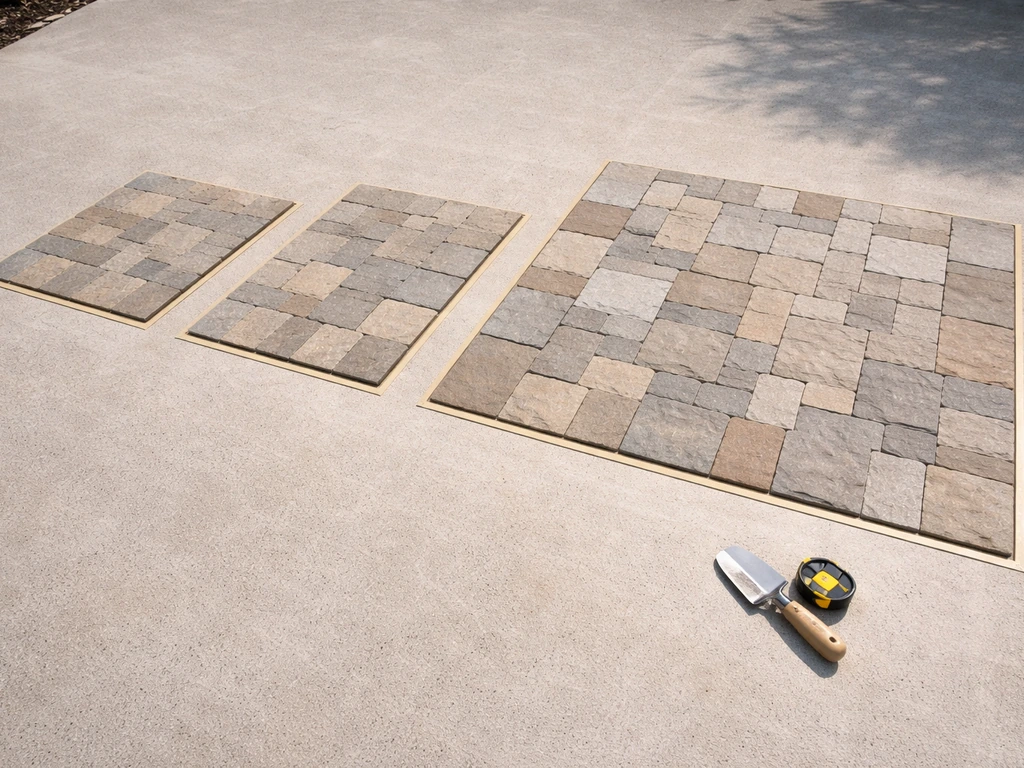
Here are realistic cost ranges for common patio sizes using mid-range natural stone (think flagstone or natural stone pavers) at an installed rate of $15 to $25 per square foot. The low end assumes simpler stone and an easy site; the high end reflects irregular flagstone or a site that needs more prep work.
| Patio Size | Square Footage | Materials Only (est.) | Installed Cost (est.) |
|---|---|---|---|
| 10x10 | 100 sq ft | $700–$1,600 | $1,500–$3,000 |
| 12x12 | 144 sq ft | $1,000–$2,300 | $2,160–$4,320 |
| 12x16 | 192 sq ft | $1,350–$3,100 | $2,880–$5,760 |
| 15x15 | 225 sq ft | $1,575–$3,600 | $3,375–$6,750 |
| 16x20 | 320 sq ft | $2,240–$5,120 | $4,800–$9,600 |
| 20x20 | 400 sq ft | $2,800–$6,400 | $6,000–$12,000 |
| 20x30 | 600 sq ft | $4,200–$9,600 | $9,000–$18,000 |
A 15x15 flagstone patio (225 sq ft) lands in roughly a $3,400 to $6,800 installed range, which tracks closely with HomeAdvisor's own sizing tables. To estimate how much for a stone patio, start with an installed per-square-foot range and multiply by your patio’s square footage, then add for base prep and site factors how much for stone patio.
If you want a quick benchmark for your own project, use this installed range to estimate how much a flagstone patio will cost based on total square footage how much does flagstone patio cost. For most suburban backyards, the 12x16 or 16x20 range is where people end up after accounting for furniture space.
The 10x10 size often surprises people because even though it's small, the mobilization cost for a contractor (showing up, renting equipment, hauling materials) means the per-square-foot rate is actually higher, not lower.
DIY vs. hiring a contractor: savings and risks
Labor typically makes up 35 to 45 percent of the total project cost. On a $8,000 installed patio, that's roughly $2,800 to $3,600 in labor you could theoretically save by doing it yourself. In practice, the savings are real but so are the risks, and the math isn't quite as clean as it looks.
The tools are the first reality check. A plate compactor rents for $70 to $100 per day and you'll need it for at least two days. A wet saw or paver cutter rents for $50 to $200 per day depending on the machine. Add delivery fees, blade costs for stone cuts, and a few miscellaneous supplies and your tool budget alone is $300 to $600 before you touch a stone. That's fine if you're doing a 400-square-foot patio, but it's a meaningful portion of the total cost on a small 100-square-foot project.
The base work is where most DIY patios fail. Getting the excavation depth right, achieving proper compaction, and screeding bedding sand to a consistent level takes practice. A first-time installer almost always ends up with at least a few stones that rock or sit slightly high. That's annoying on concrete pavers and becomes a real trip hazard on thick irregular flagstone. If you're set on DIY, consider hiring a contractor just for the excavation and base work, then doing the stone-laying yourself. That hybrid approach captures some savings while protecting the structural integrity.
The other risk is time. A professional crew knocks out a 200-square-foot flagstone patio in two to three days. A motivated DIYer doing it for the first time on weekends might spend four to six weekends, and the project will be exposed to weather (and family complaints) the whole time.
| Factor | DIY | Professional Install |
|---|---|---|
| Labor cost | $0 (your time) | $50–$80/hr (contractor rate) |
| Tool rental | $300–$600+ | Included in quote |
| Base prep quality | Variable; risk of errors | Consistent with warranty |
| Material waste | Often higher (learning curve) | Typically 10–15% budgeted |
| Time to complete | Weeks to months | 2–5 days typical |
| Drainage design | Easy to get wrong | Experienced eye on slope/grade |
| Warranty / recourse | None | Usually 1–2 year workmanship |
How to get accurate quotes and budget for hidden costs
Before you call a single contractor, have your patio size, approximate location on your property, and your stone preference in mind. That lets you get apples-to-apples bids instead of comparing a quote that includes base prep against one that doesn't. Get at least three quotes and ask each contractor to line-item the following so you can compare them directly.
- Excavation depth and haul-off (or fill cost if grading up)
- Base material: type of aggregate, depth, and compaction method
- Geotextile fabric: included or not
- Bedding sand type and depth
- Stone type, thickness, and source (local quarry vs. imported)
- Edge restraint type and spec
- Joint sand type (regular or polymeric)
- Drainage slope or any added drainage components
- Waste percentage built into the stone order
- Cleanup and haul-off of construction debris
The hidden costs that catch homeowners off guard most often are: removal of an existing patio (add $1 to $3 per square foot for demo and disposal), permits (typically $75 to $200 for smaller patios, jurisdiction-dependent), and HOA approvals if you live in a managed community. Some HOAs require an architectural review application before any hardscape work, which can add weeks to your timeline and occasionally forces design changes. Check before you sign a contract.
Steps and tiers are another major budget item that often gets added late. A single step can cost $200 to $600 depending on material and complexity. A two-tier patio with a step between levels can add $1,000 to $3,000 to a mid-sized project. If your yard has any grade change at all, bring it up during the quote process so it's in the bid, not in a change order after work starts.
Regional cost variation is real and meaningful. Labor rates in the Northeast and West Coast run higher than the national average, sometimes 20 to 30 percent above the mid-range figures here. Material costs also shift based on proximity to quarries: limestone is cheaper in the Midwest, bluestone is more accessible in the mid-Atlantic, and imported stone adds freight costs anywhere. The ranges in this article are US national averages. When you get local quotes, use them as a sanity check but don't be surprised if your bids are 15 to 25 percent above or below what you see here.
One last budget tip: if you're comparing stone to brick or flagstone options, the material pricing overlaps more than most people expect, but the labor and complexity don't always track the same way. If you’re specifically comparing a brick patio, check the brick patio cost breakdown so you can line up material and labor expectations for that exact material brick patio cost articles on this site. Because brick and patio paver pricing varies by thickness, finish, and installation method, it helps to compare per-square-foot brick costs separately brick patio cost. Flagstone patio cost and brick patio cost articles on this site break down those specific materials in more detail if you're still narrowing down your stone choice before getting quotes.
Your pre-quote checklist
- Measure your patio footprint and note any slopes or obstacles
- Decide on stone type or narrow it to two options you'd accept
- Check your municipality's permit requirements for hardscape
- Verify HOA rules if applicable before setting contractor appointments
- Note whether there's an existing patio to remove
- Identify any drainage concerns (low spots, downspout proximity)
- Get at least three itemized bids using the line items listed above
- Ask each contractor for a recent similar project reference you can actually call
FAQ
How much do stone patios cost per square foot if my yard is flat and easy to access?
If the site doesn’t need regrading, permits are minimal, and you’re not adding steps or special drainage, many bids land near the middle of the $15 to $30 per square foot installed range. For an easy-access, straightforward layout, ask for a “base-only scope” that confirms excavation depth, compaction method, geotextile usage, and joint sand type, since those details often explain why two quotes differ even when the per-square-foot numbers look similar.
What’s the cheapest stone patio option that still lasts in freeze-thaw climates?
“Cheapest installed” often changes with climate. In freeze-thaw areas, durability depends less on whether the stone is flagged or dimensional and more on base depth, drainage, and correct compaction. Even if you choose a lower-cost natural stone, budget to match the correct excavation depth (commonly 6 to 8 inches below finished grade) and ensure the drainage plan prevents water from collecting under the stones.
Are per-square-foot prices accurate for small patios like 10x10?
Not very. Small jobs frequently cost more per square foot because mobilization and minimum crew time dominate the math. If you’re doing something like a 10x10, ask whether the contractor has a minimum project fee, and compare bids that include the same prep work (demo if needed, base thickness, and edging), otherwise the lowest per-square-foot quote can turn out higher overall.
How much should I budget for waste and cuts beyond the patio’s square footage?
Natural stone installations typically require 10 to 15 percent extra for breakage and cutting, but irregular shapes can push the need higher. Before ordering stone, ask the contractor to state the exact waste factor they use for your specific stone type and layout, especially if you have curves, diagonal patterns, or complex borders.
Why do some quotes look cheaper, even when the installed per-square-foot rate is similar?
A low quote is often missing at least one structural line item, such as edge restraints, geotextile fabric, or polymeric joint sand. Ask each contractor to confirm they will include edging and specify the joint sand product, and request a written base section (aggregate type, thickness, and compaction) so you can compare like for like.
How much extra do steps and railings add to a stone patio budget?
A single step commonly adds $200 to $600, and a two-tier patio with a step can add $1,000 to $3,000. If you also need handrails, those costs are usually separate from the patio stone scope, so get a fully itemized quote that lists stair treads, risers, any coping, and whether rail posts are anchored to the base properly.
What additional cost should I expect for drainage problems or a French drain?
If you need regrading, a French drain, or other water-management work, it often adds roughly $500 to $2,000 depending on scope. The key is to require the contractor to describe where water will go and how it’s routed away from the patio base, because drainage fixes are sometimes treated as an “allowance” that varies widely between bids.
Is it worth doing base work myself to save money?
It can help, but base work is where most DIY failures happen. If you do it yourself, you need consistent excavation depth, proper compaction, correct screeding of bedding sand, and (in many good installs) geotextile under the base. A safer hybrid is hiring the contractor for excavation and base buildout, then installing the stones yourself to reduce both risk and tool cost.
What should I ask a contractor to make sure I get comparable bids?
Ask for line items covering excavation depth, base materials and thickness, geotextile inclusion, edging restraints, bedding sand thickness, stone ordering quantities (including waste factor), joint sand type, and whether the quote includes cleanup and disposal. Also confirm the timeline and how they handle weather exposure if installation spans multiple weeks.
How much does removing an old patio add to the total cost?
Demo and disposal commonly add about $1 to $3 per square foot, but the real number depends on what’s underneath (concrete slab versus pavers), access for hauling, and disposal fees. Ask whether the quote includes hauling offsite and whether any portion of the old base will be left in place.
Do permits or HOA approvals change the price or timeline significantly?
Permits often cost about $75 to $200 for smaller projects and are jurisdiction-dependent, while HOA reviews can add weeks and sometimes require design changes. Cost might not change much, but schedule delays can increase labor exposure and coordination costs, so ask the contractor who handles permit paperwork (if anything) and when they expect approval.
How do regional price differences show up in quotes?
Labor can be 20 to 30 percent higher in the Northeast and West Coast, and material pricing can vary by distance from quarries due to freight. Use your bid to identify which part is local: a much higher rate could be labor, while an unusually high stone material line could be freight, specialty availability, or a different stone thickness than you expected.
Next Articles
How Much Should I Expect to Pay for a Patio
Patio cost guide with real price ranges by size and material, full line-item budget, DIY vs install, and quote checklist
How Much Patio Around Pool: Cost, Size, and Budget Guide
Learn how much patio around a pool costs and how to size square feet, materials, extras, and get real bid line items.
How Much Are Patios? Cost Ranges by Size and Material
Patio cost estimates by size and material with labor, base, add-ons, DIY vs contractor, and quote planning tips.