
A 10x20 concrete patio (200 square feet) typically costs between $1,200 and $4,000 installed, with most homeowners landing somewhere around $2,000 to $2,800 for a plain broom-finish slab with a proper base. If you go with stamped concrete, colored concrete, or any decorative finish, expect to push toward $4,000 to $6,000 or more. At the absolute low end, bare-bones DIY pours on flat, easy-access lots can come in under $1,000 in materials alone, but a professionally installed slab with good prep rarely comes in under $1,200 on a real job site.
How Much Does a 10x20 Concrete Patio Cost in 2026?

Felix Carver
3 May 2026
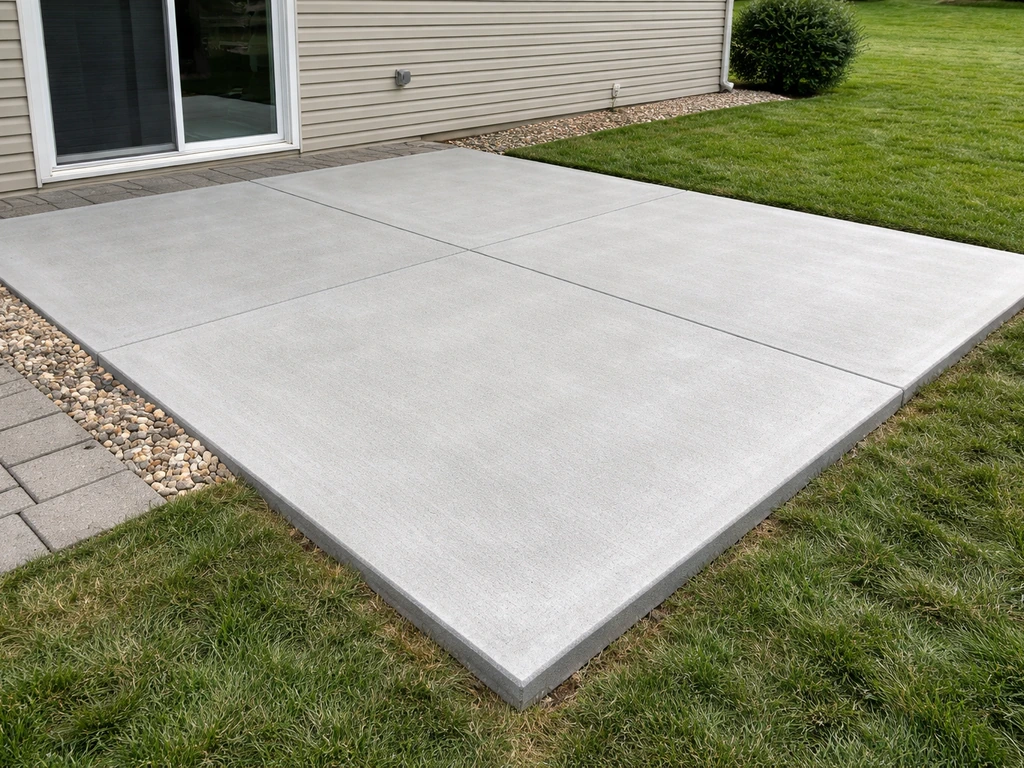
What a 10x20 concrete patio actually costs in 2025
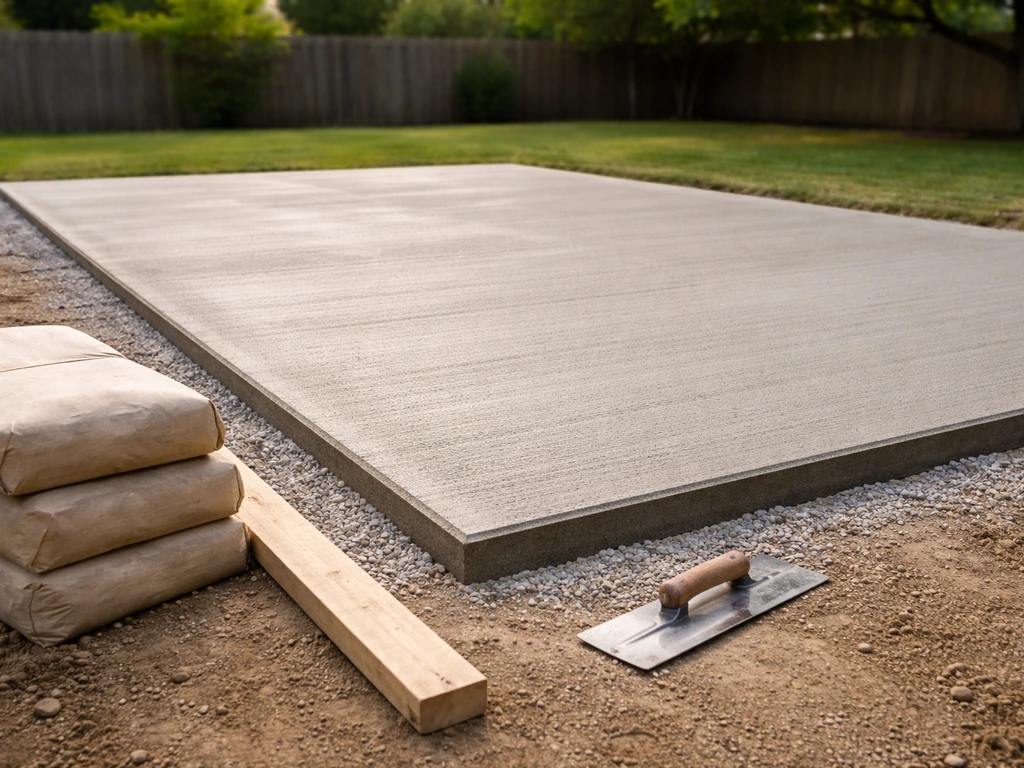
The most cited national data puts concrete patio installation at roughly $4 to $30 per square foot, with an average around $10 per square foot. For 200 square feet, that math gives you $800 to $6,000 total, which is accurate but not very useful on its own. The honest sweet spot for a professionally installed plain concrete patio with proper base prep is $8 to $14 per square foot, or $1,600 to $2,800 for your 10x20 slab. Decorative upgrades push that to $15 to $25 per square foot, meaning $3,000 to $5,000 for the same footprint.
| Finish Type | Cost per Sq Ft | Total for 10x20 (200 sq ft) |
|---|---|---|
| Plain broom-finish concrete | $8–$14 | $1,600–$2,800 |
| Colored concrete (integral) | $12–$18 | $2,400–$3,600 |
| Stamped concrete | $15–$25 | $3,000–$5,000 |
| Exposed aggregate | $10–$18 | $2,000–$3,600 |
| Stamped + colored + sealed | $20–$30 | $4,000–$6,000 |
Where the money actually goes: the cost breakdown
Understanding what you're paying for helps you know where to negotiate and where cutting corners will hurt you later. A typical 10x20 installed pour breaks down roughly like this.
Concrete material
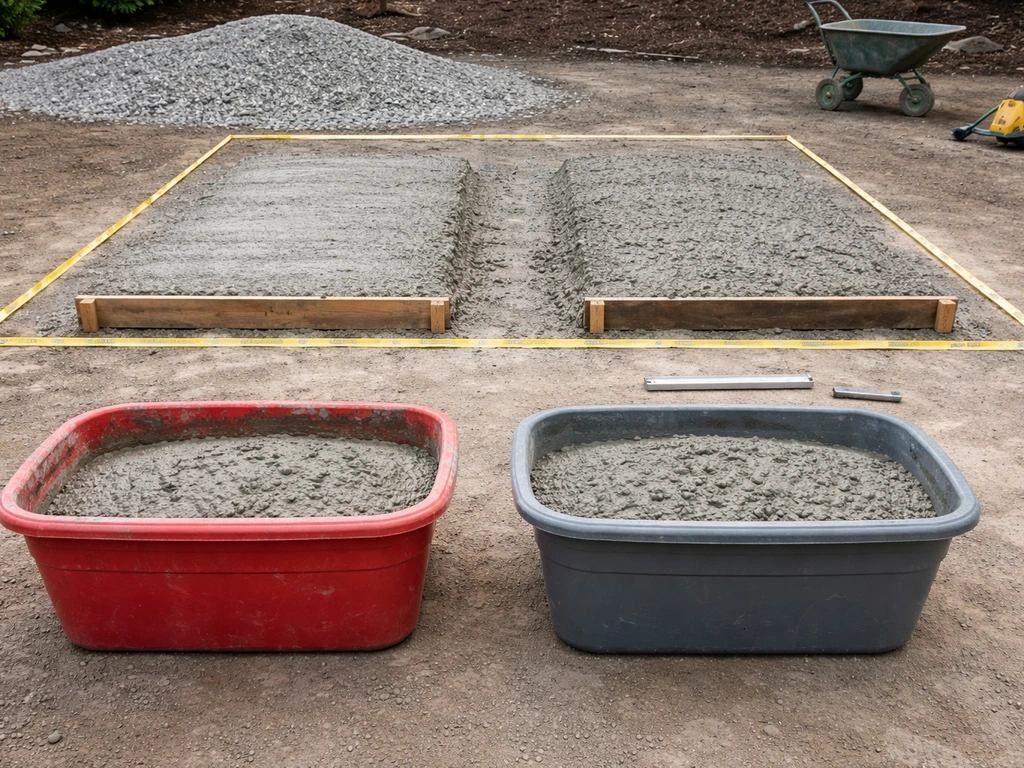
A 10x20 slab at 4 inches thick needs about 2.5 cubic yards of concrete. At 6 inches thick, you're looking at roughly 3.7 cubic yards. Ready-mix concrete runs about $125 to $185 per cubic yard depending on your region and mix design, so material alone lands between $310 and $680 just for the concrete itself. A Calcasieu Parish public bid document for an effective April 1, 2026 to Sept 30, 2026 period shows a similar delivered ready-mix concrete price per cubic yard for Class R/M mix ranges Ready-mix concrete runs about $125 to $185 per cubic yard depending on your region and mix design. That number sounds low because it is: concrete is cheap. Labor and prep are where the real cost lives.
Base preparation and gravel
A proper slab starts with 4 to 6 inches of compacted gravel base (crushed stone or road base). For 200 square feet at 4 inches deep, you need roughly 2.5 to 3 tons of gravel. Material costs $30 to $60 per ton, but delivery, spreading, and compaction typically add $200 to $500 to the job. If your soil is soft, clay-heavy, or poorly draining, the contractor may need to go deeper, adding cost quickly.
Forming and reinforcement
Wood forms to frame the pour cost relatively little in materials (maybe $40 to $80 worth of lumber for a rectangle like this), but the labor to set them level matters. Rebar or wire mesh reinforcement adds $50 to $150 in materials for a 10x20 slab. Some contractors use fiber-reinforced mix instead, which is built into the concrete cost. Either way, skipping reinforcement on a patio slab is a gamble not worth taking if you want it to last 20-plus years.
Labor: the biggest line item
Labor typically represents 40 to 60 percent of the total installed cost on a standard pour. Concrete work is physically demanding, time-sensitive (you have to finish before the concrete sets), and requires at least two or three experienced hands. For a 10x20 slab, a contractor crew will usually spend a full day on-site, sometimes two if demo or grading is involved. Labor alone often runs $600 to $1,500 on a standard job, which is why DIY has real savings potential but also real risk.
Grading, drainage, and site prep
Most patio slabs need a slight slope away from the house (about 1/8 inch per foot) so water drains properly. If your yard is already relatively flat and the soil is stable, this is minor. But if the ground needs grading, tree roots need to be removed, or drainage channels need to be cut, that can add $200 to $800 or more before concrete ever gets poured.
Demo and haul-away
Replacing an old slab or removing a deck? Demo adds real cost. Breaking out 200 square feet of existing concrete and hauling it away typically runs $500 to $1,500 depending on thickness, access, and disposal fees in your area. This is one of the most commonly missed items when people budget patio replacements.
Sealing (optional but recommended)
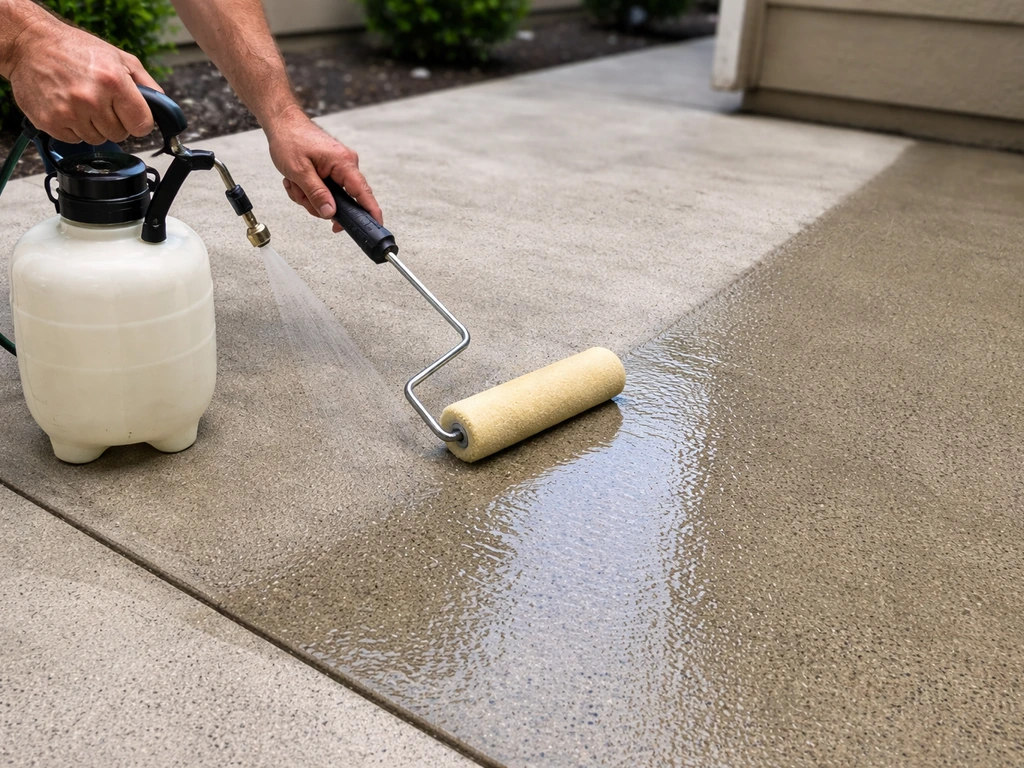
A good acrylic or penetrating sealer protects your slab from staining, freeze-thaw damage, and UV degradation. Sealing a 200-square-foot patio adds about $100 to $300 to the job if done at the same time as installation, or up to $400 if done separately later. Many contractors offer it as an add-on. Worth it.
Plain concrete vs. the upgrade options
The finish you choose has the single biggest impact on cost after site conditions. Here's how the main options stack up.
Plain broom finish
This is your baseline: gray concrete with a textured broom finish applied while the surface is still workable. It's slip-resistant, durable, low-maintenance, and the cheapest option. It's also perfectly fine looking in most settings. Don't let anyone talk you out of it if it fits your budget, because a well-done plain slab will outlast a lot of fancier options.
Colored concrete
Integral color means pigment is mixed directly into the concrete, so the color goes all the way through the slab. This adds roughly $3 to $5 per square foot, or $600 to $1,000 for a 10x20 area. Acid staining or concrete dye applied after curing is another approach that costs less upfront but requires more maintenance over time. With integral color, the look lasts as long as the slab.
Stamped concrete
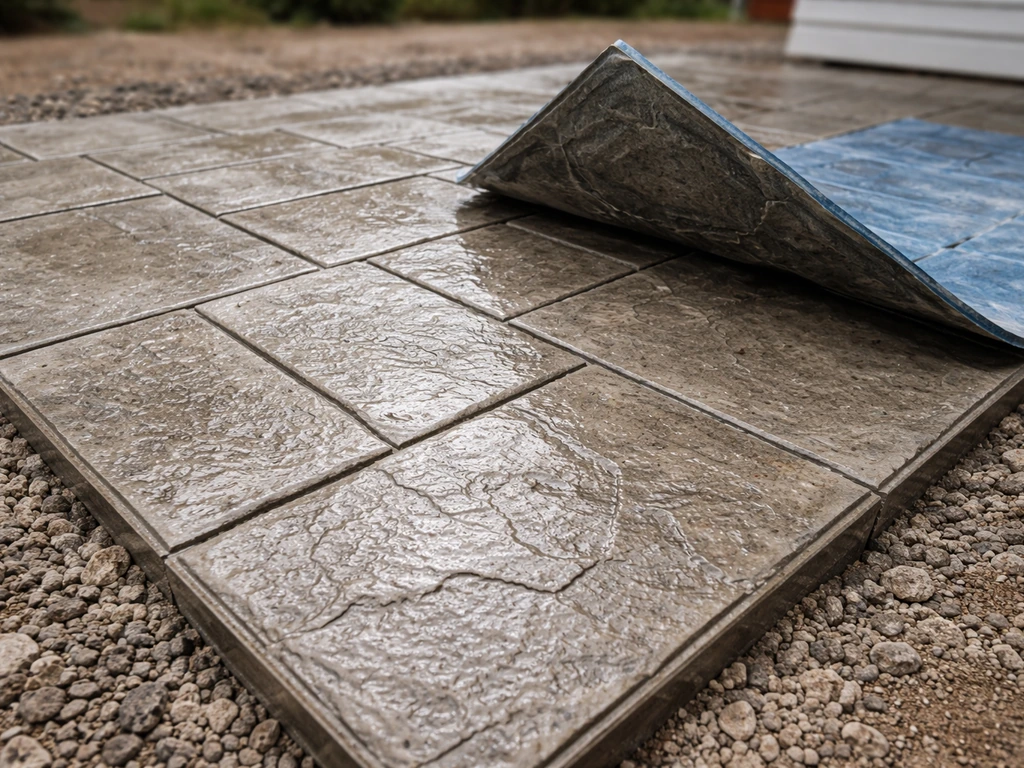
Stamping uses textured molds pressed into fresh concrete to mimic slate, flagstone, brick, wood, or other patterns. It dramatically changes the look of a slab and adds roughly $7 to $15 per square foot over plain concrete. The downside: stamped concrete requires sealing every 1 to 3 years to keep it looking good, and the sealer can get slippery when wet without an additive. Factor in ongoing maintenance cost when comparing it to pavers or natural stone.
Exposed aggregate
The surface is washed before it fully cures to reveal the stone aggregate underneath, giving a textured, natural look. It costs a bit more than plain concrete (roughly $2 to $5 per square foot extra) but less than stamped. It's also naturally slip-resistant, which is a real advantage around pools or in wet climates. Solid mid-range upgrade if you want something that looks better than plain gray without the stamped concrete price tag.
How slab thickness affects your price
For a standard residential patio, 4 inches is the minimum and most common thickness. Most contractors use a 4,000 PSI mix at 4 inches for foot traffic only. If you plan to park a vehicle, set up a heavy grill, or expect any regular vehicle access, 6 inches is the right call. Going from 4 to 6 inches increases your concrete volume by about 50 percent, adding $200 to $400 in material cost for a 10x20 slab. That's money well spent for vehicle or heavy equipment load. Anything between 4 and 6 inches is kind of a no-man's land, so stick with one of those two standards.
| Thickness | Cubic Yards Needed | Extra Material Cost vs. 4" | Best For |
|---|---|---|---|
| 4 inches | ~2.5 cu yd | Baseline | Foot traffic, outdoor furniture, grills |
| 6 inches | ~3.7 cu yd | +$200–$400 | Light vehicles, heavy loads, soft soil |
| 8 inches | ~5.0 cu yd | +$500–$700 | Driveways, heavy vehicle use (overkill for patios) |
Regional pricing and site conditions that move the number
Where you live matters a lot. Labor rates in high cost-of-living metros like Seattle, San Francisco, Boston, or New York can push installed concrete costs 30 to 50 percent above national averages. Rural Midwest or Southeast markets often come in 15 to 25 percent below average. It's genuinely the same physical job, just with different wage rates and overhead behind it. That's why the national average of $10 per square foot is a starting point, not a quote.
Beyond geography, your specific job site can add or subtract significantly from the estimate. Here are the conditions that most commonly affect price:
- Sloped yards: significant grading adds $300 to $1,000+ depending on slope severity
- Poor or expansive soil (clay, sandy, fill): deeper base prep or soil amendment adds $200 to $600
- Limited access: if a concrete truck can't get close, the contractor may need a pump truck, adding $300 to $600
- Existing demo: removing old concrete, a deck, or tree roots typically adds $500 to $1,500
- Drainage needs: French drains, channel drains, or redirecting downspouts can add $200 to $1,000
- Permits: some municipalities require a permit for concrete flatwork, adding $50 to $300 and sometimes an inspection
- Utilities and obstacles: working around buried lines, HVAC equipment, or tree roots slows the job and increases labor cost
DIY vs. hiring a contractor vs. splitting the work
Let's be honest about what DIY concrete actually involves. Pouring a 10x20 slab is not a beginner weekend project. You're working with about 2.5 cubic yards of blank" rel="noopener noreferrer">ready-mix concrete that starts setting within 30 to 45 minutes of delivery. You need to screed, float, and finish the surface before it gets too stiff, which requires multiple people working fast. Mess it up and you're living with a wavy, cracked, or poorly drained slab for the next 20 years.
Full DIY
If you have experience with concrete or construction, DIY can cut the total cost roughly in half. Material costs for a basic 10x20 slab (concrete, gravel, reinforcement, forms) typically run $600 to $1,200. You'll also need to rent equipment: a plate compactor ($80 to $150/day), screed tools, float, edger, and possibly a concrete mixer or pump. Realistic DIY all-in runs $800 to $1,500 versus $1,600 to $2,800 hired out. The savings are real, but so is the risk of a bad result if it's your first pour.
Hybrid approach: DIY some sub-steps
This is actually the smart play for a lot of homeowners. You can save several hundred dollars by doing the prep work yourself: excavating and compacting the base, setting and leveling forms, and placing wire mesh or rebar. Then hire a concrete crew for the pour and finish. Some contractors will work this way if you communicate clearly upfront. You get professional quality on the critical step while cutting labor on the less risky parts.
Hiring a contractor for the full job
For most homeowners, hiring a licensed concrete contractor for the full scope is the right call, especially if this is your first slab. Get at least three quotes. Ask each contractor to break down the quote by base prep, concrete materials, labor, and any finishes separately, so you can compare apples to apples. A quote without a line-item breakdown is harder to evaluate. Also ask whether the quote includes sealing and cleanup, because those sometimes get added after the fact.
| Approach | Estimated Cost (10x20) | Skill Required | Risk Level |
|---|---|---|---|
| Full DIY | $800–$1,500 | High (concrete experience needed) | High if inexperienced |
| Hybrid (DIY prep, hire pour) | $1,200–$2,000 | Moderate | Low to moderate |
| Full contractor hire | $1,600–$4,000+ | None | Low (vet your contractor) |
How concrete compares to pavers, stone, and a deck
Concrete is generally the most affordable installed patio surface, which is why it's the default for a lot of homeowners. But it's worth knowing what you're giving up or gaining versus other options.
Paver patios (concrete or brick pavers) typically cost $15 to $25 per square foot installed, so $3,000 to $5,000 for a 10x20 area. To compare, you can also price a paver patio at typical per-square-foot rates for a 10x20 layout how much does a 10x20 paver patio cost. If you are working with a smaller footprint, the cost per square foot still matters, but a 10x10 paver patio typically comes in for less than a larger 10x20 install how much does a 10x10 paver patio cost. That's noticeably more than plain concrete, but pavers are easier to repair (replace individual units instead of patching), and they handle freeze-thaw cycles better in cold climates. A 10x20 paver patio is worth considering if you're in a northern climate with heavy frost. Natural stone and flagstone run even higher, often $20 to $35 per square foot installed.
A pressure-treated wood deck at the same 10x20 footprint typically runs $3,500 to $7,000 installed, and a composite deck can push $7,000 to $12,000. Decks make more sense on sloped or uneven ground where a concrete slab would require extensive grading, or when you want to attach directly to the house at an elevated level. Concrete patios are simpler, lower-maintenance long-term, and almost always cheaper as a flat-ground installation. If your yard is relatively level and you just want usable outdoor space, a concrete patio beats a deck on price pretty consistently.
The 10x20 footprint (200 sq ft) is a meaningful step up from a 10x10 slab, which covers only half the area. If you're specifically wondering how much it costs to cover a 10x10 patio, the total will typically come out about half the price of this 10x20 footprint how much does it cost to cover a 10x10 patio. If you're wondering how much is a 10x10 patio, the per-square-foot rates in this guide usually translate to a much smaller total price than a 10x20 10x10 slab. To estimate how much does a 10x10 patio cost, use the same per-square-foot range and multiply by 100 square feet how much does a 10 x 10 patio cost. A 10x10 concrete patio is more of a small seating area, while 10x20 gives you room for a dining table and a lounging area, or a grill zone plus seating. If you're trying to estimate a smaller 10x10 space, you can use the same pricing factors to figure out how much a 10x10 concrete patio will cost how much does a 10x10 concrete patio cost. If budget is tight, it's worth considering whether a well-planned 10x12 or 10x16 slab might serve your needs at a lower cost rather than compromising on finish quality for the full 10x20. If you are specifically wondering how much does a 10x12 concrete patio cost, your price will depend mostly on the per-square-foot rate, your site prep, and whether you choose plain broom finish or an upgrade like stamped concrete 10x12 or 10x16 slab.
Next steps: how to budget accurately and get good quotes
The best way to get an accurate number for your specific project is to request quotes with a clear scope. Here's a practical checklist to work through before you call contractors.
- Confirm your exact dimensions: measure the space carefully, including any irregular edges or cutouts around steps or landscaping
- Decide on your finish: plain broom finish, exposed aggregate, colored, or stamped concrete each need to be specified before quotes can be accurate
- Identify site conditions: note whether the area slopes, has existing concrete or structures to remove, has access limitations for a concrete truck, or has any drainage issues
- Choose your thickness: 4 inches for foot traffic, 6 inches if any vehicles or heavy loads will use the space
- Decide on reinforcement: wire mesh is minimum; rebar is better in expansive soil or clay-heavy ground
- Ask about sealing: get it included in the quote if you can, since doing it later costs more
- Check permit requirements: call your city or county building department and ask if a permit is required for concrete flatwork at your property
- Get at least three written quotes: ask each contractor to break out materials, base prep, labor, and finishing separately
- Ask for references and proof of insurance: concrete is a permanent installation; a bad pour is expensive to fix
- Factor in ongoing maintenance: stamped and colored concrete need resealing every 1 to 3 years; plain concrete is essentially maintenance-free
One last thing worth knowing: concrete patio prices have been affected by material and labor inflation over the past few years, so older cost estimates you find online (anything from 2021 or earlier) should be treated skeptically. The ranges in this article reflect 2025 pricing data. When you get quotes, they're your ground truth for your market, so don't anchor too hard to any national average. Use the ranges here to sanity-check contractor quotes, not to replace them.
FAQ
What parts of a quote can be “hidden” beyond the per-square-foot price for a 10x20 slab?
Most contractors price a 10x20 patio based on total square footage only after confirming access and prep. If you tell them whether the slab is connected to a house, whether there are steps, and how far concrete or gravel must be carried from the driveway, you can avoid “surprise” add-ons for hauling, extra excavation, or regrading.
How much of the cost should I plan for if I need permits or site changes with my 10x20 patio?
Yes, the slab often costs less than the full project. Think about including any required permits, utility locating, removal and disposal of old concrete, gutter or downspout rerouting, and any edging or formwork extensions beyond the 10x20 footprint.
How does soil type or drainage change the “how much does a 10x20 concrete patio cost” number?
If you want the patio to survive freeze-thaw and heavy moisture, insist on a compacted base that matches your soil conditions. For soft or clay-heavy soil, contractors may need deeper excavation, additional base thickness, or improved drainage, which is one of the most common reasons bids differ even when the patio size is identical.
Should I budget extra for reinforcement, and what should I ask about it on a 10x20 patio?
A common mistake is skipping or underestimating reinforcement needs. If you expect long-term cracking resistance, ask whether the contractor will use rebar or welded wire mesh, and where it will be placed (for example, at mid-depth rather than sitting on top of the base). Also ask whether they plan to use a fiber mix as supplemental material.
What should I ask about sealing and ongoing maintenance for colored or stamped finishes?
Finishing choices can affect maintenance, especially stamped surfaces. If you choose stamped or colored concrete, plan for periodic sealing and confirm the contractor specifies the sealer type and reapplication interval, and whether the slip risk is addressed with a non-slip additive.
Can I pour a 10x20 patio for foot traffic and still have it handle a car later?
If your patio will handle vehicle loads, switch the thickness and mix plan from a foot-traffic spec to a vehicle-ready one. The usual decision is 6 inches instead of 4 inches, and you should ask whether they will adjust the subbase and reinforcement accordingly, not just pour thicker concrete.
Do control joints, expansion joints, or special edging change the cost for a 10x20 concrete patio?
Even when the square footage is fixed, edge details can change pricing. Ask how they will handle control joints, expansion joints (especially near the house), and the perimeter edge (for example, thickened edge or simple edging), because these affect labor and finishing.
How do I make sure demo and haul-away are included in my estimate for a replacement patio?
Yes. If the concrete is being replaced or a deck is removed, demo and hauling can rival some of the concrete work. Ask contractors to include disposal fees and specify whether they will haul away broken pieces or leave debris for you to manage.
If I want to lower the price, what prep tasks are worth doing myself for a 10x20 patio?
If you are doing prep yourself, confirm what “prep” includes, such as excavation depth, compaction testing, form setting, and placing reinforcement at the correct height. Many DIYers save money by doing demo and grading, but the pour team often needs a ready-to-pour, well-compacted base.
What details should I require so bids for a 10x20 patio are truly apples-to-apples?
To compare bids fairly, require a line-item breakdown for base prep, concrete supply, reinforcement, forms, labor, finish type, sealing (and when it is applied), and any access or equipment fees. Also ask for the concrete mix design or at least the PSI rating and thickness used, so “decorative” bids are not priced with different structural assumptions.
How should I compare the cost of a 10x20 concrete patio to pavers in cold climates?
If you are deciding between a concrete patio and pavers, confirm the long-term tradeoffs in your climate. Pavers can be easier to repair (swap individual units), but the subbase and leveling system still must be built correctly, and if you are in a frost-prone area, your drainage and edge restraint details matter more than the surface material alone.
Next Articles
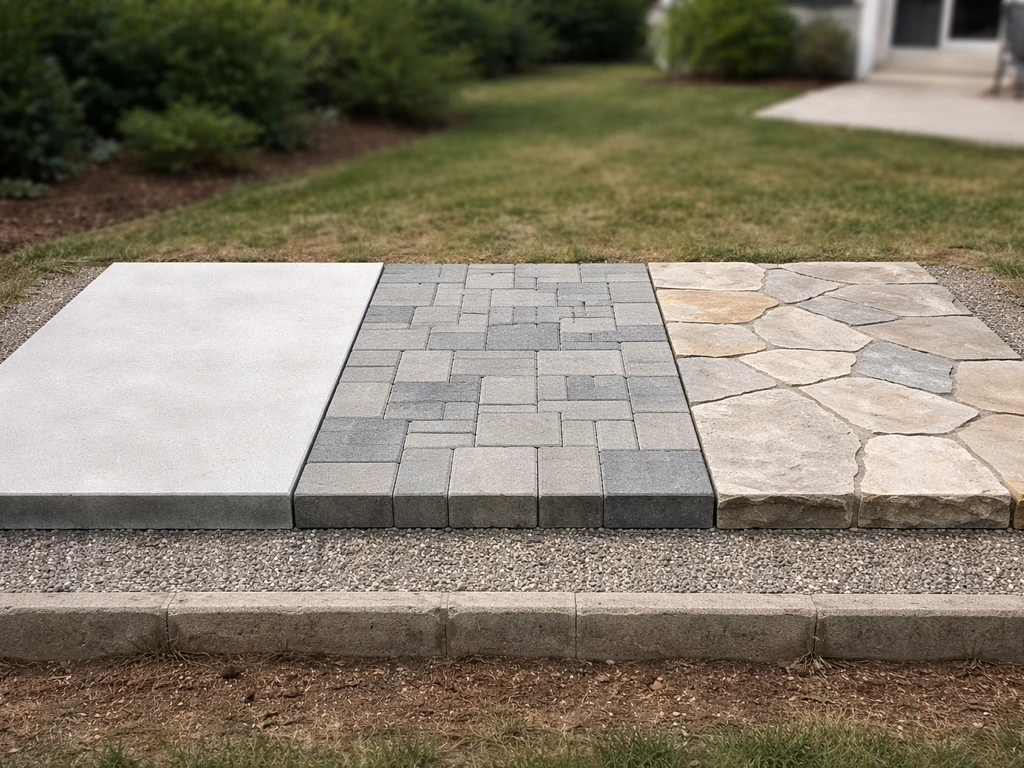
How Much Should I Expect to Pay for a Patio
Patio cost guide with real price ranges by size and material, full line-item budget, DIY vs install, and quote checklist
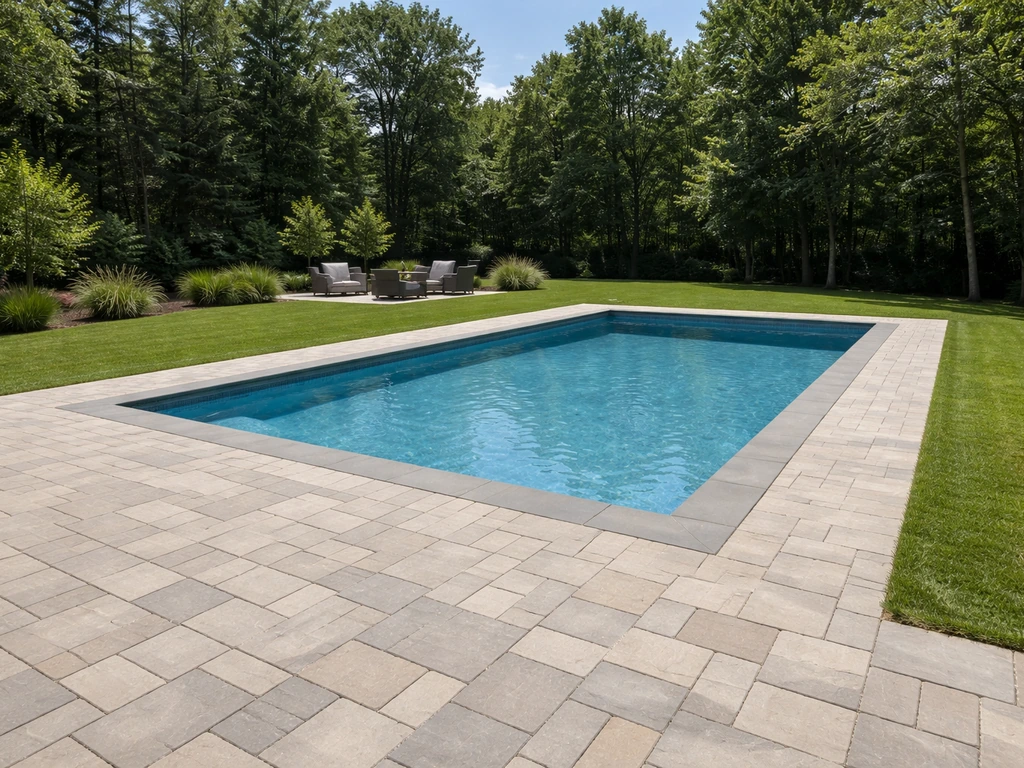
How Much Patio Around Pool: Cost, Size, and Budget Guide
Learn how much patio around a pool costs and how to size square feet, materials, extras, and get real bid line items.
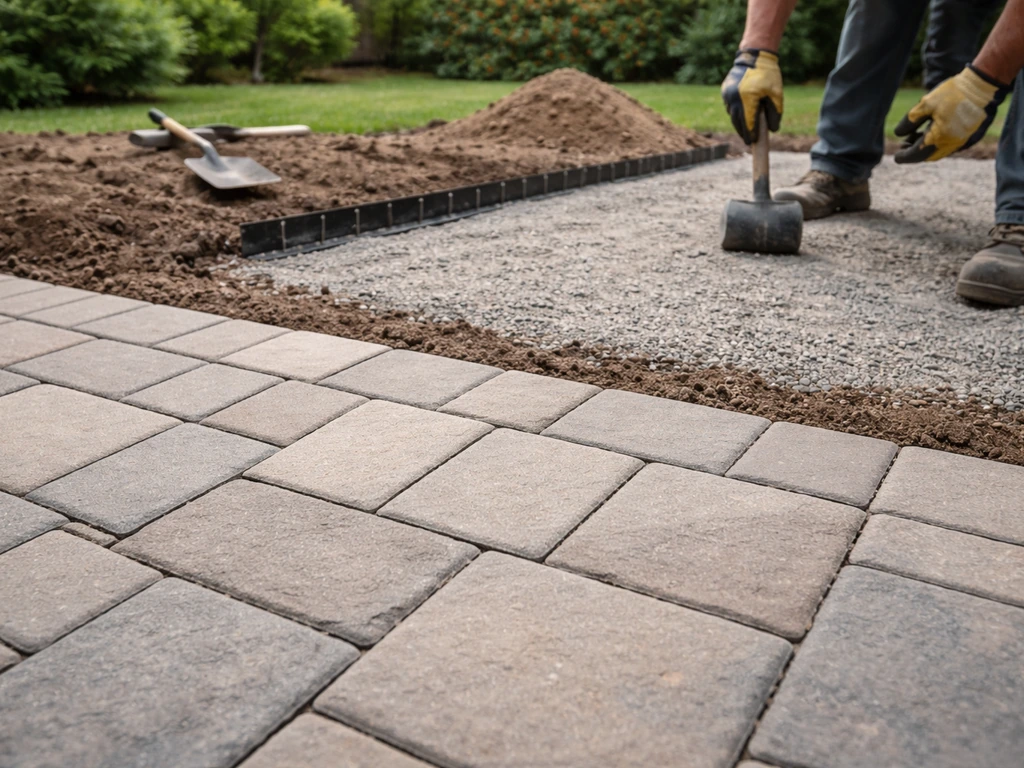
How Much Are Patios? Cost Ranges by Size and Material
Patio cost estimates by size and material with labor, base, add-ons, DIY vs contractor, and quote planning tips.