A professionally installed 12x12 paver patio (144 square feet) typically costs between $1,150 and $3,600 total, with most homeowners landing somewhere in the $1,700 to $2,500 range when using standard concrete pavers and straightforward site conditions. A 12x20 concrete patio has similar cost drivers, but the larger footprint usually pushes the total up fast 12x20 concrete patio cost. At $8 to $25 per square foot installed (materials and labor combined), the spread is wide because paver projects have a lot of moving parts. The actual number you'll get quoted depends heavily on your paver type, how much base prep your soil needs, your region, and a handful of extras that contractors often price separately.
How Much Does a 12x12 Paver Patio Cost? Full Budget Guide

Felix Carver
1 May 2026
What a 12x12 Paver Patio Costs: The Full Range
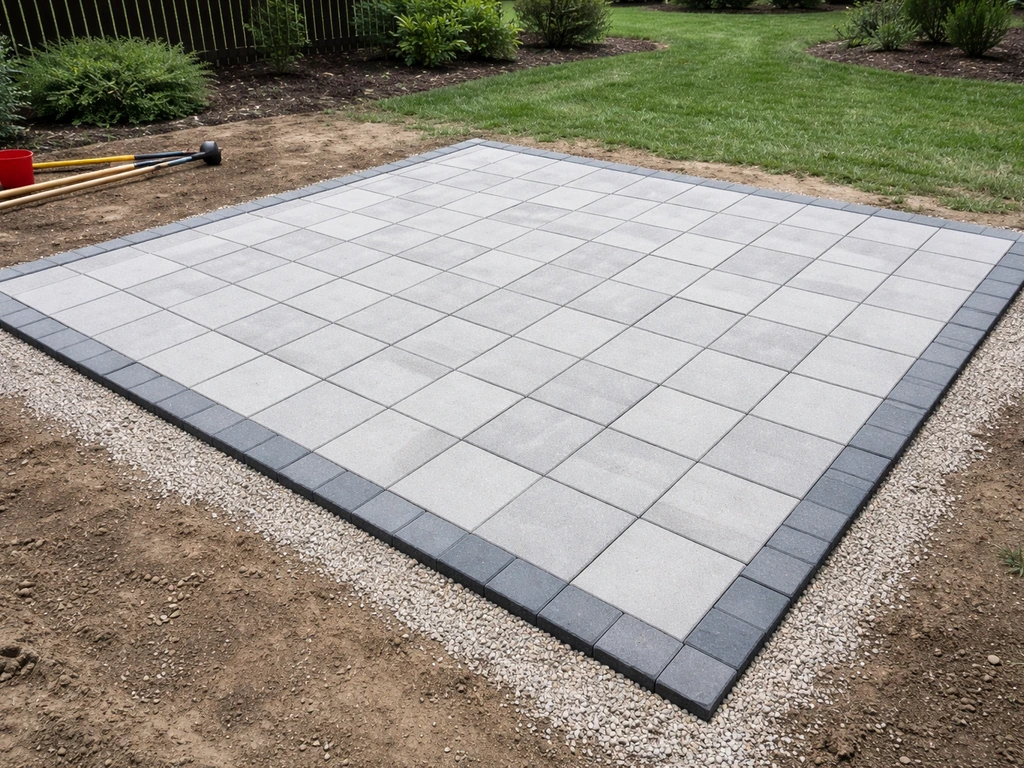
For a basic 12x12 ground-level patio with standard concrete pavers, a simple running bond pattern, and decent site access, expect to pay roughly $1,150 to $2,200 on the lower end. Step up to natural stone, a complex herringbone pattern, or a site that needs significant grading, and that number can climb to $3,000 or more. If you want a clearer view of how much does a 12x12 stone patio cost for your exact material and layout, the next section has more detail. The per-square-foot math works out like this: materials typically run $3.40 to $6.20 per square foot for base materials, bedding sand, and the pavers themselves, while labor adds another $6.25 to $11 per square foot. That gives you a combined installed cost of roughly $10 to $17 per square foot for a typical mid-range project, or about $1,440 to $2,450 for 144 square feet.
For comparison, HomeAdvisor data puts a 280 sq ft paver patio at an average of $3,800 total. Scaled down proportionally to 144 sq ft, that lands around $1,950, which is right in the middle of the range above. Think of $1,500 to $2,500 as your realistic planning target for a no-frills 12x12 installed by a contractor, and budget up to $3,600 if your project has any complicating factors.
Where the Money Actually Goes: Cost Breakdown
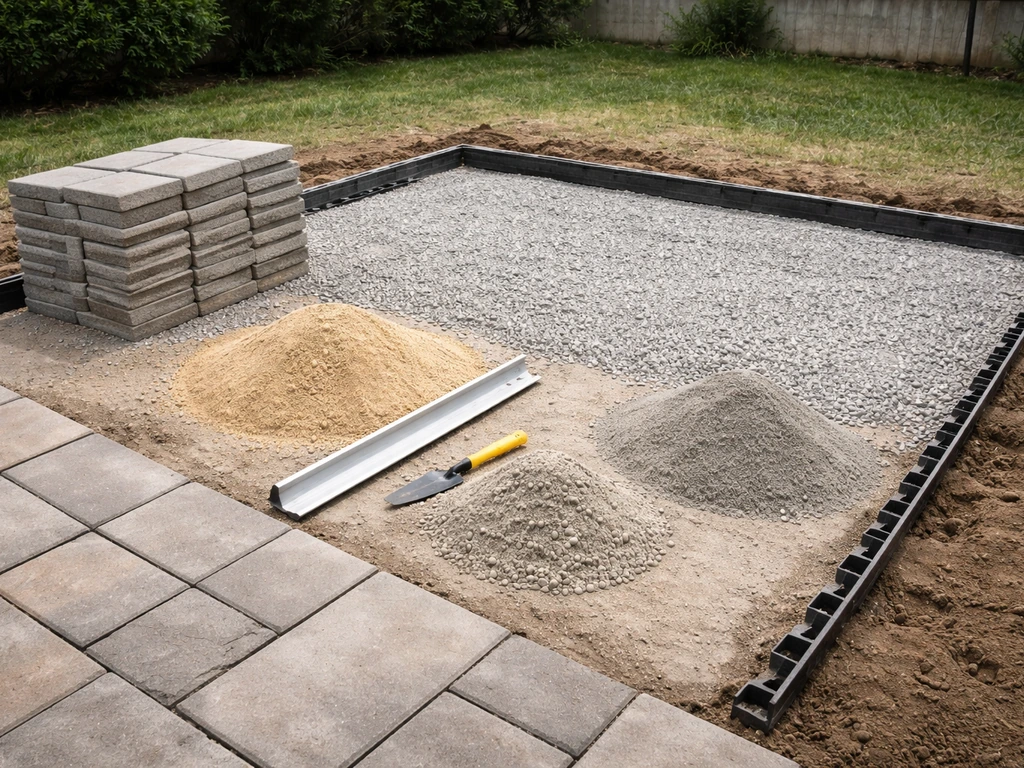
Most contractors bundle their quote into a single price, but understanding the line items helps you spot missing scope and compare bids fairly. Here's how a typical 12x12 paver patio budget breaks down:
| Cost Item | Typical Cost for 12x12 (144 sq ft) | Notes |
|---|---|---|
| Pavers (materials) | $200–$650 | Concrete pavers ~$2–$4/sq ft; natural stone $4–$10+/sq ft |
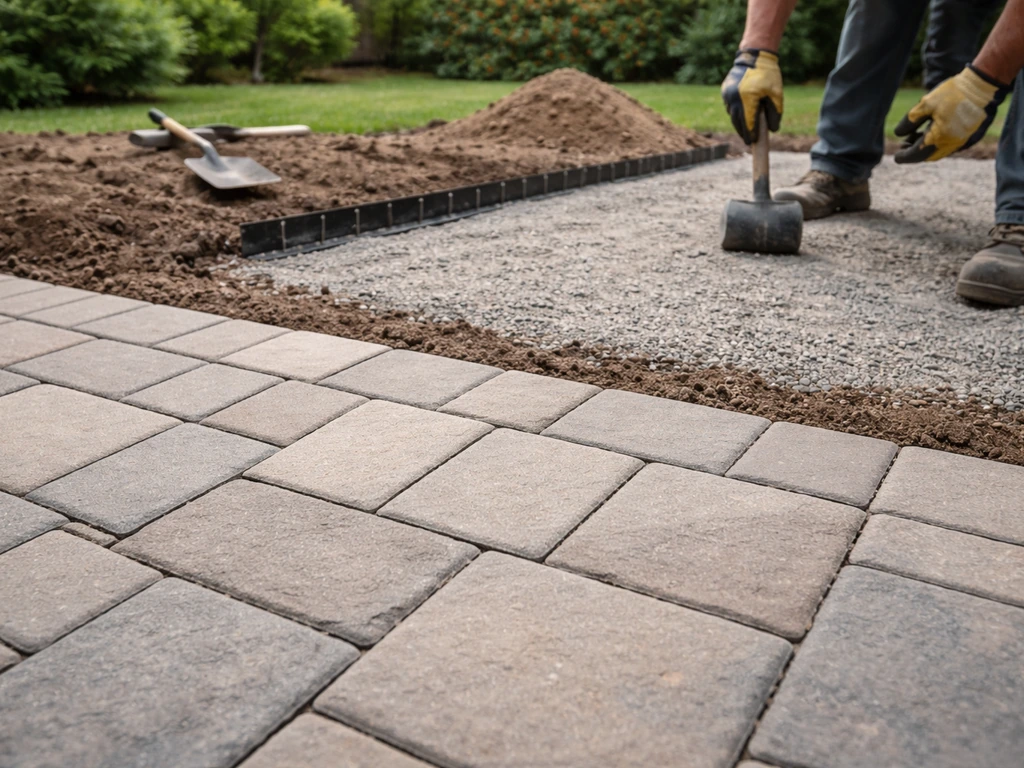
| Gravel/crushed stone base | $80–$180 | 4–6 inches of compacted base; more for unstable soil |
| Bedding sand | $30–$70 | 1-inch layer of coarse sand under pavers |
| Polymeric sand (joints) | $25–$60 | Fills joints and resists weeds; regular sand is cheaper but less durable |
| Edging/border restraints | $40–$100 | Plastic or metal restraints to hold paver field together |
| Leveling and compaction | $50–$150 | Plate compactor work; sometimes included in labor |
| Labor (installation) | $900–$1,580 | At $6.25–$11/sq ft for 144 sq ft |
| Disposal/haul-away | $50–$200 | If existing surface needs demo and removal |
| Permits/taxes | $0–$300 | Varies by municipality; many small patios don't require permits |
A few of these line items surprise homeowners regularly. Edging restraints are often left off DIY budgets entirely, and they're what keeps your paver field from slowly spreading apart over time. Polymeric sand is worth the extra $30 to $40 over regular joint sand because it hardens and dramatically reduces weed growth. And disposal costs are real: if you're ripping out an old concrete slab, expect to add $150 to $400 just for demo and hauling on a 12x12 project.
What Makes Your Price Go Up or Down
Paver type and thickness
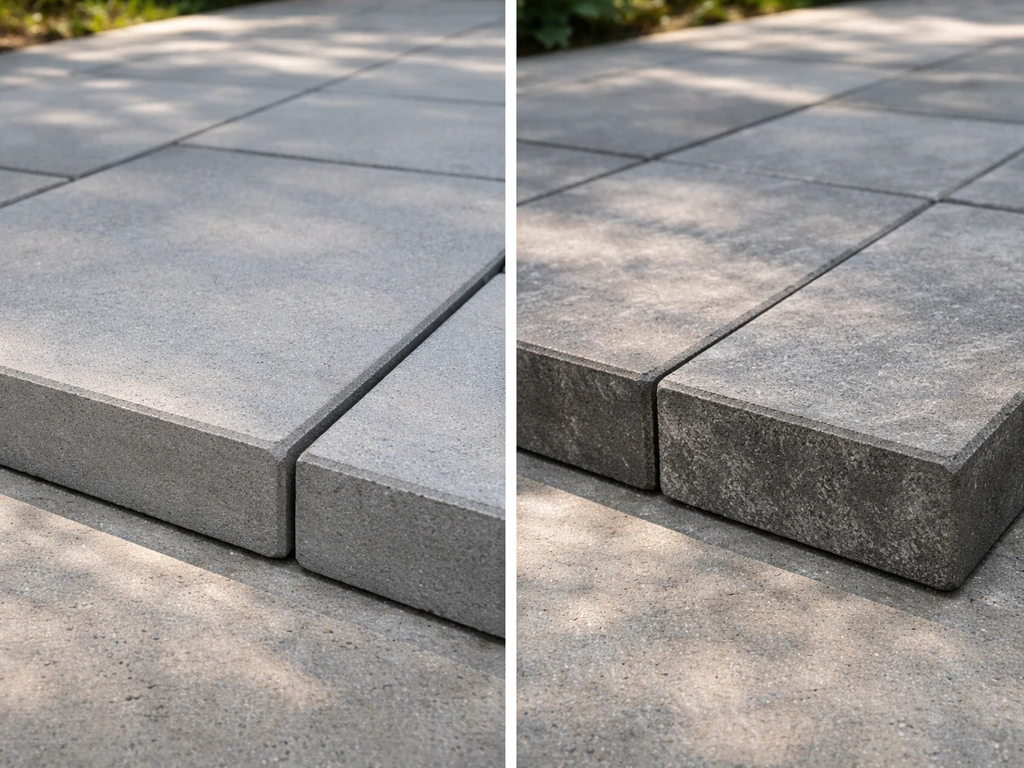
Standard concrete pavers (2 3/8 inch thick) are the most affordable option, usually $1.50 to $3 per square foot for materials. For a detailed estimate, you can also look at the overall installed price range for a 12x12 patio, including materials, base prep, and labor per square foot for materials. Thicker pavers (3 1/8 inch) used for driveways cost more per unit but are rarely necessary for a foot-traffic patio. Natural stone pavers like travertine, bluestone, or slate jump to $4 to $12 per square foot just for materials. If you want a premium look without the premium price, tumbled concrete pavers give a weathered, natural-stone appearance for a fraction of the cost.
Pattern complexity
A straight running bond or stacked pattern is the fastest to install and costs the least in labor. Herringbone and basketweave patterns require more cuts and more time, which translates to $1 to $3 more per square foot in labor. A diagonal or fan pattern on a 12x12 can add $150 to $400 to your total labor bill compared to a basic layout.
Base depth and soil conditions
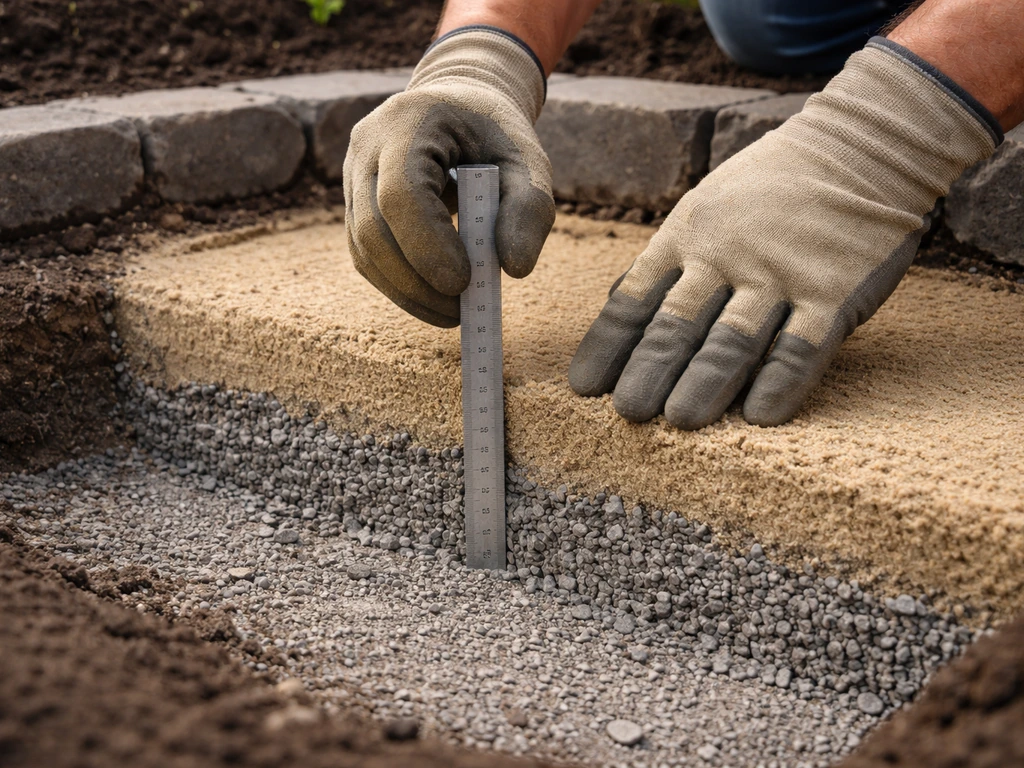
This is the variable most homeowners underestimate. A standard paver base requires 4 to 6 inches of compacted gravel. But if you have clay-heavy soil, poor drainage, or high freeze-thaw cycles (think Midwest or Northeast), a contractor may spec 8 to 12 inches of base material. Doubling your base depth roughly doubles your base material cost and adds time. On a 12x12 project, going from a 4-inch to an 8-inch base could add $150 to $350 to the total.
Grading and drainage
Your patio needs a slight slope (about 1/8 to 1/4 inch per foot) to drain water away from your house. If your yard is already reasonably level, this is quick work. If the area slopes toward the house or needs significant reshaping, grading can add $200 to $600 to the project. Poor drainage is also the most common cause of paver settling over time, so this isn't a place to cut corners.
Site access and obstacles
Contractors price based on how easily they can get equipment and materials to your work area. A patio off the back of a house with an open yard and truck access is straightforward. A patio surrounded by fencing, through a narrow gate, or in a backyard that requires wheelbarrowing materials 100 feet will cost more in labor time. Angi's data specifically notes that access difficulty drives up labor and scheduling costs.
Steps and tie-ins to the house
If your patio connects to a back door and needs one or two steps down, add $300 to $800 for a simple two-step landing. Tying into a house foundation also requires careful flashing and sometimes a small ledger detail to prevent water intrusion. These aren't huge costs, but they're consistently left out of early estimates and show up later in change orders.
Regional Price Differences and Estimating for Your Area
Labor rates are the biggest regional variable. In high cost-of-living metros like San Francisco, New York, Boston, and Seattle, contractor labor for paver work runs $12 to $18 per square foot. In mid-cost regions like the Midwest, Southeast, and Mountain West, you're more likely to see $7 to $11 per square foot. In rural areas or markets with lots of competition, you can sometimes find installers at $5 to $8 per square foot. Material costs vary less by region but can shift 15 to 25 percent based on local suppliers and transportation costs.
To estimate for your specific ZIP code, start with the national mid-range of $12 per square foot installed. Then adjust: if you're in a major coastal metro, nudge that up to $15 to $20. If you're in a lower cost-of-living region, $8 to $11 is more realistic. At 144 square feet, those adjustments mean roughly $1,150 to $2,880 for labor and materials before any add-ons. The single most useful thing you can do is pull three local quotes and compare them against this framework. For a faster ballpark of how much it costs to build a 12x12 patio, use this same per-square-foot framework and then add any add-ons you expect how much does it cost to build a 12x12 patio.
DIY vs. Hiring a Contractor: Honest Trade-offs
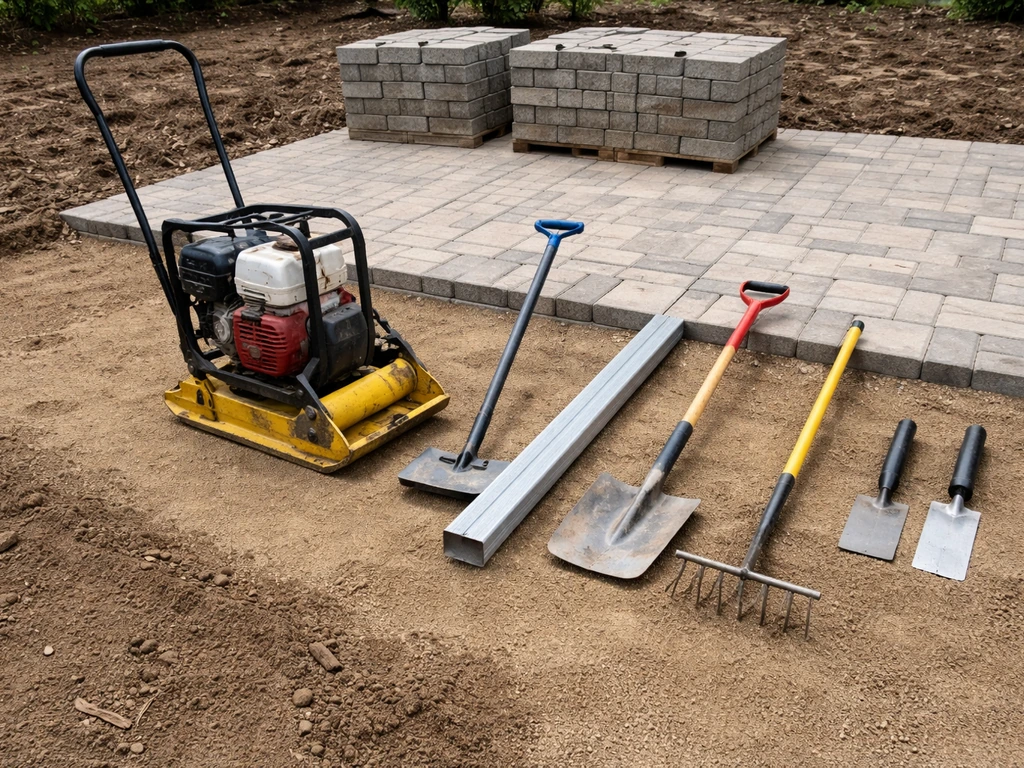
DIY saves you the labor cost, which is $900 to $1,580 on a 12x12 project. That's real money. But the savings come with real costs of their own: tool rental (plate compactor alone is $60 to $100 per day), materials you might over-order, and time. A two-person crew of experienced pros can complete a 12x12 patio in one to two days. A first-time DIYer should realistically budget a full weekend, possibly two, especially if you've never done base prep work before.
The bigger risk with DIY isn't the installation itself, it's the base prep. Pavers that look great on day one can start settling and rocking within two to three years if the base wasn't properly compacted or if drainage wasn't handled correctly. Fixing a sunken or heaving paver patio means pulling up sections and redoing the base, which often costs more than professional installation would have in the first place. That said, if you're comfortable with manual labor, have a flat site with good drainage, and are willing to rent the right tools, a 12x12 is one of the more manageable DIY hardscape projects.
| Factor | DIY | Professional Install |
|---|---|---|
| Total cost (12x12) | $400–$900 | $1,150–$3,600 |
| Labor cost | Your time (~16–32 hours) | $900–$1,580 |
| Tool rental needed | Yes ($150–$300) | Included in labor |
| Risk of settling/drainage errors | Higher without experience | Lower with reputable contractor |
| Time to complete | 1–2 weekends | 1–2 days |
| Best for | Flat sites, handy homeowners, budget projects | Complex sites, tight timelines, premium finishes |
Add-Ons and Extras That Expand the Budget
A basic 12x12 patio is just the start for many homeowners. Here's what common add-ons typically cost, so you can decide upfront rather than getting surprised mid-project:
- Patio sealing: $100 to $250 for 144 sq ft; recommended every 3 to 5 years to protect color and reduce staining
- Steps (2-step landing): $300 to $800 depending on material and complexity
- Built-in fire pit or fire ring: $500 to $2,500; a simple pre-fab insert on a paver pad is on the low end, custom masonry is on the high end
- Outdoor lighting (in-ground or post): $200 to $800 installed for basic LED path or step lighting
- Drainage channel or French drain: $500 to $1,500 if your site has standing water issues
- Removal of existing concrete or pavers: $150 to $400 for a 12x12 area (demo plus haul-away)
- Edging upgrades (soldier course border pavers): $2 to $5 per linear foot in additional materials
Sealing is the most underrated add-on. Unsealed pavers absorb stains easily and fade faster, especially in climates with harsh UV or freeze-thaw cycles. Having your installer seal the patio at project completion is almost always cheaper than hiring someone separately later, and it protects your investment immediately.
How to Get Accurate Quotes and Avoid Getting Burned
Getting three quotes is table stakes. But knowing what to look for in those quotes is what separates a good experience from an expensive headache. When you contact contractors, give them the same scope in writing so you're comparing apples to apples.
Questions to ask every contractor
- What is the base depth you're speccing, and why? (4 inches vs. 6 or 8 inches makes a big difference in longevity and price.)
- Does your quote include edging restraints? What type?
- What type of joint sand are you using, regular or polymeric?
- Is demolition and haul-away of existing materials included, or is that extra?
- Does the quote include final compaction and leveling checks?
- What's your process if pavers settle in the first year or two?
- Are you licensed and insured for hardscape work in this state?
How to read and compare bids
If one bid is significantly lower than the others, dig into why. Common culprits are a thinner base spec, skipping polymeric sand, leaving out edging, or not including haul-away. A contractor who bids $1,100 with a 3-inch gravel base and regular sand is not cheaper than one who bids $1,800 with a 6-inch base and polymeric sand. You'll spend the difference (and then some) fixing settling problems in three years.
Ask for a line-item breakdown, not just a lump sum. Any reputable contractor should be able to give you a proposal that shows materials, labor, and any disposal fees separately. If someone refuses to break out their pricing, that's a red flag.
Common pricing pitfalls to watch for
- Demo/removal not included: Always confirm whether removing an existing surface is in scope.
- Unclear paver quantities: Make sure the bid specifies the exact paver product, size, and quantity so there's no substitution later.
- No mention of base depth: A quote that doesn't specify base material depth is almost certainly using the minimum.
- Permits excluded: Small patios usually don't need permits, but some municipalities require them. Confirm this is checked.
- Cleanup and haul-away: Ask explicitly whether excess material, packaging, and debris removal are included.
- No warranty on workmanship: Reputable installers stand behind settling or drainage issues for at least one year.
Building Your Budget and Taking Next Steps
To build a realistic line-item estimate for your 12x12 paver patio, start with these baseline numbers: $300 to $650 for pavers, $150 to $400 for base and bedding materials, $50 to $100 for edging and polymeric sand, and $900 to $1,580 for labor. Add your site-specific variables: demo costs if needed, drainage work if your soil or slope is problematic, and any add-ons like steps or sealing. That gives you a working total before you call anyone.
Once you have that number, use it as your anchor when collecting quotes. If a contractor comes in 30 percent below your estimate, ask which line items they're skipping. If they come in 30 percent above, ask what's driving the premium. This approach turns the quoting process from a guessing game into an actual comparison. If you're weighing paver against other options, it's worth knowing that a 12x12 concrete patio typically costs $864 to $2,160, making it the budget alternative with less design flexibility. Stone patios run on the higher end, often exceeding $2,500 to $4,000 for the same footprint. Pavers sit in the middle and offer the best combination of durability, repairability, and curb appeal for most homeowners.
FAQ
How much does a 12x12 paver patio cost if I need removal of an existing slab or walkway?
Demo and hauling commonly add about $150 to $400, but the total can be higher if the old material is reinforced concrete. Reinforcement (rebar or thick footing) usually requires heavier equipment and extra labor time, so ask whether the quote includes breaking, removal, and full off-site disposal.
What’s the cheapest way to keep the cost of a 12x12 paver patio down without hurting the long-term result?
Choose standard concrete pavers, a simpler layout (running bond or straight pattern), and confirm the base thickness and compaction are included. Cutting corners on base depth or skipping polymeric sand is one of the most common reasons patios shift or weed through joints, and it typically costs more to fix later than the upfront savings.
Does the price change if my 12x12 patio is on a sloped yard?
Yes. If you need regrading, grading can add roughly $200 to $600. A small slope might be handled during base prep, but if water flows toward the house or uneven soil creates low spots, contractors often need additional underlayment depth and drainage improvements to prevent settling.
How much more does a patio cost if it includes stairs, a landing, or a doorway tie-in?
For a simple set of steps or a landing off a back door, budget about $300 to $800 extra. Also ask whether the estimate includes flashing and a proper connection detail at the house, because missing water-management details often show up as change orders after work begins.
Is polymeric sand worth it, and how does it affect the cost of a 12x12 patio?
Polymeric sand usually costs about $30 to $40 more than regular joint sand for the same area. It hardens in the joints and reduces weed growth, which can be especially valuable if you live in a freeze-thaw climate or near areas where water regularly splashes onto the patio.
What’s the difference in cost between edging and no edging, and why do contractors include it?
Edging restraints are typically a small line item, but they help keep pavers from spreading over time. If edging is omitted, you may see lateral movement after a wet season, which often requires partial reset and new base materials.
How much does a 12x12 paver patio cost in a high-cost city versus a low-cost region?
Labor is the main driver. High-cost metros often land around $12 to $18 per square foot for paver work, while many lower-cost regions come closer to $7 to $11 per square foot. If you want a quick estimate, use the installed mid-range per-square-foot approach and then adjust your labor rate based on your local contractor bids.
Can I install a 12x12 paver patio myself to avoid labor costs, and what hidden costs should I plan for?
DIY can reduce costs by roughly $900 to $1,580, but plan for tool rental (especially a plate compactor), disposal of excavated material, and potential rework. The most frequent DIY mistake is inadequate base preparation, which can lead to rocking and settling within a few years.
Why do bids for the same 12x12 patio vary so much even when paver brand is the same?
The scope is often different. Common hidden differences include base depth, type of joint sand, whether edging is included, disposal/haul-away charges, and the number and type of cuts for your chosen pattern. Ask for a line-item proposal so you can compare apples to apples.
What should I ask contractors to confirm before signing a contract?
Ask for specific details: base thickness and material spec (gravel and bedding), whether they use polymeric sand, the exact paver thickness and pattern, and the target slope for drainage. Also confirm who handles grading and whether any permits are required in your area.
How much extra should I budget for sealing a 12x12 paver patio?
Sealing is usually not included in the baseline installed price unless the contractor explicitly lists it. Since unsealed pavers can stain and fade faster, ask whether they offer sealing at completion, what sealer type they use, and whether the cost includes surface cleaning prior to sealing.
If I want a premium look, what changes cost the most: thicker pavers, natural stone, or an intricate pattern?
Natural stone typically increases cost the most, often because stone pavers run much higher per square foot than standard concrete pavers. Intricate patterns increase labor, usually adding roughly $1 to $3 per square foot versus basic layouts due to cuts and installation time, while thicker pavers are usually only necessary for driveway loads.
Next Articles
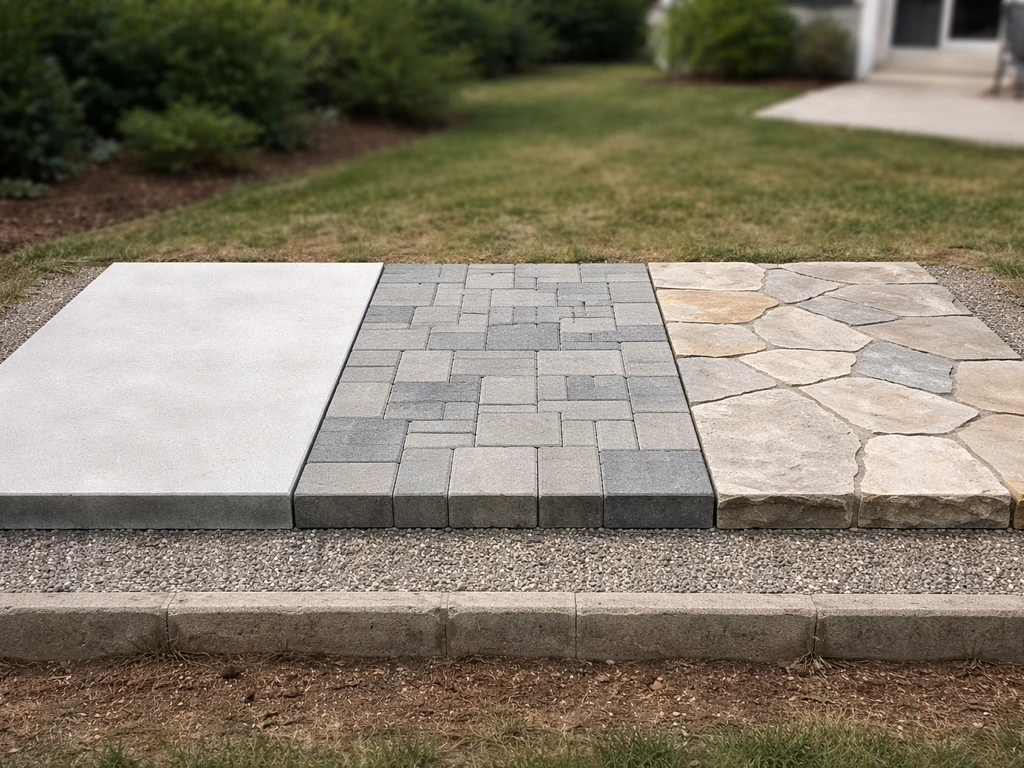
How Much Should I Expect to Pay for a Patio
Patio cost guide with real price ranges by size and material, full line-item budget, DIY vs install, and quote checklist
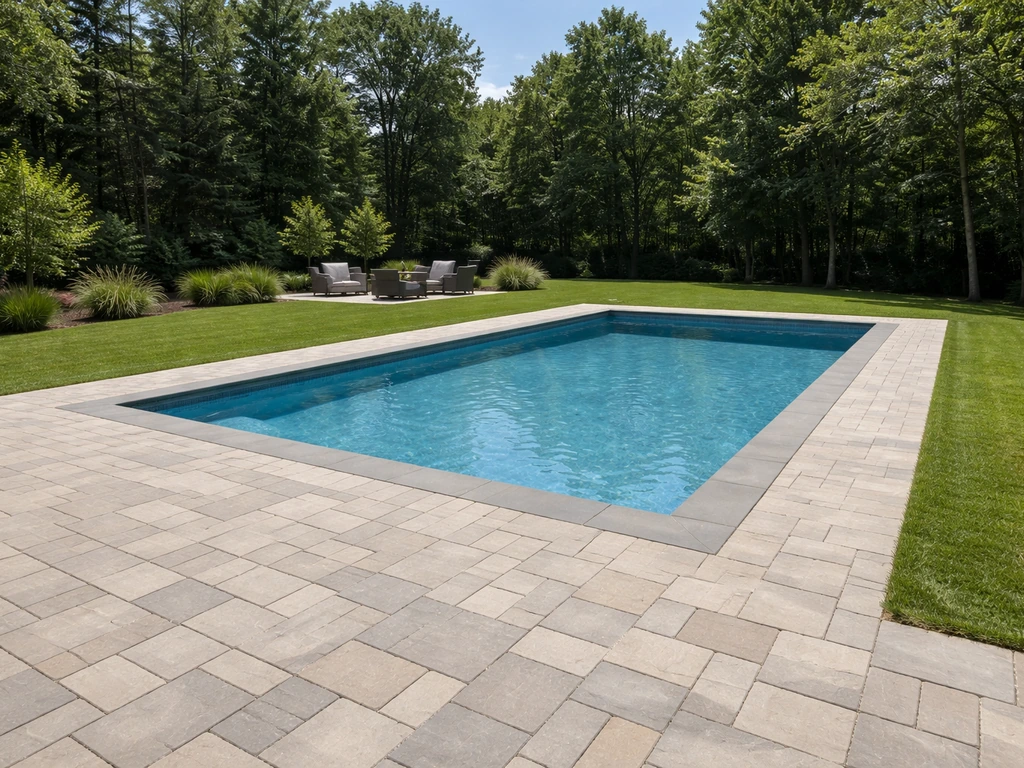
How Much Patio Around Pool: Cost, Size, and Budget Guide
Learn how much patio around a pool costs and how to size square feet, materials, extras, and get real bid line items.
How Much Are Patios? Cost Ranges by Size and Material
Patio cost estimates by size and material with labor, base, add-ons, DIY vs contractor, and quote planning tips.