
A professionally installed 20x20 paver patio (400 square feet) typically costs between $3,200 and $10,000, with most homeowners landing somewhere in the $4,800 to $8,000 range in 2026. A discussion in r/mississauga on Reddit similarly mentions an estimated paver patio install cost around $9,500 for a roughly 20x20 patio, with costs varying depending on the stone selected around $9,500 for a ~20x20 patio. That works out to roughly $8 to $25 per square foot all-in, depending on the paver type you choose, your site conditions, your region, and how complex the layout is. If you're in a high-cost market like Los Angeles, expect $9 to $28 per square foot. If you're in the Midwest or Southeast with a flat, easy-access yard, you can stay closer to the lower end.
How Much Does a 20x20 Paver Patio Cost? Complete Cost Guide

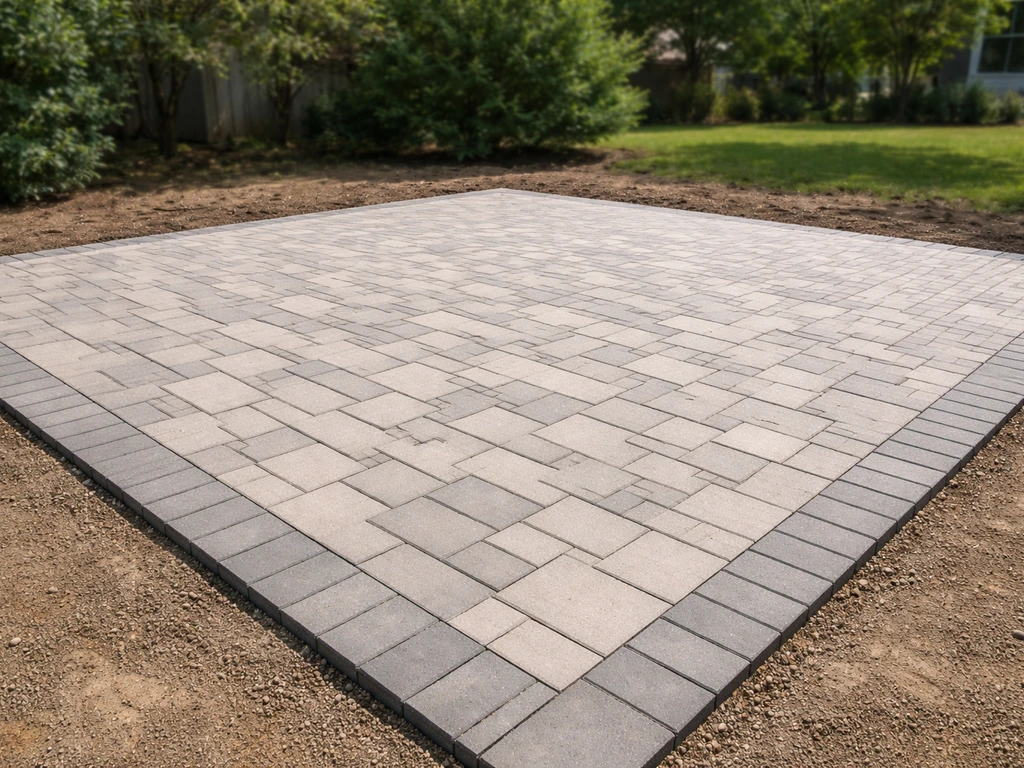
What a 20x20 paver patio actually costs: the real range
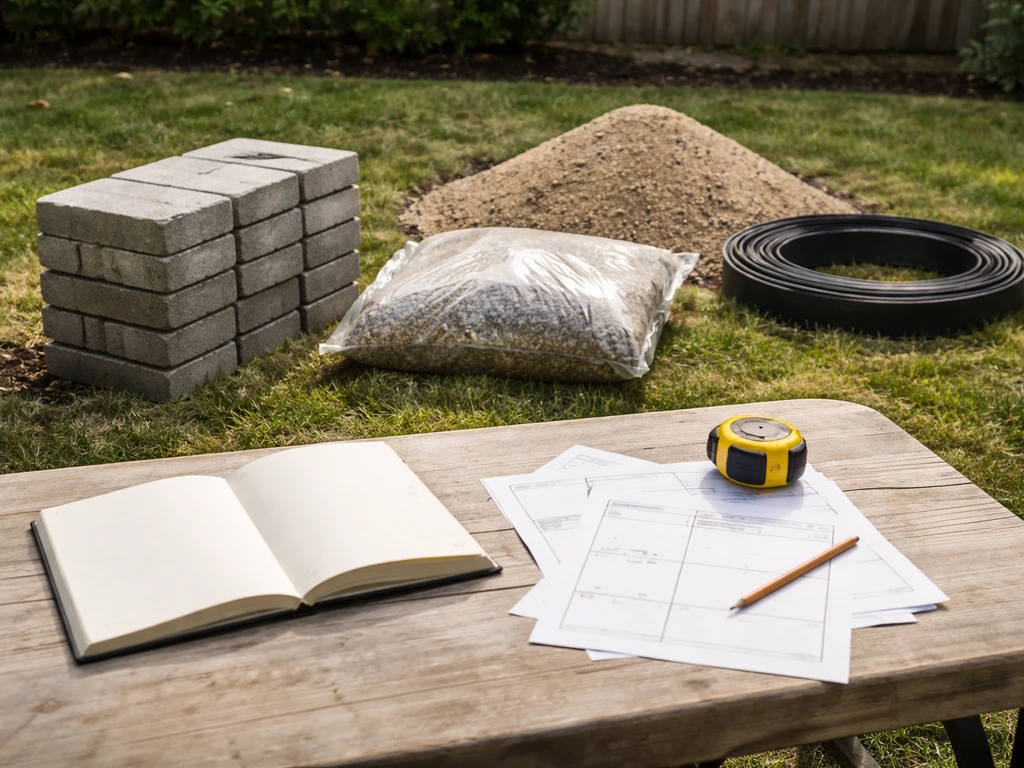
The wide price spread exists because paver projects have more moving parts than a plain concrete slab. You're paying for the pavers themselves, a substantial crushed stone base, sand bedding, compaction, edging, and the labor to do it all correctly. A basic concrete patio at 400 square feet might run $2,400 to $4,800 installed. For a 20x30 concrete patio, the typical installed price depends on slab thickness, site prep, reinforcement, and local labor rates 20x30 concrete patio cost. A 20x20 paver patio with standard concrete pavers, straight pattern, and simple site prep starts around $3,200 and goes up quickly from there. Natural stone pavers, complex patterns, tight access, or poor drainage can push a 400 sq ft job past $9,000.
| Scenario | Estimated Total Cost | Cost Per Sq Ft |
|---|---|---|
| Budget: concrete pavers, simple pattern, easy site | $3,200 – $4,800 | $8 – $12 |
| Mid-range: concrete or brick pavers, running bond, average site | $4,800 – $7,200 | $12 – $18 |
| Premium: natural stone, complex pattern, challenging site | $7,200 – $10,000+ | $18 – $25+ |
| High-cost region (e.g., Los Angeles) | $3,600 – $11,200+ | $9 – $28+ |
Breaking down where your money goes
Understanding the line items helps you spot where a contractor is padding a quote or where a low bid is cutting corners. Here's how a typical 400 sq ft paver patio budget breaks down:
Pavers themselves
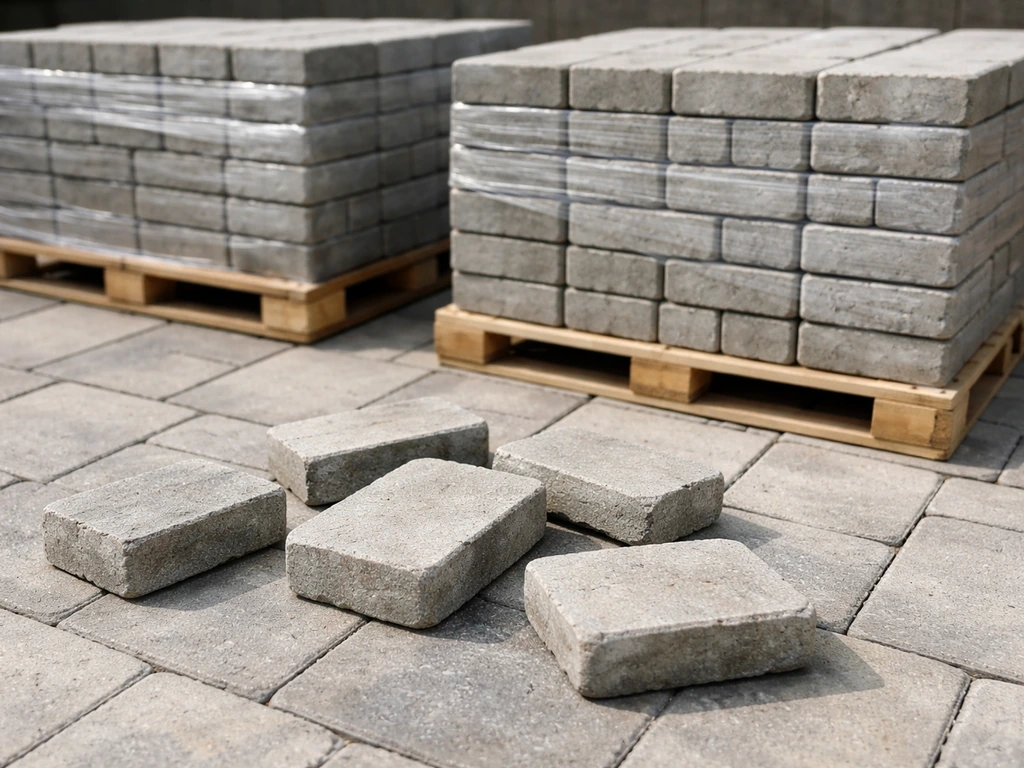
Paver materials run roughly $3.40 to $6.20 per square foot for standard concrete pavers and $6 to $15+ per square foot for natural stone, travertine, or tumbled brick. For 400 sq ft, that's $1,360 to $2,480 for basic pavers or $2,400 to $6,000+ for premium materials. Always buy 10% extra to account for cuts and breakage, especially on complex patterns.
Crushed stone base
This is the most important part of a paver patio and the easiest place to cut corners incorrectly. A proper base uses 4 to 6 inches of compacted crushed stone (sometimes more in freeze-thaw climates). Landcare Stone’s paver installation guide notes patio and walkway base thickness is approximately 6 inches compacted as a minimum in their guidance approximately 6 inches compacted as a minimum base thickness. For 400 sq ft at 4 inches deep, you need roughly 5 to 6 tons of crushed stone, which costs $150 to $400 depending on your region and whether delivery is included. Skimping on the base is the number one reason paver patios settle, crack, or shift.
Bedding sand
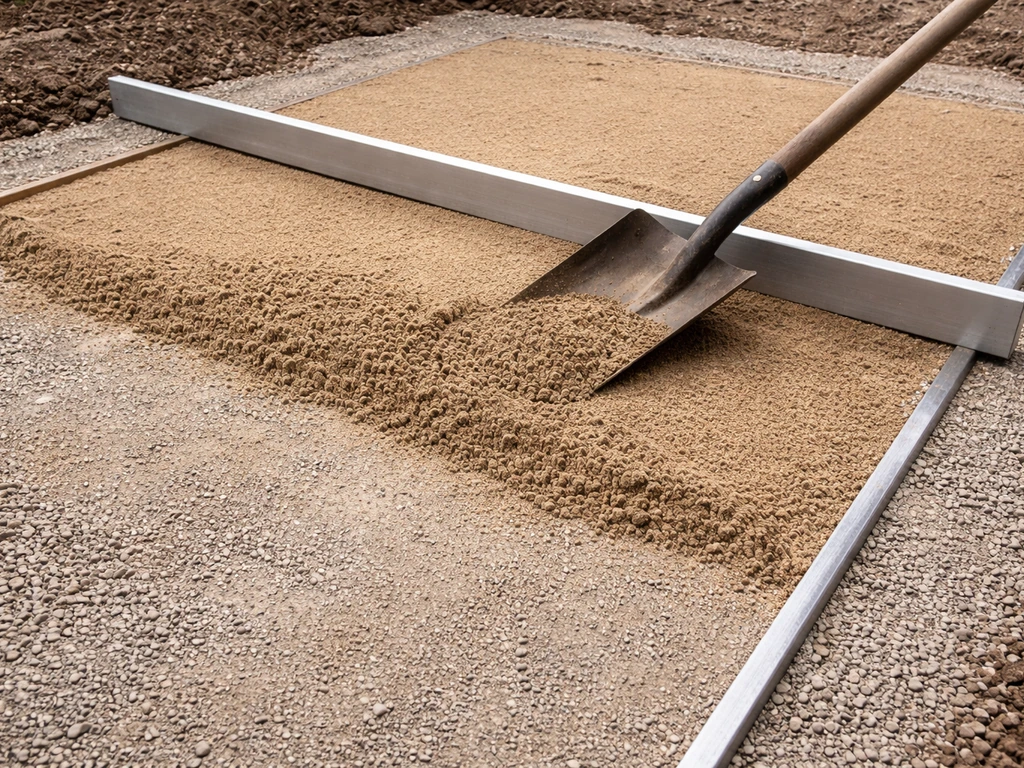
A 1-inch layer of coarse bedding sand (typically concrete sand or polymeric sand) goes on top of the compacted base before the pavers are set. For 400 sq ft, you'll need roughly 1 to 1.5 tons of sand, costing $50 to $150 in most markets.
Edging
Plastic or aluminum paver edging holds everything in place and prevents the border rows from spreading over time. A 20x20 patio has roughly 80 linear feet of perimeter. Expect to pay $100 to $300 for materials, depending on whether you use basic plastic restraint or a more finished metal or decorative concrete edge.
Polymeric sand and finishing
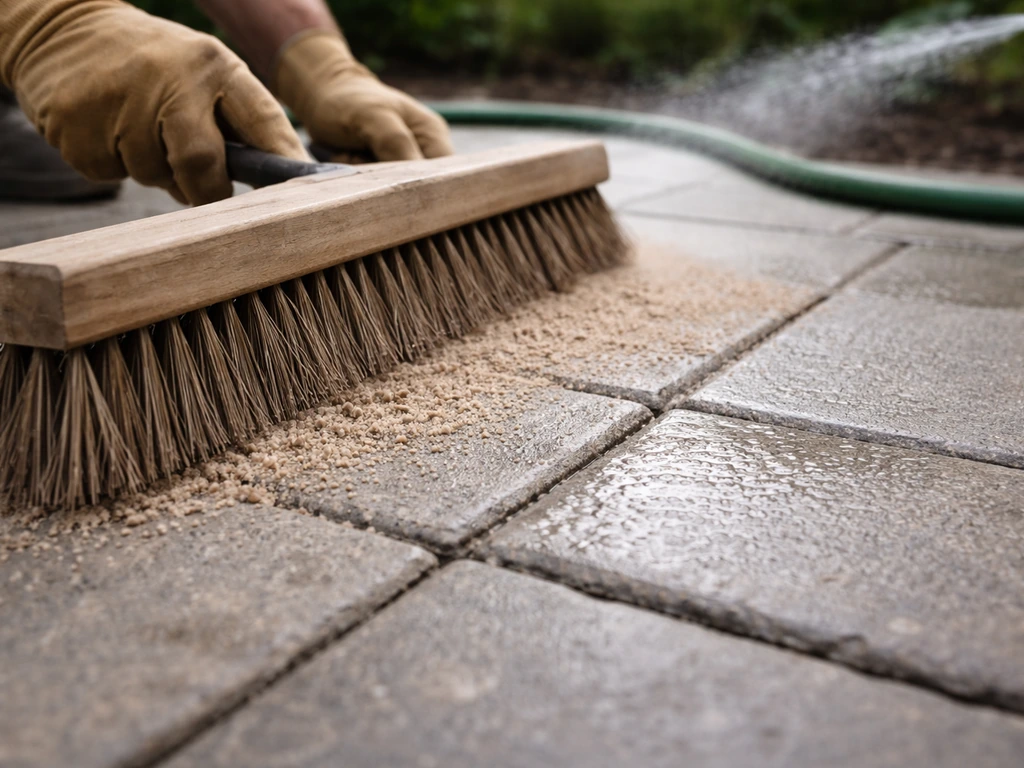
Once the pavers are laid, the joints get filled with polymeric sand, which hardens when wet and keeps weeds and ants out. A 50 lb bag covers roughly 50 to 75 sq ft of joints. For a 400 sq ft patio, plan on 6 to 8 bags at $25 to $35 each, so roughly $150 to $280.
Labor
Labor is typically the biggest line item. Professional paver installers charge $50 to $80 per hour, which translates to $6.25 to $10.90 per square foot for labor alone. For a 400 sq ft patio, that's $2,500 to $4,360 just in labor. A two-person crew can usually complete a straightforward 400 sq ft patio in two to three days, but add drainage work, curved cuts, or site prep issues and it can easily stretch to four or five days.
| Line Item | Estimated Cost (400 sq ft) |
|---|---|
| Pavers (concrete/brick) | $1,360 – $2,480 |
| Crushed stone base | $150 – $400 |
| Bedding sand | $50 – $150 |
| Paver edging | $100 – $300 |
| Polymeric sand (joint fill) | $150 – $280 |
| Labor (installation) | $2,500 – $4,360 |
| Excavation / site prep | $300 – $1,500 |
| Total estimate | $4,610 – $9,470 |
What pushes the price up or down
The variables below are where bids diverge most. Two contractors might quote very different numbers for the same 20x20 job because they're making different assumptions about site prep and scope.
- Excavation depth and soil type: Clay-heavy or rocky soil takes longer to dig and often costs more to haul away. Sandy or loamy soil is easier. A flat yard with no obstructions adds minimal cost; a sloped yard may need grading or retaining work.
- Drainage: Poor drainage is a common hidden cost. If water pools where the patio will be, the contractor may need to install a French drain or slope the base more aggressively, adding $500 to $2,000 or more.
- Sub-base thickness: In cold climates with freeze-thaw cycles, a 6-inch or deeper base is the norm. That extra material and compaction adds cost compared to a 4-inch base in warmer regions.
- Pattern complexity: A simple running bond or 45-degree herringbone is fast to lay. A basket weave, pinwheel, or custom circular pattern with cuts requires more labor time and generates more waste.
- Curves, steps, and borders: Curved edges require cutting individual pavers. Each step adds roughly $100 to $300 in labor and materials. A decorative border in a contrasting paver color also adds time.
- Crew size: A larger crew finishes faster, which can reduce labor cost or keep it flat despite a larger scope. Small one-person operations may be cheaper per hour but slower overall.
- Debris removal: Excavated material has to go somewhere. If the contractor hauls it away, expect $150 to $500 added to the quote. Some will leave it on your property to save cost.
DIY vs. hiring a contractor
Doing a 20x20 paver patio yourself is genuinely feasible if you're comfortable with physical labor and have a free weekend (or two). The savings are real: you skip $2,500 to $4,360 in labor. On a $6,000 job, DIY can bring your total down to $2,000 to $3,500 in materials. That's meaningful money.
But there are real risks. The most common DIY failure is an inadequate base. If the crushed stone layer isn't thick enough, not compacted properly, or graded incorrectly, the patio will settle unevenly within a season or two and you'll be pulling it up to redo it. A plate compactor rental runs about $75 to $100 per day, which is affordable. The real cost of failure is redoing 400 sq ft of work.
A realistic DIY timeline for 400 sq ft is two full weekends for someone who hasn't done it before. That's excavation (weekend one), base prep, compaction, sand screeding, and paver laying (weekend two), plus joint sand and cleanup. If you hit a drainage issue, unexpected rocks, or poor soil, it bleeds into a third weekend fast.
| Factor | DIY | Hire a Pro |
|---|---|---|
| Total cost (400 sq ft) | $2,000 – $3,500 | $4,800 – $8,000 |
| Time required | 2–4 weekends | 2–5 days |
| Equipment needed | Compactor rental, hand tools, level, string lines | Contractor-provided |
| Biggest risk | Base failure, improper slope, poor drainage | Overcharging, cutting corners on base depth |
| Warranty / fix if it fails | You fix it yourself | Contractor warranty (varies) |
| Best for | Flat yards, simple patterns, experienced DIYers | Complex sites, premium materials, tight timelines |
If you're considering going the DIY route, the separate DIY cost breakdown for a 20x20 paver patio goes deeper into exactly what to rent, how much material to order, and how to avoid the most common mistakes.
How your location and site conditions change the numbers
Regional labor rates are the biggest variable. Contractors in California, New York, or the Pacific Northwest charge significantly more per hour than those in the Midwest, Southeast, or rural areas. Angi's data puts Los Angeles paver patio costs at $9 to $28 per square foot, versus a national average closer to $8 to $20. That's a $400 to $3,200 swing on a 400 sq ft project just from geography.
- High-cost metros (Los Angeles, New York, Seattle, San Francisco): $9 – $28 per sq ft installed
- Mid-cost cities (Chicago, Dallas, Atlanta, Denver): $10 – $20 per sq ft
- Lower-cost markets (rural Midwest, Southeast, small towns): $8 – $15 per sq ft
Beyond labor rates, site-specific conditions matter. Limited access (a narrow side gate, a steep slope, or a deck blocking equipment) forces contractors to hand-carry materials, which adds hours. Some municipalities require permits for patios above a certain size, typically adding $50 to $300 in fees and a few days of delay. Wooded yards with roots, areas near septic systems, or slopes steeper than 10% all push bids higher.
If you're in a freeze-thaw climate, ask contractors specifically about base depth. A 4-inch base is fine in Florida but will fail in Minnesota. Skimping on base depth to save $200 in materials leads to a $3,000 repair job in three years.
Pavers vs. other patio options: which is actually worth it?
Pavers cost more upfront than a poured concrete slab, and that's just the truth. A 15x20 concrete patio costs vary based on thickness, site prep, and finish options, so it helps to get an itemized estimate stamped concrete. But they also offer real advantages: individual pavers can be lifted and replaced if a utility line needs access or if one settles, the surface never gets a single crack running across the whole patio, and the visual options are much wider. Here's how the main options compare at 400 square feet:
| Patio Type | Cost Per Sq Ft (installed) | 400 Sq Ft Total | Durability | Repairability | Visual Range |
|---|---|---|---|---|---|
| Concrete slab | $5 – $12 | $2,000 – $4,800 | Good (can crack) | Poor (full slab cracks) | Low |
| Stamped concrete | $12 – $22 | $4,800 – $8,800 | Good (sealing required) | Difficult (matching is hard) | High |
| Concrete pavers | $8 – $18 | $3,200 – $7,200 | Excellent | Easy (swap individual pavers) | High |
| Brick pavers | $10 – $20 | $4,000 – $8,000 | Excellent | Easy | Medium-High |
| Natural stone / flagstone | $15 – $30+ | $6,000 – $12,000+ | Excellent | Moderate | Very High |
If budget is the primary concern, a plain concrete patio is the cheapest option and comparing a 20x20 concrete patio cost shows you can save $1,000 to $3,000 at the same size. If you want visual appeal close to pavers without the paver price, stamped concrete is worth a look, though a 20x20 stamped concrete patio typically costs within the same ballpark as mid-range pavers and requires resealing every few years. A stamped 20x20 patio is often priced using similar inputs like base depth, site prep, and labor 20x20 stamped concrete patio. If longevity and repairability matter most, concrete or brick pavers are hard to beat.
The bottom line: pavers are worth the premium over plain concrete if you care about aesthetics, want easy future repairs, or are in a freeze-thaw climate where slabs crack more readily. They're harder to justify over stamped concrete if you just want a nice-looking patio at the lowest possible cost and don't mind occasional resealing.
How to budget smart and get an accurate quote
Start with a contingency budget of 10 to 15% on top of your contractor's quote. Surprises in excavation, unexpected drainage issues, and material waste are common on paver projects. On a $6,000 job, that means keeping $600 to $900 in reserve. If the project goes smoothly, you keep it. If the contractor hits clay two feet down, you're covered.
When getting quotes, ask for an itemized breakdown, not a single lump sum. You want to see material costs, labor hours, base depth specification, edging type, and what's included in debris removal. This lets you compare bids accurately and spot where one contractor is saving money by using a thinner base or cheaper sand.
Get at least three quotes. Paver patio pricing varies widely, and a second quote often comes in 20 to 30% lower than the first. Always ask whether the contractor has done projects in your neighborhood (local contractors know local soil and drainage conditions) and whether they carry liability insurance.
Questions to ask every contractor before signing
- How deep will the crushed stone base be, and will it be mechanically compacted?
- What type of edging will you use, and is it included in the quote?
- Does the price include excavation and haul-away of the removed soil?
- What paver brand and thickness are you quoting, and can I see samples?
- Will joints be filled with standard sand or polymeric sand, and is that included?
- How do you handle drainage if we find standing water during prep?
- Does this project require a permit, and who pulls it?
- What does your workmanship warranty cover, and for how long?
- What is the payment schedule, and what percentage is due at completion?
Any contractor who gives you a firm price without walking the site is guessing. If they can't come out to look at the grade, soil, and access before quoting, treat that number as a rough estimate only. A contractor who asks good questions about your drainage and climate before quoting is usually the one who'll install a base that lasts 20 years instead of five.
FAQ
Does the cost range include a roof, pergola, or lighting on the patio?
You can, but you need to change the way you compare bids. Adding a patio cover (roof, posts, or pergola) usually increases costs more than people expect because it adds concrete footings or anchors plus electrical (if lights or fans are included). Ask for a separate line item for structural support, any required permits, and whether the cover loads change base or drainage needs at the patio edges.
If I want a curved pattern or slight slope, how does that affect how much a 20x20 paver patio costs?
Yes, and it can raise your total without changing the patio dimensions. If your design includes a second elevation (steps), a curved or irregular border, or a slope for drainage, contractors may spend extra time on excavation depth changes and more cutting, which increases labor and paver waste. Tell bidders the exact pattern and slope you want and ask how they calculate extra labor and material for cuts and adjustment.
Can I use regular sand instead of polymeric sand to save money, and will it reduce the patio cost?
Joint sand, edging, and compaction are still critical even if you don’t plan to use polymeric sand. Normal bedding sand does not lock joints in the same way, so you may see more weed growth and paver shifting over time. Ask what joint material they plan to use and whether they include initial compaction and post-install joint sand application, because “extras” here can add meaningful cost.
What drainage costs could increase the price of a 20x20 paver patio?
Often, the biggest “hidden” cost is stormwater handling. If the patio needs a drain line, channel drain, or regrading to move runoff away from your home, you can see extra excavation, base, and material costs. When getting quotes, ask whether they’re tying drainage into an existing system and whether they will confirm downspout flow direction before pricing.
How much does removing an existing slab or pavers typically add to the cost?
It depends on the condition of what’s there. If you have existing concrete or pavers that must be removed, demolition and disposal can add a flat fee or be priced by volume and weight. If the old surface is sound, some contractors may propose regrading rather than full removal, but you should request photos of the base and an explanation of how thickness and compaction will be handled.
How do poor soil conditions change the cost of a 20x20 paver patio?
Expect higher costs if your soil is expansive (clay) or contaminated fill, because contractors may need thicker base, additional geotextile, or different compaction targets. A common mistake is quoting based on “average soil” without a subgrade check. Ask bidders whether they use geotextile fabric and what they plan to do if they find clay pockets, soft spots, or roots.
Is renting a compactor enough for DIY, or are there other tools that affect the final cost and quality?
A plate compactor is usually the right tool for the base, but it doesn’t replace proper prep and testing. If you hire DIY labor, consider whether you will rent a proper compactor plus edging tools, and whether you have a way to verify base thickness and levelness (string lines, level, straightedge). Ask contractors how they ensure plate compaction passes are even, so you can decide if DIY is worth the risk.
Do contractors include debris removal and disposal in the quoted price?
Not always, and the difference matters. Some installers include final cleanup, hauling, and disposal, while others charge separately for dump fees, cut paver cleanup, or additional dump trips. Ask for the “debris removal” line item and confirm whether they include removal of leftover base and sand.
If my city requires a permit, will it usually apply to a 20x20 patio, and what should I ask for?
Permits and inspections depend on local rules, not the patio size alone. Even small patios can require permits if they alter drainage, are near property lines, or involve electrical outlets. Ask what triggers a permit in your municipality and whether the quoted price includes permit filing and any inspection fees.
What questions should I ask to make sure the estimate won’t increase after demolition or excavation?
You should ask how they handle changes after the quote is accepted. A solid bid states base depth specification, paver thickness and brand, edging type, joint sand type, and the scope of grading and drainage. If they can’t provide these details, you may end up paying more for “scope changes” once they uncover issues. Request a written change-order policy and an itemized estimate.
How can I tell if a low bid is cutting corners on a 20x20 paver patio?
Yes, but “cheap” often comes from either reduced base depth or omitted components (like edging restraint or proper joint sand). Compare bids by base depth and compaction plan, not just price per square foot. Ask each contractor to list the exact base thickness range they’ll use and what they will do in freeze-thaw conditions.
What should I ask about base depth if I live in a freeze-thaw climate?
If you’re in a freeze-thaw region, ask about base depth and the spacing of any drainage layers before installation begins. A frequent failure point is skipping adequate base depth or failing to account for frost heave and water movement, which can lead to movement within a couple of seasons. Request their thickness and material specs specifically for your climate, not “standard” assumptions.
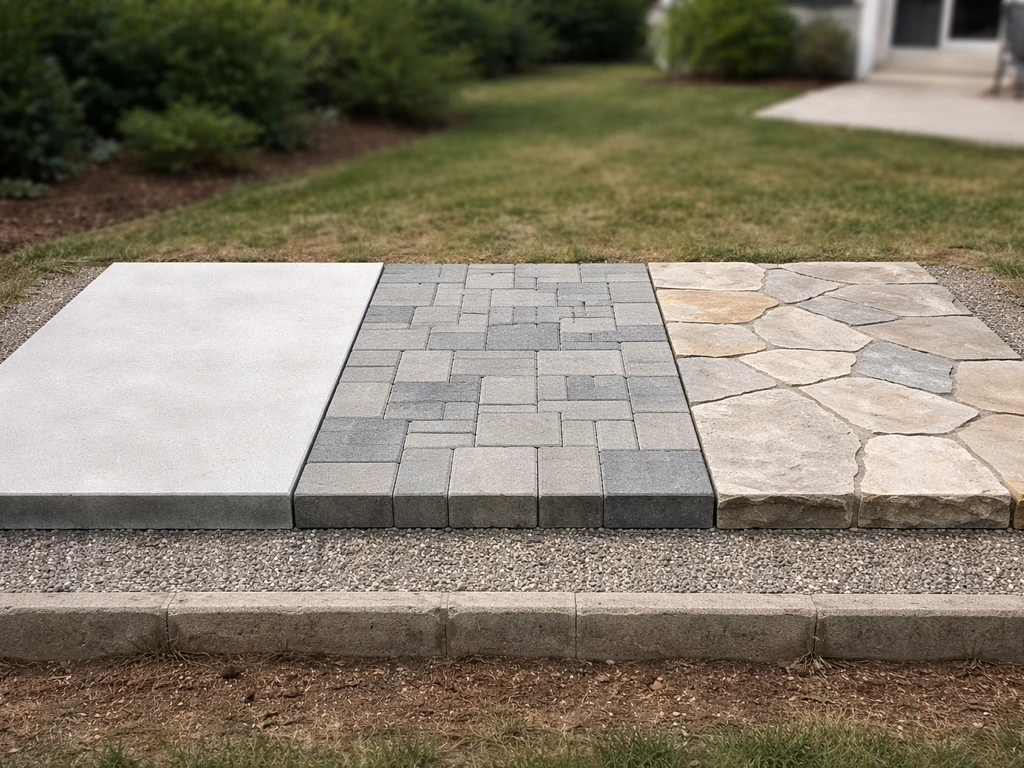
Patio cost guide with real price ranges by size and material, full line-item budget, DIY vs install, and quote checklist
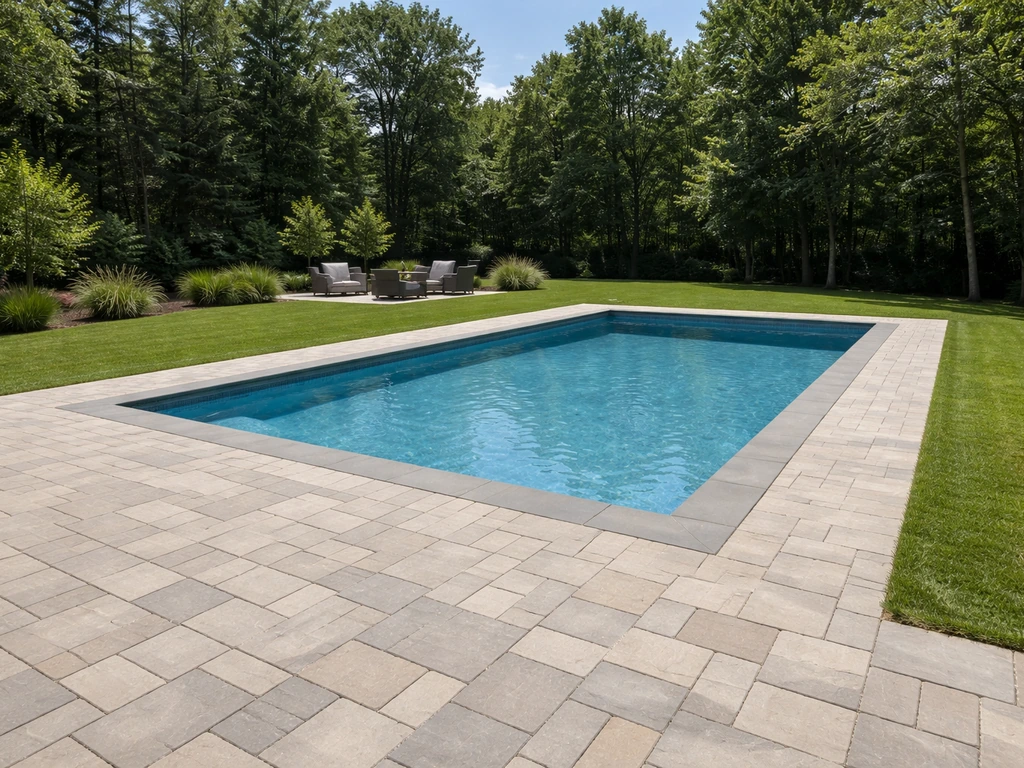
Learn how much patio around a pool costs and how to size square feet, materials, extras, and get real bid line items.
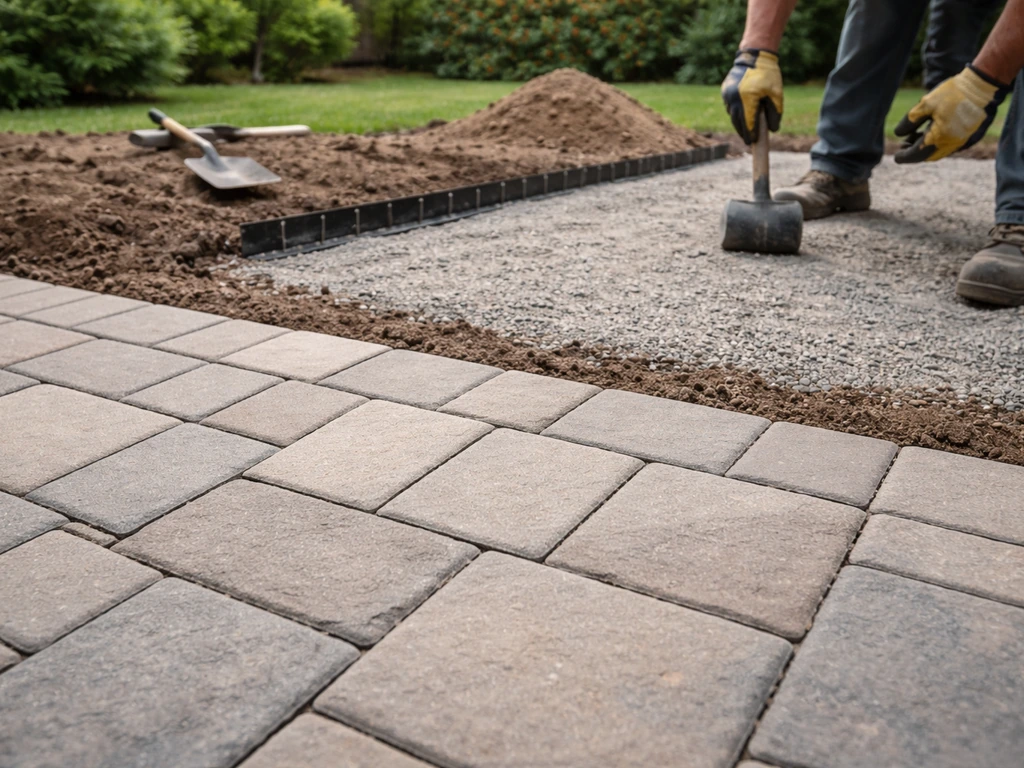
Patio cost estimates by size and material with labor, base, add-ons, DIY vs contractor, and quote planning tips.