
Epoxying an existing concrete patio typically costs $4 to $12 per square foot installed, with most homeowners landing somewhere in the $6 to $10 range for a standard multi-coat system with basic decorative flakes. On a 200-square-foot patio that works out to roughly $800 to $2,400 total. More complex systems with extensive crack repair, decorative flake broadcasts, and a UV-stable polyurethane topcoat can push toward $12 to $18 per square foot, especially in higher-cost metro areas. If you’re starting from scratch and need to estimate your patio cost, it helps to calculate how much epoxy coating you’ll use per square foot how much to pour patio.
How Much Does It Cost to Epoxy a Patio? Installed Pricing

Felix Carver
3 May 2026
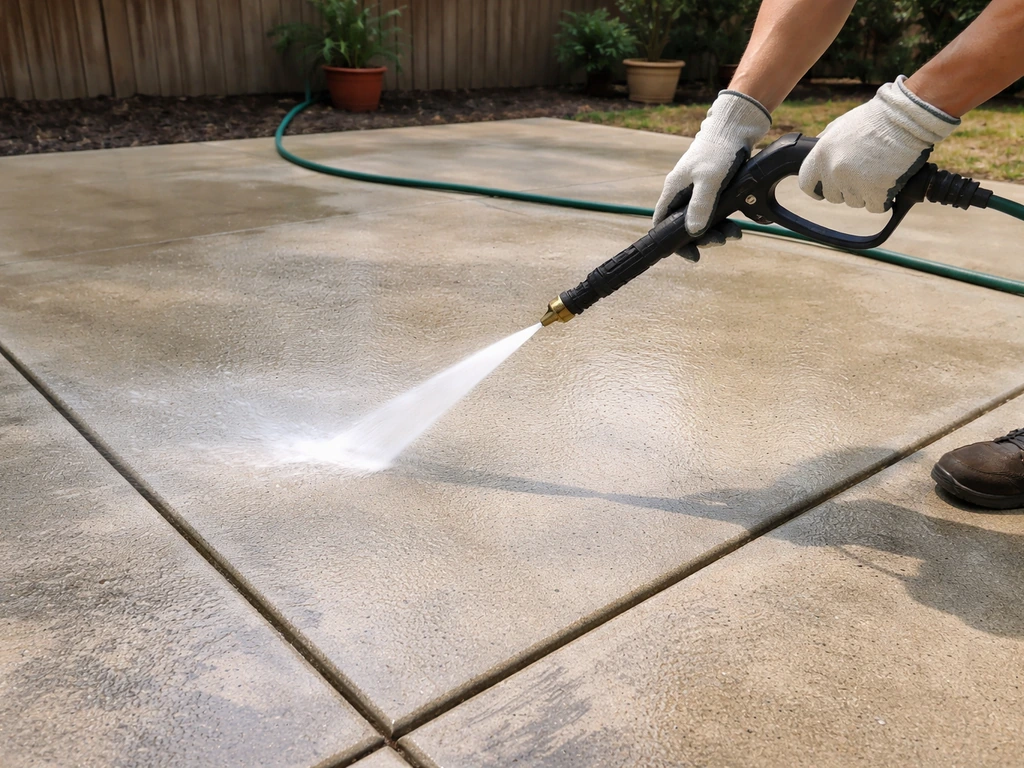
What you'll realistically pay: total cost ranges
There are a few different ways to look at epoxy patio costs depending on what you're starting with. If you already have a solid concrete slab that just needs coating, you're looking at $4 to $12 per square foot for professional installation, or $6 to $18 per square foot if the job involves heavier prep work, decorative systems, or significant repairs.
HomeGuide reports that epoxy flooring typically averages about $4 to $10 per square foot installed, with costs varying by type and project size HomeGuide epoxy flooring costs average about $4 to $10 per square foot installed. If you're pouring a new slab and then coating it, the combined cost jumps to $7 to $22 per square foot because you're essentially paying for two scopes of work.
Going the DIY route brings the cost down considerably: most DIY epoxy patio projects land between $2 and $6.50 per square foot all-in for materials and basic prep supplies. That said, the gap between a DIY result and a professional one is real, especially outdoors where UV exposure, moisture, and temperature swings are harder on the coating.
| Scenario | Cost Per Sq Ft | Notes |
|---|---|---|
| Professional install, existing slab | $4 – $12 | Standard prep, pigmented epoxy, basic finish |
| Professional install, complex system | $10 – $18 | Flakes, urethane topcoat, crack repair, high-end finish |
| New slab + professional epoxy coating | $7 – $22 | Includes concrete pour and coating |
| DIY epoxy coating | $2 – $6.50 | Materials only; no labor cost but time-intensive |
Where the money actually goes: a cost breakdown
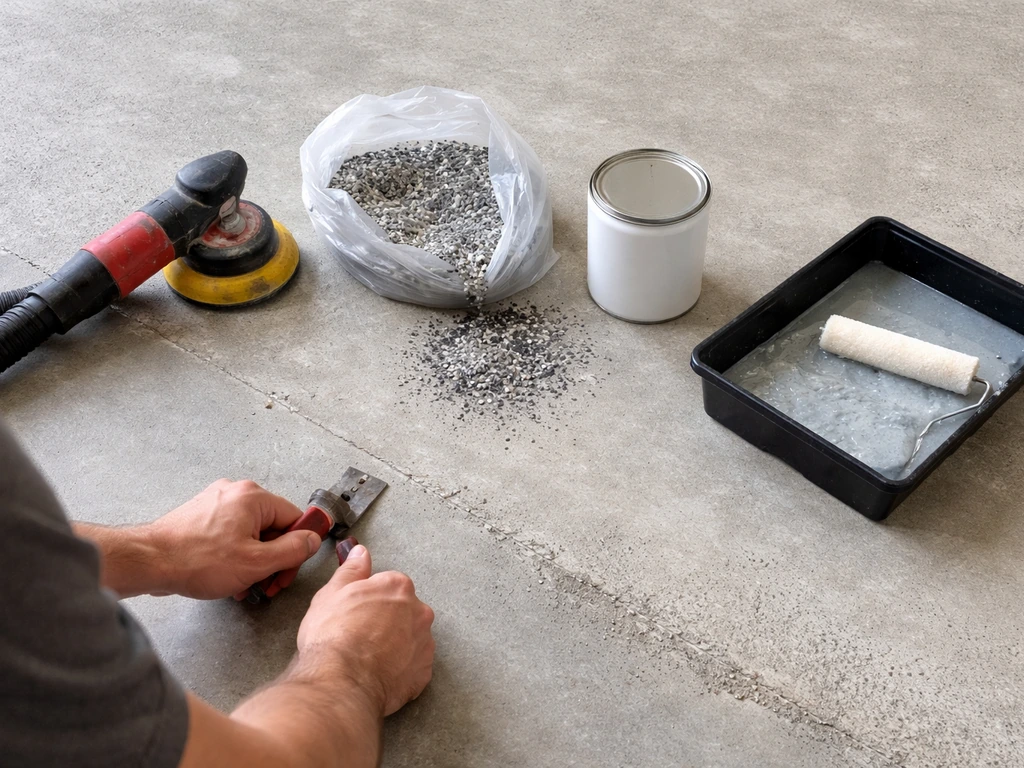
Surface preparation is the single biggest cost driver on any epoxy project, often accounting for around 40% of the total project cost. This isn't just sweeping and hosing down the concrete. Proper prep for an exterior slab means mechanical grinding or shot-blasting the surface to open up the concrete's pores so the epoxy actually bonds, vacuuming the slurry, addressing any cracks or spalls, and checking for moisture vapor emission. If you skip or rush this step, the coating will peel within a season or two.
After prep, you're paying for materials (epoxy base coat, broadcast flakes if used, and a topcoat sealer) and the labor to apply them. Material costs alone typically run $2.50 to $5.00 per square foot, with 100% solids epoxy (the thick, durable stuff used in quality exterior systems) covering only 80 to 160 square feet per gallon compared to 250 to 400 square feet per gallon for thinner water-based products. Labor is what takes the total from materials-only to installed pricing.
- Surface prep (grinding/shot-blasting, cleaning, crack patching): roughly 35–45% of total project cost
- Primer coat (often a moisture-tolerant epoxy primer for outdoor slabs): $0.50–$1.50/sq ft in materials
- Epoxy base coat and any decorative broadcast (flakes, quartz): $1.50–$3.00/sq ft in materials
- UV-stable polyurethane or polyaspartic topcoat: $1.00–$2.50/sq ft in materials
- Anti-slip additive to topcoat: approximately $0.25/sq ft add-on
- Labor to apply all coats: $2–$6/sq ft depending on system complexity and region
- Mobilization/setup fee: $300–$600 flat in many contractor quotes
- Insurance and permitting (if required): $100–$300
The mobilization fee is one of those line items that catches people off guard. If a contractor drives out, sets up equipment, and only coats 100 square feet, that $400 mobilization fee is suddenly $4 per square foot just for showing up. This is why small patios have higher effective per-square-foot costs.
Epoxy system types and how they change what you pay
Not all epoxy patio jobs are created equal. The system you choose or the contractor proposes has a huge impact on both price and durability. Here's a quick breakdown of the common options:
Single-coat water-based epoxy
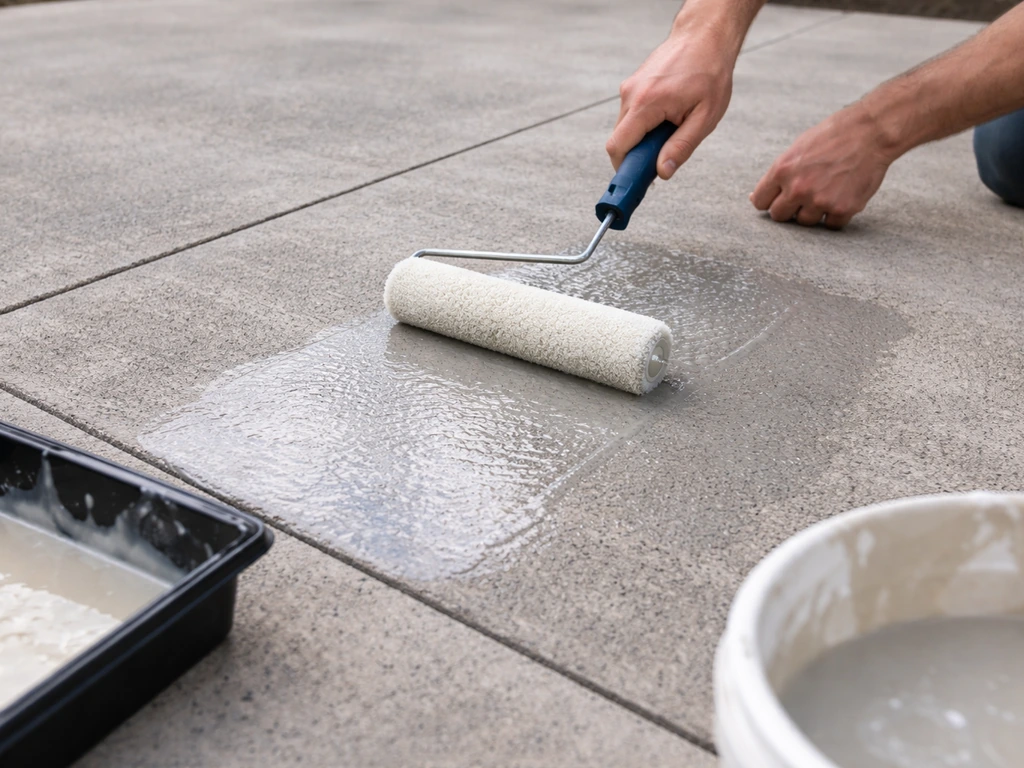
This is the budget end of the spectrum. Water-based epoxy is thinner, easier to apply, and cheaper, but it's also less durable on an outdoor patio exposed to sunlight and weather. It tends to yellow and chalk over time. Total installed cost usually falls in the $3 to $6 per square foot range, but you may need to recoat every 2 to 3 years.
100% solids epoxy with flake broadcast
This is the most common professional system for residential patios. A thick 100% solids epoxy base coat is applied, decorative vinyl flakes are broadcast into the wet epoxy, and then a UV-stable urethane or polyaspartic topcoat seals everything. The flakes add grip and texture, which is genuinely useful on an outdoor surface that gets wet. Expect to pay $7 to $12 per square foot installed for a well-executed version of this system.
Polyaspartic or urethane topcoat systems
Polyaspartic coatings cure faster than epoxy and are more UV-stable, making them a popular choice as a standalone system or as a topcoat over epoxy base coats. Some contractors skip the epoxy base entirely and use polyaspartic for the whole system. These systems tend to cost $10 to $18 per square foot installed because the material itself is more expensive, but they hold up better outdoors and resist yellowing. For a patio that gets a lot of direct sun, this is often worth the premium.
Decorative quartz or metallic systems
If you want something that looks more like polished stone or has a flowing metallic finish, you're entering specialty territory. Quartz broadcast systems and metallic epoxies require skilled application and more material, pushing costs toward $15 to $22 per square foot. These are impressive-looking but are probably overkill for a patio versus a pool deck or high-end outdoor living area.
Cost by patio size: putting per-square-foot numbers to work
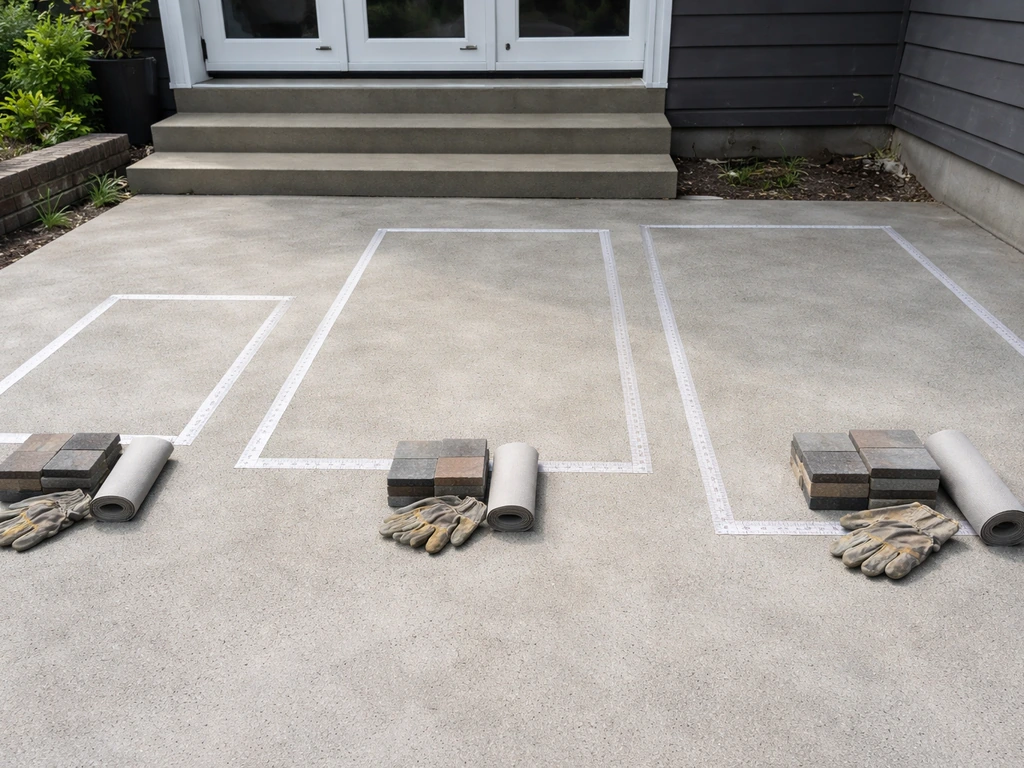
Per-square-foot ranges are useful until you actually try to budget your specific patio. Here are realistic total cost estimates for common patio sizes, using a mid-range professional system (100% solids epoxy base, flake broadcast, urethane topcoat) as the baseline. The low end assumes minimal prep and no significant cracking; the high end assumes some crack patching, heavy surface grinding, and a more complete system.
| Patio Size | Square Footage | Low Estimate (pro install) | High Estimate (pro install) | DIY Estimate |
|---|---|---|---|---|
| 10x10 | 100 sq ft | $700 | $1,800 | $200–$650 |
| 12x12 | 144 sq ft | $860 | $2,590 | $290–$940 |
| 12x20 | 240 sq ft | $1,440 | $4,320 | $480–$1,560 |
| 20x20 | 400 sq ft | $2,400 | $7,200 | $800–$2,600 |
| 20x30 | 600 sq ft | $3,600 | $10,800 | $1,200–$3,900 |
Keep in mind that small patios like a 10x10 (100 square feet) are actually less efficient to coat because the contractor's fixed costs, mobilization fee, and equipment setup don't scale down proportionally. You might pay $8 to $10 per square foot on a small patio even though the rate for a larger job would be $5 to $7 per square foot. If you have a small patio, it's worth asking the contractor whether they can bundle it with another project or whether the small area carries any minimum-job pricing.
DIY vs. hiring a contractor: when each makes sense
DIY epoxy kits are widely available and can genuinely work well if the conditions are right and you do the prep properly. A typical DIY project on a 200-square-foot patio might cost $400 to $1,300 in materials depending on the system you choose, versus $1,200 to $2,400 for a professional install on the same area. That's real money saved, but there are some important caveats.
The biggest DIY risk is prep. Professional contractors use commercial grinders and shot-blasters that create an optimal surface profile. Most homeowners doing DIY use acid etching, which is less effective and less consistent. If your slab has any moisture issues (common on patios), improper moisture mitigation is the number one cause of epoxy peeling and blistering. Common concrete moisture-vapor-emission tests include blank" rel="noopener noreferrer">ASTM F1869 (calcium chloride) and ASTM F2170 (relative humidity probes). Concrete with high moisture vapor emission rates will push the coating off from underneath, and no amount of decorative flakes hides that.
DIY makes the most sense when: your slab is in good condition (no major cracks, no moisture issues), you're coating 200 square feet or less, and you're comfortable with a multi-step process that takes a full weekend. Hire a professional when: the slab has cracks that need filling, there's visible moisture or efflorescence, you want a flake or quartz system with a proper topcoat, or the area is larger than 300 square feet where quality and coverage consistency really matter.
| Factor | DIY | Professional |
|---|---|---|
| Total cost range | $2–$6.50/sq ft | $4–$18/sq ft |
| Prep quality | Acid etch (lower adhesion) | Mechanical grind/shot-blast (superior adhesion) |
| Moisture testing | Usually skipped | Typically included or offered |
| UV-stable topcoat | Available but tricky to apply | Standard in most pro systems |
| Durability | 2–5 years typical | 5–10+ years with proper system |
| Best for | Small slabs, good condition, budget-conscious | Larger patios, cracked/damp slabs, long-term durability |
What changes the price in your specific situation
Condition of the existing slab
A clean, flat, crack-free slab is the best-case scenario. Cracks need to be routed and filled with flexible epoxy filler before coating, which adds material cost and labor time. Spalls (chunks popped out of the surface) need to be ground down and patched. Surface contamination from grease, sealers, or paint requires extra grinding or chemical treatment. Each of these adds $0.50 to $2.00 per square foot to the prep bill.
Moisture and drainage issues
Outdoor patios are particularly vulnerable to moisture-related failures. If your patio sits low, gets water pooling under it, or shows white mineral deposits (efflorescence) on the surface, moisture vapor emission is likely a problem. A contractor who finds high moisture readings will either recommend a moisture-tolerant primer (adding $0.50 to $1.50 per square foot) or may decline to coat until the drainage issue is addressed. Applying epoxy over a wet slab is one of the most common reasons coatings fail, so this isn't a corner worth cutting.
Region and local labor rates
Where you live matters quite a bit. In high-cost metros like New York, San Francisco, or Boston, contractor labor rates are 30 to 60% higher than in midsize Midwestern or Southern cities. A system that costs $8 per square foot installed in Dallas might run $12 to $14 per square foot in Chicago or Seattle. Always get at least three local quotes rather than relying solely on national averages.
Time of year
Epoxy application has temperature and humidity requirements. Most systems need ambient temps between 50 and 90 degrees Fahrenheit and relatively low humidity during application. This means late spring and early fall are peak scheduling windows in many regions, when contractors are busiest and prices may reflect that demand. Booking in late fall or early spring (when the weather still cooperates but demand is lower) can sometimes get you a better rate.
How epoxy compares to your other patio finish options
Epoxy is a compelling option when you have an existing slab in decent condition and want a durable, finished look without the cost of tearing out and replacing. Compared to other finishing approaches on a concrete patio: staining concrete runs roughly $2 to $6 per square foot installed (less than most epoxy systems but less protective), and painting concrete is cheaper still but has a much shorter lifespan and offers no real abrasion resistance. If you're considering covering the slab with pavers or natural stone, you're looking at costs that generally start at $10 to $20+ per square foot, making epoxy significantly more budget-friendly if the slab structure is sound.
The honest case against epoxy: if your slab is severely cracked, has significant settling or heaving, or is in poor structural condition, coating it is just delaying the inevitable. In that case, the cost to demo the existing concrete patio and pour a new one might make more long-term sense than spending money on a coating that won't perform well on a compromised substrate. If you are budgeting, get clear quotes for how much to demo the existing concrete patio and what the new pour will cost.
Before you call a contractor: what to check and ask
Inspect your slab first
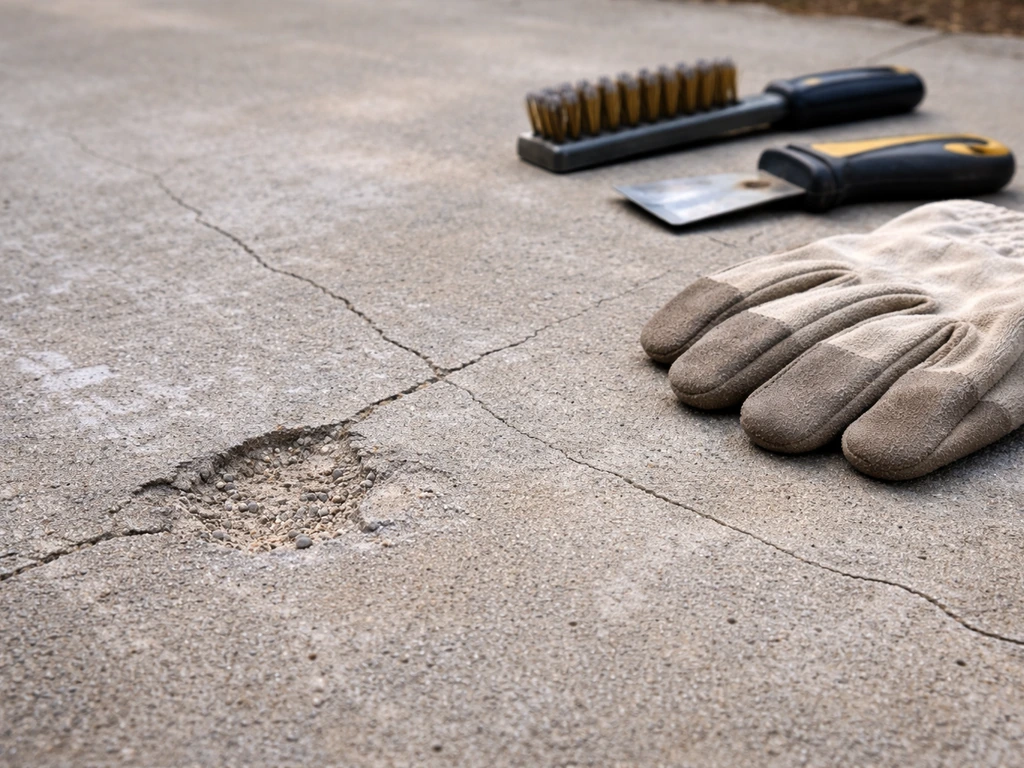
Before getting quotes, do a quick walk of your patio and note: any cracks wider than a hairline, areas where the concrete is spalling or crumbling, any white chalky deposits on the surface (efflorescence), whether water pools on the slab after rain instead of draining off, and whether there are any existing coatings or sealers on the surface. All of these are things a contractor needs to know to quote you accurately, and knowing them in advance helps you catch under-scoped quotes.
Questions to ask every contractor
- How will you prep the surface? (You want to hear 'diamond grinding' or 'shot-blasting,' not just 'acid etch.')
- Will you test for moisture vapor emission before applying the coating?
- What specific epoxy system are you proposing, and what's the total mil thickness when cured?
- Does your quote include crack repair and patching, or is that extra?
- What topcoat are you using, and is it UV-stable?
- Does the topcoat include an anti-slip additive or texture?
- What's your warranty on both materials and labor?
- Is there a minimum job size or mobilization fee that applies to my project?
Permits: do you need one?
For a surface coating on an existing patio, permits are rarely required by most municipalities. You're not changing the structure, adding square footage, or altering drainage in a meaningful way. That said, some jurisdictions do require permits for any contractor work over a certain dollar threshold, so it's worth a quick check with your local building department or asking your contractor. Permits and fees can add a concrete patio permit cost, so it is worth confirming local requirements before you sign a contract. If permits are needed, budget $100 to $300 for the cost, and confirm who pulls the permit (it should be the contractor, not you).
Getting quotes that are actually comparable
One of the biggest frustrations in getting epoxy quotes is that two proposals at wildly different prices are often not for the same job. One contractor might include crack repair, a moisture primer, a full flake broadcast, and a polyaspartic topcoat, while another quotes a single coat of water-based epoxy with acid-etch prep. Both will say 'epoxy patio coating' but you're comparing apples to oranges. Ask each contractor to specify in writing: the prep method, the primer type, the number of coats, the topcoat product, and what crack/spall repair is included. That's the only way to compare quotes fairly.
Get at least three quotes, and be skeptical of the lowest one unless you can confirm the scope matches the others. A quote that seems 30 to 40% cheaper than the rest is usually missing something, whether that's proper prep, a quality topcoat, or contractor insurance. For a project that's supposed to last 7 to 10 years, a few hundred dollars in savings on a bad install is not a good trade.
FAQ
How much does it cost to epoxy a patio if my concrete is already sealed or painted?
Expect higher prep costs. Sealer or paint usually requires aggressive mechanical grinding to remove the coating and confirm bond-readiness, and sometimes chemical stripping, which can add roughly $0.50 to $2.00 per square foot on top of standard prep. Ask the contractor how they will test for adhesion (for example, a bond check) before they quote a price.
Do I need a primer, and how much does a primer add to the total cost?
A primer is common when moisture readings are elevated or when the system calls for it. If a contractor recommends a moisture-tolerant primer, budget about $0.50 to $1.50 per square foot added to the estimate. If the slab is dry and clean enough, you may not need it, but you should not skip it if moisture vapor emission is flagged.
What’s the cheapest way to epoxy a patio without increasing the risk of peeling?
The lowest risk usually is paying for proper surface profiling rather than cutting prep steps. A contractor who plans mechanical grinding or shot-blasting, vacuuming slurry, and crack repair will typically cost more per square foot, but it reduces the chance of early peeling. If someone proposes acid etching as the primary prep on an exterior slab, treat that as a potential red flag.
How much does epoxy crack repair add to the cost?
Cracks often require routing and filling with a flexible epoxy filler before coating. That extra labor and material commonly increases prep by about $0.50 to $2.00 per square foot, depending on how widespread the cracking is and whether spalls also need patching.
How long does an epoxy patio coating typically last, and does that change the price per square foot?
Budget for lifespan differences between systems. Water-based epoxy may require recoating every 2 to 3 years, while a 100% solids epoxy with a UV-stable urethane or polyaspartic topcoat is typically aimed at longer wear (often several more years). If you spread total cost over the expected life, the “higher” premium system can be cheaper in the long run.
Why is the cost per square foot higher for small patios?
Fixed job costs do not scale down well. Mobilization, equipment setup, and basic labor still happen even if the contractor only coats 100 square feet, so effective pricing can land higher (for example, a small job might come out closer to $8 to $10 per square foot rather than $5 to $7 on a larger patio). Ask about minimum-job pricing in writing.
Can I epoxy over existing epoxy that is peeling or worn?
Usually not as a simple overlay. Peeling coatings often need to be mechanically removed to reach sound concrete, and you may also have to address underlying moisture. Ask the contractor whether they will scrape and grind back to stable edges and how they will determine whether the substrate is still suitable for bonding.
How does weather affect epoxy patio pricing or scheduling?
Epoxy systems depend on temperature and humidity during application. Late spring and early fall are often peak windows, so demand can push pricing higher and reduce availability. Booking during late fall or early spring (when conditions are still workable) can sometimes lower costs, but only if the contractor’s system temperature and humidity requirements can be met.
If my contractor’s quote is much lower than others, what line items are most often missing?
The usual culprits are reduced or skipped prep (no mechanical grinding or inadequate crack/spall repair), missing moisture mitigation, fewer coats, or a lower-grade topcoat (or no UV-stable topcoat). Request written specifics: prep method, primer type, number of coats, topcoat product, and exactly what repairs are included.
What should I ask about coverage rates to avoid running short on material?
Ask what coverage assumptions they are using for the exact product. Coverage varies by chemistry, thickness, and surface profile, and the same gallon can go much further with thinner products than with 100% solids systems. A contractor should be able to tell you the expected coverage per gallon and how they will handle variable substrate conditions so you do not end up paying for emergency add-on materials.
Are permits usually needed to epoxy a patio, and what might change the permit requirement?
Most places treat epoxy coating as a minor surface finish with permits typically not required, but some jurisdictions require permits if a contractor’s job value exceeds a threshold. Confirm with your local building department (or ask the contractor who pulls the permit) and budget for possible permit or admin fees, often in the $100 to $300 range if required.
When should I consider replacing the patio instead of coating it?
If there are structural issues like severe cracking, significant settling or heaving, or widespread spalling, coating is often just delaying failure. A practical decision aid is to ask for a written assessment of whether the concrete is stable enough to bond to long-term. If the substrate is failing, demo and replacement can be the more durable and sometimes more cost-effective path.
Next Articles
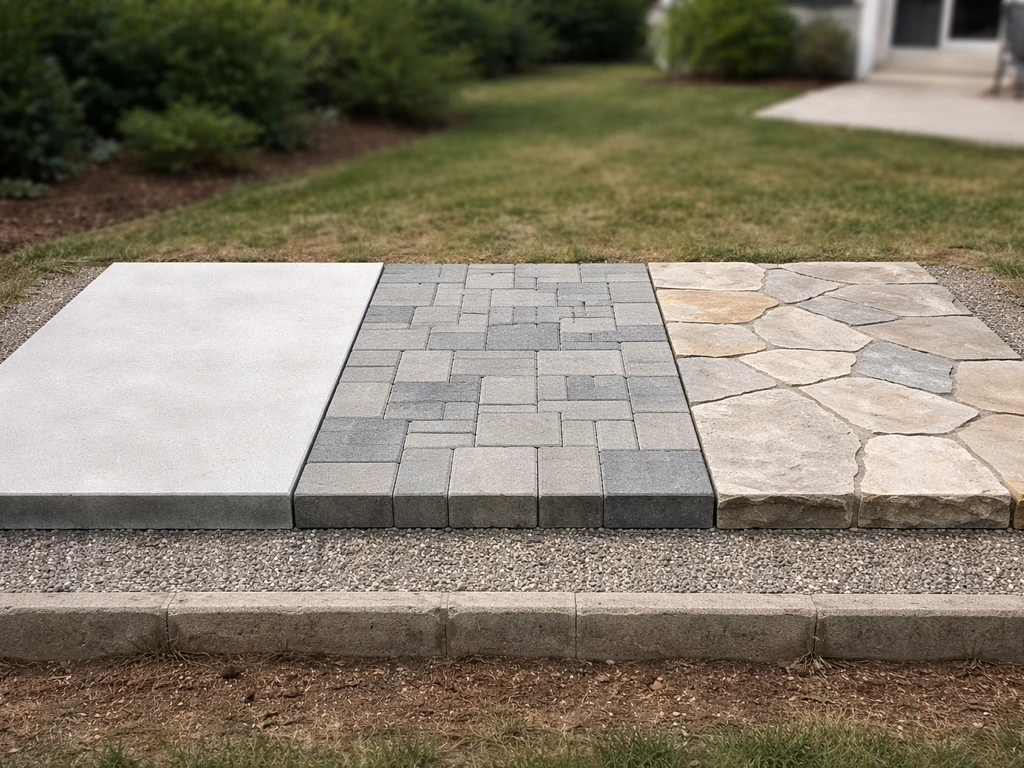
How Much Should I Expect to Pay for a Patio
Patio cost guide with real price ranges by size and material, full line-item budget, DIY vs install, and quote checklist
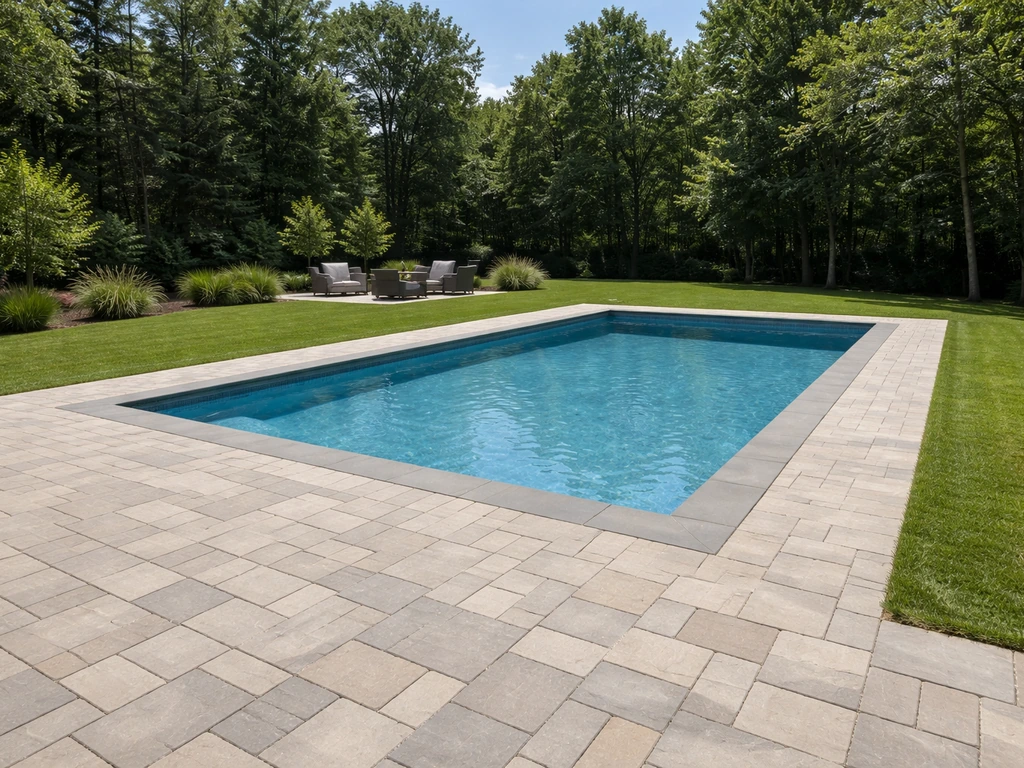
How Much Patio Around Pool: Cost, Size, and Budget Guide
Learn how much patio around a pool costs and how to size square feet, materials, extras, and get real bid line items.
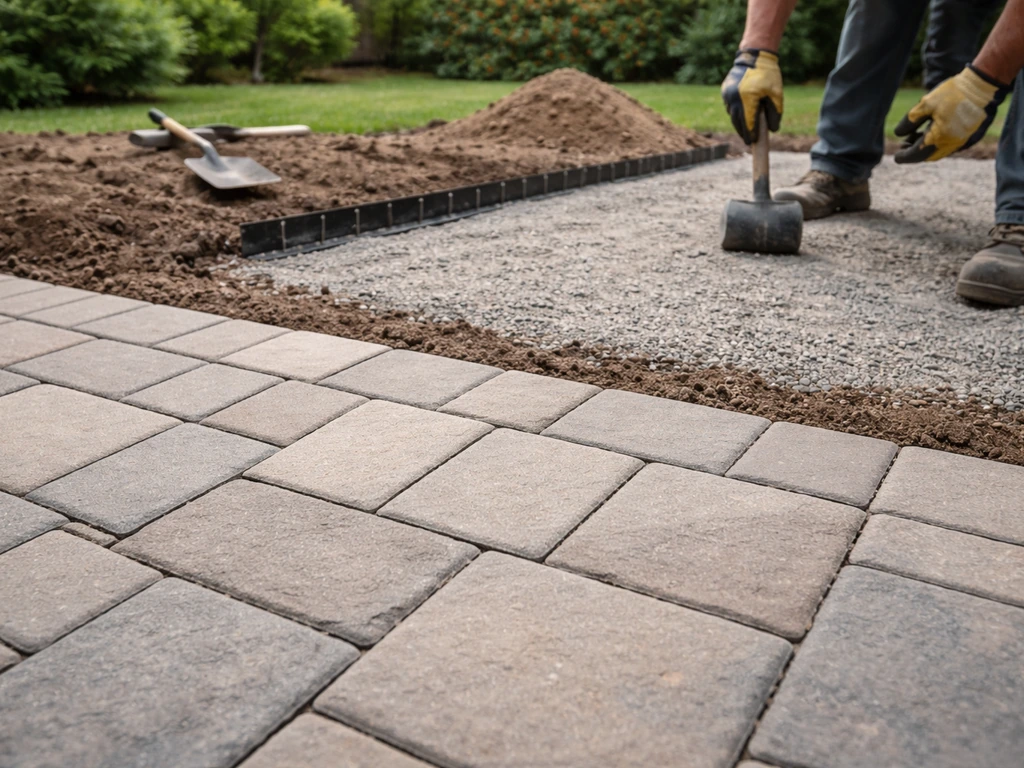
How Much Are Patios? Cost Ranges by Size and Material
Patio cost estimates by size and material with labor, base, add-ons, DIY vs contractor, and quote planning tips.