
Most UK homeowners pay somewhere between £80 and £160 per m² to have a patio professionally laid, all-in. That works out to roughly £2,000–£4,000 for a typical 25 m² patio, or £800–£1,600 for a modest 10 m² space. Premium materials like natural stone or porcelain at complex designs push that to £200+ per m², while basic concrete or simple slab jobs can come in closer to £65–£100 per m². If you're wondering how much to lay a patio in the UK, the final price will depend on the area size, the paving material, and the amount of site prep required. Those ranges cover labour, materials, and a standard sub-base. What they don't always include: excavation of a badly sloped garden, old surface removal, drainage work, or VAT. That's where most budgets get surprised.
How Much Does It Cost to Lay a Patio? Prices by Size

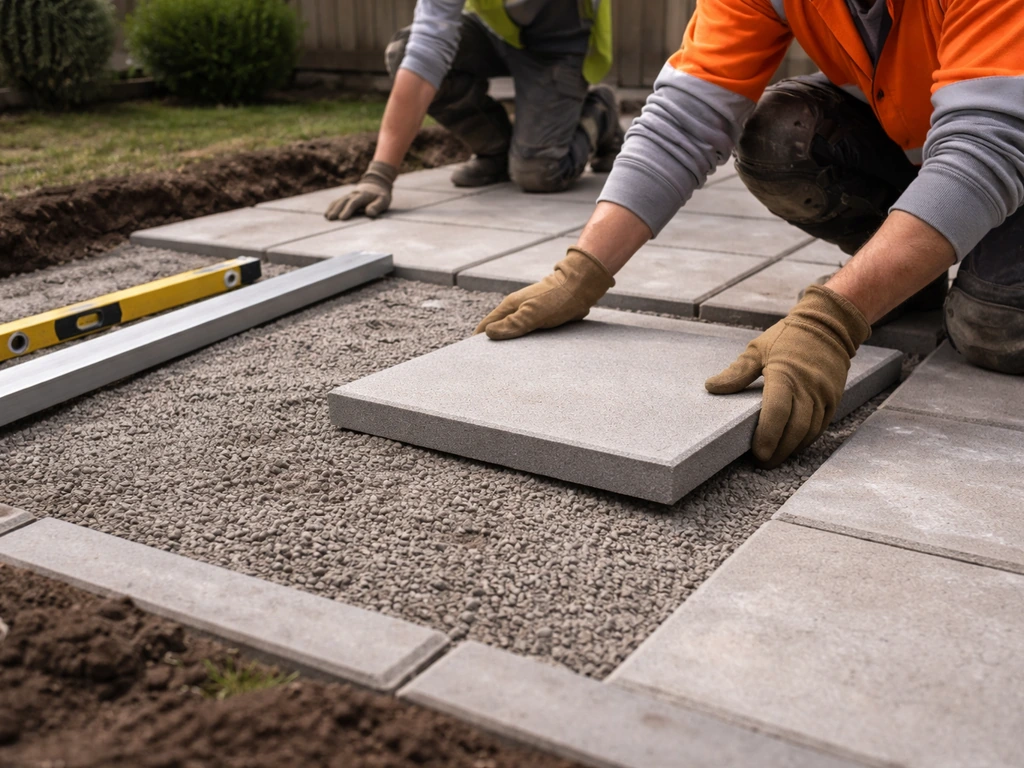
Typical costs by patio type and size
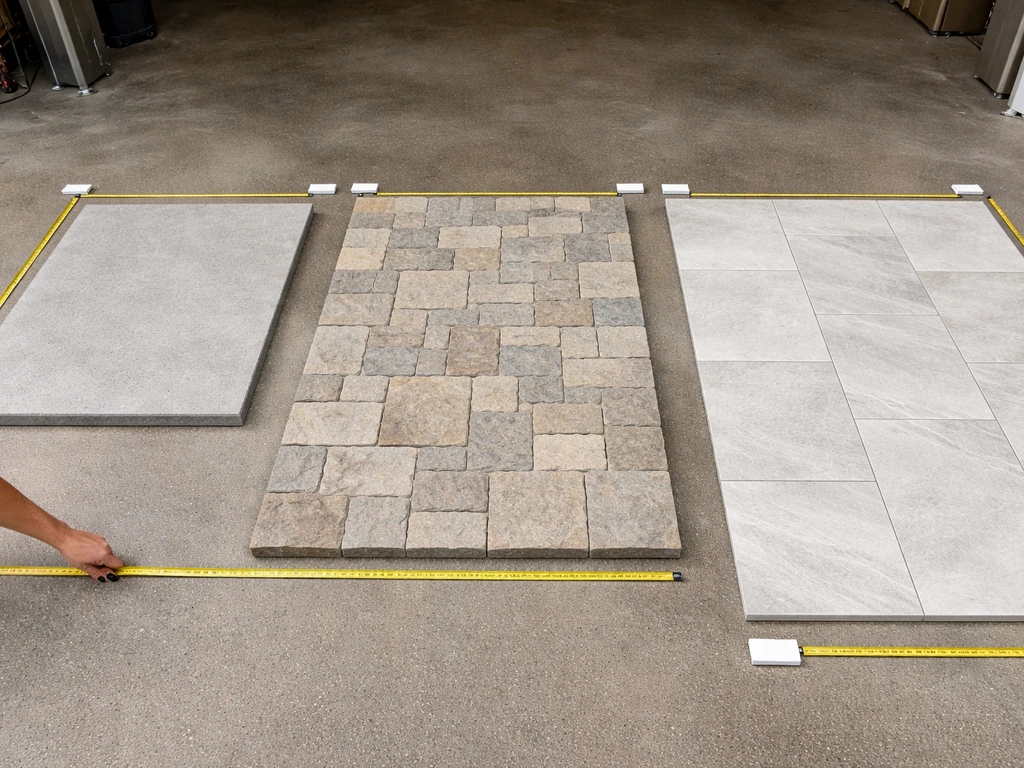
The two biggest variables in your quote are always the material you choose and the size of the area. Here's a realistic breakdown of installed costs per m² (labour + materials + standard sub-base) for the most common patio types in the UK in 2026, plus what you'd expect to pay for common project sizes.
| Patio type | Cost per m² (installed) | 10 m² | 20 m² | 30 m² |
|---|---|---|---|---|
| Concrete (poured slab) | £65–£120 | £650–£1,200 | £1,300–£2,400 | £1,950–£3,600 |
| Basic paving slabs | £80–£130 | £800–£1,300 | £1,600–£2,600 | £2,400–£3,900 |
| Porcelain slabs | £100–£160 | £1,000–£1,600 | £2,000–£3,200 | £3,000–£4,800 |
| Brick paving | £100–£150 | £1,000–£1,500 | £2,000–£3,000 | £3,000–£4,500 |
| Block paving | £100–£160 | £1,000–£1,600 | £2,000–£3,200 | £3,000–£4,800 |
| Natural stone (sandstone/limestone) | £120–£200 | £1,200–£2,000 | £2,400–£4,000 | £3,600–£6,000 |
| Flagstone | £130–£210 | £1,300–£2,100 | £2,600–£4,200 | £3,900–£6,300 |
| Slate | £140–£220 | £1,400–£2,200 | £2,800–£4,400 | £4,200–£6,600 |
| Stamped/decorative concrete | £150–£250 | £1,500–£2,500 | £3,000–£5,000 | £4,500–£7,500 |
These are installed prices including a standard 100mm compacted MOT Type 1 sub-base and a 25mm sand or mortar bed. They assume reasonably level ground with decent access. A 20x20 patio (roughly 37 m²) in mid-range porcelain would likely land at £3,700–£5,900. Keep those numbers in mind as a starting point, not a guarantee. Your quote can shift significantly based on what's detailed in the next section.
What actually drives the cost of laying a patio
Labour
Labour typically makes up 40–60% of the total bill. A skilled patio layer in the UK charges roughly £150–£300 per day depending on location, experience, and demand. Most domestic patios take one to three days for a small team of two. Complex patterns, awkward shapes, or large areas obviously take longer. If you're just paying for labour on top of materials you've already bought, expect £35–£100 per m² for the laying work alone, again depending on material type and difficulty.
Materials
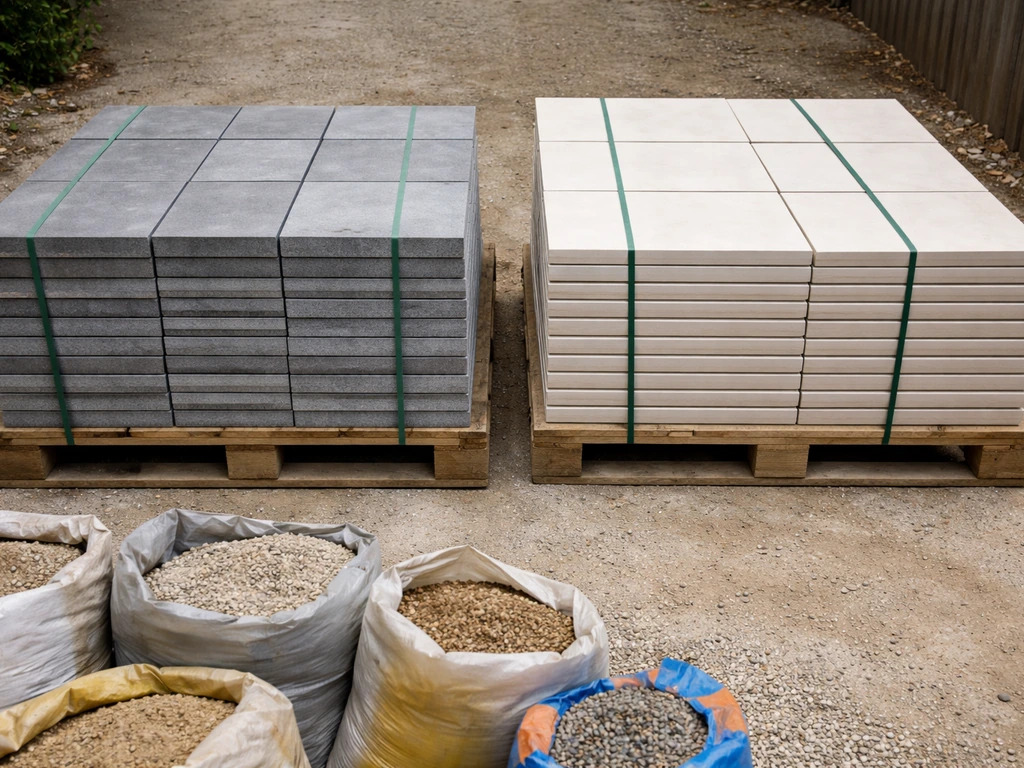
Material costs span a huge range. Basic concrete paving slabs might cost £15–£30 per m² to buy. Porcelain sits at £35–£70 per m² for materials alone, with installation on top taking it to £100–£160 per m² installed. Natural stone and slate are pricier still, often £50–£100+ per m² just for the stone. The sub-base materials (MOT Type 1 crushed stone) add around £20–£40 per m² once you account for a bulk bag covering roughly 5 m² at 100mm depth, plus sand blinding and mortar for bedding.
Site preparation
This is where budgets regularly get blown. Standard prep means excavating to the right depth (usually 150–200mm for the sub-base, sand, and paving combined), levelling the ground, and setting drainage falls so water runs away from the house. Pavingexpert also notes that while a 1:40 fall is often quoted as a minimum, a combined fall around 1:60 is normally adequate for smaller private or residential patio drainage projects setting drainage falls so water runs away from the house. If your garden slopes, has tree roots, poorly draining clay soil, or existing hardstanding that needs breaking up, those add real costs. Grading a sloped garden can add £500–£1,500 to a job. Installing a proper drainage channel or soakaway adds another £300–£800 on top.
Old surface removal and waste disposal
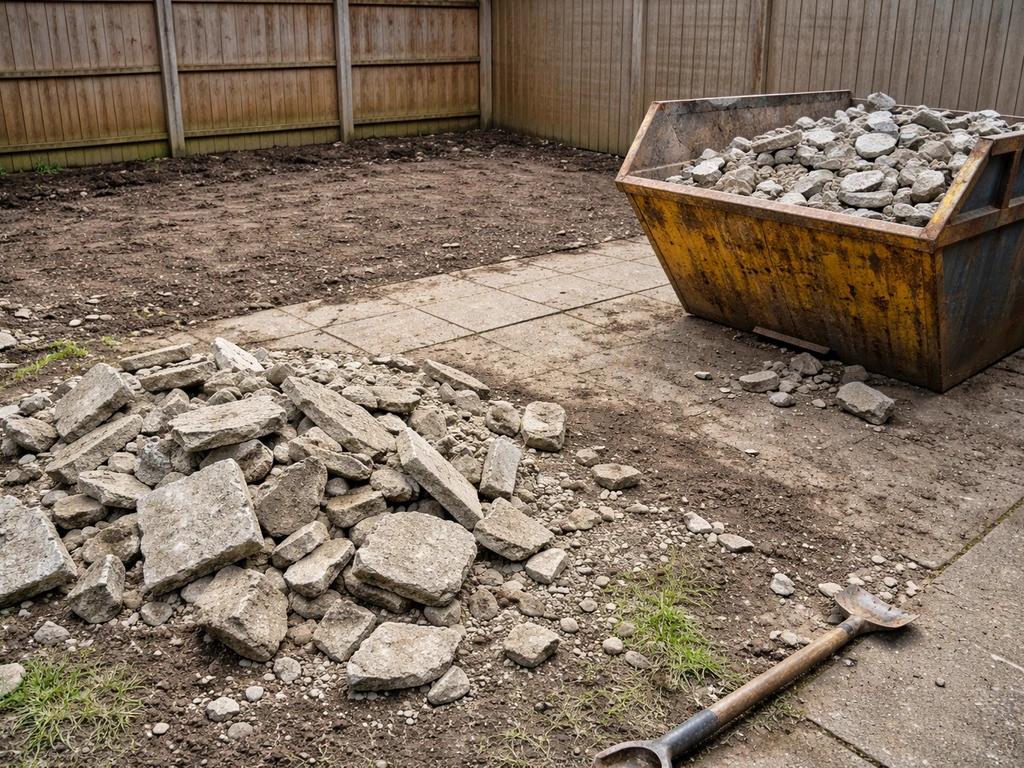
Removing an existing patio, concrete slab, or lawn and disposing of the waste is a legitimate additional cost. Skip hire in the UK ranges from around £140 for a mini skip in cheaper regions to over £550 for a large skip in central London, plus a permit admin fee (around £35) if it needs to go on the road. Many contractors will include skip hire in their quote, but always ask. If they're disposing of old concrete, that's a heavier, more expensive load.
Access and complexity
Difficult access, like a rear garden with no side gate or a property in a dense urban area, can add 10–20% to labour costs. Intricate cutting around curves, steps, or built-in features adds time. A simple rectangular patio is always going to be cheaper per m² than one with multiple angles, inset borders, or integrated steps.
VAT
Most patio contractors who are VAT-registered will charge 20% VAT on top of their prices. Always ask whether a quote is inclusive or exclusive of VAT. On a £4,000 job, that's an £800 difference. Not all sole traders are VAT-registered (the threshold is £90,000 turnover), so smaller operators may not charge it, but check explicitly.
A cost breakdown template for your patio project
Use this as a checklist when you're estimating or reviewing a quote. A transparent contractor should be able to give you a figure for each of these line items, or at least confirm which ones are included.
| Cost element | What it covers | Typical range |
|---|---|---|
| Excavation and removal | Digging out to depth, removing topsoil or old surface | £10–£25 per m² |
| Sub-base (MOT Type 1) | 100–150mm compacted crushed stone layer | £15–£30 per m² |
| Sand blinding | 25mm sharp sand layer on top of sub-base | £5–£10 per m² |
| Paving material (supply) | Slabs, pavers, concrete, stone, etc. | £15–£100+ per m² |
| Bedding (mortar or sand) | 25mm cement:sand mortar (1:4) or compacted sand | £5–£15 per m² |
| Labour (laying) | Cutting, laying, jointing, pointing | £35–£100 per m² |
| Waste disposal (skip) | Skip hire, permit, and disposal fees | £140–£550 flat |
| Drainage/falls | Drainage channel, soakaway, or gradient work | £300–£800 if needed |
| Finishing (sealing, pointing) | Polymeric jointing sand, sealant, edge restraints | £5–£20 per m² |
| VAT (if applicable) | 20% on top of all costs if contractor is VAT-registered | 20% of total |
For a practical 20 m² patio in mid-range porcelain with a standard sub-base, you might see: excavation £300, sub-base £400, sand £150, slabs £1,000, mortar bed £200, labour £1,400, waste disposal £250, finishing £200. That's around £3,900 before VAT, or £4,680 with it. That's a real-world number, not a lowball estimate.
Concrete vs pavers vs stone vs stamped: how to choose without overspending
Every material has a different cost profile, maintenance demand, and visual outcome. Here's an honest comparison to help you match material to budget and priorities.
| Material | Installed cost per m² | Durability | Maintenance | Best for |
|---|---|---|---|---|
| Poured concrete | £65–£120 | High if well laid | Low (seal every 3–5 yrs) | Budget-conscious, utilitarian areas |
| Concrete paving slabs | £80–£130 | Good | Low | Most domestic patios, easy DIY |
| Porcelain slabs | £100–£160 | Very high, frost resistant | Very low (non-porous) | Modern gardens, low-maintenance priority |
| Brick/clay paving | £100–£150 | High | Low–medium | Traditional look, cottage style |
| Block paving | £100–£160 | High, repairable | Medium (weed in joints) | Driveways extended into patios |
| Sandstone/limestone | £120–£200 | Good (needs sealing) | Medium (staining risk) | Natural look, mid-range budget |
| Flagstone | £130–£210 | Very good | Medium | Rustic, natural aesthetic |
| Slate | £140–£220 | Good (can be slippery) | Medium | Contemporary, dark/grey palette |
| Stamped concrete | £150–£250 | Moderate (can crack) | Higher (resealing needed) | Premium look at lower material cost |
Porcelain has become the go-to for most of my practical recommendations in 2026: it's frost-proof, non-porous (so no staining from BBQs or leaves), easy to clean, and the installed cost is actually quite competitive against natural stone once you factor in the lower maintenance over 10+ years. Natural stone looks incredible but needs sealing annually and can stain. Stamped concrete is the wild card: it looks premium but if it cracks or the sealant breaks down, repairs are expensive and hard to match.
On the budget end, concrete paving slabs from a builder's merchant remain the most cost-effective option. A basic 600x600mm concrete flag costs £3–£8 per slab, covers 0.36 m², and is perfectly serviceable for decades if properly laid. There's no shame in choosing them.
DIY vs hiring a contractor: what you can save and where it goes wrong
Going full DIY on a patio is genuinely achievable for most people if the ground is reasonably level and you're choosing straightforward square slabs in a simple layout. The savings are real. Labour is typically 40–60% of the total cost, so on a £4,000 job you might save £1,500–£2,000. But there are some specific risks that cost more to fix than they saved.
Where DIY works well
- Simple rectangular layouts with square or rectangular slabs
- Relatively level ground that needs minimal excavation
- Concrete or standard paving slabs (not porcelain, which requires a full mortar bed and more precise cutting)
- Areas with good access so you can move materials easily
- Smaller areas (under 15 m²) where any levelling errors are easier to correct
Where DIY costs you more in the end
- Inadequate sub-base: skipping depth (less than 100mm compacted MOT Type 1) leads to sinking, cracking, and a patio you'll relay in 3–5 years
- Wrong falls: patio should fall away from the house at around 1:60 gradient; get this wrong and you get pooling water or damp against the wall
- Porcelain slabs: unforgiving to cut, heavy, and must be fully bedded (no spot bedding) or they rock and crack
- Underestimating tool hire costs: a wacker plate, angle grinder with diamond blade, and mixing kit all add up to £150–£300 in hire fees
- Natural stone pointing: getting the joint mix wrong causes rapid deterioration and looks terrible within a year
A practical middle ground is to hire a contractor for groundworks (excavation, sub-base, levelling) and lay the slabs yourself. The groundworks are where most DIY patios fail, and a half-day of professional prep work might cost £300–£500 but saves you from a £2,000 relay job two years later. If you're comparing slab-laying costs only (labour without materials), that's covered more specifically in guides focused on labour-only patio pricing.
How location affects your quote
Where you live in the UK makes a meaningful difference to your final number. London and the South East consistently come in 15–30% above the national average for patio work, driven by higher labour costs, travel time, parking challenges, and general cost of living for tradespeople. The cost per m² data from Checkatrade and others reflects a national range, so if you're in London, apply that 20–25% uplift mentally to the mid-range estimates.
The North of England, Wales, and Scotland tend to sit below the national average. The Midlands generally tracks close to the midpoint. Rural areas are variable: less competition among contractors can push prices up, but lower overhead costs sometimes balance it out. The most reliable way to gauge your regional rate is to get three local quotes, but here's a rough adjustment guide.
| Region | Approximate adjustment vs national average |
|---|---|
| London (central) | +20–30% |
| South East / Home Counties | +10–20% |
| South West | +5–10% |
| East of England | +5–10% |
| Midlands | 0–5% |
| North West | -5–10% |
| Yorkshire and Humber | -5–10% |
| North East | -10–15% |
| Scotland | -5–10% |
| Wales | -5–10% |
If you're in the UK specifically looking at patio costs, there's a dedicated breakdown of UK-specific pricing structures and contractor rates worth reviewing alongside this guide. MyBuilder also publishes a UK “Cost of Laying a Patio” guide that provides an overview for patio budgeting and UK pricing structure UK-specific pricing structures and contractor rates. Similarly, if you're looking at just patio slab laying costs broken out from full groundworks, those are treated separately in more detail elsewhere on this site.
How to get accurate quotes and not get stung
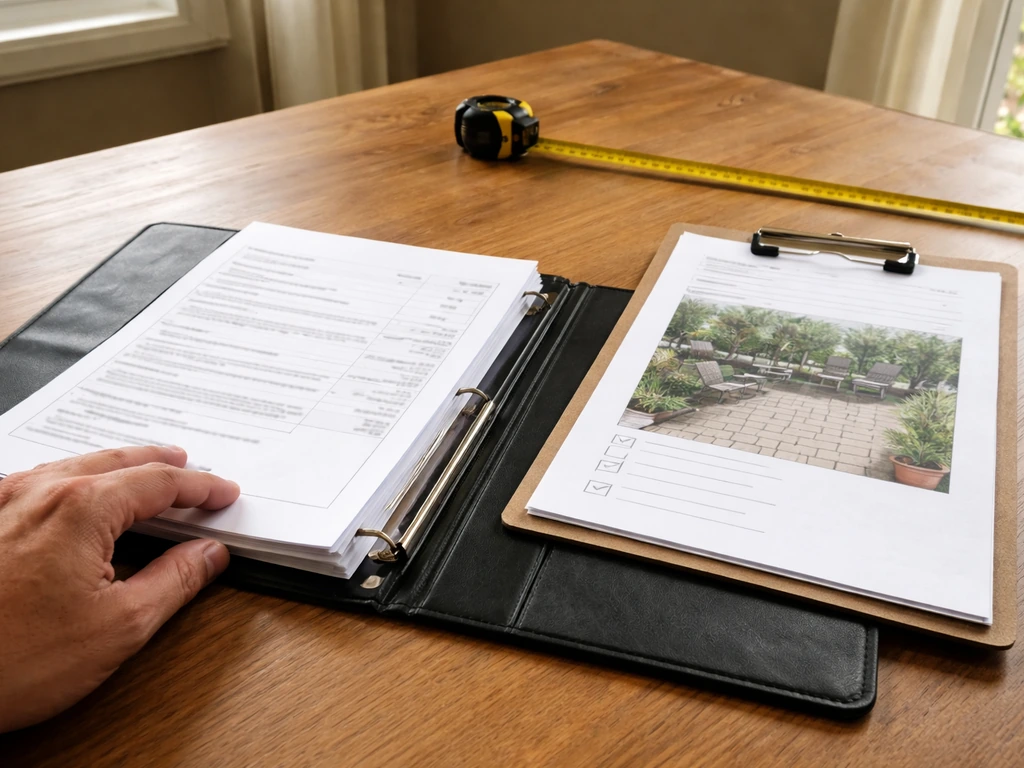
The difference between a £3,500 quote and a £5,500 quote for the same patio is often just what's included. Some contractors price comprehensively; others strip out excavation, waste, VAT, and drainage as 'extras.' Here's how to level the playing field before you start comparing numbers.
What to have ready before you contact anyone
- Patio dimensions (length x width in metres, even if approximate)
- A photo of the current surface (lawn, concrete, decking, bare soil)
- Desired material or at least a shortlist (slab type, porcelain, stone, etc.)
- Whether you need steps, edging, drainage channels, or a new wall
- Any access restrictions (narrow side gate, steps to garden, parking distance from front door)
- Whether you want the old surface removed or will handle it yourself
Questions to ask every contractor
- Is this quote inclusive of VAT, or will 20% be added on top?
- What depth of sub-base are you including, and what material (MOT Type 1)?
- Does the price include excavation and disposal of spoil and any existing surface?
- How will you handle drainage falls away from the house?
- What bedding method will you use (full mortar bed, sand, or spot bedding)?
- Is pointing/jointing included, and what product will you use?
- What is your payment schedule, and do you take a deposit?
- Can you provide references or photos of similar recent work?
- Are you insured for public liability and employers' liability?
Red flags to watch for
- Cash-only jobs with no written quote: if there's no paper trail, there's no comeback
- Quotes that don't mention sub-base depth or bedding method: this usually means they're cutting corners on foundations
- Very large upfront deposits (more than 20–25%) before work begins
- No mention of drainage or falls in the quote or conversation
- Quotes significantly lower than all others without a clear reason: cheaper isn't better if the sub-base is 50mm instead of 100mm
- No insurance: ask for the certificate, not just their word
Get at least three quotes for any job over £1,500. Compare them line by line, not just the bottom number. A quote that includes proper excavation, 100mm MOT Type 1, correct falls, full mortar bedding for porcelain, and waste disposal is worth paying more for than one that skips half of those. A patio that's poorly laid is expensive to fix, and most contractors won't touch another tradesperson's substandard work without charging full price to start again.
If you're specifically trying to understand what labour-only costs look like (when you're supplying your own materials), or if you're comparing patio installation against building a deck instead, both are worth treating as separate decisions once you have your baseline patio quotes in hand.
FAQ
How much does it cost to lay a patio if I only need a small area, like 5 m² or 6 m²?
Small patios cost more per m² because fixed costs still apply, especially excavation, trip charges, and minimum skip or waste handling. As a rule of thumb, expect the per-m² figure to sit above the article’s 10 m² range unless your site is very straightforward and the contractor can bundle materials and labour efficiently.
Does the patio cost change if my garden is on a steep slope or the ground is uneven?
Yes. Steep or heavily uneven sites can add more than just grading, because the contractor may need thicker sub-base in low spots, additional levelling, and more careful setting-out to achieve the correct falls. If you’re seeing standing water after rain, ask whether drainage falls and edge restraints will be included in the quote.
What extra costs should I expect if I’m replacing an existing patio or driveway?
Beyond removal and waste disposal, you may need extra excavation depth, new sub-base if the old base is unsuitable, and sometimes extra materials for making good edges where the old slab was meeting a wall or pathway. Ask the contractor to confirm whether they will haul away all arisings (including concrete) and whether disposal is priced by volume or load.
Is VAT always included in a patio quote?
Not necessarily. Even if a contractor is VAT-registered, some quotes show prices exclusive of VAT and add it later. Always ask whether the total is “inclusive of VAT” and, if VAT is added, whether the contractor’s VAT applies to labour only or to the full job value.
If I buy the slabs myself, what should I watch for in a labour-only price?
Labour-only quotes often assume you have correct quantities, suitable slabs for the intended area, and sometimes that the contractor provides bedding materials. Confirm what’s included for supply of MOT Type 1, sand or mortar, edging, and any cutting waste. If the contractor has to revisit for missing materials, day-rate costs can erase the apparent saving.
Do I need drainage work, and how does that affect the cost?
You may, especially if the patio is near a house wall, connected to downpipes, or on clay that holds water. Typical drainage items include a channel drain or a small soakaway. Ask for a simple explanation of the drainage “route,” and whether they include adjustment of falls to keep water moving away from the property.
How do I compare two patio quotes that have different inclusions?
Compare each line item, not just the total. Specifically check: sub-base thickness and type (for example MOT Type 1 depth), bedding method for your slab type, whether edge restraints are included, waste disposal scope, and whether excavation includes breaking up old hardstanding. A quote that omits one of these can look cheaper but end up costing more to fix.
Will difficult access always increase patio labour costs by the same percentage?
No. Access can add costs, but the impact varies by what’s difficult (carrying distance, steps, no side gate, parking restrictions). Instead of relying on a percentage, ask how long the contractor expects to spend moving materials and how waste removal will be handled on your specific layout.
What about permits or skip restrictions, do those costs apply everywhere in the UK?
Rules are stricter in some towns and cities, and a permit may be needed if a skip sits on the road or a controlled area. If you live in a busy area, ask whether the quote includes skip hire, permit administration, and any road-use charges, since these can add admin time and fees.
How much does it cost to lay a patio with complex shapes, steps, or inset borders?
Complex geometry usually increases both labour time and cutting waste, so per-m² pricing often rises. If your design includes steps, multiple levels, or inset borders, ask whether the contractor will quote a rate based on additional labour hours and whether they will price special edging and copings separately.
What maintenance cost should I factor in when budgeting for natural stone versus porcelain?
Natural stone often needs sealing at regular intervals to reduce staining and water absorption, which adds an ongoing cost. Porcelain typically needs less routine maintenance because it is less absorbent and resists staining better. If you want the lowest long-term spend, ask the contractor what maintenance schedule they recommend for the exact stone or finish you’re considering.
Is DIY still a good idea if my ground is not level?
DIY can be cost-effective only when the base can be prepared correctly. If the ground is not reasonably level or has poor drainage, DIY often fails in the sub-base and can lead to rocking slabs and weed growth. A common compromise is hiring professionals for groundworks while you handle paving, edging, and finishing.
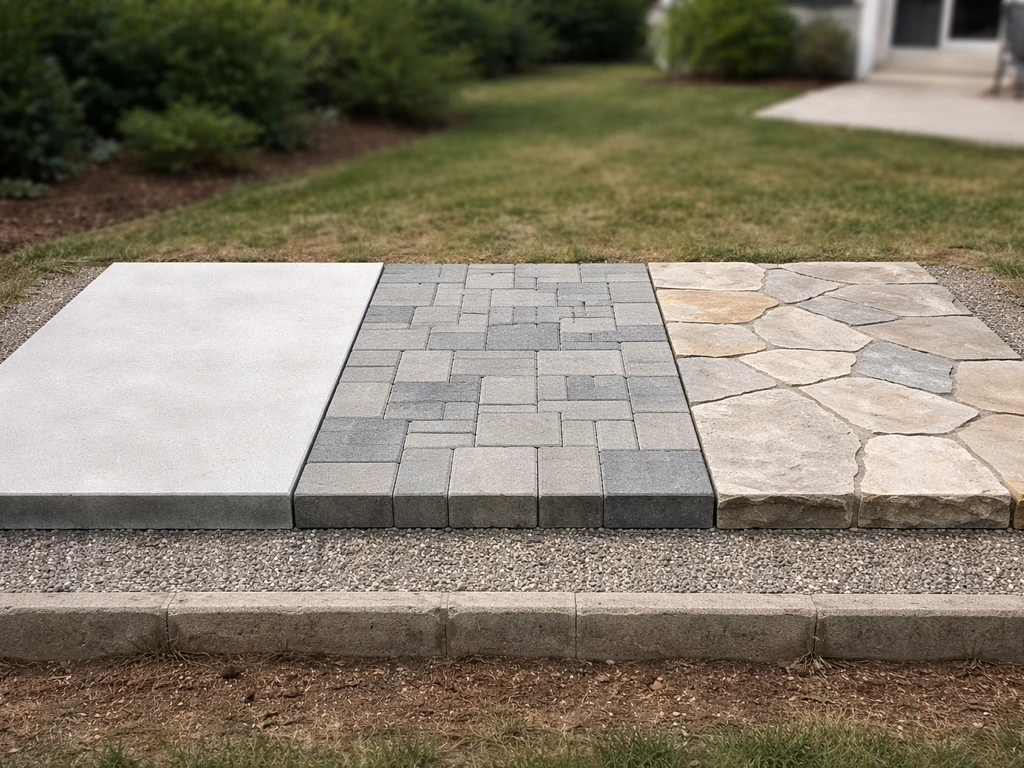
Patio cost guide with real price ranges by size and material, full line-item budget, DIY vs install, and quote checklist
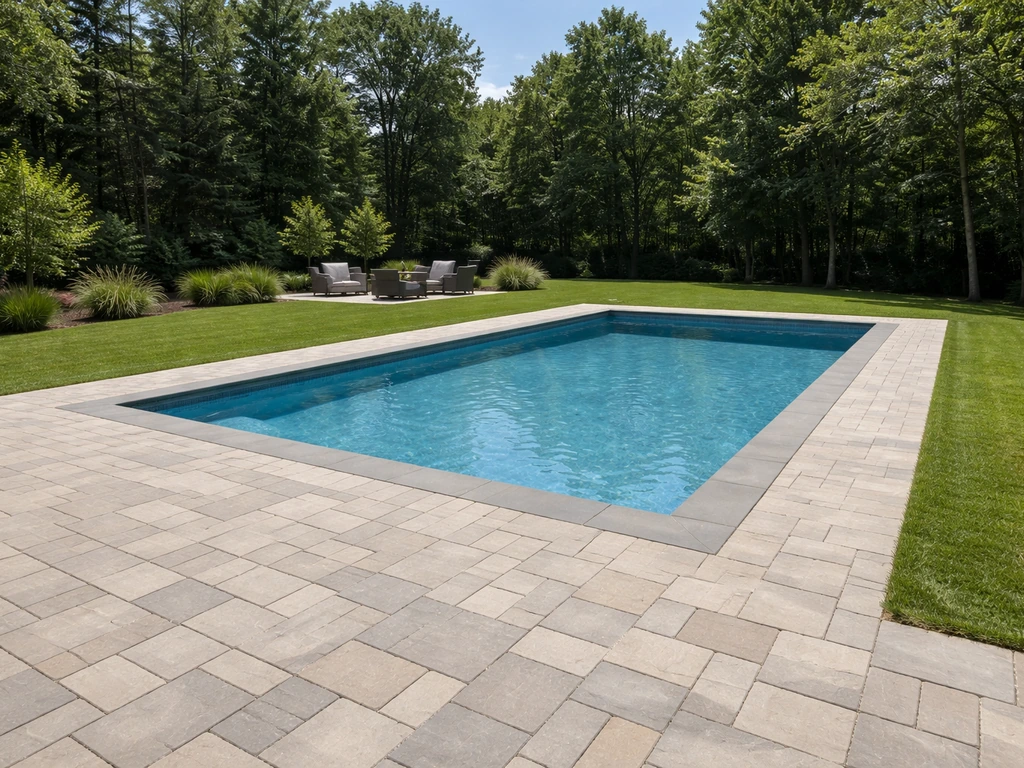
Learn how much patio around a pool costs and how to size square feet, materials, extras, and get real bid line items.
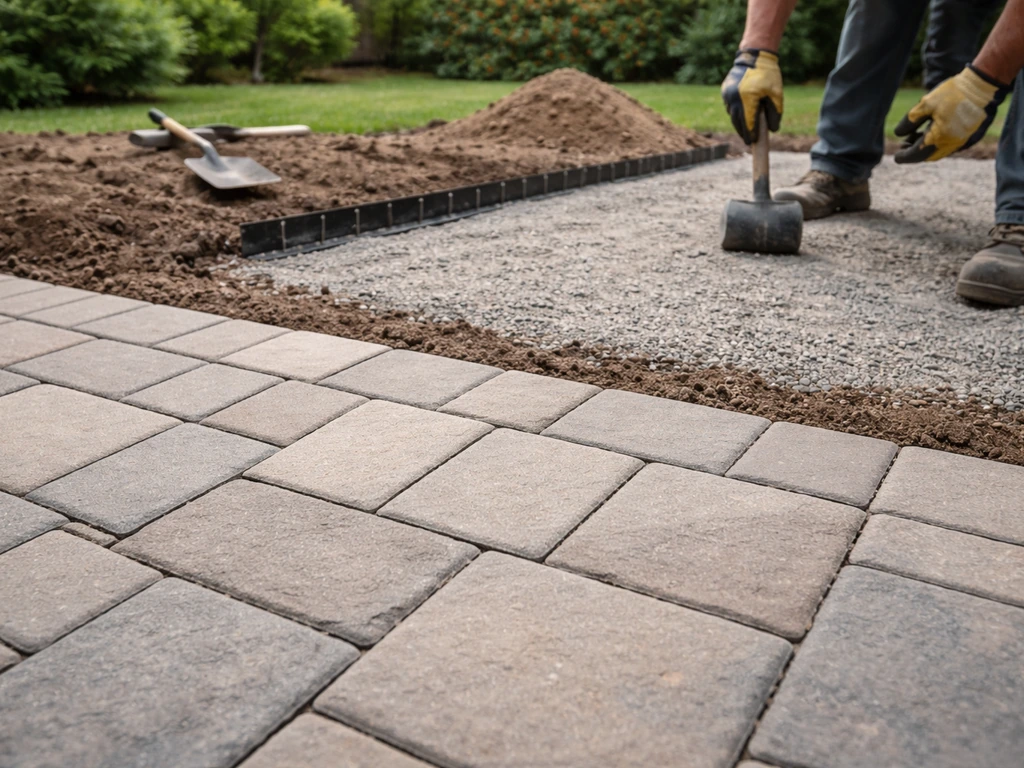
Patio cost estimates by size and material with labor, base, add-ons, DIY vs contractor, and quote planning tips.