
Most homeowners pay between $5,400 and $11,500 for a stamped concrete patio, with an average around $7,700. Per square foot, that works out to roughly $8 to $20 for a straightforward single-pattern design, and blank" rel="noopener noreferrer">up to $28 to $30 per square foot for high-end custom work with multiple patterns and special coloring effects. A plain concrete patio runs $6 to $10 per square foot by comparison, so stamping adds a real premium, but you're getting a surface that mimics stone, slate, or brick at a fraction of the material cost. Most homeowners look at that same range to estimate how much is a concrete patio slab for their square footage. A plain concrete patio typically costs in the $6 to $10 per square foot range, which helps you estimate how much stamped work will add how much per sq ft for concrete patio.
How Much for a Stamped Concrete Patio Cost Breakdown

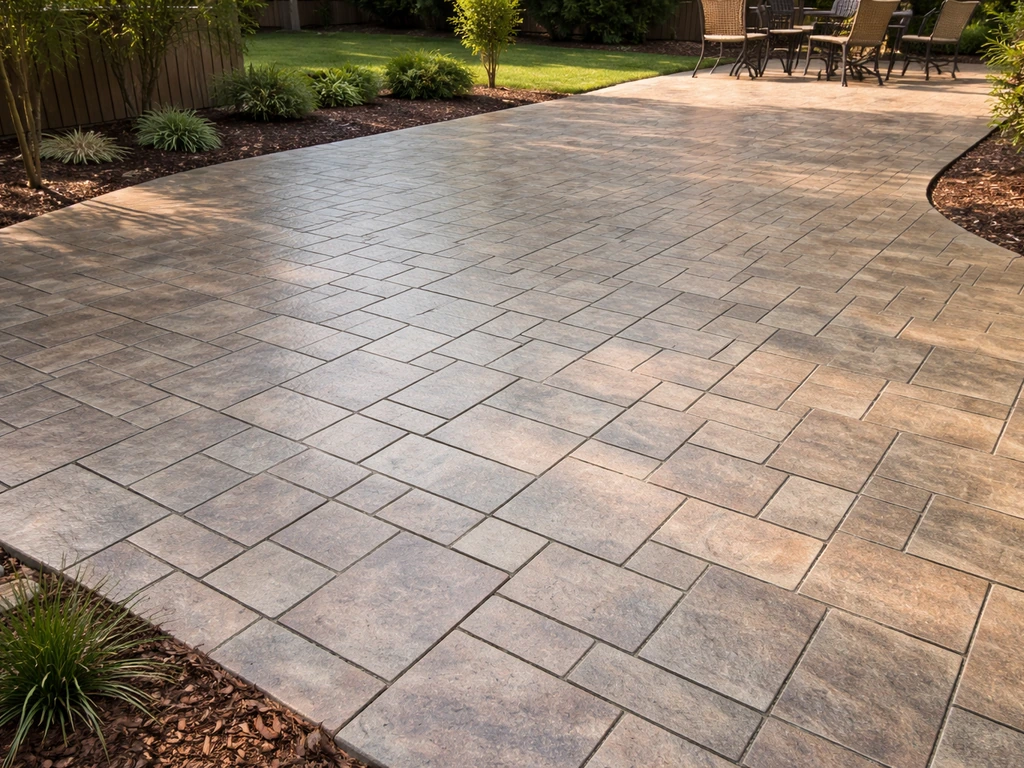
Average total project cost
The typical stamped concrete patio project lands somewhere between $5,400 and $11,500 fully installed, based on aggregated data from multiple contractor pricing sources through early 2026. That range covers the most common scenario: a mid-size patio (roughly 200 to 400 square feet), a single stamp pattern, one or two color steps, and a standard acrylic sealer coat. Custom projects with multiple overlapping patterns, hand-cut borders, or specialty acid-stain finishes push well past $11,500, sometimes reaching $20,000 or more on larger patios.
It's worth knowing upfront that stamped concrete is consistently the most expensive concrete finish option. One major pricing resource notes it can cost 2 to 5 times more than a basic broom-finished slab. That said, it still undercuts natural flagstone or high-end pavers when you're comparing installed costs on a large area, which is why it stays popular.
Cost per square foot broken down
The per-square-foot number is the most useful way to build an estimate, and it varies significantly by design tier. Here's how the tiers stack up across multiple pricing sources:
| Design Tier | Cost Per Sq Ft | What's Included |
|---|---|---|
| Basic (single pattern, one color) | $8 – $14 | One stamp pattern, integral or color hardener, standard sealer |
| Mid-range (1–2 patterns, accent color) | $14 – $20 | Multiple color steps, release agent accent, upgraded sealer |
| High-end / Custom | $20 – $30+ | Multiple patterns, hand-cut edges, special effects, premium sealer |
The cost per square foot also tends to drop slightly on larger jobs because setup costs (forms, equipment mobilization, base prep) get spread across more area. A contractor doing a 600-square-foot patio is more efficient per square foot than one doing a 100-square-foot entry pad. That said, the total bill is obviously higher on the bigger project.
What's actually driving the price
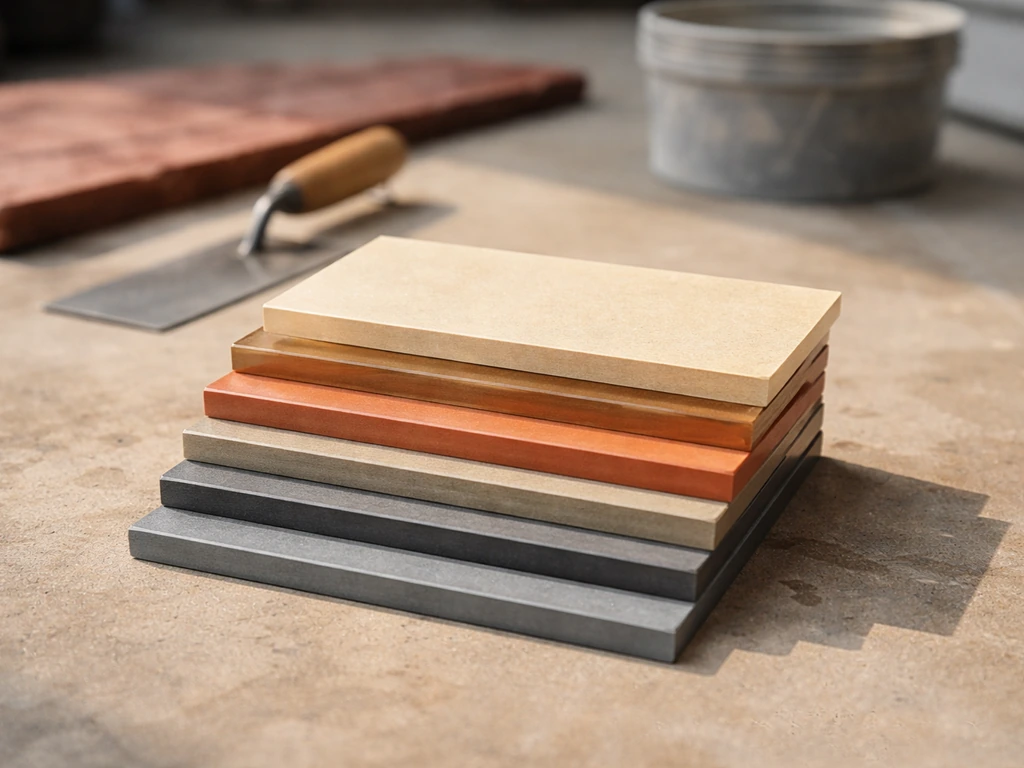
Stamped concrete pricing has several distinct cost layers, and understanding them helps you know which levers to pull when your quote comes back higher than expected. EstimateConcrete.com breaks stamped concrete pricing into three main components: the base concrete slab, the stamping and coloring work, and the sealer three distinct cost layers.
The base slab
The concrete slab itself accounts for about 45 to 55 percent of total installed cost, or roughly $6 to $10 per square foot. Standard patio slabs are 4 inches thick, reinforced with either 6x6 welded wire mesh or rebar. Going thicker (to 5 or 6 inches) adds cost but is worth it in areas with expansive soil or heavy use. The subbase, typically 4 to 6 inches of compacted gravel, also factors in here. Skimping on base prep is where stamped concrete fails years later, so this is not the place to cut corners.
Stamping labor
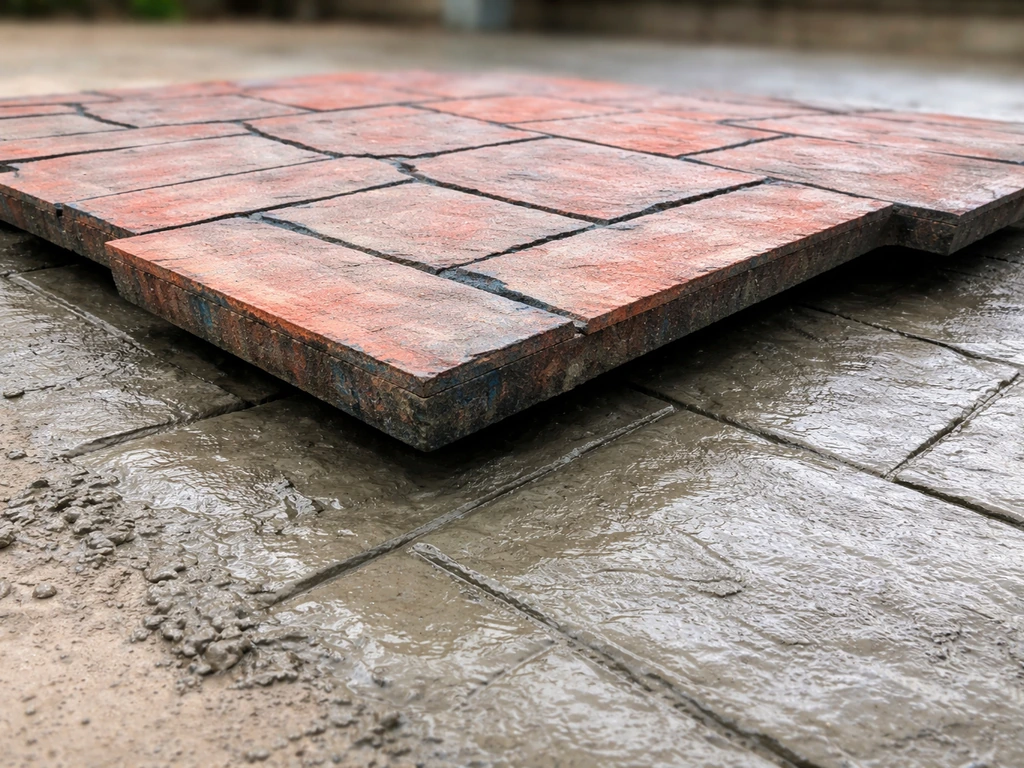
Stamping adds $3 to $8 per square foot in labor on top of the base slab. This is the most time-sensitive part of the whole job. Stamps have to go down when the concrete hits exactly the right stage of stiffness, and a crew that misjudges the timing ends up with blurry impressions or concrete that's too hard to stamp cleanly. More complex patterns with tight alignment (like a running-bond brick or intricate slate texture) take longer and cost more than simpler textures.
Color
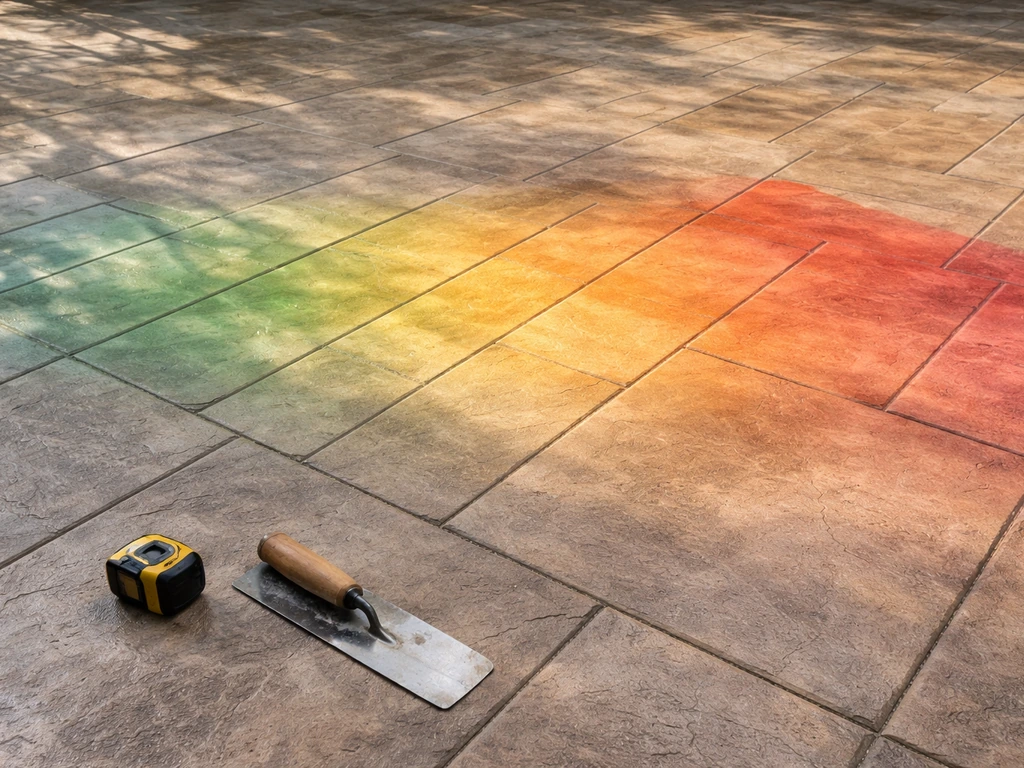
Color adds $1 to $4 per square foot and is applied in a few different ways. Color hardener is broadcast onto the wet surface before stamping and is the most common method for stamped work because it hardens the top layer while adding pigment. Integral color mixes pigment throughout the entire concrete pour, which costs more and is less vivid but more durable if the surface gets chipped. Most stamped patios also use a release agent (either powder or liquid) applied right before the stamps go down. When pigmented, the release agent settles into the pattern joints and adds a subtle accent color that makes the texture look more realistic. A basic single-color job with release costs about $1.50 to $3.50 per square foot in materials. Multiple color effects push that higher.
Sealing
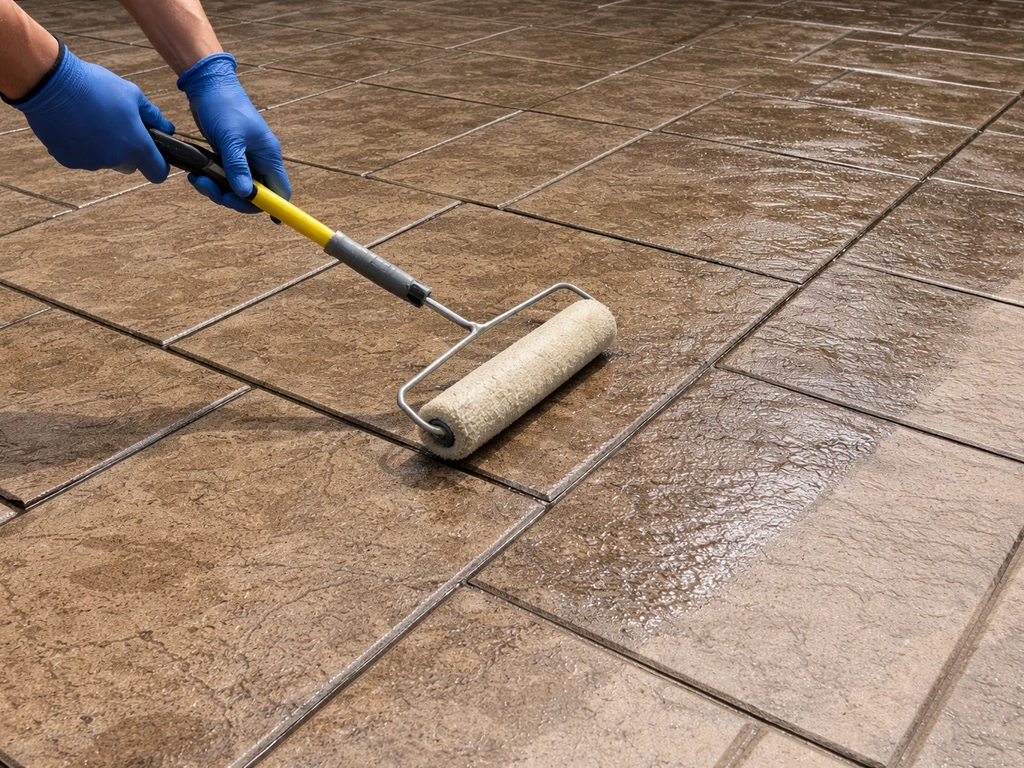
Sealing runs $0.50 to $2.00 per square foot for the initial application and is not optional. Sealer protects the color and the surface texture from UV fading, freeze-thaw damage, and staining. New concrete needs about 28 days to cure before the first sealer coat goes on, and most contractors include this in the project scope (returning for the seal coat after the cure period). Budget for resealing every 2 to 3 years as a maintenance cost, typically $1 to $2 per square foot each time.
Site prep, demo, and reinforcement
If you're replacing an old patio, demolition and haul-away add cost. Grading, drainage corrections, and tree root removal add more. Reinforcement (wire mesh or rebar) typically adds $2 to $4 per square foot. None of these line items are optional if your site needs them, and they're where a lot of homeowners get surprised by a quote that's higher than they expected from a ballpark range they saw online.
Cost examples by patio size
Here's what you can expect to pay at common patio sizes, using a mid-range design tier ($12 to $18 per square foot) as the base. Basic designs come in at the low end of each range; custom work can go higher.
| Patio Size | Square Footage | Estimated Cost Range |
|---|---|---|
| 10 x 10 | 100 sq ft | $1,200 – $2,800 |
| 12 x 12 | 144 sq ft | $1,150 – $3,740 |
| 10 x 20 | 200 sq ft | $1,600 – $3,800 |
| 16 x 20 | 320 sq ft | $3,840 – $6,400 |
| 20 x 20 | 400 sq ft | $4,800 – $8,000 |
| 20 x 30 | 600 sq ft | $7,200 – $12,000+ |
A 12x12 patio is on the small side for stamped concrete and runs $1,150 to $3,740 depending on design complexity. At that size, setup costs are relatively high per square foot, so the per-square-foot rate is often higher than the averages you see quoted online. Larger patios (20x20 and up) start to see better per-square-foot efficiency and are where stamped concrete tends to make the most economic sense.
Contractor install vs. DIY: be realistic here
Stamped concrete is one of the few outdoor projects where DIY is genuinely not recommended for most homeowners, and it's not just contractor bias talking. The stamping window is tight. Once the concrete hits the right consistency, you have a limited and unforgiving amount of time to place stamps, align patterns, and complete the entire slab before it sets. If you're doing this for the first time, that timing is almost impossible to get right without experience.
Beyond the stamping itself, the cleaning, curing, and sealing steps after the pour are where DIYers run into the most problems. Using the wrong sealer, applying it too early, or applying it over a surface that wasn't properly cleaned can cause bubbling, peeling, and color issues that are expensive to fix. Professional installers carry stamping mats (which cost hundreds to thousands of dollars to rent or buy), have the crew size to move efficiently across a slab, and stand behind their work.
If budget is tight, a better approach than full DIY is to hire a contractor and reduce costs through design choices, which are covered in the next section. If you're comparing this to other patio types, a plain broom-finished concrete slab is a legitimate DIY option for a skilled homeowner. Stamped concrete isn't.
Regional price differences and getting good quotes
Where you live matters a lot. Labor rates, concrete delivery fees, and material costs all vary by region, and the difference between a low-cost market (rural Midwest or South) and a high-cost one (coastal California, New York metro, Pacific Northwest) can easily be $5 to $8 per square foot on the same project. A $12 per square foot mid-range patio in Kansas City might run $18 to $20 per square foot in Seattle.
To get an accurate number for your area, get at least three quotes from local contractors who specialize in decorative concrete (not just general concrete work). When you're collecting quotes, ask each contractor to break the bid into line items: base prep, reinforcement, concrete material, stamping labor, color system, and sealer. This makes it easy to compare quotes apples-to-apples and spot where one contractor is cutting corners or another is padding margins.
A few specific questions worth asking every contractor:
- What thickness slab are you quoting, and what reinforcement is included?
- What's the subbase prep plan, and how many inches of compacted gravel are included?
- Is the sealer coat included, and when do you return to apply it after cure?
- How many patterns and color steps are in this quote?
- What happens if the pour day has bad weather or the concrete sets faster than expected?
If you're in Canada, regional pricing works similarly but costs tend to be higher due to material and labor market differences. Because pricing in Canada is affected by labor and material costs, your concrete patio quote can vary a lot from one region to another If you're in Canada, regional pricing works similarly. Homeowners comparing a stamped finish to a plain concrete slab will find the same per-square-foot premium structure applies regardless of market.
How to bring the cost down without hurting the result
There are real ways to reduce what you pay for a stamped concrete patio without ending up with a surface that cracks, fades, or looks cheap in a few years. The key is cutting on complexity and design options, not on structural integrity.
- Choose one pattern, not two or three. A single stamp pattern applied consistently is less expensive than mixed borders or insets, and it often looks cleaner anyway.
- Stick with a standard color combination. Integral color plus a single release agent accent is a well-established, cost-effective approach. Custom multi-step color effects with antiquing stains add meaningful cost.
- Keep the shape simple. Rectangular patios with straight edges are faster to form and stamp than curved edges or irregular shapes. Each curve adds labor time.
- Skip the hand-cut border or saw-cut control joint detailing if your design allows it. Decorative edge details add hours of labor.
- Get quotes in the off-season. Stamped concrete contractors in most markets are less busy in late fall and early spring. Some offer better pricing when they need to fill the schedule.
- Don't cut the base prep or slab thickness. A 4-inch slab on a proper compacted gravel subbase is the minimum for durability. Going thinner to save money almost always leads to cracking that costs more to repair or resurface later.
- Bundle with other concrete work if you can. If you're also doing a sidewalk, driveway apron, or other flatwork, a contractor can mobilize equipment and crew once for everything, which reduces the per-project overhead.
One trade-off worth naming directly: if your total budget is under $2,500 and your patio needs to be larger than about 150 square feet, stamped concrete may genuinely not be the right fit right now. A plain concrete slab at $6 to $10 per square foot is a legitimate and durable alternative that can be resurfaced or overlaid with a stamped topping later. That path keeps costs down now without locking you into a surface you're unhappy with. For context, a small concrete patio done plain often comes in well under what a stamped version of the same size would cost.
The bottom line: stamped concrete delivers a genuinely attractive, durable patio surface when it's done right. The sweet spot for most homeowners is a 200 to 400 square foot patio, one stamp pattern, a two-step color system, and a quality acrylic sealer, landing somewhere between $8,000 and $14,000 fully installed depending on your region. Get three itemized quotes, ask the right questions, and don't let anyone talk you into skimping on the base.
FAQ
Why does my quote’s per-square-foot price feel higher than the typical range I see online?
Because stamped concrete is time sensitive to place and finish, contractors often price by “design tier” plus site conditions rather than purely by the square-foot rate. If you have a small, irregular layout, extra edging, or tight access for the crew, expect an effective per-square-foot price higher than the average, even if your total area looks similar to another quote.
What site conditions most affect how much I pay for stamped concrete, beyond the design?
Most bids assume a 4-inch slab on a properly compacted gravel subbase, reinforced with mesh or rebar. If your site has expansive soil, frequent freeze-thaw, or heavy loading (like a grill cart or hot tub), ask whether the plan includes thicker concrete and stronger reinforcement, because that is one of the biggest drivers of cost beyond stamping itself.
Does the per-square-foot price usually include borders, steps, or only the main patio surface?
Stamped concrete is usually “color plus texture,” but many customers assume it includes full decorative borders or step patterns. Ask if the price includes border work, borders in a contrasting color, custom stamp mats for edges, and whether stairs are separate line items, since those additions can push the project toward the top end of the range.
How can I compare quotes if one contractor includes sealing and the other does not?
If you’re comparing a patio covered in the quote scope to one that includes only slab and stamping, the sealing schedule can change the real cost. Confirm whether the contractor includes the initial sealer after the required cure time and whether they recommend a reseal cadence (often every 2 to 3 years) with an estimated cost per square foot for future work.
What’s the difference between color hardener and integral color in a stamped concrete quote?
Release agent (used to help the stamps lift cleanly) is not the same as the final surface color plan. Ask what color system is included (color hardener, integral color, and release usage) and whether they’re aiming for “more pigment” or “more durable color,” since durability and vibrancy trade off and affect the materials line item.
What should I look for in the quote to make sure the base prep is not being skimped?
Stamped concrete performance depends heavily on base preparation, drainage, and control joints. Ask for details on the subbase depth, compaction method, and the plan for joints and expansion where needed, because skipping or reducing those elements can lead to cracking that costs more to repair than the original savings.
If I’m replacing an old patio, what parts of the cost should be itemized?
In most cases, demolition is priced separately, especially if there’s old concrete to break up, truck out, and dispose. If your area is near a driveway or has limited access, hauling and disposal fees can also increase, so request a line item for demo and haul-away rather than letting it hide in “mobilization.”
What common “extras” get added after inspection, and how can I prevent quote surprises?
Even with an included base slab and stamping, contractors may price “extras” like leveling for slopes, drainage correction, root removal, tree stump removal, and bringing grade to match the house threshold. Ask whether grading and drainage are included and whether water will be directed away from the foundation, because that is a common cause of budget surprises.
How do I know what sealer system I’m paying for, and how does it change maintenance?
A basic acrylic sealer is typical, but the expected maintenance changes with the sealer type and local exposure (lots of sun, freeze-thaw cycles, frequent de-icing salt). Ask what sealer they use, whether it’s meant for freeze-thaw durability, and whether they recommend specific cleaners to avoid dulling or staining.
Do I need a different finish or sealer if my patio gets heavy sun or harsh winter conditions?
If your patio is in direct sun, has freeze-thaw, or will see salts or oil spills, the cost of “good-looking for a few years” versus “looks good for longer” can differ. Ask the contractor what finish they recommend for your exposure and whether additional protection steps are included, since not all sealer systems perform the same in harsh weather or high-traffic areas.
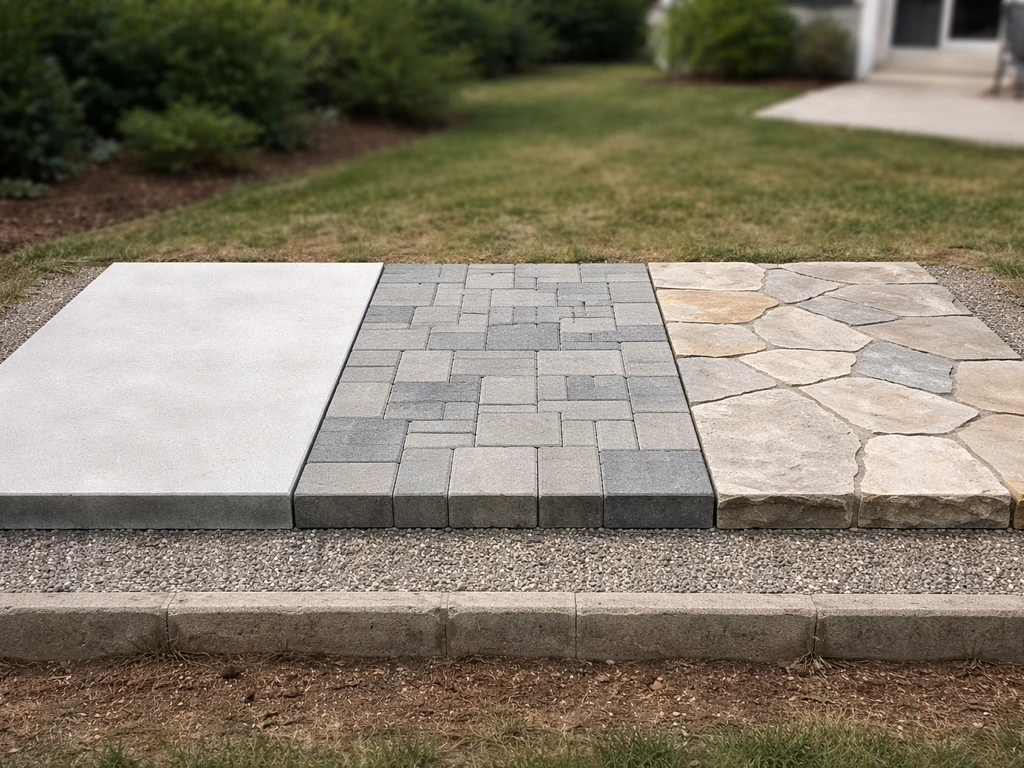
Patio cost guide with real price ranges by size and material, full line-item budget, DIY vs install, and quote checklist
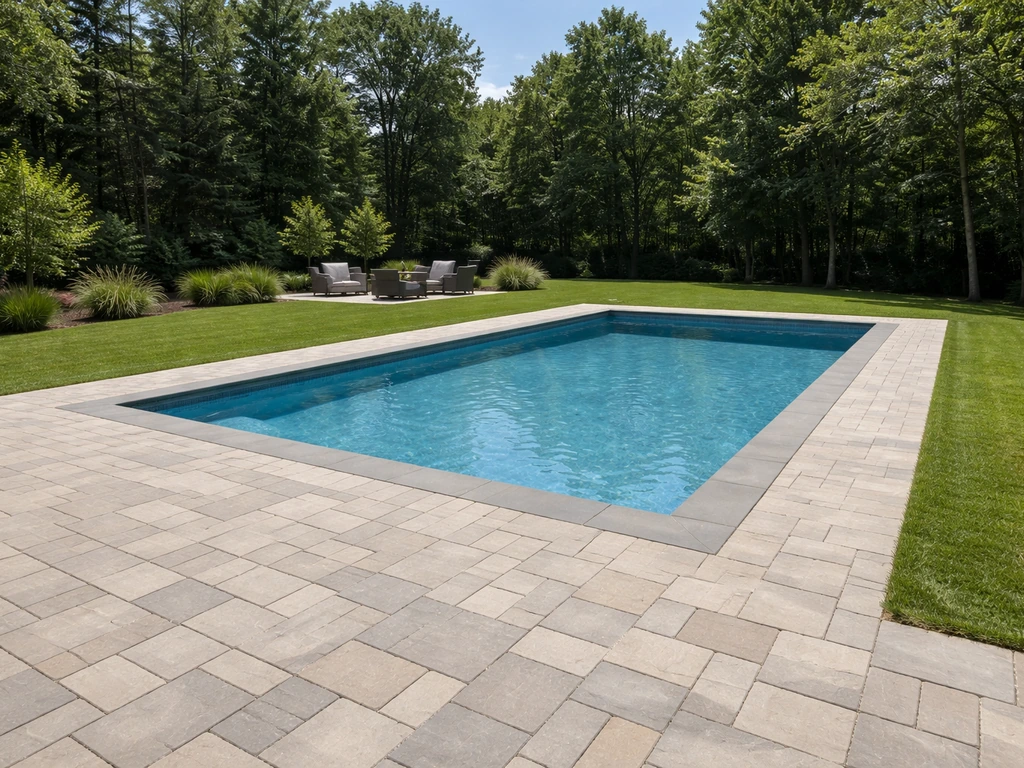
Learn how much patio around a pool costs and how to size square feet, materials, extras, and get real bid line items.
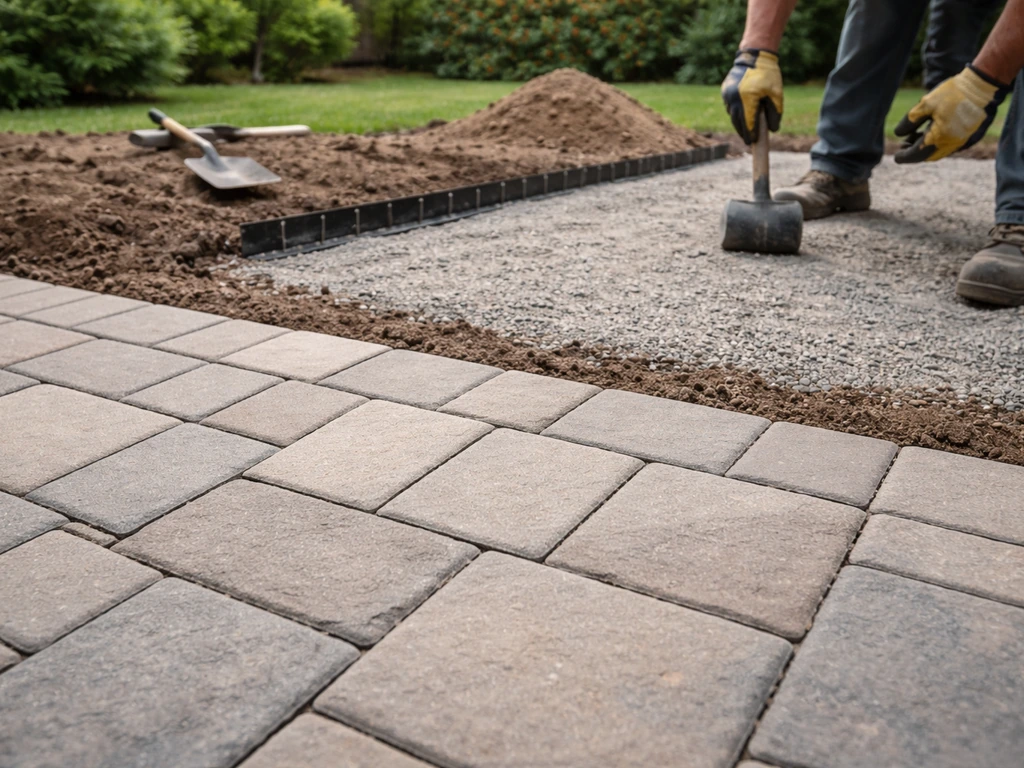
Patio cost estimates by size and material with labor, base, add-ons, DIY vs contractor, and quote planning tips.