
Re-laying a patio typically costs between $8 and $35 per square foot all-in, depending on the material and how much prep work the ground needs. If you are starting from scratch rather than re-laying, use the same per-square-foot logic but check how much to lay patio tiles for your specific material and prep needs.
How Much to Re Lay a Patio Cost Breakdown by Type

Felix Carver
6 May 2026
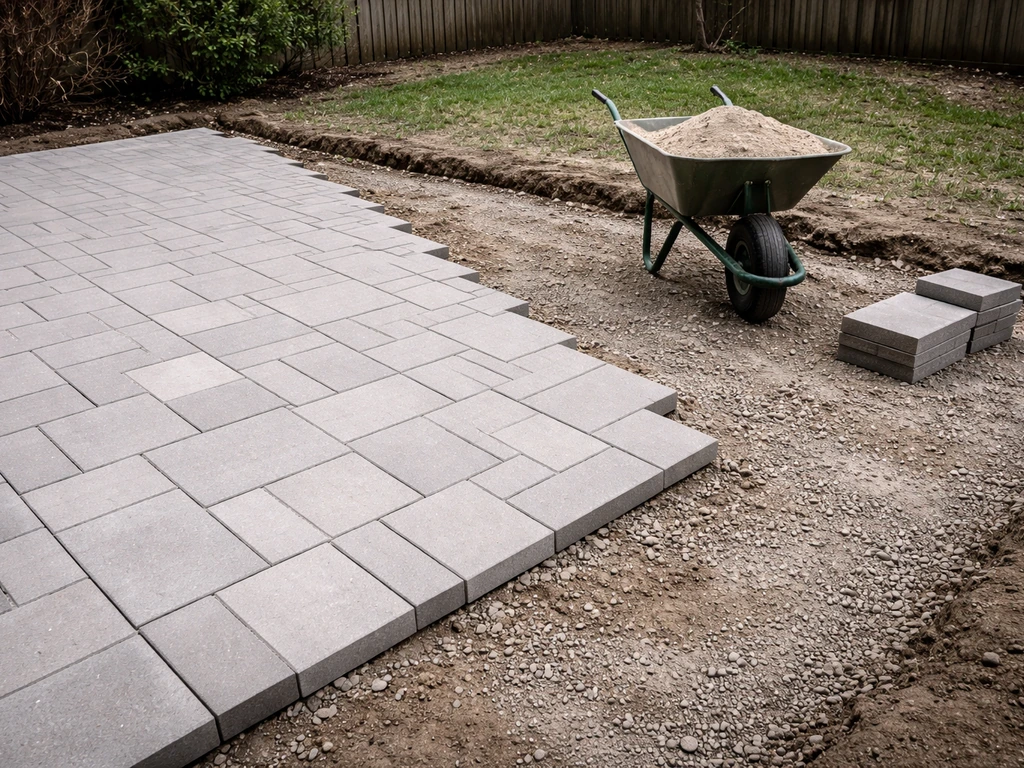
If you need a ballpark before you call contractors, check how much it typically costs to relay a patio per square foot based on materials and how much base work is required. For a standard 12x12 patio (144 sq ft), most homeowners spend somewhere between $1,150 and $5,000 once you factor in breaking out the old surface, fixing the base, and re-laying new material.
Pavers and flagstone sit at the higher end; concrete re-pours and simple slab relays sit lower. If you're just relaying existing pavers over an inspected base, that can drop as low as $8–$15 per square foot.
Typical re-lay costs by patio material
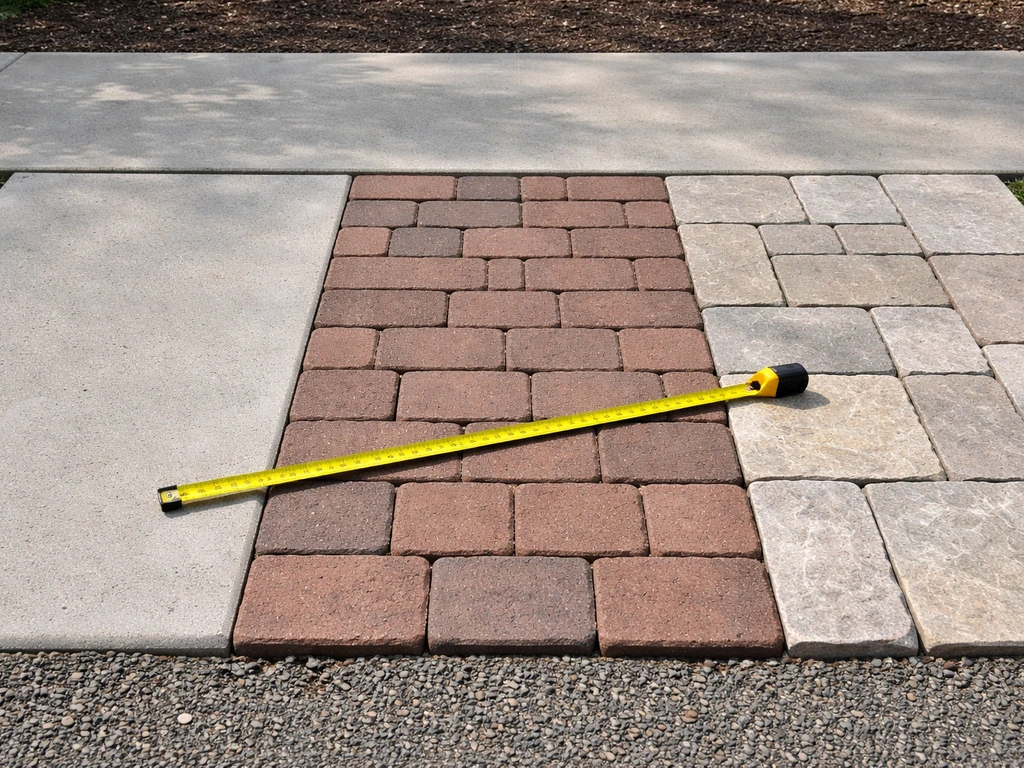
The material you're re-laying makes the single biggest difference to your quote. Here's a realistic range for each common type, including demolition of the old surface, base prep, and installation of the new one.
| Material | Re-lay cost per sq ft (US) | Notes |
|---|---|---|
| Concrete slab (plain) | $9–$16 | Includes $3–$8 demo + $4–$8 pour |
| Stamped concrete | $12–$28 | Overlay resurfacing starts at $7–$20/sq ft; full re-pour is higher |
| Brick or concrete pavers | $15–$30 | Relay only (base intact): $8–$15; full reinstall: $18–$25+ |
| Natural stone / flagstone | $18–$45 | Dry-laid: $15–$32; mortar-set: up to $45 |
| Patio tiles (porcelain/ceramic) | $12–$25 | Includes adhesive/mortar bed; varies by tile cost |
If your existing base (the compacted gravel and sand layers beneath the surface) is still in good shape, a relay-only job is meaningfully cheaper. SEK Surebond says its PolySweep polymeric sand is designed to work best when installed by following ICPI recommended base installation best practices.
For interlock or brick pavers specifically, contractors who specialize in relaying quote around $8–$15 per square foot when the base just needs inspection and light compaction, compared to $18–$25 per square foot for a full new install from scratch. If you're trying to budget for the full project, you'll want to know how much to lay patio pavers as well as the relay-only rate. That gap is worth asking about directly when you're getting quotes.
What you're actually paying for: the full cost breakdown
A re-lay isn't just the surface material. There are four or five distinct cost layers that add up to your final number, and missing any of them is how projects go over budget.
Demolition and removal
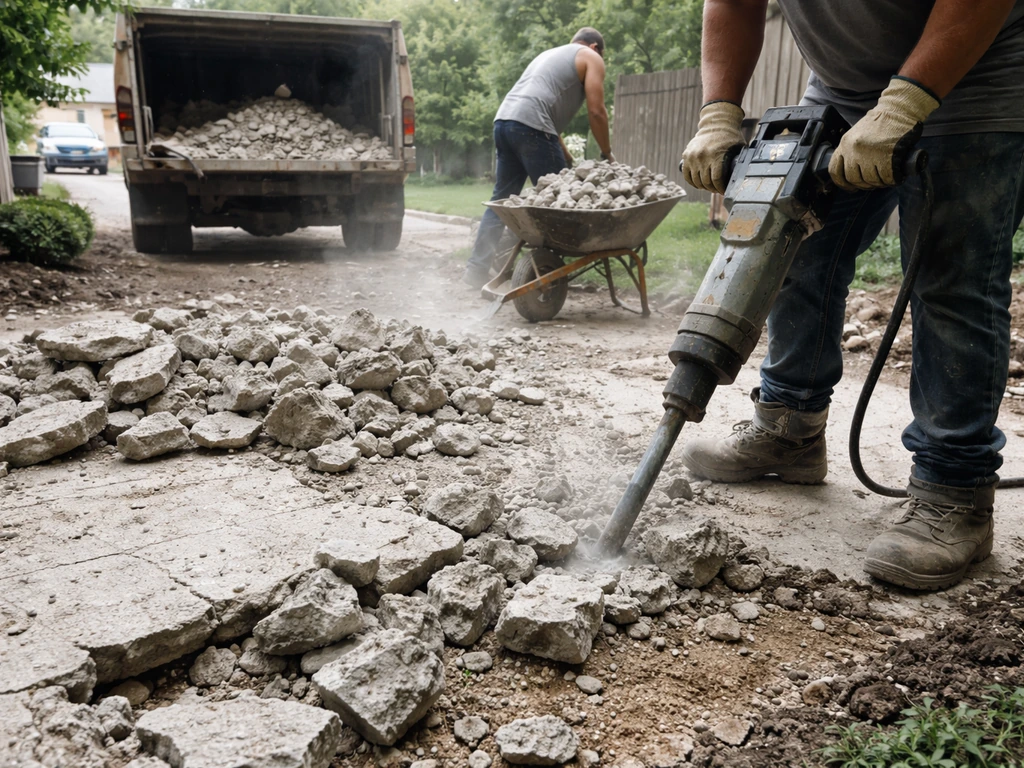
Breaking out and hauling away the old patio typically runs $2–$8 per square foot for concrete slabs, depending on thickness and whether there's steel reinforcement (rebar) inside. Plain 4-inch slabs are on the low end; thick reinforced slabs push toward $8 or more. Pavers and loose stone slabs are cheaper to remove because they don't need jackhammering, usually running $1–$4 per square foot to lift and stack or dispose of. Don't forget disposal costs: if your contractor isn't hauling debris, a skip/dumpster for a medium patio runs roughly $200–$400.
Base preparation and sub-base
This is the step most homeowners underestimate. Once the old surface is out, the ground often needs grading, compaction, and a fresh sub-base layer. Expect to pay for compacted gravel (typically 4–6 inches of MOT Type 1 or processed gravel) at around $1.50–$3 per square foot in materials, plus labor to grade and compact. If drainage is an issue or the ground is uneven, this step gets more expensive. A proper sand bedding layer for pavers adds another $0.80–$1.50 per square foot. Combined, base prep often runs $3–$8 per square foot on its own.
Materials
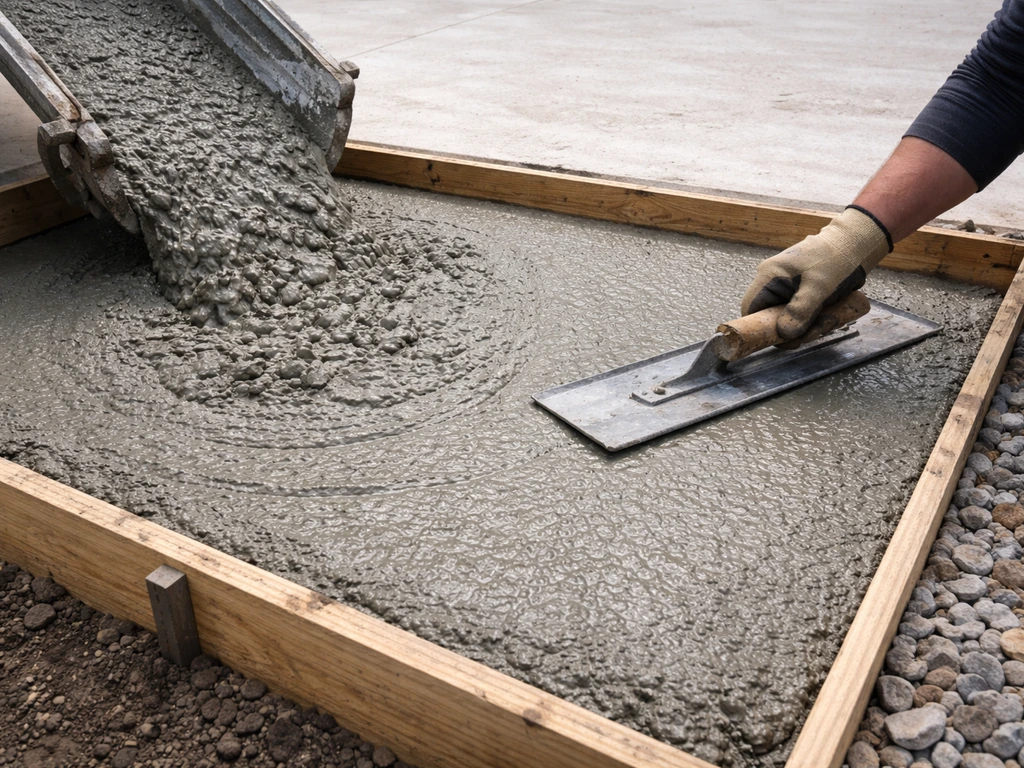
Material costs are highly variable. Plain concrete sits at roughly $4–$8 per square foot poured in place. Concrete or brick pavers range from $3–$12 per square foot just for the units, depending on style and thickness. Natural flagstone and irregular stone can run $5–$20 per square foot in material alone before anyone lifts a trowel. Stamped concrete, done as a full re-pour, costs $8–$18 per square foot in materials and labor combined for the surface layer.
Labor
Labor typically makes up 40–50% of the total installed cost. For a straightforward relay, skilled labor rates run roughly $30–$60 per square foot in total installed cost terms, or about $35–$75 per hour per laborer on time-and-materials jobs. Paver patios are more labor-intensive than concrete pours because they involve multiple steps: excavate, compact, sand bed, lay each unit, cut edges, fill joints with polymeric sand, and compact again. That's usually a two-day minimum job even for a modest 150-square-foot patio.
Common add-ons that sneak into the budget
- Edging or border installation: $2–$5 per linear foot
- Drainage fixes (French drain, channel drain): $500–$2,500 depending on scope
- Repointing or jointing existing slabs (if relaying the same units): $1–$4 per square foot
- Sealing (pavers or concrete): $1–$3 per square foot
- Permits: $50–$300 in most jurisdictions for patios over a certain size
- Repair to surrounding lawn, garden beds, or fencing disturbed during work
What you'll spend by patio size
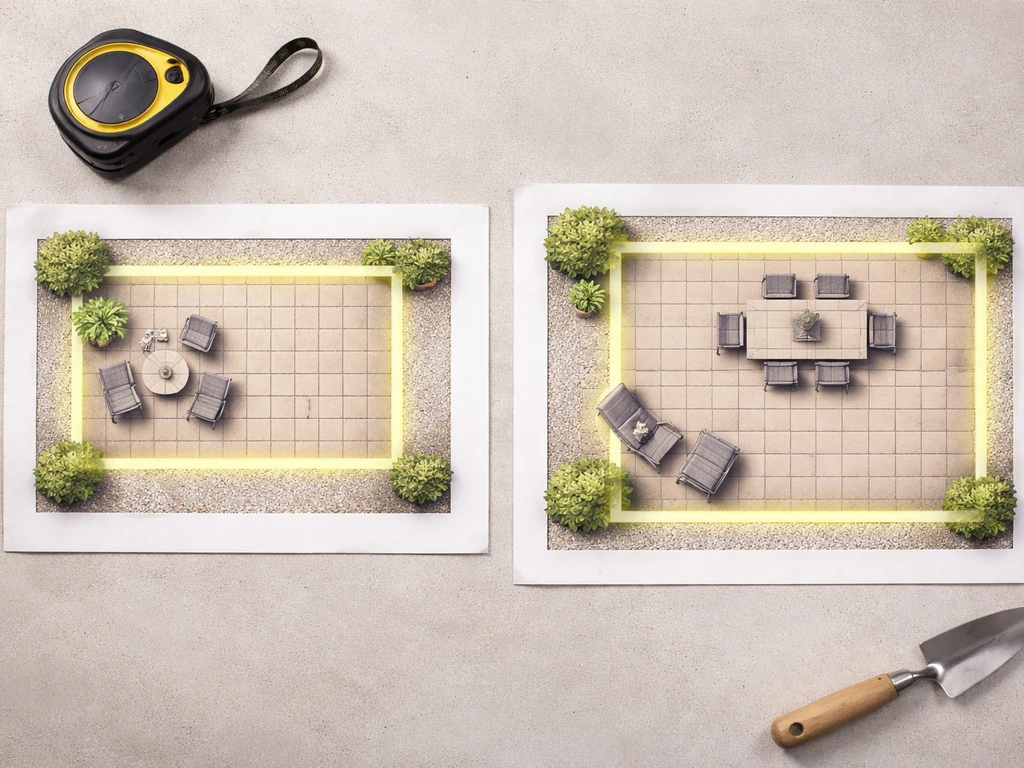
Here are realistic total-project estimates for the most common patio sizes. These include demolition, base prep, materials, and labor for a standard mid-range installation. The low end assumes a simple material like plain concrete or relay-only pavers; the high end assumes pavers or flagstone with full base work.
| Patio size | Square footage | Estimated total cost (low) | Estimated total cost (high) |
|---|---|---|---|
| 10x10 | 100 sq ft | $800 | $3,500 |
| 12x12 | 144 sq ft | $1,150 | $5,000 |
| 16x16 | 256 sq ft | $2,050 | $8,960 |
| 20x20 | 400 sq ft | $3,200 | $14,000 |
| 20x30 | 600 sq ft | $4,800 | $21,000 |
One thing worth knowing: per-square-foot costs generally drop as the patio gets bigger. A contractor mobilizing equipment and crew for a 400-square-foot patio doesn't charge four times what they'd charge for a 100-square-foot job. Larger projects tend to come in at the lower end of the per-square-foot range, which is why the 20x20 estimate above doesn't scale linearly from the 10x10.
DIY vs hiring a contractor: where the money goes
Going DIY on a patio relay can save you 40–50% of the total cost, since labor is such a large chunk of the bill. On a $5,000 patio project, that could mean saving $2,000–$2,500. But the savings come with real catches.
Concrete work is genuinely difficult to DIY well. Mixing and pouring a slab requires precise timing, screeding, and finishing skills, and a bad pour can crack within a season. Renting a concrete mixer, screeds, and finishing tools adds $150–$400 to the project, and mistakes are expensive to undo. Stamped concrete is even harder to get right without practice.
Pavers are more forgiving as a DIY project, but still physically demanding. You'll need to rent a plate compactor ($80–$150 per day) and potentially a saw for cutting. The biggest DIY risk with pavers is getting the base wrong: if it's not compacted and graded properly, you'll get sinking and shifting within a few years, which means doing the job again. That said, if you have a flat, accessible yard and decent upper-body strength, a paver relay is one of the more realistic DIY patio jobs.
Flagstone and natural stone are somewhere in the middle. Dry-laid flagstone is achievable for a patient DIYer; mortar-set flagstone requires more skill and is harder to fix if something goes wrong.
| Factor | DIY | Hired contractor |
|---|---|---|
| Labor cost | $0 (your time) | $1,500–$8,000+ depending on size |
| Equipment rental | $200–$600 | Included in quote |
| Material cost | Same or slightly higher (smaller bulk buys) | Often lower (trade pricing) |
| Risk of rework | Higher (especially base and concrete) | Lower (warranty common) |
| Time required | 1–4 weekends | 1–3 days typically |
| Best suited for | Pavers, simple dry-laid stone | Concrete, stamped, mortar-set stone |
Regional and site factors that move the price
Your location has a big effect on what you'll pay. Labor rates in major metro areas (New York, San Francisco, Boston) can run 30–50% higher than in smaller cities or rural areas. The same 200-square-foot paver patio that costs $4,000 in Kansas City might run $5,500–$6,500 in Chicago or $7,000+ in the Bay Area. In Canada (particularly markets like Ottawa and Toronto), paver relay work from specialists typically runs CAD $10–$18 per square foot just for the relay component.
Beyond location, these site-specific factors can each add meaningfully to your quote:
- Difficult access: if equipment or materials can't easily reach the backyard, expect a 10–20% surcharge
- Uneven or sloped terrain: grading a sloped site adds $200–$800 or more in prep costs
- Poor drainage or clay soil: may need additional sub-base depth, geotextile fabric, or a drainage solution
- Slab thickness: a 6-inch reinforced slab costs significantly more to demo than a standard 4-inch slab
- Old rebar or wire mesh in the concrete: requires specialized cutting and adds disposal weight
- Tree roots nearby: may need to be cut back or worked around, adding time and cost
- Proximity to the house foundation: extra care required, may add labor time
- Season and demand: contractors are busiest spring through early fall; off-season (late fall, winter in mild climates) sometimes yields lower quotes
How to get accurate quotes and avoid surprises
The biggest source of budget overruns on patio re-lays is a vague scope. Contractors quote what they plan to do, not what might come up once the old surface is off. Here's how to protect yourself.
- Get at least three quotes. Patio pricing varies widely between contractors; three quotes give you a realistic range and reveal outliers on both ends.
- Ask each contractor to specify what's included: demolition, haul-away, sub-base depth, edging, jointing/polymeric sand, and cleanup. Any gap between quotes is usually hidden in these details.
- Ask specifically about the base condition. A good contractor will want to see what's under the old surface before committing to a price. If someone quotes without asking about the sub-base, that's a flag.
- Get a line-item breakdown, not just a total. Ask for demo, materials, labor, and disposal to be itemized. This makes it easier to compare quotes and spot what's been excluded.
- Ask about allowances for unknowns. A legitimate contractor will include a note like 'if significant regrading is needed, additional cost of $X per hour applies.' That honesty protects both of you.
- Clarify disposal: who hauls the old material, and is that included in the price? Hauling can be $200–$500 if it's not bundled in.
- Check for permits: in some areas, patios over a certain size or attached to the house need a permit. Ask your contractor whether one is required and who pulls it.
- Ask about sealing and warranty: sealing is optional but extends paver and concrete life; some contractors include it, some don't. A 1–2 year labor warranty on the base is reasonable to request.
One practical move that saves headaches: take photos of your existing patio before anyone starts work, including close-ups of any problem areas (cracks, low spots, drainage issues). Walk the contractor through these during the quote visit so the scope is clear from the start. The more specific you can be about what's there now and what you want when it's done, the less room there is for surprises on the final invoice.
FAQ
How much to re lay a patio if the old surface is only part damaged, not the whole thing?
If damage is localized, you may be able to pay for a partial re-lay or patch rather than full-area demolition. Ask contractors to quote by zone (for example, broken slabs plus a perimeter trench) and confirm whether they will still rebuild the base under the entire patio footprint or just the affected section.
Do I pay extra to re-lay a patio if the job needs new drainage or slope corrections?
Yes. Any change to grade, adding a drainage channel, or reworking runoff usually increases base prep depth and labor hours, even if the surface material stays the same. Request that they measure the existing slope and specify target falls (where water should go) before quoting.
What’s the cost difference between re-laying pavers on the existing base versus removing everything and starting over?
Relay-only work is often cheaper because the base just needs inspection and light compaction, typically landing around the lower end of the per-square-foot ranges. Full replacement usually costs more because you’re paying for deeper excavation, new gravel, new bedding sand, and more material and compaction passes. Get a quote that states whether they’re reusing the current base thickness.
How much should I budget for patio edge work, like new borders or edging restraints?
Edge restraints are easy to overlook, but they matter for paver and flagstone stability. If existing edging is failing or missing, many contractors will include new edging for a separate line item, which can add noticeable cost even when square footage is unchanged. Ask whether edging and leveling supports are included in the base prep price.
Does re-laying a patio include leveling for door thresholds or steps?
Not always. If your patio ties into a sliding door threshold, steps, or a garage entrance, re-laying may require bringing surface height up or down and adjusting transitions. Include threshold photos in your scope, and ask whether they will bring the final surface to a specific height relative to the door.
How much more does it cost to re-lay a patio if there are existing footings, utilities, or embedded features?
Embedded items like gas lines, sprinkler heads, wet areas, or electrical conduits can require careful excavation and reinstatement. That often adds labor time and can require additional base and bedding work around utilities, so the per-square-foot rate may be supplemented by hourly or per-item charges.
What’s a realistic time expectation for a 150 to 200 square foot patio relay?
Even when the job is small, paver relays are commonly a two-day minimum due to excavation, compaction, laying, cutting, joint sand, and a final compaction step. Concrete or slab replacements can also take multiple days due to curing windows. Ask about sequencing and when the area will be walkable or ready for furniture.
Are there extra costs for stain, sealing, or joint sand after re-laying pavers or flagstone?
They can be. Paver joints often require polymeric sand, and some materials may benefit from sealing for stain resistance. Confirm whether sealing, jointing sand, and cleanup are included in the material line, since omitting them can make your final spend higher than the initial square-foot estimate.
How do I prevent surprise costs from contamination or poor base conditions after demolition?
Base problems, soft spots, or unsuitable fill can force deeper excavation and replacement. To reduce risk, ask the contractor to include a contingency approach in writing, and request that they inspect the base immediately after demo before installing bedding and surface materials.
Is DIY worth it for re-laying a patio, and where do most DIY budgets break?
DIY can save money, but common overruns come from renting multiple pieces of equipment for longer than expected, buying the wrong quantities of gravel and bedding, and needing rework because the base was not compacted to spec. If you DIY, plan for multiple compaction passes, correct thicknesses, and a day to handle cuts and edge details, not just laying the field.
Next Articles
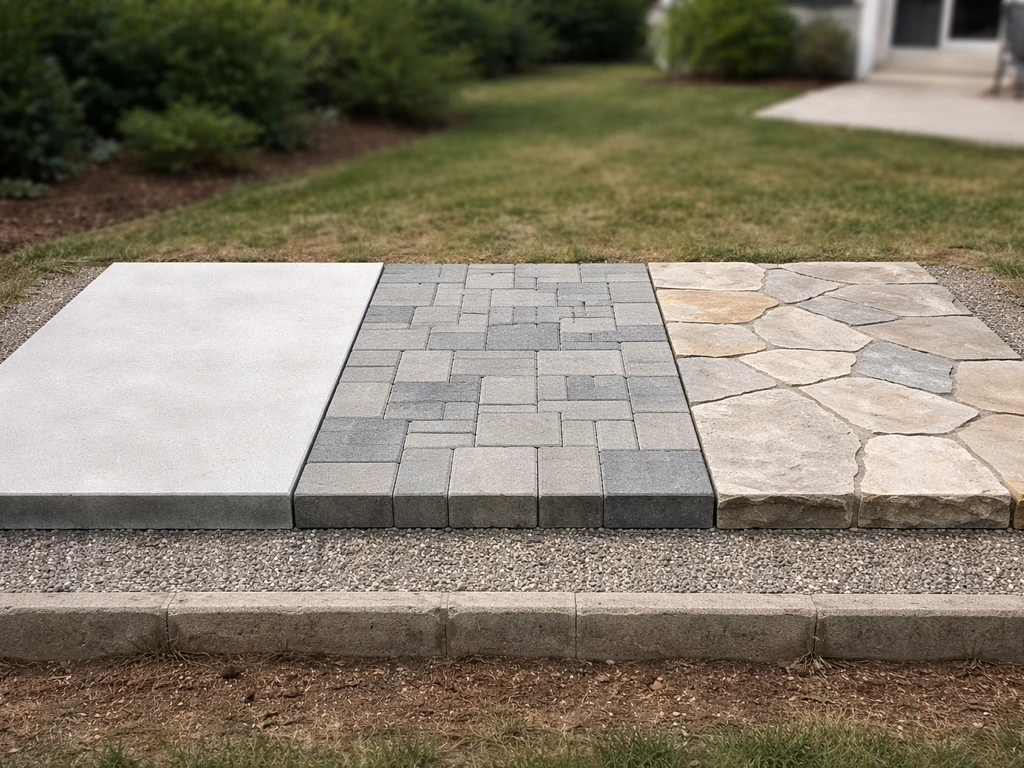
How Much Should I Expect to Pay for a Patio
Patio cost guide with real price ranges by size and material, full line-item budget, DIY vs install, and quote checklist
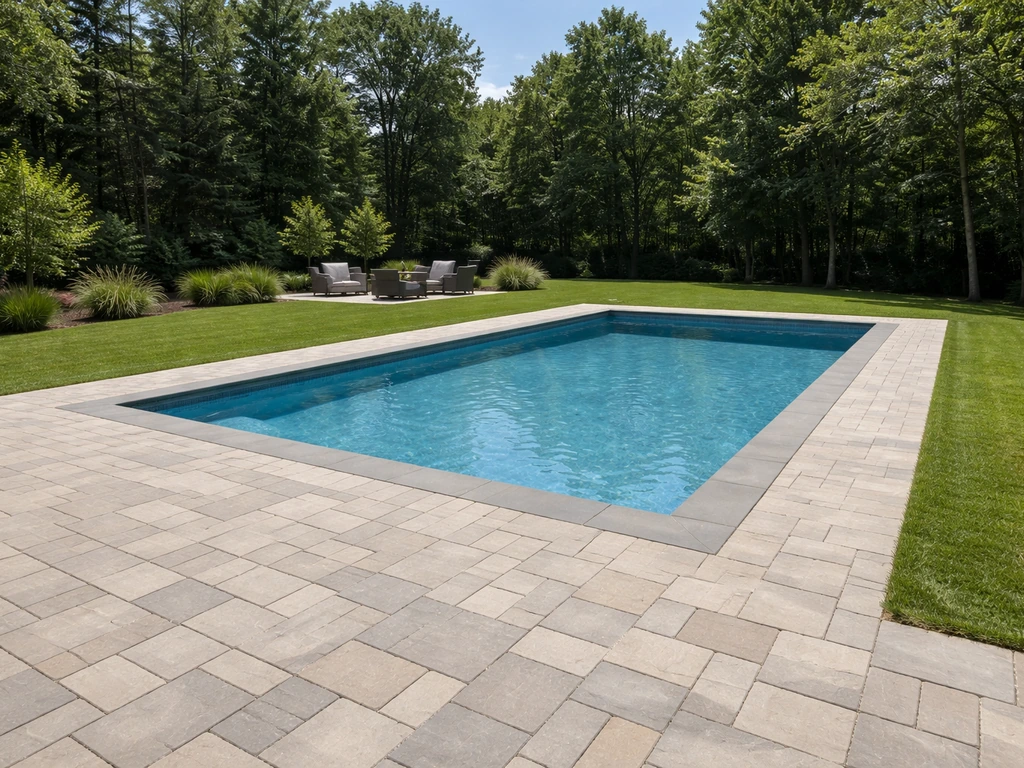
How Much Patio Around Pool: Cost, Size, and Budget Guide
Learn how much patio around a pool costs and how to size square feet, materials, extras, and get real bid line items.
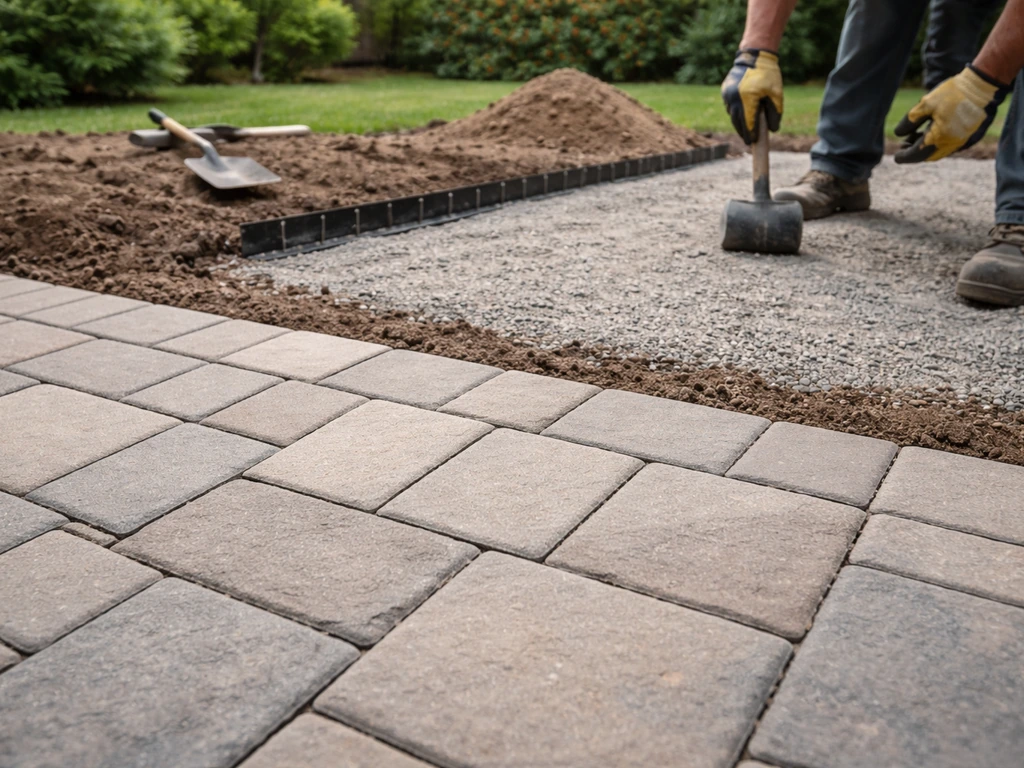
How Much Are Patios? Cost Ranges by Size and Material
Patio cost estimates by size and material with labor, base, add-ons, DIY vs contractor, and quote planning tips.