
Patio steps typically cost $300 to $2,000 or more for a standard 3- to 5-step configuration, depending on material, width, and whether you need a landing. Poured concrete runs about $300 to $500 per step installed.
Patio Steps Cost: All-in Pricing, Materials, and DIY Tips

Felix Carver
7 May 2026
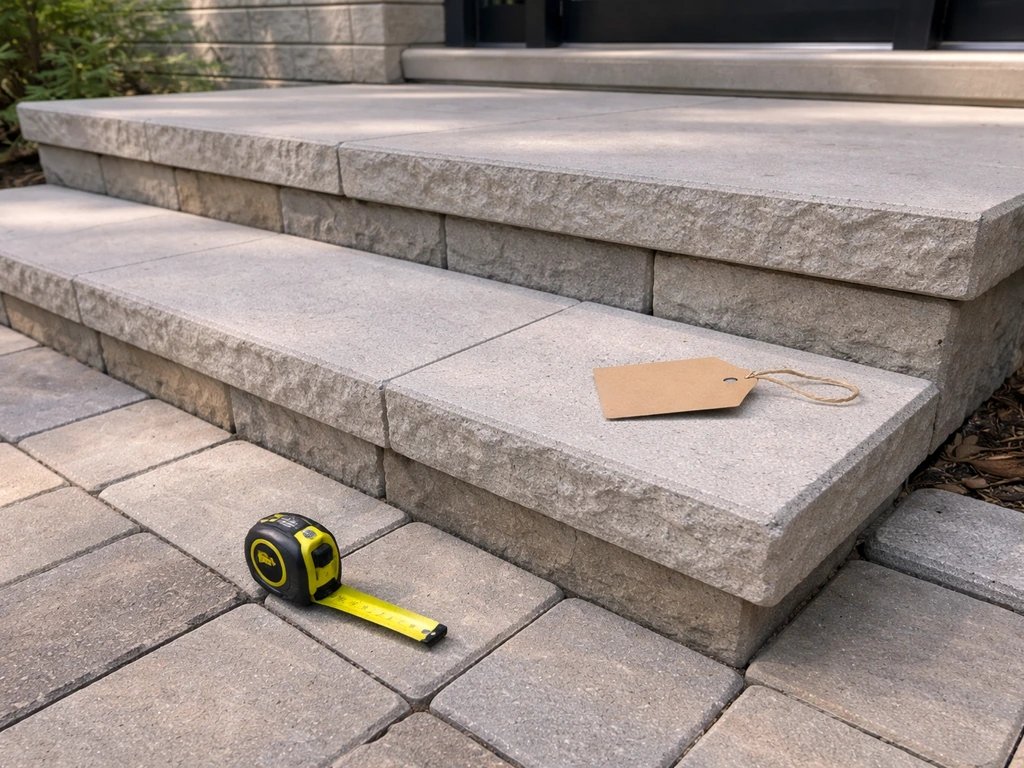
If you are weighing brick patio vs concrete cost, those per-step concrete price ranges are a helpful benchmark for comparing materials. Natural stone and flagstone land closer to $400 to $800 per step. Pavers fall somewhere in between at $350 to $650 per step.
A simple 3-step concrete entry off a 10x10 patio might run $900 to $1,500 all-in, while a wider 5-step flagstone staircase with a landing attached to a 20x20 patio can easily push $3,500 to $6,000 or more. Those ranges move a lot based on where you live, how much site prep is needed, and what material you pick, which is exactly what this guide breaks down.
What drives patio steps cost up or down
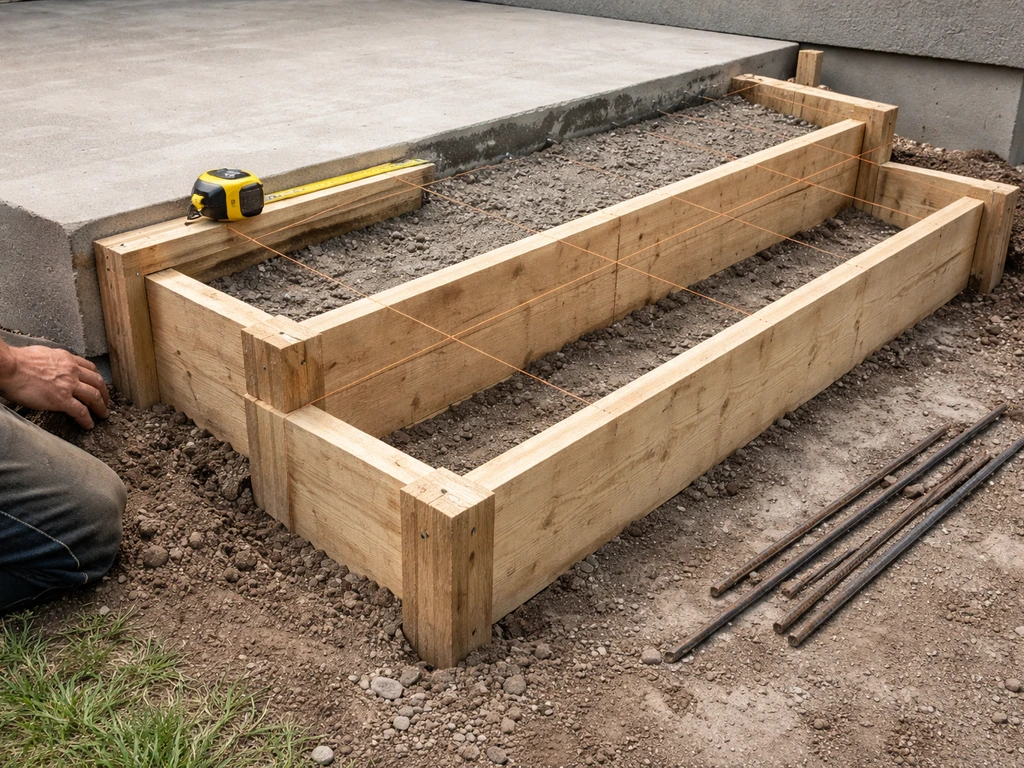
The number one variable is step count. Each additional step adds formwork, material, and labor time. A contractor pricing poured concrete will often quote per step, and that rate climbs as the staircase gets wider. A 3-foot-wide, 1-step unit might cost around $147 to $300 depending on landing size, while a 5-step, 5-foot-wide run with a 3-foot landing can be two to three times that per step once all the material and finishing is factored in.
Step dimensions matter more than most homeowners expect. The industry standard is the "7-11 rule": risers no taller than 7 inches, treads no shallower than 11 inches. If your grade change doesn't divide cleanly into those numbers, the contractor has to adjust. Variations in riser height or tread width of more than about 3/16 of an inch can create a trip hazard and may fail inspection, so a good contractor will spend real time getting the layout right. That precision adds labor cost.
Landing size is often where budgets surprise people. A landing is essentially a small patio surface at the top or bottom of the steps, and it's priced by the square foot just like a patio is. A 2-foot landing versus a 4-foot landing doesn't sound like much, but at $12 to $30 per square foot for pavers or $10 to $18 per square foot for concrete, the difference across a 4-foot-wide staircase adds up fast.
Layout complexity is the other big driver. Straight steps are the cheapest. L-shaped or curved steps require custom cuts, curved forms, or special paver patterns that significantly increase both labor time and material waste. If your patio design calls for steps that wrap around a corner or fan out in a radius, budget at least 30 to 50 percent more than a comparable straight run.
- Step count: each additional step adds materials, formwork, and labor
- Step width: wider steps need more material and longer forms or larger paver orders
- Landing size: a bigger landing is priced like a small patio, per square foot
- Riser/tread ratio: non-standard grade changes require more custom layout work
- Shape: curved or L-shaped steps cost 30–50% more than straight configurations
- Site prep: slope, drainage, and soft or saturated soil all increase excavation cost
- Drainage: in heavy rain areas, a minimum 1/4-inch-per-foot slope away from the structure is needed, which can mean regrading
- Frost depth: in cold climates, footings sometimes need to go below frost depth to prevent heaving, which adds concrete and excavation
Material options and what each one actually costs
There are four main materials used for patio steps in 2026: poured concrete, stamped concrete, pavers, and natural stone (which includes flagstone and fieldstone). Each has a different price floor and ceiling, different maintenance expectations, and a different look. Here's how they compare.
| Material | Typical Cost Per Step (Installed) | Per Sq Ft Range (Surface/Landing) | Best For |
|---|---|---|---|
| Poured concrete (broom finish) | $300–$500 | $6–$18/sq ft | Budget builds, durable utility steps |
| Stamped concrete | $400–$700 | $10–$20/sq ft | Matching a decorative patio, mid-range look |
| Concrete pavers | $350–$650 | $10–$30/sq ft | DIY-friendly look, easy individual repair |
| Natural stone / flagstone | $400–$800+ | $15–$55/sq ft (material) + $20–$160/LF install | Upscale or rustic aesthetic, long-term value |
| Brick | $350–$600 | $12–$25/sq ft | Classic look, matches existing brick structures |
Poured and stamped concrete
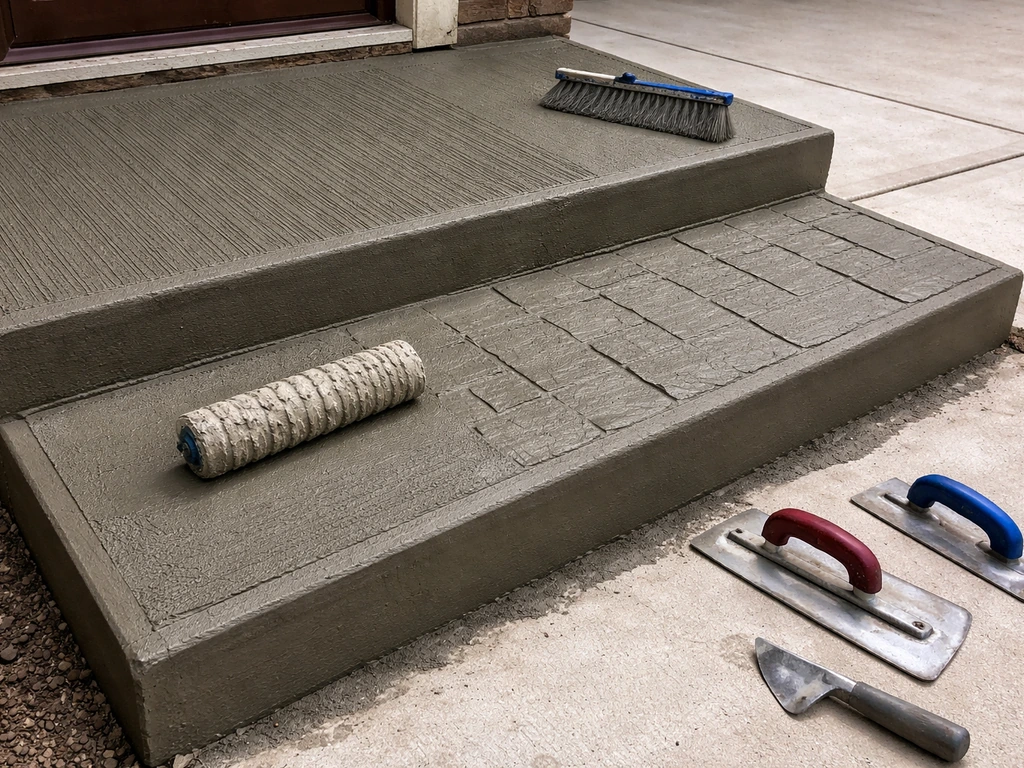
Poured concrete is the most common choice and, at the lower end, the most affordable. A standard broom-finish step runs $300 to $500 installed, but pricing also gets quoted as $30 to $65 per linear foot for the step material alone, with installation adding $32 to $160 per linear foot on top. Wider steps get expensive fast: a 6-foot-wide step at those rates can hit $300 or more per step just in finishing labor.
Stamped concrete adds $30 to $80 per cubic yard in stamping and coloring costs, or roughly $6 to $15 more per square foot than a plain broom finish. If your patio is already stamped, matching the steps to the same pattern is worth the upgrade for resale and aesthetics.
Pavers
Paver steps are priced both per step and per square foot of landing area. Installed paver work runs $10 to $25 per square foot on the low end and up to $35 per square foot for premium patterns or complex layouts. Steps built from pavers are more labor-intensive than a poured slab because each unit has to be set individually with proper base preparation. The base typically runs 4 to 6 inches deep plus 1 inch of sand, so the total excavation depth is 6 to 8 inches below finished height before a single paver goes in. That base work is often underestimated in DIY projects.
Natural stone and flagstone
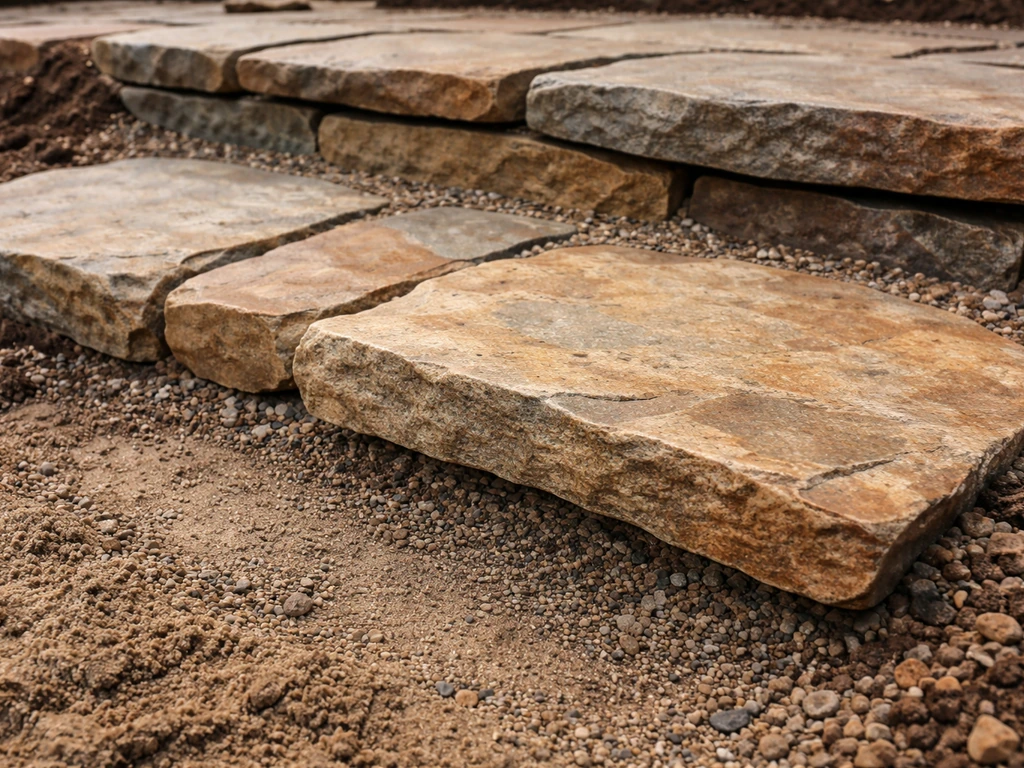
Natural stone steps are the most premium option and the most variable in price. Flagstone material alone costs $15 to $55 per linear foot, with installation adding another $20 to $160 per linear foot depending on the complexity of fitting irregular pieces. Fieldstone steps (dry-stacked or mortared) are often quoted as a lump sum per step rather than per linear foot. Expect $400 to $800 per step at minimum, and considerably more for wide, formal stone staircases. The upside is longevity and curb appeal, a well-built stone staircase can last decades with minimal maintenance. If you're comparing materials for the adjacent patio surface, stone versus concrete is a common decision point and the cost gap is significant.
Cost breakdown: materials, labor, site prep, and the stuff people forget
For a typical concrete step project, materials (concrete, rebar, form lumber) make up roughly 30 to 40 percent of the total cost. Labor is 40 to 50 percent. Site prep, including excavation, grading, and base material, accounts for 15 to 25 percent of the total, and it's the category that surprises people most. If you're building steps off an existing patio on level ground, site prep is minimal. But if there's a slope, poor drainage, or clay soil, you might be paying $200 to $600 just to prepare the ground before a single form gets set.
Permits are sometimes required for structural steps, especially if they connect to a house. A basic residential permit runs $50 to $200 in most areas. Engineering is rarely needed for a simple 3- to 4-step stoop, but if you're building steps into a retaining wall or on a significant slope, a structural review can add $300 to $800. In cold climates, footings sometimes need to extend below the frost line to prevent heave, this adds concrete volume and excavation depth, and it's not optional if local code requires it.
| Cost Category | Typical Share of Total | Notes |
|---|---|---|
| Materials (concrete, pavers, stone, rebar, forms) | 30–40% | Varies by material; stone skews higher |
| Labor (forming, pouring, finishing or setting) | 40–50% | Curved/angled steps increase this significantly |
| Site prep and excavation | 15–25% | Slopes, drainage issues, and soft soil add cost |
| Base material (gravel, sand, compaction) | 5–10% | Often bundled into labor quote — confirm this |
| Permits and inspections | $50–$200 flat | Required in many municipalities for structural steps |
| Engineering (slopes, retaining walls) | $300–$800 | Rarely needed for simple entry steps |
DIY vs. hiring a contractor: when each one makes sense
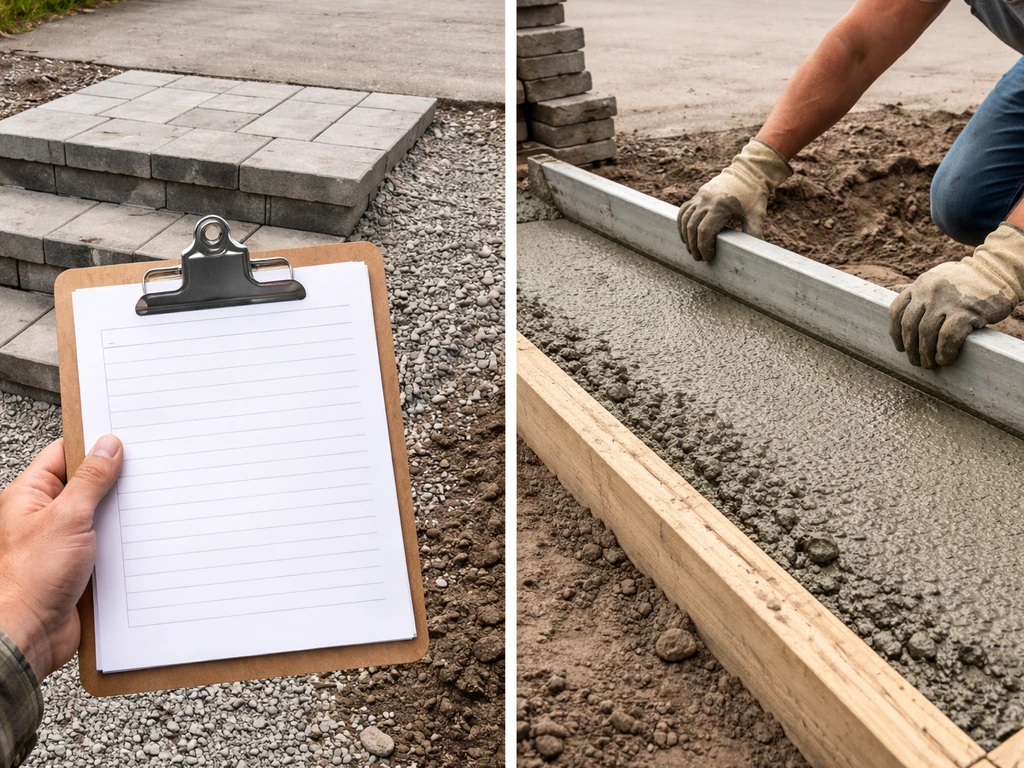
Poured concrete steps are not a strong DIY candidate unless you have real concrete experience. Forming, mixing or ordering ready-mix, pouring, screeding, and finishing steps before the concrete sets is time-sensitive and unforgiving. A botched pour means a tear-out, which can cost more than hiring out from the start. Stamped concrete is even harder, the stamping has to happen in a specific window after the pour, and it's genuinely skilled work.
Paver steps are more DIY-accessible, but don't underestimate them. blank" rel="noopener noreferrer">Concrete Network's own installation guidance calls DIY paver work "not an easy DIY project." Getting the base depth right (6 to 8 inches below finished height), achieving the correct drainage slope of at least 1/8 inch per foot away from the house (better yet, 1/4 inch per foot in heavy rain areas), and keeping each course level requires patience and the right tools. That said, if you're already comfortable with grading and compaction, a simple 2- to 3-step paver run is achievable.
Natural stone steps are labor-intensive even for professionals. Setting and fitting flagstone or fieldstone by hand is slow, physically demanding work. Unless you're experienced with masonry and have a good eye for fitting irregular pieces, hiring out for stone steps is almost always worth it.
| Material | DIY Feasibility | Estimated DIY Savings | Key DIY Risks |
|---|---|---|---|
| Poured concrete | Low — skilled work, time-sensitive pour | 30–50% of total if done right | Bad finish, cracking, re-pour cost if failed |
| Stamped concrete | Very low — requires specialized timing and tools | Not recommended | Ruined stamp pattern locks you into a tear-out |
| Concrete pavers | Moderate — possible with preparation | 25–40% of total | Uneven base causes settling, trip hazards |
| Natural stone / flagstone | Low to moderate — physically demanding | 20–35% of total | Poor fit, mortar failures, unstable risers |
| Brick | Moderate — if you have basic masonry skills | 25–40% of total | Mortar joint inconsistency, alignment issues |
One hidden DIY cost to watch: tool rental. A plate compactor runs $60 to $100 per day. A wet saw for cutting pavers or stone is another $50 to $80 per day. Safety matters too, always use a dust mask when cutting pavers, since the silica dust is a real health risk. If you're renting equipment for a two-day project, add $200 to $350 to your DIY material budget for tools and rental.
How to estimate your patio steps budget right now
You don't need a contractor quote to get a ballpark number. Follow these steps before you pick up the phone.
- Measure your total rise: stand at the top of your patio or door threshold and measure straight down to the ground level where the bottom step will land. That number in inches divided by 7 gives you the minimum step count (e.g., 21 inches of rise = 3 steps).
- Determine your step width: match it to the patio or door width it serves. Most residential steps are 3 to 5 feet wide. Note that every extra foot of width adds material and labor cost.
- Decide on landing size: a 2-foot landing is functional; a 3- to 4-foot landing is comfortable. Multiply landing width by step width to get the square footage, then multiply by your material's per-sq-ft rate.
- Pick your material and apply a per-step rate: concrete at $300–$500/step, pavers at $350–$650/step, stone at $400–$800/step. Multiply by your step count.
- Add site prep: if your ground is level and well-drained, budget $150–$300 for basic prep. If you have a slope, clay soil, or known drainage issues, budget $400–$800 or get a specific excavation quote.
- Add 10–15% as a contingency: this covers minor design changes, material overages, and disposal fees that come up on almost every project.
Example: you have a 12x12 patio that sits 21 inches above grade, and you want a 4-foot-wide poured concrete staircase with a 3-foot landing. That's 3 steps at $400 each ($1,200) plus a 4x3-foot landing at $15/sq ft ($180), plus site prep ($250), plus 12% contingency ($196). Total estimate before quotes: roughly $1,800 to $2,000. When a contractor comes back at $2,200, you know that's in range. If they quote $3,500 for the same scope, you know to ask why.
Regional pricing differences and how to get contractor quotes that actually compare
Labor rates vary more than material costs across regions. In the Northeast and Pacific Coast, contractor labor for concrete and masonry runs 20 to 40 percent higher than the national midpoint. In the Southeast and parts of the Midwest, you'll generally find lower labor rates. But material costs can flip that script, natural stone is cheaper in regions where it's quarried locally, and specialty pavers can cost more in areas where supply chain distances add freight cost.
Cold climates add a structural requirement that's easy to miss: in areas with a frost depth of 24 inches or more, footings for concrete steps sometimes need to be poured below the frost line to prevent heaving. This means deeper excavation and more concrete. It's not always required for freestanding steps, but if your steps are attached to a foundation or retaining wall, it's often non-negotiable and adds $200 to $600 to the project.
When you're getting quotes, make sure every contractor is pricing the same scope. Here's what your quote request should specify:
- Number of steps and exact dimensions (width, rise per step, tread depth)
- Landing dimensions and surface finish
- Material and finish type (e.g., broom-finish concrete, stamped with specific pattern, specific paver product)
- Base preparation method and depth (ask what they plan to excavate and compact)
- Drainage slope and direction
- Whether the quote includes hauling away excavated material
- Permit costs, if applicable in your municipality
- Warranty on workmanship (1 year is standard; 2 to 3 years is better)
If one quote is 40 percent lower than the others, ask specifically what's different. The most common cut corners are base depth (skipping proper compaction), skipping rebar in poured concrete, and not accounting for proper drainage slope. Any of those shortcuts will shorten the life of your steps significantly.
If you're comparing patio materials for the main surface while you're at it, the same principles apply, the cost difference between concrete and pavers, or between concrete and flagstone, follows similar labor and material dynamics. To compare concrete vs flagstone patio costs, look at material, labor, and especially how much site prep the contractor expects for your location and patio layout.
This is why concrete vs wood patio cost comparisons often come down to prep, long-term maintenance, and replacement timing. If you want the same level of clarity for your main patio surface, use a patio materials cost comparison to line up concrete, pavers, and stone side by side comparing patio materials. For a quick comparison, it helps to look at how the stone patio vs concrete cost typically breaks down for both materials and installation.
Finally, get at least three quotes and ask each contractor if they've worked in your neighborhood before. Local experience matters for knowing the soil conditions, frost depth, and any neighborhood-level permit quirks. It's a simple question that tells you a lot about whether the contractor actually knows what they're walking into.
FAQ
What patio steps cost estimate should I use if I have limited measurements like only the height difference?
If you only know the vertical rise (grade change), convert it into step count using the riser-height target. Using a 7-inch maximum riser as a planning guideline, divide the total rise by 7 inches to get an approximate number of risers, then add allowance for layout corrections (the final step height often needs to be slightly adjusted). After you have a rough step count, treat width and landing as the next variables, because landing square footage can change the total as much as adding one extra step.
Do patio steps cost more when they connect to a porch or front door opening?
Often yes, because the run usually needs tighter dimensional control so the top tread lines up with the porch floor and door threshold. Expect extra labor for measuring and fine-tuning the layout, and sometimes for correcting adjacent concrete or deck interfaces. If the connection involves structural changes, that can also trigger permit or inspection requirements beyond a freestanding backyard set of steps.
Should I budget for drainage and water management, or is that included in typical patio steps cost?
You should budget for it, because good drainage is frequently the difference between a step system that lasts and one that shifts. Ask whether the contractor includes a compacted base with the proper slope away from the house, and whether they plan for runoff at the landing. If your site has surface pooling or poor soil, adding additional gravel drainage layers or improving grading can increase cost, but skipping it can lead to cracking and heaving later.
What happens to patio steps cost if my ground is not level or the patio is already installed?
Expect higher costs due to increased site prep, not just rebuilding. If the existing patio grade does not match the stair layout, the contractor may need to excavate, re-grade, and possibly remove portions of the existing surface to create a consistent base and drainage path. If the staircase ties into the patio slab, there can also be extra labor to cut, join, and finish edges cleanly.
How can I tell if a quote is missing base preparation (the most common pricing gap)?
Ask for the base build-up details in inches and how it will be compacted. For pavers, confirm excavation depth and sand thickness, and ask if they will compact in lifts. For concrete, ask about subbase material, rebar reinforcement plan, and whether they will address soft spots or replace unsuitable soil. If a quote only lists a per-step price but won’t describe base depth and compaction, it’s a red flag.
Are permits and inspections always required for patio steps?
Not always, but they are common when steps are attached to a house, connect to a foundation, or affect structural elements like retaining walls. Ask whether the contractor is including permit fees and inspection scheduling, and whether their price assumes standard residential steps or a structure-related review. If your area has strict frost or railing requirements, those can also change the total.
Do patio steps cost change if I want a handrail or code-compliant edges?
Yes, because handrails, guard requirements, and edge protection can add material and labor. Ask whether pricing includes rail posts, attachment method, and any required guard height for the top landing. Even for short stair runs, local rules sometimes specify conditions for handrails, especially when steps are near a doorway or have higher-than-minimum risers.
Is the 7-11 rule enough, or should I ask about exact riser and tread measurements?
Ask for the planned riser height and tread depth range they will build, not just the rule of thumb. A contractor should explain how they handle the total grade change so the final step lands correctly, and how they avoid trip hazards at the nosing. Request confirmation that variations will stay within a small tolerance, and whether they will verify measurements before pouring or setting units.
For DIY paver steps, what is the biggest mistake that drives long-term costs up?
Incorrect base depth and compaction, plus drainage that slopes the wrong way. If the base is too shallow or not compacted in lifts, pavers can settle unevenly, leading to trips and weed growth. Also ask about edge restraint, because without proper edging and joint sand management, pavers can creep and shift over time.
How do stamped concrete patio steps affect cost compared with broom finish beyond the stamp itself?
Stamped work often costs more because of timing and finishing demands, but also because it may require additional curing and careful surface preparation to maintain uniform color and texture. Ask whether the quote includes release agent, color integral versus topical coloring, and any additional labor for matching the stamp pattern to the step layout. Misalignment on stairs is more noticeable than on flat slabs, so labor for layout and finishing can be a meaningful cost driver.
Does patio steps cost include removal and disposal of old concrete or landscaping?
It might not, so confirm explicitly. If you are replacing existing steps or cutting into a current patio, disposal fees, landfill charges, and extra demo labor can add hundreds to the total. Ask whether the quote includes breaking out, haul-away, and any restoration of adjacent lawn or hardscape.
How can I compare patio steps quotes from different contractors fairly?
Use a scope checklist, not just the total price. Confirm material type, step count, width, landing dimensions, base depth, reinforcement details, drainage approach, finishing level, and whether the quote includes permits, inspection time, and cleanup. If one quote is significantly lower, ask for a line-item explanation tied to those categories, because the largest savings often come from skipping base depth, rebar, or drainage slope.
Next Articles
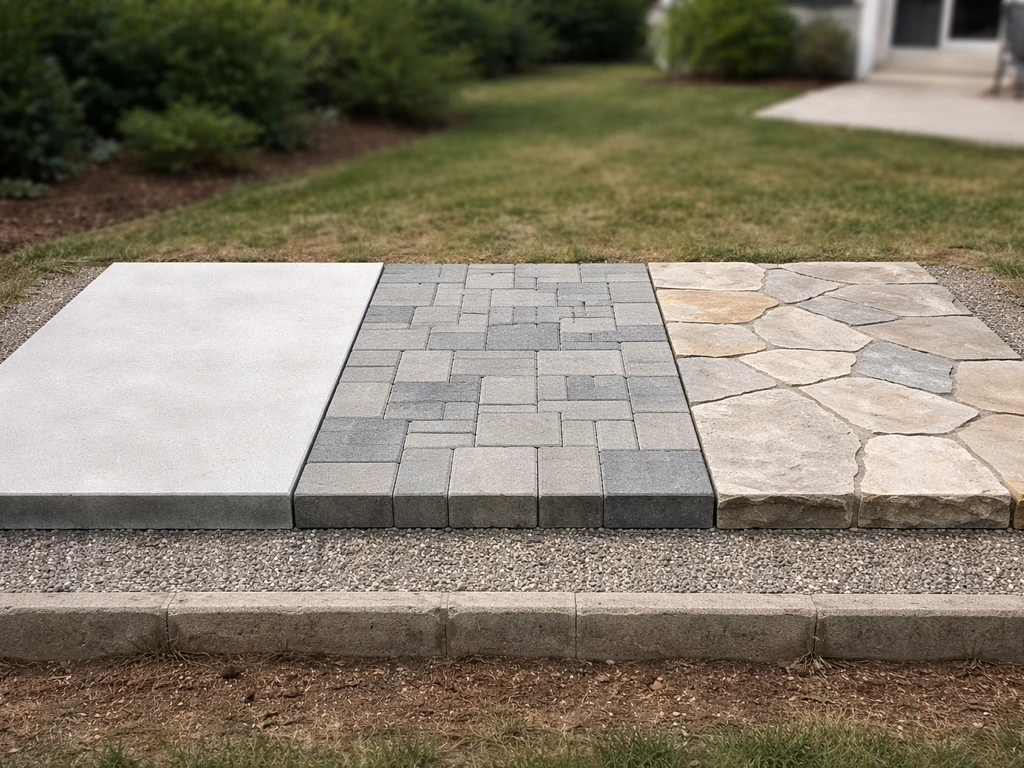
How Much Should I Expect to Pay for a Patio
Patio cost guide with real price ranges by size and material, full line-item budget, DIY vs install, and quote checklist
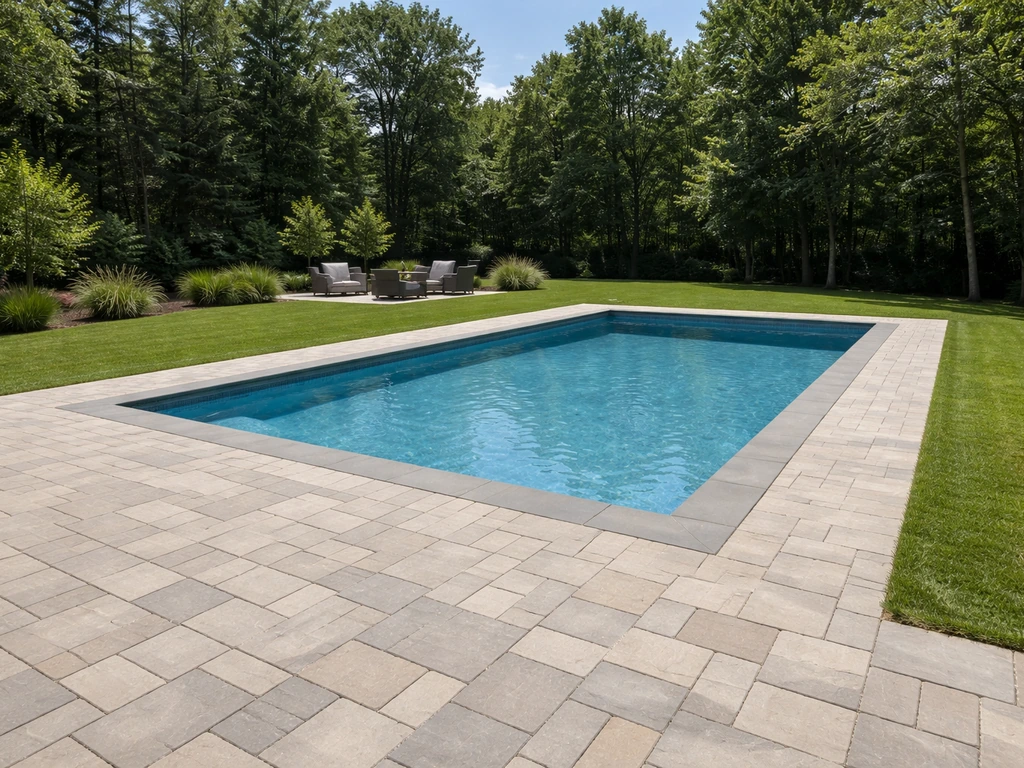
How Much Patio Around Pool: Cost, Size, and Budget Guide
Learn how much patio around a pool costs and how to size square feet, materials, extras, and get real bid line items.
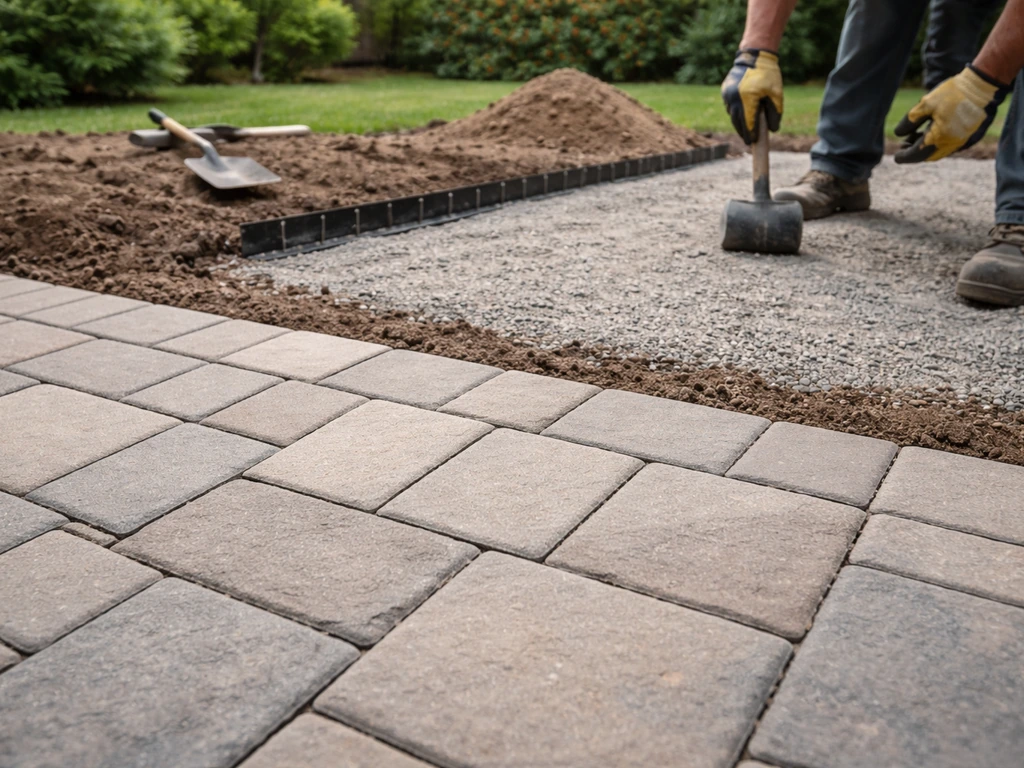
How Much Are Patios? Cost Ranges by Size and Material
Patio cost estimates by size and material with labor, base, add-ons, DIY vs contractor, and quote planning tips.