
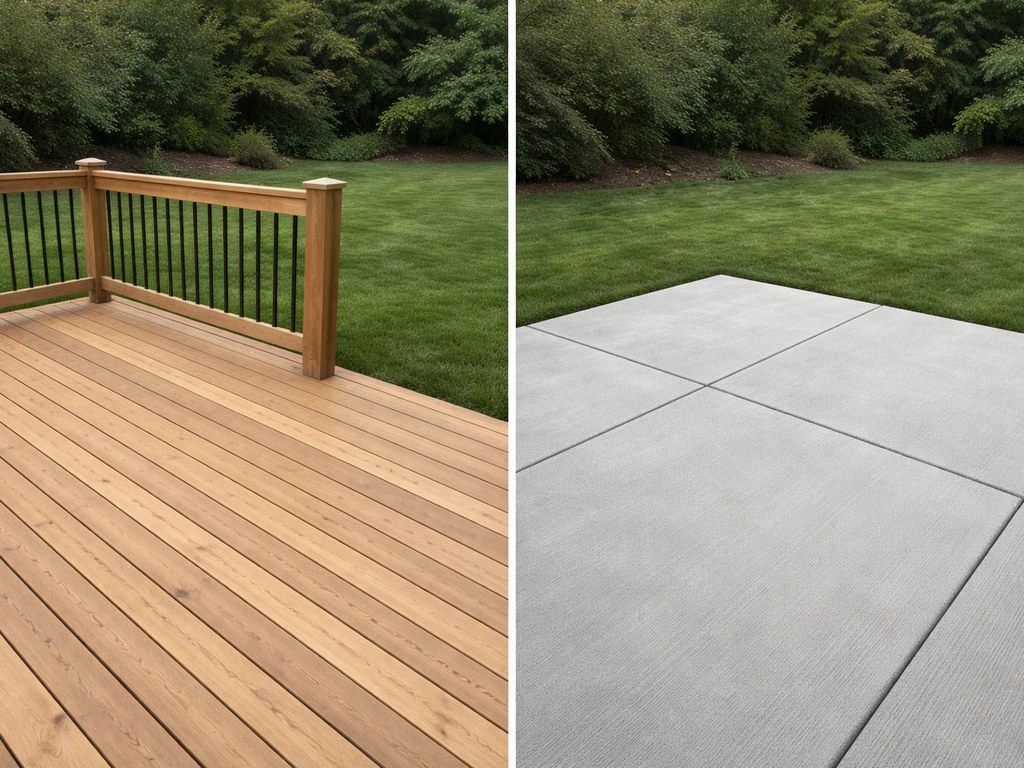
A concrete patio runs roughly $4 to $12 per square foot installed for a basic broom-finish slab, while a pressure-treated wood deck typically costs $15 to $25 per square foot installed, and a composite deck jumps to $24 to $48 per square foot. That means for a common 16x16 (256 sq ft) project, you're looking at roughly $1,000 to $3,000 for a plain concrete patio, $3,800 to $6,400 for a pressure-treated deck, or $6,100 to $12,300 for composite decking. The concrete patio is almost always the cheaper option upfront, but the right choice for your home depends on more than just the install price.
Cost of Deck vs Concrete Patio: 2026 Price Guide

Felix Carver
19 May 2026
Typical price ranges by size
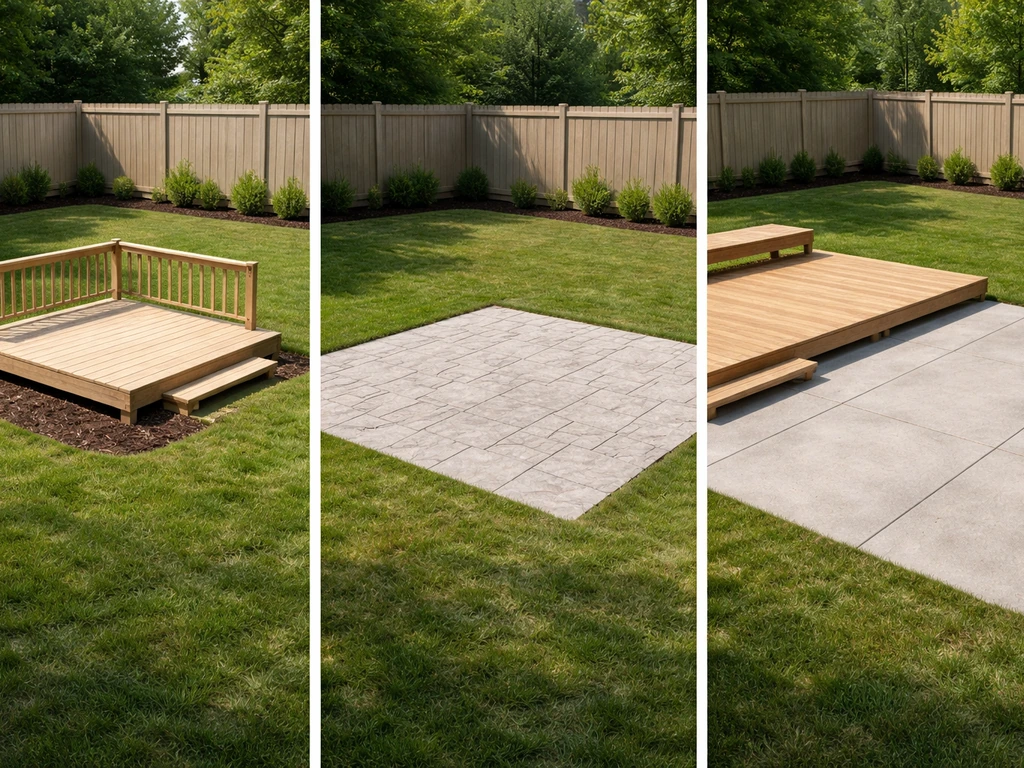
Below are realistic all-in installed cost ranges for the most common backyard sizes. These figures assume a contractor-installed project on mostly flat ground with standard site conditions. Sloped yards, difficult access, or demo work will push costs higher.
| Size (sq ft) | Basic Concrete Patio | Stamped Concrete Patio | Pressure-Treated Deck | Composite Deck |
|---|---|---|---|---|
| 10x10 (100 sq ft) | $400–$1,200 | $900–$3,000 | $1,500–$2,500 | $2,400–$4,800 |
| 12x12 (144 sq ft) | $575–$1,730 | $1,300–$4,300 | $2,200–$3,600 | $3,500–$6,900 |
| 16x16 (256 sq ft) | $1,000–$3,070 | $2,300–$7,700 | $3,800–$6,400 | $6,100–$12,300 |
| 20x20 (400 sq ft) | $1,600–$4,800 | $3,600–$12,000 | $6,000–$10,000 | $9,600–$19,200 |
| 20x30 (600 sq ft) | $2,400–$7,200 | $5,400–$18,000 | $9,000–$15,000 | $14,400–$28,800 |
A 10x10 is on the small side, barely enough for a bistro table and two chairs. Most homeowners doing an outdoor dining or entertaining space are working in the 12x12 to 20x20 range. At 20x20, the gap between a basic concrete patio and a composite deck is already nearly $5,000 to $14,000, which is a meaningful difference for most budgets.
What you're actually paying for: materials and build-up costs
Concrete patio materials
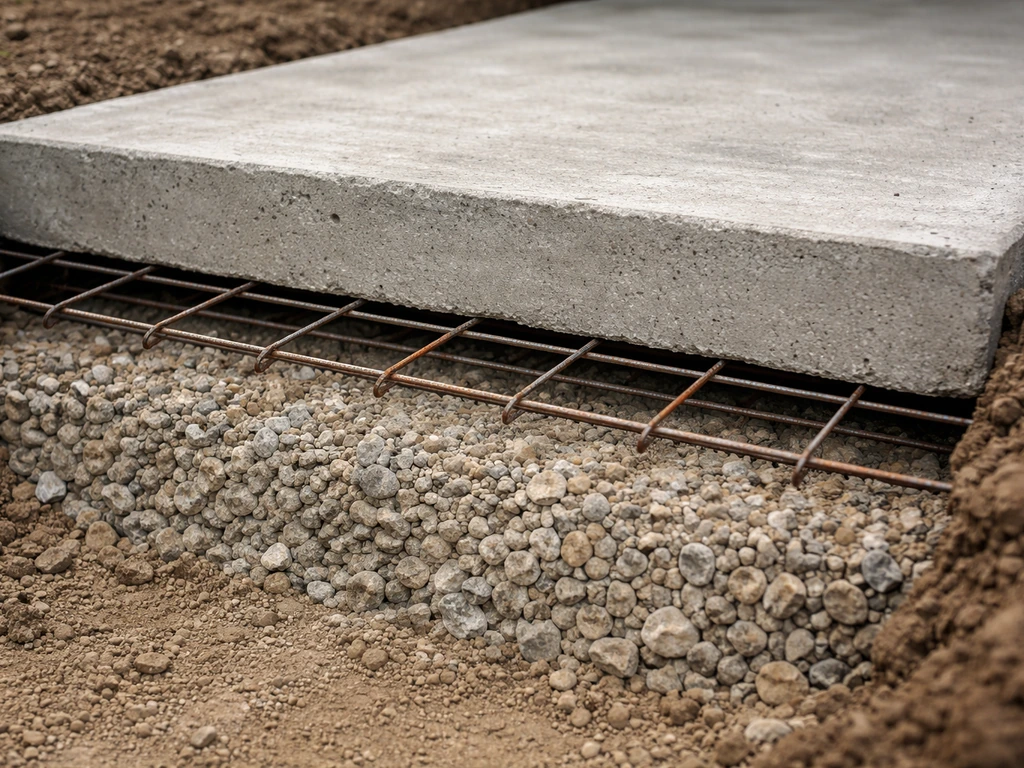
A standard residential concrete patio is a 4-inch-thick slab sitting on about 3 inches of compacted gravel base, for roughly 7 inches total excavation depth. The material cost includes the concrete mix itself, welded wire fabric or rebar for reinforcement, gravel base, and forming lumber. For a plain broom-finish slab, materials alone typically run $2 to $6 per square foot depending on your region and whether you're using mesh or rebar. The rest of the installed price is labor and site prep. If you're upgrading to stamped or colored concrete, you're adding stamp rental or contractor surcharge, integral pigments or acid stain, and a sealer coat, which is where costs climb to $8 to $30 per square foot installed.
Deck materials: framing vs. decking surface
A deck has two distinct material categories that people often conflate. The substructure, which includes the footings, posts, beams, joists, and ledger board, is typically pressure-treated lumber regardless of what you put on top. This framing layer alone can account for 40 to 60 percent of total deck cost on a ground-level build. The decking surface is what you choose: pressure-treated boards at roughly $1.
50 to $4 per linear foot, or composite boards at $4 to $12 per linear foot for mid-range products. Composite decking is often quoted as 2 to 3 times the per-square-foot price of pressure-treated decking for materials alone. Then add hidden fasteners (often required for composite systems), which cost more in both hardware and labor time compared to face-screwing wood boards.
Footings, grading, and drainage: the hidden build-up costs
For concrete patios, proper drainage slope (about 1/4 inch per foot away from the house) and subgrade compaction are non-negotiable for a slab that lasts. Skipping or skimping on base prep is the single biggest reason DIY patios crack early. For decks, frost-depth footings add significant material and excavation cost in cold climates. In frost regions, deck footings must extend below the freeze line, which can be 30 to 48 inches deep in northern states. That excavation and concrete footing work adds real money, especially on larger decks with more post locations.
Labor and installation costs: why they're so different
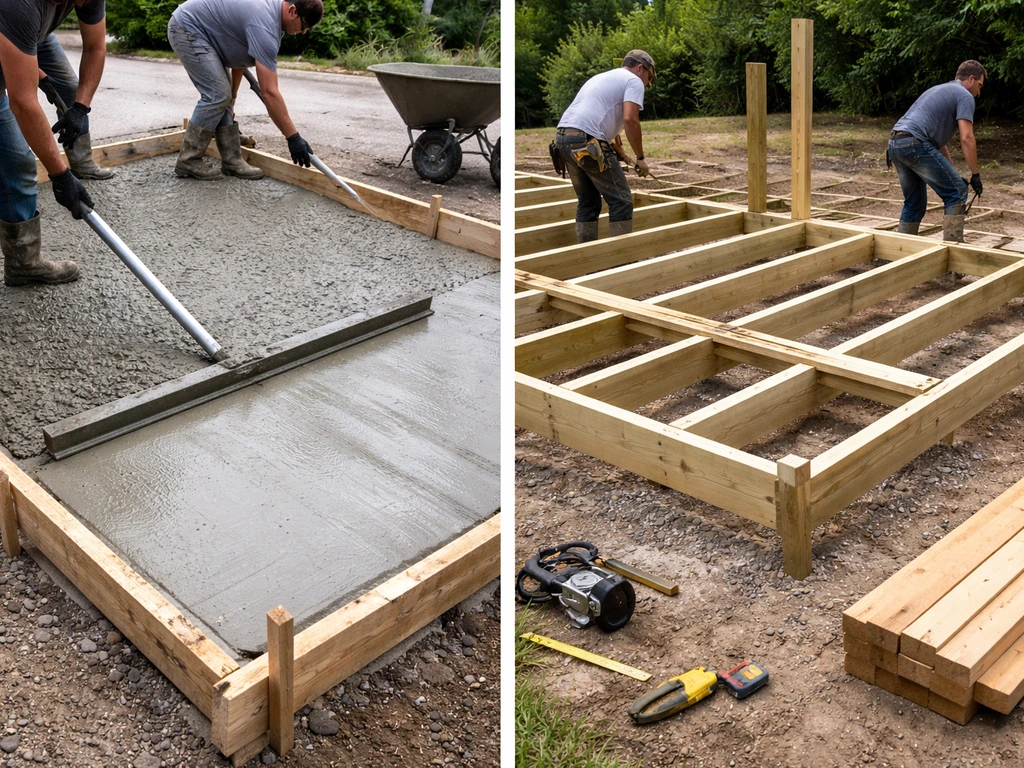
Concrete patio labor is front-loaded and time-sensitive. The pour, leveling, and finishing window is short, which is why experienced crews are worth the money. Labor for a basic concrete patio typically runs $2 to $6 per square foot, but that can spike if the site needs significant grading, the access is tight, or you're in a high-labor-cost metro area. Total installed prices (materials plus labor) for broom-finish land at $4 to $12 per square foot nationally.
Deck installation labor is more spread out over days or weeks, but it involves more trade complexity: setting footings, building the frame, attaching the ledger to the house (which requires correct flashing and through-bolting to prevent rot and structural failure), and then installing the surface boards. Composite decks add installation time because hidden fastener systems are slower to install than face-screwing wood. Labor for a pressure-treated deck typically runs $8 to $15 per square foot. Composite deck installation labor averages $12 to $22 per square foot, partly driven by those hidden fasteners and the care required to avoid damaging the boards during cutting.
One underappreciated cost driver for decks: the ledger connection. Improperly fastened or unflashed ledgers are a leading cause of deck collapses and expensive rot repair. A properly detailed ledger with through-bolts and integrated flashing adds labor and material cost, but skipping it is both dangerous and code non-compliant in most jurisdictions.
Upgrades worth knowing about
Concrete patio upgrades: stamped, colored, exposed aggregate, and sealing
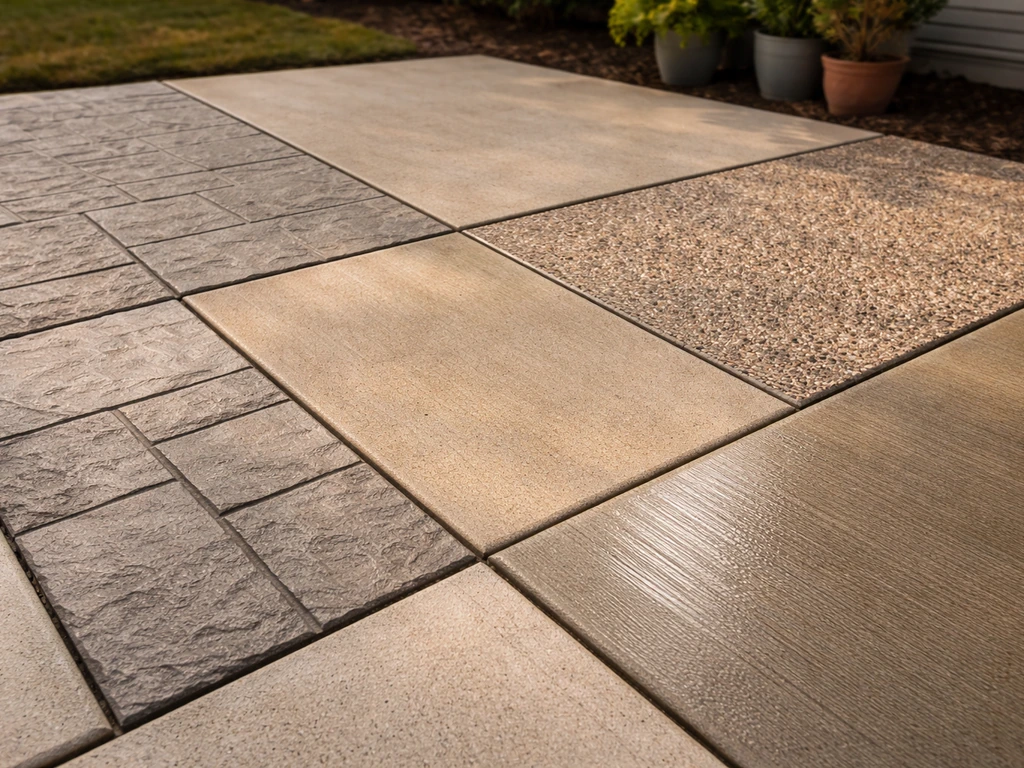
A plain broom-finish concrete patio is functional but plain. Here's what common upgrades cost and what they add:
| Upgrade Type | Installed Cost Range (per sq ft) | What It Adds |
|---|---|---|
| Broom finish (standard) | $4–$12 | Clean, slip-resistant texture; no frills |
| Exposed aggregate | $8–$18 | Decorative stone surface; adds grip and visual texture |
| Stamped concrete (single pattern/color) | $9–$18 | Mimics stone, tile, or brick; big visual upgrade |
| Stamped + multiple colors/complex patterns | $15–$30 | High-end look; approaches paver costs |
| Sealer (professional application) | $1.75–$4.50 | Protects from staining/weathering; needed every 2–5 years |
Stamped concrete is one of the most popular concrete patio upgrades, and for good reason. At $9 to $18 per square foot, you can get a look that closely resembles natural stone or brick at a fraction of the cost of actual pavers (which typically run $10 to $50 per square foot installed). [Paver patios typically run about $10 to $50 per square foot installed](https://www. costorie.
com/blog/paver-patio-cost-guide) depending on paver type and project complexity, according to Costorie. The trade-off is that stamped concrete can show cracking more visibly than plain concrete, and the pattern can wear or fade without regular sealing. If you're comparing stamped concrete to a wood deck on price, they often end up in similar territory, which makes the comparison interesting. For more on that specific comparison, the cost of stamped concrete patio vs deck is worth a dedicated look.
Deck upgrades: pressure-treated vs. composite, railings, and stairs
The single biggest upgrade decision for a deck is the decking surface material. Pressure-treated lumber is cheap upfront but needs sealing or staining every 1 to 3 years (costing $1.75 to $6.50 per square foot for professional refinishing). Composite decking (brands like Trex, Fiberon, TimberTech) costs more to install but needs almost no maintenance beyond occasional washing. Here's a quick comparison:
| Deck Surface | Installed Cost (per sq ft) | Maintenance | Expected Lifespan |
|---|---|---|---|
| Pressure-treated wood | $15–$25 | Seal/stain every 1–3 years ($1.75–$6.50/sq ft) | 15–30 years with upkeep |
| Cedar or redwood | $20–$35 | Similar to PT; faster to grey without sealing | 20–30 years with upkeep |
| Mid-range composite | $24–$38 | Minimal; occasional wash | 25–30 years |
| Premium composite | $38–$48+ | Minimal; occasional wash | 30+ years with fade/stain warranty |
Railings and stairs are often quoted separately and add significant cost. A basic pressure-treated railing runs $30 to $60 per linear foot installed. Composite or aluminum railing systems start around $60 and can exceed $120 per linear foot. A single stair section adds $300 to $1,000 depending on width and material. If your deck design includes railings on three sides and a staircase, budget an extra $2,000 to $6,000 on top of the base deck cost for a mid-range setup.
DIY vs. hiring a contractor
Theoretically, both projects are DIYable. In reality, they each have specific failure points that can cost you far more than the contractor savings if you get them wrong.
DIY concrete patio: possible but unforgiving
A motivated DIYer with the right rental equipment (plate compactor, screed, concrete float, edging tools) can pour a simple patio and save roughly $2 to $6 per square foot in labor. On a 20x20 patio, that's a $800 to $2,400 savings. But concrete is time-critical. Once it starts setting, you can't fix mistakes.
The most common DIY failures are inadequate subgrade compaction (leading to settling and cracking), wrong drainage slope (water pools against the house or inside the slab zone), and poor finishing timing (finishing too early traps bleed water, weakening the surface). ConcreteNetwork also calls out frequent DIY slab failure causes like improper subgrade prep, removing forms too soon, and mistiming finishing, which can turn small mistakes into costly repairs [12 DIY Concrete Slab Mistakes to Avoid](https://www. concretenetwork. com/concrete/slabs/diy-mistakes.
html). Repair or replacement of a failed slab can easily cost more than what you saved. If this is your first pour, stick to a small section or hire a contractor for anything over about 200 square feet.
DIY deck: higher code risk and safety stakes
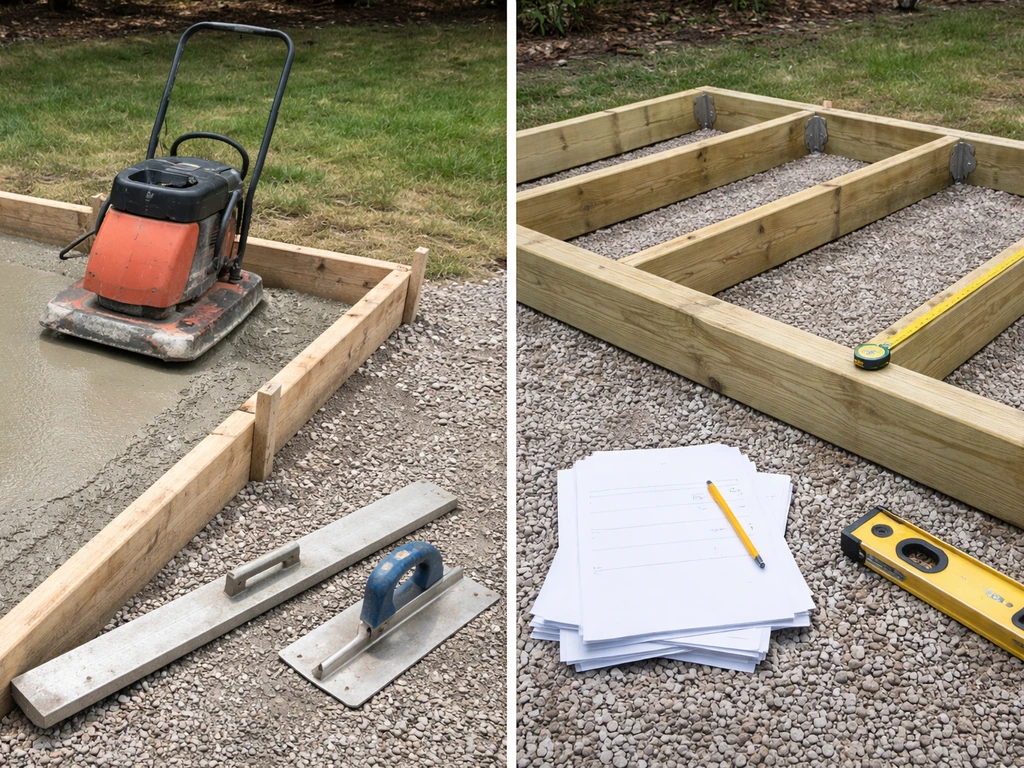
Deck DIY is legally more complicated. Most jurisdictions require a permit for any attached deck, and many require inspections at the footing and framing stages. In frost-prone areas, footings must hit a specific depth, and that depth varies by local code. The ledger connection (where the deck attaches to your house) must be through-bolted and flashed correctly, not nailed.
Nail-only ledger connections are a primary cause of deck collapses. Getting this wrong isn't just expensive to fix, it's dangerous. If you're comfortable with structural framing, understand your local code, and will actually pull a permit, a DIY deck can save $8 to $15 per square foot in labor. But if you're shortcutting on permits or guessing on ledger attachment, the liability and repair cost risk is significant.
Composite decking also adds DIY complexity because hidden fastener systems have specific installation sequences, and boards can be damaged if cut or fastened incorrectly.
When to hire and when to DIY
- Hire for concrete if: the area is over 200 sq ft, the site needs grading, you've never worked a concrete pour, or a stamped/decorative finish is involved
- DIY concrete if: small simple slab (under 150 sq ft), flat site, broom-finish only, and you have a helper for the pour day
- Hire for decking if: the deck is elevated (above ground level), attached to the house, requires frost footings, or composite with complex railing systems
- DIY decking if: a small freestanding ground-level platform deck in a low-frost area, pressure-treated only, and you're comfortable reading structural plans and pulling your own permit
Total project cost: the full budgeting workflow
Most online cost guides quote only the install price. Here are the line items that frequently get missed and how to account for them before you get your first quote.
- Permits: Most jurisdictions require permits for decks and sometimes for patios over a certain size. Budget $150 to $600 for a typical residential permit. Some areas charge by project value, which can push this higher.
- Site prep and grading: If your yard isn't already level, grading adds $500 to $2,000 depending on slope severity and how much material needs to be moved.
- Demolition and removal: Removing an existing patio, deck, or landscaping is often $500 to $2,500 for a typical residential project. Concrete demolition specifically runs $300 to $1,500 for a 200–400 sq ft slab, depending on thickness and access.
- Haul-away and disposal: Separate from demo labor, debris disposal fees (landfill tipping fees, dumpster rental) typically add $200 to $600.
- Drainage work: If your site drains toward the house or you need a French drain, budget $500 to $2,000 for drainage solutions. This is especially relevant for patios where slope and runoff management is critical.
- Utilities marking and clearance: Always call 811 before any excavation. In most states this is free, but if utility conflicts require relocating lines, costs vary widely.
- Contingency: Add at least 10 to 15 percent on top of your base quote for unexpected issues: buried roots, unmarked utilities, rain delays, material price shifts, or scope creep.
A realistic all-in budget for a 20x20 concrete patio (basic finish) including permits, site prep, and contingency lands around $2,500 to $7,000. That same 20x20 in pressure-treated decking lands at $8,000 to $14,000 all-in. A composite deck at 20x20 with proper contingency easily reaches $12,000 to $22,000 or more depending on railing and stair requirements. These are the numbers you need to bring into your contractor conversations, not just the per-square-foot prices.
How to actually choose: climate, maintenance, and real use
Cost is just one dimension. Here's a practical framework for making the right call for your specific situation.
Go with a concrete patio if...
- Budget is the priority: concrete is almost always the lowest cost option, especially for larger areas
- You want low long-term maintenance: a sealed concrete patio needs resealing every 2 to 5 years but otherwise is hands-off
- Your yard is at or near grade level: patios don't make sense for elevated or hillside lots
- You're in a wet or high-humidity climate: concrete doesn't rot, warp, or grow mold the way untreated wood does
- You want to eventually add outdoor furniture, a hot tub, or a fire pit: concrete handles weight well and doesn't flex
- You might want to upgrade later: starting with a basic broom-finish slab and adding a pergola, pavers, or decorative overlay later is a viable phased approach
Go with a deck if...
- Your yard is sloped or elevated: a deck can be built over uneven terrain where a patio would require expensive fill or retaining walls
- You want a direct connection from the house: decks built off a back door at floor level create a seamless indoor-outdoor transition that a ground-level patio can't always match
- You're in a dry climate with low humidity: wood decks hold up better and need less frequent sealing in arid regions
- You want composite and are in it for the long haul: a quality composite deck lasts 30+ years with minimal upkeep and can add more perceived value at resale
- The project is part of a home sale prep: in most markets, a well-built deck has stronger curb appeal than a plain concrete slab
- You want a raised outdoor space: second-story or elevated decks are simply not possible with a ground poured slab
Lifespan and long-term cost reality
A concrete patio, properly installed and resealed periodically, lasts 25 to 50 years. A pressure-treated wood deck lasts 15 to 30 years with regular sealing and staining every 1 to 3 years. Factor in professional refinishing at $3 to $6. 50 per square foot every few years on a 20x20 deck (that's $1,200 to $2,600 per refinish), and the lifetime cost of a wood deck rises considerably.
Composite decking closes that gap significantly because maintenance costs are near zero after installation. If you're comparing a stamped concrete patio to a composite deck on total 20-year cost, they often land closer together than their upfront prices suggest. If you're looking specifically at that concrete vs. composite deck decision, the cost of stamped concrete patio vs deck deserves its own deep-dive.
Because the decision affects materials, labor, drainage, and maintenance, it helps to compare the cost of a cement patio versus a deck in the same size and finish level cost of cement patio vs deck.
Climate considerations
In northern climates with freeze-thaw cycles, concrete patios can heave and crack if the base isn't properly prepared, and wood decks need careful attention to drainage and ventilation under the deck frame to prevent moisture-driven rot. In these regions, composite decking on a well-built PT frame is often the smartest long-term investment if budget allows. In warm, humid climates like the Southeast, wood decks are vulnerable to rot, insects, and mildew without regular maintenance, making concrete or composite the more practical choice. In dry climates (Southwest, Mountain West), all three options perform reasonably well, and the decision comes down mostly to grade, elevation, and budget.
Getting accurate quotes: your next steps
Before you call a contractor, nail down your size, finish preference, and whether you need demo of anything existing. Those three variables alone will determine about 70 percent of your project cost. Get at least three quotes, and ask each contractor to break out materials, labor, permit fees, and site prep as separate line items. A quote that bundles everything into one number makes it impossible to compare fairly.
Ask specifically about drainage slope for a concrete patio and footing depth for a deck, because contractors who address those upfront are the ones who won't cut corners. If you're on the fence between a basic concrete patio and a pressure-treated deck, price both out from the same contractors so you're comparing apples to apples for your specific site.
You can also compare the cost of a raised patio versus a deck since elevation, access, and foundation work can change the budget quickly cost of raised patio vs deck. If you want a quick handle on the cost of patio vs deck, get bids that include site prep and the right drainage and footing details basic concrete patio and a pressure-treated deck.
FAQ
Why do my deck and patio quotes vary so much even when the square footage is the same?
Yes. A “deck” quote often changes a lot based on whether it is ground-level or elevated. If it needs posts, taller railings, or a second level, framing and excavation can add thousands. For a patio, elevation changes the slope and drainage requirements, which can increase demo, retaining, or regrading costs.
What specific details should I ask contractors to confirm, so the estimate is apples-to-apples?
Ask whether the patio is being built on compacted gravel with the correct total excavation depth, and whether the contractor will verify drainage slope before forming. For decks, confirm the footing depth requirement and that the ledger connection includes through-bolts and integrated flashing, not just surface nailing.
Will a concrete patio crack, and should that change the cost comparison?
Concrete cracking is common, especially with freeze-thaw, but it should not be uncontrolled. Proper base compaction, correct thickness, and an appropriate finish help reduce wide cracks. If you are comparing options, include a plan for periodic sealing and accept that “perfectly crack-free” is not guaranteed for patios.
How do maintenance costs affect the true cost of deck vs concrete patio over 10 to 20 years?
For pressure-treated decks, budgeting should include an ongoing staining or sealing cycle, and the cost can rise if boards start to fade or if mildew requires cleaning before refinishing. Composite decks typically shift cost from repeat treatments to higher upfront installation and occasional board washing.
Does railings, stairs, or steps belong in my budget when comparing costs?
In many bids, the “deck cost” does not include stairs and railings unless you request them explicitly. A deck with three-sided railing and a staircase can add a substantial portion of the total budget, while a patio might only need a small landing or step. Always compare the same access features.
How does removing an existing patio or deck change the price?
If you already have a slab or old patio, demo and hauling can be a large hidden line item for concrete but may be less disruptive for a deck, depending on how the deck is planned. If the old surface is sound, some deck builders can design around it, while a patio typically needs removal for a new, properly sloped base.
Why can composite deck material costs look low, but the final installed price is much higher?
Composite decking pricing depends on more than board material, it also depends on the hidden fastener system and installation method required by the product line. Some systems require specific clips, spacing, and fastener types, which can affect labor time and add costs that are not reflected in a simple per-square-foot material number.
How do freeze-thaw climates change the cost of deck vs concrete patio?
In cold climates, deck footings may need to reach below the freeze line, which increases excavation and concrete volume. For patios, the concern is heave from inadequate subgrade prep and drainage during freeze-thaw. Your local frost depth and soil conditions can swing costs for both projects, but they hit decks harder at the footing stage.
If I upgrade concrete to stamped or colored, does it narrow the price gap?
Concrete patio bids should account for finishing requirements beyond broom finish, such as stamped patterns, color, sealer, and the contractor’s timing controls. If you only compare bare material numbers, the final price can converge toward decking, especially when upgrades are comparable.
What are the most common DIY mistakes that increase total cost for both patios and decks?
If you are planning DIY, the biggest patio risks are base prep and drainage slope, finishing timing, and the inability to correct once the slab starts curing. For decks, the ledger connection and permit or inspection requirements are frequent failure points. Even if DIY “works,” mistakes can create safety hazards or expensive rebuilds.
What line items are commonly missed that I should require in every quote?
Look for a permit fee line item, and ask whether site prep includes grading, removal of topsoil, hauling, compaction, and any required subdrainage. For decks, ask whether footing inspections and framing inspections are included in the schedule. A quote that does not break these out usually hides cost variability.
What is the fastest way to make contractor bids comparable for a fair cost of deck vs concrete patio comparison?
A key decision aid is to request the same scope from each contractor: same footprint, same finish level, same access needs, and the same contingency assumptions. Also ask each contractor to specify the drainage slope for concrete and the footing depth or frost-depth plan for decks. This reduces the chance one bid is cheaper because it is skipping critical work.
Next Articles
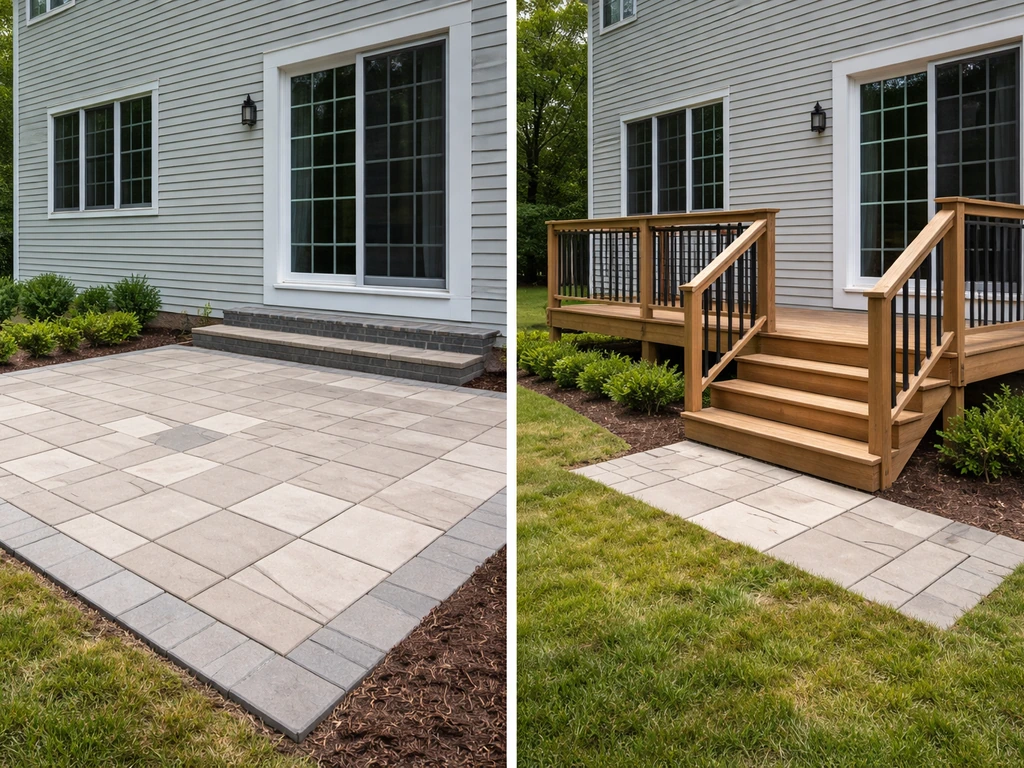
Cost of Patio vs Deck: Installed Price Guide by Size
Side-by-side installed costs for patios vs decks by size and materials, with labor, DIY vs pro, and a decision checklist
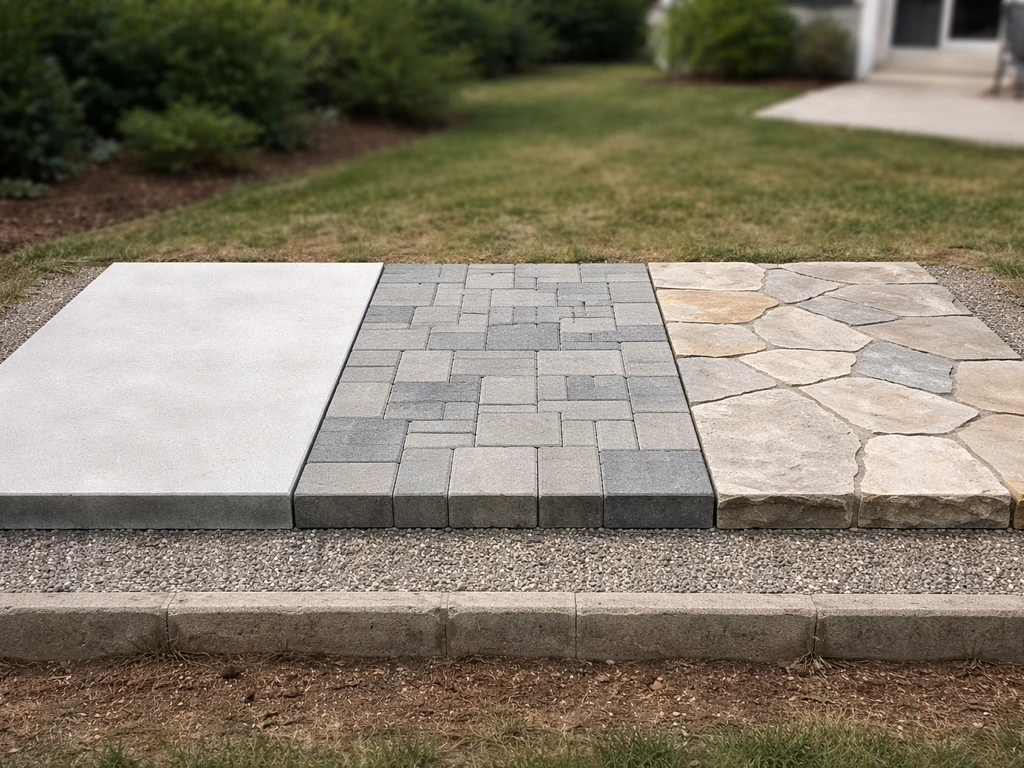
How Much Should I Expect to Pay for a Patio
Patio cost guide with real price ranges by size and material, full line-item budget, DIY vs install, and quote checklist
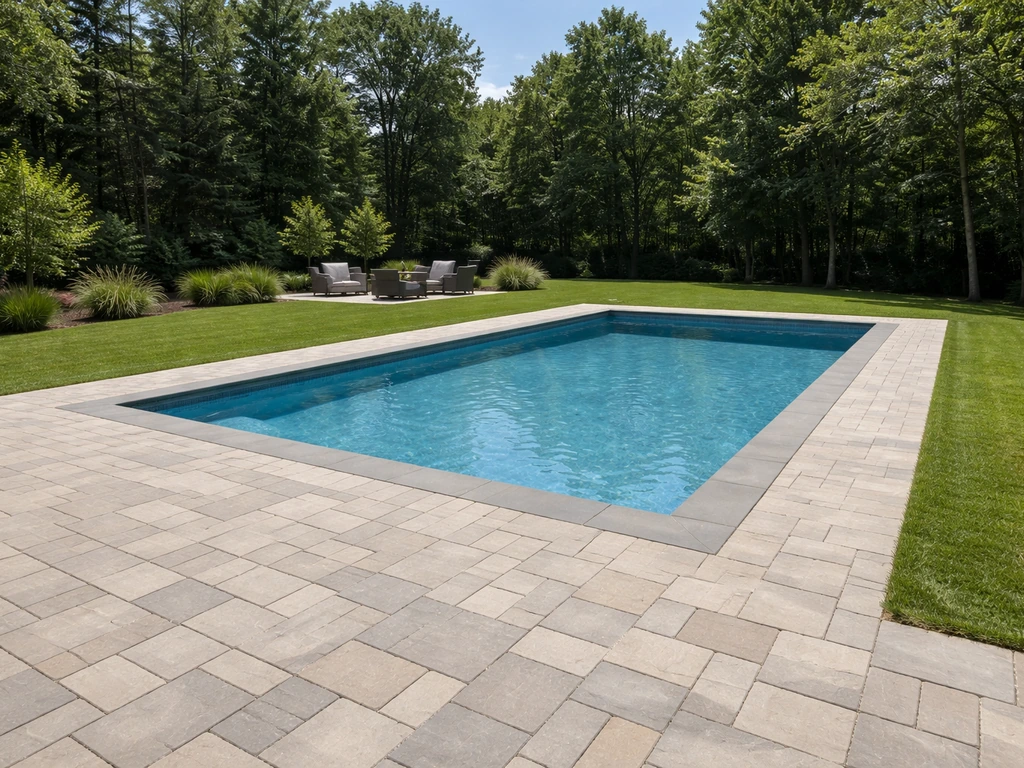
How Much Patio Around Pool: Cost, Size, and Budget Guide
Learn how much patio around a pool costs and how to size square feet, materials, extras, and get real bid line items.