
Patio bricks themselves typically run $0.50 to $2.50 per brick at the material level, which translates to roughly $2.25 to $11 per square foot just for the brick. Once you add the base, sand, edging, and labor to install it, most homeowners pay $12 to $25 per square foot installed, or $1,200 to $2,500 for a simple 10x10 patio and $4,800 to $10,000 for a 20x20. The wide range exists because brick type, pattern complexity, and your local labor market all move the needle significantly, so let's break it down in a way that actually helps you budget.
How Much Do Patio Bricks Cost? Complete Price Guide

Felix Carver
23 May 2026
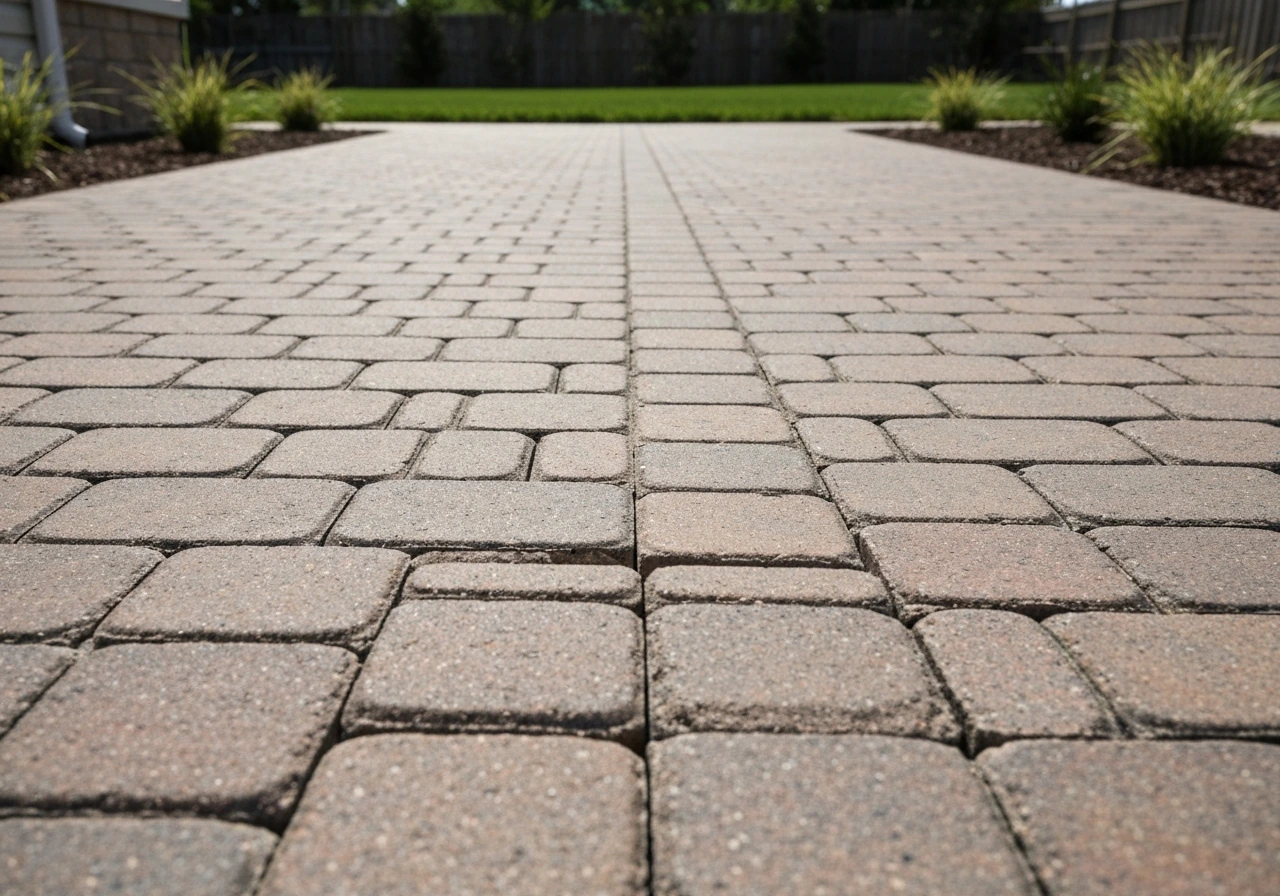
What patio bricks cost as a material alone
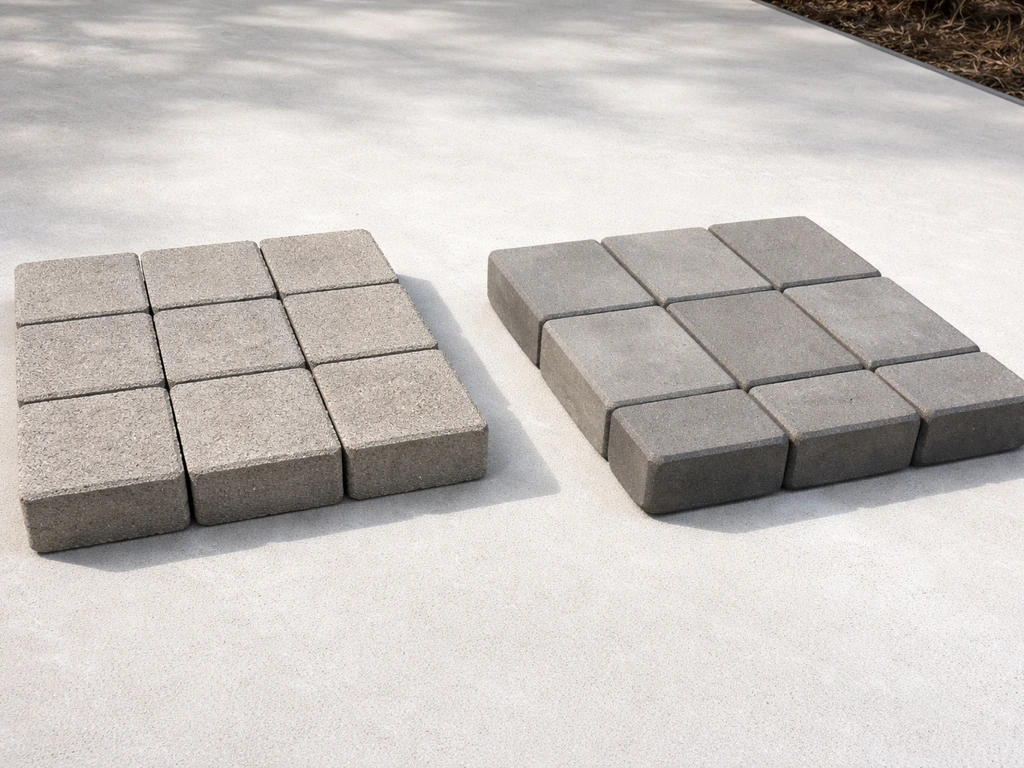
When you're pricing just the brick material, you'll find three broad tiers. Standard concrete paving bricks (like the common 4" x 8" Prest-style brick that covers about 4.5 units per square foot) are the most affordable, sitting around $0.50 to $1.00 per brick, or roughly $2.25 to $4.50 per square foot. Mid-range clay or natural brick pavers from regional manufacturers step up to $1.00 to $1.75 per brick ($4.50 to $8 per square foot). Premium or specialty brick, including tumbled finishes, oversized formats, or architectural-grade products, can reach $2.00 to $2.50 per brick and beyond.
Thickness matters both for durability and cost. Most residential patio bricks come in 2 3/8" or 2 5/8" thicknesses, with some manufacturers offering thicker 3" or 4" options for heavy-use applications. The thicker the brick, the more material cost per unit, and you'll want to stick with at least 2 5/8" minimum if you're planning any vehicle traffic across the edge of the patio. Interstate Brick’s Tech Bulletin 5 also specifies a minimum paving-brick thickness of 2 5/8 inches (example: “Minimum thickness 2 5/8 in.”) minimum 2 5/8" minimum. For foot-traffic-only patios, 2 3/8" is standard and works fine.
| Brick Type | Cost per Brick | Cost per Square Foot (material only) |
|---|---|---|
| Standard concrete paving brick | $0.50 – $1.00 | $2.25 – $4.50 |
| Clay or natural paving brick | $1.00 – $1.75 | $4.50 – $8.00 |
| Premium / tumbled / architectural | $2.00 – $2.50+ | $9.00 – $11.25+ |
A note on buying brick: most suppliers sell by the pallet (usually 400 to 500 bricks per pallet), and pallet pricing is almost always cheaper per unit than buying loose. Always order 5 to 10% extra for cuts, breakage, and future repairs. If you're comparing bricks side by side at a supply yard, check the coverage spec. The standard 4" x 8" format runs 4.5 bricks per square foot, which makes the math easy: divide your square footage by 4.5 to get a brick count, then add your 10% buffer.
What a fully installed brick patio actually costs
The brick itself is only part of the project cost, and honestly, sometimes not even the biggest part. A properly installed brick patio requires excavation, a compacted gravel base (typically 4 to 6 inches deep for residential patios), a 1-inch bedding sand layer for setting, the bricks themselves, edge restraints, and jointing sand between bricks. Polymeric joint sand has become the go-to choice over plain sand because it resists weeds and doesn't wash out, though it adds a small cost. Add all of that up with contractor labor, and the fully installed price per square foot comes to:
| Cost Component | Typical Range per Square Foot |
|---|---|
| Brick material | $2.25 – $11.25 |
| Gravel base (4–6" compacted) | $1.50 – $3.00 |
| Bedding sand (1" layer) | $0.50 – $1.00 |
| Edge restraints / edging | $1.00 – $2.50 |
| Polymeric joint sand | $0.50 – $1.00 |
| Labor (contractor install) | $6.00 – $12.00 |
| Total installed (typical range) | $12 – $25+ |
On the lower end of that range ($12 to $15 per square foot), you're usually looking at a simple rectangular patio with standard concrete paving brick, straightforward site conditions, and a contractor in a moderate-cost region. On the upper end ($20 to $25+ per square foot), you've got premium clay brick, a more complex pattern like herringbone or running bond with angled cuts, or a site that requires extra excavation, drainage work, or difficult access. High cost-of-living metro areas (think Northeast, Pacific Coast) can push labor alone past $15 per square foot.
Cost by patio size: the math for common projects
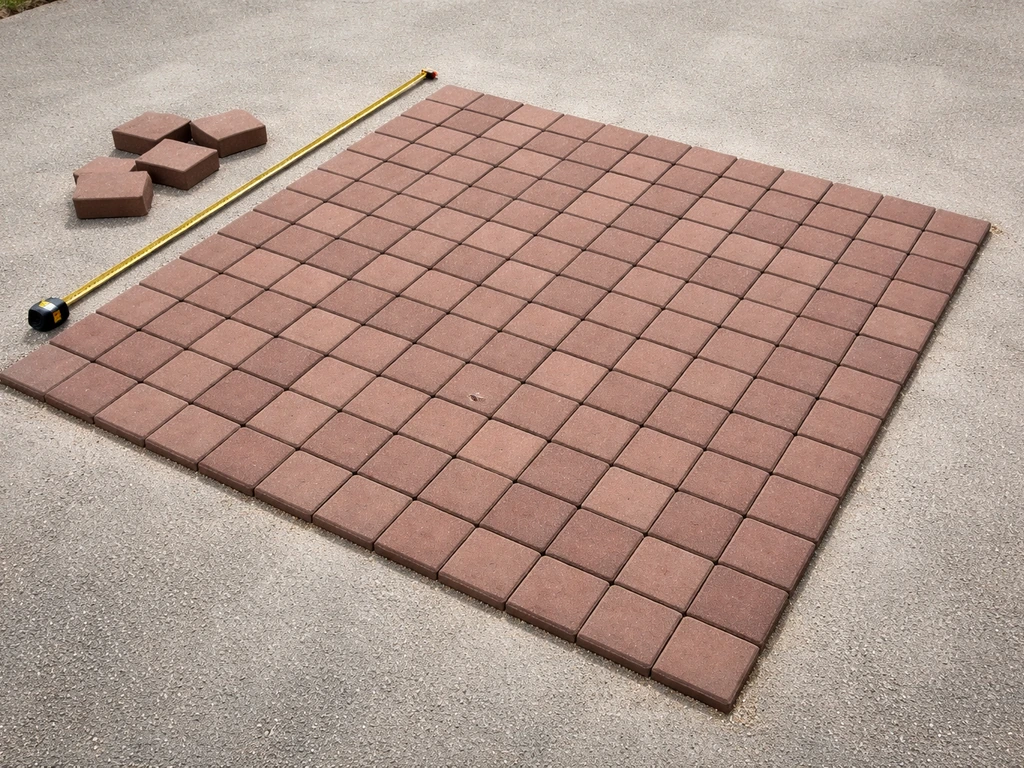
Most homeowners are planning one of a handful of standard patio sizes, so here's what the numbers actually look like for each one. These totals use the full installed cost range including materials and labor.
| Patio Size | Square Footage | Bricks Needed (4"x8", +10% buffer) | Installed Cost (Low) | Installed Cost (High) |
|---|---|---|---|---|
| 10 x 10 | 100 sq ft | ~495 bricks | $1,200 | $2,500 |
| 12 x 12 | 144 sq ft | ~713 bricks | $1,730 | $3,600 |
| 16 x 16 | 256 sq ft | ~1,267 bricks | $3,070 | $6,400 |
| 20 x 20 | 400 sq ft | ~1,980 bricks | $4,800 | $10,000 |
| 20 x 30 | 600 sq ft | ~2,970 bricks | $7,200 | $15,000 |
The brick quantity math is straightforward: multiply your square footage by 4.5 (for the standard 4" x 8" format), then multiply that by 1.10 for your 10% overage buffer. So a 20x20 patio is 400 square feet, times 4.5 equals 1,800 bricks, times 1.10 gives you about 1,980 bricks to order. If you're using a different brick format, ask the supplier for their units-per-square-foot spec, which any reputable manufacturer includes on their technical data sheet.
One thing to keep in mind with smaller patios: setup, mobilization, and base prep costs don't scale down proportionally. A 10x10 patio is not one-quarter the cost of a 20x20 in practice, because a contractor still has to show up, set up equipment, and haul material. The per-square-foot cost tends to be higher on smaller jobs.
What drives the price up or down
Brick type and grade
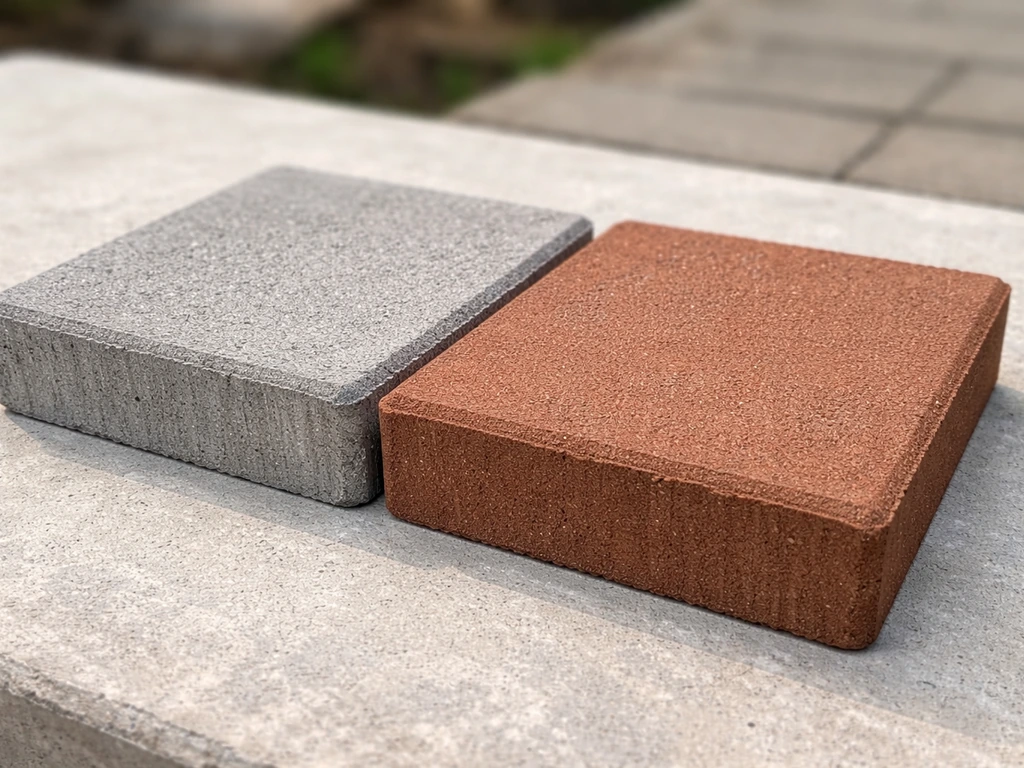
As covered above, the brick category you choose is the single biggest material cost lever. Concrete paving bricks are functional and affordable. Clay bricks are denser, last longer, and tend to hold color better over decades, but you pay a premium. If you're comparing these two, think of it like this: concrete paving brick is the sensible choice for most suburban patios; clay brick makes sense if you're building something you want to look great in 30 years with minimal fading.
Pattern complexity
A running bond pattern (the standard offset row pattern) is cheapest because cuts are minimal and layout is fast. Herringbone at 45 degrees is significantly more labor-intensive because every border brick requires a diagonal cut, and you end up with more waste. Basket weave falls somewhere in between. Contractors typically charge 15 to 25% more for complex diagonal or decorative patterns compared to a straight running bond on the same patio.
Site prep and excavation
If your site is level and accessible, excavation is a predictable cost. If it's sloped, tight against a structure, has tree roots, or needs drainage work, budget for surprises. Removing an existing concrete slab or old patio before installing brick adds $1 to $3 per square foot in demolition and disposal costs. Always ask your contractor what they're assuming about existing conditions when they give you a quote.
Edging and border treatment
Edge restraints keep your brick pattern from spreading over time. Plastic snap-edge restraints are the budget option (often included in base contractor quotes). Soldier-course brick borders, cut stone edging, or decorative concrete curbing cost more but look far better and add longevity. A decorative brick border can add $2 to $5 per linear foot to the perimeter cost.
Regional labor rates
Labor is where regional cost variation hits hardest. In the Midwest and parts of the South, contractor labor for paver installation often runs $6 to $9 per square foot. In the Northeast, mid-Atlantic, and West Coast, expect $9 to $15 per square foot for the same work. This can shift your all-in project cost by thousands of dollars on a mid-sized patio, which is why national averages only tell you so much.
DIY vs. hiring a contractor
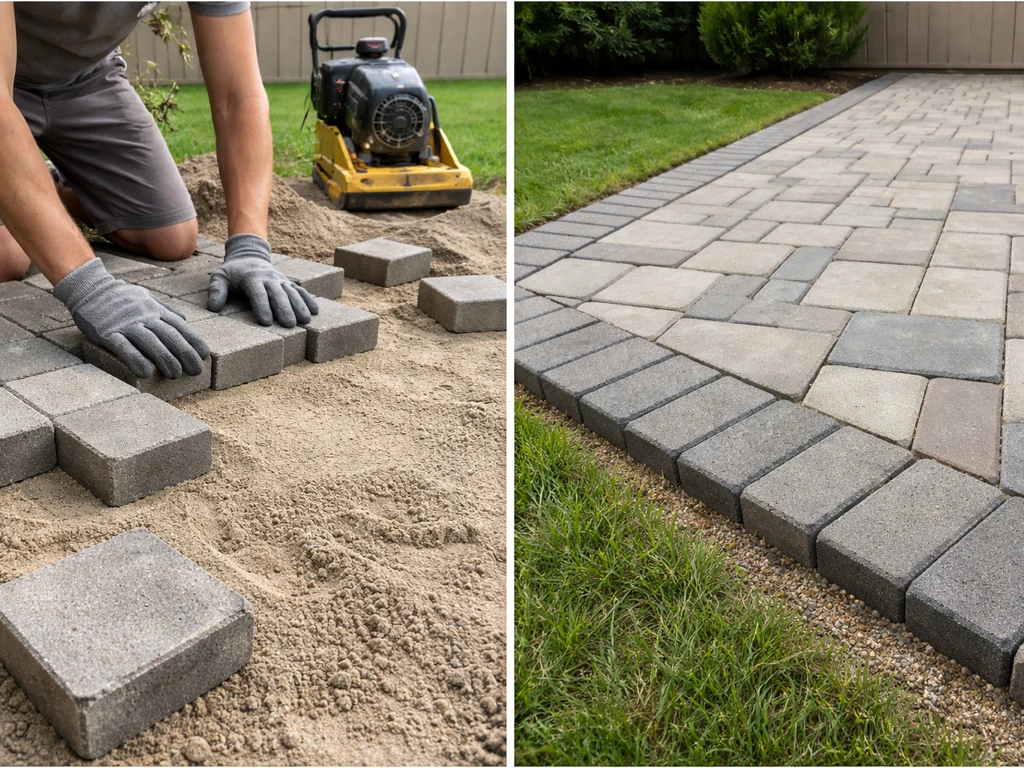
DIY brick patio installation can realistically save you $6 to $12 per square foot (the labor portion), which on a 200-square-foot patio means a potential savings of $1,200 to $2,400. That's real money, and plenty of homeowners do this successfully. But there are specific things that make it genuinely harder than it looks on YouTube.
- Proper base compaction requires a plate compactor, which you'll need to rent ($75 to $150 per day). Using hand tamping only is one of the most common DIY mistakes and leads to settling and brick movement within a couple of seasons.
- Getting the slope right matters a lot. You need a 1/8" to 1/4" per foot slope away from your house for drainage. Get this wrong and you'll have water pooling against your foundation.
- Cutting brick around curves, obstacles, and borders requires a wet saw or angle grinder with a diamond blade. Rental is another cost ($50 to $100/day), and the learning curve on clean cuts is real.
- Excavation is physically brutal. Digging 6 to 8 inches down across a 200+ square foot area and hauling that soil off site is a serious job. Many DIYers underestimate this step.
- Polymeric joint sand application has to be done right, including fully drying the surface and compacting the sand in before misting. Get it wrong and it either doesn't set or hazes on the brick.
My honest take: DIY makes the most sense on a small patio (10x10 to 12x12) on a flat, easy-access site where you have a weekend or two and don't mind renting equipment. For larger projects, complex sites, or anything where a bad outcome would be expensive to fix, the contractor cost is usually worth it. A settled, sunken, or drainage-challenged brick patio ends up costing more to fix than the original labor savings.
| Factor | DIY | Contractor |
|---|---|---|
| Labor cost | $0 (your time) | $6 – $15 per sq ft |
| Equipment cost | $150 – $300 in rentals | Included |
| Material cost | Same as contractor | Same or slightly lower (bulk pricing) |
| Risk of settling/drainage issues | Higher (experience-dependent) | Lower (warranty typically included) |
| Time required | 1–3 weekends for 200 sq ft | 1–3 days for same size |
| Best for | Small, flat, simple layouts | Large, sloped, or complex projects |
How to get accurate quotes and compare them
Getting three quotes is the standard advice, but what matters more is making sure those three quotes are actually comparing the same thing. Here's what to ask each contractor and what to look for in their proposals.
- Ask for an itemized quote, not just a total. You want to see the brick material cost, base gravel cost, labor, edging, and any demo or disposal costs listed separately. A lump-sum quote makes it impossible to compare bids.
- Confirm the base depth. A proper residential patio base should be 4 to 6 inches of compacted gravel. If a contractor is quoting 2 inches, that's why their bid is cheaper, and it will cost you later.
- Ask what brand and grade of brick is included. One contractor might be pricing a standard concrete paving brick; another might be pricing a clay brick with a 10-year color warranty. The bricks are not equivalent.
- Clarify whether demo and removal of existing materials is included. If you have an old slab or patio to remove, this needs to be explicit in the quote or you'll be surprised at the job site.
- Ask about the warranty. A quality contractor typically warranties both labor and will stand behind settling or drainage issues for at least one to two seasons. No warranty is a red flag.
- Get the quote in writing with a project timeline. Verbal agreements lead to scope creep and disputes.
When you're reviewing quotes, be skeptical of any bid that's more than 20 to 25% below the others. Lowball bids almost always mean something is being cut: thinner base, cheaper brick, skipped polymeric sand, or a contractor who plans to rush the job. The lowest quote is rarely the best value on a project like this.
If you're still in the early research phase and comparing brick patios against other materials, it's worth knowing that stone patios and flagstone options often land in a similar or higher cost range depending on the stone type, while concrete paver systems (like Unilock and similar interlocking products) can be competitive with brick depending on the product tier.
If you are comparing Unilock to brick, your total Unilock patio cost will still depend mostly on labor, base prep, and patio size. If you mean a stone patio instead of brick pavers, pricing can vary widely by stone type, thickness, and whether you need mortar or special base prep.
If you are also comparing stone or a flagstone patio, you will typically see cost ranges that overlap with brick once you factor in labor, base prep, and the specific stone you choose stone patios and flagstone options. If you're looking specifically for how much do stone patios cost, the total usually depends on the stone type, thickness, site prep, and the level of labor required to set and finish the patio.
The core budgeting logic, checking base depth, itemizing the quote, and understanding your regional labor market, applies across all of them.
Bottom line: for a typical homeowner planning a brick patio today, expect to budget $12 to $20 per square foot for a well-executed contractor install with standard brick, or $18 to $25+ for premium materials or complex layouts. Get itemized quotes, know your square footage and brick count before you call anyone, and don't skip on the base. That's where most brick patios succeed or fail.
FAQ
Does “per square foot” patio brick pricing include excavation and base prep?
Usually yes when people quote an “installed” rate, but not always. Ask whether excavation, compacted gravel (often 4 to 6 inches), bedding sand, edging restraints, and jointing sand or polymeric sand are included. If the quote only lists brick and labor, base prep may be an add-on.
How do I estimate the total brick cost if my patio isn’t a simple rectangle?
Use the supplier’s units-per-square-foot spec for your exact brick format, then add your 5 to 10% overage. For irregular borders, estimate the extra perimeter area that will be cut-in, because that can increase waste and reduce the “coverage math” accuracy even if the patio’s footprint area seems small.
Why do my quotes differ even though I’m using the same brick brand and style?
Most differences come from the base depth and compaction scope, the type of edge restraint, and how joints are filled. Verify the quote specifies polymeric joint sand (or states regular sand), the gravel depth, and whether they include removal of existing patio slabs or only “patch and set” if old material remains.
Do I need polymeric joint sand for patio bricks?
It is strongly recommended for better weed resistance and fewer washouts, especially in areas with rainfall and freeze-thaw cycles. However, confirm the contractor uses the correct product for your climate and that they will do the required watering and curing. Skipping or under-applying it can lead to joint sand loss and shifting over time.
What’s the typical add-on cost if my site is sloped or needs drainage?
Expect higher excavation and possibly regrading, additional base, or drainage features like edge drains. A common budgeting mistake is treating slope corrections as “minor grading,” but on brick patios they can change both the base thickness profile and the amount of imported material.
Can I install patio bricks over existing concrete or pavers to save money?
Sometimes you can place brick over a properly prepared base, but many projects require removing the old surface to avoid uneven settling and trapped moisture. Ask whether they will demo the slab and replace with the correct gravel and sand layers, or whether their method includes bonding or leveling a non-flexible surface.
How much extra do I need to budget for the border or edging?
Edge detailing often costs more than homeowners expect. The brick quantity covers the field area, but borders, soldier-course edging, cut stone edging, or decorative curbing add linear-foot cost. Get a per-linear-foot line item for edging so you can compare bids accurately.
Is a 2 5/8-inch thick brick always required?
Not always. For foot-traffic-only patios, thinner residential bricks are often acceptable. But if you plan for wheelbarrows, lawn equipment, or vehicle traffic near the patio edge, budget for thicker pavers (commonly 2 5/8 inches or more) and confirm the contractor is adjusting the base accordingly, not just using thicker brick.
What brick pattern costs more, and why does it raise the price?
Diagonal patterns like herringbone typically cost more because every border row requires diagonal cuts, which increases labor and waste. Ask your contractor to include a waste factor and to list how many angles or special cuts are expected, because the waste can change your final brick order.
When should I worry about a bid that is “too low”?
If a quote is more than about 20 to 25% below others, ask what is being reduced, especially base thickness, removal scope, jointing sand type, and grading and compaction. Also ask whether they include equipment rental and disposal, since those costs are easy to omit in lowball bids.
How do I avoid paying for the wrong amount of brick if the coverage spec differs?
Don’t rely on a generic “bricks per square foot” number unless it matches your exact size and thickness. Have the supplier’s units-per-square-foot calculation included in your order, then multiply by your square footage and add the buffer. If your pattern includes borders with a different brick size, treat that as a separate quantity.
How much can DIY realistically add or reduce the total cost in my case?
DIY can reduce mainly the labor portion, but only if your site is flat, accessible, and you can rent or borrow the right equipment (like a plate compactor and cutting tools). If the patio is small but requires demolition, removing roots, or complex edging, DIY time and material waste can wipe out expected savings.
What should I confirm in a contractor’s written scope before paying a deposit?
Get a line-item scope that states base thickness, whether they compact in lifts, edging type, jointing method (polymeric vs regular sand), and final grading. Also confirm cleanup and haul-off, especially if there’s any old patio or concrete to remove.
Will patio bricks fade or stain, and how does that affect buying decisions?
Clay bricks typically hold color longer than many concrete pavers, but any brick can show efflorescence or dark spots if joints aren’t filled correctly or if moisture is trapped under the base. Ask the supplier or contractor about recommended curing practices after installation and whether they’ll keep the patio traffic off long enough for jointing sand to set.
Next Articles
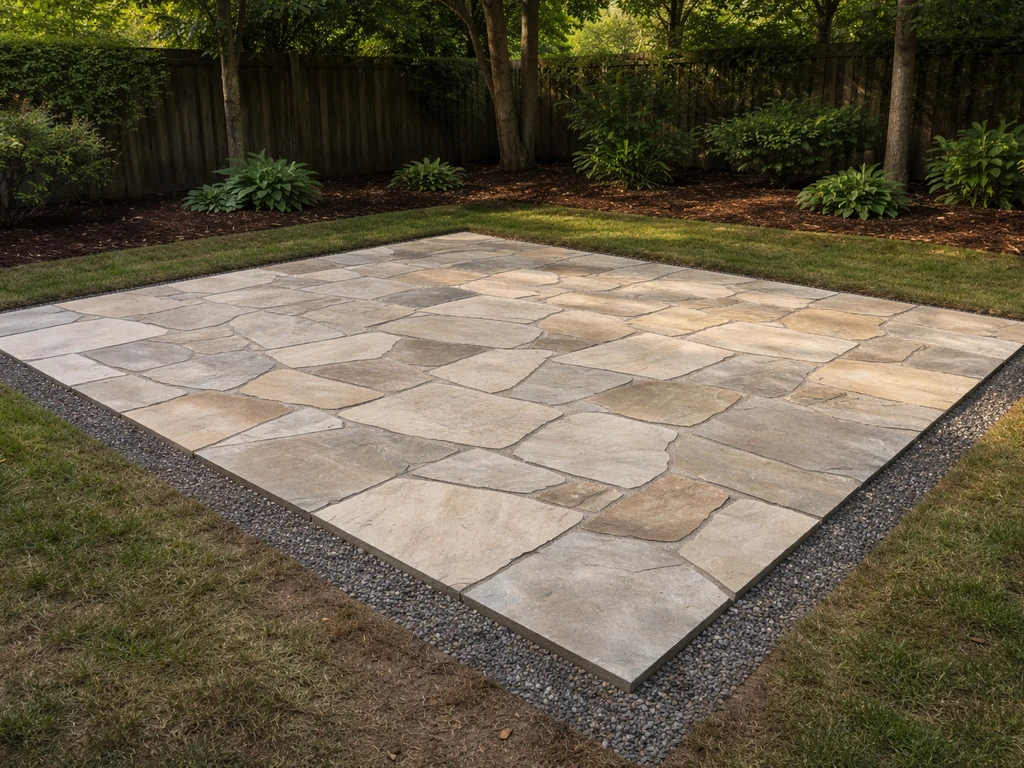
How Much Do Stone Patios Cost? Installed Price Guide
Get realistic stone patio costs by size, stone type, and labor. Includes breakdown, hidden fees, and DIY vs pro budgetin
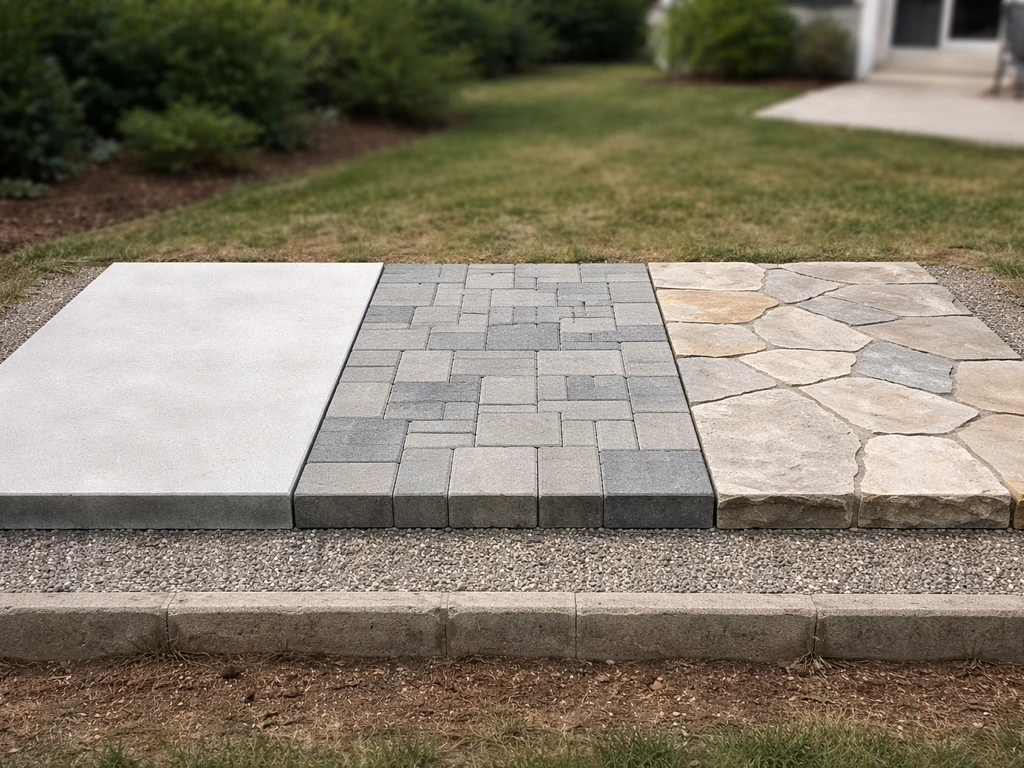
How Much Should I Expect to Pay for a Patio
Patio cost guide with real price ranges by size and material, full line-item budget, DIY vs install, and quote checklist
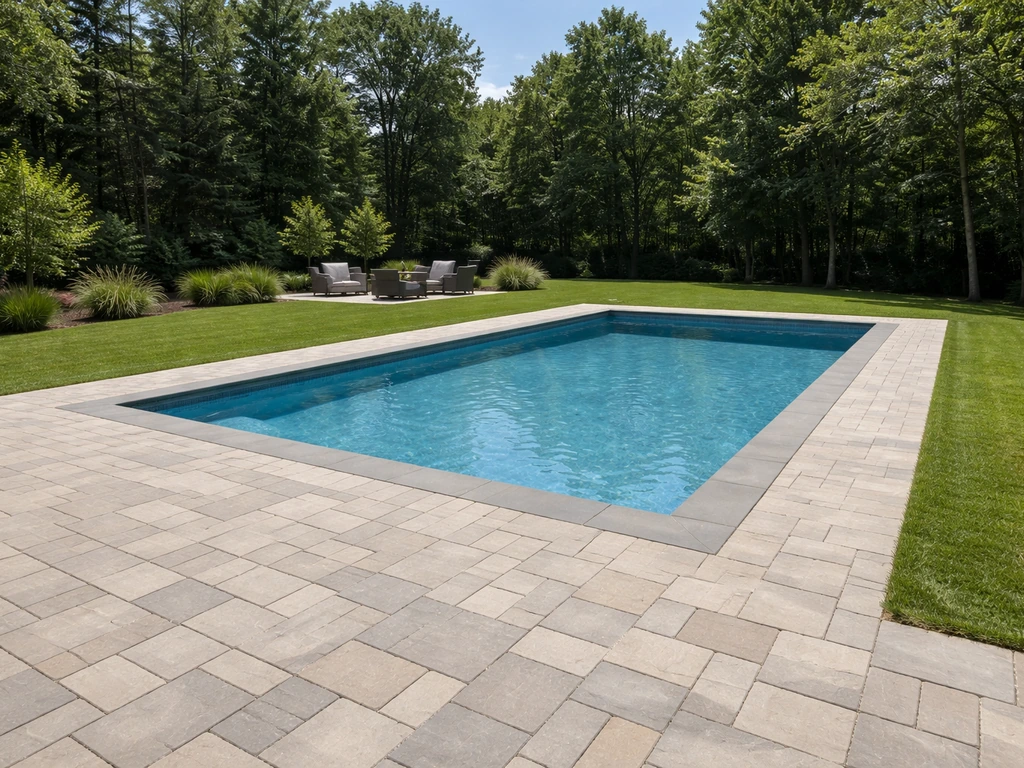
How Much Patio Around Pool: Cost, Size, and Budget Guide
Learn how much patio around a pool costs and how to size square feet, materials, extras, and get real bid line items.