
For a professionally installed concrete patio in 2026, expect to pay somewhere between $6 and $13 per square foot for a plain broom-finished slab, and $8 to $30 per square foot once you move into stamped, stained, or exposed aggregate finishes. Because pricing varies by region, labor rates, and site conditions, the same patio can cost more or less in Canada than typical averages concrete patio cost in Canada. The wide range isn't a cop-out: it reflects real differences in finish complexity, site conditions, regional labor rates, and what's actually included in the quote. If someone gives you a single number without knowing your finish type and site, that number isn't worth much.
How Much Per Sq Ft for a Concrete Patio Cost

Felix Carver
21 May 2026
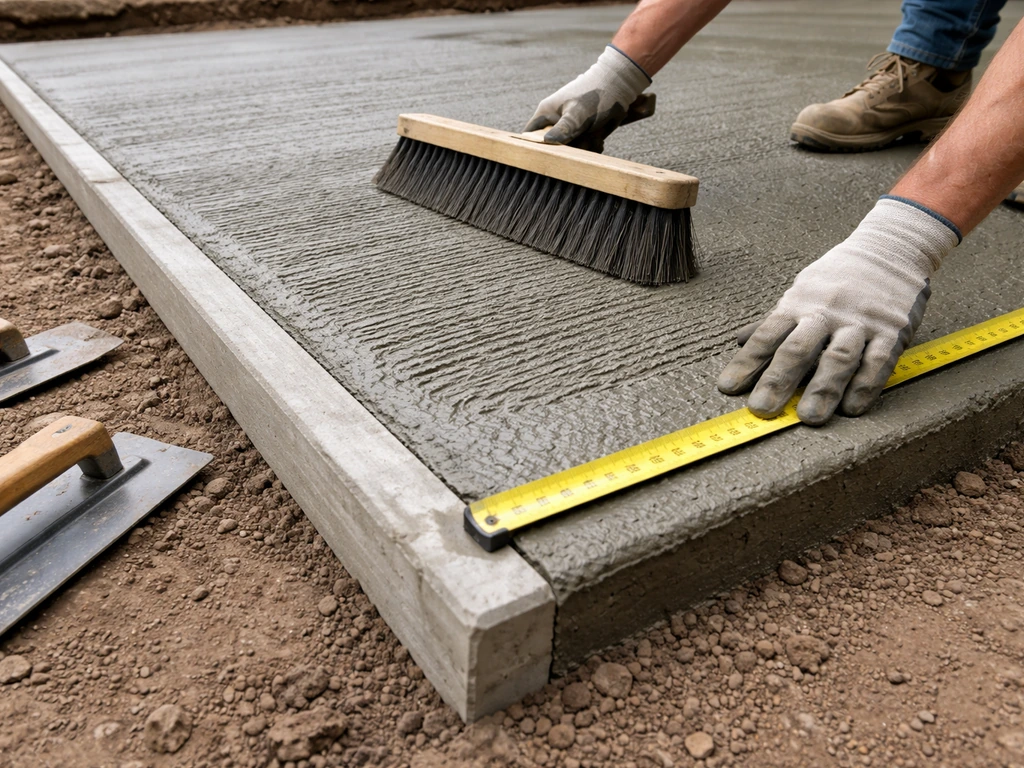
Concrete patio cost per sq ft: installed vs. materials only
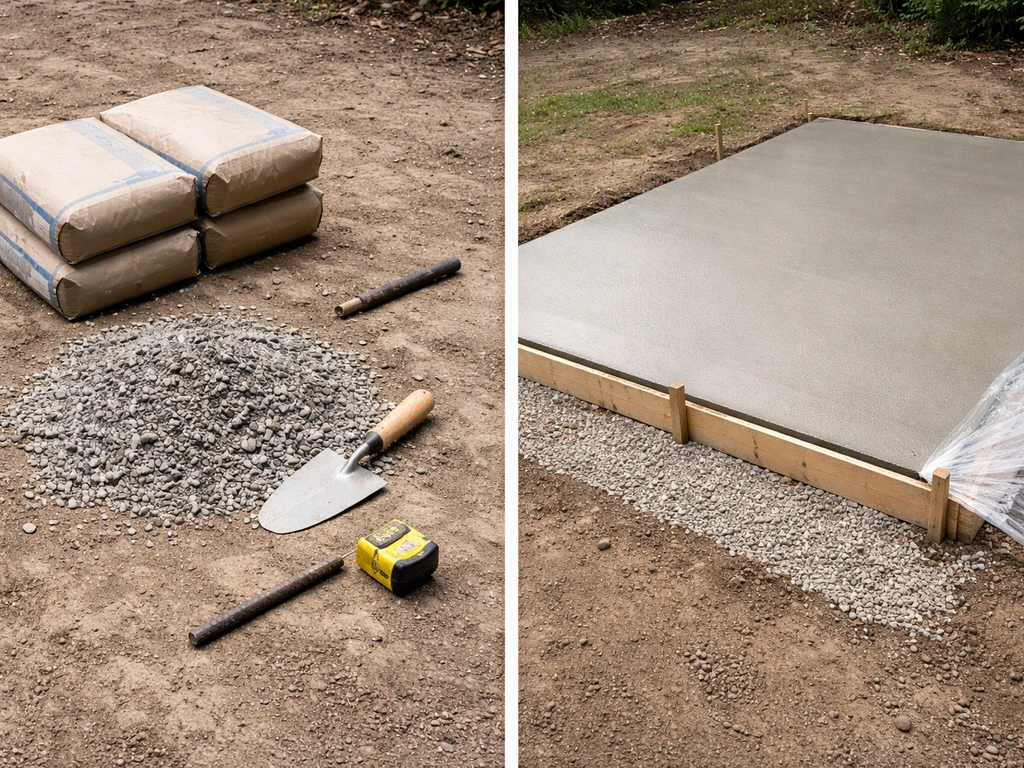
The most important distinction to nail down before you start comparing quotes is whether a price is for materials only or for the full installed cost. These numbers look nothing alike, and mixing them up will blow your budget.
Concrete mix alone runs around $10 per square foot as a materials cost, but that's only one piece of the puzzle. When you hire a contractor for a complete install, you're also paying for excavation, base prep, forming, pouring, finishing, curing, and often sealing and permits. Labor typically accounts for 50% to 60% of the total installed cost. That means for a $10/sq ft installed job, roughly $5 to $6 of that is labor before a single bag of concrete gets mixed.
A fully installed broom-finish patio lands in the $6 to $13 per square foot range. The low end assumes favorable site conditions, minimal prep, and a competitive local market. The high end reflects more complex sites, thicker slabs, or regions with elevated labor rates. Decorative finishes push into a separate pricing tier entirely, which we'll cover next.
Price ranges by patio type
Not all concrete patios cost the same, and the finish you choose is one of the biggest levers on your per-sq-ft price. Here's how the common options stack up:
| Finish Type | Installed Cost Per Sq Ft | Notes |
|---|---|---|
| Plain / broom finish | $6 – $13 | Most affordable; functional and durable |
| Exposed aggregate | $7 – $12 | Textured look, good slip resistance |
| Stamped concrete | $8 – $14 (basic) up to $30+ | Price climbs with pattern complexity and number of colors |
| Stained concrete | $9 – $16 | Acid or water-based stain applied after pour |
| Custom / elaborate decorative | $18 – $30+ | Multiple colors, borders, inlays, complex patterns |
A simpler way to think about it: ConcreteNetwork breaks it into tiers at roughly $6/sq ft for plain, $8 for simple, $12.50 for custom, and $18 for elaborate. Each step up adds labor time, specialty tools, and materials like color hardeners, release agents, or stains. If budget is tight, broom finish delivers a clean, long-lasting patio at the lowest per-sq-ft cost. If you want the decorative look without the full stamped price, exposed aggregate is often a solid middle-ground option.
Stamped concrete deserves a special mention because the pricing range is so wide. A single-color, single-pattern stamped patio might come in near $8 to $10 per square foot. Add a second color, a border pattern, or a custom inlay and you can push $20 to $30 per square foot or more. If you're comparing stamped quotes, make sure every contractor is bidding the same finish specification.
What actually moves your per-sq-ft price
Beyond finish type, several factors can push your per-sq-ft cost up or down significantly. These are the things contractors are mentally pricing when they walk your yard.
- Slab thickness: A standard residential patio is 4 inches thick. If your soil is soft, your patio will double as a parking pad, or you're in a freeze-thaw climate, a contractor may recommend 5 or 6 inches. More concrete means higher material cost per square foot.
- Finish complexity: As covered above, every decorative step adds cost. Even the number of saw-cut control joints can add $1 to $2 per linear foot.
- Reinforcement type: Wire mesh (typically 6x6 W2.9xW2.9) costs about $0.12 to $0.18 per square foot in materials and is standard for foot-traffic patios. Rebar (#4 bars at 18-inch spacing) runs $0.45 to $0.75 per square foot in materials plus $1.00 to $1.75 per square foot in labor. Some contractors include reinforcement in their base price; others line-item it.
- Demolition and haul-off: Removing an existing slab or surface adds cost. Always ask if demo is included.
- Regional labor rates: Labor rates vary meaningfully by region. A patio that costs $8/sq ft to install in a mid-size Midwestern city might run $12 to $15/sq ft in a high cost-of-living metro.
- Sealing: A quality concrete sealer adds longevity but also adds to the bill. Some contractors include one coat in their price; others price it separately.
- Permits: Required in many jurisdictions for slabs above a certain size. Angi notes permits are part of a complete installed price, but not every contractor pulls them without being asked.
- Access and site difficulty: A backyard with narrow side-yard access that limits truck or mixer access will cost more than an open front-yard pour.
Site prep and base: the costs buried under your patio
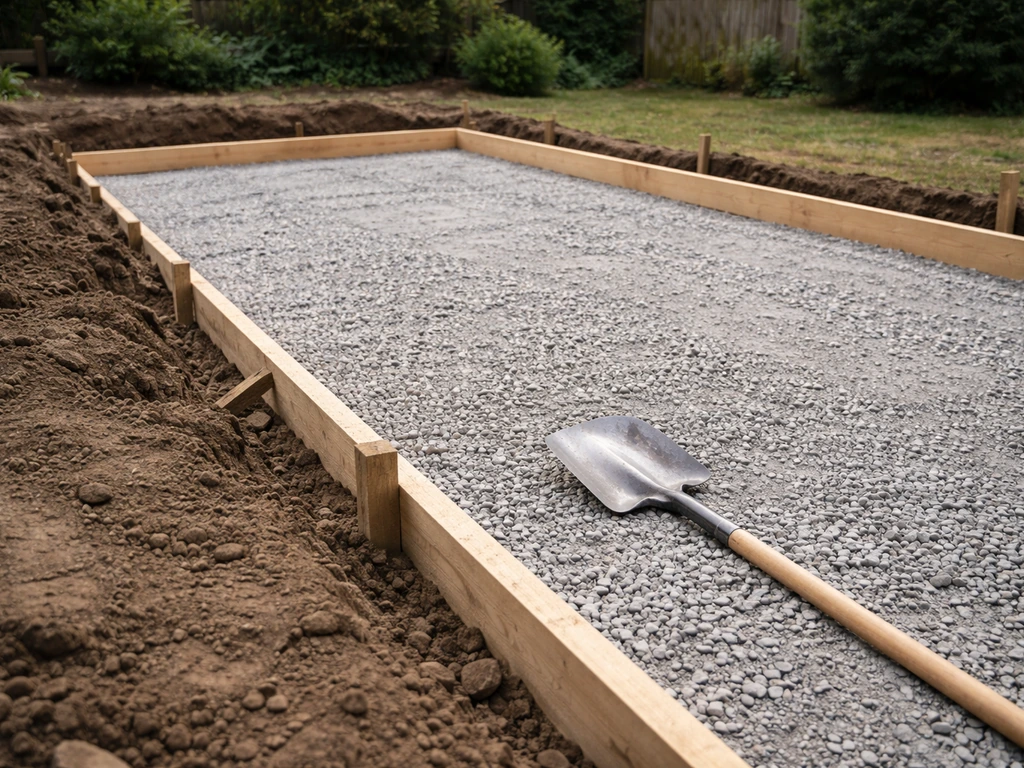
This is the section most homeowners don't think about until the quote arrives and they're surprised by line items for grading, gravel, and disposal. Site prep is not optional; it's what keeps your slab from cracking and settling.
Proper base prep for a residential concrete patio typically involves excavating deep enough to accommodate 4 to 6 inches of compacted gravel base plus the slab thickness. So for a 4-inch slab on 4 inches of gravel, you're digging down 8 inches from finished grade. That excavated material has to go somewhere, and hauling it off costs money.
On top of the compacted gravel, most contractors will install a vapor retarder: a minimum 6-mil polyethylene sheet, lapped at least 6 inches at seams, between the base and the concrete. This controls moisture migration and helps prevent efflorescence and weed intrusion. It's a small material cost but a line item you should confirm is included.
Reinforcement goes on next. For a standard foot-traffic patio, welded wire mesh is generally sufficient and is the more affordable option. ConstructionEstimatingInfo notes typical reinforcement unit pricing, with standard 6×6 W2.9×W2.9 welded wire mesh running about $0.12, $0.18 per square foot (and individual #4 bars at 18-inch OC about $0.45, $0.75 per square foot for materials) welded wire mesh is generally sufficient. If the contractor recommends rebar, ask why. There are legitimate reasons (heavier loads, poor subgrade, freeze-thaw conditions), but some contractors upsell it unnecessarily.
Control joints are the intentional saw cuts or tooled grooves that tell the concrete where to crack if it's going to crack at all. They're typically priced at $1 to $2 per linear foot if your contractor prices them separately. On a basic rectangular patio, the linear footage of joints is modest, but it's a line item worth spotting in any bid.
What common patio sizes actually cost
Translating per-sq-ft to a real budget number is straightforward: multiply your square footage by the per-sq-ft installed cost for your finish tier. If you want to estimate your total patio budget, start by figuring out your square footage, then apply the per-sq-ft cost ranges for the finish level you plan to use per-sq-ft installed cost. If you want a ballpark for how much is a concrete patio slab, start by using your square footage and the installed cost per square foot for your chosen finish tier concrete patio cost. Here's what that looks like for the three most common patio sizes.
| Patio Size | Square Footage | Broom Finish (Installed) | Stamped Concrete (Installed) |
|---|---|---|---|
| 10x10 | 100 sq ft | $600 – $1,200 | $1,200 – $2,500 |
| 12x12 | 144 sq ft | $865 – $1,730 | $1,730 – $3,600 |
| 20x20 | 400 sq ft | $2,400 – $4,800 | $4,800 – $10,000 |
Angi's data aligns with this, putting a 20x20 patio at roughly $2,400 to $6,400 for an installed project. The 20x20 is often the sweet spot for a functional outdoor entertaining space, and it's where stamped and decorative options start to become a meaningful budget decision rather than a small premium.
A 10x10 or 12x12 patio (100 to 144 sq ft) is generally considered small. If you're exploring a smaller slab, it's worth knowing that the per-sq-ft cost can actually be higher on smaller projects because mobilization, site prep, and forming costs don't scale down proportionally with size. The easiest way to estimate how much does a small concrete patio cost is to use the installed per-square-foot range for your chosen finish tier and then multiply by your patio size. A contractor driving to your site and setting up forms for a 10x10 has nearly the same overhead as for a 12x12.
DIY vs. hiring a contractor: what the per-sq-ft difference really means
Since labor is 50% to 60% of an installed concrete patio cost, DIY looks appealing on paper. And if you're experienced with concrete flatwork, it can genuinely save money. But there are real risks that don't show up in the per-sq-ft math.
On the savings side: removing contractor labor at $2 to $18 per square foot (depending on complexity) is significant. For a 400 sq ft patio, that's potentially $800 to $7,200 in labor avoided. Your actual out-of-pocket on DIY covers concrete materials, rental equipment (mixer, screed, float, edger, saw for control joints), and your own time.
On the risk side: the most common DIY concrete failures are poor subbase prep, weak edge support from improperly built or removed forms, missing or mistimed control joints, and improper curing. Any of these can cause cracking, settlement, or surface scaling within a few years. Fixing a failed slab often costs more than the professional install would have in the first place. Control joints in particular require a saw cut at the right time after the pour: too early and the saw tears the surface; too late and the concrete has already decided where it wants to crack.
A reasonable middle ground: some homeowners hire a contractor for the pour and finishing, and handle the simpler prep work (clearing vegetation, rough grading) themselves to trim costs. Always confirm with the contractor what prep they expect you to complete versus what they'll price in.
How to get accurate quotes and compare bids
Getting three quotes is the standard advice, but getting three comparable quotes is what actually helps you make a decision. Here's how to make sure you're comparing apples to apples.
What to have ready before you call
- Exact dimensions of the patio (length x width, plus any irregular shapes)
- Finish type you want (broom, exposed aggregate, stamped, stained)
- Whether there's an existing surface to demo and haul away
- Access situation (can a ready-mix truck get close, or will concrete need to be wheelbarrowed in?)
- Any specific thickness requirements or load concerns (parking, heavy furniture, spa/hot tub)
Line items to ask every contractor to break out
- Excavation and gravel base (depth of dig, thickness and type of base material)
- Vapor retarder/moisture barrier (included or not)
- Reinforcement (mesh or rebar, and whether labor and materials are both included)
- Concrete mix spec (PSI rating, typically 3,500 to 4,000 PSI for residential patios)
- Forming and finishing labor
- Control joint cutting (per linear foot or included in the pour price)
- Sealing (how many coats, what product)
- Demo and haul-off of existing surface if applicable
- Permit fees (who pulls it, who pays for it)
- Payment schedule and warranty on the work
If a contractor gives you a single lump-sum number and won't break it out, that's not automatically a red flag (many small contractors just work that way), but you should at minimum confirm verbally what's included and get it in the contract. The line items most commonly missing from low-ball quotes are reinforcement, sealing, and permit fees.
When comparing bids, don't just look at the total. A bid that's $500 lower but excludes sealing, permits, and reinforcement may actually be more expensive once you account for those items. Rebuild each bid on a consistent scope before making a decision.
One more thing worth asking: how does the contractor handle cracking? A good contractor will explain where they're placing control joints and why. That conversation tells you a lot about whether they know what they're doing.
FAQ
Do I need to pay more per sq ft if my patio has a slope or drains badly now?
Yes. Sloped sites and poor drainage usually require extra grading, base depth adjustment, and sometimes added drainage layers, which increases site prep time and materials. Ask for a note in the quote about how they handle water movement away from the slab, not just “leveling.”
What’s the difference in cost if I want a thicker concrete slab for a heavier use patio?
Thicker slabs generally cost more per sq ft because they raise excavation and concrete quantity, and they can require more reinforcement. If your patio will hold a hot tub, grill island, or vehicle access, ask whether the slab thickness and reinforcement level change the price tier versus a standard foot-traffic patio.
Are permits and inspections usually included, or should I expect them as a separate line item?
Often they are separate, especially if your city requires review for flatwork, drainage changes, or tie-ins near structures. Confirm whether the bid includes permits and any inspection fees, because those can make a “low” per-sq-ft number misleading.
How do I know if the per-sq-ft quote includes sealing, especially for stained or decorative finishes?
Ask whether the contractor is pricing a sealer as an included item (and what type) versus “optional.” Many decorative finish jobs look great initially, but sealer affects long-term stain resistance and cleaning, so you want it specified in writing.
Do control joints always get charged separately, and what happens if they’re missing?
Some contractors include joint work in the base price, others itemize it at roughly $1 to $2 per linear foot when billed separately. If joints are missing or placed poorly, the slab can crack in random locations, so ask the contractor to provide an actual joint layout or linear footage estimate.
Can I reduce the total cost by shrinking the patio size, or does per sq ft usually stay the same?
Per sq ft often increases on smaller patios because mobilization, forming, and site setup do not scale down proportionally. For example, a 10x10 can cost meaningfully more per sq ft than a larger slab even when finish type is identical, so price small projects using the installed per-sq-ft range from quotes.
Is welded wire mesh or rebar required for most patios, and how does that affect cost?
For typical foot-traffic patios, welded wire mesh is often sufficient, while rebar is usually justified by heavier loads, questionable subgrade, or freeze-thaw concerns. If a bid includes rebar, ask what load or site condition is driving that choice to ensure you are paying for a real need, not an upsell.
What should I ask about curing and weather limits if I’m hiring in summer or freeze-thaw season?
Ask how they cure (timing, method, and whether they use curing compounds) and whether they have a plan for hot or cold weather. Curing problems are a major cause of scaling and early cracking, and some contractors charge differently if they need extra labor or protective steps.
If I DIY part of the prep, what exactly should I be responsible for?
Clarify responsibilities in writing: clearing vegetation, rough grading, and hauling spoil are common DIY scopes, but proper depth for the gravel base, compaction requirements, and vapor retarder placement are often better left to the installer. Incomplete prep is a frequent cause of settlement and early failure, so confirm what the contractor will verify before pouring.
How can I tell whether two quotes are comparable when one is a lump sum?
Request a scope breakdown even if the bid is lump sum: slab thickness, finish tier, base thickness, vapor retarder inclusion, reinforcement type, joint count or linear footage, and whether sealing and permits are included. Then compare totals after you verify each quote covers the same items, not just the headline per-sq-ft number.
What’s a smart next step to estimate my budget before I request quotes?
Measure the patio area in square feet, then select the likely finish tier you want and multiply by the installed per-sq-ft range for that tier. After that, add a small contingency (often 5% to 15%) for site issues, and ask each contractor to price the same finish spec and slab thickness so your bids stay apples-to-apples.
Next Articles
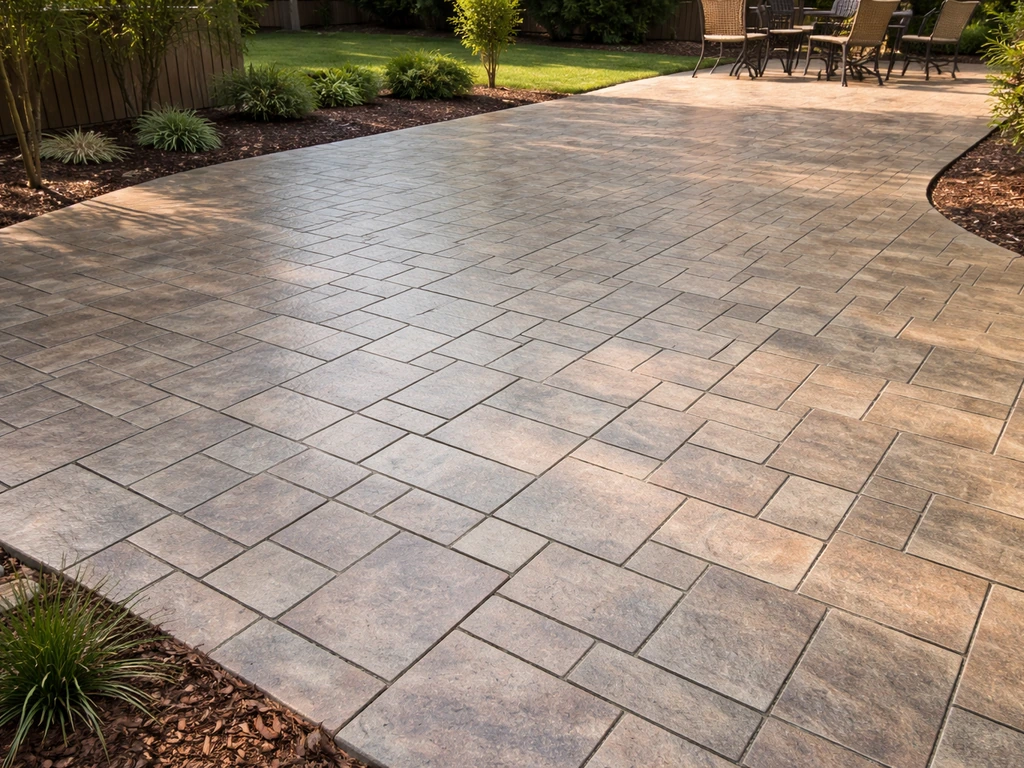
How Much for a Stamped Concrete Patio Cost Breakdown
Stamped concrete patio costs explained with real ranges per sq ft, size examples, what affects price, and DIY vs contrac
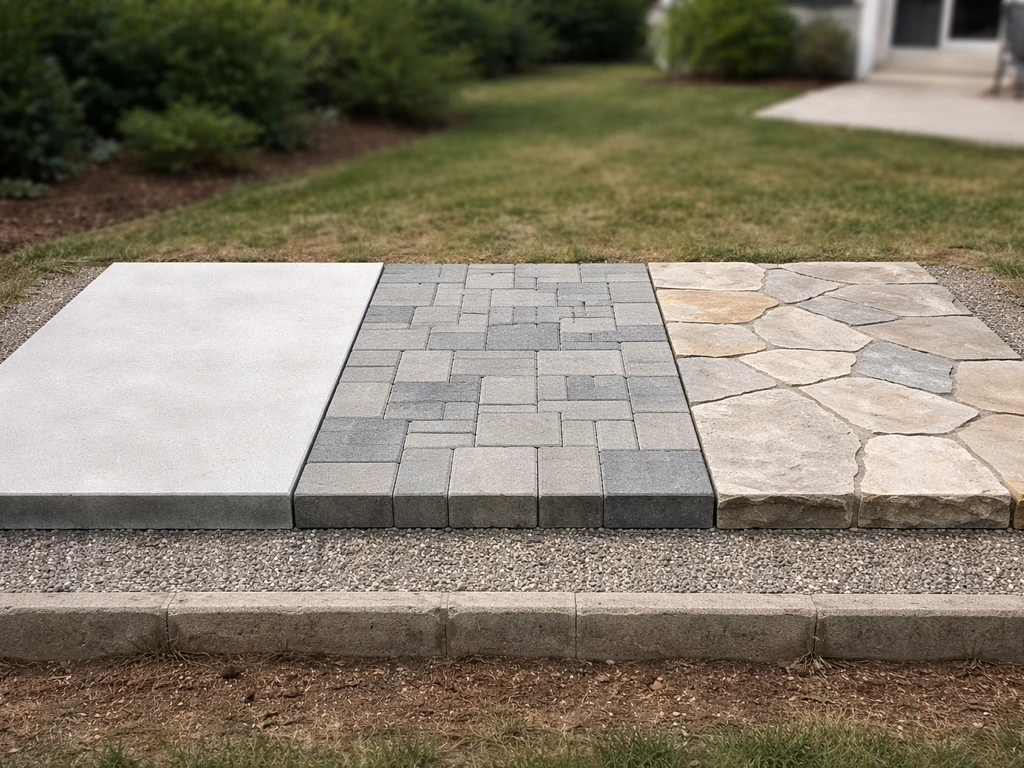
How Much Should I Expect to Pay for a Patio
Patio cost guide with real price ranges by size and material, full line-item budget, DIY vs install, and quote checklist
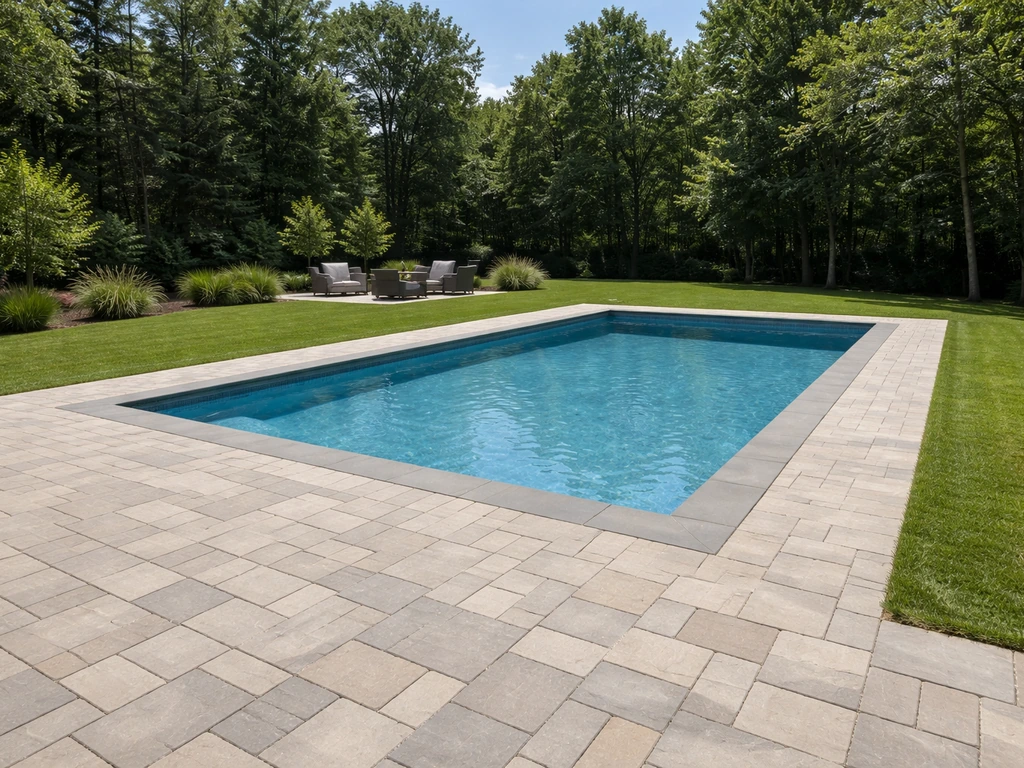
How Much Patio Around Pool: Cost, Size, and Budget Guide
Learn how much patio around a pool costs and how to size square feet, materials, extras, and get real bid line items.