
Building a covered patio typically costs between $20 and $60 per square foot installed, which puts most projects somewhere in the $4,000 to $30,000 range depending on size, materials, and how elaborate the structure gets. A basic open-frame wood pergola on the low end, a fully engineered gable roof with a concrete floor on the high end. If you're adding a solid wood roof cover, budget closer to $70 to $120 per square foot installed. Those numbers aren't wild swings, they reflect real differences in what you're actually building.
How Much to Build a Covered Patio Cost Per Sq Ft Guide

Felix Carver
19 May 2026
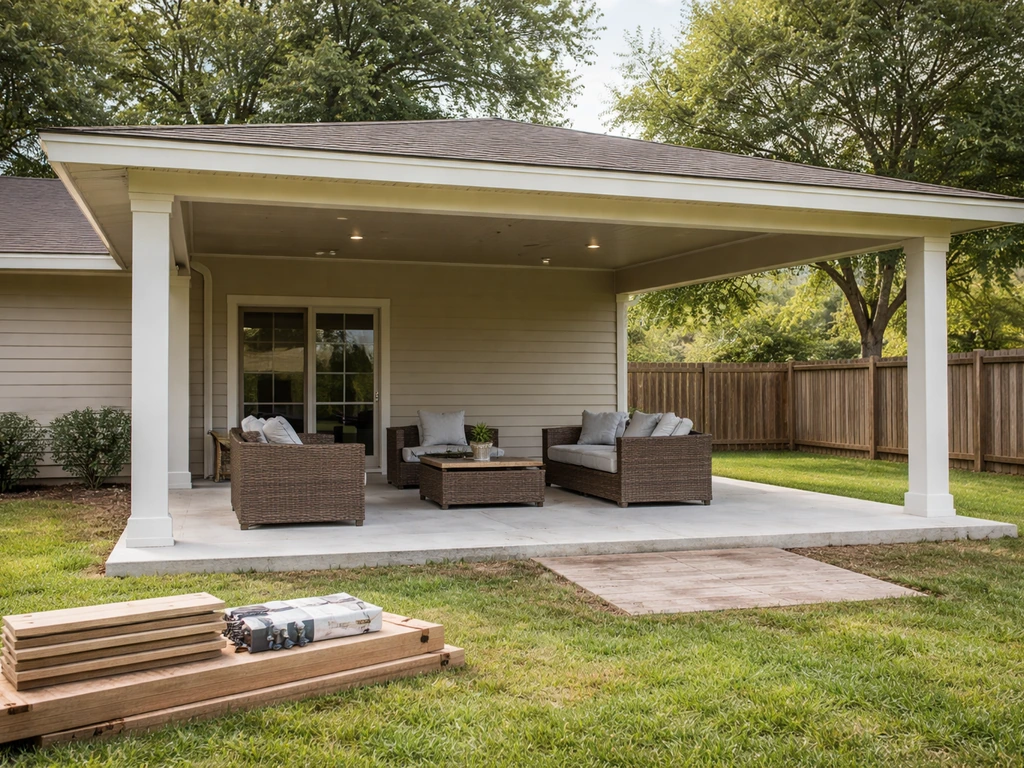
What a covered patio actually costs: the real ranges
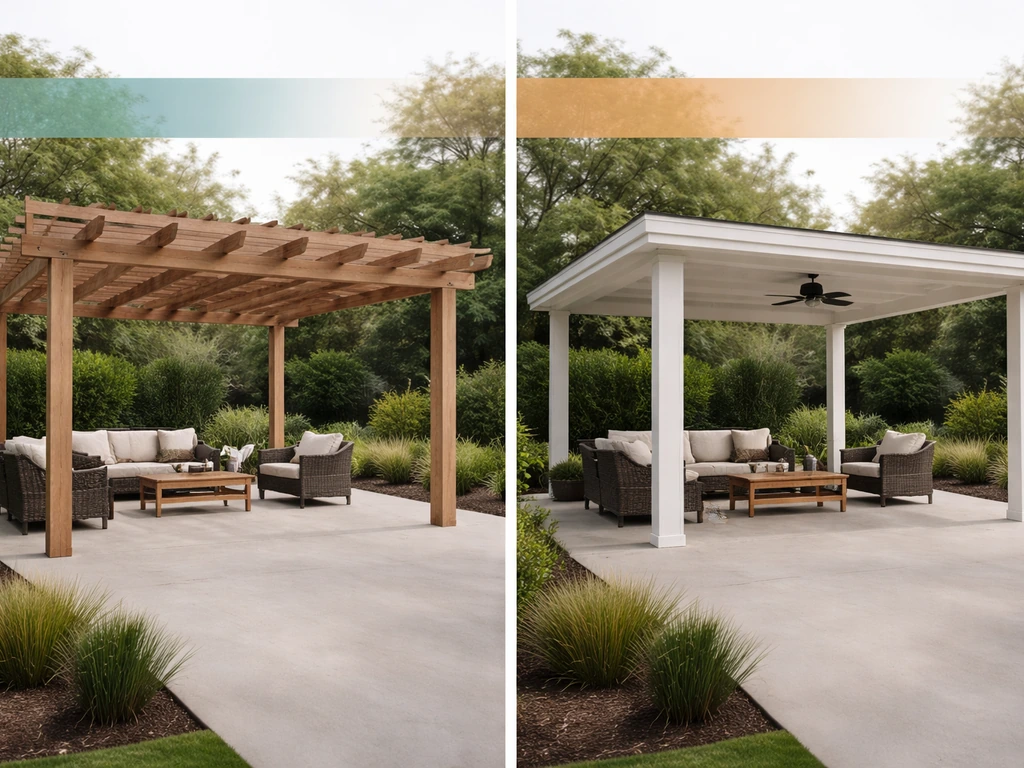
Most homeowners land somewhere between $8,000 and $25,000 for a professionally installed covered patio of a typical backyard size. The lower end gets you a simple pergola or shade sail structure with basic wood framing. The upper end covers a solid attached roof, proper footings, and some finishing work. Premium builds with gable roofs, full enclosures, or screened-in walls can push into the $30,000 to $50,000+ territory, especially when you factor in structural engineering and permits.
Here's a quick look at typical total project cost ranges by cover type, based on current installed pricing data: If you're trying to estimate how much it will cost to build a patio, these ranges help you compare options by roof style and enclosure level total project cost ranges by cover type.
| Cover Type | Installed Cost per Sq Ft | Typical Total (12x16 patio) |
|---|---|---|
| Basic wood pergola / lattice | $20–$40 | $3,800–$7,700 |
| Solid wood attached roof cover | $40–$120 | $7,700–$23,000 |
| Aluminum or vinyl patio cover | $25–$55 | $4,800–$10,600 |
| Gable roof over existing patio | $70–$155 | $13,400–$29,800 |
| Screened-in or enclosed cover | $50–$80 | $9,600–$15,400 |
These ranges assume a contractor handles everything. Your actual number depends heavily on where you live, what material you pick, whether you need a permit, and the complexity of the structure. The patio surface itself is a separate cost, if you're starting from bare dirt, factor in another $6 to $20 per square foot for the concrete or paver base, which you can dig into further when looking at overall patio build costs. If you're trying to estimate how much does a back patio cost, remember the patio surface and base prep are usually part of overall patio build costs.
Cost per square foot and what common sizes actually run
The $20 to $60 per square foot range from Angi and HomeGuide is a solid starting benchmark, but it compresses a lot of variation. A small 10x10 structure often costs more per square foot than a larger one because the fixed costs (permits, footing work, contractor mobilization) get spread over fewer square feet. Scaling up to a 20x20 brings the per-square-foot number down but obviously raises the total.
| Patio Size | Sq Ft | Low Estimate (basic cover) | Mid Estimate | High Estimate (solid roof) |
|---|---|---|---|---|
| 10x10 | 100 | $2,000 | $5,000 | $12,000 |
| 12x12 | 144 | $2,900 | $7,200 | $17,300 |
| 12x16 | 192 | $3,800 | $9,600 | $23,000 |
| 16x20 | 320 | $6,400 | $16,000 | $38,400 |
| 20x20 | 400 | $8,000 | $20,000 | $48,000 |
Keep in mind that a 10x10 covered patio is honestly pretty small for most families, it fits a bistro table and two chairs. A 12x16 or 16x20 is where most people feel like they have real usable space. If you're comparing these numbers to a full patio build cost or a roofed patio addition, the floor surface itself adds to the total, so make sure you're comparing apples to apples when you get quotes. If you also want an uncovered patio addition, costs can shift because the flooring and base still factor in outdoor patio cost.
Materials matter: wood vs. aluminum vs. vinyl vs. solid roofing
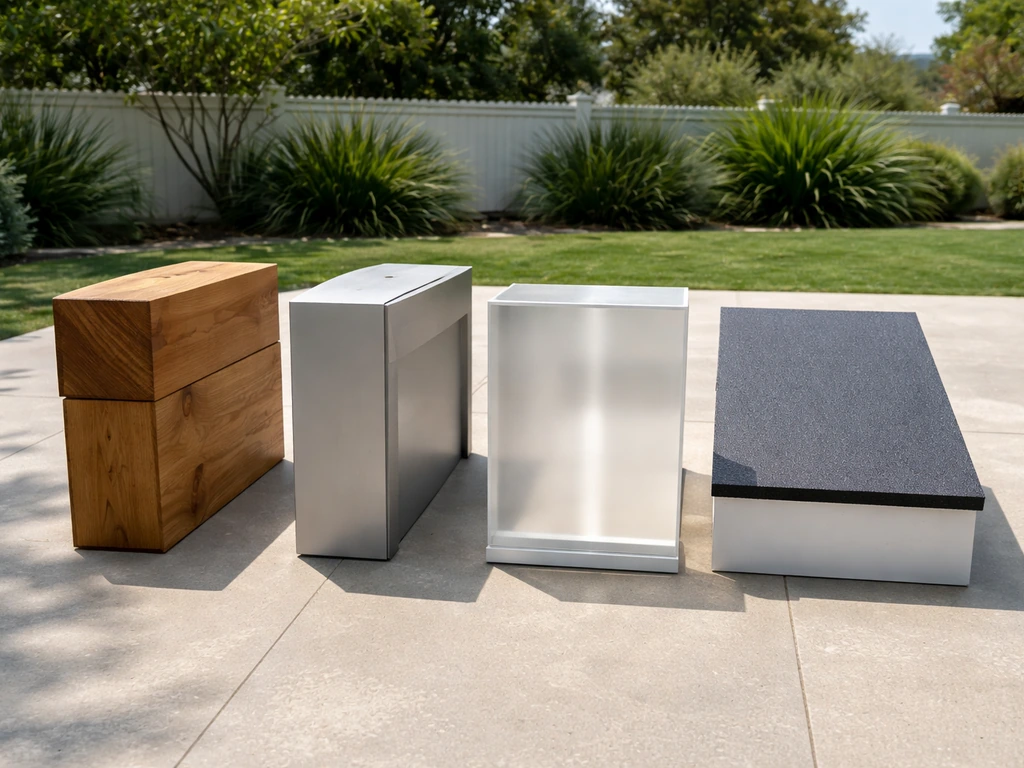
Wood is still the most popular material for patio covers, and for good reason. It looks great, is easy to customize, and a skilled contractor can build almost any design with it. Forbes puts installed wood roof covers at roughly $16 to $36 per square foot for basic designs, but that can climb fast when you move to solid sheathing, shingles, or premium hardwoods. Pressure-treated pine is the budget-friendly choice; cedar and redwood cost more but resist rot better and look sharper over time.
Aluminum and vinyl patio cover kits are popular for homeowners who want low maintenance and a predictable cost. They typically run $25 to $55 per square foot installed and come in DIY-friendly kits that snap together without specialized carpentry skills. The trade-off is that they look like what they are, a kit cover, and they're harder to integrate seamlessly with the architecture of your home.
Solid roof covers (meaning the cover actually keeps rain out, like a true addition to your home's roofline) are in a different cost class. These require real framing, roofing material, and often structural engineering. A gable roof over a patio runs $13,000 to $30,000 for a typical size, according to This Old House, and HomeGuide puts the per-square-foot range at $70 to $155 for this style. Premium features on a 15x15 patio can add roughly $10,000 over a basic cover build.
| Material/Style | Installed Cost/Sq Ft | Maintenance | Looks Like |
|---|---|---|---|
| Pressure-treated pine (pergola/open) | $20–$36 | Paint/stain every 2–3 yrs | Classic wood |
| Cedar or redwood | $30–$55 | Stain every 3–5 yrs | Upscale, natural |
| Aluminum patio cover kit | $25–$45 | Very low | Clean, modern |
| Vinyl patio cover kit | $25–$55 | Very low | Clean, plastic |
| Solid wood roofed cover (shingles) | $40–$120 | Moderate (roof upkeep) | Home addition |
| Gable/hip roof structure | $70–$155 | Moderate | Permanent addition |
Lattice covers are worth a mention if you're on a tight budget. Forbes puts a lattice roof installation at roughly $4,100 to $9,200 depending on size and design. They don't block rain, but they cut sun and create the shade most people are actually after. They're also the easiest DIY option among cover types.
DIY vs. hiring a contractor: where the money actually goes
Labor usually makes up 40 to 60 percent of the total cost on a covered patio project. HomeGuide estimates labor alone at $15 to $50 per square foot for adding a roof cover over a patio. That means on a $15,000 project, you might be paying $6,000 to $9,000 just for the crew's time. If you're a confident builder, DIY on a pergola or open lattice cover is very achievable and can cut your total cost roughly in half.
Where DIY gets risky is on solid roof structures. Footings, ledger attachment to the house, structural framing, and roofing all require code compliance. Most jurisdictions require a permit for these projects (more on that below), and if you pull the permit yourself as the homeowner, you're also taking on the liability if something goes wrong. A pergola with no roof covering is generally lower-risk for DIY. A gable roof that ties into your home's structure? Hire a contractor.
- DIY pergola or lattice cover: saves $3,000–$8,000 on a mid-size project if you have basic carpentry skills
- DIY aluminum/vinyl kit: saves $1,500–$4,000, fairly manageable for a handy homeowner
- Contractor-built solid roof cover: strongly recommended, especially if attached to the house
- Always pull permits yourself or verify your contractor is pulling them — unpermitted patio covers cause problems at resale
When comparing contractor bids, keep in mind that general contractors typically charge more than specialty patio/outdoor living contractors for the same work. Getting quotes from both and comparing them is worth the extra phone calls.
Breaking down where the money goes
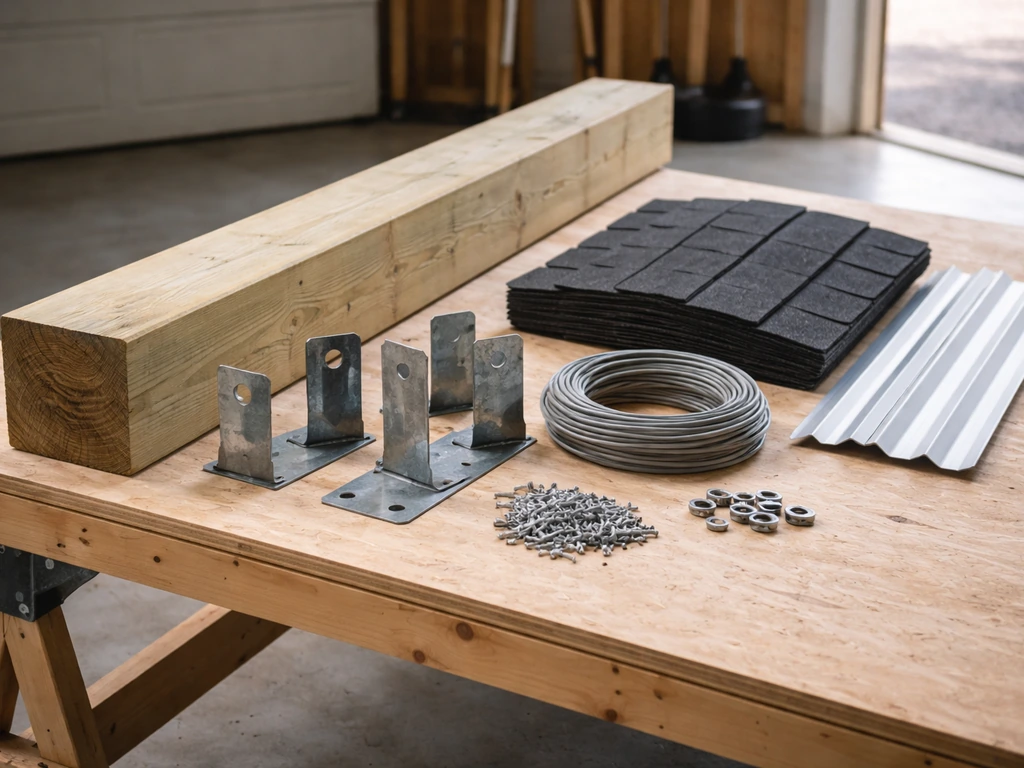
Understanding the cost components helps you evaluate bids and figure out where you can save. Here's how a typical solid covered patio project breaks down:
- Footings and posts: $500–$2,500 depending on number of posts, depth required, and soil conditions — caisson footings in clay or unstable soil cost more
- Framing lumber and structural materials: $1,500–$6,000 depending on size, span, and species
- Roof covering (shingles, panels, lattice, polycarbonate): $800–$4,000
- Ledger attachment and hardware (if attaching to house): $300–$800
- Labor: $3,000–$12,000 depending on project size and contractor rates
- Permits and inspections: $150–$600 in most jurisdictions
- Structural engineering (if required): $500–$1,500 for stamped drawings
- Finishing (paint, stain, trim, gutters): $300–$1,500
Structural engineering is one of those costs people get surprised by. Ogren Engineering notes that nearly every city and county requires stamped engineering drawings for patio cover permit applications, covering footing sizing, post sizing, ledger connection details, and roof load calculations. Budget $500 to $1,500 for this even if your contractor doesn't mention it upfront.
Adding a cover to an existing patio: what changes and what it costs
Adding a cover to an existing concrete or paver patio is one of the most common scenarios, and it's generally simpler than building from scratch because the slab is already there. However, there are a few real-world complications that can change the budget.
First, the existing slab may not have post footings in the right spots. If your contractor needs to core-drill through the slab or break out sections to pour caisson footings for the posts, expect to add $500 to $2,000 to the project depending on how many posts and what's underneath. If the concrete needs partial removal and repour, HomeGuide pegs concrete removal at $3 to $8 per square foot, so even a small patch adds up.
Second, attaching the cover to your house's existing structure (a ledger board connection) requires proper flashing and fastener sizing. This is a common source of water intrusion problems if done wrong, and inspectors know to look for it. Make sure your contractor has experience with this detail specifically.
Third, if your existing patio has an older cover that needs to come down first, a rotted pergola, a cheap aluminum awning, or an unpermitted shade structure, removal typically costs $500 to $1,500 depending on size and how it was built.
- Core drilling or cutting existing slab for new footings: add $500–$2,000
- Partial concrete removal and repour: $3–$8 per sq ft for removal, plus new pour cost
- Demolition of old cover: $500–$1,500
- Ledger flashing and attachment to house: $300–$800
- Upgraded post hardware for attachment to existing slab: $200–$600
Permits: what you probably need and what it costs to skip them
Permits are required for most covered patio structures in most jurisdictions, especially anything attached to the home or taller than 8 feet. Fort Collins, Colorado, for example, explicitly states that any patio cover taller than 8 feet at any point requires a permit. Douglas County requires structural framing plans including post sizing, caisson footing details, ledger attachment, and roof covering type. Most counties follow similar logic.
Skipping the permit to save $200 to $600 is a bad trade. Unpermitted structures show up during home inspections when you sell, can void homeowner's insurance claims, and may require costly removal or remediation. The permit cost is small relative to the project. Pay it.
Regional pricing and site factors that shift your number
Where you live can move your estimate by 30 to 50 percent in either direction from national averages. Labor rates in the Northeast and West Coast are substantially higher than in the Southeast and Midwest. A covered patio that costs $18,000 in suburban Atlanta might run $28,000 in suburban San Jose for the same design and materials.
Beyond region, these site-specific factors push costs up on individual projects:
- Sloped yard: grading or stepped footings add $1,000–$3,500
- Poor drainage: French drain or grading work before construction adds $800–$2,500
- Limited site access: if equipment can't reach the backyard easily, expect a labor premium of 10–20%
- Long spans between posts: spans over 14–16 feet require engineered beams, adding cost to materials and engineering
- HOA requirements: some associations require specific materials, colors, or architectural review that adds design and approval time
- Coastal or high-wind zones: hurricane straps, stronger hardware, and engineered connections are required — adds $800–$2,500
- Screened-in or partially enclosed covers: adding screen panels runs $3–$8 per square foot extra on top of the basic cover cost
One thing that catches people off guard: the complexity of the roofline. A flat or simple shed roof is the cheapest to build. A hip roof costs more. A gable roof with a ridge beam costs more still. If your house has a complex roofline and you want the cover to match architecturally, the framing labor alone can add $2,000 to $5,000 over a simple design.
Add-ons and upgrades worth budgeting for
Most people add at least one or two extras once the framing is up. These are the ones that come up most often and their rough cost impact:
- Ceiling fan rough-in and fan installation: $300–$700 per fan
- Recessed lighting: $150–$400 per light, depending on access and wiring runs
- Outdoor outlets (GFCI): $200–$400 each
- Ceiling tongue-and-groove wood planking: $8–$20 per square foot installed
- Gutters on roofed cover: $600–$1,500 depending on length and material
- Privacy screens or shade sails: $400–$1,500 depending on size
- Outdoor ceiling heaters: $500–$1,200 installed each
- Built-in speakers: $500–$1,500 for a basic system wired during construction
Electrical work is the most common budget surprise. If your main panel is far from the patio, or if the existing outdoor circuits are already loaded, an electrician may need to run a new circuit from the panel, which can add $800 to $2,500 depending on distance and access. Add this to your budget before you start, not after.
How to budget accurately and get quotes you can actually compare
Before you call a contractor, decide on three things: the approximate size you want, whether you need rain protection (solid roof) or shade only (pergola/lattice), and whether you're attaching to the house or going freestanding. If you want a roofed version, the pricing for a patio roof follows similar size and material variables, but the range is often higher than shade-only covers how much does it cost to build a patio roof. These three decisions determine your budget range more than anything else.
When you reach out for quotes, give contractors specific information rather than asking what it costs. Vague requests get vague estimates. Here's what to include:
- Exact or approximate size in feet (e.g., 16x20 attached cover off the back door)
- Whether it's attached to the house or freestanding
- Your preferred material (wood, aluminum, solid roof with shingles, etc.)
- Whether there's an existing slab or if the patio surface needs to be built
- Any add-ons you want priced: lighting, fan, electrical outlets, screening
- Whether you need the contractor to handle permits and engineering, or if you'll manage that separately
Get at least three bids. When comparing them, make sure each bid includes the same scope: footings, framing, cover material, labor, permit fees, and any required engineering. A bid that looks $3,000 cheaper might just have left out the permit and engineering costs. Ask each contractor to break out labor and materials separately, it makes comparisons much easier and shows you where the budget actually lives.
To sanity-check any bid, divide the total by the square footage of the cover and see where it lands on the ranges in this article. A 16x20 attached wood pergola bid at $5,000 is about $15.60 per square foot, that's below the typical installed range for professional work, which should raise questions about what's been left out or cut. A bid at $45 per square foot for the same scope is right in line. A bid at $90 per square foot for a basic pergola is too high unless there are unusual site complications.
Finally, ask specifically about permit status on every bid. Ask: 'Will you pull the permit, and is the permit fee included in this number?' Get the answer in writing. A permit that doesn't get pulled is your problem at resale, not the contractor's. This one question saves a lot of grief later.
FAQ
Do I calculate my covered patio cost using the patio slab size or the roof footprint?
A good rule is to measure the cover footprint, not the patio slab size. If you are extending an existing patio, the quote should list the roof cover dimensions (for example 12x16) and note any overhangs, because overhangs can add labor and framing even if the floor stays the same.
What should I ask about footings and soil conditions if prices vary a lot?
Most estimates assume the posts are supported by code-compliant footings, but if you have bedrock, clay that needs special excavation, or poor drainage, contractors may need deeper or wider foundations. Ask how they will determine footing depth and whether geotechnical or extra excavation is included in the bid.
How does attaching a covered patio to my house change the estimate?
If your patio is attached, the cost depends heavily on how the ledger ties into your house (flashing, waterproofing details, and fastener pattern). Ask whether they will reuse an existing ledger or install a new one, and whether they will inspect the house siding and sheathing condition before pricing.
If I want it to keep rain out, what extra features should I budget beyond a “solid roof” label?
Costs swing when you want real rain protection versus shade-only. Clarify whether the design includes a roof that drains water away from the house (gutters, drip edge, downspouts) and whether you are covering the entire area, because partial coverage is often cheaper but may not solve runoff problems.
What costs come up when covering an existing concrete or paver patio?
If you are adding on to an existing concrete patio, ask if your contractor will core-drill through the slab, remove sections, or use post bases with anchors instead. The difference between drilling with minimal patching and breaking out repour sections can change the budget by hundreds per post.
If a contractor says the permit is included, what details should I confirm?
Yes, a “permit-included” number should still be verified. Ask the contractor to confirm which permit type they are pulling, whether stamped engineering is included, and whether the approval process affects your schedule. A low quote that excludes engineering often ends up more expensive after changes.
Do quotes assume my patio surface is ready, or can leveling and repairs add cost?
You can reduce surprise costs by ensuring the bid includes what happens if the existing slab is not level or has cracks. Ask whether they will adjust post heights, add shims, or make patch repairs, because some contractors exclude slab patching unless specified.
How can I compare two per-square-foot quotes without getting misled?
A common mismatch is “per square foot” pricing for different scopes, such as framing only versus framing plus roofing, or shade structure versus fully enclosed roof. Always compare bids using the exact same list: engineering, footings, framing, roof material, labor, and finish details.
Is DIY really cheaper for a covered patio, and where do people usually underestimate risk?
DIY can cut costs on pergolas and lattice, but even then, material savings can disappear if you need concrete work, permit compliance, or custom posts. Ask whether you would still need an electrician or roofer for final tie-ins, even for a partially DIY approach.
What design choices most often push the total price up beyond the typical range?
Bid pricing often assumes standard attachment and spacing. If you want a wider span, a column-free section, or you are matching a complex roofline, expect more framing labor and possibly different engineering. Ask how they handle spans and whether they can show the post layout on the plan.
Next Articles

How Much Will It Cost to Build a Patio? Prices by Size
Patio cost by size and material with contractor vs DIY breakdown, price ranges for common projects, and quote tips.
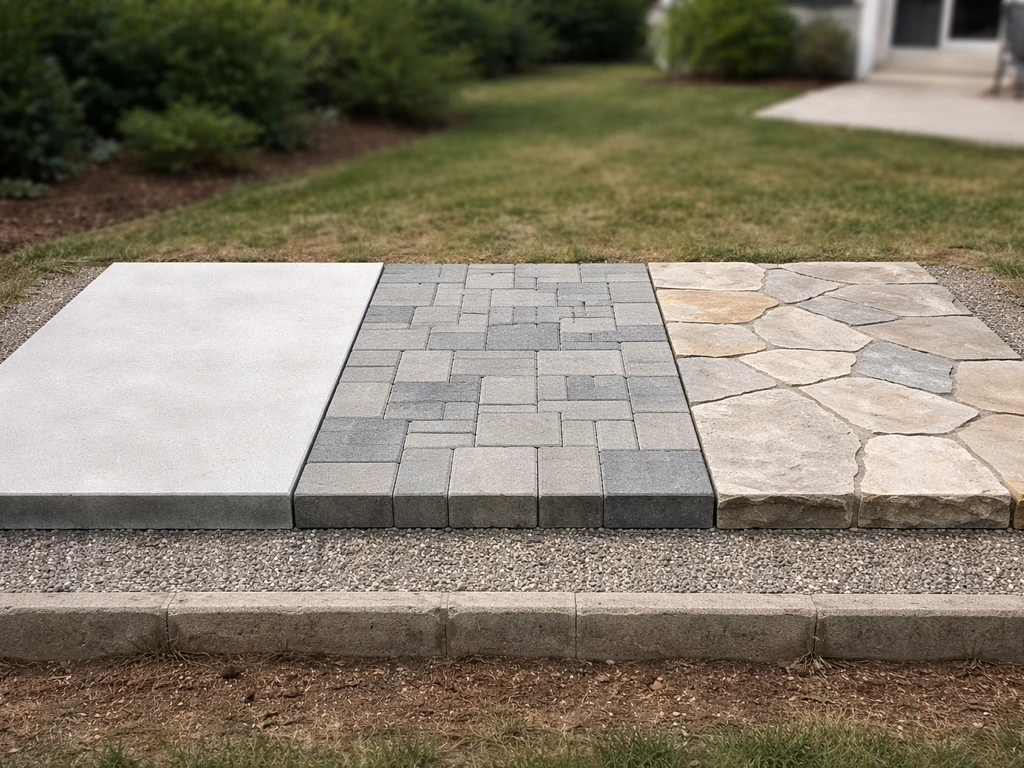
How Much Should I Expect to Pay for a Patio
Patio cost guide with real price ranges by size and material, full line-item budget, DIY vs install, and quote checklist
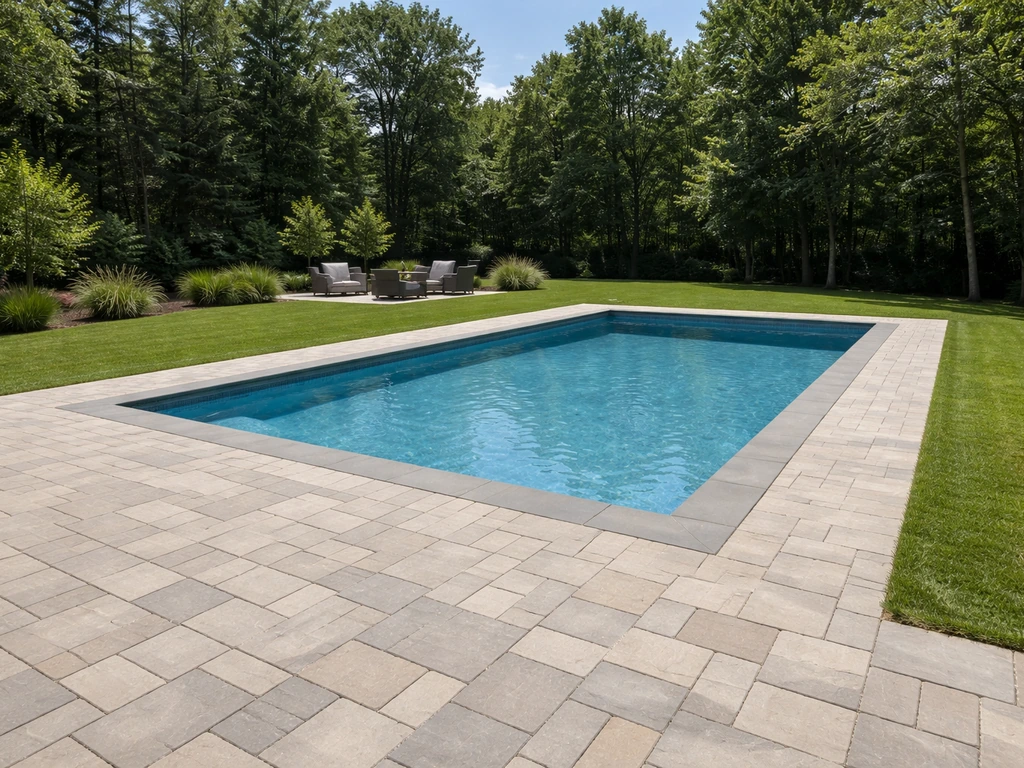
How Much Patio Around Pool: Cost, Size, and Budget Guide
Learn how much patio around a pool costs and how to size square feet, materials, extras, and get real bid line items.