
Concrete is cheaper to install than brick, usually by a meaningful margin. A poured concrete patio typically runs $6 to $17 per square foot installed, while a brick paver patio runs $14 to $24 per square foot. Concrete Network's Jan 2026 update lists a typical poured concrete patio (≈288 sq ft) costing about $3,200, roughly $11 per sq ft (blank" rel="noopener noreferrer">Concrete Patio Cost - ConcreteNetwork). On a 20x20 patio, that difference can be $3,200 or more. But brick tends to last longer, repairs are easier, and it holds its value better over time, so the cheapest upfront option isn't always the cheapest over a decade of ownership. For a quick, side-by-side answer to this question, see is a brick or concrete patio cheaper for a direct cost comparison.
Brick Patio vs Concrete Cost: Per-Sqft Prices, Project Guide

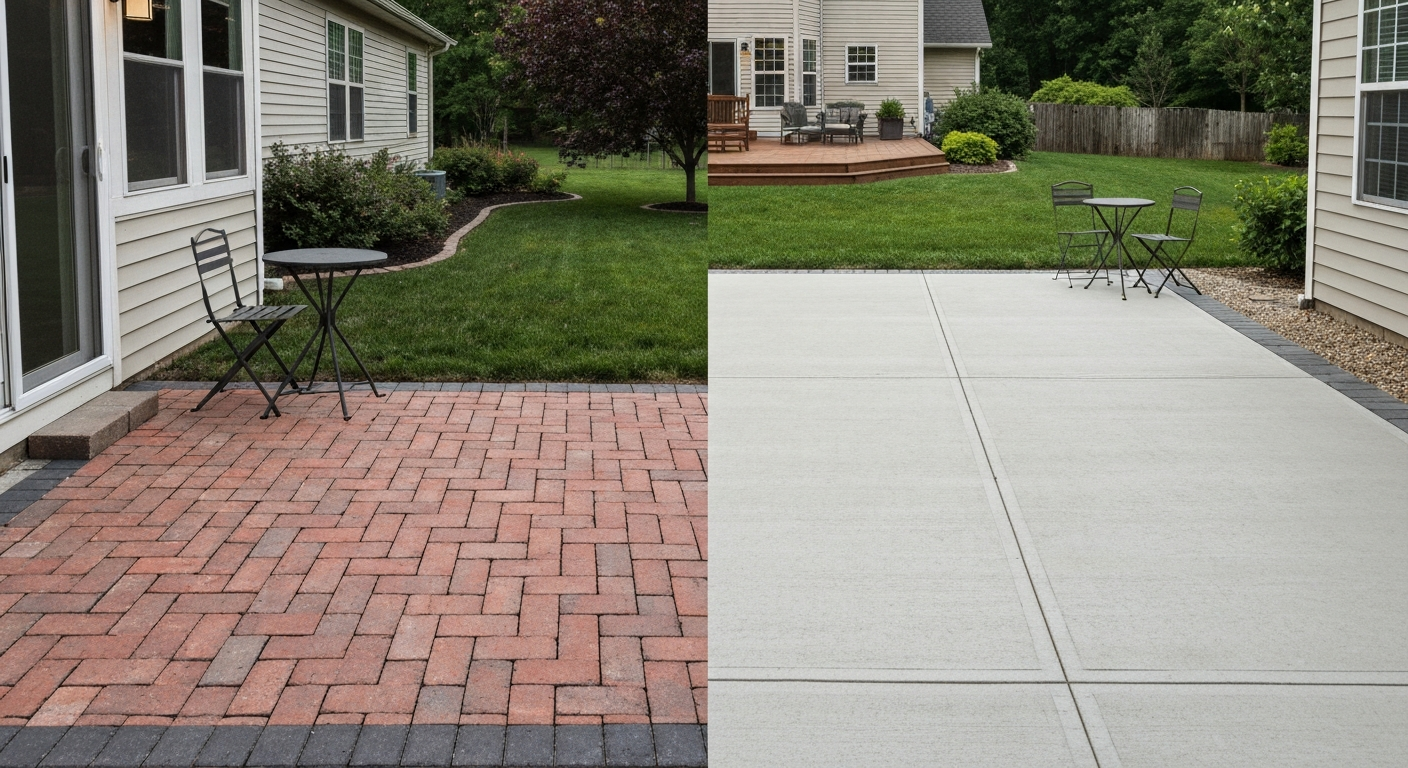
At-a-glance pricing for common patio sizes
The table below uses national installed cost ranges from 2026 pricing data, brick paver at $14 to $24 per sq ft and poured concrete at $6 to $17 per sq ft. These numbers include materials and labor but not major extras like drainage systems, demolition of an existing slab, or decorative stamping on the concrete side.
| Patio Size | Sq Ft | Brick Paver Installed | Poured Concrete Installed |
|---|---|---|---|
| 10x10 | 100 | $1,400 – $2,400 | $600 – $1,700 |
| 12x12 | 144 | $2,016 – $3,456 | $864 – $2,448 |
| 15x15 | 225 | $3,150 – $5,400 | $1,350 – $3,825 |
| 12x20 | 240 | $3,360 – $5,760 | $1,440 – $4,080 |
| 20x20 | 400 | $5,600 – $9,600 | $2,400 – $6,800 |
| 20x30 | 600 | $8,400 – $14,400 | $3,600 – $10,200 |
A few things stand out here. First, the ranges are wide, especially for concrete, where plain broom-finish sits at the low end and stamped or colored decorative finishes push toward the high end. Second, a 20x20 stamped concrete patio can cost as much as a basic brick paver patio. Third, if you're comparing a plain concrete slab against budget brick pavers, the gap is largest, around $3,200 on a 20x20 project.
What the per-square-foot price actually includes (and what it doesn't)
When a contractor quotes you $14 per sq ft for brick pavers or $10 per sq ft for concrete, that typically covers materials (bricks or ready-mix), basic excavation a few inches deep, a compacted gravel sub-base, installation labor, and basic edging. What it usually does not cover: permit fees (which vary by municipality but commonly run $100 to $500 for a patio), demolition of an existing concrete slab (typically $2 to $6 per sq ft on its own), French drains or significant regrading, decorative finishes beyond a standard broom or basic joint sand, and steps or seat walls.
One thing homeowners consistently underestimate is site prep. If your yard is sloped, has soft soil, tree roots, or poor drainage, those conditions can push the total project cost up by 20 to 40 percent compared to a clean, flat site. Always ask your contractor to walk the site and give you a written scope that separates materials, labor, and prep, it's the only way to compare quotes apples-to-apples.
Material costs broken down
Brick and clay pavers
Clay brick pavers in material-only terms typically run $2 to $8 per sq ft at the contractor or wholesale level, depending on the unit size, profile, and manufacturer. Some premium clay paver SKUs from suppliers like Mutual Materials are priced around $8 to $9 per sq ft at wholesale pallet pricing. At big-box retailers like Home Depot and Lowe's, you'll often find concrete pavers (not clay bricks) in the $2 to $6 per sq ft range, these are cheaper than clay but behave differently and fade over time. True clay brick is a step up in both cost and durability. Budget for 5 to 10 percent extra material to cover cuts and waste.
Poured concrete
For a poured concrete slab, material cost is dominated by ready-mix concrete. Delivered ready-mix runs roughly $125 to $175 per cubic yard nationally. A 20x20 patio at a standard 4-inch thickness uses about 5 cubic yards, putting raw material cost around $625 to $875 before labor and prep. For small DIY patches, bagged concrete (Quikrete 80-lb bags run about $6.48 at Home Depot; Sakrete is about $8.47 at Lowe's) is convenient but expensive, 45 bags make one cubic yard, so you're paying well above ready-mix rates once the project exceeds a few hundred square feet.
Stamped and colored concrete
Stamped concrete costs $8 to $28 per sq ft installed, and exposed-aggregate finishes typically run $7 to $18 per sq ft. These decorative options narrow the gap with brick significantly. If you're pricing stamped concrete to mimic the look of pavers or stone, compare it honestly against the real thing, sometimes the difference in total project cost is smaller than expected, especially once you factor in that stamped concrete can crack and is harder to repair than individual bricks.
| Material Type | Material Only (per sq ft) | Installed Range (per sq ft) |
|---|---|---|
| Clay brick pavers | $2 – $8 | $14 – $24 |
| Concrete pavers (big-box) | $2 – $6 | $10 – $20 |
| Poured concrete (plain) | $1 – $3 | $6 – $12 |
| Stamped/colored concrete | $2 – $5 (additives/stamps) | $8 – $28 |
| Exposed-aggregate concrete | $1 – $4 | $7 – $18 |
Labor costs: what crews charge and why
Labor is where brick and concrete diverge most sharply. Paver installation is hands-on, time-intensive work, setting individual units, keeping courses level, cutting edges, and compacting joint sand. Crews typically charge $4 to $11 per sq ft for labor alone on a paver job, and local installers commonly bill $50 to $80 per hour. A 200 sq ft patio might take a two-person crew two to three full days, meaning 30 to 50 labor hours in total.
Poured concrete labor is faster but requires specific timing and equipment. The pour itself may take only a few hours for a small patio, but forming, finishing, curing, and cleanup add up. Concrete labor runs roughly $2 to $5 per sq ft for a plain slab, with decorative finishes (stamping, exposed aggregate, coloring) pushing that up to $6 to $15 per sq ft in additional labor. Stamped concrete in particular is skilled work, a good stamped concrete finisher commands a real premium and there are fewer of them than paver crews in most markets.
Regional labor rates matter a lot. A crew in the Southeast or Midwest might charge $50 to $60 per hour while the same job in coastal California or New York metro runs $75 to $100 per hour. That alone can shift your total project cost by 15 to 25 percent compared to a national average estimate.
Base and site preparation costs
Neither a brick patio nor a concrete patio works well without a proper base, and this is an area where corners get cut on budget jobs. A well-built brick paver patio requires 4 to 6 inches of compacted gravel sub-base, plus a 1-inch layer of bedding sand. Concrete slabs need 4 inches of compacted sub-base gravel as well, plus wire mesh or rebar reinforcement. Skipping or shortcutting the base is the single most common reason patios crack, heave, or sink within a few years.
Crushed stone or gravel sub-base material typically costs $20 to $45 per ton or $25 to $50 per cubic yard delivered. A 20x20 patio with 5 inches of base material needs roughly 3 to 4 tons of aggregate. Add excavation labor (usually $50 to $75 per hour for a skid-steer operator) and you're looking at $600 to $1,500 just for base and excavation on a mid-size patio, before a single brick or drop of concrete is placed.
Demolition of an existing concrete slab adds another layer of cost. Expect $2 to $6 per sq ft to break up, remove, and haul away an old slab. On a 20x20 project, that's $800 to $2,400 before any new work begins. It's worth asking whether the existing slab can be used as a sub-base for new pavers in some cases, an experienced contractor can evaluate whether that's structurally sound.
Drainage, grading, and waterproofing
Drainage is one of the most commonly overlooked line items in patio quotes, and getting it wrong can mean water pooling against your foundation or a patio that heaves and settles within a few seasons. Any patio should slope away from the house at a minimum of 1/8 to 1/4 inch per foot. If your yard doesn't naturally grade that direction, grading work adds cost.
For areas with heavy rainfall, clay soil, or low-lying lots, a French drain running along the patio edge is often necessary. A basic French drain installation runs $10 to $25 per linear foot, so even a modest 20-foot run along the back edge of a patio adds $200 to $500 to the project. More complex drainage systems (channel drains, dry wells, or landscape redirections) can push that to $1,000 or more.
Brick pavers have a natural advantage here: the joints between individual units allow some water to percolate through the surface rather than run off. Permeable paver systems, where the sub-base is specifically designed for infiltration, take this further, but add cost. Poured concrete is impermeable by nature, so proper slope and edge drainage are non-negotiable. A concrete patio poured flat or with water-trap areas will crack faster as freeze-thaw cycles put stress on standing water at the surface.
Sealing is a related cost to plan for. Concrete patios benefit from sealing every 2 to 3 years (roughly $0.25 to $0.75 per sq ft for a DIY sealer, or $1 to $3 per sq ft professionally applied). Brick pavers should be sealed every 3 to 5 years to protect color and stabilize joints ($1 to $3 per sq ft professionally). It's not optional if you want the surface to last.
DIY vs. hiring a contractor
DIY brick paver installation is genuinely achievable for a patient homeowner with a free weekend and a willingness to rent equipment. The main tools are a plate compactor (rental: $60 to $100 per day), a wet saw for cuts ($60 to $100 per day), and a hand tamper. On a 10x10 or 12x12 patio, a DIY install can save $600 to $1,500 in labor. On a 20x20, that savings could be $2,000 to $4,000, meaningful money.
The risks are real though. If the base isn't compacted properly or the slope is wrong, you'll be pulling up and resetting pavers within a few years. The base work is actually harder than the paving itself. Most DIY paver failures come from under-compacted sub-base or not running a proper string-line grade across the whole area.
DIY poured concrete is a different story. Mixing, pouring, screeding, and finishing a concrete slab is genuinely difficult to do well. Ready-mix trucks arrive fast and concrete sets on its own timeline, not yours. A poorly finished concrete slab is hard to undo. Unless you have hands-on experience with concrete work, professional installation is strongly recommended for slabs larger than about 50 to 100 sq ft. The math on DIY concrete savings is also less compelling because labor for concrete is already a smaller share of total project cost.
| Factor | DIY Brick Pavers | DIY Concrete | Professional (Either) |
|---|---|---|---|
| Realistic for beginners? | Yes, with care | Risky above ~100 sq ft | Yes |
| Labor savings potential | $1,500 – $4,000+ on 20x20 | $500 – $1,500 on 20x20 | N/A |
| Equipment rental needed | $150 – $300/weekend | $100 – $200 (forms, tools) | Included in quote |
| Risk if done poorly | Uneven pavers, resettable | Cracked/ugly slab, hard to fix | Warranty typical |
| Time required (20x20) | 2 – 3 weekends | 1 intensive weekend | 2 – 4 days |
Regional cost variations
National averages only get you so far. Labor rates, material transportation costs, and local demand all shift the numbers substantially by region. In the Southeast and Midwest, plain concrete slabs can run as low as $7 to $10 per sq ft installed. On the West Coast or in the Northeast, the same job commonly runs $12 to $17 per sq ft. Brick paver projects show similar regional variation, a job priced at $15 per sq ft in Texas might be $22 per sq ft in the Pacific Northwest.
Climate also affects what materials make sense. In freeze-thaw zones (most of the northern US), concrete slabs are more vulnerable to cracking over time than brick pavers, which flex individually. In very hot, arid climates like the Southwest, both materials hold up well but UV fading is a bigger concern for concrete colorings. These regional durability factors affect long-term maintenance cost and should factor into the material decision alongside upfront price.
Maintenance, lifespan, and real long-term costs
A well-installed brick paver patio can last 25 to 50 years or more with basic maintenance. Individual bricks that crack, shift, or stain can be replaced without disturbing the whole patio, this is a genuine advantage. Typical ongoing maintenance includes occasional re-sanding of joints (every 3 to 7 years, roughly $0.50 to $1.50 per sq ft), sealing, and re-leveling any settled sections.
A poured concrete patio typically lasts 20 to 30 years before major repairs are needed. Hairline cracking is common and usually cosmetic, but larger cracks and spalling require patching. Patching poured concrete successfully is hard, patches tend to look patchy, and color matching is nearly impossible. If a decorative stamped surface cracks significantly, repair costs can run $500 to $2,000 or more for a mid-size patio. At some point, the practical option is to resurface the entire slab (a concrete overlay runs $3 to $7 per sq ft) or demo and repour.
| Category | Brick Pavers | Poured Concrete |
|---|---|---|
| Typical lifespan | 25 – 50+ years | 20 – 30 years |
| Repairability | High (replace individual units) | Low (patches visible) |
| Sealing frequency | Every 3 – 5 years | Every 2 – 3 years |
| Freeze-thaw resilience | High (flexible joints) | Moderate (can crack) |
| Avg upfront cost (20x20) | $5,600 – $9,600 | $2,400 – $6,800 |
| Likely 20-year maintenance | $800 – $2,000 total | $1,000 – $3,500 total |
When you factor in long-term maintenance, the total cost of ownership over 20 years for a brick patio versus a plain concrete patio isn't as dramatically different as the upfront numbers suggest. A $5,000 brick patio that needs $1,500 in maintenance over 20 years compares reasonably to a $3,000 concrete slab that needs $2,500 in repairs and a reseal program over the same period.
How brick and concrete compare to other patio materials
Concrete and brick aren't the only options on the table. For a direct comparison of stone and concrete pricing, see stone patio vs concrete cost. Flagstone and natural stone patios typically run $20 to $35 or more per sq ft installed, beautiful, but a step above brick in both cost and installation complexity. Wood decks vary widely but often land in the $15 to $30 per sq ft range for pressure-treated lumber, and composite decks can exceed $40 per sq ft. For a side-by-side comparison of concrete vs wood patio cost, see concrete vs wood patio cost for typical installed ranges and long-term maintenance differences. Wood is the right choice when you're dealing with significant grade changes or want a raised structure rather than an at-grade surface.
For homeowners comparing all these options side by side, a full patio materials cost comparison is worth running before committing to any one material. The right choice depends on your budget, local climate, yard conditions, and how much maintenance you're willing to do. Concrete is the entry-level option for tight budgets; brick is the mid-range sweet spot for longevity and repairability; flagstone and stone are the premium tier.
Don't forget steps and edges
If your patio is elevated from the yard or connects to the house at a different grade, steps are likely required. Patio steps in brick or concrete pavers typically cost $100 to $300 per step installed, depending on width and material. A single landing step at the back door adds perhaps $150 to $250 to the project. A full three-step entry from the house adds $450 to $900 or more. These small additions add up and are often omitted from initial contractor ballpark quotes.
Edge restraints are another small but real cost: plastic or aluminum edge restraint for pavers runs $1 to $2 per linear foot installed. On a 20x20 patio, that's 80 linear feet of perimeter, adding $80 to $160 to the job. For concrete, wood or metal forming is typically included in the pour price but isn't always broken out in quotes.
How to choose: a simple decision framework
Here's a practical way to think through the choice without overcomplicating it.
- Choose plain poured concrete if your budget is tight, your yard is flat and well-drained, you plan to cover most of it with furniture, and you're okay with a utilitarian look.
- Choose stamped or decorative concrete if you want a concrete price point but want more visual appeal — and you understand that decorative finishes narrow the cost gap with brick considerably.
- Choose brick pavers if longevity and repairability matter, you're in a freeze-thaw climate, you want a classic look that holds resale value, or you're planning a DIY install and want a forgiving material.
- Choose flagstone or natural stone if budget is not the primary driver and you want a premium, natural look — especially useful when comparing against the stone patio vs concrete cost trade-off.
- Choose wood or composite decking if your yard has a significant slope, you want a raised surface, or you're comparing patios against a deck and prefer the feel of wood underfoot.
Budgeting worksheet: what to price before you call a contractor
Before you call anyone for a quote, put together a basic scope document. This takes 20 minutes and will save you hours of confusion when comparing bids.
- Measure your desired patio footprint in square feet (length x width). This is your baseline number for all per-sq-ft math.
- Note your existing site conditions: is there an existing slab to demo? Is the ground sloped toward the house? Any drainage issues?
- Decide on material (brick, concrete, stamped concrete) and finish level before calling — vague requests get vague quotes.
- Ask each contractor to break out: materials, labor, excavation/base prep, and any drainage work as separate line items.
- Get at least three quotes. The spread between low and high bids for the same scope is often 30 to 50 percent — that spread is real and worth investigating.
- Add a 10 to 15 percent contingency to your working budget for unexpected site conditions, permit fees, and small add-ons like steps.
- Check your municipality for permit requirements. Patios under a certain size (commonly under 200 sq ft or not attached to the structure) often don't require a permit, but verify this before starting.
Using a patio cost calculator before calling contractors gives you a realistic price anchor so you know immediately whether a quote is in the right ballpark or needs more scrutiny. It also helps you have a sharper conversation with contractors about where costs are coming from.
FAQ
Which is cheaper overall: brick patio or poured concrete patio?
Generally poured concrete is cheaper for basic slabs. Typical installed ranges: poured concrete ≈ $6–$17 per sq ft (plain finish baseline); brick (clay) pavers ≈ $12–$24 per sq ft installed (materials + labor). Concrete has the lower entry price; decorative concrete (stamped/colored/exposed aggregate) can approach or exceed paver costs.
What are typical per-square-foot and per-project pricing ranges for common patio sizes?
Use these installed (materials + labor) ranges as a planning band: - Poured concrete: $6–$17 / sq ft. Examples: 10x10 (100 sq ft) $600–$1,700; 12x12 (144) $864–$2,448; 12x20 (240) $1,440–$4,080; 20x20 (400) $2,400–$6,800; 20x30 (600) $3,600–$10,200. - Brick/brick pavers: $12–$24 / sq ft (typical industry band varies $10–$24). Examples: 10x10 $1,200–$2,400; 12x12 $1,728–$3,456; 12x20 $2,880–$5,760; 20x20 $4,800–$9,600; 20x30 $7,200–$14,400. These are planning estimates—local quotes may vary.
What cost components make up a patio installation?
Major line items: - Materials: concrete mix or pavers/bricks, sand, jointing compound, edge restraints. - Base & site prep: excavation, subbase (crushed stone/3/4"), compaction. - Labor: installation crews, formwork, finishing, paving patterns. - Drainage & grading: slope, drains, catch basins. - Edging/retaining: metal/plastic/stone edging, curbs. - Reinforcement: rebar/mesh (concrete), geotextile fabric (pavers). - Finishes: sealing, stamping, coloring, exposed aggregate. - Accessories: steps, risers, lighting. - Permits and inspection fees. Expect base/prep and labor to be large shares—often 40–70% of total cost depending on complexity.
How do material-only prices compare (bricks, pavers, concrete)?
Material-only benchmarks: - Clay/brick pavers: ~$2–$8 per sq ft retail; some wholesale SKUs near $8+/sq ft depending on product. - Concrete (ready-mix): ~ $125–$175 per cubic yard delivered; small projects using 80-lb bags cost more per unit (bag ~$5–$9). For a 4" slab, 1 cu yd covers ~81 sq ft; multiply to estimate $/sq ft for plain slab material (rough guide only). - Base aggregate: crushed stone typically $20–$50 per ton (or $25–$50 per cu yd) delivered. Material costs vary by region, volume, and product.
What increases costs for concrete patios (what makes concrete as expensive as pavers)?
Premium options that raise concrete costs: stamped or colored concrete, exposed aggregate, complex control joints, decorative borders, heavy reinforcement, significant forming on slopes, integrated steps, and tight schedules. Stamped/colored concrete often runs $8–$28 / sq ft installed; complex patterns and finishing labor push the price toward or above paver ranges.
How should I compare brick vs stone vs flagstone vs wood for patio cost?
Rough installed ranges (national planning bands): - Brick/Concrete pavers: $12–$24 / sq ft installed. - Poured concrete (plain): $6–$17 / sq ft; stamped/colored $8–$28. - Natural flagstone/stone: $20–$45+ / sq ft (material and labor high; irregular shapes increase labor). - Wood (deck-style surface at grade): $10–$30+ / sq ft depending on species/treated lumber/composite and substructure. Choose by aesthetic, budget, durability, and maintenance. Stone tends to be highest, plain concrete the lowest.
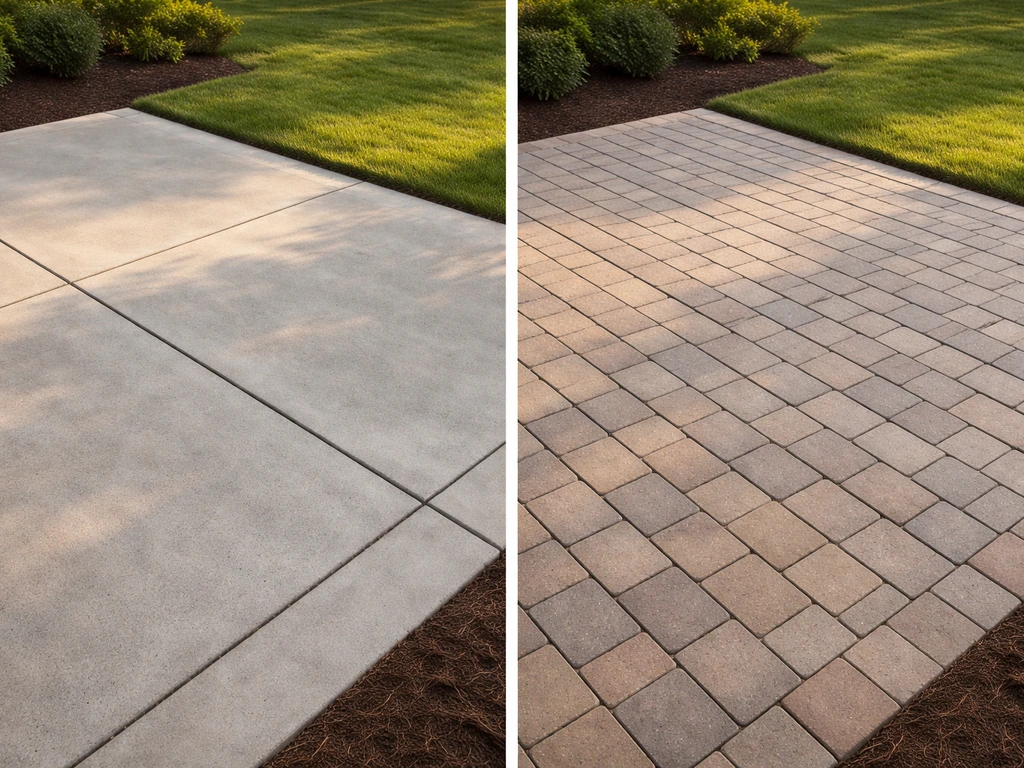
Compares installed costs of brick vs concrete patios, with cost breakdowns, typical sizes, and a budget checklists.
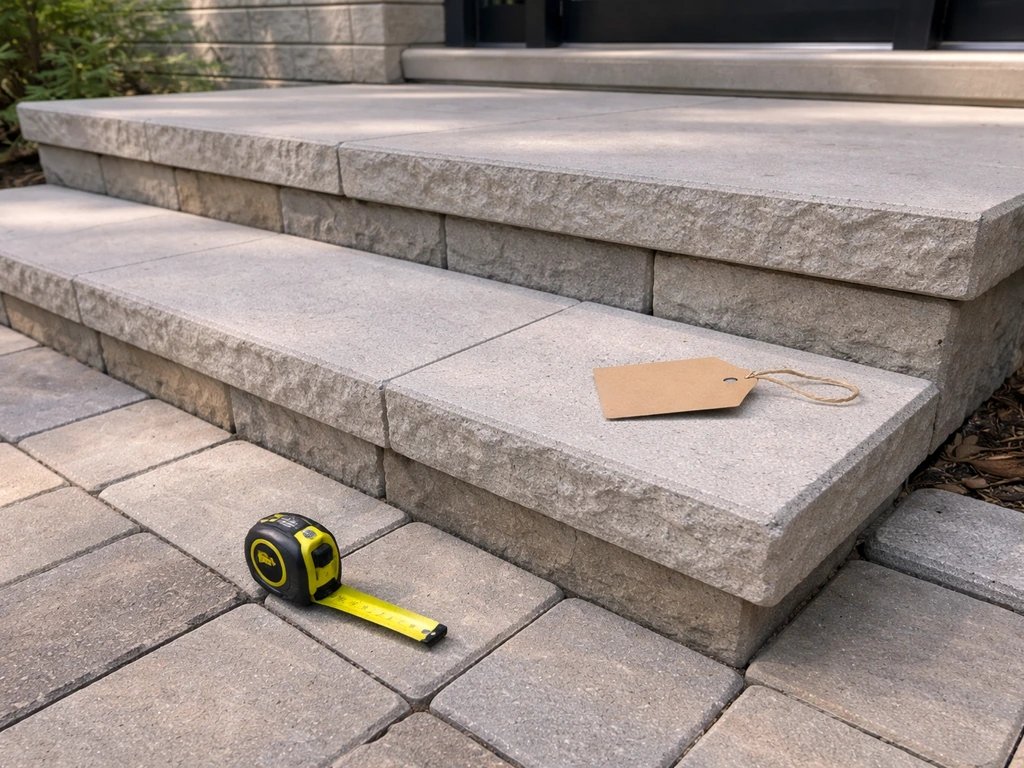
All-in patio steps cost breakdown by materials and labor, DIY vs install tips, budgeting ranges for common patio sizes.
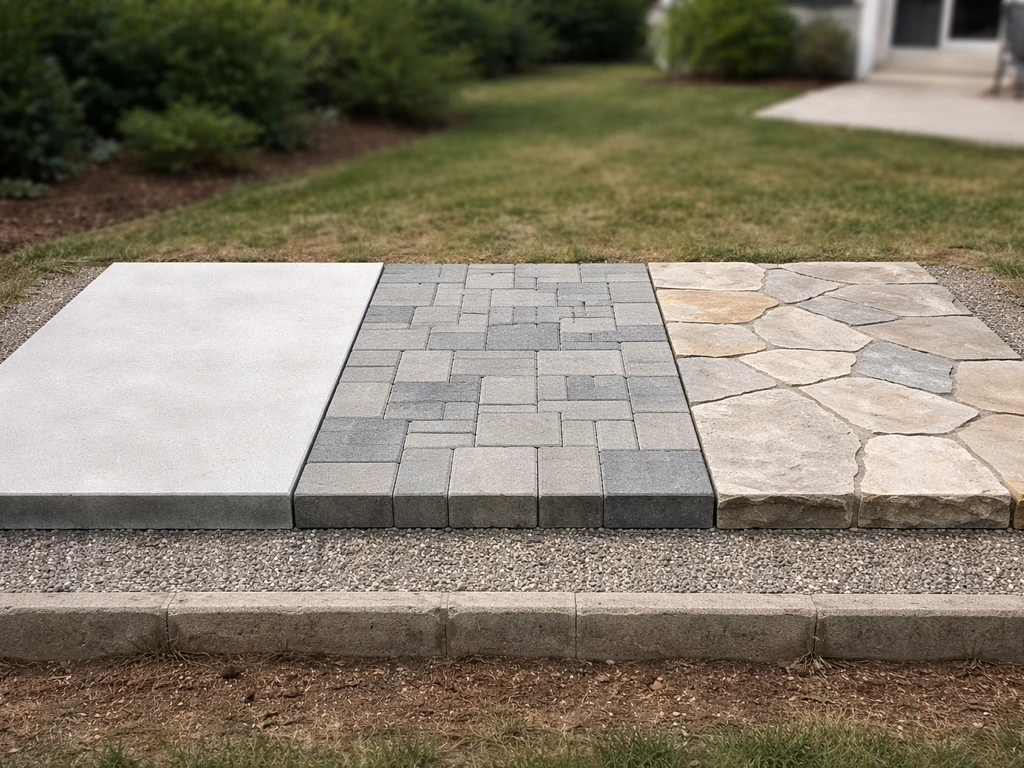
Patio cost guide with real price ranges by size and material, full line-item budget, DIY vs install, and quote checklist