
Concrete is almost always cheaper than brick for a patio. A plain poured concrete patio runs about $5–$12 per square foot installed, while a brick paver patio typically costs $14–$40 per square foot installed once you factor in base prep, labor, edging, and jointing sand. For a 12x12 patio, that gap can mean paying $720–$1,700 for concrete versus $2,000–$5,800 for brick. If budget is the primary driver, concrete wins. That said, brick holds its own on durability, repairability, and curb appeal, so the right answer depends on more than just the upfront price.
Is a Brick or Concrete Patio Cheaper? Costs Compared

Felix Carver
6 Jul 2026
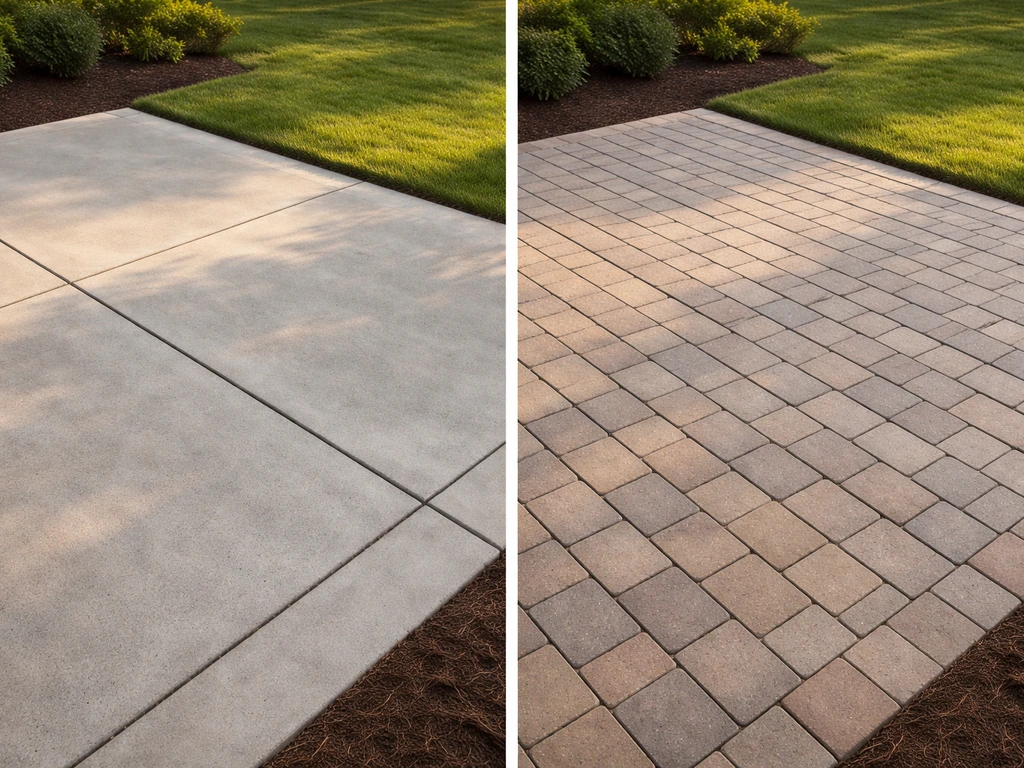
Quick bottom-line comparison: brick vs. concrete
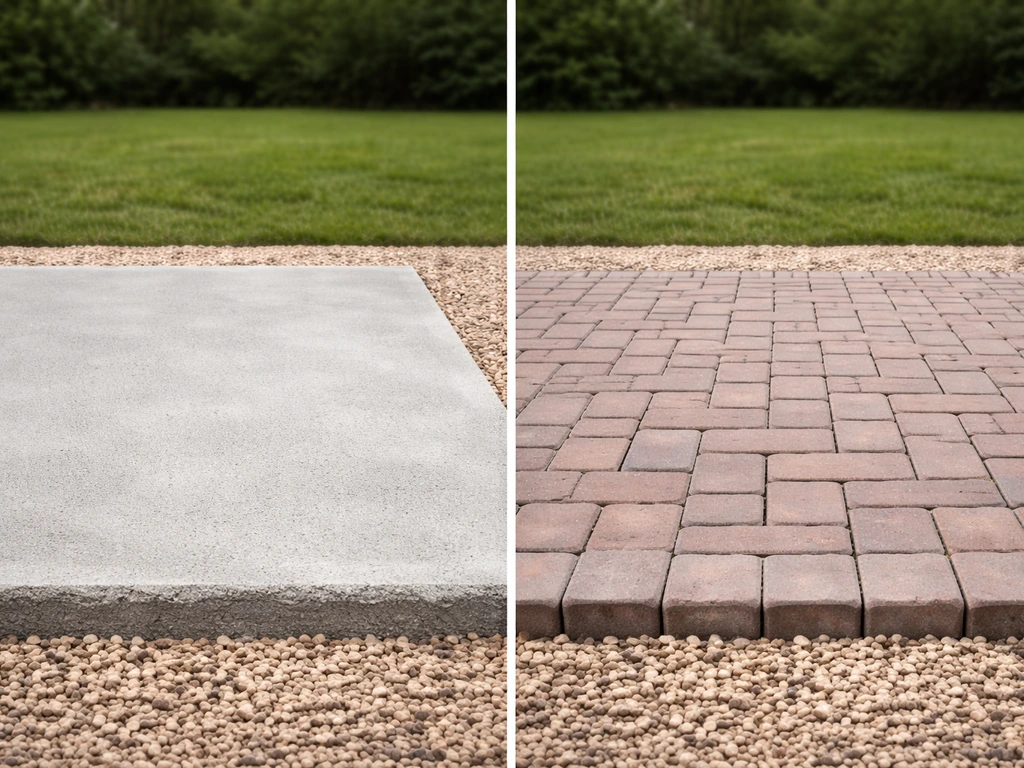
| Factor | Poured Concrete | Brick Paver Patio |
|---|---|---|
| Installed cost per sq ft | $5–$18 | $14–$40 |
| Plain/basic finish | $5–$12/sq ft | $14–$22/sq ft |
| Decorative/premium finish | $8–$30/sq ft (stamped) | $22–$40/sq ft (specialty brick) |
| DIY-friendliness | Moderate (requires forms, mix, cure) | High (no curing, forgiving process) |
| Repairability | Difficult (crack patching is visible) | Easy (swap individual bricks) |
| Typical lifespan | 25–50 years | 25–50+ years |
| Base prep required | 4–6 inches compacted gravel | 4–6 inches compacted gravel + 1 inch sand bed |
| Maintenance | Seal every 2–5 years | Re-sand joints, re-level settled areas |
The biggest cost driver separating the two is labor intensity. Pouring concrete is faster per square foot. Laying brick pavers takes considerably more time because each unit gets set individually, joints need polymeric sand, and edge restraints must be installed around the perimeter. That extra labor is baked into every contractor quote you receive.
Material cost per square foot: what you're actually paying for
Concrete materials
For a standard poured concrete patio, the material cost covers ready-mix concrete (typically a 3,000–4,000 psi mix at 4 inches thick), wire mesh or rebar for reinforcement, and control joint cuts to manage cracking. If you are comparing stone patio versus concrete, the total cost usually hinges on stone type, thickness, and the underlayment and base prep required For a standard poured concrete patio. Raw material alone usually runs $2–$5 per square foot. Labor and base prep make up the rest of the $5–$18 installed range. HomeGuide also lists professional labor for concrete patios as typically $2, $18 per square foot depending on complexity blank" rel="noopener noreferrer">Labor and base prep make up the rest of the $5–$18 installed range.. Add decorative finishes and costs climb: staining or coloring adds $1–$3 per square foot, and stamping can push the total to $8–$30 per square foot installed.
Brick paver materials
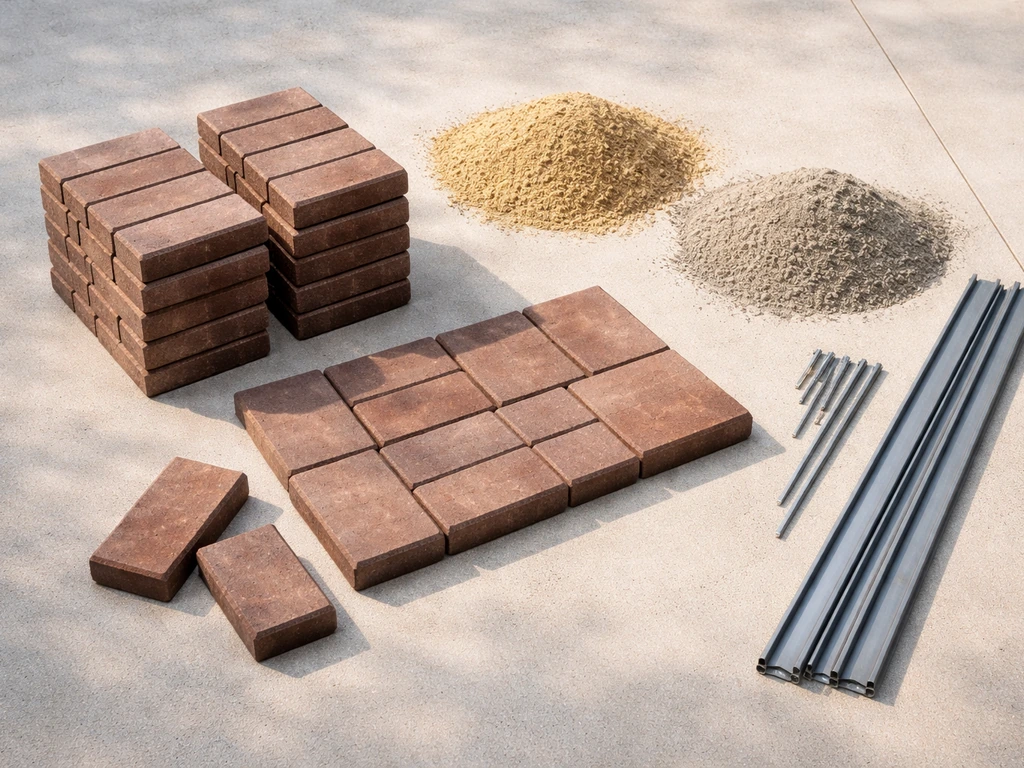
This is where people get tripped up. Brick paver material alone is often listed at $1–$15 per square foot depending on the source and paver type, which sounds like it might be competitive with concrete. But that number is just the units sitting in a pallet at the supplier. Once you add the compacted gravel base, bedding sand (about 1 inch of leveling sand goes over the base before pavers are set), polymeric jointing sand for the joints, plastic or metal edge restraints, and spiked anchors every 12 inches, your material total climbs fast. A realistic all-in material cost for a standard brick paver patio is $6–$18 per square foot before a contractor touches it.
Installation cost breakdown: base, labor, and finishes
Base preparation (both options need this)
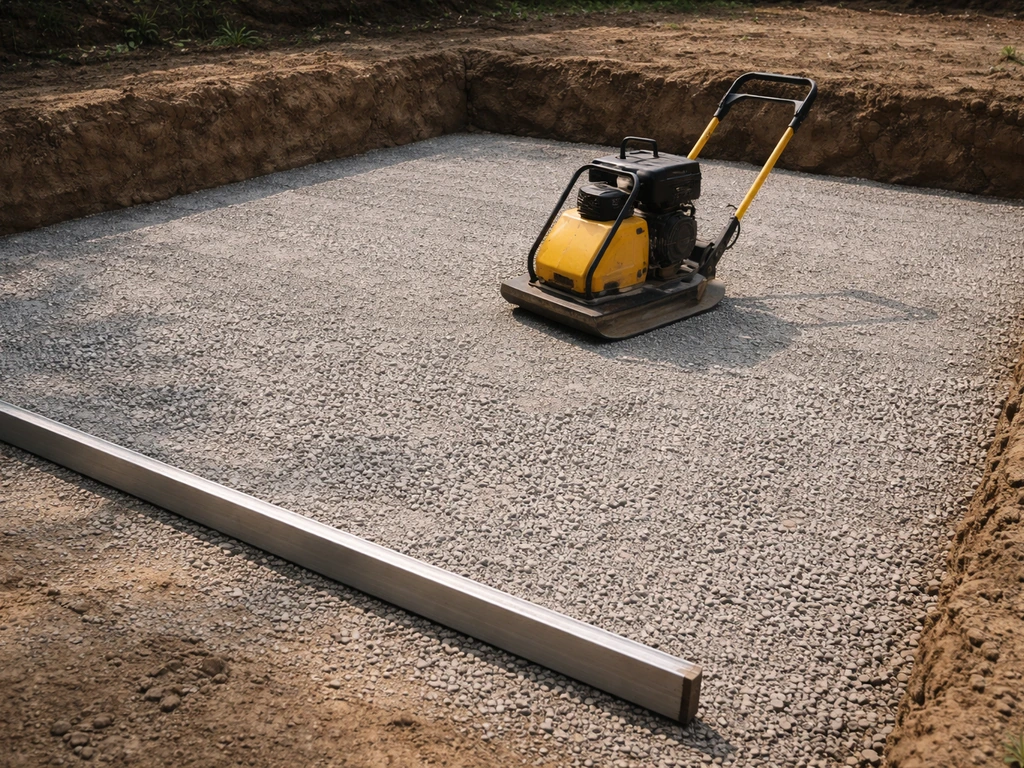
Both concrete and brick patios require a properly prepared base, and this is the line item most DIYers underestimate. Per ICPI specifications, pedestrian paver applications need 4–6 inches of compacted aggregate base. Concrete slabs need the same. If your yard has soft soil, poor drainage, or clay that shifts seasonally, you may need 6–8 inches of base plus a geotextile fabric underneath to prevent base migration. Excavation, hauling spoils, and compacting gravel typically adds $1–$3 per square foot to any patio project. Skip or rush this step and you will pay for it later with cracked concrete or sunken pavers.
Labor
Professional labor for a plain concrete pour runs roughly $2–$8 per square foot. For a stamped or decorative pour, expect $8–$18 per square foot in labor alone. Brick paver labor is consistently higher, typically $8–$15 per square foot for a standard residential project, because of the individual placement, compaction passes, and joint work involved. A contractor also needs to slope the entire surface correctly (generally 1/8 to 1/4 inch per foot away from the house) to handle drainage, and that detail matters just as much for pavers as it does for concrete.
Finish options and their cost impact
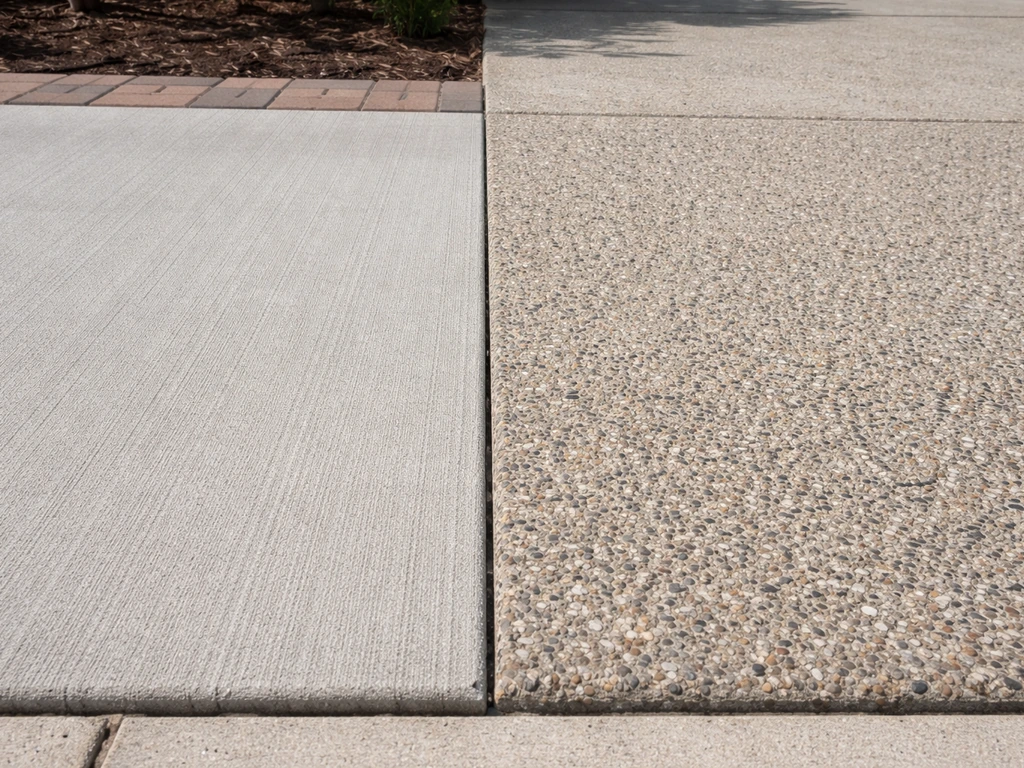
- Plain broom-finish concrete: lowest cost, $5–$10/sq ft installed, very functional
- Exposed aggregate concrete: adds texture and slip resistance, $8–$15/sq ft installed
- Stained or colored concrete: $8–$15/sq ft installed, good visual upgrade at moderate cost
- Stamped concrete: mimics brick or stone look, $12–$30/sq ft installed (some contractors quote $20–$35 for complex patterns)
- Standard clay or concrete brick pavers: $14–$22/sq ft installed
- Premium or specialty brick (tumbled, reclaimed, oversized): $22–$40/sq ft installed
One practical note: if you want the look of brick but are working with a tighter budget, stamped concrete that mimics a brick pattern at $15–$20 per square foot can get you most of the visual appeal at roughly half the price of actual brick pavers. The trade-off is repairability. A cracked stamped slab is hard to fix invisibly; a damaged brick paver just gets swapped out.
Total project cost by patio size
These ranges reflect a professionally installed patio including excavation, base, materials, labor, and basic accessories. Patio steps cost can follow similar pricing drivers, especially labor and base preparation, so it helps to estimate those line items early patio cost. They assume average soil conditions and standard finishes. Costs on the high end reflect premium materials, complex shapes, or higher-cost regions.
| Patio Size | Sq Ft | Plain Concrete (installed) | Stamped Concrete (installed) | Brick Pavers (installed) |
|---|---|---|---|---|
| 10x10 | 100 sq ft | $500–$1,200 | $800–$3,000 | $1,400–$4,000 |
| 12x12 | 144 sq ft | $720–$1,700 | $1,150–$4,300 | $2,000–$5,800 |
| 16x16 | 256 sq ft | $1,280–$3,000 | $2,050–$7,700 | $3,600–$10,200 |
| 20x20 | 400 sq ft | $2,000–$4,800 | $3,200–$12,000 | $5,600–$16,000 |
| 20x30 | 600 sq ft | $3,000–$7,200 | $4,800–$18,000 | $8,400–$24,000 |
For a 20x20 concrete patio specifically, most published data aligns around $3,200–$7,200 installed for a basic to mid-grade finish, which tracks with the per-square-foot ranges above. Once you move into stamped or heavily decorative work, costs can exceed $12,000 for that same footprint, which starts overlapping with brick paver pricing. At that upper end, brick pavers often become the smarter investment because they hold value longer and are easier to maintain. For a more exact budget, compare concrete patio costs versus flagstone patio costs by size and finish level brick pavers often become the smarter investment.
DIY vs. contractor: when it saves money and when it doesn't
DIY brick pavers
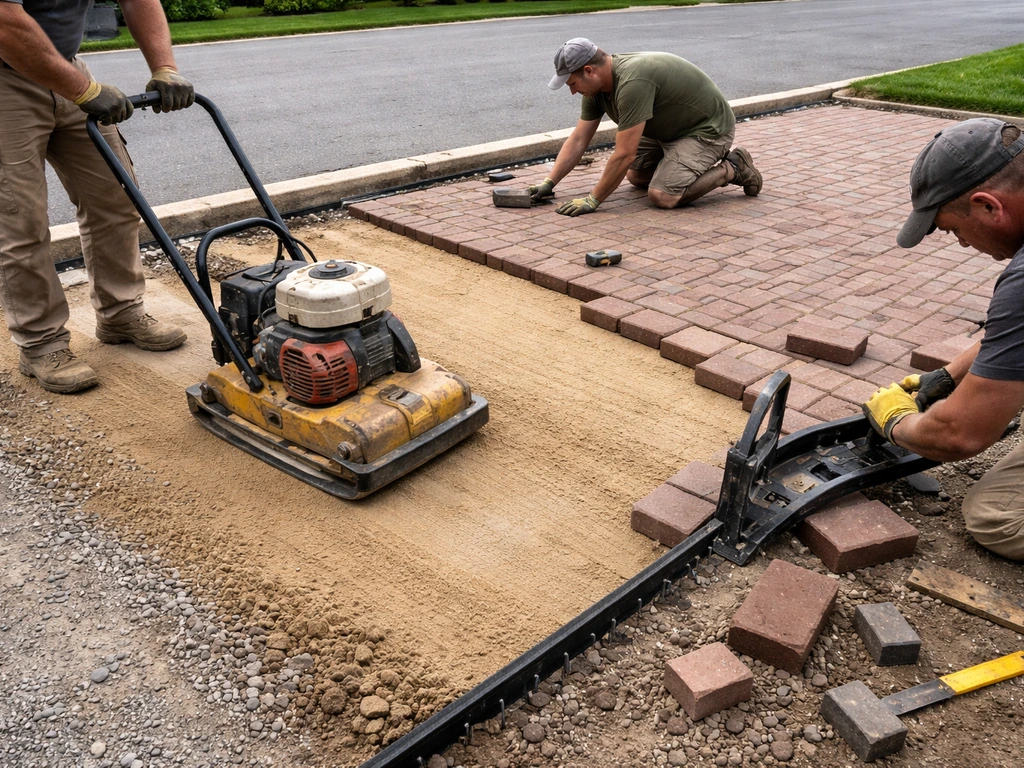
Brick paver installation is genuinely DIY-friendly compared to concrete. You can rent a plate compactor, buy your own base gravel, sand, pavers, and edge restraints, and install a solid 10x10 or 12x12 patio over a weekend. No curing wait, no forms to build, no concrete truck to schedule. DIY material costs for a standard brick patio typically land around $6–$12 per square foot, cutting the total cost roughly in half versus hiring a contractor. On a 12x12 patio, that is a savings of $1,000–$3,000.
DIY concrete
DIY concrete is trickier. Mixing and pouring concrete correctly at scale (anything larger than a small 6x8 slab) requires experience with forming, screeding, floating, and finishing before the concrete sets. A beginner pouring a 12x12 slab risks an uneven surface, poor drainage slope, or a slab that cracks within a year because the base was not properly compacted or the mix was not right. Concrete also needs adequate curing time: at 7 days you are only at roughly 65–75% of design strength, and foot traffic or furniture loads before full cure can damage the surface. If you want to go DIY on concrete, limit it to small patios and do serious research first.
Common DIY pitfalls on both
- Skimping on base depth: 4 inches of compacted gravel is the minimum for residential patios, and soft or clay-heavy soil may need 6 inches or more
- Poor drainage slope: both concrete and pavers need to pitch away from the house; aim for at least 1/8 inch drop per foot
- Skipping edge restraints on pavers: without them, the edges creep and the field pavers shift over time
- Using regular sand instead of polymeric jointing sand: regular sand washes out and invites weeds; polymeric sand hardens and locks joints
- Underestimating excavation: for a 4-inch slab plus 4–6 inch base, you need to dig 8–10 inches down, and soil removal adds up fast
- Not accounting for material waste: order 5–10% extra pavers to cover cuts and breakage
What drives costs up (or down)
Project-specific factors
- Shape complexity: straight rectangular patios are cheapest; curves, angles, and custom patterns add 15–30% to labor costs
- Soil and drainage conditions: wet, soft, or clay-heavy soil requires deeper excavation and sometimes a geotextile base layer
- Existing concrete removal: demo and haul-away of an old slab typically adds $1–$3 per square foot
- Site access: if equipment cannot reach the backyard easily, expect a 10–20% labor premium
- Edging and steps: adding patio steps or a raised border in matching material adds cost; patio steps can run several hundred to over a thousand dollars depending on the design
Regional price differences
Labor rates vary significantly by region and are the biggest regional cost variable. The Northeast and West Coast (especially California, New York, and the Pacific Northwest) consistently run 20–40% above national averages for patio installation. The South and Midwest tend to be at or below national averages. Material prices fluctuate with local supply, but labor is where you will feel the regional difference most acutely. In a high-cost market, a plain concrete patio that costs $8 per square foot nationally might run $11–$14 per square foot. That same market pushes brick paver installs toward the top of the $14–$40 range.
How to choose what's actually cheaper for your specific project
Here is a straightforward decision framework. Ask yourself these questions before you get a single quote. If you want a concrete vs wood patio cost estimate, compare total installed price for your size, including base prep, labor, and finish options.
- What is your budget ceiling? If you need to keep a 20x20 patio under $5,000 installed, plain concrete is your realistic option. Brick pavers at that size rarely come in under $5,600 even in lower-cost regions.
- Are you doing any of it yourself? If yes, brick pavers are the safer DIY choice and can cut your total cost nearly in half. DIY concrete on anything larger than 100 sq ft carries real risk of a subpar result.
- Do you want the look of brick without the price? Get quotes for stamped concrete with a brick pattern. On a 200–400 sq ft patio, you can often achieve that look for $3,000–$8,000 less than actual pavers.
- How important is repairability? If one area might settle due to tree roots, drainage issues, or heavy furniture, brick pavers let you fix just that section. Concrete repairs are almost always visible.
- What is your soil situation? Heavy clay or wet soil increases base prep costs for both options equally, so it does not change the relative comparison much, but it does push both estimates toward the higher end of their ranges.
- What finish does concrete need to compete aesthetically? If plain broom-finish concrete looks fine to you, it is hands-down cheaper. If you need stamped or heavily decorated concrete to meet your expectations, run the numbers carefully because high-end stamped concrete and entry-level brick pavers can end up in the same price range.
What to ask for in contractor quotes
When you request quotes, ask each contractor to itemize these line items so you can compare apples to apples. Vague lump-sum quotes make it impossible to know what you are actually getting.
- Excavation depth and soil disposal (confirm whether hauling spoils is included)
- Base material: type, depth, and compaction method
- For concrete: mix design (psi rating), thickness, reinforcement (wire mesh or rebar), and control joint placement
- For pavers: paver type and unit price, bedding sand depth, edge restraint brand and spacing, and jointing sand type (polymeric vs. regular)
- Drainage slope specification (ask what pitch they plan for and how they verify it)
- Finish details: for concrete, confirm whether sealing is included and what product; for pavers, confirm whether joint sand is polymeric
- Warranty or workmanship guarantee terms
- Permit costs if required in your municipality
Getting three itemized quotes using this list will quickly show you where contractors differ and give you real leverage to evaluate pricing. If one quote is significantly cheaper, ask specifically which of those line items they reduced or excluded. The most common shortcuts are a shallower base, thinner concrete, or skipping edge restraints on pavers. All three lead to problems within a few years. Beyond concrete and brick, if you are weighing other materials, it is worth knowing how these two compare to stone, flagstone, and other paver options, since each has its own cost curve and trade-offs worth understanding before you commit. If you want a quick patio materials cost comparison, focus on the full all-in material total plus labor for your specific surface size.
FAQ
If brick paver material is cheaper than concrete, is a brick patio still ever more cost-effective?
Usually, concrete. Even when brick paver units look similar in price, the all-in paver total depends on base thickness, edging, and jointing sand. If your budget is tight, ask for the concrete and paver quotes that both include the same base depth, geotextile (if needed), and drainage slope, then compare per-square-foot installed totals.
When can a brick paver patio be cheaper than concrete?
Yes, but only in specific cases. Brick can narrow the gap when you have odd dimensions that make concrete more expensive (extra forming or waste), or when you are doing a smaller area like a landing or short walkway. For a typical full patio footprint, concrete generally stays cheaper because pour and finish are faster.
Which option is cheaper over the life of the patio, concrete or brick?
Concrete tends to be cheaper for the first cost, but pavers can win financially if you anticipate localized damage. With pavers, one cracked or settled area can be lifted and reset. With stamped or dyed concrete, repairing to match color and finish is harder and may require larger patch areas, increasing long-term cost risk.
What hidden line item most affects whether a brick or concrete patio is cheaper?
The base can swing your budget more than the surface material. For both concrete and pavers, the safest comparison is the quote that specifies aggregate thickness, compaction method, and whether geotextile is included. If you have clay soils, poor drainage, or seasonal movement, expect quotes to move toward the higher end (for example, 6 to 8 inches of base plus fabric).
What should I ask contractors so my concrete vs brick patio quotes are truly comparable?
Do not compare based on “pavers only” or “concrete only.” Require an itemized breakdown that includes excavation, haul-off (if any), compacted base, bedding sand, edging restraints, joint polymeric sand (for pavers), and labor to set and finish. Also confirm whether the quote includes slope away from the house (commonly about 1/8 to 1/4 inch per foot).
How do cracking and shifting risk change the true cost of concrete versus brick?
Concrete can crack without necessarily failing, but the cost difference shows up when the repair method is expensive or visible. Ask whether they plan control joints and how they’ll handle expansion joints at the house or near hardscape transitions. For pavers, ask about edge restraint type and anchoring spacing, since those control perimeter movement and long-term settling.
Do steps, landings, and transitions change which patio material is cheaper?
It can, and it often surprises homeowners. If the patio needs to tie into a garage slab, porch step, or existing walkway, labor increases for concrete forming and for precision cutting of pavers. The cheapest quote might omit transitional elements like steps, ramps, or proper jointing details at transitions, so make sure those scope items are defined.
Why do prices for concrete or brick vary so much by location?
Region and crew availability matter. If you are comparing quotes across cities or contractor types, expect labor to be a bigger swing than materials. In high-cost labor markets, both options move upward, but brick usually stays disproportionately higher because installation is more labor intensive.
Is DIY brick patio always cheaper than DIY concrete for a 12x12 space?
DIY pavers can be cheaper because material costs stay within a predictable range and you avoid concrete-specific tasks like forming and full curing logistics. DIY concrete becomes risky when you go beyond small slabs because getting levelness, drainage slope, and finishing timing correct is hard, and mistakes can force costly removal and re-pour.
If I want the look of brick but want to save money, is stamped concrete a smart budget choice?
Stamped concrete can mimic brick visuals, and that can be cheaper upfront, often around the mid-teens per square foot installed depending on complexity. The trade-off is that surface repairs are less forgiving visually, so if you want the lowest total risk, pavers are generally easier to spot-repair without redoing the whole area.
How does drainage planning affect cost and performance for both concrete and brick patios?
Yes, and it starts in the site plan. Ask your contractor to confirm the drainage plan before they quote materials, including where runoff goes and how the surface slope matches existing grades. If drainage is handled poorly, both concrete cracking and paver settling can increase, and then “cheaper” becomes more expensive.
Next Articles
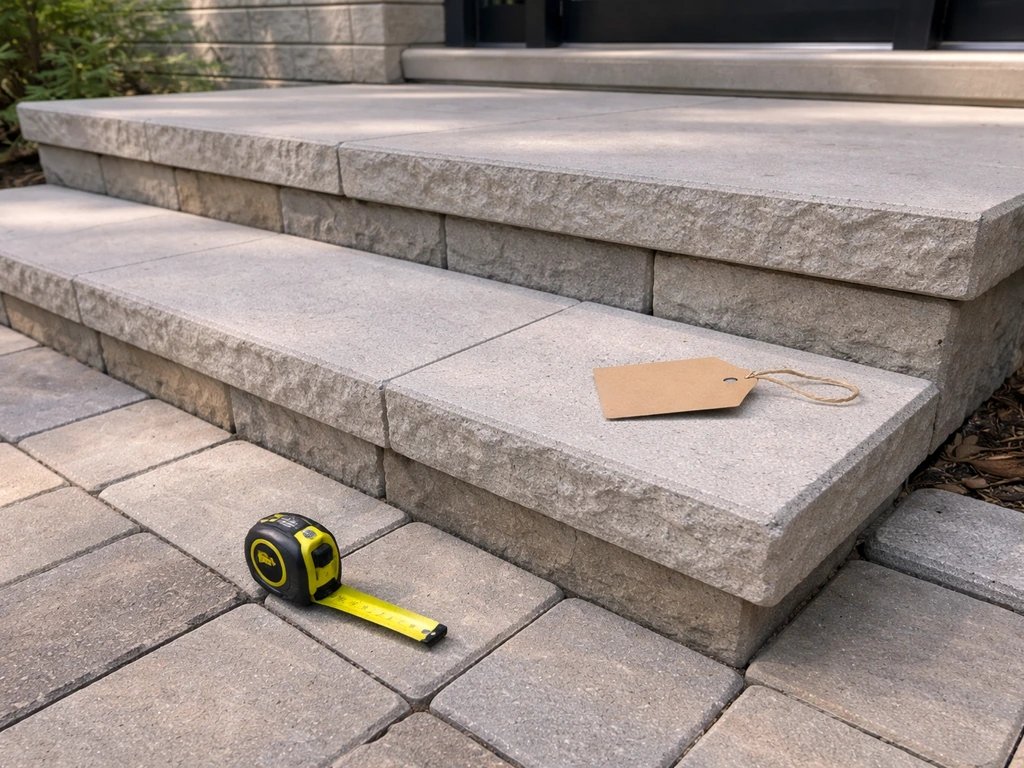
Patio Steps Cost: All-in Pricing, Materials, and DIY Tips
All-in patio steps cost breakdown by materials and labor, DIY vs install tips, budgeting ranges for common patio sizes.
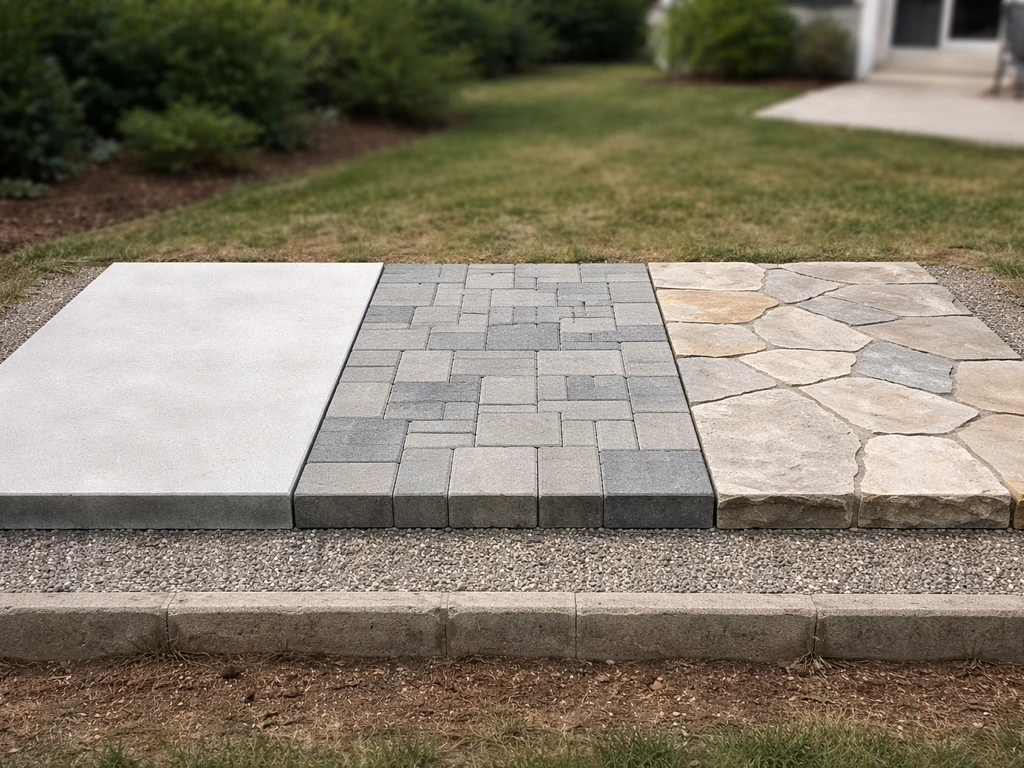
How Much Should I Expect to Pay for a Patio
Patio cost guide with real price ranges by size and material, full line-item budget, DIY vs install, and quote checklist
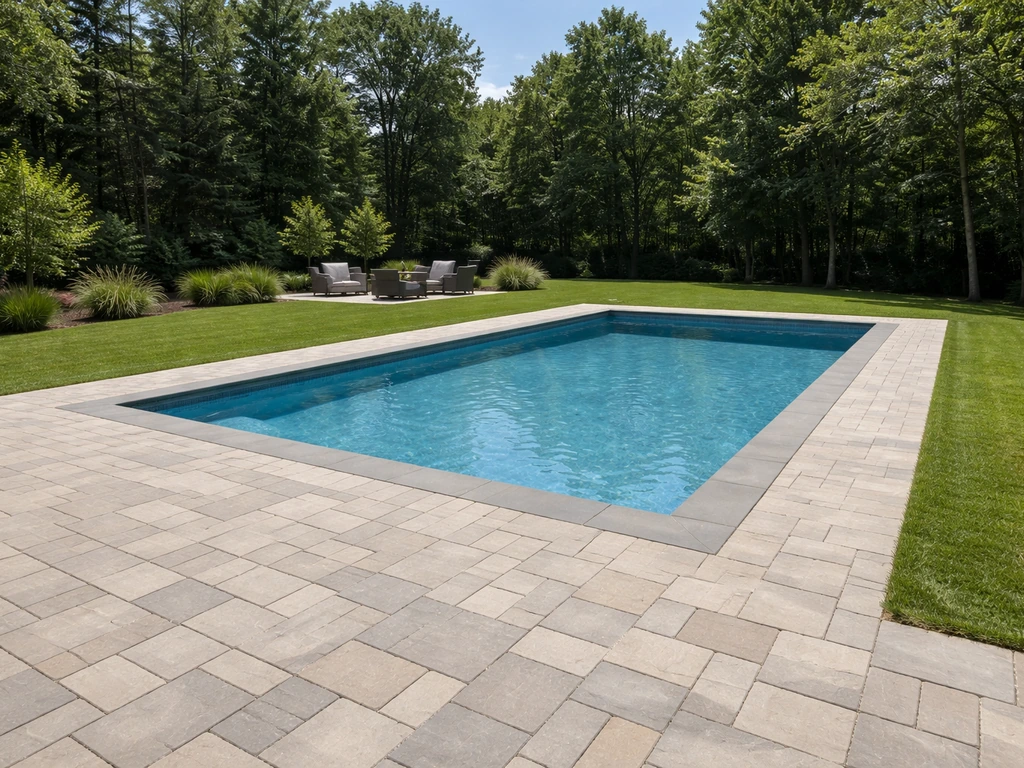
How Much Patio Around Pool: Cost, Size, and Budget Guide
Learn how much patio around a pool costs and how to size square feet, materials, extras, and get real bid line items.