
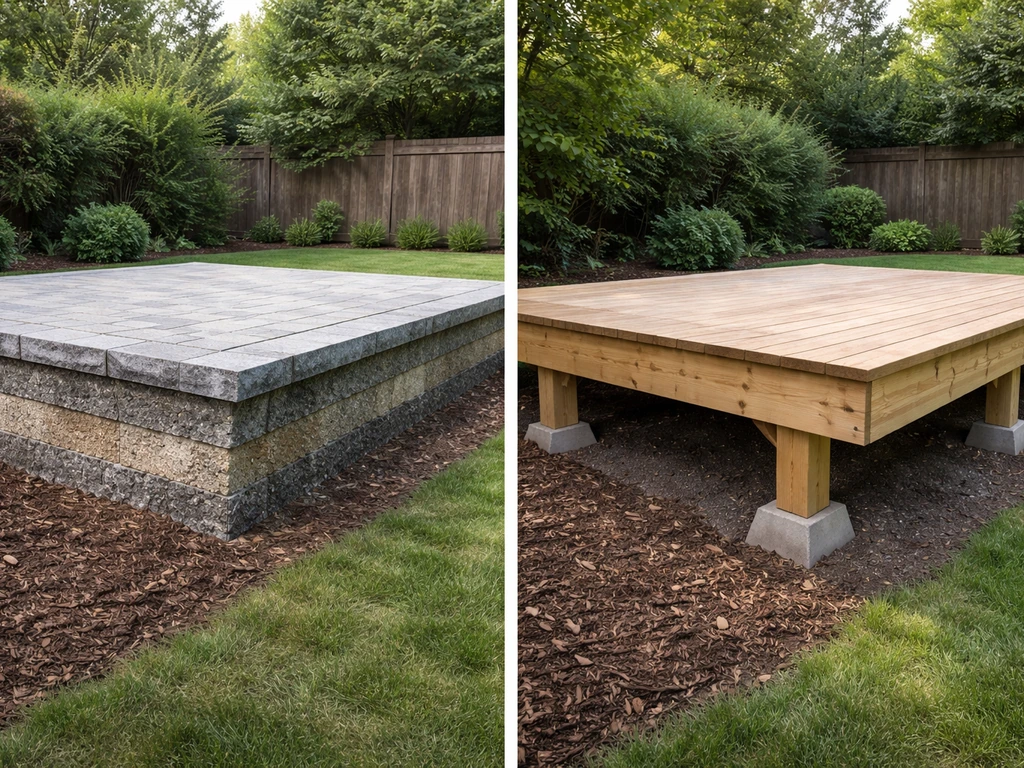
For the same elevated outdoor living space, a raised patio almost always costs less than a deck. Expect to pay roughly $10–$50 per sq ft installed for a raised patio (depending on material and height) versus $35–$85 per sq ft for a pressure-treated or composite deck of comparable size. On a 16x20 (320 sq ft) project, that gap can easily run $8,000–$15,000 in favor of the patio. The main reason: decks require engineered structural framing, ledger attachment, code-mandated railings, and inspected footings that add cost no matter what decking surface you choose. A raised patio shifts those structural expenses into compacted gravel base, retaining-wall blocks, and drainage, which are cheaper per square foot than framed lumber or steel posts.
Cost of Raised Patio vs Deck: Installed Pricing Guide

Felix Carver
30 Jun 2026
Why these two things cost so differently
A deck is fundamentally a structural platform. Before a single deck board goes down, you're paying for footings/piers, a ledger board bolted and flashed to the house, posts, beams, joists, and hardware. That substructure is non-negotiable, it's what holds people safely above grade, and building inspectors will verify every step of it. Railing systems (minimum 36 inches high per IRC, sometimes 42 inches locally) and stairs are required by code the moment the deck surface is elevated meaningfully above the ground, adding more fixed costs regardless of deck size. Local inspection guidance for decks notes that railing requirements apply at the edge of stairs and that stairways and guards are regulated under the residential building code blank" rel="noopener noreferrer">Railing systems (minimum 36 inches high per IRC, sometimes 42 inches locally) and stairs are required by code.
A raised patio works completely differently. Instead of a framed structure hanging in the air, you're building up from the ground: excavating, grading, installing drainage, compacting a gravel base, and then placing the surface material (pavers, concrete, stone, brick) on top. The structure is essentially the earth itself, reinforced and leveled. There are still real costs, especially for drainage, retaining walls at the edges, and steps, but you skip the engineered lumber frame and the complex ledger-to-house connection. That's where the savings come from.
Cost breakdown basics for raised patios vs decks
The easiest way to think about this is to separate fixed structural costs from finish costs. Both project types have both categories, but the balance is very different.
| Cost Component | Raised Patio | Deck |
|---|---|---|
| Substructure / framing | Gravel base + compaction ($3–$6/sq ft) | Footings, posts, beams, joists ($15–$25/sq ft) |
| Surface finish | Pavers, concrete, stone ($6–$30/sq ft) | Decking boards — PT, composite, or PVC ($8–$25/sq ft) |
| Retaining / edge walls | $15–$40/linear ft if needed | Not applicable |
| Railing | Not always required (low-height patios) | $600–$1,200+ (required for elevation) |
| Steps / stairs | $500–$1,500 (masonry or paver steps) | $300–$500 (basic PT), more for composite |
| Drainage | $3–$6/sq ft (often required) | Typically included in site prep |
| Ledger board + flashing | Not applicable | $200–$250 + flashing/membrane labor |
| Permits | $200–$500 depending on locality | $300–$400 typical; more for elevated review |
| Leveling / grading | $500–$2,000 depending on slope | Partially handled by post height adjustment |
One thing that catches people off guard: the higher a raised patio needs to be, the more it starts to look expensive. At 6–12 inches above grade, a raised patio is straightforward. At 24–36 inches or more, you're looking at significant retaining wall costs, more drainage complexity, and sometimes engineered solutions that narrow the cost gap with a deck considerably. If your yard requires a very tall raised patio, get both quotes and compare them directly.
Raised patio cost ranges by material and common sizes
Raised patio pricing spans $10–$85 per sq ft installed in 2026, and that wide range reflects genuine variation based on surface material, how high the patio sits above grade, and whether drainage is needed. Here's how it breaks down by material:
| Surface Material | Installed Cost (per sq ft) | Notes |
|---|---|---|
| Basic concrete (flatwork) | $6–$15/sq ft | Lowest cost; plain gray finish; requires proper base prep |
| Stamped / colored concrete | $12–$22/sq ft | More decorative; same structural base as plain concrete |
| Concrete pavers | $10–$20/sq ft | Very popular for raised patios; flexible, repairable |
| Brick | $15–$25/sq ft | Classic look; durable; labor-intensive to install |
| Natural stone / flagstone | $20–$40/sq ft | Premium option; irregular shapes add labor cost |
| Drainage gravel (base layer) | $3–$6/sq ft | Always add this on top of surface material cost |
Using those ranges, here's what typical projects land at by size. These totals assume a moderately raised patio (12–18 inches above grade), include drainage and a simple step, and use contractor installation:
| Size | Concrete Pavers (mid-range) | Stamped Concrete | Natural Stone / Flagstone |
|---|---|---|---|
| 10x10 (100 sq ft) | $1,500–$2,600 | $1,800–$2,800 | $2,300–$4,600 |
| 12x12 (144 sq ft) | $2,200–$3,700 | $2,600–$4,000 | $3,300–$6,600 |
| 16x20 (320 sq ft) | $4,800–$8,300 | $5,800–$8,960 | $7,300–$14,700 |
| 20x20 (400 sq ft) | $6,000–$10,400 | $7,200–$11,200 | $9,200–$18,400 |
Keep in mind these don't include retaining walls at the edges. If your raised patio needs a retaining wall along one or more sides, budget $15–$40 per linear foot on top of these figures. A 20-foot retaining wall at the back of a raised patio can easily add $1,500–$4,000 to the job.
Deck cost ranges by framing and decking type
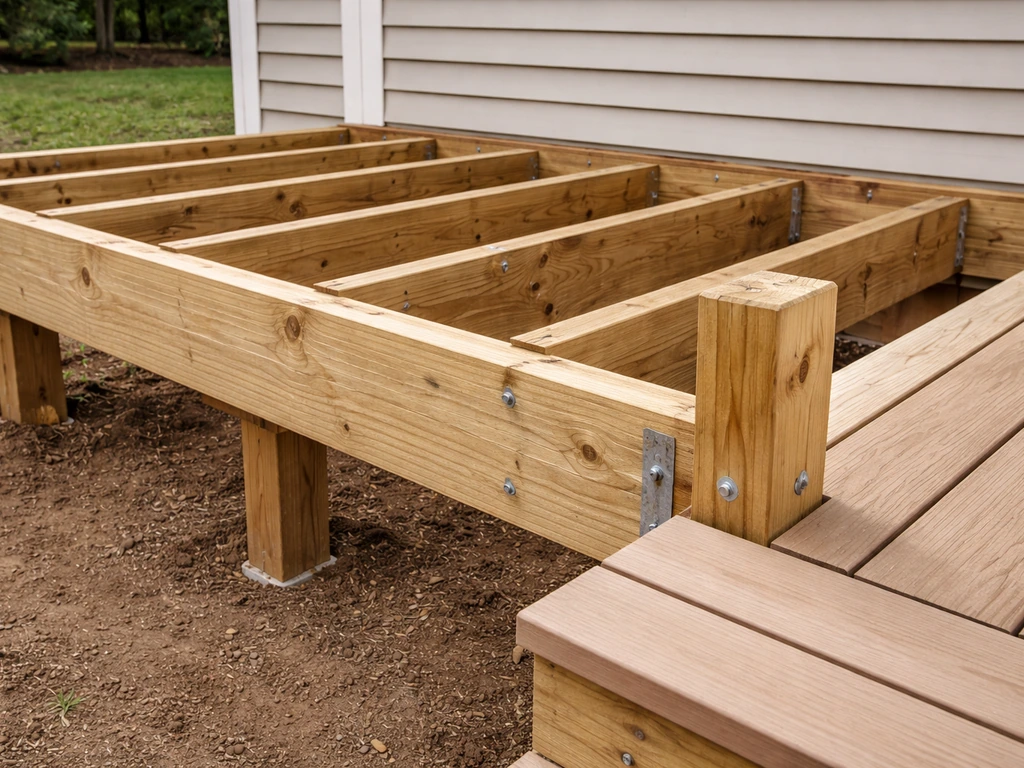
Deck pricing in 2026 runs $35–$100 per sq ft installed once you include everything (structure, railings, stairs, permits). In a 2026 deck cost guide, D and G Flooring similarly notes that decks often land around $30, $60 per sq ft installed, with higher-end builds reaching about $80 per sq ft $35–$100 per sq ft installed once you include everything (structure, railings, stairs, permits). A similar cost range analysis can help you compare the cost of a cement patio versus a deck for your square footage and elevation needs cost of cement patio vs deck. The surface material choice matters less than people expect because the structural framing underneath costs roughly the same regardless of whether you put pressure-treated boards or premium composite on top.
| Decking Type | Installed Cost (per sq ft) | Notes |
|---|---|---|
| Pressure-treated lumber | $35–$65/sq ft | Most affordable; needs staining/sealing every 2–3 years |
| Composite (mid-grade) | $45–$85/sq ft | Low maintenance; 25-year warranties common |
| PVC / capped composite | $50–$100/sq ft | Premium; best moisture resistance; highest upfront cost |
By project size, here's where most contractor-built decks land in total installed cost. These include footings/piers, ledger board, framing, railings, one stair section, and permits:
| Size | Pressure-Treated | Composite (mid-grade) | PVC / Premium Composite |
|---|---|---|---|
| 10x10 (100 sq ft) | $3,500–$6,500 | $4,500–$8,500 | $5,000–$10,000 |
| 12x12 (144 sq ft) | $5,000–$9,400 | $6,500–$12,200 | $7,200–$14,400 |
| 16x20 (320 sq ft) | $11,200–$20,800 | $14,400–$27,200 | $16,000–$32,000 |
| 20x20 (400 sq ft) | $14,000–$26,000 | $18,000–$34,000 | $20,000–$40,000 |
One important note: elevated decks (those requiring longer posts and more structural support to reach a higher height) add roughly 20–40% to total cost compared to a near-ground-level deck of the same size. If your door opens out 3–4 feet above grade, that extra elevation has a real dollar impact on the bid.
DIY vs contractor: what you can and can't realistically build
What a DIYer can tackle on a raised patio
A raised patio is genuinely DIY-friendly for most of the surface work. If you're comfortable with physical labor and willing to rent a plate compactor, you can excavate the area, lay and compact the gravel base, and install concrete pavers yourself. That's where the bulk of the labor cost lives, so doing it yourself on a paver patio can save $3–$8 per sq ft in labor. Stamped concrete is a different story: the timing, mix, and stamping process require experience, and mistakes are permanent. Leave that to a pro.
The tricky part for DIY raised patios is drainage and retaining walls. Drainage swales, French drains, or gravel drainage layers need to direct water away from the house foundation. Getting this wrong can cause erosion, settling, and basement moisture problems. If your site has any slope toward the house, hire a pro for the drainage plan even if you do the paver work yourself. Retaining walls over 3 feet high also typically require a permit and sometimes engineering review, so that's not a beginner DIY task.
What a DIYer can tackle on a deck
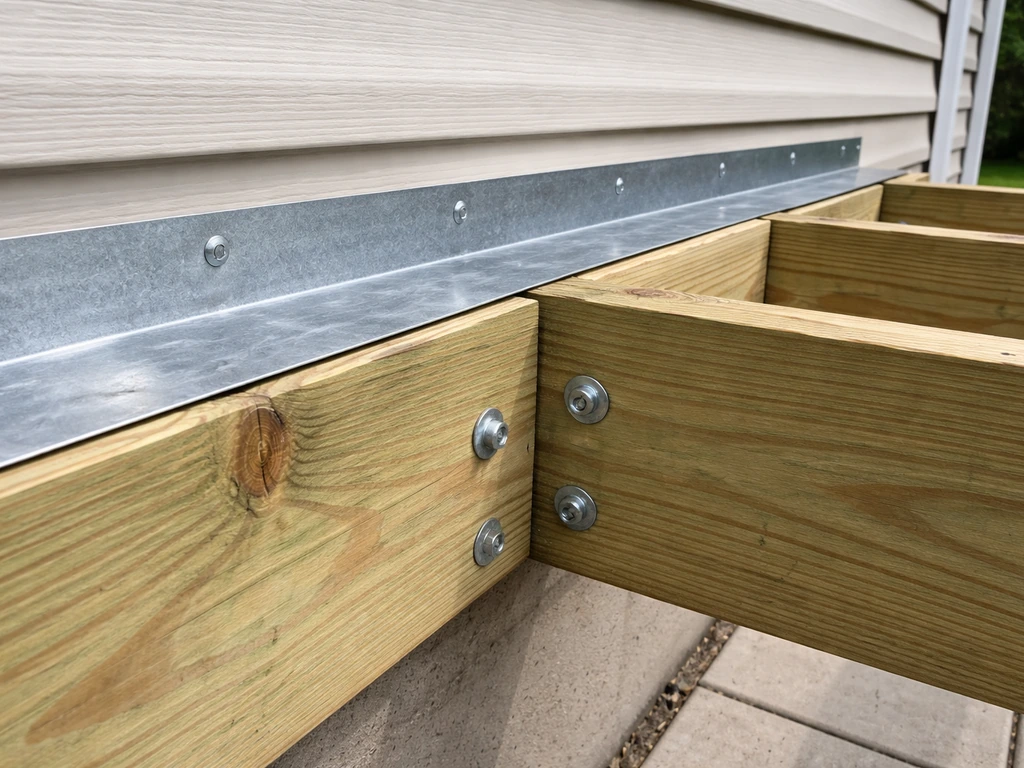
Decks are more complex to DIY than most homeowners expect. The footings, ledger attachment, and framing need to be built correctly and will be inspected. Improper ledger flashing (the connection between the ledger board and the house's weather-resistant barrier) is one of the leading causes of deck rot and structural failure, and inspectors know to look for it. If you're an experienced woodworker with structural building experience, you can absolutely DIY a deck and save 30–50% on labor. If you're newer to construction, a hybrid approach works well: hire a contractor for footings, ledger, and framing (the inspected structural work), then install the decking boards and railings yourself.
Never skip the permit on a deck, even if a contractor suggests it. Unpermitted decks are a liability, can block home sales, and sometimes have to be torn down. The permit fee ($300–$400 typically) is cheap insurance.
Major add-ons and hidden costs
Both project types have line items that show up late in the bidding process and can significantly change your total. Here are the ones that catch people most often:
- Footings and piers: Decks require concrete footings dug below the frost line (depth varies by region, but 36–48 inches in cold climates is common). Budget $400–$500 as a baseline, but rocky or sandy soil can push this higher. Raised patios need a compacted gravel base and sometimes concrete piers for retaining walls.
- Steps and stairs: A deck stair run costs $300–$500 for basic pressure-treated; masonry steps for a raised patio run $500–$1,500 depending on width and number of risers. Neither is optional if there's meaningful elevation change.
- Railings: Decks elevated more than 30 inches typically require code-compliant railings (36 inches minimum height, 42 inches in some jurisdictions). Budget $600–$1,200 for a basic run; aluminum or glass panels push well past $2,000. Raised patios at lower heights sometimes skip railings entirely, saving real money.
- Drainage: A raised patio on a site that slopes toward the house needs drainage gravel and often a French drain or channel drain. This adds $3–$6 per sq ft to the patio cost, plus potentially $500–$2,000 for drainage pipe installation. Skipping it is a recipe for erosion and settling.
- Grading and excavation: If your yard needs significant grading before either project starts, expect $500–$3,000 depending on scope. Contractors often quote this separately, so make sure the bid includes it.
- Permits: Deck permits run $300–$400 typically, but elevated or complex decks sometimes trigger additional engineering review. Raised patio permits vary widely by locality — some municipalities require them for any structure over a certain height; others don't. Ask your local building department before assuming you don't need one.
- Ledger board and flashing (decks only): The ledger board that connects a deck to your house is a critical detail. Proper Z-flashing integrated with the house's water-resistant barrier — or a peel-and-stick membrane solution — adds cost but is non-negotiable for longevity. Budget $200–$250 for materials; labor varies.
- Lighting, built-in benches, and electrical: These are genuine lifestyle upgrades but add $1,000–$5,000+ depending on scope. Get a separate line item for these so you can remove them if the base project runs over budget.
- Concrete leveling (raised patios): If your raised patio settles unevenly over time, concrete leveling (mudjacking or polyurethane foam injection) is a future maintenance cost to plan for — typically $500–$1,500 per incident.
How to get accurate quotes and pick the right option
The biggest mistake homeowners make when getting bids is letting contractors scope the project themselves without a shared spec. One contractor might include stairs and railings; another might quote the deck surface only. The numbers look very different, but you're not comparing the same project. Before you call anyone, write down the scope yourself: the square footage you want, the finished height above grade, whether you need stairs and how many risers, whether railings are required or desired, and what surface material you're considering. Hand that same spec to every contractor.
For a deck, ask every contractor to break out their bid by component: footings/piers, ledger and flashing method, framing, decking material, railings (with height spec), stairs, and permit fees. The structural breakdown from footings through decking to railings and stairs is your checklist for comparing bids line by line. If one bid lumps everything into a single number, ask them to itemize it. This also tells you what's not included, missing line items are usually where the budget surprises come from.
For a raised patio, ask contractors to specify the base preparation method (depth of gravel, compaction process), drainage plan, surface material and thickness, edge/retaining wall details, and whether the price includes steps. If the site has any slope toward the house, ask specifically how they're handling drainage and get that in writing.
Which option actually makes sense for your situation
Choose a raised patio if your budget is tight and the site isn't extremely elevated. Pavers and concrete patios are durable, low-maintenance over the long term, and significantly cheaper upfront, especially if the patio is 12–24 inches above grade or less. The cost of a brick patio versus a wood deck often comes down to how high the patio sits above grade and how much drainage and retaining work the site requires. Pavers can also be repaired section by section if something settles, which concrete and wood cannot. In wet climates, a well-drained paver patio often outperforms a wood deck on longevity without the annual sealing and staining cycle.
Choose a deck if your yard has a significant drop, say, 3–5 feet or more, where building up to grade with fill, drainage, and retaining walls would cost as much as just framing over the void. Decks are also better when you want the elevated feeling of being perched above a sloped yard, or when the home's architecture calls for a wood or composite surface. If you're comparing composite deck versus a premium stone patio at similar sizes, the cost gap narrows considerably, so maintenance preference and aesthetics become the real deciding factors.
Regional conditions matter too. In climates with freeze-thaw cycles, paver patios can shift if the base isn't deep enough. In humid coastal areas, composite decks far outlast pressure-treated lumber. In the Southwest, concrete and stone patios hold up extremely well. Talk to local contractors about what they see fail in your specific climate, that practical knowledge is worth more than any cost guide.
If you've already explored the broader patio vs deck question, or you're specifically weighing a concrete, stamped, brick, or cement patio surface against a wood deck, those comparisons go deeper into material-specific trade-offs and are worth reviewing alongside the numbers here. The core principle stays the same across all of them: structure drives deck cost, and drainage plus base prep drives patio cost. A quick way to sanity-check bids is to compare the cost of deck vs concrete patio based on elevation, drainage, and what structure is actually included. Understand those two levers and you'll be able to evaluate any bid you get.
FAQ
When does the cost of a raised patio vs deck get close or flip?
Yes, but only in certain layouts. If your raised patio height pushes you into major retaining walls (for example, 24 to 36 inches or more) and complex drainage, the patio’s “no engineered frame” advantage can shrink, sometimes making a deck bid competitive. The deciding factor is whether your patio quote includes retaining wall structure, drainage routing, and steps, not just pavers and excavation.
How should I compare quotes if the patio and deck are different shapes or sizes?
Use net square footage, not the total outdoor footprint. Patios and decks are often billed per “surface area,” but stairs, landings, and railings do not apply the same way. A deck may also require additional framing beyond the visible boards for elevation and railing anchorage, while patio base prep scales across the whole pad.
What line items are most likely to be missing from a patio or deck bid?
Ask specifically for what “installed” includes, especially for the raised patio base depth and compaction method. A low bid often omits base preparation details, drainage layers, geotextile, or edge stabilization. For a deck, request the ledger flashing method and whether the stairs and railings are included, since those are common late additions.
Do raised patios require the same kind of engineering and permitting as decks?
It can, depending on how your raised patio is built. If the patio is elevated using retained soil and drainage is handled well, you typically do not need an engineered deck-style ledger connection, but you may need permits for the retaining walls, height thresholds, and grading changes. Tall or heavily supported patio structures can trigger engineering requirements even without a deck frame.
Is a stamped concrete raised patio always better than pavers if we compare cost?
Stamped concrete, unlike pavers, usually becomes a higher-risk, less repairable surface when there is settling or freeze-thaw movement. If you’re in a freeze-thaw area and your base prep is thin or drainage is wrong, repairs can be expensive and localized fixes may be impossible. Pavers are modular, so you can lift and reset sections after minor settlement.
What drainage mistake most often causes expensive problems on raised patios?
For raised patios, pay attention to how water is routed away from the house. The most common mistake is treating drainage as an afterthought (for example, “we’ll slope it,” but no French drain or outlet plan). If the yard slopes toward the foundation, insist on a written drainage approach and where collected water will discharge.
What deck detail should I obsess over to avoid future rot or failure?
For decks, ledger and flashing details are the risk center. If the house wrap, siding, or sheathing is not integrated correctly with the ledger flashing, moisture can get behind the weather barrier and accelerate rot. Even if framing is solid, an incorrect ledger connection often drives future repairs, so demand the exact flashing method and materials in the bid.
Can I save money by doing part of the work myself for a deck or raised patio?
Yes, in a limited way. DIY can work well for demolition, layout, excavation, gravel base, and paver placement, but you should not DIY the structural and inspected items on a deck if you are not experienced. A hybrid approach is often best, contractor builds the footings, ledger, and framing, you handle decking boards, rail infill (if allowed), and finishing.
Which project is better for a hybrid DIY approach, a raised patio or a deck?
Consider timing and complexity. Patio DIY is mainly labor and equipment, so it is easier to schedule around your availability. Decking and railing usually involve precise fastening, alignment, and code-driven details, so you may save less in labor but still gain on convenience. Also ask whether your contractor will support interim inspection steps if you plan a hybrid build.
How do retaining walls change the cost of raised patio vs deck calculations?
If your patio needs retaining walls, don’t assume a low per-linear-foot price is realistic. Wall cost depends on wall height, reinforcement or blocks required, soil conditions, and whether there’s engineering for stability. As a decision aid, get a wall-specific quote separate from the paver or concrete surface so you can see how much of the “patio advantage” is actually coming from wall choices.
What should I factor in for long-term maintenance when comparing deck vs raised patio cost?
A common mismatch is assuming deck surfaces and patio surfaces share the same maintenance lifecycle. Composite decking often carries higher upfront cost but lower staining and sealing cycles than pressure-treated lumber. Meanwhile, pavers typically require periodic cleaning and occasional leveling, while concrete may need sealing to reduce cracking and staining. Budget for long-term upkeep, not just installed price.
How much do regional conditions change the cost comparison?
Your local contractor market and climate can matter as much as the national per-square-foot numbers. Freeze-thaw risk affects patio base depth and paver stability, while coastal humidity and salt air can change deck material selection and lifespan. Ask local builders what failures they see most, then align the chosen base drainage and deck material to those observed problems.
Which option is easier to repair if part of the surface settles over time?
Yes, patios can sometimes be more flexible if you want future repairs. Because pavers are modular, you can replace sections that settle or get damaged without tearing out the entire platform. Concrete and wood deck boards may require larger-scale repair if a problem is structural or unevenness runs across joists or slab segments.
Next Articles
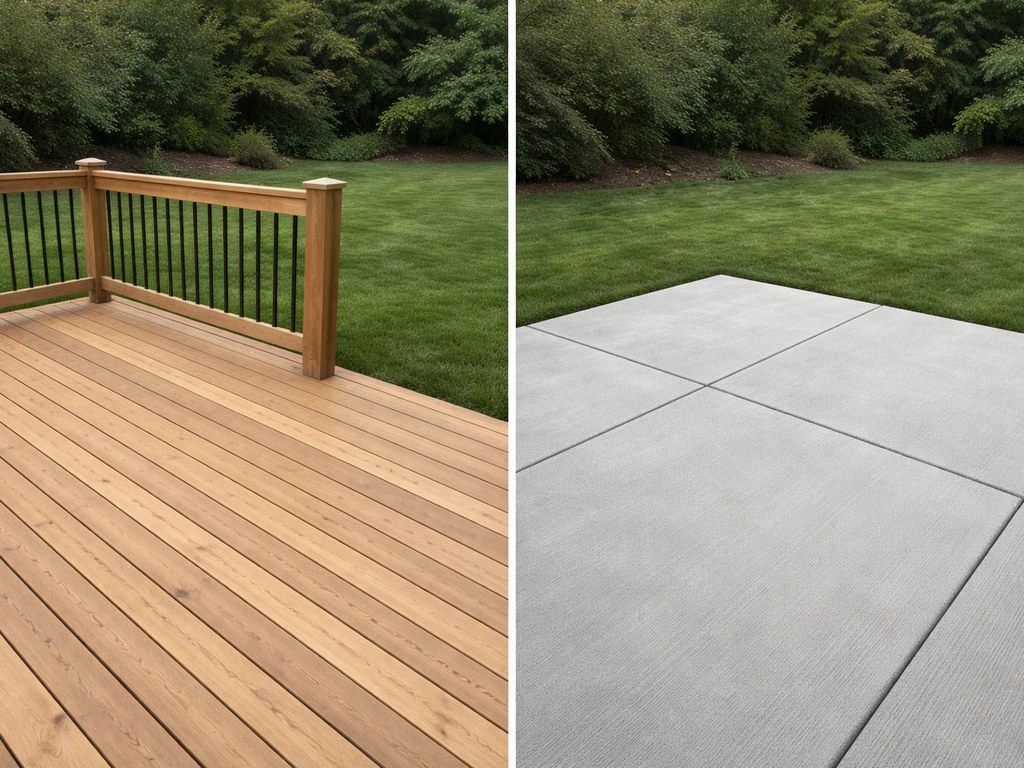
Cost of Deck vs Concrete Patio: 2026 Price Guide
2026 cost comparison of deck vs concrete patio with 10x10, 12x12, 20x20 pricing, materials vs labor, and budgeting steps
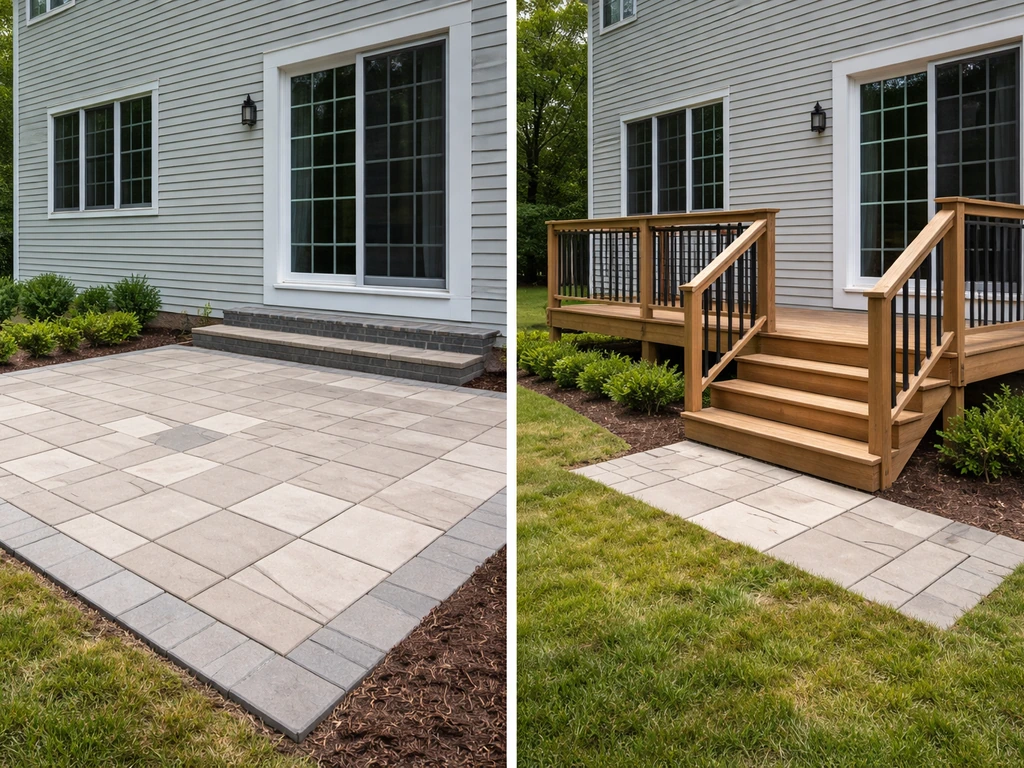
Cost of Patio vs Deck: Installed Price Guide by Size
Side-by-side installed costs for patios vs decks by size and materials, with labor, DIY vs pro, and a decision checklist
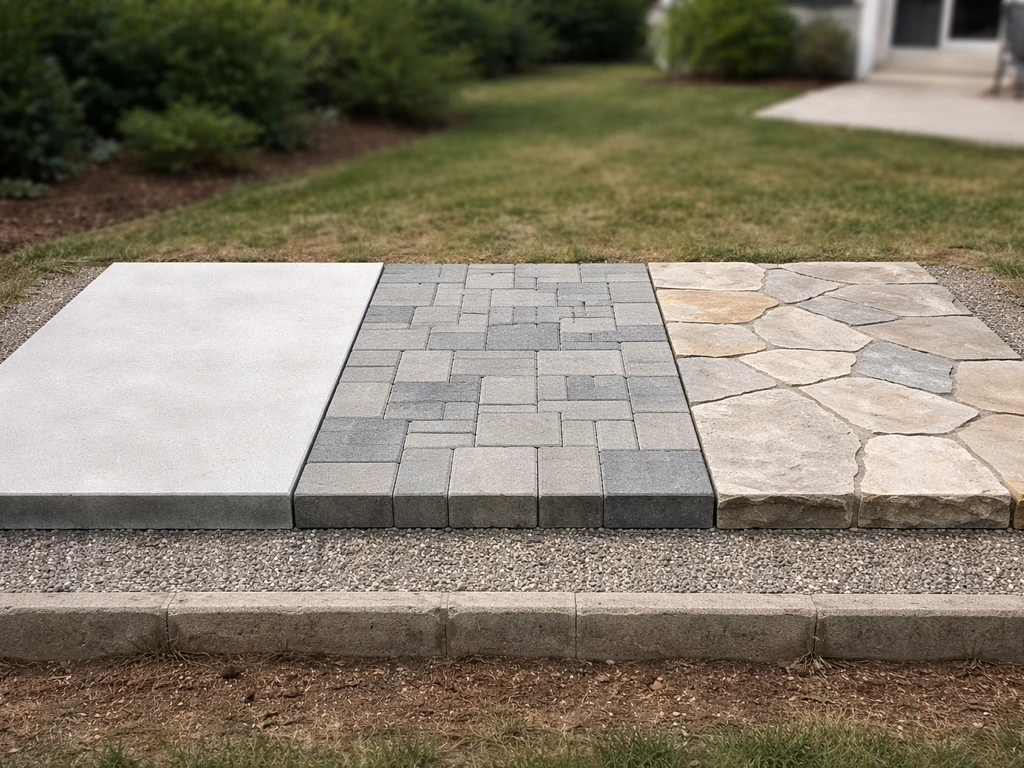
How Much Should I Expect to Pay for a Patio
Patio cost guide with real price ranges by size and material, full line-item budget, DIY vs install, and quote checklist