
A stone patio typically runs $15 to $50 per square foot installed, while a wood deck lands closer to $15 to $35 per square foot installed. On a 400-square-foot project, that puts a stone patio at roughly $6,000 to $20,000 and a pressure-treated wood deck at about $6,000 to $14,000. Stone usually costs more upfront but lasts 25 to 50 years with almost no annual maintenance cost; wood costs less to build but needs staining or sealing every 2 to 3 years and may require board replacement within 10 to 15 years. If you have a flat yard and want the lowest 20-year total cost, stone wins. If you have a sloped lot, a tight budget, or need a raised structure, a wood deck is the more practical call.
Cost of Stone Patio vs Wood Deck: Complete Pricing Guide

Felix Carver
17 Jul 2026
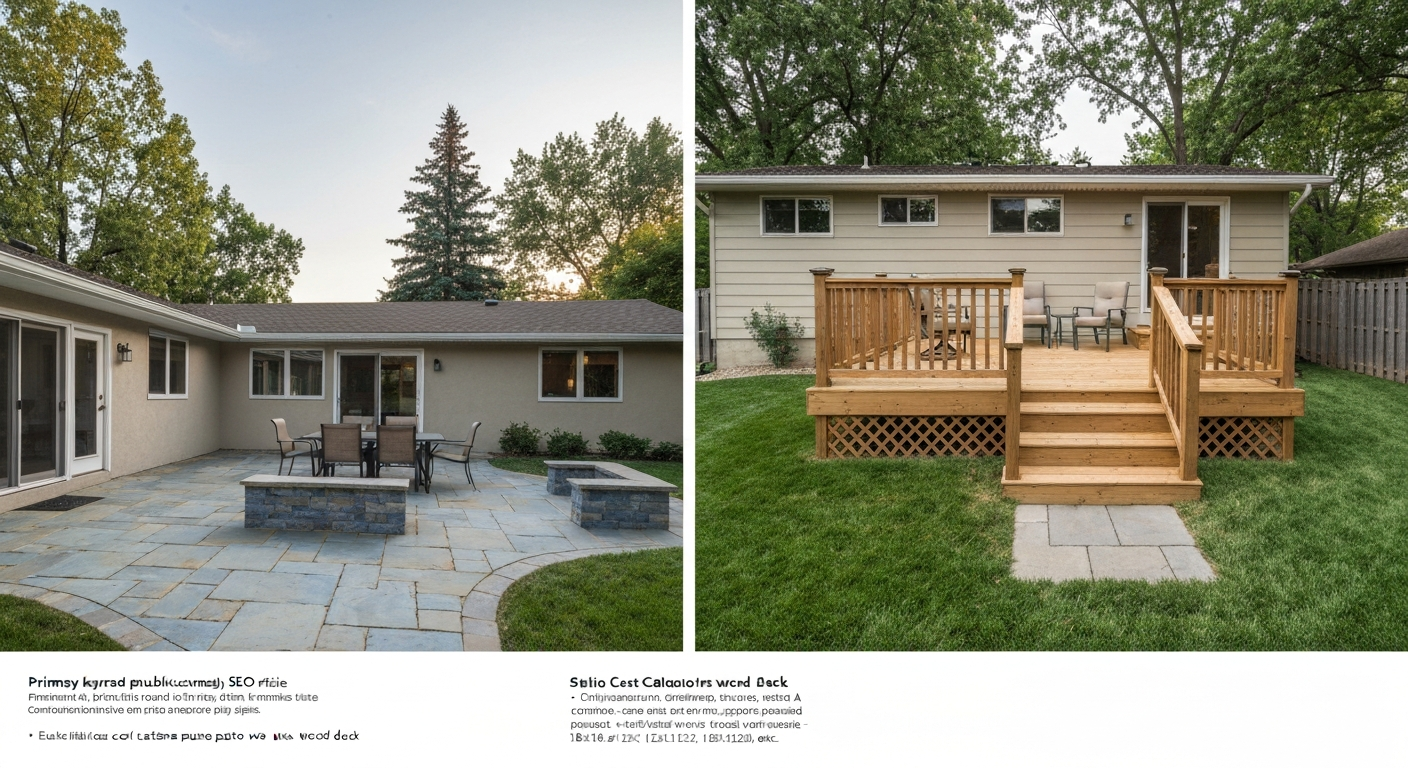
Who this guide is for
This article is for homeowners who are in the planning phase and want real numbers before calling contractors. It covers material and labor cost ranges, size-by-size project totals, regional pricing differences, DIY savings, site-prep and permit impacts, maintenance and lifecycle costs, add-on pricing, and a step-by-step decision framework. If you are comparing a stone patio to a Trex or composite deck specifically, or weighing a concrete slab instead, those comparisons are addressed in their own sections below as well.
Quick take: stone patio vs wood deck at a glance
| Factor | Stone Patio | Wood Deck (Pressure-Treated) |
|---|---|---|
| Installed cost range | $15–$50/sq ft | $15–$35/sq ft |
| Materials only (DIY) | $12–$28/sq ft (flagstone) | $5–$15/sq ft (PT lumber) |
| Typical 400 sq ft project | $6,000–$20,000 | $6,000–$14,000 |
| Expected lifespan | 25–50+ years | 10–20 years (PT lumber) |
| Annual maintenance cost | $100–$300 | $300–$800 |
| Works on sloped lots | Limited / costly | Yes, with framing |
| Permit usually required | Sometimes | Almost always |
| DIY-friendly | Moderate | Moderate to hard |
One-line recommendation: choose stone if you have a flat or gently sloped yard and a budget that can absorb the higher upfront cost; choose a wood deck if your yard is sloped, your budget is under $10,000, or you need a raised structure that clears the ground significantly.
How these costs are built up
Before diving into per-square-foot numbers, it helps to know what actually drives the final price for each option. Both stone patios and wood decks involve six core cost layers, and a swing in any one of them can easily change your total by 30 to 50 percent.
- Materials: The stone or lumber itself, plus fasteners, adhesive, grout, or edge restraints. Flagstone pallets run roughly $12.49 to $27.83 per square foot at retail (Home Depot product pricing as of 2026). Pressure-treated lumber for a deck frame and decking boards typically runs $5 to $15 per square foot of deck area for materials only.
- Labor: Stone and masonry crews commonly bill $50 to $80 per person per hour, which translates to roughly $11 to $35 per square foot in labor costs depending on stone type, joint complexity, and layout. Carpenter labor for a wood deck runs similarly, with installed labor often adding $8 to $20 per square foot.
- Base prep and grading: A stone patio requires 4 to 6 inches of compacted crushed stone base. Crushed stone runs about $25 to $75 per ton delivered in 2026; a typical 400-square-foot patio needs roughly 4 to 8 tons. Budget $200 to $600 just for base aggregate, before labor to spread and compact it.
- Excavation and site prep: Digging out for a patio or leveling a sloped yard for a deck typically costs $500 to $3,000 for modest residential projects, or $8 to $100+ per cubic yard in harder soil or rock. This line item surprises a lot of homeowners.
- Permits: Deck permits average about $351 nationally (median $201), based on a 29-city survey, but range from $79 in some markets to $1,811 in San Diego. Stone patios at grade often don't require a permit, but check your local code — attached patios or those above a certain size sometimes do.
- Size and complexity: A simple rectangular layout is far cheaper than curves, multiple levels, or intricate stone patterns. Every cut adds time; irregular flagstone jointing adds more labor hours than uniform pavers.
Cost per square foot: what each option actually costs
Stone patio cost per square foot
The big variable with stone patios is the type of stone. Basic concrete pavers start around $2 to $9 per square foot for materials, but that's not what most people picture when they say 'stone patio.' Natural flagstone (limestone, sandstone, slate) runs about $12.49 to $27.83 per square foot at retail. Bluestone, one of the most popular natural choices, typically costs $5 to $12 per square foot for materials and $15 to $31 per square foot installed. Premium cut bluestone or imported stone can push past $50 installed. Angi's 2026 data puts the typical installed stone patio range at $15 to $30 per square foot for mid-range projects, with HomeAdvisor showing a total project range of roughly $3,900 to $15,000 on a 300-square-foot patio, which works out to about $13 to $50 per square foot when you factor in site prep.
Wood deck cost per square foot
A basic pressure-treated wood deck installed by a contractor typically runs $15 to $35 per square foot, based on 2026 national data from remodeling cost surveys. The lower end of that range represents a simple rectangular deck at grade with standard railings; the upper end includes better lumber grades, stairs, built-in benches, or a more complex layout. Materials alone for a PT deck (framing, decking, hardware, footings) usually run $5 to $15 per square foot, so labor is making up roughly half or more of the final cost. Cedar and redwood decks cost more for materials, pushing installed totals toward $25 to $45 per square foot.
Project costs by common size
The tables below show estimated total installed costs and DIY material-only costs for both options across common patio and deck sizes. Installed ranges assume a mid-grade project (natural flagstone or pressure-treated wood, standard rectangular layout, basic edge treatment) with contractor labor included. DIY estimates assume you supply the labor and rent equipment like a plate compactor ($50 to $150 per day) as needed.
| Size | Sq Ft | Stone Patio Installed | Stone Patio DIY (Materials) | Wood Deck Installed | Wood Deck DIY (Materials) |
|---|---|---|---|---|---|
| 10×10 | 100 | $1,500–$5,000 | $1,250–$2,800 | $1,500–$3,500 | $500–$1,500 |
| 12×12 | 144 | $2,160–$7,200 | $1,800–$4,000 | $2,160–$5,040 | $720–$2,160 |
| 14×14 | 196 | $2,940–$9,800 | $2,450–$5,450 | $2,940–$6,860 | $980–$2,940 |
| 16×16 | 256 | $3,840–$12,800 | $3,200–$7,150 | $3,840–$8,960 | $1,280–$3,840 |
| 20×20 | 400 | $6,000–$20,000 | $5,000–$11,150 | $6,000–$14,000 | $2,000–$6,000 |
| 25×25 | 625 | $9,375–$31,250 | $7,800–$17,500 | $9,375–$21,875 | $3,125–$9,375 |
Keep in mind these are planning-stage ranges, not contractor quotes. Site-specific factors like sloped ground, tree roots, existing hardscape removal, or a difficult access path can push costs meaningfully above the upper bounds shown here. Use these numbers to calibrate your budget before you start calling contractors, not to hold a contractor to a price.
Regional pricing: where you live changes the math
Labor rates for masonry and carpentry vary significantly by region, and material freight costs add to stone prices in areas far from quarry sources. Here is a general framework for adjusting the national averages above.
| Region | Labor Rate Adjustment | Notes |
|---|---|---|
| Northeast (NY, NJ, MA, CT) | +20% to +40% | High union labor rates; NYC metro can run 50%+ above national average; stone is popular and contractors are plentiful but expensive |
| West (CA, WA, OR, CO) | +15% to +35% | Bay Area and Seattle among the highest markets; material costs also elevated due to freight for some stone types |
| Midwest (IL, OH, MI, MN) | –5% to +10% | Closer to national average; Chicago metro runs slightly above; rural areas often below |
| South (TX, FL, GA, NC) | –10% to +10% | Generally lower labor rates than coasts; Florida humidity increases long-term wood maintenance costs; Texas heat stresses wood more |
Practical tip: when you get quotes, ask contractors what their labor rate per square foot is and what is included. That single question will tell you quickly whether the bid is competitive for your region. A masonry crew billing $70 per person per hour (roughly consistent with BLS carpenter and masonry wage data plus employer burden and markup) on a two-person crew will add about $140 per hour to your project cost. An efficient team can install 80 to 120 square feet of flagstone per day in good conditions, which means labor alone on a 400-square-foot patio could run 3 to 5 days.
DIY vs. hiring a pro: honest savings and real risks
DIY can save you 40 to 60 percent of the total project cost, mostly because you are eliminating contractor labor markups. On a $12,000 installed stone patio, a capable DIYer might spend $5,000 to $7,000 in materials, rentals, and disposal fees. That sounds great, but there are real risks to weigh.
What you need for a DIY stone patio
- Physical ability to move heavy stone (flagstone pieces often weigh 50 to 150 pounds each)
- Access to or rental of a plate compactor ($50 to $150/day; $160 to $540/week), a wet saw for cuts, and basic excavation tools
- Willingness to learn proper base preparation: 4 to 6 inches of compacted gravel plus 1 inch of bedding sand is standard; skipping this step causes settling and cracking within a few years
- Time: a 200-square-foot flagstone patio can take a first-timer 3 to 5 weekends
- Comfort with the grading work — improper slope (you want at least 1/8 inch per foot away from the house) will send water toward your foundation
What you need for a DIY wood deck
- Basic carpentry skills: cutting lumber, drilling, driving fasteners, reading a level
- Understanding of post footings: concrete footings must go below your local frost line (24 to 42 inches in cold climates), which often requires a rented auger
- Comfort working with permit requirements — most jurisdictions require a permit for a deck, and inspections usually happen at the footing and framing stages
- A helper: decks are hard to build alone; budget for 2 people
- Time: a 200-square-foot deck for an experienced DIYer takes about 2 to 3 weekends; a first-timer should budget 4 to 6 weekends
When to hire a pro instead
Hire a contractor if your site has significant slope (over 12 inches of grade change across the project area), if you need to cut a lot of stone, if the project involves drainage work near a foundation, or if local permit requirements include stamped engineering drawings. A botched DIY patio that settles unevenly or a deck with improperly set footings can cost more to repair than it would have cost to hire someone in the first place. The savings are real, but so is the risk if the base work is wrong.
Site prep, grading, drainage, and permits: the costs people forget
This is where budgets most often get blown. Site preparation for a stone patio includes excavating 6 to 10 inches of soil (to accommodate base gravel and stone thickness), hauling off the spoil, grading for drainage, and compacting the base. On a flat, easy-access suburban lot, a contractor might charge $500 to $1,500 for this work on a 400-square-foot patio. On a rocky lot, a sloped backyard, or an area with poor drainage, the same work can run $2,000 to $5,000 or more. Excavation unit costs commonly fall in the range of $8 to $100+ per cubic yard depending on soil type and access. Texas Concrete Calculator 2026 | CostFlowAI (excavation & labor benchmarks) includes regional excavation unit and site‑prep benchmarks useful for planning Texas Concrete Calculator 2026 | CostFlowAI (excavation & labor benchmarks) includes regional excavation unit and site‑prep benchmarks useful for planning..
For a wood deck, site prep is usually simpler, mostly clearing vegetation and digging footing holes, but drainage under the deck still matters. Water pooling under a wood deck accelerates rot. If your yard drains poorly, you may need French drains or grading work that adds $500 to $2,000 to the budget.
On permits: stone patios at grade often fall below the permit threshold in many jurisdictions (especially if not attached to the house and under a certain square footage), but this varies widely. Decks almost always require a permit, and permit fees average $351 nationally but can reach $1,811 in high-cost cities like San Diego. Always check with your local building department before starting. Unpermitted decks can create problems when you sell your home, and unpermitted work can void homeowners insurance claims related to the structure.
Warning signs in a contractor bid: if a contractor doesn't mention base preparation, grading, or drainage in their quote, ask specifically what is included. A low bid that omits site prep is not a good deal; it is an incomplete scope.
Maintenance, lifespan, and long-term costs
The upfront cost comparison above is only part of the story. Over 20 to 25 years, maintenance and eventual repair costs can easily add $3,000 to $10,000 or more to a wood deck's total cost of ownership, which narrows or eliminates the initial price advantage.
| Cost Category | Stone Patio | Wood Deck (PT) |
|---|---|---|
| Expected lifespan | 25–50+ years | 10–20 years before major work |
| Annual cleaning | $0–$100 (DIY power wash) | $50–$150 (cleaning + inspection) |
| Sealing/staining | Every 3–5 years (~$150–$400) | Every 2–3 years (~$300–$800) |
| Board/stone replacement | Occasional individual pieces ($50–$300) | Partial re-decking at 10–15 years ($1,500–$5,000+) |
| Structural repairs | Rare; re-leveling a section ($200–$800) | Joist/post rot possible ($500–$3,000+) |
| Estimated 20-year maintenance total | $1,000–$3,500 | $4,000–$12,000 |
Stone requires very little year-to-year attention. Annual sweeping and an occasional power wash keep flagstone or pavers looking good. Sealing is optional but extends the finish on polished stones and reduces staining. Wood decks need consistent attention: a neglected pressure-treated deck can develop surface cracking, splinter risk, and structural rot in the joists within 8 to 12 years in humid climates. If you live in the Southeast or Pacific Northwest, factor in higher annual maintenance costs for wood due to humidity and moisture exposure.
Add-on costs and upgrades
Both patios and decks are rarely built as bare slabs or platforms. Here are realistic cost ranges for common upgrades as of 2026.
| Add-On | Stone Patio Cost Range | Wood Deck Cost Range |
|---|---|---|
| Railings (per linear foot) | Stone/metal: $50–$120/LF | Wood: $30–$80/LF; metal/cable: $80–$200/LF |
| Stairs (per step) | Stone steps: $150–$400/step | Wood steps: $100–$300/step |
| Outdoor lighting | $500–$2,500 (low-voltage path/step lights) | $500–$2,000 (deck rail and step lights) |
| Fire pit (built-in) | $1,500–$6,000 (stone surround + gas line) | $1,200–$3,000 (metal insert, not built-in) |
| Outdoor fireplace | $3,000–$15,000+ (masonry) | N/A (not standard on wood decks) |
| Built-in seating/benches | $800–$3,000 (stone or masonry bench walls) | $500–$2,500 (framed wood benches) |
| Pergola or shade structure | $3,000–$12,000 (freestanding) | $3,000–$12,000 (freestanding or deck-mounted) |
| Outdoor kitchen rough-in | $3,000–$15,000+ | $2,500–$12,000+ |
One note on fire features: a built-in stone fire pit or outdoor fireplace is a natural add-on for a stone patio and can be done by the same masonry contractor. On a wood deck, open flame fire features require non-combustible clearances and often aren't code-compliant without significant modification. That's a real practical advantage for stone patios if an outdoor fire feature is on your list.
Pros and cons: stone patio vs wood deck
Stone patio
- Pro: Long lifespan (25 to 50+ years) with minimal structural maintenance
- Pro: Low annual upkeep cost once installed
- Pro: Natural, high-end aesthetic that adds perceived home value
- Pro: Fire-safe surface; compatible with built-in fire features and outdoor kitchens
- Pro: Stays cool underfoot compared to some paver or concrete alternatives
- Pro: Individual stones can be replaced without redoing the whole surface
- Con: Higher upfront installed cost than a basic wood deck
- Con: Heavy and labor-intensive to install; base prep is critical and cannot be skipped
- Con: Not practical on significantly sloped lots without substantial grading or retaining work
- Con: Some stones can be slippery when wet if not properly textured or sealed
- Con: Frost heave in cold climates can shift stones if base is not correctly installed
Wood deck
- Pro: Lower upfront installed cost, especially at smaller sizes
- Pro: Works on sloped or elevated sites without major grading
- Pro: Familiar to most contractors; easier to get multiple bids
- Pro: Can be designed with complex shapes, multiple levels, and built-in features relatively easily
- Pro: Permits and inspections are well-understood processes in most jurisdictions
- Con: Requires staining or sealing every 2 to 3 years to prevent premature deterioration
- Con: Shorter lifespan than stone; partial re-decking typically needed at 10 to 15 years
- Con: Can become a safety hazard if maintenance is skipped (splinters, rot, loose boards)
- Con: Open flame fire features are code-restricted on wood decks
- Con: More susceptible to insect damage (termites, wood-boring beetles) in some regions
- Con: Higher 20-year total cost of ownership when maintenance is accounted for
Sample budgets and real-world example quotes
Scenario 1: Small suburban backyard, 12×12, flat lot, Northeast
A homeowner in suburban Connecticut wants a 144-square-foot flagstone patio off the back door. The lot is flat and access is good. A mid-range bluestone flagstone patio installed by a local masonry contractor in the Northeast (with a 20 to 30 percent labor premium over national average) would look something like this: materials (bluestone flagstone) at roughly $22/sq ft = $3,170; base gravel and sand = $400; excavation and site prep = $800; labor = $2,500; permit (not required at grade in this municipality) = $0; total estimate: roughly $6,870. A comparable 12×12 PT wood deck in the same market: materials (PT framing, decking, footings) = $1,400; labor = $2,600; permit = $350; railings (three sides) = $900; total estimate: roughly $5,250. The deck is about $1,600 cheaper here, but the stone patio requires no recurring sealing or staining costs.
Scenario 2: Family outdoor living space, 20×20, sloped lot, Midwest
A homeowner in suburban Chicago wants a 400-square-foot outdoor space with a fire pit. The backyard has a moderate 18-inch grade change from house to back fence. For a stone patio, the slope requires retaining work or significant fill, adding $2,500 to $4,000 to the project. Full budget estimate: flagstone materials at $18/sq ft = $7,200; base material and bedding = $900; excavation and grading (sloped lot) = $2,800; labor = $6,000; total: roughly $16,900 to $19,000 before the fire pit add-on. A wood deck on the same sloped lot is structurally better suited: PT deck materials = $5,000; labor = $7,000; permit = $400; railings = $2,200; stairs (6 steps) = $900; total: roughly $15,500. Here the deck is actually more competitive and more practical given the slope.
Scenario 3: High-end patio, 25×25, flat lot, West Coast
A homeowner in the Seattle area wants a premium 625-square-foot flagstone patio with built-in seating walls, step lighting, and an outdoor kitchen rough-in. Stone materials (premium imported flagstone) at $26/sq ft = $16,250; base prep and drainage work = $2,200; excavation = $1,800; labor (West Coast premium) = $14,000; built-in seating walls = $3,500; outdoor lighting = $1,800; outdoor kitchen rough-in = $5,000; permit = $500; total: roughly $45,000 to $50,000. A composite deck at the same size with similar add-ons would run in the $35,000 to $55,000 range (composite decking runs $25 to $60 per square foot installed), so the cost difference narrows considerably at the premium end.
How stone patios compare to other outdoor-surface options
Stone patios are one option in a broader category. If you're still deciding on the surface type, here is a quick cost and characteristic comparison to the alternatives most homeowners consider. Concrete slabs and paver patios are covered in more detail in the concrete patio vs wood deck cost article on this site, and composite and Trex deck costs are covered separately as well.
| Option | Installed Cost Range | Lifespan | Maintenance | Best For |
|---|---|---|---|---|
| Natural stone patio | $15–$50/sq ft | 25–50+ years | Low | Flat lots, long-term value, aesthetics |
| Concrete paver patio | $16–$40/sq ft | 20–30 years | Low to moderate | Budget flexibility, DIY-friendly patterns |
| Concrete slab patio | $6–$18/sq ft | 25–40 years | Very low | Lowest cost, plain look |
| Wood deck (PT) | $15–$35/sq ft | 10–20 years | High | Sloped lots, tight budget |
| Composite/Trex deck | $25–$60/sq ft | 25–30 years | Low | Deck look with low maintenance |
| Flagstone (bluestone) | $15–$31/sq ft | 30–50 years | Low | Premium natural look, flat lots |
Composite and Trex decks sit in an interesting middle position: they cost as much or more than a stone patio installed, but they work on sloped lots the way wood decks do and require very little maintenance (no staining or sealing). Trex® Composite Decking & Railing FAQs | Trex notes typical composite deck material-and-substructure costs of roughly $15–$30 per square foot, with final installed cost depending on labor and region. If you want deck functionality with low maintenance, that tradeoff deserves a hard look. A detailed breakdown lives in the cost of stone patio vs Trex deck article on this site. Paver patios deserve a mention too: concrete pavers start at around $2 to $9 per square foot for materials (much less than natural stone), and a fully installed mid-range paver patio typically runs $16 to $25 per square foot, making them the most budget-accessible 'stone-look' option.
Quick comparison tables for printing
| Metric | Stone Patio | Wood Deck (PT) | Composite Deck | Concrete Paver Patio |
|---|---|---|---|---|
| Cost per sq ft (installed) | $15–$50 | $15–$35 | $25–$60 | $16–$40 |
| Materials only (DIY) | $12–$28 | $5–$15 | $15–$30 | $2–$12 |
| Typical lifespan | 25–50 years | 10–20 years | 25–30 years | 20–30 years |
| Maintenance frequency | Every 3–5 years | Every 2–3 years | Annual cleaning only | Every 3–5 years |
| Permit usually required | Sometimes | Almost always | Almost always | Sometimes |
| Works on sloped lots | No (adds cost) | Yes | Yes | Limited |
| Fire feature compatible | Yes | Limited | Limited | Yes |
| Typical add-on cost range | $500–$15,000+ | $500–$12,000+ | $500–$12,000+ | $500–$10,000+ |
Decision framework: a scorecard to choose before getting quotes
Work through these questions in order. Each one narrows your options and helps you arrive at a realistic budget range before the first contractor sets foot in your yard.
- Is your yard flat (less than 6 inches of grade change across the project area)? If yes, stone patio is viable. If no, a deck is almost always the more cost-effective choice.
- What is your upfront budget? Under $8,000 for a 200-square-foot project: pressure-treated wood deck or concrete paver patio are your realistic options. $8,000 to $15,000: mid-range stone patio or a composite deck are in reach. Over $15,000: premium stone, composite deck with add-ons, or a smaller high-end stone project.
- Are you planning on a fire feature? If yes, lean toward stone; a built-in stone fire pit or fireplace is safer and more code-compliant on a masonry surface.
- How much maintenance are you willing to do? If the honest answer is 'as little as possible,' stone patio or composite deck will cost you less over 20 years even if they cost more upfront.
- Do you plan to sell within 5 years? Both add value, but a well-executed stone patio typically shows better in listing photos and inspections in most markets.
- Is DIY realistic for you? Stone patios require heavy lifting and correct base prep; mistakes are hard to fix. Decks require carpentry skill and comfort with permits and inspections. If neither feels feasible, budget for a professional and focus on getting three competitive bids.
- Have you checked local permit requirements? Call your building department before budgeting. A $1,000 permit fee or a required engineer's drawing can meaningfully affect your project economics.
Budget checklist before getting quotes
- Measure your target area (length × width in feet) and note any grade changes
- Identify any drainage issues (water pooling after rain) that will need to be addressed
- Research your local permit requirements and average fees
- Decide on a material category (natural stone, concrete pavers, PT wood, composite) based on budget and site
- Set a base budget, a realistic budget, and an absolute ceiling
- List your must-have add-ons (railings, stairs, lighting) separately so they don't get absorbed into the base bid
- Allocate a 15 to 20 percent contingency buffer for site surprises, especially on older properties or lots with unknown drainage
What to ask contractors and what a good quote includes
Getting three bids is the baseline recommendation, but a bid is only useful if you can compare them apples to apples. Here is what to ask every contractor and what a complete quote should include.
Questions to ask
- What is included in site prep, and how is it priced if you encounter unexpected conditions?
- What base preparation method will you use, and how deep will you excavate?
- Is drainage slope included and how is it calculated?
- Who pulls the permit, and is the permit fee included in the quote?
- What is the labor rate per square foot or hourly crew rate?
- What stone or lumber supplier will you use, and can I see product samples?
- What is your warranty on labor and materials?
- Do you carry liability insurance and workers' compensation? (Ask for a certificate.)
- What is the estimated timeline, and what are your payment milestones?
Red flags to watch for
- A quote that doesn't itemize materials, labor, and site prep separately
- Requests for more than 30 to 40 percent of the total cost upfront as a deposit
- No mention of permits for a deck project
- Base preparation described as 'sand only' with no gravel layer (a known failure point for stone patios)
- Pressure to decide before you can get other bids
- No written contract or vague scope language like 'patio as discussed'
Next steps: estimating, bidding, permits, and timeline
Once you have a material type in mind and a rough budget, here is a practical sequence for moving forward.
- Use the tables in this article to build a realistic budget range based on your square footage and region.
- Visit a local stone yard or lumber yard to price actual materials and see samples in person. Retail prices for flagstone vary widely by regional availability and quarry proximity.
- Call your local building department to confirm permit requirements and current fees before you budget. This takes about 10 minutes and prevents surprises.
- Get at least three itemized quotes from licensed contractors. For a deck, verify the contractor has experience with permit-required work in your municipality.
- Ask each contractor for references on at least two completed projects similar in size and material to yours.
- Plan for a 6 to 12 week lead time from contract signing to project start for contractors in busy markets (spring and early summer are peak booking seasons). Fall installations are often faster to schedule and sometimes slightly less expensive.
- Expect total project timelines of 3 to 10 business days of active work for most residential-scale projects once a crew is on site.
Further reading and detailed material pages
The cost comparisons in this article are designed to give you a solid planning foundation, but each material has its own detailed pricing page on this site. If you are leaning toward a paver patio instead of natural stone, the concrete patio vs wood deck cost page breaks down concrete slab and segmental paver pricing in more depth. If a composite or Trex deck is on your shortlist, the cost of composite deck vs paver patio page covers composite decking costs and how they stack up against hardscape options. For the stone-specific comparison with composite decking, the cost of stone patio vs Trex deck article goes deeper on Trex and composite material costs and long-term value. And if you want the broadest overview of the deck vs patio decision, the deck vs stone patio cost page covers that decision framework in detail. Use the size-specific cost calculators on this site to build a project estimate before you reach out to contractors.
Suggested images for this article
- Hero image: A finished natural flagstone patio with outdoor furniture and a built-in fire pit, photographed in good afternoon light. Caption: 'A mid-range flagstone patio with a built-in fire pit typically runs $15,000 to $25,000 installed on a flat lot.'
- Comparison image: Side-by-side of a pressure-treated wood deck (left) and a flagstone patio (right), similar size and setting. Caption: 'Both options cost roughly $6,000 to $14,000 on a standard 400-square-foot project, but stone lasts significantly longer.'
- Cross-section diagram: Illustration showing the layers of a stone patio base: native soil, compacted gravel (4 to 6 inches), bedding sand (1 inch), flagstone. Caption: 'Proper base preparation is the most critical step in stone patio installation; skipping it causes settling and cracking.'
- Before/after image: A bare backyard with marked stakes showing project area, then the same area with a completed paver patio. Caption: 'Site prep and excavation add $500 to $3,000 to most patio projects before stone or materials are even ordered.'
- Add-ons image: A pergola and step lighting on a stone patio. Caption: 'Pergolas add $3,000 to $12,000; low-voltage lighting adds $500 to $2,500 to either a patio or deck project.'
The bottom line
A stone patio costs more upfront than a basic wood deck in most scenarios, but it lasts longer, requires less ongoing maintenance, and carries a lower total cost of ownership over 20 or more years. If your lot is flat, your budget can handle $15 to $30 per square foot installed, and you want an outdoor space that genuinely requires no significant attention for a decade, stone is the better investment. If your lot is sloped, your budget is under $10,000, or you need the structural flexibility of a framed deck, pressure-treated wood remains the most practical choice for most homeowners. Use the decision framework in this article, build your budget using the size tables, and get at least three detailed, itemized quotes before you commit. The numbers in this guide will help you recognize which bids are in the right range and which ones are missing pieces.
FAQ
Search-friendly title and meta description
Title: Stone Patio vs Wood Deck Cost Comparison: Prices, Sizes, DIY vs Pro, and Budget Guide Meta description (≤160 chars): Compare stone patio vs wood deck costs by size, region, DIY vs pro, maintenance and add‑ons so homeowners can budget before getting quotes.
At-a-glance summary: Which is typically more expensive — stone patio or wood deck?
Short answer: Installed stone patios usually cost more per sq ft than basic pressure‑treated wood decks but can be comparable to mid-to-high-end wood or composite decks. Typical national installed ranges from sources: stone patio $15–$30+/ft² (wide variation $13–$50/ft² for complex builds); basic wood deck (pressure‑treated) $15–$35/ft² installed; composite decks $25–$60+/ft² installed. Material-only stone (flagstone/bluestone) can be $5–$28+/ft²; concrete pavers $2–$9/ft² material only.
Typical cost-per-square-foot breakdown (materials + labor)
National typical installed costs (ranges compiled from Angi, HomeAdvisor, manufacturer and dealer data): - Stone patio (natural flagstone/bluestone/paver): $15–$30/ft² common; simple installs lower (~$13–$18/ft²), premium stone or complex work $30–$50+/ft². - Concrete/porcelain pavers: $12–$25/ft² installed for mid-range; budget concrete pavers/materials as low as $3–$9/ft² (materials). - Pressure‑treated wood deck: $15–$25/ft² installed for simple builds; up to $35/ft² with better decking/railings. - Composite deck (Trex/brand): $25–$60+/ft² installed depending on brand, substructure, and railings. Labor portions vary by region and complexity; masonry labor and carpenter wages (BLS) indicate higher billed rates for skilled masons vs general carpenters.
Sample turnkey project totals by common sizes (installed ranges)
Estimates are broad national ranges; local quotes will vary. - 10x10 (100 ft²): Stone patio $1,300–$5,000; Wood deck $1,500–$4,000. - 12x12 (144 ft²): Stone $2,000–$6,500; Wood $2,200–$5,000. - 15x15 (225 ft²): Stone $3,375–$9,000; Wood $3,375–$7,875. - 20x20 (400 ft²): Stone $6,000–$20,000; Wood $6,000–$14,000. Notes: Low end assumes simple site, minimal prep and lower‑cost materials; high end includes premium stone, complex grading, retaining walls, steps, or extensive drainage.
Material-only examples and per‑sq‑ft material ranges
Material-only guide (typical retail/dealer prices): - Natural flagstone/bluestone pavers: $5–$28+/ft² (Home Depot product palettes and specialty stone). - Concrete pavers: $2–$9+/ft² material only (budget to mid-range). - Porcelain pavers: $5–$15+/ft² material. - Pressure‑treated decking boards: $2–$6/ft² material; higher‑grade cedar/redwood $4–$12/ft² board cost. - Composite decking materials (Trex and similar): $15–$30/ft² material/package (manufacturer guidance — installation adds labor).
Regional and contractor-rate variations — how to adjust these numbers locally
Drivers: labor wage levels, local material availability, permitting costs, and climate-driven complexity. Use these adjustments: - Low-cost regions: -10% to -25% off national midpoints (lower labor and material delivery costs). - High-cost regions/metro (West Coast, Northeast, parts of Sunbelt): +10% to +50% (higher permits, labor, disposal fees). - Permits: typically $100–$1,000 depending on city (PermitCalculator sample average ≈ $351). - Labor: expect billed masonry/carpentry crew rates reflecting BLS wages plus overhead; installers often price labor portion at $11–$35/ft² for patios or $20–$45/ft² for decks depending on complexity.
Next Articles
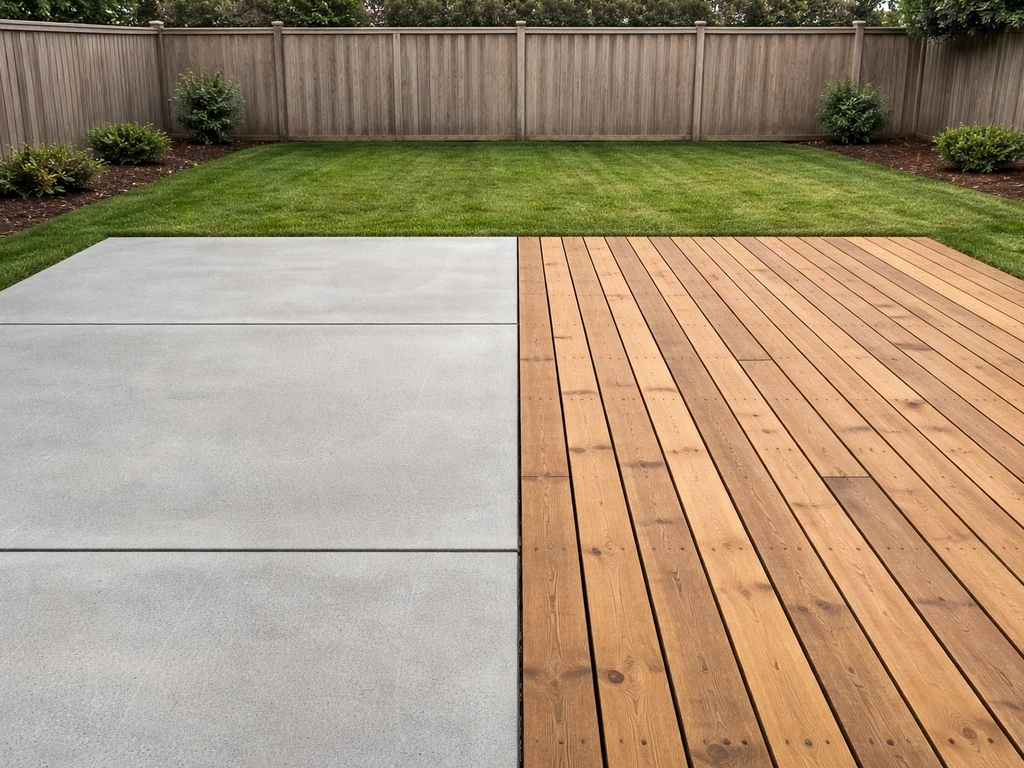
Concrete Patio vs Wood Deck Cost: Real Price Breakdown
Concrete patio vs wood deck cost with real price ranges, line-item breakdown, and which option is cheaper long term.
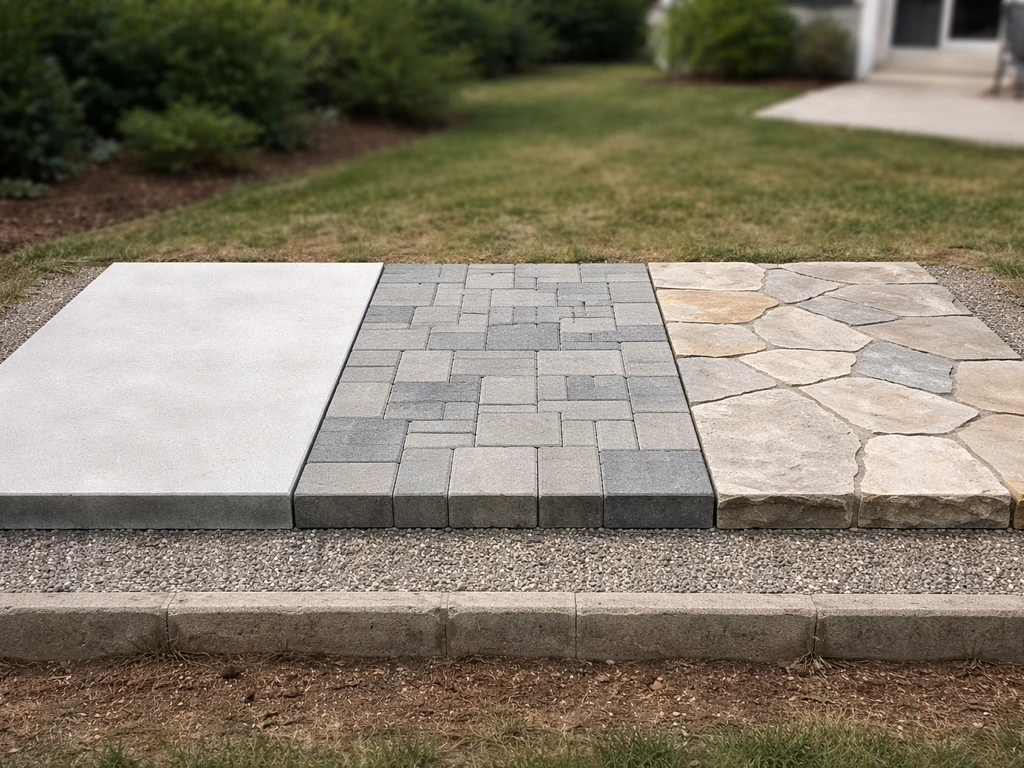
How Much Should I Expect to Pay for a Patio
Patio cost guide with real price ranges by size and material, full line-item budget, DIY vs install, and quote checklist
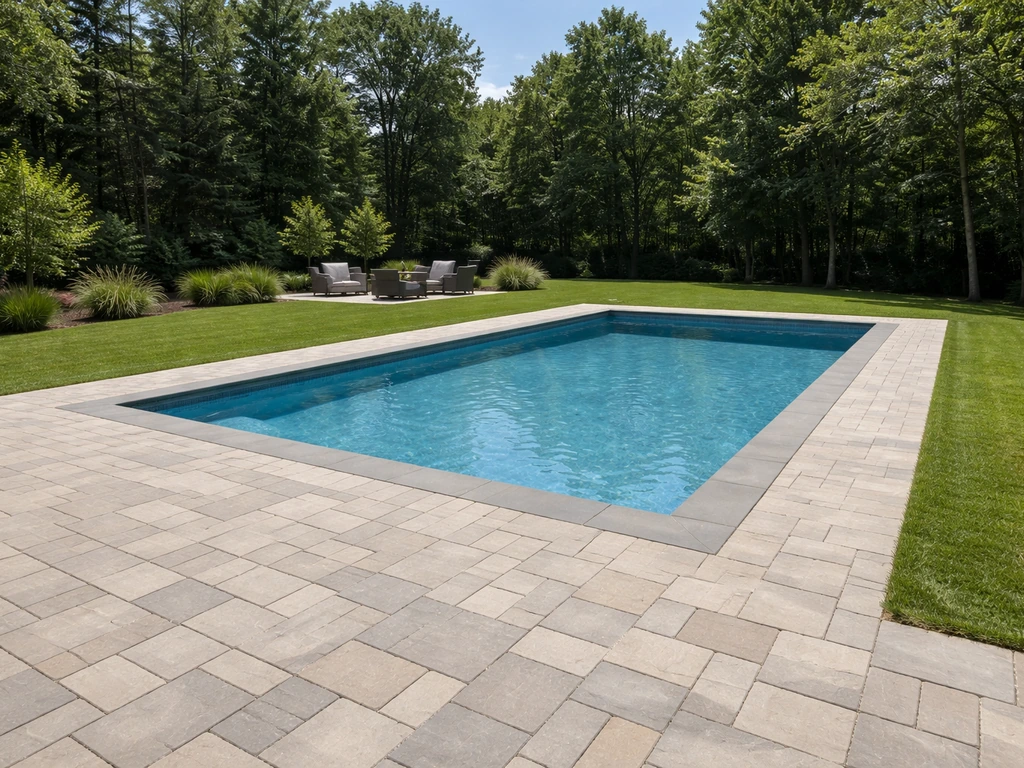
How Much Patio Around Pool: Cost, Size, and Budget Guide
Learn how much patio around a pool costs and how to size square feet, materials, extras, and get real bid line items.