
For most homeowners in 2026, building a patio around a pool runs somewhere between $4,500 and $20,000 installed, depending on how much area you're wrapping, what material you pick, and how much site prep your yard needs. That wide range isn't a dodge: a modest 600 sq ft of broom-finish concrete comes in around $4,000–$7,200, while the same footprint in natural flagstone or premium pavers can push past $18,000. Knowing your square footage and picking your material are the two biggest levers you control, and this guide walks you through both. If you're also wondering how much fall for a patio, the key is planning your slope and grade early so drainage works correctly around the pool and structures.
How Much Patio Around Pool: Cost, Size, and Budget Guide

Felix Carver
29 Apr 2026
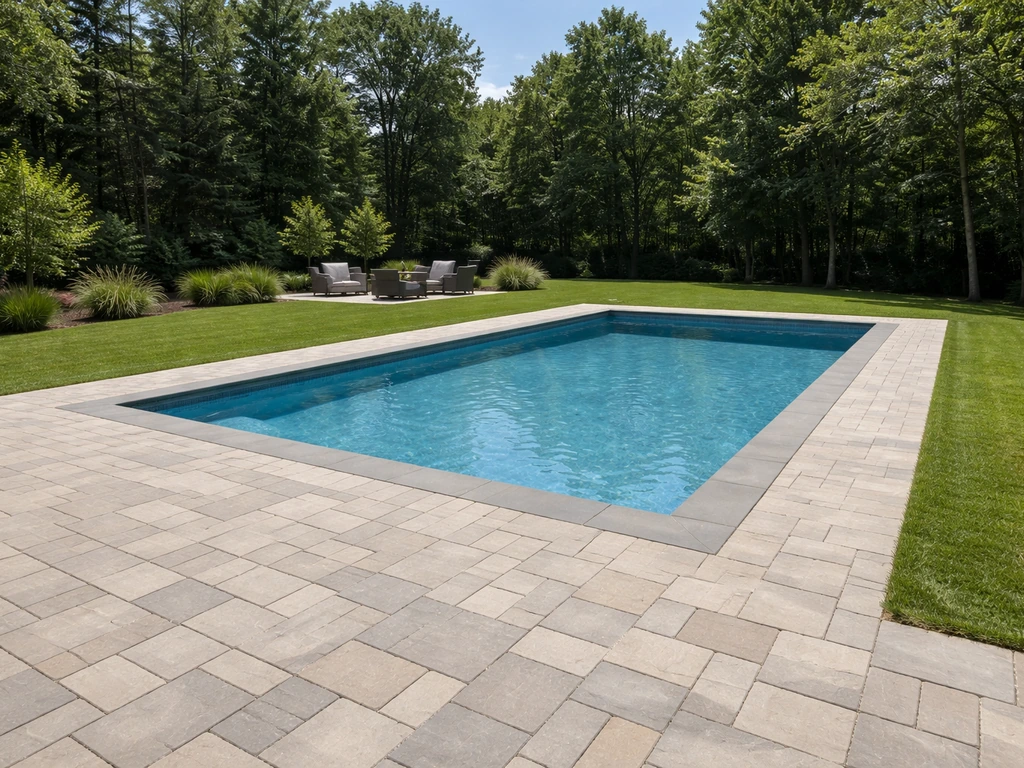
What a "patio around the pool" actually looks like
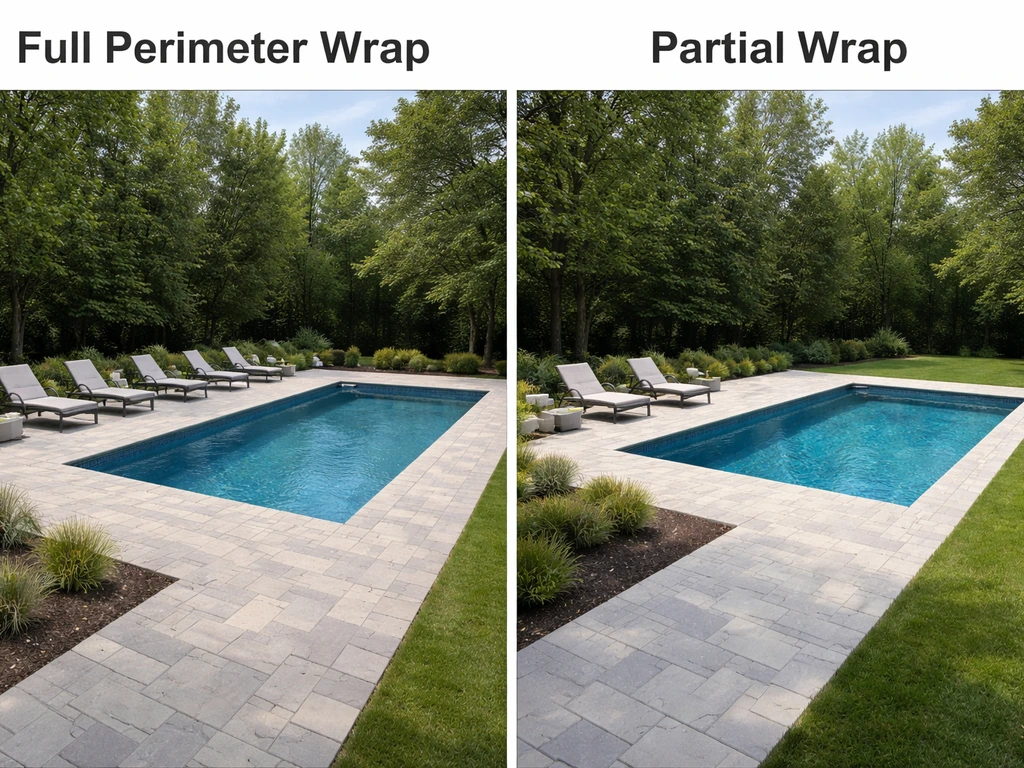
There's no single standard layout. Some homeowners want a full perimeter wrap, meaning continuous hardscape all the way around the pool. Others do a partial wrap with a wide seating area on one or two sides and a simple walkway on the others. Both are common, and the choice matters a lot for cost because it directly drives your square footage.
A full perimeter layout on a typical 16x32 pool (512 sq ft of water) with 5 feet of patio on all sides gives you roughly 900–1,000 sq ft of patio surface once you do the math. A partial wrap with a larger lounging zone (say, 12 feet deep on the long side) and just a 4-foot walkway on the other sides might land you around 600–750 sq ft. For context on those sizes: a standalone 20x20 patio is 400 sq ft, a 12x12 is 144 sq ft. Pool patios are almost always bigger than people expect when they start planning.
- Full perimeter wrap: hardscape on all four sides, typically 4–8 feet wide per side
- Partial wrap with lounge zone: one or two wide sides (8–12 ft) for chairs/furniture, narrower walkways on other sides
- Single-side deck: large patio on one end only, often used for seating and diving areas, rest of pool left as lawn or landscaping
- Entry/exit landing pads: dedicated flat areas at pool steps or ladders (often 6x6 to 10x10), connected by a walkway
From a comfort standpoint, 4 feet is the practical minimum for circulation, meaning someone can walk past a person standing at the edge without bumping them. For areas where people lounge, most designers recommend 8–10 feet of clear deck space. If you're adding an outdoor seating setup for two people, count on at least 100 extra sq ft for that zone alone.
Cost per square foot and what to expect in total
The broadest honest range for installed patio work in 2026 is $6–$35 per sq ft, depending on material. That said, most pool patios land in a tighter practical band because the most common material choices cluster in the middle. Here's how the numbers translate to real totals at common pool-patio sizes. If you want the average cost of a patio, use the square-foot range above and multiply it by your patio area to estimate your total.
| Patio Size (sq ft) | Basic Concrete ($6–$12/sq ft) | Pavers ($12–$20/sq ft) | Stamped Concrete ($10–$20/sq ft) | Flagstone/Natural Stone ($18–$35/sq ft) |
|---|---|---|---|---|
| 400 sq ft | $2,400–$4,800 | $4,800–$8,000 | $4,000–$8,000 | $7,200–$14,000 |
| 600 sq ft | $3,600–$7,200 | $7,200–$12,000 | $6,000–$12,000 | $10,800–$21,000 |
| 800 sq ft | $4,800–$9,600 | $9,600–$16,000 | $8,000–$16,000 | $14,400–$28,000 |
| 1,000 sq ft | $6,000–$12,000 | $12,000–$20,000 | $10,000–$20,000 | $18,000–$35,000 |
These are installed (labor plus materials) estimates. A 400 sq ft concrete patio, for example, aligns with the well-documented $3,200–$7,200 range for a 20x20 project. Bigger patios do benefit from some economy of scale because setup, mobilization, and base prep get spread over more square footage, but don't expect dramatic discounts: the savings are real but modest.
Picking your material: how each one changes the budget
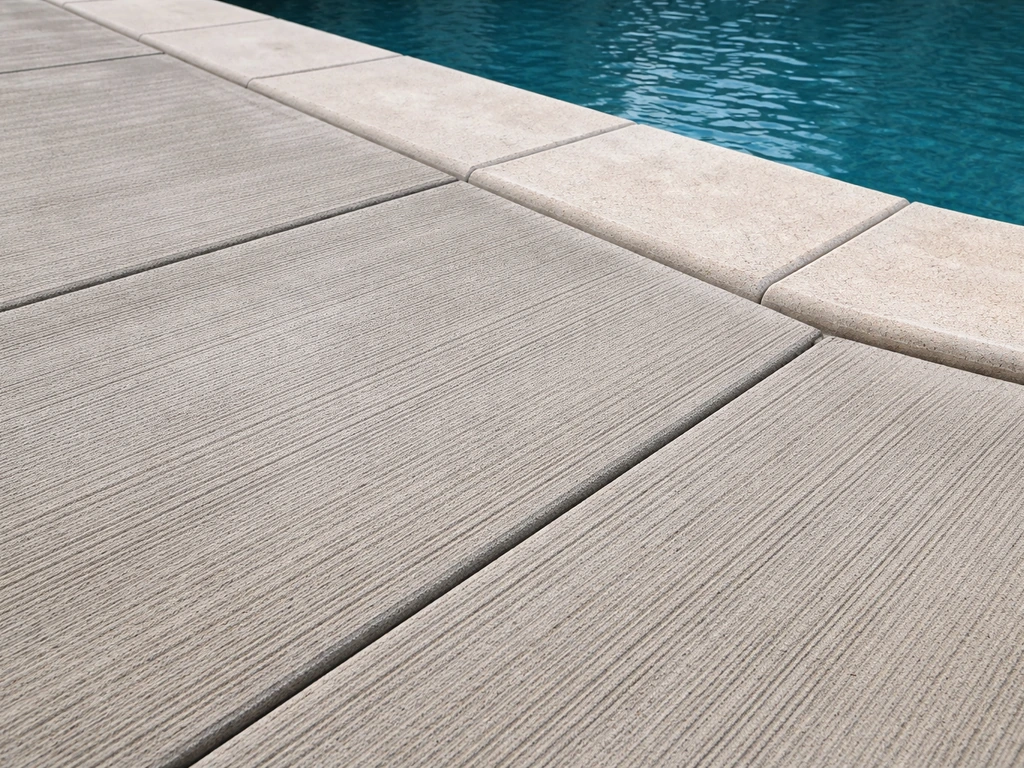
Material choice is probably the single biggest cost variable after square footage. Each option has a different price floor, different labor intensity, and different long-term maintenance profile. Here's the practical rundown.
Poured concrete (broom finish)
Broom-finish concrete is the budget baseline: roughly $6–$12 per sq ft installed. It's durable, easy to maintain, and the most contractor-friendly option in most markets. The rough texture from brooming also gives you some slip resistance near water, which matters around a pool. The downside is aesthetics: it's functional but plain. If you want something that looks intentional, you'll need to spend more.
Stamped concrete
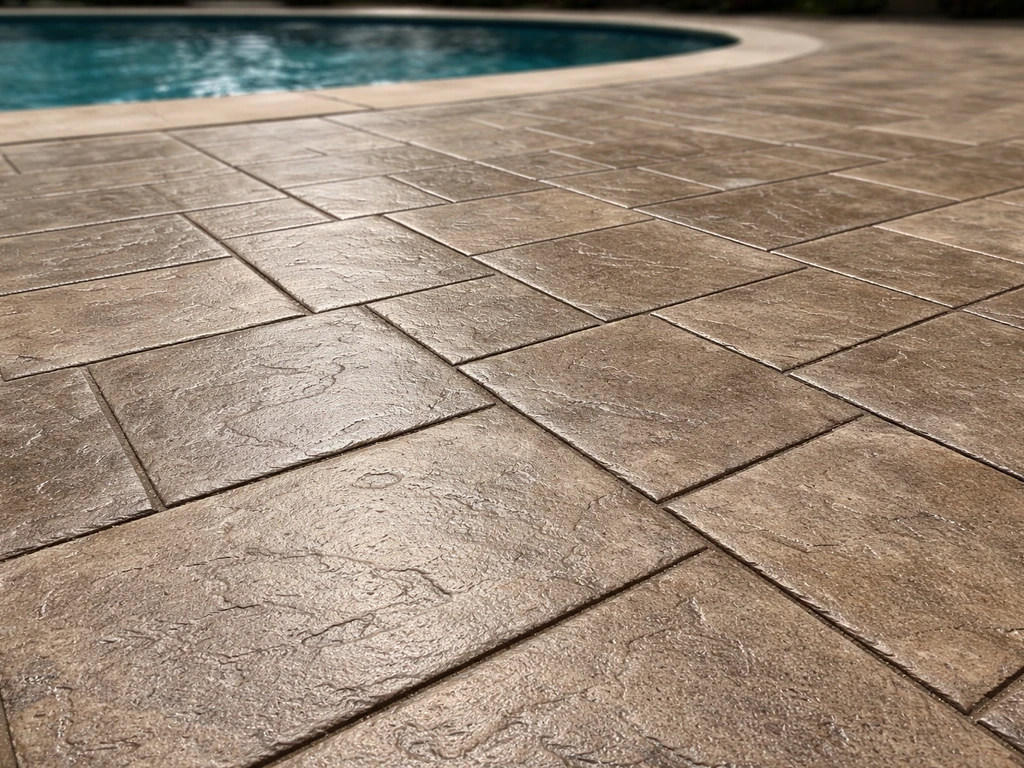
Stamped concrete runs $10–$20 per sq ft installed, with most residential pool patios landing around $12–$14. You're paying for the pattern, color, and sealer work on top of the base concrete. It looks dramatically better than plain concrete and mimics pavers or stone at a lower price. The catch: the surface sealer needs reapplication every few years, and if it chips or cracks, repairs are harder to blend than plain concrete.
Concrete pavers
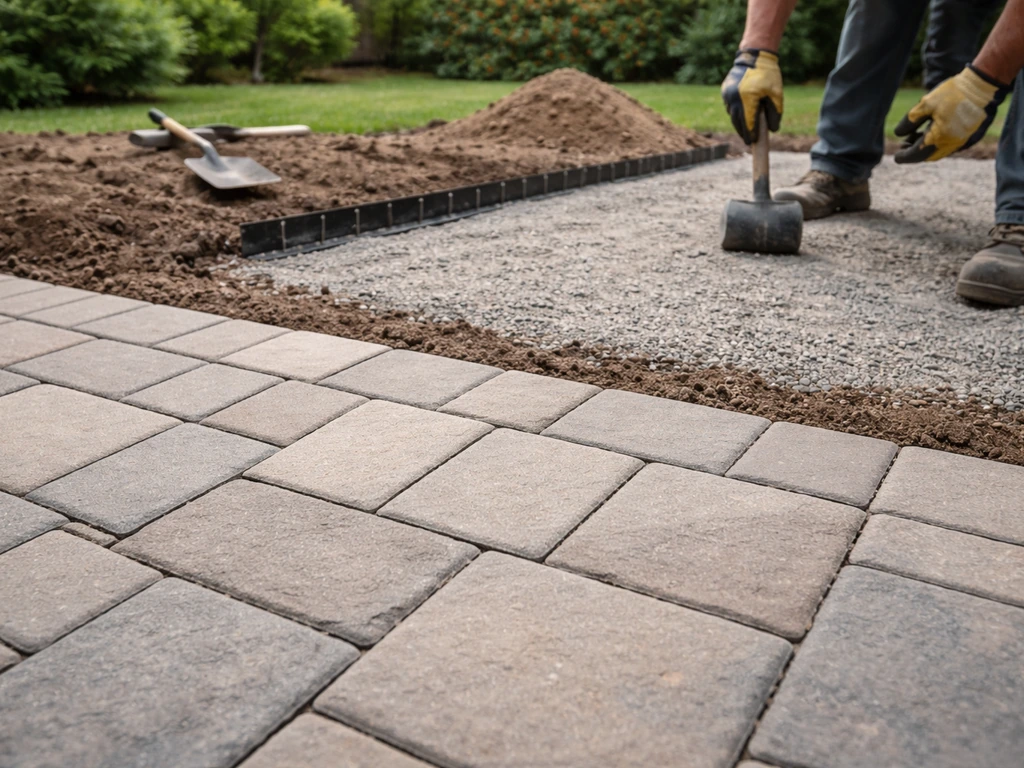
Pavers typically run $12–$20 per sq ft installed for concrete versions (natural stone pavers push higher). The install process is labor-intensive: you're excavating 4–6 inches, compacting a gravel base in lifts, adding about an inch of bedding sand, then setting and compacting the pavers and filling joints with polymeric sand (which requires a minimum 1.5-inch joint depth for proper performance). That labor drives up the cost, but pavers have a big advantage: individual units can be lifted and reset if you ever need to access utilities underneath, and they handle freeze-thaw cycles better than a solid slab.
Brick
Traditional brick pavers come in around $15–$25 per sq ft installed. They have a classic, warm look and hold up well around pools. The install process is similar to concrete pavers. The main cost drivers are the material cost of the brick itself and any cutting required for curves or tight corners around a pool.
Natural stone and flagstone
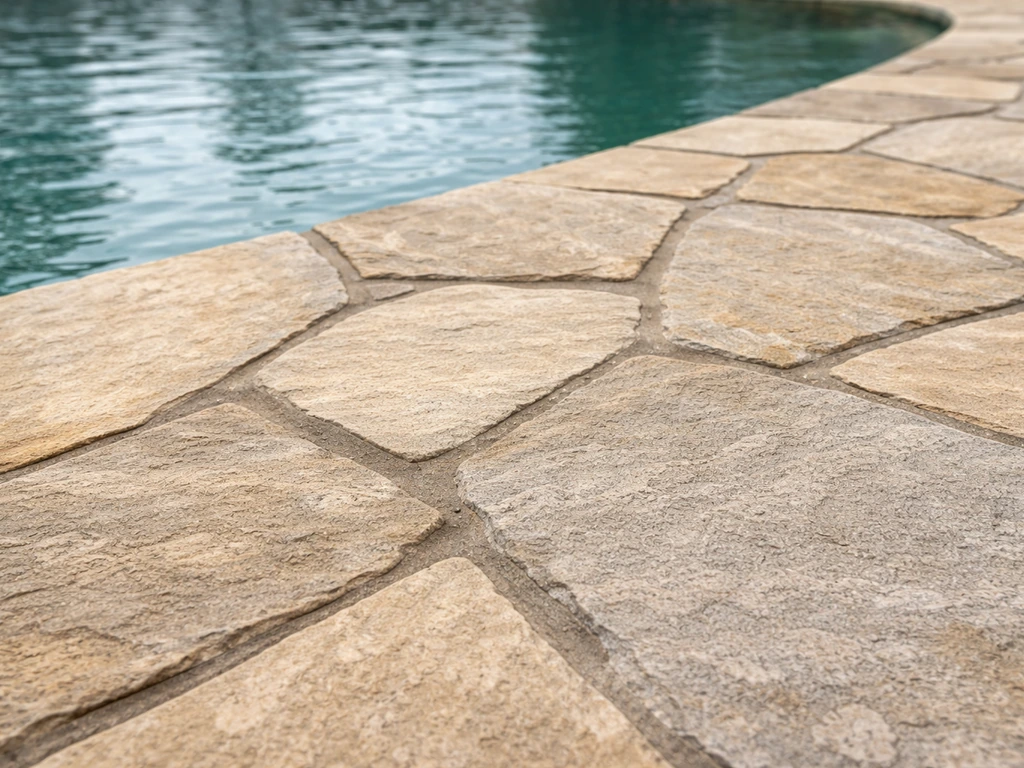
Flagstone and natural stone sit at the top of the range: $18–$35 per sq ft installed, sometimes more for premium materials or complex patterns. The variation is huge because stone prices differ enormously by species (bluestone vs. travertine vs. limestone) and whether it's set dry in sand or mortared. Mortared flagstone looks the most polished but is the hardest to repair. Around pools, travertine is popular because its naturally porous surface stays cooler underfoot and provides grip when wet.
DIY vs. hiring a contractor
DIY is realistic for pavers and flagstone if you're comfortable with physical work and have access to a plate compactor (rent one for $100–$200/day). A poured concrete pour around a pool is genuinely difficult to DIY because you need the forms set correctly, the slope right, and the concrete finished before it cures. One bad batch pour or a rain delay and you've got problems. Most homeowners who try DIY concrete on a pool patio regret it.
Contractor labor alone typically runs $4–$8 per sq ft for concrete and $6–$12 per sq ft for pavers, depending on your region and project complexity. That labor covers forming, pouring, finishing, and cleanup for concrete, or excavation, base work, setting, and jointing for pavers. For a 600 sq ft pool patio, you're looking at $2,400–$4,800 in labor for concrete, or $3,600–$7,200 for pavers, before materials.
| Approach | Best for | Realistic savings vs. pro | Main risk |
|---|---|---|---|
| Full DIY | Pavers, dry-set flagstone on flat ground | 30–40% off installed price | Base compaction errors, joint failures, poor drainage slope |
| DIY with pro base prep | Any material where drainage/grading is tricky | 15–25% off installed price | Coordination complexity; still need equipment rental |
| Full contractor | Concrete, stamped concrete, sloped/complex sites | None, but quality and warranty included | Finding a reliable contractor; scope creep on extras |
One thing that catches DIYers off guard: the equipment cost adds up fast. A plate compactor rental, a wet saw for cutting pavers or stone, and a laser level for slope work can easily run $400–$700 for a weekend. That eats into your savings, especially on smaller jobs.
How to calculate how much patio area you actually need
Start with your pool dimensions and work outward from each side. The math is straightforward: take the pool's length and width, add your desired walkway depth on each side, then subtract the pool area itself.
- Write down your pool's length and width (for example, 16 ft wide x 32 ft long)
- Decide on your minimum clearance per side. Use 4 ft as the absolute minimum for a walkway, 8–10 ft for any side with lounging or diving activity
- Add your clearances to each dimension: if you want 5 ft all around a 16x32, your patio footprint is (16+10) x (32+10) = 26x42 = 1,092 sq ft total footprint
- Subtract the pool's water surface (16x32 = 512 sq ft): 1,092 – 512 = 580 sq ft of patio
- Add any extra zones: a seating area (100–200 sq ft), a lounger deck on one end (8x16 = 128 sq ft), or entry landings
- Add 5–10% for waste and cuts
Using this method, a typical residential pool (15x30 to 18x36) with a modest 5-foot perimeter walkway and a single 10-foot-deep lounging area on one long side comes out to roughly 600–900 sq ft of patio. That's the most common range homeowners end up with, which is why the 600–800 sq ft estimates are a useful planning baseline. Code in some states also sets minimums: Massachusetts, for example, requires at least 4 feet of unobstructed walkway width around pools, which maps to that same 4-foot floor used in most layout planning.
The extras that quietly inflate your budget
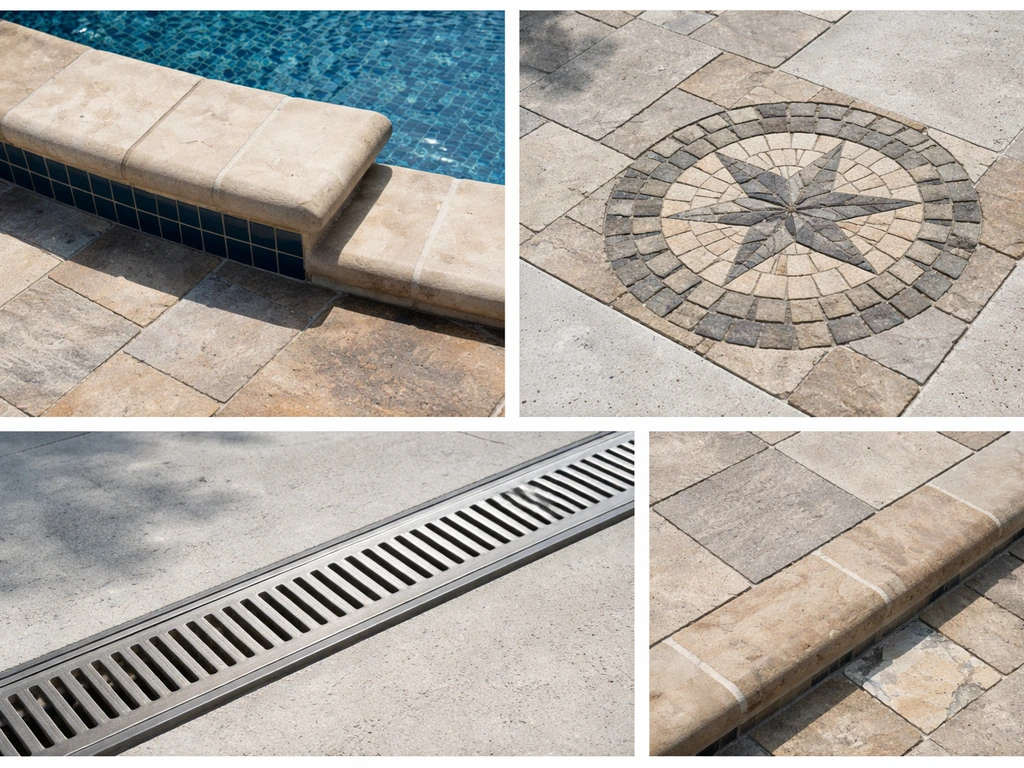
The per-square-foot price is just the start. Pool patios almost always have add-ons that a standalone backyard patio doesn't need, and these can add $2,000–$8,000 or more to the total. If you want a more exact ballpark, combine your patio size with local $/sq ft rates and then add the main add-ons like coping, drainage, and permits. Here's what to budget for.
Pool coping and edge integration
Coping is the cap material that sits at the pool's edge, transitions the pool shell to the patio, and handles the expansion joint between the two (critical, because pool shells move slightly). If you're doing new patio work, it's almost always the right time to update or add coping. Budget $30–$60 per linear foot for material and labor, and factor in your pool's perimeter. A 16x32 pool has about 96 linear feet of edge, so coping alone can run $2,900–$5,800.
Drainage
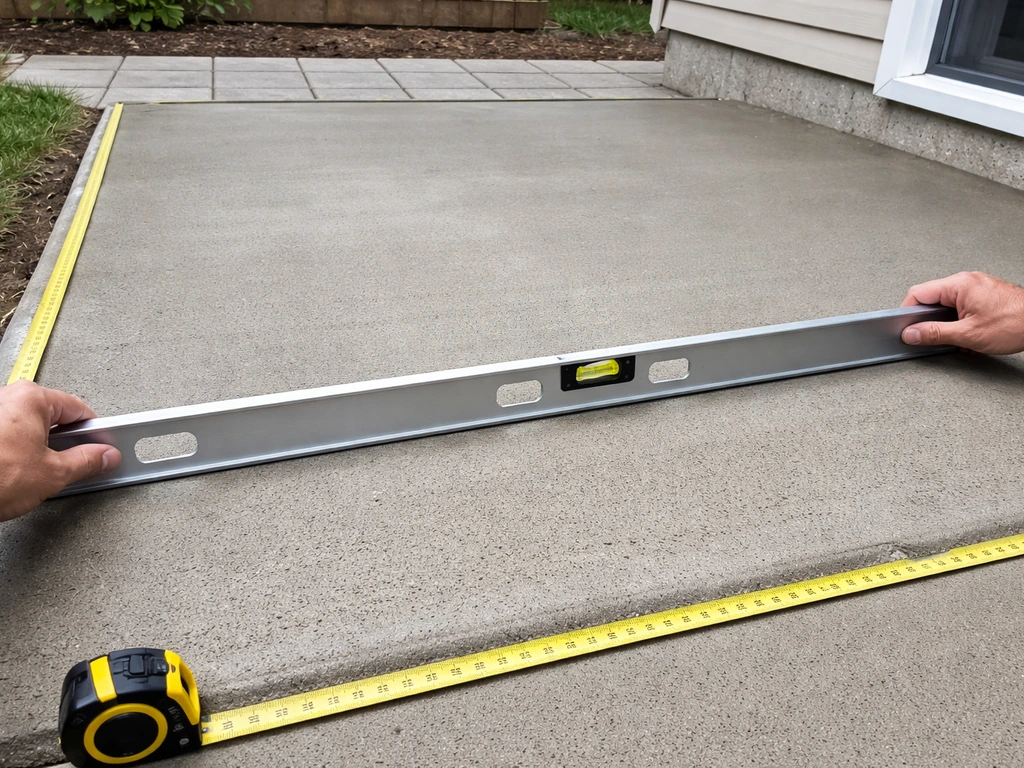
Water management around a pool is non-negotiable. The patio needs to slope away from the pool and any structures at a minimum of 1% grade (that's about 1/4 inch per foot). For pool walkways, a slope of 1/4 inch per foot toward a drain or disposal point is a common code requirement. If your site doesn't naturally accommodate this, you'll need grading work and possibly channel drains or a French drain system. Channel drain installation runs $25–$50 per linear foot installed. On a complex site, drainage can add $1,000–$3,500 to your project.
Site prep, demo, and grading
If you're replacing an existing patio, add demo and haul-away costs: roughly $1–$3 per sq ft for basic concrete demo, more if there's thick reinforced slab or difficult access. Grading and leveling uneven ground runs $500–$2,500 depending on how much material needs to move. For paver installs, the required excavation depth is typically 4–6 inches for pedestrian use, and base material (compacted gravel plus bedding sand) needs to be brought in and compacted in lifts. Harbor Soils’ paver base guide similarly describes a typical paver base and bedding structure, including compacted crushed stone or gravel depth plus about 1 inch of bedding sand, as part of the system base material (compacted gravel plus bedding sand) needs to be brought in and compacted in lifts. That base work alone can add $1–$3 per sq ft to the project cost.
Steps, rails, and entry features
Steps from the patio to a higher grade, or from the patio into the pool area, are usually priced per step rather than per square foot. Expect $150–$500 per step depending on material and complexity. Decorative entry features or curved steps can push higher. Handrails add $200–$600 each. If you have a split-level yard, budget for at least two or three steps and you could be adding $1,000–$2,000 before you blink.
Permits and inspections
Many municipalities require a permit for patio work adjacent to a pool, especially when drainage is involved or when the patio connects to existing pool permit conditions. Permit fees vary wildly: $100–$500 is common, though some jurisdictions charge more for larger projects. Your contractor usually pulls the permit, but make sure it's included in the quote and don't skip it. Unpermitted work near a pool can cause real problems at sale time.
Sealing and finishing
Stamped concrete requires sealing as part of the job and periodic resealing every 2–3 years ($200–$600 per application depending on size). Pavers need polymeric sand (included in a good install) and optional sealer. Natural stone may need sealing depending on the species. These aren't necessarily upfront costs, but factor them into your 5-year ownership budget.
Regional pricing and how to compare quotes the right way
Labor rates vary significantly by region. In the Northeast and on the West Coast, concrete and paver labor runs 20–40% higher than in the South and Midwest. Material costs also shift: stone that's quarried locally is much cheaper than stone shipped across the country. A 600 sq ft stamped concrete pool patio that runs $9,000 in Nashville might cost $13,000–$15,000 in Boston or San Diego. Always get at least three local quotes to establish what the actual market rate is in your area, not what a national average says.
When you request quotes, ask for an itemized breakdown rather than a single number. A good contractor quote should separate out: excavation and demo, base material and compaction, material costs (concrete or pavers), labor for installation, any drainage work, coping or edging, steps, sealing or finishing, permit fees, and cleanup/haul-away. If a quote is just one line, you can't compare it fairly to competitors or catch what's missing.
Quote comparison checklist
- Does the quote specify the exact square footage being paved? (Make sure all three quotes are using the same area)
- Is base prep (excavation depth, gravel type and depth, sand layer) described in detail?
- What is the concrete mix spec or paver product name? (Not all materials are equal)
- Is drainage slope and any channel drain work included, or is it listed as an add-on?
- Does the quote include coping or edge restraints, or does it stop at the pool's edge?
- Are permits and inspections included or excluded?
- Is demo and haul-away of existing material included?
- What is the warranty on labor and materials?
- What is the payment schedule? (Avoid anyone asking for more than 30% upfront)
The most common reason quotes look wildly different isn't that one contractor is gouging you. It's usually that they're quoting different scope. One contractor might include a complete drainage system and new coping; another might be quoting only the patio surface. Line-item comparison is the only way to know what you're actually getting for the money.
One last thing worth knowing as you build your budget: the patio-around-the-pool project is closely tied to the overall cost of your outdoor living investment. If you're still figuring out whether a pool patio is the right call versus other options, it's worth understanding how patio costs compare across different sizes and configurations more broadly before you commit to a scope and a contractor. If you want a benchmark before you price your specific layout, it helps to know what the average cost of a patio typically looks like what is the average cost of a patio. In this section, you can estimate a realistic patio budget based on size, materials, and labor costs how much should i expect to pay for a patio.
FAQ
What patio width should I use around my pool if I want both walking space and lounge space?
If you want comfortable circulation plus seating, plan at least 4 feet for the walkway on all sides, then add lounge depth only where you need it. Many layouts use a 4-foot perimeter for movement and expand to 8 to 10 feet on one or two sides for chairs and a small table, which keeps costs down versus a full-width wrap.
How do I estimate square footage correctly for a patio around a pool?
Use the pool dimensions as the inner boundary, then add your walkway depth on each side to get the outer rectangle or shape. Subtract the pool surface area, not just the inner perimeter. For irregular pool shapes, measure in sections (rectangles or triangles) and add them up, then subtract the exact pool area.
Should I include the pool coping area in my patio square-foot estimate?
Usually no. Patio square footage typically refers to the deck surface area outside the pool’s edge, while coping is priced separately per linear foot. If you include coping in your estimate, you may double-count in quotes, so confirm how each contractor measures it.
Do I need special drainage even if my yard slopes slightly away from the pool?
Often you still need to verify grade and low points. A common standard is at least 1% slope away from the pool and structures, plus a defined path for water to leave the patio area. If your yard slope is inconsistent, you may need a French drain or channel drains even when it “looks” like water will run off naturally.
How much does drainage add, and what’s the biggest cost driver there?
The price jumps when contractors have to create new flow paths, cut into existing grade, or install linear drains that require deeper trenching. The biggest driver is whether the site naturally routes water to a discharge point or whether the contractor must build a system (drain lines, gravel trenches, and tie-ins).
What happens if the patio is too flat around the pool?
Water can pool on the deck surface, increasing slip risk and causing premature joint failure in pavers (and faster surface wear in concrete). Flat areas also make cleaning harder and can funnel water toward the pool structure, which is why proper slope and outlet location matter.
Are paver patios harder to maintain than concrete patios?
They’re usually manageable, but the maintenance is different. Pavers can shift if the base prep is weak, and polymeric sand can wash out over time, requiring periodic re-top-ups. Concrete may develop hairline cracking and can require resealing if it’s stamped or finished, so choose based on your tolerance for periodic upkeep.
How long does sealing last for stamped concrete or natural stone near a pool?
Sealing intervals vary by product and sun exposure, but a practical planning range is reseal every 2 to 3 years for stamped concrete and longer for some stones depending on porosity. If your area is harsh or you use frequent chemical treatments for nearby water features, plan to reseal sooner.
Can I DIY part of the patio around a pool, like demo or edging?
Yes, partial DIY can reduce labor costs, but don’t DIY the high-risk scope. Slope, base prep, and anything tied to drainage and coping transitions are the parts where mistakes show up fast. If you DIY demo, plan careful disposal and verify the foundation and grade before any contractor work begins.
What should I ask contractors to make quotes comparable?
Ask how they measure patio square footage, what’s included for coping, and whether drainage, base depth, and compaction are specified. Also request a line item for permit handling, haul-away, and any sealing or finishing. If they do not specify these details, you cannot fairly compare price per square foot.
Why do some quotes include a much larger project scope than others?
Usually because one bid includes items others omit, such as complete drainage work, coping replacement, site grading, or additional excavation for correct base thickness. Differences in how they treat steps, edging, and access for removal also change totals, even when the patio surface area looks the same.
How do freeze-thaw conditions affect my material choice?
In freeze-thaw regions, solid-surface cracks in concrete can be more noticeable over time, and pavers can perform well if the base and joint setup are correct. The key is the installation system, base depth, and drainage, not just the material name on the estimate.
Do I need to upgrade pool coping or expansion details when replacing an old patio?
Often yes. When you remove and rebuild the surrounding deck, the interface between the pool shell and deck is a critical transition that can fail if coping or joint treatment is not updated. Confirm whether your scope includes coping replacement or re-setting and how they address the expansion gap.
What should I budget for steps, rails, or elevated areas outside the standard patio footprint?
Don’t assume steps are “free” because they’re small. Steps are typically priced per step, and handrails are additional, especially if you connect from patio to an elevated yard or into a pool deck area. If you have multiple height changes, add multiple step runs and expect extra grading.
What are common mistakes that cause budget overruns on pool patios?
The big ones are underestimating total square footage (especially full wrap ideas), forgetting base and compaction requirements, and leaving drainage unspecified. Another frequent issue is discovering a coping condition or subgrade problem after demo, which is why you should include an allowance for site work in your early budget.
Next Articles
How Much Are Patios? Cost Ranges by Size and Material
Patio cost estimates by size and material with labor, base, add-ons, DIY vs contractor, and quote planning tips.
How Much Fall for a Patio: Measure the Slope Correctly
Target patio slope for drainage and step-by-step how to measure and calculate fall in inches per foot
How Much to Do a Patio Cost in 2026 by Size
2026 patio cost by size with DIY vs pro ranges, material breakdowns, add-on pricing, and quote tips by region