Patio pavers cost $8 to $25 per square foot installed, or $3 to $7 per square foot for materials alone. For a typical 12x12 patio (144 sq ft), that works out to roughly $1,150 to $3,600 for materials, or $1,500 to $4,300 fully installed. If you want a quick ballpark before you estimate square footage or pallets, see this guide for how much does patio paving cost. Larger patios like a 20x20 (400 sq ft) run $3,200 to $10,000 installed depending on paver type and your region. Those ranges cover the most common scenario: a contractor handling everything from excavation through final polymeric sand sweep-in. If you're shopping materials only, or pricing out pallets at a home improvement store, the numbers look very different, so this guide breaks it all down separately.
How Much Are Patio Pavers Cost Breakdown by Size and Pallet

What a complete paver patio costs by size
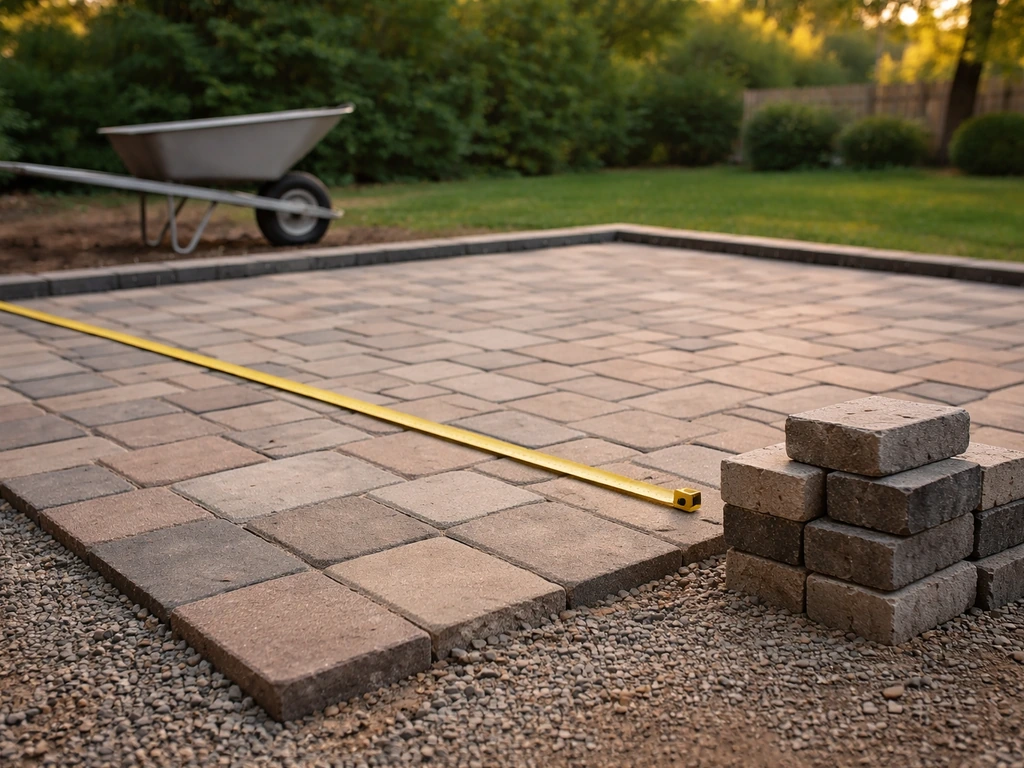
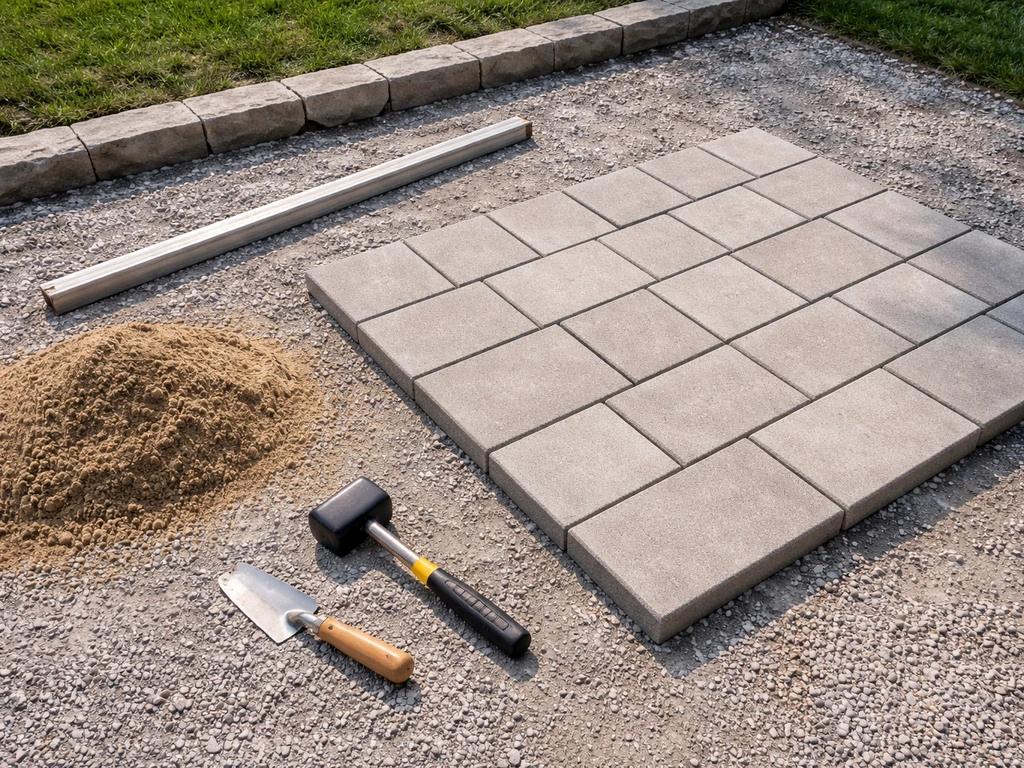
Here's where most homeowners start: what's the total bill going to look like? The installed price per square foot ranges from about $8 on the low end (basic concrete pavers, simple layout, competitive market) up to $25 or more for premium natural stone with complex patterns. Midrange projects using standard concrete or brick pavers typically land around $12 to $18 per square foot. Use this table as a starting point before you get quotes.
| Patio Size | Square Footage | Low Estimate (installed) | Mid Estimate (installed) | High Estimate (installed) |
|---|---|---|---|---|
| 10x10 | 100 sq ft | $800 | $1,500 | $2,500 |
| 12x12 | 144 sq ft | $1,150 | $2,160 | $3,600 |
| 16x16 | 256 sq ft | $2,050 | $3,840 | $6,400 |
| 20x20 | 400 sq ft | $3,200 | $6,000 | $10,000 |
| 20x30 | 600 sq ft | $4,800 | $9,000 | $15,000 |
These are realistic all-in numbers based on current contractor pricing, which typically includes excavation, hauling spoil, compacted gravel base, bedding sand, the pavers themselves, edge restraints, cuts, and polymeric sand. They do not include permits, drainage work, steps, or a fire pit. Since a fire pit usually adds extra base prep, heat-safe materials, and additional labor, it can raise the total cost beyond standard paver patio pricing They do not include permits, drainage work, steps, or a fire pit.. If your project has any of those add-ons, budget extra.
Paver cost per square foot and how that translates to your project
Material-only paver pricing is what you'd pay at a supply house or big box store before any labor is involved. Concrete pavers run about $3.40 to $6.20 per square foot for the pavers themselves. Natural stone and flagstone jump to $7 to $16 per square foot for materials alone. Brick pavers fall somewhere in between, often $5 to $9 per square foot at retail.
To estimate your material cost, just multiply your patio's square footage by the per-square-foot price of the paver you want, then add 10% for cuts and waste. For a 20x20 patio (400 sq ft) using mid-grade concrete pavers at $5 per sq ft, you'd need about 440 sq ft worth of pavers, which comes to roughly $2,200 in materials before delivery. That's a long way from the installed price of $6,000 to $10,000, and the gap is exactly where labor and base materials live.
The per-square-foot price can be deceptive on its own because it doesn't tell you anything about the base system, which is often more expensive than the pavers themselves for smaller patios. Always price both separately.
Pallet pricing: how much a pallet of pavers costs and how far it goes
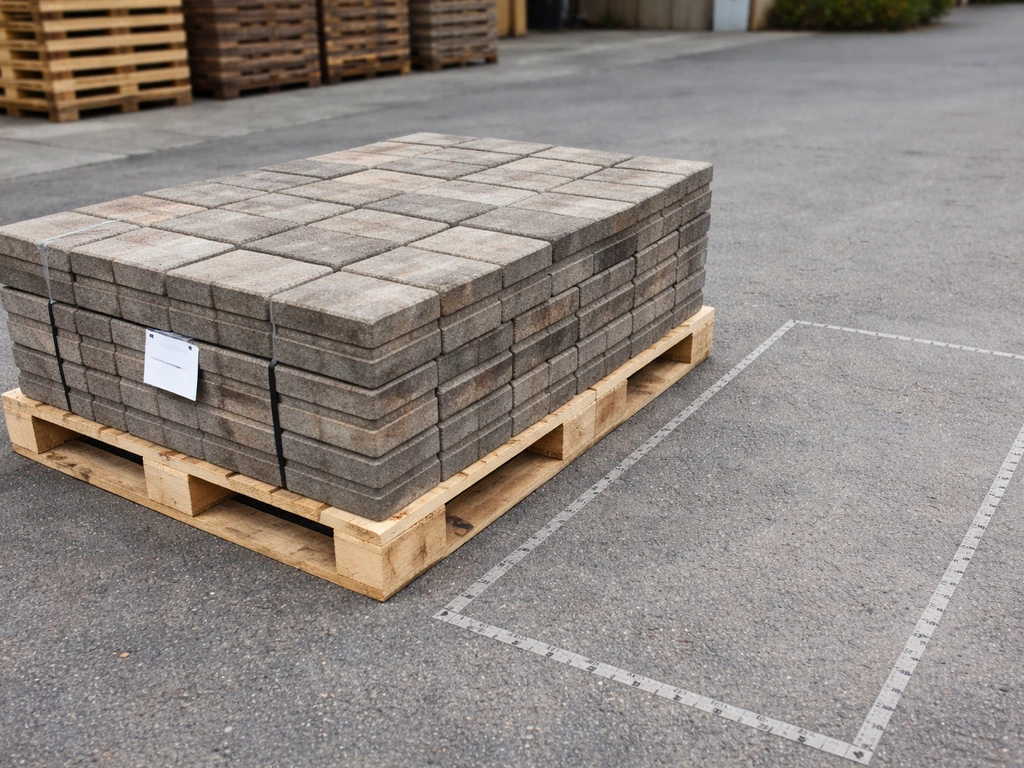
If you're shopping at a home improvement store or stone yard, pavers are usually sold by the pallet rather than individually. Pallet prices vary a lot depending on paver type, size, and brand, but here's a general range that holds true across most markets in 2026: a pallet of standard concrete pavers runs roughly $300 to $700, and a pallet of natural stone or premium brick can run $600 to $1,500 or more. Decorative brands like Belgard, Unilock, or Techo-Bloc typically sit toward the upper end of that range.
Coverage per pallet depends almost entirely on the size of the individual pavers. Smaller pavers like standard Holland-style brick units pack more densely, and a single pallet of Belgard's Holland pavers (540 pieces) covers around 100 square feet. Larger patio slabs cover more per piece, but you get fewer pieces per pallet, and the coverage per pallet is often similar. As a general rule, budget for one pallet covering approximately 100 to 160 square feet, but always confirm the exact square-footage-per-pallet spec for the product you're buying before placing an order.
For a 12x12 patio (144 sq ft), you'd typically need 1 to 2 pallets. For a 20x20 (400 sq ft), plan on 3 to 4 pallets depending on coverage. Add one extra partial pallet for cuts and breakage. Delivery fees for pallets are often $75 to $150 per pallet and are sometimes left off the quoted price, so confirm upfront.
Installation vs. DIY vs. partial DIY: where the real savings are
Labor typically costs $6 to $12 per square foot when you hire a contractor, and that covers everything from digging out the area to the final sand sweep. For a 20x20 patio, that's $2,400 to $4,800 in labor alone. It's real money, and it's why so many people try to DIY. The question is whether you can actually pull it off, and where it's worth hiring help anyway.
Full DIY: possible, but the base work is where people struggle
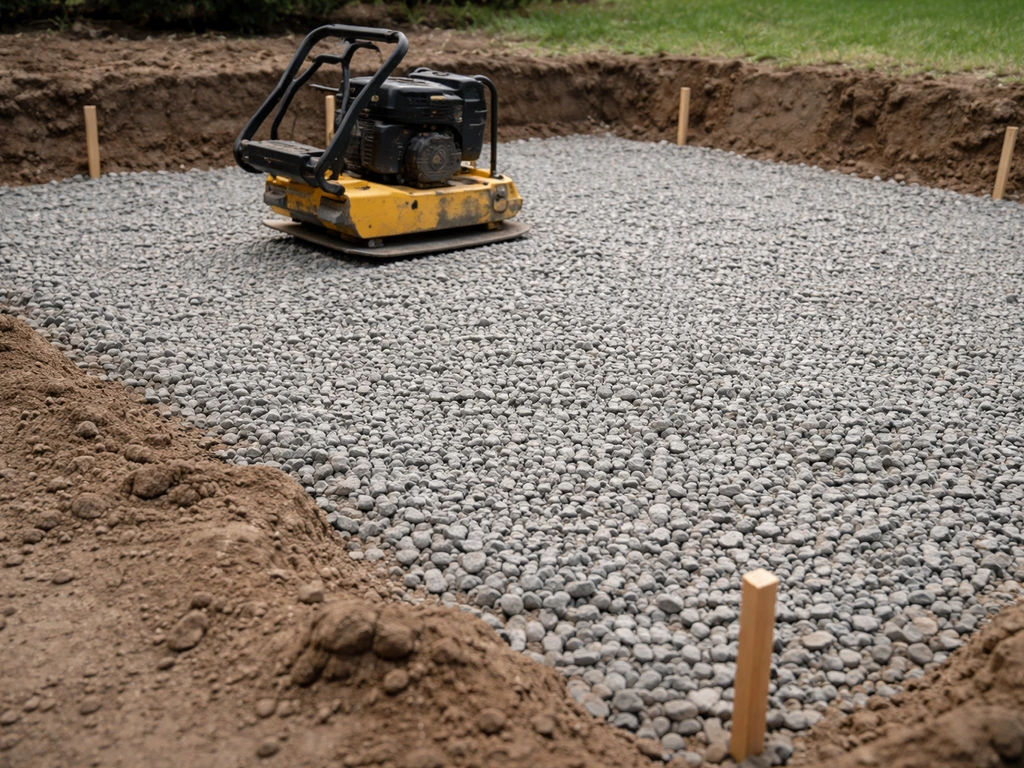
Laying the actual pavers is the easy part. The hard part is the base, and this is what separates a patio that lasts 20 years from one that heaves and settles in three. A proper residential base means excavating 6 to 8 inches below finished grade (4 to 6 inches of compacted gravel base plus about 1 inch of bedding sand plus paver thickness), compacting the gravel in lifts with a plate compactor, getting the slope right for drainage (at least 1/4 inch drop per foot away from the house), and installing edge restraints around the perimeter before you ever place a paver. Renting a plate compactor runs about $80 to $120 per day. If you skip proper compaction or misjudge the slope, you'll be pulling pavers up within a few years.
Partial DIY: the smart middle ground
The most cost-effective approach for most homeowners is to hire a contractor for excavation and base prep, then handle the paver installation yourself. Base prep is physically demanding, requires equipment, and is where mistakes are most expensive to fix. Paver laying is straightforward once the base is correct. Some contractors will price base-only work, saving you 40% to 60% of total labor costs while eliminating the riskiest part of a DIY project.
Don't forget the hidden material costs
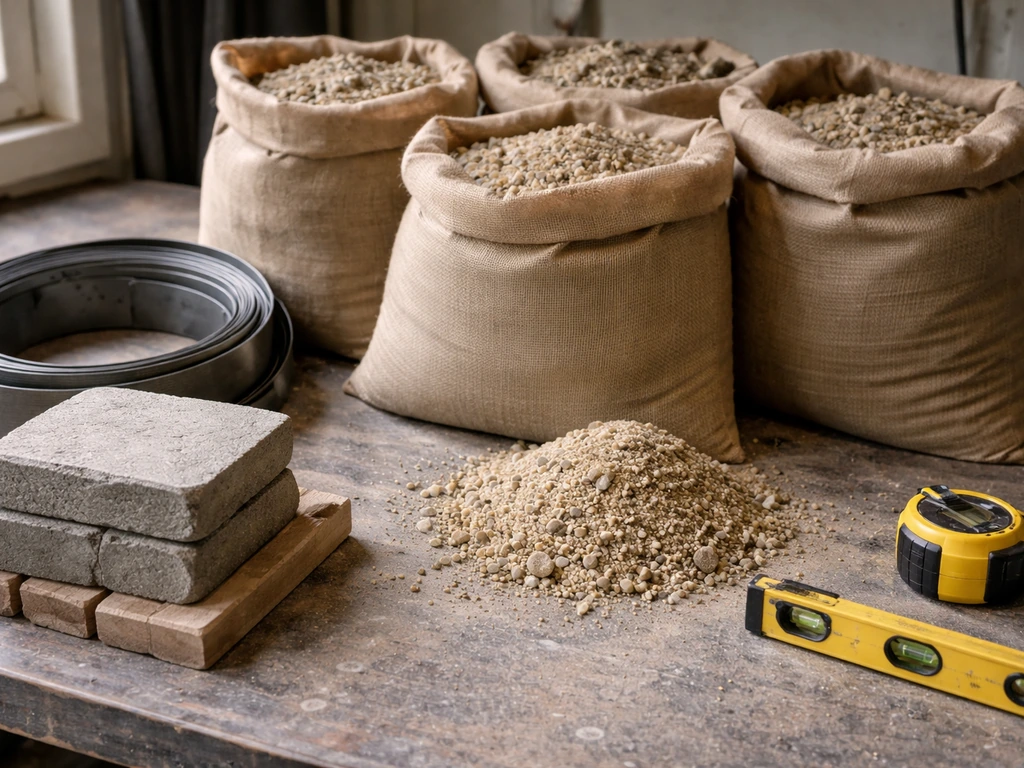
Whether you hire out or DIY, these line items catch people off guard. Budget for them explicitly so your estimate is accurate.
- Crushed gravel base: typically $30 to $65 per ton, and you'll need several tons for a medium patio
- Bedding sand: $25 to $50 per ton (coarse concrete sand, not play sand)
- Polymeric jointing sand: one 50 lb bag covers about 75 to 100 sq ft with tight joints; budget $30 to $50 per bag
- Edge restraints: plastic paver restraints with spikes run $1 to $2 per linear foot
- Plate compactor rental: $80 to $120 per day if DIYing
- Geotextile fabric (optional but recommended): $0.15 to $0.35 per sq ft between subgrade and base
- Delivery fees for pavers and aggregate: $75 to $200 per load depending on distance
Budget ranges by paver type
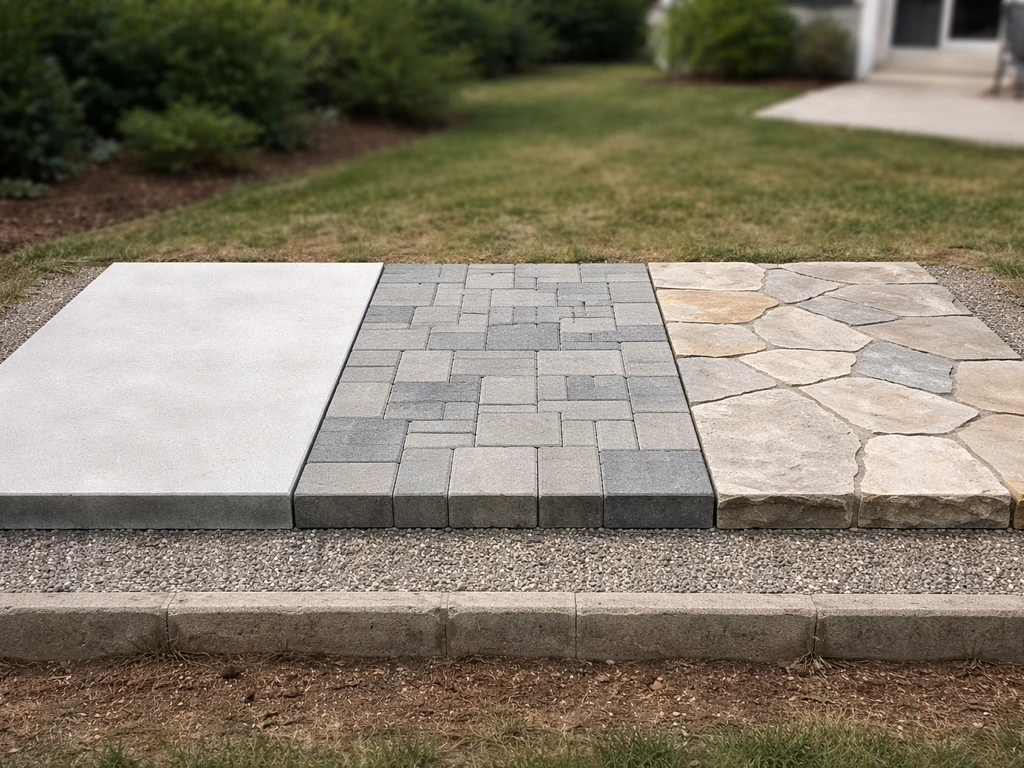
The type of paver you choose has the biggest single impact on your material cost, and it also affects long-term maintenance and appearance. Here's a realistic breakdown of what each option costs in 2026.
| Paver Type | Material Cost (per sq ft) | Installed Cost (per sq ft) | Durability | Notes |
|---|---|---|---|---|
| Concrete pavers | $3.40 – $6.20 | $8 – $18 | Very good | Most popular, widest style selection, easy to replace |
| Brick pavers | $5 – $9 | $14 – $28 | Excellent | Classic look, very durable, slightly higher install cost |
| Flagstone / natural stone | $7 – $16 | $15 – $32 | Excellent | Premium appearance, irregular cuts add labor cost |
| Tumbled concrete | $4 – $7 | $10 – $20 | Very good | Gives aged look at lower cost than natural stone |
| Porcelain pavers | $8 – $15 | $18 – $35 | Excellent | Low maintenance, slippery when wet if wrong finish |
Concrete pavers are the sweet spot for most homeowners: they're durable, come in dozens of styles and colors, and are priced competitively. Brick is a great choice if you want longevity and a classic look and don't mind a slightly higher installed cost. Flagstone and natural stone deliver a premium aesthetic but the irregular shapes mean more cutting and longer labor hours, which pushes installed costs to $15 to $32 per square foot even before you get into premium stone varieties. If a full flagstone patio is out of budget, some contractors will do a concrete base with flagstone set on top, which reduces the base-prep cost.
Regional cost variation and how to get an accurate quote
Where you live matters almost as much as what you choose. Labor costs in major metro areas on the coasts (Los Angeles, New York, Boston, Seattle) tend to run 20% to 40% higher than in the Midwest or rural Southeast. Material costs also vary because delivery distance from quarries or manufacturing plants affects freight. A basic concrete paver patio that costs $12 per square foot installed in Kansas City might run $16 to $18 in San Francisco for the exact same work.
Getting three quotes is the standard advice, and it's still good advice, but only if you're comparing the same scope of work. Contractors bid paver patios very differently, and a low quote often reflects a thinner base, no edge restraints, or basic joint sand instead of polymeric sand. Here's what to ask every contractor before accepting any number.
- What is the base depth and gravel type you're using? (Should be at least 4 inches of compacted crushed stone for pedestrian patios)
- Is excavation and spoil removal included, or is that a separate line item?
- What brand and type of jointing sand are you using? (Polymeric sand costs more but lasts longer)
- Are edge restraints included, and what type?
- Does your quote include any grading or drainage work if needed?
- What's the warranty on your installation, and do the pavers come with a manufacturer warranty?
- Are permits required in this municipality, and is pulling the permit included?
- What happens if the subgrade soil is soft or needs amendment — is that an extra charge?
Soft soil and unexpected drainage issues are the two most common reasons paver patio projects go over budget. If a contractor gives you a firm price without visiting the site and looking at the ground conditions, that quote is not reliable. Insist on a site visit before signing anything.
For material-only shoppers, call at least two local stone yards in addition to big box stores. Stone yards often have better pricing on bulk orders and can tell you exactly how many pallets you need based on your patio dimensions and the specific product's coverage per pallet. The spec sheet for every paver product lists square feet per pallet, so ask for it and do the math yourself rather than relying on a salesperson's estimate. The Techo-Bloc product data PDF example shows pallet coverage figures in square feet per pallet for specific SKUs, using the “SF per pallet” values listed in the packaging or specification tables blank" rel="noopener noreferrer">The spec sheet for every paver product lists square feet per pallet. And factor in delivery: for multiple pallets, delivery from a stone yard can be cheaper than per-pallet fees from a home improvement store.
Paver patio costs vary widely, but once you understand the cost-per-square-foot math, the pallet coverage calculation, and the line items hiding in a contractor quote, you can build a realistic budget before you talk to anyone. If you want a quick benchmark, paver patio pricing is commonly listed as a cost per square foot and depends on size and materials paver patio costs. A typical mid-size patio runs $8 to $18 per square foot installed for concrete or brick pavers, materials alone are $3 to $9 per square foot depending on type, and a pallet of standard concrete pavers covers roughly 100 to 160 square feet. HomeGuide provides blank" rel="noopener noreferrer">installed and material pricing ranges for paver-related projects and notes that material costs vary by paver type, including example totals for different project sizes. Get three itemized quotes, compare them on the same scope, and don't sign anything without confirming what's under the pavers counts as much as what's on top. For a 1000 sq ft paver patio, your total cost will follow the same square-foot pricing math, then scale up based on your chosen paver type and installed rates in your region 1000 sq ft paver patio cost.
FAQ
How much are patio pavers per square foot if I’m calculating a full installed cost myself?
Use the installed range ($8 to $25 per sq ft) but check that the quote includes the base system (compacted gravel, bedding sand), edge restraints, and polymeric sand. Many “paver-only” or “labor-only” quotes omit one of these line items, which can change your final per-square-foot number by several dollars.
What’s the best way to estimate patio paver quantity when pavers are sold by pallets?
Compute your patio square footage, then divide by the product’s listed square-feet-per-pallet. After that, add a waste buffer for cuts and breakage (the article suggests about 10% for materials), and add at least one additional partial pallet if your math lands close to the next whole pallet.
Do I need more pavers if my patio has curves or a complex pattern?
Yes. Curves and intricate borders usually increase cutting, which raises waste beyond the basic 10% figure. As a practical rule, expect closer to 12% to 15% extra material for patterns that require many cuts, especially with natural stone or irregular units.
Are delivery fees included in pallet pricing, and how should I budget them?
Often they are not. The article notes delivery commonly runs about $75 to $150 per pallet, so add delivery as a separate line item when comparing suppliers, especially if one option bundles freight into the product price and the other does not.
Why can two contractors quote very different prices for the same patio size?
The scope of the base and joints is the main driver. If one quote includes full excavation depth, proper compaction, edge restraints, and polymeric sand, and the other uses a thinner base or standard joint sand, the per-square-foot installed cost will legitimately differ.
What happens if the contractor skips proper slope for drainage?
Even if the pavers look fine initially, incorrect slope can cause pooling or water migration under the patio, which increases the chance of heaving, settlement, and joint failure. The article calls for at least a 1/4 inch drop per foot away from the house, so confirm that detail before work begins.
Is it possible to lower cost by doing only part of the job?
Yes, the article suggests the most cost-effective split is hiring out excavation and base prep while DIY is focused on laying pavers. This works best when your base is already correctly leveled and compacted, since redoing a bad base is much more expensive than re-laying pavers.
Can I reuse base materials or existing patio areas to save money?
Usually you should not. If an existing slab, badly settled base, or old joint sand is in place, it can compromise leveling and compaction. The safer cost-saving move is reusing only what is structurally sound, and asking the contractor to inspect and specify whether full base replacement is required.
Do patio pavers require a special type of sand for the joints?
Many projects use polymeric sand, and that matters for long-term stability. If a quote specifies polymeric sand, confirm the product type and whether it includes the correct application method (usually sweep-in and activation). If it uses regular sand, you may see shifting or weed growth earlier.
How many pallets do I need for a patio size that isn’t a multiple of the pallet coverage?
Always round up based on the product’s square-feet-per-pallet spec. For example, if your calculation leaves you with 2.3 pallets worth of material, plan on 3 pallets plus a small waste allowance, because returns for opened pallets are often limited.
What extra costs should I budget beyond pavers, base, and labor?
Budget for items that can change the work scope, such as permits, drainage adjustments, steps, and features like a fire pit. Also consider small but common add-ons like disposal/hauling for excavated soil and any leveling work for an uneven yard.
How much does paver type change total cost beyond the material price?
It affects labor and the cutting intensity, not just material. Irregular or natural stone typically increases labor hours due to more cutting and layout time, which can push installed costs higher even when material price overlaps with concrete or brick ranges.
Should I get a site visit before accepting a quote?
Yes, especially on sloped yards or if you suspect drainage or soft soil. The article notes firm pricing without inspecting ground conditions is a red flag. Ask for a site visit and make sure the quote is based on actual excavation depth and drainage considerations.
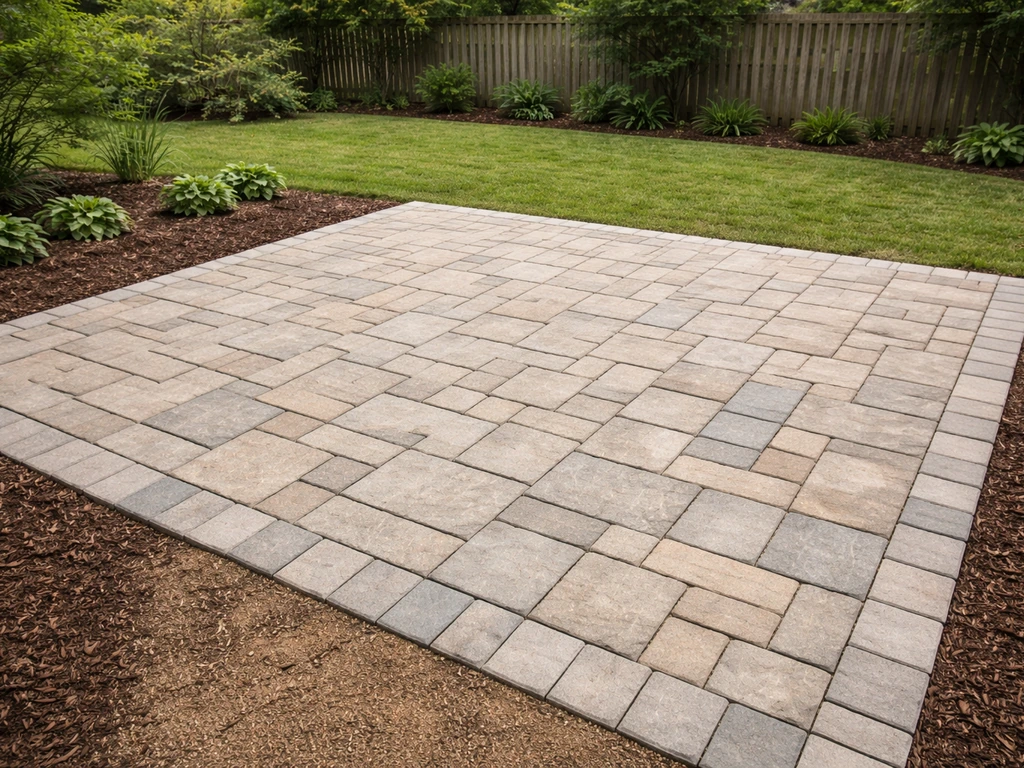
Patio paving costs by material and size, including small patios, repaving, and quote line items for budgeting.
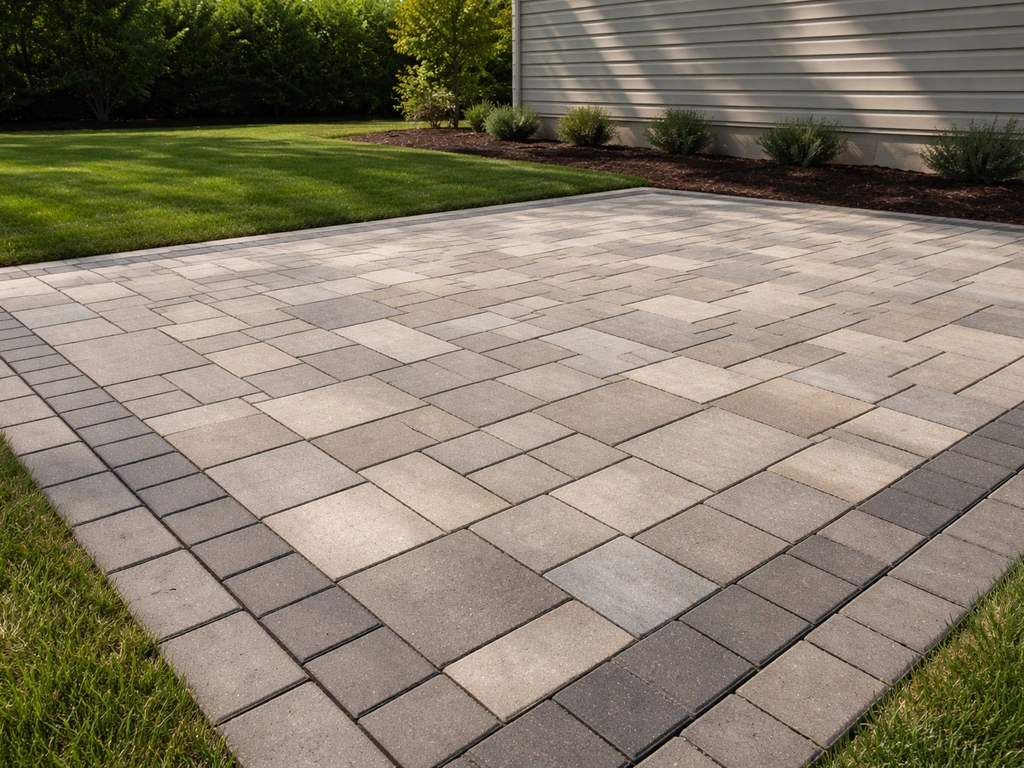
Ballpark and per-square-foot costs for a paver patio, with a full itemized breakdown and DIY vs pro budgeting.
Patio cost guide with real price ranges by size and material, full line-item budget, DIY vs install, and quote checklist