
Paving a patio professionally runs anywhere from $8 to $25 per square foot installed, depending on the material you choose. A basic concrete patio lands between $8 and $18 per square foot, concrete pavers run $10 to $20, brick pavers come in around $14 to $24, stamped concrete sits at $10 to $20, and natural stone or flagstone can push $15 to $30 or more. For a typical 200 to 400 square foot patio, that means a realistic all-in budget of $2,000 on the low end for a small plain-concrete job up to $12,000+ for a large natural stone install. Those numbers include materials, base prep, and labor.
How Much Does Patio Paving Cost? Prices by Material and Size

Felix Carver
15 May 2026
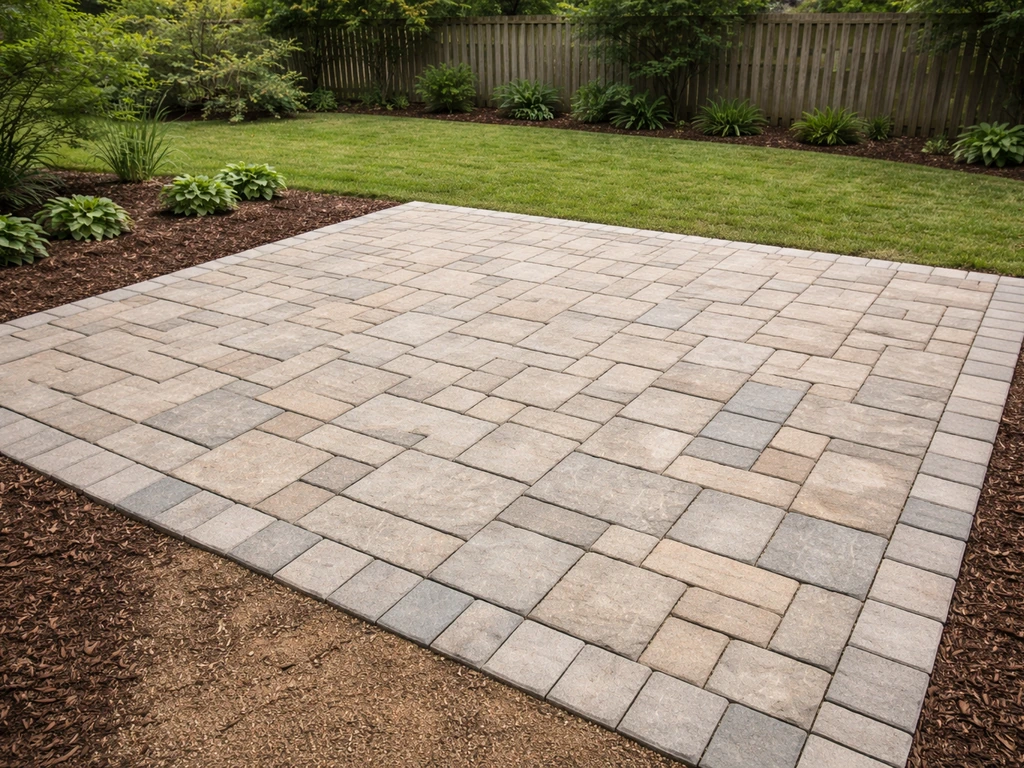
Price ranges by material, side by side
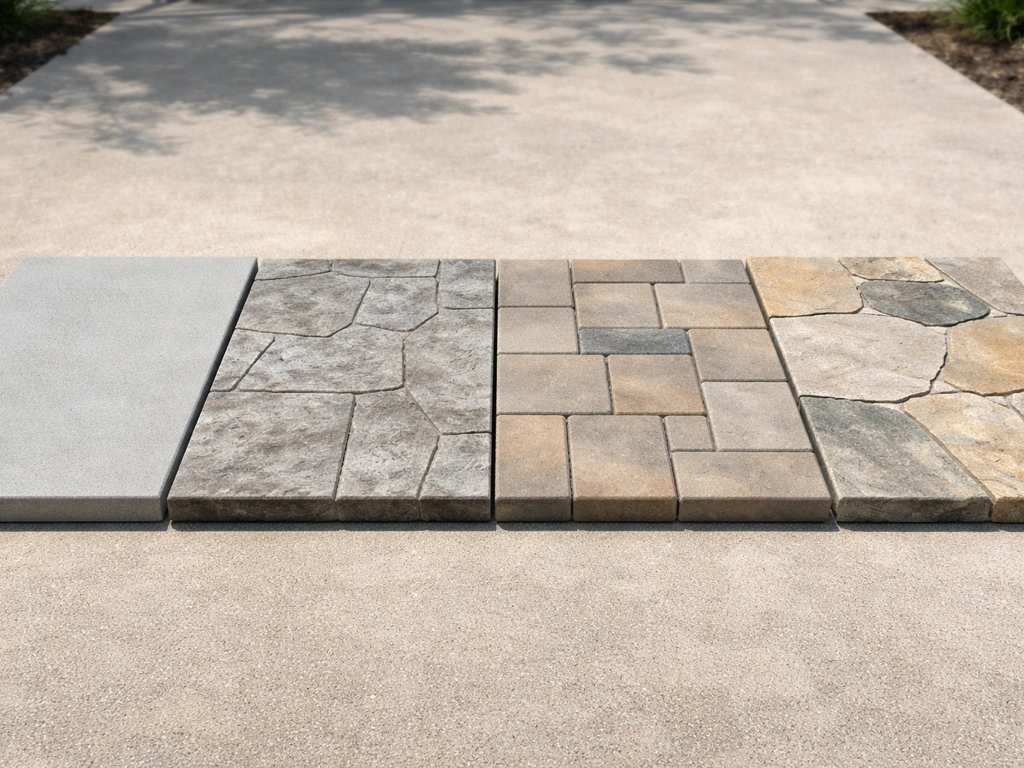
The single biggest lever on your patio paving cost is the material you pick. Everything else (size, labor, base prep) multiplies off that foundation. Here is a straightforward look at installed cost ranges across the most common patio materials, so you can orient your budget before getting into the details.
| Material | Installed Cost (per sq ft) | Notes |
|---|---|---|
| Plain concrete | $8 – $18 | Most affordable; poured 6 inches deep; durable long term |
| Concrete pavers | $10 – $20 | Flexible, replaceable; professional labor ~$4–$11/sq ft |
| Stamped concrete | $10 – $20 | Complex patterns push toward $20+; great visual value |
| Brick pavers | $14 – $24 | Classic look; labor-intensive to lay; long lifespan |
| Natural stone / flagstone | $15 – $30+ | 300 sq ft averages ~$9,000 installed nationally |
If you are comparing paver options specifically, per-square-foot paver material prices vary a lot on their own before labor even enters the picture. A quick way to estimate your budget for pavers is to calculate your square footage and then apply the typical per-square-foot paver patio pricing range paver patio cost. Knowing your installed all-in budget is more useful than shopping material costs alone. To pin down a solid estimate, you will want to understand how much does a paver patio cost per sq ft in your area.
What actually drives the price up (or down)
Material type
As the table above shows, material choice is the biggest cost variable. Concrete is cheap to pour but a plain gray slab will not win any design awards. Stamped concrete gives you decorative looks for less than stone, but repairs are harder since you cannot just pull one unit. Pavers and brick cost more upfront but individual units can be replaced if one cracks or settles. Natural stone is genuinely beautiful and genuinely expensive, both for the material itself and the skilled labor needed to set irregular pieces properly.
Base preparation and excavation
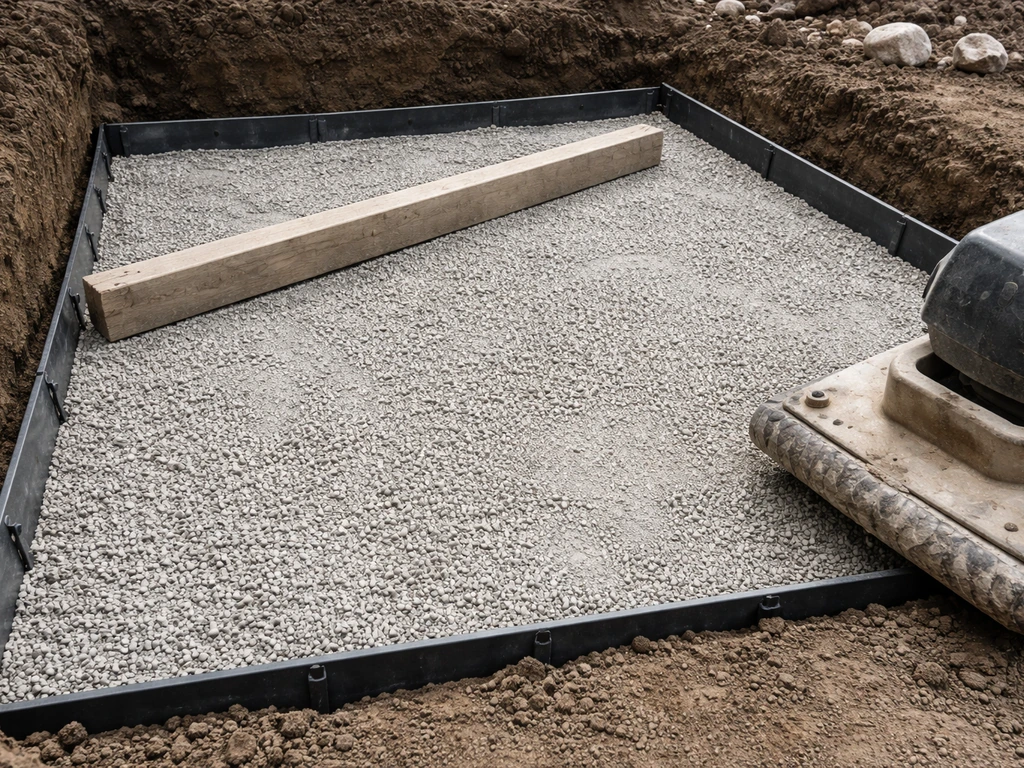
Base prep is the line item homeowners most often underestimate. For a paver patio, the standard build requires 4 to 6 inches of compacted granular aggregate base plus at least 1 inch of bedding sand before a single paver goes down. For concrete, contractors typically pour at 6 inches deep. Budget $3 to $5 per square foot just for excavation and base on a standard site. If your yard needs serious re-grading, imported fill, geotextile fabric, or drainage work, that can push base prep costs higher. Base material components like Class II road base gravel, edging restraints, bedding sand, and jointing sand add roughly $1.40 to $2.20 per square foot on top of the labor to place them.
Labor rates
Professional paver installers typically charge $50 to $80 per hour, which translates to roughly $4 to $11 per square foot in labor for paver work. Concrete labor runs $5 to $15 per square foot depending on finish complexity. Natural stone installation labor is the most expensive at $9 to $17 per square foot, because fitting irregular pieces takes real skill and time. Labor is usually 40 to 60 percent of your total installed cost, so do not get anchored on cheap material prices alone.
Site complications and add-ons
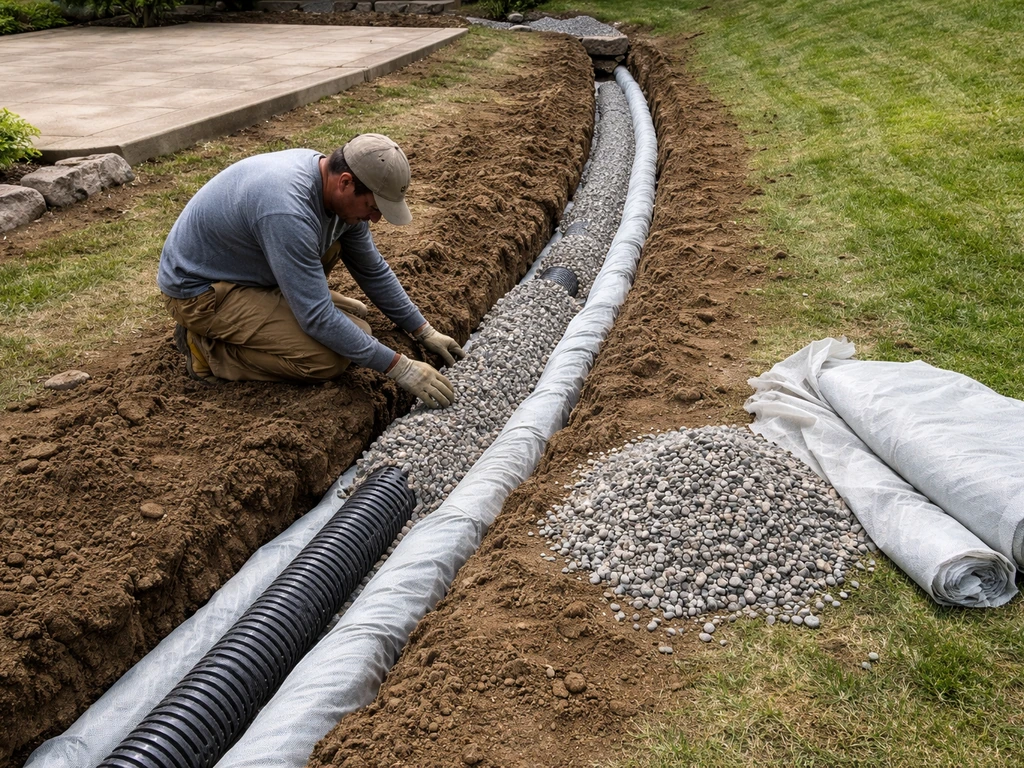
- Poor drainage or standing water requiring French drains or grading work
- Sloped yards needing significant re-grading or retaining structures
- Demolishing and hauling away an existing patio (typically $1 to $3 per sq ft extra)
- Complex shapes, curves, or patterns that increase cut waste and labor time
- Access restrictions (backyard-only, narrow gates) that limit equipment use
- Permits, which some municipalities require for patios over a certain size
What it costs at common patio sizes
Knowing the per-square-foot ranges is useful, but most people think in terms of their actual patio footprint. Here are realistic total installed cost ranges for the sizes homeowners most commonly build, across the two most popular material categories: concrete and pavers. For a 1,000 sq ft paver patio, multiply the typical per-square-foot paver installed costs by 1,000, then adjust for base prep, labor, and any site issues how much does a 1000 sq ft paver patio cost.
| Patio Size | Square Feet | Concrete (installed) | Pavers (installed) | Natural Stone (installed) |
|---|---|---|---|---|
| 10 x 10 | 100 sq ft | $800 – $1,800 | $1,000 – $2,000 | $1,500 – $3,000 |
| 12 x 12 | 144 sq ft | $1,150 – $2,600 | $1,440 – $2,880 | $2,160 – $4,320 |
| 20 x 20 | 400 sq ft | $3,200 – $7,200 | $4,000 – $8,000 | $6,000 – $12,000+ |
| 16 x 20 | 320 sq ft | $2,560 – $5,760 | $3,200 – $6,400 | $4,800 – $9,600 |
| 10 x 20 | 200 sq ft | $1,600 – $3,600 | $2,000 – $4,000 | $3,000 – $6,000 |
The 20x20 concrete estimate of $3,200 to $7,200 aligns with what ConcreteNetwork reports for that size. Notice how dramatically costs scale between a 100 square foot and 400 square foot project. A 300 square foot natural stone patio averages around $9,000 nationally, ranging from about $6,250 to $11,500. If you are budgeting for a specific size, use the midpoint of the range as your planning number, then adjust based on your material choice and what contractors quote for your area.
Small patios cost more per square foot, and here is why
If you are paving a small patio (think 100 to 150 square feet), expect to pay more per square foot than the standard ranges suggest. A contractor bringing a crew, equipment, and materials to your yard has fixed costs regardless of whether they are pouring 100 square feet or 400 square feet. Crew mobilization, delivery minimums, equipment transport, and the time it takes to set up and tear down are the same either way. Those fixed costs get spread over fewer square feet on a small job, which drives the effective per-square-foot rate up.
On a small patio, you might realistically pay $15 to $25 per square foot for plain concrete that would cost $8 to $12 per square foot on a larger job. Many contractors also have minimum job charges, often in the $800 to $1,500 range, which means a 100 square foot patio automatically hits that floor. If you are doing a small patio, get at least three quotes, because small-job pricing varies more between contractors than large jobs do.
Repaving and overlays: when you do not need to start from scratch
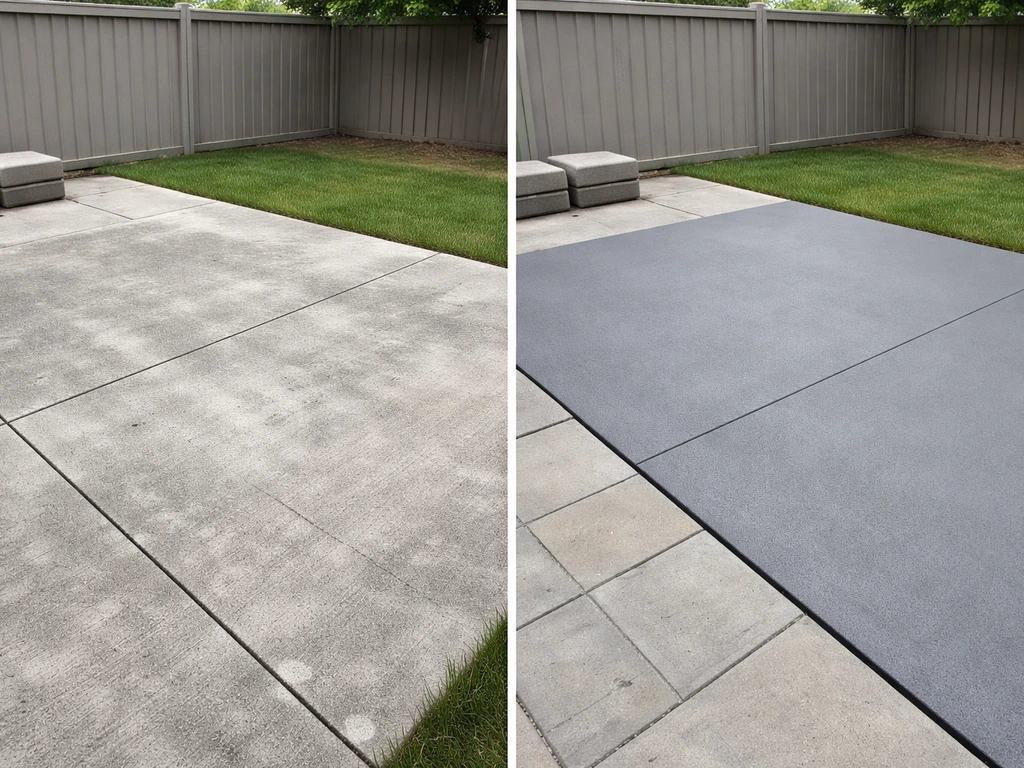
If you already have an existing concrete patio that is in decent structural shape but looks dated or worn, resurfacing it is significantly cheaper than tearing it out and starting over. Concrete resurfacing (a basic overlay) typically runs $4 to $10 per square foot. A decorative concrete overlay lands around $6 to $10 per square foot, and a stamped concrete overlay costs $6 to $12 per square foot for professional work. Compare that to $10 to $20 per square foot for a full stamped concrete pour and the savings are real.
The key caveat is that overlays only work when the existing slab is structurally sound. If you have significant cracking, heaving, settling, or underlying base failure, a bonded overlay is not recommended and will likely crack and delaminate within a few seasons. In those cases, full removal and replacement is the right call, even if it hurts the budget. A good contractor will assess the existing slab and tell you honestly whether an overlay is a viable option or a waste of money. If someone quotes you an overlay without evaluating the current slab condition, that is a red flag.
| Scope | Cost Per Sq Ft | Best For |
|---|---|---|
| Basic concrete resurfacing | $4 – $6 | Worn but structurally sound slabs |
| Decorative overlay | $6 – $10 | Cosmetic refresh, color, or texture |
| Stamped concrete overlay | $6 – $12 | Pattern/design upgrade without full demo |
| Full concrete replacement | $8 – $18 | Cracked, heaving, or failed base slabs |
| Full paver install (new) | $10 – $20 | Upgrading from concrete to pavers |
DIY vs hiring a contractor: real cost comparison
DIY patio paving can save 30 to 50 percent on labor costs, but it comes with real risks and hidden expenses that can close that gap fast. Here is an honest breakdown.
Where DIY saves money
The labor portion of a patio install is usually 40 to 60 percent of the total cost. On a $4,000 paver patio, you might save $1,600 to $2,400 by doing it yourself. That is real money. DIY is most viable for concrete pavers on a flat, accessible site where base prep is straightforward. Materials are the same price regardless of who installs them.
What DIY actually costs you
- Tool rentals: plate compactor ($60–$150/day), concrete saw ($60–$100/day), and other equipment add up quickly
- Base materials: gravel, sand, edging restraints, and geotextile fabric still need to be purchased and delivered
- Time: a 200 square foot paver patio can easily take an inexperienced crew a full weekend or longer
- Mistakes: improper base compaction is the number-one DIY failure point, leading to settling, uneven surfaces, and water pooling
- Disposal: excavated soil and debris need to go somewhere, often a rental dumpster at $250 to $450
The honest verdict
DIY makes the most sense for concrete pavers on a simple, flat site where you have time, physical ability, and patience to get the base prep right. It is a bad idea for concrete pouring (which requires a mixer, fast pour timing, and finishing skill), natural stone (which requires experience setting irregular pieces to proper slope and drainage), or any site with drainage issues or significant slope. If the base is not properly compacted in layers, the whole patio will move and settle. Belgard, one of the largest paver manufacturers, is explicit that base compaction done in lifts is non-negotiable for a long-lasting result. That step alone is where most DIY jobs go wrong.
How to get accurate quotes and compare bids
Getting three quotes is standard advice, but getting three comparable quotes takes some preparation on your end. If you send three contractors the same vague request, you will get three completely different bids that are almost impossible to compare. Here is how to make your quotes work for you.
What to have ready before you call
- Measured dimensions of the patio area (length x width, or a sketch for irregular shapes)
- Your material preference or a shortlist (concrete vs. pavers vs. stone)
- Whether there is an existing patio to demolish and haul away
- Any drainage or slope concerns you are aware of
- Your timeline and whether you have flexibility
Line items to ask for in every bid
Ask each contractor to break out their quote into line items rather than accepting a single lump sum. The key line items to look for are: excavation and grading, base material and depth (ask specifically how many inches of gravel and sand they are specifying), materials (type, brand, thickness), labor, edge restraints and jointing material, demolition and haul-away if applicable, and drainage work if needed. Add the fire pit into your scope and budget line items for gas, electrical, or venting, plus extra masonry or steel support as needed. A concrete bid should specify pour depth (standard is 6 inches for a patio). A paver bid should specify base depth (4 to 6 inches of compacted gravel plus 1 inch of bedding sand is the standard). If a bid does not include those specs, ask directly before signing anything.
Regional pricing differences
Labor rates vary significantly by region. Contractors in the Northeast and West Coast metros typically charge 20 to 40 percent more than the national averages shown here. Rural areas and the Midwest often come in below average. The material price ranges above are national baselines, so adjust your expectations up or down based on where you live and what local contractors quote. Seasonal timing matters too: scheduling a project in late fall or early winter (where climate allows) often gets you better pricing because contractors have less backlog.
Red flags in contractor quotes
- No mention of base depth or base material type
- A quote that is 40%+ below every other bid without explanation
- No written contract or scope description
- Pressure to pay a large deposit upfront (10 to 20% is reasonable; 50%+ is not)
- Offering an overlay on a visibly cracked or heaving slab without assessing structural condition first
- Unable to provide references or photos of similar completed projects
Once you have itemized quotes in hand, comparing them is straightforward: check that they cover the same scope, the same base depth, and the same materials. Price differences after that usually reflect labor rate differences, quality of materials, or one contractor cutting corners on base prep. The cheapest bid is often the one that skimps on base, and a failed base means the whole patio gets redone in a few years. That is a much more expensive outcome than spending a bit more upfront.
FAQ
Is the $8 to $25 per square foot price for patio paving the total installed cost or just materials?
It is typically the installed range, meaning it includes materials, base preparation, and labor. If a quote you receive is much closer to only material pricing, ask for a detailed breakdown of excavation, compacted base depth, bedding sand, edging restraints, and disposal or haul-away.
How much does patio paving cost for irregular shapes or patios with curves?
Expect a higher effective per-square-foot cost than a simple rectangle because contractors may need additional cutting, more edging, and extra labor to maintain consistent slope and joint lines. A quote should specify how they handle pattern waste (often calculated as extra material percentage) and the slope requirement, not just the final square footage.
What patio paving cost should I budget if I need a slope for drainage?
Any drainage slope work increases labor and base depth. Ask whether they are building the base to achieve the required run-off direction and how they will transition the patio elevation to doors, lawn grades, and existing concrete. Poor slope planning can cause pooling even if the surface looks correct at first.
Does removal of an old patio increase the cost a lot?
Yes. Demolition and haul-away can add a meaningful flat fee plus per-square-foot charges, especially for thick slabs or heavily reinforced concrete. Make sure your quote states whether they include breaking depth, disposal fees, and whether they will replace any underlying failed base rather than just patching on top.
Why do paver patio bids vary so much even when the square footage is the same?
Usually it is base design and installation scope. Ask for the specified compacted base depth (not just total inches), the bedding sand thickness, edging restraint type, and the jointing sand or polymeric joint system. Two bids can both claim “paver patio,” but one may underbuild the foundation or use lower-spec materials.
What is the hidden cost people forget: edging, restraints, and cleanup.
Edge restraints and jointing are often overlooked but are critical to prevent migration and uneven settling. Also ask whether cleaning, final compaction after sand/grout, and sealing (if offered) are included, since these can change the “all-in” total even when the surface material price looks similar.
Can I reduce how much patio paving costs by choosing different finishes?
Sometimes. For example, plain concrete typically costs less than stamped or textured finishes, while for pavers you can often reduce cost by selecting a standard color and thickness rather than premium stone-look products. If you want a decorative look on a budget, ask about alternatives like a simpler pattern layout, limited accent borders, or a smaller statement area.
Are there minimum job charges that make small patios more expensive per square foot?
Yes, many contractors have minimums and mobilization fees, which push small jobs higher per-square-foot. Ask whether there is a flat trip charge, delivery minimum, or a minimum labor hours requirement, and confirm how they calculate square footage if your patio is under a certain size.
Does pricing differ if my patio is elevated, near a pool, or on a retaining wall?
It can. Elevated patios and areas needing structural support often require additional base reinforcement, block or steel framing, and drainage detailing. Ask whether the contractor plans any reinforcement or waterproofing measures and whether they are designing for lateral loads, not just surface coverage.
What should I ask a contractor to confirm the estimate is apples-to-apples?
Require a line-item quote that states excavation depth, compacted base depth and material type, bedding sand thickness, paver or stone thickness, edging restraint method, and jointing material. Also ask who provides and installs geotextile fabric (if needed) and whether drainage improvements are included.
Is resurfacing always cheaper than full replacement for concrete patios?
No, it only makes sense when the existing slab is structurally sound. If there is significant cracking from base failure, settlement, heaving, or delamination, an overlay will likely fail early. Ask the contractor to evaluate slab condition and to explain what specific defects would disqualify resurfacing.
If I go DIY, where is the biggest place the cost gap closes?
Base prep mistakes and missing tools or disposal can erase much of the labor savings. Plan for proper compaction in lifts, the right base depth, and correct edging installation. If you have limited access for delivering aggregate, hauling off excavated soil, or you are short on equipment, the “cheap” DIY option often becomes expensive quickly.
How do local labor rates and seasonal timing affect how much patio paving costs?
Labor can be meaningfully higher in major metros and lower in many rural areas, so your real per-square-foot number may drift from national ranges. Timing also matters, late fall or early winter can reduce contractor backlog in some climates, but only schedule around freeze-thaw conditions that could interfere with base work and curing.
Citations
Angi reports patio installation labor for concrete is about $5 to $15 per square foot (and notes most concrete patios are built about 6 inches deep).
https://www.angi.com/articles/how-much-does-concrete-patio-cost-square-foot.htm/
ConcreteNetwork estimates a 20x20 concrete patio costs $3,200 to $7,200 total (labor + materials).
https://www.concretenetwork.com/concrete-patio/cost.html
HomeAdvisor states paver patio professional labor for many paver installations costs around $5 to $10 per square foot, and that stamped/concrete and some stone types can increase to much higher per-sq-ft ranges.
https://www.homeadvisor.com/article.show.What-s-so-Great-about-Paving-Stones.14154.html
Angi says professional paver installers charge about $50 to $80 per hour, which Angi converts to roughly $4 to $11 per square foot (labor impact on total cost).
https://www.angi.com/articles/brick-paver-patio-cost.htm
HomeGuide estimates natural stone patio installation labor at about $9 to $17 per square foot (and distinguishes labor from overall cost factors).
https://www.homeguide.com/costs/stone-patio-cost
ConcreteNetwork reports basic stamped concrete costs between $10 and $14 per square foot, with more involved projects as expensive as $20 per square foot and up.
https://www.concretenetwork.com/stamped-concrete/budget-design-ideas.html
Belgard’s installation guidance says pavers are installed on a compacted granular aggregate base typically 4 to 6 inches deep, followed by bedding sand at least 1 inch deep.
https://www.belgard.com/plan-design/installation-beyond/installation/
Home Depot DIY guidance notes to plan for about 4 inches of gravel base plus about 1 inch of paver sand before adding pavers.
https://www.homedepot.com/c/ah/how-to-install-patio-pavers/9ba683603be9fa5395fab900ba8276e/
Crenshaw Landscaping lists base-prep as a pricing add-on and gives an example range where standard excavation/base is about $3 to $5 per square foot (and higher if enhanced base/geotextile is needed).
https://www.crenshawlandscapingllc.com/blog/paver-patio-cost-complete-guide-2025
LandscapioAI states paver base preparation often adds $1 to $3 per square foot extra on simple sites, and more when the area needs serious excavation/imported fill.
https://www.landscapioai.com/blog/paver-patio-cost-guide-2026
HomeGuide breaks out paver patio base material cost as $1.40 to $2.20 per square foot and notes it includes items such as Class II road base gravel, geotextile fabric, edging/restraint, bedding sand, and joint sand.
https://www.homeguide.com/costs/paver-patio-installation-cost
ConcreteNetwork provides a concrete patio total-cost range example: a 20x20 patio is $3,200 to $7,200 installed (labor + materials).
https://www.concretenetwork.com/concrete-patio/cost.html
Angi gives concrete patio labor pricing and notes most concrete patios are built around 6 inches deep (useful for modeling typical installed cost composition).
https://www.angi.com/articles/how-much-does-concrete-patio-cost-square-foot.htm/
HomeAdvisor reports installed flagstone patio pricing ranges in 2025 data (and includes a 2025 material-cost range reference for flagstone itself).
https://www.homeadvisor.com/cost/outdoor-living/install-flagstone-patio/
HomeAdvisor says installing a 300-square-foot natural stone patio averages $9,000 nationwide and ranges from $6,250 to $11,500 (materials + labor).
https://www.homeadvisor.com/cost/outdoor-living/stone-patios/
LawnStarter states brick paver patios cost about $14 to $24 per square foot installed (labor + materials).
https://www.lawnstarter.com/blog/cost/brick-paver-patio-price/
Angi reports paver installer labor ranges and provides a paver patio cost framework showing labor as a major driver (supporting all-in modeling by multiplying installed $/sf).
https://www.angi.com/articles/brick-paver-patio-cost.htm
HomeAdvisor notes paver installation costs are typically quoted per square foot but can rise when work is more detailed/time-consuming, including small patio constraints like complexity and layout (in its 2025 paver patio cost discussion).
https://www.homeadvisor.com/article.show.What-s-so-Great-about-Paving-Stones.14154.html
ConcreteNetwork explains larger patios tend to price more efficiently while small patios often cost more per square foot due to fixed/crew mobilization and labor-efficiency effects (concrete patio cost narrative).
https://www.concretenetwork.com/concrete-patio/cost.html
EstimateConcrete’s concrete patio cost guide states per-square-foot pricing varies with size/finish and that smaller jobs can carry higher effective per-sq-ft costs due to setup/markup factors (in its concrete patio costing framework).
https://www.estimateconcrete.com/blog/concrete-patio-cost-guide
HomeAdvisor states resurfacing a concrete patio averages about $4 per square foot (and gives stamped concrete overlay cost ranges of roughly $5 to $20 per square foot).
https://www.homeadvisor.com/cost/outdoor-living/concrete-resurfacing-overlays/
HomeGuide says resurfacing is less than replacement and gives resurfacing price guidance: concrete overlay costs $6 to $10 per square foot for a decorative overlay (and references replacement being more expensive overall).
https://www.homeguide.com/costs/concrete-resurfacing-cost
SlabCalc reports a typical stamped overlay thickness range (1/4 to 3/4 inch) and gives a stamped overlay cost range of $6 to $12 per square foot for professional work.
https://www.slabcalc.co/guides/concrete-resurfacing-overlay-guide
ACPA notes bonded concrete overlays are not recommended when the existing pavement is badly deteriorated and substantial removal/replacement of existing layers is necessary during rehabilitation.
https://overlays.acpa.org/Concrete_Pavement/Technical/Fundamentals/Concrete_Pavement_Resurfacing.asp
ConcreteNetwork provides installed concrete patio totals and discusses that DIY vs pro outcome depends heavily on labor and finish requirements (used as baseline for DIY cost comparisons).
https://www.concretenetwork.com/concrete-patio/cost.html
Bellingham Concrete Contractors lists example DIY concrete tool rental/expense line items, including concrete saw/control joint sawing rental at $60 to $100 per day (illustrates DIY tool costs).
https://www.bellinghamconcrete.com/blog/diy-vs-professional-concrete-patio-bellingham/
HomeAdvisor contrasts DIY vs hiring pro for paver patios and includes cost guidance that DIY must still account for labor-intensive base prep and installation complexity (paver patio 2025 DIY vs pro discussion).
https://www.homeadvisor.com/article.show.What-s-so-Great-about-Paving-Stones.14154.html
Home Depot’s DIY paver patio guide describes base-material planning (including paver base) and implies additional costs/time for base excavation and compaction for DIY projects.
https://www.homedepot.com/c/ap/how-to-install-a-paver-patio/9ba683603be9fa5395fab901c57fe7d8
Belgard’s installation process emphasizes proper base compaction and layered construction (useful for warning readers that DIY failure often comes from incorrect base prep).
https://www.belgard.com/plan-design/installation-beyond/installation/
HomeGuide’s paver patio cost page includes a list of base materials and joint materials as components of the base price (Class II road base gravel, geotextile fabric, edging/restraint, bedding sand, joint sand).
https://www.homeguide.com/costs/paver-patio-installation-cost
Belgard lists typical installation layers for paver patios: compacted granular aggregate base, bedding sand, then pavers and jointing material.
https://www.belgard.com/plan-design/installation-beyond/installation/
ACPA advises that when existing concrete is badly deteriorated, bonded overlay systems are not recommended and more removal/replacement is necessary—relevant to what contractors should assess and line-item in bids.
https://overlays.acpa.org/Concrete_Pavement/Technical/Fundamentals/Concrete_Pavement_Resurfacing.asp
Home Depot recommends planning for about 4 inches of gravel base and about 1 inch of paver sand before installing pavers, indicating key measurements homeowners should request in quotes.
https://www.homedepot.com/c/ah/how-to-install-patio-pavers/9ba683603be9fa5395fab900ba8276e/
Angi provides that concrete patios are commonly built about 6 inches deep, a dimension homeowners can use to confirm scope/structural thickness in concrete bids.
https://www.angi.com/articles/how-much-does-concrete-patio-cost-square-foot.htm/
Next Articles
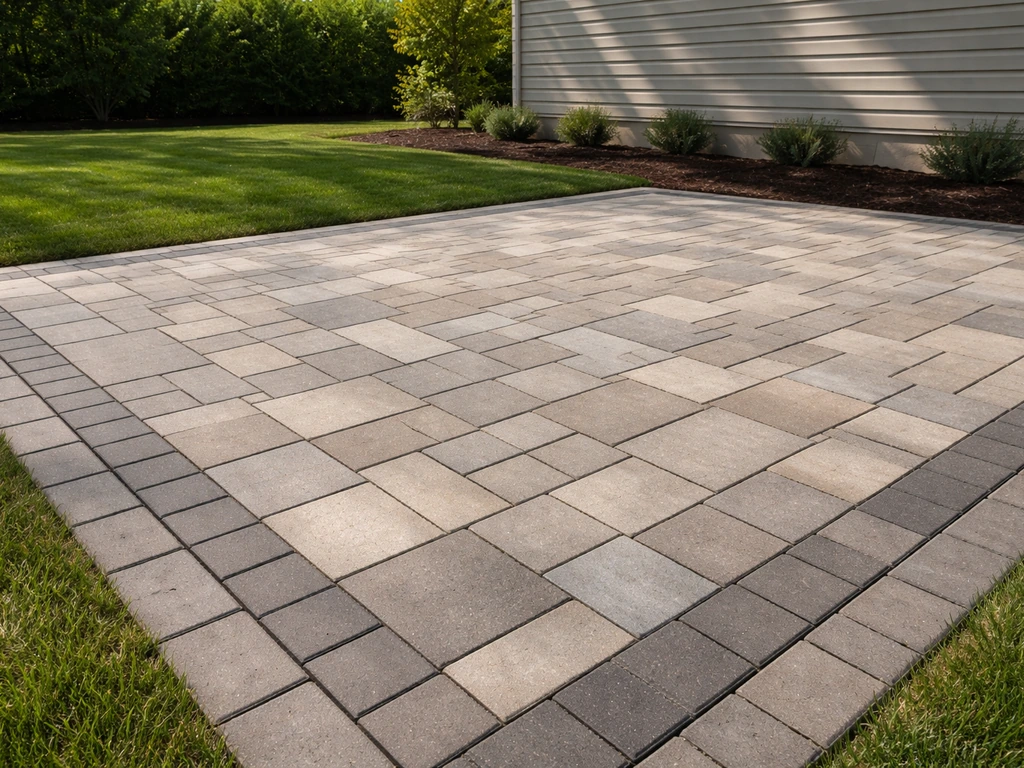
How Much Does It Cost for a Paver Patio? Complete Guide
Ballpark and per-square-foot costs for a paver patio, with a full itemized breakdown and DIY vs pro budgeting.
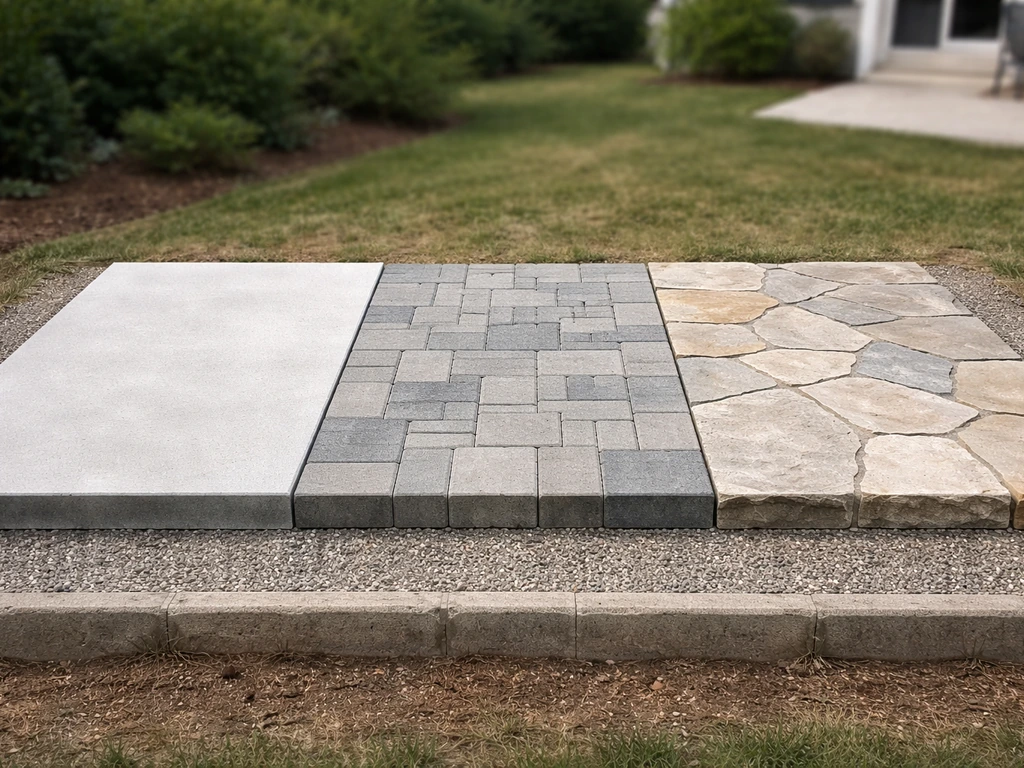
How Much Should I Expect to Pay for a Patio
Patio cost guide with real price ranges by size and material, full line-item budget, DIY vs install, and quote checklist
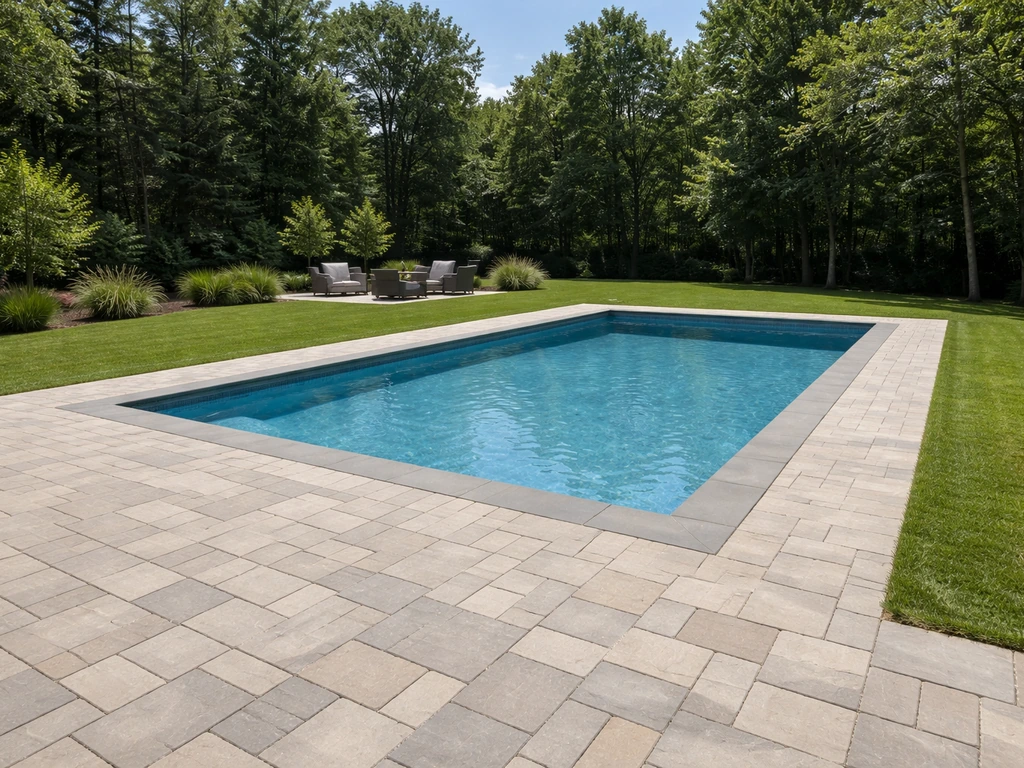
How Much Patio Around Pool: Cost, Size, and Budget Guide
Learn how much patio around a pool costs and how to size square feet, materials, extras, and get real bid line items.