
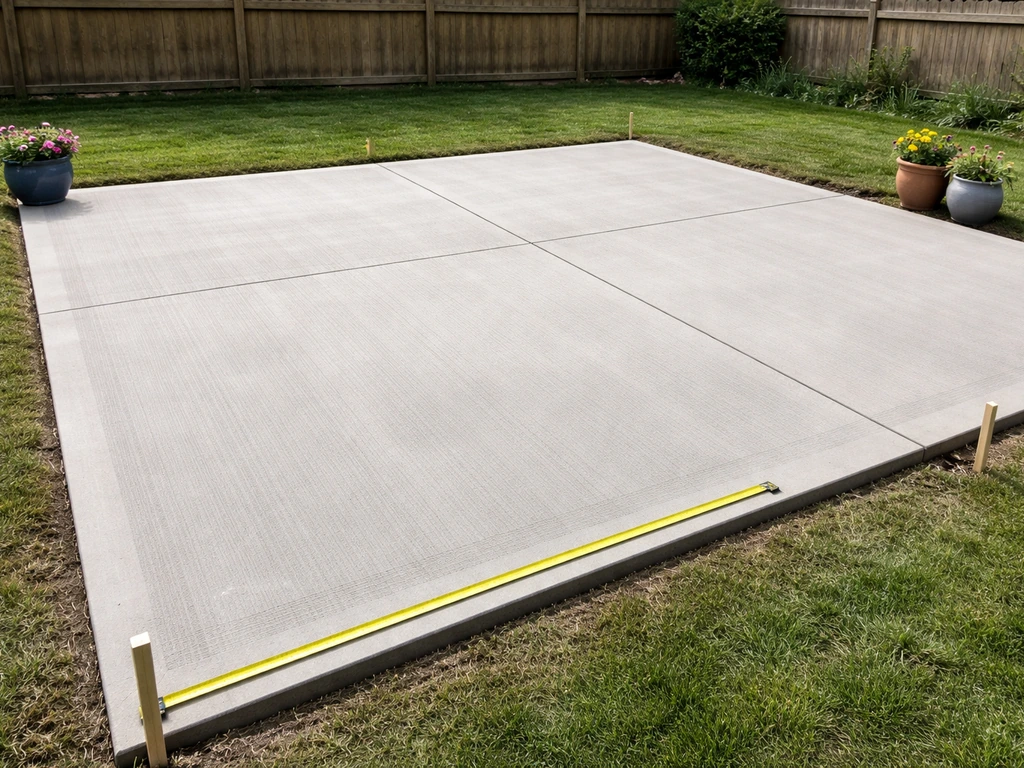
A 20x20 concrete patio (400 square feet) typically costs between $2,400 and $6,400 for a plain broom-finish slab installed by a contractor, which works out to roughly $6 to $16 per square foot. If you want stamped or colored concrete, expect to pay $8 to $20 per square foot or more, pushing the total to $3,200 and up. Those ranges are wide because concrete pricing swings a lot based on your region, how much site prep is needed, and what finish you choose. But if you need a single number to start your budget, plan on $3,500 to $5,000 for a solid mid-range concrete patio at this size.
How Much Does a 20x20 Concrete Patio Cost?

Felix Carver
13 May 2026
What goes into that price: the real cost breakdown
The total cost of a 20x20 concrete patio isn't just the concrete itself. There are four main buckets that contractors price out, and understanding each one helps you spot whether a quote is reasonable or missing something important.
Concrete material
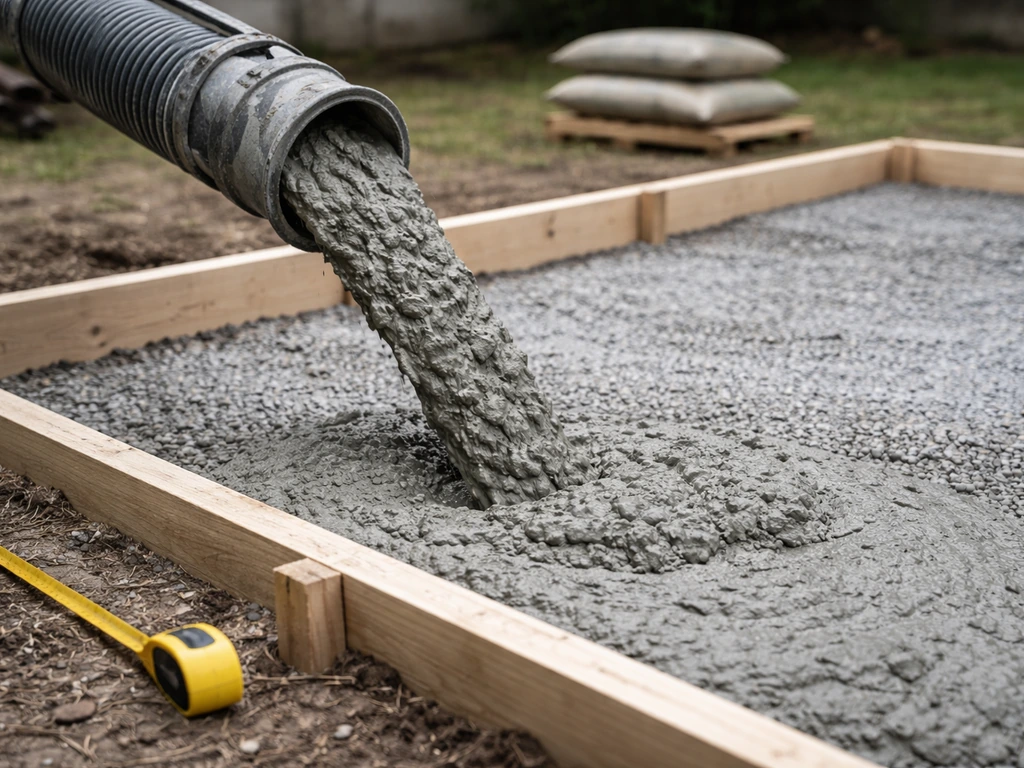
A standard 4-inch slab at 400 square feet requires roughly 5 cubic yards of concrete. Ready-mix concrete typically runs $125 to $175 per cubic yard delivered, so the raw material cost lands somewhere around $625 to $875. That sounds cheap, but material is usually only 30 to 40 percent of the installed total. Labor, finishing, and prep drive the rest.
Base preparation
This is the step homeowners most often underestimate. Before concrete gets poured, the ground needs to be excavated, graded, and compacted. A 4-inch slab usually requires 4 to 6 inches of compacted gravel base underneath it. For a 20x20 area, excavation and base prep can add $300 to $700 to the job depending on soil conditions, how much material needs to be hauled away, and local labor rates. If your yard has clay-heavy soil or poor drainage, that number goes up.
Reinforcement
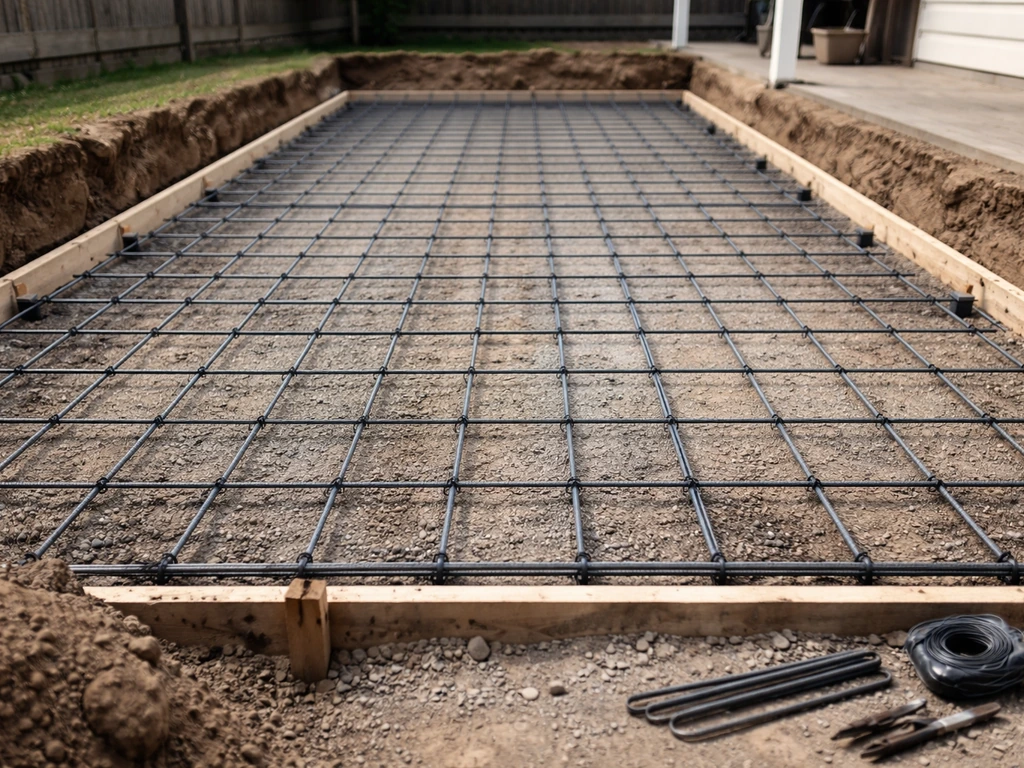
Concrete without reinforcement cracks. Most residential patios use either wire mesh or rebar (half-inch rebar on 18-inch centers is common for patios). Wire mesh is cheaper, running about $50 to $150 for a 400-square-foot area. Rebar is more labor-intensive and adds $150 to $400. Some contractors default to mesh to keep bids low, but if you're in a freeze-thaw climate or have expansive soil, ask specifically about rebar.
Labor and finishing
Labor is the biggest variable. Concrete work requires multiple people showing up the same day, working fast once the pour starts. Basic broom finishing is the cheapest labor-intensive option and still requires screeding, floating, and texturing. HomeGuide also notes that broom-finished concrete patios typically fall around $6 to $13 per square foot installed, and that the finish level can significantly affect total cost broom finishing. Expect labor to account for $2 to $6 per square foot depending on complexity and your area. Control joints need to be cut to prevent random cracking, and these are usually included in a full-service quote but worth confirming.
| Cost Component | Estimated Cost for 20x20 (400 sq ft) | Notes |
|---|---|---|
| Concrete material | $625–$875 | Approx. 5 cu yd at $125–$175/cu yd |
| Base gravel and excavation | $300–$700 | Higher if poor drainage or clay soil |
| Reinforcement (mesh or rebar) | $50–$400 | Rebar costs more but lasts longer |
| Labor and broom finish | $800–$2,400 | $2–$6 per sq ft |
| Control joints | Usually included | Confirm this in your quote |
| Total (plain broom finish) | $2,400–$6,400 | $6–$16 per sq ft installed |
Plain concrete vs. stamped or colored: what the finish does to your bill
The finish level is one of the biggest price levers you have. Here's how the main options stack up for a 20x20 project.
| Finish Type | Cost per Sq Ft (Installed) | Total for 400 Sq Ft | What You Get |
|---|---|---|---|
| Plain broom finish | $4–$13 | $1,600–$5,200 | Textured gray surface, functional, low maintenance |
| Exposed aggregate | $8–$14 | $3,200–$5,600 | Pebbled texture, more visual interest |
| Colored/integral color | $8–$15 | $3,200–$6,000 | Pigment mixed in; fades less than surface stain |
| Stamped concrete | $12–$20+ | $4,800–$8,000+ | Patterns that mimic stone, brick, or wood |
Plain broom finish is the everyday workhorse. It's slip-resistant, holds up well in most climates, and costs the least. Colored concrete adds $2 to $4 per square foot but gives you a finished look that doesn't need much maintenance. Stamped concrete is the premium option and roughly doubles the base price. It looks great but requires sealing every 2 to 3 years to stay looking sharp. If stamped concrete is appealing but feels like a stretch for your budget, it's worth comparing to a stamped concrete patio to see if the look you want is achievable at your price point.
DIY vs. hiring a contractor: honest numbers
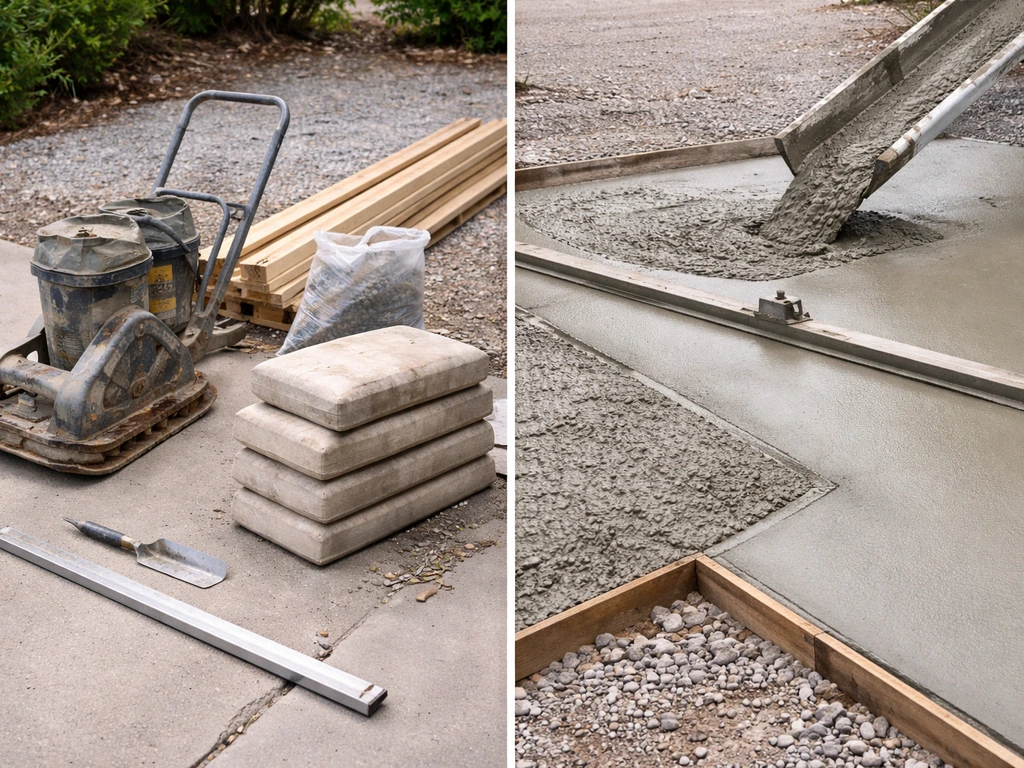
Pouring a 20x20 concrete slab yourself can realistically cut the total cost nearly in half. A DIY pour for 400 square feet might cost $1,200 to $2,500 in materials alone, skipping contractor labor markups. But concrete work has a hard deadline: once the truck shows up, you have roughly 90 minutes before the mix starts setting. If something goes wrong with your screeding, your forms, or you run short on crew, you can end up with an uneven slab that's expensive to fix.
Here's where most DIYers underestimate things: renting equipment (plate compactor, screed board, bull float, trowel) adds $150 to $300 for a weekend. You'll also need to handle concrete disposal, coordinate the ready-mix truck timing, and have enough help on site. Mistakes like poor grading, skipping control joints, or inadequate curing can cause premature cracking within a few years. If you're handy and have done flatwork before, DIY is a reasonable path. If this is your first pour, the savings may not be worth the risk on a 400-square-foot project.
| Approach | Estimated Total Cost | Key Risks |
|---|---|---|
| DIY (materials + rentals) | $1,200–$2,500 | Poor grading, cracking, uneven surface |
| Contractor (broom finish) | $2,400–$6,400 | Low, if you vet the contractor |
| Contractor (stamped/colored) | $4,800–$8,000+ | Low, but sealing costs ongoing |
If you want to keep costs low but aren't confident in full DIY, a middle path works well: do the excavation and gravel base yourself, then hire a concrete crew for the pour and finish. That approach can knock $500 to $1,000 off a contractor quote without taking on the riskiest parts of the job.
What site conditions and design choices actually do to your cost
Two patios at the same 20x20 size can have wildly different price tags depending on what's happening with the site. These are the factors that move the needle most.
- Slope and drainage: A sloped yard requires more excavation and sometimes drainage solutions like French drains or channel drains. Add $300 to $1,500 depending on severity.
- Soil conditions: Clay soil expands and contracts, increasing cracking risk. Contractors may recommend a thicker slab (5 or 6 inches instead of 4) or more compacted fill, adding $200 to $600.
- Slab thickness: Going from a 4-inch to a 6-inch slab adds roughly 50% more concrete. For 400 square feet, that's about $300 to $500 more in material alone.
- Access and location: If equipment can't easily reach the pour site (tight side yards, obstacles), labor costs increase because more work is done by hand.
- Existing concrete removal: Tearing out an old patio first typically runs $1 to $3 per square foot for demolition and disposal, so budget $400 to $1,200 for a full 20x20 removal.
- Permits: Many jurisdictions require a permit for new concrete flatwork. Fees range from $50 to $300 and inspections may be required before pouring.
- Region: Concrete labor costs vary significantly. The Northeast and West Coast tend to run 20 to 40 percent higher than the South and Midwest for the same work.
How to get accurate quotes and avoid getting burned
Getting three quotes is the standard advice, but what you ask for in those quotes matters more than how many you collect. Here's how to compare concrete bids without getting caught off guard.
- Ask for a line-item breakdown. Every quote should separately list concrete (in cubic yards), base prep, reinforcement type (mesh vs. rebar), labor, finish type, and any extras like sealing or control joints.
- Confirm the slab thickness. A 4-inch slab is standard for patios. Some low-ball quotes assume 3.5 inches, which can cause premature cracking. Get the thickness in writing.
- Ask what 'installation' includes. Does it cover excavation? Gravel base? Haul-away? Control joints? A quote that's light on these items may grow once the job starts.
- Ask about concrete mix strength. Residential patios should use at least 3,000 PSI concrete. In freeze-thaw climates, 4,000 PSI is worth the small premium.
- Clarify who pulls the permit. If your area requires one, ask whether the contractor handles it or if you're expected to. Unpermitted work can cause issues when selling your home.
- Get a timeline and payment schedule. Avoid paying more than 10 to 20 percent upfront. Final payment should come after you've inspected the finished surface.
- Check for sealer. A curing and sealing compound applied right after the pour protects the surface. Confirm whether it's included or quoted separately.
Regional pricing is a real factor. If you're in a high-cost metro area like New York, Seattle, or San Francisco, the upper end of those ranges is more likely your starting point. In rural areas of the Midwest or South, the lower end is more realistic. Calling two or three local contractors for ballpark numbers before committing to a full quote process will help you calibrate fast.
How 20x20 compares to other patio sizes and materials
Scaling by size
Concrete patio pricing doesn't scale perfectly with size because some costs (mobilization, equipment delivery, permit fees) are more fixed. Smaller patios often cost more per square foot because those fixed costs get spread across fewer square feet. Here's a rough sense of how sizes compare at a mid-range installed rate of $10 per square foot. For a 15x20 concrete patio, pricing follows the same cost buckets but the total labor and materials scale down from a 20x20 slab 15x20 concrete patio cost.
| Patio Size | Square Footage | Estimated Installed Cost (Plain Concrete) |
|---|---|---|
| 10x10 | 100 sq ft | $800–$1,600 |
| 12x12 | 144 sq ft | $1,100–$2,300 |
| 15x15 | 225 sq ft | $1,600–$3,600 |
| 15x20 | 300 sq ft | $2,100–$4,500 |
| 20x20 | 400 sq ft | $2,400–$6,400 |
| 20x30 | 600 sq ft | $3,600–$9,600 |
A 20x20 is a sweet spot for residential patios. It's large enough to fit a full outdoor dining set and seating area comfortably, and the per-square-foot price tends to be more favorable than smaller slabs because contractor crews can work efficiently at this scale. Stepping up to a 20x30 adds 50% more square footage but doesn't always mean 50% more cost since the crew and equipment are already on site. For a 20x30 layout, costs change mainly because you’re ordering more concrete and base prep, plus your labor hours usually rise with the extra footprint how much does a 20x30 concrete patio cost.
Concrete vs. other materials at 20x20
Concrete is one of the most affordable patio materials to install, but it's not always the cheapest to own long-term. Here's how it stacks up against the most common alternatives for a 20x20 project.
| Material | Installed Cost (400 sq ft) | Maintenance Level | Lifespan |
|---|---|---|---|
| Plain concrete | $2,400–$6,400 | Low (seal every 3–5 years) | 25–50 years |
| Stamped concrete | $4,800–$8,000+ | Moderate (seal every 2–3 years) | 20–40 years |
| Concrete pavers | $5,600–$12,000+ | Low to moderate | 30–50+ years |
| Brick | $6,000–$14,000 | Low | 25–50 years |
| Flagstone | $8,000–$16,000+ | Moderate | 30+ years |
If upfront cost is the main driver, plain concrete wins easily. A 20x20 paver patio typically runs $14 to $30 per square foot installed, which can push the total well past what a comparable concrete slab costs. That said, pavers offer one advantage concrete doesn't: individual units can be lifted and replaced if something shifts or a pipe needs access, whereas a cracked concrete slab often means sectional removal and repour. If you're considering pavers instead of concrete, you can use a similar breakdown to estimate how much a 20x20 paver patio costs DIY. If you're drawn to the look of pavers or natural stone but want to keep costs closer to concrete, stamped concrete offers a middle path, and a full comparison of stamped concrete at the 20x20 scale is worth checking before you decide.
The bottom line: for most homeowners who want a durable, low-maintenance outdoor surface at the lowest installed price, a plain or colored concrete patio at the 20x20 size is hard to beat. Get at least three itemized quotes, confirm what's included in your base price, and decide on your finish level before contractors come out so you're comparing apples to apples.
FAQ
Is $3,500 to $5,000 a fair ballpark if I only want a plain broom-finish patio with no extras?
Often yes, but only if your quote includes the full prep scope (excavation, compacted gravel base, forms, and control joints). If the bid is “slab only,” you may see a cheaper line item but add-ons later (haul-off, permit fees, saw cutting, or minor grading). Ask for an itemized breakdown before you compare prices.
How much can permits and inspections change the total cost of a 20x20 patio?
Permits are usually small compared to the slab, but they can still be enough to shift the low end of a bid by a few hundred dollars, especially in higher-cost cities or if grading/drainage work is required. If your contractor does not mention permits, ask whether they are included and who submits the paperwork.
What’s the real cost difference between wire mesh and rebar for a patio like this?
Material pricing might look close, but the bigger difference is labor and reliability. Rebar typically requires spacing, tie-in, and positioning to stay in the correct zone of the slab, and that extra work can raise cost even when the steel itself is not much more expensive. In freeze-thaw areas or on expansive soils, ask whether rebar will be used and whether chairs or supports will place reinforcement at the right depth.
Do I need thickening or special footing areas for a patio cover, hot tub, or fireplace pad?
Possibly. A standard 4-inch patio is designed for typical foot traffic, but posts, heavy loads, and concentrated equipment often require thicker sections, engineered pads, or footings. If you plan to anchor structures, ask the contractor whether that changes thickness, reinforcement, and excavation, because it can increase costs more than upgrading the finish.
Why do some bids come in much lower than others?
The most common reasons are missing site prep scope (base thickness, compaction requirements, or haul-off), skipping reinforcement, or not including control joint cutting. Another red flag is vague “concrete and labor” language without specifying concrete thickness, finish type, and whether curing and sealing (for stamped work) are included when applicable.
How long should concrete curing take before I can use the patio?
Plan on keeping traffic off for several days, and avoid heavy loads longer, but exact timing depends on mix design, temperature, and curing method. If you are scheduling furniture moves or a grill platform, ask your contractor for a specific “safe to use” timeline based on your local conditions.
What’s the best way to reduce cracking without blowing the budget?
Control joints, correct base preparation, and proper curing do more than most cosmetic changes. Ask whether they will cut joints at the appropriate spacing for your climate, whether the base will be compacted in lifts, and what curing method they use. In some regions, adding reinforcement and not just thicker concrete is the more cost-effective cracking strategy.
If I want colored or stamped concrete, is sealing included in the price?
It should be clarified in writing. Some bids include only the initial sealing, while others include both the application and future maintenance guidance. For stamped work, also ask whether the contractor will use release agent and what sealer type they recommend, because those choices affect appearance longevity.
Can I save money by doing excavation and gravel base myself?
Yes, but only if you can meet the contractor’s tolerance requirements for grading and compaction. If the base is uneven or under-compacted, the concrete crew may refuse to proceed or may charge extra to correct it. Ask what compaction method or target density they want and whether they will verify base thickness and level before the pour.
How should I handle drainage, slope, and water runoff for a 20x20 patio?
Even small grading decisions matter for longevity and slip resistance. Confirm the intended slope away from the house and whether any subgrade undercut or drainage adjustments are needed. If your yard has clay or poor drainage, ask whether they recommend additional base depth or soil stabilization, because that is often where costs increase.
What should I ask about the “90-minute window” if I’m considering DIY for the pour?
The key question is whether you can reliably coordinate a crew, forms, screed process, and enough concrete volume without delaying. Ask yourself whether you have a proper plan for extra materials if the truck runs late, plus a way to manage finishing in heat or cold. For a first-timer on a 400-square-foot slab, that coordination risk is typically why fully DIY pricing can still end up overrunning.
Next Articles
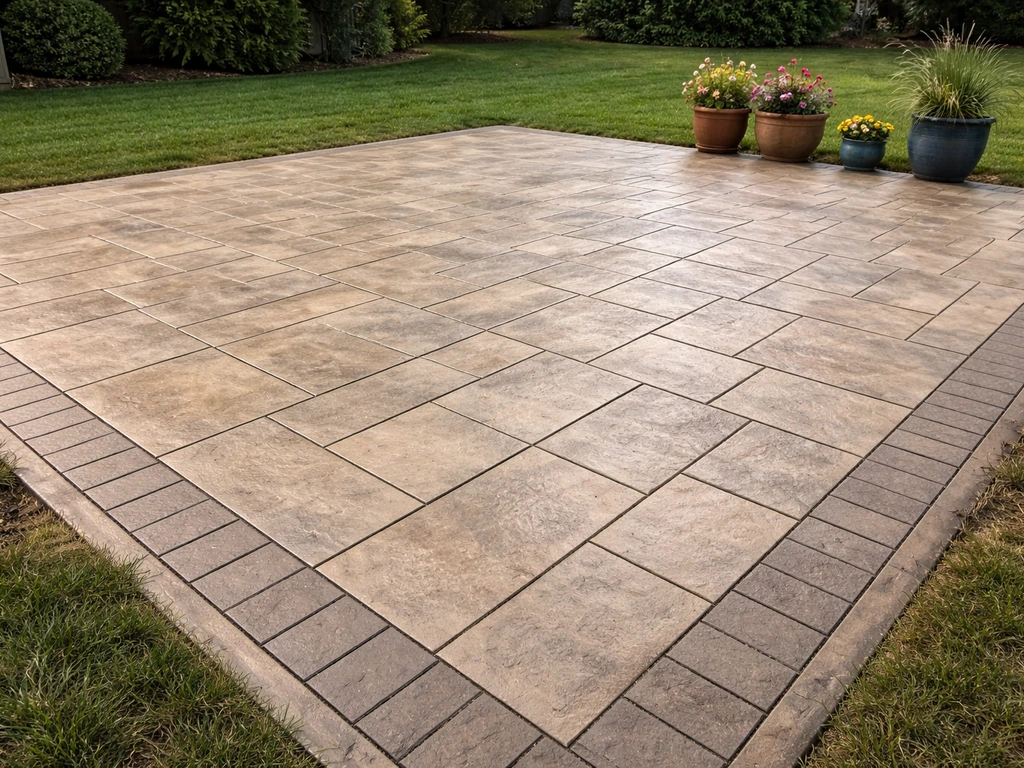
How Much Does a 20x20 Stamped Concrete Patio Cost?
Get real 20x20 stamped concrete patio costs, price breakdown, drivers, and per sq ft budgeting tips vs pavers or stone.
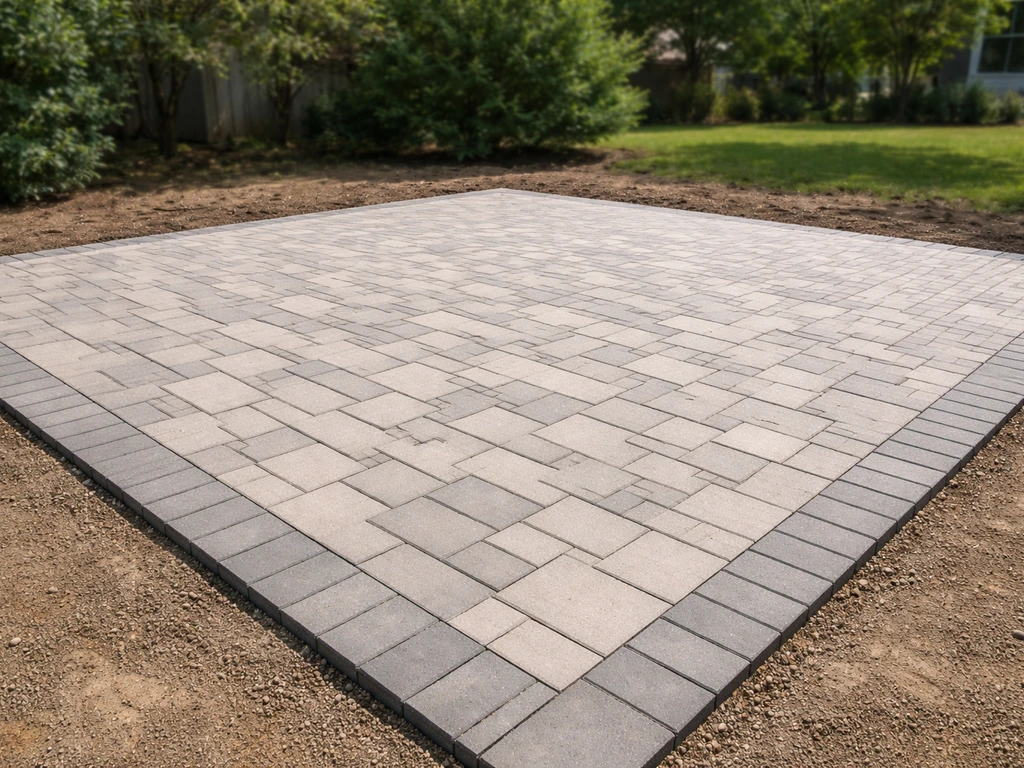
How Much Does a 20x20 Paver Patio Cost? Complete Cost Guide
Cost range for a 20x20 paver patio with line-item breakdown, labor, DIY vs pro tips, and contractor quote questions.
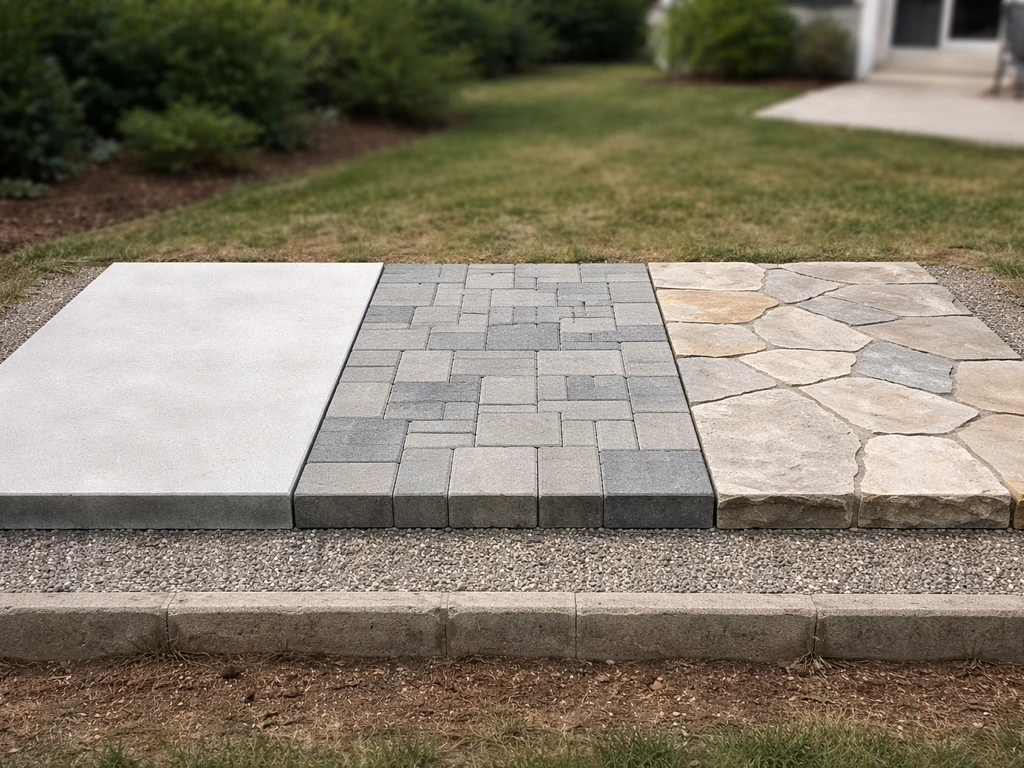
How Much Should I Expect to Pay for a Patio
Patio cost guide with real price ranges by size and material, full line-item budget, DIY vs install, and quote checklist