
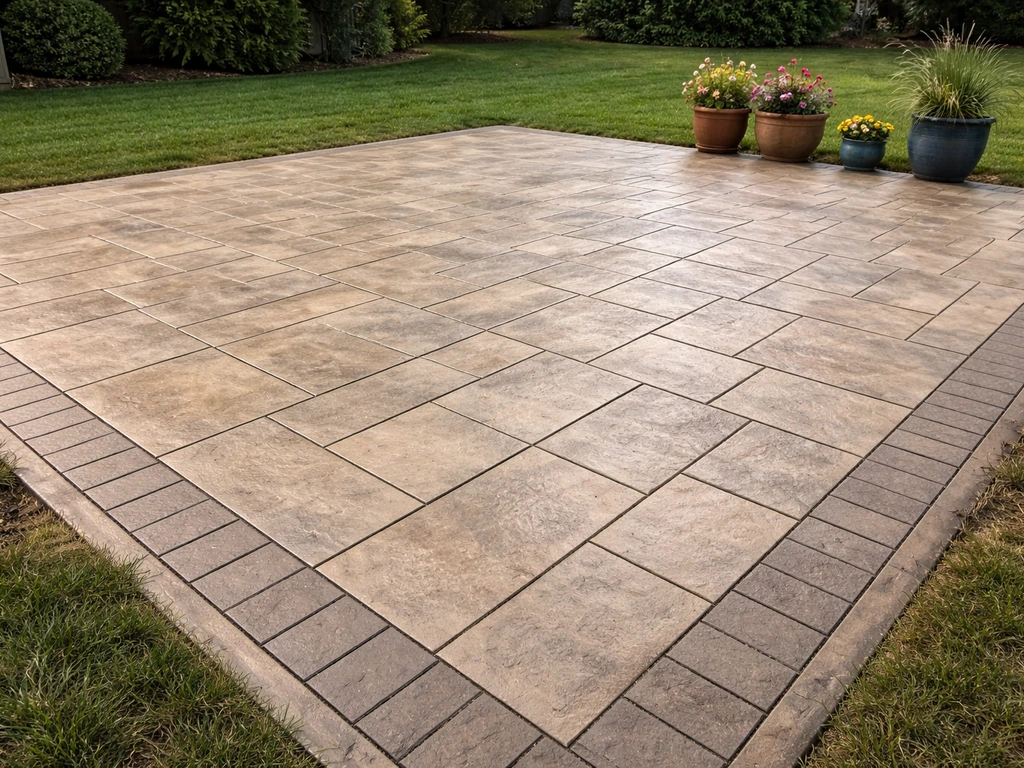
A 20x20 stamped concrete patio (400 sq. ft.) typically costs between $4,800 and $10,000 installed in 2026, which works out to roughly $12–$25 per square foot. Most homeowners land somewhere in the $6,000–$8,000 range for a single-color, single-pattern design on a reasonably clean site. Go with multiple colors, a complex pattern, or a site that needs grading and old concrete removal, and you can push past $10,000 without breaking a sweat.
How Much Does a 20x20 Stamped Concrete Patio Cost?

Felix Carver
11 May 2026
What you're actually paying for: the full cost range
The $12–$25 per sq. ft. range isn't arbitrary. At the low end ($4,800–$6,400), you're looking at a simple pour on flat, prepped ground with a single stamp pattern and one base color. Mid-range jobs ($6,000–$8,000) add a second accent color, a slightly more detailed pattern, and standard sealing. High-end projects ($8,000–$10,000+) involve intricate multi-color work, borders, custom textures, a difficult site, or a thick slab. If you're just starting to budget, use $6,000–$8,000 as your realistic planning number and adjust from there.
| Scenario | Est. Total Cost | Per Sq. Ft. |
|---|---|---|
| Simple pattern, single color, clean site | $4,800–$6,400 | $12–$16 |
| Mid-range: two colors, standard pattern, minor prep | $6,000–$8,000 | $15–$20 |
| Complex pattern, multiple colors, site challenges | $8,000–$10,000+ | $20–$25+ |
Cost breakdown per square foot
When a contractor quotes you $18 per sq. ft., it helps to know what's inside that number. Here's how the cost typically stacks up on a 400 sq. ft. job:
| Line Item | Typical Cost (per sq. ft.) | Notes for a 400 sq. ft. Job |
|---|---|---|
| Site prep and grading | $0.50–$1.50 | Leveling, compaction, setting forms |
| Gravel subbase (4–6 inches) | $1.00–$2.00 | Crushed stone, compacted |
| Concrete pour (4-inch slab) | $3.00–$5.00 | Ready-mix delivery + placement |
| Reinforcement (wire mesh or rebar) | $0.50–$1.50 | #3 rebar ~18" spacing or 6x6 WWF |
| Stamp patterns and tools | $1.00–$2.00 | Contractor's tooling amortized |
| Color hardener / integral color | $1.00–$2.50 | One 30-lb bucket covers ~800–1,000 sq. ft. |
| Release agent | $0.25–$0.75 | ~150–220 sq. ft. per gallon |
| Sealer (applied after cure) | $0.50–$1.50 | ~200–350 sq. ft. per gallon depending on product |
| Labor (finishing + stamping crew) | $3.00–$6.00 | Timing-critical, typically 3–5 person crew |
| Contractor overhead + margin | $1.50–$3.00 | Mobilization, equipment, profit |
The sealing step is worth noting specifically. Most decorative concrete contractors apply the first coat of sealer after the concrete has fully cured, usually around 28 days after the pour. A cure-and-seal product should only go on after the release agent has been fully rinsed off and the surface is dry. Skipping or rushing that step causes delamination and discoloration, which is exactly the kind of rework that turns a $7,000 patio into a $10,000 headache.
What pushes the price up or down
Region and local labor rates
This is probably the biggest variable. In high cost-of-living areas (California, New York, Pacific Northwest), labor alone can push you to $20–$25 per sq. ft. before you've picked a color. In the Midwest and South, the same job might land at $12–$16 per sq. ft. Always get quotes from local contractors rather than relying purely on national averages.
Pattern and color complexity
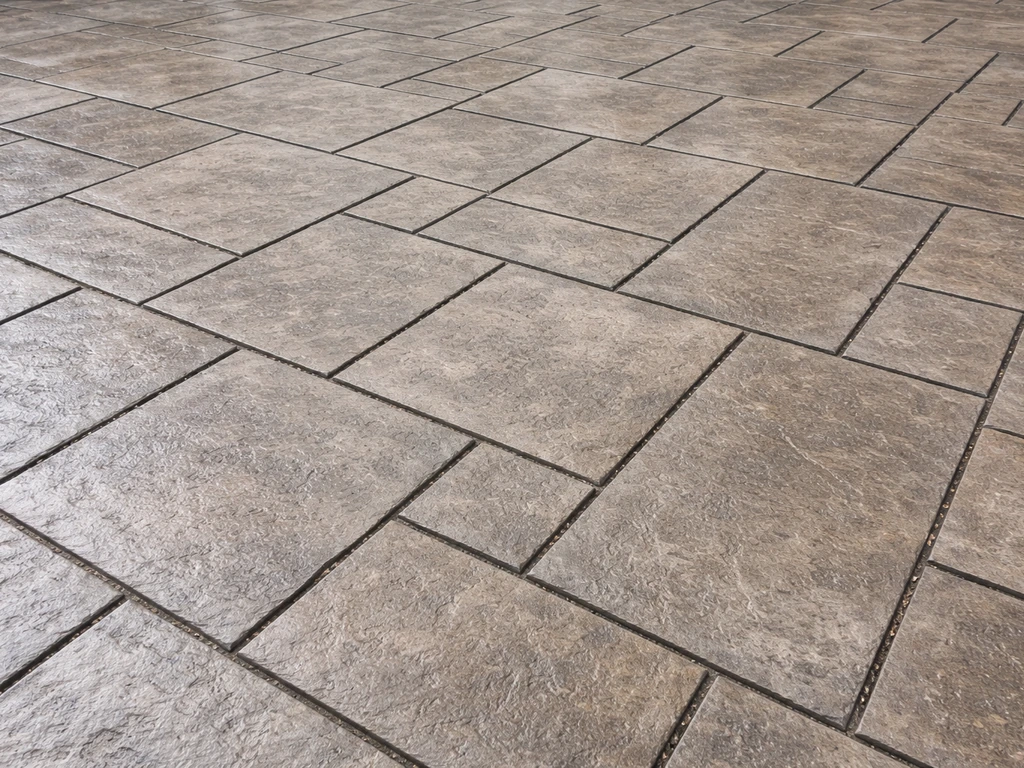
A single-pattern, single-base-color stamped patio (think basic ashlar slate or cobblestone) is the least expensive decorative option and typically sits in that $12–$16 per sq. ft. range. Add a second accent color, a release agent in a contrasting shade, or a detailed border design, and you're looking at $18–$22. Custom multi-color work with inlaid accents can hit $25+. Each additional color requires extra materials, more precise crew coordination, and more time on the slab.
Slab thickness
A standard residential patio is poured at 4 inches. If you're in a freeze-thaw climate, have soft soil, or plan to park a vehicle on the edge, contractors may recommend 5–6 inches. Each extra inch adds roughly $1–$2 per sq. ft. in concrete costs, so a 6-inch slab on 400 sq. ft. adds $400–$800 compared to a 4-inch pour.
Site conditions and access
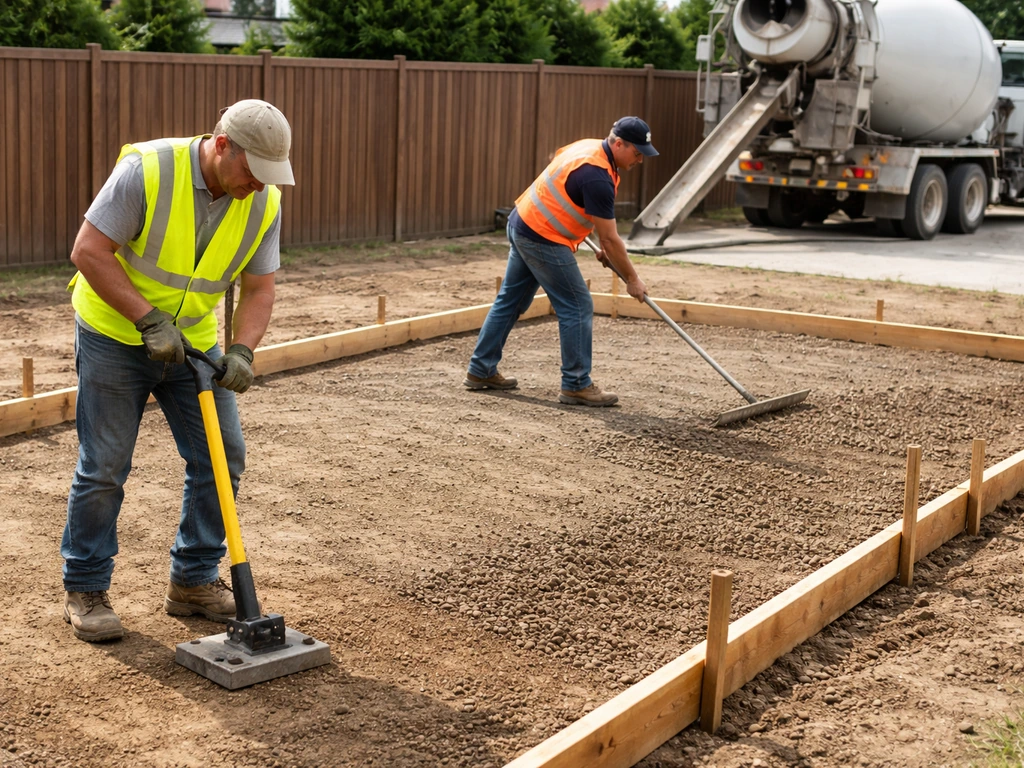
A flat, open backyard with truck access for the concrete mixer is the ideal scenario. Steep slopes, narrow side yards, soft or unstable soil, and poor drainage all add cost. Significant grading can add $500–$2,000 on its own. If the truck can't reach the pour area, the crew may need a concrete pump, which typically runs $300–$700 extra.
Add-ons and hidden costs that surprise homeowners
These are the line items that turn a $6,500 quote into a $9,000 bill if you don't ask about them upfront.
- Demolition and removal of existing concrete: $2–$6 per sq. ft. (Dropcurb and Hometown Demolition both cite this range), meaning removing an old 400 sq. ft. patio adds $800–$2,400 before the new slab even starts.
- Grading and drainage: $500–$2,000 depending on how much soil needs to be moved and whether French drains or surface channels are required.
- Permits: Many municipalities require permits for concrete flatwork above a certain size. Budget $100–$500 and check locally before signing a contract.
- Reinforcement upgrades: Wire mesh is the budget option; upgrading to #3 rebar on 18-inch spacing costs more but adds structural integrity, especially important in freeze-thaw regions.
- Geotextile fabric: Sometimes specified under the gravel base to prevent fine soil migrating up into the aggregate over time. Small cost ($0.15–$0.30 per sq. ft.) but adds up to $60–$120 on a 400 sq. ft. job.
- Control joints: Properly placed saw-cut or tooled control joints (typically spaced at 2–3 times the slab thickness in feet) are critical for managing cracking. A contractor who doesn't mention this is a red flag.
- Sealing upgrades: A basic acrylic sealer is included in most quotes. Upgrading to a higher-gloss or polyurethane sealer adds $0.50–$1.00 per sq. ft.
- Mobilization fees: Some contractors charge a flat mobilization fee of $200–$500 for smaller jobs, especially if you're not in their usual service area.
Stamped concrete vs. pavers, stone, brick, flagstone, and decks
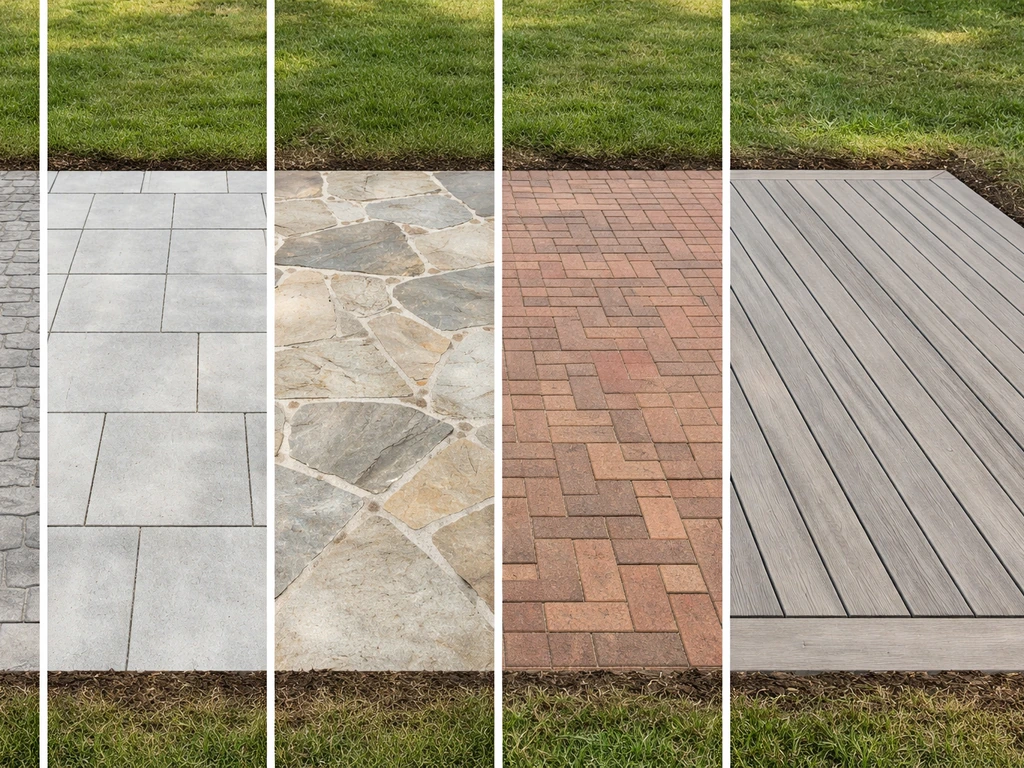
Stamped concrete tends to be the most cost-effective way to get a decorative look for a 400 sq. ft. patio. Here's how the main options compare:
| Surface Type | Typical Installed Cost (400 sq. ft.) | Per Sq. Ft. | Main Trade-Offs |
|---|---|---|---|
| Stamped concrete | $4,800–$10,000 | $12–$25 | Lower upfront cost, requires resealing every 2–3 years, can crack |
| Concrete pavers | $8,000–$16,000 | $20–$40 | Higher upfront, individual pavers replaceable, no resealing required |
| Natural stone (flagstone/slate) | $12,000–$20,000+ | $30–$50+ | Premium look, longest lifespan, most expensive |
| Brick patio | $8,000–$14,000 | $20–$35 | Classic look, durable, higher install cost than stamped |
| Pressure-treated wood deck | $6,000–$12,000 | $15–$30 | Different use case, requires annual maintenance, not a ground-level surface |
| Composite deck | $10,000–$20,000+ | $25–$50+ | Premium, low maintenance, but significantly more expensive than stamped concrete |
Stamped concrete wins on upfront cost against almost every option except plain concrete. The catch is long-term maintenance: you'll need to reseal every 2–3 years (budget $200–$400 per resealing on a 400 sq. ft. patio for a professional application), and if the slab cracks significantly, repairs are more visible than swapping out a cracked paver. Concrete pavers give you that repairability and no mandatory resealing, but you'll pay $3,000–$6,000 more upfront for the same size. If comparing a stamped concrete patio against a 20x20 paver patio, the stamped option typically saves $3,000–$6,000 at installation. Natural stone and flagstone options are in a different budget category entirely. Against a deck, it depends heavily on the deck type: a basic pressure-treated deck might come in close to stamped concrete pricing, but a composite deck will cost significantly more and serves a somewhat different purpose.
DIY vs. hiring a contractor: be honest with yourself here
Stamped concrete is one of the few patio projects where DIY is genuinely risky for most homeowners. Here's why: the window between when the concrete is workable and when it's too stiff to stamp is narrow and unforgiving. Pros describe it as a finger-penetration test where you check slab readiness every few minutes, then coordinate a 3–5 person crew to stamp the entire slab before it sets. Sun, temperature, humidity, and wind all change the timeline. A section stamped 20 minutes too late looks completely different from the rest of the slab, and there's no fixing it without grinding and overlaying.
That said, here's the honest cost comparison: renting stamp mats, buying color hardener, release agent, and sealer for a 400 sq. ft. patio might run $1,500–$2,500 in materials. Add concrete at roughly $150–$200 per yard (you'll need about 5 yards for a 4-inch slab at 400 sq. ft.) and you're looking at $750–$1,000 just for the concrete, plus equipment rental, forms, gravel, and your time. A realistic DIY total for a basic stamped patio is $3,000–$4,500 if everything goes well. But if the stamping timing goes wrong or the color comes out uneven, rework can cost as much as starting over. This is not a beginner project. If you've never done concrete flatwork before, hire a pro or at minimum do a practice pour on a small slab first.
If you're looking at stamped concrete specifically because you want to save money vs. pavers, also consider that a DIY paver patio is far more forgiving since there's no timing pressure and mistakes are easily corrected. A plain concrete patio is another lower-risk DIY option if budget is the primary concern.
How to get accurate quotes (and spot bad ones)
What to have ready before you call
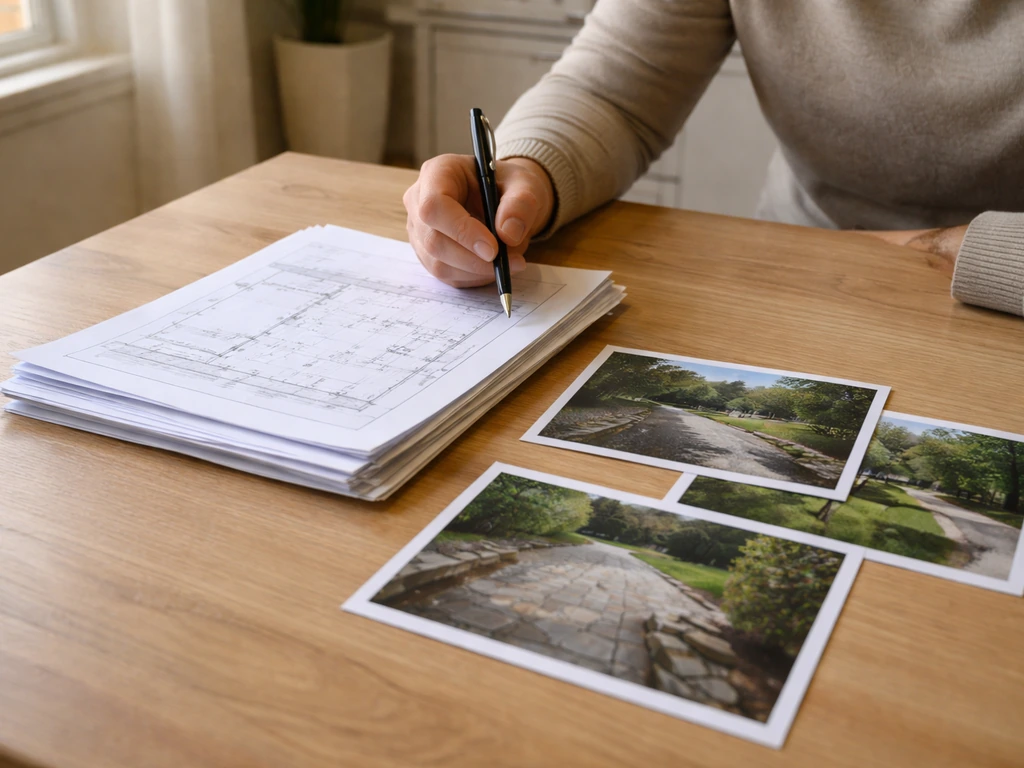
- Exact measurements: 20x20 is 400 sq. ft., but if your patio has any irregular edges or cutouts, have those dimensions ready too.
- Photos of the site: Show the access points, any slopes, existing vegetation or structures, and the current surface (grass, old concrete, pavers).
- Soil and drainage notes: Mention if you know the area drains poorly or has soft/sandy soil.
- Pattern and color preferences: Pull a few reference images. Even rough inspiration photos help contractors give you a more accurate quote.
- Intended use: A patio that will hold a hot tub or heavy furniture may need a thicker slab or more reinforcement.
Questions to ask every contractor
- What thickness slab are you quoting, and is reinforcement (rebar or wire mesh) included?
- How thick is the gravel subbase in your quote, and is excavation included?
- Is demolition and removal of the existing surface included, or is that extra?
- How many colors and what pattern is this price based on? What does it cost to add a second color?
- What sealer are you using, and is the first application included?
- Who pulls the permit, and is that cost included?
- How do you handle control joints on a stamped patio?
- What does the warranty cover and for how long?
Red flags to watch for in quotes
- A quote with no line items: If a contractor just gives you a single total number with no breakdown, you have no idea what's included or excluded.
- No mention of control joints: Random cracking is the most common stamped concrete complaint. Any contractor who doesn't bring up joint spacing is skipping an important step.
- Sealing not included: Some contractors quote the pour and stamp, then add sealing as a separate invoice. Confirm it's included.
- Gravel base skipped or too thin: Less than 4 inches of compacted gravel under a residential patio is cutting corners.
- Extremely low per-sq-ft pricing: A quote under $10 per sq. ft. for stamped concrete in 2026 almost certainly excludes subbase, reinforcement, color, or sealing. Ask exactly what's in it.
- No permit discussion: For most 400 sq. ft. patios, at least a check of local permit requirements is warranted. A contractor who dismisses the question entirely is a minor warning sign.
Getting three quotes is the standard advice, and it's good advice here. But the goal isn't just to find the lowest number, it's to find the most complete scope at a fair price. A quote for $7,200 that includes subbase, reinforcement, two colors, and sealed is often a better deal than a $5,800 quote that excludes all of those things. Once you've converted each quote to a per-sq-ft number and confirmed what's included, they become much easier to compare. For a 20x20 patio, divide any total quote by 400 to get your per-sq-ft price and see where it lands in the $12–$25 range. Penhall recommends cutting control joints to at least about one-quarter of slab thickness and spacing them generally no greater than about 2, 3 times the slab thickness in feet blank" rel="noopener noreferrer">control joints should be cut to at least about one-quarter of slab thickness and spaced generally no greater than about 2–3 times slab thickness in feet. p35s4 how much does a 20x20 paver patio cost diy. For a 15x20 concrete patio, you can use the same per-square-foot approach to estimate your installed cost $12–$25 range. For a 20x30 patio, divide your total quote by 600 square feet to estimate its per-square-foot cost 20x20 patio. For a more exact estimate of how much does a 20x20 concrete patio cost, double-check the square footage, slab thickness, and sealing included in your quote a 20x20 patio. For a 20x20 paver patio, you can use the same idea and compare quotes on a per-square-foot basis For a 20x20 patio, divide any total quote by 400 to get your per-sq-ft price and see where it lands in the $12–$25 range..
FAQ
If I’m quoted a per-square-foot price, how do I make sure it’s actually for my full 20x20 patio (400 sq. ft.)?
For a 20x20 patio, confirm the quote is based on 400 sq. ft. total, not an estimate of “stamps coverage” or “walkway area.” Some contractors price only stamped portions, then add separate line items for edges, borders, control joints, and tie-ins to the house. A quick check is to ask what the per-square-foot rate applies to, and whether mobilization, demo, and disposal are included.
Why do stamped concrete patios sometimes look blotchy or uneven, and what should I ask to avoid that?
Stamped concrete color can look uneven when there are mix or workflow issues, especially if the release agent is applied inconsistently or the crew stamps too late. Ask your contractor how they prevent blotchy color (for example, consistent release agent coverage and a set stamping schedule), and whether they can provide a recent finished example in the same color family. If you see visible color banding in photos, request corrective options before signing.
Can slab thickness and reinforcement change the price even if the design looks simple?
Yes, slab thickness matters for durability and can change your total cost more than “more decoration” does. The body notes 4 inches is standard, but if you need 5–6 inches for freeze-thaw conditions or vehicle loads, ask the contractor to state the design thickness and the expected rebar or reinforcement plan. Also ask whether the increased thickness changes the required base thickness, because base adjustments often add cost.
Does the quoted cost include sealing, and how often should I plan to reseal a stamped concrete patio?
You should budget for at least one full sealer cycle after installation, even if the quote mentions sealing. The typical approach is a first sealer after proper curing, then resealing every 2 to 3 years. Ask whether the contractor includes the initial sealer, and what product type they use (for example, breathable vs. film-forming), since it affects cleaning and how often you need to reseal.
What maintenance and warranty details should I confirm so a stamped patio does not become a recurring expense?
Stamped concrete is more maintenance-sensitive than pavers, but you can reduce risk by scheduling resealing on time and protecting the surface from de-icing chemicals and repeated power-washing. Ask whether the contractor recommends specific cleaners and whether their sealer is warrantied against fading or peeling for a defined period. A warranty that only covers “material defects” may still leave you responsible for labor if maintenance is required.
What site-prep items commonly cause cost overruns or long-term problems for stamped concrete?
If the surface is uneven, has poor drainage, or the base is weak, the “pretty stamp” can still fail through cracking and settlement. Ask how they handle subbase preparation (depth, compaction testing if available, and drainage slope away from the house). Also confirm whether they include demo of old concrete and disposal, because partial preparation can be one of the cheapest-sounding quote gaps.
My yard has narrow access, how do I find out early if I’ll need a pump or added labor?
If truck access is limited and a pump is needed, it usually appears as a change order unless it is explicitly included. Ask whether the crew will use a concrete pump and what the allowance is for alternative access. Also request a plan for how materials and forms are moved on narrow side yards, because staging time can affect labor cost.
If I try DIY, what’s the most common mistake that turns a DIY project into an expensive re-do?
DIY can be tempting, but the biggest hidden cost is rework. If stamping timing or color comes out wrong, repairs may require grinding and an overlay, which can approach near-new pricing. If you want to attempt a small project first, ask for a “practice pour” approach (even a smaller test panel) rather than betting on the full 20x20. Also price your total DIY risk by including equipment rental, release agent, sealer, and extra materials for mistakes.
What should I verify about control joints and cracking control before signing a stamped patio contract?
When comparing quotes, check whether control joints are included and where they are planned. Stamped concrete without an agreed joint strategy can lead to random cracking patterns that are harder to conceal. Ask how many joints will be installed on a 400 sq. ft. slab, whether they match the stamp pattern, and if the contractor budgets for joint cutting and finishing rather than treating joints as optional.
Next Articles
How Much Does a 20x20 Paver Patio Cost? Complete Cost Guide
Cost range for a 20x20 paver patio with line-item breakdown, labor, DIY vs pro tips, and contractor quote questions.
How Much Should I Expect to Pay for a Patio
Patio cost guide with real price ranges by size and material, full line-item budget, DIY vs install, and quote checklist
How Much Patio Around Pool: Cost, Size, and Budget Guide
Learn how much patio around a pool costs and how to size square feet, materials, extras, and get real bid line items.