
Covering a 20x20 (400 sq ft) patio typically runs $1,600 to $7,200 for the patio surface itself, and an additional $2,000 to $20,000+ if you're adding a patio cover like a pergola, attached roof, or screened enclosure. Most homeowners doing both end up spending somewhere between $8,000 and $20,000 combined, depending on the surface material, cover type, site conditions, and where they live. If you just want a ballpark before diving in: a standard concrete patio with a mid-range pergola on a flat, accessible lot in a mid-cost region runs roughly $10,000 to $14,000 installed.
How Much Does It Cost to Cover a 20x20 Patio? Pricing

Felix Carver
16 Jul 2026
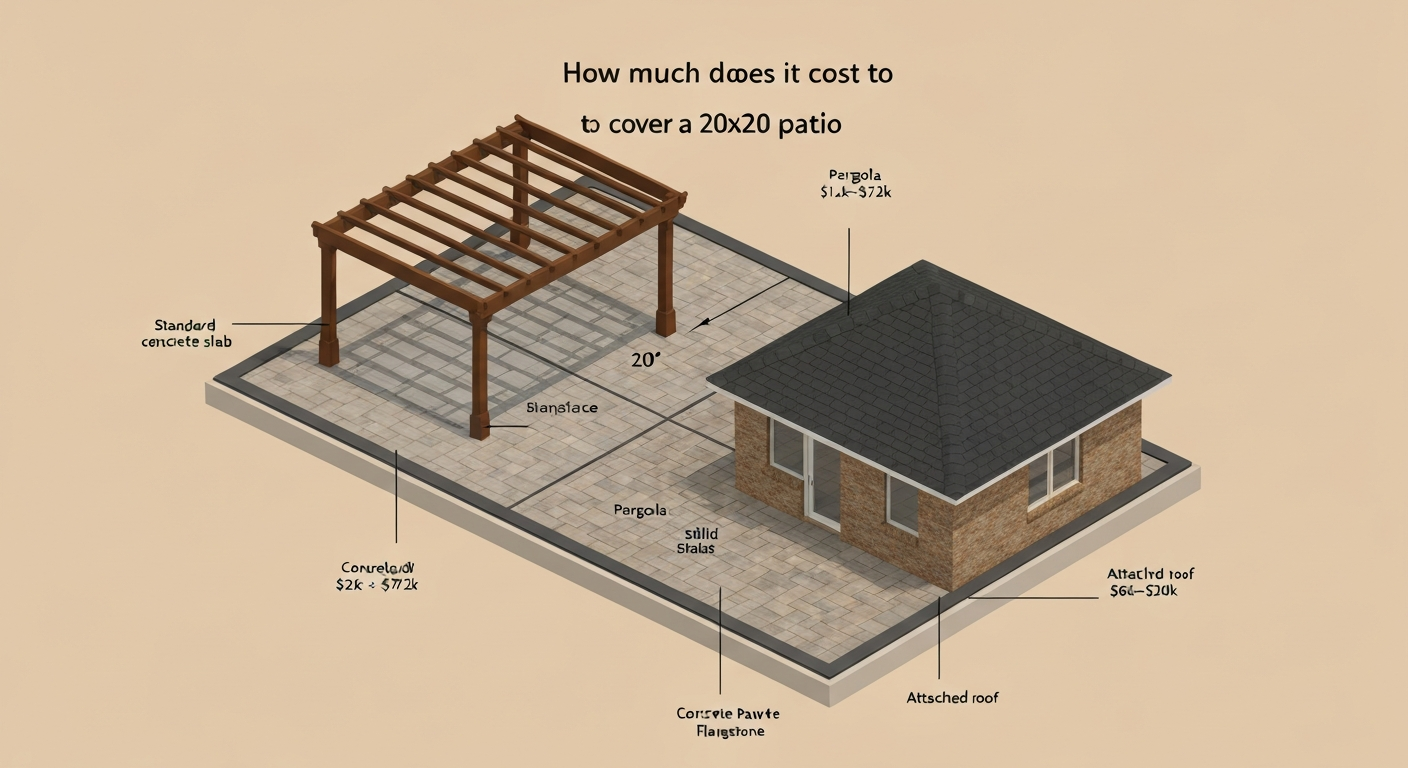
Quick cost snapshot: 20x20 patio at a glance
A 20x20 patio is exactly 400 square feet, which is a practical, common size for outdoor entertaining. Here are the installed cost ranges you'll run into for the most popular surface options, using low, typical, and high per-square-foot figures. "Installed" means materials plus labor unless noted otherwise.
| Surface | Low ($/sq ft) | Typical ($/sq ft) | High ($/sq ft) | 20x20 Low Total | 20x20 Typical Total | 20x20 High Total |
|---|---|---|---|---|---|---|
| Concrete (4" slab) | $4 | $11 | $18 | $1,600 | $4,400 | $7,200 |
| Stamped Concrete | $8 | $15 | $28 | $3,200 | $6,000 | $11,200 |
| Concrete Pavers | $12 | $22 | $35 | $4,800 | $8,800 | $14,000 |
| Brick Pavers | $10 | $22 | $30 | $4,000 | $8,800 | $12,000 |
| Flagstone (dry-laid) | $15 | $22 | $32 | $6,000 | $8,800 | $12,800 |
| Flagstone (mortar-set) | $25 | $34 | $45 | $10,000 | $13,600 | $18,000 |
| Gravel/Decomposed Granite | $1 | $3 | $6 | $400 | $1,200 | $2,400 |
And here are the installed cost ranges for common patio cover options over that same 400 square feet. These are cover-only costs and do not include the patio surface beneath them.
| Cover Type | Low ($/sq ft) | Typical ($/sq ft) | High ($/sq ft) | 20x20 Low Total | 20x20 Typical Total | 20x20 High Total |
|---|---|---|---|---|---|---|
| Attached Roof (solid) | $15 | $30 | $50 | $6,000 | $12,000 | $20,000 |
| Freestanding Pergola | $5 | $15 | $30 | $2,000 | $6,000 | $12,000 |
| Aluminum Patio Cover | $10 | $20 | $35 | $4,000 | $8,000 | $14,000 |
| Screened Enclosure | $5 | $15 | $30 | $2,000 | $6,000 | $12,000 |
| Retractable Awning | $5 | $12 | $25 | $2,000 | $4,800 | $10,000 |
How to read these numbers
Every cost table you see on this site uses the same baseline assumptions so comparisons stay apples-to-apples. For the patio surface figures: the area is 400 square feet (20x20), concrete slabs assume a 4-inch thickness (the standard residential minimum per IRC guidelines), and all totals include a 4-inch compacted gravel base unless noted. Installed prices cover materials, labor, basic site prep on flat accessible ground, and standard finishing. They do not include permits, demolition of an existing surface, drainage upgrades, or complex grading.
For patio covers, the low end assumes a basic prefabricated or kit-style product with straightforward installation on an existing concrete or paver surface. The high end reflects custom-built structures, premium materials (cedar, aluminum systems, insulated panels), engineered footings, and full electrical rough-in for lighting or fans. Labor rates used in these estimates reflect a national mid-range of roughly $50 to $100 per hour for experienced contractors, which covers most U.S. markets outside of high-cost metros like San Francisco, Seattle, or New York City, where rates can run 20 to 40 percent higher.
Permit fees are excluded from all per-square-foot figures because they vary so widely: a simple patio in a rural county might cost $0 to $50, while an attached patio cover or screened room in a suburban municipality can require $200 to $800 in permits plus inspections. The timeframe these prices reflect is current as of 2025 to 2026, accounting for post-pandemic material cost normalization. Always treat these ranges as a starting budget framework, not a fixed quote.
Full line-item cost breakdown for a 20x20 project
Whether you're building from scratch or adding a cover to an existing slab, it helps to see exactly where the money goes. Below is a realistic line-item breakdown for a mid-range 20x20 patio project: a stamped concrete surface with an attached aluminum cover on a flat, accessible lot. Think of this as a sample estimate, not a quote.
| Line Item | Low Estimate | Mid Estimate | High Estimate | Notes |
|---|---|---|---|---|
| Materials (surface) | $800 | $2,400 | $5,600 | Varies by surface type; concrete lowest, flagstone highest |
| Labor (surface install) | $800 | $2,000 | $5,600 | Roughly 50% of total installed cost for most surfaces |
| Base prep & compaction | $300 | $600 | $1,200 | 4" gravel base; more for poor soil or heavy clay |
| Drainage (slope/channel) | $0 | $300 | $800 | Needed if lot is flat or drains toward house |
| Edging & borders | $100 | $300 | $700 | Concrete, aluminum, or stone edging |
| Patio cover materials | $1,500 | $5,000 | $12,000 | Kit aluminum cover vs. custom attached roof |
| Patio cover labor | $500 | $3,000 | $8,000 | Simple kit install vs. full framing & roofing |
| Footings (cover posts) | $200 | $600 | $1,500 | Required for freestanding or attached structures |
| Electrical (lights/fan) | $0 | $500 | $2,000 | Optional; needed for ceiling fans, outlets, lighting |
| Permits | $0 | $300 | $800 | Varies by municipality; attached covers almost always require one |
| Demolition/cleanup | $0 | $400 | $1,200 | Remove existing surface or structures |
| Project total | $4,200 | $15,400 | $39,400 | Wide range reflects material and cover type choices |
The biggest driver of that total is almost always the cover choice. A gravel patio with a basic pergola might cost $3,000 to $5,000 all-in. A stamped concrete patio with a custom attached solid roof and ceiling fan could land at $25,000 or more. The surface and cover decisions are the two biggest levers you have on final cost, and they should be made together, not separately.
What each patio surface actually costs you
Standard concrete
At $4 to $18 per square foot installed, a standard 4-inch broom-finish concrete slab is the cheapest hard surface you can put down. Concrete Patio Cost, ConcreteNetwork (used as primary typical-rate source; low/high ranges supported by HomeAdvisor and regional estimator guides). reports low/typical/high installed rates of about $4 / $11 / $18 per sq ft, which equals $1,600 / $4,400 / $7,200 for a 20x20 (400 sq ft) standard 4" concrete patio with a 4" compacted gravel base, basic reinforcement, finishing, and typical site prep Concrete Patio Cost — ConcreteNetwork (used as primary typical-rate source; low/high ranges supported by HomeAdvisor and regional estimator guides).. The low end ($1,600 for 400 sq ft) reflects a straightforward pour on level ground with easy truck access. The typical range ($4,400) is closer to what most contractors charge after you factor in wire mesh or rebar, a proper gravel base, and a clean finish. Concrete is also the fastest to install: most 400-square-foot slabs go in within one to two days. The trade-off is it's the plainest looking option and it will crack over time, especially in climates with hard freeze-thaw cycles.
Stamped concrete
Stamped concrete adds color and texture to a standard slab, mimicking stone, brick, or wood. Costs run $8 to $28 per square foot installed, so a 20x20 project lands between $3,200 and $11,200. The lower end gets you a single-color, single-pattern stamp. The higher end involves multiple colors, complex patterns (like an ashlar or cobblestone design), borders, and a UV-resistant sealer. One gotcha people miss: stamped concrete needs to be resealed every 2 to 3 years to maintain appearance and prevent surface wear, adding roughly $300 to $600 per resealing for a 400-square-foot surface.
Concrete and brick pavers
Concrete pavers ($12 to $35/sq ft installed) and clay brick pavers ($10 to $30/sq ft installed) are both more forgiving than poured concrete: individual units can be lifted and reset if the base shifts, which is a real advantage in climates with ground movement. The 20x20 cost range is $4,000 to $14,000 for concrete pavers and $4,000 to $12,000 for brick. Brick patios carry significant regional price variation because most clay brick is manufactured in the Mid-Atlantic and Southeast, so freight costs add up fast in western states. Complex herringbone or basketweave patterns also add labor time, pushing contractor quotes toward the higher end.
Flagstone
Flagstone is the most expensive common patio surface. Dry-laid flagstone on a sand and gravel base runs $15 to $32 per square foot installed ($6,000 to $12,800 for 400 sq ft), while mortar-set or concrete-set installations climb to $25 to $45 per square foot ($10,000 to $18,000). The high cost is part stone price, part labor: fitting irregular natural stone pieces is genuinely time-consuming work. If you're interested in the detailed breakdown for a flagstone-only project, the 20x20 flagstone patio cost guide on this site covers stone types, regional sourcing, and base options in more depth.
Gravel and decomposed granite
Gravel or decomposed granite is the budget-friendly choice at $1 to $6 per square foot installed, or $400 to $2,400 for a 20x20 area. It drains naturally, installs quickly, and works well under a pergola or as a defined garden patio. The real costs are ongoing: it needs periodic topping-off, edging to keep it contained, and it's not ideal for furniture-heavy use. Still, for a back-corner entertaining area under a freestanding pergola, it's hard to beat the price.
Patio cover options and what they run
Attached solid roof
An attached patio roof (framed and tied into your home's existing roof or fascia) provides the most weather protection and the most permanent look. It runs $15 to $50 per square foot for a 20x20 cover, so $6,000 to $20,000. The wide range reflects roofing material choice (shingles vs. metal vs. insulated panels), whether a structural engineer is needed, and how complex the attachment point is. Almost every jurisdiction requires a permit for attached roofed structures, so budget $300 to $800 for that plus an inspection.
Freestanding pergola
A freestanding pergola runs $2,000 to $12,000 for a 20x20 structure ($5 to $30/sq ft installed). Kit pergolas made of vinyl or aluminum sit at the low end and can often be DIY-installed. Custom wood pergolas (cedar, redwood) or aluminum systems with built-in louvers sit at the high end. Pergolas provide partial shade and a defined outdoor room but don't shed rain unless you add a polycarbonate roof panel, shade sail, or retractable canopy. Pairing a pergola with a lower-cost gravel or concrete patio is one of the more cost-effective complete outdoor-room setups you can build.
Aluminum patio cover
Aluminum covers (also called patio covers or lattice-style aluminum panel systems) run $10 to $35 per square foot installed, or $4,000 to $14,000 for a 20x20. They're popular in the Sun Belt because they're low-maintenance, don't rot, and can be insulated for hot climates. An insulated aluminum cover with a flat-pan design can meaningfully reduce the heat radiating down onto the patio surface. These systems are often sold as engineered kits with manufacturer-specified footings, which simplifies the permitting process in many cities.
Screened enclosure
Screened enclosures run $5 to $30 per square foot for a 20x20 footprint ($2,000 to $12,000). They're a must-have in bug-heavy climates like Florida, the Gulf Coast, and parts of the Southeast. A basic screen room with an aluminum frame and fiberglass screen panels sits at the low-to-mid range. A full Florida-room-style enclosure with a solid roof section and no-see-um screen mesh sits at the top. Factor in a concrete slab or pavers if you don't already have one, and the total project cost adds up fast.
Retractable awning
A motorized retractable awning for a 20x20 patio runs $2,000 to $10,000 installed. Awnings are the most flexible option: you can extend them for shade and retract them when you want open sky. The trade-off is they don't handle heavy rain or wind well, and the fabric needs replacement every 8 to 12 years (typically $500 to $1,500 for the fabric alone). They work best as a supplemental cover rather than a primary weather shield.
Regional and site conditions that can change your price significantly
The numbers above assume a flat, easily accessible lot in a mid-cost U.S. market. Here's what happens when reality differs from that baseline, with real examples of how costs shift.
| Condition | Cost Impact | Example |
|---|---|---|
| Sloped lot (>5% grade) | +$500 to $3,000 | Grading, retaining, and stepped footing work on a mild slope in the Southeast |
| Poor soil (clay, expansive, or poorly draining) | +$300 to $2,000 | Deeper gravel base or crushed stone replacement in heavy clay soils in the Midwest |
| Limited truck/equipment access | +$300 to $1,500 | Narrow side-yard entry requiring wheelbarrow transport of materials vs. direct chute pour |
| High-cost metro labor market | +20% to 40% on labor | San Francisco, NYC, or Seattle vs. a mid-size Southeastern or Midwestern city |
| Coastal/hurricane wind zone | +$500 to $2,000 (covers) | Engineered footings and wind-rated hardware required for patio covers in Florida or the Gulf Coast |
| Hard freeze-thaw climate | +$200 to $800 | Deeper compacted base (6"+) and freeze-rated concrete mix in Minnesota or New England |
| Permit-heavy municipality | +$200 to $800 in fees | Suburban jurisdictions in California or the Northeast often require plans, setback review, and multiple inspections |
| Existing surface removal | +$500 to $2,500 | Demo and haul-away of an old cracked concrete slab or brick patio before new install |
The two biggest regional surprises homeowners report are permit costs (which can easily add $500 to $1,200 in jurisdictions with strict review processes) and soil conditions (which you often don't know about until a contractor digs). If your yard has heavy clay, ask your contractor specifically whether the base estimate accounts for it. In some cases, the right answer is a thicker base; in others it's adding edge drainage or a French drain, which is its own cost line.
DIY vs. hiring a contractor: where you actually save money
Labor typically accounts for 40 to 55 percent of an installed patio or cover cost. So on a $8,800 concrete paver patio, roughly $3,500 to $4,800 is labor. That's real money if you have the skills, tools, and time to do it yourself. But DIY savings are not uniform across surface and cover types, and there are genuine risks to factor in.
| Task | DIY Feasibility | Realistic Savings (20x20) | Key Requirements | Risk if Done Poorly |
|---|---|---|---|---|
| Gravel patio install | High | $400–$1,200 | Plate compactor rental ($100–$150/day), edging, landscape fabric | Low; easy to fix |
| Concrete paver install | Moderate | $1,500–$3,500 | Plate compactor, wet saw or chisel, level, 1–3 weekends | Moderate; unlevel base causes trip hazards and water pooling |
| Brick paver install | Moderate | $1,500–$3,500 | Same as concrete pavers; pattern cutting adds time | Moderate; same base and drainage risks |
| Standard concrete slab pour | Low | $800–$2,000 | Concrete mixer or truck, forms, rebar, finishing tools, 1–2 full days | High; bad pour = cracking, poor drainage, warranty void |
| Stamped concrete | Very Low | Not recommended | Stamping must be done in a tight time window as concrete sets; errors are permanent | Very high; ruined finish is expensive to fix |
| Flagstone (dry-laid) | Moderate | $1,500–$4,000 | Time-intensive fitting; base compaction is critical | Moderate; shifting or heaving if base is inadequate |
| Kit pergola install | High | $500–$2,500 | Two people, basic tools, 1–2 days for most kits | Low; follow manufacturer specs for footings |
| Attached solid roof | Very Low | Not recommended | Structural attachment, roofing, possible engineering required | Very high; structural failure, leaks, permit non-compliance |
| Aluminum cover kit | Moderate | $1,000–$3,000 | Two people, post hole digger, level, 1–2 days | Low to moderate; footing depth matters for wind zones |
The practical takeaway: gravel patios, paver patios, and kit pergolas are legitimately good DIY projects for a capable homeowner with a free weekend. Concrete pours, stamped concrete, and any cover that attaches to your home's structure are not. A bad concrete pour is essentially permanent, and an improperly attached patio roof can be a liability and a resale problem. Most contractors will also decline to warranty work they didn't install, so if you DIY the surface and later have drainage issues, the cover contractor won't fix it for free.
One underrated hybrid approach: DIY the patio surface (pavers or gravel) and hire out the cover. This can save $2,000 to $4,000 on the surface while keeping the structural work (which requires inspections in most jurisdictions) in professional hands.
How to choose: surface + cover decision framework
Most homeowners don't need the most expensive option. They need the right option for their climate, budget, and how they'll actually use the space. Use this checklist to narrow things down before calling a contractor.
| Priority | Best Surface Match | Best Cover Match | Notes |
|---|---|---|---|
| Lowest total cost | Gravel or standard concrete | Freestanding kit pergola or awning | Under $6,000 all-in for basic setup |
| Best durability, low maintenance | Concrete pavers or stamped concrete | Aluminum patio cover or attached roof | Pavers are resettable; aluminum covers don't rot or need painting |
| Best appearance / curb appeal | Flagstone or stamped concrete | Custom wood pergola or attached roof | Adds most to perceived home value |
| Hot, sunny climate (Sun Belt) | Concrete pavers or standard concrete | Insulated aluminum cover or solid attached roof | Shade and heat reflection matter most; dark surfaces absorb heat |
| Rainy / Pacific Northwest climate | Concrete or pavers (sloped for drainage) | Attached solid roof or insulated aluminum | Pergolas and awnings are inadequate for frequent rain |
| Bug-heavy climate (Southeast/Gulf) | Concrete slab (easiest to enclose) | Screened enclosure | Screen room over slab is the standard solution |
| Freeze-thaw climate (Midwest/Northeast) | Concrete pavers (easier to reset after heave) or concrete | Pergola or awning (seasonal use) | Avoid mortar-set flagstone in hard-freeze zones without proper drainage |
| Maximize resale value | Pavers or stamped concrete | Pergola or attached roof | Covered paver patio consistently scores well in resale surveys |
| DIY-friendly project | Gravel or concrete pavers | Kit pergola or aluminum cover kit | Skip stamped concrete and attached roofs for DIY |
| Tight timeline (need it fast) | Standard concrete slab | Retractable awning or kit pergola | Concrete pours in 1–2 days; awnings can install same week |
One thing worth saying plainly: a patio and a deck are not the same trade-off for every homeowner. Patios are almost always cheaper than decks of the same size (a 20x20 wood deck typically runs $8,000 to $20,000 for the deck alone), they require no structural inspection in most jurisdictions, and they tend to hold up better under a covered structure. Decks make more sense when you have a raised first floor, poor drainage at grade, or you specifically want a wood surface. For most flat or gently sloping lots, a patio with a cover is the better value.
Getting quotes: practical next steps
Getting accurate quotes requires giving contractors accurate information. Before you call, have these details ready: the exact dimensions of your patio area, whether there's an existing surface to remove, your lot's drainage situation (does water pool near the house?), your desired surface and cover type (even a rough preference), and whether you'll need electrical for lighting or fans. Contractors who quote blind will often use a high number to cover unknowns. The more specific you are, the tighter and more comparable the quotes you'll get.
- Get at least three written quotes for any project over $3,000. Prices can vary 30 to 50 percent between contractors for the same scope.
- Ask each contractor to break the quote into line items: materials, labor, base prep, permits, and cleanup. A lump-sum quote is hard to compare.
- Verify they'll pull the required permits. A contractor who suggests skipping permits to save money is a red flag.
- Ask specifically about base depth and drainage plan. This is where corners get cut most often on patio installs.
- For patio covers, ask whether the design requires an engineer's stamp. In wind zones or for attached structures, this is often required and should be included in the quote.
- Check reviews specifically for the type of work you're hiring for. A contractor with great deck reviews isn't necessarily great at stamped concrete.
- Ask about warranty terms: what's covered, for how long, and whether it transfers if you sell the home.
- Time your project for off-peak seasons (late fall or early spring in most markets) where possible. Some contractors discount 10 to 15 percent to fill schedule gaps.
Cost-saving tips that actually work
- Choose standard concrete or concrete pavers over stamped or natural stone to cut surface costs by 30 to 60 percent with minimal functional difference.
- Supply your own materials (pavers, stone, gravel) if you have a truck or delivery access and the contractor is willing to do labor-only. This can save 10 to 20 percent on materials markup.
- DIY the base excavation and compaction before the contractor arrives. Some will discount labor if the prep work is already done correctly.
- Choose a kit pergola over a custom-built one. The appearance gap is smaller than most people expect, especially with quality vinyl or aluminum kits.
- Skip the electrical rough-in if you're not sure you'll use it. Adding it later costs $500 to $1,500 but is far cheaper than ripping up a finished structure to add it mid-project.
- Combine the patio and cover project with one contractor rather than hiring two separate crews. Coordination discount and single mobilization fee can save $500 to $1,500.
- Get quotes in late October through February when contractor schedules are lighter in most markets.
If you want to go deeper on any specific surface or cover type for your 20x20 project, this site has dedicated cost breakdowns for the most common combinations, including the 20x20 patio cover cost guide (cover types in detail), a full 20x20 patio build cost breakdown covering concrete, pavers, and other surface options, and a detailed flagstone patio cost guide for natural stone comparisons. See our guide on how much it costs to build a 20x20 patio for detailed pricing and line-item estimates. If you need a quick straight answer, see our short guide on how much does a 20x20 patio cost for a concise summary of expected totals (surface only and surface-plus-cover). For a focused breakdown on cover pricing, see our guide on how much does a 20x20 patio cover cost, which walks through typical installed prices by cover type and permitting considerations. Each one follows the same line-item format so you can compare directly across options as you build your budget.
FAQ
Headline and 160-character description
Headline: "How Much to Cover a 20x20 (400 sq ft) Patio?" 160-char description: "Budget a 20x20 (400 sq ft) patio: low/typical/high totals for concrete, stamped, pavers, brick, flagstone & gravel — material comparisons and next steps."
Immediate cost snapshot for a 20x20 (400 sq ft) patio
Quick snapshot (assumptions: 20x20 = 400 sq ft; installed prices include materials + labor; standard concrete slab = 4" thickness with ~4" compacted base unless noted): Low-end total range: about $1,600–$4,000 Typical/average total: about $4,000–$12,000 High-end/complex site or premium materials: $12,000–$20,000+ (special stone, heavy grading, screening/enclosure or difficult access).
Per-sq-ft and 20x20 totals for common patio surfaces (table-style summary)
Assumptions for all figures: installed cost (materials + labor); 400 sq ft area. Concrete (4" slab): low $4/sq ft = $1,600; typical $11/sq ft = $4,400; high $18/sq ft = $7,200. Stamped concrete: low $8/sq ft = $3,200; typical $15/sq ft = $6,000; high $28/sq ft = $11,200. Concrete pavers: low $12/sq ft = $4,800; typical $22/sq ft = $8,800; high $35/sq ft = $14,000. Natural stone pavers: low $20/sq ft = $8,000; typical $30/sq ft = $12,000; high $50/sq ft = $20,000. Brick pavers: low $10/sq ft = $4,000; typical $22/sq ft = $8,800; high $30/sq ft = $12,000. Flagstone (dry-laid): low $15/sq ft = $6,000; typical $24/sq ft = $9,600; mortar-set high $42/sq ft = $16,800. Gravel (compacted): low $2/sq ft (material-only, simple install) = $800; typical $6/sq ft (installed with edging/base) = $2,400; high $10/sq ft (decorative or maintenance additions) = $4,000. Notes/sources: ranges synthesized from ConcreteNetwork, HomeAdvisor, Fixr, HomeGuide and estimator guides; numbers reflect national ranges—local prices vary.
Per-sq-ft and 20x20 totals for patio covers (attached cover types)
All cover totals are installed and include framing, fasteners, and standard finishes but exclude major roof tie-ins for complex houses (unless noted). Attached roof (fully framed, shingled roof tied to house): low $25/sq ft = $10,000; typical $40/sq ft = $16,000; high $75/sq ft = $30,000+ (roofing match, permits, structural upgrades). Freestanding pergola (wood): low $8/sq ft = $3,200; typical $16/sq ft = $6,400; high $30/sq ft = $12,000 (custom, heavy timber). Aluminum covered patio (solid aluminum roof/insulated): low $12/sq ft = $4,800; typical $25/sq ft = $10,000; high $45/sq ft = $18,000. Screened enclosure (wood/aluminum framing + screening): low $15/sq ft = $6,000; typical $30/sq ft = $12,000; high $55/sq ft = $22,000 (complex foundation, built-in doors). Retractable awning (motorized): material-only/installed low $7/sq ft = $2,800; typical $20/sq ft = $8,000; high $40/sq ft = $16,000 (large motorized units, custom fabrics). Combined example: 400 sq ft concrete patio ($4,400 typical) + typical attached roof cover ($16,000) ≈ $20,400 typical combined. Sources: trade guides, Fixr/HomeAdvisor industry ranges; specific installer quotes vary with roof tie-in complexity and permitting.
Full cost breakdown (what contributes to the total)
Typical line-item categories and approximate shares (percent ranges): Materials (pavers, concrete, stone, lumber, metal) 25–45%; Labor (site prep, layout, install, finishing) 30–50%; Base & prep (excavation, compaction, gravel/sand base) 5–15%; Drainage (drain tile, sloping, catch basins) 2–10%; Edging & borders (steel/stone/wood edging) 2–6%; Permits/inspections 0.5–5% (varies widely by jurisdiction); Removal/cleanup/dumping (existing patio demo, yard restoration) $200–$3,000 depending on demo; Reinforcement/structural (rebar/wire mesh for concrete, mortar for stone) 1–5%; Finishing/sealer/fabric & weed barrier 1–5%. Example assumptions used in sample estimate: labor rates $40–$85/hr typical national range, base depth 4" compacted aggregate for slabs/pavers, permit fee $50–$800 typical depending on locality.
Regional and site-condition price modifiers and how they affect estimates
Major modifiers: Local labor rates—urban/high-cost areas add 15–50% to labor-heavy installs; Permit and inspection fees—$50–$1,500 depending on city/county; Access & staging—tight access/backyards requiring hand-carry can add $500–$5,000; Slope and grading—sloped sites requiring retaining walls or engineered pads can add $1,000–$10,000+; Soil conditions—expansive clay, rock or poor soils increase excavation and import fill costs $500–$5,000+; Climate & freeze-thaw—cold climates may require deeper bases/frost footings, bumping costs 10–25%; Material freight—natural stone and heavy pavers incur shipping fees that add 5–20% to material cost. How these change estimates: apply modifiers to base totals—e.g., typical $8,800 paver patio + 20% high-labor region = $10,560; add an extra $3,000 for difficult access and $800 permit to reach adjusted quote. Always get local bids and ask contractors to itemize adjustments for access, grading, and permits.
Next Articles

How Much Does a 20x20 Patio Cost? 2026 Pricing Guide
Estimate 20x20 patio costs in 2026: concrete, pavers, stamped, brick, flagstone ranges, breakdown, and quote tips.
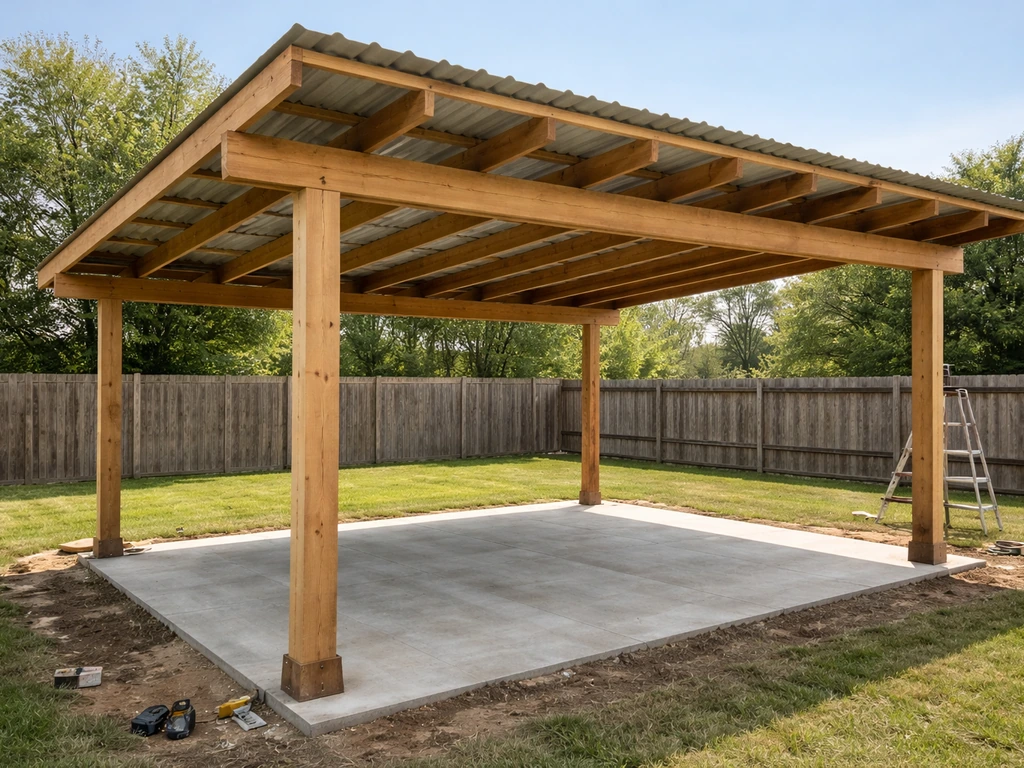
How Much Does a 20x20 Patio Cover Cost? Real Prices
See real cost ranges for a 20x20 patio cover, breakdown of materials, labor, permits, and tips to get accurate quotes.
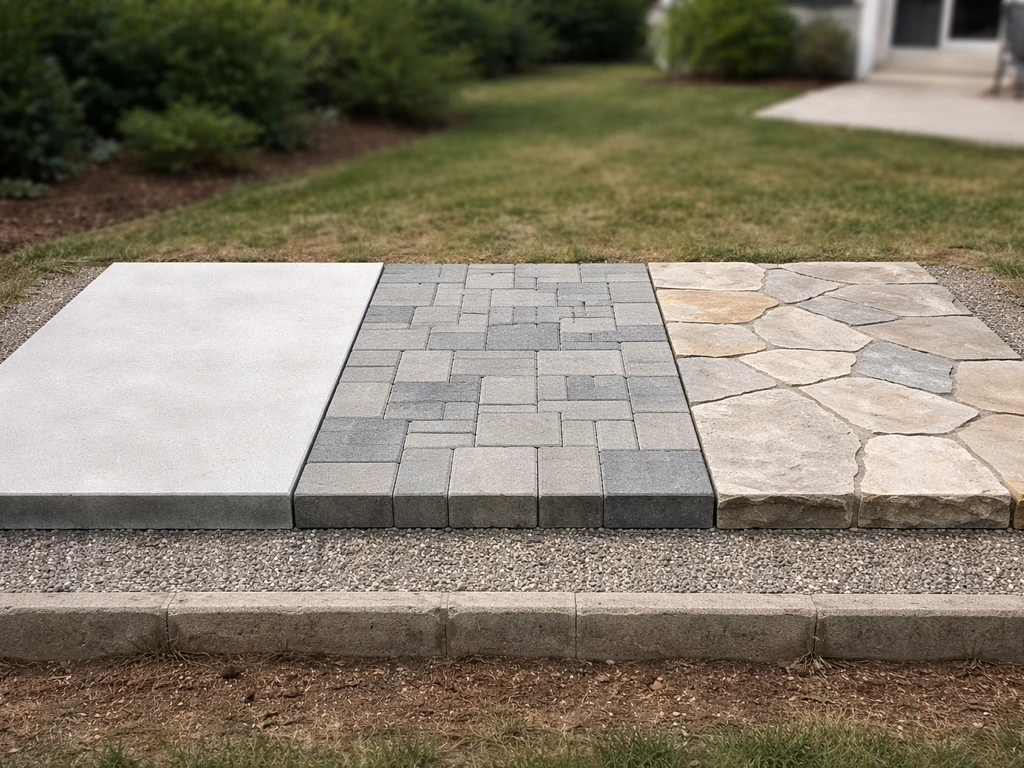
How Much Should I Expect to Pay for a Patio
Patio cost guide with real price ranges by size and material, full line-item budget, DIY vs install, and quote checklist