
A professionally installed 20x20 patio (400 sq ft) typically costs between $3,200 and $14,000 in 2026, depending on the material you choose. Basic poured concrete sits at the low end around $8–$12 per sq ft installed, putting a 20x20 at roughly $3,200–$4,800. blank" rel="noopener noreferrer">Pavers and brick run $10–$25 per sq ft ($4,000–$10,000), stamped concrete lands around $12–$22 per sq ft ($4,800–$8,800), and flagstone or natural stone is the priciest at $15–$27 per sq ft ($6,000–$10,800). Add site prep complications, drainage work, steps, or lighting and any of those numbers climb. This guide breaks it all down so you can nail your budget before calling a single contractor.
How Much Does a 20x20 Patio Cost? 2026 Pricing Guide

Felix Carver
6 Jun 2026

What a 20x20 patio costs in total (the real range)
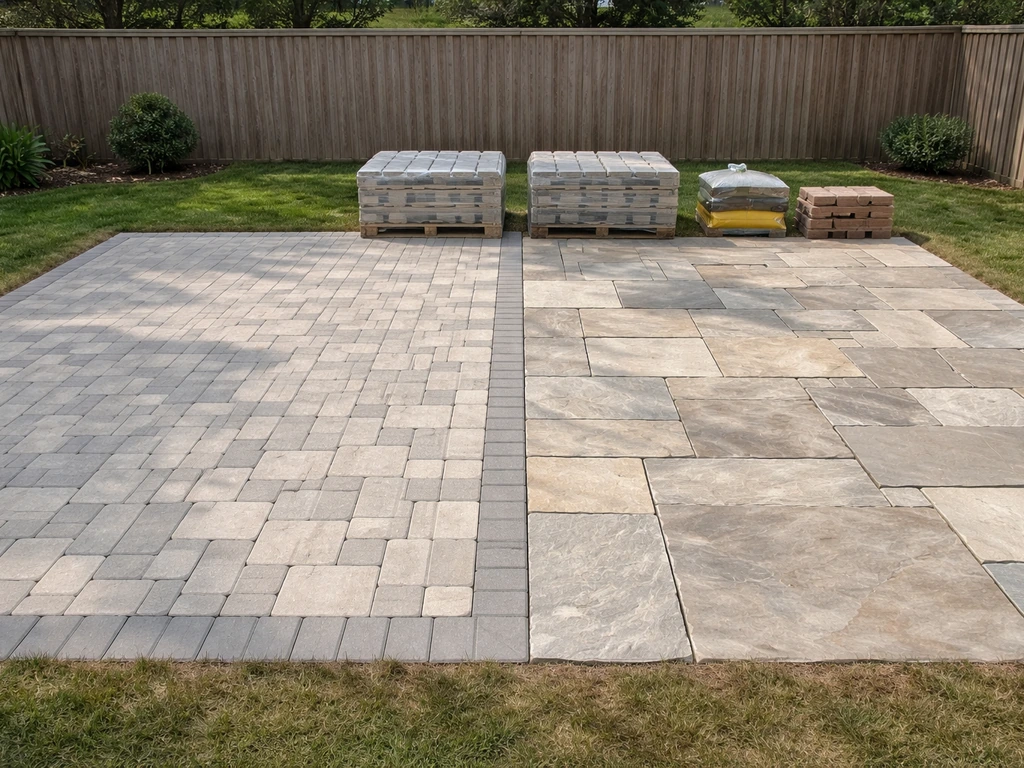
The 400 sq ft of a 20x20 patio is a popular mid-size project, big enough for a dining set and a couple of lounge chairs, but not so large that costs spiral out of control. Most homeowners spending on a standard concrete or paver installation land somewhere between $4,000 and $8,000 all-in. That said, the range is genuinely wide because material choice alone can swing the total by $5,000 or more. Here's a quick summary of where costs land by material before we dig into the details. A detailed look at patio cost factors helps you estimate more accurately before you hire a contractor.
| Material | Cost per Sq Ft (Installed) | Total Cost for 20x20 (400 sq ft) |
|---|---|---|
| Poured Concrete | $8–$12 | $3,200–$4,800 |
| Concrete Pavers | $10–$20 | $4,000–$8,000 |
| Brick Pavers | $10–$25 | $4,000–$10,000 |
| Stamped Concrete | $12–$22 | $4,800–$8,800 |
| Flagstone / Natural Stone | $15–$27 | $6,000–$10,800 |
These are installed costs, meaning materials plus labor, on a relatively straightforward site. If your yard has significant slope, poor drainage, or requires demolition of an existing patio, budget 15–30% more on top of these figures.
Cost breakdown by material type
Plain poured concrete
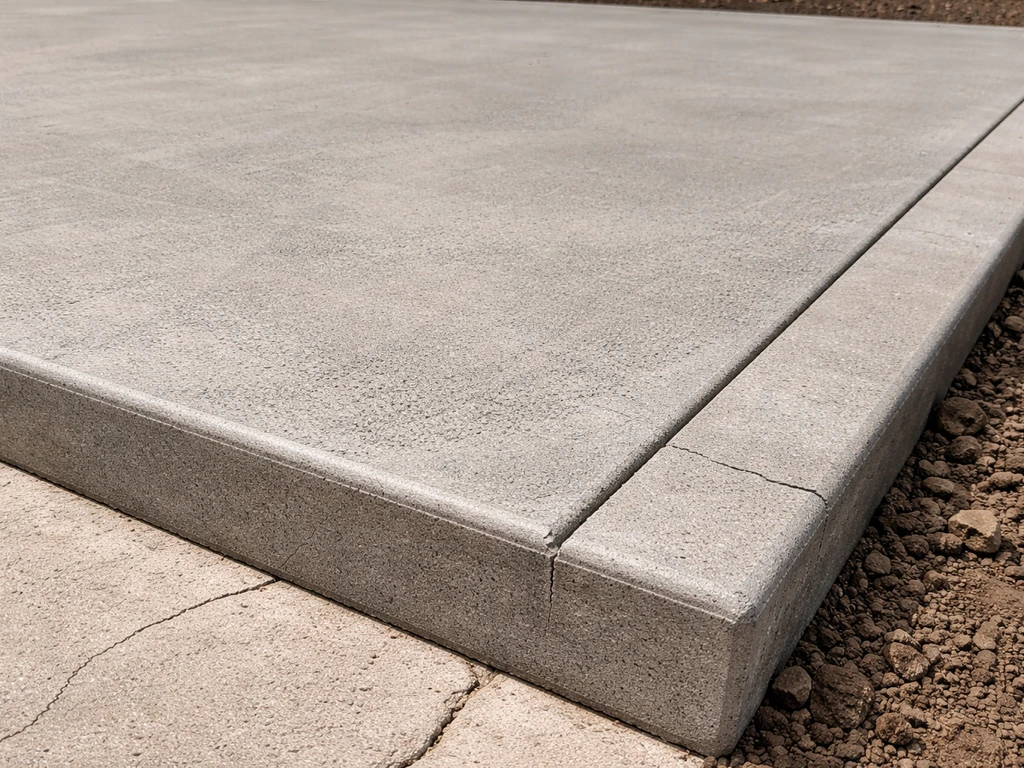
Poured concrete is the most budget-friendly choice at $8–$12 per sq ft installed, putting a 20x20 between $3,200 and $4,800. Materials account for roughly $3–$5 per sq ft; the rest is labor and base prep. It's durable, low-maintenance, and easy to clean. The downside: it cracks over time, especially in climates with freeze-thaw cycles, and a plain gray slab looks exactly like what it is. If you want something that holds up in harsh winters without spending a lot, this is your starting point.
Concrete pavers
Concrete pavers are the sweet spot for most homeowners: better-looking than a plain slab, easier to repair than poured concrete (you can replace individual units), and more affordable than natural stone. Installed costs run $10–$20 per sq ft, so a 20x20 lands between $4,000 and $8,000. Material costs are roughly $2–$8 per sq ft depending on the paver style and thickness; labor to install them runs $6–$11 per sq ft. The wider range here is real because paver pricing varies dramatically between a basic square Holland stone and an upscale tumbled or travertine-look unit.
Brick pavers
Traditional clay brick pavers cost $10–$25 per sq ft installed, putting a 20x20 between $4,000 and $10,000. They're more expensive than concrete pavers because the material cost is higher and laying them takes more time due to their smaller size. The look is timeless, they age beautifully, and quality brick can outlast everything else. Labor runs about the same as concrete pavers at $6–$11 per sq ft, but material costs are higher at $5–$15 per sq ft depending on the brick style and source.
Stamped concrete
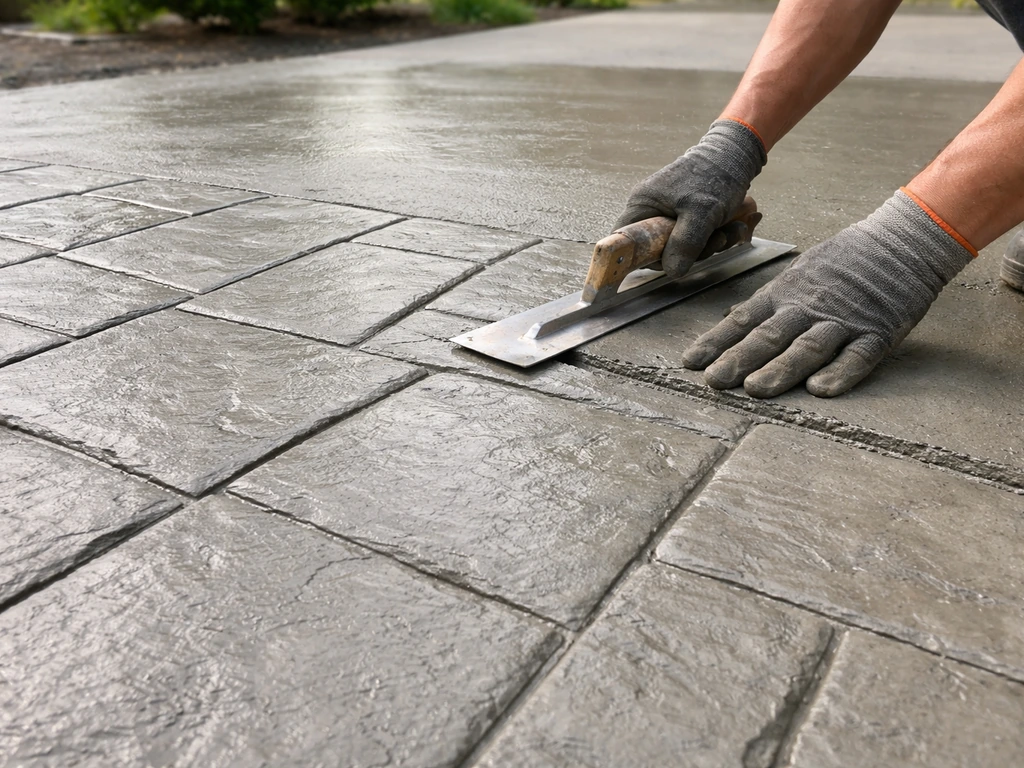
Stamped concrete gives you the look of stone, brick, or slate at a lower cost than the real thing. Installed prices run $12–$22 per sq ft, so a 20x20 runs $4,800–$8,800. The premium over plain concrete covers the stamping labor, color additives, and sealer. One gotcha: stamped concrete needs resealing every 2–3 years (typically $1–$3 per sq ft each time) and is harder to repair if it cracks, because matching the color and pattern perfectly is difficult. If you love the look but want lower long-term maintenance, pavers are often the smarter call.
Flagstone and natural stone
Flagstone and other natural stones like bluestone, travertine, and slate are the premium tier. Installed costs run $15–$27 per sq ft, putting a 20x20 between $6,000 and $10,800. Material costs alone run $6–$15 per sq ft depending on stone type and where you source it, and labor is higher because cutting and fitting irregular pieces takes real skill and time. The results are stunning and genuinely long-lasting, but this is not the place to look for budget savings. If you're considering a flagstone patio, the specific stone type matters a lot for both cost and performance in your climate.
What drives labor and installation costs
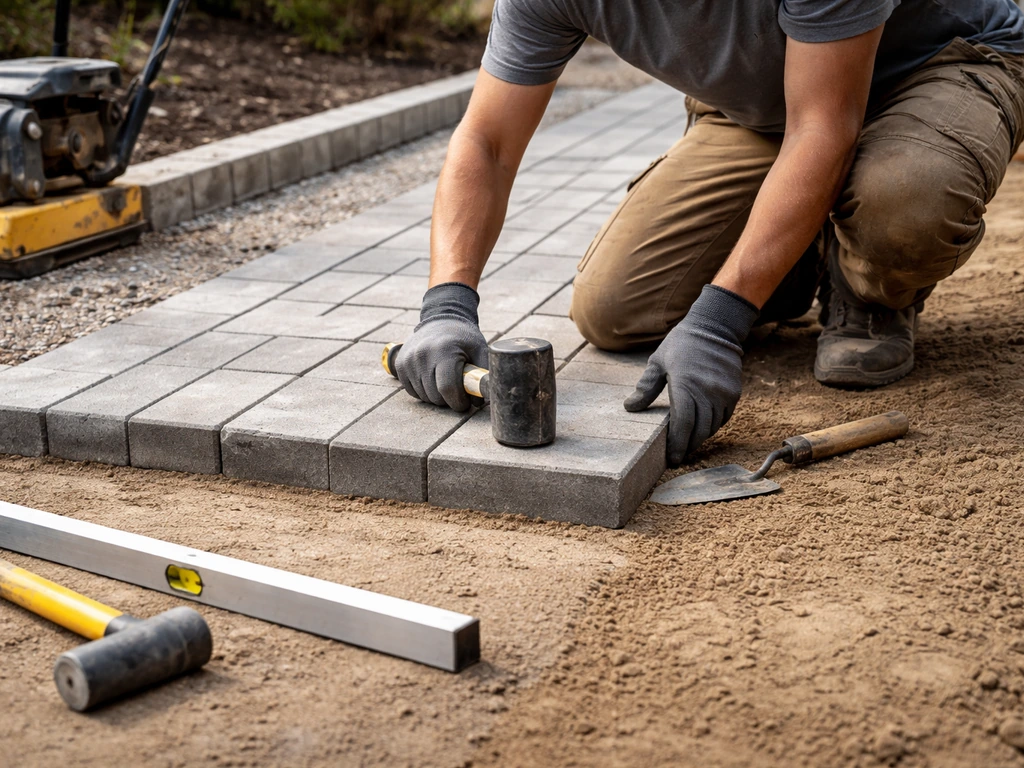
Labor is where a lot of homeowners get surprised. Professional paver and stone installers typically charge $50–$80 per hour, which translates to roughly $4–$11 per sq ft depending on the material and complexity of the project. On a 400 sq ft patio, that's $1,600–$4,400 in labor alone before you buy a single piece of material.
A few specific factors that push labor costs up: intricate patterns like herringbone or running bond take more time than a simple grid. Curved or irregular shapes require more cuts. Working around trees, downspouts, or existing structures adds complexity. And any elevation change, even a gentle slope, means more grading and base work. Contractors typically price more complex jobs on a per-sq-ft basis that's already baked in, but it's worth asking specifically what pattern or shape assumptions they're using when you get quotes.
DIY vs. hiring a contractor: what it actually costs
Going DIY on a 20x20 patio can save you $2,000–$5,000 in labor, but it's not a weekend project for most people. A 400 sq ft paver patio involves excavating 6–8 inches of soil (roughly 75–90 cubic feet of material to haul away), compacting a gravel base, screeding sand, laying pavers, and compacting the finished surface. You'll need to rent a plate compactor (around $100–$150/day), a masonry saw ($75–$150/day), and potentially a mini-excavator for the digging ($300–$500/day). Add up tool rentals, delivery fees, and materials, and a DIY concrete paver patio might cost $2,500–$5,000 in materials and rentals versus $4,000–$8,000 installed professionally.
The honest gotcha: first-time DIYers often underestimate base prep. If the base isn't properly compacted and graded, pavers settle unevenly within a year or two and you're relaying sections. For stamped concrete, DIY is generally not realistic since it requires renting specialty stamps and achieving professional-grade results with coloring is very difficult. For plain concrete, DIY is possible but mixing and pouring a 400 sq ft slab is a serious undertaking that benefits from multiple helpers. Flagstone is actually one of the more DIY-friendly options if you're going dry-laid (no mortar), since it doesn't require perfect precision.
| Approach | Estimated Cost (20x20) | Skill Level Required | Main Risks |
|---|---|---|---|
| DIY Concrete Pavers | $2,500–$5,000 | Moderate–High | Uneven settling if base is wrong |
| DIY Flagstone (dry-laid) | $3,000–$5,500 | Moderate | Weeds, shifting if not done right |
| DIY Plain Concrete | $2,000–$3,500 | High | Cracking, poor finish quality |
| Pro Install (any material) | $3,200–$10,800 | N/A | Cost, finding reputable contractor |
Site prep, base, and add-ons that change your total
The base is the part of a patio project homeowners most often underestimate. A properly built paver or stone patio requires 4–6 inches of compacted gravel base plus 1 inch of bedding sand on top. Excavating 400 sq ft to that depth generates a significant amount of material that needs to go somewhere. Expect to pay $300–$800 for excavation on a flat site, more if you're dealing with slope, tree roots, or hard clay. Gravel and sand for a 400 sq ft base typically add $400–$800 in materials.
Drainage is a cost that catches people off guard. If your patio area doesn't drain well naturally, you may need a French drain, catch basin, or sloped grading to direct water away from the house. Budget $500–$2,000 for drainage work depending on scope. Skipping it and hoping for the best is how you end up with water pooling against your foundation.
Common add-ons and what they typically cost for a 20x20 project:
- Demolition of existing concrete or patio: $500–$1,500 depending on thickness and material
- Decorative border or edging: $300–$800 for a contrasting paver border around the perimeter
- Steps (2–3 steps from house to patio): $500–$1,500 depending on material and width
- Patio lighting (in-ground or step lights): $500–$2,000 for wired fixtures, less for solar
- Polymeric sand for joints (pavers): $150–$300, but highly recommended to prevent weed growth and ant intrusion
- Sealing (stamped concrete or pavers): $200–$600 for professional application
A realistic "fully loaded" 20x20 paver patio with proper base, drainage, a decorative border, two steps, and polymeric sand could easily run $7,000–$12,000 even though the base install estimate is $4,000–$8,000. Factor add-ons in early rather than being surprised at contract review.
How region affects what you'll pay
Where you live can shift patio costs by 20–40% compared to the national averages above. Labor markets are the biggest driver. A contractor in Austin, Nashville, or Phoenix might quote $10–$14 per sq ft for concrete paver installation, while the same scope of work in San Francisco, New York City, or Boston can run $18–$28 per sq ft. The Northeast and West Coast consistently run higher due to higher labor costs and in some cases higher material transportation costs. The Southeast and Midwest tend to be the most affordable regions for patio work.
Material costs also vary by region because of freight. Natural stone like flagstone or bluestone is cheaper in the Mid-Atlantic and Northeast where it's quarried locally. Travertine is more affordable in Florida and the Southwest where it's heavily imported through nearby ports. When getting quotes, ask contractors to break out material costs separately so you can compare apples to apples across bids.
To get accurate local pricing, get at least three in-person quotes from licensed, insured contractors. Quotes from apps or websites that don't visit the site are ballparks at best. Ask each contractor to provide a line-item breakdown showing materials, labor, base prep, and any disposal or drainage costs separately. This makes it much easier to compare bids that may look very different on the surface.
How to build your budget before you get quotes
Start with your cost-per-sq-ft target. Multiply it by 400 to get your baseline estimate, then add 15–20% contingency for unexpected site conditions, price increases, or scope changes. That contingency is not padding, it's just reality on outdoor construction projects. If you come in under budget, great. But running out of money mid-project is genuinely costly.
Here's a simple framework to build your number before you talk to anyone:
- Pick your material and use the per-sq-ft range above to set a baseline (400 sq ft x your target $/sq ft).
- Add $500–$1,500 for base prep and excavation if your site is relatively flat and undisturbed.
- Add $500–$2,000 if you suspect drainage issues or significant slope.
- Add costs for any add-ons you want: steps, borders, lighting, demolition.
- Add 15–20% contingency on the total.
- That's your realistic budget range. If contractor quotes come in above it, you either need to adjust the material choice, simplify the design, or get more bids.
When you talk to contractors, ask these questions specifically: What's included in your per-sq-ft price? Does that include base prep, compaction, and disposal? How deep will you excavate and how many inches of gravel base? What warranty do you offer on settling or cracking? Do you pull permits if required? These questions separate the serious pros from the ones cutting corners.
One more thing worth knowing: if you're also thinking about covering your patio with a pergola, shade structure, or patio cover, that's a separate budget line entirely and the structure type can also influence what patio material makes the most sense beneath it. If you want a covered setup, you can also check how much a 20x20 patio cover costs so you can plan the full project budget. And if you're weighing a patio against a deck, the cost comparison shifts based on ground clearance and your yard's grade. For a 20x20 footprint, a ground-level patio almost always comes in cheaper than a deck of the same size, with concrete and simple pavers being the most cost-competitive options.
FAQ
Do I need to buy extra material for a 20x20 patio?
Usually you should plan for 1 additional allowance of 5–15% over the 400 sq ft footprint for cuts, waste, and patterns (especially herringbone, borders, and curved layouts). If the contractor already priced materials based on an exact pattern, ask them to state the total “coverage” they used so you are not paying twice.
Why do quotes for the same 20x20 patio price so differently even when per-sq-ft looks similar?
If you want straight comparisons, ask every bidder for the same scope definition, including base depth, edging type, and drainage approach. For example, “per-sq-ft installed” should state whether it includes disposal, geotextile fabric, compaction passes, bedding sand, and any sealers (for stamped concrete).
Does the quoted cost include permits, and what situations commonly trigger extra fees?
Yes, permitting and inspections can change the final cost, particularly if grading affects stormwater, if you are near property lines, or if code requires specific drainage. Ask whether their quote includes permit fees and the cost of any required engineering or redlines, not just the contractor labor.
What drainage or slope issues most often cause patios to fail early?
A patio that sits too low or without adequate slope can create standing water, which then drives algae growth, base washout, and premature settling. A practical check is to confirm the intended pitch away from the house (commonly achieved with grading before base), and ask how the installer will maintain that slope through the entire base build.
How much does removing an existing patio add to the cost?
If the patio is replacing existing hardscape, ask for a line item for demolition and haul-away. Removing old concrete can be more expensive than demo of pavers, and if they encounter rebar or thick slabs you can see a noticeable jump in both labor and disposal.
Will adding steps change the estimate in a predictable way?
Stepping stones onto a patio, or a small step down from a door threshold, can add cost, but the bigger variable is whether the steps require additional base and edging to match the finished height. Ask the contractor what the “finished elevation” plan is, so your door clearance, ramp feasibility, and step count are not decided mid-job.
What paver-related details should I ask about before approving a contract?
Yes, polymeric sand, proper joint size, and correct compaction matter for pavers, and for natural stone the jointing system can differ by installer. Ask what jointing material they plan to use and whether they include edge restraint, because loose edging is a common cause of pavers shifting over time.
How do I estimate long-term maintenance costs for stamped concrete?
For stamped concrete, the resealing interval in practice depends on climate, sun exposure, and deicer use. Ask what sealer type they recommend, expected time between sealings in your region, and whether maintenance is included in their warranty terms.
If I plan to add a patio cover later, should I choose a different patio surface now?
A pergola or cover can change the patio’s “best match” material because of moisture and shade. For instance, if the area stays wetter or never gets full drying, homeowners often prefer pavers with better drainage characteristics and easier localized repairs; if it is fully covered and dry, stamped concrete becomes more attractive.
What warranty details should I look for on a 20x20 patio installation?
Warranty varies a lot, and some only cover workmanship, not material wear or cracking due to soil movement. Ask for what they cover (settlement, cracking, leveling), the length of coverage, and what documentation or maintenance you must do (such as periodic sealing) to keep the warranty valid.
How can I sanity-check DIY pricing before I commit?
DIY can save labor dollars, but it often costs more if base prep is wrong or if you need to redo sections. A useful budgeting decision aid is to price your tools and rentals for the exact days you need, add delivery fees, and include replacement material for the “learning curve,” especially for leveling, cutting, and compaction.
Next Articles
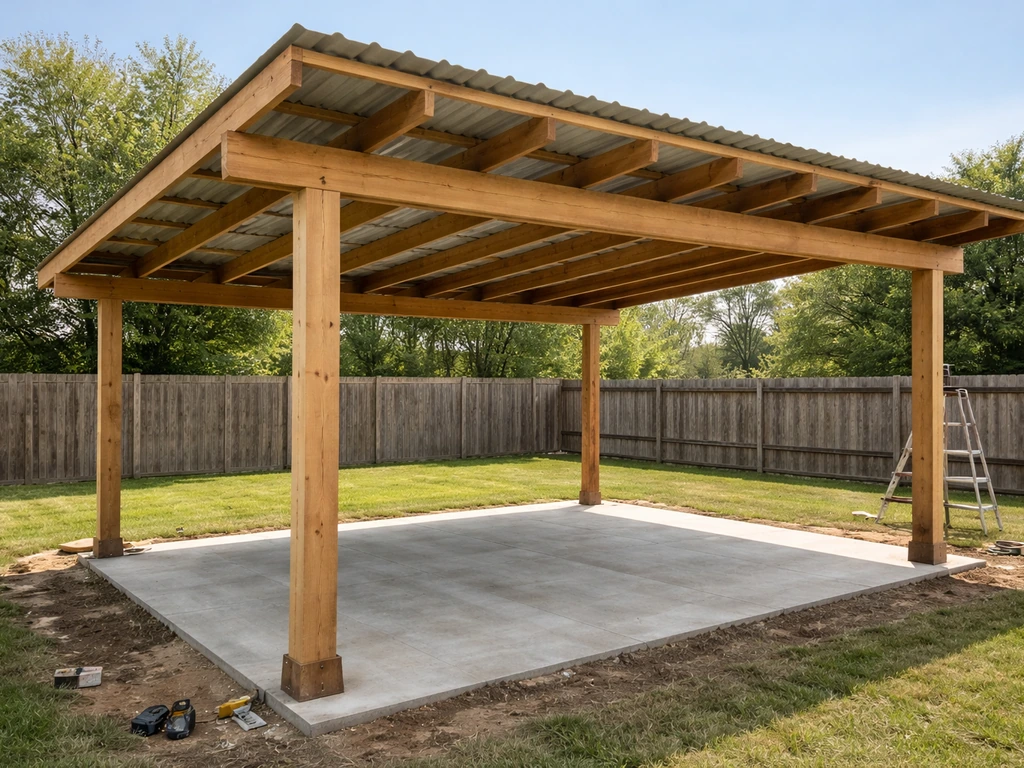
How Much Does a 20x20 Patio Cover Cost? Real Prices
See real cost ranges for a 20x20 patio cover, breakdown of materials, labor, permits, and tips to get accurate quotes.
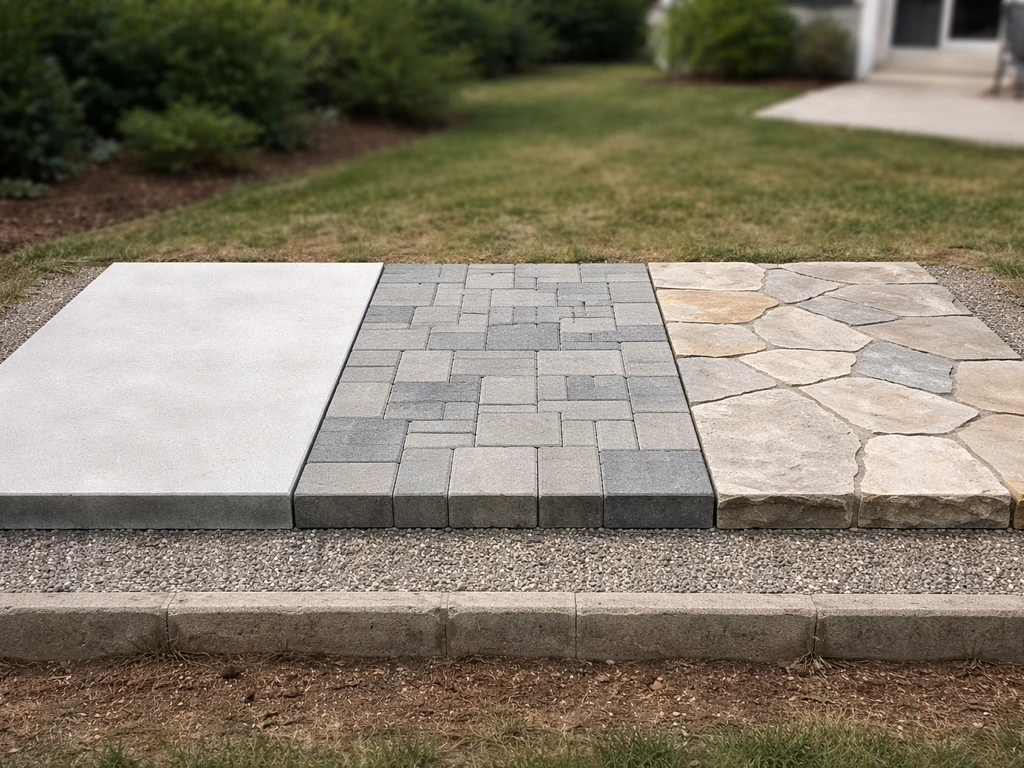
How Much Should I Expect to Pay for a Patio
Patio cost guide with real price ranges by size and material, full line-item budget, DIY vs install, and quote checklist
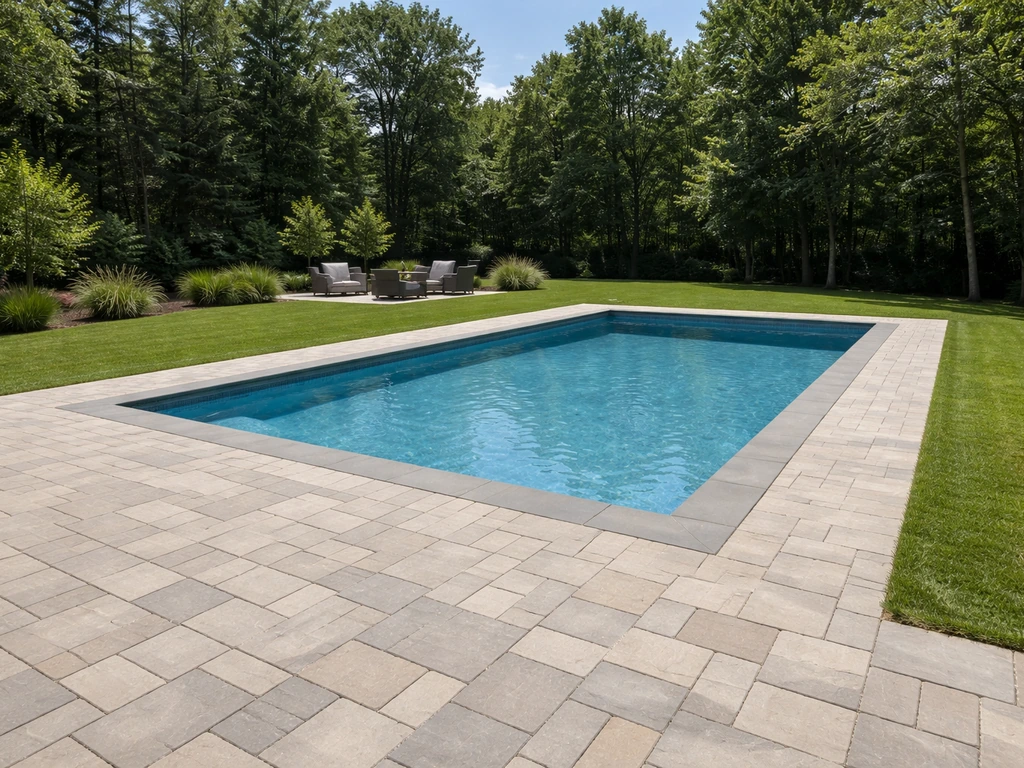
How Much Patio Around Pool: Cost, Size, and Budget Guide
Learn how much patio around a pool costs and how to size square feet, materials, extras, and get real bid line items.