
Sealing a paver patio typically costs between $1.50 and $3.50 per square foot when you hire a professional to clean, re-sand if needed, and apply two coats of sealer. For a common 20x20 patio (400 sq ft), that puts the total bill somewhere between $600 and $1,400. For more detail on how much does it cost to seal a patio, see our full cost guide. DIY material costs alone run roughly $0.30 to $0.80 per square foot depending on the sealer you choose, so a motivated homeowner can cut the spend dramatically, though the prep work is where most people underestimate their time and effort.
How Much Does It Cost to Seal a Paver Patio, Prices & Guide

Felix Carver
15 Jul 2026
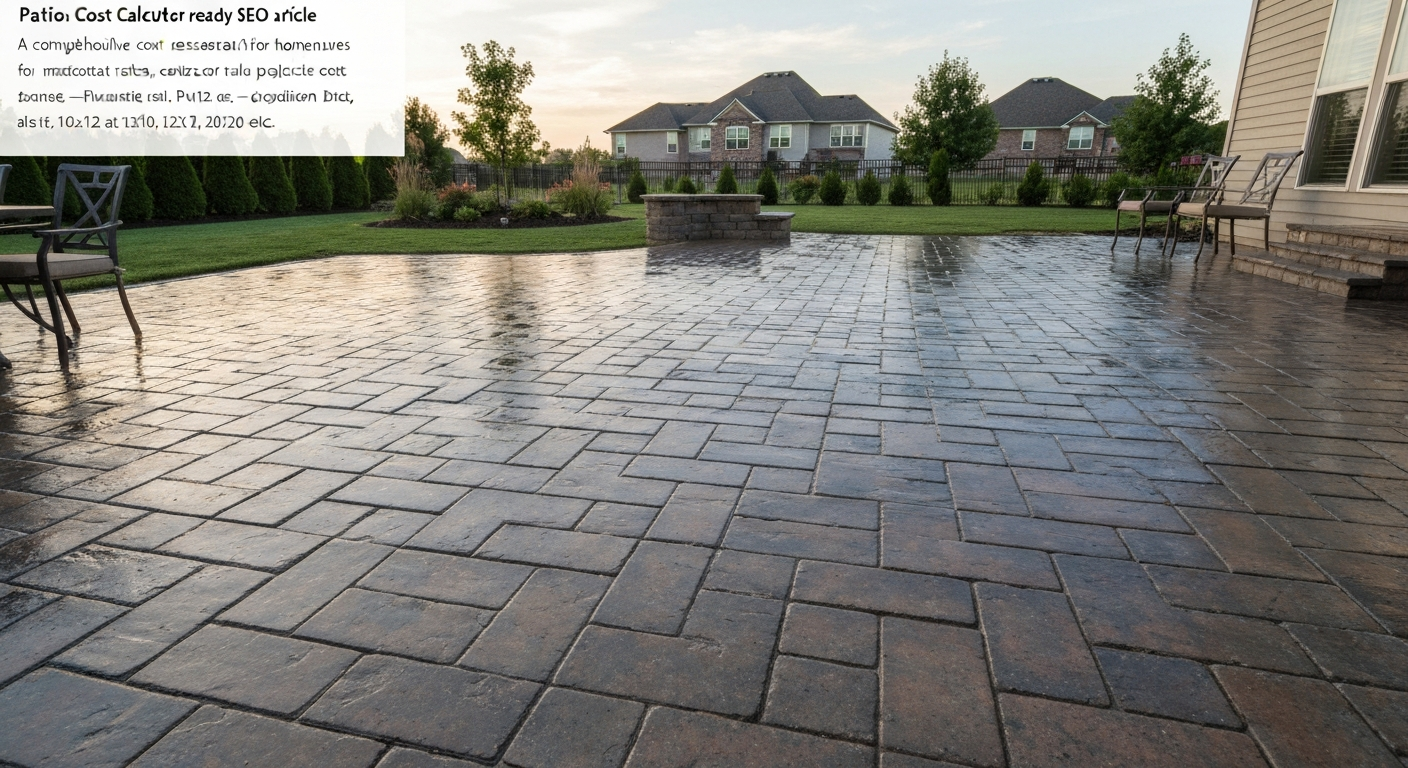
Typical cost ranges to seal a paver patio
The per-square-foot range is wide because 'sealing' can mean a lot of different things. A basic re-coat on a recently cleaned, well-maintained patio is on the low end. A full-service job on neglected pavers, power wash, efflorescence treatment, joint re-sanding, minor repairs, and two coats of a quality sealer, is on the high end. Most homeowners getting a complete professional package will land somewhere in the $1.50 to $3.00 per square foot range, with premium sealers, difficult access, or heavy prep pushing costs above that.
| Patio Size | Square Footage | DIY Cost (materials only) | Pro Cost (full clean + seal) |
|---|---|---|---|
| 10x10 | 100 sq ft | $30 – $80 | $150 – $350 |
| 12x12 | 144 sq ft | $45 – $115 | $215 – $500 |
| 20x20 | 400 sq ft | $120 – $320 | $600 – $1,400 |
| 20x30 | 600 sq ft | $180 – $480 | $900 – $2,100 |
One thing worth noting on small jobs: most professional paver-sealing companies charge a minimum project fee, often $150 to $250, regardless of square footage. So a tiny 10x10 patio might not pencil out very differently from a 12x12 when getting pro quotes. That minimum threshold makes DIY especially attractive for smaller surfaces.
What drives the price up or down
The condition of your pavers is the single biggest variable. If the surface is relatively clean, joints are intact, and no pavers are sunken or cracked, the job is mostly labor and materials. If you have significant efflorescence (that white chalky staining), failing joint sand, or sunken sections, the prep and repair work can double or even triple the base sealing cost. Here are the main cost drivers to watch for.
- Patio condition: heavy staining, efflorescence, or weed damage adds prep time and chemical costs
- Sealer type: penetrating impregnators cost several times more per gallon than standard acrylic film sealers
- Number of coats: one coat is cheaper but two coats are standard for even finish and durability
- Joint work: replacing failed polymeric sand adds material and labor before sealing can begin
- Surface repairs: sunken, cracked, or heaved pavers need resetting before a sealer is applied
- Patio size: larger jobs get per-sq-ft discounts; very small jobs hit minimum charges
- Access: tight side yards, multiple levels, or obstacles slow down equipment and crew
- Region: contractor labor rates vary significantly by market (more on this below)
- Season: late fall and winter scheduling often comes with discounts in cooler climates
Line-item cost breakdown
Breaking the project into its components helps you understand where your money actually goes, and where you can save if you're doing part of the work yourself. The figures below reflect a typical 400 sq ft (20x20) patio needing a full clean-and-seal with polymeric sand refresh.
| Line Item | DIY Cost Estimate | Pro Cost Estimate | Notes |
|---|---|---|---|
| Sealer (two-coat application) | $80 – $200 | $100 – $300 (materials) | Coverage ~175–225 sq ft/gal per coat; acrylic film sealers run ~$45/gal |
| Polymeric joint sand (50-lb bags) | $60 – $120 | $80 – $160 (materials) | Coverage 25–85 sq ft per 50-lb bag; premium brands $50–$100/bag |
| Cleaning chemicals / efflorescence remover | $30 – $60 | Included in labor rate | ~$30–$45/gal for paver-specific cleaners |
| Pressure washer rental | $40 – $80/day | Included in pro quote | Gas units rent ~$60–$80/day; electric ~$40–$60/day |
| Sprayer / roller / application tools | $20 – $50 | Included in pro quote | Pump sprayers, rollers, brushes; largely disposable |
| PPE (gloves, respirator, eye protection) | $15 – $30 | Included in pro quote | Especially important with solvent-based sealers |
| Labor (professional) | N/A | $350 – $900 | Based on $0.85–$2.25/sq ft labor component at 400 sq ft |
| Surface repairs (if needed) | $50 – $150 DIY | $280 – $1,200 pro | Paver repair/resetting: $7–$30/sq ft depending on scope |
| Total estimate (400 sq ft) | $245 – $540 | $600 – $1,400 | Excludes major structural repairs |
Labor is the biggest cost in a professional quote, typically making up 50 to 65 percent of the total. Contractors generally target gross margins of 30 to 50 percent when pricing these jobs, which is why a project that costs a pro $400 in materials and labor might come back to you as a $650 to $750 quote. That's not gouging, it's normal business overhead built into the per-sq-ft price.
Sealer types and what they cost
Choosing the right sealer matters both for performance and for budget. There are five main types used on concrete and brick pavers, and they vary considerably in price per gallon and in how much coverage you get per gallon.
| Sealer Type | Typical Retail Price | Coverage per Gallon | Finish | Best For |
|---|---|---|---|---|
| Solvent-based acrylic (film-forming) | $40 – $55/gal | 175–250 sq ft | Wet-look / gloss | Decorative pavers, color enhancement |
| Water-based acrylic (film-forming) | $35 – $50/gal | 175–225 sq ft | Matte to satin | Eco-conscious, low-odor application |
| Penetrating silane/siloxane (water-based) | $45 – $80/gal | 150–300 sq ft | Natural/invisible | Freeze-thaw climates, keeping natural look |
| Penetrating impregnator (premium, e.g., Dry-Treat) | $127 – $300+/gal | 160–480 sq ft | Natural/invisible | High-traffic, premium natural stone or pavers |
| Polymeric/polyurethane hybrid | $55 – $90/gal | 150–200 sq ft | Semi-gloss to gloss | High-durability, commercial-grade applications |
For most residential paver patios, a solvent-based or water-based acrylic film sealer in the $40 to $55 per gallon range does a solid job and is what most contractors use. HomeGuide's "blank" rel="noopener noreferrer">How Much Does It Cost to Seal Pavers? (2026) | HomeGuide" lists typical paver-sealing prices around $2.20–$3.25 per square foot for small residential projects and sealer retail prices of about $42–$70 per gallon. The coverage math for a 400 sq ft patio at two coats works out to roughly 3.5 to 4.5 gallons, so material cost alone is typically $160 to $230 with a standard acrylic. Premium impregnating sealers like the Dry-Treat family cost significantly more upfront but are claimed to last 10 to 15 years versus the 2 to 5 year recoat cycle of acrylics, which changes the long-term math considerably. The blank" rel="noopener noreferrer">Dry‑Treat Specifier’s Guide: Concrete Pavers (Dry‑Treat / Stain‑Proof) notes application rates of about 1 quart per 40–120 sq ft (roughly 1 gallon per 160–480 sq ft) depending on porosity and lists per‑gallon prices in the low hundreds to multiple hundreds of dollars, with dealer/wholesale tiers varying.
One common mistake: buying a high-gloss solvent sealer and applying it in direct afternoon sun, which causes bubbling and clouding. If you go the DIY route with a solvent-based product, ventilation and temperature matter, most manufacturers specify application between 50 and 90 degrees Fahrenheit with no rain expected for 24 hours.
Prep and cleaning costs: what you're paying for before a drop of sealer goes down
A properly applied sealer bonds to a clean, dry surface. Skipping or rushing prep is the number one reason sealed paver jobs look bad or fail early. Professional contractors typically include cleaning in their per-sq-ft price, but it's worth understanding exactly what that covers and what costs extra.
Power washing
Pressure washing pavers before sealing is non-negotiable. Pros typically charge $0.25 to $0.50 per square foot for isolated power washing work, so on a 400 sq ft patio, that's $100 to $200 as a standalone service. For a focused breakdown of power-washing fees and typical standalone quotes, see our guide on how much does it cost to power wash a patio. When bundled into a clean-and-seal package, the cleaning portion is usually absorbed into the overall per-sq-ft rate rather than broken out separately. If you've already had your patio professionally cleaned recently, mention that when getting quotes, some contractors will discount accordingly.
Chemical cleaners and degreasers
Most pros apply a paver-specific alkaline cleaner or degreaser before power washing, especially on patios with oil stains, mold, or mildew. These cleaners run about $20 to $45 per gallon at hardware stores. For a full 400 sq ft patio, one to two gallons is usually enough. Some contractors charge a small upcharge for chemical pre-treatment on heavily stained surfaces.
Efflorescence removal
Efflorescence is that white mineral deposit that leaches out of concrete pavers over time. It has to be chemically treated, pressure washing alone won't remove it completely. Efflorescence removers like Aqua Mix Eff-Ex typically cost $30 to $45 per gallon at big-box stores. Treating a patio with heavy efflorescence can add $50 to $150 in materials and an extra half-day of labor to the job, pushing a professional quote up by $100 to $300 depending on severity. If a contractor doesn't mention or check for efflorescence during an estimate, that's a red flag.
How prep changes your total cost
On a lightly used, well-maintained patio that just needs a re-coat, prep might take 30 to 45 minutes and cost almost nothing beyond water. On a neglected patio with heavy staining, weed growth in the joints, and chalky efflorescence deposits, prep can easily represent 40 to 60 percent of the total labor hours on the job. That's why two patios of identical size can come back with quotes $400 apart, condition drives the cost more than size in many cases.
Surface repairs and joint work: the costs most people don't plan for
Sealing doesn't fix structural problems, it just locks in whatever condition the patio is currently in. If you have sunken pavers, cracked units, or joint sand that has completely washed out, those need to be addressed before sealing. Skipping repairs and sealing over them just traps water and makes the underlying problems worse.
Polymeric sand replacement
Polymeric sand in the joints keeps pavers locked in place and blocks weed growth. Over time it washes out, becomes hard and crumbly, or gets disrupted by pressure washing. Replacing it is a standard part of most professional clean-and-seal packages. Economy polymeric sands cost $20 to $50 per 50-lb bag; premium brands like Techniseal or Gator Maxx run $50 to $100 or more per bag. Coverage per bag depends heavily on your joint width, you might get 85 sq ft per bag with narrow 1/4-inch joints, or only 25 sq ft with wide 1-inch joints. Budget $60 to $180 in polymeric sand materials for a 400 sq ft patio depending on joint spacing and brand.
Replacing and re-leveling pavers
Individual cracked or sunken pavers can often be pulled up, the base re-compacted or shimmed, and the paver reset. Hardscape repair runs $7 to $30 per square foot depending on the extent of work, with simple single-paver resets on the low end and sections requiring new base material on the high end. For most homeowners, repairing a few isolated pavers adds $100 to $400 to a sealing project. If a large portion of your patio has settled or heaved, you're looking at a separate repair or reinstallation project, and sealing should wait until that work is done.
When to skip sealing and resurface instead
If more than 20 to 25 percent of your patio surface has failed, cracked, or settled significantly, sealing it is putting lipstick on a problem. At that point you're better off getting quotes for paver resetting or full reinstallation rather than a sealing package. Sealing adds cost on top of a compromised surface and won't extend its functional life meaningfully.
Equipment rental and supplies: what you need for a DIY job
If you're going the DIY route, equipment is where the budget can creep up unexpectedly. Here's a realistic look at what you'll need and what it costs.
| Equipment / Supply | Rental or Purchase Cost | Notes |
|---|---|---|
| Gas pressure washer (3,000+ PSI) | $60 – $80/day rental | Most rental centers stock these; buy at $300–$500+ if doing multiple projects |
| Electric pressure washer (1,600–2,000 PSI) | $40 – $60/day rental | OK for light cleaning; may not remove heavy staining or joint sand fully |
| Pump-up garden sprayer (2 gal) | $20 – $35 purchase | For applying sealer; mostly disposable after solvent use |
| Paint roller and extension pole | $15 – $25 purchase | Useful for back-rolling sealer on textured surfaces |
| Angle grinder with diamond blade | $30 – $50/day rental | Only needed if cutting or trimming replacement pavers |
| Plate compactor | $50 – $80/day rental | For compacting new polymeric sand into joints after application |
| Leaf blower | $20 – $40/day rental or own | Critical for activating polymeric sand (blowing off excess) |
| Solvent-rated respirator (N95 + organic vapor) | $25 – $45 purchase | Required for solvent-based sealers; don't skip this |
| Chemical-resistant gloves + safety glasses | $10 – $20 purchase | Disposable nitrile gloves work fine |
For a standard DIY clean-and-seal on a 400 sq ft patio, realistic equipment and supply spending runs $150 to $300 on top of your sealer and sand materials. The pressure washer rental is usually the biggest single item. If you already own a decent pressure washer and a leaf blower, you can cut equipment costs to under $75.
DIY vs. hiring a pro: the real comparison
The honest answer is that DIY sealing is very doable for most homeowners, but it takes longer than most people expect. A professional two-person crew can clean, re-sand, and seal a 400 sq ft patio in a single day. DIY on the same patio, especially your first time, realistically takes two full days: one for cleaning and repairs, another for sealing once everything is dry. Factor in drying time between coats (typically 2 to 4 hours) and you may end up stretching across a weekend.
| Factor | DIY | Professional |
|---|---|---|
| Total cost (400 sq ft) | $245 – $540 | $600 – $1,400 |
| Time required | 12 – 20 hours over 1–2 days | 6 – 10 hours, single crew day |
| Equipment | Rented or purchased | Contractor-supplied |
| Sealer quality options | Consumer-grade to pro-grade | Pro-grade standard |
| Risk of application errors | Moderate (clouding, streaks, missed spots) | Low with experienced crew |
| Warranty / guarantee | None | Many contractors offer 1–3 year warranty |
| Physical demand | High (pressure washing, bending, kneeling) | N/A for homeowner |
The savings on a 400 sq ft patio are real, you might save $350 to $700 going DIY, but it's physical work and mistakes can be visible. Solvent-based acrylic sealers in particular are unforgiving: apply them too thick or in direct sun and you get a hazy, bubbled mess that's difficult to correct. If this is your first time sealing, start with a water-based acrylic; it's more forgiving and easy to clean up. The solvent-based wet-look products give a more dramatic finish but require more care in application.
Regional and seasonal price variations
Where you live affects the price more than most homeowners realize. Labor costs in high-cost markets like Southern California, the Northeast, or the Pacific Northwest are often 30 to 50 percent higher than in the Southeast or Midwest. A job quoted at $800 in Central Florida might run $1,100 to $1,300 for the same scope of work in suburban Boston or the Bay Area. Conversely, rural markets in the South and Midwest tend to be on the lower end of the national range.
Grounds maintenance and hardscape workers earn a national median of around $18.50 per hour (BLS data), but experienced paver-sealing specialists in high-cost markets often bill out labor at $25 to $40 per hour or more. That's before overhead and margin. A two-person crew for a day means your labor cost to the contractor might be $400 to $600 before any materials, which explains why professional quotes in expensive markets often start at $1.50 to $2.00 per square foot even for simple jobs.
Seasonal pricing and scheduling
In climates with cold winters, paver sealing is seasonal work. Most sealers can't be applied below 50 degrees Fahrenheit, and freezing temperatures after application can cause film sealers to crack or peel. This creates a busy season from spring through early fall, and a slower period from late fall through winter. If you can schedule work in November or early March, before or after the rush, you have more negotiating room and may find contractors willing to offer 10 to 15 percent discounts to fill their calendars. In warm climates like Florida, Texas, or Arizona, the season is nearly year-round, but summer heat creates its own challenges: many contractors in those markets prefer early morning starts and avoid afternoon application in peak summer months.
Contractor rates and how pros price the work
Most paver-sealing contractors price by the square foot, not by the hour, it's simpler to quote and easier for customers to compare. Typical per-sq-ft pricing ranges are $0.50 to $1.00 per sq ft for cleaning only, $1.50 to $3.00 per sq ft for a full clean-and-seal package, and $2.00 to $3.50 or more per sq ft when repairs and polymeric sand replacement are included. Contractors typically build their gross margin (30 to 50 percent is common for trades work) into the per-sq-ft number, covering materials, equipment, labor burden, overhead, and profit. Hourly pricing is less common but may appear for complex or unusual projects where square footage doesn't capture the difficulty.
Sealing vs. alternatives: when it makes sense to compare options
Sealing is the standard maintenance path for paver patios, but it's worth briefly comparing it to other options you might encounter. Painting concrete pavers is possible but generally discouraged by most contractors, paint sits on top of the surface and chips badly under foot traffic and freeze-thaw cycles, creating a maintenance headache. Staining pavers (acid-based or water-based reactive stains) gives a more permanent color change that penetrates the surface rather than sitting on top of it, but it doesn't offer the protective benefits of a sealer and costs a similar amount to apply professionally. For genuinely damaged patios, full replacement with a new paver installation is a separate, much larger cost discussion, sealing is a maintenance service, not a substitute for structural work. If you're comparing patio types for a new installation, concrete pavers, stamped concrete, natural stone, and brick all have different long-term sealing and maintenance cost implications. If you're specifically weighing paint as an option, check how much does it cost to paint a patio for a direct cost comparison.
How often do you need to reseal, and what does that mean for long-term costs?
The resealing schedule depends almost entirely on which type of sealer was used. Film-forming acrylics (the most common type) typically need recoating every 2 to 5 years, with high-traffic areas and sunny climates pushing toward the shorter end. Premium penetrating impregnators from brands like Dry-Treat claim 10 to 15 year intervals, though reapplication is still eventually needed. That upfront cost difference starts to look more reasonable over a 15-year horizon when you factor in the repeated acrylic recoat costs.
If you're sealing a 400 sq ft patio every 3 years at $700 per professional application, that's roughly $233 per year. Sealing the same patio with a $400 premium impregnator every 12 years works out to about $33 per year, but of course requires a much higher upfront investment and the application is less forgiving. For most homeowners doing a standard backyard patio, the acrylic route with periodic DIY recoats is the most practical and cost-effective approach.
Getting quotes: what to ask and red flags to avoid
Getting two or three competitive quotes is standard advice, but the more useful tip is knowing what to ask so you're comparing the same scope of work. A $600 quote and a $950 quote for the same patio might reflect two different scopes entirely, one might include polymeric sand and two coats of a quality sealer; the other might be a single-coat spray-and-go with no joint work. If you need guidance on pricing cleaning separately, see how much to charge for patio cleaning. Here's a checklist of questions to pin down before accepting any quote.
- Does the price include pressure washing, or is that a separate line item?
- What sealer brand and product will you use, and can I see the technical data sheet?
- How many coats are included?
- Is polymeric joint sand replacement included? What brand?
- How do you handle efflorescence if you find it — is treatment included or an upcharge?
- Are minor paver repairs (resetting 1 to 3 pavers) included, or billed separately?
- What is the cure time before I can use the patio?
- Do you offer a warranty, and what does it cover?
- Is the quote fixed-price, or can it change based on conditions found on the day?
Red flags to watch for: a contractor who quotes without walking the patio in person, quotes that don't mention prep or cleaning, anyone suggesting a single coat is sufficient on bare pavers (it isn't), and upfront payment demands above 30 to 40 percent of the job total. Power washing is sometimes offered as a free add-on to lock in a sealing job, that's fine, but confirm the pressure washer is appropriate for pavers (2,500 to 3,000 PSI is typical; too high can damage paver surfaces). Also be aware that power washing and sealing are sometimes priced as separate services, so if you've already had your patio cleaned as part of a general property maintenance visit, you may not need, or want to pay for, a second cleaning bundled into a sealing quote.
Practical ways to keep costs down
- Do the cleaning yourself and hire out only the sealing: you can rent a pressure washer for $60 to $80 and clean the patio yourself, then have a contractor apply the sealer — some will quote labor-only pricing if the surface is prepped
- Schedule off-peak: in cooler climates, booking in late October through early March often means more contractor availability and potential discounts of 10 to 15 percent
- Buy your own sealer: some contractors will apply customer-supplied material at a reduced rate; confirm this upfront and buy contractor-grade product, not the cheaper consumer stuff
- Bundle with neighbors: if two or three houses in your neighborhood want their patios sealed, approaching a single contractor together often results in better per-sq-ft pricing since they can stage equipment once
- Do the polymeric sand yourself: applying polymeric sand is genuinely manageable as a DIY task — sweep it in, compact it, mist it. If you supply your own sand pre-installed, a contractor's scope and quote shrinks
- Skip the premium sealer unless the math works: unless you're planning to stay in the home long-term and want a 10-plus year cycle, a quality acrylic at $45 to $55 per gallon does the job — you don't need to spend $150 to $300 per gallon for a residential backyard patio
- Address efflorescence yourself before getting quotes: a $35 bottle of efflorescence remover and an hour of scrubbing can eliminate a potential upcharge from a contractor who would have treated it and billed you for the time
FAQ
How much does it cost per square foot to seal a paver patio?
Typical total price (cleaning + re‑sand if needed + two coats of sealer) commonly ranges from about $0.50 to $3.50 per sq ft. A common homeowner range many contractors quote is roughly $1.50–$3.00/sq ft for an average condition job. Lower end = DIY or minimal prep; higher end = professional service, high‑end impregnating sealer, or heavy prep/repairs.
What is the typical total cost to seal common patio sizes (10x10, 12x12, 20x20, 20x30)?
Example total cost estimates using the $1.50–$3.00/sq ft homeowner range: - 10x10 (100 sq ft): $150–$300 - 12x12 (144 sq ft): $216–$432 - 20x20 (400 sq ft): $600–$1,200 - 20x30 (600 sq ft): $900–$1,800 For minimal DIY-only materials expect lower totals; add 20–50% or more for contractor labor, premium sealer, extensive joint sand, or repairs.
Can you break down the line‑item costs (sealant types, materials, labor, equipment, joint sand, repairs)?
Typical line‑item ranges per job: - Sealer (film‑forming acrylic, solvent/water): $0.10–$0.50/sq ft (retail ~ $30–$60/gal; coverage ~175–225 sq ft/gal per coat; two coats commonly used). - Penetrating/impregnating sealer: $0.20–$1.00+/sq ft (higher per‑gallon cost but greater coverage). - Polymeric joint sand: $20–$100 per 40–50 lb bag (coverage ~25–85 sq ft per bag depending on joint width); jobs commonly need 1–6 bags. - Masonry cleaner / efflorescence cleaner: $10–$50 per gallon depending on product and quantity. - Power washing / cleaning labor: $0.25–$0.75/sq ft by pros (or equipment rental ~$50–$150/day for a consumer pressure washer). - Labor (sealing + prep) for contractors: often rolled into per‑sq‑ft price but expect labor component roughly $0.50–$2.00+/sq ft depending on region and complexity. - Small repairs (replace/sand/level pavers): can add $7–$30+/sq ft for substantial repair work (see fixr ranges). - Equipment rental (plate compactor, power washer, walk‑behind blower): $50–$150/day each if DIY. - Disposal / masking / materials incidentals: $20–$150. Totals depend on chosen sealer, number of coats, prep level and repairs.
How do sealer coverage and sealer gallons factor into cost calculations?
Film‑forming acrylics: roughly 175–225 sq ft per gallon per coat—two coats common, so plan ~area ÷ (coverage × coats). Example: 400 sq ft ÷ (200 sq ft/gal × 2 coats) ≈ 1 gallon needed (rounded up) but buy in 1–5 gal sizes; retail ~ $30–$60/gal (consumer brands). Penetrating sealers often cover much more (one gallon may treat 160–480 sq ft depending on porosity), but retail price per gallon is higher ($100+ for premium products). Include 10–20% extra for touchups/waste.
How do regional and seasonal price variations affect cost?
Regional: labor and markup vary—urban/high‑cost regions and areas with higher wages (Northeast, West Coast) trend toward the upper end of ranges; lower‑cost regions (parts of Midwest/South) lean toward the lower end. Seasonal: shoulder seasons (spring/fall) are common—contractors busy in peak season may charge more or have longer lead times; winter/slow months may yield discounts or availability for scheduling. Also climate: humid/coastal areas may need stronger cleaners or more frequent resealing, raising life‑cycle costs.
How does required prep (power washing, efflorescence removal, re‑sanding) affect price?
Prep often determines final cost: - Basic clean (surface sweep + light washing): small added cost or included. - Power washing + detergent: pros charge ~$0.25–$0.75/sq ft; DIY rental $50–$150/day. - Efflorescence or oil stain removal: cleaners $20–$50/gal plus labor; heavier stain remediation adds time and cost. - Re‑sanding with polymeric sand: material + labor adds $0.15–$1.00+/sq ft depending on number of bags and effort. Poor prep, failing to remove contaminants, reduces sealer performance—so cutting prep to save money can shorten seal life and increase long‑term costs.
Next Articles
How Much to Charge for Patio Cleaning: Real Prices
Real price ranges and quoting method for patio cleaning, including labor, prep, sealing, disposal, and square-foot add-o
How Much Does It Cost to Seal a Patio? Concrete and More
Get patio sealing costs fast: ranges for concrete and other surfaces, what’s included, typical sizes, and DIY vs pro tip

How Much Does It Cost to Power Wash a Patio?
Patio pressure or power washing costs by size, material, and grime, plus DIY vs pro budgeting and quote checklist.