
Most homeowners pay somewhere between $10 and $20 per square foot installed for a standard interlock patio, which works out to roughly $2,400 to $7,000 for a typical backyard project. The national average sits closer to $12 to $15 per square foot for concrete pavers with a basic pattern, while natural stone or complex designs can push past $25 to $30 per square foot. Those numbers cover everything: base prep, bedding sand, the pavers themselves, edging, labor, and cleanup.
How Much for Interlock Patio: Costs, Sizes, and Budget Guide

Felix Carver
6 Aug 2026
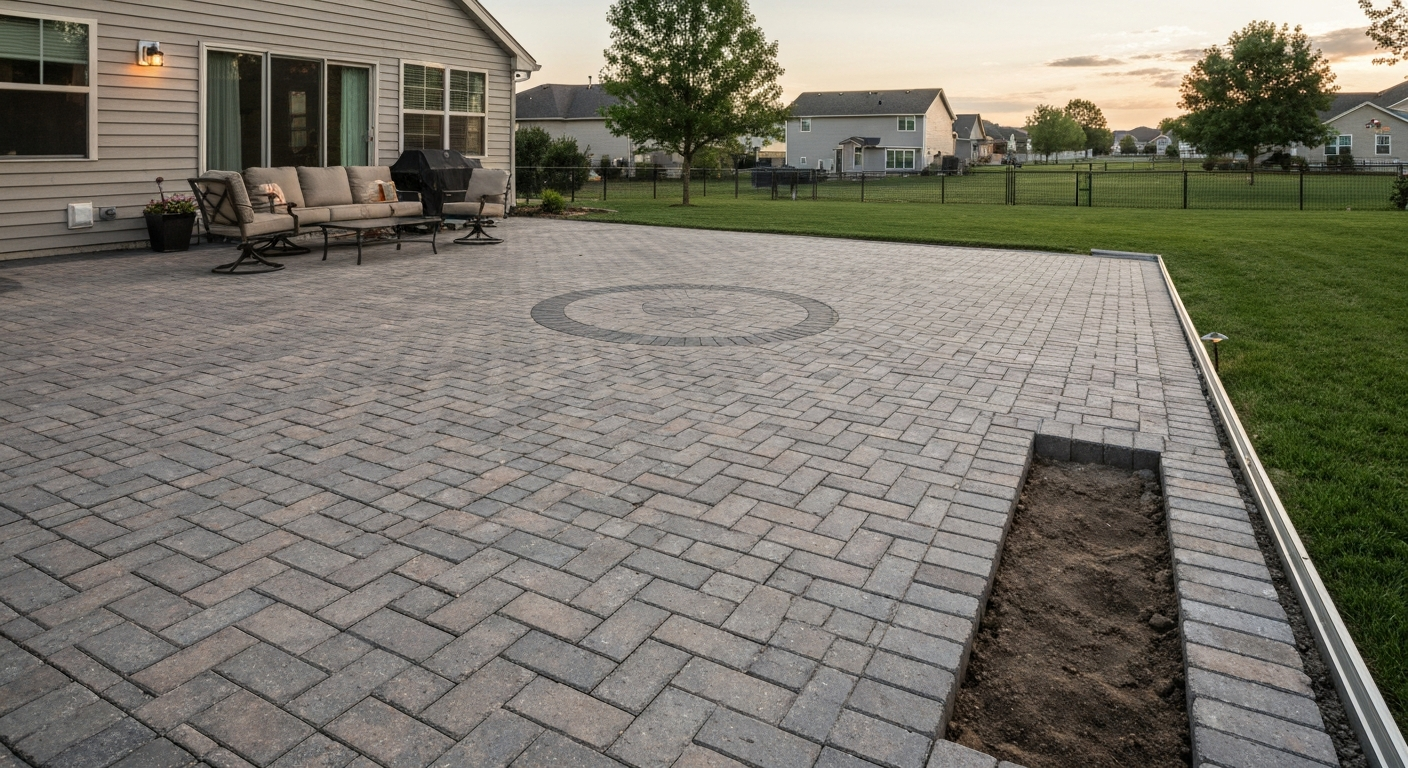
What is an interlock patio (and why the name matters for pricing)
"Interlock patio" is the common Canadian and northeastern U.S. term for what most of the industry calls a paver patio or interlocking concrete paver (ICP) patio. The two terms describe the exact same thing. The "interlock" name comes from the way individual paving units are fitted together without mortar, so the joints between them create a mechanical lock that spreads load and allows minor movement without cracking. In contrast to a poured concrete slab, an interlock patio is made of individual units, which means it can be repaired one piece at a time and doesn't develop the wide random cracks that plague monolithic slabs.
The Interlocking Concrete Pavement Institute (ICPI) is the main industry standards body, and their installation guidelines are what good contractors follow for base depth, joint sand, and compaction. When a contractor says "interlock," they almost always mean concrete pavers unless they specifically say natural stone or brick. That distinction matters because material costs vary quite a bit across those categories, which you'll see in the comparison table below.
How an interlock patio is built: what drives the price
The construction process is what separates a durable interlock patio from one that rocks, sinks, and weeds up in three years. It's also where most of the cost lives. Here's the sequence a proper installation follows, and where money gets spent at each stage.
- Excavation and grading: the existing soil is dug out, typically 8 to 12 inches deep to account for base, sand, and paver thickness, plus some extra for grading away from the house.
- Compacted aggregate base: a layer of crushed stone or gravel (ICPI specs call for 4 inches minimum for pedestrian patios, 6 inches in areas with heavy use or poor soil) is spread and mechanically compacted in lifts.
- Bedding sand: a 1-inch layer of coarse sand is screeded perfectly flat over the compacted base. This is the final leveling layer.
- Paver installation: units are laid in the chosen pattern, cut to fit edges, and checked for level constantly.
- Edge restraints: plastic, aluminum, or concrete curbing is pinned or poured along the perimeter to prevent the field from spreading.
- Joint sand: polymeric sand or kiln-dried sand is swept into the joints and compacted to lock units in place.
- Final compaction and cleanup: a plate compactor runs over the finished surface to seat the pavers into the bedding sand.
Paver materials and pattern complexity
Not all pavers cost the same, and not all patterns take the same time to install. Standard 4x8-inch or 6x6-inch concrete pavers in a basic running bond or 45-degree herringbone pattern are the fastest to lay. Larger-format or irregular flagstone-style concrete pavers take longer because every cut is different. Complex patterns like a circle kit inlay, radial fan pattern, or mixed-size random layout can add 20 to 40 percent to labor time. Genuine natural stone (bluestone, travertine, granite, slate) costs significantly more for the material itself and takes more skill to set correctly.
Typical price ranges and per-square-foot estimates
Here's the honest picture on per-square-foot pricing for installed interlock patios in 2026, pulling from aggregated contractor data and national cost platforms. The wide range exists because a basic concrete paver on flat, prepped ground in the Midwest is a completely different job from a natural stone patio on a sloped lot in coastal New England.
| Paver Type | Material Cost (per sq ft) | Installed Cost (per sq ft) | Notes |
|---|---|---|---|
| Standard concrete pavers (60mm) | $3 – $6 | $10 – $18 | Most common interlock choice; widest availability |
| Tumbled/textured concrete pavers | $4 – $8 | $12 – $20 | Slightly more material cost; same base process |
| Brick pavers | $5 – $10 | $14 – $22 | Thicker units; longer-lasting but more labor |
| Concrete flagstone-style large format | $5 – $9 | $13 – $22 | More cuts; slower to install |
| Natural bluestone / slate | $10 – $20 | $20 – $35 | Premium material and labor skill required |
| Travertine / granite | $12 – $25 | $22 – $40+ | High-end; regional availability affects price |
The national band that most homeowner projects fall into is $10 to $20 per square foot installed, with the average project coming in around $12 to $15 per square foot for standard concrete pavers. This Old House editorial summary (2026) reports paver installation commonly quoted in the range of about $8–$25 per square foot depending on material and complexity (concrete pavers at the low end; natural stone at the high end). Very small patios (under 100 sq ft) often cost more per square foot because setup, mobilization, and material minimums don't scale down proportionally.
Size-based cost examples: from a small patio to a big backyard slab
Putting square-foot rates into real project sizes is the fastest way to sanity-check a contractor quote. These estimates use the $12 to $18 per square foot range for standard concrete pavers, which covers most typical residential installs. Small patios at the low end of the range tend to cost more per square foot, so I've adjusted accordingly. If you need a quick estimate for a compact project, check the guide on how much does a small paver patio cost for typical sizes and per-square-foot breakdowns.
| Patio Size | Square Footage | Low Estimate | Mid Estimate | High Estimate |
|---|---|---|---|---|
| 10 x 10 ft | 100 sq ft | $1,400 | $1,800 | $2,500 |
| 12 x 12 ft | 144 sq ft | $1,900 | $2,500 | $3,500 |
| 12 x 16 ft | 192 sq ft | $2,300 | $3,200 | $4,500 |
| 200 sq ft (various shapes) | 200 sq ft | $2,400 | $3,400 | $4,800 |
| 16 x 16 ft | 256 sq ft | $3,000 | $4,200 | $5,800 |
| 20 x 20 ft | 400 sq ft | $4,800 | $6,800 | $9,500 |
| 20 x 30 ft | 600 sq ft | $7,000 | $10,000 | $14,000 |
A 200 square foot patio is a popular benchmark because it fits most single-seating-area backyard spaces and represents the bottom of where contractor pricing starts to become competitive with DIY. For small patios under 150 square feet, some contractors charge a minimum mobilization fee of $500 to $1,000 just to show up, which inflates the per-square-foot cost noticeably.
Full cost breakdown: every line item on your quote
A professional interlock patio quote should itemize these components. If you receive a single lump-sum number with no breakdown, ask for it. Knowing what each line covers helps you compare quotes apples-to-apples and catch omissions before the job starts.
Materials
Concrete paver units at retail run roughly $3 to $7 per square foot for common 60mm units from big-box stores. Contractor pricing is often similar or slightly lower on volume orders. Pallets vary in coverage depending on unit size, with many standard pallet sizes covering 56 to 104 square feet per pallet. Always order 5 to 10 percent extra for cuts and future repairs.
Base and compaction
Crushed stone or gravel for the compacted base typically costs $15 to $100 per ton depending on product and region (per HomeAdvisor 2026 aggregate pricing data). A 4-inch compacted base for a 200 sq ft patio needs roughly 2.5 to 3 tons of material. Add plate compactor rental ($60 to $100/day) if DIY-ing. Contractors include compaction in their labor rate.
Bedding sand and jointing sand
Coarse bedding sand runs $15 to $40 per cubic yard. The 1-inch bedding layer for a 200 sq ft patio uses about half a cubic yard. Polymeric jointing sand, which locks the joints and resists weeds and ants far better than plain sand, runs $15 to $40 per 50-lb bag at national retailers (Sakrete, Techniseal, Gator are common brands). One bag covers roughly 50 to 100 square feet depending on joint width. Budget $80 to $200 in poly-sand for a typical 200 to 400 sq ft patio.
Edging and edge restraints
Plastic or aluminum pin-in edging is the standard choice for most residential patios. Material alone costs $0.50 to $6 per linear foot; installed, expect $5 to $20 per linear foot depending on type. Poured concrete or decorative stone curbing runs $8 to $20 per linear foot installed for basic styles, and $12 to $20 per linear foot for decorative or stamped finishes. A 200 sq ft patio (roughly 14x14 ft square) has about 56 linear feet of perimeter, so edging can range from $300 to $1,100 depending on what you choose.
Delivery
Material delivery is often a separate line item, especially for palletized pavers. Expect $50 to $150 per delivery load for local aggregate delivery and $75 to $200 or more for paver pallet delivery depending on distance. Multiple material types may mean multiple deliveries.
Labor
Labor is typically the largest single cost in an interlock patio project, representing 40 to 60 percent of the total. The BLS national mean wage for construction laborers is around $23.47 per hour, but that's just the direct wage. When a contractor charges for labor, they're covering crew wages, payroll taxes, workers' compensation insurance, equipment cost, and their own overhead and profit margin. That's why the effective billed labor rate on a paver patio quote is usually $45 to $90 per hour per crew member, not $23. ICPI guidelines suggest a typical 3-to-5 person crew can install around 1,200 square feet per 8-hour day under good conditions, which puts crew productivity at roughly 27 to 33 square feet per person per hour.
Excavation, removal, and grading
If there's an existing concrete slab, old patio, or significant slope to deal with, expect to pay separately. Concrete demolition and removal runs $300 to $1,500 for a typical patio slab depending on thickness and haul-away costs. Grading and soil removal adds $100 to $500 for most residential patios. Heavily sloped lots can push this number much higher.
Sealing
Sealing isn't required but protects color, inhibits weeds, and makes cleaning easier. Most contractors offer it as an add-on for $0.50 to $2.00 per square foot. A 300 sq ft patio seal job might cost $150 to $600 professionally applied. Products applied at the job site are typically penetrating sealers or wet-look topical sealers.
Drainage
Most interlock patios are graded to drain away from the house at a minimum 1 to 2 percent slope. If your yard has poor drainage or you're dealing with a low spot, you may need a channel drain, catch basin, or French drain added to the scope. These add $500 to $3,000 depending on complexity.
Permits
Many municipalities don't require permits for ground-level patios, but some do, especially if you're within setbacks from property lines, adding structures, or the project involves grading. Permit fees typically run $50 to $300 when required. Always check with your local building department before breaking ground.
Sample budget scenarios
| Line Item | Small Patio (144 sq ft) | Mid Patio (256 sq ft) | Large Patio (400 sq ft) |
|---|---|---|---|
| Pavers (material) | $500 – $900 | $900 – $1,600 | $1,400 – $2,500 |
| Base gravel + sand | $200 – $400 | $350 – $650 | $500 – $900 |
| Poly-sand (jointing) | $60 – $120 | $100 – $200 | $150 – $300 |
| Edge restraints | $200 – $500 | $300 – $700 | $400 – $900 |
| Labor | $900 – $1,800 | $1,600 – $3,200 | $2,500 – $5,000 |
| Excavation / grading | $200 – $500 | $300 – $700 | $400 – $900 |
| Delivery | $100 – $250 | $150 – $350 | $200 – $450 |
| Sealing (optional) | $75 – $300 | $130 – $500 | $200 – $800 |
| TOTAL (no sealing) | $2,160 – $4,420 | $3,700 – $7,400 | $5,550 – $11,050 |
DIY vs. professional installation: where you save and where you don't
A motivated DIYer can save 40 to 50 percent on a straightforward patio by doing the labor themselves. On a 256 sq ft project, that's potentially $1,600 to $3,200 in savings. The catch: the base prep and compaction phase is genuinely hard physical work, requires renting a plate compactor ($60 to $100/day) and possibly a mini-excavator ($300 to $500/day), and takes significantly longer than a professional crew. A project a 3-person crew finishes in a day might take a DIYer an entire weekend, or two.
The risks of DIY are mostly in the base. If the base isn't compacted properly or the grading is off, pavers will settle unevenly within a couple of years. Fixing a sunken interlock patio means pulling up sections, re-grading the base, and resetting. That repair cost can easily exceed what you saved on labor. For most homeowners without hardscape experience, professional installation for anything over 150 square feet makes financial sense when you factor in the risk and the equipment rental cost.
Common add-ons and what they typically cost
Fire pit patio
Adding a built-in fire pit area to an interlock patio is one of the most popular upgrades. A dedicated fire pit zone typically requires a slightly larger patio footprint to maintain safe clearance distances (usually 3 to 10 feet around the fire pit), and the fire pit itself is a separate cost. A simple prefab gas or wood-burning fire pit runs $200 to $800 in materials; a custom-built masonry fire pit adds $1,500 to $5,000 or more depending on materials and size. If you’re wondering how much for a fire pit patio, expect the fire pit itself to add about $200–$5,000 depending on prefab versus custom masonry, plus proportional increases in patio square footage and installation costs. The expanded patio square footage to accommodate a fire pit area adds proportionally to the base project cost.
Steps
Interlock steps leading from a door or elevated area down to the patio are usually priced per step or per linear foot. Expect $100 to $300 per step for concrete paver steps, and $200 to $500 per step for natural stone. A standard 3-step entrance from a back door to a patio might add $400 to $1,200 to the project.
Retaining walls
Sloped lots often need a retaining wall to create a flat patio area. Segmental retaining walls (using the same concrete block system as interlock pavers) typically run $25 to $60 per square face foot installed, or $40 to $80 per linear foot for a wall 2 to 3 feet high. Taller or engineered walls cost significantly more.
Lighting
Low-voltage LED patio lighting (in-ground step lights, cap lights on walls, path lights) adds $200 to $1,500 to a project depending on quantity and whether the wiring is run in conduit. Many interlock contractors offer lighting as a package. Retrofitting lighting after the patio is built costs more because you have to work around the finished surface.
Landscaping and border planting
Contractors often offer to plant borders, install mulch beds, or add decorative rock borders as part of the project. Budget $500 to $3,000 for modest planting and finish work around the patio perimeter, depending on scope.
Patio furniture and accessories
Furnishing the patio is a separate budget entirely. Patio sets range from $300 for basic resin sets to $3,000 or more for quality aluminum or teak sets. If you're budgeting for furniture alongside construction, factor in the cost of individual pieces and how they affect your total outdoor living budget. Calculating the average product cost per piece across a full patio set helps you set realistic expectations before shopping.
How interlock compares to other patio and deck options
The most common question after getting an interlock quote is whether it's worth the price compared to poured concrete, stamped concrete, or just building a deck. Here's an honest comparison across the main options on a 256 square foot footprint, which is a realistic midsize backyard patio.
| Option | Installed Cost (256 sq ft) | Per Sq Ft | Lifespan | Repairability | Maintenance |
|---|---|---|---|---|---|
| Interlock / paver patio | $3,700 – $7,400 | $14 – $29 | 30 – 50+ years | Excellent (individual units) | Low-medium (reseal every 3–5 yrs) |
| Poured concrete slab | $2,000 – $4,500 | $8 – $18 | 20 – 30 years | Poor (cracks spread) | Low (seal every few years) |
| Stamped concrete | $3,500 – $7,000 | $14 – $27 | 20 – 30 years | Poor (hard to patch invisibly) | Medium (reseal annually) |
| Brick patio | $4,000 – $8,500 | $16 – $33 | 40 – 50+ years | Good (rebeddable) | Low-medium |
| Flagstone / natural stone | $5,000 – $12,000 | $20 – $47 | 30 – 50+ years | Good (reset individual stones) | Medium (weed control in joints) |
| Pressure-treated deck | $5,000 – $10,000 | $20 – $39 | 15 – 25 years | Moderate | High (stain/seal annually) |
| Composite deck | $8,000 – $16,000 | $31 – $63 | 25 – 40 years | Moderate | Low (no staining) |
The honest recommendation: for ground-level outdoor living on a reasonable budget, interlock pavers are the best balance of durability, repairability, and long-term value. Poured concrete is cheaper upfront but cracks over time and can't be repaired invisibly. Stamped concrete looks great when new but chips and fades, and a bad patch job looks terrible. Natural stone and brick are excellent but cost more. Decks make more sense when you're elevated off grade, dealing with a slope that would require expensive retaining walls, or need the square footage to span over a basement window or utility access. On a flat lot where both options are viable, most experienced hardscape contractors will tell you interlock holds up better long-term.
Regional cost variation: your location changes the number
The national ranges above are a starting point, but regional labor costs shift the total significantly. Northeast and Mid-Atlantic markets (New York, Massachusetts, Maryland) tend to run 20 to 40 percent above national averages. The Pacific Coast, particularly the Bay Area and Seattle, runs similarly high. The Midwest and South generally come in at or below the national average. Canada (Ontario especially) tends to align closely with northeastern U.S. pricing due to similar contractor wage structures and shared product availability.
Material costs are also regionally variable. Aggregate pricing fluctuates based on local quarry proximity, and Vulcan Materials' 2025 reporting showed a freight-adjusted aggregate sales price averaging around $21.98 per ton, but that varies considerably from market to market. If you're in a region far from aggregate sources, your base material cost will be higher.
Budgeting checklist and how to get reliable quotes
Before you call a contractor, put together a basic project brief so you can compare quotes consistently. Here's what to define and ask about.
- Measure your intended patio area in square feet (length x width, or sketch an irregular shape).
- Note your existing site conditions: flat ground, sloped lot, existing concrete or pavers to remove, poor drainage.
- Decide on a paver type: standard concrete pavers, tumbled, large-format, brick, or natural stone.
- Choose a pattern complexity: running bond (simple), herringbone (moderate), circle kit or mixed size (complex).
- Identify any add-ons you want priced: steps, retaining wall, fire pit, lighting.
- Get at least three written quotes with itemized line items (material, labor, base, delivery, edging, poly-sand each listed separately).
- Ask each contractor: What base depth are you spec-ing? What type of edge restraint? Polymeric sand or regular? These answers reveal quality differences between bids.
- Ask about warranty: most reputable contractors offer 1 to 5 years on installation (not just materials).
- Confirm whether permit is required in your municipality and who pulls it.
- Ask about timing: crews book out 4 to 12 weeks in peak season (spring and early summer).
When quotes come in, the lowest bid often reflects shortcuts in base depth, cheaper edge restraints, or no poly-sand. The highest bid isn't automatically the best quality either. Use the itemized breakdown to compare what each contractor is actually providing, not just the total number. A $500 difference between quotes often disappears when you see that one contractor spec-ed a 4-inch base and the other spec-ed 6 inches on clay soil.
Common pitfalls that blow up the budget
- Skipping the permit check: a finished patio inside your property's required setback may need to be removed at your cost.
- Not budgeting for site access: if a truck or skid steer can't get into the backyard easily, manual labor costs spike significantly.
- Forgetting about material overage: always order 5 to 10 percent extra pavers for cuts and future repairs. Running out mid-project and reordering a different batch means color variation.
- Underestimating excavation depth on sloped lots: a quote that says 'remove 6 inches' may turn into 18 inches of removal on the uphill side once leveling is accounted for.
- Cheap jointing sand: regular sand in the joints blows out and lets weeds establish quickly. Polymeric sand costs more upfront but saves significant maintenance cost and frustration.
- Not planning drainage before construction: adding a catch basin or French drain after the patio is built is expensive. Solve drainage before you set a single paver.
Using a patio cost calculator to set your budget before quotes arrive
The best way to walk into contractor conversations is with a realistic ballpark already in your head. A patio cost calculator lets you plug in your square footage, material type, and site conditions to generate an estimated range before you've talked to a single contractor. For a step-by-step walkthrough on how to estimate paver patio cost, see our guide on how to estimate paver patio cost. This protects you from anchoring too high or too low when the first quote lands. If a contractor quotes you $18,000 for a 256 sq ft standard concrete paver patio and you know the typical range is $3,700 to $7,400, that's a conversation-starter, not a surprise. Running calculations for different sizes (like a 10x10 versus a 20x20, or a standard 200 sq ft small patio) also helps you decide whether upsizing the project is worth it before you're committed.
FAQ
What is an interlock (paver) patio?
An interlock or paver patio is a hardscape surface made from individual pavers (concrete, clay brick, or natural stone) laid on a compacted aggregate base with a bedding sand layer and jointing material. The pavers mechanically lock together (often with edge restraints and polymeric sand) to create a durable, replaceable surface ideal for patios, walkways, and driveways.
How much does an interlock patio cost overall and per square foot (national ranges)?
Typical installed residential paver patios fall in a broad national range of about $10–$30 per sq ft. Many common homeowner jobs cluster near $12–$20/sq ft. Low‑end simple installations (basic concrete pavers, small patio) can approach $8–$12/sq ft; complex jobs (natural stone, extensive drainage/retaining walls, custom patterns) often exceed $25–$30/sq ft and can push total project cost above $10,000.
What are typical total costs for common patio sizes (example scenarios)?
Examples (installed, typical materials/standard prep): - 10x10 (100 sq ft): ~$1,200–$3,000 - 12x12 (144 sq ft): ~$1,700–$4,300 - 200 sq ft: ~$2,400–$6,000 - 20x20 (400 sq ft): ~$4,800–$12,000 Small patio (≈80–150 sq ft): often $1,000–$4,000 depending on materials & prep. These ranges reflect material choice, base depth, site prep, and regional labor rates.
How is the total cost broken down (materials and installation line items)?
Typical cost breakdown (percent ranges or per‑sq‑ft bands): - Pavers (materials): $3–$10+/sq ft depending on type - Base aggregate (gravel/crushed stone) and bedding sand: $1–$4/sq ft - Compaction/roller/equipment: $0.50–$3/sq ft - Edge restraints/curbing: $0.50–$4/sq ft (or $5–$20 per linear ft installed) - Jointing or polymeric sand: $0.25–$1.50/sq ft - Delivery and material handling: varies $50–$500+ total depending on access - Labor/installation: typically $5–$15+/sq ft (includes crew wages, time, and contractor markup) - Sealing: $0.50–$2/sq ft (optional) - Permits/site work/drainage/removal: $200–$2,000+ depending on scope - Removal of existing patio, grading, or retaining walls: priced separately and can add thousands.
What factors make prices go up or down?
Price drivers: paver type (concrete < clay < natural stone), paver thickness and pattern complexity, site access and slope, soil condition and need for deeper base or geotextile, drainage needs, edging/retaining walls/steps, permits, local labor costs, seasonality, and designer/contractor experience. Easy flat yards with standard concrete pavers are cheapest; sloped or tight urban sites with stone or custom patterns cost most.
How does an interlock patio compare to other patio options (concrete, stamped, brick, flagstone, stone) and to a deck?
Cost and performance comparison (general): - Plain poured concrete: usually cheapest ($6–$12/sq ft installed) but less visual texture. - Stamped/stained concrete: $8–$18/sq ft; similar look to stone at lower cost but harder to repair. - Brick pavers: $10–$30/sq ft; classic look, good durability. - Flagstone/natural stone: $15–$40+/sq ft; high‑end appearance and cost. - Interlocking concrete pavers: $10–$30/sq ft; durable, repairable, wide style options. - Deck (wood/composite): typically $15–$35+/sq ft depending on materials and railing — decks are elevated with different maintenance and permit needs. Choose by budget, maintenance tolerance, and aesthetic.
Next Articles
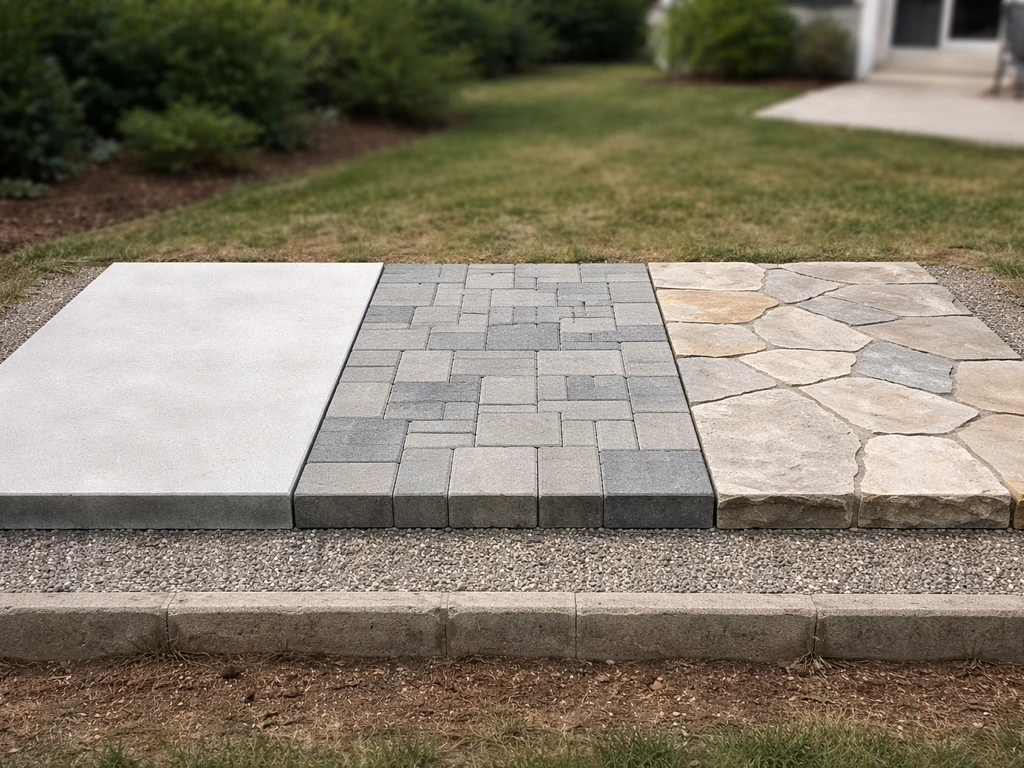
How Much Should I Expect to Pay for a Patio
Patio cost guide with real price ranges by size and material, full line-item budget, DIY vs install, and quote checklist
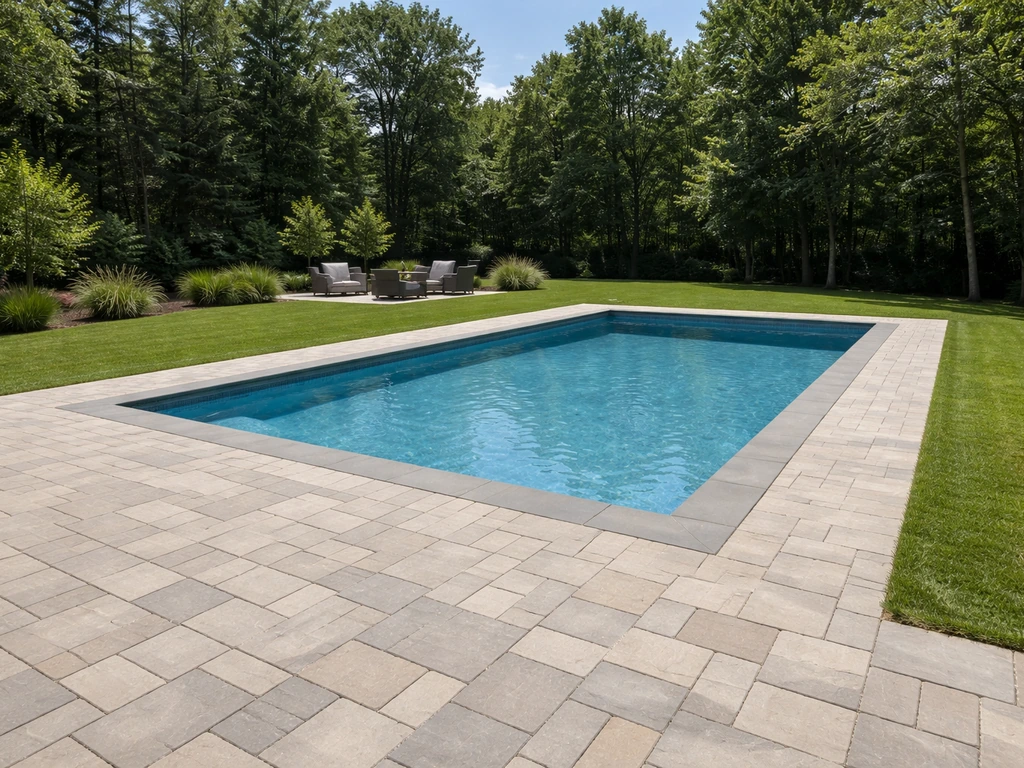
How Much Patio Around Pool: Cost, Size, and Budget Guide
Learn how much patio around a pool costs and how to size square feet, materials, extras, and get real bid line items.
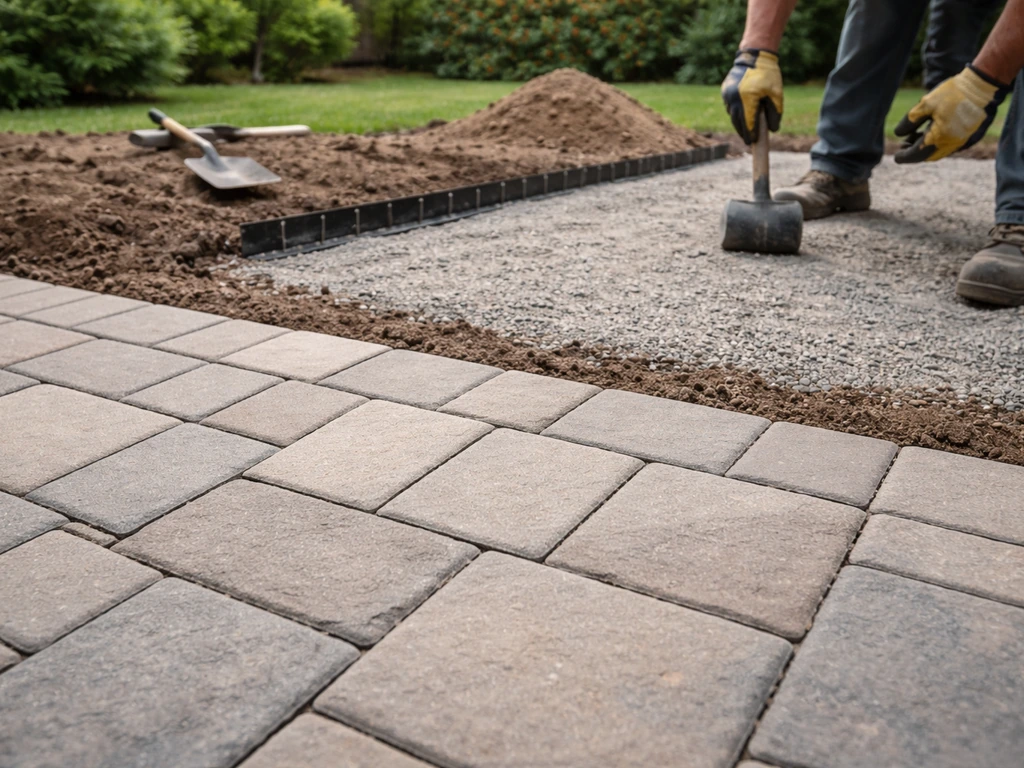
How Much Are Patios? Cost Ranges by Size and Material
Patio cost estimates by size and material with labor, base, add-ons, DIY vs contractor, and quote planning tips.