
Most patios run between $5 and $35 per square foot installed in 2026, which puts a 12x12 patio somewhere between $720 and $5,000 depending on the material you choose. A basic poured concrete slab sits at the low end ($3 to $8/sq ft), stamped concrete lands in the middle-to-upper range ($8 to $28/sq ft), and natural stone or high-end flagstone can push past $32 to $45/sq ft when professionally installed. The number that actually matters for your budget comes down to four things: material, size, base prep complexity, and where you live. If you want a quick benchmark before you start comparing materials, the average patio cost typically uses the installed price per square foot and your patio size. If you are trying to figure out how much patio you can build within your budget, start by measuring square footage and then multiply by the installed cost per square foot for your material. To estimate your total, start with the square footage you want and multiply by the installed cost per square foot for your chosen patio material four things: material, size, base prep complexity, and where you live.
How Much Are Patios? Cost Ranges by Size and Material

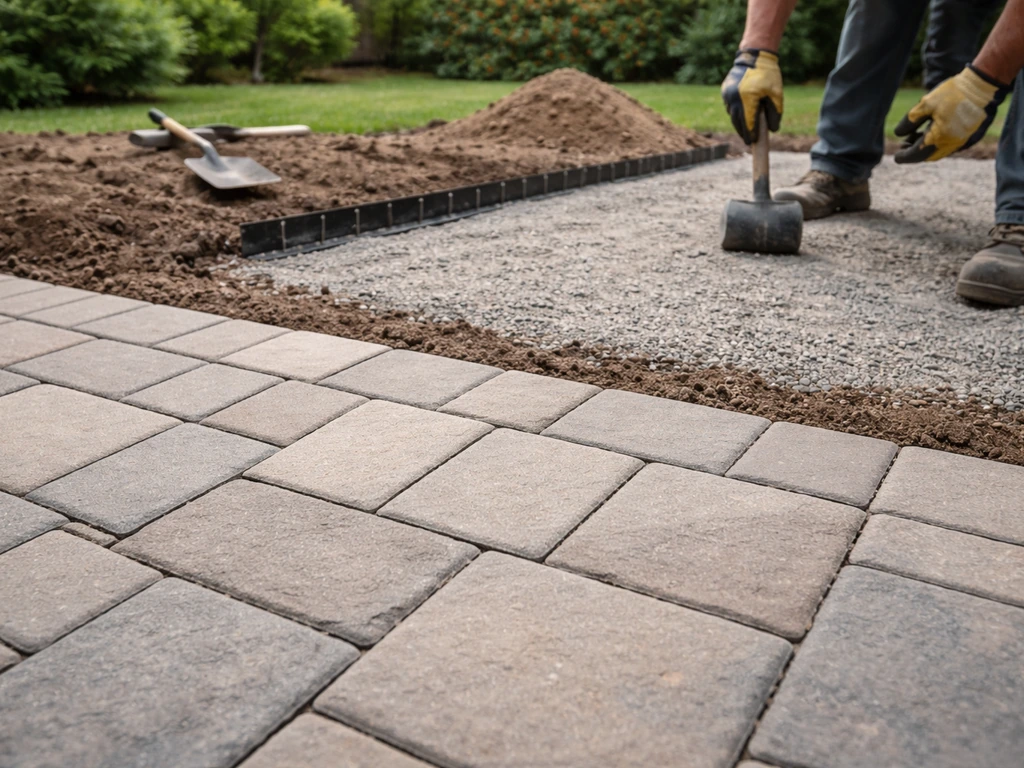
Price ranges by patio size
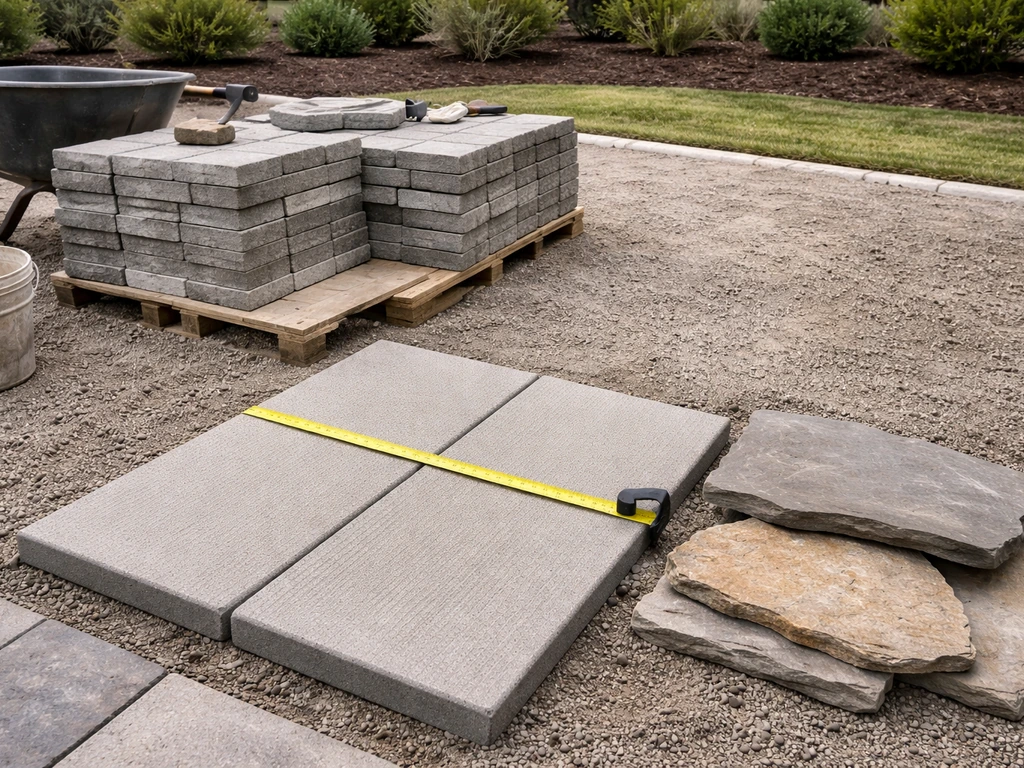
Here are ballpark installed totals at common patio sizes using the full $5 to $35/sq ft range. HomeAdvisor notes that patio installation costs are often priced based on patio size, including guidance on patio installation cost per square foot. Use the low end for basic broom-finish concrete and the high end for natural stone or complex stamped concrete with multiple colors and borders.
| Patio Size | Square Footage | Low End (concrete slab) | Mid Range (pavers/stamped) | High End (stone/flagstone) |
|---|---|---|---|---|
| 10x10 | 100 sq ft | $500 – $800 | $1,000 – $2,500 | $3,200 – $4,500 |
| 12x12 | 144 sq ft | $720 – $1,150 | $1,440 – $3,600 | $4,600 – $6,500 |
| 16x16 | 256 sq ft | $1,280 – $2,050 | $2,560 – $6,400 | $8,200 – $11,500 |
| 20x20 | 400 sq ft | $2,000 – $3,200 | $4,000 – $10,000 | $12,800 – $18,000 |
| 20x30 | 600 sq ft | $3,000 – $4,800 | $6,000 – $15,000 | $19,200 – $27,000 |
These totals assume a reasonably flat, accessible site with standard base prep. If your yard has slope, poor drainage, or limited equipment access, add 15 to 30 percent to whatever number you land on. More on that in the regional and site-cost section below.
Where the money actually goes: materials, base, labor, and add-ons
A patio quote isn't just the cost of the surface material. It's usually four layers of cost stacked on top of each other, and skipping or underestimating any one of them is how budgets blow up.
Materials
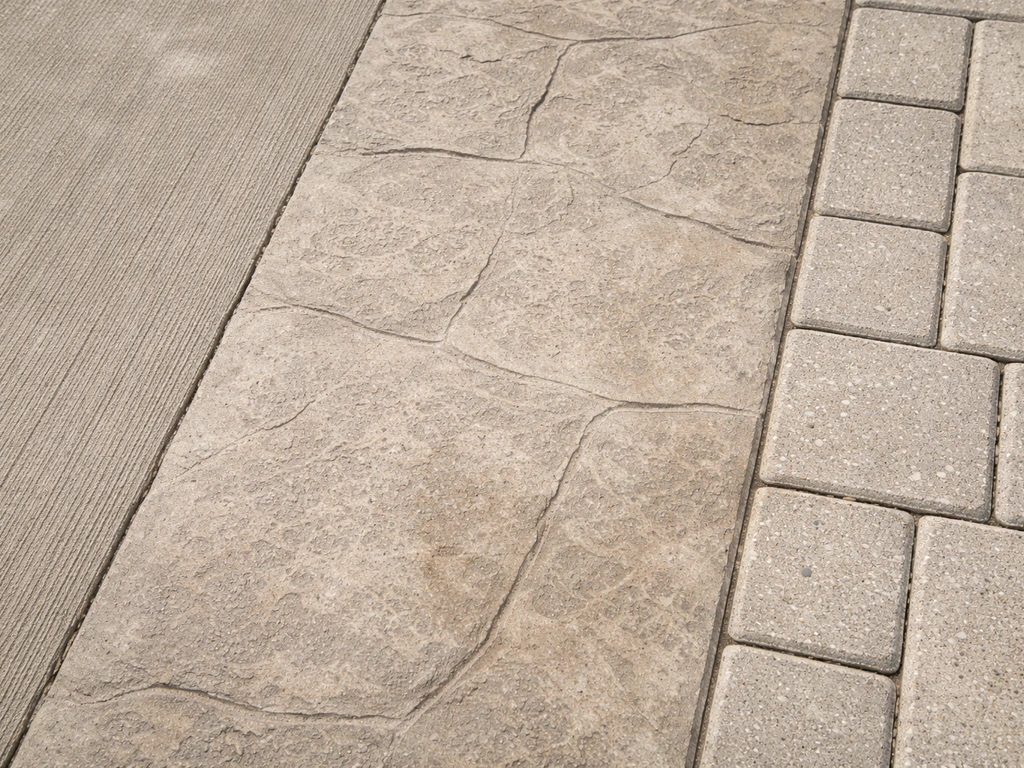
The surface material is the most visible cost driver. Concrete mix or pavers are bought by the square foot or by volume, and prices vary a lot by type. Concrete pavers run $1 to $5 per square foot in materials alone before any installation work. Natural stone and flagstone can cost $3 to $15 per square foot just for the stone, before you factor in the labor needed to set it. Brick typically runs $2 to $6 per square foot in materials.
Base and prep
This is the part most homeowners underestimate. A proper paver or concrete patio needs 4 to 6 inches of compacted crushed stone as a sub-base, plus roughly 1 inch of leveling bedding sand on top. A 4-inch base uses about 2 tons of gravel per 100 square feet; a 6-inch base uses closer to 3 tons per 100 square feet. That gravel, the excavation labor, and the compaction work can add $2 to $5 per square foot to your total before you've laid a single paver or poured a drop of concrete. Skipping proper base prep is the number-one reason patios crack, shift, or drain poorly.
Labor
Labor typically accounts for 40 to 60 percent of the total installed price. Simple concrete pours and basic paver layouts are on the lower end. Stamped concrete with detailed patterns, natural stone with irregular shapes, and any job requiring significant grading or drainage work push labor costs up significantly. When you're comparing quotes, ask contractors to break out labor separately so you can see exactly what you're paying for.
Add-ons that catch people off guard
- Edging and edge restraints: plastic edging secured with spikes or concrete borders run $1 to $3 per linear foot and are essential for preventing paver migration over time
- Steps and stairs: each step typically adds $100 to $300 depending on material and riser count
- Drainage improvements: French drains, channel drains, or regrading to fix slope issues can add $500 to $2,500 to a project
- Polymeric joint sand: costs about $25 to $40 per bag and is worth it to lock paver joints and reduce weed growth
- Permits: some municipalities require permits for patios over a certain size; budget $50 to $300 depending on your area
- Waste factor: always add 5 to 10 percent to your material estimate to account for cuts, breakage, and layout adjustments
Concrete vs. stamped concrete: what drives the price difference
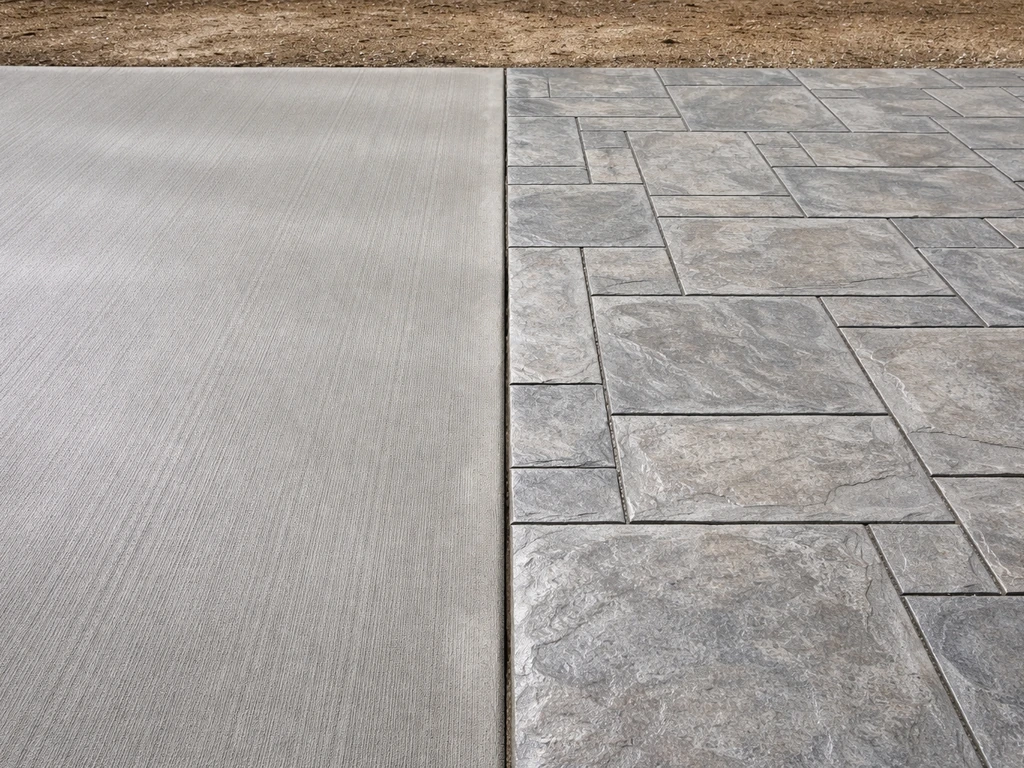
Plain poured concrete with a broom finish is genuinely one of the most affordable patio surfaces you can install, typically landing at $4 to $7 per square foot installed for a standard 3.5 to 4-inch slab. It's durable, low-maintenance, and holds up well in most climates. The trade-off is that it's plain and can crack over time without control joints and proper base prep.
Stamped concrete adds decorative texture and color to that same concrete slab, but the price jumps significantly: expect $8 to $28 per square foot installed depending on pattern complexity and how many colors are involved. A single-color, single-pattern stamp might run $10 to $14/sq ft. Add a border pattern, a second color, or an antique finish and you're looking at $18 to $28/sq ft. One useful rule of thumb: stamped concrete costs roughly 2 to 5 times more than a basic broom finish, depending on design detail.
The hidden cost of stamped concrete is maintenance. It needs to be resealed every 2 to 3 years (figure $0.50 to $1.50/sq ft each time) and if it cracks, repairs are much harder to hide than on plain concrete. It looks great when freshly sealed, but the ongoing cost is real. If you love the look but want to minimize long-term hassle, concrete pavers are often a better investment.
Pavers, brick, stone, and flagstone: comparing your options
This is where the biggest pricing spread lives. Here's how the main materials stack up side by side.
| Material | Installed Cost Range | DIY-Friendly? | Durability | Maintenance |
|---|---|---|---|---|
| Concrete pavers | $8 – $15/sq ft | Yes, with proper tools | Excellent, replaceable | Low |
| Brick | $14 – $22/sq ft | Moderate | Very good | Low to moderate |
| Natural stone | $20 – $40/sq ft | Difficult | Excellent | Low |
| Flagstone (dry-laid) | $15 – $32/sq ft | Possible | Good | Moderate (joints) |
| Flagstone (concrete-set) | $35 – $45/sq ft | Not recommended | Excellent | Low |
Concrete pavers are the sweet spot for most homeowners: they're installed on a compacted gravel and sand base, they flex slightly with frost and ground movement instead of cracking, and if one breaks you can replace just that paver. Brick has a classic look but is pricier than concrete pavers and heavier to work with. Natural stone and flagstone are beautiful but expensive, and irregular shapes require significantly more labor to cut and fit.
Flagstone set in concrete is the most expensive option on this list and typically requires a professional. Dry-laid flagstone on a gravel-and-sand base is manageable for a confident DIYer on a smaller patio but takes patience to get level and tight. The price difference between dry-laid ($15 to $32/sq ft) and concrete-set ($35 to $45/sq ft) is significant enough to be a major decision point.
If budget is the priority, go with concrete pavers or a plain concrete slab. If you want longevity and curb appeal without the sealing maintenance of stamped concrete, concrete pavers are hard to beat. Natural stone is worth the investment if you're in a high-end home and plan to stay there long-term.
DIY vs. hiring a contractor: honest numbers
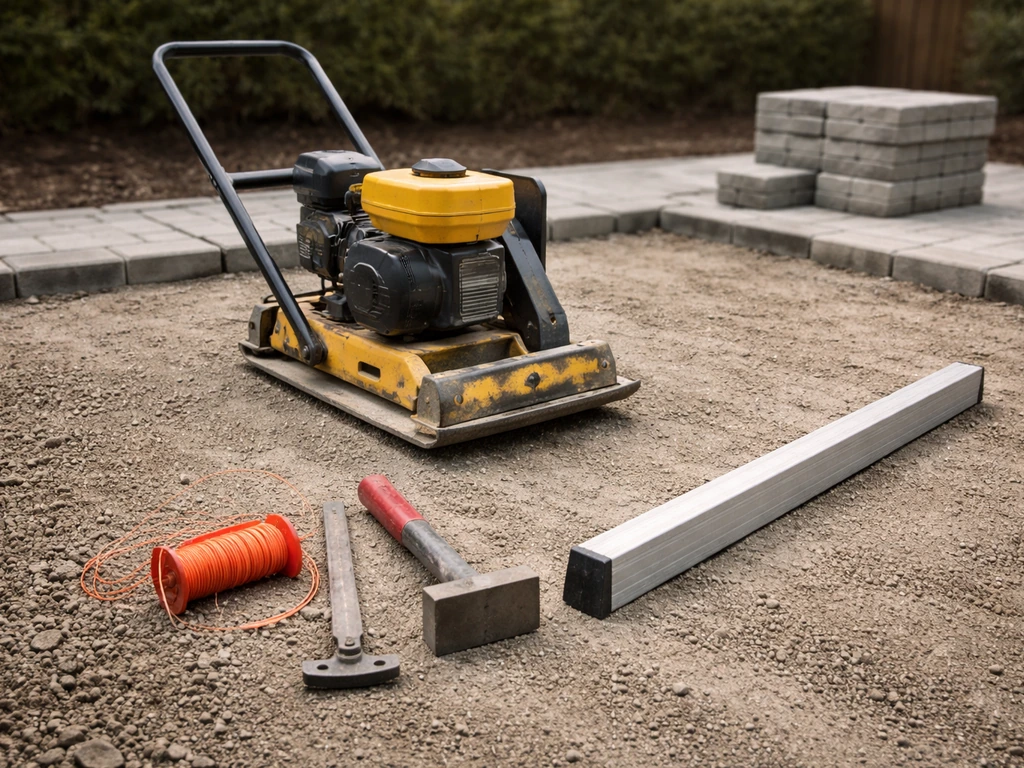
DIY can save you 30 to 50 percent on labor, but it's not free, and it's not without risk. Here's what a realistic DIY budget actually looks like for a paver patio.
Tools you'll need to rent or buy
- Plate compactor: $70 to $100 per day to rent, or $280 to $400 per week. You need this for compacting the gravel base properly — hand-tamping doesn't cut it for anything larger than a small accent area
- Laser level: around $45 per day to rent. Critical for getting proper slope (you need about 1/8 inch of drop per foot away from the house for drainage)
- String lines and stakes: inexpensive but essential for layout accuracy
- Masonry saw or angle grinder with diamond blade: needed for any cuts around edges or obstacles; rentals typically run $50 to $80 per day
- Wheelbarrow, shovels, rubber mallet, screed board, tamper: plan on $50 to $150 in hand tools if you don't already own them
For a 200 square foot paver patio, realistic tool rental costs alone can run $250 to $450 for a weekend project. Add gravel, sand, edge restraints, pavers, and polymeric joint sand, and your material costs might land at $1,200 to $2,000. A contractor might quote that same patio at $2,400 to $3,800 installed. So DIY saves you real money, but the gap is smaller than people expect once you account for all the materials and rentals.
The bigger risk with DIY is mistakes that cost more to fix than the savings were worth. A patio that isn't properly graded will pool water and may slope toward your foundation. The same basic logic applies when you are trying to size a larger fall area for a patio too, since layout and base prep can change the total cost pool water. A base that isn't compacted enough will settle unevenly within 2 to 3 years. Poured concrete is particularly unforgiving: once it sets, you're committed. If you're going DIY, pavers are the most forgiving surface because you can pull them up and re-set if something is off. Plain concrete on a simple, flat site is the next safest DIY project. Stamped concrete, natural stone, and anything with complex drainage work should almost always go to a professional.
How your region and site conditions affect the total
The price ranges in this article are national averages. What you actually pay depends heavily on where you live and what your specific site looks like.
Regional labor costs
Labor rates in the Northeast, Mid-Atlantic, and West Coast metro areas run 20 to 40 percent above national averages. In the Southeast, Midwest, and rural areas, you'll often land 10 to 20 percent below the ranges listed here. A $10/sq ft installed concrete paver patio in Dallas might be $13 to $14/sq ft in Boston or Seattle. This is one of the most important adjustments to make before you compare quotes.
Site conditions that add cost
- Slope and grading: if your yard slopes more than a few inches across the patio area, add $500 to $2,000 for grading and possibly a retaining wall
- Poor drainage or clay soil: heavy clay drains slowly and may require a deeper gravel base or added drainage, tacking on $1 to $3 extra per square foot
- Limited equipment access: if a skid steer or dump truck can't reach your backyard, labor costs go up because everything has to be wheelbarrowed in
- Tree roots: removal and grinding stumps before excavation can add $200 to $800 per tree
- Permits: check with your municipality before assuming you don't need one — especially for patios near property lines or over a certain square footage
- Existing surface demolition: removing an old concrete slab or deck first adds $1 to $3 per square foot in demo and haul-away costs
The honest advice here: get your site assessment done before you build a firm budget. Walk the space with a contractor and specifically ask about drainage direction, soil type, and equipment access. These are the variables that separate a $3,000 project from a $5,000 project on the exact same material choice.
Patio vs. deck: which costs more and when each makes sense
If you're deciding between a patio and a deck, price is usually the first question, and patios win on cost almost every time. Wood decks typically run $25 to $50 per square foot installed. Composite decks push even higher. By comparison, paver patios come in at $10 to $17/sq ft and poured concrete at $5 to $15/sq ft. On a 20x20 space, that's a potential difference of $10,000 or more for the same usable area.
Patios are cheaper because they sit on the ground and don't require a structural frame, posts, joists, and fasteners the way a deck does. The labor complexity is also lower for most patio types versus framed deck construction.
But a deck makes sense in specific situations: if your house entry is elevated and there's no practical way to grade a patio up to that level, a deck is the right answer. If you have a steep slope in your backyard, a deck can be cantilevered over it where a patio would require thousands in grading and retaining walls. And some people simply prefer the look and feel of a wood or composite deck. Just go in knowing that a deck will typically cost more upfront and require more ongoing maintenance (staining, sealing, board replacement) than most patio surfaces. A concrete paver patio on a well-prepped base is about as close to a zero-maintenance outdoor surface as you can get.
How to turn these estimates into an accurate contractor quote
These price ranges are a starting point, not a final budget. Here's how to go from ballpark to an accurate number before you ever pick up the phone.
- Measure your intended patio area and write down the square footage. Also measure the perimeter for edging estimates. If you're doing an irregular shape, break it into rectangles and add them up.
- Pick your material category first. Know whether you want concrete, pavers, stamped concrete, or stone before calling anyone. Your answer determines the labor skill set and timeline, which affects who bids.
- Add up your site variables: is the area flat? Does water already drain away from the house? Is there an existing surface to demo? Note any obstacles like trees, downspouts, or AC units near the area.
- Use the per-square-foot ranges in this guide to build a rough budget range before calling contractors. This gives you a sanity-check for quotes and lets you tell if a bid is way off.
- Get at least three quotes and ask each contractor to provide a line-item breakdown: materials, base prep/excavation, labor, edging, and any add-ons. This makes quotes directly comparable.
- Ask each contractor specifically: 'What drainage improvements are you including, and what slope will the finished surface have?' A good contractor should know the answer without hesitating.
- Ask whether the quote includes haul-away of excavated material. This is often omitted from initial bids and can add $200 to $500 to the job.
- Add a 10 to 15 percent contingency buffer to your final budget for anything unexpected once excavation starts.
The most useful thing you can do before getting quotes is walk your space with a tape measure and a notepad. Know your square footage, your material preference, and your top three site concerns. Contractors will give you sharper quotes when you ask sharper questions, and you'll be in a much better position to evaluate whether a bid is fair or inflated. For specific pricing by pool proximity, grade requirements, or unusual patio shapes, those factors each deserve their own look since they can shift your budget significantly from the base estimates here. To get an accurate estimate for how much patio to install around your pool, measure the pool perimeter and the walking clearance you want on each side, then multiply by your patio material’s installed cost per square foot how much patio around your pool. Because patio pool projects add more excavation and equipment considerations, the same patio square-foot pricing usually turns into a higher total how much does a patio pool cost.
FAQ
When contractors quote a patio price, is it based on the finished area or the total area they have to build
In most quotes, patios are priced by installed square footage (surface plus base and labor), but the total can be higher if contractors add allowances for waste cuts, edging, and excavation beyond the exact patio footprint. When comparing bids, ask whether the contractor is charging on “net square feet” (only the finished area) or “gross square feet” (including any extra demo, regrading, and disposal).
How much extra should I add to the estimate so I do not run short
For budgeting, plan to multiply the patio size by your selected installed price per square foot, then add a contingency. A practical rule is 10 to 15 percent for normal site complexity, and 20 percent if you expect drainage work, extensive slope, tree-root cleanup, or a lot of irregular cutting around the house or landscaping.
What site conditions most commonly increase patio cost beyond the standard ranges
The article covers slope and limited access, but the biggest missed cost on some properties is poor subsoil or drainage that forces changes to how the patio is built. Ask the contractor how they will handle water management (slope away from the home, sub-base type, and whether they recommend drains) and whether any geotextile and additional base depth are included in the price.
What specific details should I confirm in a patio quote to avoid surprises
Ask about the presence of control joints and curing time for poured concrete, and ask about joint sand type and edge restraints for pavers. These details affect both performance and cost, for example, paver jobs typically include polymeric joint sand only if requested, and it can raise material cost compared with standard bedding and regular joint sand.
Does removing an existing patio change the cost estimate and how should I ask for that pricing
If you are planning to replace an old patio, removal and disposal can be a major line item because it changes excavation depth and how much base can be reused. Request separate pricing for demo, haul-off, and any base rebuild, and confirm whether the quote includes hauling away broken slab or brick.
How do freeze-thaw weather or clay soil change what I should expect to pay
Most patios need a compacted base even when the surface is pavers or concrete, but the required depth and materials can vary with soil and frost conditions. If your area has freeze-thaw or clay-heavy soil, ask whether the contractor is using additional base thickness, different stone gradation, or underlayment to reduce settling.
What is the difference between a “basic stamped concrete” quote and a more expensive stamped job
Stamped concrete is often priced as a decorative surface, and the base and reinforcement details can be what drive the labor cost up or down. Ask whether your quote includes reinforcement (such as mesh or rebar), joint layout, and the exact stamp pattern options, since multi-color borders and more intricate joints usually increase labor beyond a simple “per square foot” surface number.
What DIY mistakes are most likely to cost more than hiring a contractor
DIY can cost less, but it still often requires professional tools or careful execution. For pavers, confirm whether you have access to a plate compactor and a means to dispose of excess soil and stone, and for concrete confirm that you can manage formwork, thickness, and leveling because a bad base for concrete is not easy to fix after it sets.
How should I calculate patio size for an irregular shape so my cost estimate is accurate
A patio’s usable size is not always equal to the footprint you buy pavers or estimate by, especially if there are steps, benches, hearth-like features, or complex corners. For unusual shapes, ask contractors to show how they calculated square footage and whether they are adding for pattern alignment and extra cuts, which can increase materials and labor.
If I care most about long-term maintenance, how do patios compare in real life
Deck comparisons are useful, but also consider that a patio may require future repairs like releveling pavers or re-sanding joints. If maintenance is a major factor, ask what maintenance is expected for the exact material you are considering, for example, stamped concrete resealing timing, paver joint sand refresh intervals, and whether weeds are controlled with edging and base prep.
Why can a patio around a pool cost more than the same patio square-foot price elsewhere
Yes, especially for pool adjacency. If the patio connects to a pool deck, you may need additional clearance and changes to excavation near plumbing or structural elements, which can raise costs even if the per-square-foot price looks the same. Measure your pool perimeter plus the walking clearance, then ask for separate line items for extra excavation and any drainage changes around the pool area.
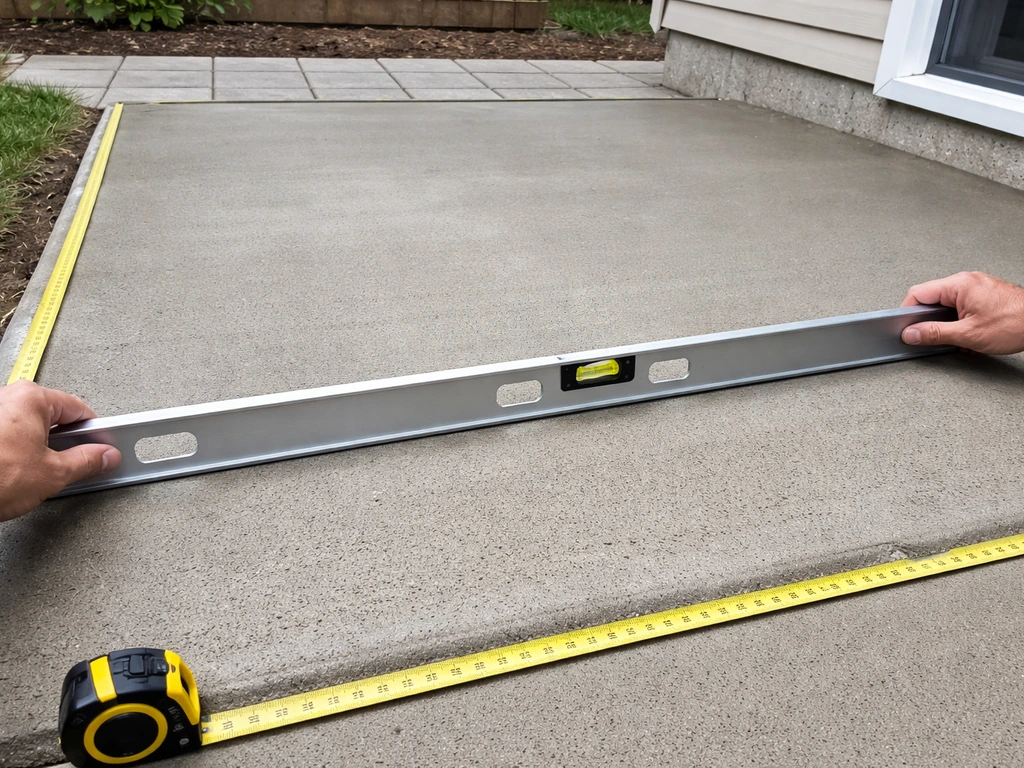
Target patio slope for drainage and step-by-step how to measure and calculate fall in inches per foot
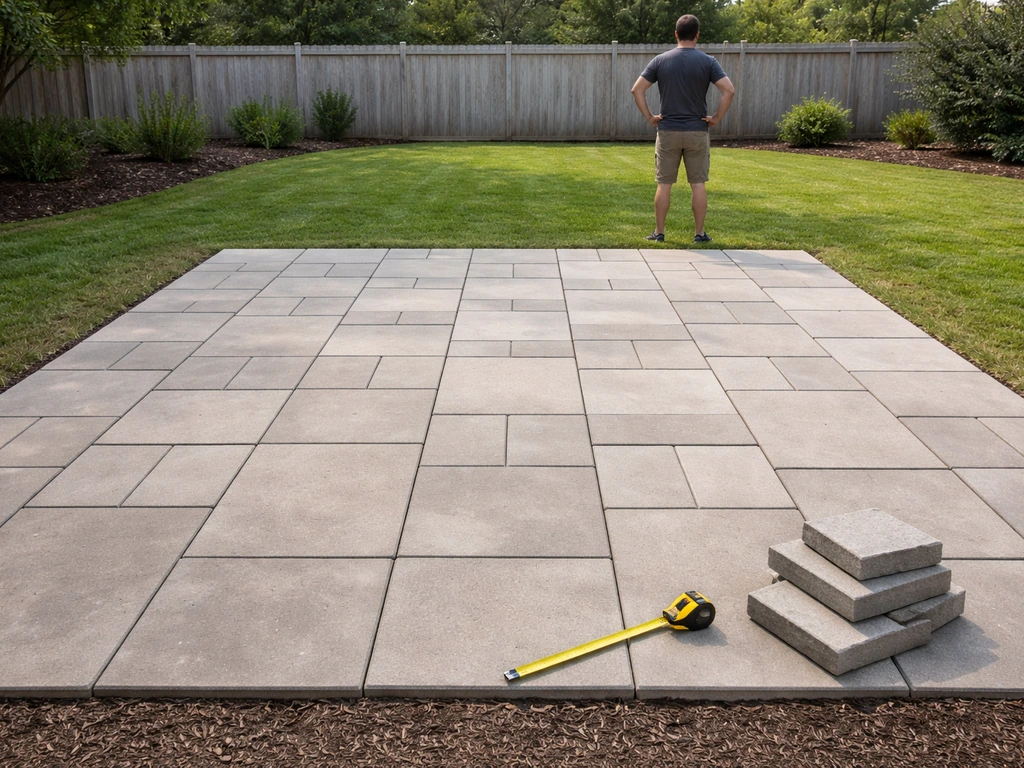
2026 patio cost by size with DIY vs pro ranges, material breakdowns, add-on pricing, and quote tips by region
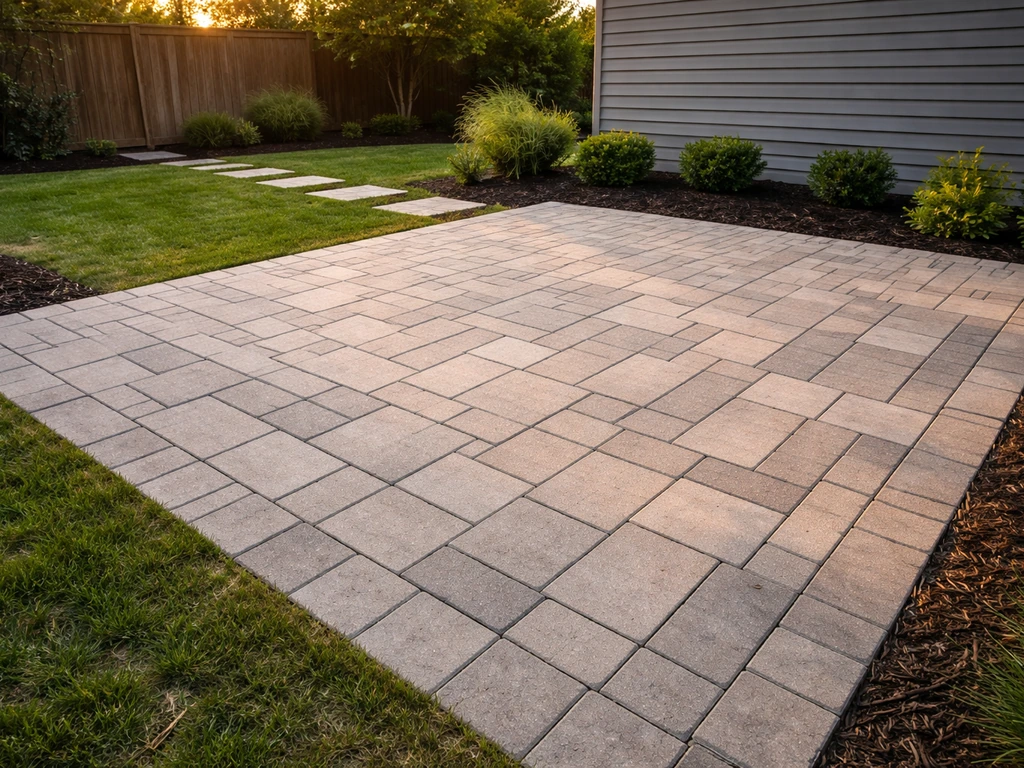
Average patio cost in 2026 by size and material, with real breakdown for materials, labor, and site prep