
A small patio typically runs $600 to $2,200 installed for a 10x10 (100 sq ft) in plain concrete, and $800 to $2,200 for a 12x12 (144 sq ft). Go with pavers or natural stone and that range climbs fast, concrete pavers hit $1,000 to $2,200 for a 10x10, while natural stone or flagstone can push $2,000 to $4,000+ for the same footprint. The biggest swings come from three things: your material choice, whether you hire out or DIY, and what your site actually looks like before anyone touches a shovel.
How Much for a Small Patio? Cost by Material and Size

Felix Carver
29 Apr 2026
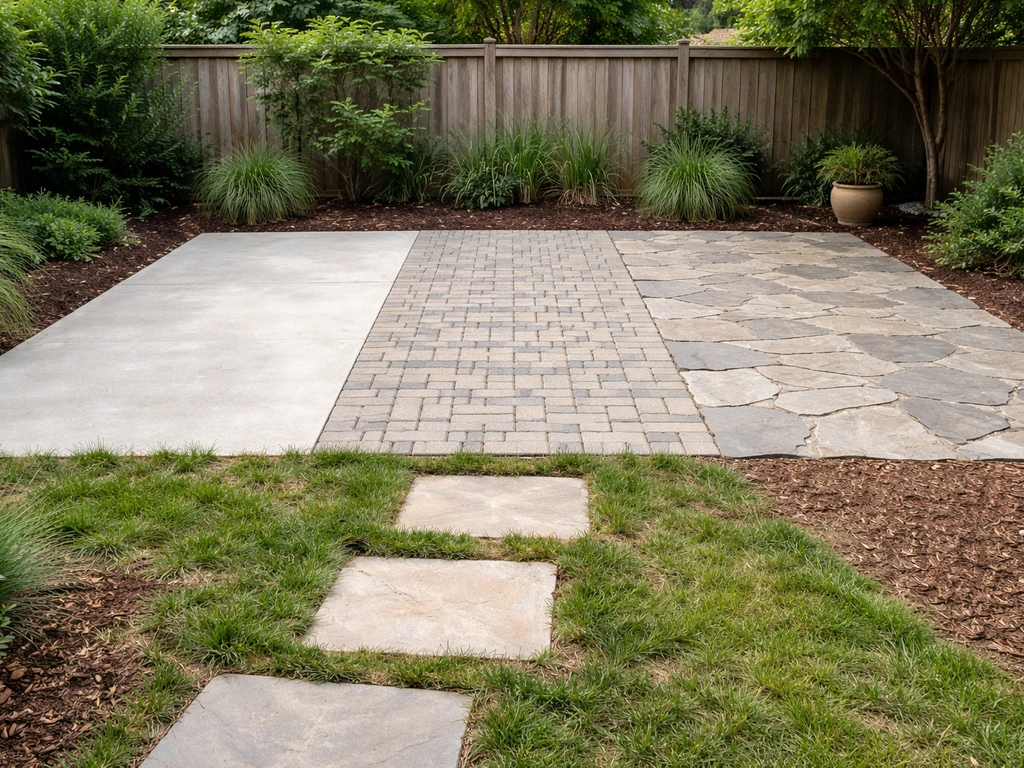
What small patios actually cost by material in 2026
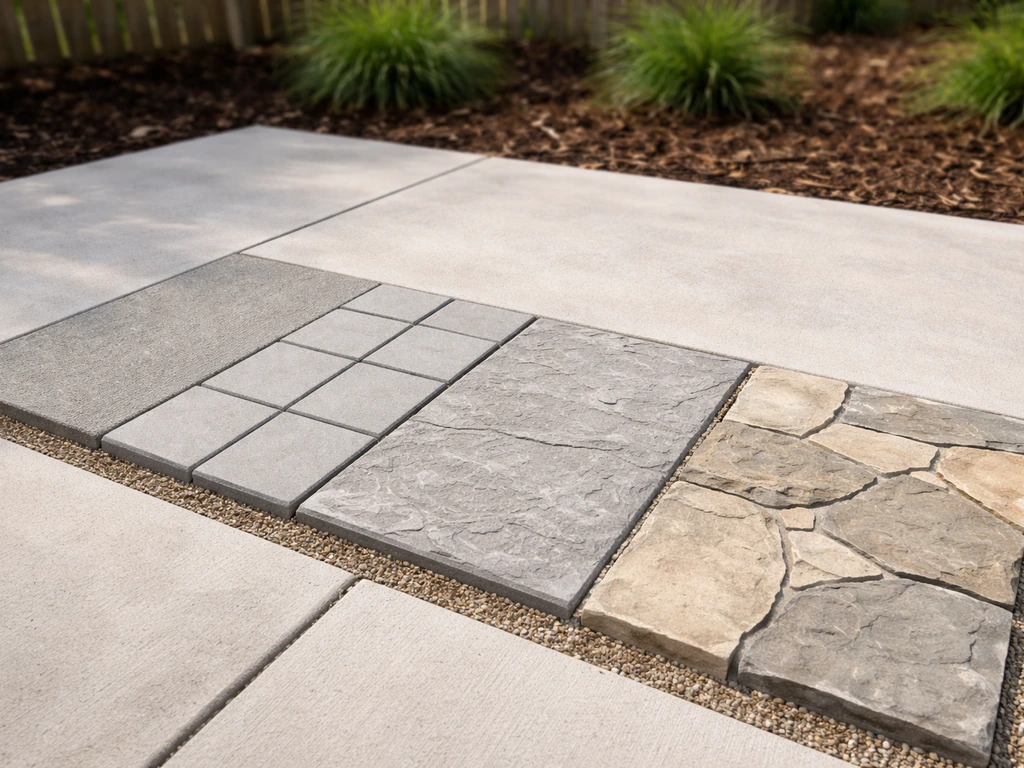
Here are the real installed price ranges per square foot for the most common patio types. These are contractor-installed totals including labor, base prep, and materials, not just the surface material alone.
| Material / Finish | Installed Cost (per sq ft) | Notes |
|---|---|---|
| Plain / broom-finish concrete | $6 – $12 | Most affordable; durable, low maintenance |
| Stamped concrete | $14 – $25 | Decorative patterns; cost rises with complexity |
| Concrete pavers | $8 – $15 | Flexible, replaceable, good drainage option |
| Brick pavers | $14 – $22 | Classic look; more labor-intensive to set |
| Natural stone / flagstone | $20 – $40 | Highest material cost; irregular shapes add labor |
| Flagstone (dry-laid / simpler set) | $15 – $35 | Range depends on stone type and installation method |
Plain concrete is the budget leader for a reason: one pour, one finish, done. Stamped concrete costs more upfront but is still usually cheaper than natural stone for the same square footage. Concrete pavers sit in a sweet spot, they look great, can be repaired one piece at a time if something sinks, and don't require the same precision as poured concrete. Natural stone and flagstone are the premium end; the material itself runs $6 to $15 per sq ft just for the stone, and the irregular shapes mean slower (more expensive) installation labor. HomeAdvisor likewise suggests that flagstone patio installation commonly comes out to about $15 to $30 per square foot installed $6 to $15 per sq ft just for the stone.
Quick cost estimates by common small patio size
Most "small" patios fall between 100 and 200 square feet. Here's what that looks like in real dollars across common dimensions. These assume standard contractor installation with basic site conditions, no major slope, no demolition of an existing surface, and reasonable soil.
| Patio Size | Sq Ft | Plain Concrete | Concrete Pavers | Stamped Concrete | Natural Stone |
|---|---|---|---|---|---|
| 10x10 | 100 | $600 – $1,200 | $800 – $1,500 | $1,400 – $2,500 | $2,000 – $4,000 |
| 10x12 | 120 | $720 – $1,440 | $960 – $1,800 | $1,680 – $3,000 | $2,400 – $4,800 |
| 12x12 | 144 | $865 – $1,730 | $1,150 – $2,160 | $2,015 – $3,600 | $2,880 – $5,760 |
| 10x16 | 160 | $960 – $1,920 | $1,280 – $2,400 | $2,240 – $4,000 | $3,200 – $6,400 |
| 12x16 | 192 | $1,150 – $2,300 | $1,535 – $2,880 | $2,690 – $4,800 | $3,840 – $7,680 |
Notice how quickly natural stone escalates. A 12x12 in flagstone can run nearly four times the cost of the same size in plain concrete. If your goal is a functional outdoor space without breaking the bank, concrete pavers typically offer the best value for the dollar, professional appearance, good durability, and a price that doesn't require a second mortgage.
If you're comparing a small patio to a larger project, the per-square-foot cost usually drops as the size goes up, contractors can spread their mobilization and base prep costs across more square footage. That's worth keeping in mind if you're on the fence between a 10x12 and a 12x16.
Installed vs. DIY: what you actually save (and risk)
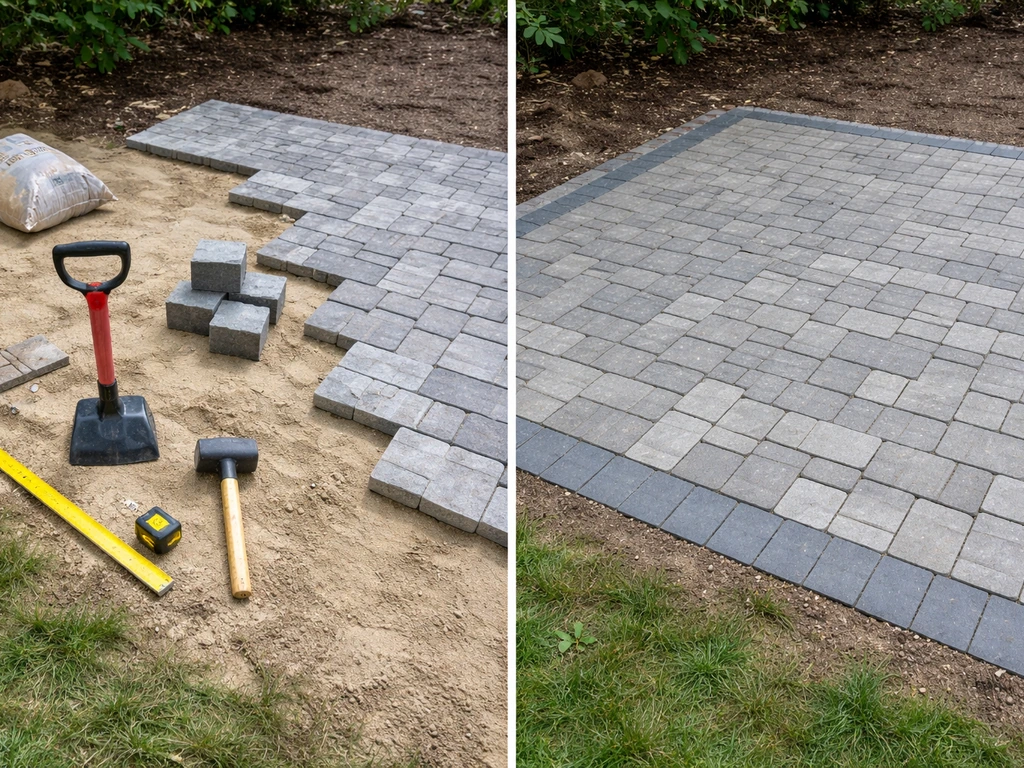
DIY can cut your total cost by 40 to 60 percent on paver projects, since labor is the biggest single line item. But the savings depend heavily on the material. Here's how the numbers break down:
| Material | DIY Material Cost (per sq ft) | Installed Cost (per sq ft) | Potential Savings |
|---|---|---|---|
| Plain concrete | $3 – $6 | $6 – $12 | Moderate, but finishing concrete is a real skill |
| Stamped concrete | $4 – $8 (materials only) | $14 – $25 | High savings — but botched finish = full tear-out |
| Concrete pavers | $3 – $8 | $8 – $15 | Good savings if base prep is done right |
| Natural stone / flagstone | $6 – $15 | $20 – $40 | High savings but very labor-intensive to set |
Concrete is the one place where I'd strongly lean toward hiring a pro, especially for stamped. A botched pour or a finish that goes wrong means demo and replacement, easily $2,000 to $5,000 on a small patio. DIY paver installation is much more forgiving. You can pull up a section and relay it if it sinks or looks off. The base prep is where most DIY paver jobs fail: if you don't compact a proper 4 to 6 inch gravel base with about 1 inch of bedding sand on top, you'll have uneven, sinking pavers within a year or two.
For paver DIY, you'll also need to budget for tools: a plate compactor rental runs $80 to $150 per day, a wet saw or angle grinder for cuts is another $50 to $100 rental, and edge restraints, polymeric sand, and base gravel add up. A realistic DIY tool and material budget for a 12x12 paver patio is $600 to $1,200 all-in, still well below contractor pricing, but not as cheap as the material cost alone would suggest.
Full cost breakdown: what every small patio project actually includes
One reason quotes vary so much is that people are often comparing apples to oranges. A $900 quote and a $1,800 quote for the same 10x10 patio might include completely different scopes. Here's what a complete small patio installation should cover:
Excavation and base prep
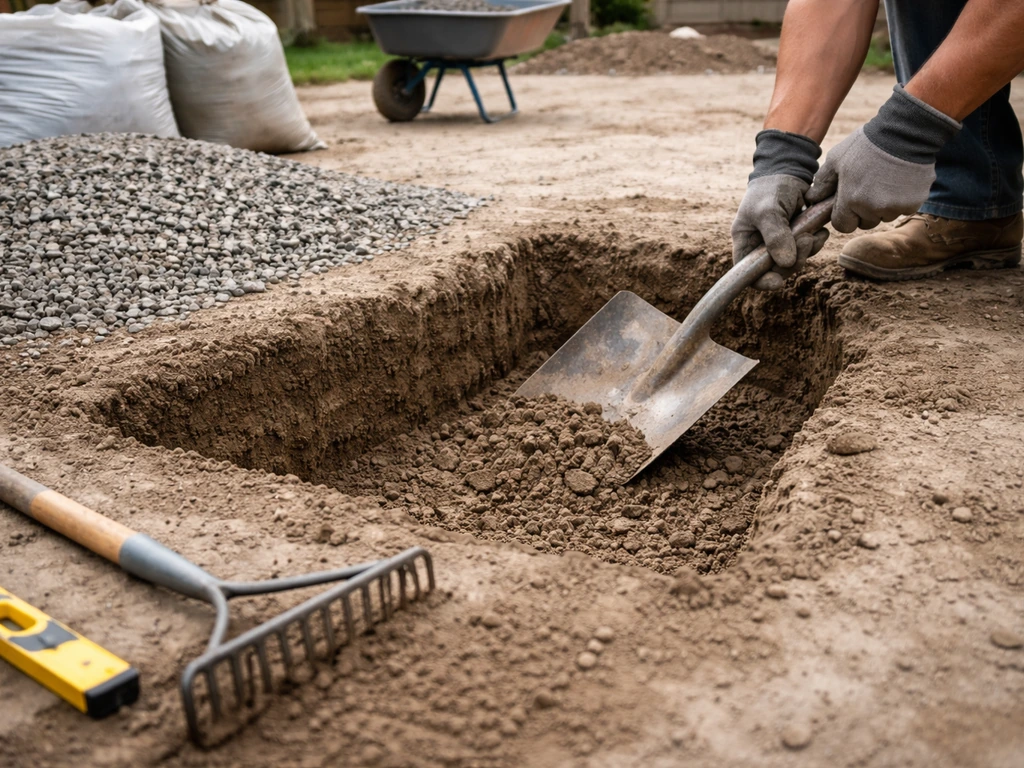
You need to dig out 7 to 9 inches of depth for a paver patio (6 inches compacted gravel base, 1 inch sand bedding, plus paver thickness). For a concrete slab, typically 4 inches of concrete over 4 inches of compacted gravel. This alone often costs $1 to $3 per sq ft just for the excavation labor, plus soil hauling. If you have poor fill soil underneath, you may need to remove more and bring in compactable base material, that adds cost.
Base material and bedding
Compacted dense-graded gravel base typically runs $2 to $5 per sq ft installed. For concrete slabs, the gravel sub-base is usually included in the concrete contractor's quote, but confirm this. For paver systems, bedding sand is added on top of the base at about 1 inch thickness, then screeded level before laying pavers.
Surface material and installation
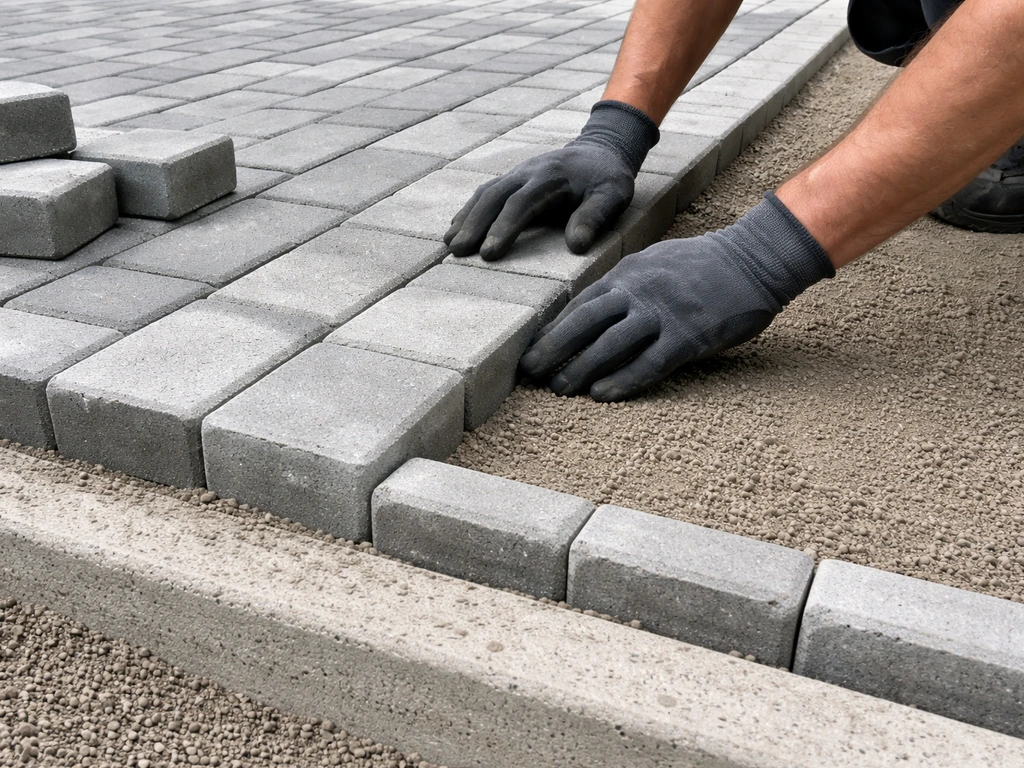
This is the line item most people focus on, but it's often only 40 to 60 percent of the total project cost. Include the pavers, concrete mix, or stone material plus the labor to set, cut, and finish the surface.
Edging and joint sand
Plastic or aluminum edge restraints for paver systems run $1 to $2 per linear foot installed. Without solid edge restraint, pavers migrate outward over time. Polymeric sand for joints is another $50 to $100 for a small patio, don't skip it. It locks pavers together, resists weeds, and holds up to rain far better than regular joint sand.
Drainage slope
Every patio needs a positive drainage slope away from the house, at least 2 percent grade, which works out to about 1/4 inch per foot. This needs to be built into the base prep, not tacked on at the end. If your contractor doesn't mention drainage slope, ask about it directly.
Steps and demolition
Steps to access the patio from a door typically add $300 to $1,000 depending on number of steps and material. Demolition and removal of an existing concrete slab or patio adds $2 to $5 per sq ft to the project, for a 12x12, that's $290 to $720 tacked on before any new work starts. Debris hauling is sometimes quoted separately, so ask.
Regional and site factors that move the final number
The same 12x12 concrete paver patio that costs $1,400 in a mid-size Midwest city could run $2,200 in coastal California or the Northeast, and as low as $1,100 in parts of the Southeast or rural areas. Labor rates are the biggest driver of regional differences. But there are several site-specific factors that can shift your quote significantly regardless of location:
- Slope and grading: A sloped yard requires more excavation, possibly grading equipment, and sometimes retaining walls. Expect $500 to $2,000+ added cost depending on severity.
- Soil conditions: Rocky soil is harder and more expensive to excavate. Expansive clay or poorly draining soil may require deeper base prep or drainage solutions.
- Accessibility: If your backyard is only accessible through a gate or tight side yard, equipment can't get in easily — labor cost goes up because more work is done by hand.
- Existing surface removal: Tearing out an old concrete slab or deck adds $2 to $5 per sq ft before new work begins.
- Shape complexity: A simple rectangle is cheapest. Curved edges, angles, or cutouts around landscaping features increase labor and material waste by 10 to 20 percent.
- Distance from supply yards: Material delivery costs vary by region and distance. Urban projects may incur higher delivery minimums.
- Permits: Some municipalities require permits for patios over a certain size or within setback zones. Permit costs vary from $50 to $300 in most areas, and inspections can add scheduling time.
The single most common surprise cost homeowners hit is poor soil or an existing surface that needs to come out. Before you budget, take a shovel and probe your yard, if you hit hard rock at 4 inches, mention it to every contractor you contact.
How to compare materials: which one is actually right for you
If budget is the primary concern, plain concrete wins on upfront cost. If you want something that looks good, is repairable, and holds up well long-term, concrete pavers are consistently the best value. Here's a quick comparison to help you decide:
| Material | Upfront Cost | Repairability | Appearance Flexibility | Longevity | DIY-Friendly? |
|---|---|---|---|---|---|
| Plain concrete | Lowest | Poor (crack = slab issue) | Low | 20+ years with joints | No — finishing is skilled work |
| Stamped concrete | Moderate-High | Poor (damage is visible) | High | 15–25 years | No — high risk of botched finish |
| Concrete pavers | Moderate | Excellent (swap one paver) | High | 25–50 years | Yes — most DIY-friendly option |
| Brick pavers | Moderate-High | Good | Moderate | 25–50 years | Possible but slow |
| Flagstone / natural stone | High | Good (reset individual stones) | Very High | 30–50+ years | Possible but very labor-intensive |
My honest take: for most small patios under 150 sq ft, concrete pavers hit the sweet spot. They're forgiving for DIY, easy to repair if one piece ever sinks, and available in styles that legitimately look like brick, stone, or even wood plank. If you want the high-end look and have the budget, flagstone is genuinely beautiful, just go in knowing it costs real money to install properly.
How to get accurate contractor quotes before you commit
Getting three quotes is the standard advice, but getting three accurate, comparable quotes takes a little prep work on your end. Here's the process that actually works:
- Measure your space precisely. Use a tape measure to get length and width in feet, then multiply for square footage. For irregular shapes, break it into rectangles and add them up. Write this down — every contractor needs it.
- Note your site conditions in writing. Is there an existing surface to remove? Any slope? Tight access? Tree roots? Rocky soil? Tell every contractor the same things so quotes cover the same scope.
- Specify the material and finish you want. Don't say 'pavers' — say '2.375-inch concrete pavers in a running bond pattern' or 'flagstone, dry-laid.' The more specific you are, the closer the quotes will be to each other.
- Ask what is and isn't included. Confirm whether the quote covers excavation, base prep, edging, gravel, sand, joint sand, slope grading, debris haul-away, and any steps. A low quote that excludes base prep is not a deal.
- Ask about drainage. Confirm the contractor plans a minimum 2 percent slope away from your house. If they look confused, that's a red flag.
- Request itemized quotes, not just a lump sum. Ask for materials cost separate from labor. This lets you compare quotes line by line instead of guessing what's different.
- Check references and past small patio work specifically. A contractor who mostly does driveways may not be as practiced with small detail patio work.
- Ask about timeline and warranty. A reputable paver or concrete contractor should warranty their work for at least one to two years against settling, cracking, or drainage issues.
When you get quotes back, don't just pick the lowest. Look at what each quote includes. A $1,500 quote that includes full base prep, edge restraints, polymeric sand, and proper grading is a better deal than a $1,200 quote that skips half of those items and leaves you with a sinking patio in three years.
Smart ways to keep costs down without cutting corners
There are real places to save money on a small patio project, and real places where cutting costs causes problems. Here's the honest version:
Where you can save
- Choose concrete pavers over natural stone. You get a similar look at 50 to 70 percent of the installed cost.
- Keep the shape simple. A rectangular patio with straight edges cuts labor and waste. Curves and complex cuts add 10 to 20 percent.
- Supply your own materials. Some contractors will quote labor-only and let you buy the pavers and gravel yourself — you can often get materials cheaper by shopping around or catching a sale.
- Do the demo yourself. If you have an old concrete slab, you can rent a demolition hammer for $75 to $120 per day and do the teardown yourself, then rent a dumpster or haul debris. This can save $300 to $700.
- DIY the paver installation on simple, flat sites. On a flat, well-draining yard with easy access, a motivated homeowner can handle a 10x12 paver patio in a weekend.
- Get quotes in late fall or winter. Contractor demand drops, and you may get better pricing or scheduling flexibility.
- Size down slightly. A 10x10 versus a 12x12 might not feel much different in daily use but can save $300 to $600 in materials and labor.
Where not to cut corners
- Base prep depth and compaction. Skimping here is the number one cause of paver failures. A 4 to 6 inch compacted gravel base is not optional.
- Edge restraints. Plastic paver edging is cheap insurance. Skipping it means pavers spread outward within a season or two.
- Drainage slope. Building in that 1/4 inch per foot pitch costs nothing extra to plan for and prevents water from pooling against your foundation.
- Polymeric joint sand. Regular sand washes out and invites weeds. Polymeric sand costs $30 to $50 more for a small patio and lasts years longer.
- Control joints in concrete. Properly placed control joints let concrete crack where you want it to, not randomly across your new patio.
Use this to build your estimate today
Here's a simple workflow to get from zero to a realistic budget number before you call a single contractor:
- Measure your patio area in square feet (length x width). Write it down.
- Pick your material: plain concrete, concrete pavers, stamped concrete, brick, or natural stone.
- Use the per-sq-ft ranges from the table above to calculate your baseline range (sq ft x low end, sq ft x high end).
- Add $2 to $5 per sq ft if you have an existing surface to remove.
- Add $500 to $2,000 if your site has significant slope or access issues.
- Add $300 to $1,000 if you need steps.
- Add a 10 to 15 percent buffer for surprises — unexpected soil conditions, price changes on materials, or small scope additions.
- Compare that number to the DIY material cost (roughly 40 to 60 percent of installed price for pavers) to decide if it's worth hiring out.
- Contact three contractors with your measurements, material spec, and site notes — and ask for itemized quotes.
For a 12x12 concrete paver patio on a flat site with no demo needed, a realistic installed budget is $1,200 to $2,200. For the same size in plain concrete, figure $900 to $1,750. For a 2026-style blank" rel="noopener noreferrer">broom-finished concrete patio, expect about $6, $20 per square foot installed depending on the concrete finish. Those ranges hold for most of the country in 2026, with the high end reflecting coastal or high-demand markets. If you're comparing a small patio to a larger backyard project, keep in mind that larger footprints tend to cost less per square foot as contractors can work more efficiently at scale. If you’re pricing a larger patio, the same factors apply, but the size can change the per-square-foot number and the total budget how much does a large patio cost. If you want to ballpark the cost for your backyard patio, start with your size, pick a material, then add base prep, drainage, and any demolition how much to put a patio in your backyard. For a better sense of how much to put a patio in your backyard, compare per-square-foot pricing and total scope, like prep work and drainage larger backyard project.
FAQ
How much is a small patio if it’s not a rectangle, for example an L-shape or around a fire pit?
The total cost is still mostly driven by total square footage, but irregular layouts add layout and cutting time. Expect a moderate premium for more cuts, waste, and tighter edging, often showing up as higher labor even if your quoted square footage seems similar.
Do patio covers, pergolas, or shade structures change the cost a lot on a small patio?
Yes, but usually in a separate line item from the patio surface. Roofing, posts, and footings require foundation work and can affect drainage and how edges are built, so quote the structure and the patio together to avoid missing excavation or leveling scope.
What’s the typical cost impact if my yard is sloped or the patio needs retaining walls?
Slope itself often changes base prep and grading, but retaining walls are the real budget shift. If walls are needed, you can see a major jump because you’re adding concrete blocks, rebar, drainage rock, and additional excavation, which is far beyond typical “grade for drainage” work.
If I already have an existing concrete slab, can I install pavers over it to save money?
Sometimes, but it’s usually not the default recommendation. You need proper thickness and a stable base, correct drainage, and control of how water will move. If the slab is cracked or uneven, contractors may still recommend removal, which changes the budget significantly.
How much should I budget for drainage improvements if water pools near the house?
Ask whether the quote includes a positive slope to a specific discharge point, and whether they’ll add a channel or adjust soil. Even small drainage fixes can add material and labor, and the “2% grade away from the house” detail should be reflected in base prep, not treated as optional.
Why do some quotes look cheaper even though they list the same patio size and material?
Common omissions are edge restraints, proper gravel depth, polymeric sand for joints, and correct drainage slope. Another is depth assumptions, for example quoting a surface thickness without confirming excavation and base thickness, which can lead to a patio that heaves or sinks.
What’s the minimum thickness or base build-up I should confirm for pavers?
For most paver systems, you want enough compacted gravel base, then a sand bedding layer, plus the paver thickness, with compaction called out. Don’t accept vague wording, ask for the depth ranges and whether they’ll compact in lifts (not just dump and level).
Is polymeric sand worth it, and what happens if it’s skipped?
Polymeric sand generally matters for locking pavers and reducing weed growth. If it’s skipped and you use regular joint sand, joints can wash out faster, leading to shifting, gaps, and more maintenance within a short period after rain.
How soon will a patio show problems if the base prep is poor?
Unevenness and settling often appear within the first 1 to 2 years if compaction and base thickness were inadequate. Problems can also show later after freeze-thaw cycles, so ask whether the installer matches the base depth to your soil conditions, not a generic template.
What questions should I ask before hiring a contractor so the quote is truly comparable?
Request a written breakdown that includes excavation depth, base material and thickness, edge restraints, joint sand type, drainage slope approach, and whether disposal and hauling are included. Also ask who will handle utility locates and whether any demolition is assumed if you have existing slabs or debris.
Can I reduce the cost by doing prep work myself?
Sometimes, but it depends on what you can safely and accurately remove. Contractors may need to inspect the base before they’ll price over it, and they may charge more if they have to re-check or correct subgrade. If you DIY, keep it limited to low-risk tasks like clearing vegetation, not structural excavation.
How much should I set aside for tools and material overruns if I DIY a paver patio?
Budget for more than you think, cutting waste and extra base and sand are common. Your best guardrail is to ask for a material takeoff that includes waste allowance and the exact number of paver cuts expected, then add a contingency to cover returns and rental days.
Do concrete and paver patios have different maintenance costs over time?
They do. Pavers often require periodic joint re-sanding and occasional re-leveling of small sections if the base settles, while stamped or finished concrete can need sealing and may be more expensive to repair if there are cracks or surface delamination.
How do freeze-thaw climates affect small patio costs and material choice?
Freeze-thaw increases the importance of proper drainage and base compaction. In colder regions, a well-built paver base with correct slope and joint stability tends to perform better, but the installer may need more aggressive prep, which can increase labor.
What’s a realistic “all-in” price range I should expect for a small patio if my site is fairly typical?
Use the installed total ranges as your starting point, then adjust for site conditions like slope, demolition, and soil. If the quote is far outside the typical band, ask what was excluded or whether base prep and drainage are being scoped correctly.
Next Articles
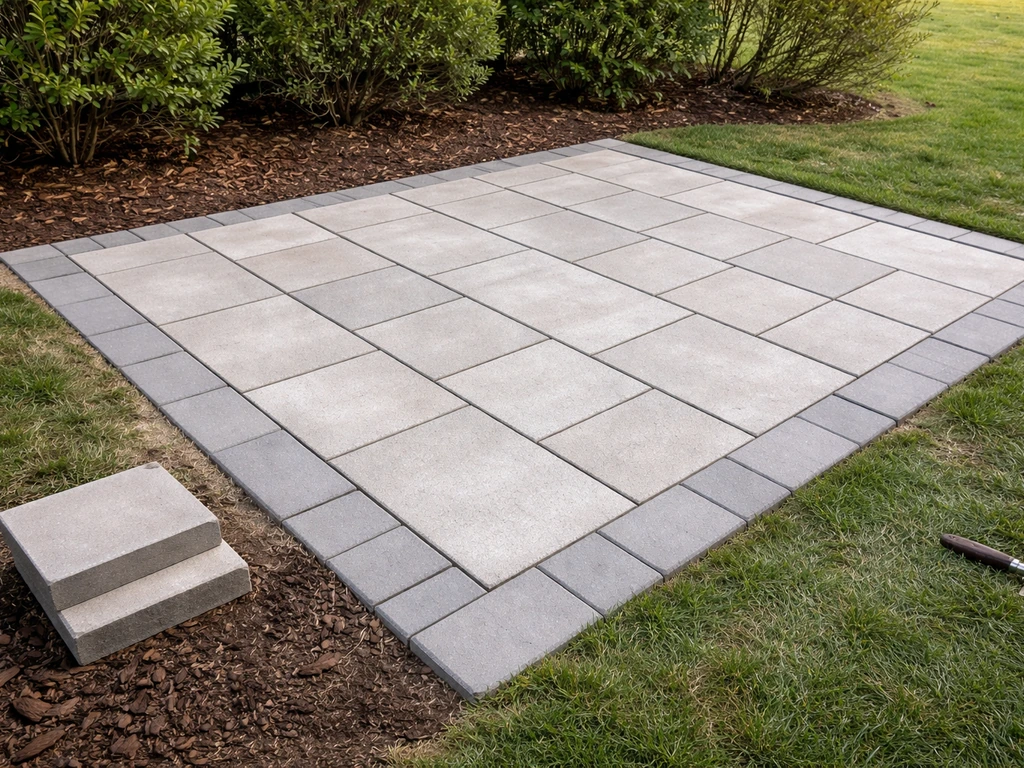
How Much Does a Small Patio Cost? Prices by Type
Budget for a small patio cost by type, size, and labor vs materials, plus estimating checklist and quote tips.
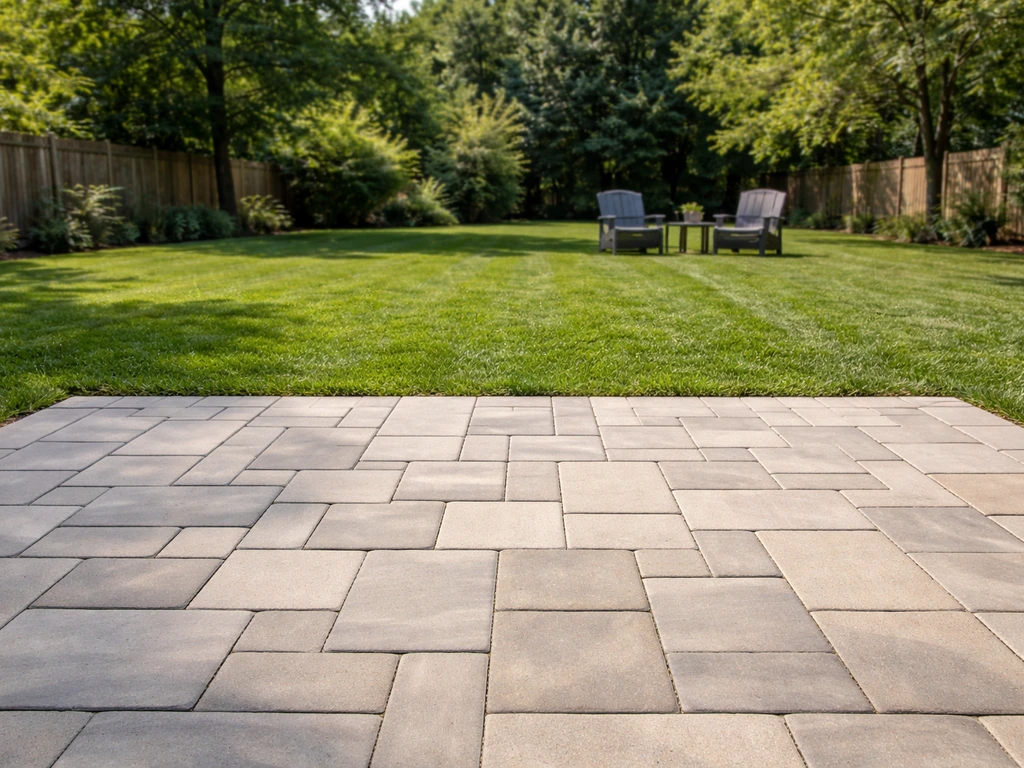
How Much for Backyard Patio Cost by Type and Size
Backyard patio costs by type and size, incl labor vs materials, add-ons, and DIY vs contractor budgeting tips.
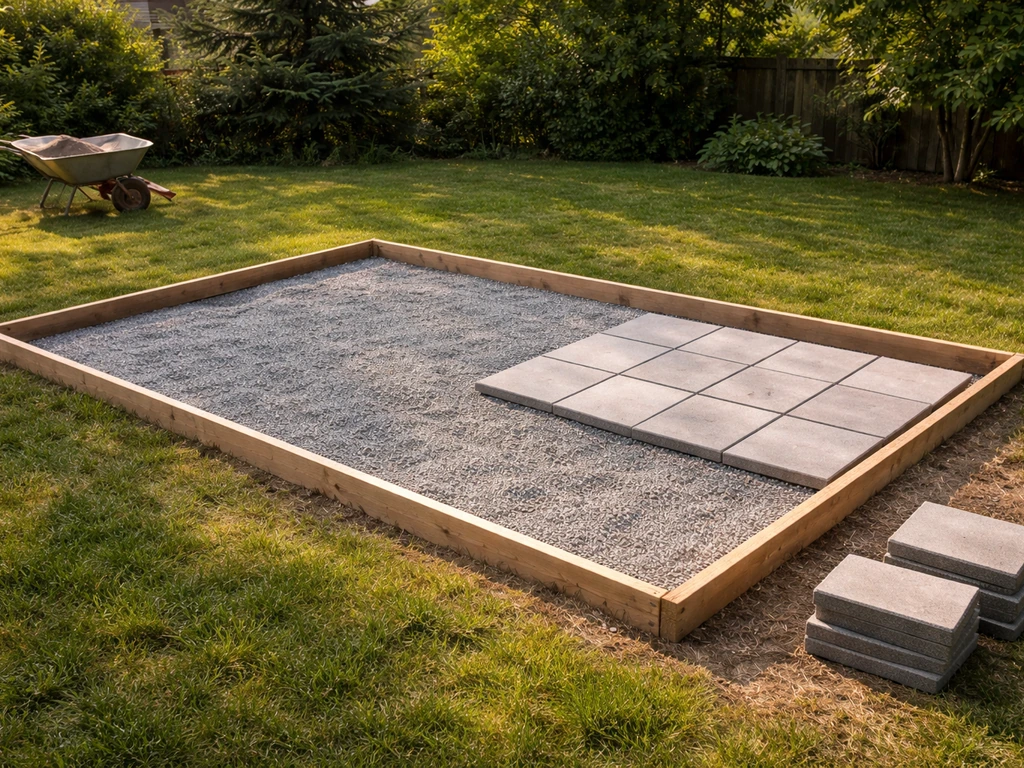
How Much to Put a Patio in Your Backyard Cost Guide
Patio cost guide with real ranges, cost per sq ft, material options, and DIY vs pro budgeting steps.