
Most homeowners spend between $2,290 and $6,420 to put in a backyard patio, with a national average around $4,500. To get a more exact ballpark for your project, multiply your patio size by the installed price range for the surface you want, then add local labor and permit considerations how much for a backyard patio. In per-square-foot terms, that works out to roughly $5 to $35 depending on the material you choose and whether you hire out the labor or do it yourself. A basic 12x12 concrete slab (144 sq ft) can run as little as $860 to $1,700, while the same size in stamped concrete or natural flagstone can easily top $3,500 to $6,500. The section below will walk you through exactly how to calculate your own number based on size, surface, and local labor rates. A good way to start is to estimate a per-square-foot range for your surface type, then add the labor, permits, and any drainage or base prep your yard needs how much does a large patio cost.
How Much to Put a Patio in Your Backyard Cost Guide

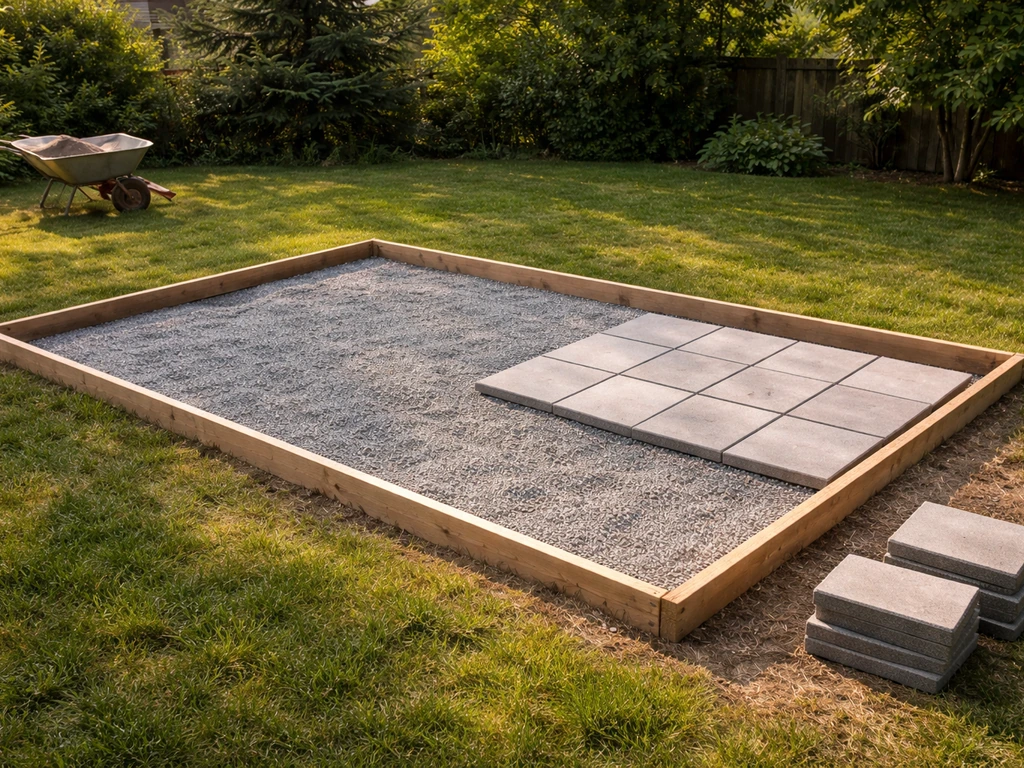
What common patio sizes actually cost
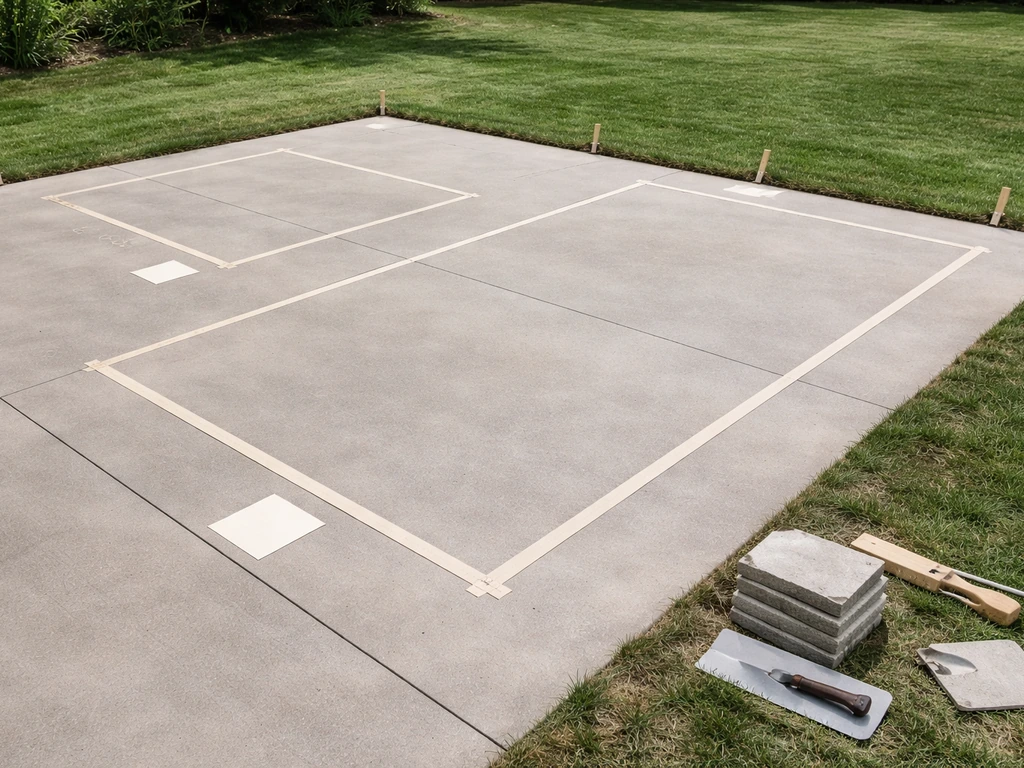
The easiest way to estimate your project is to multiply your square footage by a realistic per-square-foot range for the material you want. Here are real-world installed cost estimates for the most commonly searched patio sizes, using the $6 to $25 per square foot range that covers the majority of concrete and paver installs in 2026.
| Patio Size | Square Feet | Basic Concrete (est.) | Stamped Concrete (est.) | Pavers (est.) | Flagstone (est.) |
|---|---|---|---|---|---|
| 10x10 | 100 sq ft | $600 – $1,200 | $1,200 – $2,500 | $800 – $2,500 | $1,500 – $4,500 |
| 12x12 | 144 sq ft | $860 – $1,700 | $1,700 – $3,600 | $1,150 – $3,600 | $2,150 – $6,500 |
| 16x16 | 256 sq ft | $1,500 – $3,100 | $3,100 – $6,400 | $2,050 – $6,400 | $3,800 – $11,500 |
| 20x20 | 400 sq ft | $2,400 – $4,800 | $4,800 – $10,000 | $3,200 – $10,000 | $6,000 – $18,000 |
| 20x30 | 600 sq ft | $3,600 – $7,200 | $7,200 – $15,000 | $4,800 – $15,000 | $9,000 – $27,000 |
Keep in mind these are installed estimates covering materials and labor together. Smaller patios tend to cost more per square foot because setup, mobilization, and base prep costs are spread over fewer square feet. If you're comparing budget ranges, a good benchmark is how much for a small patio will cost per square foot once setup and base prep are spread across fewer square feet. For a better sense of your own budget, it helps to estimate how much a <a data-article-id="3FE16A56-A897-40DA-8508-B8534081CF5A">small patio</a> will cost in your area based on square footage and material choice. If you're weighing a small patio vs. a larger one, the per-foot cost difference can be meaningful enough to push you toward adding a little size for relatively little extra money.
Where your money actually goes: the full cost breakdown
Most people think of a patio as just concrete or pavers, but the installed price is made up of several line items. Knowing what each piece costs helps you spot when a quote is padded and also explains why two contractors can quote very different numbers for the same job.
| Cost Item | Typical Range | Notes |
|---|---|---|
| Materials (surface) | $2 – $35 per sq ft | Concrete is cheapest; flagstone/natural stone is highest |
| Labor / installation | $5 – $18 per sq ft | Varies by surface type, pattern complexity, and region |
| Base prep (gravel + compaction) | $1.40 – $5 per sq ft | 4" to 10" compacted gravel base is standard |
| Bedding sand (pavers) | $0.50 – $1 per sq ft | Leveling layer under pavers; not needed for concrete |
| Edge restraints / edging | $1 – $3 per linear ft | Holds pavers or stones in place along the border |
| Landscape fabric / weed barrier | $0.05 – $0.25 per sq ft | Material cost only; often included in labor quote |
| Excavation and spoil hauling | $1 – $3 per sq ft | Sometimes bundled into labor; ask your contractor |
| Drainage improvements | $500 – $2,000+ | Depends heavily on slope, soil, and drainage needs |
| Permits and inspections | $50 – $500+ | Required for poured concrete and most permanent installs |
| Sealing (concrete/pavers) | $0.50 – $3 per sq ft | Extends life; sometimes skipped but worth the cost |
Two line items that catch people off guard: drainage and permits. Poured concrete is considered a permanent land improvement in most municipalities, which means a permit is almost always required. That can add anywhere from $50 to several hundred dollars depending on where you live. Drainage is the bigger wildcard. If your yard doesn't drain well naturally, installing a patio can make runoff worse and you may need a French drain, channel drain, or regrading added to the scope. Get that conversation going early.
Concrete patios: plain vs. stamped and what moves the price
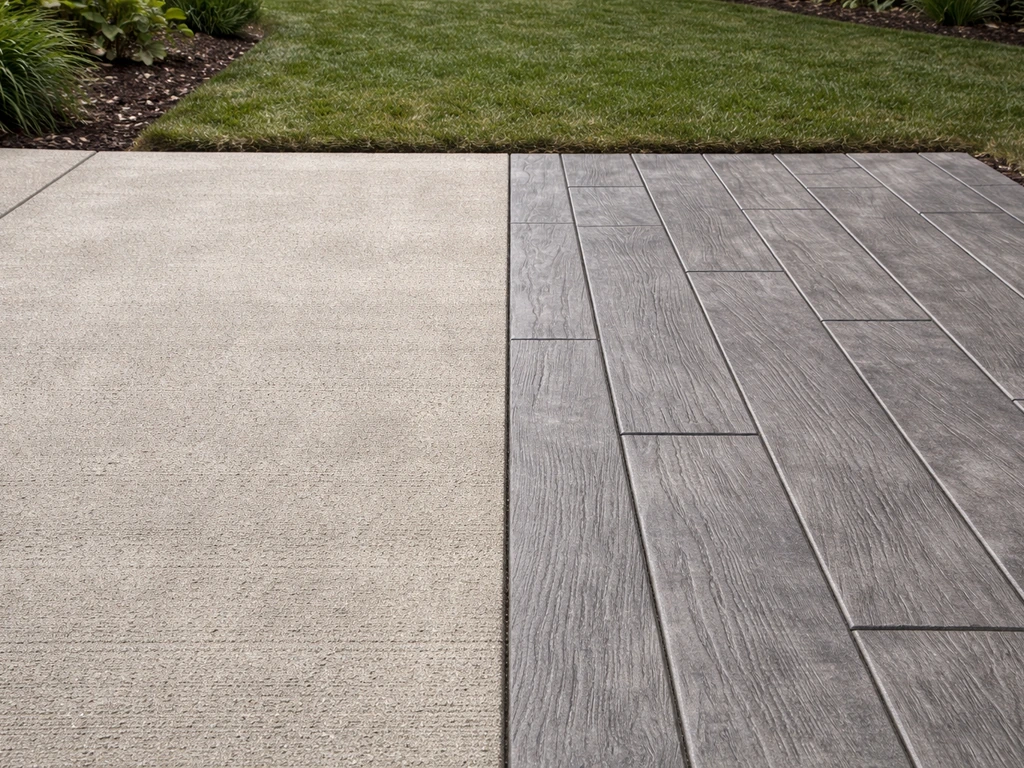
Plain broom-finish concrete is the most budget-friendly option at $6 to $12 per square foot installed in 2026. On a 200-square-foot patio, that's roughly $1,200 to $2,400 all-in. Stamped and colored concrete jumps to $12 to $25 per square foot installed, so the same 200 square feet runs $2,400 to $5,000. Angi's estimate of around $10 per square foot sits right in that middle range and assumes a standard 3.5 to 4 inch thick slab, which is the minimum you want for a patio.
What drives the price up on stamped concrete is mostly labor, not material. Stamping requires coordinating the timing of the pour, adding color hardeners or release agents, pressing the pattern before the concrete sets, and then applying a sealer after curing. More complex patterns (multiple stamp layers, borders, custom colors) take longer and cost more. The base prep matters too: for stamped concrete to look good long-term, you need at minimum a 4-inch slab with rebar or fiber mesh reinforcement and proper control joints. Cutting corners here is the number one reason stamped patios crack and look bad within a few years.
On the total project level, Angi puts a poured concrete patio at $1,600 to $4,200 for a typical residential install. That range fits a mid-size patio (roughly 150 to 400 sq ft) in plain concrete. Stamped projects at the larger end will push well past $4,200.
Pavers, brick, stone, and flagstone: what each surface costs and the real trade-offs
Paver patios run $8 to $25 per square foot installed, depending on the paver type, pattern, and your region. Labor alone for pavers is typically $6 to $11 per square foot, and base materials (gravel, geotextile fabric, bedding sand, edge restraints, and polymeric joint sand) add another $1.40 to $2.20 per square foot. That base work is non-negotiable: a properly installed paver patio needs excavation, compacted gravel, and bedding sand so the surface stays level and drains correctly. Any contractor skipping those steps is setting you up for sinking and shifting pavers in a few years.
Flagstone is the premium end of the market. Dry-laid flagstone (set on sand or gravel without mortar) costs $15 to $32 per square foot installed. Mortared or wet-set flagstone can run $42 to $45 per square foot because the labor is more involved and the base preparation is more demanding. The compacted gravel base alone for flagstone adds $2 to $5 per square foot to the project cost. If you love the natural stone look but the flagstone price feels steep, consider concrete pavers with a natural-stone texture as a middle-ground option.
| Surface Type | Installed Cost Range | DIY Friendly? | Durability | Best For |
|---|---|---|---|---|
| Plain concrete | $6 – $12 per sq ft | Moderate (mixing/pouring is hard solo) | Very high (25+ years) | Budget-first, low-maintenance |
| Stamped concrete | $12 – $25 per sq ft | Not recommended | High if done right | Decorative look without stone cost |
| Concrete pavers | $8 – $17 per sq ft | Yes, with effort | Very high; easy to repair | DIY-friendly, flexible design |
| Brick pavers | $10 – $20 per sq ft | Yes, moderate skill | Very high | Classic look, regional availability |
| Natural flagstone (dry-laid) | $15 – $32 per sq ft | Possible but heavy | High | Natural, irregular aesthetic |
| Natural flagstone (mortared) | $42 – $45 per sq ft | Not recommended | Very high | Permanent, upscale install |
DIY vs. hiring a contractor: honest savings and real risks
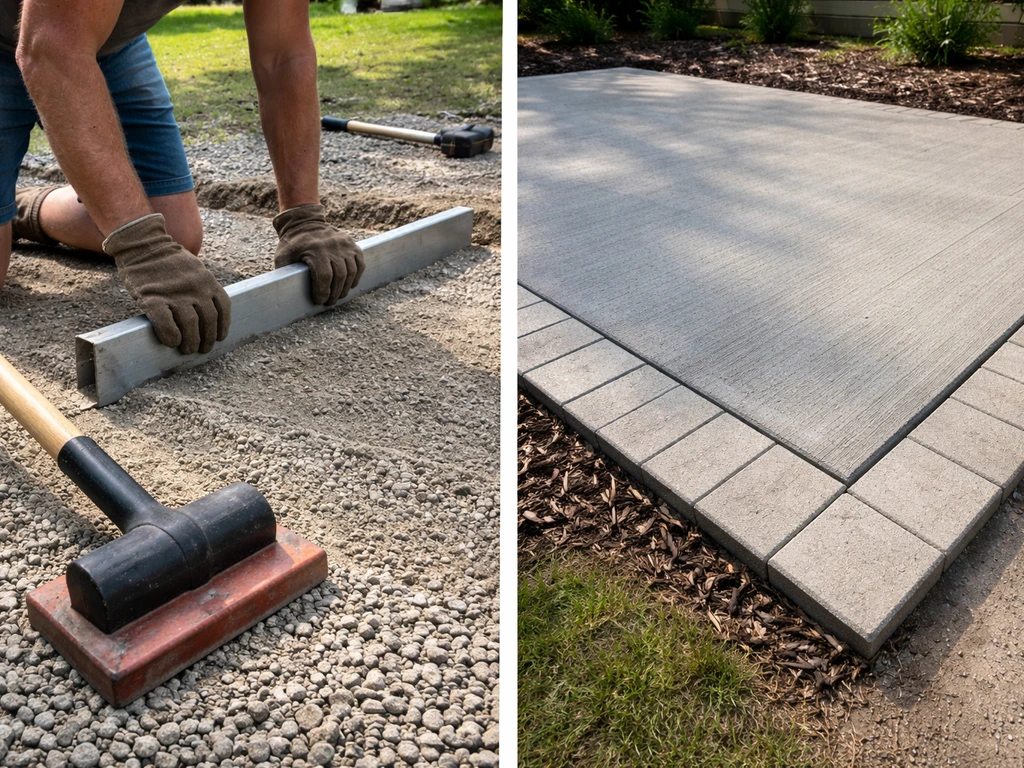
Labor runs $5 to $18 per square foot, so on a 200-square-foot patio, you're looking at $1,000 to $3,600 in labor alone. That's real money, and it's why so many homeowners consider doing it themselves. Here's a straightforward way to think about it: DIY pavers are legitimately doable if you're willing to rent a plate compactor, do the heavy lifting, and follow a solid installation process. DIY concrete is much riskier because timing a pour incorrectly, under-compacting the base, or missing a control joint leads to cracks that are expensive to fix.
Concrete and stamped concrete should almost always go to a contractor. The margin for error is small, the work is physically demanding, and mistakes show immediately and permanently. Pavers and brick, on the other hand, are forgiving because you can pull up and reset individual pieces if something shifts. Flagstone is physically exhausting to move (individual stones can weigh 50 to 150 lbs) but the installation itself is within reach for someone who is patient and in decent shape.
Common DIY gotchas that eat into your savings: renting equipment (plate compactor, wet saw, wheelbarrow) can add $200 to $500 to the job. Underestimating material waste (typically 10 to 15 percent extra for cuts and breakage) inflates your material order. And if your gravel base isn't properly compacted, pavers will sink and you'll be redoing sections within a couple of seasons. If you go DIY, budget your material costs, add 15 percent for waste, and price out tool rentals before committing.
A quick note on patios vs. decks
If you're still deciding between a patio and a deck, cost is usually the deciding factor. Wood decks run $25 to $50 per square foot installed, compared to $5 to $25 per square foot for most patio surfaces. The reason decks cost more is structural: you're paying for framing, footings, ledger attachment, and often railings and stairs. A ground-level patio is just a flat surface on prepared ground, which is inherently cheaper to build. That said, if your yard has significant slope, a deck can actually be more practical than trying to grade and build a patio on uneven ground. For flat or gently sloping backyards, a patio almost always wins on cost.
How location affects your patio price
Regional labor and material costs can shift your total price by 30 to 50 percent compared to the national averages above. High cost-of-living metros like San Francisco, New York, Boston, and Seattle push labor rates toward the top of the range (and sometimes beyond it). Mid-size Midwest and Southern cities tend to sit at or below the national average. Rural areas can go either way: lower labor costs are sometimes offset by material delivery charges or fewer contractors to get competitive quotes from.
A practical way to calibrate for your area: take the national midpoint for your chosen surface (say, $12 per square foot for basic concrete) and check local contractor ads or get two quick ballpark quotes over the phone. If local quotes are coming in 20 percent higher, apply that multiplier to your full estimate. Material costs are often more stable regionally than labor, so if you can get a material quote from a local supplier, use that as your base and add local labor on top.
Also worth noting: some areas have stricter permitting requirements that add both cost and timeline to the project. California, for example, has strict impervious surface rules in many counties that can limit patio size or require specific drainage solutions. Check with your local building department before you finalize the design.
How to get accurate quotes and plan your budget
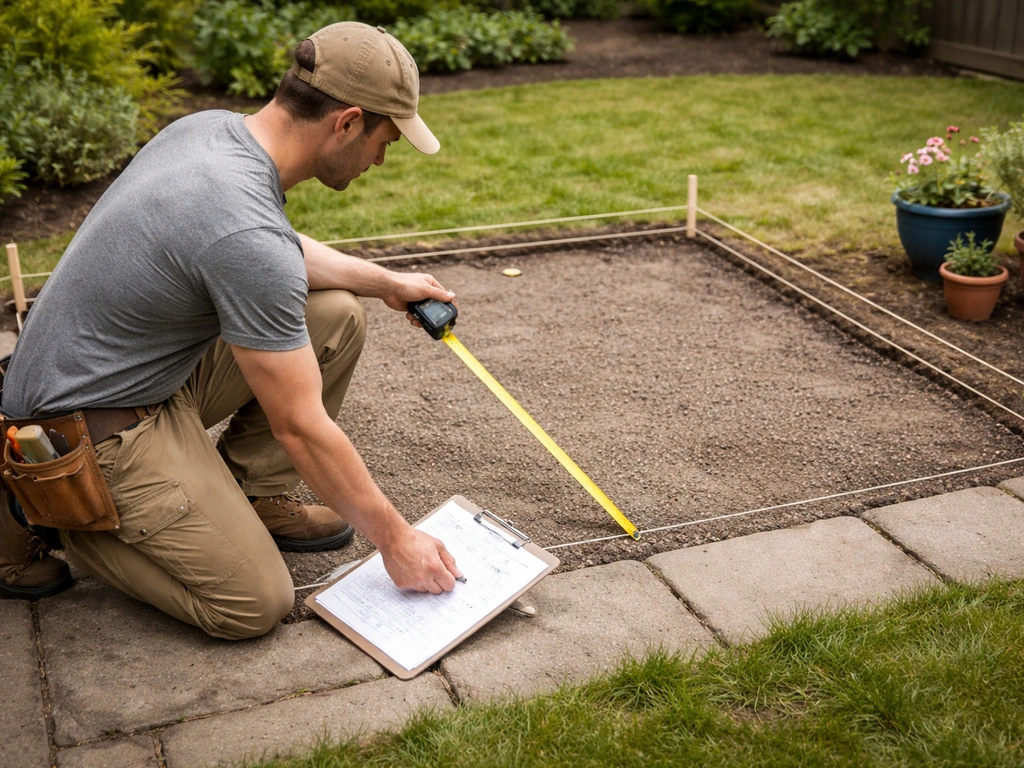
Getting three quotes is the standard advice, and it's good advice, but only if you give each contractor the same information. Walk into those conversations with a clear scope: exact dimensions, the surface material you want, whether demo or removal of existing material is needed, and any known drainage issues. A vague request like 'I want a patio in my backyard' will get you vague (and hard-to-compare) numbers back.
When the quotes come back, look at what's included and excluded, not just the bottom line. Ask specifically whether the quote includes excavation and spoil removal, base prep (gravel depth and compaction), edge restraints, sealing, and cleanup. A quote that looks $1,500 cheaper than the others might be excluding base materials or hauling fees that will show up as change orders later.
Here's a straightforward pre-quote checklist to bring to the table:
- Measure your desired patio dimensions and calculate square footage
- Decide on your surface material (or narrow it to two options for comparison quotes)
- Note any slopes, drainage issues, or access limitations the contractor will need to know
- Find out whether your municipality requires a permit for the install type you want
- Set a realistic budget range using the per-square-foot estimates in this article before you talk to contractors
- Ask each contractor to itemize labor, materials, base prep, and any exclusions separately
- Budget a 10 to 15 percent contingency on top of your estimate for surprises
If you're still in the early planning stage and want to get your bearings before calling anyone, use this as your starting framework: pick your surface material, multiply your square footage by the midpoint of its installed cost range, then add 15 percent as a buffer. That number won't be a final quote, but it will be close enough to tell you whether your project is a $3,000 job or a $12,000 job before you spend any time on calls. From there, everything is about getting the details right and comparing contractors on scope, not just price.
FAQ
How much should I budget if my patio is not perfectly rectangular (odd shapes or curves)?
Use area first, then add a shape premium, many contractors price curves and complex layouts by increasing the per-square-foot labor rate and adding more edging. A practical rule is to add 10 to 20% to the material and labor total for irregular geometry and extra cutting, especially for pavers or flagstone.
Do I need to add cost for removing an existing patio or old concrete slab?
Often yes. Demo and haul-off can be a separate line item, and old concrete may require jackhammering and disposal fees. Ask for a line item covering removal depth, spoil hauling, and whether they include subgrade leveling after demo.
How much does a patio cost if I want steps, a landing, or a raised edge?
Steps and transitions usually change pricing because they require extra base work, framing or reinforcement, and finishing. Expect a noticeable uplift if you need stairs tied into a deck, along a slope, or with special edges, and request the stairs and landing as their own scope so you can compare bids accurately.
Are there any hidden costs tied to utilities or drainage near the build area?
Yes. If sprinklers, downspouts, irrigation lines, or yard drains are in the way, you may pay for relocation or rerouting. Also confirm who owns drainage improvements, regrading, and any French drain work, since these can materially change the quote.
What is the cost impact of sealing or maintenance for my patio material?
Sealers and periodic resealing are usually extra for concrete and stamped concrete, and they can add a recurring cost. Ask your contractor whether the quoted price includes curing time, initial sealing, and guidance on reapplication intervals based on your climate and sun exposure.
Does the patio price change if I install it with a built-in fire pit, grill pad, or hot tub base?
Yes, because those features may require thicker slabs, special reinforcement, non-combustible clearances, and sometimes additional permits. Provide the exact appliance dimensions and fuel type in your quote request so contractors can design for heat loads rather than treating it like standard paving.
If I get three patio quotes, what questions should I ask to avoid surprises?
Ask for written confirmation of the excavation depth and base layers, gravel depth, whether geotextile is used for pavers, edge restraint type, and compaction method. Also ask how they handle leveling, cleanup, and debris hauling, then compare unit prices line by line, not just the totals.
How do I estimate labor cost for DIY versus hiring, beyond the per-square-foot numbers?
Add the realistic time cost and equipment. Plate compactor rental, wet saw time, blades, disposal, and your material waste buffer (commonly 10 to 15%) can erase savings, especially for pavers with cuts. If you are not comfortable with grading for drainage, hiring for base prep or the entire job can be the safer cost decision.
Do permits always apply, and what do I risk if I skip them?
Many municipalities treat poured concrete as permanent improvements and require permits, but rules vary by area and by whether your patio affects drainage or impervious surface limits. Skipping permits can lead to stop-work orders, failed inspections, or required removal later, so confirm requirements with your local building department before finalizing design.
Should I choose pavers, stamped concrete, or flagstone based on cracking and longevity concerns?
It depends on soil stability and installation quality. Stamped and poured concrete crack more visibly if control joints and reinforcement are inadequate, while pavers are more forgiving because individual units can be replaced. Flagstone longevity is strong, but improper base prep or settling can create uneven surfaces that require re-leveling.
How can I tell if a contractor’s quote is cutting corners on the base work?
Look for specifics: the stated gravel thickness, compaction steps, whether they use geotextile fabric, and how they build the slope for drainage. Vague language like “proper base” is a red flag, ask for layer-by-layer thickness and whether they will verify compaction.
What’s a good rule for deciding whether to size up a patio versus upgrading materials?
If your budget is tight, increasing patio size often costs more predictably than switching to premium finishes. However, complex patterns, premium stones, or wet-set flagstone can raise costs nonlinearly. Get two quick options from contractors, one with the baseline surface and one with the upgraded surface, to compare the true marginal cost of each change.
How much should I add for landscaping adjustments after the patio is built (cleanup, edging, leveling)?
Most patio quotes include site cleanup, but they may not include restoring surrounding landscaping, sod replacement, or additional edging beyond restraints. Ask whether they will regrade to match existing beds and whether they will haul away all excavated material and leave the yard ready for landscaping.
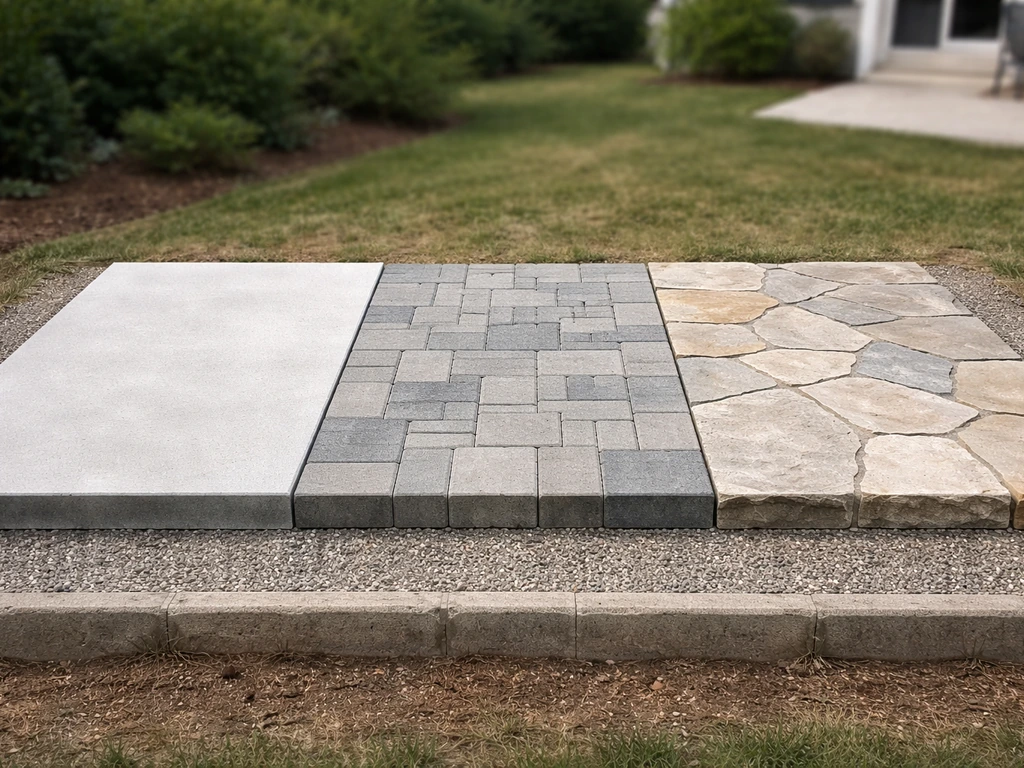
Patio cost guide with real price ranges by size and material, full line-item budget, DIY vs install, and quote checklist
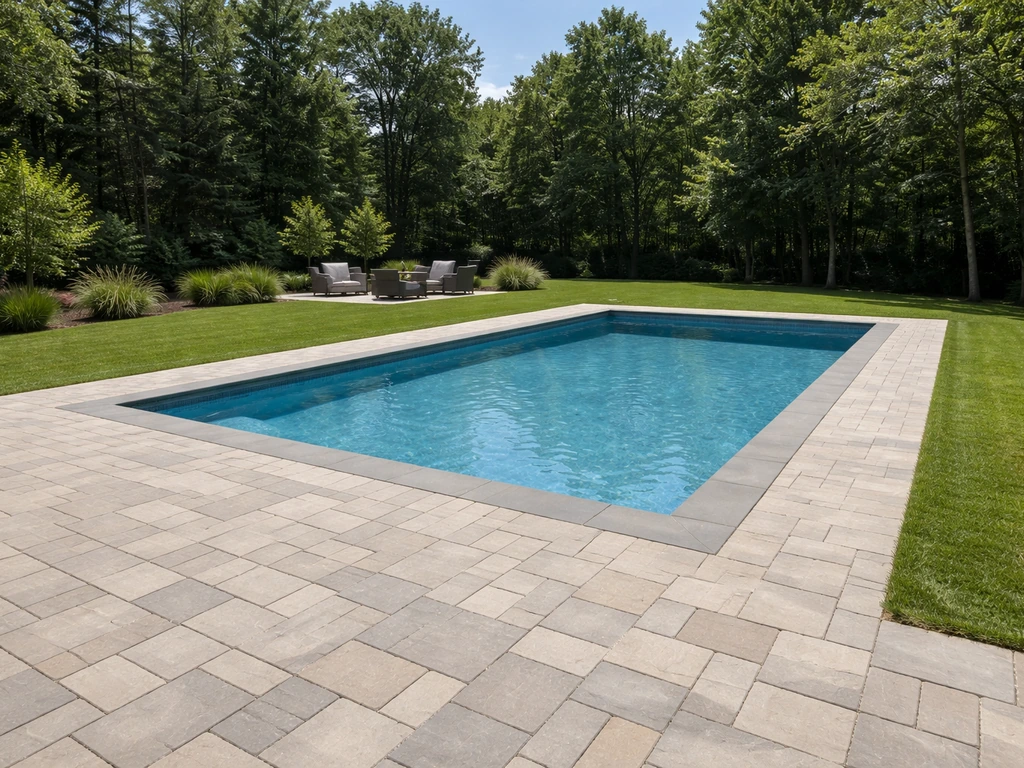
Learn how much patio around a pool costs and how to size square feet, materials, extras, and get real bid line items.
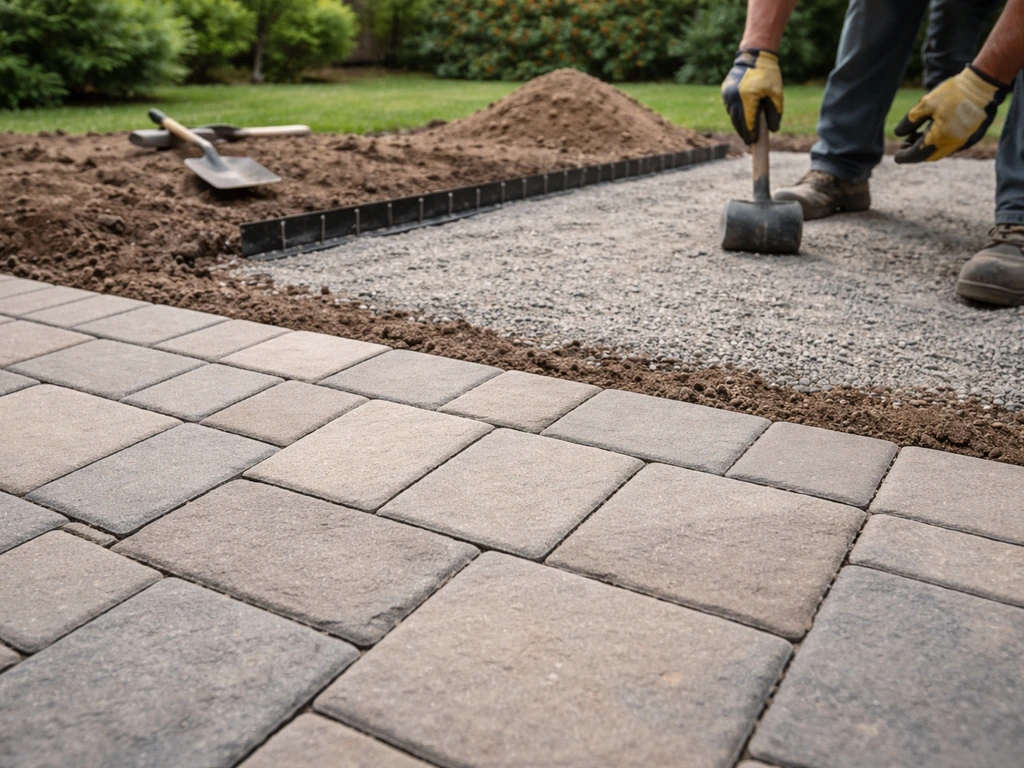
Patio cost estimates by size and material with labor, base, add-ons, DIY vs contractor, and quote planning tips.