
Most backyard patios run between $2,000 and $12,000 installed, with the average homeowner spending somewhere in the $4,000–$7,000 range for a mid-size concrete or paver patio. If you're trying to budget for your own backyard, the quickest way is to estimate your patio size and multiply by the installed cost per square foot for your chosen material how much to put a patio in backyard. The wide spread comes down to three things: what material you choose, how big you go, and what your site needs before the first paver or slab goes down. Plain broom-finish concrete sits at the low end at $6–$12 per sq. ft. installed. Pavers and brick run $8–$25 per sq. ft. Flagstone and natural stone push $15–$50 per sq. ft. If you want stamped or decorative concrete, budget $12–$28 per sq. ft. depending on the pattern complexity. Those ranges are installed costs for 2026, meaning materials plus labor.
How Much for Backyard Patio Cost by Type and Size

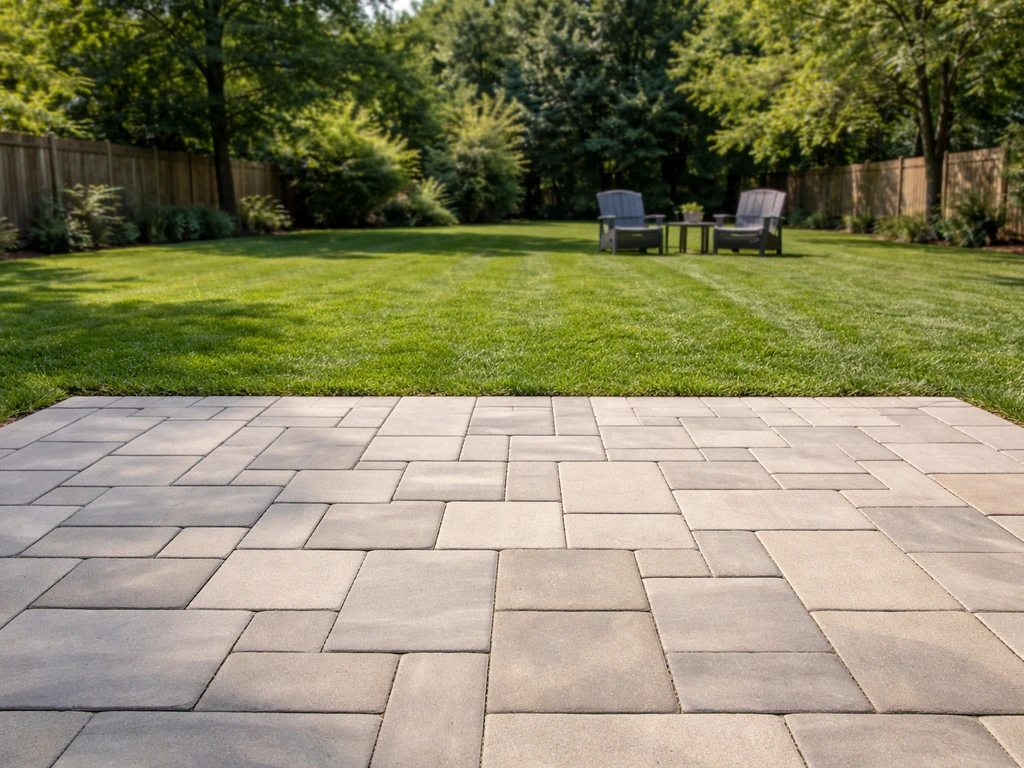
What each patio material actually costs per square foot
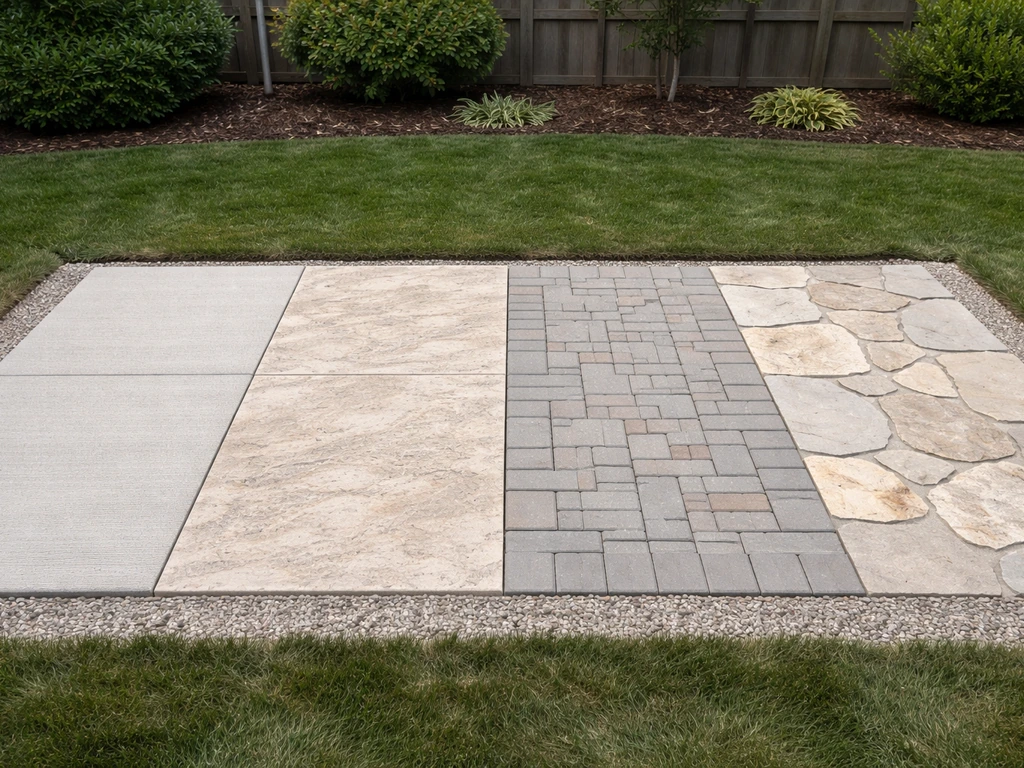
Here's a straight comparison of the five materials most homeowners end up choosing between. These are installed costs, not just materials off the shelf.
| Material | Installed Cost (per sq. ft.) | Notes |
|---|---|---|
| Plain concrete (broom finish) | $6–$12 | Most affordable; durable but plain-looking |
| Stamped concrete | $12–$28 | Pattern and color complexity drives the range |
| Concrete pavers | $8–$25 | Wide range based on paver type and pattern |
| Brick pavers | $14–$24 | Classic look; labor-intensive to install |
| Natural stone / flagstone | $15–$50 | Stone type, finish, and setting method vary cost significantly |
Plain concrete
A standard broom-finish concrete slab runs $6–$12 per sq. ft. installed in 2026. It's the go-to budget option and it holds up well. The trade-off is aesthetics: it's utilitarian. If you're just trying to create a functional outdoor space without blowing your budget, concrete is hard to beat. Crack repairs are straightforward, and you can always add a concrete stain or sealer later to improve the look.
Stamped concrete
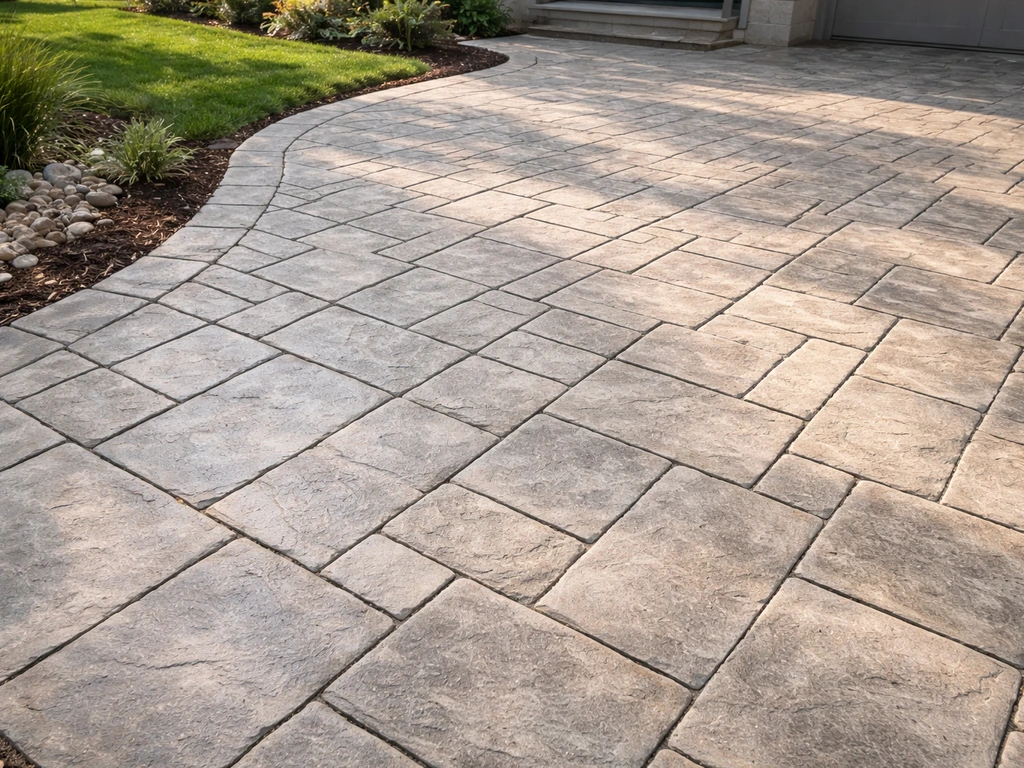
Stamped concrete gives you the look of pavers or stone at a lower material cost, but skilled labor makes it more expensive than plain concrete. Expect $12–$25 per sq. ft. for most projects, and up to $28 per sq. ft. for detailed multi-color decorative work. The base materials (concrete, colorants, sealers) run about $4–$8 per sq. ft. if you're pricing out a DIY attempt, but this is one area where going DIY rarely pays off. Stamped concrete is unforgiving: timing the stamps wrong, inconsistent color, or improper sealing can result in a surface you'll want torn out within a few years.
Concrete and brick pavers
Concrete pavers are the most popular mid-range choice, coming in at $8–$25 per sq. ft. installed. The range is big because paver quality, thickness, and pattern complexity all move the needle. Brick pavers specifically run $14–$24 per sq. ft. installed and tend to land at the higher end because they're heavier to work with and the installation is more labor-intensive. The upside of any paver system is repairability: if one paver cracks or settles, you pull it, fix the base, and reset it.
Natural stone and flagstone
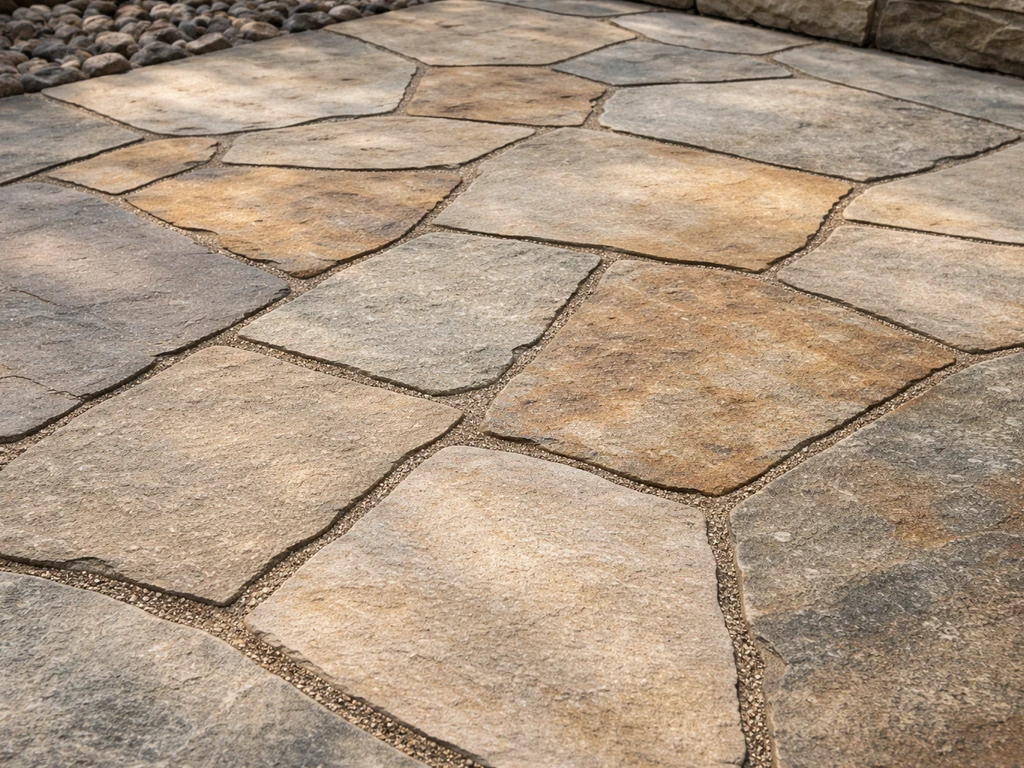
Natural stone is the premium option. Flagstone patios typically run $15–$35 per sq. ft. depending on how they're set (dry-laid in gravel vs. mortared on a concrete base), and certain natural stones (bluestone, travertine, slate) can push $50 per sq. ft. installed. Labor alone for flagstone installation runs $9–$17 per sq. ft., so the stone itself is only part of the cost. Total project costs for flagstone often land in the $6,000–$12,000 range even for modest-sized patios.
Budget by patio size: what 10x10, 12x12, and 20x20 actually cost
Translating per-sq-ft numbers into a real budget is straightforward once you know your size. A 10x10 patio is 100 sq. ft., a 12x12 is 144 sq. ft., and a 20x20 is 400 sq. ft. Here's what that looks like across materials at the low, mid, and high end of installed pricing.
| Patio Size | Plain Concrete | Stamped Concrete | Concrete Pavers | Brick Pavers | Natural Stone |
|---|---|---|---|---|---|
| 10x10 (100 sq. ft.) | $600–$1,200 | $1,200–$2,800 | $800–$2,500 | $1,400–$2,400 | $1,500–$5,000 |
| 12x12 (144 sq. ft.) | $864–$1,728 | $1,728–$4,032 | $1,152–$3,600 | $2,016–$3,456 | $2,160–$7,200 |
| 20x20 (400 sq. ft.) | $2,400–$4,800 | $4,800–$11,200 | $3,200–$10,000 | $5,600–$9,600 | $6,000–$20,000 |
A couple of things to keep in mind with those numbers: small patios (100–150 sq. To estimate how much does a large patio cost, use the same per-square-foot approach but multiply by your larger area and include any minimum project charges. ft.) often cost more per square foot because mobilization, base prep, and minimum contractor charges don't scale down proportionally. A contractor isn't going to do a 10x10 concrete slab for $600 just because the math says so. Minimum project charges from most contractors start around $1,500–$2,000 regardless of size. If you're planning a small patio, that floors your actual quote even if the per-sq-ft rate looks low. If you're budgeting for how much does a small patio cost, focus on both the per-square-foot rate and the minimum charges that apply even to smaller installs. For a deeper dive on small patio budgeting specifically, that's worth researching separately. For more detailed guidance on small patio budgeting, you can review what impacts a small patio cost.
Labor vs. DIY vs. hiring a contractor
Labor typically makes up 40–60% of a patio project's total cost. On a $5,000 paver patio, you're looking at roughly $2,000–$3,000 in labor. That's real money, and it's why so many homeowners consider going DIY. Here's the honest breakdown of where it makes sense and where it doesn't.
Where DIY actually saves money
Dry-laid gravel-set flagstone and basic concrete paver patios are the most forgiving DIY projects. If you're willing to rent a plate compactor, do the base prep yourself, and take your time on layout, you can cut 40–50% off a paver patio cost. Materials for a DIY paver patio might run $4–$10 per sq. ft. depending on the paver type, versus $8–$25 per sq. ft. installed by a pro. On a 200 sq. ft. patio, that's potentially a $1,500–$2,000 savings. The key is not cutting corners on the base: 4–6 inches of compacted gravel base is what keeps pavers from shifting and settling unevenly.
Where DIY costs you more in the long run
Concrete slabs and stamped concrete are not good DIY projects unless you have real experience with concrete work. Getting the mix, pour timing, finishing, and curing right requires skill that comes from doing it repeatedly. A botched concrete pour is expensive to fix (or remove), and an improperly stamped surface often needs full demolition and replacement. Stamped concrete DIY materials alone run $4–$8 per sq. ft., but if you have to hire someone to demo a failed attempt, you've erased any savings and then some. Same logic applies to mortared stone: improper base prep or mortar application leads to cracks and settlement that require complete teardown.
What hiring a contractor actually gets you
Beyond skill, a licensed contractor typically handles permitting, brings their own compaction equipment, and warranties their work. For a project over $5,000, that peace of mind is worth something. Ask specifically whether the contractor warranties both materials and labor, and for how long. A two-year labor warranty on a paver patio is reasonable; anything less is a yellow flag.
Add-on costs that change your final number
The per-sq-ft estimates above assume a reasonably straightforward install: fairly flat ground, no demolition, no complex drainage. Real yards rarely cooperate. Here are the add-ons that most commonly show up in final invoices.
- Base preparation and gravel: $1–$3 per sq. ft. extra if significant excavation or additional gravel is needed beyond a standard 4-inch base.
- Demolition of existing concrete or patio: $500–$2,500 depending on size and thickness of what's being removed.
- Grading and leveling: $500–$1,500 for sloped or uneven yards that need significant regrading before installation.
- Drainage solutions (French drain, catch basin): $500–$3,000 depending on complexity; skipping drainage on a poorly draining yard leads to paver heaving and slab cracking.
- Edging and borders: $200–$800 for metal, plastic, or masonry edging that keeps pavers from spreading.
- Steps and transitions: $300–$2,000 per step run depending on material and height; required if your patio drops more than 6–8 inches from a door threshold.
- Lighting (low-voltage or hardwired): $500–$3,000 depending on fixture count and whether trenching is needed for hardwired systems.
- Permits and inspections: $100–$500 in most municipalities; some areas require permits for any permanent outdoor structure, others don't for patios at grade.
- Sealing (concrete or pavers): $0.50–$2 per sq. ft. for initial sealing; often sold as an add-on by contractors and worth doing on stamped concrete especially.
The two most common budget surprises are demolition and drainage. If you have an old patio or concrete pad to remove, that alone can add $1,000–$2,000 to your project before any new material goes down. And if your yard has a drainage problem, addressing it during the patio install is far cheaper than addressing it after, when you'd have to tear up what was just installed.
Why your neighbor's quote was different from yours
Regional price differences are significant and they're not always intuitive. Labor rates in the Northeast and West Coast metro areas can run 30–50% higher than in the Southeast or Midwest for the same patio. Material availability matters too: flagstone quarried locally in Pennsylvania or the Midwest costs far less than the same stone shipped to Arizona or Florida. Here's a practical way to estimate where your market sits.
- Start with the national installed cost range for your chosen material (see the table above).
- If you're in a high cost-of-living metro (New York, Boston, San Francisco, Seattle, Los Angeles), add 25–40% to the midpoint of that range.
- If you're in a mid-tier market (Chicago, Atlanta, Denver, Phoenix), use the midpoint as your baseline.
- If you're in a lower cost-of-living region (rural Midwest, Southeast outside major metros, parts of the South), budget toward the lower 30–40% of the range.
- Add local permitting costs, which vary widely. Call your municipality directly and ask whether a patio at grade requires a permit; many don't.
- Get three local quotes. The quotes themselves will tell you more about your specific market than any national average.
Material availability is worth a phone call before you commit to a material. In some regions, certain pavers or stone types have to be trucked in from far away, which inflates material cost. Ask your contractor where the material is sourced and whether there's a more locally available alternative that looks similar.
How to get quotes you can actually compare
Getting three bids is the standard advice, and it's right. But three bids only help you if they're all for the same scope of work. Contractors make different assumptions about what's included, and a quote that looks 20% cheaper often just left out base prep, demo, or sealing. Here's what to make sure every bid spells out.
- Exact square footage and the specific dimensions of the patio.
- Material specified by name, thickness, and manufacturer or quarry source if applicable.
- Base prep details: depth of excavation, type and depth of gravel base, compaction method.
- Whether existing concrete or pavers are included in the demo and disposal price.
- Drainage provisions and how water will be directed away from the patio and structure.
- Edging type and whether it's included.
- Steps, transitions, or borders if applicable to your design.
- Whether sealing is included or an add-on.
- Permit pulling: who is responsible for pulling permits and whether permit fees are included in the quote.
- Labor warranty: length and what it covers.
- Payment schedule: a large upfront payment (over 30–40%) before work starts is a red flag.
Red flags to watch for: a contractor who won't provide a written, itemized quote; anyone who asks for more than 50% upfront; quotes that don't mention base prep at all (every quality patio install involves base prep); and anyone who pressures you to sign same-day. Reputable contractors are busy but not so desperate that they need an immediate decision.
Patio vs. deck: which one makes sense for your yard and budget
If you're on the fence between a patio and a deck, the short version is: patios are cheaper upfront and cheaper to maintain; decks are better for sloped yards and often feel more like an extension of indoor living space. Here's how they actually compare.
| Factor | Patio | Deck |
|---|---|---|
| Installed cost (per sq. ft.) | $6–$28+ depending on material | $15–$35+ depending on decking material |
| Maintenance | Low to moderate (seal concrete every 2–3 years; re-sand pavers occasionally) | Moderate to high (wood decks need annual sealing/staining; composite is lower maintenance) |
| Best for | Flat or gently sloped yards | Sloped yards where building up grade is needed |
| Longevity | 20–50+ years with proper base and maintenance | 15–30 years for wood; 25–50 for composite |
| Permitting | Often not required for ground-level patios | Almost always required; typically needs inspection |
| DIY friendliness | Moderate for pavers; low for concrete | Moderate for experienced builders; structural work requires permits |
If your yard is flat and you want the most space for your budget, a patio wins almost every time. A 20x20 concrete or paver patio will cost significantly less than a 20x20 deck in most markets, and it'll last longer with less maintenance. If your house sits elevated off grade or you have a significant slope in the yard, a deck often makes more practical sense than trying to build up and level a base for a large patio, which can get expensive quickly.
One more thing worth considering: patios are a single decision, but decks often require follow-up decisions about railings, stairs, and structural posts that add cost quickly. A deck quote that starts at $8,000 can climb to $14,000 once you add required railings and a stair run. Patios have add-on costs too, but they tend to be more predictable once your site is assessed.
Your next step before calling a contractor
Before you reach out for quotes, measure your desired patio area and sketch a rough layout. Know whether you have any existing concrete or structures to remove, and walk the space after a heavy rain to see where water goes. Those three pieces of information will let you describe your project accurately, help contractors give you tighter quotes, and let you spot immediately when someone's quote left out demolition or drainage. Once you have three itemized quotes using the checklist above, you'll have a real picture of what your specific patio will cost in your market rather than relying on national averages alone.
FAQ
How much for a backyard patio that includes basic cleanup and hauling away the old slab or pavers?
If you have an existing patio to remove, plan on demolition plus disposal charges, which commonly add about $1,000 to $2,000 on top of material and install. Ask the contractor to specify whether hauling is included in the demo line item, because some quotes cover only breaking and loading, not dump fees.
What’s the real cost impact if my yard is not flat and needs grading?
Grading can increase costs because it usually means deeper base work, added material, and more labor for re-leveling. During site inspection, ask how they’ll handle uneven ground and whether the quoted per-sq-ft rate assumes a minimum depth and compaction across the entire area.
If I have a tight budget, what’s the most cost-effective patio size to aim for?
Small patios often cost more per square foot because mobilization, base prep, and minimum contractor charges do not scale down. Many contractors have minimum project charges around $1,500 to $2,000, so a modest size can be cheaper than expected only when it still clears that minimum.
Do I need to budget for drainage improvements separately from the patio installation?
Often yes, especially if water pools near your foundation or yard low points. The article notes drainage fixes are cheaper when handled during installation, so request a plan for where runoff will go (and whether they include any grading, drain pipe, or swales) before you compare bids.
Can I save money by doing landscaping around the patio myself instead of hiring it with the patio?
Usually you can, as long as the patio scope still includes edge restraints, proper transitions, and any required leveling at borders. Ask what the contractor includes at the perimeter, for example whether topsoil, sod, mulch, or stepping stones are excluded, so you do not pay for overlap or miss a necessary finish.
How do I compare bids if one quote includes sealing and another doesn’t?
Sealing and protective coatings can materially change both cost and expected longevity for pavers and some decorative finishes. Make sure every bid clearly states whether sealer is included, the product type, and whether it’s a one-time application or requires reapplication within a defined time period.
Is 50% upfront a red flag, or can it be normal?
A demand for more than about 50% upfront is a common red flag in the article, because it can signal weak project controls. Even when deposits are normal, ask for a payment schedule tied to milestones (demo complete, base installed, final inspection), and do not start work until the contract is signed and itemized.
If I want DIY, what’s the biggest mistake that causes pavers to shift or settle?
Most DIY failures trace back to base prep, especially underbuilding and insufficient compaction. The article emphasizes 4 to 6 inches of compacted gravel base for pavers, so verify the contractor or your plan includes base depth, compaction method, and edge restraint details.
Is stamped concrete DIY ever worth it to save money?
In general, stamped or decorative concrete is high risk for DIY because timing, mix control, pattern stamping, and curing must be correct together. The article notes that mistakes can require demolition and replacement, so if you lack repeated concrete pouring experience, the expected cost of fixing a failure can wipe out any material savings.
How can I estimate cost for my exact patio shape if it is not a simple rectangle?
Use an area calculation method, like breaking the patio into rectangles or using the closest measured shape, then multiply by the installed per-square-foot range for your material. Also add extra allowances for wasted cuts at borders, which become more frequent with curved or irregular designs and can raise labor even when the math on area seems straightforward.
What warranty should I ask about for labor versus materials?
Ask specifically whether the warranty covers both the installation and the materials, and for how long. The article flags that a two-year labor warranty on a paver patio is reasonable, so require the warranty terms in writing rather than relying on verbal reassurance.
How much more can a patio cost in a high-cost region like the Northeast compared with the Midwest?
Regional labor differences can be significant, with metro Northeast and West Coast labor often running about 30% to 50% higher than in the Southeast or Midwest for comparable installs. For a realistic estimate, ask bids to reference local labor rates and confirm whether transport impacts stone or paver selection.
Should I choose a patio or a deck if my yard has a slope?
If your yard is significantly sloped or requires building up a lot of base for level ground, a deck is often more practical than trying to construct a large, level patio. The article also notes deck costs can rise quickly once you add railings and stairs, so compare not just square footage, but site-specific requirements for both options.
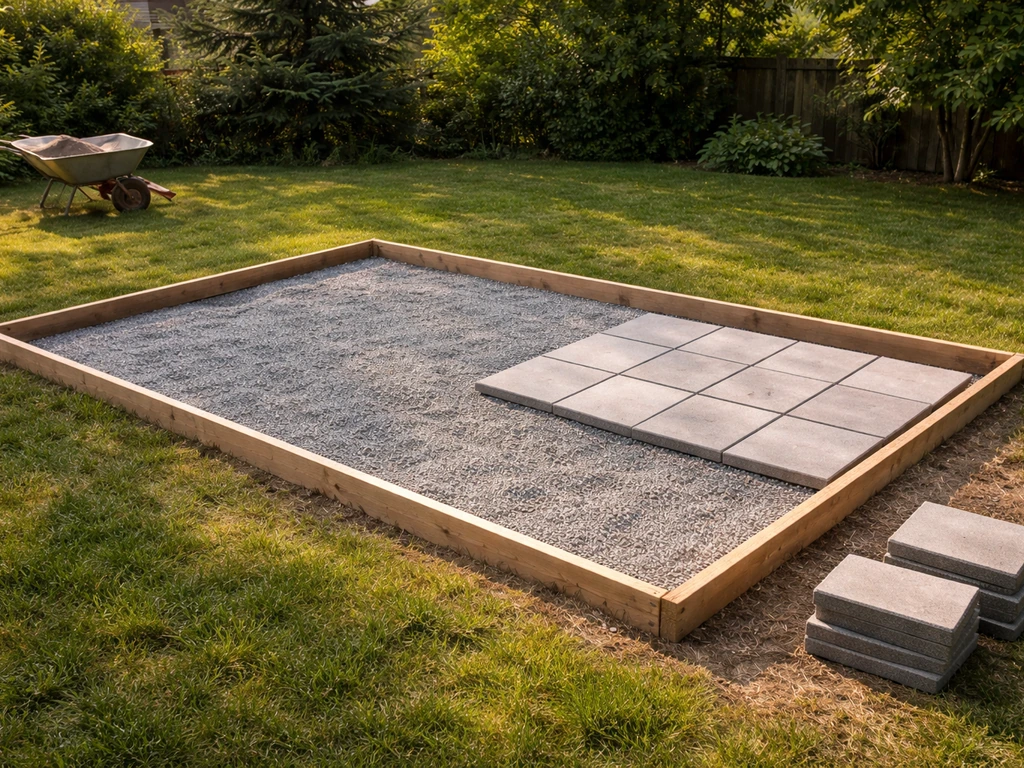
Patio cost guide with real ranges, cost per sq ft, material options, and DIY vs pro budgeting steps.
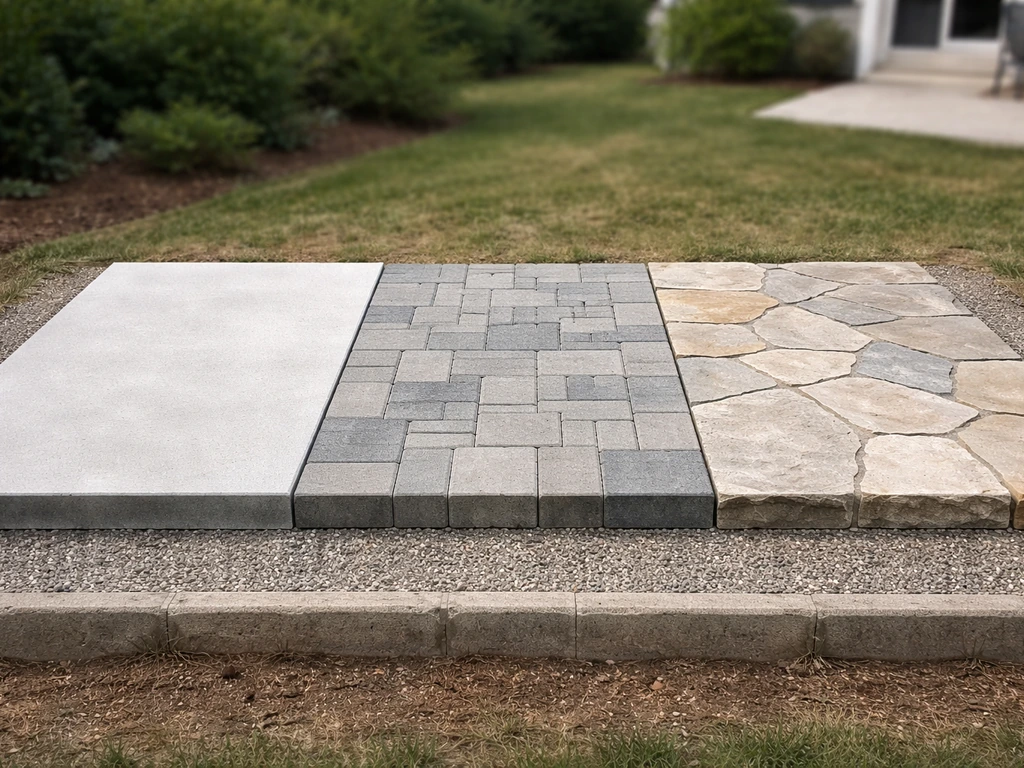
Patio cost guide with real price ranges by size and material, full line-item budget, DIY vs install, and quote checklist
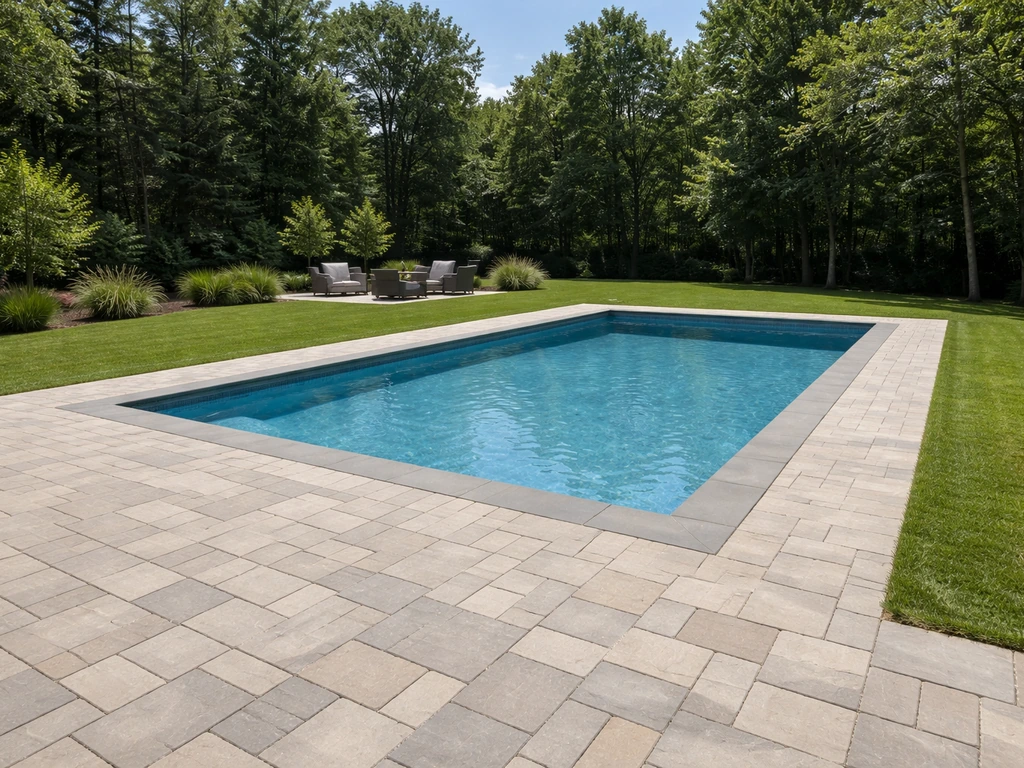
Learn how much patio around a pool costs and how to size square feet, materials, extras, and get real bid line items.