
A small patio in the 10x10 to 12x12 range typically costs between $800 and $3,600 installed, depending on the material you choose and where you live. That works out to roughly $8–$30 per square foot all-in. Basic poured concrete sits at the lower end, around $8–$12 per sq ft. Pavers land in the $11–$18 range. Flagstone and brick can push $15–$30 per sq ft once labor and base prep are included. If you're doing it yourself, you can cut those numbers significantly, but the savings come with real trade-offs worth knowing before you pick up a shovel.
How Much to Build a Small Patio Cost and Budget Guide

Felix Carver
8 Jul 2026
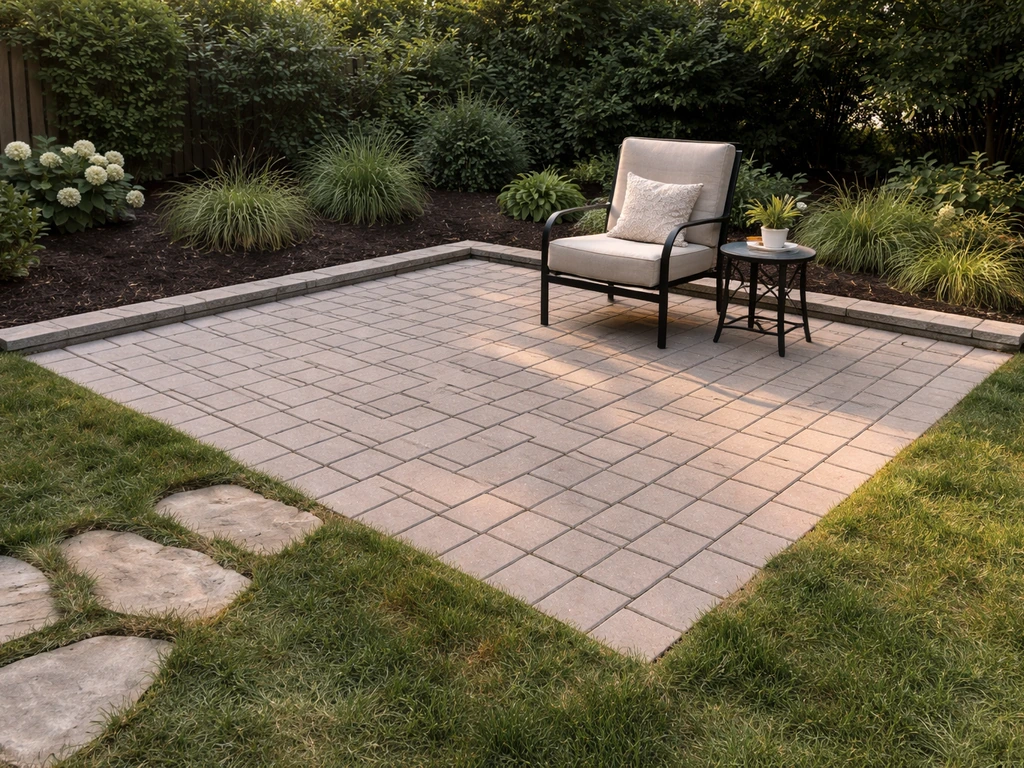
Typical small patio cost ranges by size
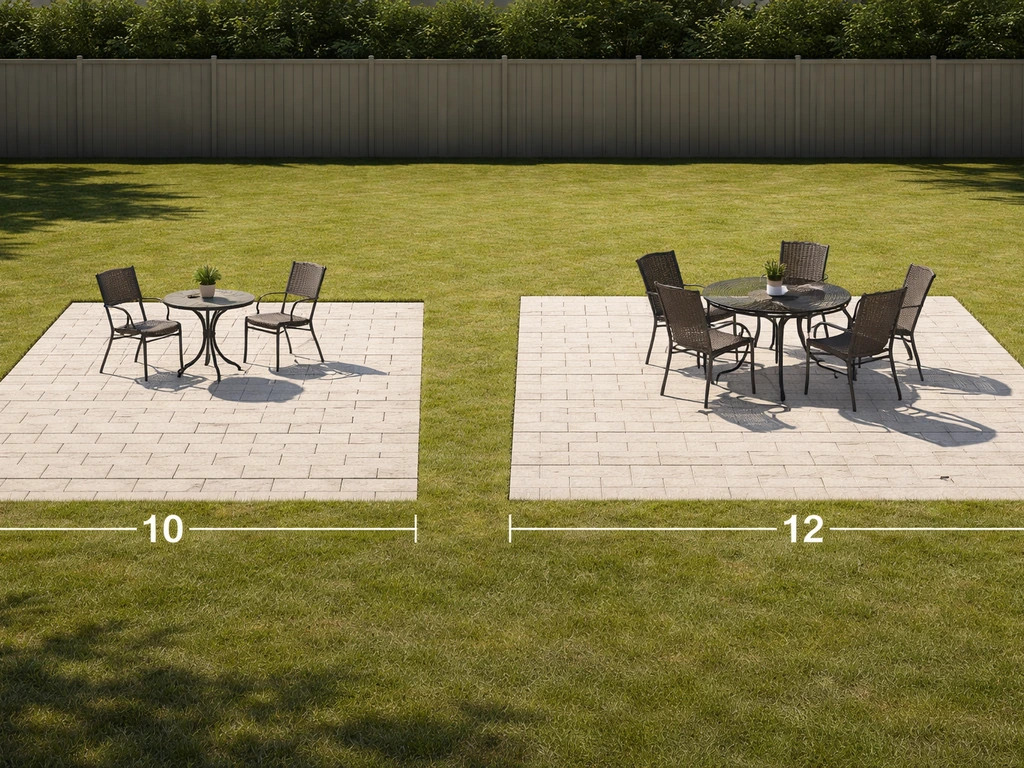
Most homeowners shopping for a small patio are looking at either a 10x10 (100 sq ft) or a 12x12 (144 sq ft). These are the sweet spots for a bistro table, a couple of chairs, or a small grill setup. Here's what you can realistically expect to pay for professional installation across common sizes and materials.
| Patio Size | Sq Ft | Concrete (installed) | Pavers (installed) | Flagstone/Brick (installed) |
|---|---|---|---|---|
| 10x10 | 100 sq ft | $800–$1,200 | $1,100–$1,800 | $1,500–$3,000 |
| 10x12 | 120 sq ft | $960–$1,440 | $1,320–$2,160 | $1,800–$3,600 |
| 12x12 | 144 sq ft | $1,150–$1,730 | $1,580–$2,590 | $2,160–$4,320 |
| 12x16 | 192 sq ft | $1,540–$2,300 | $2,110–$3,460 | $2,880–$5,760 |
Keep in mind these are ballpark installed ranges. A contractor in a high-cost metro like Boston or Seattle will quote you closer to the top of those ranges or above them. Someone in the rural Midwest or South might come in below the midpoint. The material choice matters a lot, but so does who's doing the work and what your site looks like before they show up.
Where the money actually goes: materials, base prep, and labor
Most homeowners focus on the surface material, which makes sense, but that's rarely more than half the total job cost. A well-built patio is really three layers of expense, and skimping on any one of them causes problems later.
Surface materials
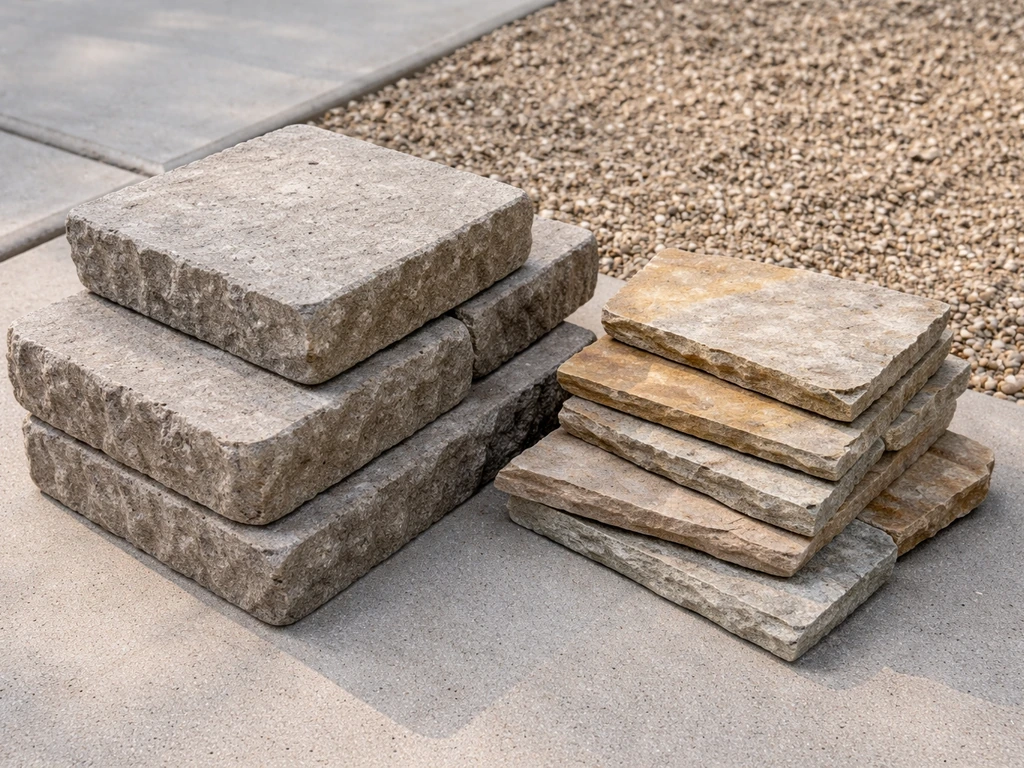
The surface material is the most visible cost and the one with the widest range. Basic concrete mix runs $3–$5 per sq ft in materials. Concrete pavers are typically $2–$6 per sq ft for the units themselves (more for premium shapes or colors). Natural flagstone can cost $3–$8 per sq ft just for the stone, and that's before any cutting or fitting. Brick pavers tend to run $2–$5 per sq ft for materials. Stamped concrete add-ons (patterns, color, texture) typically add $3–$8 per sq ft on top of the base concrete cost.
Base and site prep
This is the part that surprises people most. Before any surface goes down, the ground needs to be excavated (usually 6–10 inches deep for a proper base), graded for drainage, compacted, and filled with a gravel sub-base and a sand or concrete bedding layer. For a 100 sq ft patio, base prep materials alone can run $150–$400, and the labor to do it right often equals or exceeds the cost of laying the surface itself. If a geotextile fabric is needed to separate soil from gravel, that adds a small amount, maybe $30–$60 for a small patio, but it's worth doing. Edge restraints for paver installations add another $1–$2 per linear foot. Skipping or rushing the base is the single most common reason patios fail, settle, or develop drainage problems within a few years. A detailed outdoor patio estimate should include site prep, base materials, labor, and any add-ons like edging, drainage, or steps to reflect the full cost skipping or rushing the base.
Labor
Labor typically runs $4–$12 per sq ft for a basic installation and $8–$20 per sq ft for complex work like intricate paver patterns, natural stone fitting, or sites that require extra grading. On a small patio, the fixed costs of mobilizing a crew (showing up, setting up, hauling materials) mean the per-square-foot labor rate can actually be higher than on a larger project. Contractors often have minimum job sizes, and a 100 sq ft patio might be priced with a $600–$900 minimum regardless of the actual sq ft math.
Cost by patio type: concrete, pavers, flagstone, brick, and stamped
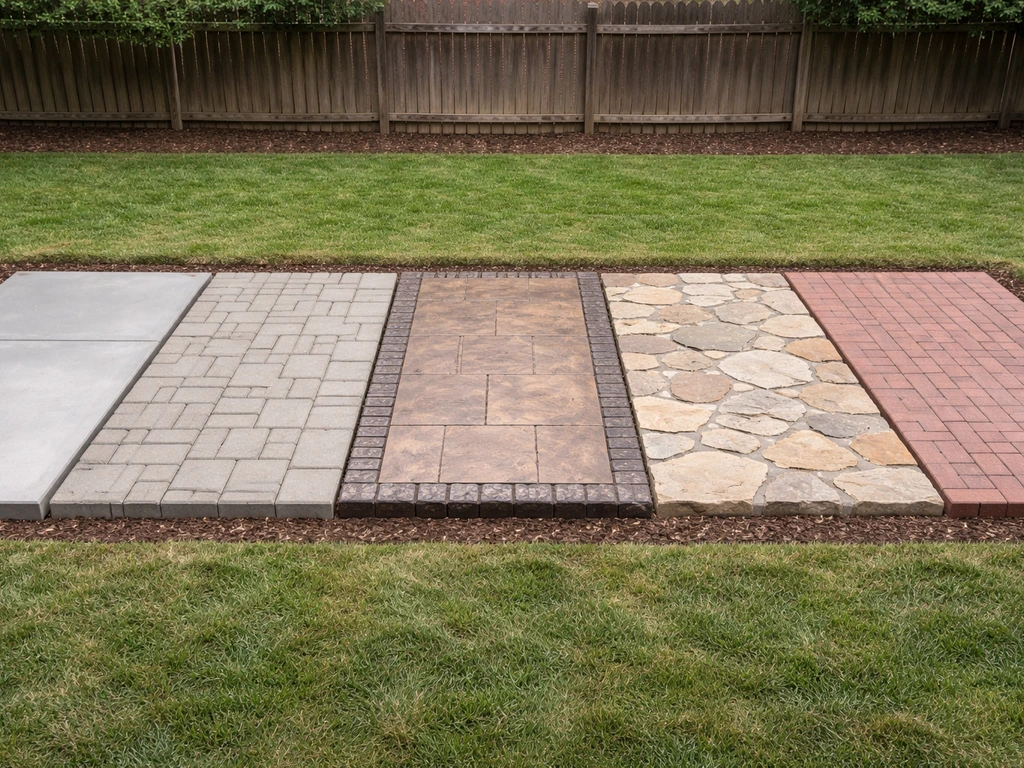
The finish material drives both the aesthetic and the budget more than any other factor. Here's a realistic look at each option for a small patio.
| Patio Type | Installed Cost (per sq ft) | DIY-Friendly? | Durability | Notes |
|---|---|---|---|---|
| Poured concrete (broom finish) | $8–$12 | Moderate | High | Lowest total cost; cracks over time without control joints |
| Concrete pavers | $11–$18 | Yes (with prep) | High | Easy to repair; wide variety of styles |
| Stamped concrete | $12–$20 | No | Medium-High | Looks premium but requires skilled installer; harder to repair |
| Flagstone / natural stone | $15–$30 | Challenging | Very High | Most expensive; labor-intensive to fit and set properly |
| Brick pavers | $10–$30 | Moderate | High | Classic look; labor cost varies by pattern complexity |
Poured concrete
A standard broom-finish concrete slab is the most cost-effective option for a small patio. At $8–$12 per sq ft installed, a 10x10 runs about $800–$1,200. The slab needs to be at least 4 inches thick (some contractors pour 3.5 inches, which is acceptable for foot traffic only). Control joints are critical to prevent random cracking; make sure your contractor includes them every 8–10 feet. Concrete is low maintenance but not easy to repair attractively if it does crack or stain.
Concrete pavers
Pavers are probably the most popular small patio surface for good reason: they look great, they're durable, and a single settled or cracked unit can be replaced without disturbing the whole patio. Industry guidance from the Interlocking Concrete Pavement Institute calls for a compacted aggregate base of 4–6 inches for residential pedestrian applications, topped with a 1-inch sand bedding layer and polymeric joint sand. Installed costs typically run $11–$18 per sq ft, so budget $1,100–$1,800 for a 10x10. The wider cost range reflects paver style (simple rectangles vs. multi-piece patterns) and local labor rates.
Stamped concrete
Stamped concrete gives you the look of stone, brick, or pavers at a lower material cost than the real thing, but the labor skill required pushes total costs up to $12–$20 per sq ft. For a 10x10 that's $1,200–$2,000. The main downside is repairability: if a section cracks or chips, matching the color and pattern after the fact is genuinely difficult. It also needs to be sealed every 2–3 years to protect the color and finish. Still, it can be one of the better-looking options when done well.
Flagstone and natural stone
Flagstone patios run $15–$30 per sq ft installed, and that range is wide for good reason. Dry-laid flagstone (set in compacted sand or gravel) sits at the lower end; mortared flagstone on a concrete base pushes toward the top. Labor alone for natural stone installation runs $9–$17 per sq ft because fitting irregular pieces takes real skill and time. For a small patio, the irregular piece sizes actually work in your favor aesthetically, but the total cost for a 10x10 can reach $1,500–$3,000 easily.
Brick
Brick patios share a similar installed cost range with flagstone, roughly $10–$30 per sq ft, with the final number depending heavily on pattern complexity. A simple running bond is faster to lay than a herringbone or basket weave, which requires more cuts and more labor time. Traditional clay brick has a classic look and holds up well in freeze-thaw climates when properly installed on an adequate base. For a 12x12 small patio, expect $1,440–$4,320 depending on pattern and region.
DIY vs. hiring a pro: honest trade-offs
DIY is genuinely viable for a small paver or concrete patio, and the savings are real. If you're wondering how much it costs to build a raised patio specifically, the added height and materials can change the price quite a bit from a standard flat slab small paver or concrete patio. On a 10x10 paver patio, doing the work yourself could bring the total from $1,400 down to $500–$700 in materials and equipment rental. But the base prep is where most DIY projects fail. If you don't excavate to the right depth, compact properly, and pitch the surface away from your house at a minimum slope of 1/8 inch per foot, you'll have a sunken, pooling mess within a few seasons.
Poured concrete and stamped concrete are not good DIY candidates unless you have specific experience. Concrete has a hard working window, and getting the finishing, joints, and slope right simultaneously takes practice. Stamped concrete is even less forgiving. Flagstone dry-laying is approachable for patient DIYers; mortared flagstone on a concrete slab is not.
When DIY makes sense
- You're installing concrete or clay pavers in a simple rectangular pattern
- The site is relatively flat and doesn't require major grading
- You're comfortable renting a plate compactor and using it correctly
- You have a weekend or two to commit and aren't rushing the process
- You're willing to do the research on proper base depth and drainage slope
When to hire a contractor
- You want poured or stamped concrete (requires a concrete crew and proper finishing)
- The site has a significant slope, poor drainage, or clay-heavy soil
- You need the old patio demolished and removed first
- The design includes curves, steps, or integrated lighting
- You want natural stone or mortared flagstone with tight, professional joints
What actually moves the price up or down
Once you have a material in mind, these are the variables that most commonly cause your final quote to land higher or lower than the averages.
Where you live
Regional labor rates have a massive impact. In the Northeast, Pacific Coast, and major metros, contractor labor rates can run 30–50% higher than the national average. A $12 per sq ft paver installation in Kansas City might be $17–$19 per sq ft in the Boston suburbs. Material costs also vary by region depending on what stone is locally quarried. If you're comparing estimates online, always look for regional numbers rather than national averages.
Site conditions
A flat, easily accessible backyard is the baseline. Add any of these and the cost goes up: a significant slope (adds grading time), clay or expansive soil (may need deeper base or drainage solutions), poor equipment access (small gate, tight side yard), tree roots to work around, or soft/wet ground that needs additional stabilization. Each of these can add $200–$800 or more to a small patio project depending on severity.
Existing patio removal
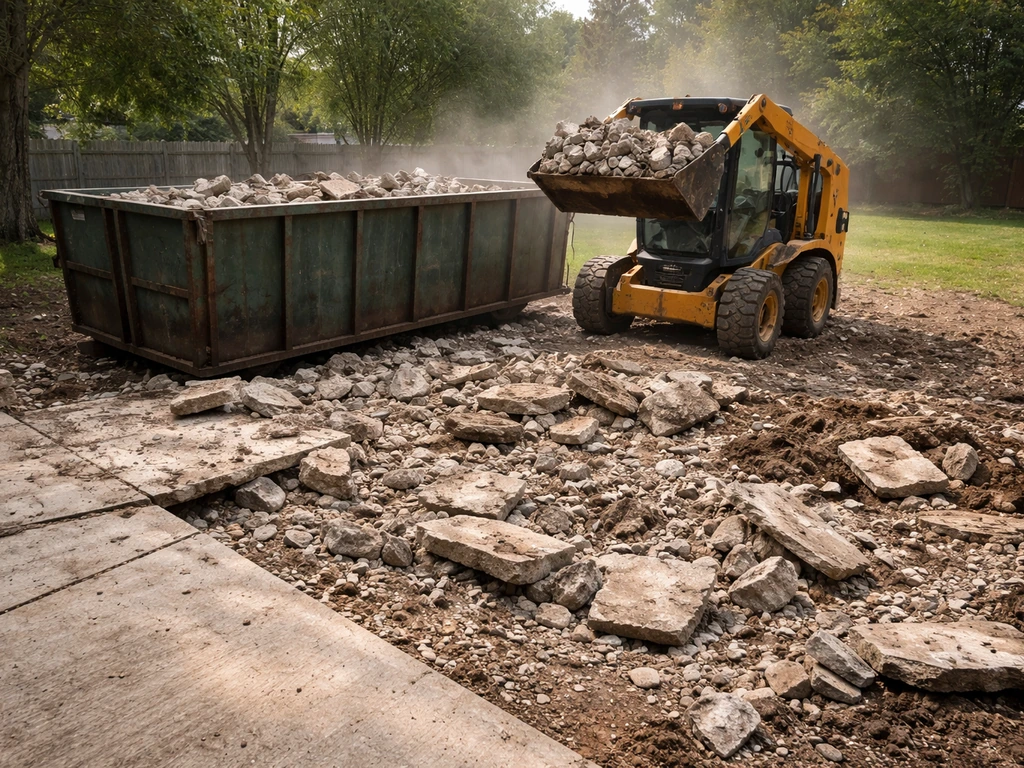
If you have an old concrete slab, brick patio, or pavers that need to come out first, budget an extra $2–$6 per sq ft for demolition and disposal. On a 10x10, that's $200–$600 added before the new work even starts. Thick concrete slabs and mortared surfaces cost more to demo than sand-set paver installations.
Design complexity and add-ons
Curved edges require cutting, which adds labor time. A decorative border in a contrasting paver color adds material cost. Steps, even a single step down from the door, add $150–$400 each. Integrated lighting (low-voltage path lights or in-ground pavers with lights) can add $300–$1,000+ depending on how elaborate you go. Sealing a paver or concrete patio runs $0.50–$2.50 per sq ft and is worth budgeting for even if you do it yourself.
How to get quotes that are actually useful
The biggest mistake homeowners make when getting patio quotes is being vague. If you call three contractors and say 'I want a small patio,' you'll get three wildly different numbers because they're all assuming different things. Give every contractor the same detailed spec so you can actually compare apples to apples.
What to include in your request
- Exact dimensions (e.g., 10 feet by 12 feet, rectangular) and any specific shape requirements
- The surface material you want (e.g., 'concrete pavers, standard 6x9 rectangles in a running bond' or 'broom-finish concrete slab')
- Base depth expectation (ask for a minimum 4-inch compacted gravel base for pavers, or confirm 4-inch slab thickness for concrete)
- Drainage pitch requirement (specify at least 1/8 inch per foot slope away from the house)
- Whether old patio removal is included or not (call this out explicitly)
- Any add-ons: edging, steps, lighting rough-in, sealing
- Access conditions: describe gate width, distance from driveway, slope of yard
Questions to ask every contractor
- What is the base depth and compaction process for this installation?
- Does the quote include edge restraints and polymeric joint sand (for pavers)?
- How are control joints handled (for concrete)?
- What is the drainage slope you'll build in?
- Is debris removal and cleanup included in the price?
- Do you carry liability insurance and workers' comp?
- What's your warranty on labor and materials?
- How long will the project take from start to finish?
Get at least three written quotes. On a small patio, quotes can vary by 40–60% for the same scope purely based on contractor availability and overhead. If one quote is dramatically lower than the others, ask specifically what's different about the base prep, not just the surface. That's almost always where corners get cut. If you're also considering a raised or wood-based outdoor structure, those projects involve completely different cost structures and trades, so treat those as separate estimates. If you are specifically wondering how much it costs to build a wood patio, the total depends heavily on decking grade, framing, and prep work for moisture control.
Before you contact anyone, spend five minutes measuring your space, picking a material, and sketching out what you want including any steps or curves. That single step will save you hours of follow-up questions and help you leave every contractor conversation with a real number instead of a vague 'it depends.'
FAQ
How much should I budget if my patio includes a small set of steps (like 1 step down from the door)?
Plan on adding roughly $150 to $400 per step for construction, then make sure the estimate specifies tread depth and how the step is tied into the patio base. A poorly integrated step can cause the surrounding pavers or slab to shift, so ask whether they’re reinforcing the step area or treating it as separate framing/forming.
Do drainage details change the cost a lot for a small patio?
They can, especially if your yard is flat, has clay, or drains toward the house. Even though base prep is often $150 to $400 for small areas, drainage fixes like extra slope grading, additional gravel, or a small catch system can push the project toward the upper end, so ask the contractor what the pitch will be and where runoff goes.
What’s the typical extra cost to remove an existing patio before rebuilding?
Commonly $2 to $6 per square foot for demolition and disposal, and the real swing depends on thickness and whether it’s mortared or sand-set. If you have thick concrete or mortared brick, request a line item for how they’ll handle rebar, haul-off, and whether they’ll excavate down to the same base depth after demo.
How do curved or irregular patio shapes affect pricing compared with a simple rectangle?
Curves add cost because cutting and waste are higher, and edging restraints may require more material and layout time. If your design has curves, ask for the quote to include a cut list or specific explanation of edge restraint and whether they’re charging per linear foot for edging.
Should I include patio sealing in my budget, even if I’m using pavers or concrete?
Yes. Many people forget that pavers and concrete often need sealing or protective treatment for stain resistance. For pavers or concrete, sealing is commonly $0.50 to $2.50 per square foot, and it can be a separate scheduling decision, so ask whether the quote includes sealing in the initial price or if it’s an add-on you’ll pay later.
What if my patio area is on a slight slope, do I still need the same base depth?
Often yes for proper support depth, but the grading time and materials can increase because they must build up one side and remove from the other while maintaining the required runoff slope away from the house. Request a sketch or description of the planned grade and confirm they’ll compact the base uniformly rather than leaving low spots.
Why are contractor quotes for the same patio size so far apart?
Most differences come from base prep assumptions, minimum job pricing, and how much site work is included. If one quote is much lower, ask them to specify excavation depth, whether geotextile is used, the thickness of gravel and bedding, and how edge restraints are handled, because those are the areas most likely to change the outcome.
For DIY, what’s the riskiest step that can make the patio fail?
Base prep is the main failure point, specifically excavating to the right depth, compacting properly, and achieving the correct drainage pitch (at least 1/8 inch per foot away from the house). Before you start, confirm you have the right tools for compaction and grading, otherwise the surface may settle unevenly even if the pavers or concrete look fine initially.
Can I repair one cracked paver or a single section of patio without redoing the whole thing?
That’s usually one of the benefits of pavers, a single settled or cracked unit can often be replaced without removing the entire patio. However, replacements depend on having matching pavers and access to lift the surrounding units, so ask your installer whether they recommend keeping extra units from the same batch and how joint sand will be restored.
If I’m comparing stamped concrete versus real stone or brick, what should I ask about long-term maintenance?
Ask about sealing intervals and what happens if the finish chips or cracks, since repairs can be hard to match. For stamped concrete, confirm the product and sealer schedule they plan to use, and whether they’re including control joint layout in the scope, because joint placement strongly affects cracking behavior.
Next Articles
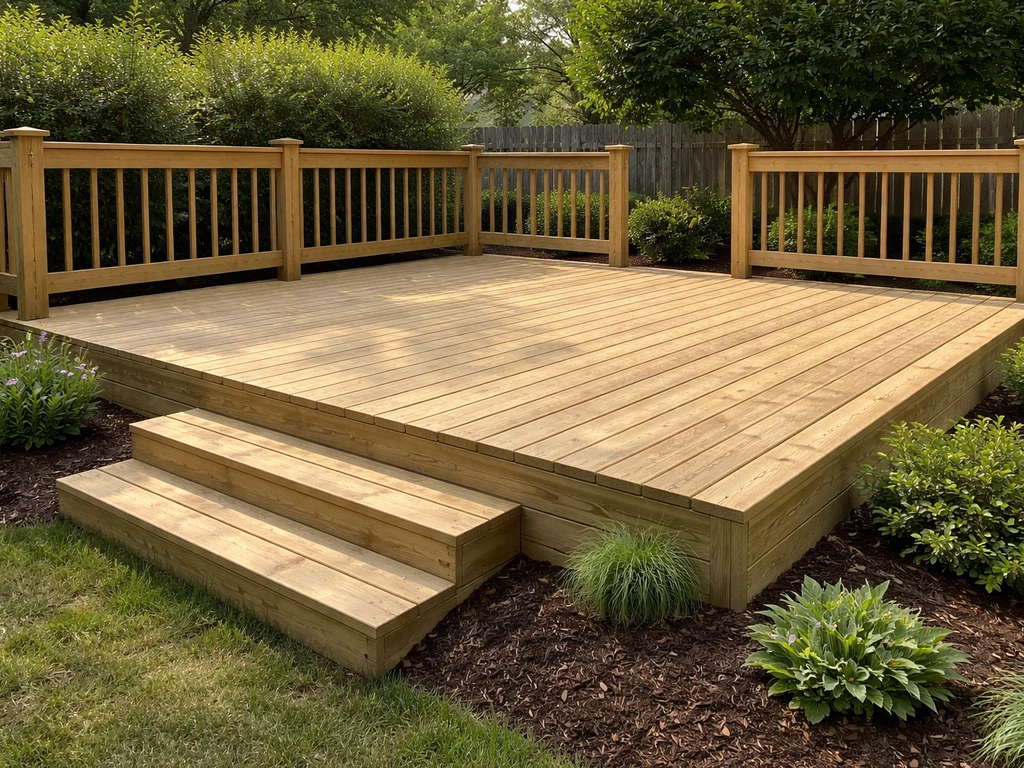
How Much Does It Cost to Build a Wood Patio
Wood patio cost guide with per sq ft ranges for 10x10 to 20x20, DIY vs pro labor, materials and site factors.
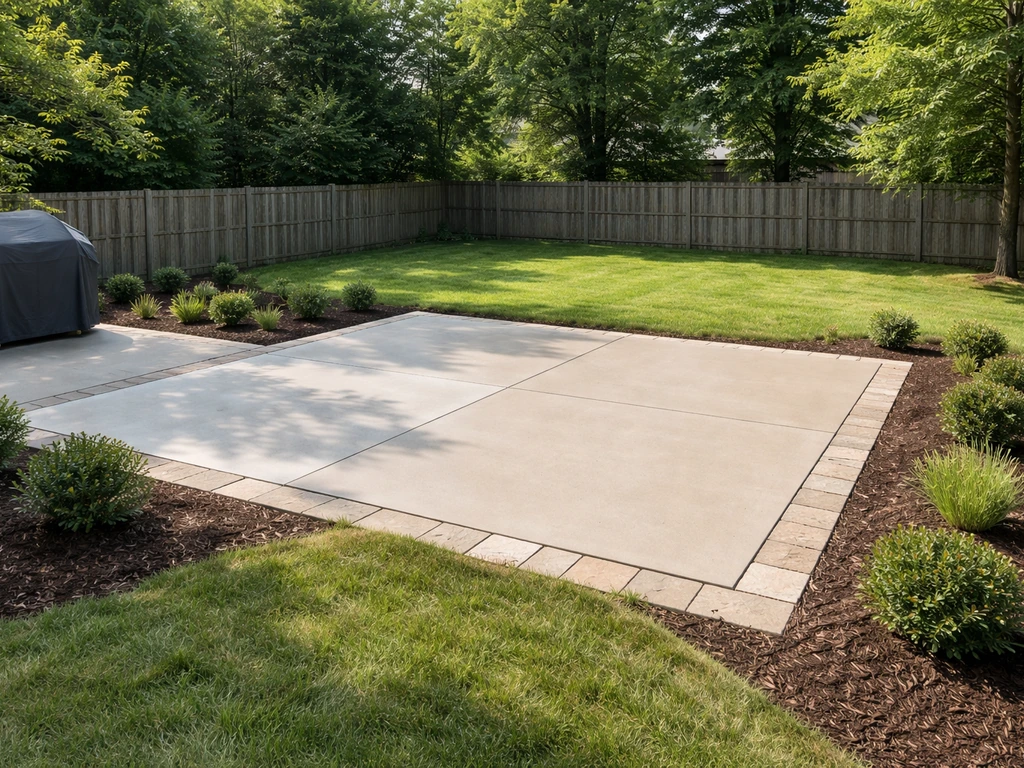
How Much Does It Cost to Build a Back Patio in 2026
Cost ranges for building a back patio in 2026, by size and material, with breakdown, DIY vs labor, and quote tips.
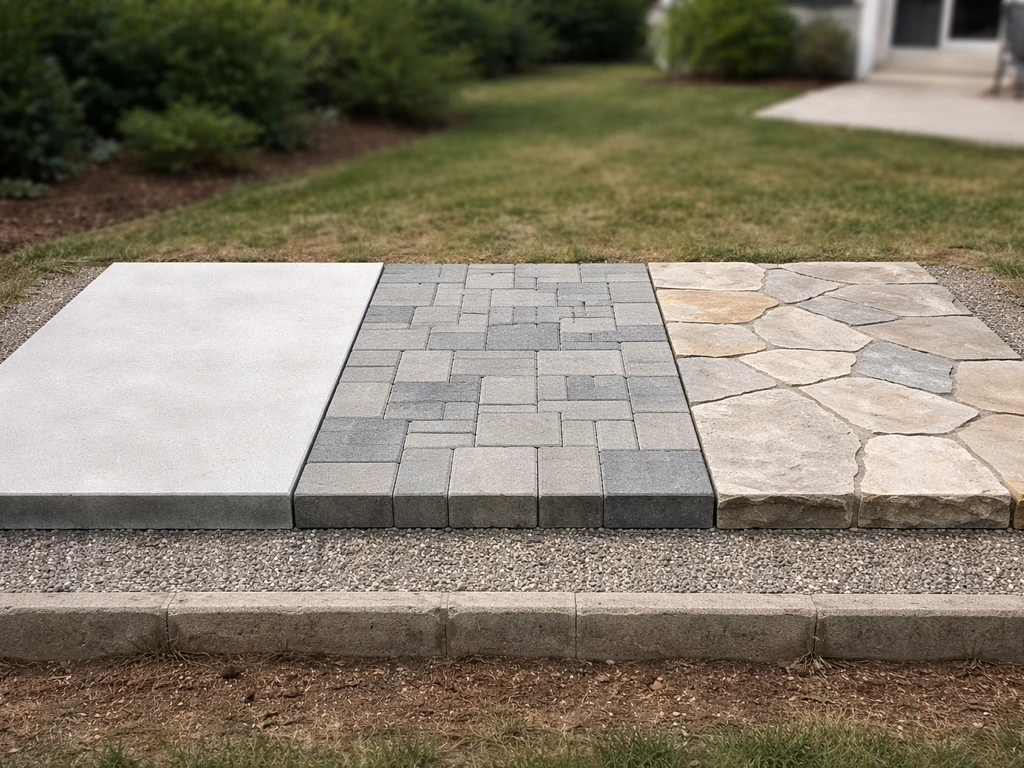
How Much Should I Expect to Pay for a Patio
Patio cost guide with real price ranges by size and material, full line-item budget, DIY vs install, and quote checklist