
Building a stone patio in 2026 runs roughly $12 to $30 per square foot installed for most residential projects, which works out to about $1,200 to $3,000 for a 10x10 patio or $4,800 to $12,000 for a 20x20. Premium natural stone like cut bluestone or dimensional flagstone can push that to $25 to $50 per square foot or more, while basic concrete paver installs can come in around $10 to $15 per square foot. Where you land in that range depends on your stone type, your region, site conditions, and whether you hire a contractor or swing the tools yourself. For a quick nationwide summary on how much does a stone patio cost per square foot, see the per‑square‑foot pricing guide.
How Much to Build Stone Patio: Typical Costs & Estimates

Felix Carver
17 Jul 2026
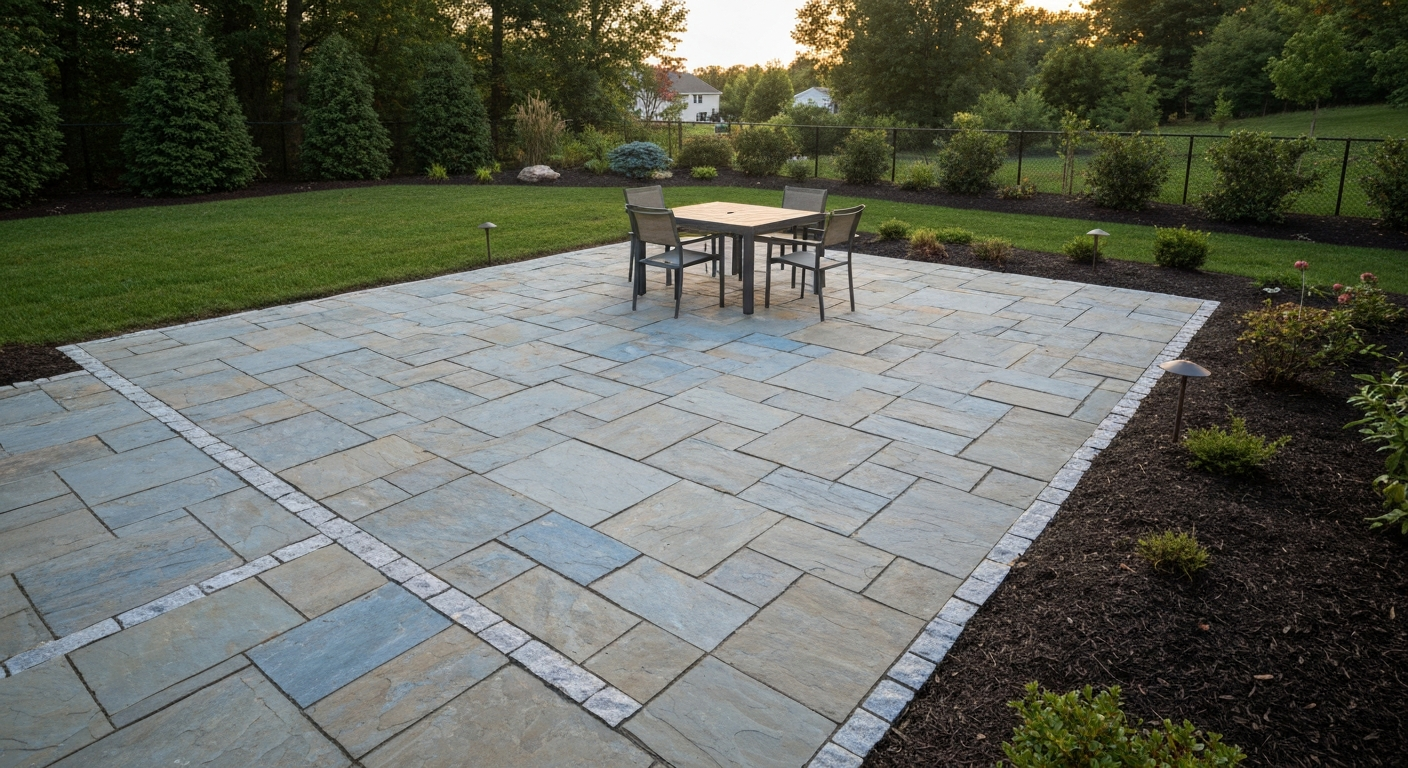
National and Regional Cost Ranges at a Glance
blank" rel="noopener noreferrer">The national mid-range for an installed paver or natural-stone patio sits at $12 to $30 per square foot. Industry sources report national installed cost ranges for residential paver or natural-stone patios in 2026 at blank" rel="noopener noreferrer">about $10–$50 per sq ft installed (typical middle band $12–$30/sq ft). That band covers the majority of standard residential installs: a prepared gravel base, sand bedding, the stone itself, and basic labor. Below that band you're usually looking at basic concrete pavers or simple cut patterns. Above it, you're into premium natural stone, complex designs, or high-labor-cost metro areas.
| Stone Type | Low ($/sq ft) | Mid ($/sq ft) | High ($/sq ft) |
|---|---|---|---|
| Concrete pavers (basic) | $10 | $14 | $18 |
| Random flagstone | $12 | $18 | $25 |
| Bluestone (irregular) | $15 | $20 | $28 |
| Bluestone (cut/dimensional) | $20 | $27 | $35 |
| Cut/dimensional stone | $22 | $30 | $50+ |
| Brick pavers | $12 | $18 | $25 |
Regional pricing follows a fairly predictable pattern. The Northeast (Massachusetts, New York, Connecticut) and West Coast (California, Oregon, Washington) typically run 10 to 30 percent above the national average because of higher labor costs, union wage floors, and the extra cost of trucking stone from distant quarries. The Midwest and much of the South tend to come in 5 to 20 percent below average, with the notable exception of major metros like Chicago, Austin, and Atlanta, where contractor demand keeps prices elevated. If you're in a rural area near a quarry, your material costs could be meaningfully lower than what you'd see quoted online.
How to Measure Your Patio and Get an Accurate Quote
Before you call a single contractor, measure your intended patio footprint. A tape measure and some chalk or marking paint is all you need. For a rectangle or square, multiply length by width. For an L-shape or irregular outline, break it into rectangles, calculate each, and add them together. Once you have your square footage, add 10 percent for cuts and waste on irregular flagstone, or 5 percent for cut dimensional stone and pavers that install with tighter tolerances.
Also note what's under and around your planned patio. Is it flat lawn? Sloped ground? Existing concrete you need removed? Each of those changes the scope. A flat, grass-covered area with no obstacles is the easiest and cheapest scenario. A sloped site or one with tree roots or existing hardscape adds excavation costs, sometimes significantly. When you contact contractors, give them these details upfront so the quotes you receive reflect actual site conditions rather than a best-case estimate.
- Measure the full length and width of your planned patio area in feet.
- Multiply to get total square footage (add areas together for irregular shapes).
- Add 5 to 10 percent for material waste depending on stone type.
- Note the grade: is the ground level, slightly sloped, or significantly sloped?
- Identify any obstacles: tree roots, sprinkler lines, downspouts, or existing concrete.
- Measure the distance from the street or driveway to your backyard (affects delivery and equipment access).
- Check your local municipality's permitting threshold — many require a permit for patios over 200 sq ft or attached to the house.
Cost Comparison by Stone Type
Not all stone is created equal in terms of price, difficulty, or longevity. Here's a practical rundown of the main options and what you actually get for the money.
Flagstone
Random flagstone is one of the most popular natural-stone options, and it covers a wide price range: $2 to $12 per square foot for materials alone, depending on type (sandstone, limestone, quartzite), grade, and whether you're buying in bulk or at a big-box store. Installed, plan on $12 to $25 per square foot. It has a natural, irregular look that many homeowners love, but the irregular shapes mean more cutting and fitting time on the job, which is why labor rates are higher than for uniform pavers. It also has more variation in thickness, which requires a bit more skill to set level.
Bluestone
Bluestone is a dense, durable sandstone quarried primarily in the Northeast. It comes in two forms: irregular (natural cleft, random shapes) which runs roughly $15 to $20 per square foot installed, and dimensional or cut bluestone (uniform squares and rectangles with clean edges) which typically runs $20 to $35 per square foot installed. Cut bluestone from specialty suppliers runs $10 to $25 or more per square foot for the material alone, depending on thickness and grade. It's a premium product that holds up exceptionally well, but it costs accordingly. Bluestone pricing is covered in more depth elsewhere on this site if you want to dig into grade-by-grade comparisons.
Cut or Dimensional Stone
Cut stone includes any natural stone milled into uniform shapes: bluestone, granite, quartzite, limestone, and others. The uniform sizing makes installation more predictable, but the milling adds material cost. Installed prices range from $22 to $50 or more per square foot for premium options like granite or imported stone. For most homeowners, this is the top of the budget range and really only makes sense for small accent areas or when appearance is the top priority.
Patio Blocks and Concrete Pavers
Concrete pavers and manufactured patio blocks are the budget-friendly entry point into the paver world. Materials run $2 to $6 per square foot for basic styles at home improvement stores, with premium styles higher. Installed, most concrete paver patios come in at $10 to $18 per square foot. They're uniform, easy to cut, and come in a wide range of colors and shapes. The trade-off is that they can fade over time and don't carry the same premium appearance as natural stone. They're the right choice if budget is tight and you want a clean, durable surface.
Brick Pavers
Brick pavers fall in the middle of the range, typically $12 to $25 per square foot installed. They have a classic appearance that works well with traditional architecture, they're durable, and individual damaged bricks can be replaced without disturbing the whole patio. For a focused per-square-foot breakdown of brick patios, see how much is a brick patio per square foot for detailed cost ranges and comparisons. Their main downside is that they show efflorescence (white mineral deposits) in wet climates and can be slippery when wet if not textured. If you're comparing brick to stone on a per-square-foot basis, they're usually priced similarly to basic flagstone but with more predictable installation labor.
| Stone Type | Material Only ($/sq ft) | Installed ($/sq ft) | Durability | DIY-Friendly? |
|---|---|---|---|---|
| Random flagstone | $2–$12 | $12–$25 | High | Moderate |
| Irregular bluestone | $8–$15 | $15–$25 | Very High | Moderate |
| Cut/dimensional bluestone | $10–$25+ | $20–$35 | Very High | Low |
| Concrete pavers | $2–$6 | $10–$18 | High | High |
| Patio blocks | $1.50–$5 | $10–$16 | Moderate-High | High |
| Brick pavers | $3–$8 | $12–$25 | High | Moderate |
Sample Price Tables for Common Patio Sizes
These tables use the installed per-square-foot ranges above and apply them to three popular patio sizes. Use these as ballpark budget anchors before you get contractor quotes, real quotes will reflect your specific site, stone choice, and local labor market.
10x10 Patio (100 sq ft)
| Stone Type | Low Estimate | Mid Estimate | High Estimate |
|---|---|---|---|
| Concrete pavers | $1,000 | $1,400 | $1,800 |
| Random flagstone | $1,200 | $1,800 | $2,500 |
| Bluestone (irregular) | $1,500 | $2,000 | $2,800 |
| Bluestone (cut) | $2,000 | $2,700 | $3,500 |
| Brick pavers | $1,200 | $1,800 | $2,500 |
12x12 Patio (144 sq ft)
| Stone Type | Low Estimate | Mid Estimate | High Estimate |
|---|---|---|---|
| Concrete pavers | $1,440 | $2,016 | $2,592 |
| Random flagstone | $1,728 | $2,592 | $3,600 |
| Bluestone (irregular) | $2,160 | $2,880 | $4,032 |
| Bluestone (cut) | $2,880 | $3,888 | $5,040 |
| Brick pavers | $1,728 | $2,592 | $3,600 |
20x20 Patio (400 sq ft)
| Stone Type | Low Estimate | Mid Estimate | High Estimate |
|---|---|---|---|
| Concrete pavers | $4,000 | $5,600 | $7,200 |
| Random flagstone | $4,800 | $7,200 | $10,000 |
| Bluestone (irregular) | $6,000 | $8,000 | $11,200 |
| Bluestone (cut) | $8,000 | $10,800 | $14,000 |
| Brick pavers | $4,800 | $7,200 | $10,000 |
Full Cost Breakdown: Every Line Item You Should See on a Quote
A comprehensive contractor quote will break the project into distinct cost categories. If you get a single lump-sum bid with no itemization, ask for a breakdown, it helps you compare bids and understand where cost reductions are possible. Here's what each line item covers and what to expect to pay.
Materials (Stone)
This is your biggest variable. Stone material costs range from $1.50 to $25 or more per square foot depending on the type and source. Always ask your contractor if they're marking up materials (most do, typically 10 to 20 percent) or if you can supply your own stone. For large projects, buying direct from a stone yard can save several hundred dollars.
Base and Aggregate
A proper paver or stone patio requires a compacted aggregate base, typically 4 to 6 inches of crushed stone or road base. Crushed stone runs $25 to $75 per ton, or $25 to $60 per cubic yard, depending on type and region. A typical 200 sq ft patio needs roughly 3 to 4 tons of base material. At the low end near a quarry, you might spend $75 to $100 on base aggregate. In a higher-cost region with delivery, plan on $150 to $300 for the same job.
Sand Bedding Layer
A 1-inch layer of coarse sand or bedding sand goes on top of the compacted base to allow final leveling. Bulk construction sand runs $15 to $50 per cubic yard delivered. Bagged paver sand from a big-box store costs $4 to $15 per 50-lb bag, making bagged material expensive at scale. A 200 sq ft patio needs roughly 0.5 to 0.75 cubic yards of bedding sand, so bulk delivery almost always pencils out better for anything larger than a small accent area.
Labor
Labor typically runs $6 to $15 per square foot for a full patio installation, covering layout, base prep, stone setting, cutting, and jointing. On a 400 sq ft patio that's $2,400 to $6,000 in labor alone. Complexity drives costs up: a straight-grid pattern with cut stone is faster than a random flagstone mosaic with lots of irregular cuts. Industry productivity benchmarks suggest an experienced 3 to 5 person crew can set around 400 to 600 square feet of field paving per day in a straightforward layout, with that rate dropping significantly for complex patterns or lots of edge cuts.
Excavation and Grading
Most patio installations require excavating 6 to 10 inches of soil to accommodate the base, sand, and stone thickness. On a flat site, this might add $1 to $3 per square foot to the labor cost. On a sloped or rocky site, expect $3 to $8 per square foot for excavation and grading. If the contractor needs to bring in a skid steer or small excavator, that equipment runs $300 to $700 per day in rental costs alone, which typically gets rolled into the bid.
Delivery
Stone and aggregate deliveries usually have a flat fee ranging from $50 to $200 per load, depending on distance and load size. If your backyard has limited access, the contractor may need to hand-cart materials a long distance from the drop point, which adds labor hours. Mention access constraints when getting quotes, some contractors factor this in automatically, others don't.
Edging
Edge restraints hold the outer course of pavers or stone in place and prevent lateral creep over time. Plastic paver edging is the most common and runs $0.50 to $1.50 per linear foot installed. Steel or aluminum edging is more attractive and durable at $2 to $4 per linear foot. A 20x20 patio has 80 linear feet of perimeter, so budget $40 to $320 for edging depending on the product.
Sealing
Sealing is optional for concrete pavers but recommended for natural stone, especially porous varieties like sandstone flagging. Professional sealing typically adds $0.50 to $2.00 per square foot. On a 400 sq ft patio that's $200 to $800. Some contractors include it in the base price; ask explicitly whether their quote covers initial sealing. Resealing every 3 to 5 years is a recurring maintenance cost of roughly $200 to $600 for a mid-size patio.
Drainage
If your yard has poor drainage or the patio site collects water, you'll want a drainage solution built in. A simple surface slope (minimum 1 percent grade away from the house) costs nothing extra if factored in at design time. A French drain or channel drain around the patio perimeter adds $500 to $2,500 depending on length and complexity. Don't skip this line item if water management is a concern, drainage problems are the number-one cause of premature patio failure.
Permits
Many municipalities require a permit for patios above a certain size (often 200 sq ft) or for any patio attached to the home. Permit fees vary widely: $50 to $200 in rural and suburban areas, $200 to $600 or more in some metro jurisdictions. Some contractors pull permits as part of their service; others charge it back to you as a pass-through cost. Either way, make sure the quote specifies who's responsible for permits and inspections.
Summary of Cost Line Items
| Line Item | Typical Range | Notes |
|---|---|---|
| Stone materials | $1.50–$25+/sq ft | Biggest variable; type and source drive cost |
| Base aggregate | $25–$75/ton | 4–6" depth required; 3–4 tons per 200 sq ft |
| Bedding sand | $15–$50/cu yd bulk | Bagged is much more expensive at scale |
| Labor (install) | $6–$15/sq ft | Complexity and pattern design affect rate |
| Excavation/grading | $1–$8/sq ft | Sloped or rocky sites cost more |
| Delivery | $50–$200/load | Access issues can add labor surcharge |
| Edging | $0.50–$4/linear ft | Plastic vs. steel/aluminum |
| Sealing | $0.50–$2/sq ft | Optional but recommended for natural stone |
| Drainage | $500–$2,500 | Only if drainage is a site issue |
| Permits | $50–$600 | Depends on local jurisdiction and patio size |
How Contractors Price Patio Work
Most hardscape contractors use one of three pricing models, and knowing which one you're dealing with helps you understand the quote you receive.
Per-square-foot pricing is the most common model for residential patio work. The contractor calculates a total based on your patio area multiplied by their installed rate, which already bakes in materials, labor, and overhead. This is straightforward to compare across bids and makes it easy to understand the cost impact of resizing your project. Typical installed rates run $12 to $30 per square foot for most natural-stone work, with premium stone or complex designs going higher.
Flat or lump-sum bids are common for smaller, well-defined projects. The contractor walks the site, estimates their costs and time, and gives you a single number. These are harder to compare on an apples-to-apples basis unless you ask them to break it down. Always request a line-item breakdown even if the final contract is a lump sum.
Time-and-materials (day rate) pricing is less common for patios but does come up, especially for smaller contractors or repair work. Day rates for a two-person crew commonly run $800 to $1,500 per day plus materials. This model works in your favor on simple, efficient jobs but can leave you exposed to cost overruns if the job takes longer than estimated. If a contractor proposes time-and-materials, ask for a not-to-exceed cap.
Underlying all of these models is a labor cost that reflects local wage rates. BLS data puts the median wage for grounds and landscaping workers at around $18.50 per hour, but contractors charge well above that hourly rate to cover insurance, equipment, overhead, and profit. Effective billing rates for a hardscape crew commonly come out to $60 to $120 per crew-hour, which is why installed labor costs per square foot look high relative to raw wage data.
How to Get and Compare Contractor Quotes
Getting three quotes is the standard advice, and it's correct. But three quotes are only useful if they're covering the same scope. The most common mistake homeowners make is comparing a lump-sum bid from one contractor to an itemized bid from another without understanding that one includes sealing and permits while the other doesn't. Here's a practical process that makes comparisons meaningful.
- Define your scope before the first call: square footage, stone type preference (or range), any special features like steps or a fire pit area.
- Get at least three bids from licensed, insured contractors. Check licenses through your state's contractor licensing board and ask for proof of general liability insurance.
- Ask each contractor to provide a line-item breakdown, not just a total. Request that it shows stone material cost, base and sand, labor, excavation, delivery, edging, and sealing as separate line items.
- Ask explicitly: Does the quote include permits? Who pulls them?
- Ask about the base specification: how many inches of compacted aggregate, what material (crusher run, road base, crushed limestone)?
- Ask about warranty: how long do they warranty their labor, and what voids it?
- Ask about payment schedule: a reputable contractor typically asks for 10 to 30 percent upfront, with the balance due on completion. Be cautious of anyone asking for more than 50 percent before work starts.
- Compare total installed cost per square foot across bids. If one is more than 20 percent lower than the others, ask why — it usually means something was left out or the base spec is thinner.
- Check references and look at photos of completed projects, ideally in a similar stone type to what you're planning.
Example Quote Checklist
| Item to Verify | What to Look For |
|---|---|
| Patio dimensions | Exact square footage confirmed in writing |
| Stone type and source | Named product or species, not just 'flagstone' |
| Base depth and material | Minimum 4", ideally 6" compacted aggregate specified |
| Bedding sand type | Coarse sand or stone dust, not playground sand |
| Labor scope | Setting, cutting, jointing all included |
| Excavation included? | Depth specified, spoil removal included or excluded? |
| Edging type | Plastic, steel, or aluminum — specified in quote |
| Sealing | Initial sealing included or priced separately |
| Permits | Who pulls, who pays, included in total? |
| Drainage plan | Surface slope noted; French drain if applicable |
| Cleanup and disposal | Old sod, soil, and debris removal included? |
| Payment schedule | No more than 30–50% upfront |
| Warranty | Labor warranty period stated |
| Insurance | General liability and workers' comp confirmed |
DIY vs. Hiring a Pro: Real Time, Cost, and Skill Comparisons
DIY installation can save you 40 to 60 percent of the total project cost by eliminating labor charges, but it comes with real trade-offs in time, skill, and physical effort. A 200 sq ft flagstone patio that a professional crew might complete in two days will take a motivated DIYer a full weekend or more, sometimes two weekends if you're learning as you go. Here's an honest breakdown of what you're signing up for.
DIY Labor Hours and Timeline
For a 200 sq ft patio using concrete pavers or cut stone (uniform shapes, simpler layout), a physically capable homeowner should plan on 20 to 35 hours of total labor: about 4 to 6 hours for layout and excavation, 4 to 6 hours for base prep and compaction, 10 to 18 hours for setting stone, and 2 to 4 hours for jointing, edging, and cleanup. Random flagstone with lots of cuts adds significant time to the setting phase. Professional crews move faster because of experience, division of labor, and better equipment.
Tools and Rental Costs
The tool you can't skip is a plate compactor for the aggregate base. Renting one costs $60 to $150 per day, and you'll likely need it for 1 to 2 days. If you're cutting stone, a wet saw rental runs $100 to $300 per day (essential for cut stone, very helpful for flagstone). If you need to excavate a significant amount of soil, a mini excavator or skid steer rental is $300 to $700 per day. Budget $300 to $800 in total tool and equipment rental for a mid-size DIY patio.
Skill Requirements
The hardest part of a patio install isn't laying the stone, it's getting the base right. A poorly compacted or uneven base leads to settling, rocking stones, and standing water. If you've never used a plate compactor or set a grade, expect a learning curve. Concrete pavers on a flat site are the most forgiving DIY project in this category. Random flagstone on a slightly sloped site is harder and requires more skill to keep stones level. Cut natural stone (bluestone, granite) in a tight grid pattern is the most demanding: cuts need to be precise, joints need to be consistent, and any settling shows immediately.
When DIY Makes Sense
- The patio is small (200 sq ft or less) and on flat, easy-to-excavate ground.
- You're using uniform concrete pavers or patio blocks (easiest stone to set level and cut).
- You have a free weekend, good physical condition, and can rent a plate compactor.
- You've watched installation videos, understand base depth requirements, and are comfortable with basic grading.
- You're not in a hurry — you can take two weekends if needed without pressure.
When to Hire a Pro
- The patio is large (400 sq ft or more) — scale amplifies any mistakes.
- You're using premium natural stone like cut bluestone or granite where errors are expensive to fix.
- The site has poor drainage, significant slope, or difficult access.
- The project includes integrated steps, retaining walls, or a fire pit.
- You want a warranty on the work and don't want to redo it in two years.
| Factor | DIY | Hire a Pro |
|---|---|---|
| Total cost (200 sq ft, flagstone) | $1,200–$1,800 | $2,400–$4,000 |
| Labor hours required | 20–35 hrs (homeowner) | 8–14 hrs (crew) |
| Timeline | 1–2 weekends | 1–2 days |
| Tool/equipment cost | $300–$800 rental | Included in bid |
| Skill needed | Moderate (base prep critical) | Professional grade |
| Risk of rework | Moderate–High | Low (warranty coverage) |
| Best for | Small, flat, simple paver jobs | Complex, large, or premium stone |
Common Add-Ons and What They Cost
Most homeowners don't stop at just a flat patio slab. Once you start designing the space, steps, walls, lighting, and fire features tend to creep into the scope. These aren't bad decisions, they genuinely improve the usability of the space, but budget for them explicitly so they don't blow your total.
| Add-On | Typical Cost Range | Notes |
|---|---|---|
| Stone steps (per step) | $150–$600 | Depends on material and riser/tread style |
| Retaining wall (per linear ft) | $50–$200 | Block or stone; taller walls cost more |
| Low-voltage LED path lighting | $500–$2,000 | Wiring, fixtures, transformer included |
| In-ground/patio fire pit | $800–$3,500 | Gas hookup adds $500–$1,500 more |
| Outdoor fireplace | $3,000–$10,000+ | Masonry or prefab; gas or wood |
| Pergola or shade structure | $2,000–$10,000 | DIY kits at the low end; custom at the high |
| Drainage channel or French drain | $500–$2,500 | Critical for low-lying or high-rainfall areas |
| Built-in seating wall (per linear ft) | $75–$200 | Matches patio material typically |
Stone Patio vs. Deck: A Quick Cost Comparison
If you're still deciding between a stone patio and a wood or composite deck, the cost comparison is closer than most people expect. A pressure-treated wood deck typically runs $15 to $35 per square foot installed, while a composite deck (Trex-style) runs $30 to $60 per square foot. That means a basic stone patio at $12 to $20 per square foot is often cheaper than a comparably sized composite deck. The caveat: decks are typically built elevated off the ground, which adds structural cost. At grade level, a stone patio almost always wins on upfront installation cost. Over a 20-year horizon, stone patios have lower maintenance costs than wood decks (no staining, no decking replacement), though composites close that gap somewhat.
Maintenance and Long-Term Costs
One of stone patios' biggest selling points is low ongoing maintenance. Here's a realistic look at what you'll spend to keep the patio in good condition over a 10 to 20 year horizon.
- Resealing (natural stone): every 3 to 5 years at $200 to $600 per application for a professional, or $50 to $150 in materials for DIY.
- Joint sand replacement: polymeric sand joints last 5 to 10 years before cracking. Reapplication runs $100 to $400 DIY, $300 to $800 professionally.
- Weed control: regular maintenance; pre-emergent herbicide or polymeric sand significantly reduces this.
- Individual stone replacement: natural stone can crack or chip. Keeping a few spare pieces from your original delivery is smart — replacement matching is difficult once the original run is gone.
- Leveling settled sections: if base settles unevenly, individual stones can be lifted, base material added, and stones reset. A small leveling job (4 to 10 stones) typically costs $150 to $500 if done professionally.
Regional Price Variation: Why Your Quote May Differ
The ranges in this article are national, which means your local quotes could be noticeably higher or lower. The main drivers of regional variation are labor rates, stone availability, and seasonal demand.
In the Northeast, you're paying a premium for both labor and natural stone. Bluestone is quarried in New York and Pennsylvania, so material costs are relatively favorable there compared to other regions, but installation labor is expensive. In the West, labor rates are high in coastal cities, and natural stone often has to travel farther from domestic quarries. The South and Midwest tend to have lower labor rates and access to domestic limestone and sandstone flagging at competitive prices. But in high-growth Sun Belt metros (Dallas, Phoenix, Charlotte), contractor demand is strong enough that prices are now close to national average even without the coastal labor cost base.
Cost-Saving Strategies and Mistakes to Avoid
Ways to Reduce Your Patio Cost
- Choose a simpler pattern: a straight-grid or running-bond layout installs faster than herringbone or complex mosaics, which reduces labor cost.
- Buy materials direct: purchasing stone from a local quarry or stone yard rather than through your contractor can save 10 to 20 percent on material costs.
- Keep the patio rectangular: curved or freeform shapes require more cuts and more time, adding $2 to $5 per square foot to labor.
- Size down modestly: a 16x20 patio often serves the same function as a 20x20 at 20 percent less cost.
- Get bids in the off-season: contractors in most regions are more negotiable in late fall and early winter than in spring and summer.
- Handle your own demolition: if there's existing concrete or old pavers to remove, demoing it yourself before the contractor arrives can save $500 to $1,500.
- DIY the sealing: even if you hire out the installation, sealing is a straightforward task homeowners can do themselves.
Common Mistakes That Cost More Later
- Skimping on base depth: a 2-inch base might hold up short-term, but 4 to 6 inches of properly compacted aggregate is the standard for a reason. Underbuild the base and you'll be releveling stones within a few years.
- Ignoring drainage: if water doesn't have a clear path away from the patio, it will find its way under the base and cause heaving and settling.
- Not asking about permits: unpermitted work can complicate home sales and may require removal if discovered.
- Choosing stone purely on appearance: porous stones like some sandstones need more maintenance in wet climates. Match the stone to your climate and maintenance expectations.
- Accepting the lowest bid without asking why: a bid that's 25 percent below the others usually means something is thinner, missing, or the contractor is cutting corners on base prep.
- Ordering the exact square footage: always order 5 to 10 percent extra material for cuts, breakage, and future repairs.
Your Pre-Quote Budgeting Checklist
Before you start calling contractors or plugging numbers into a cost calculator, run through this checklist to make sure you have the inputs you need for an accurate budget.
- Measure your planned patio area and calculate square footage.
- Add 5 to 10 percent for material waste (based on stone type).
- Choose your stone type or narrow to 2 to 3 options for comparison.
- Note your site conditions: slope, soil type, access limitations, existing hardscape.
- Check your local permit requirements for patios.
- Decide whether you're considering DIY, partial DIY (you do demo, pro does install), or full contractor.
- Set a total budget range and identify your must-haves vs. nice-to-haves (steps, lighting, walls).
- Research 3 local contractors: verify licenses and insurance before inviting them to quote.
- Use a patio cost calculator to establish baseline estimates before your first contractor conversation — it gives you a reference point so you know whether quotes are in the expected range.
- Plan for a 10 to 15 percent contingency above your base estimate for unexpected site conditions.
FAQ
How much does it cost nationally to build, lay, or install a stone patio (total and per sq ft)?
National installed cost ranges in 2026 commonly fall between $10 and $50 per sq ft depending on material and complexity. Typical mid-range projects (pavers or natural stone, straightforward install) cluster around $12–$30 per sq ft installed. Lower-cost poured concrete patios often run $6–$15 per sq ft, while premium cut natural stone, custom patterns, or heavy site work can push $25–$50+/sq ft. Total project cost = per‑sq‑ft rate × patio area plus line‑item extras (see breakdowns below). (Sources: industry aggregators and installer guides, 2026.)
How do costs vary by stone type (flagstone, bluestone, cut stone, patio blocks, pavers, brick)?
Typical installed per‑sq‑ft ranges by material (national guidance, 2026 estimates): - Concrete pavers / patio blocks: $12–$25/sq ft installed (budget to mid). - Brick pavers: $13–$28/sq ft. - Flagstone (random natural): $15–$30/sq ft (lower-end flagstone available ~$2–$12/sq ft material only). - Bluestone (dimensional): $17–$30+/sq ft installed (premium bluestone materials often $10–$25+/sq ft retail). - Cut or dimensional natural stone: $20–$50+/sq ft installed depending on stone, cutting, and pattern. - Poured concrete (not stone): $6–$15/sq ft. These bands include typical materials, base, installation labor and basic edge; complex patterns or high-end stone push the top end. (Sources: HomeGuide, supplier price pages, 2026.)
Can you show sample total prices for common patio sizes (10x10, 12x12, 20x20)?
Example installed cost ranges by patio size using three representative per‑sq‑ft tiers (estimates): - 10×10 (100 sq ft): Budget $600–$1,500; Mid $1,200–$3,000; Premium $2,500–$5,000+. - 12×12 (144 sq ft): Budget $864–$2,160; Mid $1,728–$4,320; Premium $3,600–$7,200+. - 20×20 (400 sq ft): Budget $2,400–$6,000; Mid $4,800–$12,000; Premium $10,000–$20,000+. Interpretation: “Budget” uses ~$6–$15/sq ft (concrete/budget pavers); “Mid” uses ~$12–$30/sq ft; “Premium” uses $25–$50+/sq ft. Adjust for significant site work, retaining walls, drainage or high‑end stone.
What is the full line‑item cost breakdown I should budget for?
Typical line‑items and national cost guidance (per project or per sq ft where noted): - Materials (stone/pavers): varies widely — $2–$30+/sq ft retail depending on type. - Base (crusher run, gravel, sand): $1–$6+/sq ft (or $25–$75/ton for aggregates; bulk costs vary). - Labor/installation: $6–$15+/sq ft for typical installs; higher for detail work. - Excavation/site prep (grading, sod removal): $100–$1,500+ depending on scope; small jobs $200–$600, large jobs based on hours/equipment. - Delivery: $100–$500+ depending on distance and pallet count. - Edging/edge restraints: $2–$6+/sq ft (or $10–$30/linear ft) depending on material. - Sealing (if requested): $0.50–$2.50+/sq ft for materials & application. - Drainage (drain lines, catch basins): $200–$2,500+ depending on complexity. - Permits/inspections: often $0–$400+, municipal variation large. - Equipment rental (DIY): compactor $60–$150/day, wet saw $100–$300/day, mini‑excavator $300–$700/day. Notes: Many contractor quotes bundle some items (equipment, delivery) into one line; always ask for itemized quotes.
What are typical contractor rates, crew productivity, and how should I compare quotes?
Contractor rate context: - Effective labor cost in quotes is typically expressed as $/sq ft rather than hourly; common installation labor bands are $6–$15+/sq ft depending on skill and complexity. - Crew productivity rules of thumb: a typical experienced interlocking‑paver crew (3–5 people) can place roughly 1,200 sq ft per 8‑hr day on straightforward work (ICPI guidance); complex edges/cuts reduce daily area to 150–600 sq ft/day. How to compare quotes: 1) Ask for an itemized quote (materials, base depth and type, excavation, drainage, edging, sealant, delivery, permits, cleanup). 2) Confirm base depth (typically 4–8" for patios), compaction method, bedding material (sand vs mortar), jointing material, and edge restraint details. 3) Get start/end dates, warranty/guarantee, insurance proof, and change‑order policy. 4) Request references and photos of similar work. 5) Compare apples‑to‑apples: same stone grade, base depth, and included extras. 6) Consider total price, timeline, and contractor responsiveness. (Source: contractor guides and ICPI productivity notes.)
DIY vs hiring a pro — costs, time, and risks
Costs: - DIY saves most labor cost; material and equipment still required. For a typical project you might save $6–$15+/sq ft in labor but incur equipment rental and possible rework costs. Time/effort: - A small patio (100–200 sq ft) may take an experienced DIYer several weekends; multi‑day rentals/assistance often needed. A homeowner crew is much slower than a pro crew (see productivity above). Risks: - Typical DIY risks: poor base compaction (leading to settlement), improper drainage, uneven stone setting, difficulty with precise cuts, warranty/insurance exposure, and longer timeline. When to hire a pro: - Limited time, complex grading/site drainage, large patio (>200–400 sq ft), intricate patterns, high‑end stone, or if you want a guaranteed finish and faster completion. When DIY can make sense: - Small simple patios, low‑cost pavers, strong DIY skillset, and willingness to rent equipment. Include contingency for mistakes and extra materials.
Next Articles
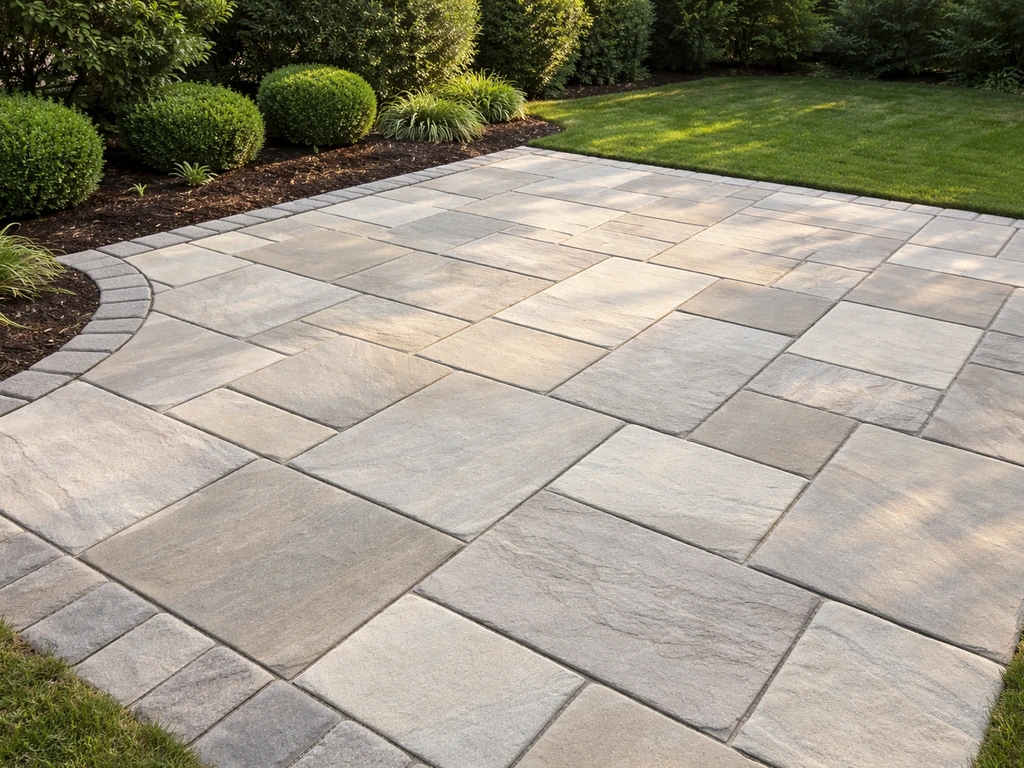
How Much Does a Stone Patio Cost Per Square Foot?
Stone patio cost per sq ft including materials and labor, typical price ranges, size totals, and DIY vs pro breakdown.
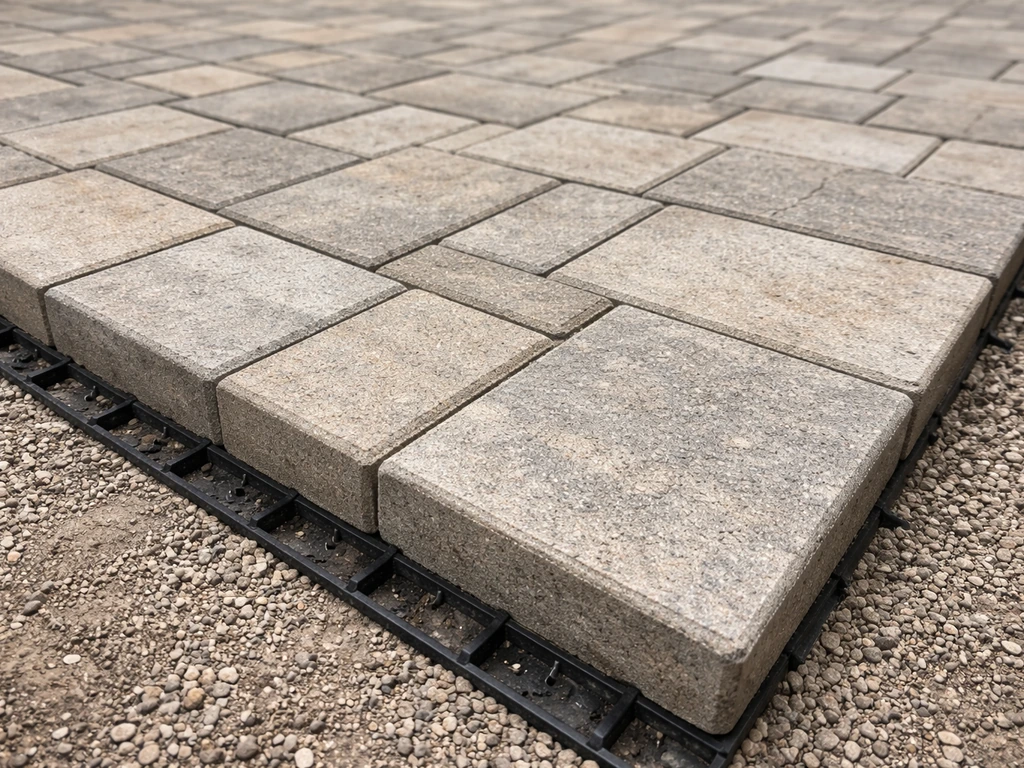
How Much Are Patio Blocks? Costs by Material and Size
Patio block prices by material and size, plus DIY vs pro costs, budgeting tips, and what affects total installation.
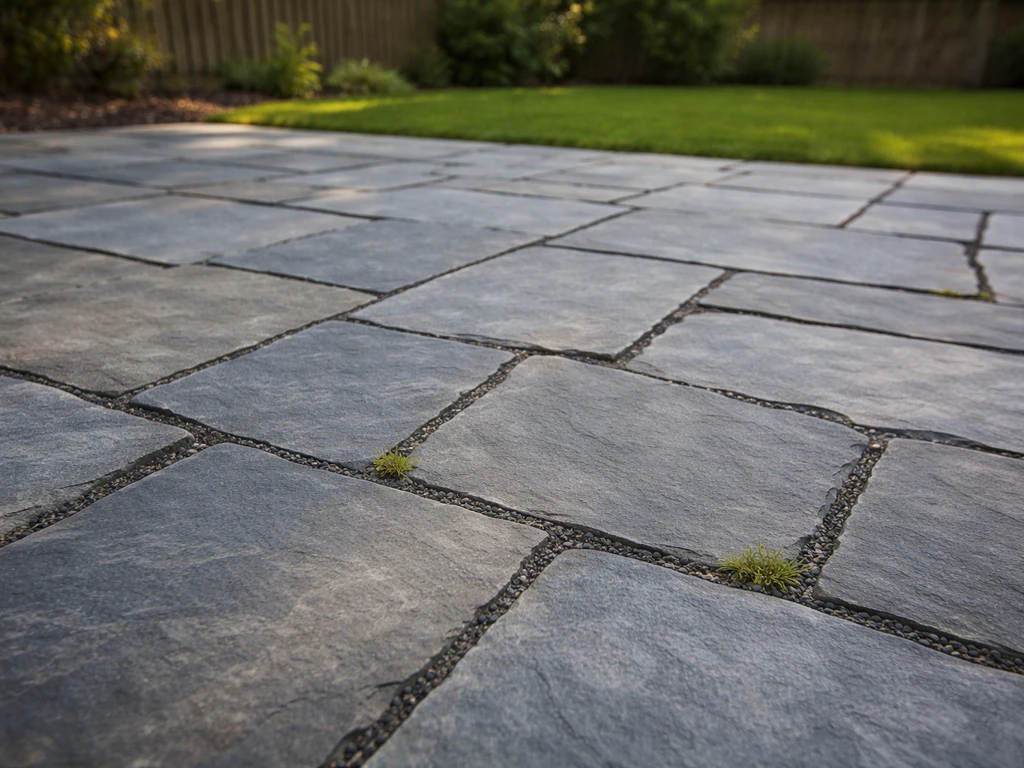
How Much Does a Bluestone Patio Cost? Installed Pricing
Bluestone patio cost breakdown with installed pricing ranges, per sq ft math, and example totals for common patio sizes.