Patio blocks (concrete pavers, brick, flagstone, or similar) typically cost $3. 40–$15 per square foot for materials alone, and $8–$30 per square foot installed depending on what you choose and where you live. RenoCompare also breaks out [flagstone material at about $6. 50 to $10 per square foot](https://www.
How Much Are Patio Blocks? Costs by Material and Size

Felix Carver
12 Jun 2026
renocompare. com/patios/flagstone-patio-cost/) and installation labor at about $11 to $15 per square foot, which is often combined into a total installed range. Ridgeline Outdoor Living also reports recent 2026 California paver patio pricing with a standard base installation range of $12, $30 per square foot and joint-filling polymeric sand at about $0. 50, $1.
50 per square foot Ridgeline Outdoor Living reports recent 2026 California paver patio pricing. For a common 12x12 patio (144 sq ft), that works out to roughly $1,150–$4,300 in all-in costs at the lower end, or $2,500–$7,000+ if you go with premium materials or hire out in a high-cost metro.
The wide range is real, not a cop-out. Material type, your base conditions, regional labor rates, and how complex the pattern is all move the needle significantly.
What patio blocks actually cost per square foot (materials only)
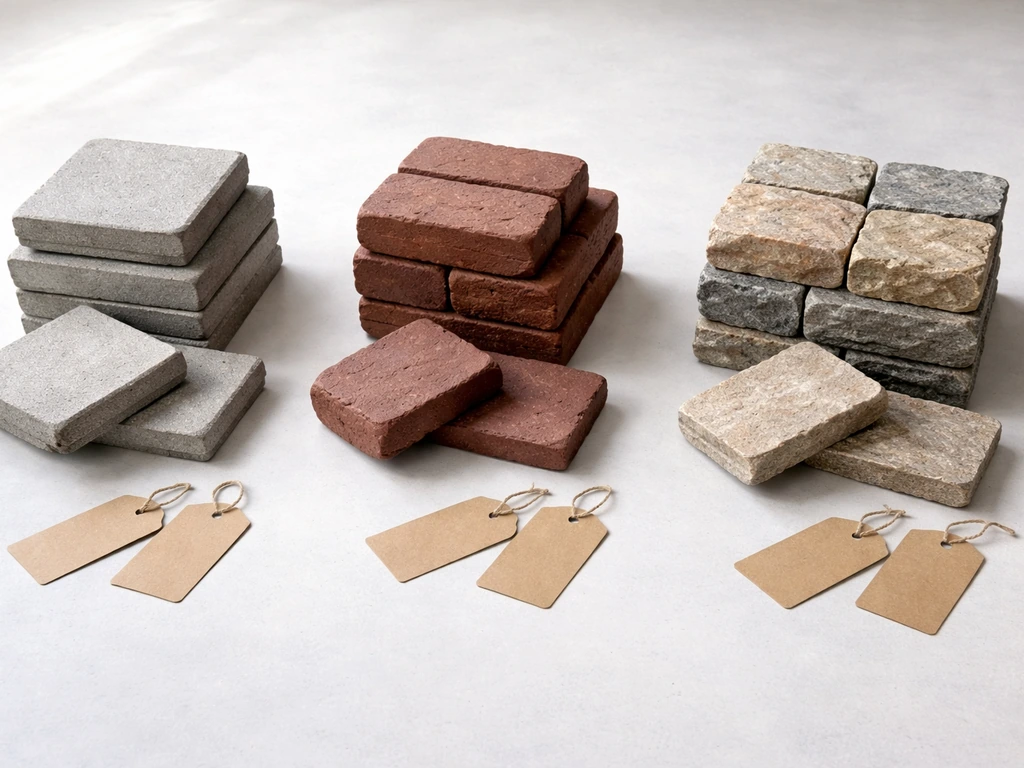
The term 'patio blocks' covers several different products, and the material cost varies quite a bit across them. Concrete pavers are the most common and most affordable starting point. Brick pavers cost more per unit and typically require more cutting labor. Natural stone like flagstone sits at the high end. Here's a realistic material-only snapshot for 2026:
| Material Type | Material Cost (per sq ft) | Notes |
|---|---|---|
| Concrete pavers | $3.40–$6.20 | Most common, widest style selection |
| Brick pavers | $4–$10 | Durable, classic look, labor-intensive cuts |
| Flagstone (random) | $2–$10 | Wide range based on stone type and grade |
| Flagstone (cut/dimensional) | $6–$15 | More uniform, higher cost per sq ft |
| Base materials (gravel, sand, fabric) | $1.40–$2.20 | Required for all paver/block installs |
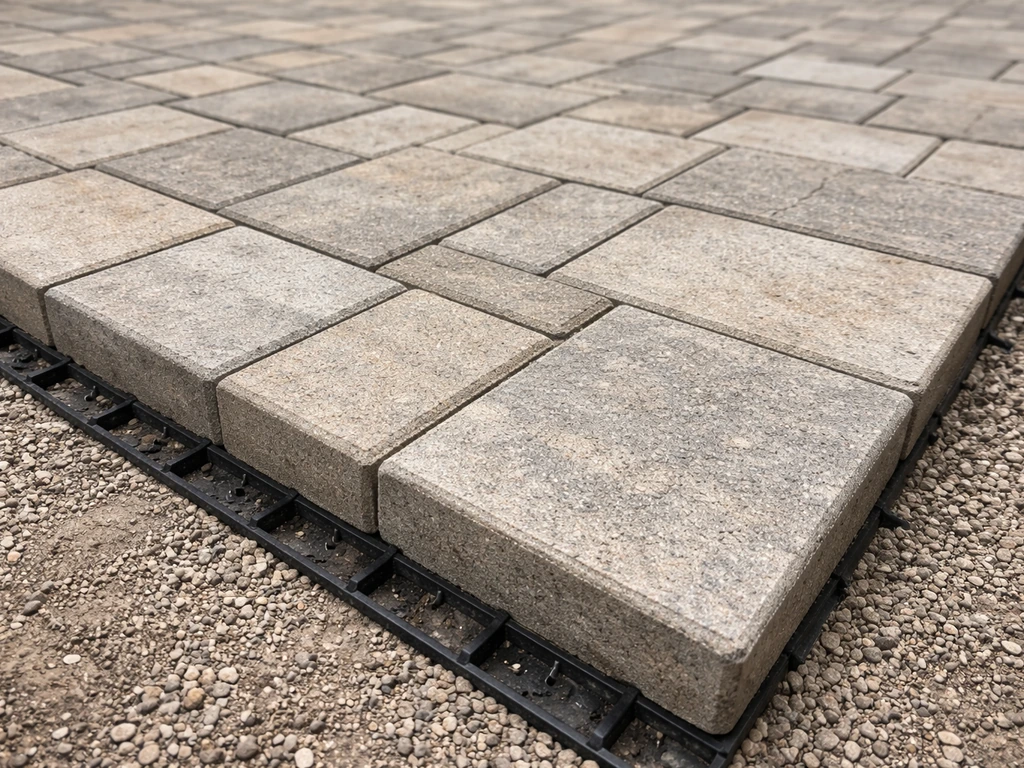
A few things worth noting here. Those base material costs are on top of the paver or block cost itself. Every proper patio block install needs a 4 to 6 inch compacted aggregate base, a 1 inch bedding sand layer, edge restraints, and polymeric sand for the joints. That adds $1.40–$2.20 per sq ft minimum to your material bill before a single block goes down. If someone gives you a material-only quote that skips all that, they're leaving out the stuff that keeps your patio from sinking in three years.
You also need to order more material than your exact square footage. For straight running-bond patterns, plan on 5–10% waste overage. For diagonal or herringbone layouts, bump that to 15–20%. On a 200 sq ft patio in herringbone, that means buying materials for 230–240 sq ft. Not a huge dollar amount at the concrete paver tier, but it adds up with cut flagstone at $10–$15 per sq ft.
Total project cost by patio size
Once you include base prep, materials, and installation labor, here's what common patio sizes typically cost in 2026. These ranges reflect concrete pavers on the low end and natural stone or premium materials on the high end. DIY cost is materials and base prep only (labor not included).
| Patio Size | Square Footage | DIY Cost (materials + base) | Installed Cost (contractor) |
|---|---|---|---|
| 10x10 | 100 sq ft | $480–$840 | $800–$3,000 |
| 12x12 | 144 sq ft | $690–$1,210 | $1,150–$4,300 |
| 16x16 | 256 sq ft | $1,230–$2,150 | $2,050–$7,680 |
| 20x20 | 400 sq ft | $1,920–$3,360 | $3,200–$12,000 |
| 20x30 | 600 sq ft | $2,880–$5,040 | $4,800–$18,000 |
The 20x20 range is wide on purpose. A basic concrete paver patio in a mid-cost market can come in around $3,200–$5,000 installed. That same footprint in cut flagstone with a complex layout in California or the Northeast can hit $10,000–$12,000 or more. Forbes Home's flagstone cost data specifically shows a 400 sq ft flagstone patio landing in the $6,000–$10,800 range just for that material type, which lines up with the higher end of the table above.
Installation cost vs. doing it yourself
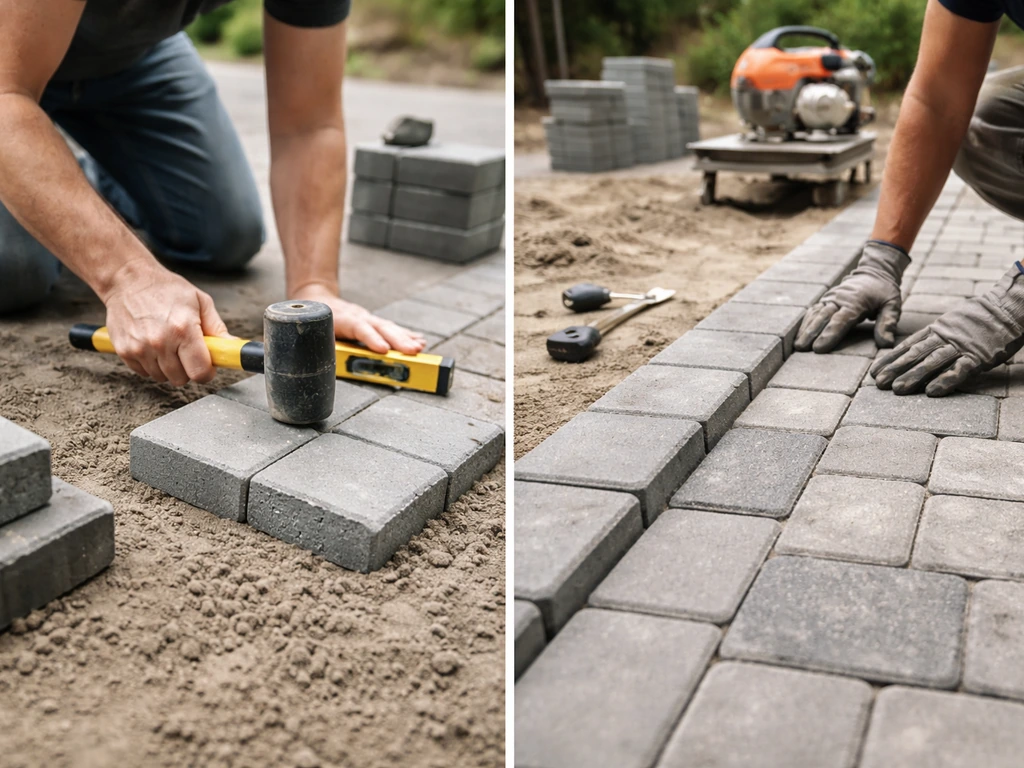
Labor for a professionally installed paver patio runs $6.25–$10.90 per sq ft in 2026, with contractor hourly rates typically falling between $50 and $120 per hour depending on your region and the crew's experience level. That labor cost covers excavation, base compaction, screeding the sand, laying the blocks, cutting edges, and finishing with polymeric sand. On a 200 sq ft patio, you're looking at $1,250–$2,180 in labor alone at those per-sq-ft rates.
DIY is genuinely doable for concrete pavers on a flat site with decent soil. The main costs you can't skip are the base materials and the rental equipment. Plate compactor rental runs about $75–$150 per day, and you'll likely need it twice (once for the base, once after the pavers go down). A ton of Class II road base gravel covers roughly 80–100 sq ft at 4 inches deep. Add bedding sand, edge restraints, and polymeric sand to your list. Budget $1.50–$2.50 per sq ft for all base materials, on top of your paver cost.
What DIY actually saves you (and where it gets complicated)
On a 12x12 concrete paver patio, going DIY vs. hiring out can save you $700–$1,500 in labor. That's meaningful. But the savings shrink fast if you hit unexpected conditions: rocky soil adds excavation time, sloped yards need additional grading, and clay soil typically requires geotextile fabric under the base to prevent the base from migrating into the subgrade over time. Skipping geotextile on clay is one of the most common reasons DIY patios start settling within a few years. It costs $0.15–$0.40 per sq ft and is worth every penny.
- Concrete pavers on flat, stable soil: solid DIY candidate
- Brick pavers with complex patterns: manageable DIY, but expect slower progress and more cuts
- Flagstone with mortar setting: generally better left to pros unless you have masonry experience
- Any project over 400 sq ft: consider hiring out base prep at minimum, even if you lay the pavers yourself
How costs compare across patio block types

If you're still deciding what material to use, the cost differences are significant enough to drive your decision. Here's a practical side-by-side of the major options on an installed-cost basis:
| Block/Paver Type | Installed Cost Range (per sq ft) | Typical 12x12 Project Cost | Key Trade-off |
|---|---|---|---|
| Concrete pavers | $8–$18 | $1,150–$2,600 | Most affordable, huge style variety |
| Brick pavers | $14–$28 | $2,000–$4,000 | Classic look, higher labor due to cuts |
| Flagstone (random) | $15–$22 | $2,160–$3,170 | Natural character, harder to DIY |
| Flagstone (cut/dimensional) | $18–$30 | $2,590–$4,320 | Clean look, premium pricing |
| Stamped concrete | $12–$22 | $1,730–$3,170 | Low maintenance, can't repair sections easily |
Concrete pavers remain the sweet spot for most homeowners. They're repairable (individual pavers swap out easily), durable, and available in styles that closely mimic brick or natural stone at a fraction of the cost. Brick pavers are a step up in character and longevity, but the extra labor from pattern cutting pushes installed costs noticeably higher. Flagstone adds natural variation that's hard to replicate, but installed pricing is where it gets expensive fast, especially for cut flagstone.
If stone patio costs are on your radar, there's a meaningful difference between random flagstone and dimensional/cut stone, both in installed cost and in how formal the finished patio looks. Bluestone patio pricing typically follows the same cost drivers, so your installed total depends on your patio size, site prep, and whether the bluestone is cut or random how much does a bluestone patio cost.
Stamped concrete isn't technically a 'block' product, but it comes up in patio comparisons constantly. It can look like stone or pavers, costs less per sq ft than natural stone, and requires less base prep labor. The downside is that if it cracks, you're patching or resurfacing the whole slab, not swapping a single unit. For patio pricing relative to brick specifically, brick runs at a premium over concrete pavers across nearly every market.
Regional and site factors that move the price
Where you live matters as much as what you choose. Labor rates in high-cost metros like Los Angeles or San Diego can push installed paver patio costs to $21–$36 per sq ft, while mid-market areas in the Midwest or Southeast might come in at $8–$15 per sq ft for the same concrete paver product. South Florida contractors quote $12–$30 per sq ft for professionally installed paver patios. Los Angeles brick paver quotes typically run $9–$28 per sq ft. The same design, spec, and material can literally cost twice as much in San Diego vs. a mid-size Southern city.
Site conditions are the other wildcard. Here are the most common ones that add cost:
- Sloped or uneven yards: require grading and sometimes retaining, adding $500–$2,000+ to prep costs
- Clay or expansive soil: geotextile fabric is essential and excavation is harder, adding $0.50–$1.50 per sq ft
- Rocky soil or buried roots: adds excavation time and potential equipment upgrades
- Limited access (narrow side yards, fenced in): increases labor time even for modest square footage
- Drainage requirements: French drains or permeable base upgrades add $500–$3,000 depending on scope
- Existing concrete removal: demo and haul-away adds $1–$3 per sq ft for the removal itself
Pattern choice also affects total material cost in a way most homeowners don't account for upfront. A 45-degree herringbone layout on a 300 sq ft patio adds a 15% waste factor compared to a basic running bond. On concrete pavers at $5 per sq ft, that's an extra $225 in materials you'd buy and not use. On cut flagstone at $12 per sq ft, it's $540. Always ask your contractor how they handle pattern waste in their quote, and make sure it's itemized.
How to budget before you call a contractor
The most useful thing you can do before getting quotes is build a simple cost estimate yourself. It forces you to think through your priorities and gives you a baseline to measure contractor bids against. Here's how to approach it:
- Measure your intended patio area and calculate square footage (length x width)
- Add your waste factor: 10% for straight patterns, 15–20% for diagonal or herringbone
- Pick a material tier and use the material cost ranges in this article to get a rough material budget
- Add $1.40–$2.20 per sq ft for base materials (gravel, bedding sand, geotextile, edge restraints, polymeric sand)
- If hiring out, add $6–$11 per sq ft for labor, or use the installed per-sq-ft ranges for a total estimate
- Add a 10–15% contingency buffer for site conditions you haven't identified yet
- Get at least three quotes from local contractors and compare scope, not just final price
Questions to ask every contractor before you sign
- What base depth are you spec'ing, and does it meet ICPI minimums (4 inches for pedestrian patios)?
- Does your quote include geotextile fabric, and do you recommend it for my soil type?
- How are you handling drainage, and is any drainage work included or excluded?
- What's the waste factor you're using for my chosen pattern, and is that included in your materials line?
- Does the quote include edge restraints and polymeric sand finishing?
- What's your payment schedule, and is final payment tied to a walkthrough inspection?
- Is demo or haul-away of existing material included if needed?
- What warranty, if any, do you provide on the base prep work?
Low bids that come in 30–40% under the others almost always mean something got left out of scope. Base prep is the most common omission because it's invisible once the pavers go down. A contractor who can clearly explain what depth they're digging to, what base material they're using, and how they're handling drainage is almost always the better choice over the cheapest bid. A mid-range patio project typically runs $8,500–$27,000 for most homeowners once you factor in size and material choices, so getting the base right from the start is worth protecting.
FAQ
When people ask how much are patio blocks, what should the quote include?
It depends on whether you mean materials only (the pavers/blocks plus base and jointing materials) or fully installed. A realistic way to compare quotes is to ask for a line-item total that includes excavation depth, compacted aggregate type, bedding sand thickness, edge restraints, polymeric sand, and removal of existing surfacing (if any).
How much extra should I plan to buy beyond my patio square footage?
Ask for the total number of square feet they’re pricing and how they handle pattern waste. Straight running bond typically uses about 5–10% overage, while diagonal or herringbone often needs 15–20% more material. Ensure the waste percent is explicitly stated, otherwise the cheapest bid can become expensive mid-project.
What’s the minimum base and joint work that should be included in the price?
For most paver patios, a common complete build-up is compacted aggregate (often 4 to 6 inches), then a bedding sand layer (about 1 inch), then the pavers, plus edge restraints and polymeric sand for joints. If a proposal gives a “per sq ft paver” number but not the build-up layers, it is likely missing scope.
Do patio block prices change a lot for clay or drainage-prone yards?
Yes, and it can be a major line item. If you have clay soils or poor drainage, contractors may add geotextile fabric under the base (and sometimes additional drainage provisions). In those cases, you should expect both additional material cost and extra labor for proper grading and fabric placement.
How much do drainage and grading requirements affect the final price?
A proper paver patio needs controlled slope and drainage, often directing water away from the house and toward landscaping or a drain point. If your yard is flat or you have downspout discharge issues, expect adjustments to base grading and sometimes added sub-base materials, which can increase the installed cost.
Why does DIY sometimes cost more than expected even when material prices look low?
Not always. Many DIY cost estimates forget equipment time and replacement/extra trips for materials. Budget for renting a plate compactor for at least two passes (base and after pavers are set), and factor in a wet saw or angle grinder for cutting thick pavers or natural stone where needed.
Does the pattern choice change labor cost, or is it only about material waste?
It can, especially with natural stone or complex layouts. Precision cutting, frequent small pieces, and material handling increase labor. If you want herringbone or diagonal patterns, ask whether the labor rate already includes cutting and how many “difficult cut” areas (like borders or steps) are assumed.
What patio-related extras commonly raise the cost beyond the block price per square foot?
Yes. Edge details, transitions (like from patio to grass or to a walkway), and built-in features (fire pit, grill pad, planters) add cost because they require additional base prep, framing, and often specialty cutting. Ask whether borders, steps, and any connecting paths are counted in the square footage.
How can I sanity-check a contractor quote for patio blocks before I sign?
The best way is to calculate your patio square footage, then multiply by the installed per sq ft rate you’re actually comparing, and then add waste, base preparation, and demo/haul-away if applicable. For example, if a quote is for “installed,” confirm it includes base, joint sand, and compaction, and that it’s not charging separately for excavation depth or disposal.
What are red flags when one quote is much cheaper than the others?
Some contractors price pavers, others price the entire system. If a quote is 30 to 40% lower than comparable bids, it often means base prep depth, edge restraints, geotextile (when needed), or polymeric joint sand were omitted or assumed “minimal.” Ask for a written scope checklist to see what’s missing.
Are there meaningful long-term cost differences between pavers and alternatives like stamped concrete?
Yes, and it changes what “how much are patio blocks” means in practice. Repairable pavers let you swap damaged units, while stamped concrete-like alternatives can require larger patches or full resurfacing if cracking spreads. If long-term replacement risk matters to you, ask how paver units are accessed and replaced and whether the quote includes match options for future repairs.
Next Articles
How Much Does a Bluestone Patio Cost? Installed Pricing
Bluestone patio cost breakdown with installed pricing ranges, per sq ft math, and example totals for common patio sizes.
How Much Should I Expect to Pay for a Patio
Patio cost guide with real price ranges by size and material, full line-item budget, DIY vs install, and quote checklist
How Much Patio Around Pool: Cost, Size, and Budget Guide
Learn how much patio around a pool costs and how to size square feet, materials, extras, and get real bid line items.