
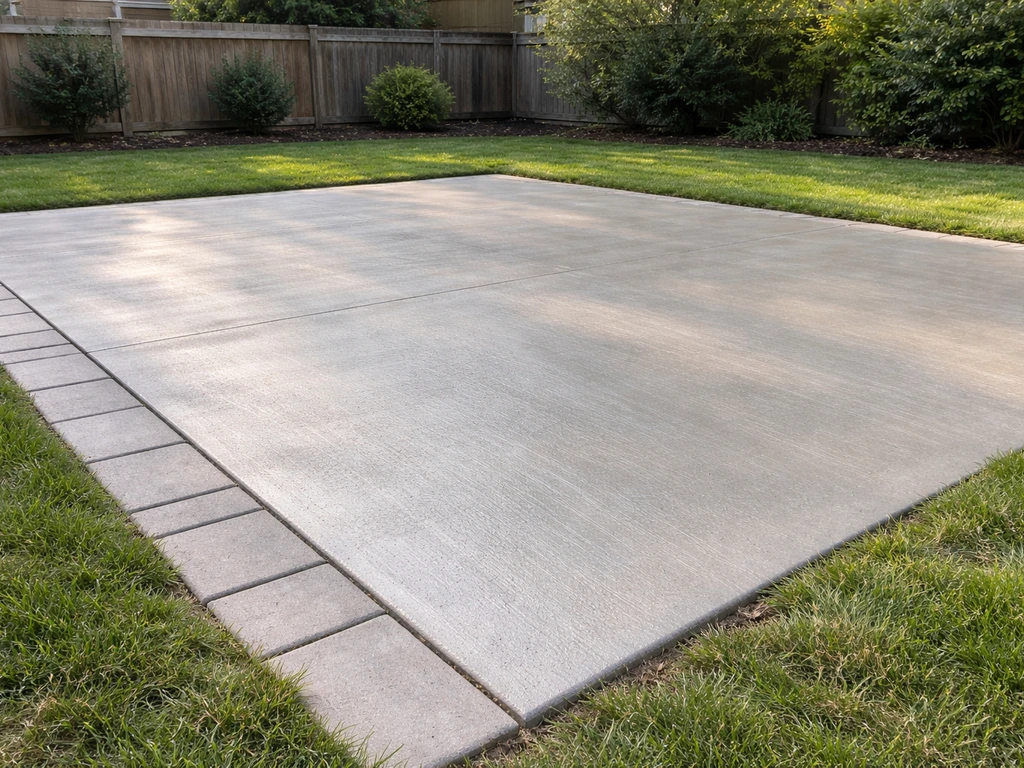
Extending an existing concrete patio typically costs between $8 and $18 per square foot installed, with most homeowners landing somewhere in the $10 to $15 range for a standard broom-finish extension. On a common 10x10 addition (100 sq ft), that works out to roughly $800 to $1,800. A 12x12 (144 sq ft) runs about $1,150 to $2,600, and a 20x20 extension (400 sq ft) generally falls between $3,200 and $7,200 depending on your region, site conditions, and finish choice. If you want stamped or decorative concrete to match a nicer existing slab, budget $15 to $25 per square foot or more. blank" rel="noopener noreferrer">Concrete Network also notes that patio concrete material and finish pricing is typically quoted as a wide installed range, with broom-finished concrete generally on the lower end and stamped or premium finishes costing more.
How Much to Extend Concrete Patio Cost Breakdown


What you're actually paying for when you extend a patio

An extension isn't just pouring fresh concrete next to your existing slab. There's real prep work involved, and that's where a lot of homeowners get surprised by the final invoice. Here's what drives the cost of a typical patio extension project.
Labor
Labor is usually the biggest line item, often representing 40 to 60 percent of the total project cost. Concrete contractors typically charge $3 to $8 per square foot for labor alone, depending on your region and the complexity of the job. This covers site prep, forming, pouring, finishing, and cleanup. More intricate finishes like broom patterns, exposed aggregate, or stamped designs push labor costs toward the higher end because they require more hands and more time.
Concrete supply
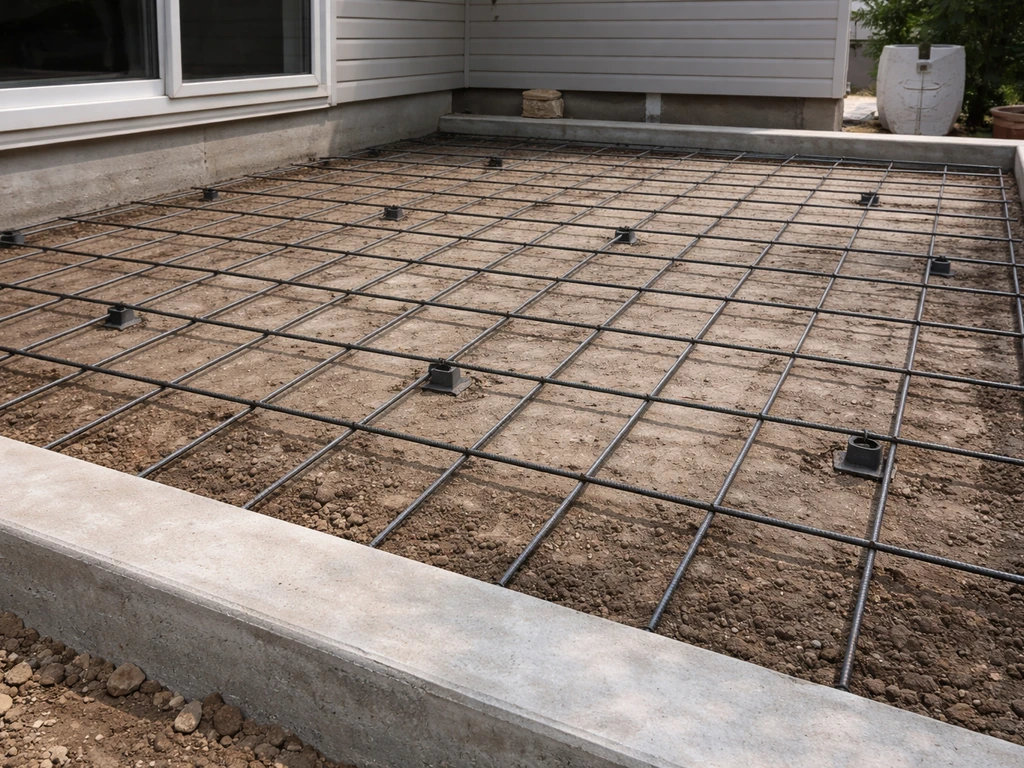
Ready-mix concrete is priced per cubic yard, typically running $130 to $170 per yard in 2026 depending on your local market and mix design. A standard 4-inch patio slab needs about 1.23 cubic yards per 100 square feet. Small extensions often incur a short-load surcharge from the concrete supplier (sometimes $75 to $200 extra) when the pour is under a minimum load, usually 3 to 4 yards. This gotcha can meaningfully inflate the per-square-foot cost on small jobs.
Reinforcement
Most residential concrete patios use either welded wire mesh or rebar (#3 or #4 bar on a grid pattern) to control cracking. Wire mesh adds roughly $0.15 to $0.30 per square foot in materials; rebar grids run a bit more at $0.40 to $0.75 per square foot. For extensions, you also need tie-in reinforcement at the joint where old and new concrete meet. Contractors typically drill into the existing slab edge and epoxy-set dowel bars or rebar stubs every 12 to 18 inches. This step alone can add $100 to $300 to a small extension, but skipping it causes the new slab to sink or separate over time.
Forms and base preparation

Lumber forms to shape the slab edges cost $0.50 to $1.50 per linear foot of perimeter. Base prep (grading, compacting, and adding a gravel sub-base if needed) typically runs $1 to $3 per square foot. If the ground needs significant regrading for drainage or the soil is soft and needs extra compacted gravel, that number climbs. A 4-inch compacted gravel base is standard practice in most regions.
Finishing and sealing
A basic broom finish is included in most contractor quotes. Exposed aggregate, salt finish, or stamped patterns add $3 to $10 per square foot on top of base pricing. Sealing the cured slab is often quoted as a separate line item at $0.50 to $1.50 per square foot, and it's worth doing. Standard practice is to wait at least 28 days after the pour before applying sealer so the concrete has reached adequate cure strength.
Pricing by extension size: 10x10, 12x12, 20x20, and more
Bigger extensions are almost always cheaper per square foot because fixed costs like mobilization, equipment, and minimum concrete loads get spread over more area. Here's a realistic breakdown of what to expect at common extension sizes in 2026, using a broom-finish baseline and a stamped-finish upgrade range.
| Extension Size | Square Feet | Broom Finish (Installed) | Stamped/Decorative (Installed) |
|---|---|---|---|
| 10x10 | 100 sq ft | $800 – $1,800 | $1,500 – $2,800 |
| 10x12 | 120 sq ft | $960 – $2,160 | $1,800 – $3,300 |
| 12x12 | 144 sq ft | $1,150 – $2,600 | $2,200 – $4,000 |
| 12x20 | 240 sq ft | $1,920 – $4,300 | $3,600 – $6,600 |
| 16x20 | 320 sq ft | $2,560 – $5,750 | $4,800 – $8,800 |
| 20x20 | 400 sq ft | $3,200 – $7,200 | $6,000 – $11,000 |
Keep in mind these ranges assume a relatively flat site, decent soil, and no demolition of existing hardscape. If your project involves any of those complications, the actual cost will lean toward or beyond the upper end.
DIY vs. hiring a contractor
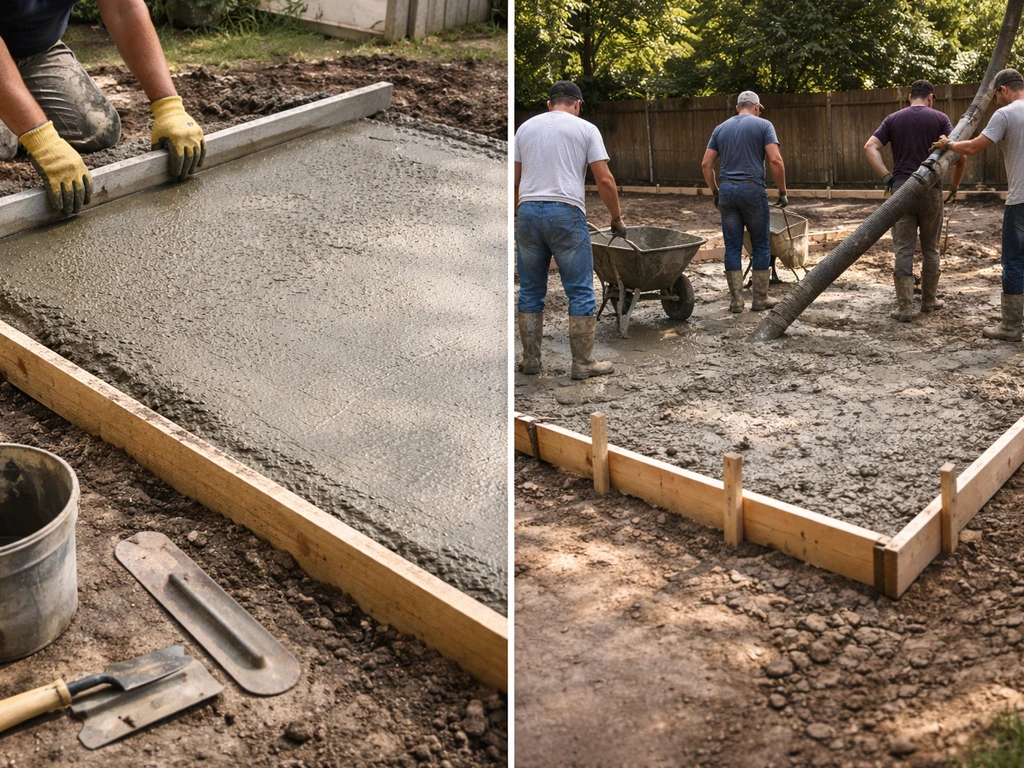
On a small extension, going DIY can cut your cost roughly in half since you're eliminating the $3 to $8 per square foot labor charge. On a 10x10 extension, that's potentially $300 to $800 in savings. Materials alone for a basic broom-finish 100-square-foot extension typically run $400 to $700, covering concrete, rebar or mesh, form lumber, and gravel.
That said, there are several situations where DIY on a concrete extension is genuinely risky or low value. Concrete work has an unforgiving pace: once the truck shows up, you have maybe 90 minutes to place, screed, and finish before it stiffens. If you've never poured a slab before, a 100-square-foot extension is doable with a helper and careful planning, but a 20x20 (400 sq ft) is a different story. Larger pours move fast and finishing a big slab well requires practice.
- DIY makes sense for small flat extensions (under 150 sq ft) with no drainage complications and basic broom finishes.
- DIY is risky if you need to match a stamped, colored, or exposed aggregate finish on the existing slab — getting a color or texture match right takes professional experience.
- Avoid DIY if the site has significant slope, soft soil, or drainage issues that require proper grading. A slab that settles or cracks because of poor base prep will cost more to fix than the original labor savings.
- The tie-in detail (drilling and setting dowels into the existing slab) can be DIY'd with a hammer drill, epoxy anchor kit, and the right technique, but it's easy to skip or do incorrectly, leading to slab separation.
- Permit requirements in some municipalities require inspections that can complicate a DIY pour if you're not familiar with local code.
What makes your price go up or down
Where you live
Labor rates vary significantly by region. Concrete contractors in the Northeast and on the West Coast typically charge 20 to 40 percent more than contractors in the Midwest or Southeast. A 200-square-foot extension that costs $2,000 in Atlanta might run $2,800 to $3,000 in Boston or Seattle. Get at least three local quotes before assuming any national average applies to your specific market.
Site access and conditions
If a concrete truck can pull right up to the pour location, you're fine. If the truck has to pump concrete over a fence, around a pool, or down a steep slope, expect a pumping surcharge of $400 to $800 or more for smaller jobs. Similarly, if the ground is soft, has existing roots, or has drainage problems that require extra grading and gravel, add $1 to $3 per square foot to the base prep estimate.
Demolition and removal
If you need to remove existing concrete, pavers, or landscaping from the extension footprint, budget an extra $2 to $6 per square foot for demolition and haul-away. Removing concrete specifically involves saw-cutting, breaking, and disposal, which adds up fast. This is a separate cost consideration from a straight extension onto bare ground. If you're comparing extension costs to a full concrete removal and replacement project, that's a meaningfully different scope.
Permits
Many municipalities require permits for concrete flatwork above a certain size (often 200 square feet or structures near property lines). Permit fees typically run $50 to $300, but the bigger cost is time, permits add days or weeks to the project schedule. Ask your contractor upfront whether your project requires a permit and whether permit procurement is included in their quote.
Existing slab condition
If your existing slab is cracked, settled, or has a heaved edge, a new extension tied into it can inherit those problems. Contractors may recommend repairing or leveling the existing slab edge before extending, which adds cost. At minimum, make sure the existing slab is stable before getting quotes so contractors are pricing the same scope.
Timeline, process, and how to get a solid quote
A typical residential concrete patio extension takes one to two days for the physical work on most mid-size projects. Here's how the process usually flows, from first call to walking on the finished slab.
- Site evaluation and quote: Contractors measure the area, assess soil/drainage, and check existing slab condition. This takes 30 to 60 minutes on-site.
- Permitting (if required): Add 1 to 3 weeks depending on your municipality.
- Site prep and forming: Excavation, grading, gravel base compaction, and form-setting typically takes half a day to a full day.
- Tie-in drilling: The contractor drills into the existing slab edge and sets epoxy dowels or rebar stubs before the pour.
- Pour day: The concrete truck arrives, concrete is placed and screeded, and the surface is finished. Most residential pours are complete in 3 to 6 hours.
- Curing: The slab needs to stay damp or be covered with curing compound for at least 7 days. At 7 days it can take light foot traffic; full cure and load capacity is reached at 28 days.
- Sealing (optional but recommended): Applied after the 28-day mark for best adhesion and protection.
When you're getting contractor quotes, ask for itemized bids that separate labor, materials, base prep, forming, and any add-ons like sealing or decorative finishing. This is the only way to compare quotes apples-to-apples. A quote that just says '$2,400 for a 12x12 patio extension' tells you nothing about what's included. Also confirm whether the quote includes the tie-in dowel work, haul-away of excavated soil, and the concrete supplier's short-load fee if applicable. These are the three most common items that show up as surprises on the final invoice.
Extending with concrete vs. switching to pavers or stone
Sometimes matching an existing concrete slab is more complicated or expensive than it looks, especially if the original slab has a stamped or colored finish. In those cases, it's worth at least pricing out alternative materials for the extension. Pavers and natural stone give you more flexibility in appearance and can actually be easier to match visually since you're creating an obvious intentional transition rather than trying to replicate a specific finish.
| Material | Installed Cost (per sq ft) | Pros for Extensions | Cons for Extensions |
|---|---|---|---|
| Plain concrete (broom finish) | $8 – $15 | Lowest cost, seamless look if matched well, durable | Hard to match existing color/texture; cracking risk at joint |
| Stamped/decorative concrete | $15 – $25+ | Premium look, can complement existing slab | Expensive; color matching existing stamped slabs is difficult |
| Concrete pavers | $10 – $20 | Easy visual transition, no cracking risk at joint, DIY-friendly | Higher material cost than plain concrete; base prep still needed |
| Natural stone/flagstone | $20 – $40+ | High-end look, clear design distinction from existing slab | Most expensive option; requires skilled labor for fitting |
| Brick pavers | $12 – $25 | Classic look, durable, easy to repair | Can feel visually disconnected from a plain concrete slab |
For most homeowners who just want more usable patio space at the lowest cost, plain or broom-finish concrete is the practical choice if the existing slab is also plain concrete. HomeGuide also breaks down installed concrete patio pricing ranges by finish type and notes that broom-finished patios typically land in a mid single-digit to low teens per square foot range, with stained, stamped, and other decorative options costing more broom-finished concrete patios typically cost in a mid single-digit to low teens $/sq ft range. The joint between old and new can be managed with a control joint or expansion strip that actually looks intentional. If your existing patio has a stamped or colored finish that you'd struggle to match, pavers are genuinely worth pricing because the visual transition can look cleaner and intentional rather than like a botched repair.
One thing to keep in mind: if you're already thinking about resurfacing or recoating the existing slab to refresh its look, that changes the math. If you are only resurfacing the existing concrete patio, you will also want to estimate resurfacing costs per square foot before deciding whether a full extension is worth it resurface concrete patio. You could resurface the entire existing slab and extend with matching new concrete at the same time, which often works out cheaper than trying to match finishes on the extension alone. Similarly, if the existing slab is in poor shape, a full removal and new pour might cost less in the long run than an extension tied into a compromised base.
Estimating your own extension cost in 5 minutes
Here's a quick way to build a rough budget before you call contractors. Measure your planned extension and multiply square footage by $10 (low end, flat site, basic finish) or $15 (more realistic mid-range). To get a more accurate estimate, also factor in how much it costs to pour a cement patio based on your size and finish how much does it cost to pour a cement patio. Add $500 for mobilization and short-load fees if your extension is under 150 square feet. If you need demolition or removal of existing material, add $2 to $4 per square foot. If you want a decorative finish, add $5 to $10 per square foot on top of the base estimate. That gives you a working budget range that should align reasonably well with the quotes you'll receive, and it lets you walk into contractor conversations knowing whether a quote is in the right ballpark or suspiciously high.
FAQ
Does the thickness or condition of my existing patio change how much to extend a concrete patio?
If the slab you’re tying into is less than about 6 to 8 inches thick, or you can see it’s cracked through and through, most contractors will treat the project as a repair-plus-extension, not a simple add-on. The extra work to stabilize the edge and match reinforcement can push cost beyond typical per-square-foot ranges.
How can I tell if a contractor is including proper tie-in reinforcement for my concrete patio extension?
The “existing slab edge” rule matters. For a true extension, you usually need dowels or rebar stubs drilled and epoxied into the old concrete at regular spacing (often 12 to 18 inches). If your contractor plans to just pour up to the joint without that tie-in, the bid may look cheaper but it increases the risk of separation and differential settling.
Will grading and drainage requirements increase the cost to extend a concrete patio?
Yes, drainage can add cost even if your yard looks flat. If water will run toward your house or toward existing slopes, contractors may need additional grading and a thicker or expanded gravel base in certain areas. Plan for higher base-prep line items if the extension changes how runoff behaves.
What’s the short-load fee, and how do I prevent it from inflating my concrete patio extension price?
If your project is small enough that the supplier minimum load applies, you can see a short-load fee that effectively raises your per-square-foot price. A practical way to avoid surprises is to ask the contractor to list the expected concrete delivery volume and whether the quote assumes minimum-load charges.
How do I estimate the extra cost if I want the extension to match an existing stamped concrete patio?
Stamped or exposed aggregate can cost more, but the bigger risk is how well it matches the existing pattern and curing colors. Ask whether the contractor can demo a small test area, or how they’ll handle seams, joint placement, and whether the same stamping tools and release agents are used.
When should I seal an extended concrete patio, and what can go wrong if I seal too soon?
Sealing timing is a common mistake. Applying sealer too early can trap moisture and reduce performance, so many contractors wait at least 28 days for typical residential slabs. If winter weather is involved, ask about curing protection and whether the schedule changes the sealer plan.
Why do concrete patio extension quotes sometimes differ even when the square footage is the same?
You generally need to match the height and finish of the existing slab to avoid trip edges. If the existing patio is older and has settled, the contractor might recommend leveling, a bond/repair patch, or a partial grind before extending. That “make it level” step is often not included unless specifically called out.
Do I always need a permit to extend a concrete patio, and what situations trigger it?
Permits are usually about impact and location, not just size. Even if your extension is under a typical threshold, projects near property lines, over easements, or that change site grading may still require approval. Ask your contractor (and if needed, your local building department) what triggers a permit for your specific address.
How do weather conditions change the cost and timeline of a concrete patio extension?
Yes, cold weather and hot weather affect finishing time and can increase labor or require schedule changes. In extreme heat, contractors may adjust curing methods and sometimes finishing sequencing, while in freezing conditions they may use thermal blankets or delay the pour. Ask how they manage cure and weather windows for your installation date.
If I DIY my concrete patio extension, what are the highest-risk mistakes that usually cost the most to fix?
DIY can be workable for smaller extensions, but the biggest failure point is finishing and joint layout, not pouring. If you do it yourself, ensure you use proper sub-base compaction, correct slab thickness, reinforcement, and a planned joint strategy (control joints or an expansion strip) so the new section cracks where you expect.
How do truck access and concrete placement logistics affect the final price?
If access is tight, the truck may not be able to reach the pour location, which can require pumping, shorter hose runs, or extra labor for placement. Ask whether the quote assumes a direct line from the truck to the formwork and whether any pumping or wheelbarrow time is included.
Should I repair or level the existing patio before extending it with new concrete?
If the existing patio has a heaved or poorly bonded edge, extending onto it can transfer problems and lead to cracking at the joint. A good next step is to ask for a joint inspection plan, whether they’ll repair that edge first, and whether they’re pricing the same scope after any necessary patching or leveling.
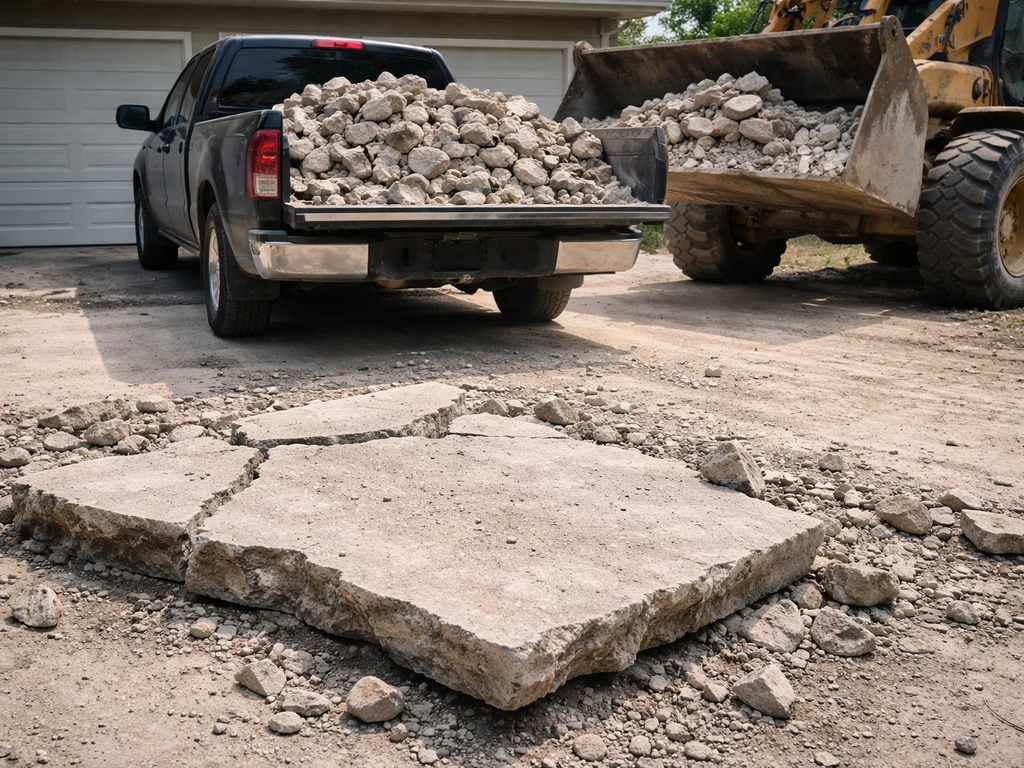
Real cost ranges to remove a concrete patio by size, key price drivers, disposal fees, and DIY vs pro guidance.
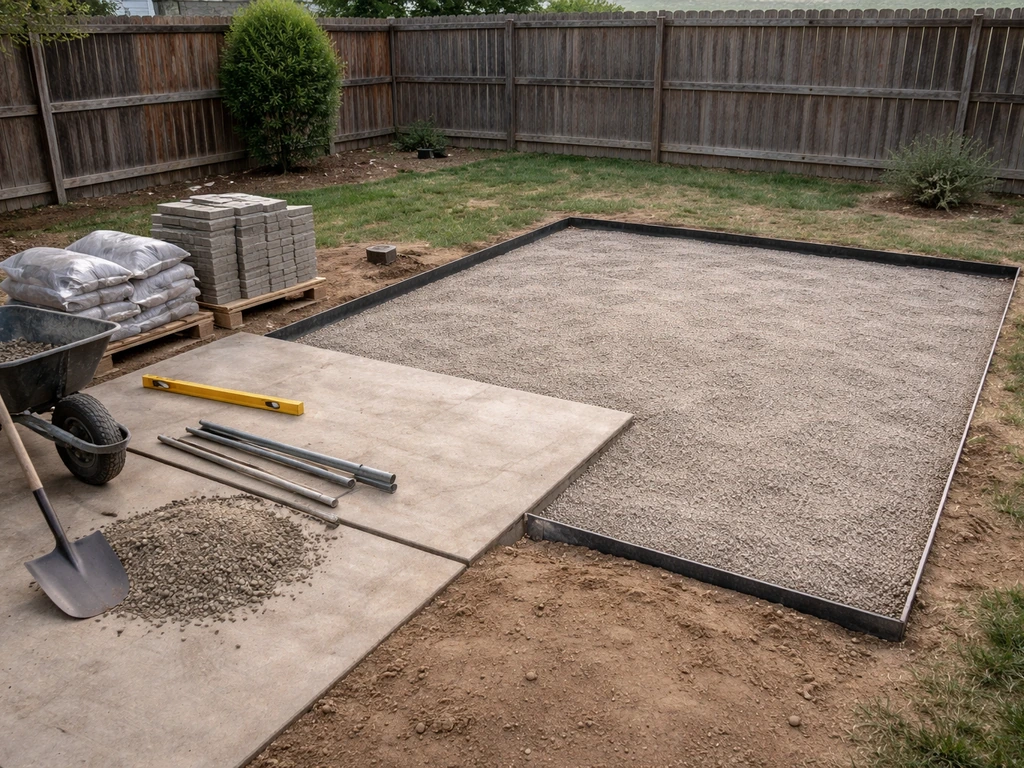
Patio extension costs in 2026: pricing for uncovered and covered 10x10 to 20x20 using concrete, pavers, stone, brick.
Get 2026 patio pricing ranges to pour cement, cost per size, material labor breakdown, DIY vs contractor, and estimating