
Patio slabs typically cost between $8 and $32 per square foot installed, depending on the material, your location, and site conditions. Plain concrete slabs sit at the lower end ($8–$22/sq ft installed), mid-range pavers and paving tiles run $10–$25/sq ft, and natural stone or flagstone can push $15–$32 or more. Material-only costs are considerably lower, usually $2–$15/sq ft depending on what you choose, so labor and base prep often make up the larger share of the bill.
How Much Are Patio Slabs: Costs by Type & Size Guide

Felix Carver
27 Jul 2026
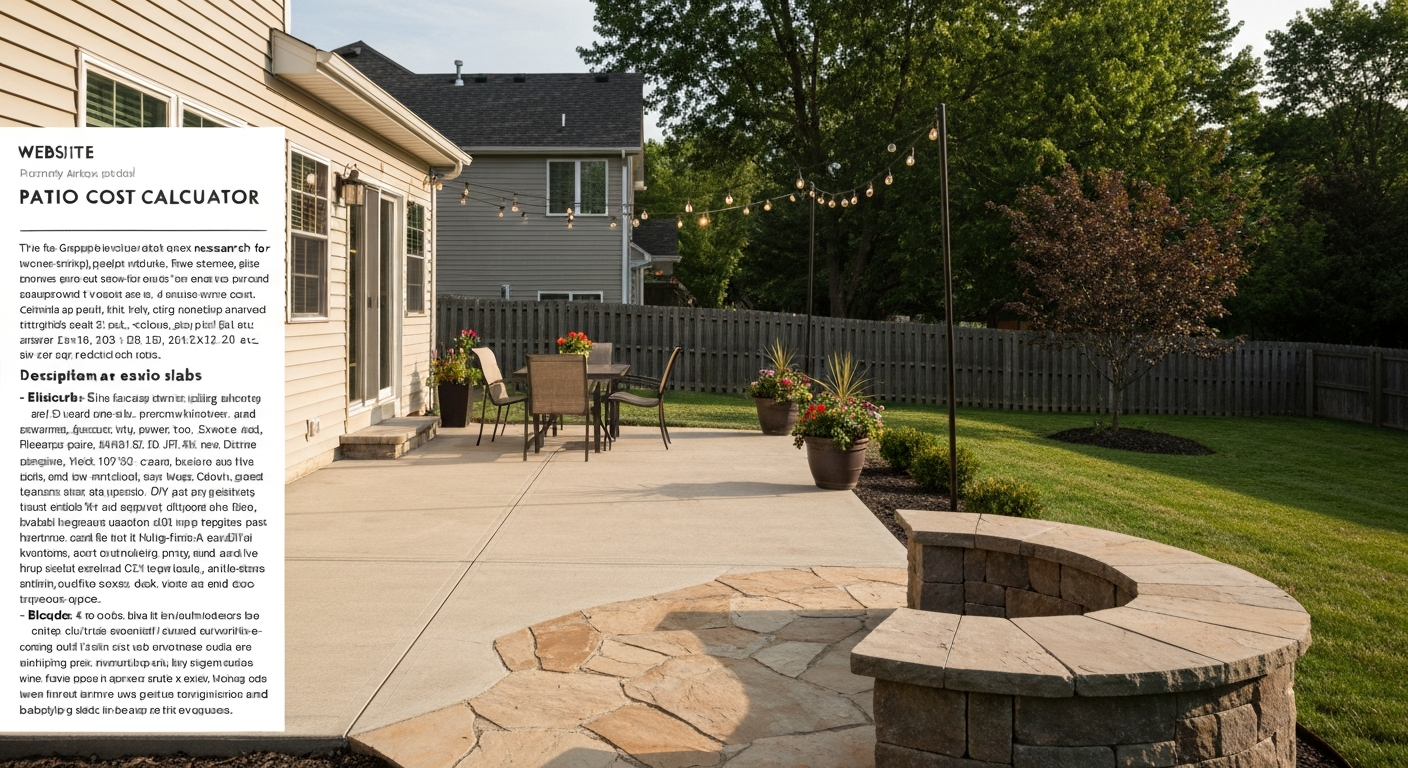
What this guide covers and how to use it
This guide breaks down patio slab pricing for homeowners who are either planning a DIY project or getting ready to call contractors for quotes. You'll find per-slab and per-square-foot price ranges for the most common slab materials, full cost breakdowns (materials, base prep, labor, jointing, sealing, and waste removal), and sample installed estimates for the most popular patio sizes: 10x10, 12x12, and 20x20. Where relevant, it also covers the cost of re-laying an existing patio and flags the hidden costs that tend to catch homeowners off guard. Use the quick-lookup table to ballpark your budget, then read the material-specific sections to refine those numbers before you talk to anyone.
Quick answer: what patio slabs typically cost
Here is a fast-reference breakdown before we get into the detail. These are installed costs (materials plus labor plus base prep) based on 2026 national pricing data. They assume reasonably accessible, flat ground with no major excavation surprises.
| Slab type | Per sq ft (installed) | Per slab (approx.) | Notes |
|---|---|---|---|
| Plain concrete slab | $8–$22 | N/A (poured) | Broom finish; stamped adds cost |
| Concrete paving slabs/tiles | $10–$20 | $1–$8 per unit | Depends on slab size and finish |
| Concrete pavers (interlocking) | $8–$25 | $0.78–$3+ per unit | More units needed per sq ft |
| Stamped concrete | $8–$28 | N/A (poured) | Pattern and color affect price |
| Flagstone / natural stone | $15–$32+ | $2–$15/sq ft material only | Dry-laid or mortar-set options |
Cost by patio size: quick lookup table
The table below gives ballpark installed cost ranges for three of the most common residential patio sizes. The low end assumes a basic finish with competitively priced local labor; the high end assumes a more complex design, quality materials, or a higher-wage metro area.
| Patio size | Sq ft | Plain concrete | Concrete pavers | Paving slabs/tiles | Stamped concrete | Flagstone |
|---|---|---|---|---|---|---|
| 10x10 | 100 | $800–$2,200 | $800–$2,500 | $1,000–$2,000 | $800–$2,800 | $1,500–$3,200+ |
| 12x12 | 144 | $1,150–$3,170 | $1,150–$3,600 | $1,440–$2,880 | $1,150–$4,030 | $2,160–$4,600+ |
| 20x20 | 400 | $3,200–$8,800 | $3,200–$10,000 | $4,000–$8,000 | $3,200–$11,200 | $6,000–$12,800+ |
These ranges do not include extras like drainage work, major grading, permit fees, or demolition of an existing surface. Add $1–$6 per square foot if you need to remove and haul away old concrete or pavers before starting.
Why the price ranges are so wide
The biggest driver of cost variation is where you live. Labor is not a fixed number. BLS wage data shows that masonry trade wages range from roughly $22 per hour in lower-cost states like Florida to $38–$48 per hour in high-wage metros like Boston. That difference alone can add $3–$8 per square foot to a finished quote. Beyond that, your specific site conditions play a large role.
- Access: a narrow side gate or steep driveway means more manual labor and longer job times
- Slope and grading: a sloped yard requires more excavation and sometimes drainage work
- Soil type: expansive clay or poorly draining subgrade may need geotextile fabric plus a deeper base (6–10 inches instead of the standard 4 inches recommended by ICPI for pedestrian areas)
- Existing surfaces: removing and hauling old concrete typically costs $1–$6 per sq ft on top of the new install
- Pattern and finish complexity: simple grid layouts are faster to install than herringbone or fan patterns
- Permit requirements: some municipalities require a permit for patios over a certain size, adding fees and inspection time
The base and sub-base prep alone commonly adds $2–$5 per square foot to a project. That compacted gravel layer (crushed stone delivered at roughly $20–$60 per ton depending on your area) is not optional if you want slabs that stay level and drain properly. Skipping it is the single most common reason DIY patios fail within a few years.
Concrete slabs: what you'll actually pay
A plain poured concrete patio is almost always the most cost-effective starting point. Installed costs run $8–$22 per square foot in 2026, with most straightforward residential projects landing in the $10–$15 range. The lower end covers a basic 4-inch broom-finish slab on prepped ground; the higher end reflects thicker slabs, colored concrete, or difficult access.
Sample estimates for concrete slabs
| Patio size | Sq ft | Low estimate | Mid estimate | High estimate |
|---|---|---|---|---|
| 10x10 | 100 | $800 | $1,250 | $2,200 |
| 12x12 | 144 | $1,150 | $1,800 | $3,170 |
| 20x20 | 400 | $3,200 | $5,000 | $8,800 |
These estimates assume standard broom-finish concrete with a basic 4-inch base. Installation typically includes excavation, compacted gravel base, vapor barrier or rebar depending on region and contractor practice, the pour itself, and finishing. What they do not include: decorative finishes, steps, retaining walls, or drainage upgrades.
One thing to know about concrete slabs: once poured, they are permanent. Any cracking or heaving typically means grinding, patching, or full removal. Removal and haul-away of a failed slab runs $1–$6 per sq ft using a demolition crew with a mini-excavator, plus dumpster rental ($220–$700 per week for a 10–20 yard roll-off). Factor that eventual cost into your decision if longevity is a concern.
Paving slabs and tiles: per-slab and per-square-foot costs
Paving slabs (sometimes called patio tiles or paving tiles) are pre-cast or natural-stone units set on a prepared base, either dry-laid over compacted sand or mortar-bedded. Concrete paving slabs in standard sizes (roughly 12x12, 16x16, or 24x24 inches) are a popular mid-range option. Material costs alone typically run $1–$8 per slab depending on size, thickness, and finish; installed, expect $10–$20 per square foot for most concrete paving slab projects.
The big variable with paving slabs is the setting method. Dry-laid slabs over a sand-and-gravel base cost less to install (and easier to relay if a slab sinks), while mortar-bedded installs add labor time and material cost but produce a more rigid surface. If you are thinking about the cost to re-lay a patio later, dry-laid slabs are far more forgiving since individual units can be lifted and releveled without disturbing the whole surface.
Installation notes for paving slabs
- Base: minimum 4 inches of compacted crushed stone plus 1 inch of coarse sand bedding layer
- Edge restraints: plastic or metal edging required along all free edges to prevent lateral creep
- Joint fill: polymeric sand (50-lb bags run $10–$20 each, covering roughly 10–25 sq ft per bag depending on joint width) is the standard choice for weed and ant resistance
- Slope: slabs should be laid at a 1–2% fall away from the house for drainage
- Waste factor: order 5–10% extra material to account for cuts and breakage
Concrete and clay pavers: unit pricing and what it adds up to
Concrete interlocking pavers are sold by the piece or by the pallet. Individual units like the standard 4x8 inch Holland paver retail for as little as $0.78 per piece at national home improvement stores, which works out to roughly $3.50–$4.00 per square foot in material cost at that size and price point. Larger or more decorative pavers cost more per unit. Patio-kit pallets covering around 100 sq ft run approximately $878 at retail, putting kit material costs at around $8.78 per sq ft before any installation labor.
Installed paver patios (contractor supplied and installed) run $8–$25 per square foot in 2026, with most mid-range projects landing $12–$18/sq ft. The wide range reflects paver type, pattern complexity, and regional labor costs. A basic running-bond pattern in standard gray concrete pavers is at the lower end; a multi-color tumbled paver in a fan or herringbone pattern with soldier-course borders is closer to the top.
Jointing and sealing costs
Jointing and sealing are often quoted separately or left out of initial contractor estimates, so watch for this. Polymeric sand for joint filling costs $10–$20 per 50-lb bag; budget roughly $0.50–$1.50 per sq ft in material just for jointing. Professional sealing (clean, re-sand, and seal) typically runs $0.75–$3.00 per sq ft when done by a contractor. If you DIY the sealing, the sealer product itself costs roughly $0.15–$0.30 per sq ft. Sealing is recommended every 3–5 years to protect joint sand and surface finish.
ICPI base requirements and why they matter to your quote
The Interlocking Concrete Pavement Institute recommends a minimum 4-inch compacted aggregate base for pedestrian paver applications, with 6–10 inches or more for frost-susceptible soils or heavier loads. If a contractor quotes you without specifying base depth, ask. Skimping on base thickness is how patios end up uneven in 3 years. The aggregate base plus delivery typically adds $2–$5 per sq ft to the total project cost, and that should be in any legitimate quote.
Stamped concrete: finish levels and what they cost
Stamped concrete is poured like a standard slab but impressed with textured molds while still wet, and typically colored with integral pigment, dry-shake hardener, or acid stain. It can mimic flagstone, cobblestone, brick, or wood plank patterns. The installed cost range runs $8–$28 per square foot, with most projects quoted around $12–$18/sq ft for a single color and pattern. More complex work pushes higher.
How finish level affects the price
| Finish level | Typical installed cost | What's included |
|---|---|---|
| Basic stamped (single pattern, no color) | $8–$12/sq ft | One stamp pattern, standard gray concrete |
| Mid-range (pattern + integral color) | $12–$18/sq ft | Stamped pattern, one or two colors, basic sealer |
| Premium (multi-color, borders, antique finish) | $18–$28/sq ft | Multiple colors, accent staining, decorative borders, high-gloss sealer |
| High-end custom | $25–$32+/sq ft | Custom patterns, multiple color layers, saw-cut borders, premium sealer |
Stamped concrete looks great when freshly sealed but needs resealing every 2–3 years to maintain color and protect the surface. Resealing a stamped patio professionally runs $1.50–$3.50 per sq ft. It also cracks over time the same as any concrete slab, and cracks in stamped concrete are more visually obvious than in pavers where individual units flex slightly. That is a trade-off worth thinking through before you commit.
Sample stamped concrete estimates by patio size
| Patio size | Sq ft | Basic finish | Mid-range finish | Premium finish |
|---|---|---|---|---|
| 10x10 | 100 | $800–$1,200 | $1,200–$1,800 | $1,800–$2,800 |
| 12x12 | 144 | $1,150–$1,730 | $1,730–$2,590 | $2,590–$4,030 |
| 20x20 | 400 | $3,200–$4,800 | $4,800–$7,200 | $7,200–$11,200 |
DIY vs. professional installation: where you save and where you gamble
For concrete pavers and paving slabs, DIY installation is genuinely achievable for a motivated homeowner on flat ground with no drainage complications. Labor is typically 40–60% of a contractor's total quote, so the savings can be real. On a 20x20 paver patio, that might mean saving $3,000–$5,000. The catch is that base prep is hard physical work (excavation, compaction) and mistakes are expensive to fix later. Renting a plate compactor runs about $80–$130 per day, and you'll need it. For a detailed cost breakdown specific to installing pavers, see our guide on how much to lay patio pavers.
Poured concrete and stamped concrete are genuinely not DIY-friendly. Concrete work requires a mix truck, correct timing on the pour, immediate and skilled finishing, and stamping before the surface sets. Even experienced homeowners almost always get a better result by hiring a crew for those jobs. The same applies to any project involving significant grading, drainage work, or retaining structures.
| Task | DIY realistic? | Typical savings vs. pro | Main risk |
|---|---|---|---|
| Paving slab / paver install (flat, simple) | Yes | 40–55% of labor cost | Poor base prep leads to settling |
| Poured concrete slab | Not recommended | Minimal (you still need a truck) | Bad finish, cracking, liability |
| Stamped concrete | No | N/A | Pattern timing is unforgiving |
| Flagstone dry-laid | Yes (experienced) | 30–50% of labor cost | Uneven surface, drainage errors |
| Excavation and grading | Partial | Variable | Drainage and slope errors are costly |
The hidden costs that inflate real-world quotes
Most homeowners get surprised by at least one of these. Build them into your budget before you start comparing contractor quotes so you are not caught off guard.
- Demolition and removal: if you have an existing slab or old patio, removal and haul-away adds $1–$6 per sq ft. A 20x20 old patio could add $400–$2,400 before new work even begins.
- Dumpster rental: residential roll-off dumpsters run $220–$700 per week for 10–20 yard containers, depending on your location and weight limits.
- Gravel base delivery and compaction: compacted base typically adds $2–$5 per sq ft to the total; on large projects this can be several thousand dollars.
- Permits: check with your municipality. Some areas require permits for patios over a set size or attached to a structure.
- Edge restraints and borders: decorative borders or soldier-course edging add $3–$8 per linear foot.
- Drainage and grading: if your yard slopes toward the house or has heavy clay soil, you may need a French drain or swale, which can add $500–$3,000+ depending on complexity.
- Sealing and jointing: often quoted separately or not at all in initial estimates. Budget $0.75–$3.00/sq ft for professional sealing.
- Waste factor on materials: always order 5–10% more slab or paver material than your exact square footage to cover cuts, breakage, and pattern waste.
Patio slabs vs. a deck: which costs more?
Decks and patios serve similar outdoor living functions but at quite different price points. A basic pressure-treated wood deck typically runs $15–$35 per square foot installed, while a composite deck can reach $30–$60 per sq ft or more. A mid-range paver or concrete slab patio at $10–$20 per sq ft is usually less expensive to build upfront. However, decks can be built over slopes where a patio would require extensive grading or a retaining wall, so terrain makes a big difference. Patios also tend to have lower maintenance costs over time (no staining, no rot, no fastener replacement), while wood decks require regular upkeep and composite decks involve a higher initial investment. If your yard is reasonably flat, a slab patio almost always wins on total cost.
Re-laying and repairing an existing patio
If your patio slabs have settled, cracked, or shifted, you have the option to re-lay rather than replace completely. For a quick answer on how much to relay a patio, expect contractor costs roughly $5–$15 per sq ft for lifting and spot re-laying, with full re-lays running closer to a new installation if the base must be rebuilt. Re-laying individual sunken or cracked pavers or slabs typically costs $5–$15 per sq ft if done by a contractor, depending on how many units need lifting and whether the base needs reworking. See our detailed guide on how much to re-lay a patio for step-by-step cost breakdowns and sample estimates. If the whole patio has heaved from frost damage or a failed base, a full re-lay (lifting all units, regrading the base, and re-setting) will run closer to the full installation cost minus the material expense. The advantage of dry-laid pavers and slabs over poured concrete is precisely this: individual units can be replaced without disturbing the whole surface. With poured concrete, your repair options are patching (visible, limited longevity) or full demolition and replacement.
How to get accurate quotes and what to ask
Getting three quotes is the baseline, but getting three comparable quotes requires knowing what to ask. Here is a practical checklist to use when speaking with contractors.
- Ask for a written, itemized quote that separates materials, labor, base prep, and any extras like sealing or edging.
- Ask specifically what base depth they are quoting and whether a geotextile fabric is included.
- Confirm whether demolition of an existing surface is included or quoted separately.
- Ask whether polymeric sand, joint filling, and sealing are in the price or billed as add-ons.
- Check whether the quote includes waste removal and haul-away.
- Ask about their process for grading and drainage slope away from the house.
- Verify they carry liability insurance and, where required, a contractor's license.
- Ask how they handle change orders if excavation reveals unexpected conditions (buried roots, rubble, poor soil).
When comparing quotes, do not default to the cheapest. A $2–$3 per sq ft difference between quotes often reflects the base depth, material quality, or whether sealing is included. A 20x20 project is 400 sq ft, so a $3/sq ft difference is $1,200. Know what each quote includes before you decide.
Budgeting steps before you start
Here is a simple sequence for getting your budget grounded before anyone shows up with a shovel.
- Measure your target patio area and calculate square footage.
- Add 10% for waste to your material calculation.
- Look up base cost for your area: expect $2–$5/sq ft for the gravel base on top of slab material and labor.
- Choose your material type and use the per-sq-ft installed ranges in this guide as your baseline.
- Add line items for any extras: demolition ($1–$6/sq ft), sealing ($0.75–$3/sq ft), permits (varies), drainage (project-specific).
- Get three itemized quotes and check each one against your line-item list.
- Keep a 10–15% contingency budget for site surprises.
For most homeowners planning a standard 12x12 or 20x20 patio on reasonably flat ground, a mid-range concrete paver or paving slab install will deliver the best combination of durability, repairability, and cost. Plain concrete beats it on upfront price but cannot be spot-repaired. Natural stone and flagstone look premium but cost significantly more to install and to repair. Stamped concrete is a solid middle ground visually, but requires commitment to a maintenance schedule. Whatever you choose, the base prep is non-negotiable: do it right the first time and the slabs will still be level in 20 years.
FAQ
What is the quick answer: how much are patio slabs per square foot installed for common materials?
Short ranges (installed, 2026 typical national ranges; actual price depends on region and site conditions): - Concrete slab (plain broom finish): $8–$22 per sq ft installed - Stamped or colored concrete: $12–$30+ per sq ft installed - Concrete pavers (interlocking): $8–$25 per sq ft installed - Brick pavers: $10–$28 per sq ft installed - Flagstone / natural stone (dry‑laid or mortared): $15–$40+ per sq ft installed - Segmental paving (small unit pavers): material‑only examples can range $3.50–$9+ per sq ft; installed cost fits the paver range above Notes: These are ranges collated from industry guides and retail examples. Local labor rates, base depth, access, drainage, and finish can move a project to the low or high end.
How much does an individual slab (per-piece) cost and how do you translate that to per‑sq‑ft?
Unit prices vary by size and material. Examples to convert unit to area cost: - 4×8 concrete paver (0.22 sq ft/piece) retail example: ~$0.70–$1.00 each → roughly $3.50–$4.50 per sq ft material-only - Large 24×24 flagstone pieces sold by irregular area: stone sold by sq ft retail $2–$15+/sq ft (type dependent) Translation method: per-slab price ÷ slab area (sq ft) = material $/sq ft. Always add base, edging, jointing, labour and waste to get installed $/sq ft.
Can you provide sample installed cost estimates for common patio sizes (10×10, 12×12, 20×20)?
Sample installed cost table (illustrative; use as budgeting starting point; assumes average site, 4"–6" compacted base where applicable, accessible yard, no major drainage or demolition): Size and area (sq ft) | Concrete (plain) | Pavers / Brick | Flagstone (natural) 10×10 — 100 sq ft | $800–$2,200 | $800–$2,500 | $1,500–$4,000 12×12 — 144 sq ft | $1,150–$3,170 | $1,150–$3,600 | $2,160–$5,760 20×20 — 400 sq ft | $3,200–$8,800 | $3,200–$10,000| $6,000–$16,000 Breakdown assumptions included in ranges: materials, compacted aggregate base, edge restraint, labour, basic jointing/sealing. Higher finishes, complex patterns, slope work, or poor access increase cost.
What items are included in a complete cost breakdown for patio slab installation?
Common cost components to expect in a quote: - Materials: slabs/pavers/stone, sand/polymeric sand, cement/mortar (for mortared stone or concrete) - Base and bedding materials: crushed stone / crusher‑run, bedding sand, geotextile if needed - Site prep and excavation: clearing, minor grading, root removal - Labour: excavation, base compaction, laying units, cutting, jointing, compaction, cleanup - Edge restraint / edging materials and installation - Drainage: low spots, channel drains, sub‑drains, slope work (may be extra) - Sealing / jointing: polymeric sand, sealant, mortar pointing - Waste removal / disposal: hauling, dumpster or landfill fees - Permitting and inspection (if required locally) Quotes should list these line items or note them explicitly so you can compare apples to apples.
How do regional and site factors change patio slab costs?
Key drivers that shift cost up or down: - Labor rates: regional wage differences (masonry/labor) can be large — expect higher costs in high‑wage metros - Material availability and delivery distance: natural stone and specialty units cost more where scarce or shipped - Access: tight backyards, long wheelbarrow runs, stairs or no driveway increase labour/time - Excavation difficulty & soil: rock, tree roots, high water table, or clay require more work, deeper base, or geotextile - Slope and drainage: significant slope needs retaining, steps or engineered drainage (adds cost) - Permits / HOA requirements: permits or engineered drawings add fees/time - Season and demand: peak landscaping season can raise contractor rates or lead times Always ask contractors how they priced for these factors and get adjustments documented.
What are reasonable contractor labour and rate ranges to expect?
Labour pricing varies by trade and location. Examples and guidance: - Hourly wages for masonry trades vary widely; median ranges differ by state. Expect contractor billing rates that reflect crew composition, overhead and profit — often $40–$100+ per hour per crew member or equivalent applied to project pricing. - Many contractors price patios per sq ft (lump sum) rather than hourly; the installed $/sq ft ranges above reflect typical labour+material bundling. - For demolition/hauling or small repairs, you may see journeyman or demo crews quoted at $50–$150/hr depending on region and equipment. Ask for the labour hours estimated and crew size so you can sanity‑check quotes.
Next Articles
How Much to Lay Patio Pavers: Costs, Budgets & Quotes
How much to lay patio pavers: realistic $/sq ft ranges, sample budgets, DIY vs pro costs, and budgeting checklist.
How Much to Re Lay a Patio Cost Breakdown by Type
Budget ranges to re-lay a patio by type and size, with full cost breakdown, DIY vs pro, and quote tips.
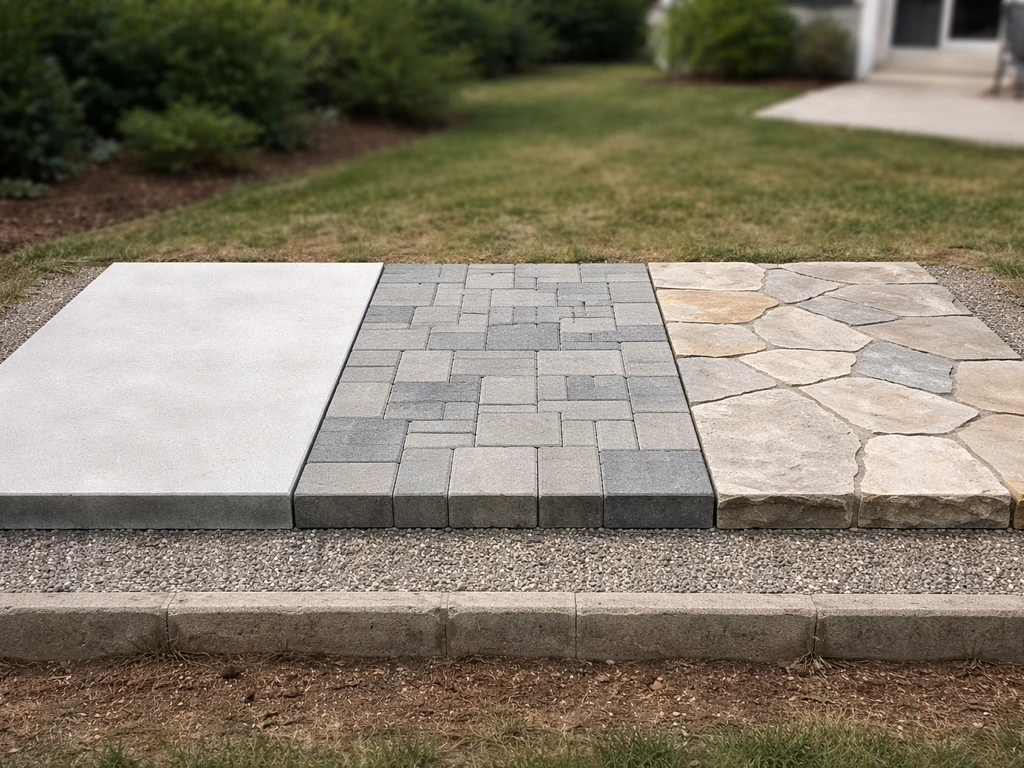
How Much Should I Expect to Pay for a Patio
Patio cost guide with real price ranges by size and material, full line-item budget, DIY vs install, and quote checklist