
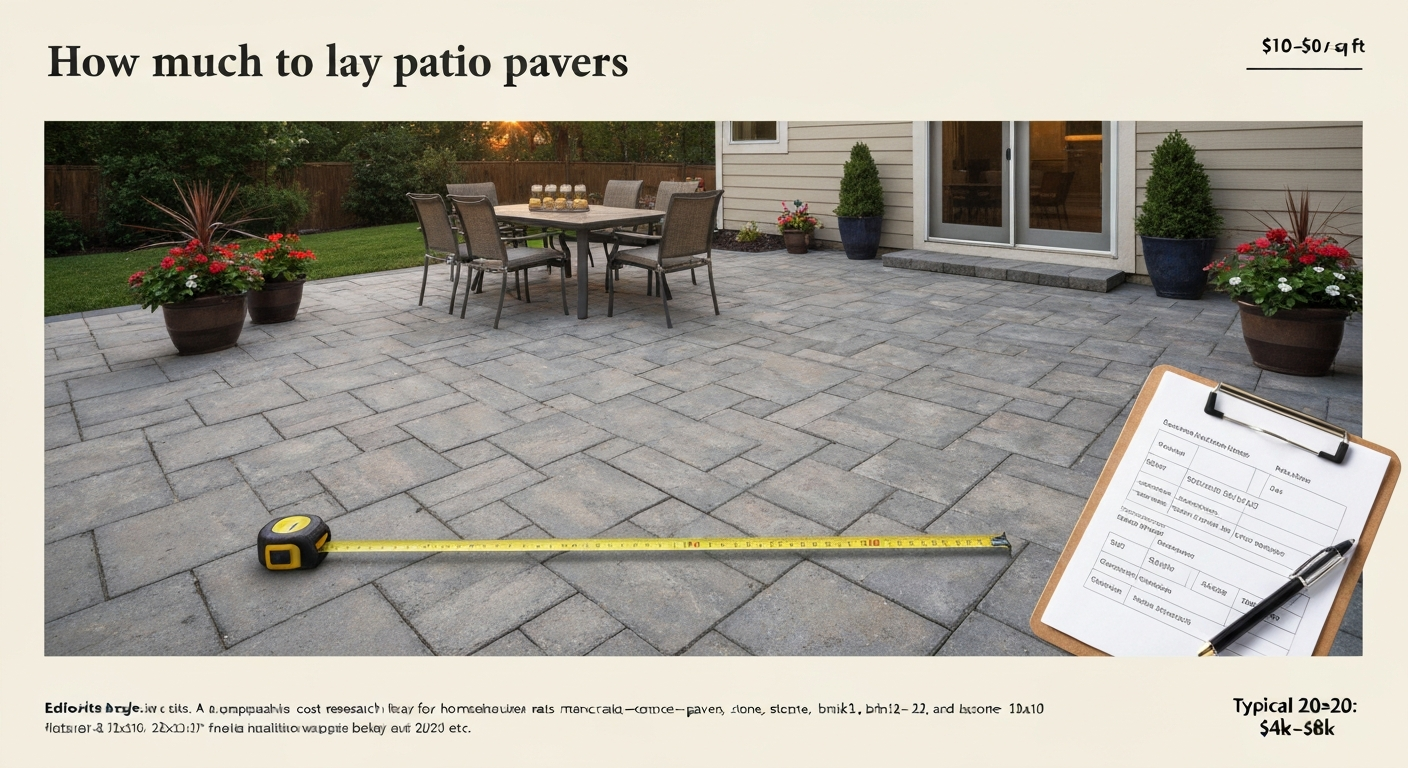
Laying patio pavers typically costs $10 to $30 per square foot installed, which works out to roughly $2,400 to $7,000 for a typical backyard patio around 280 square feet. HomeAdvisor reports the average cost to install a paver patio is about $3,800 for a 280‑sq‑ft area (most homeowners pay $2,400–$7,000) [How Much Does a Paver Patio Cost? [2025 Data] — HomeAdvisor](https://www.homeadvisor.com/cost/outdoor-living/install-a-brick-paver-patio/). Most homeowners land somewhere in the $12 to $20 per square foot range when you factor in materials, a compacted aggregate base, bedding sand, edging, and labor. For a focused cost breakdown on laying tile specifically, see our guide on how much to lay patio tiles. A basic 10x10 patio (100 sq ft) can come in under $1,500 DIY or around $1,500 to $2,500 professionally installed, while a 20x20 patio (400 sq ft) with a decent concrete paver runs $4,000 to $8,000 with a contractor.
How Much to Lay Patio Pavers: Costs, Budgets & Quotes

What actually drives the price up or down
Three things control your final bill more than anything else: the paver material you choose, what's underneath the ground (and how much prep it needs), and where you live. Beyond that, patio size and shape matter a lot since odd angles and curves create more cutting waste and slower labor.
On the material side, manufactured concrete pavers are the most affordable option at around $3.40 to $6.20 per square foot for the pavers themselves. Clay brick costs a bit more, natural flagstone more again, and premium cut stone like bluestone or porphyry sits at the top. Labor runs $6.25 to $10.90 per square foot for a standard paver installation, and that number climbs fast on complex patterns like herringbone or running bond on a diagonal.
Site conditions are the biggest wildcard. If your yard is flat, has decent drainage, and the existing soil is stable, prep costs stay low. Add a slope, clay soil that holds water, large tree roots, or a space that's hard to get equipment into, and base prep costs can add $2 to $6 per square foot before a single paver is laid. Regional labor markets also swing the total by 20 to 40 percent: a mid-tier paver job in the Midwest or Southeast is noticeably cheaper than the same job in Boston, San Francisco, or New York.
- Paver material type: concrete, clay brick, flagstone, or natural stone each have different material costs per square foot
- Base depth requirements: standard pedestrian patios need about 4 inches of compacted aggregate; frost-prone zones and soft soils require 6 inches or more
- Pattern complexity: straight grid patterns cut labor time; diagonal herringbone or custom fan patterns slow installation significantly
- Site slope and drainage: flat, well-drained yards cost the least to prep; retaining walls or French drains add hundreds to thousands
- Access constraints: tight side yards, decks overhead, or limited truck access raise equipment and haul-away costs
- Regional labor rates: the same job can cost 25 to 40 percent more in high cost-of-living metro areas
- Existing material removal: demo and haul-away of an old concrete slab runs $2 to $6 per square foot extra
Cost by material: what you'll pay per square foot
These are fully installed ranges for 2026, meaning material plus base prep plus labor. They're national averages, so think of them as the middle of the country with reasonable site conditions. Your local quotes may run higher or lower.
| Material | Installed Cost ($/sq ft) | Notes |
|---|---|---|
| Plain concrete slab | $5 – $15 | Cheapest upfront; no individual unit labor but cracks without control joints |
| Stamped concrete | $9 – $30 | Basic single-color pattern starts ~$10–$14; custom multi-color hits $18–$25+ |
| Manufactured concrete pavers | $10 – $30 | Most popular choice; wide style range; easiest future repairs |
| Clay brick pavers | $12 – $28 | Classic look; more expensive material than concrete; very durable |
| Patio slabs / tiles | $10 – $25 | Porcelain and large-format tiles on the higher end; see patio slabs guide for detail |
| Flagstone / natural stone | $15 – $30+ | Irregular flagstone on lower end; premium cut bluestone or porphyry at top |
Concrete pavers from a home improvement retailer can be found on-pallet for around $11 to $16 per square foot in materials alone, before any labor or prep. Once you add base aggregate, bedding sand, edging, and a contractor's crew, that $11/sq ft paver becomes a $16 to $22/sq ft finished patio. That math surprises a lot of homeowners who price only the paver itself.
If you're also considering patio slabs or large-format tiles, the installation process is similar to pavers but the material cost and jointing method differ. Likewise, re-laying an existing patio is a different cost category than a fresh install, which is covered further below.
Example budgets by patio size
The table below shows realistic total project costs for three common patio sizes across materials, assuming a standard residential site with no major grading, professional installation, and including base prep. DIY savings are addressed in the section below.
| Patio Size | Sq Ft | Concrete Pavers | Clay Brick | Stamped Concrete | Flagstone |
|---|---|---|---|---|---|
| 10x10 | 100 | $1,500 – $3,000 | $1,800 – $3,500 | $1,200 – $3,500 | $2,000 – $4,000 |
| 12x12 | 144 | $2,200 – $4,300 | $2,600 – $5,000 | $1,700 – $5,000 | $2,900 – $5,800 |
| 20x20 | 400 | $6,000 – $12,000 | $7,200 – $13,500 | $4,500 – $13,500 | $8,000 – $15,000 |
A 20x20 patio is the most requested size for a functional outdoor dining and lounging area, and the $6,000 to $12,000 range for concrete pavers is where most projects land. You can push below $6,000 with basic concrete paver styles, a straightforward site, and competitive local bids. You'll push above $12,000 when you add a complex border pattern, poor drainage that needs a French drain, or a sloped yard that needs grading.
Full cost breakdown: every line item to expect
When a contractor quotes your job, these are the components they're rolling into the number. Knowing each one lets you check whether a quote is complete or suspiciously missing something.
- Pavers or surface material: $3.40 to $15+ per sq ft depending on type and style
- Compacted aggregate base (crushed stone or gravel): ICPI standards call for 4 inches for pedestrian patios, 6 inches in frost zones; typically $1.50 to $3.50/sq ft installed
- Bedding sand (1-inch ASTM C33 coarse sand layer): usually $0.50 to $1.00/sq ft in materials
- Edge restraints: plastic spike-in restraints run $0.50 to $3.00 per linear foot; aluminum or metal restraints $3 to $6/lf; poured concrete curb edges $15 to $30+/lf installed
- Polymeric jointing sand: budget brands $20 to $35 per 50-lb bag; premium brands (Gator, Techniseal) $50 to $130 per bag; coverage varies by joint width
- Excavation and grading: $1 to $3/sq ft for a standard dig-out; more for sloped or problematic sites
- Sealing (first coat): $0.50 to $2.50/sq ft; sealing extends paver life and locks jointing sand
- Drainage additions (French drain, catch basin): $500 to $3,000+ depending on scope
- Permits: $50 to $500 in most municipalities; check local requirements before starting
- Demo and haul-away of existing patio: $2 to $6/sq ft for concrete; reinforced slabs or metro areas can hit $6 to $14/sq ft
- Dumpster rental (if needed separately): $200 to $800 per week for a residential roll-off
Sealing and polymeric sand are two line items homeowners frequently skip to save money, then regret. Polymeric sand hardens when wet and resists weed growth and ant disruption. Leaving it out saves $150 to $400 on a 20x20 patio but leads to weeds and joint erosion within a season or two. A first sealer coat after installation is worth doing, especially with natural stone or clay brick, since it reduces staining and makes future maintenance far easier.
What contractors charge for labor
Masonry and paving labor runs $6.25 to $10.90 per square foot on a standard paver patio, and that rate reflects what skilled crews actually need to excavate, compact, set base, lay pavers, and finish joints. Hourly rates for paving crews run roughly $50 to $100 per hour per worker; a two-person crew might charge $80 to $160 per hour for the team. For context, the Bureau of Labor Statistics puts median annual wages for brickmasons and blockmasons in the $56,000 to $61,000 range as of 2024, so the hourly rates contractors charge aren't pure profit.
Many contractors quote per square foot rather than hourly because it's easier for homeowners to compare. On a simple rectangular 20x20 patio with no obstacles, a two-person crew can often complete the work in one to two days. On a complex job with curves, a border pattern, or significant base prep, that same area might take three to four days, which is why per-square-foot pricing protects both parties better than hourly on complex jobs.
Regional adjustments matter. Expect to pay toward the lower end of labor ranges in the Midwest, Southeast, and rural markets. In the Boston metro, New York tri-state, Seattle, or San Francisco Bay Area, the same crew work commonly runs 25 to 40 percent more. When comparing quotes, always make sure you're comparing the same scope, including base depth, edging type, and whether sealing is included.
Re-lay and repair costs: what to expect if the patio already exists
Re-laying or relaying a paver patio is meaningfully cheaper than starting from scratch, provided the base is still sound. If pavers have shifted, settled, or cracked because the base failed, you're looking at more than a simple lift-and-reset.
A basic lift-and-relay of settled pavers, where a contractor lifts sections, re-levels the sand bed, and re-lays the existing pavers, typically runs $3 to $8 per square foot for the affected area. If a significant portion of the base needs regrading or new aggregate added, costs move to $6 to $12 per square foot. That's still well below the $12 to $20+ per square foot cost of a full new installation because you're reusing the existing pavers and (partially) the existing base.
Spot repairs on just a few failed pavers are very affordable: replacing individual units costs $200 to $600 for a contractor visit, depending on how many pavers need resetting and whether any need to be sourced. This is one of the biggest practical advantages pavers have over poured concrete: when a section fails, you fix that section instead of jackhammering the whole slab.
If your entire patio has failed because the base was improperly installed or drainage was never addressed, a full demo and reinstall is usually the honest answer. Demo of the old pavers runs $1 to $3 per square foot if they're being salvaged, or $2 to $6 per square foot if they're going in a dumpster. blank" rel="noopener noreferrer">Concrete removal for an existing patio commonly runs $2–$6 per square foot, with reinforced slabs or urban jobs sometimes costing $6–$14 per square foot (HomeAdvisor). Related guides on relay and re-lay patio costs cover the specific scenarios in more detail. For more detail on how much to re lay a patio, see our dedicated guide on re-laying and repair costs for patios. See our guide on how much to relay a patio for detailed cost breakdowns and scenario-specific advice.
DIY vs. hiring a contractor
DIY paver installation is genuinely doable for a handy homeowner, but it's physically demanding and technically unforgiving. The most common DIY failure is an inadequate base: homeowners often compact less than the required 4 to 6 inches of crushed aggregate, skip a plate compactor rental, or misjudge drainage slope. The result is a patio that looks fine for one or two seasons, then settles unevenly.
| Factor | DIY | Professional |
|---|---|---|
| Typical labor cost saved | $600 – $4,000+ depending on size | Included in quote |
| Material cost | Same or slightly higher (retail vs. contractor pricing) | Contractor may get 10–20% trade discount |
| Tools needed | Plate compactor rental $150–$300/day, hand tools, wet saw | Contractor-supplied |
| Time required | 2–4 weekends for a 200 sq ft patio | 1–3 days typically |
| Base preparation skill | High; most DIY failures stem from inadequate base | Experienced crews follow ICPI standards |
| Warranty / guarantee | None | Reputable contractors offer 1–3 year labor warranty |
| Permit and code risk | Homeowner responsible for all compliance | Contractor usually handles permits |
For a 10x10 patio (100 sq ft) with basic materials, DIY makes a lot of sense if you're willing to rent a plate compactor and take your time. You can realistically complete it in a weekend for $800 to $1,400 all-in versus $1,500 to $2,500 professionally installed, saving $700 to $1,100. At 20x20 (400 sq ft), the math still favors DIY if you have the time and physical ability, but mistakes on a larger area cost more to fix.
Hire a professional when the site has drainage problems, significant slope, or you're working with expensive natural stone where cutting errors are costly. Also hire out when the patio connects to a structure (house foundation or deck ledger) where grading and water management become critical. The 1 to 3 year labor warranty a good contractor provides is real value there.
Site and access factors that can blow your budget
This is the section most cost guides skim over, and it's where homeowners most often get surprised by a quote that's higher than expected. A contractor visiting your site is looking at several things beyond just the square footage.
- Sloped yards: any slope over about 2 to 3 percent requires grading work; slopes over 10 percent may need a retaining wall, which adds $2,000 to $10,000+ depending on height and material
- Clay or expansive soil: clay soil holds water, shifts with freeze-thaw cycles, and often requires a deeper aggregate base (6 to 8 inches) or a layer of geotextile fabric, adding $1 to $3/sq ft
- Large tree roots: roots near the patio area must be cut or routed around; root removal and treatment can add $300 to $1,500 depending on scope, and there's a risk of affecting tree health
- Poor drainage: if water naturally pools where you want the patio, a French drain or catch basin is necessary before any paving; costs range from $500 for a simple channel drain to $3,000+ for a full perimeter system
- Difficult access: narrow side yards (under 36 inches), overhead obstructions, or fencing that can't be temporarily removed force contractors to hand-carry materials instead of using wheelbarrows or small equipment, adding hours of labor
- Demolition of existing hardscape: an existing concrete slab under where your patio will go adds $2 to $6/sq ft for demo and haul-away before new work can start
- Retaining walls: if the patio requires a raised or sunken area, retaining wall costs can easily exceed the patio installation itself
When you get quotes, ask each contractor to walk the site with you and call out anything that might add cost. A reputable contractor will flag these in writing. If one quote is significantly lower than others and the contractor glosses over a steep slope or poor drainage, that's a red flag: either they missed it, or they're planning to underperform on the base prep.
Getting an accurate quote: a practical checklist
Getting three quotes is the standard advice, and it's good advice, but only if all three quotes are actually scoping the same job. Here's what to confirm with each contractor before signing anything.
- Base depth: confirm they're specifying at least 4 inches of compacted aggregate for a pedestrian patio (6 inches in frost zones)
- Edging type and cost: ask whether aluminum restraints or poured concrete are included, and what's included at patio edges adjoining lawn
- Jointing sand: confirm polymeric sand is included, not plain sand
- Sealing: ask whether a first seal coat is included or priced separately
- Drainage plan: ask how they're addressing water runoff and whether a positive slope away from the house is built into the design
- Permits: confirm who pulls the permit and whether it's included in the price
- Haul-away: confirm demolition debris and leftover materials are removed in the quote
- Warranty: ask what's covered and for how long if settling occurs in the first year
- Timeline: get a start date and estimated completion in writing
Ways to keep costs down without cutting corners
There's a right way and a wrong way to save money on a paver patio. Cutting the base depth or skipping polymeric sand are wrong ways: both lead to failure within a couple of seasons. Here are the approaches that actually work.
- Choose a simple rectangular shape: curves and angles add cutting waste and labor time; a clean rectangle costs meaningfully less per square foot
- Stick to a single standard paver size: mixing sizes or using a complex pattern like a Versailles layout adds 15 to 25 percent to labor
- Use standard manufactured concrete pavers instead of premium natural stone: the look is similar on a budget line, and the base and labor costs are identical
- Book in late fall or early winter: many contractors offer 10 to 20 percent discounts for work scheduled in their slow season
- Buy pavers yourself: retail on-pallet pricing at home improvement stores lets you compare exact unit costs; contractors may still charge a handling fee but you control the material spec
- DIY the landscaping restoration around the patio edges: re-seeding or re-mulching border areas yourself after install is easy work that some contractors charge $200 to $500 to handle
- Skip the sealer on the first application and apply it yourself: product runs $40 to $80 for a 20x20 patio and is a straightforward DIY task
Pavers vs. other patio surfaces: the honest trade-off
Pavers aren't always the right answer, and it's worth being honest about where competing surfaces make more sense. A poured concrete slab at $5 to $15 per square foot installed is significantly cheaper upfront, though when it cracks (and with freeze-thaw cycles, most eventually do), repair is much harder than resetting individual pavers. Stamped concrete gives you a decorative look at a mid-range price ($9 to $30/sq ft) but once it cracks or the sealant fails, color matching on repairs is difficult.
Flagstone and natural stone deliver a premium look and last virtually indefinitely, but at $15 to $30+ per square foot installed, they're a serious budget commitment and require skilled setters for irregular stone. Patio slabs and large-format tiles are increasingly popular and offer a modern, minimal look; costs align closely with pavers but installation on a mortar bed is less forgiving than sand-set. If you're weighing patio slabs specifically, that's a closely related decision with its own cost nuances.
For most homeowners, manufactured concrete pavers hit the right balance of cost ($10 to $20/sq ft installed for most residential jobs), durability, repairability, and style range. Clay brick sits just above that and is worth the premium if you value the classic aesthetic and longevity. Natural stone is the splurge option: beautiful, long-lasting, and expensive.
FAQ
How much does it cost per square foot to lay common patio surfaces (installed)?
Installed $/sq ft ranges (material + labor + base prep, national 2026 synthesis): plain concrete slab: $5–$15/sq ft; stamped concrete: $9–$30/sq ft (basic $10–$14; custom $18+); manufactured concrete pavers: $10–$30/sq ft; clay brick pavers: $12–$28/sq ft; flagstone/natural stone: $15–$30+/sq ft. Use the low end for straightforward, accessible jobs and the high end for premium materials, complex patterns, poor access, or frost‑zone deeper bases.
What are realistic total project cost examples for common patio sizes?
Example installed budgets (rounded, include base prep, materials, labor, edging, joints, basic sealer where typical): 10x10 (100 sq ft): concrete slab $500–$1,500; stamped concrete $900–$3,000; pavers $1,000–$3,000; flagstone $1,500–$3,500. 12x12 (144 sq ft): concrete $720–$2,160; stamped $1,296–$4,320; pavers $1,440–$4,320; flagstone $2,160–$4,320+. 20x20 (400 sq ft): concrete $2,000–$6,000; stamped $3,600–$12,000; pavers $4,000–$12,000; flagstone $6,000–$12,000+. Adjust up for demolition, removal, drainage, permitting, or landscaping.
How do material and labor break down in total patio costs?
Typical cost breakdown (by percent of total installed job): base & site prep (excavation, aggregate base, compaction): 25–40%; materials (pavers/slabs/stone, sand, mortar, sealer): 20–35%; labor (installation, edging, jointing): 25–40%; added items (drainage, edging systems, permits, disposal): 5–15%. Small jobs have higher per‑sq‑ft labor and mobilization overhead; demolition and waste removal can shift percentages upward.
What are the specific line items to include when budgeting or comparing contractor quotes?
Quote checklist — include these line items for apples‑to‑apples bids: scope & square footage; material type/brand/color/thickness; base depth & aggregate type (e.g., 4" compacted #57 for pedestrian); bedding/edge detail (1" sand + edge restraint type); labor hours/crew size; compaction & plate compaction included; edging/curb (type and linear feet); joint material (polymeric sand vs mortar); sealing (type, number coats); drainage work (trench drains, slope/grading); existing surface removal & disposal (per sq ft or lump sum); dumpster/tipping fees; permits/inspections; project timeline & start date; warranty/guarantee.
How much should I expect to pay to re‑lay or repair an existing patio?
Re‑lay/relay costs vary: simple re‑leveling and re‑sand of pavers: $3–$10/sq ft (labor heavy); full lift/relay (remove pavers, correct base, reinstall): $8–$20+/sq ft depending on base replacement and pattern complexity. Concrete patio removal and reinstall: demolition $2–$6+/sq ft (reinforced or urban higher) plus new slab cost. Small localized repairs (replace a few pavers) often run $50–$300 per area depending on access and matching.
What are typical contractor labor rates and regional adjustments?
Labor estimates: paver installation labor commonly runs $6–$15/sq ft depending on region and complexity; masons/bricklayers hourly wages vary—referencing BLS, median masonry annual wages convert to effective installed rates competitive in mid‑$50k–$70k wage regions. Expect 10–30% higher overall costs in high‑cost metro areas (NYC, SF, Boston) and lower in rural/low‑cost regions. Contractors often add mobilization, minimum job charges, and markup on materials.
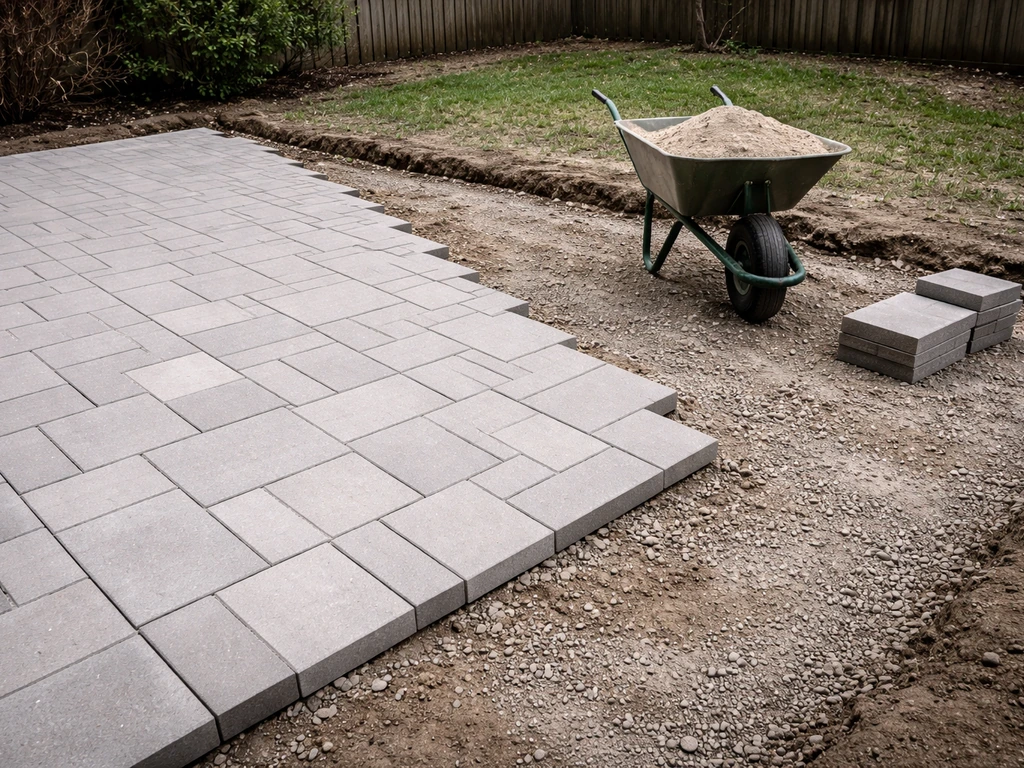
Budget ranges to re-lay a patio by type and size, with full cost breakdown, DIY vs pro, and quote tips.
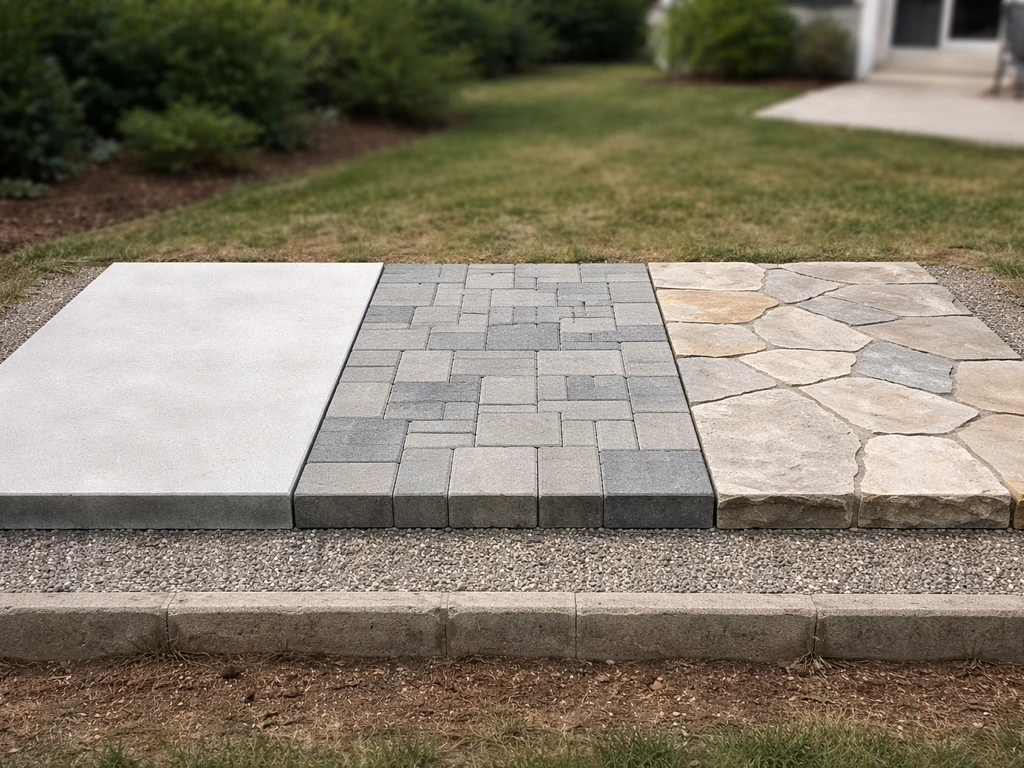
Patio cost guide with real price ranges by size and material, full line-item budget, DIY vs install, and quote checklist
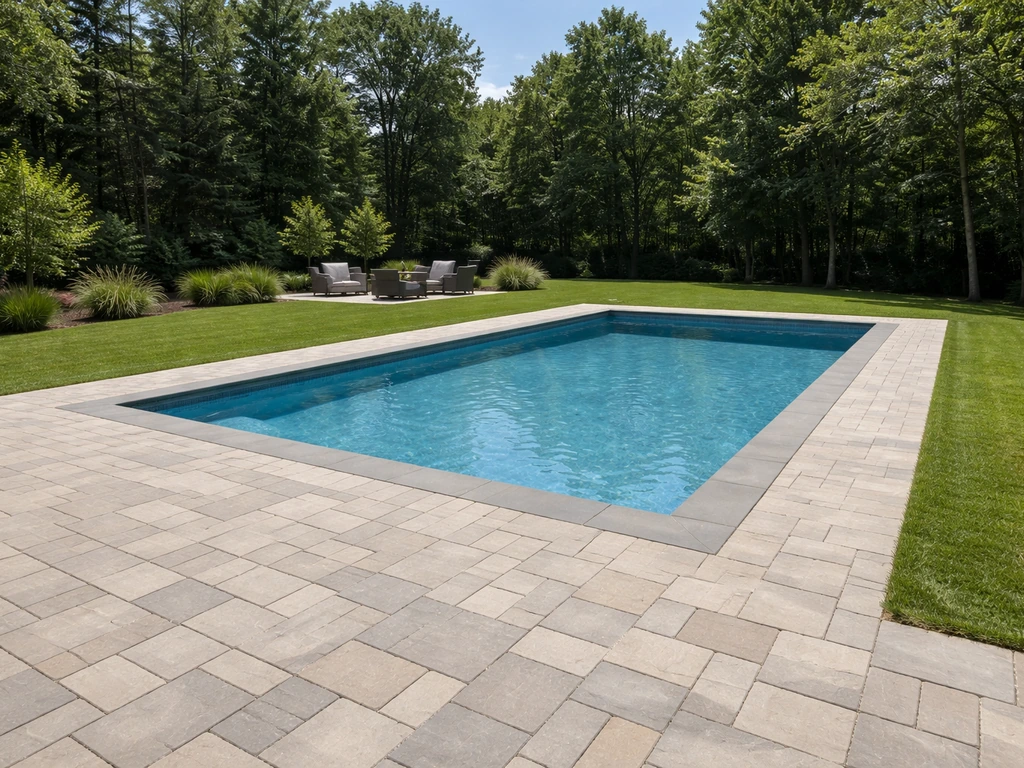
Learn how much patio around a pool costs and how to size square feet, materials, extras, and get real bid line items.