
A professionally installed 12x20 concrete patio (240 square feet) typically costs between $1,440 and $2,880 for a basic broom-finish slab, using the common $6–$12 per square foot range. In practice, most homeowners in average-cost markets pay somewhere around $1,800–$2,400 for a straightforward pour with standard prep, reinforcement, and a clean broom finish. For a smaller 12x12 stone patio, the price will be different because most contractors price by square foot plus site prep and base work 12x12 stone patio cost. Add complications like demo of an old slab, significant grading, drainage work, or a decorative finish, and the number climbs quickly toward $3,000–$5,000 or higher. Here's exactly how to build out your budget line by line.
How Much Does a 12 x 20 Concrete Patio Cost? Installed Price

Felix Carver
18 Jun 2026
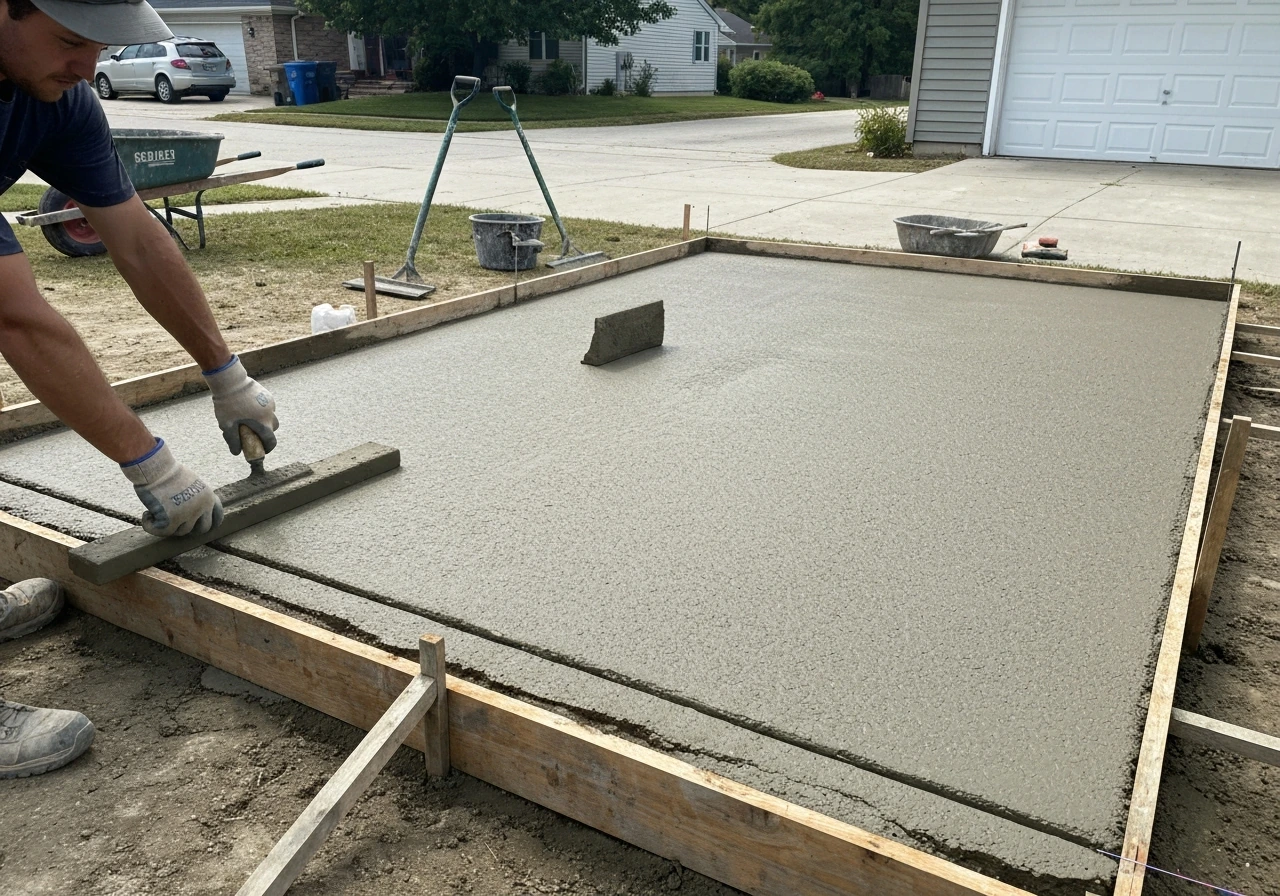
What a 12x20 concrete patio actually costs: the ranges you'll see
The 240 square feet on a 12x20 patio is a genuinely useful size because it sits above the "minimum job charge" threshold that makes smaller pads (like a 10x10 or even a 12x12) cost more per square foot than they should. For a quick benchmark, most homeowners ask how much does a 12x12 patio cost, and the answer follows the same pricing drivers you see with larger slabs. Contractors have fixed costs for mobilizing equipment, scheduling a crew, and ordering a ready-mix truck. A 12x20 is large enough that those fixed costs get spread across enough area to bring the per-square-foot rate down to a reasonable level, which is why this size tends to price more predictably than a smaller pad.
Here are the installed cost scenarios you should plan around for a 12x20 patio:
| Scenario | Per Sq Ft Range | Total Estimated Cost |
|---|---|---|
| Basic broom finish, flat grade, good access | $6–$8 | $1,440–$1,920 |
| Standard broom finish, typical site prep | $8–$12 | $1,920–$2,880 |
| Broom finish with complications (grading, drainage) | $12–$16 | $2,880–$3,840 |
| Stamped or colored concrete | $14–$25 | $3,360–$6,000 |
| Decorative overlay on existing slab | $7–$20 | $1,680–$4,800 |
Angi's data puts the average total concrete patio installation around $1,918–$5,395, which lines up well with these scenarios. The honest answer is that most "average" projects land between $2,000 and $3,500 when you account for realistic site prep, standard reinforcement, and a few common add-ons.
Cost breakdown: materials vs. labor, line by line
For a 240 sq ft slab, here's how the money generally breaks down. Labor typically represents 40–60% of a concrete patio quote, with materials and equipment making up the rest.
| Line Item | Unit Cost | Estimated Cost for 12x20 |
|---|---|---|
| Ready-mix concrete (4-inch slab) | $120–$150/cubic yard | $400–$550 (approx. 3–4 yards) |
| Gravel/aggregate base (4–6 inches) | $0.50–$1.00/sq ft | $120–$240 |
| Rebar or wire mesh reinforcement | $1–$3/sq ft | $240–$720 |
| Form lumber and stakes | $0.25–$0.75/sq ft (perimeter-based) | $75–$150 |
| Labor: forming, pouring, finishing | $3–$7/sq ft | $720–$1,680 |
| Control joints (saw-cut or formed) | Usually included in labor | $0–$150 |
| Curing compound or sealer | $0.15–$0.50/sq ft | $36–$120 |
| Equipment/mobilization fee | Flat fee | $200–$500 |
Adding these up, a basic scope comes to roughly $1,800–$3,960 before any upgrades or complications. The wide band reflects regional labor differences more than anything else. A contractor in the Southeast quoting $6/sq ft is doing the same work as one in the Pacific Northwest quoting $12/sq ft. This is normal and expected.
The specs that move the price most
Slab thickness
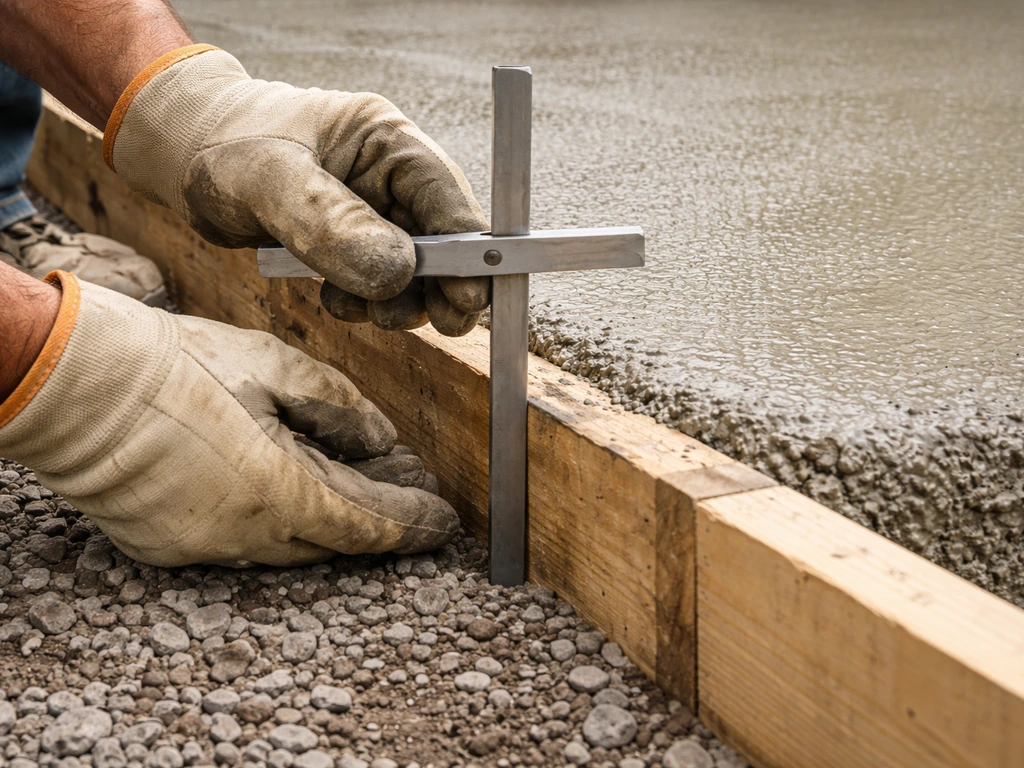
Most residential patios are poured at 4 inches, which is the standard for foot traffic only. If you want to park a vehicle on it, plan for 6 inches. The jump from 4 to 6 inches adds about 50% more concrete volume (and cost), plus the labor to handle a heavier pour. For a 12x20 patio used strictly as outdoor living space, 4 inches with proper reinforcement is completely appropriate.
Base and compaction
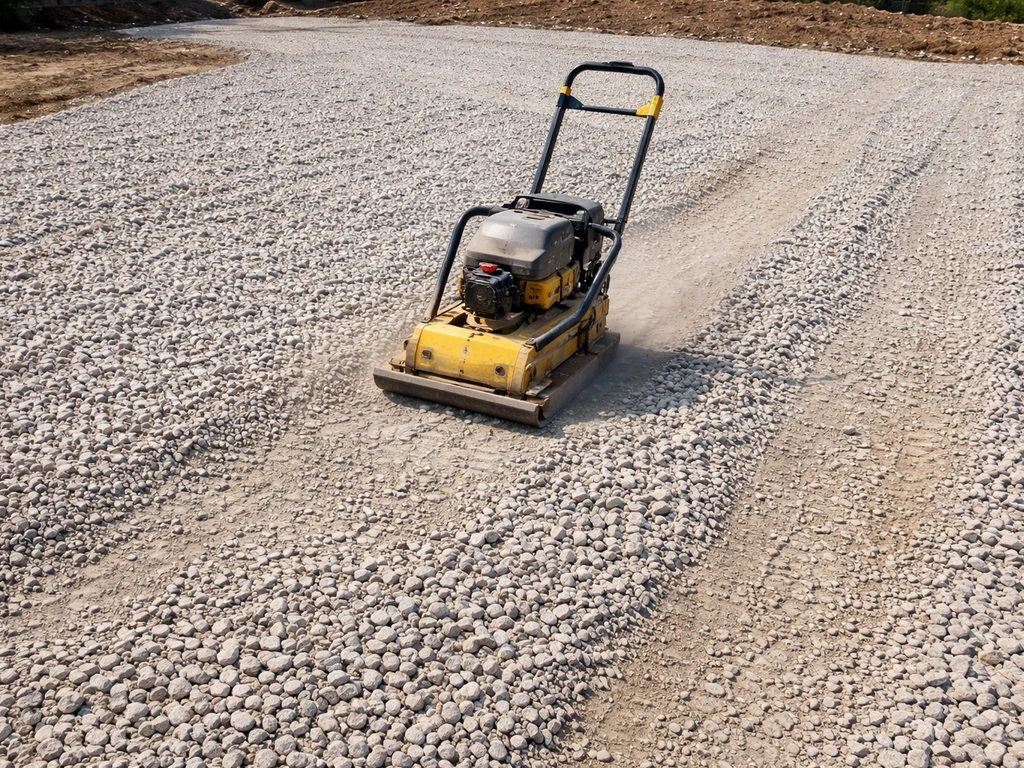
A 4- to 6-inch compacted gravel base is a real cost driver because it involves excavation, hauling material in (or hauling existing soil out), and compaction passes with a plate compactor. Skipping this or doing it poorly is one of the top reasons concrete patios crack within a few years. If the ground under your patio needs more than a few inches of excavation, or if the soil is soft or clay-heavy, expect this line item to jump.
Reinforcement
Wire mesh is the entry-level option and adds roughly $1–$1.50 per square foot. Rebar (typically #3 or #4 bar on 18-inch centers) costs more at around $2–$3 per square foot but gives better crack control. For a 12x20 patio, the difference between wire mesh and rebar is roughly $240–$480. Most contractors default to wire mesh for a basic patio quote; ask specifically if rebar is included when comparing bids.
Control joints
Control joints are grooves cut or formed into the slab to guide where it cracks as it shrinks during curing. For a 4-inch slab, joint spacing is typically every 8–10 feet, which means a 12x20 pad needs at least one joint along the length. DIY discussions on r/Concrete also emphasize using control-joint spacing to manage shrinkage cracking, often with roughly similar spacing logic for smaller slabs versus larger ones joint spacing is typically every 8–10 feet. Saw-cutting joints after the pour (usually within 12–24 hours) is the pro standard; formed plastic or wood joints are a faster but slightly less precise alternative. Either way, this is usually included in a contractor's price, but worth confirming.
Add-ons and complications that inflate the budget
This is where projects quietly double in cost. None of these are optional if the site requires them, but they're easy to miss when you're just trying to get a rough ballpark.
- Demo of existing concrete: Removing an old slab runs $2–$6 per square foot depending on thickness and haul-off distance. For a 240 sq ft area, that's $480–$1,440 just for demo.
- Grading and leveling: If your yard slopes noticeably, the crew needs to cut and fill before forming. Expect $500–$1,500+ depending on how much material moves.
- Drainage: A patio should slope away from the house about 1/8 to 1/4 inch per foot. If the grade doesn't naturally support this, or if you need a channel drain or French drain at the edge, add $300–$1,200.
- Tree roots or buried obstacles: Discovery of roots, buried utilities, or rock can add $200–$1,000+ in hand-digging and remediation.
- Permits and inspections: Many jurisdictions require a permit for concrete flatwork, especially when attached to the house. Permit fees typically run $75–$300, and some areas require an inspection, which can add a day to the schedule.
- Access restrictions: If a concrete truck can't get close to the pour area, the crew may need a pump truck or wheelbarrow relay. Pump trucks cost $400–$800 extra.
Finish options and what they actually cost
Broom finish (the baseline)
A broom finish is the standard residential patio surface: after the concrete is floated, a broom is dragged across it to create a slightly rough, slip-resistant texture. It's durable, low-maintenance, and the cheapest option. Homewyse prices broom finish at $8–$11 per square foot installed, which for 240 sq ft lands at $1,920–$2,640 total. This is your baseline comparison point for every upgrade.
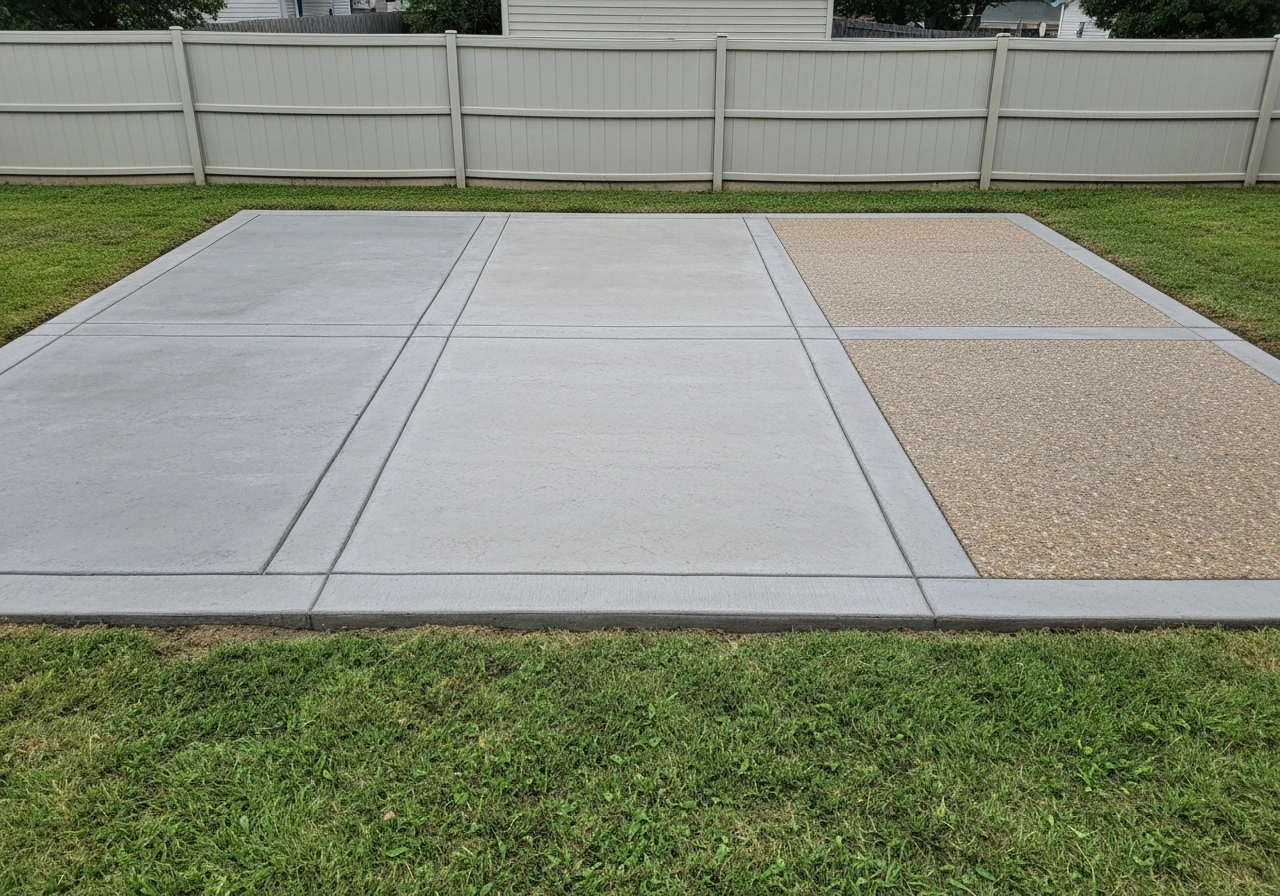
Stamped and colored concrete
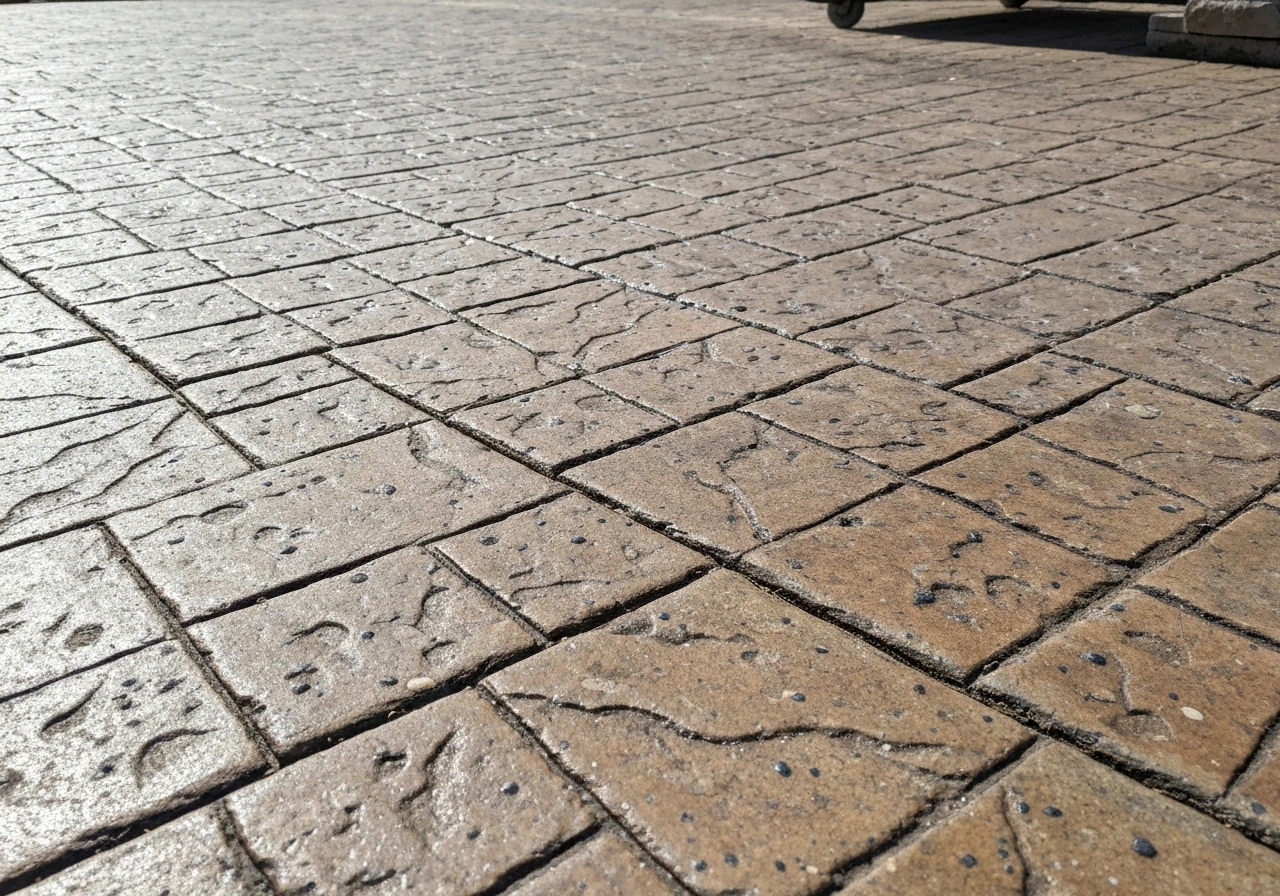
Stamped concrete uses textured mats pressed into fresh concrete to mimic stone, brick, or wood patterns. Add integral color or a release agent and stain, and you can get a genuinely attractive surface. The cost bump is significant: stamped concrete typically runs $12–$25 per square foot installed, putting a 12x20 patio at $2,880–$6,000. Pattern complexity and number of colors are the biggest price variables. A single-color slate pattern is toward the low end; a multi-color ashlar stone with custom borders is at the top.
Concrete stain
Staining an existing broom-finish slab is a lower-cost way to add color: expect $3–$10 per square foot for acid stain or water-based concrete stain applied by a contractor. On 240 sq ft, that's $720–$2,400 for the stain work alone, added on top of the base patio cost.
Overlays
If you already have a concrete slab in decent structural condition, an overlay can transform it without a full replacement. Plain overlays run about $3–$7 per square foot; stamped overlays jump to $7–$20 per square foot. Stamped or decorative concrete overlays are often quoted around $6, $14 per square foot installed by specialized resurfacing sources blank" rel="noopener noreferrer">stamped or decorative concrete overlays are often quoted around $6–$14 per square foot installed. The key word is "decent structural condition": cracks that run through the full slab thickness will telegraph through an overlay within a season or two. A contractor should evaluate the existing slab before quoting an overlay.
DIY vs. hiring a pro: where you actually save
DIY concrete work is genuinely viable for small pads, roughly under 150 square feet, where one person with a few helpers and a rented mixer or a small ready-mix truck order can manage the pour. A 12x20 patio at 240 square feet is harder. If you want a smaller 12x12 concrete patio, the price trends are similar, but the total cost will be much lower based on square footage how much it costs for a 12x12 concrete patio.
Here's why: a standard 4-inch 12x20 slab requires about 3. 5–4 cubic yards of concrete, which arrives as a single ready-mix truck delivery and has to be placed, struck off, floated, and edged within a working window of roughly 30–60 minutes depending on temperature and mix. If something goes wrong with timing, your finish is ruined and you're looking at demo and replacement, which one estimate puts at $1,500–$3,000 for a slab in this size range.
Here's where DIY realistically saves money on a 12x20 project:
- Excavation and base prep: You can rent a plate compactor and do this yourself over a weekend, saving $400–$800 in labor.
- Form building: Setting 2x4 forms isn't complicated if the layout is square. This saves another $150–$300 in labor.
- Concrete finishing: This is the high-risk part. If you have an experienced helper and have practiced on a smaller pour, you can try it. If not, hire this out.
- Sealing after cure: Applying a sealer yourself is easy and saves $100–$300 in contractor markup on material and labor.
A realistic hybrid approach: do the site prep, excavation, and forming yourself, then hire a contractor to handle the pour and finish. Many contractors will work this way and pass the labor savings back to you. Just make sure the contractor inspects your forms and grade before the truck arrives. Doing your own site prep on a 12x12 patio can help, but you still want the contractor to confirm the layout and base so the total cost estimates stay accurate contractor inspects your forms and grade.
How to budget accurately and get quotes you can actually compare
Getting three quotes is the standard advice, and it's right, but only if you're asking for the same scope on each quote. Here's what to ask each contractor to include in writing:
- Slab thickness (4 inch vs. 6 inch) and concrete mix specification, including whether it includes air entrainment (important in freeze-thaw climates).
- Base specification: depth of gravel base, compaction method, and whether excavation and haul-off are included.
- Reinforcement type: wire mesh or rebar, size, and spacing.
- Control joint method: saw-cut or formed, and spacing.
- Finish type: broom finish baseline, and the cost to upgrade to stamped or colored if you're considering it.
- Demo and removal of any existing slab or material.
- Drainage slope: confirm they'll achieve at least 1/8-inch-per-foot slope away from the house.
- Permits: whether they pull the permit, and whether it's included in the price or billed separately.
- Cleanup and haul-off of form lumber, extra concrete, and job debris.
On regional pricing: labor rates in the Midwest and Southeast tend to run $6–$9 per square foot installed for a basic slab, while the Northeast, Pacific Northwest, and California markets often start at $10–$14 per square foot for the same scope. Material costs (concrete per cubic yard, gravel) vary less by region than labor does. If you're in a higher-cost market, don't assume a low quote means a good deal; verify what's included before signing anything.
One useful calibration trick: if you're comparing quotes for a 12x20 patio and you've previously looked at prices for a 12x12 patio, expect the 12x20 to cost less per square foot than the 12x12. For a 12x12 concrete patio specifically, the price depends on thickness, site prep, and finishing choices, so you can use the same per-square-foot logic to estimate your total 12x12 patio. The fixed mobilization and minimum charge costs get diluted across more area. The total dollar amount will obviously be higher, but the per-square-foot rate should be more favorable.
Concrete vs. other patio materials: what 240 sq ft costs in each
If you're deciding between concrete and another material for this patio, here's how the numbers stack up at the 12x20 size. To estimate how much for a 12x12 patio, use the same cost drivers, then scale the square footage and add typical site prep and finishing. Keep in mind that cheaper per-square-foot materials don't always mean lower total project cost, because site prep, base, and labor requirements vary.
| Material | Typical Installed Cost (per sq ft) | Estimated Total for 12x20 (240 sq ft) | Key Trade-offs |
|---|---|---|---|
| Concrete (broom finish) | $6–$12 | $1,440–$2,880 | Durable, low maintenance, repairs visible as patches |
| Stamped concrete | $12–$25 | $2,880–$6,000 | Attractive, can mimic stone/brick, harder/costlier to repair |
| Concrete pavers | $10–$30 | $2,400–$7,200 | Flexible repairs, great look, higher upfront cost, may shift over time |
| Flagstone | $15–$30 | $3,600–$7,200 | Natural look, premium price, dry-laid can be DIY-friendly |
| Brick | $12–$20 | $2,880–$4,800 | Classic appearance, durable, mortar joints need maintenance |
| Gravel/decomposed granite | $1–$4 | $240–$960 | Lowest cost, less comfortable underfoot, needs edging to contain |
Poured concrete is almost always the most cost-effective hard surface for a patio this size. Pavers cost more upfront but offer easier individual-piece repair when a unit cracks or settles. Flagstone has a natural aesthetic that concrete can only approximate with stamping, but at $15–$30 per square foot installed, it's a significant premium over a basic concrete slab.
For flagstone, Forbes Home cites typical average costs of about $15, $27 per square foot and notes that installation method, like dry-laid versus mortar or concrete, drives the price range $15–$27 per square foot. If budget is the primary driver and you want a low-maintenance surface that lasts 25+ years with minimal care, a well-poured concrete slab with a good sealer is hard to beat.
For comparison: if you've been looking at a 12x12 concrete patio and are now sizing up to 12x20, the extra 96 square feet will add roughly $600–$1,200 to your quote at standard pricing, but the per-square-foot rate may actually drop slightly because you're past the minimum-charge threshold. If you’re wondering how much does a 12x12 paver patio cost, compare paver pricing the same way by factoring material cost per square foot, base requirements, and installation labor. The same logic applies when comparing paver and stone options at this size: any material choice becomes proportionally more expensive as you scale up, which is why it's worth nailing down your material decision before finalizing your layout dimensions.
FAQ
What’s the most accurate way to estimate how much a 12 x 20 concrete patio will cost before you get quotes?
Start with the slab size (240 sq ft) and then add line items that drive real pricing: base depth (usually 4 to 6 inches), reinforcement (wire mesh vs rebar), jointing, and finish (broom, stamped, stain, or overlay). If you know your site has clay-heavy soil or poor drainage, pad the budget because excavation and drainage are often the biggest swing factors beyond the standard per-square-foot rate.
Does the 12 x 20 patio cost change if the slab is thicker than 4 inches, even if it’s still just for foot traffic?
Yes. Even small thickness changes affect concrete volume and placement time. If you go from 4 inches to an unusual thickness (for example, 4.5 or 5 inches due to slope or adjoining surfaces), the cost can rise noticeably because the truck delivery quantity and finishing workload both increase.
How much does it cost to add stairs or a landing to a 12 x 20 patio?
It’s usually priced as a separate feature, not a simple square-foot add-on. Expect extra demo of any old steps, specific formwork, additional reinforcement at edges, and more time finishing vertical surfaces. Budget an allowance since contractors commonly treat stairs and landings as a custom scope.
Are control joints and expansion joints the same thing, and are they included in most patio quotes?
They’re related but not identical. Control joints manage cracking from shrinkage, while expansion joints allow movement at changes in plane or where the patio meets structures. Most basic quotes include control joints, but expansion joints or special detailing at doorways, garage slabs, or existing walls may be excluded unless you ask.
If I already have a concrete slab, when does an overlay make sense financially?
Overlay pricing only works if the existing slab is structurally sound (few and shallow cracks, no pumping, and good overall support). If the slab has widespread settlement, active cracking, or bad slope, an overlay can fail quickly and you end up paying twice. Ask a contractor to inspect for movement and moisture issues before you choose overlay.
What happens if the site prep is poor, and how do I prevent cost surprises later?
Poor base prep and drainage lead to cracking, rocking, or uneven settling, which can force early repairs or replacement. Reduce surprises by requiring the quote to specify base thickness, whether soil is removed or stabilized, how compaction is verified, and whether a drainage solution (like a swale or gravel trench) is included when needed.
Can I put pavers or furniture directly on a stamped or stained concrete patio without sealing care?
You should still plan for curing and sealing timelines. Many finishes look good right away but require a proper cure before heavy use. If you apply sealers, avoid trapping moisture under impermeable items and follow the contractor’s recommendation for when to place outdoor rugs, planters, grills, or other heavy loads.
How long does a typical 12 x 20 concrete patio take from demo or prep to usable surface?
After excavation and forming, the pour day is only part of the schedule. You also need cure time before sealing and before normal traffic, weather-dependent drying time, and time for joint cutting if it’s saw-cut. If your quote doesn’t mention cure and seal timing, ask because it affects when you can actually use the space.
What’s the biggest mistake people make when comparing contractor bids for a 12 x 20 patio?
Comparing quotes without confirming the exact scope. A low bid often omits rebar, uses a thinner base, excludes saw-cut jointing, skips any drainage work, or assumes a simpler finish. Ask each contractor to list thickness, base depth, reinforcement type, joint method, and finish details in writing, and make sure they match.
Does a 12 x 20 patio require permits, and can permitting change the cost?
In many areas, some type of permit or inspection is required for concrete patios, especially if grading or drainage changes are involved. Permit fees are usually minor compared to the overall project, but the bigger cost impact is schedule delays if inspections or corrections are required.
If I want to compare concrete to pavers at 12 x 20, what should I include so the comparison is fair?
Compare the full installation, not just material price. Make sure both options include equivalent site prep, base depth, and edge restraints. For pavers, also ask about leveling sand, joint sand type, and labor for setting and cutting around posts or changes in elevation.
Next Articles
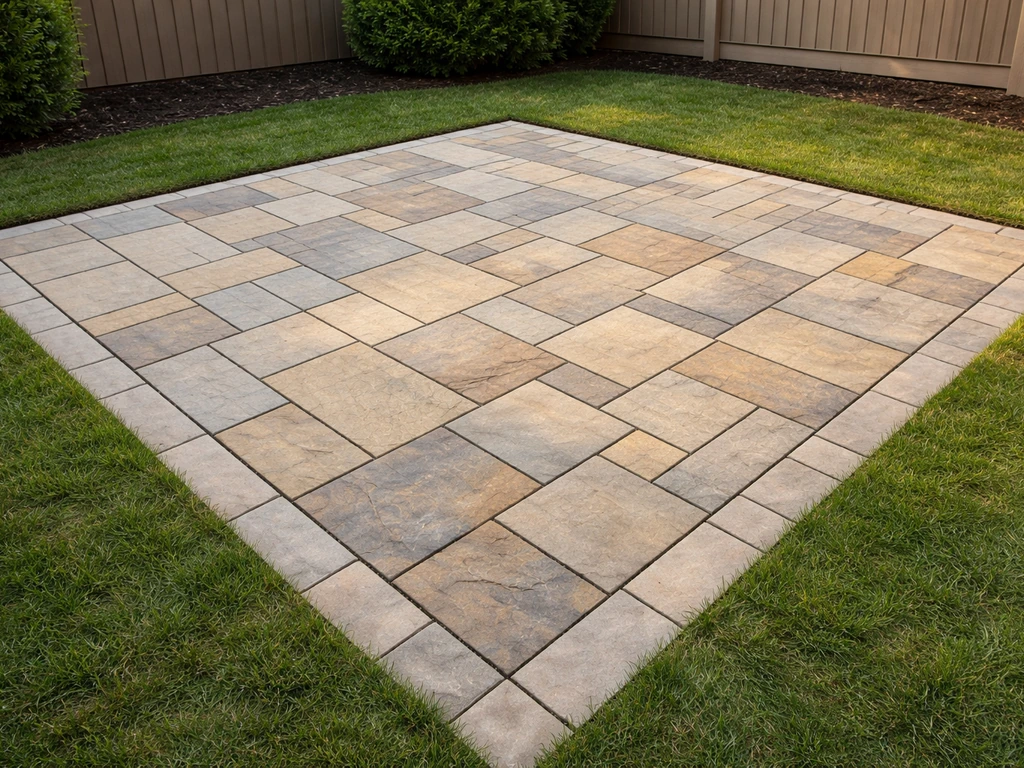
How Much Does a 12x12 Stone Patio Cost? 2026 Guide
2026 cost ranges to build a 12x12 stone patio, with per-sq-ft pricing, line items, and DIY vs installed budgets.
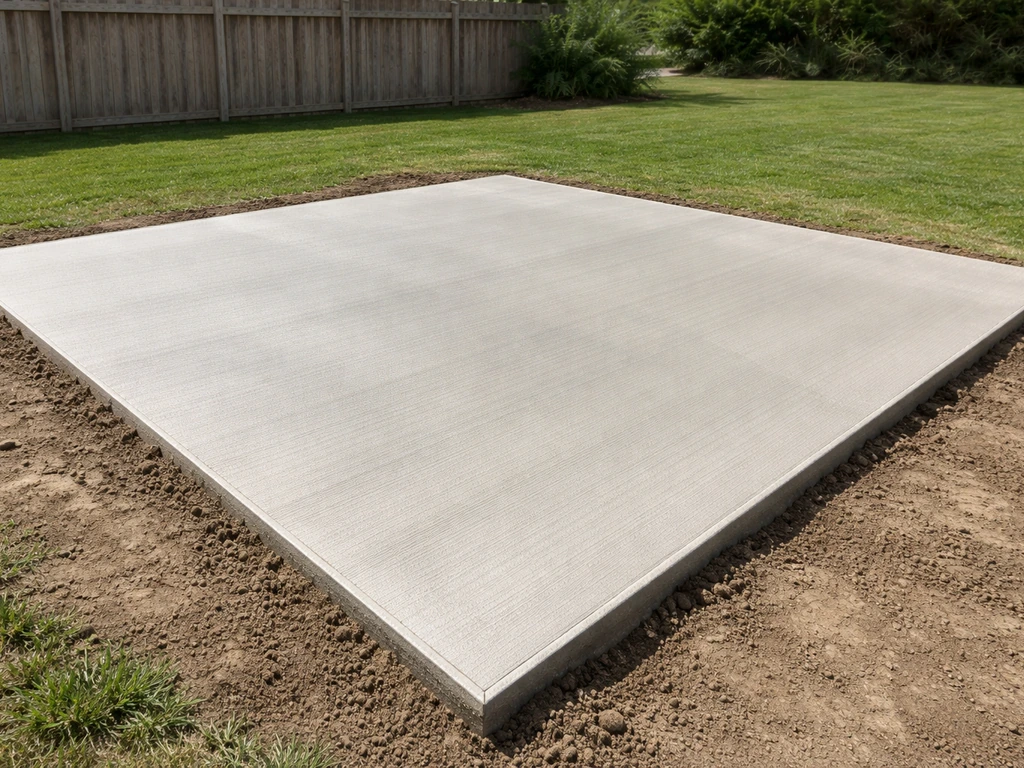
How Much Does a 12x12 Concrete Patio Cost in 2026?
Get a real budget range for a 12x12 concrete patio in 2026, plus cost drivers, quote checklist, and DIY vs pro tips.
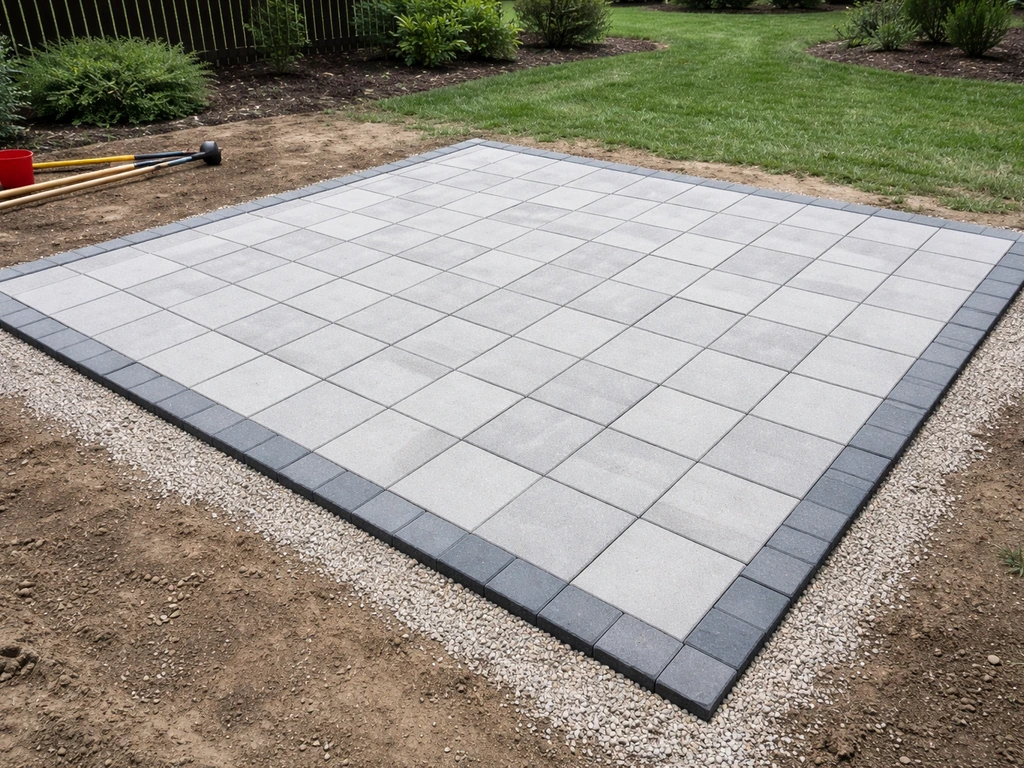
How Much Does a 12x12 Paver Patio Cost? Full Budget Guide
Get a real cost range for a 12x12 paver patio, with line-item materials, labor, add-ons, and DIY vs contractor tips.