
Installed paver patios typically cost $10 to $30 per square foot in 2026, with most homeowners landing somewhere in the $12 to $20 range for a standard concrete paver job. To get a clearer idea of how much are patio pavers for your project, compare material-only pricing with the installed per-square-foot total for your area.
How Much Does a Paver Patio Cost Per Sq Ft?

Felix Carver
4 Jun 2026
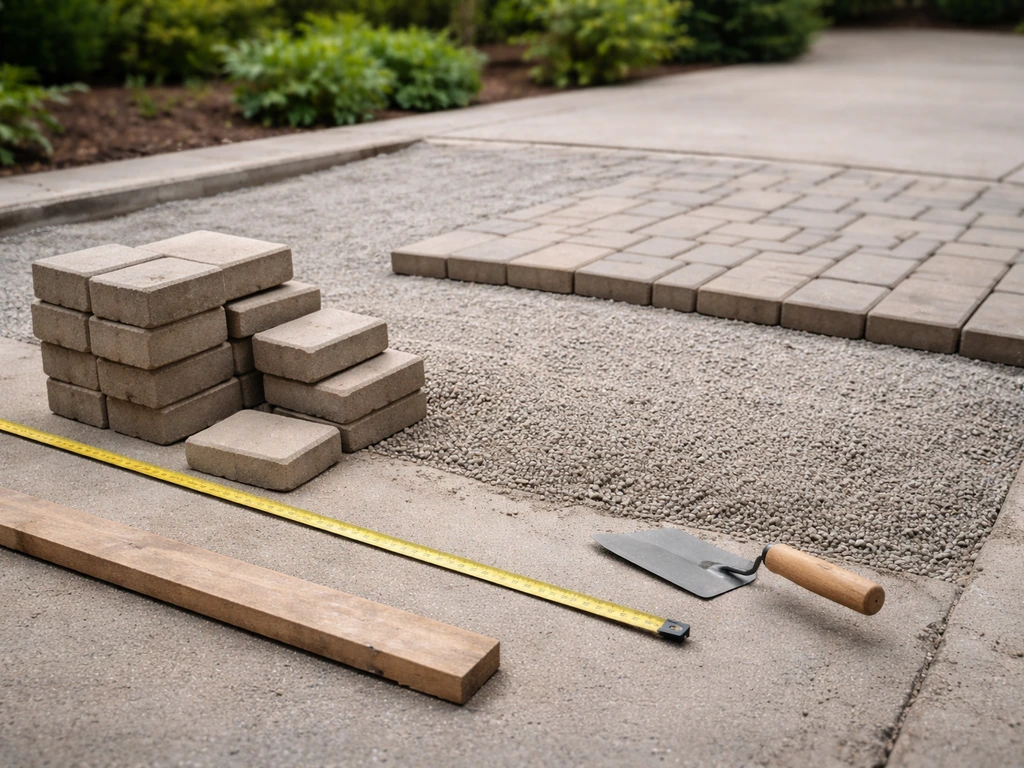
Material-only pricing for the pavers themselves runs much lower: concrete pavers go for about $4 to $8 per square foot uninstalled, brick-style pavers are closer to $2. 25 to $6 per square foot, and natural stone or flagstone lands at $7 to $16 per square foot before labor touches it. The gap between those two numbers is where the real budgeting happens, and that's what this guide breaks down.
Installed cost vs. materials-only: what you're actually comparing
The biggest source of confusion when people shop paver patios is comparing an installed quote to a bag-of-pavers price from a home improvement store. They're not the same thing, and the difference is significant. A contractor quote covers excavation, base gravel, bedding sand, the pavers themselves, edge restraints, joint sand, cleanup, and profit margin. A materials-only price just covers the pavers. When you add labor at the going rate of roughly $6.25 to $10.90 per square foot and base materials at $1.40 to $2.20 per square foot, that $4 concrete paver quickly becomes a $12 to $18 installed product.
| Paver Type | Material Cost (per sq ft) | Typical Installed Cost (per sq ft) |
|---|---|---|
| Concrete pavers | $4–$8 | $8–$20 |
| Brick pavers | $2.25–$7.50 | $10–$22 |
| Natural stone / flagstone | $7–$16 | $15–$50 |
| Premium/specialty pavers | $10–$20+ | $20–$30+ |
The high end of that flagstone range reflects hand-cut natural stone with tight joints and significant labor time. A basic concrete paver in a running bond pattern on a flat yard is as close as you'll get to the low end. Most real-world quotes fall in the middle.
Where your money actually goes: a cost breakdown
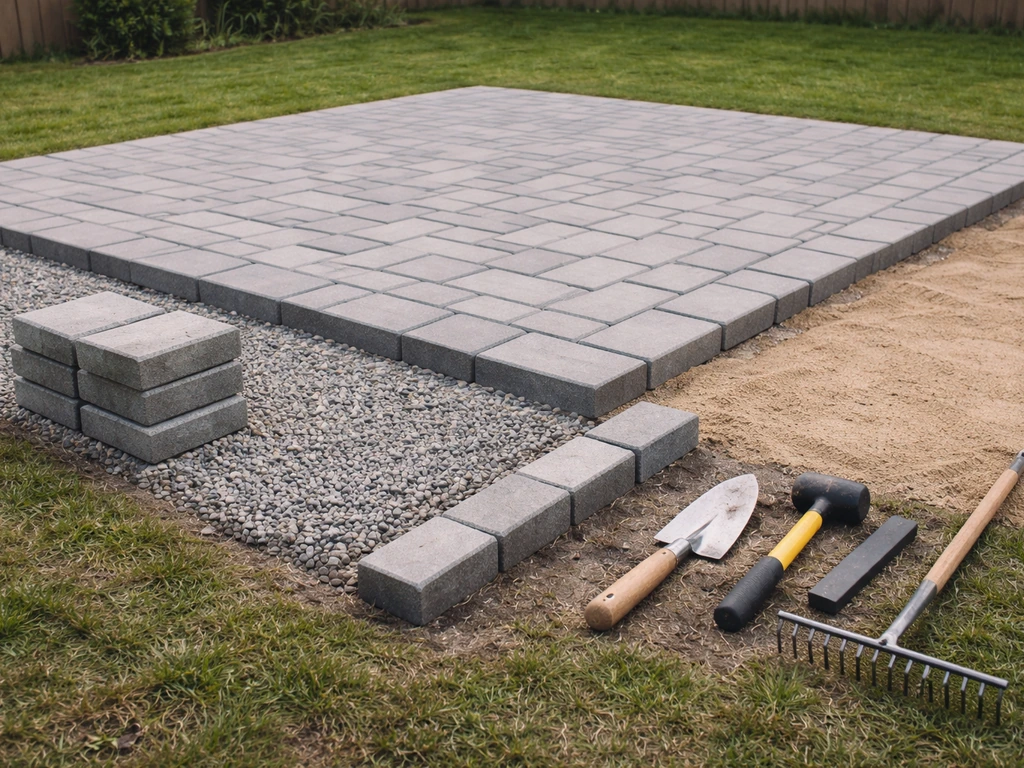
When a contractor sends you a $15,000 quote for a 20x20 patio, it helps to know which line items make up that number. Here's how a properly spec'd paver patio installation typically breaks down per square foot.
| Line Item | Typical Cost per Sq Ft | Notes |
|---|---|---|
| Pavers (materials) | $4–$16 | Depends on paver type chosen |
| Base materials (gravel, geotextile) | $1.40–$2.20 | Class II road base, fabric layer |
| Bedding sand | Included in base cost | 1-inch layer under pavers |
| Labor (excavation, install) | $6.25–$10.90 | Higher in Northeast, West Coast |
| Edge restraints | $0.50–$1.50 | Spiked plastic or concrete bond beam |
| Polymeric joint sand | $0.50–$1.00 | Locks joints, resists weeds |
| Permits and cleanup | $0.50–$2.00 | Varies by municipality |
One thing worth knowing: cheaper bids often cut corners on exactly these structural items. According to ICPI-spec guidelines, the line items that separate a real paver installation from a paver dump are base depth, polymeric joint sand, proper edge restraints, and geotextile fabric. Edge restraints in particular need to make physical contact with the side of the paver with at least 1 inch of vertical restraining surface. Bids that skip these items save money upfront but lead to shifting, sinking, and weed problems within a few seasons.
What drives the per-square-foot price up or down
Paver type and material quality
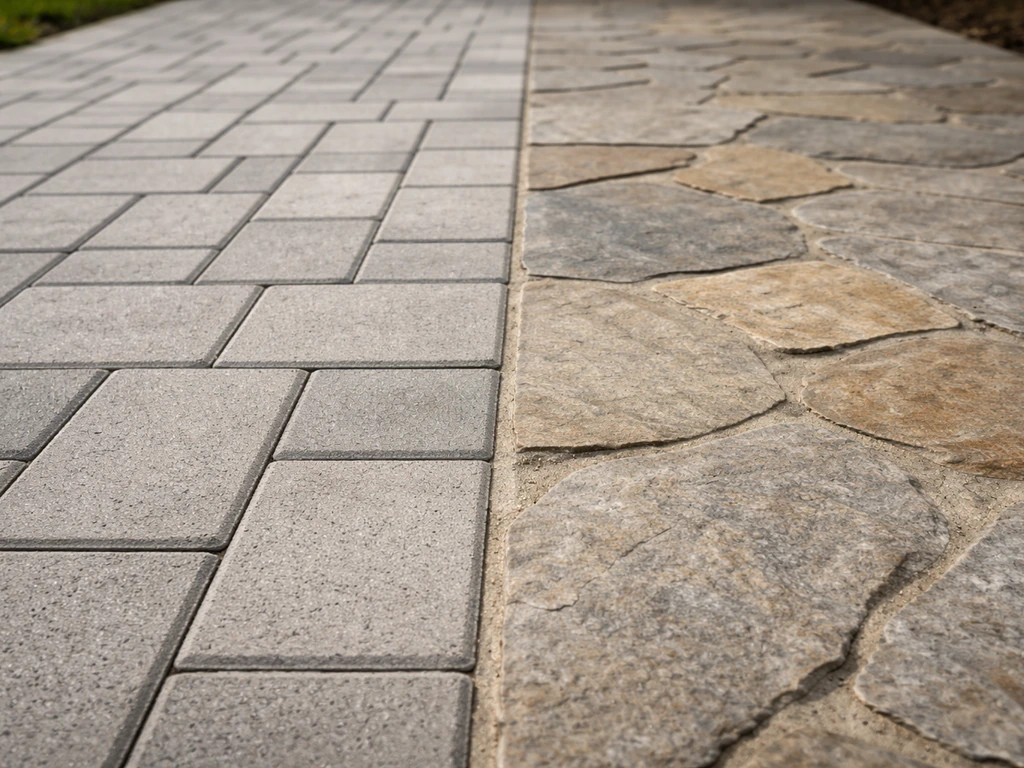
This is the single biggest lever. Swapping from a standard concrete paver to natural flagstone can double or triple your installed cost. Within concrete pavers alone, textured and tumbled finishes or premium manufactured styles can push material costs to $8 to $20 per square foot just for the product. If budget is a priority, a clean concrete paver in a simple pattern will always be your most cost-effective option while still looking good.
Pattern complexity
A herringbone or fan-shaped pattern requires more cutting and layout time than a basic running bond. That complexity typically adds 10% to 20% to the installation cost. On a $12,000 project, that's $1,200 to $2,400 for the pattern alone. If you love the look of a complex design, budget for it. If you're price-sensitive, a clean grid or running bond will save real money.
Base depth and soil conditions
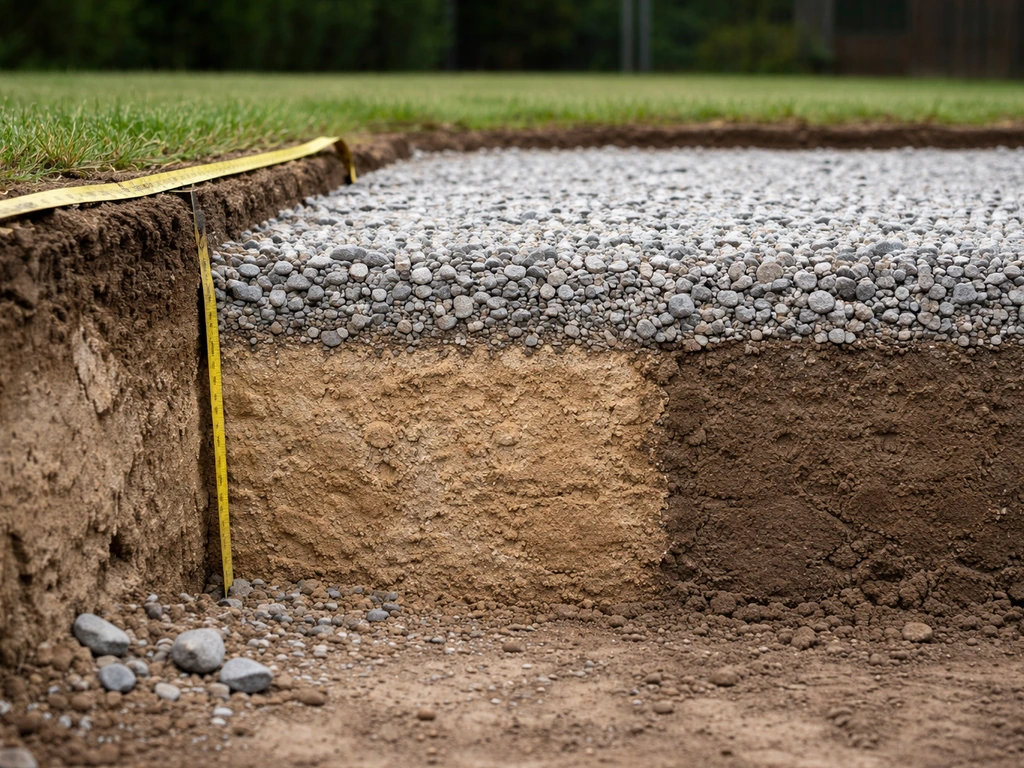
Your soil type determines how deep the contractor needs to dig and how much gravel goes in. Belgard notes that the depth of the base layer is influenced by soil type and the intended application blank" rel="noopener noreferrer">Your soil type determines how deep the contractor needs to dig and how much gravel goes in.. Sandy, well-draining soil in a temperate climate might need 4 to 6 inches of base. blank" rel="noopener noreferrer">Clay-heavy, soft, or high-water-table sites may need 8 to 10 inches of compacted base plus a geotextile layer between the subgrade and gravel. In frost-prone climates like the Midwest and Northeast, deeper bases are required to prevent frost heave. More gravel, more excavation, more cost.
Paver thickness
Standard residential pavers are about 2.375 inches (60mm) thick. Thicker pavers (3.125 inches or 80mm) cost more per unit and are heavier to handle, which adds minor labor time. For a driveway or heavy-use area, the upgrade is worth it. For a backyard patio that sees foot traffic only, standard thickness is fine.
How size and location change what you'll pay
Patio size affects cost in two ways: the obvious one (more square footage costs more), and the less obvious one (smaller patios often cost more per square foot because setup, equipment, and mobilization costs get spread over fewer square feet). For a 1000 sq ft paver patio, you can use the same per-square-foot installed range and multiply by your total square footage, then adjust for pattern complexity, base depth, and any add-ons. Here are ballpark installed costs for common patio sizes using the $12 to $20 per square foot middle range.
| Patio Size | Square Footage | Estimated Installed Cost (Mid-Range) | Notes |
|---|---|---|---|
| 10x10 | 100 sq ft | $1,200–$2,000 | Small; mobilization cost per sq ft is higher |
| 12x12 | 144 sq ft | $1,700–$2,900 | Common small patio size |
| 16x16 | 256 sq ft | $3,000–$5,100 | Popular mid-size |
| 20x20 | 400 sq ft | $4,800–$8,000 | Most common residential size |
| 1,000 sq ft | 1,000 sq ft | $10,000–$20,000 | Large project; more favorable per-sq-ft rate |
Regional labor and delivery costs move these numbers significantly. In the Northeast, expect installed costs of $18 to $30 per square foot for brick pavers, with DIY labor alone running $12 to $17 per square foot when you factor in material rental and delivery. In the Midwest, that same brick paver job comes in at $14 to $22 installed. On the West Coast, particularly in markets like San Diego, quotes of $20 to $35 per square foot are common even for standard concrete pavers. The South and Mountain West tend to fall in the middle of the national range.
Add-ons and hidden costs that inflate quotes
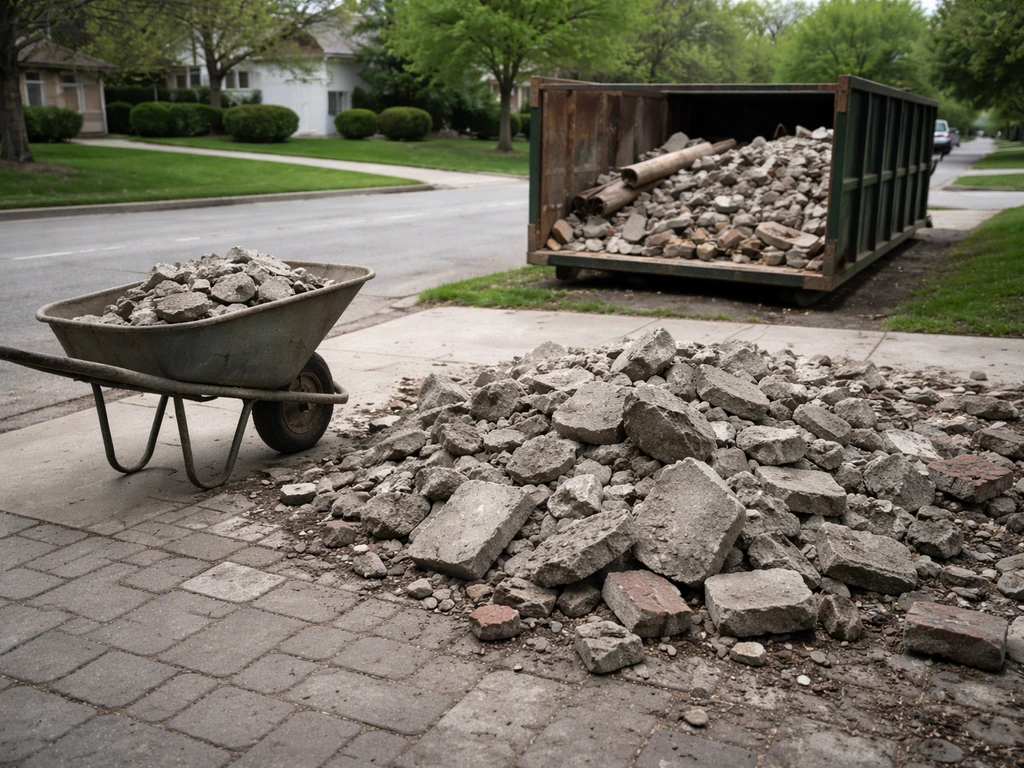
The base per-square-foot price rarely captures everything. Here are the costs that consistently catch homeowners off guard when they get their final quote.
- Demo and removal of an existing patio: breaking up and hauling concrete or old pavers adds $2 to $6 per square foot and is often quoted separately.
- Drainage solutions: if your yard slopes toward the house or has poor drainage, a French drain or channel drain can add $1,500 to $4,000 to the project depending on length and complexity.
- Steps: paver steps typically cost $100 to $300 per step installed, depending on width and material. A two-step entry from a door to the patio is a very common add-on.
- Borders and soldier courses: a contrasting border adds visual appeal but requires extra cutting, material, and labor, usually $3 to $6 per linear foot.
- Waste factor: cutting pavers to fit curves, angled walls, or complex patterns generates material waste. Budget for 5% to 10% extra pavers on a simple layout, and up to 15% on complex shapes.
- Permits: some municipalities require permits for patio projects over a certain size. Budget $100 to $500 depending on your area.
- Grading and leveling: if your yard isn't level, additional grading can add $500 to $2,000 before the first paver goes down.
- Fire pit integration: adding a built-in fire pit area requires additional materials, a dedicated paver ring or surround, and often a gas line or electrical hookup. This is a significant separate budget item.
DIY vs. hiring a contractor: the real math
DIY paver installation is genuinely doable for a motivated homeowner with a flat, reasonably accessible yard and a simple rectangular layout. The savings are real: you'll skip the $6.25 to $10.90 per square foot labor cost, which on a 20x20 patio translates to $2,500 to $4,360 in savings. But those savings come with some actual costs and real risks.
On the cost side, you'll need to rent a plate compactor ($100 to $200 per day), possibly a wet saw for cutting ($75 to $150 per day), and pay for materials delivery. You'll spend several days on a project a crew knocks out in two. On the risk side, the most common DIY mistakes are an undersized base, poor compaction, and edge restraints installed incorrectly (on top of the bedding sand instead of spiked into the native soil, which CMHA explicitly calls out as a failure point). Those mistakes lead to sinking sections, shifting pavers, and weed infiltration within a couple of years.
| Factor | DIY | Professional Install |
|---|---|---|
| Cost per sq ft (Northeast example) | $12–$17 | $20–$27 |
| Cost per sq ft (national mid-range) | $6–$10 (materials only) | $12–$20 (all-in) |
| Time investment | 2–5 days for 200 sq ft | 1–2 days crew |
| Equipment needed | Plate compactor, saw (rental) | Contractor provides |
| Risk of base failure | Higher without experience | Lower with warranty |
| Best for | Simple rectangular layouts, flat ground | Complex shapes, slopes, large projects |
DIY makes the most sense on projects under 200 square feet with a simple rectangular shape, flat and well-draining soil, and no existing hardscape to remove. As soon as you add slopes, drainage issues, a complex pattern, or a large footprint, the time savings from hiring a pro start to close the cost gap pretty fast.
How to estimate your project and read contractor quotes
Before you call a contractor, do a quick estimate of your own. Measure your patio area in square feet, pick a realistic per-square-foot range based on your paver type choice, and add 15% to 20% for the add-ons that almost always come up. If you want a faster answer to how much does it cost for a paver patio, measure your square footage and use a realistic per-square-foot range before comparing contractor quotes. That gives you a working budget to validate quotes against.
- Measure your patio dimensions and calculate square footage (length x width).
- Choose a paver type and look up its material cost range: concrete ($4–$8/sq ft materials), brick ($2.25–$7.50), or natural stone ($7–$16).
- Add labor: $6.25 to $10.90 per square foot, adjusting up if you're in a high-cost region.
- Add base materials: $1.40 to $2.20 per square foot.
- Add 5% to 10% for material waste, and 10% to 20% if your pattern is complex.
- Identify your add-ons: demo, drainage, steps, borders, grading. Price each separately.
- Add a 10% to 15% contingency for surprises in soil conditions or access.
- Get at least three contractor quotes and compare them line by line, not just the total.
When you review contractor quotes, look for these specific line items: base depth and material type, bedding sand thickness, edge restraint type and installation method, and whether polymeric or regular joint sand is included. A quote that skips these details is often the one that skips the actual work. A good contractor specifies base depth in inches, names the base material (Class II road base or equivalent), and lists edge restraint as a separate line item. If a quote just says 'install pavers' with a total, ask for the breakdown before you sign anything.
If you're also evaluating the total project cost beyond the per-square-foot rate, it's worth looking at how the overall paver patio budget scales with size and how add-ons like a fire pit affect the full number. A fire pit adds its own materials and labor requirements, which can change the overall price beyond the standard paver patio per-square-foot estimate add-ons like a fire pit. The per-square-foot lens is the right starting point for comparing quotes, but the final budget decision usually comes down to the complete list of what's included.
FAQ
What is included in the per sq ft price for a paver patio quote, and what might be missing?
A complete installed rate usually includes excavation, compacted base gravel, bedding sand, pavers, edge restraints, joint sand, and cleanup. Ask whether the quote also includes hauling away spoils, geotextile fabric, and compaction passes (a separate line item is a good sign). If those items are not explicitly listed, the per sq ft number may look low but the final total can jump.
Is the $10 to $30 per sq ft range for pavers or for a full installation?
That range is for installed patios, not just the pavers. The pavers-only cost is much lower, so comparing an in-store paver price or a materials invoice to an installed quote will almost always make the contractor seem expensive. Use installed line items to validate the real per sq ft rate.
How do I estimate my patio cost per sq ft if my yard has odd shapes or lots of cutting?
Use the same base per sq ft range, then add a pattern and layout complexity adjustment for every feature that increases cutting (curves, diagonal layouts, steps, and inset areas). A practical check is to count “extra cuts” beyond simple border work. The more you need to fit around existing elements, the more you should move toward the higher end of your per sq ft budget.
Why do two patios with the same square footage come in at very different prices?
Differences usually come from base depth requirements (soil type, frost risk, drainage), edge restraint quality, joint sand choice (polymeric vs non-polymeric), and whether the contractor needs to remove or rework existing hardscape. Pattern choice also matters, but structural scope items often create the biggest spread.
Does thicker paver material always increase the installed price per sq ft by a lot?
It increases material cost and can add handling time, but the larger impact is usually in what the thickness requires overall. For example, thicker pavers for driveways may also change base depth and preparation. If your patio sees only foot traffic, the standard thickness is often the cost-effective choice.
How much should I add to my estimate for “hidden” add-ons before requesting quotes?
Plan on 15% to 20% over your base patio math for items that commonly surface late, like additional excavation, disposal, leveling corrections, more sand and base than expected, and minor drainage adjustments. If the contractor’s quote is within that margin without detailed line items, be cautious.
What’s a realistic per sq ft budget if I want a premium paver finish or natural stone?
Premium finishes and natural stone often push the material cost far above standard concrete pavers, and labor can rise due to tighter joint requirements and more careful installation. If your goal is “looks like flagstone,” budget at the higher end of installed rates for that material category, not the midpoint used for typical concrete installs.
Should I choose polymeric joint sand, and does it change the cost per sq ft?
Polymeric joint sand typically costs more than regular joint sand, but it can improve resistance to weed growth and joint washout in the right installation. Expect it to raise the installed per sq ft rate slightly if it is included as a separate line item. Confirm it is specified in the quote and ask what kind is being used.
How do I tell if a contractor is cutting corners on base depth or restraints?
Look for specific base depth in inches, the base material type, whether geotextile fabric is included (when needed), and how edge restraints are installed. A common red flag is a quote that says “standard base” or does not separate edge restraints as a separate line item. Ask how restraints are anchored, not just what brand or model is proposed.
Is DIY really cheaper per sq ft, and what projects are most likely to go wrong?
DIY can reduce the labor portion, but only if your yard is flat, accessible, and the layout is simple. The most frequent DIY failure points are undersized base depth, inadequate compaction, and edge restraints not installed correctly into the native soil (not just sitting on bedding sand). Those issues can cause sinking and weed intrusion within a few seasons.
How do I compare contractor bids that use different paver types and thicknesses?
Normalize the comparison by asking for the exact specs in the bid: paver type (concrete, brick-style, stone), paver thickness, joint sand type, base depth, and edge restraint method. If one bid uses a higher-spec paver but a thinner base or less robust restraints, the lower price may not actually be “better value,” even if the per sq ft total looks similar.
Does patio size always reduce the per sq ft cost?
Not always. Larger patios often spread mobilization and equipment costs across more square feet, which can lower the effective per sq ft rate. Very small projects may carry a higher per sq ft cost because setup, layout time, and delivery fees do not shrink proportionally with area.
What should I ask about drainage and slope before deciding on a paver patio price?
Ask how the contractor will grade the subbase for water runoff and whether they will address existing drainage issues. Even if two quotes have the same per sq ft price, drainage corrections can change base depth, excavation scope, and sometimes require additional materials. Good contractors usually describe the intended slope and how they will keep water away from the home.
Next Articles
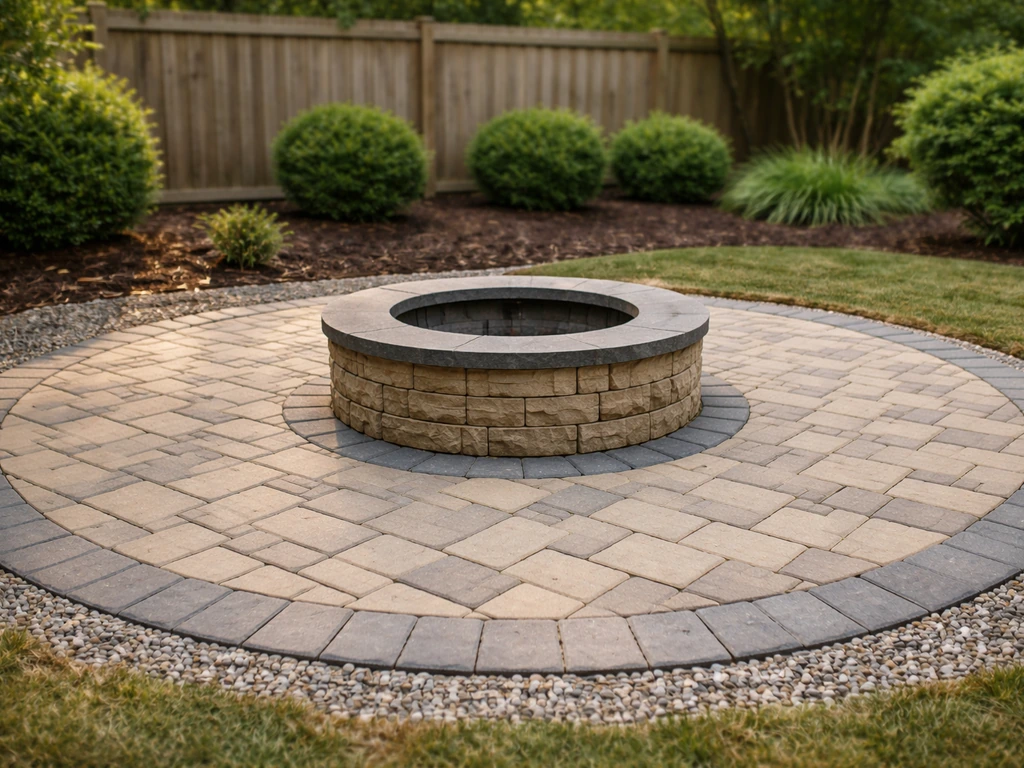
How Much Does a Paver Patio With Fire Pit Cost?
Real cost ranges for paver patios with fire pits by size, plus full breakdowns of pavers, base, labor, and fire pit type
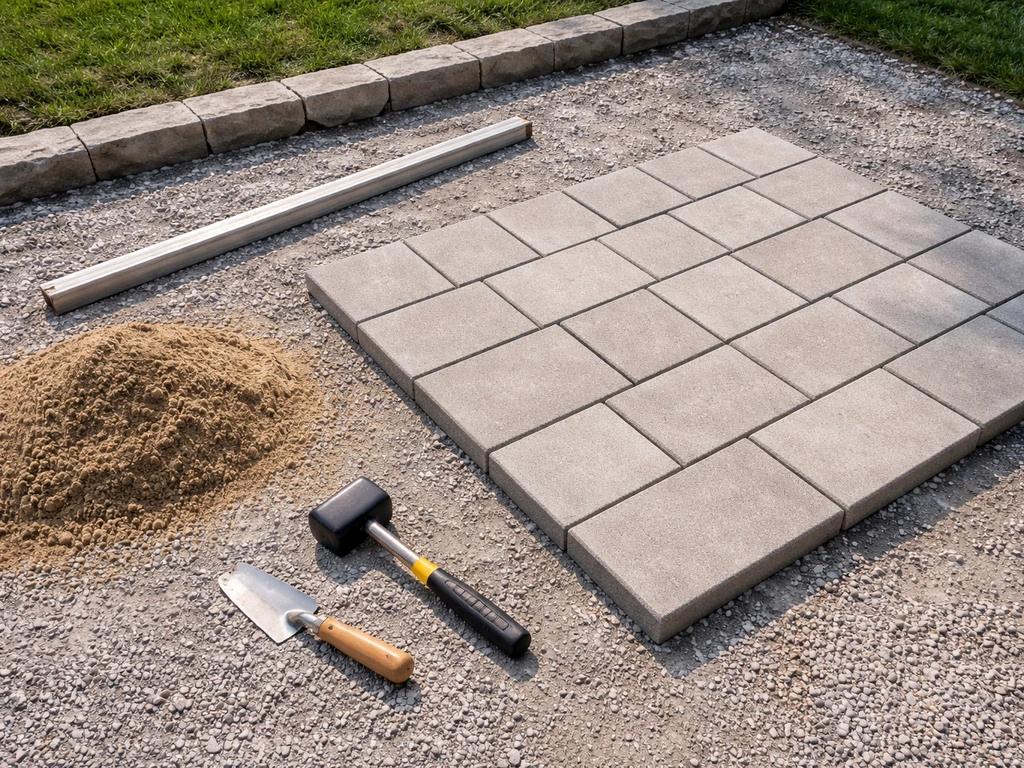
How Much Are Patio Pavers Cost Breakdown by Size and Pallet
Patio paver cost ranges by size and pallet, plus DIY vs installed pricing and material-only budgeting tips.
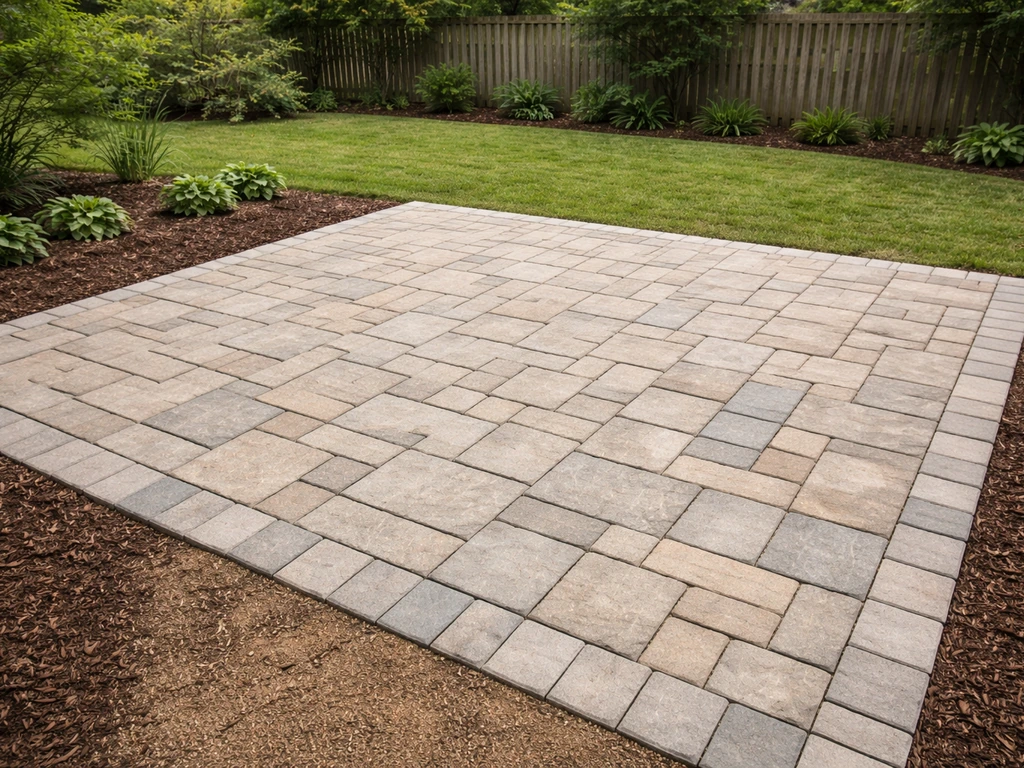
How Much Does Patio Paving Cost? Prices by Material and Size
Patio paving costs by material and size, including small patios, repaving, and quote line items for budgeting.