
A paver patio with a fire pit typically runs $4,500 to $15,000 installed, depending on patio size, fire pit type, and your region. If you are wondering how much are patio pavers on top of the base prep and installation, pricing is often given per square foot $4,500 to $15,000 installed.
How Much Does a Paver Patio With Fire Pit Cost?

Felix Carver
31 May 2026
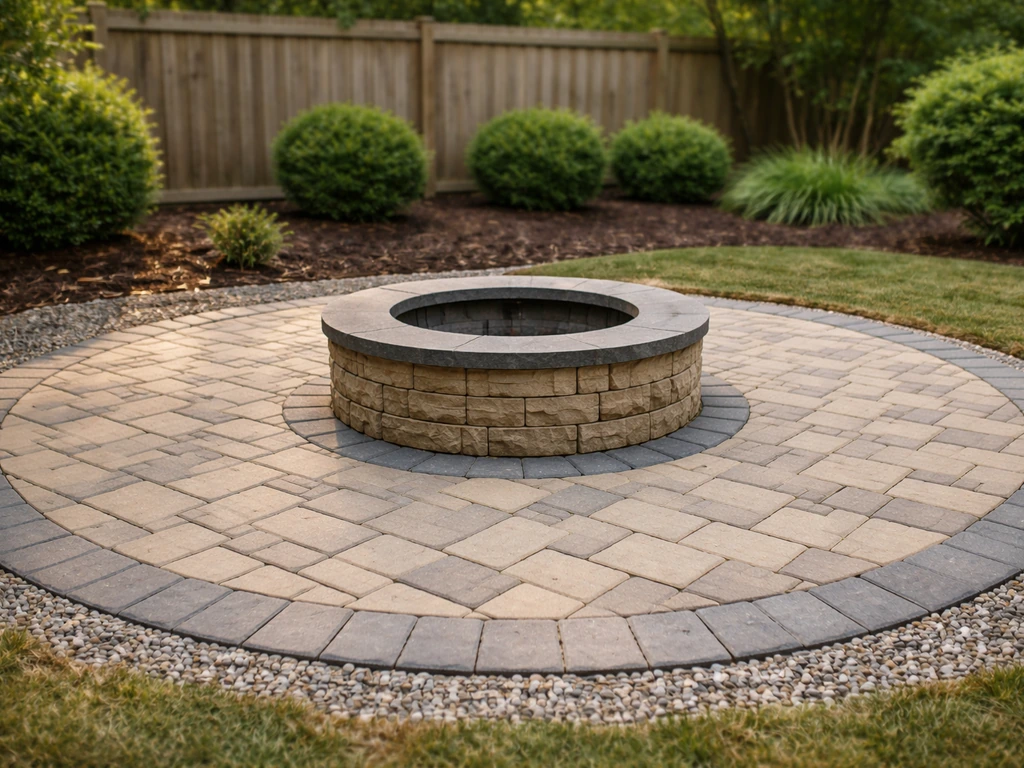
If you want the full estimate, you can total the patio per square foot price plus add the fire pit and any added features like a gas line paver patio with a fire pit. For a mid-size project like a 20x20 paver patio with a built-in wood-burning fire pit, most homeowners land somewhere between $8,000 and $13,000. Add a gas fire pit with a new gas line, and that same project can push $10,000 to $16,000.
A smaller 12x12 patio with a prefab fire pit can come in under $5,000. These are real installed numbers, not material-only figures, and the spread is wide because a few key decisions drive most of the cost. If you want a tighter estimate for your own yard, the rest of the guide walks through per-square-foot pricing and the biggest cost drivers how much it costs for a paver patio.
Typical total price ranges by patio size
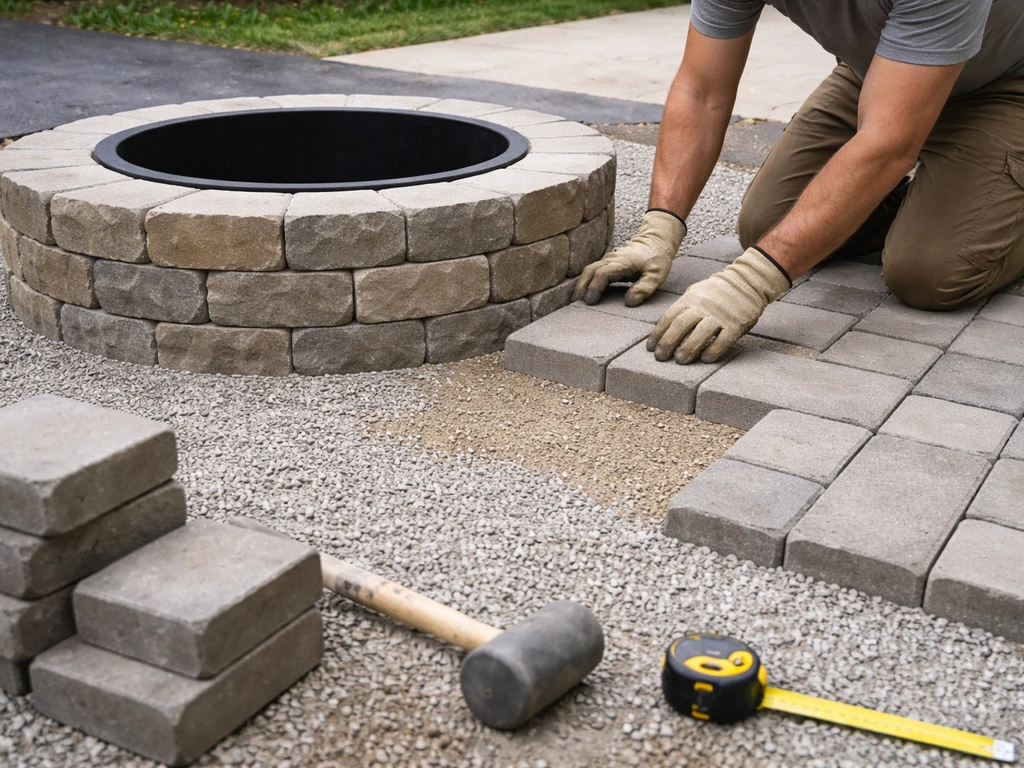
Paver patios are priced per square foot installed, and that rate includes excavation, compacted gravel base, bedding sand, the pavers themselves, edge restraints, polymeric sand, and labor. If you want a more direct answer for your specific size, see how the typical paver patio cost per square foot adds up in total priced per square foot installed. HomeAdvisor and HomeGuide both put the installed range at roughly $10 to $17 per square foot for standard concrete pavers, with premium natural stone pavers pushing $20 to $25 per square foot. Those rates are before any fire pit. Here is how that plays out at common patio sizes:
| Patio Size | Square Footage | Patio Cost (Installed) | Add Prefab Fire Pit | Add Built-In Fire Pit | Add Gas Fire Pit (with line) |
|---|---|---|---|---|---|
| 10x10 | 100 sq ft | $1,200–$2,500 | $1,800–$4,000 | $3,500–$6,500 | $5,000–$9,000 |
| 12x12 | 144 sq ft | $1,700–$3,600 | $2,300–$5,100 | $4,200–$7,600 | $5,700–$10,500 |
| 20x20 | 400 sq ft | $4,800–$10,000 | $5,400–$11,500 | $8,000–$15,000 | $10,000–$17,000 |
| 20x30 | 600 sq ft | $7,200–$15,000 | $7,800–$16,500 | $10,500–$18,500 | $12,000–$20,000 |
A 10x10 patio is honestly pretty small once you put chairs around a fire pit. Most people who want a functional fire pit hangout space end up at 16x16 or 20x20 minimum. The sweet spot for a real backyard setup is the 20x20 range, which is why Angi cites a patio with a built-in fire pit averaging about $6,750 on the low end and climbing from there. On a per-square-foot basis, smaller patios often cost more per square foot than larger ones because setup, mobilization, and edge work are spread over fewer tiles.
Cost breakdown: paver patio components
Understanding what goes into the price makes it much easier to read contractor quotes and spot where one bid is cutting corners versus another. Here is how a typical installed paver patio breaks down:
| Component | Typical Cost Range | Notes |
|---|---|---|
| Excavation and hauling | $0.50–$2.00 per sq ft | Depends on depth, soil type, and site access |
| Compacted gravel base | $1.00–$2.50 per sq ft | 4–6 inches typical; 8–12 inches in freeze-thaw climates |
| Geotextile fabric | $0.10–$0.30 per sq ft | Skipping this is a common shortcut that causes early failure |
| Bedding sand (HPB or chip stone) | $0.50–$1.00 per sq ft | Coarse, angular sand or chip stone; not play sand |
| Pavers (materials only) | $4–$6 per sq ft (concrete); $8–$20+ per sq ft (natural stone) | Biggest material cost variable |
| Edge restraints | $1.00–$2.50 per linear ft | Plastic or aluminum spike-in; sometimes buried concrete |
| Polymeric sand and compaction | $0.50–$1.50 per sq ft | Locks joints; improper install voids some manufacturer warranties |
| Labor (laying pavers, cuts, grading) | $4–$11 per sq ft | Angi puts contractor rates at $50–$80/hour |
The base prep (excavation, gravel, geotextile, bedding) is where a lot of budget variation hides. In cold climates with hard freeze-thaw cycles, a properly compacted base needs to be 8 to 12 inches deep, which means more excavation, more material, and more labor. In the South, 4 inches of compacted gravel may be fine. If a quote seems unusually cheap, ask specifically what base depth they're quoting. Skipping geotextile fabric or under-sizing the base is how patios end up heaving and settling in 3 to 5 years.
Fire pit costs: prefab vs. built-in (wood vs. gas)
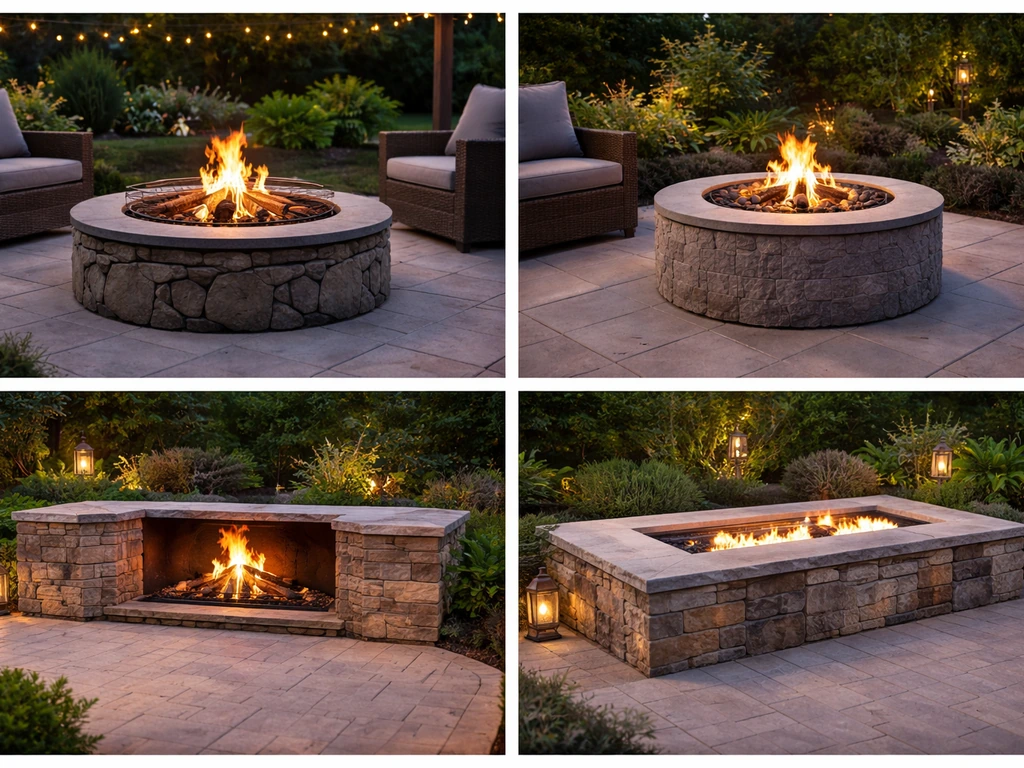
The fire pit itself is where costs swing dramatically based on two decisions: prefab versus built-in, and wood versus gas. These four combinations have very different price tags.
Prefab fire pits (drop-in or freestanding)
A prefab fire pit is a standalone bowl, insert, or unit you purchase and place on the patio. HomeAdvisor puts the average cost to install an outdoor fire pit at about $850, and simple prefab wood-burning units can be had for $200 to $600 just for the product. Steel fire bowls are on the low end; cast iron or pre-cast concrete bowls run $400 to $1,200. If you want a gas prefab fire table or insert, budget $800 to $3,800 including the unit, and add $500 to $2,500 for a gas line run if you don't already have one nearby. The main advantage of prefab is that you can DIY the placement easily since there's no masonry work.
Built-in fire pits (masonry or stone)
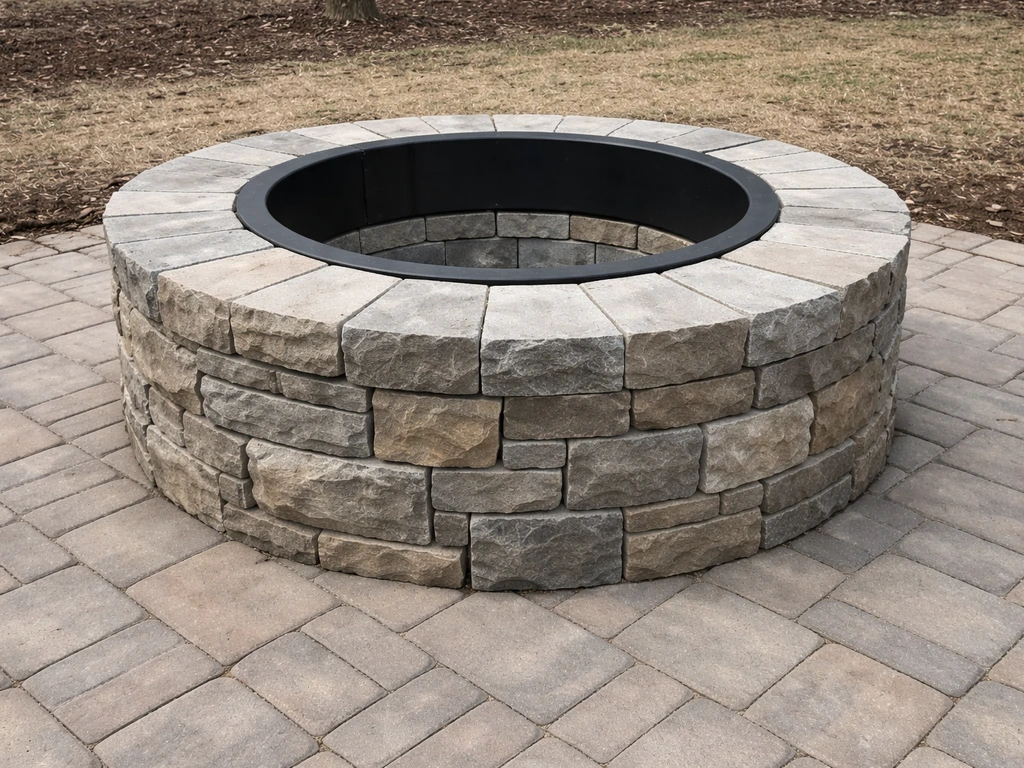
A built-in fire pit is constructed in place, usually with a concrete block or brick core, a steel fire ring liner, and a stone, brick, or stucco veneer surround. These run $1,500 to $6,000 or more for labor and materials together, with Angi citing the average at roughly $3,500 to $5,000 for a mid-size masonry unit. The fire ring liner (to protect the masonry from direct heat) typically costs $50 to $250. A decorative stone or brick veneer adds $500 to $2,000 depending on materials. A chimney or spark-arresting screen adds another $200 to $800. Built-ins look better, last longer, and integrate cleanly with a paver patio design, but they are not DIY-friendly unless you have masonry experience.
Wood-burning vs. gas: the real cost difference
Wood-burning fire pits are cheaper to build and don't require utility work. Gas fire pits cost more upfront because you need a fuel supply. Running a new gas line to a backyard fire pit typically costs $500 to $2,500 depending on distance from the meter, whether the run is underground, and local labor rates. Fixr puts gas fire pit total installed costs between $900 and $3,800 for the unit and installation (not counting the gas line separately). Gas is more convenient to operate, easier to control, and often cleaner for HOA-compliant communities. Wood gives you the crackle and smell. From a pure budget standpoint, wood-burning saves $500 to $2,500 on the gas line alone.
| Fire Pit Type | Unit/Materials | Labor to Install | Gas Line (if needed) | Total Installed Range |
|---|---|---|---|---|
| Prefab wood bowl (freestanding) | $200–$1,200 | $0 (DIY placement) | N/A | $200–$1,200 |
| Prefab gas insert/table | $800–$3,800 | $200–$600 | $500–$2,500 | $1,500–$6,900 |
| Built-in wood masonry pit | $500–$2,000 materials | $1,000–$3,500 labor | N/A | $1,500–$5,500 |
| Built-in gas masonry pit | $600–$2,500 materials | $1,200–$4,000 labor | $500–$2,500 | $2,300–$9,000 |
Installation vs. DIY and when to hire pros
A paver patio is one of the more DIY-able hardscaping projects. The labor component runs $4 to $11 per square foot, so on a 400 square foot patio you could theoretically save $1,600 to $4,400 by doing it yourself. The reality is that base prep is hard, physical work requiring a plate compactor (rental runs $80 to $150 per day), and getting the grade right matters a lot for drainage.
Unilock’s paver base guidance recommends building the base with spread-and-compact crushed stone or gravel in roughly 3-inch compacted layers, which helps explain why base prep drives labor and equipment needs for patio installs base prep is hard, physical work requiring a plate compactor. If you enjoy outdoor projects and are willing to rent equipment and take a weekend, a paver patio is doable.
The most common DIY mistakes are insufficient base depth, wrong bedding sand (never use fine sand), and skipping edge restraints.
Where you should absolutely hire a pro: gas line work and gas appliance connections. This is not a cost-saving opportunity. Most jurisdictions require permits and inspections for gas piping, and the work must be done by a licensed installer. Running an unpermitted gas line is a safety risk and a liability issue if you sell the house. If your fire pit is gas, budget for a licensed plumber or gas fitter on top of the landscaper.
Built-in masonry fire pits also benefit from professional installation. The structural work, fire-rated materials, and proper liner placement are things that look easy on YouTube but are easy to get wrong. Improper construction around a fire source creates real safety risks. If you're doing a prefab wood-burning bowl, DIY is fine. If you're doing a built-in gas fire pit with stone surround, hire someone who has done it before.
| Task | DIY Realistic? | Why / Why Not |
|---|---|---|
| Paver patio base prep and laying | Yes, with effort | Rentable equipment; tutorials widely available; time-intensive but learnable |
| Prefab fire pit placement | Yes | No specialized skills needed; just choose a safe location per local codes |
| Built-in masonry fire pit (wood) | Intermediate | Doable with masonry experience; liner placement is critical for safety |
| Gas line run and connection | No | Requires licensed installer in most jurisdictions; permit/inspection required |
| Gas fire pit appliance hookup | Rarely | Depends on jurisdiction; most require licensed connection even for flex line final hookup |
| Electrical (for fire feature lighting) | No | Licensed electrician required; outdoor rated circuits need permits |
Regional pricing factors and quote sanity-checking
Where you live shifts your total cost by more than you might expect. CalcSummit notes that regional variation in paver patio pricing exceeds 20%, and CostWhale's state-level data backs this up. A paver patio installation priced at $5,220 in South Carolina might run $7,500 to $9,000 in the Northeast or Pacific Coast states. Labor is the biggest driver: contractor rates in high cost-of-living metros are simply higher. Material freight costs also vary, especially for heavier pavers and bulk aggregate.
A few regional factors to watch for: In freeze-thaw climates (most of the Midwest and Northeast), your base needs to be deeper (8 to 12 inches of compacted gravel versus 4 inches in warmer zones), which adds $1 to $3 per square foot to base preparation costs. In areas with clay-heavy soil, drainage work may be required, adding further cost. In the Southwest, heat tolerance matters more than freeze-thaw, but you still need proper base compaction.
When you get quotes, expect legitimate qualified bids to fall within about 15 to 25 percent of each other. If one bid is 40 to 50 percent below the others, it usually means something is being left out: thinner base, no geotextile, no polymeric sand, or a contractor who will cut corners once on-site. Ask every bidder to specify base depth, geotextile inclusion, edge restraint type, and joint sand type in writing. Unilock’s contractor guide for installing a paver patio base emphasizes properly compacting the base, then installing a bedding layer and locking joints with jointing sand that conforms to ASTM C936 joint sand type in writing. That one request filters out most of the lowball bids immediately.
Budgeting examples and trade-offs
Here are three realistic scenarios to help you figure out where you fit and where you can trade off cost versus quality.
Budget build: 12x12 paver patio with a prefab wood fire pit
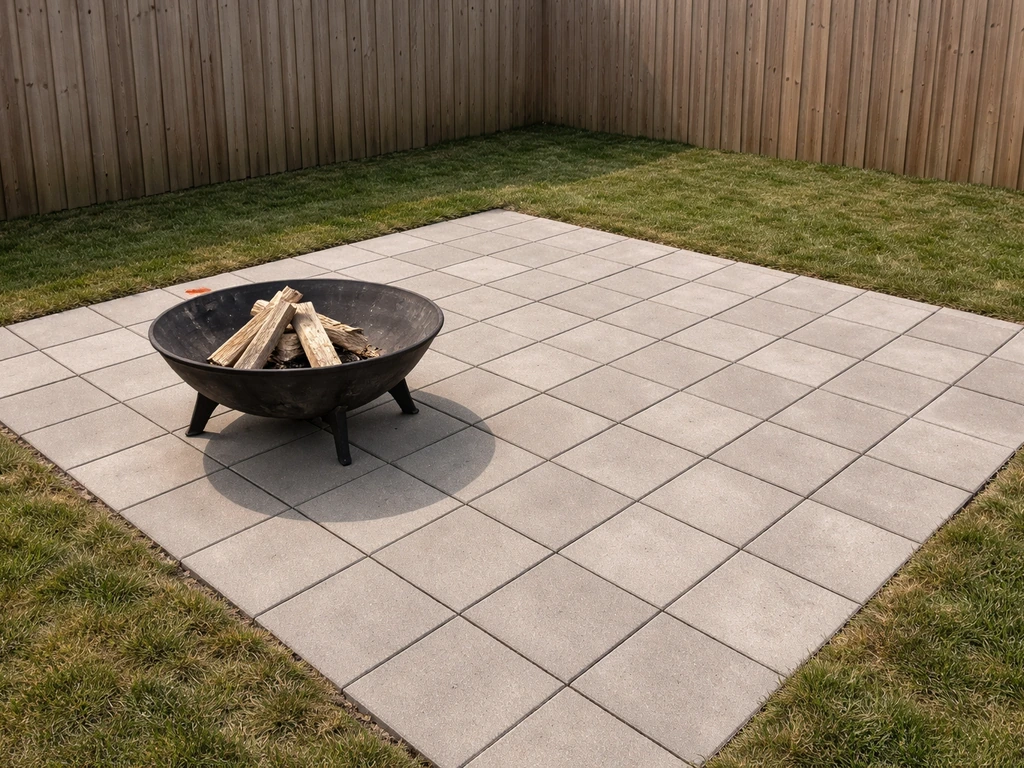
A 144 square foot patio at $12 per square foot installed comes to about $1,730. Add a quality freestanding cast iron fire bowl for $400 to $700. Total: $2,100 to $2,500. This is the entry-level version that still looks great and functions perfectly well. The trade-off is that 12x12 is tight for seating around a fire. You will want at least 18 to 24 inches of clearance on each side of the fire pit, so plan your patio size with that in mind.
Mid-range build: 20x20 paver patio with built-in wood fire pit
A 400 square foot patio at $14 per square foot comes to $5,600. A built-in masonry fire pit with steel liner and basic stone veneer runs $2,500 to $4,000 installed. Total: $8,100 to $9,600. This is the most popular combination for homeowners who want something permanent and attractive. You can upgrade the pavers from standard concrete ($4 to $6 per square foot) to tumbled or textured pavers ($7 to $10 per square foot) for another $1,200 to $1,600, which is worth it if the space will see heavy use.
Premium build: 20x20 natural stone patio with gas fire pit
Natural stone pavers (bluestone, travertine, or flagstone) at $18 to $25 per square foot installed brings the 400 square foot patio to $7,200 to $10,000. A built-in gas fire pit with stone surround and gas line run adds $4,000 to $8,000. Total: $11,000 to $18,000.
For a 1,000 square foot paver patio, the total cost typically depends on the paver material choice, local labor rates, and whether you add features like a fire pit how much does a 1000 sq ft paver patio cost. At this level, you're getting a space that genuinely looks like a magazine feature, and the gas convenience is a real quality-of-life upgrade.
The paver selection is the biggest lever: going from concrete to natural stone on a 400 square foot patio adds $5,000 to $7,600 by itself.
A pattern upgrade (herringbone or circular fire pit surround versus simple running bond) adds $1 to $3 per square foot in labor for the more complex cuts and layout. If your contractor offers a circular or radial pattern around the fire pit area, it looks stunning but adds $300 to $800 to the labor for that section alone. It is usually worth it for a centerpiece fire feature.
How to get accurate contractor quotes
Before you call anyone, spend 20 minutes doing this prep work. It will make every quote more accurate and make you a much easier client to work with, which sometimes gets you a better price.
- Measure your intended patio footprint and mark it with spray paint or stakes. Decide on a firm size before getting quotes. Changing dimensions mid-quote wastes everyone's time.
- Decide on fire pit type before quoting: prefab or built-in, wood or gas. If gas, have your gas meter location handy so the contractor can estimate the line run distance.
- Note any obstacles: tree roots, grade changes, drainage issues, distance from house, or existing structures. These all affect base prep cost.
- Choose your paver style at least roughly. You don't need a final selection, but know whether you want standard concrete, tumbled concrete, or natural stone. This changes the materials quote significantly.
- Ask every bidder to quote the same scope: base depth (specify the inches), geotextile yes/no, edge restraint type, polymeric sand inclusion, and fire pit specs. Apples-to-apples comparison is only possible with a consistent scope.
- Ask about permits. For gas fire features, ask specifically who pulls the permit, who does the gas line, and whether the final connection is included in the quote.
- Ask what is not included. Cleanup and haul-away, sealing the pavers after install, and seasonal curing time are common omissions from initial quotes.
Get at least three quotes. Two quotes give you almost no comparison data; three gives you a pattern. If one is an outlier in either direction, ask why. Legitimate contractors are not bothered by that question; contractors who get defensive about it are telling you something.
Finally, know that the paver patio itself and the fire pit are sometimes quoted by different trades. A hardscape contractor typically does the paver work and the masonry fire pit. The gas line is a plumber or gas fitter. On larger projects, a general contractor or landscaping company may coordinate all three. Clarify upfront who is responsible for each component so nothing falls through the cracks. The most common budget surprise on a gas fire pit project is a homeowner who assumed the landscaper was handling the gas line and discovered at the end that nobody had quoted it.
If you're still working out your base patio budget before adding the fire pit, the per-square-foot cost breakdown and size comparisons work the same way whether you're pricing a 10x10 or a much larger slab. The fire pit adds cost on top, and the type of fire pit you choose is the single biggest variable after patio size itself.
FAQ
Should quotes for a paver patio with a fire pit include the patio and fire pit as separate line items?
For most bids, the fire pit cost and the patio cost should be line-itemed separately. If it is not, ask whether the installer is including removal and disposal, permits, and the full gas line run (if gas) in the same scope, since those are frequent omissions in lump-sum quotes.
What if my yard drains poorly, will that change the total cost?
If your patio sits on a slope or drains poorly, you may need grading and additional drainage features (often a swale, trench drain, or subdrain) which can add several thousand dollars. Ask contractors to describe how they will maintain runoff away from the house and where water will go after installation.
Do built-in fire pits require different base preparation than the rest of the patio?
The fire pit is only “anchored” correctly if the base is built to support both the paver load and the fire pit’s weight and heat effects. Ask whether the base prep around the fire pit will be thickened or built differently than the rest of the patio, especially for built-in masonry units.
What should I confirm about paver joint sand in my estimate?
A common quote gap is the joint treatment between pavers. Ask whether the bid includes polymeric sand for joints, not just “sand,” and confirm the curing and weather window requirements so the joints lock up properly.
Who should handle the final gas connection details, the landscaper or the plumber?
For gas installations, confirm who is responsible for the shutoff valve placement, regulator requirements, and final connections to the fire pit. The landscaper may set the equipment, but a licensed plumber or gas fitter typically handles code compliance and the connection details.
Can I build the patio now and add the fire pit later to save money?
If you plan to add a fire pit later, it may still cost more than buying the full design up front because the patio may need partial demolition to retrofit utilities or rebuild the base for a heavier unit. It is usually cheaper to plan for the fire pit during initial excavation and routing.
What installation details matter most for polymeric sand to actually work?
Polymeric sand and paver assemblies require careful installation, especially moisture control during curing. Ask what product type they use and whether they will apply it after the joints are fully leveled, since improper application can lead to joint failure and weed growth.
How much do paver patterns (like herringbone or circular borders) really affect cost?
Yes, pattern changes can alter labor more than material. Ask for a “layout drawing” or at least confirmation of the pattern type, whether the fire pit ring is a fitted circle, and how many custom cuts are expected, because complex borders usually change crew time.
Do HOA rules or local ordinances change the type of fire pit I can install and the cost?
HOAs and some communities restrict wood-burning units or require spark screens and specific fuel types. Before pricing, check whether your area allows wood-burning fire pits, whether gas is required, and what clearance rules apply to neighbors and structures.
What happens if I have existing sprinklers, lights, or trees where the patio will go?
If you need to keep existing landscaping or utilities, costs rise because of tighter excavation tolerances and additional restoration. Ask whether the bid includes tree root protection, turf and topsoil replacement, and any electrical or sprinkler line adjustments if present near the patio path.
What is the biggest DIY budgeting mistake people make on these projects?
For DIY bidders, avoid budgeting as if the fire pit is “just another object.” You need correct base depth, proper compaction equipment, and safe clearance from combustible items. For any gas option, do not DIY the gas line, budget it as a separate professional task.
Next Articles
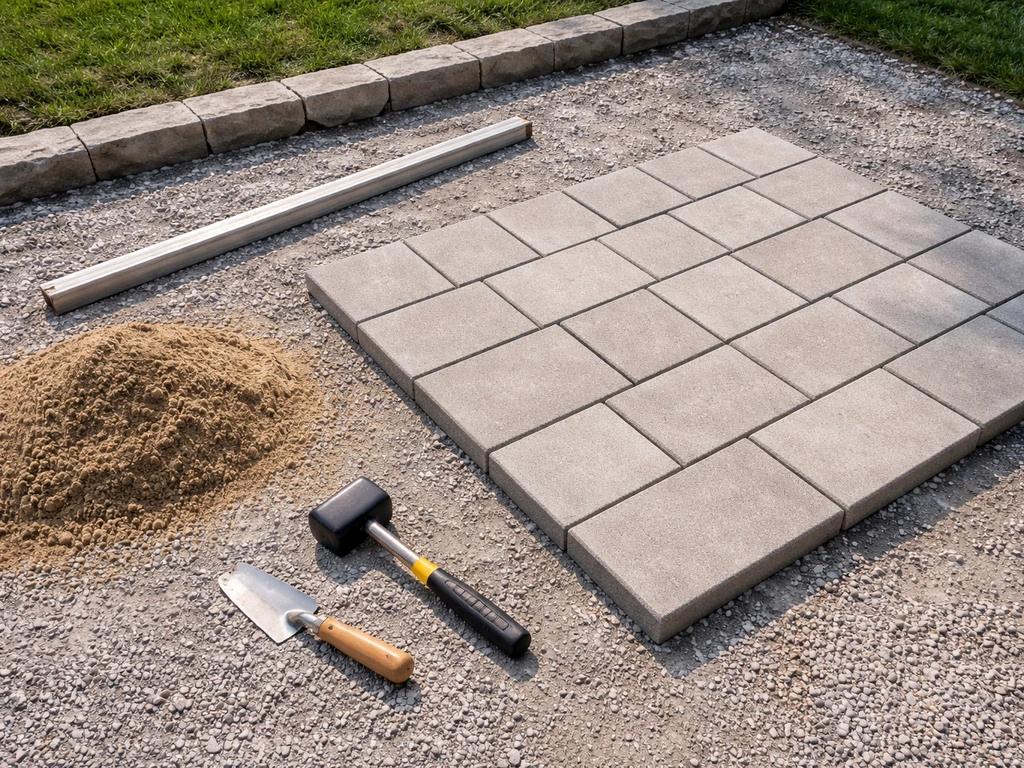
How Much Are Patio Pavers Cost Breakdown by Size and Pallet
Patio paver cost ranges by size and pallet, plus DIY vs installed pricing and material-only budgeting tips.
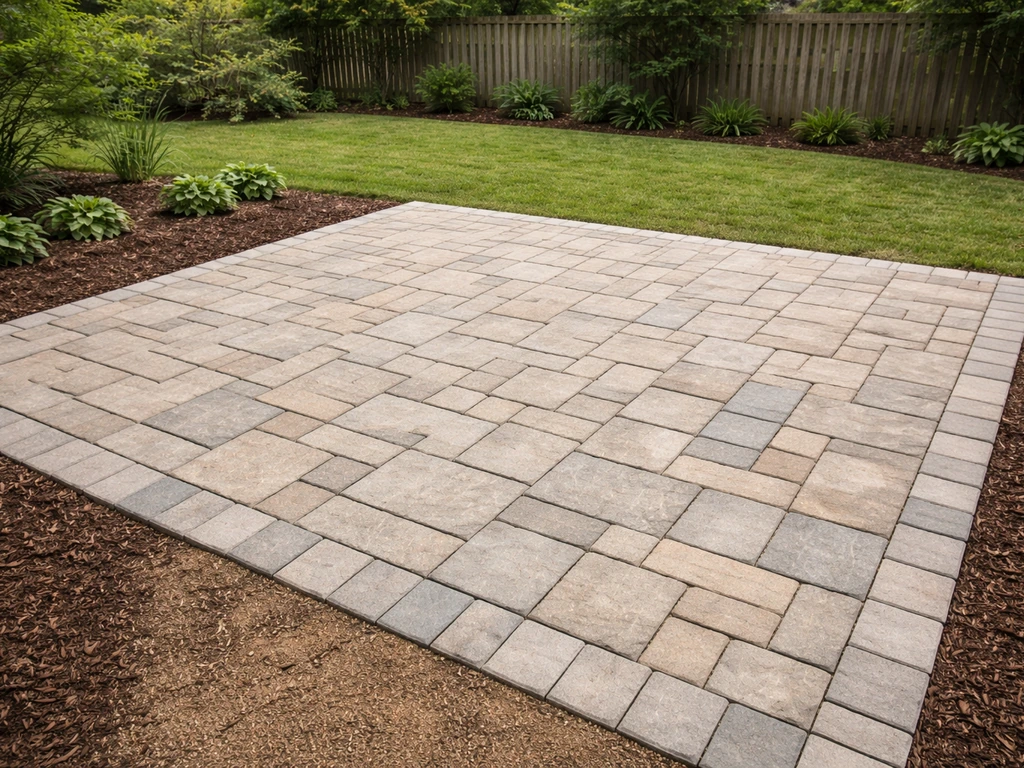
How Much Does Patio Paving Cost? Prices by Material and Size
Patio paving costs by material and size, including small patios, repaving, and quote line items for budgeting.
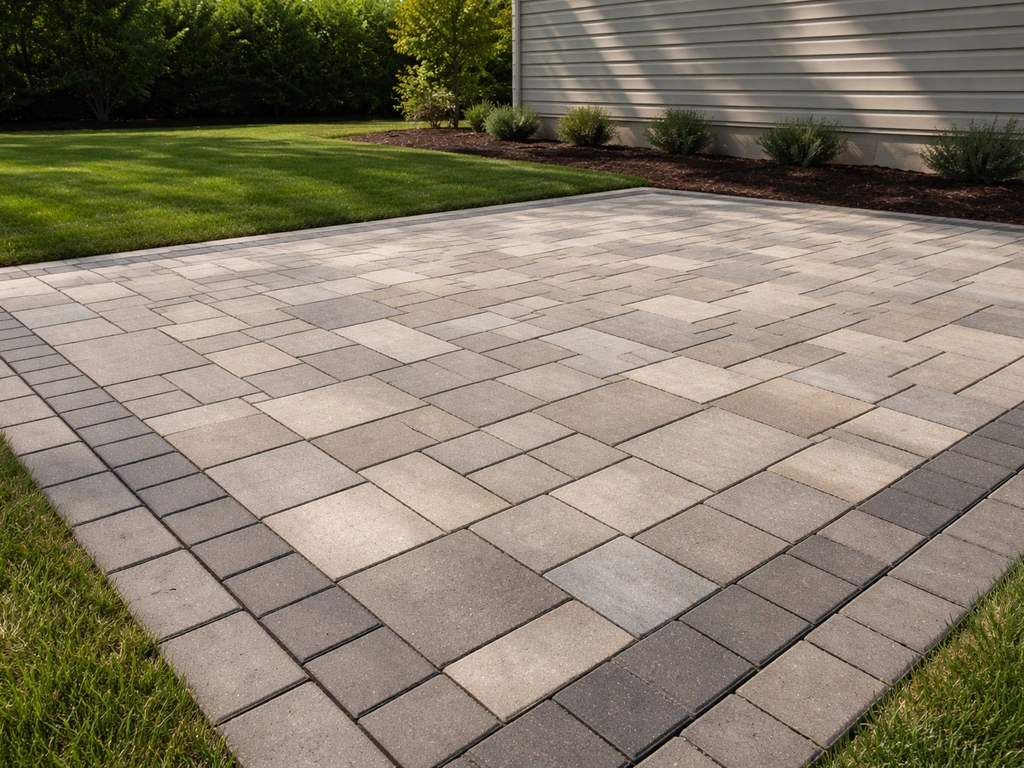
How Much Does It Cost for a Paver Patio? Complete Guide
Ballpark and per-square-foot costs for a paver patio, with a full itemized breakdown and DIY vs pro budgeting.