
Most homeowners spend between $1,500 and $12,000 on an outdoor patio in 2026, with the typical installed project landing somewhere in the $3,000 to $8,000 range depending on size and material. A basic 12x12 concrete slab runs around $850 to $1,750. A 20x20 stamped concrete or paver patio can push $8,000 to $12,000 or more. The material you choose matters a lot, but so does your soil, your region, and whether you're hiring a contractor or doing it yourself. Here's how to figure out where your project lands.
How Much Does an Outdoor Patio Cost? 2026 Budget Guide

Felix Carver
10 Jun 2026
Patio costs by material and finish
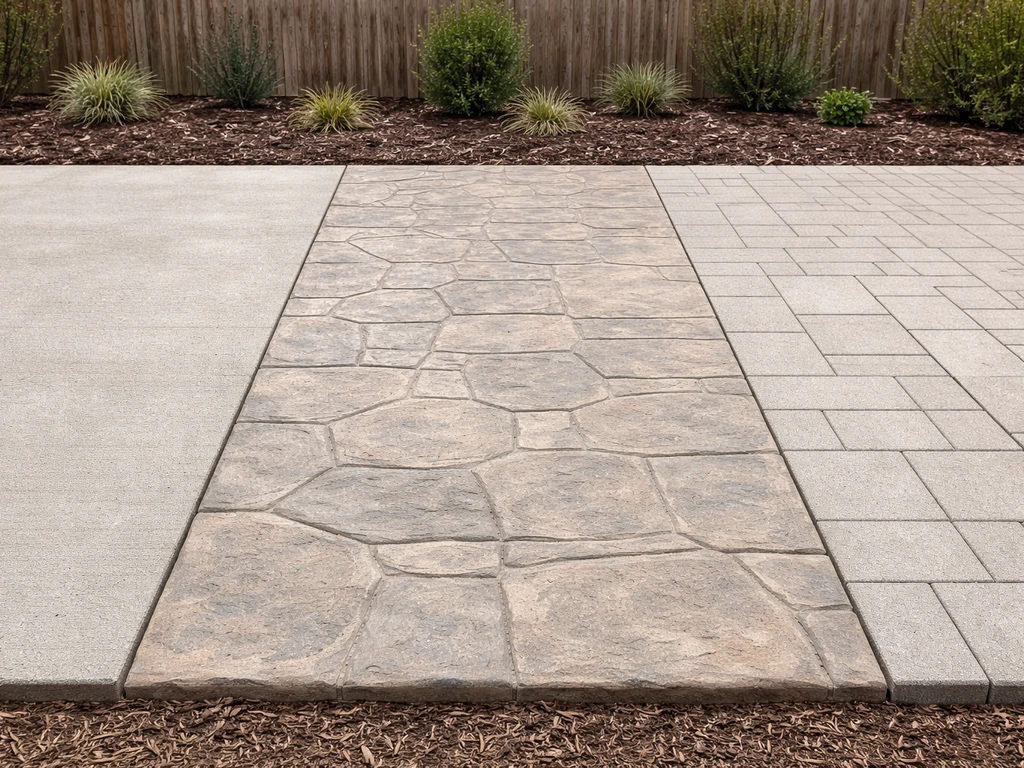
The single biggest lever on your total cost is what you build the patio out of. Plain concrete is the most affordable starting point. Pavers and natural stone cost more upfront but tend to hold up better over time and are easier to repair. Here's a realistic installed price range for each major type in 2026:
| Material | Installed Cost Per Sq Ft | Notes |
|---|---|---|
| Plain/broom-finish concrete | $6–$12 | Most budget-friendly; looks utilitarian but durable |
| Exposed aggregate concrete | $7–$18 | Textured finish, better slip resistance, moderate upgrade cost |
| Stamped concrete | $12–$20 | Mimics stone or brick; higher labor cost, needs sealing |
| Stained/decorative concrete | $8–$30 | Wide range depending on complexity of design |
| Concrete pavers | $8–$25 | DIY-friendly, repairable, wide style range |
| Brick pavers | $15–$30 | Classic look, very durable, higher material cost |
| Natural stone/flagstone | $15–$30+ | Premium look; irregular cuts and heavy weight raise labor cost |
| Premium natural stone systems | $20–$40+ | Custom layouts, thick slabs, specialty stone types |
A couple of things worth knowing: stamped concrete looks great when it's new, but it needs resealing every 2 to 3 years and can crack in freeze-thaw climates. Pavers cost more upfront than plain concrete but are far easier to repair since you can pull and replace individual units. Flagstone is gorgeous but heavy and labor-intensive to set properly, which is why labor costs push the total up even when you find affordable stone. If you're watching the budget closely, concrete pavers in the $8 to $15 per sq ft range give you the best balance of looks, durability, and repairability.
What common patio sizes actually cost
Size is the other big variable. Here are realistic total installed cost ranges for the most common patio footprints, using concrete and paver pricing as the two main benchmarks. These assume a standard ground-level installation with basic site prep and no major drainage issues.
| Patio Size | Square Feet | Plain Concrete Total | Stamped Concrete Total | Concrete Pavers Total |
|---|---|---|---|---|
| 10x10 | 100 sq ft | $600–$1,200 | $1,200–$2,000 | $800–$2,500 |
| 12x12 | 144 sq ft | $850–$1,750 | $1,750–$2,900 | $1,150–$3,600 |
| 16x16 | 256 sq ft | $1,500–$3,100 | $3,100–$5,100 | $2,000–$6,400 |
| 20x20 | 400 sq ft | $2,400–$4,800 | $4,800–$8,000 | $3,200–$10,000 |
| 24x24 | 576 sq ft | $3,450–$6,900 | $6,900–$11,500 | $4,600–$14,400 |
| 30x30 | 900 sq ft | $5,400–$10,800 | $10,800–$18,000 | $7,200–$22,500 |
Notice that a 400 sq ft stamped concrete patio (the 20x20 example) lands right in the $5,000 to $8,000 range that most contractors quote for a mid-range decorative project. That tracks with real-world data. Also keep in mind that smaller patios sometimes cost more per square foot because setup time, mobilization, and base prep costs don't scale down proportionally. A 100 sq ft patio isn't one-quarter the work of a 400 sq ft one.
Where the money actually goes: the full cost breakdown
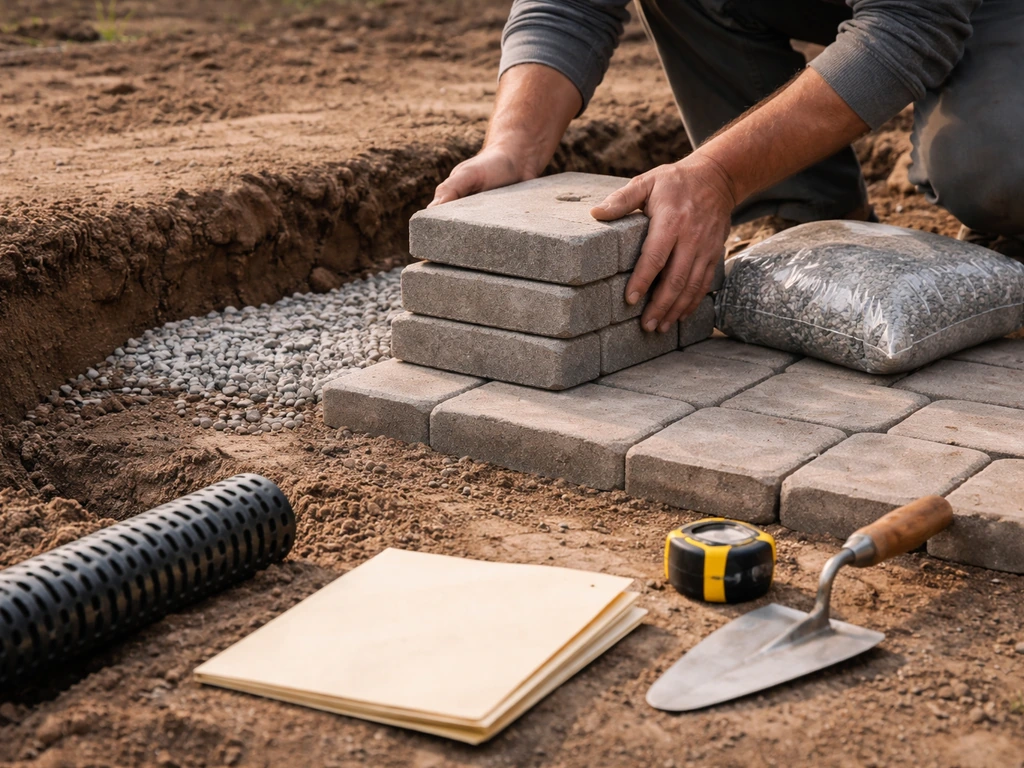
When a contractor gives you a quote, it's not just materials and labor. A properly installed patio has several distinct cost layers, and understanding them helps you evaluate bids and spot anything that's been left out.
Excavation and grading
Before anything gets laid, the existing ground needs to come out. For a concrete slab, that's typically 4 to 6 inches deep. For pavers, it's often 6 to 8 inches to accommodate base material. Excavation costs vary by soil type and access, but figure on $1 to $3 per sq ft for straightforward digs. Rocky soil, clay, or tight access (a backyard with no equipment entry) can push that higher. Hauling spoil away adds to the cost too, usually included in excavation pricing but worth confirming.
Base preparation
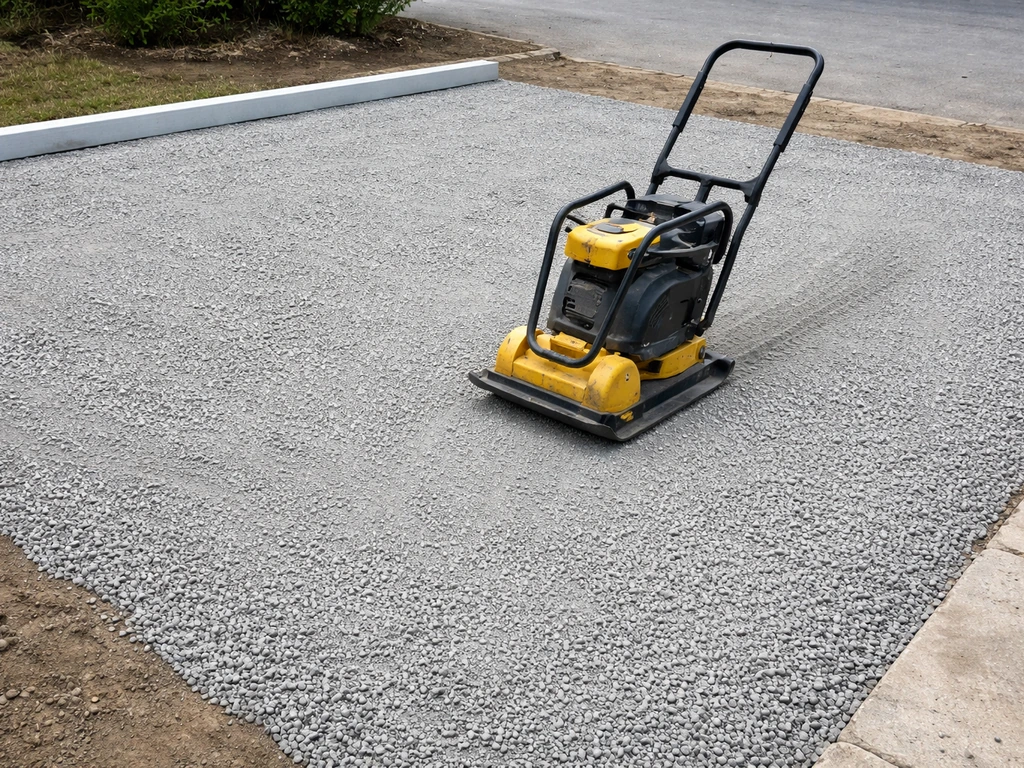
This is the layer most DIYers underestimate and most cheap bids skip. A proper base for concrete is typically 4 inches of compacted gravel. For pavers, it's usually 4 to 6 inches of compacted crushed stone followed by about 1 inch of coarse bedding sand. Skimping on base prep is the number one reason patios crack, shift, or heave after a few winters. Budget $1 to $2 per sq ft for base material and compaction as a rough estimate.
Materials
Concrete is priced by the yard (typically $150 to $200 per cubic yard delivered in 2026). Pavers are sold by the square foot or pallet. For a 400 sq ft patio, you're looking at roughly $600 to $1,200 in concrete materials alone (before finishing and labor). Paver materials for the same area might run $800 to $3,000+ depending on the style and brand you choose. This is where premium finishes really add up.
Labor and installation
Labor typically makes up 40 to 60 percent of a total installed patio cost. For concrete, a crew is doing formwork, pouring, screeding, finishing, and curing. For pavers, they're doing base work, screeding sand, cutting pavers, setting edge restraints, and sweeping polymeric sand into joints. A professional paver installation should include all of those steps. If a quote doesn't mention edge restraints or polymeric sand, ask about it because those details affect longevity.
Drainage and site work
If your yard has drainage issues, grading your patio correctly isn't enough. A French drain alongside the patio runs $10 to $65 per linear foot installed, depending on depth and soil conditions, with a typical 100-foot drain project costing $1,000 to $6,500. Jobsite Calcs also provides per-linear-foot French drain cost tiers that vary by drain type and site conditions, reinforcing that drainage work adds both excavation and labor on top of materials blank" rel="noopener noreferrer">A French drain alongside the patio runs $10 to $65 per linear foot installed. blank" rel="noopener noreferrer">A simpler curtain drain can run $10 to $35 per linear foot. Not every patio needs this, but if water currently pools in that area of your yard, it needs to be addressed before you pour.
Permits and fees
Many jurisdictions exempt a basic ground-level patio under a certain size threshold (often 200 to 400 sq ft) from building permits, especially if it doesn't affect stormwater drainage or cross setback lines. But once you add electrical, gas, a fire pit, a retaining wall, or a roof structure, permits become likely. A patio roof, often built as a covered patio, can also significantly change your total cost depending on size, materials, and whether it needs structural support patio cover. Patio permits where required typically run $100 to $400. Trade permits for electrical work or gas lines are commonly $50 to $150 each. If you're also covering the patio with a roof or pergola, that adds more permitting complexity, similar to what you'd encounter when budgeting for a covered patio project. A covered patio adds major cost factors, especially for the roof structure, posts, and often permit requirements, so it pays to budget differently than a basic open patio.
DIY vs. hiring a contractor
Going DIY on a patio can save you 30 to 50 percent of the total cost since labor is such a large portion of the bill. A paver patio that a contractor quotes at $8,000 might cost you $3,500 to $4,500 in materials and equipment rental if you do it yourself. That's a real saving, but there are meaningful risks depending on which material you choose.
Where DIY works well
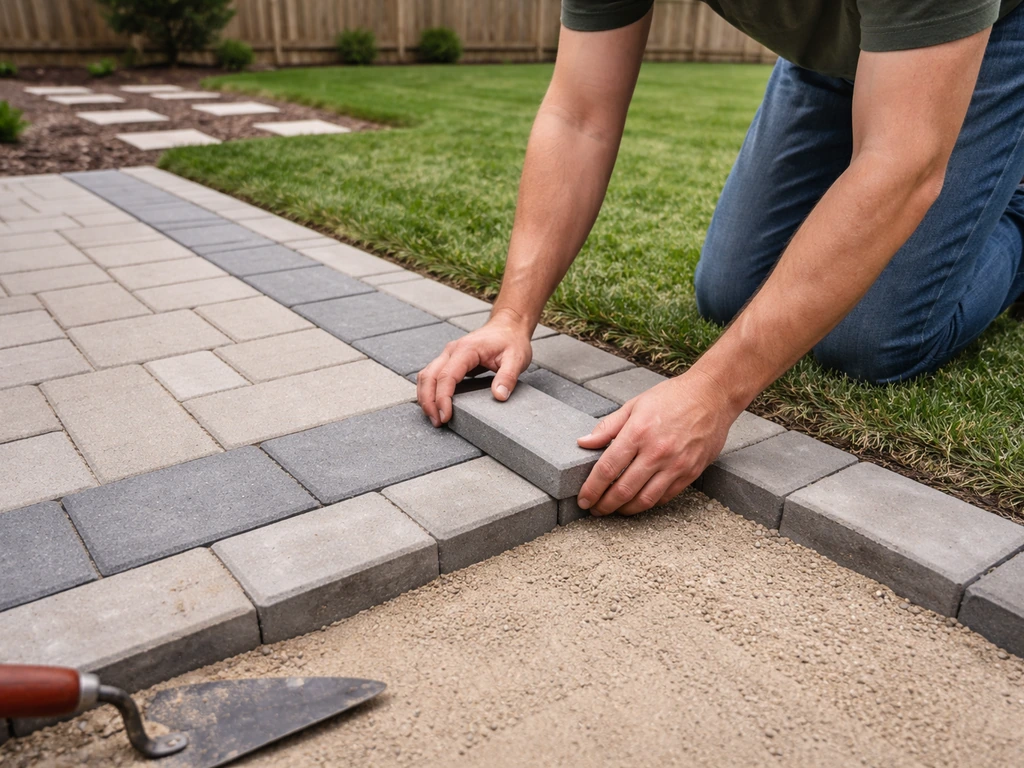
Concrete pavers are the most forgiving material for a capable DIYer. The tools are manageable (plate compactor rental, hand tamper, level, rubber mallet), the process is forgiving of minor mistakes since you can pull and reset individual pavers, and there's no timing pressure. If you're comfortable renting a plate compactor and spending a weekend on base prep, DIY pavers are genuinely achievable. Same goes for smaller pea gravel or decomposed granite patios, which are even simpler.
Where DIY can go sideways
Concrete is a different story. Pouring and finishing concrete is a timed, physical job that requires experience to do well. Once it sets, mistakes are permanent. Getting the grade wrong by a fraction of an inch means water drains toward your house. Missing the finishing window on a hot day means surface pitting. Stamped concrete is even less forgiving because you're working fast with pattern mats while the concrete is still workable. Most DIYers who attempt poured concrete end up with a functional but visually imperfect result. If you're set on concrete, consider hiring the pour and finishing, then doing landscaping or add-ons yourself to save money.
Hidden DIY costs people forget

- Equipment rental: plate compactor ($80–$150/day), concrete saw ($100–$200/day), mixer if not using ready-mix
- Disposal fees for excavated soil (often $200–$500 for a standard project)
- Extra materials to account for cuts and waste (add 10% for pavers, 5–8% for concrete)
- Your time: a 20x20 paver patio is a 2 to 4 day project for two people working steadily
- Fixing base problems later if the grade is off or base wasn't compacted well enough
How your location changes the price
Patio costs vary significantly by region, and not just because of labor rates. Material availability, permitting norms, soil conditions, and even climate all play a role. In general, the Northeast, Pacific Coast, and major metros run 20 to 40 percent above the national midpoint. The Southeast, Midwest, and rural areas tend to come in 10 to 25 percent below. Here are some patterns worth knowing:
- Freeze-thaw climates (Midwest, Northeast, Mountain states): Base prep matters more here. A properly compacted and deep base is non-negotiable because frost heave will destroy an underprepared patio. Contractors in these areas often include deeper base specs, which raises material cost but is worth it.
- Hot, dry climates (Southwest, Texas, Arizona): Concrete can cure too fast in summer heat, which affects surface quality. Contractors often schedule pours for early morning. Stamped concrete is very popular in these markets and pricing reflects competitive demand.
- High-cost metros (NYC, SF Bay Area, Seattle, Boston): Labor rates push installed costs well above national averages. Expect the top end of every range listed here, or beyond it.
- Southern states: Generally lower labor costs, competitive contractor market, but check local permitting requirements since rules vary county by county.
- Flood zones and coastal areas: Permeable paver systems may be required or incentivized; drainage permits become more complex and expensive.
On permits specifically: most straightforward ground-level patios don't need one, but zoning setback rules still apply everywhere. Your patio can't sit inside a required setback from property lines, even if no permit is needed. Check your municipality's zoning rules before you finalize placement, especially if you're building close to a fence or property line. If you're adding electrical outlets, lighting on a dedicated circuit, a gas fire pit, or a patio cover, expect to pull permits and add $150 to $800 or more to your budget depending on scope.
Add-ons and upgrades: what raises or lowers your total
The base patio is just the floor. Most homeowners end up adding at least one or two features, and those costs add up fast. Here's a realistic look at common add-ons:
| Add-On | Typical Cost Range | Notes |
|---|---|---|
| Concrete sealing | $200–$1,000 | Recommended for stamped or decorative concrete; $0.50–$2.50/sq ft |
| Low-voltage landscape lighting | $700–$3,000 for small systems | $100–$150 per fixture installed; larger systems can reach $8,000–$12,000 |
| Outdoor electrical outlet | $150–$400 per outlet | Requires permit in most jurisdictions |
| Built-in fire pit | $1,000–$4,000 | Gas fire pits add plumbing/gas permit costs |
| Retaining wall (if grading required) | $2,000–$8,000+ | Depends heavily on height and length |
| French drain / drainage system | $1,000–$6,500 | $10–$65/linear foot depending on type and depth |
| Pergola or patio cover | $3,000–$15,000+ | Covered patio projects are a separate major budget item |
| Built-in outdoor kitchen rough-in | $5,000–$20,000+ | Plumbing, gas, electrical all add cost and permits |
| Polymeric sand upgrade (pavers) | $100–$400 | Worth doing; resists weeds and ants better than regular sand |
A few things that can lower your cost: choosing a simple rectangular shape (custom angles and curves add cutting time and waste), going with a smaller footprint and adding gravel or stepping stones at the edges, using concrete pavers instead of natural stone, or doing site cleanup and landscaping restoration yourself after the contractor finishes. Skipping a sealer on plain concrete is technically possible but shortens the lifespan, so it's not a saving I'd actually recommend.
Patio vs. deck: which one makes more sense for your project
If you're deciding between a patio and a deck, the cost difference is significant and often settles the question. Decks typically cost $25 to $50 per sq ft installed for pressure-treated wood, $40 to $75 per sq ft for composite, and $60 to $120 per sq ft for premium hardwoods or PVC. Compare that to patios at $6 to $30 per sq ft depending on material, and a patio is almost always the lower-cost option for a given footprint.
That said, cost isn't the only factor. Use this framework to choose:
| Factor | Patio Wins | Deck Wins |
|---|---|---|
| Budget | Almost always; lower installed cost per sq ft | Only if you need a deck for structural reasons |
| Sloped yard | Not ideal; needs grading or retaining work | Better fit; deck bridges elevation changes cleanly |
| Flat yard | Excellent fit; minimal site prep | Works but adds unnecessary structural cost |
| Maintenance | Concrete/pavers need minimal upkeep | Wood needs annual staining/sealing; composite needs cleaning |
| Longevity | Concrete and pavers can last 25–50 years | Pressure-treated 15–25 years; composite 25–30 years |
| Style flexibility | Wide range of materials and finishes | More height/view options; integrates better with raised entries |
| Permitting complexity | Usually simpler (often no permit for ground-level) | Almost always requires a building permit |
| Resale value | Good return, especially in warm climates | Also adds value; depends heavily on market |
The bottom line: if your yard is relatively flat and you're on any kind of budget, a patio almost always delivers more value per dollar than a deck. A deck makes the most sense when your home's entry is elevated, your yard slopes significantly, or you specifically want the above-grade aesthetic. If you're exploring a covered structure over either option, that becomes its own separate cost conversation worth looking at in detail, since roofed structures change both the structural requirements and permitting picture entirely.
How to use these numbers to check your bids
Before you call a single contractor, measure your space and decide on your material. Those two things let you build a rough budget range using the per-square-foot figures above. If you want a quick answer, compare your patio size and material to the typical installed ranges to estimate how much it will cost to build a patio how much will it cost to build a patio. For a 16x16 paver patio (256 sq ft), you're looking at $2,000 to $6,400 total installed as a baseline, with the likely midpoint around $3,500 to $4,500 for a mid-grade concrete paver with standard base prep. That gives you a number to sanity-check quotes against. Knowing the final total is usually what you need to figure out how much does a back patio cost for your specific size and materials.
When you get contractor quotes, here's what to look for and ask about:
- Does the quote include excavation and spoil removal? If not, get a separate line item for it.
- What's the base depth and material? For pavers, you want at least 4 inches of compacted crushed stone. For concrete, at least 4 inches of gravel base.
- For paver quotes: does it include edge restraints and polymeric sand? Both should be included.
- For concrete quotes: what's the finish, thickness (4 inches is standard; 5–6 inches for driveways or heavy use), and will they use wire mesh or rebar reinforcement?
- Is drainage addressed? Ask how the patio will be graded and whether any drainage work is included.
- What's the warranty on labor? Most reputable contractors offer 1 to 3 years on installation.
- Is permitting included, and who pulls it? If permits are needed, they should typically be pulled by the contractor.
- Ask for 2 to 3 references for patios of similar size and material, and actually call them.
A bid that's 30 to 40 percent below others for the same scope is almost always missing something, whether that's base depth, proper drainage, permits, or quality materials. A bid that's 30 to 40 percent above the rest should come with a clear explanation of what's different. Get at least three quotes for any project over $3,000. Take your measurements to each meeting, be specific about what you want, and compare the quotes line by line rather than just looking at the bottom number. That's the fastest way to spend your money well and not redo the patio in five years.
FAQ
How much does an outdoor patio cost per square foot in real terms?
Most installed patios land around roughly $6 to $30 per sq ft depending on material, with the wide swing driven by base depth, finish level, and whether you add drainage or a patio roof. A quick sanity check is to take your patio size and match it to the closest example ranges (like plain concrete versus pavers) rather than using a single universal number.
What’s usually included in the quote, and what commonly gets left out?
Quotes should cover site prep (excavation and hauling), base and compaction, surface materials, edge restraints, and final surfacing items like polymeric sand for pavers. If you do not see line items for base depth and drainage/grade correction, assume the bid may be incomplete and ask for a written scope before approving anything.
Do I need a permit for a patio even if it’s small?
Even when building permits are often avoided for small, ground-level patios, zoning rules still apply, especially setbacks from property lines. If you are adding utilities, a gas or electric fire feature, a retaining wall, or any roof structure, expect permits and trade permits to enter the picture and budget extra time for approvals.
Why is my small patio so much more expensive than I expected?
Small footprints tend to cost more per square foot because mobilization and setup, formwork or layout time, and base preparation don’t shrink proportionally. If your patio is under about 200 to 300 sq ft, ask for a per-unit explanation of mobilization and minimum labor hours so the bid matches your expectations.
What site conditions increase outdoor patio cost the most?
Rocky or clay soil, limited equipment access (like no vehicle or bobcat entry), steep grades, and poor existing drainage are the biggest cost drivers. If water pools near the proposed patio, you may need added drainage, and that can raise the project more than upgrading materials.
Should I choose pavers, stamped concrete, or natural stone if I care about repairs?
For easiest repairs, pavers usually win because you can replace individual units without resurfacing the whole area. Stamped concrete often looks great initially but typically requires periodic resealing, and it can crack in freeze-thaw climates. Natural stone is durable but heavy and labor-intensive, so total cost often rises when labor is the bottleneck.
How much more does a patio roof or covered patio add to the budget?
A roofed structure usually increases cost beyond the patio itself because of structural posts, beams or engineered framing, and more permitting complexity. Plan to budget separately for the roof system rather than assuming it’s a simple add-on to the open patio flooring price.
How much does drainage work typically add, and when is it necessary?
If water currently pools where the patio will sit, you should plan for drainage solutions, such as a French drain or a simpler curtain drain. A French drain runs roughly $10 to $65 per linear foot installed, so the total can jump quickly on longer runs, especially with deeper excavation.
Can I DIY part of the project to reduce cost without risking the patio?
Many homeowners save money by doing landscaping restoration, cleanup, or some minor add-ons, but the floor foundation and surface install should not be rushed. DIY pavers are generally more forgiving if you can rent a plate compactor and follow base depth and compaction steps carefully, while DIY poured concrete is higher risk because grading and finishing are time-sensitive.
What’s the best way to compare contractor bids so I don’t overpay or miss scope?
Get at least three quotes, then compare them line by line for base depth, excavation and haul-off, edge restraints, drainage and grade corrections, and required finishing details (like polymeric sand for pavers). If a bid is far below the others (about 30 to 40 percent), ask what they are excluding, and require a written scope to prevent surprises.
Are there hidden costs like demolition, disposal, or leveling that I should plan for?
Yes. Removing an old slab, hauling debris, and correcting uneven grade can add significant cost, especially if access is tight or there is extra disposal. Ask whether demolition and disposal are included, and confirm whether leveling and grade adjustment are priced as part of site prep.
Next Articles
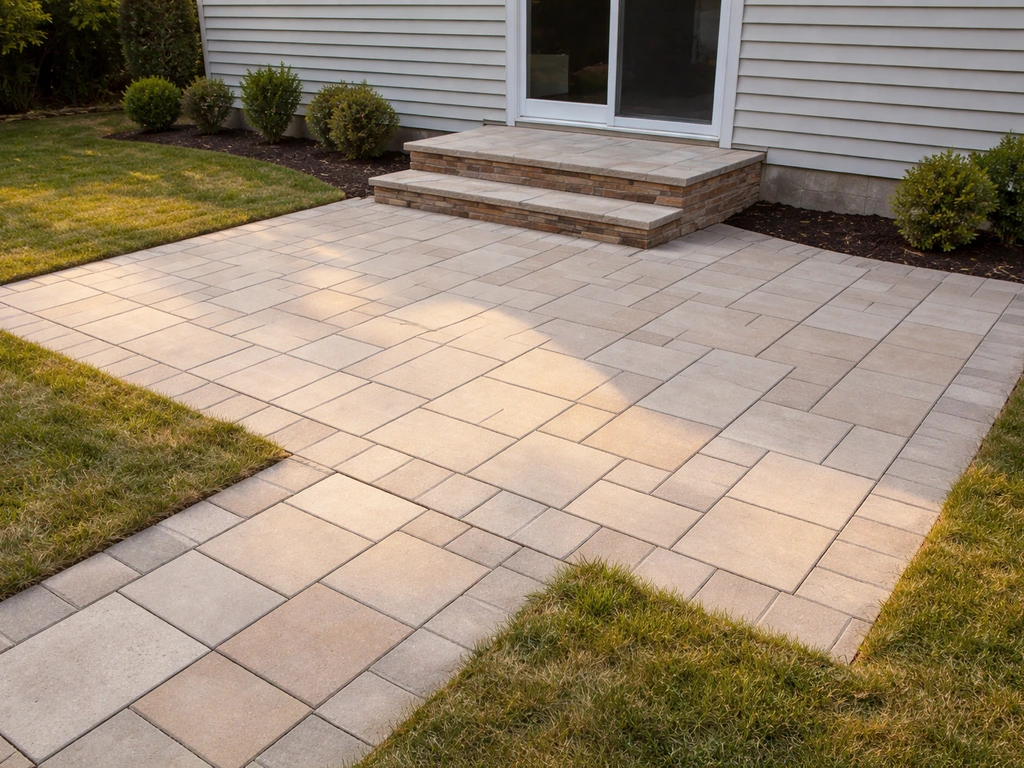
How Much Does a Back Patio Cost in 2026? Prices by Type
2026 back patio costs by type with sqft ranges, total estimates for common sizes, and DIY vs install budgeting tips.

How Much Does It Cost to Build a Patio Roof
Patio roof cost ranges by size and material, plus pricing factors, labor vs materials, and DIY vs contractor budgeting.
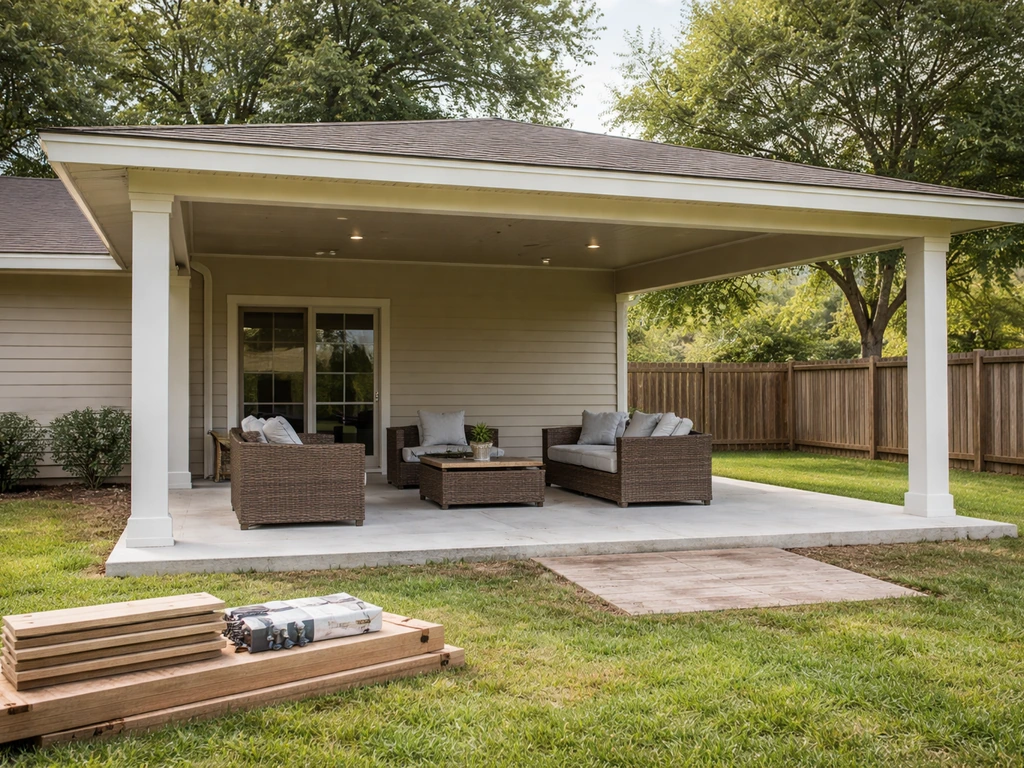
How Much to Build a Covered Patio Cost Per Sq Ft Guide
Budget ranges and per-sq-ft costs to build or add a covered patio cover, comparing wood vs other materials and DIY vs in