
A stamped concrete patio runs roughly $10 to $20 per square foot installed in 2026, with simple single-color, single-pattern jobs landing closer to $10 to $14 per square foot and more involved multi-color, custom-border designs pushing into the $18 to $25 range. For a typical 12x12 patio (144 sq ft) that works out to about $1,440 to $3,600 on the low end and $2,600 to $3,600 for mid-tier work. A real-world homeowner quote recently showed a stamped option for an 18x18 patio priced around $7,800 (roughly $24/sq ft) versus a broom-finished version of the same slab at about $6,000. If you’re wondering how much a small concrete patio costs, quotes like these show why size, finish level, and region can change your total how much does a small concrete patio cost. Those numbers line up with what most contractors are charging across the country right now.
How Much Does a Stamped Patio Cost? Real Price Ranges

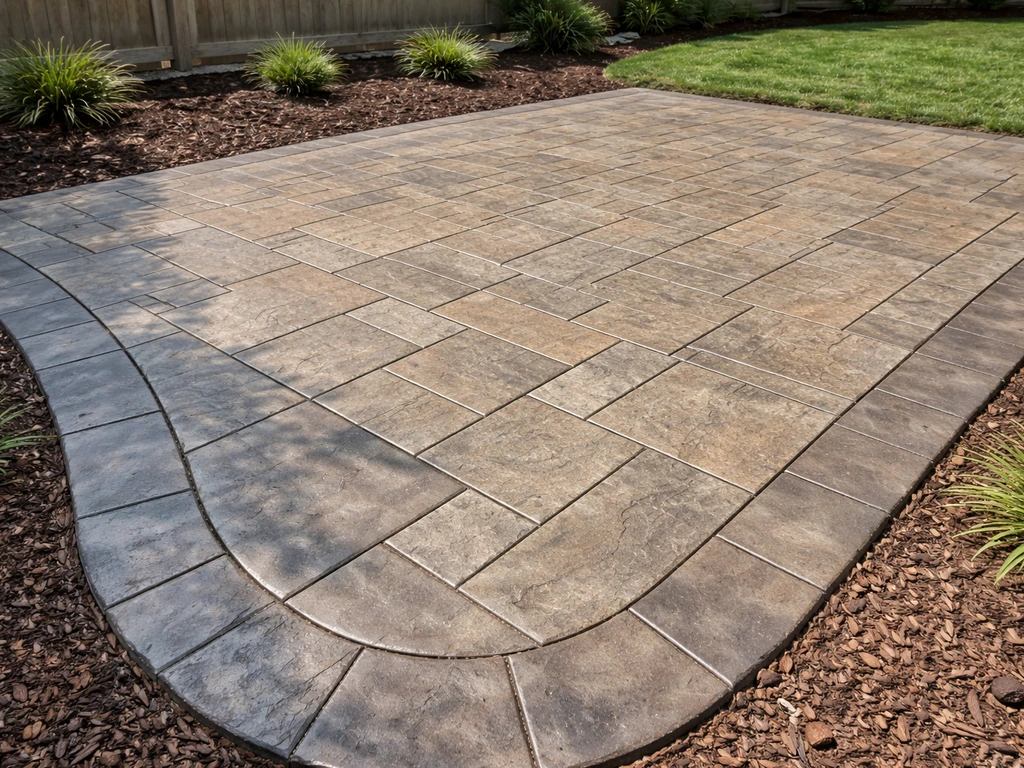
Stamped patio costs by size
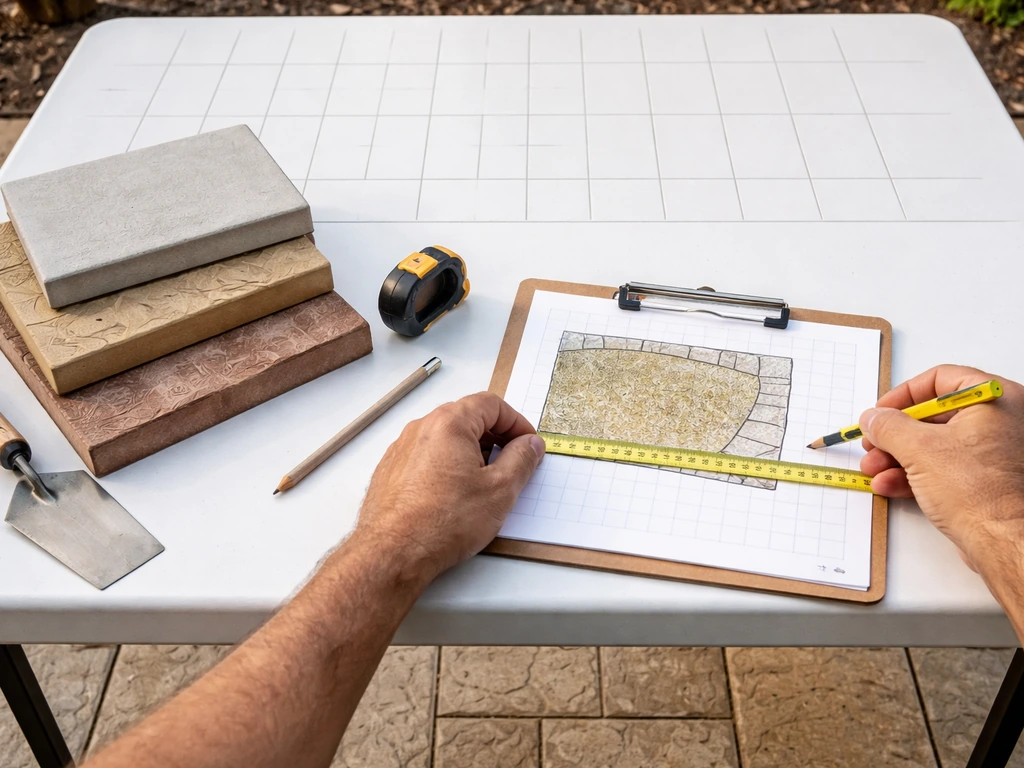
The fastest way to ballpark your project is to multiply square footage by a per-square-foot range. If you want a quick ballpark, look at the typical per-square-foot ranges for a stamped patio and multiply by your patio size ballpark your project. The table below uses three common tiers: basic (single pattern, single color, standard prep), mid-range (two colors, border detail, moderate complexity), and premium (multi-color, custom pattern, steps or curves). These are installed totals including labor, concrete, stamping, color, sealer, and standard subbase prep.
| Patio Size | Sq Ft | Basic ($10–$14/sq ft) | Mid-Range ($15–$20/sq ft) | Premium ($21–$28/sq ft) |
|---|---|---|---|---|
| 10x10 | 100 | $1,000–$1,400 | $1,500–$2,000 | $2,100–$2,800 |
| 12x12 | 144 | $1,440–$2,016 | $2,160–$2,880 | $3,024–$4,032 |
| 16x16 | 256 | $2,560–$3,584 | $3,840–$5,120 | $5,376–$7,168 |
| 20x20 | 400 | $4,000–$5,600 | $6,000–$8,000 | $8,400–$11,200 |
| 20x30 | 600 | $6,000–$8,400 | $9,000–$12,000 | $12,600–$16,800 |
Keep in mind these ranges assume relatively flat, accessible lots with no demo work needed. If you want a simpler answer to budgeting, the overall question of how much is a concrete patio slab usually comes down to slab thickness, site prep, and local labor rates. If you're tearing out an old slab, dealing with a slope, or adding steps, add those costs on top. More on that below.
Where the money actually goes: a line-by-line cost breakdown
One useful framing from a cost-model analysis: labor typically eats about 50 to 65 percent of a stamped patio total, site prep and reinforcement runs 8 to 12 percent, concrete plus color and release agent accounts for 25 to 35 percent, and sealer and finish work is the remaining 3 to 5 percent. Here's what each of those buckets actually includes.
Excavation and subbase
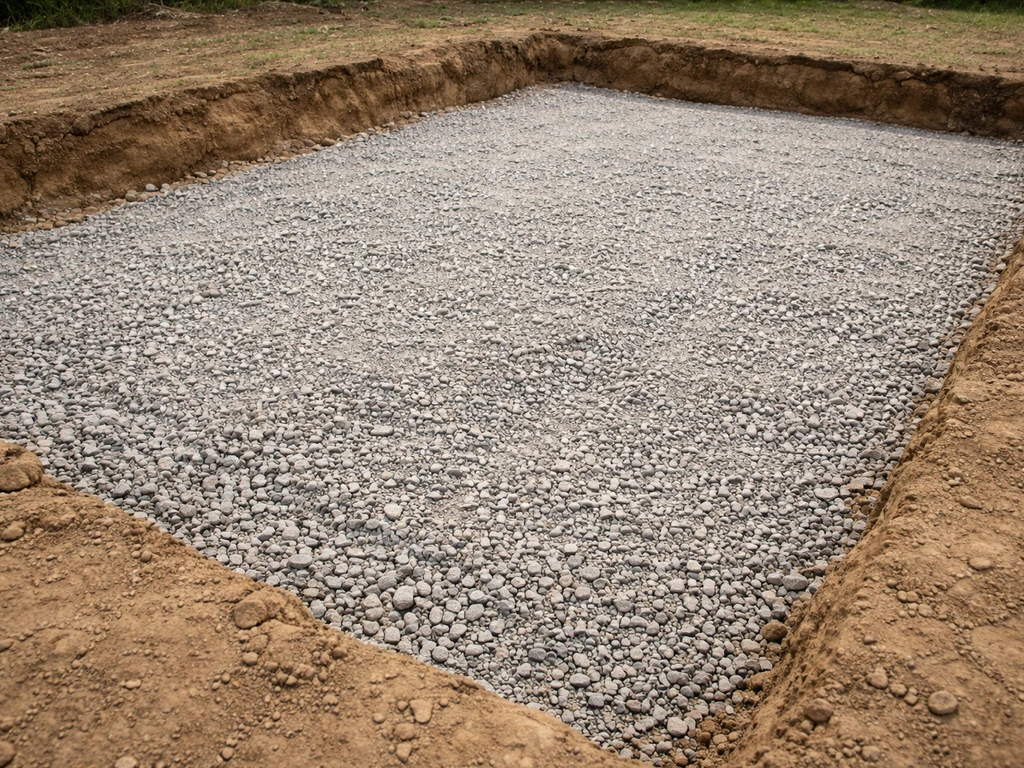
Before a single yard of concrete gets poured, the ground has to be dug out, graded, and packed. A proper subbase is at least 4 inches of compacted gravel or crushed stone, and some contractors go deeper on softer soils. This step is non-negotiable for a slab that won't crack and settle. Expect excavation and base prep to add $1 to $3 per square foot depending on soil conditions and how much material needs to be hauled away.
Concrete
Most residential stamped patios are poured at 4 inches thick, which is the standard recommendation from HomeAdvisor and industry specs. A 4-inch slab uses roughly 1.25 cubic yards of concrete per 100 square feet, so a 400 square foot patio (20x20) needs about 5 cubic yards. Concrete currently runs $150 to $200 per yard delivered in most markets, meaning raw concrete material on that patio is roughly $750 to $1,000 before anyone touches it.
Reinforcement
Standard residential slabs use either 6x6 welded wire mesh or rebar, both of which add rigidity and reduce the chance of cracking. Wire mesh is cheaper and faster to install; rebar costs more but provides stronger reinforcement, especially on larger slabs or in freeze-thaw climates. Budget roughly $0.50 to $1.50 per square foot for reinforcement depending on which method your contractor uses.
Stamping materials: color and release agent
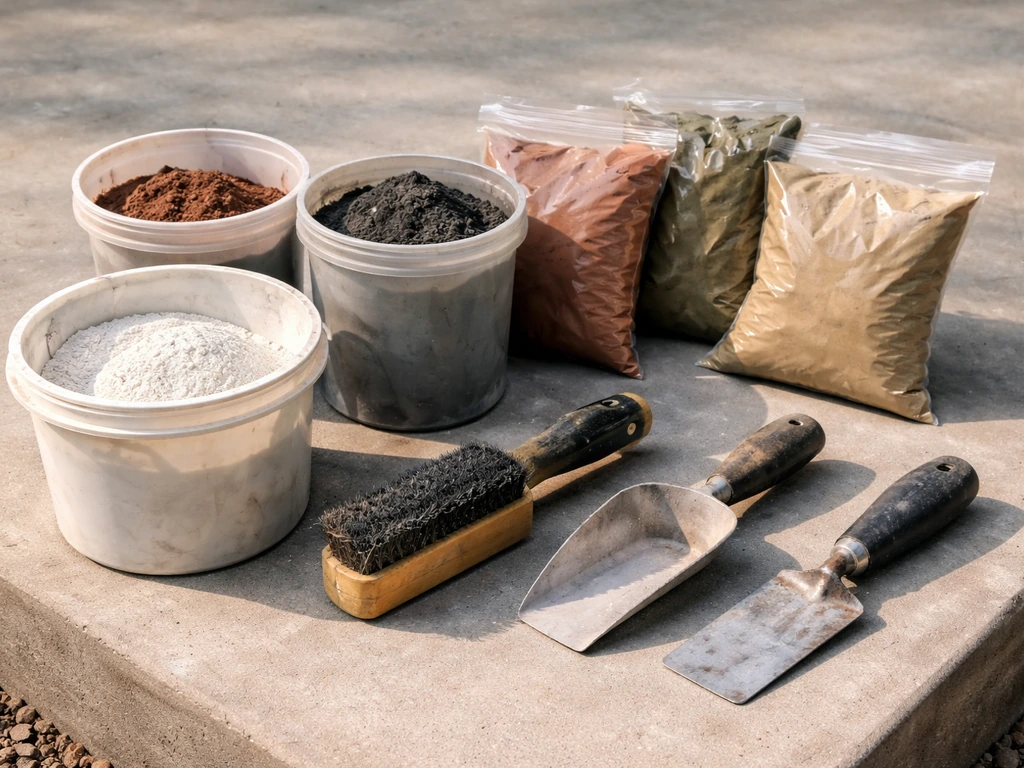
Color and stamping materials are where decorative patios separate from plain concrete in cost. You have two main options for base color: integral color (pigment mixed into the concrete throughout the entire slab) or dry-shake color hardener (broadcast onto the surface). Integral color adds roughly $5 to $30 per cubic yard to your concrete cost. One regional concrete company puts stain application at an additional $2 to $4 per square foot on top. Dry-shake hardener typically requires about half a pound to one pound per square foot depending on how dense a color you want. The release agent (a powder or liquid applied before stamping to prevent mats from sticking and to create the secondary color contrast) is a smaller material cost but is labor-sensitive because timing during the pour is critical.
Stamping labor
This is the biggest cost driver relative to plain concrete. Concrete contractors generally charge $50 to $75 per hour for patio work, and stamping requires more hands on deck for a tighter time window. The decorative crew has to stamp while the slab is at the right plasticity, which means more workers and faster paced work. Complex patterns with tight borders or hand-detailing take longer and charge more. This is why labor is consistently 50 to 65 percent of a stamped patio's total cost.
Sealing
Sealer is applied after the slab cures to lock in color and protect the surface. Most contractors use acrylic sealers for outdoor stamped concrete because they're cost-effective and re-applicable. Professional sealing runs about $1.50 per square foot, or roughly $1,200 to $1,500 for a mid-size patio. Some contractors bundle this into their quoted price; others list it as a separate line item, so always ask. Sealer needs to be reapplied every 2 to 5 years depending on traffic, climate, and sealer type.
Demolition and old slab removal
If you're replacing an existing patio, add $1 to $3 per square foot for demo and haul-away. That's an easy $400 to $1,200 on a 400 square foot project that homeowners often forget to budget for when comparing bids.
DIY vs. hiring a pro: which one actually makes sense
Stamped concrete is genuinely difficult to DIY well. The window for stamping is narrow, maybe 30 to 60 minutes depending on temperature and humidity, and if you miss it the slab hardens and the pattern either doesn't impress cleanly or tears the surface. Color mismatches, blotchy sealer, and cracking from poor base prep are the most common failure points when inexperienced crews attempt decorative pours. For stamped concrete, ConcreteNetwork notes that the secondary color is often a limited portion of the visible color, commonly around 10% to 20%, to help balance expectations for color and sealer or release.
That said, there is a middle ground. If you're confident doing the subbase excavation and compaction yourself (renting a plate compactor for a day typically costs $80 to $150 in most markets), you can meaningfully reduce your total bill by handling the prep work before the concrete crew arrives. Some contractors will price accordingly. Full DIY concrete stamping, though, including renting stamps, buying color and release, mixing or ordering a truck, and finishing the slab, is realistically only worth attempting if you have direct hands-on experience with decorative concrete.
The repair cost math is stark. Fixing a botched stamp job, whether that means grinding, overlay patching, color correction, or sealer stripping and re-application, can add $3 to $8 per square foot in remediation costs. On a 200 square foot patio, that's potentially $600 to $1,600 in avoidable expense on top of what you already spent on materials. For most homeowners, hiring a pro for the concrete work and doing the subbase prep yourself (if physically feasible) is the smartest cost-to-risk tradeoff.
| Approach | Estimated Cost (200 sq ft) | Skill Required | Risk Level |
|---|---|---|---|
| Full professional install | $2,000–$5,000 | None from homeowner | Low |
| DIY prep + pro concrete | $1,600–$4,200 | Basic excavation/compaction | Low-Medium |
| Full DIY | $800–$1,800 in materials | High (decorative concrete experience) | High |
| DIY gone wrong + repair | $2,400–$6,800 total | N/A | Very High |
What can swing your price up or down
Two projects that look the same on paper can land $3,000 apart in final cost based on site and regional factors. Here's what to watch for.
Region and local labor market
Labor rates for concrete contractors vary significantly by region. If you are wondering how much a concrete patio costs in Canada, these same line items are what contractors price out Labor rates for concrete contractors vary significantly by region.. The Northeast, Pacific Coast, and high cost-of-living metros (Seattle, Denver, Boston, San Francisco) tend to run 20 to 40 percent above the national mid-range. Southern states and the Midwest often come in under the national average. A $14/sq ft project in Tennessee might cost $18 to $20 per square foot in Connecticut for the same specs.
Soil conditions and drainage
Clay-heavy or soft soil requires deeper excavation and more base material to achieve a stable subbase. On problem soils, contractors may go 6 to 8 inches deep instead of the standard 4 inches, which adds both labor and material cost. Poor natural drainage can also require adding a drainage solution (French drain, swale, or sloped grade) that bumps the project up by $500 to $2,000 depending on complexity.
Site access
If a concrete truck can't get close to the pour site, the crew has to pump or wheelbarrow the mix, which adds time and cost. A concrete pump rental alone can add $500 to $1,500 to a pour. Tight side yards, landscaping that needs to be protected, or sloped lots all create access challenges worth mentioning to contractors upfront so they price it correctly.
Slab thickness
A 4-inch slab is standard for a patio. For example, ConcreteNetwork recommends that a 4-inch slab have blank" rel="noopener noreferrer">control joints roughly 8 to 12 feet apart, and it notes that decorative or stamped slabs require careful joint placement to avoid ruining the pattern. If you want a quick starting point for the total, see how much it costs to level a concrete patio as a related budgeting check before you commit to a thickness and prep plan. If your contractor recommends 5 inches for a high-traffic area or heavy furniture, that's roughly 25 percent more concrete, which translates directly to material and disposal cost. Don't let a contractor downsize to 3.5 inches to shave cost on a stamped patio; that's a long-term performance risk.
Season and timing
Concrete contractors are often booked out and priced higher in peak spring and summer months. Getting quotes in late fall or early winter (in climates where pouring is still feasible) can sometimes save 10 to 15 percent. It also gives you more leverage in negotiating since crews have slower order books.
Design choices and upgrades that change the price
Pattern and color are the two biggest levers after size. Here's how specific design decisions ripple through the budget.
- Single pattern, single color (basic ashlar slate, cobblestone, etc.): $10–$14/sq ft installed. This is the baseline stamped price.
- Two-color design with a contrasting release agent: Adds $1–$3/sq ft over single color. The secondary color typically covers about 10 to 20 percent of the visible surface.
- Border patterns or contrasting border color: A separate stamp border requires extra setup and hand finishing, adding $2–$5/sq ft to the border area cost.
- Multiple colors or complex custom patterns: Jumps to $18–$28/sq ft range. Each additional color layer and design transition increases labor time substantially.
- Integral color vs. stain/color hardener: Integral pigment (mixed throughout the slab) costs more per yard but gives consistent color even if the surface chips or wears. Dry-shake hardener is cheaper but concentrates color only on the surface.
- Steps: Stamped concrete steps run $150–$400 per step depending on width and whether they're stamped to match. A 4-step entry can add $600–$1,600 to the project.
- Sealing upgrade (high-gloss or polyurethane vs. standard acrylic): Higher-end sealers cost more upfront but some last longer. Budget an extra $0.50–$1.50/sq ft for premium sealer.
- Drainage solutions: If the yard needs regrading or a drain added to prevent water pooling on the patio, expect an extra $500–$2,500 depending on scope.
One upgrade worth taking seriously is the initial sealer quality. Stamped concrete that's resealed correctly every 2 to 5 years will hold its color and texture for decades. Cheap sealer applied too thick can cause bubbling, whitening, or peeling, and stripping and re-doing a bad sealer job is an annoying avoidable expense.
How to estimate your project and check contractor bids
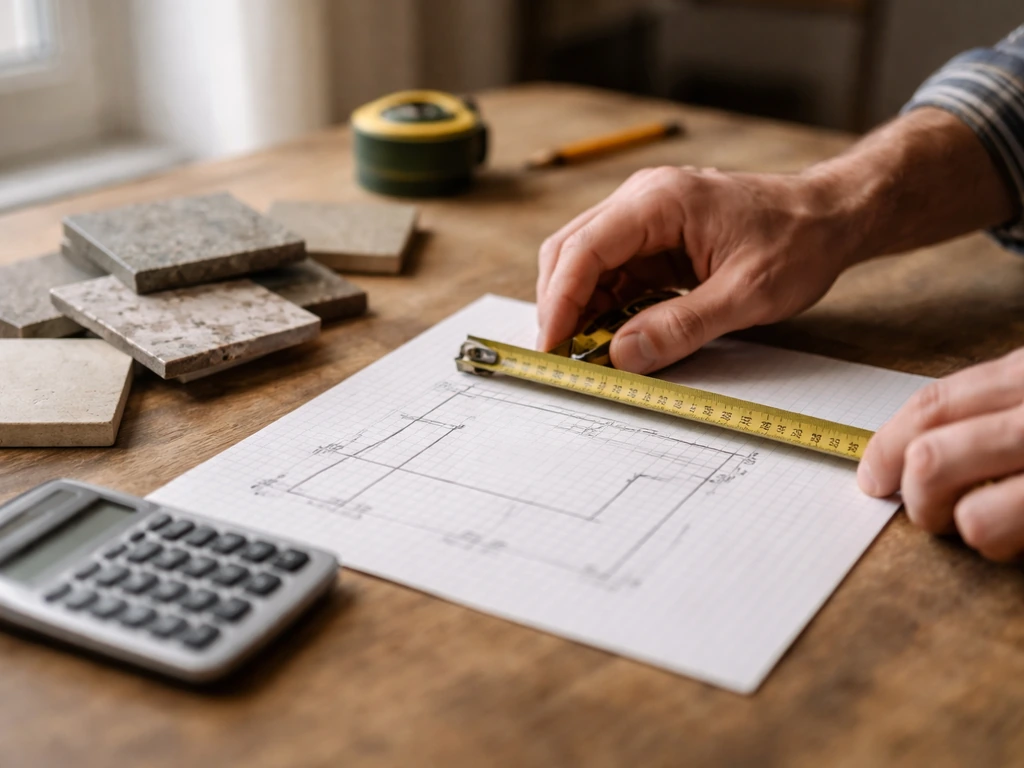
Here's a step-by-step method to get to a realistic number before you call a single contractor, and then verify the bids you receive.
- Measure your patio footprint accurately. Multiply length by width for a rectangle. For L-shapes or curves, break the space into sections and add them up. Write down the square footage.
- Pick a starting per-square-foot range based on your design intent. If you want a basic single-color ashlar or slate pattern, use $10–$14. If you want a border, two colors, or a more decorative pattern, start at $15–$20. If you're envisioning something truly custom with curves and multiple color layers, budget $21–$28.
- Add line items for any extras: demo of old patio ($1–$3/sq ft), steps ($150–$400 each), drainage work ($500–$2,500), and sealer if not bundled ($1.50/sq ft).
- Apply a regional adjustment. If you're in a high cost-of-living metro, add 20 to 30 percent to your baseline. If you're in a lower-cost region, you might come in under the national mid-range.
- Get at least three bids. Every bid should itemize: subbase excavation and gravel, concrete supply (with volume noted), reinforcement type, stamping labor, color materials (specify integral vs. hardener), release agent, finishing and jointing, and sealer. A bid that lumps everything into one line is a red flag.
- Ask each contractor specifically: What thickness slab? What base depth? How will control joints be placed relative to the stamp pattern? What sealer are you using and is it included? These questions reveal who actually knows decorative concrete and who's guessing.
- Compare bids on a per-square-foot basis and watch for unusually low bids. A bid that comes in at $6/sq ft for stamped work almost certainly cuts corners on base prep, concrete thickness, or color quality. That's how you end up with a cracking, fading patio in three years.
- Build in a 10 to 15 percent contingency buffer. Unexpected soil issues, a price increase on concrete delivery, or adding a small step mid-project are common budget surprises.
If you're also pricing out a plain concrete slab or looking at what the same square footage would run as a paver patio, the stamped option typically lands between the two: more expensive than standard broom-finished concrete per square foot, but often less than high-end paver installations when you factor in full labor and base costs. For a concrete patio, the stamped finish usually costs more per square foot than basic broom-finished concrete, but the exact number depends on size, thickness, and how much site prep is needed. Comparing those options side by side on a per-square-foot basis is worth doing before you commit to any one finish.
Once your patio is in, plan for resealing as an ongoing maintenance cost. At roughly $1.50 per square foot professional, a 400 square foot patio costs about $600 to reseal, and most homeowners need to do it every 3 to 5 years. Spreading that over time means roughly $120 to $200 per year in maintenance budget, which is reasonable for a surface that should last 25 to 30 years with proper care.
FAQ
How much does a stamped patio cost if I only have a small area, like 100 to 200 square feet?
Small patios often price higher per square foot because mobilization, layout, and setup still have to happen. If you’re around 100 to 150 sq ft, expect the per-square-foot number to skew toward the upper end of the basic to mid tiers, plus any minimum labor or delivery charges.
Does the $10 to $20 per square foot estimate include removing my old patio?
Not usually. Demo and haul-away are typically separate, commonly about $1 to $3 per square foot. If the contractor sees a thicker slab, rebar, or multiple layers, that can push demo closer to the top end or require an additional line item.
What happens if my patio site is not flat, like it slopes or has a backyard grade problem?
Expect added cost beyond standard base prep. You may need regrading, additional excavation, or drainage improvements, especially if surface water can’t flow away. A practical approach is to ask for a “drainage plan” in the quote, not just the stamped finish scope.
Is integral color or dry-shake color hardener more expensive, and which is usually better?
Integral color can raise material costs noticeably, but dry-shake hardener also adds per-square-foot cost and labor for correct broadcast and timing. The better choice depends on desired look and thickness, ask the contractor what exact products they use and whether the color is consistent across the whole slab or concentrated at the surface.
Does stamping cost more if I choose multiple patterns or borders?
Yes, pattern complexity and border detailing usually increase stamping labor and material handling. Even if the patio size is the same, switching from one simple field pattern to custom borders, tight repeats, or hand-detailing can move you from the basic tier toward mid or premium pricing.
How do steps, curves, or an irregular shape change the price?
Curves, steps, and irregular edges increase cutting, forming, and waste, so per-square-foot pricing often rises. When you request bids, provide a clear sketch or survey so contractors can measure actual square footage and count steps, returns, and edge details correctly.
Do I need reinforcement, like rebar or wire mesh, for every stamped patio?
Many residential stamped patios do, but the type and necessity depend on slab size, support, and local freeze-thaw conditions. Ask whether they’re using wire mesh or rebar and confirm the placement plan (top third vs mid-depth). Correct reinforcement placement can prevent cracking, not just add cost.
Is the sealer included in the stamped patio quote, and is all sealer the same?
Some bids bundle professional sealing, others list it separately. Also, sealer performance varies by product and application thickness, cheap or misapplied sealer can lead to whitening, peeling, or bubbles. Ask for the brand/type, application method, and whether it’s included as a line item you can verify.
How often will I have to reseal a stamped patio, and what does that cost per year?
A common expectation is resealing every 2 to 5 years depending on traffic, sun exposure, and sealer type. If you’re budgeting, convert the expected reseal price to an annual number by dividing the contractor sealer cost by the years between treatments, for example roughly every 3 to 5 years is typical for maintenance planning.
Can I DIY the stamping to save money, and what’s the biggest risk?
Full DIY stamping is high risk mainly because the stamping window is short and finishing has to be timed precisely. The most expensive mistake is visible defects that require grinding, overlay patching, or color and sealer correction. If you DIY, the safer savings usually come from doing subbase excavation and compaction, not the decorative steps.
How much more will it cost to repair a botched stamped patio?
Remediation commonly runs several dollars per square foot, especially when crews need to grind, patch, correct color, or remove and redo sealer. Before signing, ask for how they handle warranty issues and what their process is for color correction if the first attempt doesn’t match expectations.
What should I ask contractors to make bids comparable?
Ask for a written scope that lists slab thickness, base depth and material, reinforcement type, exact color method (integral vs dry-shake), stamping pattern complexity assumptions, sealer brand/type, and whether demo is included. Also request whether they will perform compaction testing and how they handle disposal and protection of nearby landscaping.
Do I save money by waiting for off-season, like fall or winter?
Sometimes. Labor demand is typically lower outside peak spring and summer, so quotes can drop. However, weather limits pour and cure conditions, so ask whether their schedule includes curing protection and whether the site can be prepped and sealed within recommended temperature ranges.
If a concrete truck can’t reach my backyard easily, how is that handled in cost?
Access issues can add pumping, wheelbarrow time, or additional labor. The cost impact can be substantial, so confirm truck access distance and any constraints like gates, tight turns, or slopes. Include this in your initial quote request so they don’t have to “re-quote” after seeing the site.
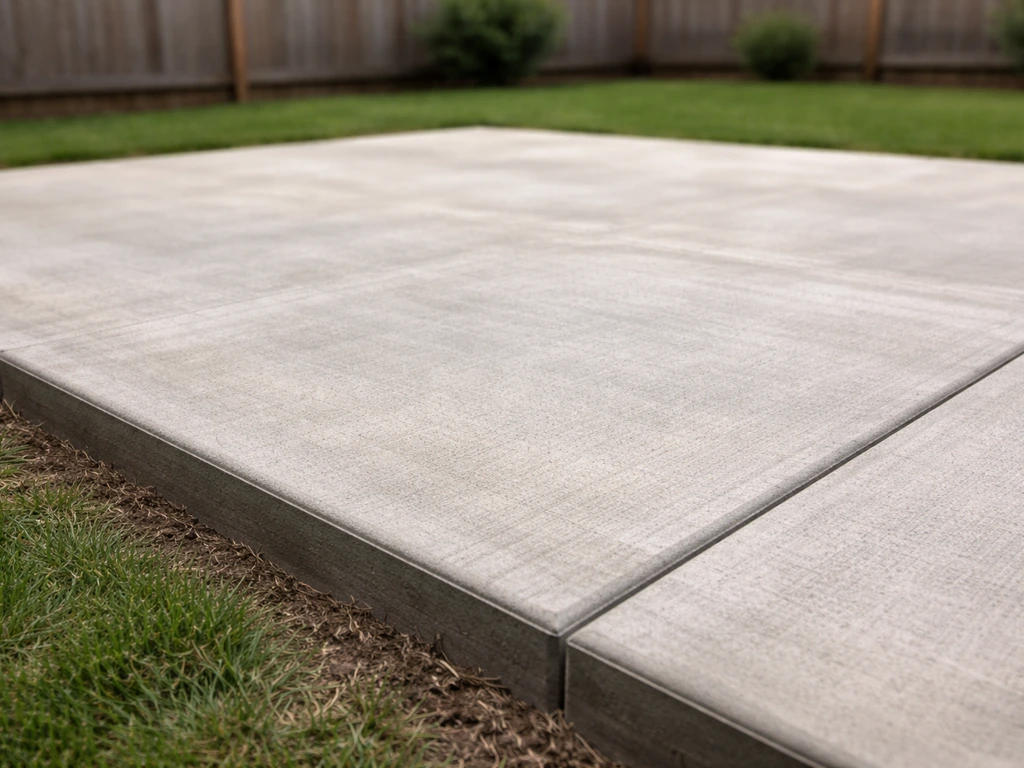
Concrete patio slab costs per sq ft, typical ranges, size estimates, and what affects installed total for budgeting.
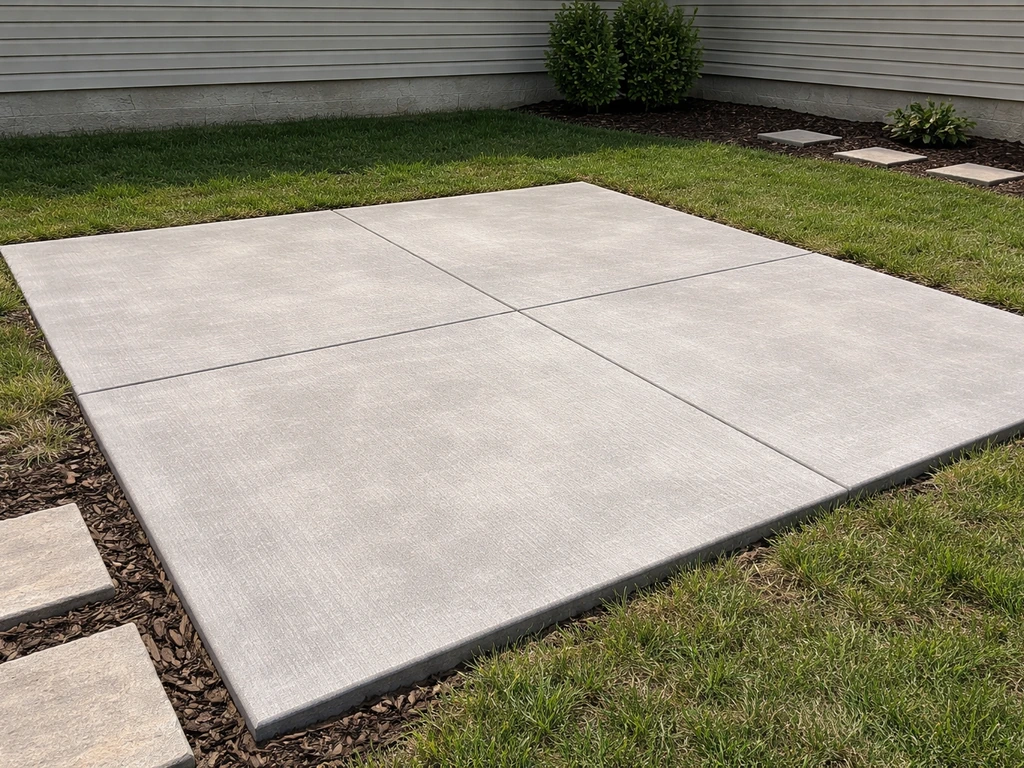
Budgeting guide for a 10x10 or 12x12 concrete patio: installed cost ranges, price drivers, DIY vs contractor, and bid ti
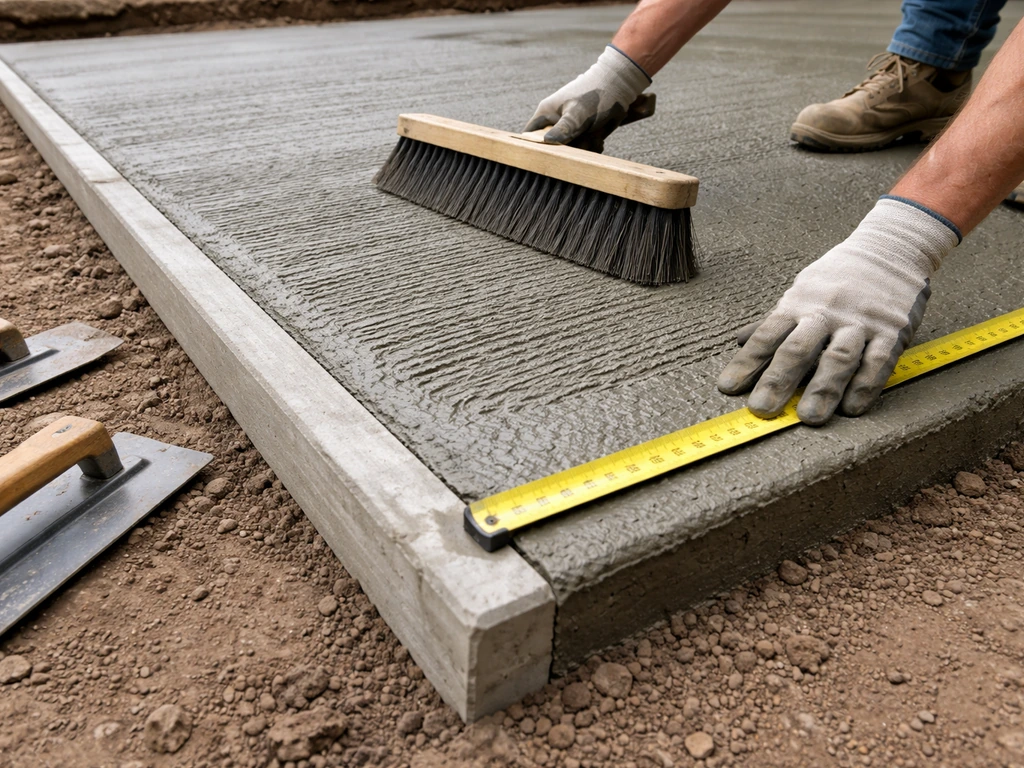
Concrete patio costs per sq ft, what’s included, typical price ranges, cost factors, budgets for sizes, and quote checkl