
A concrete patio slab runs $6 to $12 per square foot installed for a plain broom-finish slab, which puts a 12x12 patio at roughly $864 to $1,728 and a 20x20 at $2,400 to $4,800. If you want decorative stamped or stained concrete, budget $8 to $30 per square foot. Builds and Buys (2026) also notes that blank" rel="noopener noreferrer">stamped concrete is more labor-intensive, which helps explain why it tends to cost more. DIY pours with ready-mix delivery drop the cost to around $2 to $4 per square foot in materials, but that number climbs fast once you factor in equipment rental, base gravel, and the real risk of a botched finish.
How Much Is a Concrete Patio Slab Cost per Sq Ft?

Felix Carver
4 Jul 2026
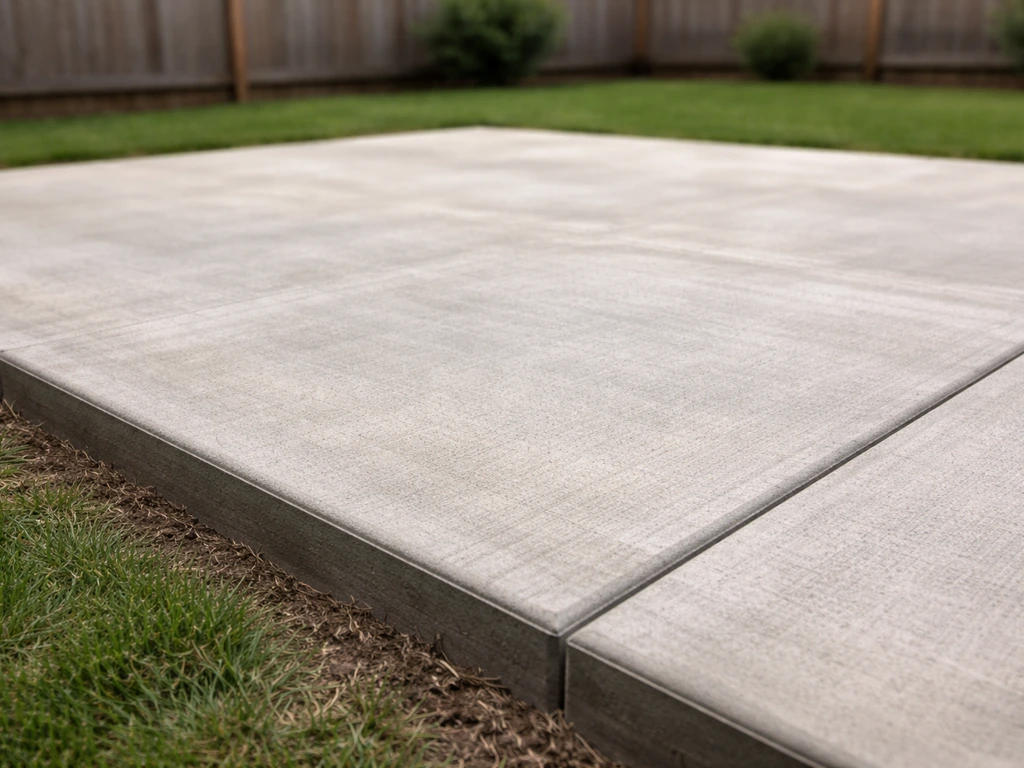
What a concrete patio slab actually costs in total
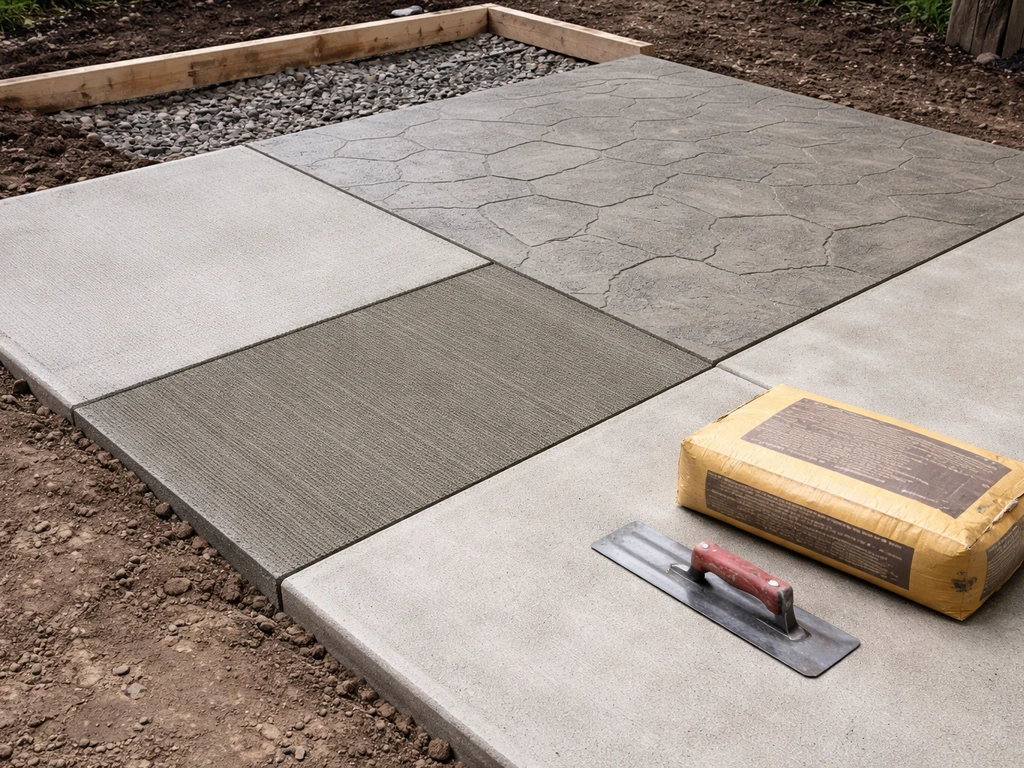
Most homeowners in the US pay somewhere between $800 and $6,000 for a finished concrete patio, depending on size and finish type. A small 10x10 plain slab lands at $600 to $1,200. A more typical suburban patio at 20x20 runs $2,400 to $4,800 for standard flatwork. Jump to stamped or stained and that same 20x20 could hit $8,000 to $12,000 or more at the high end of decorative pricing. If you’re specifically trying to estimate how much a stamped patio costs, use the stamped concrete per-square-foot range and multiply by your patio’s square footage, then add site prep and any thicker-slab needs how much does stamped patio cost.
Those totals assume a standard 4-inch slab with a compacted gravel base, broom finish, and professional installation. What pushes the number up is a combination of things: finish complexity, slab thickness, how much excavation is needed, whether the site is sloped or has poor soil, and where you live. The base price of plain concrete is actually pretty predictable. It's the prep work and finish that create the wide range.
Cost per square foot and what actually moves the price
The most useful benchmark is cost per square foot because it scales to any size project. For plain, contractor-installed concrete, you're looking at $4 to $12 per square foot, with the midpoint around $6 to $8 for a typical residential patio. Decorative options like stamped or stained concrete start at $8 and can reach $30 per square foot for complex patterns and multiple colors. Angi's 2026 data pegs a standard 3.5 to 4-inch patio at roughly $10 per square foot installed, which is a reasonable middle-ground estimate to use when you're getting quotes.
Several factors push that per-square-foot number up or down. Finish type is the biggest lever: plain broom-finish is the cheapest, exposed aggregate costs a bit more, and stamped or stained is significantly more expensive because the labor is more intensive and the window for getting it right is narrow. Thickness also matters: each extra inch of concrete adds roughly $0.75 to $1.25 per square foot. Slab size has a meaningful effect too, because mobilization costs (bringing a truck, crew, and mixer out) get spread across more square footage on larger jobs, lowering the effective rate per square foot.
| Finish Type | Installed Cost (per sq ft) | Notes |
|---|---|---|
| Plain broom-finish | $4 – $12 | Most common, lowest labor cost |
| Exposed aggregate | $6 – $14 | Textured look, slightly more finishing labor |
| Stained concrete | $8 – $20 | Color added after pour or integral |
| Stamped concrete | $8 – $30 | Pattern-pressed before cure, highest labor cost |
Installed vs DIY: the real cost difference
DIY concrete is genuinely cheaper on paper. Ready-mix delivery plus your own labor runs about $2 to $4 per square foot for a standard 4-inch slab. Contractor-installed work runs $6 to $12 per square foot. That gap on a 200-square-foot patio is roughly $800 to $1,600 in savings if everything goes right on the DIY side. The catch is that concrete gives you one shot. If your finish is uneven, you pulled the trowel too late, or your forms weren't level, you're living with it permanently (or paying to break it out and start over).
What contractor pricing actually covers is worth understanding before you decide. Labor alone is about $5 to $15 per square foot, but that includes site prep, forming, pouring, finishing, and cleanup. Contractors also handle the coordination with the ready-mix truck, which needs to arrive at the right slump and be placed before it starts setting. For anyone who hasn't done flatwork before, that's a lot to manage at once. For experienced DIYers or anyone tackling a small, simple slab, DIY is a reasonable option. For anything over 200 square feet or on uneven ground, the professional markup is usually worth it.
One cost that surprises DIYers: excavation and haul-off. If you need to dig down 6 to 8 inches to accommodate a 4-inch gravel base plus a 4-inch slab, that's real material to remove. Renting a mini-excavator or hiring that part out can add $200 to $800 depending on the job. Contractors price this in automatically. DIYers often forget it until they're standing in their backyard with a shovel.
Thickness, base, and reinforcement: what they cost and why they matter
Slab thickness
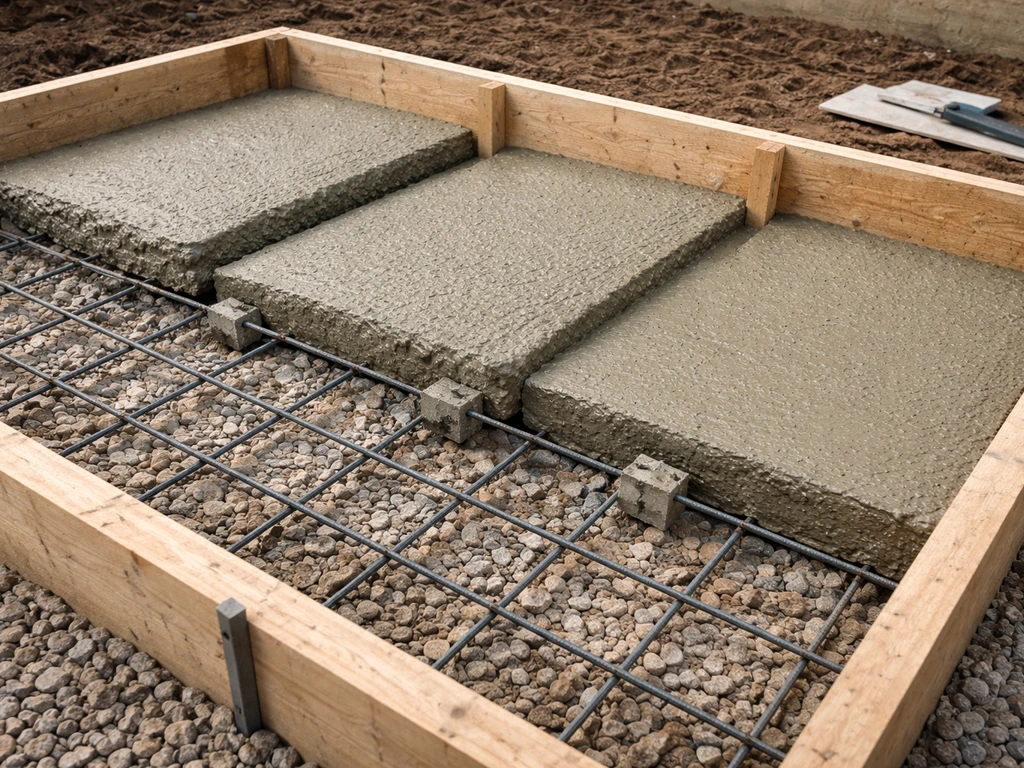
Four inches is the standard for a residential patio that only sees foot traffic and patio furniture. That's the thickness that most contractor quotes assume and it's the baseline for cost estimates in this article. If you plan to park a vehicle on the slab or it needs to support a hot tub, you want 5 to 6 inches, which adds $0.75 to $1.25 per square foot per additional inch. Going from 4 inches to 5 inches on a 20x20 patio (400 sq ft) adds roughly $300 to $500 to the total. It's not a huge jump and it's worth it if the use case warrants it.
Gravel base
A compacted gravel subbase is not optional if you want the slab to last. A proper base prevents settling and cracking by giving water somewhere to drain and giving the slab something stable to sit on. Plan on about 1.25 cubic yards of crushed stone per 100 square feet for a 4-inch base layer. Crushed stone runs $30 to $65 per cubic yard depending on your region and supplier. For a 20x20 patio, that's roughly 5 cubic yards, or $150 to $325 in gravel alone before delivery or compaction labor.
Reinforcement (rebar vs. wire mesh)
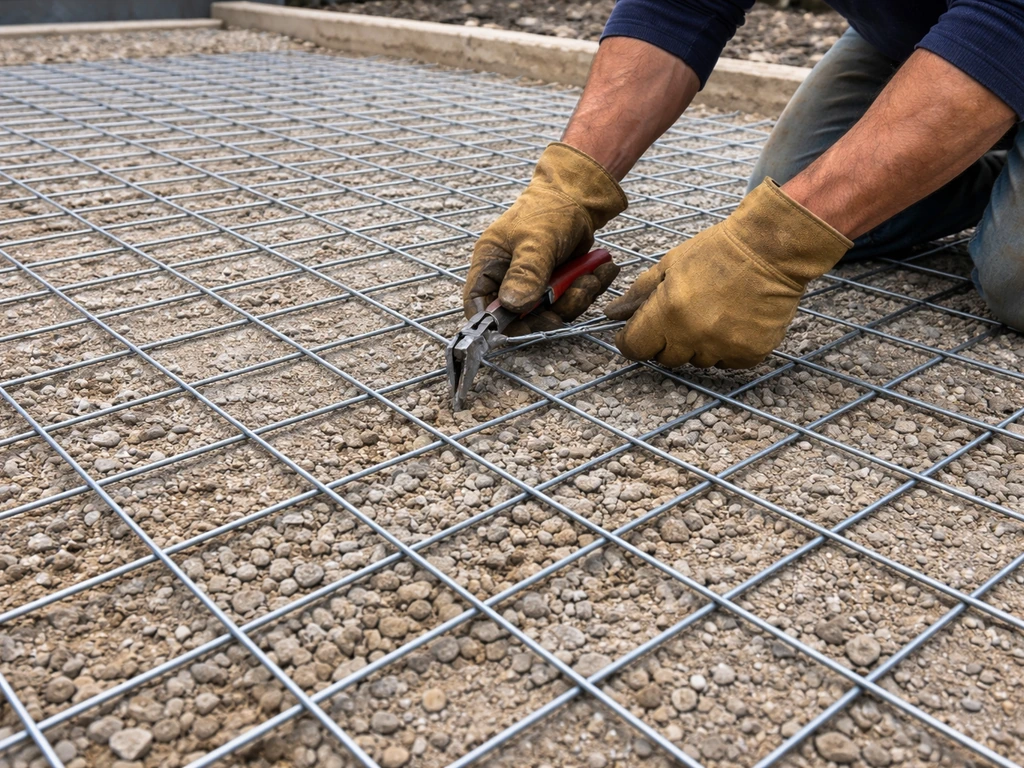
For a residential patio slab, welded wire fabric (WWF) is the most common reinforcement choice. The standard spec for flatwork is 6x6 W1.4/W1.4 wire mesh. The critical detail most DIYers get wrong is placement: the mesh needs to sit in the middle third of the slab depth, not flat on the ground. Chairs or small concrete supports hold it up during the pour. Rebar is used for thicker slabs or slabs that need to carry heavier loads. Either way, reinforcement adds a modest cost to the material side but is cheap insurance against cracking. If a contractor's quote doesn't mention reinforcement and your soil has any clay content or poor drainage, ask about it directly.
Quick size estimates for easy budgeting
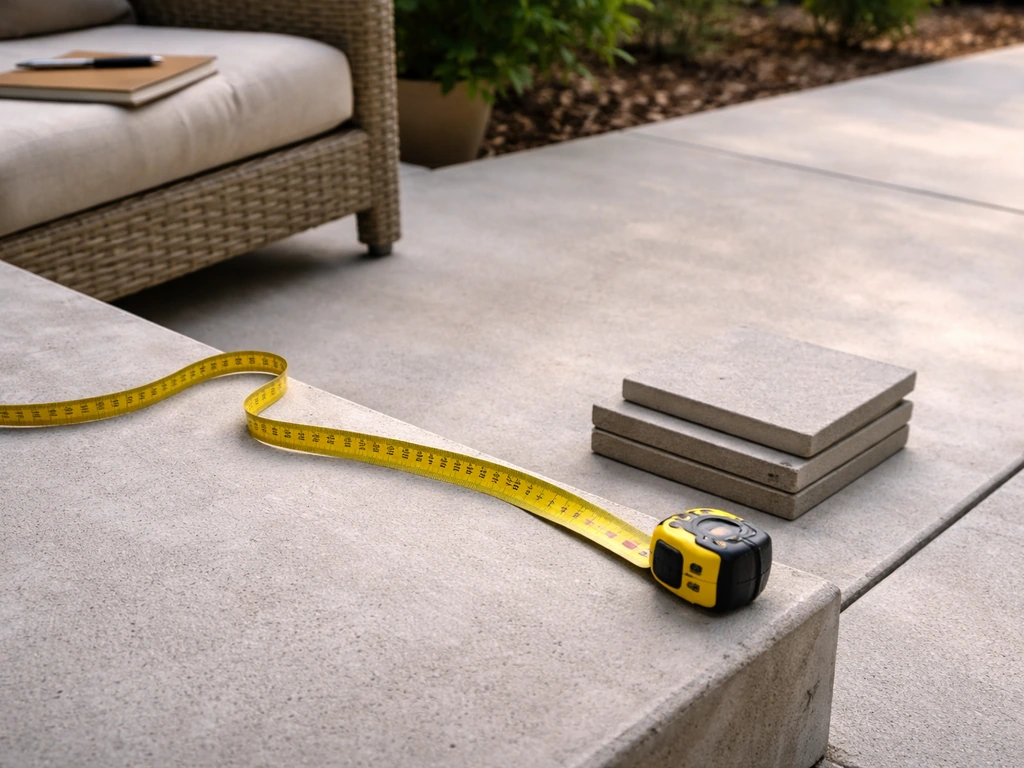
If you know your patio size, you can get a ballpark number right now. These estimates are based on the $6 to $12 per square foot installed range for plain broom-finish concrete. Stamped or decorative finishes will push these numbers higher, roughly 1.5x to 2.5x the plain concrete figure.
| Patio Size | Square Footage | Plain Concrete (Installed) | Stamped Concrete (Installed) |
|---|---|---|---|
| 10 x 10 | 100 sq ft | $600 – $1,200 | $800 – $3,000 |
| 12 x 12 | 144 sq ft | $864 – $1,728 | $1,150 – $4,320 |
| 12 x 16 | 192 sq ft | $1,152 – $2,304 | $1,536 – $5,760 |
| 16 x 20 | 320 sq ft | $1,920 – $3,840 | $2,560 – $9,600 |
| 20 x 20 | 400 sq ft | $2,400 – $4,800 | $3,200 – $12,000 |
| 20 x 30 | 600 sq ft | $3,600 – $7,200 | $4,800 – $18,000 |
A small 10x10 patio is really at the lower end of what most contractors want to mobilize for, so don't be surprised if quotes on a tiny slab feel disproportionately high. The setup cost is similar whether they're pouring 100 or 300 square feet. Larger slabs tend to get better per-square-foot pricing because the fixed costs get spread across more area.
How region affects your quote and what to do about it
Where you live has a meaningful impact on what you'll pay. Labor rates in high cost-of-living metros (coastal cities, major metros in California, New York, or the Pacific Northwest) push the installed rate toward the top of the range or beyond it. In the Midwest and Southeast, you'll more often land near the $6 to $8 per square foot range for plain work. Fuel and concrete delivery costs also vary by region, and they can shift the material side of the quote noticeably.
If you're in Canada, the numbers look a little different. Nationally, poured concrete slabs run about $5 to $10 per square foot installed for standard residential flatwork. HomeStars estimates that poured concrete slabs in Canada typically cost $5, $10 per square foot installed for standard residential flatwork $5–$10 per square foot installed. If you want a deeper Canada-focused breakdown, see how much does a concrete patio cost in canada for more region-specific pricing context. In Calgary specifically, contractor estimates for a broom-finish patio run $10 to $15 per square foot, which reflects higher local labor and material costs. In metric terms, professional concrete flatwork across Canada generally falls in the $90 to $200 CAD per square metre range, depending on the province and finish. If you're planning a Canadian project, there's a dedicated breakdown of concrete patio costs in Canada worth looking at.
Permits are another regional variable people miss. Some municipalities require a permit for a patio above a certain size, and many require an inspection before the pour. Missing that step can cause problems when you sell the home. Check with your local building department before you schedule work. It's a quick call and it protects you.
How to get a quote that's actually useful
The fastest way to get a bad quote is to call a contractor and say 'I want a patio.' They'll give you a ballpark that may not account for your site at all. Before you call, have these details ready:
- Exact dimensions of the patio you want (length x width)
- Whether the area is level or sloped and how much excavation is needed
- What you want under the slab (a gravel base is standard, but some sites need more prep)
- Desired thickness (4 inches for foot traffic, 5 to 6 for vehicles or heavy loads)
- Finish type: plain broom, exposed aggregate, stained, or stamped
- Whether you need any drainage, step edges, or special features
- Whether a permit is required in your area
Get at least three quotes and make sure each one specifies the same scope: thickness, base prep, reinforcement type, and finish. A quote that comes in significantly lower than the others usually means something was left out, not that you found a deal. Ask each contractor specifically what's included for base prep and reinforcement, because that's where vague quotes hide expensive surprises.
If you want to go deeper on specific cost drivers, the per-square-foot breakdown has more detail on how finish and site conditions change the math. For smaller projects specifically, the breakdown for small concrete patio costs covers scenarios where you're working with limited budgets or tight spaces. And if stamped concrete is on your radar, the stamped concrete patio cost guide is worth reading before you commit, since the labor and timing requirements are significantly different from plain flatwork.
FAQ
How much extra does a concrete patio cost if the slab needs to be thicker than 4 inches?
For most residential installs, plan on roughly $0.75 to $1.25 per square foot for each additional inch of thickness. Also confirm whether the quote changes the base thickness and compaction plan, since contractors often adjust the subbase when you go thicker.
What’s the typical concrete patio thickness for a hot tub or vehicle parking, and how does it affect the total price?
Vehicle support or heavy point loads usually call for 5 to 6 inches of concrete. In that case, expect both higher material cost and usually more aggressive base prep (depth and compaction), which can add more than the slab-per-inch math alone.
Do I need a permit for a concrete patio, and what happens if I skip it?
Permit rules vary by city and project size, but some places require permits or inspections even for backyard flatwork. If you skip it, it can create issues during resale or trigger a stop-work or re-inspection requirement, which can add delays and additional fees.
Should I budget for forms, leveling, and edge work separately from “concrete per square foot”?
Many per-square-foot numbers assume standard forming and finishing, but edge treatments and transitions (to an existing driveway, walkway, or foundation) can be line items. Ask whether the quote includes screeding, control joints, and proper edging, since those details affect both cost and performance.
Is welded wire fabric (WWF) included in most quotes, and where should it sit?
Not always. Some contractors include WWF placement in their standard scope, but others only price it if you request reinforcement. If it’s used, it generally should be positioned in the middle third of the slab depth with chairs or supports, not sitting directly on the ground or base.
Does adding reinforcement (WWF or rebar) meaningfully change the price?
Reinforcement usually adds a modest amount to the material side, but it can prevent costly cracking later, especially with clay soil or poor drainage. If your quote is unusually low and doesn’t mention reinforcement, that’s a red flag that the scope may be missing.
How much does site prep change the cost, and what are the common “missing scope” items?
Excavation depth, soil condition, and drainage work are the biggest variables. Common exclusions that inflate the final bill include hauling off excess soil, additional base material, undercutting soft spots, and regrading around slopes or existing structures.
If my patio is small, why do quotes sometimes feel disproportionately expensive?
Small slabs often don’t reduce setup costs much, because mobilization, truck scheduling, and minimum crew time stay similar. That’s why a 10x10 project can end up at the low end of the total range but still look costly per square foot compared with a larger patio.
How do I compare contractor quotes fairly when pricing is quoted as per square foot?
Make sure every quote specifies the same slab thickness, base prep depth, reinforcement type (WWF, rebar, or none), and finish (broom, stamped, stained). Also ask for a written allowance for site conditions, because a lower price often means something like missing excavation, missing reinforcement, or a different finish package.
Does DIY really come down to $2 to $4 per square foot in materials, or are there hidden costs?
That low number is materials plus ready-mix delivery, and it skips the real expenses DIYers often miss: excavation, haul-off, gravel, compaction equipment, concrete placement logistics, and the cost of rework if the finish or slope is off. If you lack experience, consider that the “break it out” scenario can erase any savings quickly.
What should I ask about the concrete delivery and timing (slump, arrival time, placement window)?
Placement depends on arriving at the right slump and working before the mix begins to set. Contractors typically coordinate the truck timing and placement sequence, but DIYers should ask how they plan to handle the delivery schedule, placement order, and weather delays, since those affect both cost and finish quality.
How much base gravel do I need, and should I budget for delivery and compaction?
A common baseline for a 4-inch patio system is about 1.25 cubic yards of crushed stone per 100 square feet for the base layer, plus delivery and compaction. If the quote doesn’t include compaction or specifies less gravel than needed, you can get settling and cracking even if the slab itself is poured correctly.
Can decorative stamped or stained concrete be done on a slab that’s not broom finished?
Stamped and stained work can increase cost substantially, but the finish also changes prep and timing requirements, and it can be more sensitive to surface uniformity. When comparing prices, confirm the contractor’s process (coloring method, curing, and sealing plan), not just the advertised per-square-foot rate.
Next Articles
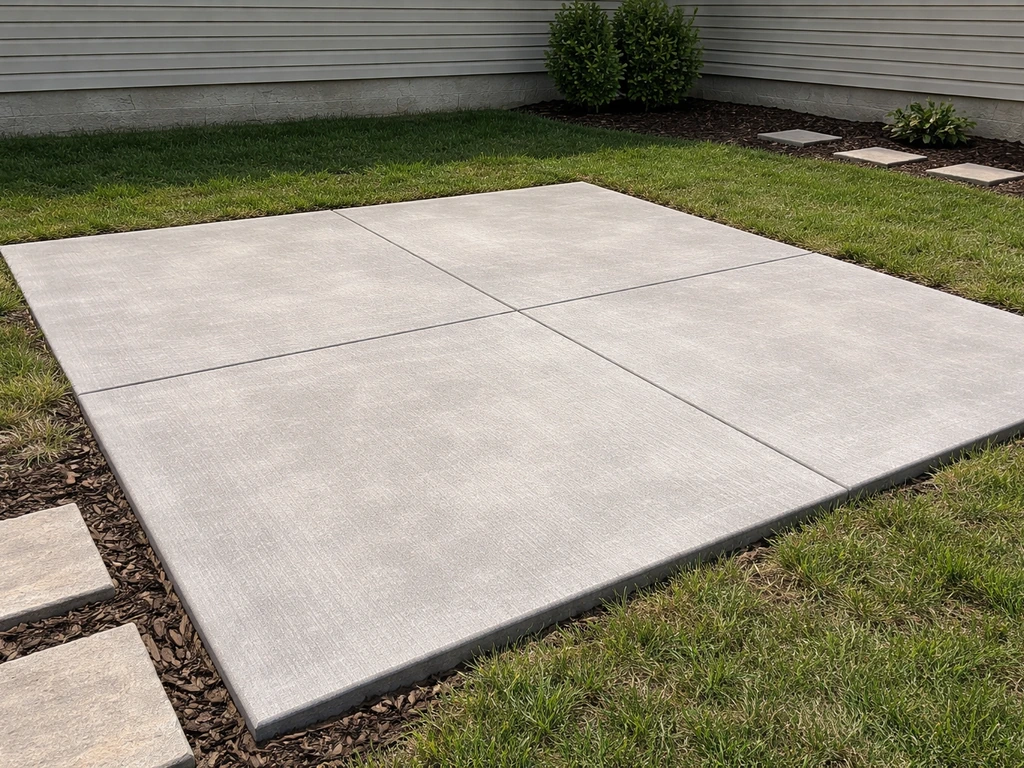
How Much Does a Small Concrete Patio Cost? Updated Prices
Budgeting guide for a 10x10 or 12x12 concrete patio: installed cost ranges, price drivers, DIY vs contractor, and bid ti
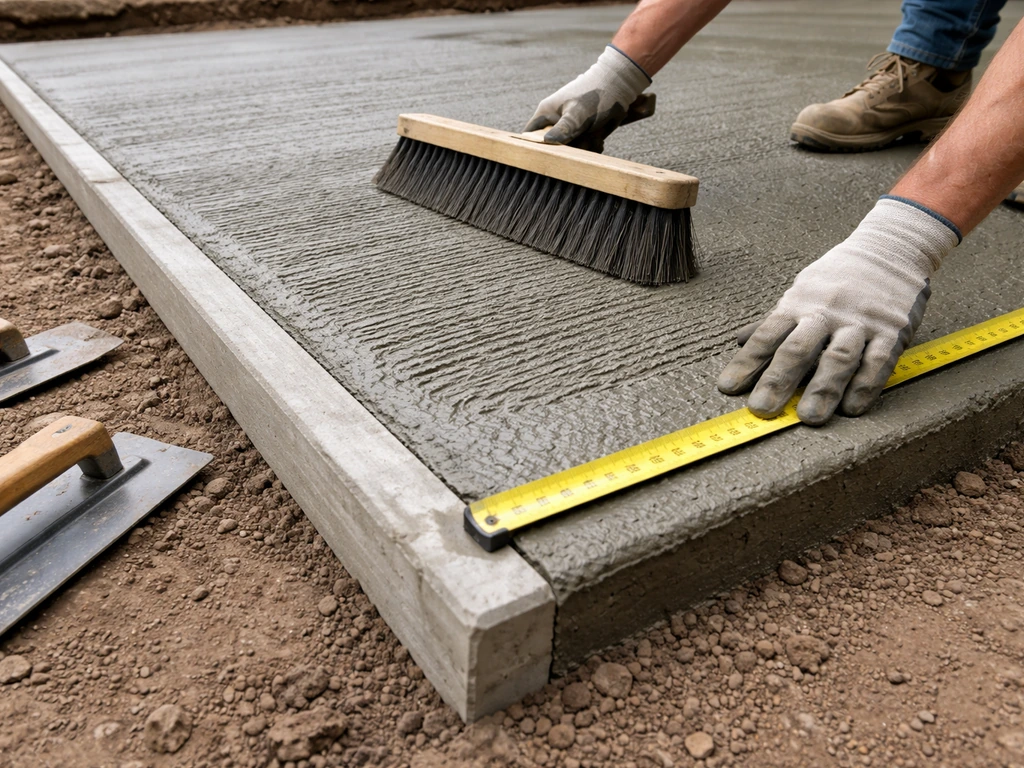
How Much Per Sq Ft for a Concrete Patio Cost
Concrete patio costs per sq ft, what’s included, typical price ranges, cost factors, budgets for sizes, and quote checkl
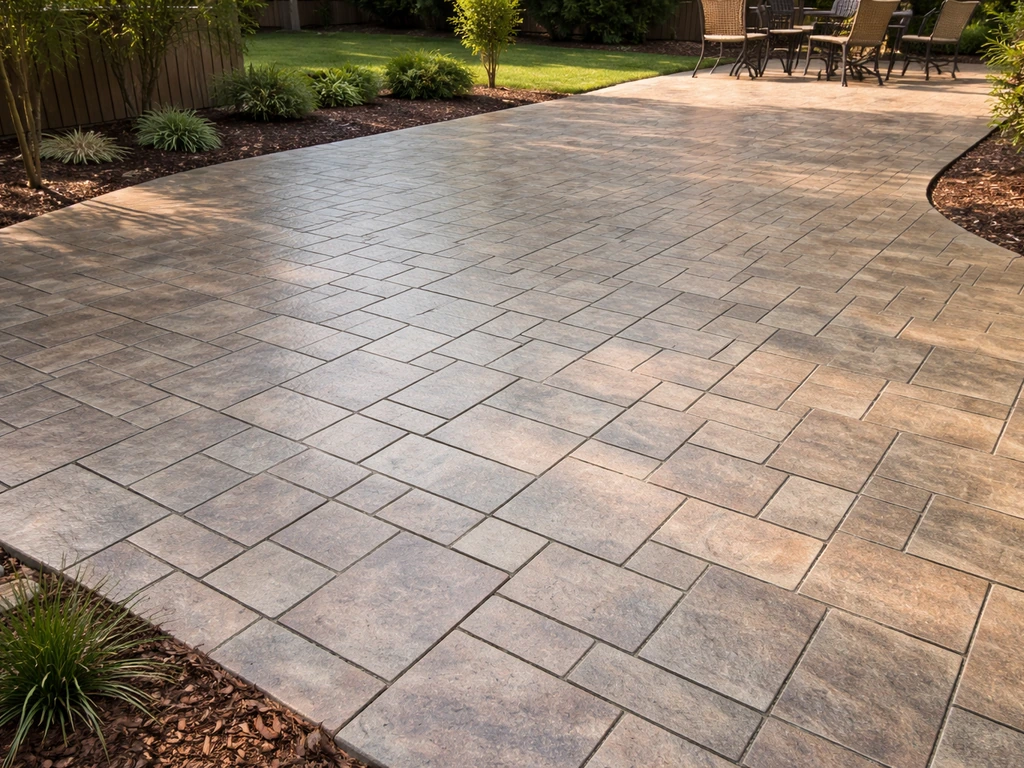
How Much for a Stamped Concrete Patio Cost Breakdown
Stamped concrete patio costs explained with real ranges per sq ft, size examples, what affects price, and DIY vs contrac