
Most homeowners pay somewhere between $8 and $25 per square foot installed for a patio, depending on the material and where they live. If you want to estimate your total cost, look at typical patio pricing per square foot and multiply by your patio size.
How Much to Do a Patio Cost in 2026 by Size

Felix Carver
29 Apr 2026
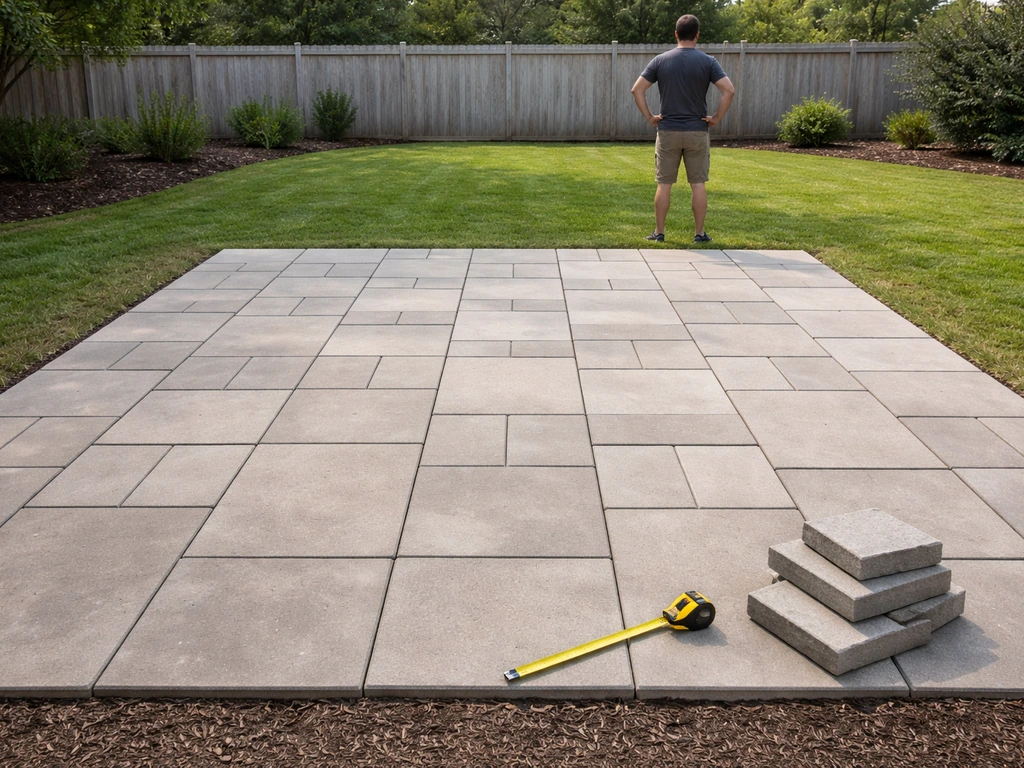
That puts a basic 12x12 concrete patio around $1,100 to $2,500, a 20x20 paver patio in the $3,200 to $10,000 range, and a flagstone or natural stone patio anywhere from $2,000 on the low end to $18,000 or more for a large, mortared install. The gap is wide because material costs, labor rates, site conditions, and finish choices all move the number significantly.
This guide breaks it all down so you can get to a realistic budget before you ever call a contractor.
Quick patio cost ranges by size and material
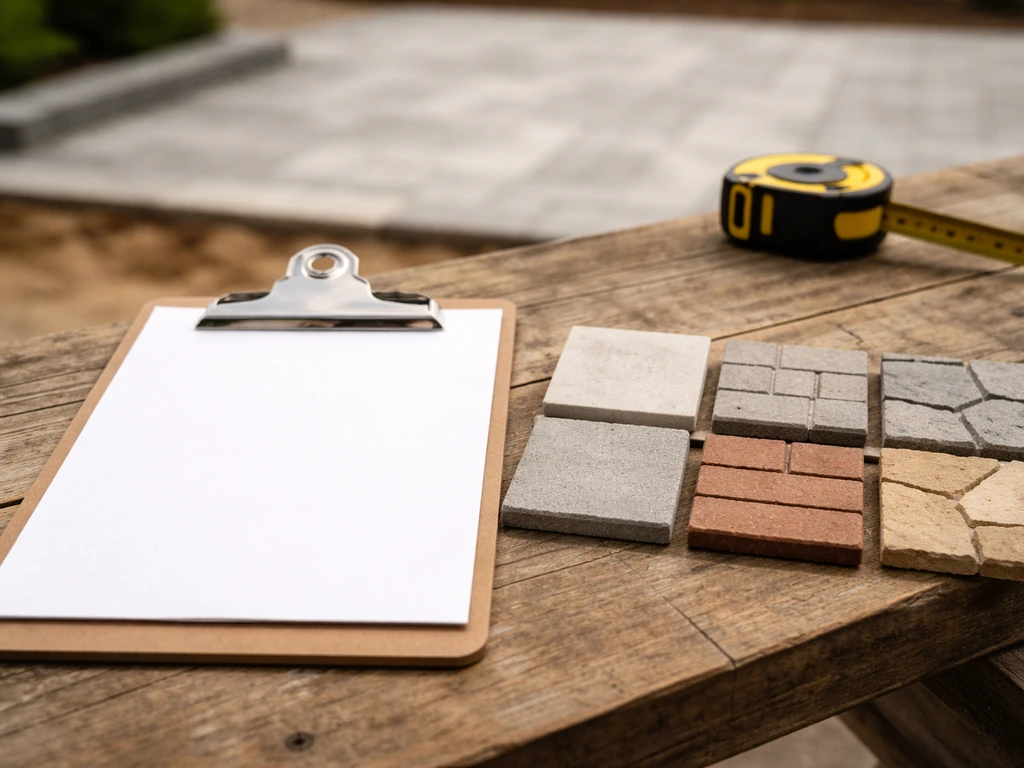
The table below gives installed price ranges for the most common patio sizes and materials based on 2026 contractor pricing data. These include basic site prep and labor but assume a relatively flat, accessible yard with no major obstacles. Use these as a starting ballpark, not a final quote.
| Size (sq ft) | Basic Concrete | Stamped Concrete | Concrete Pavers | Brick | Flagstone / Natural Stone |
|---|---|---|---|---|---|
| 10x10 (100 sq ft) | $600–$1,200 | $1,200–$2,500 | $1,000–$2,500 | $1,000–$3,000 | $1,500–$4,200 |
| 12x12 (144 sq ft) | $865–$1,730 | $1,730–$3,600 | $1,440–$3,600 | $1,440–$4,320 | $2,160–$6,050 |
| 16x16 (256 sq ft) | $1,540–$3,070 | $3,070–$6,400 | $2,560–$6,400 | $2,560–$7,680 | $3,840–$10,750 |
| 20x20 (400 sq ft) | $2,400–$4,800 | $4,800–$10,000 | $4,000–$10,000 | $4,000–$12,000 | $6,000–$16,800 |
| 300 sq ft (typical mid) | $1,500–$3,600 | $3,000–$7,500 | $3,000–$7,500 | $3,000–$9,000 | $4,500–$12,600 |
Per square foot, expect to pay $8 to $20 for basic poured concrete, $12 to $30 for stamped concrete, $8 to $25 for interlocking pavers, $10 to $30 for brick, and $15 to $45 for flagstone or natural stone (with mortar or concrete base pushing that toward the top end). The overall installed range across all materials runs $5 to $35 per square foot when you factor in everything from basic broom-finish concrete to premium hand-set flagstone.
What's included in the total patio price (line-item breakdown)
A contractor quote isn't just material and labor. There are blank" rel="noopener noreferrer">several cost layers that add up fast, and missing one of them in your budget is how you end up $1,500 over. Here's what a realistic patio install actually includes:
- Excavation and grading: Digging out the area to the right depth and sloping it for drainage typically runs $0.60 to $0.85 per sq ft for flat, non-wooded land without hauling. Add to that if the area has roots, rocks, or slopes.
- Hauling and disposal: Removed soil and debris needs to go somewhere. Expect $200 to $600 for a typical patio, more if there's existing concrete or hardscaping to demo.
- Base material and compaction: A 4-inch compacted gravel base costs roughly $30 to $50 per cubic yard delivered, and installation plus compaction adds another $0.85 to $1.10 per sq ft. This is non-negotiable if you want the patio to stay level.
- Bedding layer (pavers and stone): Pavers and flagstone need a sand or fine gravel bedding layer on top of the compacted base, typically adding $0.50 to $1.00 per sq ft.
- Reinforcement (concrete slabs): Welded wire mesh runs $0.50 to $1.50 per sq ft; rebar on 18-inch centers runs $0.75 to $1.25 per sq ft. Most contractors include one or the other in their quote, but confirm which.
- Concrete or paver materials: The bulk of the material cost. Basic concrete runs $6 to $8 per sq ft in materials alone; stamped concrete mixes and color run more. Pavers and stone vary widely by type and source.
- Labor for installation: Pouring and finishing concrete typically costs $3 to $8 per sq ft in labor. Hand-setting pavers or flagstone runs $6 to $15 per sq ft depending on complexity.
- Edging and restraints: Plastic or steel edge restraints for pavers run $1 to $3 per linear foot. Without them, pavers migrate over time.
- Sealing: Sealing concrete or pavers after install adds $0.50 to $2.00 per sq ft but extends the life of the surface significantly.
- Permits: Required in many municipalities for permanent patio installs over a certain size, often $50 to $300 depending on your area.
When you add it all up for a mid-size 300 sq ft patio, the base, excavation, and disposal alone can run $1,000 to $2,000 before you spend a dollar on the actual surface material. That's the number that surprises most people when they get their first quote.
Cost differences by patio type
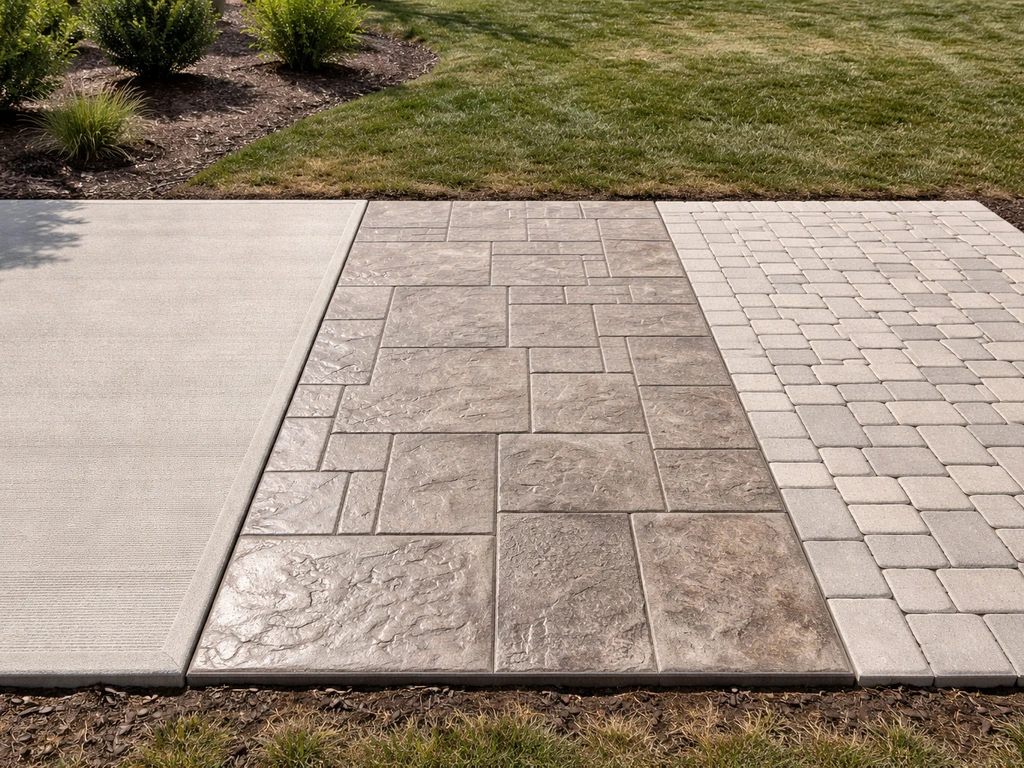
Basic and stamped concrete
Plain broom-finish concrete is almost always the most affordable option. At $8 to $20 per sq ft installed, it's fast to pour, holds up well, and is easy to seal and maintain. Stamped concrete adds texture and color to mimic stone or brick and costs $12 to $30 per sq ft installed. The upside is you get the look of high-end materials at a lower price point than the real thing. The downside is that stamped concrete can crack and fade over time, and repairs are hard to match. If you're on a budget but want something better-looking than plain gray, stamped concrete is usually the move.
Concrete pavers
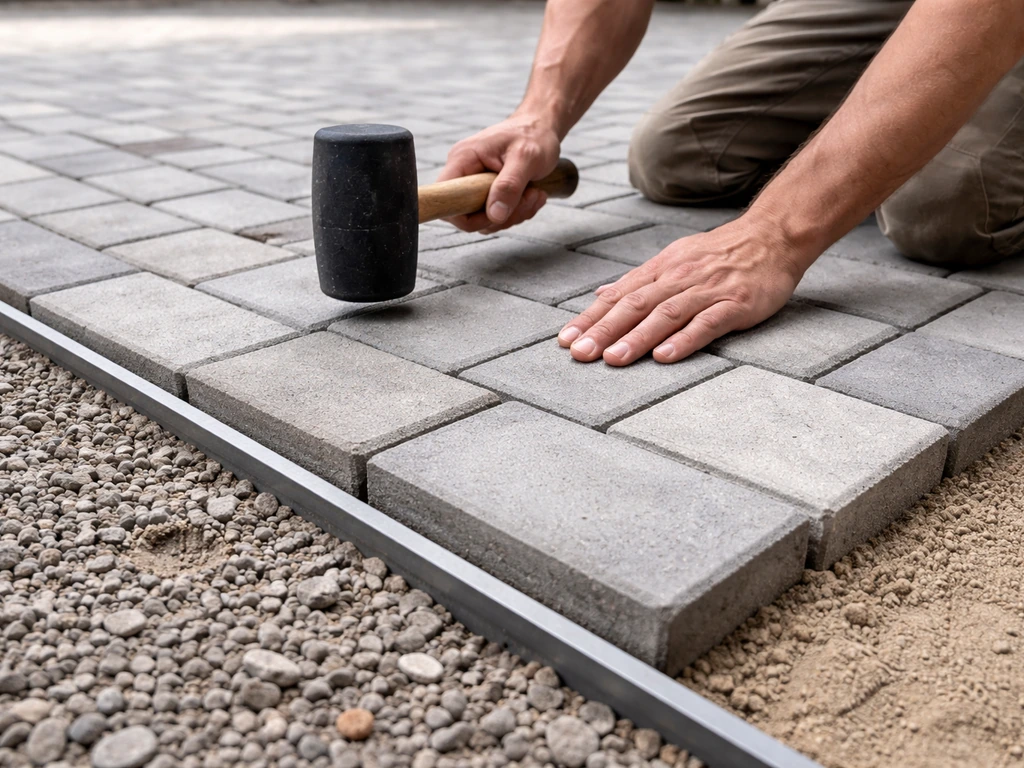
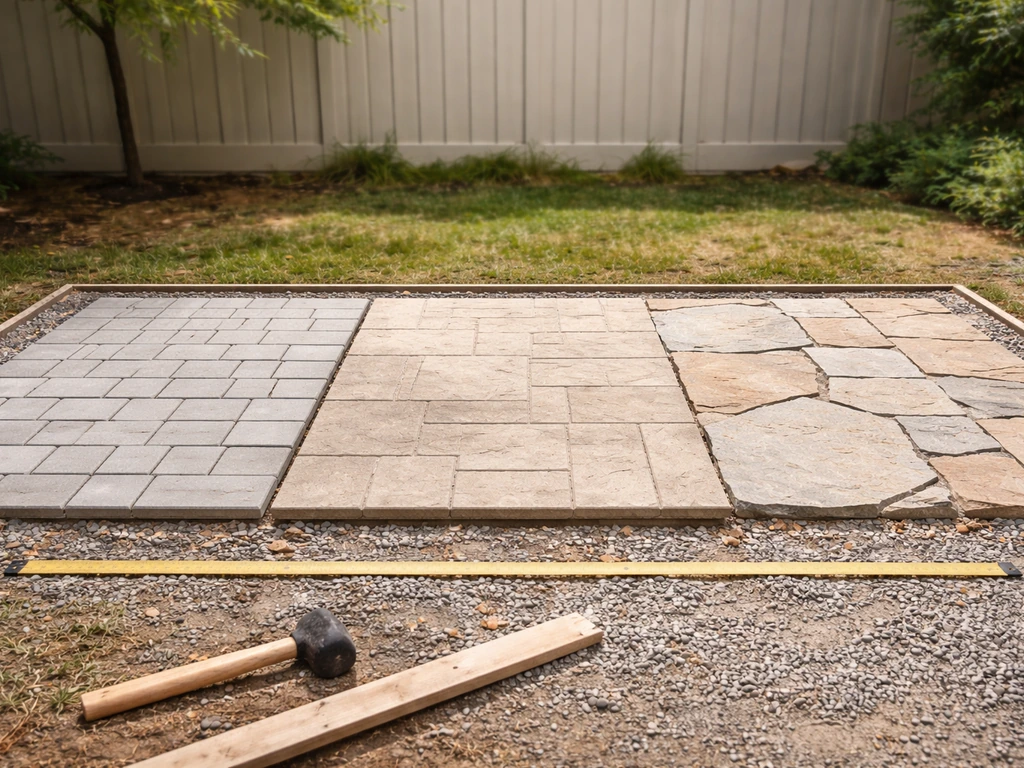
Interlocking concrete pavers run $8 to $25 per sq ft installed. Basic concrete pavers come in around $10 to $15 per sq ft installed; mid-grade options land at $15 to $20 per sq ft; and premium natural stone pavers push $25 to $30 or more. Pavers have one big advantage over poured concrete: if one cracks or settles, you can pull it out and replace it without redoing the whole surface.
The base prep is more involved than concrete, which is partly why the labor cost is comparable even though the material is modular. For mechanically installed interlocking concrete pavements, CMHA’s PAV-TEC-015 guidance specifies screeding the bedding sand to a nominal 1 inch (25 mm) thickness during installation base prep is more involved than concrete.
Brick
Brick patios typically cost $10 to $30 per sq ft installed. A standard 20x20 brick patio runs $4,000 to $12,000 depending on brick type, whether it's dry-laid or mortared, and local labor rates. Classic brick looks great and lasts for decades, but it can shift and heave in freeze-thaw climates without a solid base. It's also more labor-intensive to lay than concrete pavers, which keeps the labor cost high even when brick itself is affordable.
Flagstone and natural stone
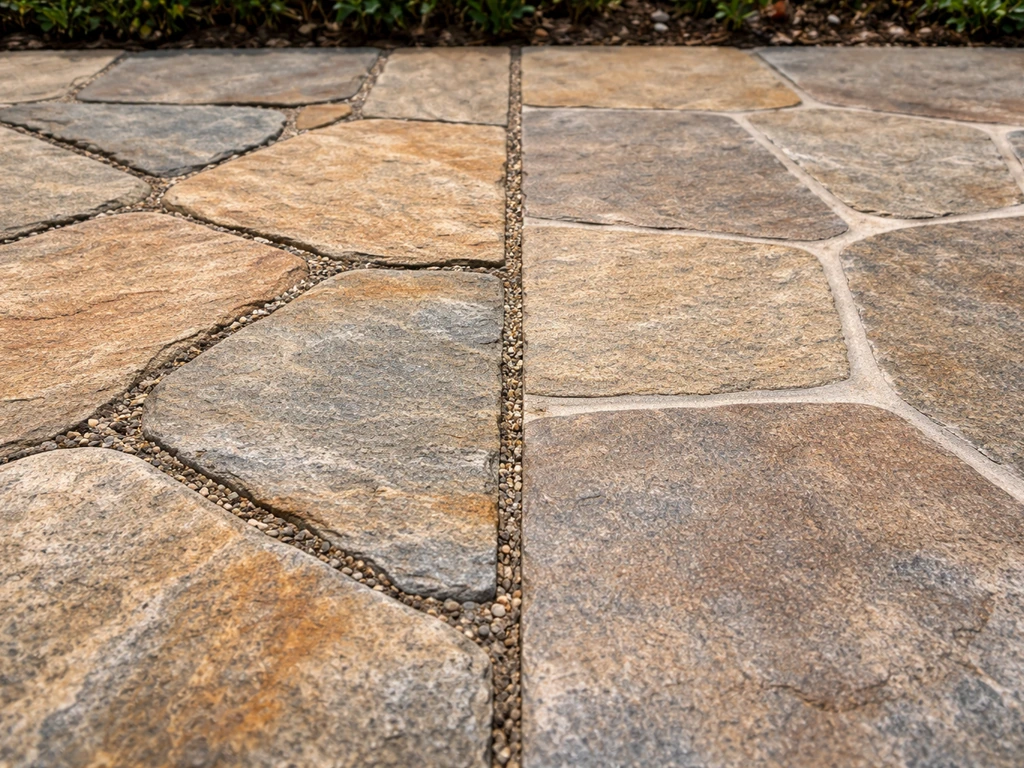
This is the premium tier. Dry-laid flagstone runs $15 to $32 per sq ft installed. Mortared or concrete-set flagstone pushes $42 to $45 per sq ft at the high end. Other sources put the general range at $16 to $30 per sq ft for a standard flagstone install. The wide spread comes down to the stone type (travertine, slate, bluestone, limestone all have different price points), the size and irregularity of the pieces, and how much cutting and fitting is involved. It looks fantastic and is extremely durable, but it is genuinely the most expensive option for most homeowners.
How the materials stack up
| Material | Installed Cost (per sq ft) | Durability | Repairability | Best For |
|---|---|---|---|---|
| Basic concrete | $8–$20 | Good | Difficult to patch invisibly | Budget-conscious, clean modern look |
| Stamped concrete | $12–$30 | Good (with sealing) | Hard to match repairs | Decorative look on a mid budget |
| Concrete pavers | $8–$25 | Very good | Easy (replace individual pieces) | Versatility and long-term value |
| Brick | $10–$30 | Excellent | Moderate | Classic look, high foot traffic areas |
| Flagstone / natural stone | $15–$45 | Excellent | Moderate (dry-laid easier) | Premium aesthetics, unique finishes |
DIY vs pro installation: realistic cost and risk trade-offs
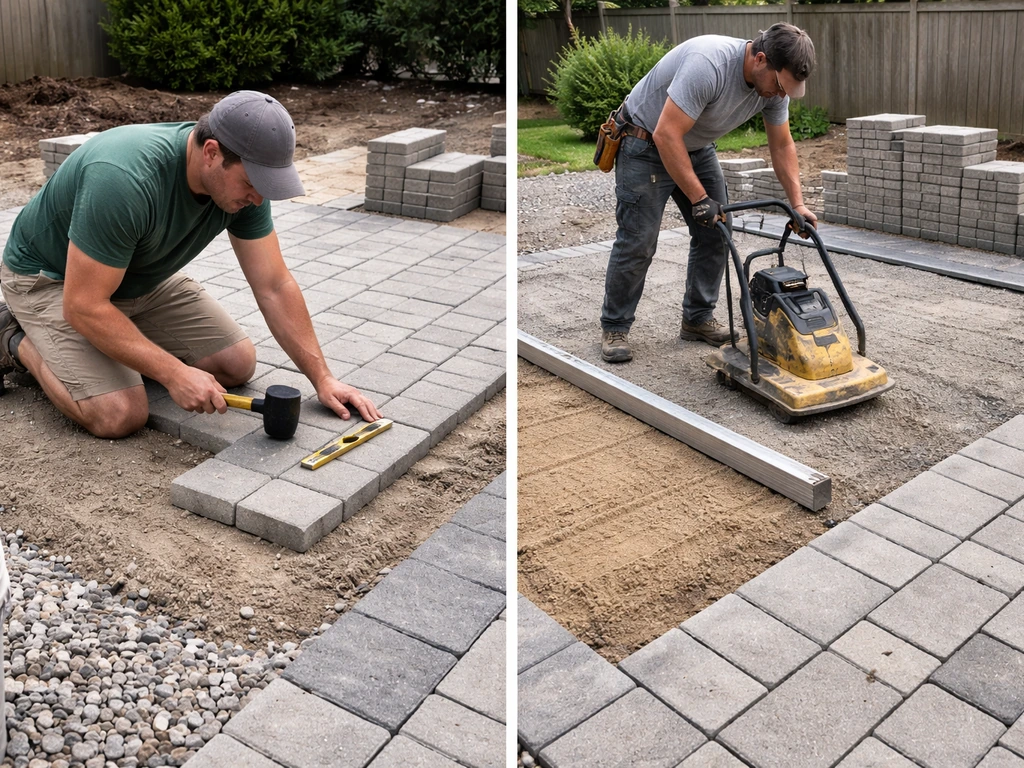
You can absolutely DIY a patio, and for pavers or flagstone especially, it's one of the more beginner-friendly hardscaping projects. But the savings aren't always as big as people expect, and the risks are real.
On a 200 sq ft paver patio, a contractor might charge $3,200 to $5,000 fully installed. If you DIY, your material and base costs might run $1,200 to $2,000, plus tool rental ($150 to $400 for a plate compactor, wet saw, and hand tools). You save $1,000 to $2,500 but spend a full weekend or more doing it. That's a real saving if you're physically up for it and have a level yard.
The risk is that improper base prep is the number one reason patios fail. To get a realistic answer for how much fall for a patio, you typically want a slight slope so water drains away from the house and low spots don’t develop. If you skip or rush the compaction step, pavers shift, water pools, and you're resetting sections within a couple of years.
Concrete is a different story. Pouring and finishing concrete is a time-sensitive, skill-dependent job. A bad pour cracks, crazes, or doesn't drain properly. Unless you have real experience with concrete work, this one is worth paying a pro for. Stamped concrete even more so, because the pattern has to be pressed at exactly the right time in the cure cycle.
- DIY-friendly: Dry-laid flagstone, concrete pavers, gravel patios with paver borders
- Borderline DIY (with research and patience): Brick dry-laid on compacted sand/gravel base
- Leave to the pros: Poured concrete (basic or stamped), mortared flagstone, any install requiring significant grading or drainage work
One honest gotcha: if you DIY and something goes wrong, fixing a sunken or uneven paver patio can cost more than having it done right the first time. Get the base right, and everything else is forgiving.
Regional pricing and how to estimate for your area
Labor rates are the biggest regional variable. The same 400 sq ft stamped concrete patio that costs $7,000 in the Midwest might run $11,000 to $13,000 in the Northeast or Pacific Coast, where contractor rates and material delivery costs are higher. Material costs shift too, especially for natural stone, which gets more expensive the farther it travels from quarries in the Mid-Atlantic, Appalachian, and Southwest regions.
A practical way to calibrate your estimate: take the mid-range per-sq-ft figures in this guide and apply a regional multiplier. High cost-of-living metros (New York, San Francisco, Boston, Seattle) should add 30 to 50 percent. Sun Belt and Midwest markets (Phoenix, Dallas, Indianapolis, Kansas City) often come in 10 to 20 percent below national averages. Rural areas can go either way: materials cost more due to delivery, but labor can be cheaper.
The best move is to get three quotes from local contractors and compare their line items, not just the bottom line. For example, San José (CA) publishes a building fee schedule with specific permit fee line items like “Deck, balcony” and “Demolition,” which shows that permit pricing can be municipality-specific [Community Development Department](https://www. sjgov. org/docs/default-source/community-development/building/commonly-used-documents/building-fee-schedule.
pdf? sfvrsn=58a1ec37_5).
Climate also affects which materials make sense. In freeze-thaw climates (the Upper Midwest, Northeast, Mountain states), concrete slabs crack more over time because water gets into micro-cracks and expands. Pavers handle freeze-thaw cycles better because individual units can move slightly without the whole surface cracking. If you're in a cold climate, pavers or properly sealed concrete with good drainage are worth the extra investment.
Budgeting for adding a patio vs building from scratch
If you're adding a patio to an existing space rather than building on bare ground, there are a few extra cost layers to account for. These are the items that often don't show up in generic cost guides but hit you in the actual quote.
- Demo and removal: If there's an old concrete slab, cracked pavers, or a rotting wood deck to tear out, expect $500 to $2,500 in demo and disposal costs depending on size and material. Concrete removal runs $2 to $6 per sq ft including haul-away.
- Drainage and grading: Existing landscaping often means the grade isn't ideal for a patio. Adding or rerouting drainage, regrading, or installing a French drain can add $500 to $3,000 depending on the scope.
- Tying into existing structures: Connecting a new patio to a home's foundation or existing steps requires proper flashing, expansion joints, and sometimes a ledger board. Skipping this leads to water intrusion problems. Budget $300 to $800 for proper tie-in work.
- Utility conflicts: Buried irrigation lines, electrical conduit, or gas lines in the path of the new patio add rerouting costs. Always call 811 before any excavation.
- Access limitations: A tightly fenced backyard with a single gate limits equipment access, which can add $300 to $800 in extra labor if everything has to be moved by wheelbarrow.
If you're weighing a patio against a deck addition, the cost comparison is worth doing carefully. Decks often have higher upfront costs due to framing, ledger attachment, and decking materials, but they solve grade and drainage issues that a patio on sloped ground would require expensive grading to fix. A patio is almost always the better value on flat ground; a deck earns its price when the grade is challenging. That trade-off is worth factoring into your budget conversation before you commit to either.
Next steps: how to measure, compare quotes, and choose your best option
Before you call anyone, do three things: measure your intended patio area in feet (length x width gives you square footage), sketch out any irregular shapes or existing features that affect the footprint, and decide on your priority: lowest cost, best durability, easiest maintenance, or best appearance. For more detail on typical total pricing, see how much are patios and use your square footage to match the range.
If you want a quick answer, look at your patio size and material type first, then use the ranges to estimate how much patio you can afford patio area. If you are wondering how much patio around a pool typically costs, measure the pool deck plus the wrap-around width you want, then use the per-square-foot rates for your chosen material how much patio around pool.
If you're planning a patio pool project, compare options for both the pool deck and the surrounding patio surface, because the material choice can shift the total price a lot how much patio around pool. That clarity makes the quote process a lot faster. If you're trying to nail down how much fall for a patio, focus on drainage and slope so water runs away from the house.
- Measure and sketch: Note the exact dimensions, any slope in the yard, proximity to the house, and access points for equipment. Include the location of any buried utilities, spigots, or drainage you know about.
- Get three quotes with line-item detail: Ask each contractor to break out excavation, base prep, materials, labor, edging, sealing, and disposal separately. This lets you compare apples to apples and spot where one bid is cutting corners.
- Ask about base depth and compaction: This is the single most revealing question. A contractor who can't tell you how deep the gravel base will be or how they'll compact it is a red flag. The ICPI standard for pavers specifies a minimum 4-inch compacted aggregate base for residential use, more in freeze-thaw climates.
- Check for permits and HOA restrictions: Some municipalities require a permit for any impervious surface over 200 sq ft. Your HOA may restrict material types or colors. Find out before you sign anything.
- Pick the material that fits your budget and climate: Use the per-sq-ft ranges in this guide to filter realistically. If a full flagstone install is out of budget, stamped concrete or mid-grade pavers get you 80 percent of the visual impact at half the cost.
- Factor in long-term costs: A cheap concrete slab that cracks and needs resurfacing in 10 years may cost more over time than pavers with a higher upfront cost. Ask contractors about expected maintenance and typical lifespan for your climate.
- Negotiate timing: Contractors often have more scheduling flexibility in late fall and early spring. Booking off-peak can sometimes get you a 5 to 15 percent discount, especially for larger projects.
Once you have three quotes with line-item breakdowns, you'll have enough information to push back on anything that looks out of line, ask the right follow-up questions, and make a confident decision. The ranges in this guide give you a baseline: if a quote comes in far above or below those ranges for your area, dig into why before you sign.
FAQ
How much does a patio cost if I only want a small area, like 8x10?
Small patios usually cost less in total dollars, but the per-square-foot price often stays near the low-to-mid range because mobilization, excavation, and disposal are mostly fixed costs. A quick check is to start with your material rate, then add a “site work floor” for prep and demo before you reduce the total.
What’s the cheapest patio to install per square foot, and what can make it not so cheap?
Broom-finish poured concrete is typically the lowest-cost installed option. The budget can rise if you need extra subgrade repair, a lot of removal, significant regrading for drainage, or reinforcement (for example, thickened edges or additional steel for heavy loads).
How much extra should I budget for patio drainage and slope?
Plan for drainage as part of prep, not an optional upgrade. If your yard slopes toward the house, expect costs to shift toward grading and base reconstruction. Even a modest slope issue can push you from “standard base” to “rebuild the base” territory for pavers and concrete.
Does a larger patio always reduce the per-square-foot cost?
Not always, but larger projects usually spread fixed costs over more square footage. If your patio is large enough to require multiple pours or complex base phasing, the per-square-foot may not drop as much. The best way to confirm is to compare two quotes with their line items, especially mobilization, excavation, and disposal.
If I want pavers because they’re easier to repair, how do I avoid the common failure that costs money later?
The main prevention is proper base depth and compaction, plus correct edge restraints. Ask whether they’re installing a compacted base in lifts, using a plate compactor, and adding concrete or polymer edge restraints. Skipping restraints is a frequent cause of shifting and uneven sections.
How much does it cost to add features like steps, a border, or a fire pit foundation?
Feature add-ons are often priced as separate line items, and they can raise total cost meaningfully even if your main patio size is unchanged. A fire pit foundation typically needs additional excavation and base thickness, and steps usually require more framing of the sub-base and more labor for risers.
What’s the price impact of patio shape, like a curved or irregular layout?
Curves and complex geometry usually increase labor and waste because the material needs more cutting and fitting. With pavers or flagstone, the waste factor and time spent on layout can move your effective cost above the simple square-foot rate.
If I DIY a patio, do the savings stay the same for concrete as they do for pavers?
Usually no. Concrete, especially stamped concrete, is more sensitive to timing, curing, and finish quality, so DIY risk is higher. Even if materials look cheaper, mistakes can lead to full replacement or extensive patching, which can eliminate most savings.
How do I know whether my quote includes the basics the article mentions (base, excavation, disposal)?
Ask for a line-item breakdown that explicitly lists excavation depth, base material type, compaction method, and what happens to removed soil. If disposal, trucking, or hauling isn’t stated, contractors sometimes handle it implicitly, and your real cost can be higher than the number you first see.
Should I get stamped concrete or choose pavers for my climate?
In freeze-thaw areas, pavers often perform better because individual units can accommodate movement without cracking a whole slab. Stamped concrete can work with good drainage and correct jointing, but the quote should specify sealing plans and whether expansion or control joints are included.
How much fall (slope) should my patio have, and what does that change in cost?
A contractor should design slope so water moves away from the house, commonly via a small drop across the patio footprint. If you need to correct an existing grade or significantly adjust the base, expect extra labor and base material, which can be one of the biggest cost drivers beyond the surface material.
Do permits or HOA approvals change how much to do a patio?
They can. Some areas require permits for new hardscape, drainage modifications, or large patios, and HOA rules may restrict materials or colors. Budget for permit fees and any required plan review, and include time costs because scheduling can affect contractor availability.
What should I check if a contractor’s quote is far above the article’s range?
Request explanations for the biggest line items: base depth and material, reinforcement (if any), pattern or finishing complexity (especially stamped concrete), hauling and disposal scope, and whether stairs or an expanded drainage plan are included. If those items are missing, the “high” number may be hiding extra work.
Next Articles
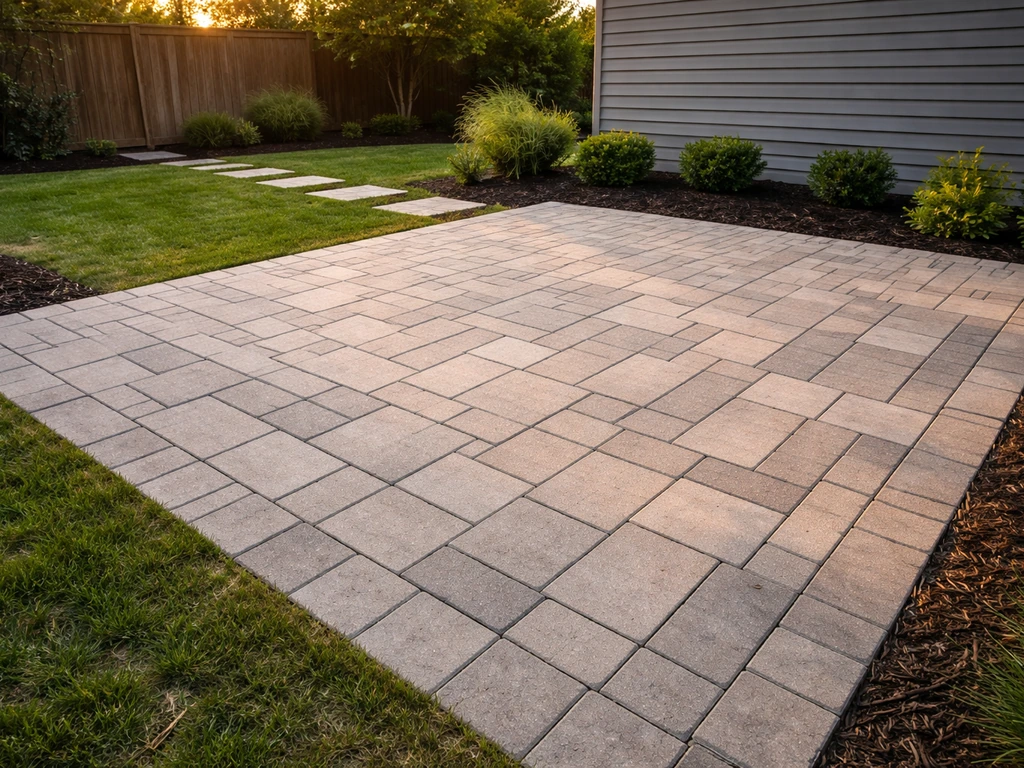
What Is the Average Cost of a Patio in 2026?
Average patio cost in 2026 by size and material, with real breakdown for materials, labor, and site prep
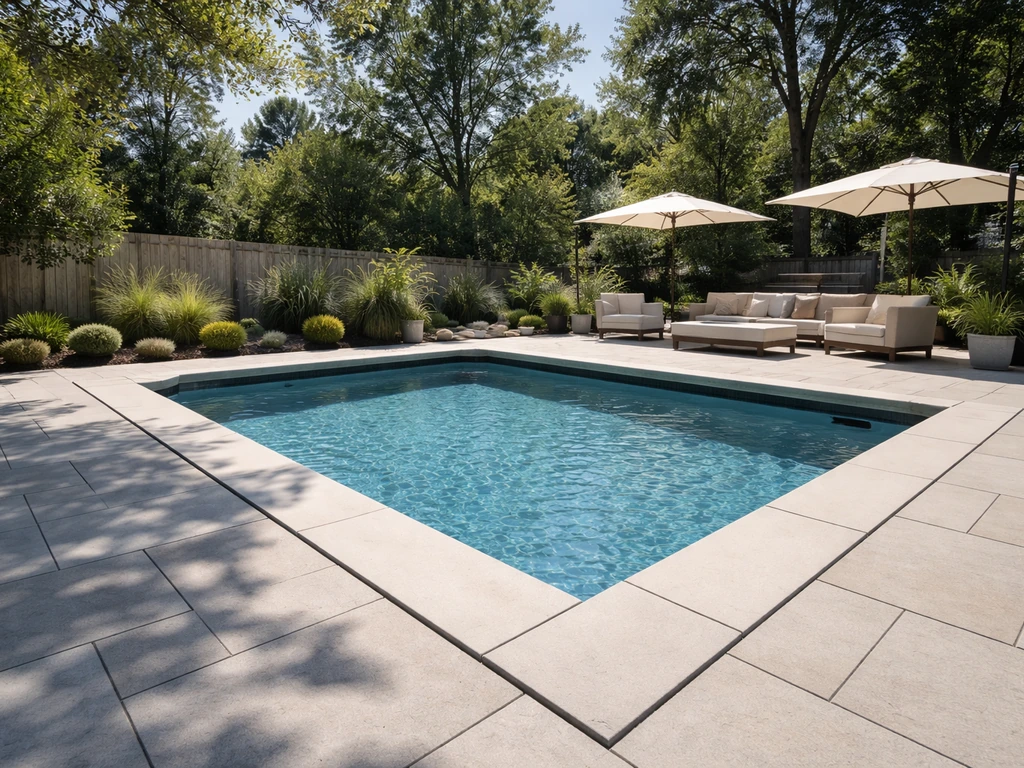
How Much Does a Patio Pool Cost? Price Ranges and Tips
Estimate how much a patio pool costs with patio types, size benchmarks, realistic price ranges, and quote checklist.
How Much Patio Costs: Pricing by Size and Material
Concrete, pavers, stone and stamped patio costs by size with real price ranges, add-ons, and bid checklist to budget fas