
Laying a patio in the UK typically costs between £60 and £220 per m² fully installed, depending on the material you choose and where you live. For a typical 20 m² garden patio, that works out to roughly £1,200 to £4,400 all in. Labour alone runs about £30–£50 per m², and a good landscaper or paving contractor charges around £200–£360 per day. The rest of the cost is materials and the groundwork underneath, which most people underestimate until they see the invoice.
How Much to Lay a Patio in the UK Cost Guide

Felix Carver
2 Jul 2026
Quick ballpark costs by patio size
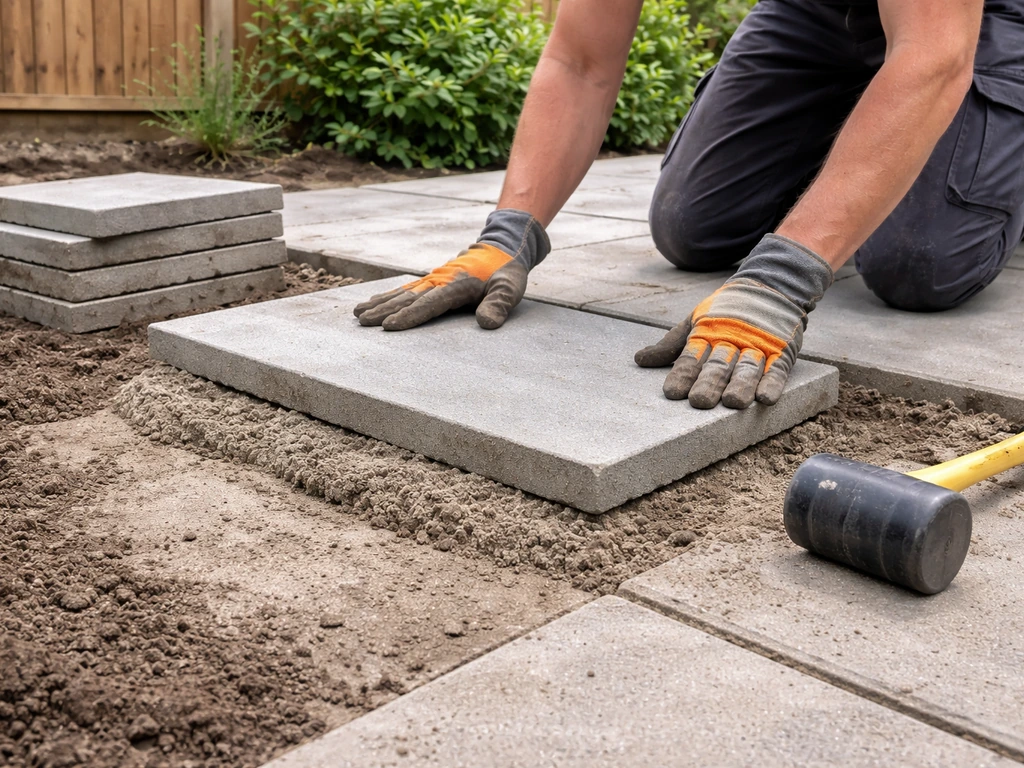
Before getting into the detail, here are realistic installed price ranges for common patio sizes in 2026. The final cost can vary by patio size and the type of slabs you choose, so it helps to compare options and get a quote how much does it cost to lay patio slabs. These cover excavation, sub-base, bedding, laying, and jointing for a mid-range material like concrete slabs or Indian sandstone. If you go for porcelain or granite, add 30–50% to the upper end.
| Patio Size | Area (m²) | Budget Estimate | Mid-Range Estimate | Premium Estimate |
|---|---|---|---|---|
| 10 x 10 ft (~3 x 3 m) | ~9 m² | £540–£810 | £900–£1,440 | £1,350–£1,980 |
| 12 x 12 ft (~3.6 x 3.6 m) | ~13 m² | £780–£1,170 | £1,300–£2,080 | £1,950–£2,860 |
| 4 x 5 m | 20 m² | £1,200–£1,800 | £2,000–£3,200 | £3,000–£4,400 |
| 5 x 5 m | 25 m² | £1,500–£2,250 | £2,500–£4,000 | £3,750–£5,500 |
| 20 x 20 ft (~6 x 6 m) | ~36 m² | £2,160–£3,240 | £3,600–£5,760 | £5,400–£7,920 |
These are installed totals. If you're comparing quotes and someone comes in significantly below the bottom of these ranges, ask what's included. Cheap quotes often exclude skip hire, disposal, or proper sub-base depth, and that's where costs reappear as surprises mid-job.
What you're actually paying for: the full cost breakdown
A properly laid patio has more going on below the surface than above it. Roughly 40–50% of your total cost is materials, 40–50% is labour (including groundwork), and the rest is equipment hire and disposal. Here's how those layers break down.
Groundworks and base preparation
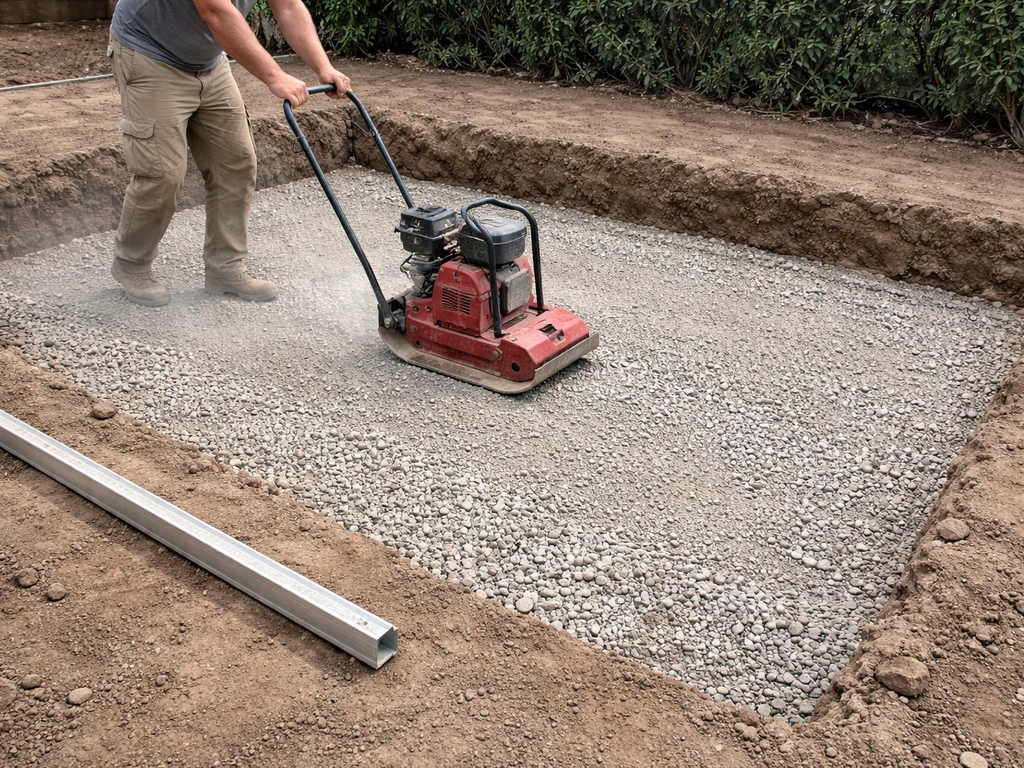
This is the part most quotes obscure. A proper patio base means excavating to at least 150–200mm below the finished surface level, compacting a sub-base of at least 100mm of MOT Type 1 (hardcore) over a geotextile membrane, then laying 30–50mm of bedding mortar (or compacted sharp sand for block paving) before the slabs go down. You also need a drainage fall of roughly 1:60 (about 15mm drop per metre) directing water away from the house. If the existing ground is soft or waterlogged, the base depth needs to go deeper.
Machine excavation typically costs £8–£15 per m². If access is restricted and it has to be done by hand (common in terraced gardens with no side gate), that jumps to £20–£35 per m². Skip hire for the spoil runs £120–£300 for a standard 6-yard builder's skip, or £60–£130 for a mini skip on smaller jobs. For an average 20 m² patio, total excavation and disposal often lands at £350–£750 depending on dig depth, ground conditions, and your postcode.
Labour costs
Labour for the actual laying work runs about £30–£50 per m². A sole trader landscaper or paving contractor typically charges £200–£300 per day, with more experienced or specialist tradespeople at £280–£360 per day. A 20 m² patio usually takes a two-person team 2–3 days depending on complexity, so expect to pay for 4–6 man-days of labour just for the laying, not counting any extra days for groundwork or site clearance.
Materials
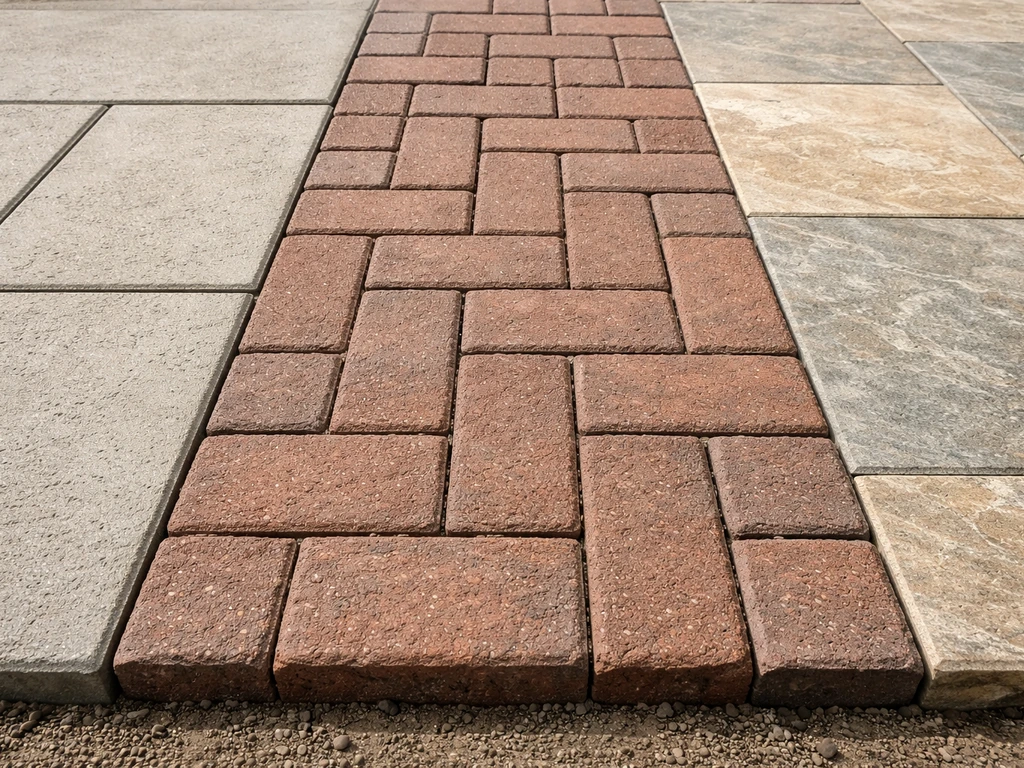
Material costs vary dramatically. Budget concrete paving slabs start at around £10–£25 per m² supply-only. Natural stone and porcelain are at the other end. Here are rough supply-only ranges per m² for common surfaces:
| Material | Supply Cost (per m²) | Notes |
|---|---|---|
| Concrete paving slabs | £10–£25/m² | Widest availability, consistent sizing |
| Brick/block paving | £20–£40/m² | Flexible laying pattern, good for curves |
| Indian sandstone | £25–£60/m² | Popular choice, colour variation expected |
| Slate | £40–£80/m² | Striking look, needs careful sealing |
| Porcelain | £40–£80/m² | Very low maintenance, hard to cut on site |
| Granite | £60–£100/m² | Most durable option, premium cost |
How patio type changes what you pay
The surface material is the biggest lever on total project cost, but it also affects how long the job takes and what skills the contractor needs. Here's a practical comparison of the four main options:
Concrete slabs
This is the most affordable fully-installed option, typically £60–£120 per m² all in. Concrete slabs are widely available, consistent in size, and straightforward to lay. They're not glamorous, but for a functional garden patio on a tight budget, they do the job well. Stamped or coloured concrete is less common for UK patios than in North America, but if you want a decorative poured-concrete finish, expect to pay £80–£150 per m².
Brick and block paving
Fully installed, brick or block paving typically runs £70–£120 per m². It's a good mid-range choice that suits traditional house styles and handles foot traffic well. The laying pattern (herringbone, basketweave, stretcher bond) slightly affects labour time and waste, but the main cost driver is the block itself. Clay bricks cost more than concrete blocks, but they're more durable and age better.
Natural stone and flagstone (Indian sandstone, limestone, slate)
Indian sandstone fully installed usually lands at £75–£160 per m². Slate and porcelain both sit at £90–£180 per m², and granite at the top end runs £120–£220 per m². Natural stone slabs vary in thickness, which affects bedding depth and time. Porcelain is actually one of the trickier materials to lay on site because it requires a diamond blade and precise levelling, so some contractors charge a premium. For more detail on slate specifically, the costs involved are worth looking at separately.
Standard concrete block paving vs. natural stone: which is better value?
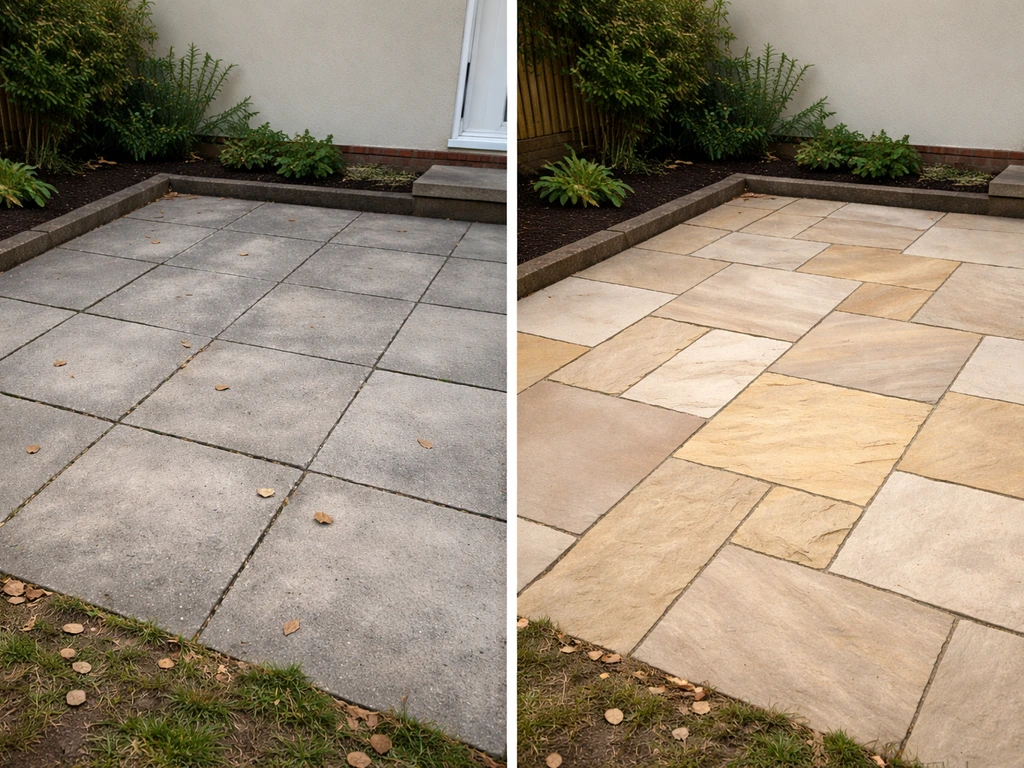
If budget is tight, concrete slabs win on price. If longevity and appearance matter more, Indian sandstone gives a significant aesthetic upgrade for a modest extra cost. Porcelain is the premium practical choice if you want minimal maintenance long-term, but you'll pay for it. Granite is genuinely lifetime-durable but hard to justify for most domestic patios unless it's a high-use area or you're improving a high-value property.
Extra costs that catch people out
Beyond the base quote, there are several add-ons that frequently appear once work starts. Budget for at least a few of these:
- Old patio removal: Lifting and disposing of an existing concrete or slab patio typically adds £150–£400 depending on the size and how it was originally laid. Broken-up concrete is heavy and needs a skip.
- Site clearance: Removing turf, topsoil, or old garden waste before excavation can add £100–£300 to the job.
- Drainage: If your garden has poor natural drainage or the patio is near a building, adding a channel drain or soakaway costs around £200–£600 extra.
- Edging/edge restraints: Timber edging runs about £5–£8 per metre. Concrete kerb edging from suppliers like Marshalls starts around £13–£14 per metre supply-only.
- Steps: Garden steps are usually quoted per step, often £100–£250 per step depending on material and width.
- Sealing: Block paving or natural stone sealing costs about £3–£8 per m², so around £60–£160 for a 20 m² patio. It's worth doing for sandstone and brick.
- Weed membrane: A small but worthwhile add-on, usually included in a good contractor's quote. If it's not mentioned, ask.
- Pointing and jointing: Brush-in jointing compound or mortar pointing is usually included in the quote, but always confirm. Polymeric jointing sand adds a small material cost.
- Equipment hire: Plate compactors, laser levels, and cutting equipment can add £100–£300 if the contractor hires rather than owns. This should be their problem, but it can appear as a line item.
DIY vs hiring a pro: the honest trade-off
You can genuinely save £600–£1,500 on a 20 m² patio by doing it yourself, since you're eliminating the £30–£50 per m² labour cost. For a straightforward rectangular patio on level ground with concrete slabs, DIY is achievable for a competent person with a spare weekend and the right tools. That said, there are real ways it can go wrong.
The most common DIY failures are inadequate sub-base depth (slabs rock or sink), incorrect falls (water pools or runs toward the house), and poor jointing (weeds and subsidence follow within two years). Getting the fall right at 1:60 or better is harder than it sounds when you're working on uneven ground. If you underexcavate by even 50mm, the finished level will be too high and you'll have drainage problems.
DIY makes the most sense on smaller patios (under 15 m²), simple rectangular layouts, and where you're using standard concrete slabs rather than natural stone or porcelain. Porcelain especially requires a wet saw and more precision than most DIYers can manage cleanly. For anything with steps, slopes, awkward shapes, or premium materials, hiring a professional pays for itself in avoided remedial work.
| Factor | DIY | Professional |
|---|---|---|
| Labour cost | £0 (your time) | £30–£50/m² |
| Material cost | Same as pro (or slightly more without trade discount) | Often 10–15% cheaper on materials via trade accounts |
| Equipment | Hire costs £100–£300 extra | Usually included |
| Base quality | High risk if inexperienced | Consistent if contractor is experienced |
| Warranty | None | Good contractors guarantee their work 1–5 years |
| Time | A weekend to 2 weekends for 20 m² | 2–3 days for a two-person team |
| Risk of remedial work | Moderate to high | Low if contractor is reputable |
Regional prices, site access, and ground conditions
Where you live affects cost more than most people expect. London and the South East typically adds 18–25% to the labour rate compared to other UK regions, purely because of higher day rates and access constraints. A patio that costs £2,500 fully installed in the Midlands could cost £3,000–£3,100 in South London for the same specification.
Site access is another big one. If your contractor can't park a van close to the garden gate, can't wheel a barrow straight from the front to the back, or has to carry materials through your house, the job takes longer and costs more. Restricted access excavation (hand digging rather than machine) costs £20–£35 per m² versus £8–£15 per m² with machinery. On a 20 m² patio, that difference alone is £240–£400.
Ground conditions also matter. Clay soil retains water and moves seasonally, so contractors may recommend a deeper sub-base. Soft or waterlogged ground may need geotextile membrane and additional compaction. If you're on a slope, terracing and retaining walls become necessary, and costs can increase substantially. Hard landscaping on a sloped site can easily cost 30–50% more than the same area on flat ground.
How to get accurate quotes (and spot the ones to avoid)
Getting three quotes is standard advice, but getting three comparable quotes takes a bit of preparation. If you let each contractor interpret the job differently, you'll end up comparing apples and oranges. Here's how to get quotes you can actually compare.
Before you contact anyone
- Measure your patio area accurately. Length x width in metres, and note any awkward shapes or cutouts around manholes, flowerbeds, or outbuildings.
- Decide on a surface material (even if it's just concrete slabs vs. Indian sandstone vs. porcelain at this stage). This dramatically changes how quotes are structured.
- Note your current ground situation: is there existing paving to remove? Is the garden level or sloped? Is there a side gate for access?
- Identify where you want water to drain. Tell contractors you want a proper fall away from the house.
- Decide if you want edging, steps, or any other features included, so every contractor prices the same scope.
Questions to ask every contractor
- Does your quote include excavation and disposal, or is that separate?
- What depth of sub-base are you allowing for, and what material (MOT Type 1)?
- Is skip hire and soil/spoil removal included in the price?
- Are materials itemised separately from labour in the quote?
- Does the price include pointing/jointing and any edge restraints?
- What fall are you building into the patio for drainage?
- Is clearance of any existing garden waste or old paving included?
- Do you offer any guarantee on the work, and for how long?
- Are you VAT registered? (If yes, check whether the quoted price is ex-VAT or inclusive)
A trustworthy contractor will answer all of these without hesitation and provide a written breakdown showing materials, labour, groundworks, and disposal as separate line items. If someone quotes you a single lump sum and can't or won't break it down, that's a reason to be cautious.
How to estimate materials yourself
To cross-check your quote, you can estimate materials independently. For MOT Type 1 sub-base at 100mm depth, allow roughly 0.1 m³ per m² of patio, plus 10–15% for compaction loss. At current bulk aggregates pricing, Type 1 costs about £30–£50 per tonne delivered. For a 20 m² patio at 100mm depth you need approximately 2.5–3 tonnes. Add 1 tonne of sharp sand for the bedding layer. Then price the slabs you want at your chosen supplier. Add it all up and compare to the materials line in your quote. If the contractor's material number is dramatically lower than your calculation, they may be planning to use less sub-base than specified.
What a fair, complete quote looks like
For a 20 m² patio in Indian sandstone in the Midlands in 2026, a fair fully-scoped quote might look roughly like this: groundworks and excavation £400–£600, MOT Type 1 sub-base and sand £200–£300, Indian sandstone slabs at mid-range quality £700–£1,000, laying labour £600–£1,000, skip hire and disposal £150–£300, edging and pointing materials £100–£200. That's a total of around £2,150–£3,400. If a quote comes in at £1,400 for the same spec, something is missing from the scope.
Always add a 10–15% contingency to your own budget for unexpected ground conditions, additional material waste, or access complications. Patio projects almost always turn up at least one surprise once the ground is opened up, and it's far less stressful if you've already budgeted for it.
If you're also weighing up whether a patio or a deck is the better option for your garden, bear in mind that decking can cost more to maintain over time even if the initial install is comparable. For labour-only pricing (if you're supplying your own slabs), the labour component alone is worth researching separately, since that's a common way people reduce costs when they can source materials themselves. For labour-only pricing, the main thing to check is what the quote includes before the slabs are actually laid, such as groundwork, base preparation, and disposal.
FAQ
How much to lay a patio UK cost changes if I have an uneven or sloped garden?
Slopes often mean terracing, extra excavation, or retaining edges, so pricing can jump beyond the per m² ranges. Contractors may also need deeper base areas where the ground falls, and more time for trimming and levelling, so it is common to get a higher labour line item even if the slab area is the same.
Do I need planning permission to lay a patio in the UK, and does it affect cost?
In most cases, a standard patio within permitted development limits does not require formal planning permission, but rules vary by property type and location. If you do need extra approvals, budgeting for survey, drawings, or longer lead times can add cost indirectly through scheduling and contractor programme changes.
What is the most common reason a patio quote is lower than others in the UK?
The biggest difference is usually base spec and access. If one quote assumes machine excavation and a shorter sub-base or does not include geotextile, drainage fall setting out, skip hire, or disposal, the “savings” reappear later as variations or add-on invoices once the dig is underway.
How thick should the sub-base and bedding be, and why does it matter for price?
Most reliable installs excavate to at least roughly 150 to 200 mm below finished level, then compact a base layer of at least about 100 mm of Type 1, plus a bedding layer before slabs. If a quote lists thin or unspecified depths, it often costs less upfront, but you may pay later for lifting and re-laying after movement, rocking, or weed growth.
Should I include drainage channels or soakaway, or is a basic fall enough?
A typical patio needs a fall away from the building, about 1:60 (around 15 mm per metre), but soakage conditions matter. On clay or where the area cannot drain well, contractors may recommend additional features like permeable edging or a more engineered solution, which changes the materials and groundwork scope.
What costs should I expect for edging and how does it impact stability?
Edging is not just a finish, it helps keep the paving restrained. If a quote excludes edging or uses low-grade restraints, joint movement and lateral spreading can occur. Budget for proper restraint along boundaries, especially where there are soft verges, steps, or changes in level.
Are porcelain patios worth it, and why can labour be higher for porcelain than concrete?
Porcelain can be a good low-maintenance option, but it is easy to damage or mis-level if the contractor does not have the right kit and experience. Labour can rise due to precision cutting, careful setting for consistent levels, and extra time to manage waste, especially around corners, edges, and any step areas.
Can I lay the patio myself in the UK, and what should I buy to avoid failure?
DIY is most realistic for smaller, simple layouts with standard concrete slabs, but you still need proper compaction tools and a way to measure and maintain the correct fall. The common DIY gaps are not compacting the sub-base thoroughly, getting levels wrong during laying, and skipping correct jointing details, which leads to rocking slabs and weeds.
How do I compare multiple quotes if contractors describe the job differently?
Ask for a written breakdown that separates excavation, sub-base, membrane (if included), bedding, slab supply, laying, joints, edging, and disposal. Also request the planned finished level relative to a fixed point and the assumed drainage fall, so you compare equivalent set-out and base preparation instead of just comparing a total price.
What should I budget as a contingency for a typical patio project?
A common rule is to add around 10 to 15 percent to your budget, because additional ground removal, deeper dig for stability, extra spoil disposal, or access complications frequently come up once excavation starts. If your site is on clay, near services, or has past landscaping debris, the risk of surprises is higher.
If I only want labour (supplying my own slabs), what costs often still apply?
Even if you provide the slabs, the contractor may still charge for groundwork, base preparation, bedding, setting and levelling, cutting and finishing, and disposal or skip hire. Confirm whether machine excavation, membrane, and edging materials are included, because these are often the hidden costs when comparing labour-only deals.
Next Articles
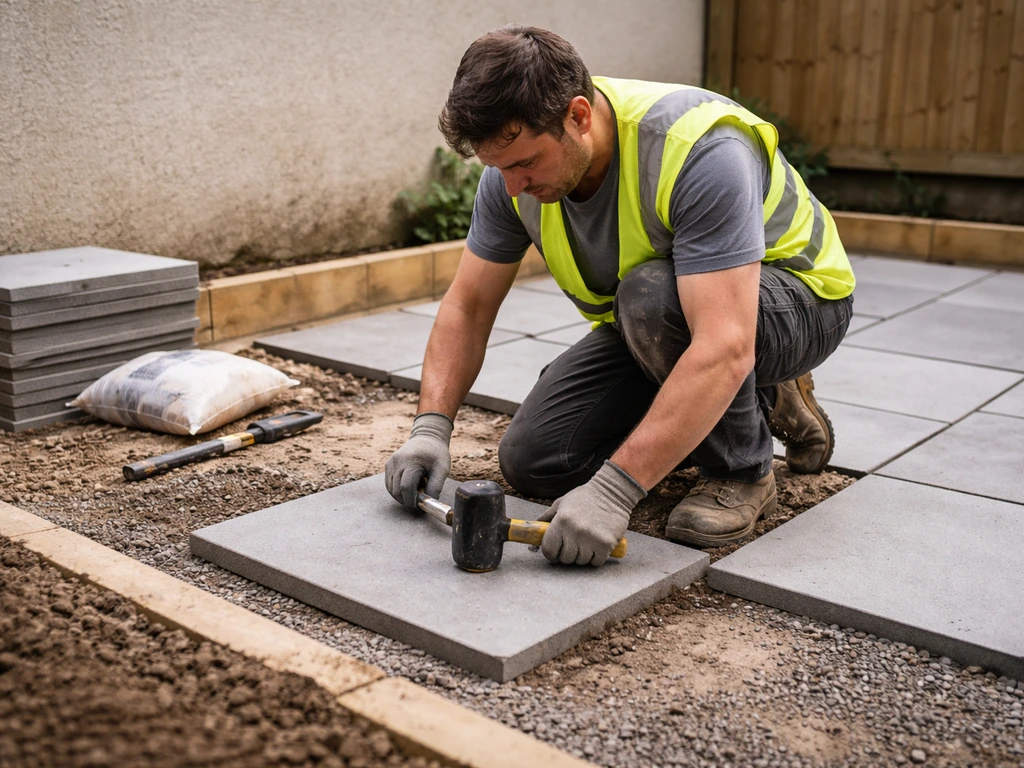
How Much to Lay a Patio Labour Only Cost Guide
Labour only patio costs, what’s included, typical rates by patio type and size, plus quote tips to avoid hidden charges.
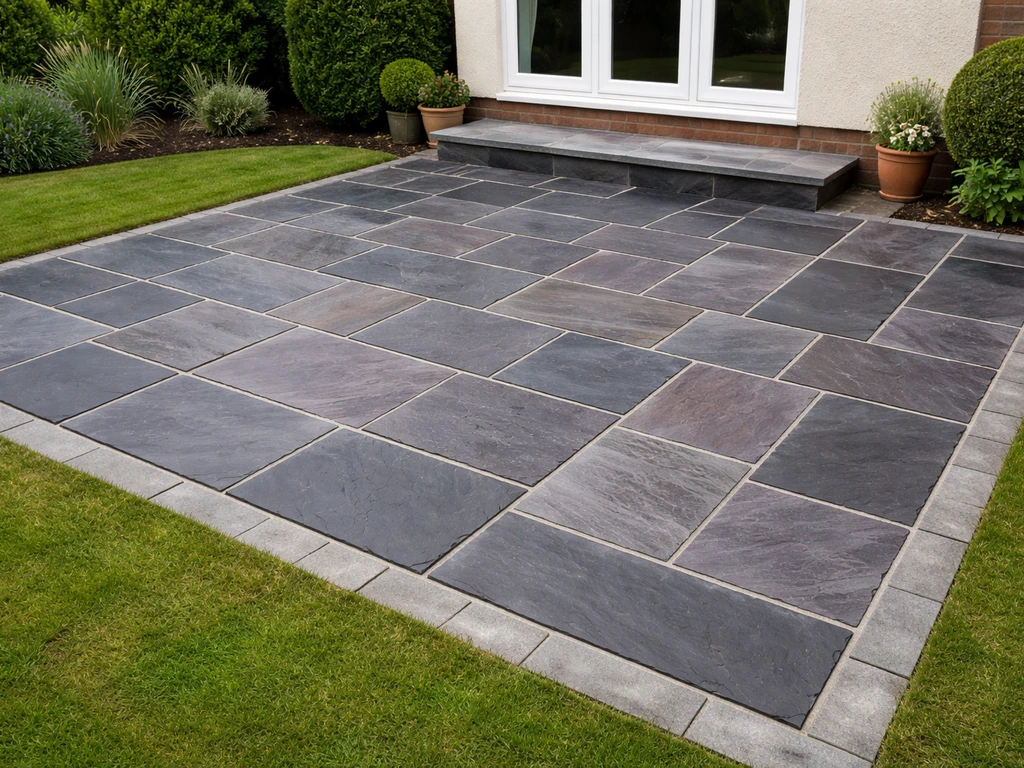
How Much Does a Slate Patio Cost? Installed Prices by Size
Installed slate patio cost guide with per-sq-ft ranges, example budgets, and checklist to compare materials and quotes.
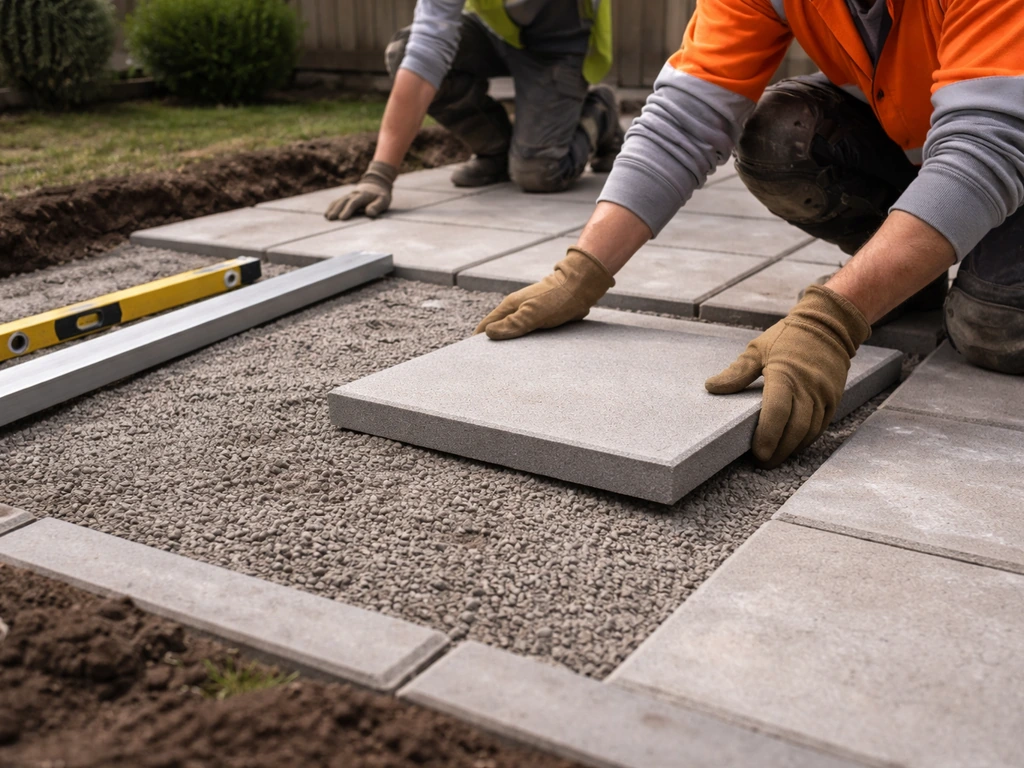
How Much Does It Cost to Lay a Patio? Prices by Size
Cost to lay a patio by size and material, with labor breakdown, factors, and steps to get accurate contractor quotes.