
For most UK patios in 2026, you should budget roughly £25–£70 per m² for labour only, depending on the material type and how complex the job is. East Coast Fencing’s patio cost guide also provides an example labour allocation, showing sandstone labour at £45, £65 per m² while separating labour from other line items like sub-base, bedding and materials blank" rel="noopener noreferrer">sandstone labour at £45–£65 per m². A standard 20m² patio in flags or block pavers will typically cost £500–£1,400 in labour alone, before you've spent a penny on materials. Day rates for professional installers run £200–£360 per person, or £500–£700 for a two-person team. Those numbers will shift based on your patio type, site access, ground conditions, and exactly what the contractor has agreed to include, which is where most pricing confusion actually happens.
How Much to Lay a Patio Labour Only Cost Guide

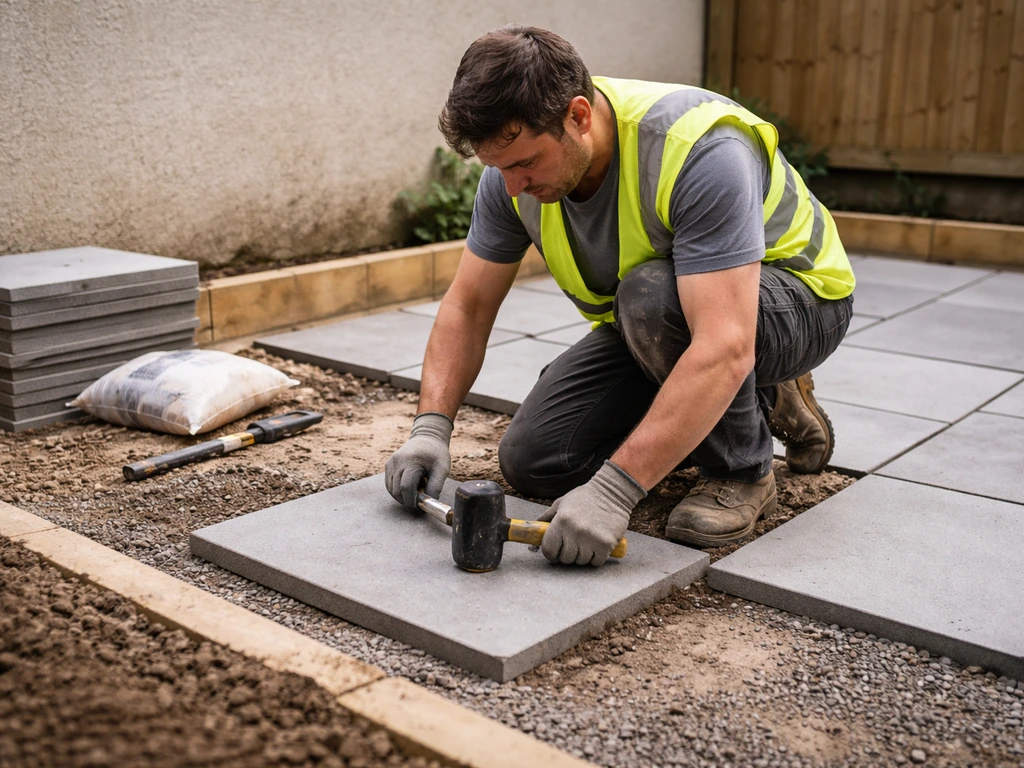
What 'labour only' actually covers (and what it doesn't)
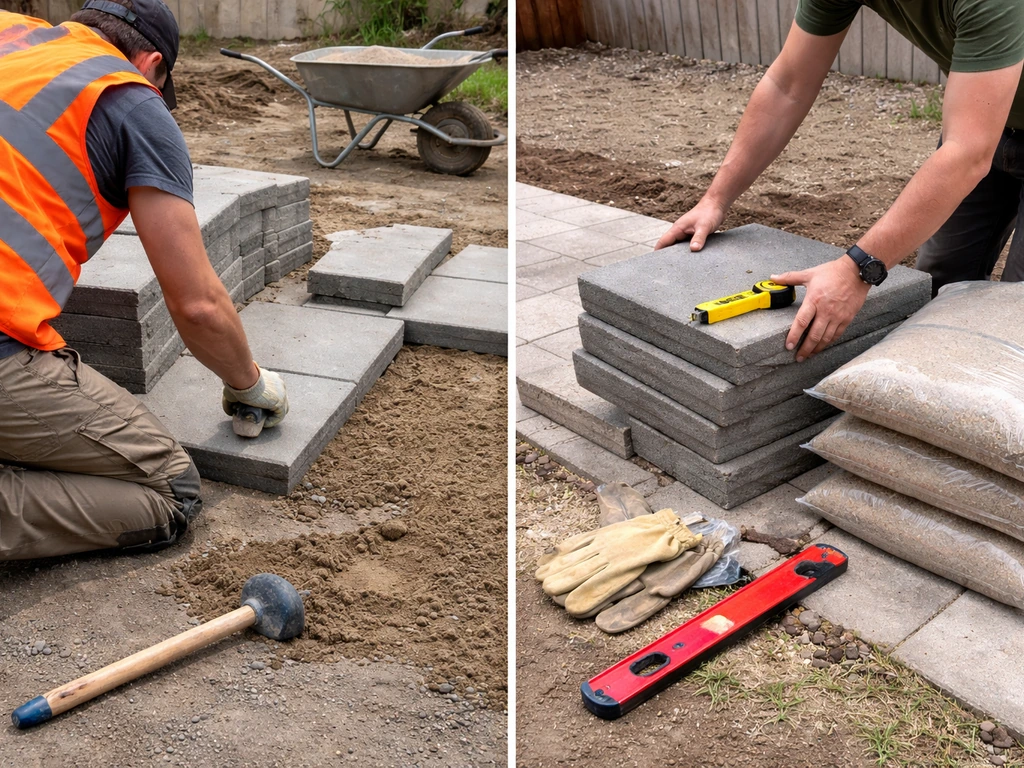
Labour-only means the contractor provides time and skill, and you supply the materials. But that's where the clarity often ends. In practice, different contractors define 'labour only' differently, and this creates real problems when you're comparing quotes side by side.
A genuinely comprehensive labour-only quote should cover excavation and digging out to the correct depth, compacting and laying the sub-base (usually MOT Type 1 crushed stone), bedding the slabs or pavers in mortar or sharp sand, cutting slabs to fit edges, pointing or jointing the finished surface, and basic tidying up. That's the full installation process, not just the bit where someone places a slab down.
What often gets excluded, and what you need to ask about explicitly, includes disposal of excavated spoil, hiring a plate compactor or other plant, drainage materials and channel installation, edging/restraint systems, steps or raised sections, and any leveling beyond a standard dig-out. Some contractors also quote MOT Type 1 aggregate as a separate line item even within a 'labour-only' framework. If the quote doesn't mention excavation depth, sub-base specification, or spoil removal, ask directly. These are the main hidden costs that inflate the final invoice.
Labour cost ranges by patio type
Labour rates aren't uniform across materials. Some surfaces take longer to lay, require more precision, or involve specialist tools. Here's what the market looks like in mid-2026 for the most common patio types, using per-m² labour figures as the standard comparison unit.
| Patio Type | Labour Only (per m²) | Notes |
|---|---|---|
| Concrete slabs (standard) | £25–£45 | Fastest to lay, simple mortar bed, fewest cuts |
| Block pavers / interlocking | £30–£55 | Requires compaction passes, more precision on falls |
| Natural stone (sandstone, slate) | £35–£65 | More variation in thickness, more bed adjustment needed |
| Brick paving | £35–£60 | Labour-intensive due to small unit size and pattern cutting |
| Flagstone / irregular stone | £40–£70 | Highest labour: irregular sizes mean constant adjustment |
| Porcelain | £45–£75 | Slurry primer on every slab, diamond wet cutting, tighter jointing |
Porcelain sits at the top of the labour range because it genuinely demands more time per m². Every slab needs a slurry bond primer applied before bedding, the cutting requires a diamond wet saw (not an angle grinder like sandstone), and the jointing tolerances are tighter. If a contractor quotes porcelain labour at the same rate as sandstone, that's worth questioning. On the budget end, simple precast concrete slabs in a straightforward grid pattern are the quickest to lay and attract the lowest rates.
How labour costs scale by patio size
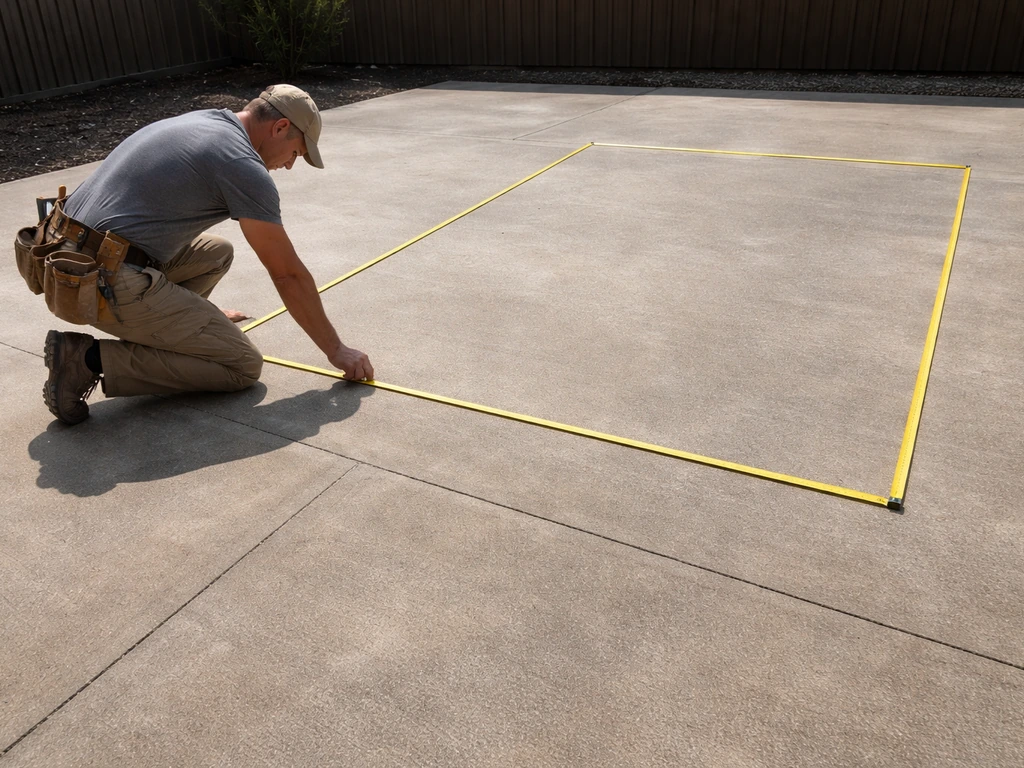
Once you know the per-m² rate, scaling to common patio sizes is straightforward. Here are realistic labour-only cost ranges for the sizes most homeowners are working with. If you want a straight answer on how much it typically costs to lay a patio in the UK, focus on the labour-only figures and then adjust for your size, access, and ground conditions labour-only cost ranges. These assume standard ground conditions, decent site access, and no major drainage complications.
| Patio Size | Area (m²) | Labour Low (£25/m²) | Labour Mid (£45/m²) | Labour High (£70/m²) |
|---|---|---|---|---|
| 10x10 ft (approx 3x3m) | ~9m² | £225 | £405 | £630 |
| 12x12 ft (approx 3.6x3.6m) | ~13m² | £325 | £585 | £910 |
| 4x4m | 16m² | £400 | £720 | £1,120 |
| 20x20 ft (approx 6x6m) | ~36m² | £900 | £1,620 | £2,520 |
| 5x5m | 25m² | £625 | £1,125 | £1,750 |
| 6x4m | 24m² | £600 | £1,080 | £1,680 |
A professional team of two typically completes a 20m² patio in three to five working days, covering excavation and sub-base on day one, laying slabs on days two and three, then finishing with pointing and cleanup. That timeline maps roughly to £500–£700 per day in team costs, which cross-checks against the per-m² figures above. Larger jobs don't always scale linearly because some fixed setup costs get spread over more area, so a 40m² patio won't necessarily cost double a 20m² one.
What makes a quote go up (the key cost drivers)
The per-m² rate is just the starting point. Several factors routinely push a quote well above the base range, and understanding them lets you anticipate the real cost before a contractor even visits.
Site access
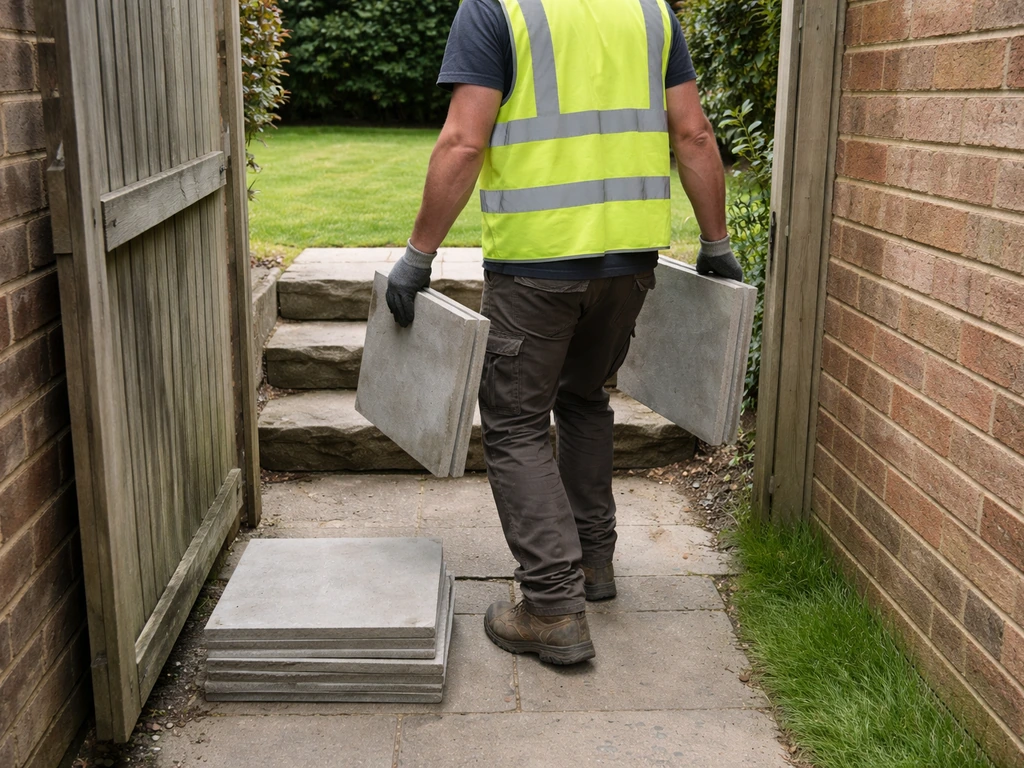
If materials have to be carried through a narrow side gate, across a lawn, or up/down steps, expect a surcharge. Contractors price their day rate assuming reasonable access. Difficult access slows everything down and often means no machinery can be used, so work gets done by hand. This alone can add 10–20% to a quote.
Ground conditions and excavation depth
Rocky ground, tree roots, or heavily compacted clay all add time to excavation. Standard dig-out for a patio is around 150–200mm (sub-base plus bedding), but poor-draining ground or soft spots may require deeper excavation and more sub-base material. This is labour that doesn't show up in the m² rate until a contractor sees the site.
Sub-base specification
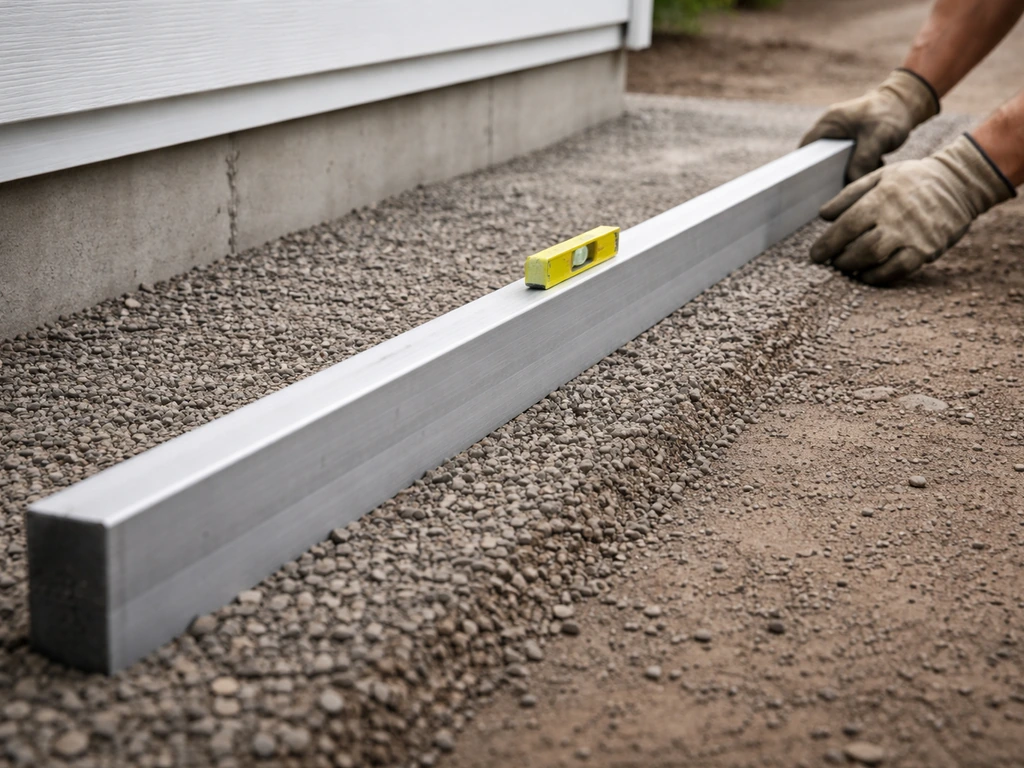
A proper sub-base needs to be laid, leveled, and then compacted with multiple passes of a plate compactor, longitudinally and transversely, until it's fully consolidated. Skimping on this is the single biggest cause of patio failure, so reputable contractors won't rush it. If a quote excludes sub-base preparation entirely, that's a significant omission worth clarifying.
Drainage requirements
Patios next to a house must fall away from the building (typically around 1:80, or about 12mm per metre) and need somewhere for water to go. If drainage channels, gullies, or soakaways are needed, those add both material and labour costs. NHBC guidance specifies that paving slabs adjacent to drainage channels should sit around 5mm above the grating, which requires careful setting-out, not something you can rush.
Layout complexity and pattern
A herringbone or basket-weave pattern requires significantly more cutting than a simple running bond or grid. Expect to add around 10–20% to the base labour rate for complex patterns, particularly with block pavers or brick. Awkward shapes, L-shaped patios, curved edges, or tight corners around garden features, also increase cutting time.
Steps, edges, and raised sections
Steps are priced separately, usually £150–£400 per step depending on construction method and material. Edging restraints, raised planters integrated into the patio, or changes in level all add time and are typically quoted as line items rather than folded into the m² rate.
Removing an existing surface
Breaking up and removing an old concrete slab or existing paving before work can start is often priced at £500–£1,500+ depending on size and thickness. This is almost always excluded from a labour-only quote unless explicitly stated, so if you have an existing patio, ask about it directly. This matters because it affects how much does it cost to lay patio slabs overall, even before materials and slab fitting are considered.
DIY vs hiring: when it's worth paying for labour
DIY patio laying is genuinely achievable for straightforward jobs, a simple 9–13m² patio in standard concrete flags on decent ground with good access is within the reach of a capable, patient DIYer. The savings can be real: at £35–£50/m², you're potentially saving £315–£650 on a 9m² job. On a 25m² patio, that's £875–£1,750 back in your pocket.
But the failure rate on DIY patios is high, and almost all of the problems come from the same few mistakes. Falls and levels are the biggest one: if you don't correctly set out the fall away from the house before you start, you can't easily fix it later. Inadequate compaction of the sub-base leads to slab movement and sinking within a year. Insufficient bed depth or uneven mortar beds cause rocking slabs. And underestimating waste (you typically need 10–15% extra material for cuts and breakages) leads to running short mid-job.
Porcelain is not a DIY material for most people. The wet diamond cutting is slow, the slurry primer step is easy to get wrong, and one mis-cut expensive slab hurts more than it would with cheaper sandstone. If you're set on porcelain, the labour-only route is genuinely worth the cost.
A practical middle ground: do the excavation and sub-base yourself (this is the most physically demanding part but doesn't require much skill beyond getting the levels right), then hire a professional to lay and point the surface. Some contractors will quote for this reduced scope, which cuts their time and your cost while ensuring the visible finish is done properly.
How to get a proper labour-only quote
The single best thing you can do before a contractor visits is measure accurately and write down what you want to include and exclude. A vague enquiry gets a vague quote. A specific brief gets a price you can actually rely on.
Before you contact anyone, have the following ready: the patio dimensions (length x width, plus any awkward shapes sketched out), the material you've chosen or are considering, whether you've already bought materials or need them supplied, the current ground conditions (lawn, existing paving, soil type if known), access details (gate width, distance from drop-off point), and any additional scope like steps, drainage channels, or edging.
When you speak to contractors, ask these questions directly:
- Does your quote include excavation and spoil removal, or is that extra?
- What sub-base specification will you use, and is the aggregate included in this price?
- Is jointing/pointing included, and what method will you use?
- Does the price include cutting, or is that priced separately for complex shapes?
- What drainage provision are you allowing for?
- Is plant hire (plate compactor, skip) included or separate?
- What's your payment schedule and do you have liability insurance?
Get at least three quotes and make sure they cover the same scope. A quote that looks 20% cheaper may simply have excluded excavation, spoil removal, and pointing, costs that will reappear as 'extras' once work starts. Many installers quote on a fixed per-m² basis rather than a day rate, which makes comparison easier as long as you're comparing like-for-like scopes.
Regional pricing and the best time to book
Where you are in the UK has a real effect on what you'll pay. London and the South East consistently attract the highest rates: landscaper day rates in those areas often sit at the top of the £280–£360/day range per person, and team rates of £700+ per day are not unusual for experienced installers. The Midlands and North tend to run 10–20% cheaper for comparable work, with South Wales and Northern Ireland generally sitting at the lower end of the national range.
Timing matters too. Spring and early summer (April to June) are peak demand periods, and many good contractors get booked up weeks or months in advance. You may pay a small premium, or simply find availability limited. Late summer (August) and autumn (September to October) can be a better window, demand eases off, contractors are more likely to negotiate, and the ground conditions are still good for work. Winter bookings (November to February) carry the risk of frost-related delays, particularly for mortared work, but you'll often find the most competitive quotes during this period.
To estimate a fair labour-only budget for your area, take the mid-range per-m² figure for your material (say £45/m² for standard natural stone), apply your area, then adjust upward by 15–20% if you're in London/SE, or downward by 10% if you're in the North or Midlands. Add separate line items for spoil removal (roughly £150–£350 depending on volume) and plant hire if not included, and you'll have a realistic ballpark before any contractor visits.
Extra charges and hidden costs to watch for
Even with a detailed quote, a few costs regularly catch homeowners off guard. Here's what to look out for before you sign anything.
- Spoil disposal: excavated soil and rubble needs to go somewhere. Skip hire typically runs £200–£400 depending on size and location, and some contractors charge separately for loading. If it's not in the quote, it will be on the invoice.
- Extra excavation: if the contractor hits unexpected rock, hardcore, or old foundations, you'll be charged for the additional time. Ask whether there's a contingency rate in the quote.
- Sub-base materials: MOT Type 1 aggregate and sharp sand are sometimes listed as separate supply items even within a 'labour-only' framework. Confirm whether the sub-base material cost is your responsibility or theirs.
- Drainage installation: if a drainage channel or gully connection is needed, this is almost always priced separately from basic laying labour. Depending on complexity, this can add £300–£800 to the job.
- Permits and building regulations: most residential garden patios don't require planning permission, but if you're laying an impermeable surface over a large area (generally more than 5m² in England), you may need to use a permeable paving system or direct runoff to a lawn/border to stay within permitted development rules. This can affect material choice and sub-base design.
- Mortar and jointing materials: these are small-value items individually, but polymeric jointing sand, resin grout, or pointing mortar can add £50–£200 to a job and may or may not be included in labour-only pricing.
- Levelling and ground prep beyond standard: if your garden slopes significantly or there are localised soft spots requiring additional fill, you're looking at extra groundwork time that won't be covered in a standard per-m² rate.
- Slab wastage: if you're supplying materials and underestimate, a mid-job trip to reorder can delay completion and sometimes attract a standing-time charge from the contractor.
The total installed cost (labour plus materials) for most UK patios lands somewhere between £40 and £180 per m² depending on material choice and complexity. Labour typically accounts for around 40–50% of that total. So if a quote for a 20m² sandstone patio comes in at, say, £2,800 all-in, and you're supplying the slabs yourself, a labour-only figure of £900–£1,300 is in the right ballpark. Much lower than that and it's worth asking what's been left out. For more detail on the full cost picture including materials, the broader patio cost breakdown and UK regional pricing guides on this site are worth reading alongside this one.
FAQ
What exactly should be written into a labour-only quote so it is truly comparable between contractors?
Most patios are priced assuming excavation to finished ground level plus a specific aggregate sub-base depth, but “labour only” sometimes omits that measurement detail. Ask the contractor to state the excavation depth range (example 150 to 200mm) and the sub-base specification (MOT Type 1 depth and whether it includes a separate bedding layer), because these two items strongly affect labour time.
Does labour-only include taking the slabs from the delivery point and moving them around my site?
If you provide materials, you still need to budget for contractor handling and storage, especially if slabs are delivered off site or you have limited space. Request a note on whether unloading from the van, carrying across the garden, and protecting materials from damage is included or charged as an extra.
If I have an old patio to remove, is that usually included in labour-only pricing?
Not always. If existing paving must be lifted and taken away, some companies won’t treat that as “labour only” and will charge it separately even if the price seems close. If you have an old slab, request a clear line item for break-out, disposal, and whether a skip or tip fees are included.
How do I confirm the labour-only quote includes the right fall and drainage work?
Drainage channels, gullies, and any channel/grating set-up near the house are commonly excluded unless explicitly quoted. Even if your patio is small, ask whether they will set a proper fall to drainage and what they include for gravel surrounds, bedding, and the height of paving relative to the grating.
Will awkward shapes or extra cutting make the labour-only price rise beyond the per-m² rate?
Yes, waste is often a hidden variable, even when labour is fixed per m². For labour-only, cutters still need time for trimming and you may get charged more if the contractor has allowed a standard waste factor but your layout produces more offcuts. Ask whether waste and cutting allowances are assumed for the labour rate, or whether the quote is strictly based on net area.
Is jointing or pointing always included in labour-only, and what jointing material should I expect?
Some contractors treat jointing or pointing as basic finishing, but others may charge separately if they need specialist jointing compound, polymeric sand, or additional sealing. Confirm what joint material is included, whether any restraint details are part of the scope, and what they will do at expansion joints.
If I supply the materials, do I also have to supply bedding sand, mortar, and primers?
If the contractor is laying on a mortar bed, they may exclude bringing mortar to site, but typically they still include preparation of the bedding. Ask whether they supply mortar or bedding sand and what exactly is expected from you, because “materials provided by customer” can create disagreements over sand, primer, and mortar.
Does labour-only assume a plate compactor is included, or will I have to pay for plant hire separately?
Plate compactor hire is often excluded in labour-only quotes, particularly where site access means machinery can’t be used and labour must be done entirely by hand. Ask whether compacting is included with compactor passes, and if not, request plant hire inclusion or a separate plant line item.
Why can porcelain labour-only quotes be higher, and what should I check for specifically?
Yes. If you choose porcelain, the process usually requires primer/slurry bonding and diamond wet cutting, and labour time is higher than standard sandstone. Ask for the labour rate to be stated by patio type (porcelain vs natural stone vs sandstone flags) and whether wet-cutting machinery is included in their labour schedule.
What does “basic tidying up” usually include, and what should I clarify before work starts?
A common mistake is assuming “labour only” means you will not pay for making-good, cleanup, or final brushing down. Ask what final tidy includes, whether they return any excess aggregate, and how they handle removal of debris from the garden or driveway after jointing.
If I dig out the patio area myself, will the contractor still accept the sub-base if I did the compaction wrong?
If you are doing the excavation yourself, ask contractors whether they require a proof-check visit before laying begins, especially for levels and compaction. Many will not accept excavation done to an uncertain depth, so plan for a site check and expect them to refuse work if the sub-base isn’t compacted properly.
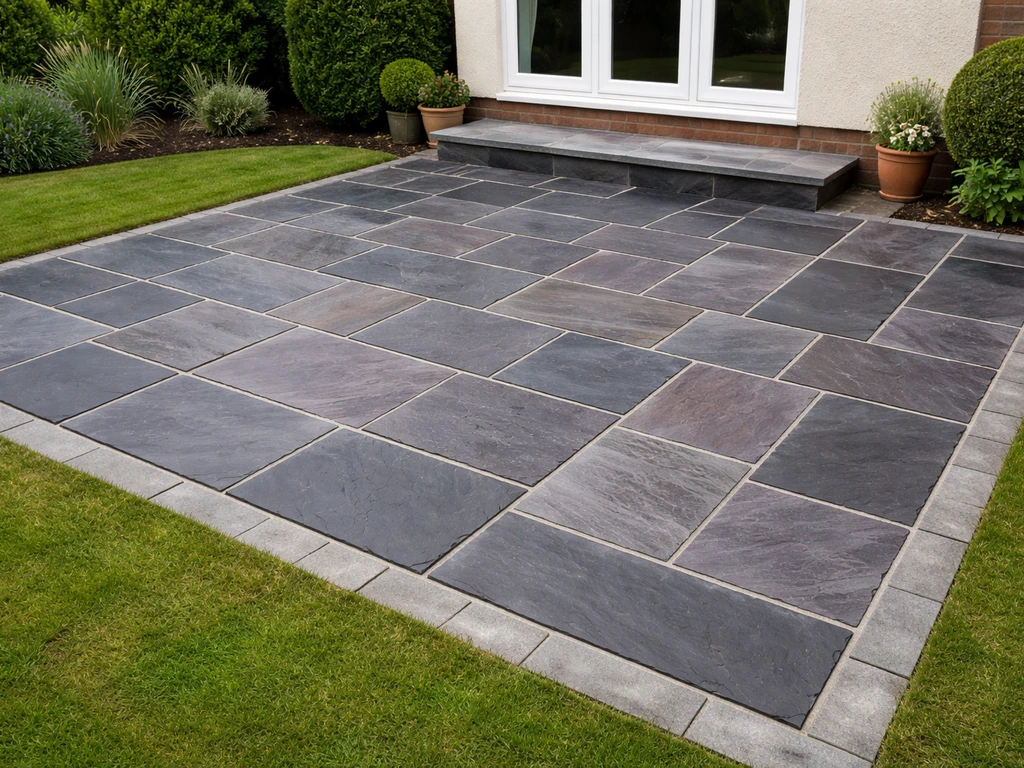
Installed slate patio cost guide with per-sq-ft ranges, example budgets, and checklist to compare materials and quotes.
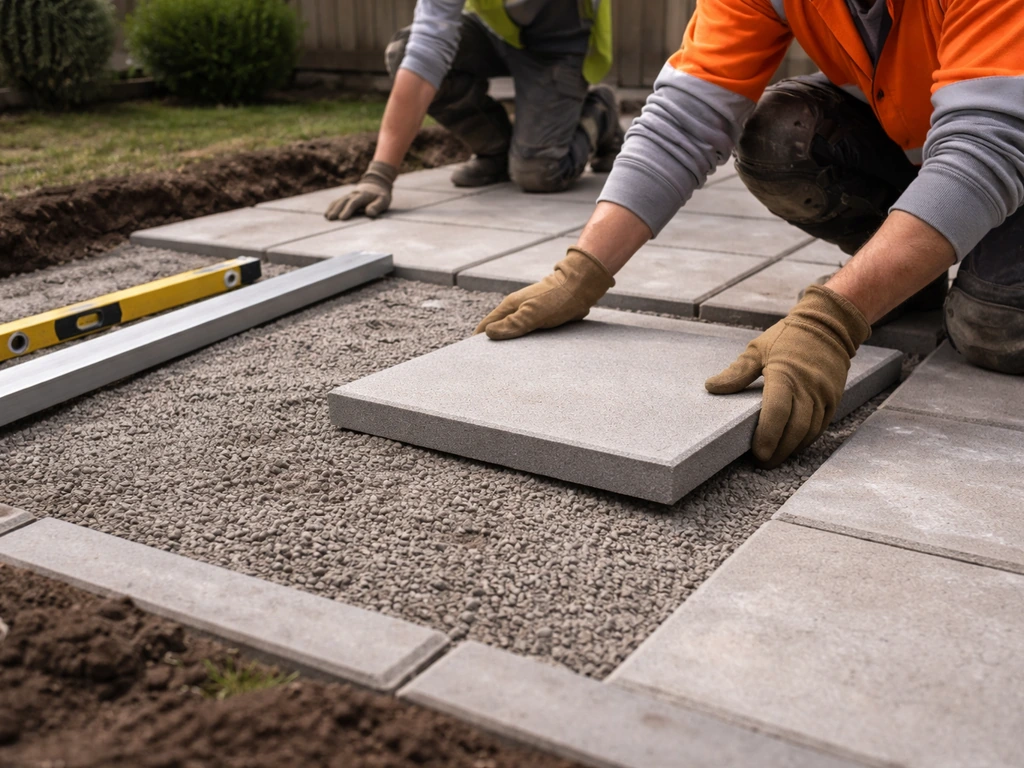
Cost to lay a patio by size and material, with labor breakdown, factors, and steps to get accurate contractor quotes.
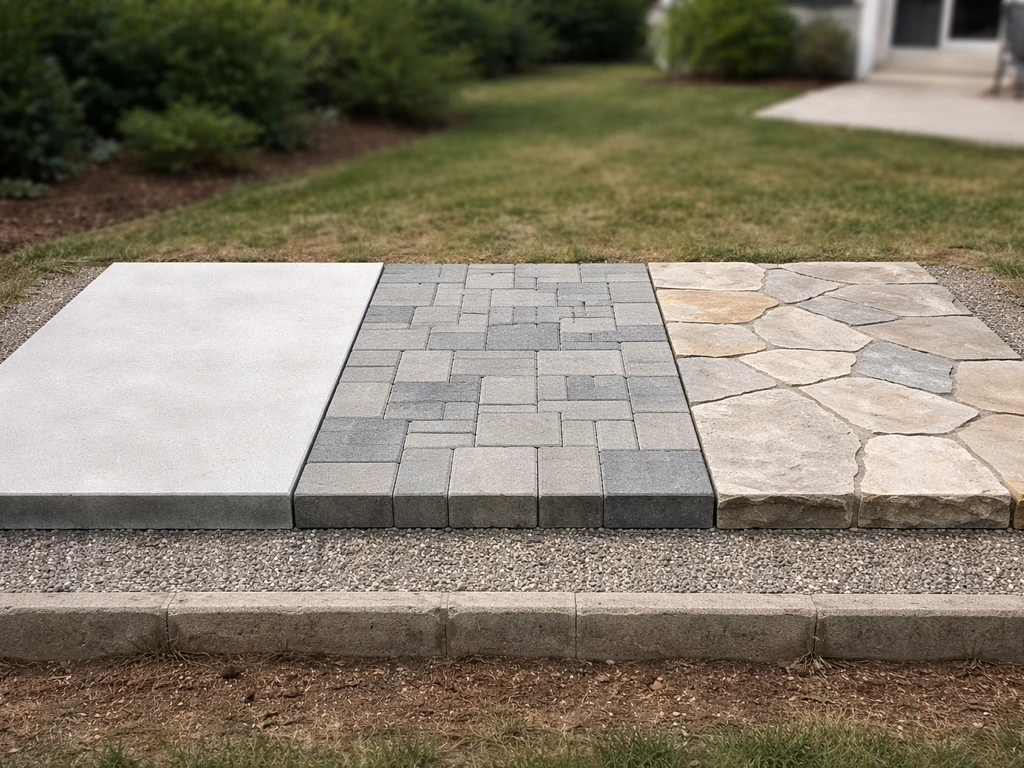
Patio cost guide with real price ranges by size and material, full line-item budget, DIY vs install, and quote checklist