
Resurfacing a concrete patio typically costs $3 to $7 per square foot for a plain overlay, or $7 to $20 per square foot for a decorative or stamped finish. On a common 20x20 patio (400 sq ft), that works out to roughly $1,200 to $2,800 for a basic job and $2,800 to $8,000 for a stamped one. Resurfacing makes sense when the slab is structurally sound but looks rough, has surface scaling, or has minor cracking. If the concrete is heaving, crumbling through more than the top inch, or has deep structural cracks, replacement will likely cost less in the long run than patching and coating over a failing slab.
How Much to Resurface Concrete Patio: Costs & Budget Guide

Felix Carver
29 Jul 2026
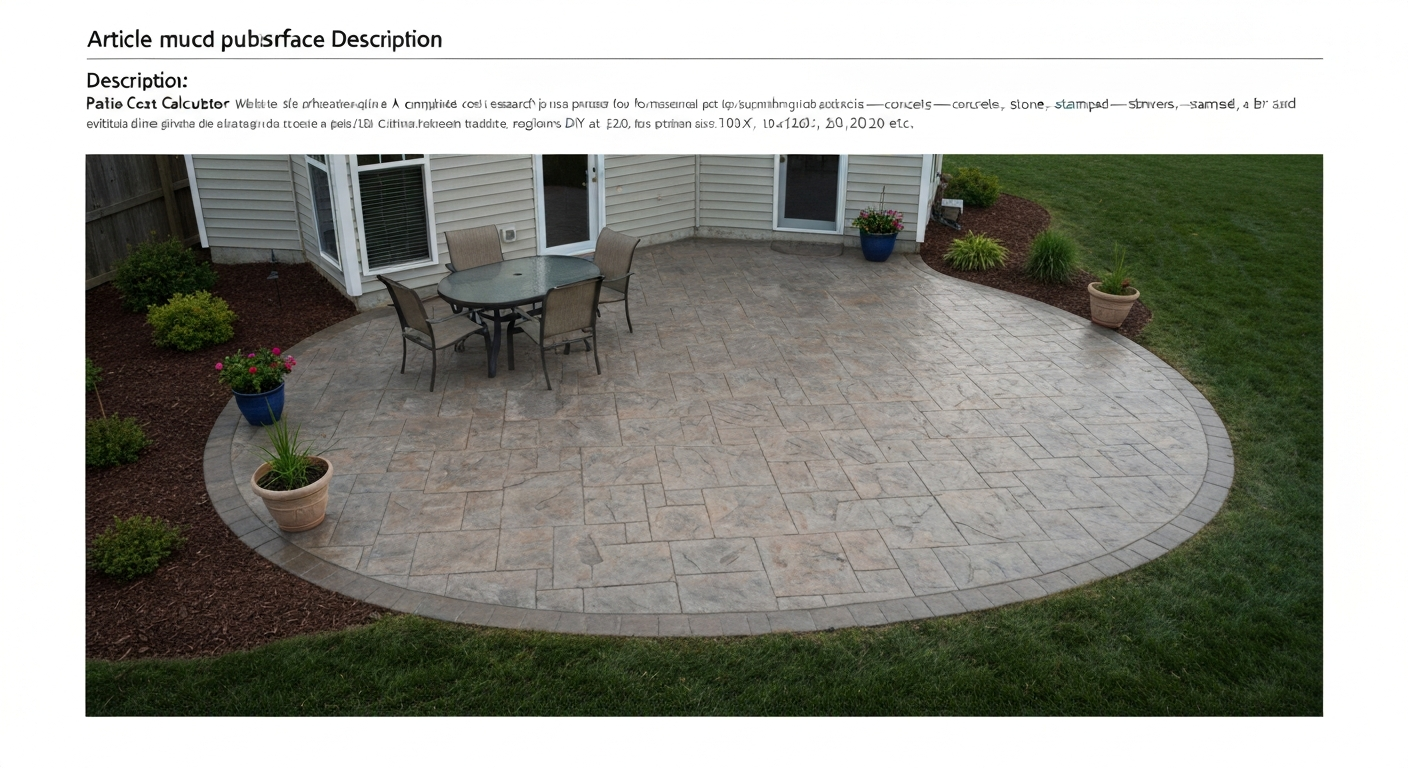
How resurfacing costs are actually calculated
Most contractors quote resurfacing in one of two ways: a flat per-square-foot rate or a whole-project price that bundles labor, materials, prep, and sometimes sealing. Per-square-foot pricing is easier to compare across bids but can be misleading because prep work, mobilization, and small-job minimums all affect the real number. A 100 sq ft patio might get quoted at $8 or $9 per foot when the contractor has a $700 job minimum, even though the same contractor would price a 400 sq ft patio at $5 per foot.
The variables that move the number most are the condition of the existing slab (more prep equals more cost), the finish type you choose (plain gray overlay vs. stamped and colored), and your local labor market. Materials are only a fraction of the total. A bag of polymer-modified concrete resurfacer runs roughly $6 to $14 at a big-box store and covers about 13 to 16 square feet at a quarter-inch thickness. So for a 400 sq ft patio, material cost alone might be $150 to $300. The rest is labor, prep, equipment, overhead, and contractor margin, which is why installed prices run several times the raw material cost.
Price ranges per square foot: budget, midrange, and premium
Here is a straightforward breakdown of what different tiers of resurfacing actually cost per square foot, installed by a contractor. These ranges reflect national averages and include labor and materials but not major structural repairs or permits.
| Resurfacing Type | Typical Cost Per Sq Ft | What You Get |
|---|---|---|
| Basic polymer overlay (plain gray) | $3 – $7 | Smooth or broom-finish surface, one color, no decorative work |
| Polymer microtopping / thin overlay | $3 – $8 | Very thin skim coat, often used for leveling or refreshing worn slabs |
| Stampable overlay (single color/pattern) | $6 – $15 | Textured, patterned surface resembling stone or brick |
| Decorative stamped overlay (multi-color) | $10 – $20+ | Complex patterns, color releases, hand-detailing, artist-level work |
| Epoxy or urethane coating system | $4 – $12 | Solid or flake finish, durable, common on patios and garage floors |
| DIY resurfacer (materials only) | $0.50 – $1.50 | Bags of QUIKRETE or Sika resurfacer, no labor included |
The DIY materials-only row deserves a note. Products like QUIKRETE Concrete Resurfacer and SikaQuick Concrete Resurfacer are legitimately effective on small patios in decent condition. The catch is that they require a 3,500 psi pressure washer, a paddle or mortar mixer, and a decent amount of practice getting a smooth finish. For patios under 200 sq ft in good shape, DIY can save a few hundred dollars. For larger patios or anything decorative, the risk of visible lap lines, uneven thickness, or adhesion failures usually makes a contractor worth the cost.
Cost estimates by patio size and resurfacing method
The table below uses the national per-square-foot ranges to show realistic installed totals for common patio sizes. Use these as a budgeting starting point before you get contractor quotes, not as a substitute for them.
| Patio Size | Sq Ft | Plain Overlay ($3–$7/ft²) | Stampable Overlay ($6–$15/ft²) | Decorative Stamped ($10–$20/ft²) |
|---|---|---|---|---|
| 10x10 | 100 | $300 – $700 | $600 – $1,500 | $1,000 – $2,000 |
| 12x12 | 144 | $430 – $1,010 | $865 – $2,160 | $1,440 – $2,880 |
| 16x16 | 256 | $770 – $1,790 | $1,535 – $3,840 | $2,560 – $5,120 |
| 20x20 | 400 | $1,200 – $2,800 | $2,400 – $6,000 | $4,000 – $8,000 |
| 24x24 | 576 | $1,730 – $4,030 | $3,455 – $8,640 | $5,760 – $11,520 |
A few things to notice in those numbers. First, the plain overlay on a 10x10 patio can cost almost as much per square foot as a larger job simply because of mobilization and minimum charges. Second, the jump from a basic stampable overlay to a full decorative stamped finish on a 24x24 patio can be $3,000 or more, which is real money. If you are primarily after durability and a fresh look without the premium, a mid-tier stampable overlay with a single color hits a sweet spot for most homeowners.
How location and contractor rates shift your price
Labor is the single biggest regional variable. The BLS reports a national mean hourly wage of about $28.87 for cement masons and concrete finishers as of May 2025. But that is the base wage. By the time a contractor adds payroll taxes, insurance, workers' comp, equipment, overhead, and a 20 to 35 percent gross profit margin, billable crew rates in many metro areas run $45 to $90 per worker-hour. In high-cost metros like San Francisco, New York, or Boston, loaded rates can push above $100 per hour per worker.
As a rough rule, expect to pay 20 to 40 percent more than the national average in major coastal metros and 10 to 20 percent less in lower cost-of-living areas in the South and Midwest. A $2,000 plain overlay job in Kansas City might be $2,800 in Denver and $3,200 or more in Seattle. Getting three local quotes is genuinely the only way to know your real number, because regional variation matters more than any national average.
Surface preparation costs: what happens before any product goes down
Prep is the part of resurfacing that most homeowners underestimate, and it is often where corners get cut. No overlay will bond well to a dirty, contaminated, or smooth surface. Professional pressure washing for a residential patio typically runs $0.10 to $0.50 per square foot, or about $100 to $350 as a flat service charge. That is usually included in a full resurfacing quote, but worth confirming.
Mechanical profiling, meaning diamond cup grinding or shot blasting, is a different story. Polymer-modified overlays and epoxy coatings require a concrete surface profile (CSP) of at least 2 to 3, which pressure washing alone cannot achieve. Grinding adds roughly $1 to $3 per square foot to a job. Shot blasting is more aggressive and can run $1 to $8 per square foot depending on equipment and required depth. On a 400 sq ft patio, proper mechanical prep can add $400 to $1,200 to your total before a drop of overlay is mixed. If a contractor skips this step to save time, the overlay is more likely to delaminate within a year or two.
- Pressure washing: $100 to $350 flat (or $0.10 to $0.50/ft²), usually included in resurfacing quotes
- Diamond grinding: $1 to $3/ft² for standard residential profiles
- Shot blasting: $1 to $8/ft² depending on depth and equipment
- Degreasing and etching (chemical prep): typically $0.25 to $0.75/ft² as a separate line item
- Grinder rental for DIY: $150 to $250 per day from tool rental companies
Crack, spall, and settlement repair costs
Surface cracks and spalling need to be addressed before any overlay goes on, or they will telegraph through the new surface within months. The cost here depends entirely on severity. Hairline surface cracks can be filled with a flexible polyurethane caulk or epoxy paste for $20 to $50 in materials if you DIY, or included as a small upcharge in a contractor's quote. Wider or structural cracks are a different matter.
Professional epoxy injection for a structural crack typically runs $250 to $800 per crack, or roughly $75 to $250 per linear foot depending on depth and access. Crack stitching (inserting metal staples across a crack to stop widening) can add another $100 to $300 per stitch location. If your patio has multiple structural cracks, repair costs can easily reach $500 to $2,000 before any resurfacing begins.
Settlement and heaving are the most expensive repairs. If a slab section has sunk or shifted, mudjacking (pumping cement slurry underneath) typically costs $3 to $6 per square foot of the affected section. HomeAdvisor, Mudjacking/Polyjacking and slab‑leveling cost guide lists mudjacking at $3–$6 per ft² and polyurethane polyjacking at $5–$25 per ft² HomeAdvisor — Mudjacking/Polyjacking and slab‑leveling cost guide. Polyurethane foam lifting (polyjacking) is faster and less invasive but costs $5 to $25 per square foot. For a single sunken 4x4 section, mudjacking might run $200 to $400 and polyjacking $300 to $800. If settlement is severe or widespread, it may be more cost-effective to remove and replace the concrete entirely rather than resurface over a moving slab. That decision leads into comparing resurfacing versus replacement, which is covered later.
Resurfacing material costs: overlays, microtoppings, and epoxy systems
The material you choose shapes both the appearance and the total cost, so it is worth understanding each option before you talk to a contractor.
Concrete resurfacers and polymer-modified overlays
Standard bagged resurfacers like QUIKRETE Concrete Resurfacer are the most widely available option and work well for plain, functional finishes. A bag covers 13 to 16 square feet at a quarter-inch thickness and costs $6 to $14 at the hardware store. These products cure to 1,000 to 1,250 psi within a day and reach 4,500 to 5,000 psi at 28 days, which is comparable to standard concrete. Pot life is short (around 20 minutes for products like SikaQuick), so working in hot weather or on large areas requires experience. Installed by a contractor, blank" rel="noopener noreferrer">these plain overlays typically run $3 to $7 per square foot including labor.
Microtoppings
Microtoppings are very thin (1/16 to 1/8 inch) polymer-modified skim coats typically applied in two or three layers. Products like Ardex Feather Finish can achieve an extremely smooth, modern look and can be stained or sealed for a polished aesthetic. They are less forgiving than thicker overlays because any slab movement or prep deficiency will show immediately. Installed cost typically runs in the $3 to $8 per square foot range, similar to standard overlays, though complex multi-layer decorative systems with staining can push higher.
Stampable and decorative overlays
Stampable overlays are thicker (3/8 to 3/4 inch typically) polymer-modified mixes designed to be stamped with texture mats and colored with integral pigments or color hardeners. These are the materials behind those patios that look like flagstone or cobblestone but are actually concrete on top of concrete. Material cost is higher than a plain resurfacer, and the labor is significantly more skilled and time-intensive. Installed prices for single-color stampable overlays run $6 to $15 per square foot. Multi-color, artist-detailed work runs $10 to $20 or more.
Epoxy and urethane coating systems
Epoxy systems like Rust-Oleum EpoxyShield kits are popular for a clean, durable finish. Residential kit sizes typically cover 200 to 500 square feet per kit at recommended film thickness. Water-based epoxy coatings are usually foot-traffic ready in about 24 hours and ready for furniture and normal use in 3 days. Professionally installed epoxy or urethane topcoat systems for patios run roughly $4 to $12 per square foot. They are a solid choice for patios where a smooth, easy-to-clean surface matters more than a natural stone look.
Hidden costs that surprise homeowners
A few line items regularly appear in final invoices that were not discussed upfront. Knowing about them before you sign a contract is worth something.
- Permits: many jurisdictions require a permit for exterior concrete work. Budget $50 to $300 for typical residential permit fees and confirm whether your contractor pulls the permit or expects you to
- Debris disposal: if demo work is involved (removing broken sections, grinding debris), a 10-yard dumpster runs $225 to $575 and a 20-yard runs $275 to $700, with a national average around $440 for a 20-yard container
- Sealing: a penetrating or topical sealer after resurfacing adds $0.50 to $2.00 per square foot and is often quoted separately. On a 400 sq ft patio, that is $200 to $800 extra
- Furniture and landscaping move and replace: contractors typically will not move heavy outdoor furniture or potted plants for you, and replanting disturbed edging or mulch after the job is your responsibility
- Second or third coat: some overlay systems require two or three coats for color or durability, and not all initial quotes include this
- Staining or coloring: if you decide to add an acid stain or color tint after seeing the base overlay, expect to add $2 to $5 per square foot for that service
Resurfacing vs. replacing, removing, or extending your patio
This is genuinely the most important decision in the whole process. Resurfacing is only cost-effective if the slab underneath is structurally sound. If you pour a decorative overlay over a slab that is actively settling, has deep structural cracks, or has rebar corrosion pushing up from below, that overlay will fail in one to three years and you will have spent $2,000 to $8,000 to delay the inevitable.
Pouring a new cement patio from scratch costs significantly more, typically $6 to $12 per square foot for a plain new slab including excavation, base prep, forming, and pour. But a new slab comes with a 25 to 30 year functional lifespan and no underlying problems to inherit. If your existing slab has major issues, the math often favors removal and replacement over repeated resurfacing. Removal alone adds cost, with concrete demolition and haul-away commonly running $2 to $6 per square foot depending on thickness. For a deeper breakdown of demolition and haul-away pricing, see how much does it cost to remove concrete patio.
If your patio is too small rather than too damaged, extending it is a third path worth evaluating. Adding square footage to an existing concrete patio means pouring a new section and possibly resurfacing both sections to match. For detailed guidance on costs and steps to add square footage, see how much to extend concrete patio (bbe10a91-ce0f-4ad7-acca-ab50718efd99). That project combines new-pour costs with potential resurfacing costs, so the per-square-foot total can look high but the result is a larger, uniform surface.
| Option | Typical Cost Range | Best When |
|---|---|---|
| Resurface existing slab | $3 – $20/ft² | Slab is structurally sound; surface is worn, scaled, or cosmetically rough |
| Remove and replace | $8 – $18/ft² all-in (demo + new pour) | Slab has structural cracks, active settlement, or failing subbase |
| Remove only | $2 – $6/ft² | Removing patio without replacement; converting to lawn or landscaping |
| Pour new concrete patio | $6 – $12/ft² | No existing slab; adding a patio from scratch |
| Extend existing patio | $6 – $15/ft² for new section | Patio is too small; existing slab is sound and worth keeping |
DIY vs. hiring a contractor: where the money goes
For a straightforward 100 to 150 square foot patio in good condition, a capable DIYer can buy bags of concrete resurfacer, rent a pressure washer and grinder, and do the job for $200 to $500 in materials and equipment rental. That same job contracted out typically runs $500 to $1,200. The savings are real, but the risks are also real. Concrete resurfacers have short pot lives, require consistent application speed to avoid visible overlap lines, and absolutely will not bond to a surface that was not profiled properly. If you rush the prep or apply on a hot day without experience, you can end up with a delaminating surface that looks worse than before.
For jobs larger than 200 square feet, decorative finishes, or patios with any repairs needed, hiring a contractor is almost always worth it. The risk of a botched DIY overlay on a 400 square foot stamped patio is a multi-thousand-dollar redo. Save DIY for small utility patios with plain finishes and no serious prep challenges.
What to expect for lifespan and timeline
A properly installed and sealed concrete overlay on a sound slab can last 10 to 15 years with normal maintenance. Epoxy coatings typically need recoating every 5 to 10 years depending on UV exposure and use. Decorative stamped overlays, sealed and maintained properly, can last 15 years or more. Poor prep, skipped sealing, or an underlying slab with movement issues will cut those numbers significantly.
For project timeline, plan for two to four days from start to full use for most residential resurfacing jobs. Day one is typically cleaning, prep, and repairs. Day two is the overlay pour or application. The surface needs 16 to 24 hours before foot traffic and typically 72 hours before moving furniture back. Weather matters: most overlays should not be applied below 50 degrees Fahrenheit or above 90 degrees, and rain in the first 24 hours can ruin a freshly applied surface.
Questions to ask contractors before signing anything
- What surface preparation method do you use, and does your quote include mechanical profiling (grinding or shot blasting)?
- What brand and thickness of overlay or coating do you use, and can you provide the product data sheet?
- Is crack repair, sealing, and cleanup included in the quoted price or billed separately?
- Does your quote include pulling any required permits?
- How do you handle unexpected issues found during prep, such as deeper cracks or delamination?
- What is the expected cure and dry time before I can use the patio?
- Do you offer a warranty on your work, and what does it cover?
- Can you provide references or photos from similar patio resurfacing jobs?
Cost-saving tips that actually work
- Get at least three quotes: resurfacing prices vary significantly between contractors even in the same zip code, and a second or third bid often comes in 15 to 25 percent lower than the first
- Schedule in the off-season: contractors in most markets are less busy in late fall and early winter, and some will reduce prices by 10 to 20 percent to fill their calendars
- Bundle jobs: if you are also having a driveway or walkway resurfaced, doing everything in one mobilization saves the contractor time and you money
- Skip the sealer upcharge and buy it yourself: topical sealers are available at hardware stores for $30 to $80 per gallon and cover 200 to 400 square feet; applying it yourself after the overlay cures saves the contractor's markup
- Choose a plain overlay over a stamped one if the goal is functional durability rather than aesthetics: the cost difference on a 400 sq ft patio can be $1,500 to $5,000
- Do your own furniture moving and prep clearing: removing everything from the patio before the contractor arrives saves time they would otherwise bill for
Getting accurate quotes: your next steps
Before you call any contractor, measure your patio accurately (length times width in feet gives you square footage), photograph any cracked, spalled, or settled areas, and decide roughly what finish level you want. That lets you have a real conversation rather than a vague one, and it makes it easier to compare bids apples-to-apples. Ask each contractor to itemize prep, materials, labor, and any optional add-ons like sealing or staining as separate line items. A contractor who will not break down a quote is one worth being cautious about.
If you are still weighing whether to resurface, fully replace, extend, or remove the patio entirely, the cost comparison table above is a good starting framework. The decision usually comes down to the slab condition and your five to ten year plan for the space. A resurfaced patio is a great value when the bones are good. When they are not, spending a little more upfront on removal and a new pour almost always wins in the long run.
FAQ
How much does it cost per square foot to resurface a concrete patio?
National installed ranges for resurfacing vary by method and finish: basic polymer‑modified overlay/microtopping ≈ $3–$8 per ft²; decorative/stampable overlays ≈ $6–$20+ per ft²; epoxy/coat systems ≈ $4–$12 per ft². Low end is simple resurfacer over a sound slab; high end includes stamping, multi‑color staining, heavy prep, or complex finishes.
What are realistic price ranges for common patio sizes (plain overlay vs. stamped/decorative)?
Using the typical per‑ft² bands, examples: 10×10 (100 ft²) — plain: $300–$800; stamped: $600–$2,000+. 12×12 (144 ft²) — plain: $432–$1,152; stamped: $864–$2,880+. 14×14 (196 ft²) — plain: $588–$1,568; stamped: $1,176–$3,920+. 16×16 (256 ft²) — plain: $768–$2,048; stamped: $1,536–$5,120+. 20×20 (400 ft²) — plain: $1,200–$3,200; stamped: $2,400–$8,000+. 24×24 (576 ft²) — plain: $1,728–$4,608; stamped: $3,456–$11,520+. Prices rounded; final quotes depend on prep, region and contractor.
What cost components should I budget for (breakdown)?
Typical line items: surface prep (power wash, chemical strip) $0.10–$0.50/ft² or $100–$350 flat; mechanical profiling/grinding $1–$8/ft² if required; crack/settlement repair (epoxy injection, patching, mudjacking/polyjacking) $75–$800 per crack or $3–$25/ft² for leveling; overlay/microtopping or stampable overlay materials & installation (see per‑ft² above); staining/sealing topcoat $0.50–$3/ft²; cleanup, disposal and dumpster $225–$700+; permits $50–$300 (local); any site access or landscaping protection costs. Labor generally comprises a substantial portion of the installed price.
How do material options differ and how do they affect cost?
Concrete resurfacer/repair mix (polymer‑modified): low cost, thin skim coat for cosmetic fixes — lowest per‑ft². Stampable overlay: thicker polymer mixes that accept stamping and color — mid to high cost depending on pattern and color. Epoxy/urethane coatings: create a protective decorative surface, moderate cost, limited texture options. Paver overlay/thin‑set or pedestal systems: higher cost (materials & installation) and often used to change aesthetic or height. Stain/densifier/sealer add modest extra cost but improve appearance and lifespan.
DIY vs contractor — what are typical cost differences and when should I hire a pro?
DIY materials for small patios (100–400 ft²) can be a few hundred dollars (bags of resurfacer, sealer, tools). Contractor installed work multiplies material cost by labor, equipment, overhead and profit — hence installed per‑ft² bands above. Hire a pro if: slab has structural movement, significant cracking/settling, requires mechanical profiling, stamped/decorative finishes, or you lack equipment/experience. DIY is feasible for simple, sound slabs and basic resurfacer applications but requires proper prep, mixing, and timing.
What hidden or common extra costs should I watch for?
Common extras: mechanical grinding or shot‑blasting to bond overlays; extensive crack repair or slab‑leveling (mudjacking/polyjacking); joists/edge repairs where patio meets house; removal and haul‑away of loose concrete; dumpster fees; permit fees; unexpected subgrade/soil problems discovered during prep; design or color changes mid‑job; site access constraints that increase labor time. Always ask contractors for an itemized quote that lists these potential add‑ons.
Next Articles

How Much to Extend Concrete Patio Cost Breakdown
Estimate how much it costs to extend a concrete patio, with size ranges, cost breakdown, DIY vs pro, and price drivers.
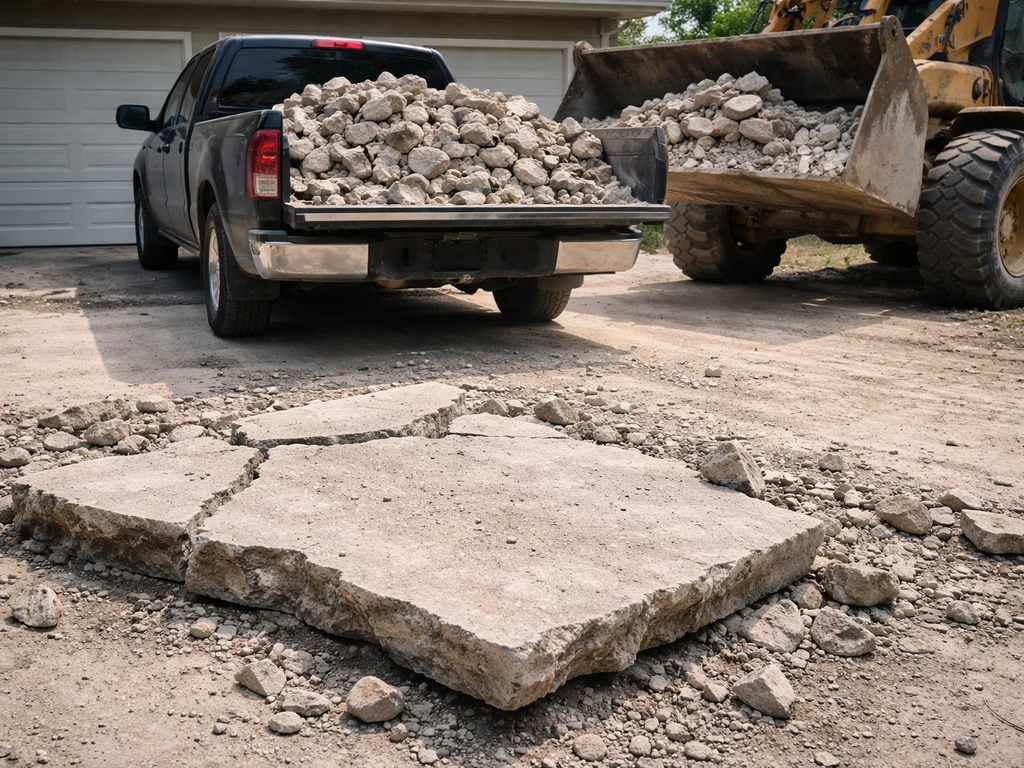
How Much Does It Cost to Remove a Concrete Patio
Real cost ranges to remove a concrete patio by size, key price drivers, disposal fees, and DIY vs pro guidance.
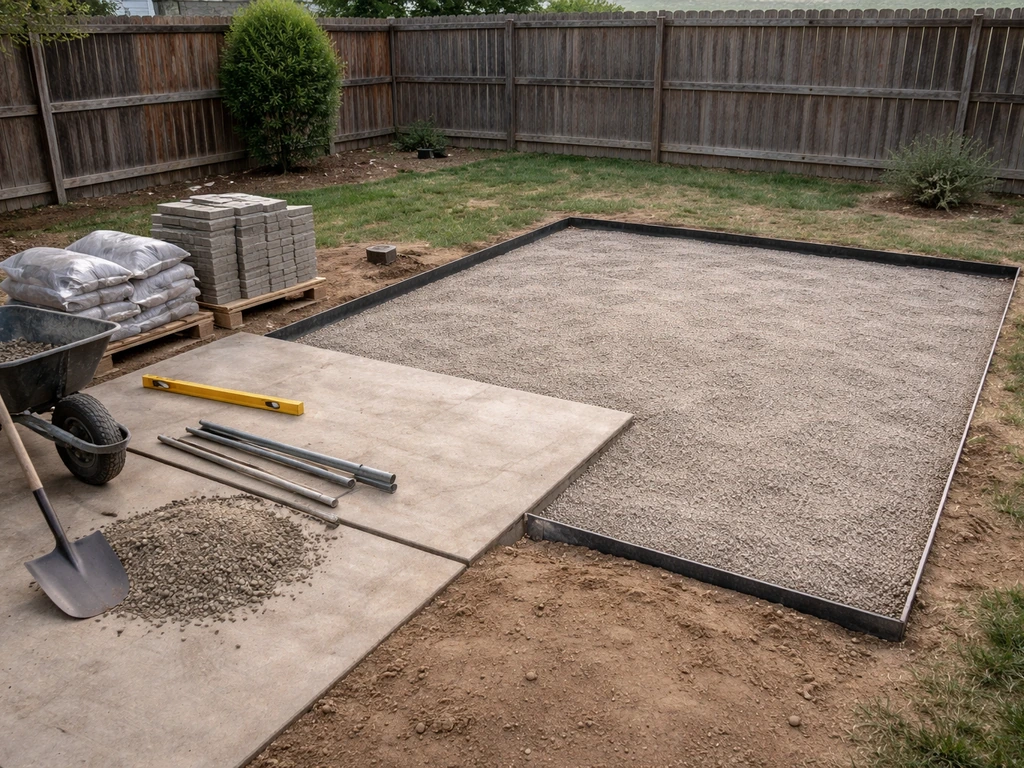
How Much Does It Cost to Extend a Patio in 2026?
Patio extension costs in 2026: pricing for uncovered and covered 10x10 to 20x20 using concrete, pavers, stone, brick.