
Most homeowners pay between $5 and $35 per square foot for a patio installation in 2026, which works out to roughly $2,500 to $14,000 for a typical mid-size project. The wide range exists because material choice alone can triple your cost per square foot, and site conditions, labor rates, and patio size all stack on top of that. A basic concrete pad runs $4 to $12 per square foot installed. Natural flagstone or stamped concrete can push $20 to $50 per square foot. For a plain 12x12 concrete patio, expect to budget around $1,200 to $2,000 professionally installed. A 20x20 paver patio in natural stone? More like $8,000 to $20,000 depending on where you live.
What Is the Average Cost of a Patio in 2026?

Felix Carver
29 Apr 2026
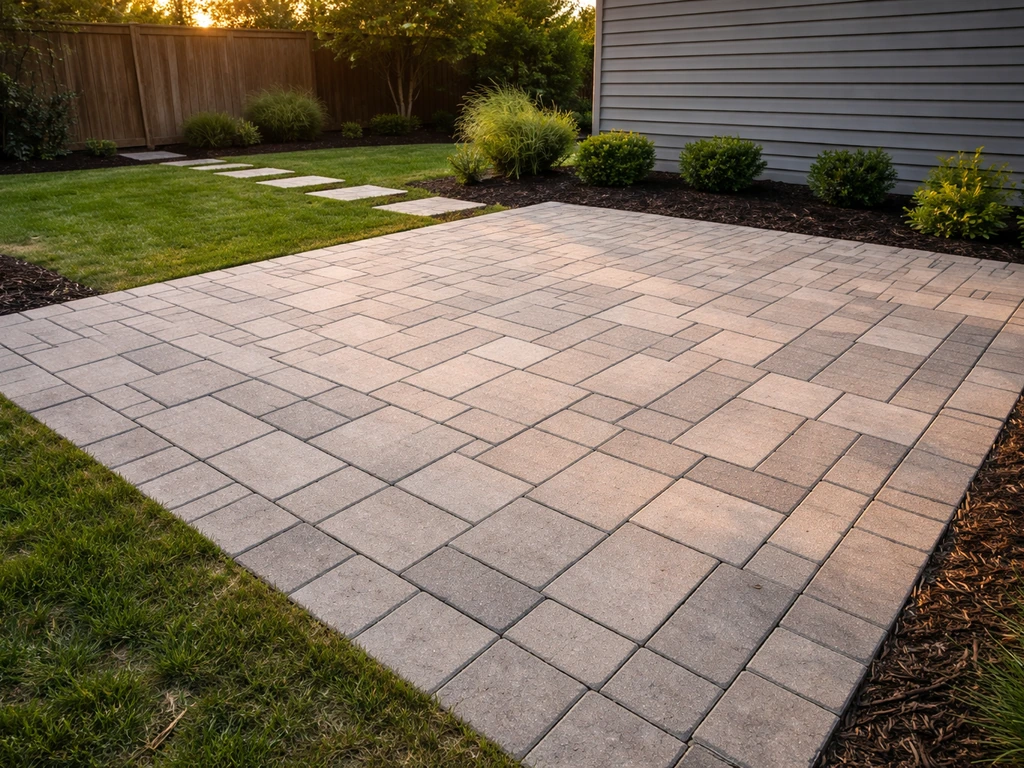
Average patio cost ranges by size
Size is the single biggest lever on your total patio budget. Every square foot adds material cost, labor time, and more base/prep work. The table below gives you honest installed price ranges for common patio sizes across budget, mid-range, and premium finishes. These reflect real contractor pricing in 2026, not the lowest possible DIY scenario.
| Patio Size | Square Footage | Budget (Basic Concrete) | Mid-Range (Pavers/Brick) | Premium (Flagstone/Stamped) |
|---|---|---|---|---|
| 10x10 | 100 sq ft | $500–$1,200 | $1,000–$2,000 | $2,000–$5,000 |
| 12x12 | 144 sq ft | $700–$1,700 | $1,400–$2,900 | $2,900–$7,200 |
| 16x16 | 256 sq ft | $1,300–$3,100 | $2,600–$5,100 | $5,100–$12,800 |
| 20x20 | 400 sq ft | $2,000–$4,800 | $4,000–$8,000 | $8,000–$20,000 |
| 20x30 | 600 sq ft | $3,000–$7,200 | $6,000–$12,000 | $12,000–$30,000 |
| 30x30 | 900 sq ft | $4,500–$10,800 | $9,000–$18,000 | $18,000–$45,000 |
The Concrete Network pegs a typical 288-square-foot concrete patio at around $3,200 total, or about $11 per square foot, which lands right in the middle of the basic-to-mid range above. That's a good sanity check number for a straightforward concrete install with standard site conditions.
Cost breakdown: materials vs. labor vs. base and prep
Here is something most patio cost articles gloss over: the surface material you pick is often not even the biggest line item. For paver patios especially, labor and base preparation together account for roughly 60 to 70 percent of the total installed cost. The pretty pavers on top are just the finish layer.
A solid patio base requires excavating 6 to 8 inches of topsoil, then filling with 4 to 6 inches of compacted gravel, a layer of bedding sand, and in many cases a geotextile fabric to keep soil from migrating into the gravel over time. Skip any of those steps and the patio will shift, crack, and become uneven within a few years. Good contractors don't skip them, and that work costs real money.
| Cost Component | Typical Range (per sq ft) | Notes |
|---|---|---|
| Surface materials | $1.50–$25.00 | Varies widely by material type |
| Installation labor | $4.00–$20.00 | Depends on material complexity and region |
| Excavation/grading | $1.50–$3.00 | More on sloped or rocky sites |
| Gravel base (4–6 in.) | $2.00–$5.00 | Compacted Class II road base gravel |
| Bedding sand + jointing sand | $0.50–$1.50 | Included in base package by most contractors |
| Geotextile fabric + edging | $0.90–$1.70 | Often bundled into base material quote |
| Drainage slope/grading | Included–$2.00 | Slope away from house, sometimes extra |
Base and prep materials alone run about $1.40 to $2.20 per square foot at minimum, and that climbs to $6.00 per square foot on sites that need significant grading, drainage work, or removal of an existing patio. When you get contractor quotes, ask specifically whether excavation, grading, and base materials are included or listed as separate line items. It's one of the most common places for quotes to look artificially low.
Patio material price comparisons
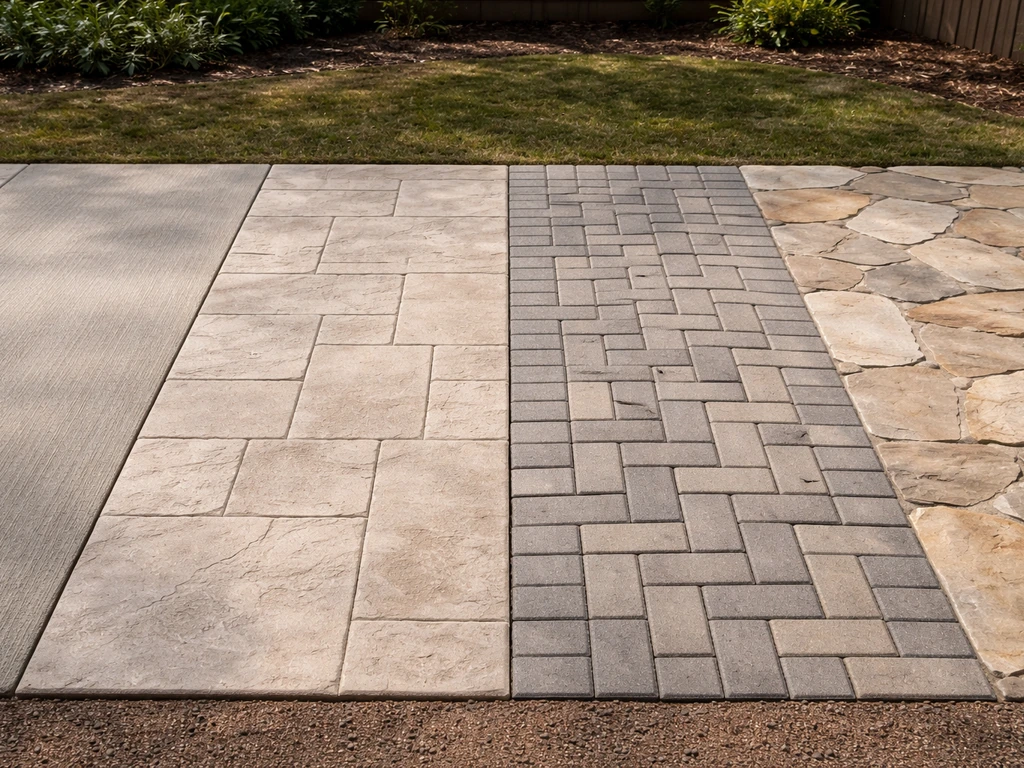
Your material choice will move your per-square-foot cost more than almost any other decision. Here is how the main options stack up side by side, using installed prices (materials plus labor plus standard base prep) as the comparison point.
| Material | Installed Cost (per sq ft) | Durability | Maintenance | Best For |
|---|---|---|---|---|
| Basic concrete | $4–$12 | High | Low | Budget-friendly, utilitarian look |
| Stamped concrete | $15–$30 | High (if sealed) | Medium | Decorative look without premium material cost |
| Concrete pavers | $8–$20 | Very high | Low | Flexibility, repairability, classic look |
| Brick | $10–$20 | High | Low-medium | Traditional aesthetics, good resale appeal |
| Flagstone | $10–$30 | Very high | Medium | Natural, high-end appearance |
| Natural stone (premium) | $20–$50 | Very high | Medium-high | Luxury installs, unique look |
Concrete: the budget baseline
Plain poured concrete is the most affordable option at $4 to $12 per square foot installed. It's durable, low maintenance, and holds up well in most climates. The downside is that it can crack over time, especially in freeze-thaw regions, and a cracked concrete slab is harder to repair than a paver surface where you can pull and replace individual units.
Stamped concrete: decorative without the premium material price
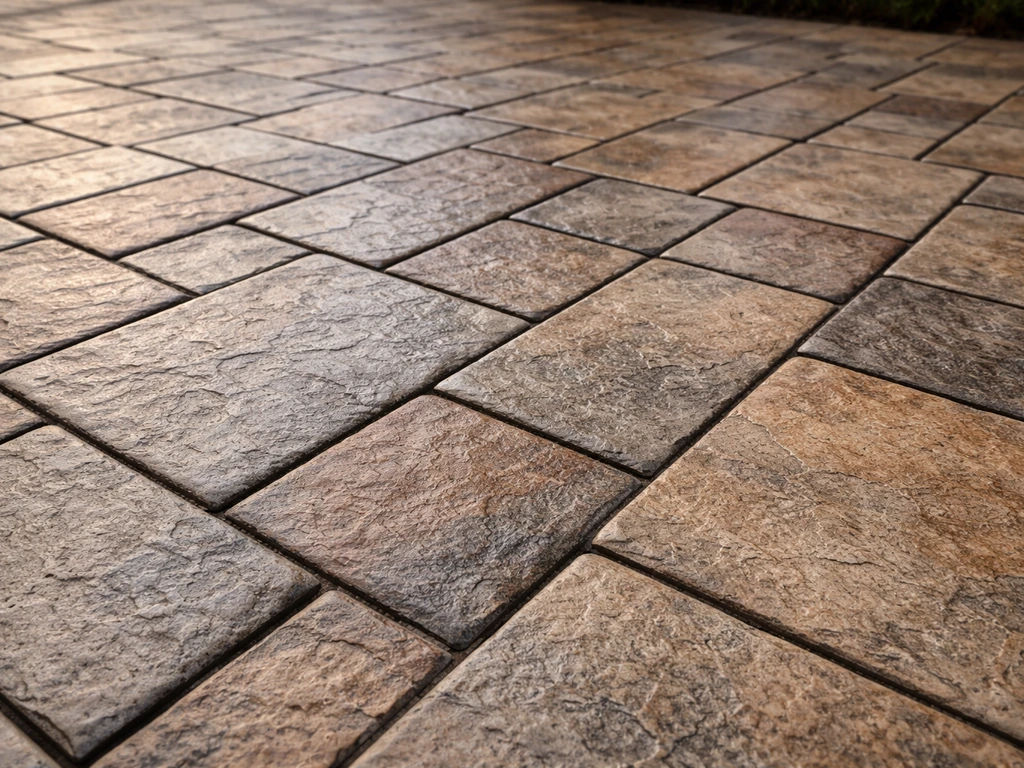
Stamped concrete can mimic the look of pavers, stone, or brick at $15 to $30 per square foot. You're paying for the skilled labor to stamp and color the surface while wet, not expensive raw materials. The catch is that the finish requires periodic resealing (roughly every 2 to 3 years) and chips are harder to patch invisibly than with natural stone or pavers.
Pavers and brick: the most repairable option
Concrete pavers and brick both run $8 to $20 per square foot installed. The real advantage here is repairability. If one paver cracks or shifts, you pull it out and replace it. No breaking up a whole slab. Brick lands at the higher end of this range and brings a classic look that holds up in older neighborhoods and traditional home styles.
Flagstone and natural stone: the premium end
Flagstone runs $10 to $30 per square foot installed (dry-laid flagstone labor alone is $9 to $17 per square foot). If you already have a concrete base and want to add a mortar-set flagstone surface on top, the total project might run $2,000 to $5,000 for a modest patio, which is actually one of the more cost-efficient ways to get a high-end stone look. Going fully custom with premium natural stone can reach $50 per square foot on complex installs.
Installation vs. DIY: what changes the average cost
DIY is genuinely appealing when you see contractor quotes. A 12x12 concrete patio that runs $1,200 to $2,000 professionally might cost $400 to $600 in materials if you do it yourself. That $800 to $1,400 difference is real savings, but it comes with real risks attached.
The biggest DIY risk on concrete is finishing. Concrete has a narrow working window and finishing it to a smooth, consistent surface without bubbles, low spots, or surface scaling takes practice. A botched finish on a 400-square-foot patio can mean $1,500 to $3,000 in demolition and replacement costs, which often exceeds what you would have paid a contractor in the first place. Pavers are more forgiving for DIY, but only if you get the base prep right. Dragging pavers across a freshly screeded sand bed displaces the sand and creates an uneven surface that's very difficult to fix after the fact.
Here is a practical way to think about it: base prep and excavation are relatively DIY-friendly if you're willing to rent equipment and do the physical work. The surface installation, especially for concrete or mortared stone, is where most DIYers run into expensive trouble. A hybrid approach, where you handle demolition of an old patio, excavation, and gravel base yourself and then hire a pro for the surface, can reduce your total cost by 20 to 30 percent while keeping the highest-risk work in experienced hands.
| Approach | Estimated Cost (12x12) | Skill Required | Main Risk |
|---|---|---|---|
| Full DIY (concrete) | $400–$600 | High | Poor finish, cracking, rework cost |
| Full DIY (pavers) | $600–$900 | Medium-high | Uneven base, shifting over time |
| Hybrid (DIY prep, pro surface) | $700–$1,200 | Medium | Base errors still possible |
| Full professional install | $1,200–$2,000 | None needed | Getting a complete, accurate quote |
Regional and site factors that swing prices
Two homeowners with identical 20x20 paver patio plans can get quotes that differ by $5,000 or more, and it's not always because one contractor is overcharging. Here are the factors that legitimately move the price.
Where you live matters a lot
Labor rates in major metros on the coasts (New York, Los Angeles, Seattle, Boston) run 30 to 50 percent higher than in mid-sized Midwest or Southern cities. The same patio that costs $12,000 in suburban Chicago might run $18,000 in the Bay Area. Regional material costs also shift, since stone is cheaper where it's quarried locally and more expensive when it needs to be shipped.
Site conditions
Slopes require more excavation and potentially retaining walls or step work, which add significantly to labor time. Also consider slope and drainage, since the correct fall for a patio affects how well water sheds and how long the surface stays in good shape. Rocky soil slows excavation and can require jackhammering. Poor drainage situations need engineered solutions. Tight backyard access limits what equipment a contractor can bring in, meaning more hand work and more hours billed. Any of these can add $2 to $10 per square foot to your quote compared to a flat, accessible site.
Removing an existing patio
Demolishing and hauling away an old concrete slab typically adds $1 to $2 per square foot, sometimes more for thick or reinforced slabs. Make sure your contractor's quote explicitly states whether old patio removal is included or a separate line item.
Permits and utilities
Ground-level patios usually don't require a permit in most jurisdictions, but elevated patios, patios attached to a structure, or projects in regulated communities can trigger permit requirements ranging from $100 to $500 or more. Always ask whether permits are your responsibility or the contractor's, and factor in utility marking costs (usually free via 811 call-before-you-dig services, but required before excavation in most states).
Add-ons that quietly inflate the average
- Built-in lighting or electrical outlets: $500–$2,000+
- Outdoor kitchen or fire pit integration: $2,000–$10,000+
- Steps or raised sections: $300–$1,500 depending on height/materials
- Seating walls or planters: $1,000–$5,000
- Staining, sealing, or specialty finishes: $1–$3 per sq ft extra
- Pool surround or irregular shapes: 20–40% premium over standard rectangular layouts
Cost benchmarks for common patio sizes and what to budget
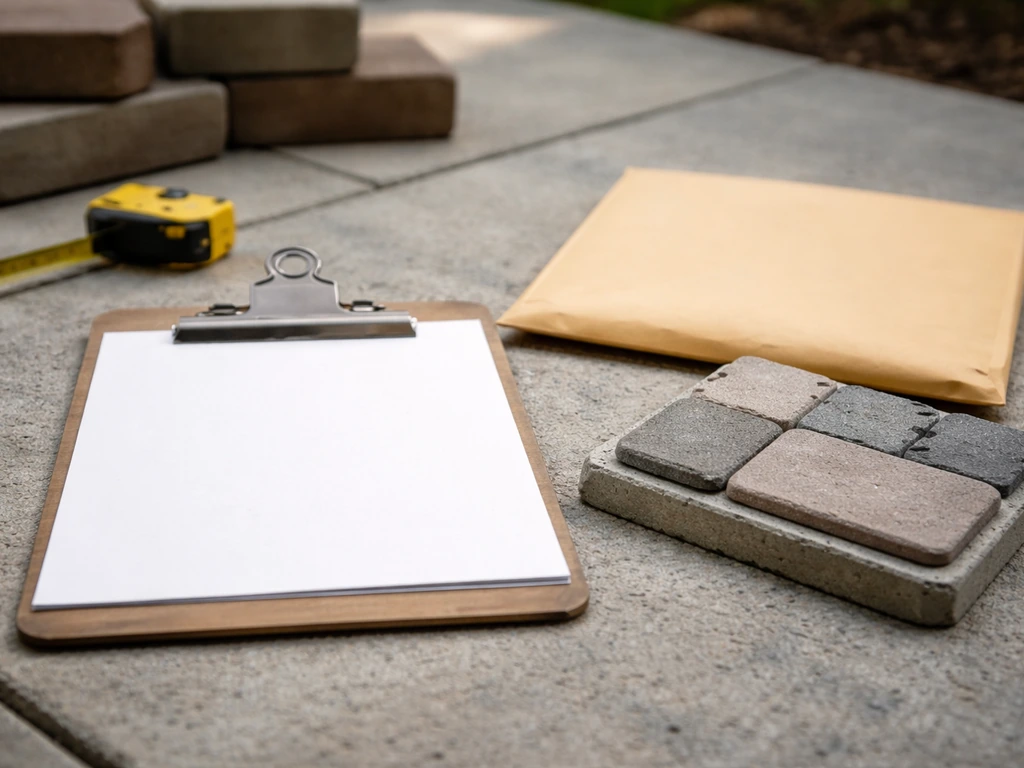
Use these benchmarks to sanity-check contractor quotes and set a realistic budget before you start calling anyone. These are installed prices including standard base prep, not materials-only figures.
10x10 patio (100 sq ft)
A 10x10 is a small accent patio, suitable for a bistro table or grill landing. Budget $800 to $1,500 for concrete pavers or basic concrete. Natural stone at this size runs $1,500 to $3,500. It's a good starter project for DIY pavers if you're willing to learn base prep correctly.
12x12 patio (144 sq ft)
The 12x12 is the most common size for a modest backyard seating area. Professional concrete installation runs $1,200 to $2,000. Pavers at this size cost $1,400 to $3,500 depending on material. Stamped concrete lands around $2,200 to $4,300. DIY concrete at this size is genuinely manageable if you have help, but finishing quality varies.
16x16 patio (256 sq ft)
A 16x16 comfortably fits an outdoor dining set with room to move around. Expect $2,500 to $5,000 for concrete or standard pavers, and $5,000 to $12,000 for natural stone or premium stamped finishes. This size starts to make professional installation more clearly cost-effective because the base prep labor per square foot drops as the project scales.
20x20 patio (400 sq ft)
A 20x20 is a proper outdoor living space that can hold a dining area plus a seating group. Once you start adding a patio pool, the overall budget can jump well beyond a standard patio because you are paying for excavation, decking finishes, and pool construction. Budget $4,000 to $8,000 for mid-range pavers or concrete, and $8,000 to $20,000 for flagstone or premium natural stone. At this size, getting three quotes is essential because contractor pricing can vary by $3,000 to $5,000 for the same scope. If you're also pricing a deck around a pool or comparing to deck costs, a patio at this size is typically 20 to 40 percent less expensive than an equivalent elevated deck.
20x30 and larger (600+ sq ft)
Large patios at 600 square feet and above are full outdoor room investments. Concrete runs $3,000 to $7,200, mid-range pavers $6,000 to $12,000, and premium stone finishes $12,000 to $30,000 or more. At this size, drainage planning becomes critical since a large impermeable surface sheds a lot of water and poor grading can cause foundation or landscaping issues.
How to nail your personal budget estimate
Start by calculating your square footage and picking a material tier. Once you know your square footage and the material tier, you can estimate how much to do a patio for your specific size and finish calculate your square footage. To get a more accurate answer to how much are patios, compare your square footage, material tier, and the base prep your site needs how much to do a patio. If you want a quick ballpark before quotes, use the guidance in this guide to estimate how much patio you need to budget for your size and finish. Multiply your square footage by the per-square-foot range for that material. Then add 10 to 15 percent as a contingency buffer for site surprises. For anything over 200 square feet, get at least three quotes from licensed contractors.
When quotes come in, ask these specific questions to make sure you're comparing apples to apples:
- Does this quote include excavation and grading, or are those separate?
- What base depth and gravel type are you using, and is geotextile fabric included?
- Is demolition and haul-away of any existing patio included?
- Are permits, if needed, included in your price or billed separately?
- What is the drainage slope specification and how will water run off this patio?
- Does the quote include sealing or any post-install surface treatment?
- What does your warranty cover and for how long?
If a quote comes in significantly below the others, it usually means something is excluded, not that you found a bargain. Base prep shortcuts and undersized gravel layers are the most common ways low bids stay low, and they create expensive problems within two to five years. A patio that shifts, cracks, or pools water because the base was done wrong will cost more to fix than it would have cost to do correctly the first time.
FAQ
What’s a simple way to estimate the average cost of a patio for my yard?
For a quick estimate, take your patio area in square feet and multiply by the installed per-square-foot range for your chosen material tier, then add 10 to 15% for unknown site conditions (like extra grading, thick old concrete to remove, or drainage issues). This yields a realistic “budget number” that accounts for labor and base prep, not just materials.
Does the patio average cost include steps, railings, or decorative edging?
Yes. If you plan to add steps, a railing, edging, or a small landing for access, those are often priced separately or grouped under “hardscape” add-ons rather than the base patio per-square-foot rate. Even a modest number of steps can move the effective cost per square foot noticeably because excavation and forming are more labor-intensive.
What exactly should be included in base prep so my quote reflects the true average cost?
Many contractors bundle “base prep” differently. Ask whether they include excavation depth, gravel and bedding thicknesses, compaction, geotextile, and disposal/haul-away for removed material. If these are not explicitly listed, your final cost can rise after the fact due to change orders or rework.
How much does removing an old patio typically add to the average cost?
Demolition and hauling are frequently separate. The article notes old concrete removal can add roughly $1 to $2 per square foot (sometimes more for thick or reinforced slabs), so your total can shift even if the new patio size and material are the same.
Is a higher-priced paver patio worth it compared with concrete?
Pavers can cost more upfront than plain concrete in some markets, but they are usually easier to repair because individual units can be lifted and replaced. If you expect future settlement or want straightforward spot repairs, that repairability can make paver patios a better value even when the average installed price is higher.
Where do most DIYers overspend and how can I reduce the risk?
For DIY, the biggest cost risk is failure during the surface installation, especially concrete finishing, because replacing a bad pour can cost far more than a contractor bid. A practical mitigation is to DIY the lower-risk work (demolition, excavation, gravel and compaction) and hire a pro for finishing or mortared stone placement.
Why do two patios with the same size and material have such different quotes?
Local price swings matter most in labor-heavy regions, especially major metros on the coasts where labor can run about 30 to 50% higher. That means “average cost” numbers are best treated as ranges, and you should expect higher per-square-foot bids in places like New York, Los Angeles, Seattle, or Boston compared to mid-sized Midwest or Southern cities.
How can I compare quotes when my yard has a slope or hard access?
Ask for a line-item breakdown by scope, not just a total. Also confirm whether the quote assumes a flat, accessible yard. If your site has slope, rocky soil, or limited equipment access, the contractor may price it at a higher effective rate (often adding $2 to $10 per square foot) to cover extra labor and equipment needs.
Are permits usually included in the average patio cost, or should I plan for them separately?
Permits are usually more likely for elevated patios, patios attached to a structure, and projects in regulated communities. Even when required, the article gives a rough range of about $100 to $500 or more, plus possible utility marking coordination via 811, so you should confirm who pays and who files.
At what patio size should I get multiple quotes and prioritize drainage planning?
Patios larger than about 200 square feet are where efficiency and planning matter, and the article recommends getting at least three quotes for that reason. It also becomes more important to plan drainage for large impermeable surfaces to avoid long-term landscaping or foundation problems.
Next Articles
How Much Does a Patio Pool Cost? Price Ranges and Tips
Estimate how much a patio pool costs with patio types, size benchmarks, realistic price ranges, and quote checklist.
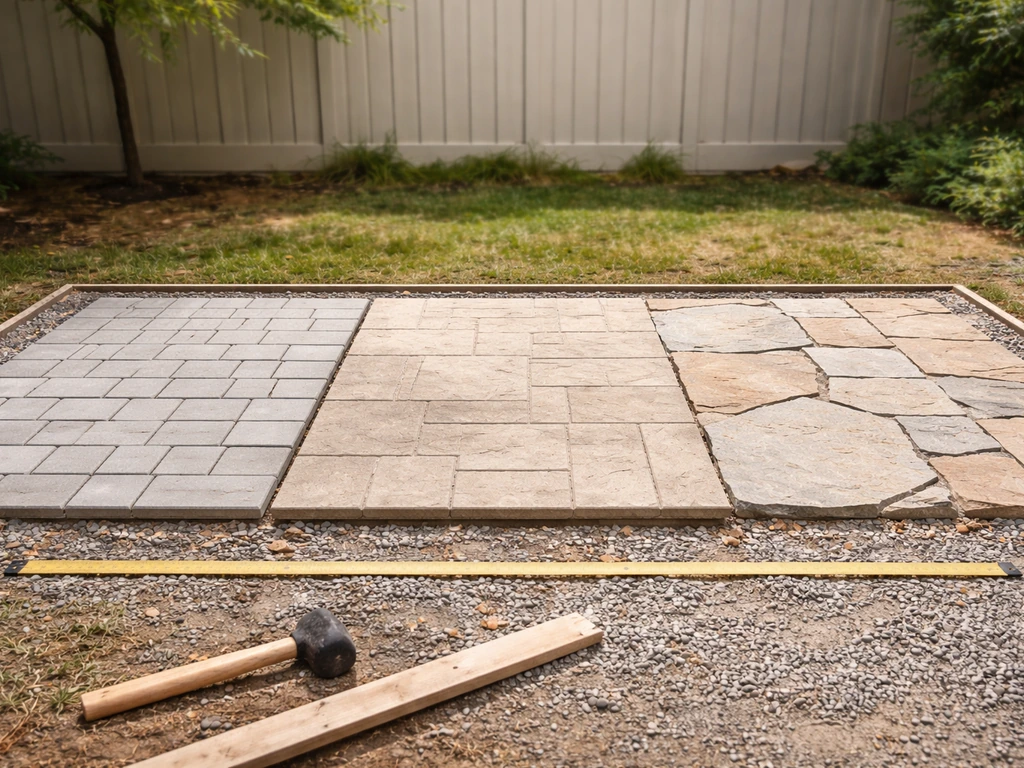
How Much Patio Costs: Pricing by Size and Material
Concrete, pavers, stone and stamped patio costs by size with real price ranges, add-ons, and bid checklist to budget fas
How Much Does It Cost to Enclose a Patio in Australia
Patio enclosure costs in Australia by material and size, with price ranges, cost drivers, and quote checklist for accura