
A professionally installed 10x10 patio (100 square feet) will run you roughly $500 to $3,200 depending on the material you choose. HomeGuide cites a broader patio-material range of $5, $35 per square foot depending on material choice, including concrete, natural stone, and brick pavers $500 to $3,200 depending on the material you choose. Plain concrete sits at the low end, around $600–$1,800.
How Much Does a 10 x 10 Patio Cost in 2026?

Felix Carver
12 Jun 2026

If you need a quick answer for your project, most 10x10 concrete patio quotes land in the $600, $1,800 range depending on finish and site conditions Plain concrete. Pavers and brick land in the middle at $1,000–$2,500. Natural flagstone or stamped concrete can push to $1,500–$3,200 or more. Those ranges assume a straightforward, flat site with no major excavation surprises.
If your yard slopes, has clay soil, or needs drainage work, costs climb fast.
Quick cost ranges by material for a 10x10 patio
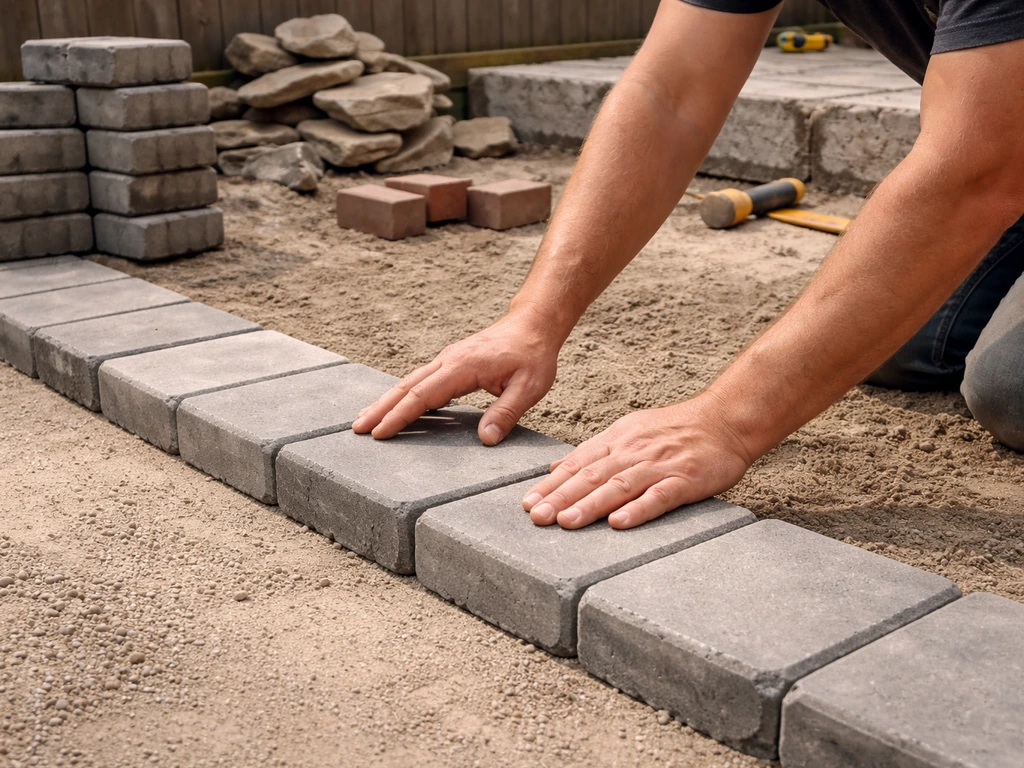
Here's a side-by-side look at what each common patio material costs installed at 100 square feet in 2026. These are realistic contractor-installed ranges, not best-case scenarios.
| Material | Installed Cost per Sq Ft | Total for 100 Sq Ft | DIY-Friendly? |
|---|---|---|---|
| Plain/broom concrete | $6–$18 | $600–$1,800 | Moderate |
| Stamped concrete | $8–$25 | $800–$2,500 | Difficult |
| Concrete pavers | $8–$30 | $800–$3,000 | Yes |
| Brick pavers | $10–$17 | $1,000–$1,700 | Yes |
| Flagstone (dry-laid) | $15–$32 | $1,500–$3,200 | Moderate |
| Flagstone (mortar-set) | $25–$45 | $2,500–$4,500 | Difficult |
Keep in mind that 100 square feet is a small footprint. Contractors often have minimum job charges, so a 10x10 patio can sometimes cost disproportionately more per square foot than a larger project like a 10x20 or 20x20 patio. If you're close to that threshold, it's worth asking a contractor whether sizing up slightly gets you a better per-square-foot rate.
What's actually inside that cost: the full breakdown
A lot of homeowners see a per-square-foot number and multiply it by 100, then wonder why the quote is higher. That's because the installed price bundles together several distinct cost layers. Here's what you're actually paying for on a typical 100 sq ft patio project.
- Excavation and grading: Digging out 6–10 inches of soil and hauling it off. On a flat, accessible site this might be $100–$300. Add slopes, tight access, or tree roots and it can jump to $500+.
- Base prep (gravel/crushed stone): Standard practice is 4–6 inches of compacted crushed stone. For 100 sq ft that's roughly 1.5–2 tons of gravel, typically $150–$350 installed.
- Bedding layer: For pavers and flagstone, you'll need about 1 inch of bedding sand over the compacted base. Small cost on its own, but it's part of a proper install.
- The surface material itself: This is what most people price-shop, but it's often only 40–60% of total project cost.
- Labor for installation: Cutting, setting, leveling, and finishing. This varies the most by material and by region.
- Edging/edge restraints: Plastic or metal edge restraints for pavers, or formed edges for concrete. Budget $50–$150 for a 10x10.
- Polymeric sand or jointing compound: For pavers and flagstone, filling joints is an important finishing step. Add $50–$100.
- Drainage: If the site doesn't drain naturally away from the house, you may need a French drain or channel drain. That's $300–$800+ extra.
- Permits: Many jurisdictions require a permit for patios over 120 sq ft, so a 10x10 often slips under that threshold. But check locally, because rules vary by city and county.
- Demolition: If you're replacing an existing concrete slab or surface, add $300–$600 for demo and haul-off.
A realistic all-in breakdown for a mid-range concrete paver patio at 100 sq ft might look like: $300 excavation, $250 base/sand, $600 in pavers, $400 labor, $100 edging and polymeric sand. If you’re trying to estimate how much a 10x10 paver patio costs, the mid-range all-in math is a good starting point concrete paver patio. That's $1,650 before any drainage or demo work. That math lines up with why the ranges above aren't just material cost.
Concrete options: plain vs stamped
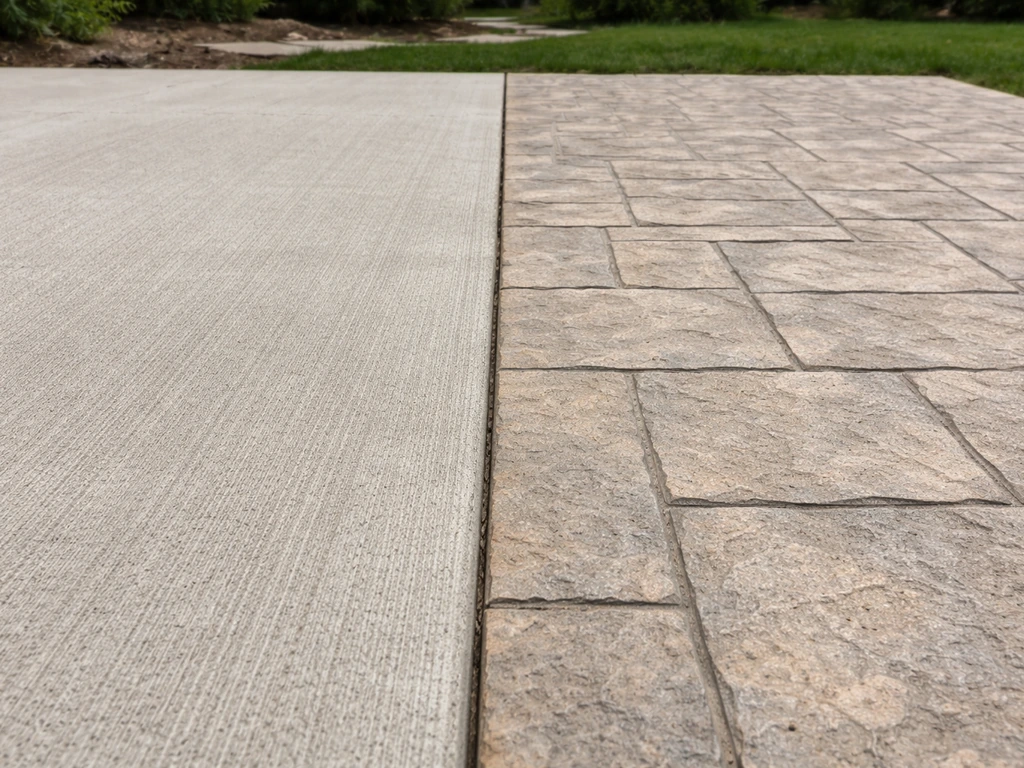
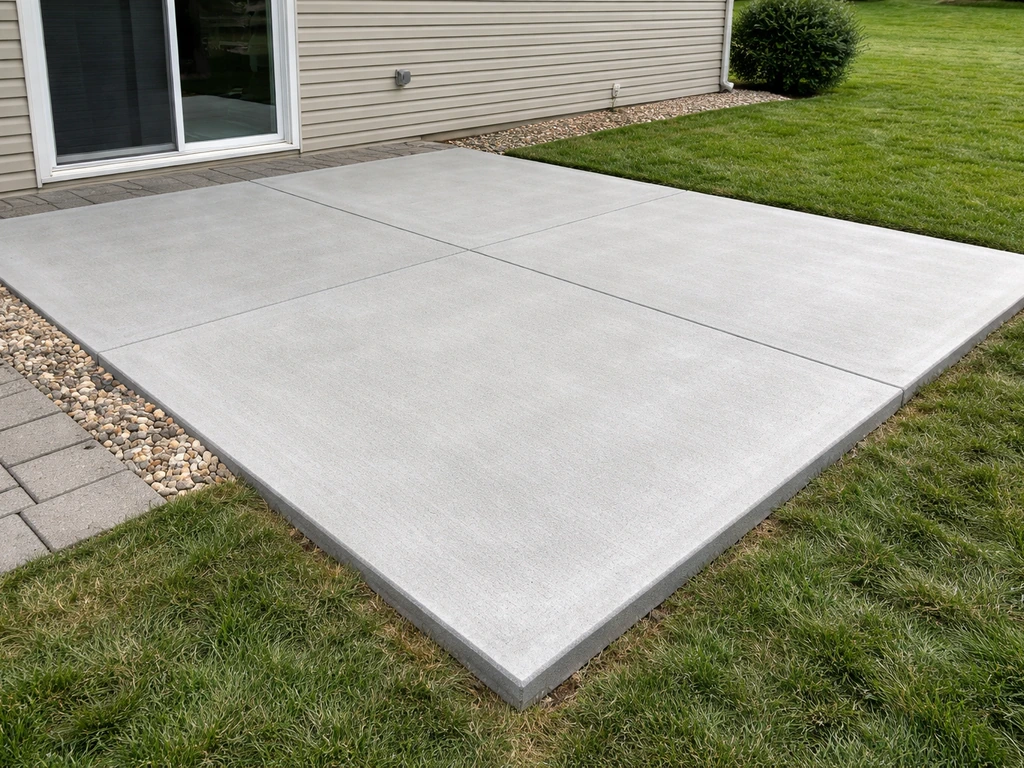
Plain broom-finished concrete is the most affordable installed option. Some budgeting guides for 2026 cite plain or broom-finished concrete patios installed at about $6, $20 per square foot, depending on the finish blank" rel="noopener noreferrer">$6–$20 per square foot (finish-dependent). You're looking at $6–$12 per square foot for a basic 4-inch slab with a brushed finish, which puts a 10x10 patio at $600–$1,200 installed. Move up to a stained or exposed-aggregate finish and the cost bumps to $12–$18 per square foot, or $1,200–$1,800 total.
Stamped concrete costs noticeably more because the labor is more involved and you're adding color hardener and release agents on top of the base concrete pour. Typical installed prices for stamped concrete run $8–$19 per square foot for simpler single-color, single-pattern work, and $12–$25 per square foot for more complex multi-color or detailed designs. On a 10x10, that's $800–$2,500. A well-done stamped concrete patio can look like flagstone or brick at a fraction of the natural-material cost, which is why it's popular.
One important note on concrete construction: a properly poured patio slab uses a 4-inch thickness and includes control joints (saw-cut within about 4–12 hours of the pour, to roughly 1 inch deep). These joints help prevent random cracking. If a contractor isn't talking about control joints and reinforcement on your concrete quote, ask about it.
Pavers and flagstone: more flexible but more variable
Concrete and interlocking pavers
Concrete pavers (also called interlocking pavers) are one of the most popular choices for a 10x10 patio because they're durable, repairable, and come in a ton of styles. blank" rel="noopener noreferrer">Installed costs typically run $8–$25 per square foot on the lower end, with premium brands and complex patterns pushing to $30 per square foot. On a 100 sq ft footprint, budget $800–$3,000 depending on the paver style and your region. The base work is critical here: proper installs use 4–6 inches of compacted gravel plus 1 inch of screeded bedding sand before the pavers go down.
Natural flagstone
Flagstone gives you the most natural, high-end look, but it's also the most expensive option at a 10x10 scale. Dry-laid flagstone (set on compacted gravel and sand, no mortar) runs $15–$32 per square foot installed, or $1,500–$3,200 for 100 sq ft. Mortar-set flagstone, where each stone is bedded in mortar over a concrete base, is more durable and longer-lasting but costs significantly more, $25–$45 per square foot, pushing totals to $2,500–$4,500. The flagstone material itself is usually 1 to 1.5 inches thick for dry-laid applications. If you're comparing flagstone to a stamped concrete option that mimics the look, the cost gap is real and worth factoring in.
Brick and other materials

Traditional brick pavers sit in the middle of the price range at $10–$17 per square foot installed, or $1,000–$1,700 for a 10x10. Brick is durable and has a classic look, but it costs more than basic concrete and less than natural stone. The installation process mirrors concrete pavers: compacted gravel base, bedding sand, brick set and leveled, then edge restraints and joint sand to lock everything in place.
A few other materials worth knowing about: porcelain tile pavers have become popular for outdoor patios and run $15–$30+ per square foot installed. Decomposed granite and gravel patios are very affordable ($1–$4 per square foot for material) but need edging to stay contained and don't offer the same permanence. For a simple, low-maintenance 10x10 space, pea gravel or decomposed granite with steel edging can cost as little as $200–$500 total. It's not the same as a hardscape patio, but it's worth knowing if budget is the primary driver.
DIY vs hiring a pro: what actually changes
On a paver or flagstone patio, going DIY can save you a meaningful chunk of money because you're cutting out the labor line, which often represents 40–60% of the total cost. On a 10x10 paver patio where a pro might charge $1,500–$2,500, doing the work yourself might get total costs down to $600–$1,200 (mostly materials, gravel, sand, and tool rentals). For a 10x20 paver patio, the same cost factors apply, but you can multiply typical 10x10 paver patio rates by 2 to estimate the total 10x20 paver patio cost. A similar dynamic holds for flagstone dry-lay work.
Concrete is a different story. Pouring and finishing a concrete slab is genuinely harder to DIY well. You're dealing with mixing or ordering ready-mix (minimum truck charges apply, typically $150–$200 even for small amounts), form work, leveling, finishing before the concrete sets, and cutting control joints at the right time. Mistakes are expensive to fix. Stamped concrete is even harder because the stamping and coloring steps are time-sensitive and require technique. Most homeowners are better off hiring a concrete contractor unless they have real experience.
Hidden DIY costs people miss: tool rentals (plate compactor rental is $75–$150 per day, wet saw for cutting pavers or stone is $60–$100 per day), delivery fees for gravel and sand, and the reality that a small project like 100 sq ft often takes a weekend or more when you factor in prep. Also factor in potential do-overs. If your base isn't compacted correctly, pavers shift and you're relaying sections later.
| Cost Item | Pro Install | DIY |
|---|---|---|
| Labor | $400–$1,200 | $0 (your time) |
| Materials (pavers, gravel, sand) | $400–$800 | $400–$800 |
| Tool rentals | Included | $150–$300 |
| Delivery/haul-off | Often included | $100–$200 |
| Total estimate (paver patio) | $1,000–$2,500 | $600–$1,300 |
Regional costs, site conditions, and how to use quotes
Where you live can shift your patio cost by 20–40% compared to national averages. Labor rates in the Northeast and West Coast are typically higher than in the Southeast or Midwest. Material costs also vary, especially for natural stone like flagstone, which is cheaper in regions closer to quarries. A plain concrete patio that costs $800 installed in the South might run $1,400 in a high-cost metro area. Always treat any per-square-foot average you read online as a starting point, not a final budget.
Site conditions matter just as much as location. Sloped ground requires grading or retaining work. Clay-heavy soil drains poorly and may need additional base depth or drainage tile added. Rocky soil means more excavation time and cost. Tight access (a narrow side yard, a fenced backyard with a small gate) can add 10–20% to a project because equipment can't get in and everything has to be done by hand.
When you're getting quotes, ask for line-item breakdowns rather than a single lump-sum number. A good contractor can tell you what they're charging for excavation, base material, the surface material itself, and labor separately. That lets you compare apples to apples across multiple bids. Also ask specifically: what is the base depth you're installing, are edge restraints included, how many inches of compacted gravel, and is haul-off of excavated soil part of the price? Those details frequently account for the difference between a $1,200 quote and a $1,800 quote for the same job.
One more thing to check: permits. A 10x10 patio is 100 square feet, which falls just under some jurisdictions' permit thresholds (some cities require permits for patios 120 sq ft or larger). But rules vary a lot, and a few municipalities require permits for any permanent hardscape. A quick call to your local building department takes five minutes and can save you a headache later if you ever sell the home.
Patio vs deck: which makes more sense at 10x10?
At the 10x10 size, a ground-level patio almost always beats a deck on cost. A basic pressure-treated wood deck runs $15–$35 per square foot installed, and composite decking pushes to $25–$50 per square foot. For 100 sq ft, that's $1,500–$5,000 for wood and $2,500–$5,000+ for composite. A concrete or paver patio at the same size is typically cheaper and requires less maintenance over time. The exception is if your home has a raised first floor where the patio door opens above grade. In that case, you either need a deck or significant fill and retaining work to bring a patio up to door height, which can flip the cost comparison.
What to budget and next steps
For planning purposes, here's a simple budget framework: if you want a basic, functional 10x10 patio and cost is the main driver, budget $700–$1,200 for a plain concrete or DIY paver project. If you're trying to estimate how much does it cost to cover a 10x10 patio, these ranges are a good starting point before you factor in site conditions.
If you're expanding to a 10x20 concrete patio, expect the total to scale up and costs per square foot may shift depending on base prep and site access 10x20 concrete patio cost. For a mid-range installed paver or brick patio, budget $1,200–$2,000. If you want a quick ballpark, this guide breaks down what affects the final price for a 10x10 paver patio, including base prep, drainage, and material choice mid-range installed paver or brick patio.
For stamped concrete or dry-laid flagstone professionally installed, budget $1,800–$3,200. For mortar-set natural stone or high-end pavers with complex patterns, budget $3,000 and up. Always add a 10–15% buffer for site condition surprises.
Get at least three quotes, ask for written line-item breakdowns, and verify that the base prep depth is appropriate (4–6 inches compacted gravel for pavers, proper forming and reinforcement for concrete). A contractor who can walk you through their process is almost always a better hire than the lowest bid with no detail. From there, the choice between materials comes down to your budget, how much maintenance you're willing to do, and how the space will actually be used.
FAQ
Why do two contractors give a very different price for the same 10x10 patio materials?
Most of the difference is usually base prep and scope, for example gravel depth (or whether a drainage layer is included), the type of edging/edge restraints, and whether old concrete or plants are fully demoed and hauled off (not just partially cleared). Ask for a line-item scope that specifies excavation depth, base thickness, and what gets removed from the site.
How much does a 10x10 patio cost if I include a patio cover, pergola, or basic lighting?
Those add-ons are commonly priced separately from the patio surface. Lighting transformers, conduit, and trenching often come as their own line items, and pergola posts may require additional concrete footings that change the excavation and forming plan. If you want them included, request one quote that bundles the electrical and structural base requirements or you may get surprised later.
Is a 10x10 patio worth it if I might expand to 10x20 later?
Sometimes, but you should plan your base and layout so the future expansion can tie in without creating a height step or weak transition. Ask the contractor whether they will leave a clean expansion edge, how they handle drainage at the seam, and whether the original base depth will match the future section to avoid differential settling.
Does drainage work change the price a lot for a 10x10 patio?
Yes, it can, especially on clay soil or sloped sites. Drainage might require a deeper base, a perforated drain with gravel wrap, and a tie-in to an existing outlet, which increases excavation and material quantities. Expect drainage scope to move your patio toward the higher end of the quoted range unless it was already included.
What is the minimum slab thickness for a concrete 10x10 patio, and does it affect cost?
For typical residential patios, concrete is commonly about 4 inches thick with control joints to reduce random cracking, but thickness and reinforcement can vary by soil conditions and local expectations. If your contractor proposes a thinner pour or does not mention control joints timing, that can lower the quote short-term but raise long-term repair risk, so ask how they meet local requirements.
How do control joints and reinforcement factor into stamped or colored concrete cost?
Stamped and colored surfaces still require proper jointing, and contractors may also include reinforcement like rebar or mesh depending on the design and subgrade. If joints are skipped or reinforcement decisions are not explained, the patio may crack earlier. Ask what joint spacing they use and whether reinforcement is included in the base price.
Is DIY ever cheaper for a 10x10 patio, and what’s the usual break-even area?
DIY can be cheaper mainly for pavers or dry-laid stone where labor is a big chunk, but 10x10 projects are small enough that tool rentals, dump fees, and time often reduce the savings. If you do not already own a plate compactor and basic cutting tools, your effective cost advantage can shrink fast. A practical approach is to get a pro quote for demo and base prep, then DIY only the surface work if you have the skill and time.
Why do contractors charge more per square foot for smaller patios?
Small jobs often have minimum labor and mobilization charges, delivery minimums, and setup costs that do not scale down proportionally. That means a 10x10 can be disproportionately expensive per square foot compared to a 10x20 even when the materials are similar. If you are flexible, asking about a modest size increase can improve pricing.
Do permits typically apply to a 10x10 patio, and what should I check?
Many places allow patios below certain square-foot thresholds, but rules vary, and some require permits for any permanent hardscape or when construction affects drainage. Since thresholds differ by city and county, check your local building department and confirm whether a permit is required for excavation, footings, or electrical if you plan lighting.
What should I ask in my quote to ensure apples-to-apples comparisons?
Ask for written specs on excavation depth and base layers (for pavers, commonly compacted gravel plus screeded bedding sand), edge restraints included or not, drainage tile or grading included or not, and whether haul-off of excavated soil is part of the price. Also ask about warranty terms and whether they will protect nearby landscaping and structures during demo.
How much should I budget for cleanup and hauling for a 10x10 patio?
Haul-off is often underestimated, especially if you are removing existing concrete, adding fill, or discovering uneven debris and roots. Some bids include dump fees, others do not, so request whether debris haul-away, load pricing, and final site grading are included. This can be a deciding factor between two seemingly close quotes.
What common mistake causes premature failure in paver or flagstone 10x10 patios?
The most common issue is inadequate base prep or improper compaction, where pavers settle unevenly or joints open. Ask whether they compact in lifts, what the target base depth is, and how they handle soft spots. A good sign is when they can describe the base build-up thickness and compaction steps, not just the paver price.
Next Articles
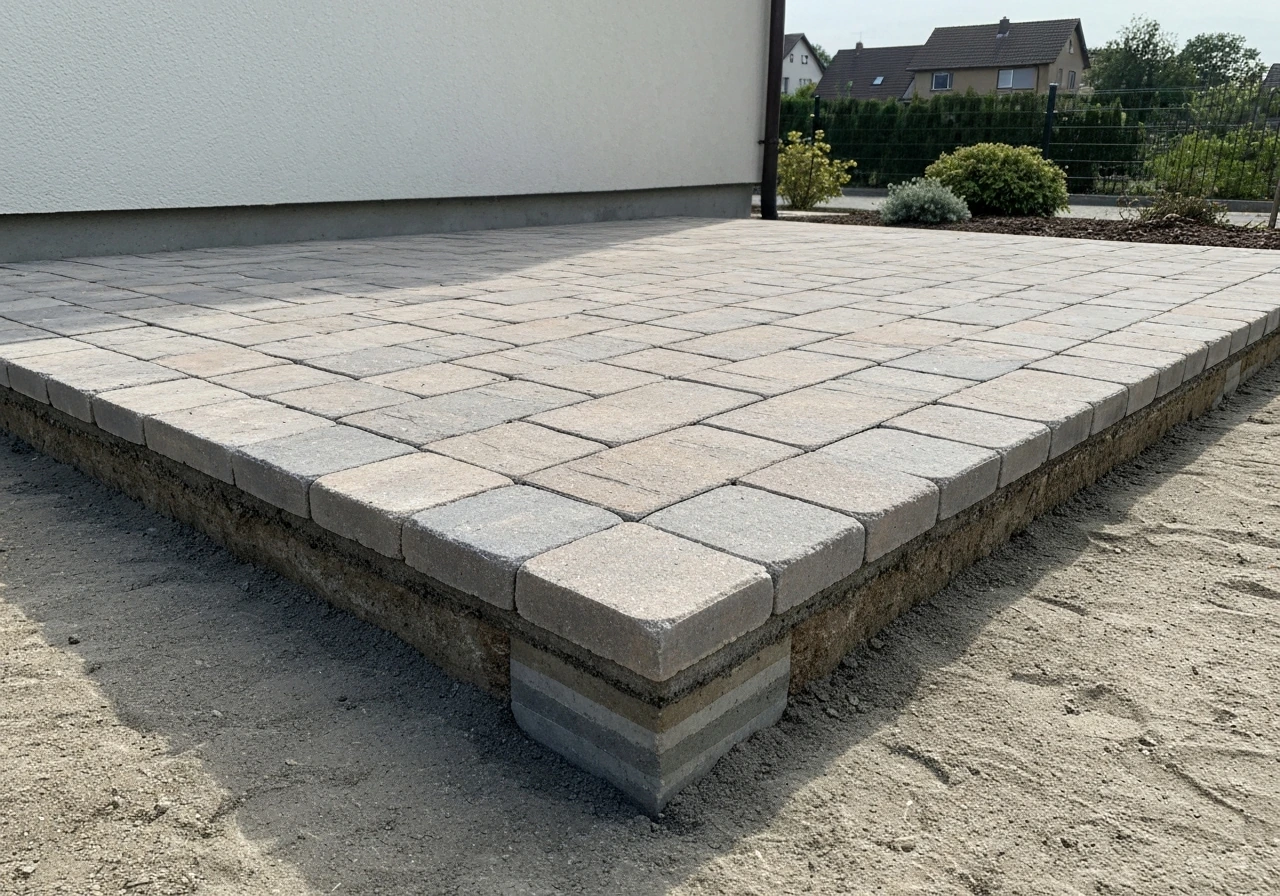
How Much Does a 10x10 Paver Patio Cost? Price Breakdown
Estimate a 10x10 paver patio total cost with material vs install breakdown, add-ons, and DIY vs contractor pricing facto
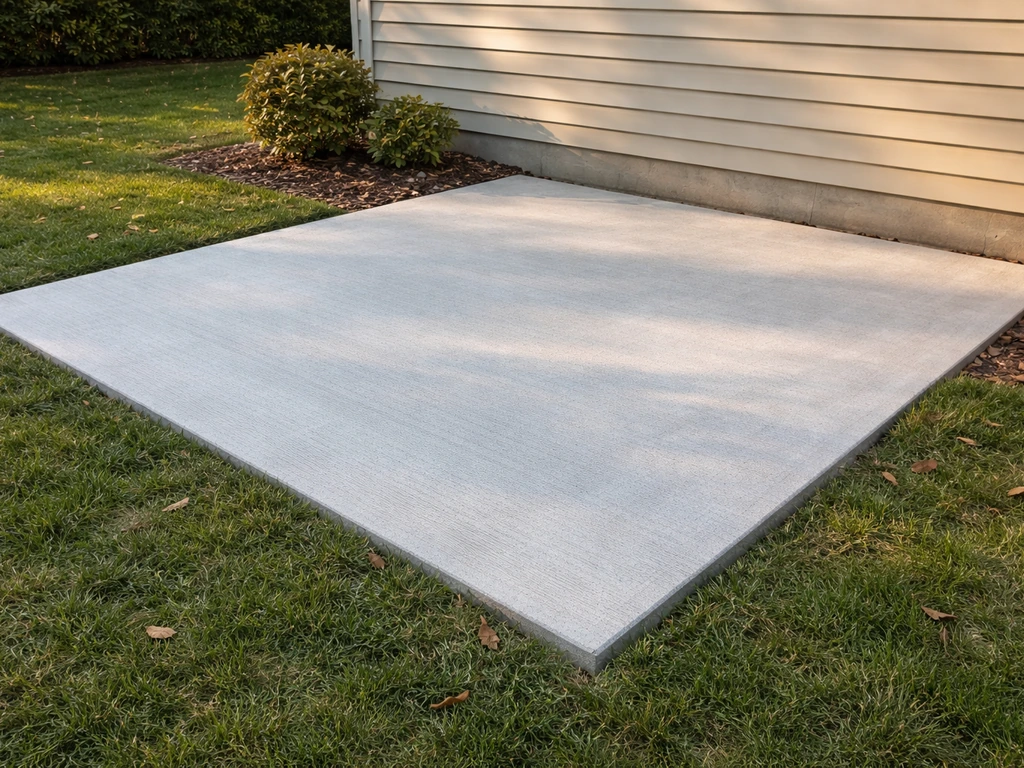
How Much Does a 10x10 Concrete Patio Cost in 2026?
2026 price ranges for a 10x10 concrete patio, itemized costs, key adders, DIY vs hiring, and quote specs to request.
How Much Does a 10x20 Concrete Patio Cost in 2026?
Installed cost range for a 10x20 concrete patio, plus what changes price, DIY vs contractor, and quote checklist.